


 购物车
购物车 个人中心
个人中心
Intelligent Automation with VMware
¥73.02
Use self-driven data centers to reduce management complexity by deploying Infrastructure as Code to gain value from investments. Key Features * Add smart capabilities in VMware Workspace ONE to deliver customer insights and improve overall security * Optimize your HPC and big data infrastructure with the help of machine learning * Automate your VMware data center operations with machine learning Book Description This book presents an introductory perspective on how machine learning plays an important role in a VMware environment. It offers a basic understanding of how to leverage machine learning primitives, along with a deeper look into integration with the VMware tools used for automation today. This book begins by highlighting how VMware addresses business issues related to its workforce, customers, and partners with emerging technologies such as machine learning to create new, intelligence-driven, end user experiences. You will learn how to apply machine learning techniques incorporated in VMware solutions for data center operations. You will go through management toolsets with a focus on machine learning techniques. At the end of the book, you will learn how the new vSphere Scale-Out edition can be used to ensure that HPC, big data performance, and other requirements can be met (either through development or by fine-tuning guidelines) with mainstream products. What you will learn * Orchestrate on-demand deployments based on defined policies * Automate away common problems and make life easier by reducing errors * Deliver services to end users rather than to virtual machines * Reduce rework in a multi-layered scalable manner in any cloud * Explore the centralized life cycle management of hybrid clouds * Use common code so you can run it across any cloud Who this book is for This book is intended for those planning, designing, and implementing the virtualization/cloud components of the Software-Defined Data Center foundational infrastructure. It helps users to put intelligence in their automation tasks to get self driving data center. It is assumed that the reader has knowledge of, and some familiarity with, virtualization concepts and related topics, including storage, security, and networking.
React Material-UI Cookbook
¥73.02
Build modern day application by implementing Material Design principles in React applications using Material-UI. Key Features * Grasp the needs React components for UI elements * Master the style and theme of the tools to go along with these components * Get to grips with all the React best practices to build a modern application Book Description Material-UI is a component library for rendering UI elements, using modern best practices from React and Material Design. This book will show you how you can create impressive and captivating modern day web apps by implementing Material Design considerations. The primary objective of this book is to help you use several Material-UI components to build larger UI functionality. We will also focus on React best practices in conjunction with Material-UI components – using state, context, and other new React 16.8 features properly. This book will start with layout and navigation and then dive into presenting the information with Material-UI components. It will then talk about the different components for user interactions. By the end of this book, you will know how to improve the look and feel of your applications using Material-UI components. What you will learn * Learn to build the overall structure and navigation for your Material-UI app * Learn to present simple and complex information in a variety of ways * Build interactive and intuitive controls * Design portable themes and styles for all of your Material-UI apps * Group content into sections using tabs and expansion panels * Learn how to design a general page layout with Material-UI grids * Use lists for complex data, and cards for detailed information Who this book is for They are JavaScript developers who have some basic knowledge of React and would want to implement Material Design principles in React applications using Material-UI. The reader wants to build a user interface using React components but doesn’t want to invent their own style or UX framework.
Data Science for Marketing Analytics
¥73.02
Explore new and more sophisticated tools that reduce your marketing analytics efforts and give you precise results Key Features * Study new techniques for marketing analytics * Explore uses of machine learning to power your marketing analyses * Work through each stage of data analytics with the help of multiple examples and exercises Book Description Data Science for Marketing Analytics covers every stage of data analytics, from working with a raw dataset to segmenting a population and modeling different parts of the population based on the segments. The book starts by teaching you how to use Python libraries, such as pandas and Matplotlib, to read data from Python, manipulate it, and create plots, using both categorical and continuous variables. Then, you'll learn how to segment a population into groups and use different clustering techniques to evaluate customer segmentation. As you make your way through the chapters, you'll explore ways to evaluate and select the best segmentation approach, and go on to create a linear regression model on customer value data to predict lifetime value. In the concluding chapters, you'll gain an understanding of regression techniques and tools for evaluating regression models, and explore ways to predict customer choice using classification algorithms. Finally, you'll apply these techniques to create a churn model for modeling customer product choices. By the end of this book, you will be able to build your own marketing reporting and interactive dashboard solutions. What you will learn * Analyze and visualize data in Python using pandas and Matplotlib * Study clustering techniques, such as hierarchical and k-means clustering * Create customer segments based on manipulated data * Predict customer lifetime value using linear regression * Use classification algorithms to understand customer choice * Optimize classification algorithms to extract maximal information Who this book is for Data Science for Marketing Analytics is designed for developers and marketing analysts looking to use new, more sophisticated tools in their marketing analytics efforts. It'll help if you have prior experience of coding in Python and knowledge of high school level mathematics. Some experience with databases, Excel, statistics, or Tableau is useful but not necessary.
Hands-On Robotics Programming with C++
¥73.02
Enhance your programming skills to build exciting robotic projects Key Features * Build an intelligent robot that can detect and avoid obstacles and respond to voice commands * Detect and track objects and faces using OpenCV * Control your robot with a GUI button designed using Qt5 Book Description C++ is one of the most popular legacy programming languages for robotics, and a combination of C++ and robotics hardware is used in many leading industries. This book will bridge the gap between Raspberry Pi and C/C++ programming and enable you to develop applications for Raspberry Pi. To follow along with the projects covered in the book, you can implement C programs in Raspberry Pi with the wiringPi library. With this book, you’ll develop a fully functional car robot and write programs to move it in different directions. You’ll then create an obstacle - avoiding robot using an ultrasonic sensor. Furthermore, you’ll find out how to control the robot wirelessly using your PC/Mac. This book will also help you work with object detection and tracking using OpenCV, and guide you through exploring face detection techniques. Finally, you will create an Android app and control the robot wirelessly with an Android smartphone. By the end of this book, you will have gained experience in developing a robot using Raspberry Pi and C/C++ programming. What you will learn * Install software in Raspberry Pi compatible with C++ programming * Program the Raspberry Pi in C++ to run a motor * Control RPi-powered robot wirelessly with your laptop or PC * Program an RPi camera using OpenCV Control a Raspberry Pi robot with voice commands * Implement face and object detection with Raspberry Pi Who this book is for This book is for developers, programmers, and robotics enthusiasts interested in leveraging C++ to build exciting robotics applications. Prior knowledge of C++ is necessary to understand the projects covered in this book.
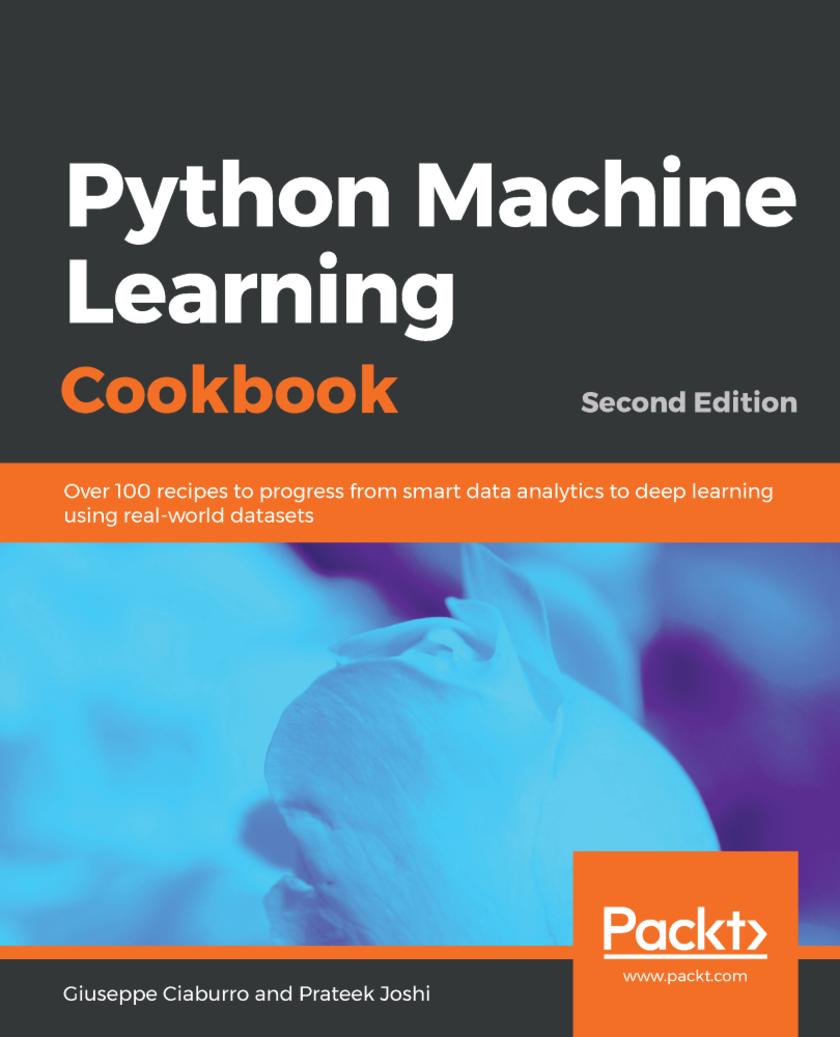
Python Machine Learning Cookbook
¥63.21
Discover powerful ways to effectively solve real-world machine learning problems using key libraries including scikit-learn, TensorFlow, and PyTorch Key Features * Learn and implement machine learning algorithms in a variety of real-life scenarios * Cover a range of tasks catering to supervised, unsupervised and reinforcement learning techniques * Find easy-to-follow code solutions for tackling common and not-so-common challenges Book Description This eagerly anticipated second edition of the popular Python Machine Learning Cookbook will enable you to adopt a fresh approach to dealing with real-world machine learning and deep learning tasks. With the help of over 100 recipes, you will learn to build powerful machine learning applications using modern libraries from the Python ecosystem. The book will also guide you on how to implement various machine learning algorithms for classification, clustering, and recommendation engines, using a recipe-based approach. With emphasis on practical solutions, dedicated sections in the book will help you to apply supervised and unsupervised learning techniques to real-world problems. Toward the concluding chapters, you will get to grips with recipes that teach you advanced techniques including reinforcement learning, deep neural networks, and automated machine learning. By the end of this book, you will be equipped with the skills you need to apply machine learning techniques and leverage the full capabilities of the Python ecosystem through real-world examples. What you will learn * Use predictive modeling and apply it to real-world problems * Explore data visualization techniques to interact with your data * Learn how to build a recommendation engine * Understand how to interact with text data and build models to analyze it * Work with speech data and recognize spoken words using Hidden Markov Models * Get well versed with reinforcement learning, automated ML, and transfer learning * Work with image data and build systems for image recognition and biometric face recognition * Use deep neural networks to build an optical character recognition system Who this book is for This book is for data scientists, machine learning developers, deep learning enthusiasts and Python programmers who want to solve real-world challenges using machine-learning techniques and algorithms. If you are facing challenges at work and want ready-to-use code solutions to cover key tasks in machine learning and the deep learning domain, then this book is what you need. Familiarity with Python programming and machine learning concepts will be useful.
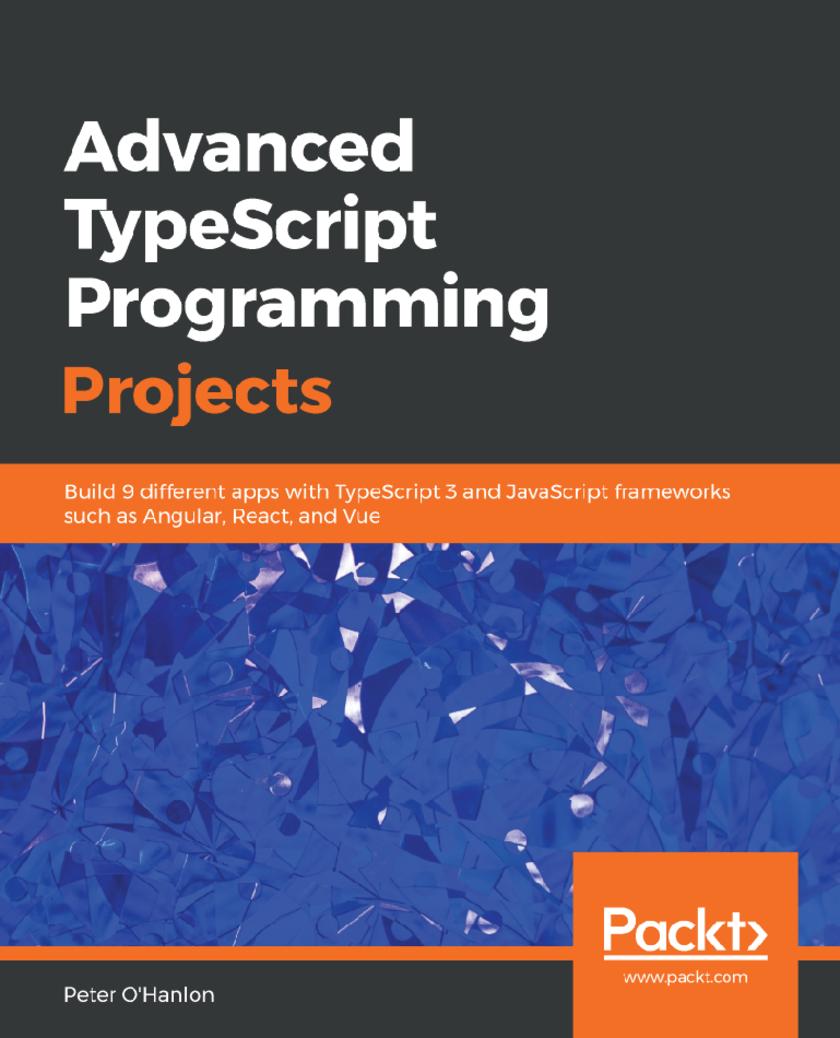
Advanced TypeScript Programming Projects
¥70.84
Gain in-depth knowledge of TypeScript and the latest ECMAScript standards by building robust web applications across different domains Key Features * Apply the cutting-edge features of TypeScript 3.0 to build high-performance, maintainable applications * Learn through practical examples of using TypeScript with popular frameworks, such as Angular and React * Focus on building high-quality applications that are modular, scalable and adaptable Book Description With the demand for ever more complex websites, the need to write robust, standard-compliant JavaScript has never been greater. TypeScript is modern JavaScript with the support of a first-class type system, which makes it simpler to write complex web systems. With this book, you’ll explore core concepts and learn by building a series of websites and TypeScript apps. You’ll start with an introduction to TypeScript features that are often overlooked in other books, before moving on to creating a simple markdown parser. You’ll then explore React and get up to speed with creating a client-side contacts manager. Next, the book will help you discover the Angular framework and use the MEAN stack to create a photo gallery. Later sections will assist you in creating a GraphQL Angular Todo app and then writing a Socket.IO chatroom. The book will also lead you through developing your final Angular project which is a mapping app. As you progress, you’ll gain insights into React with Docker and microservices. You’ll even focus on how to build an image classification program with machine learning using TensorFlow. Finally, you’ll learn to combine TypeScript and C# to create an ASP.NET Core-based music library app. By the end of this book, you’ll be able to confidently use TypeScript 3.0 and different JavaScript frameworks to build high-quality apps. What you will learn * Discover how to use TypeScript to write code using common patterns * Get to grips with using popular frameworks and libraries with TypeScript * Leverage the power of both server and client using TypeScript * Learn how to apply exciting new paradigms such as GraphQL and TensorFlow * Use popular cloud-based authenticated services * Combine TypeScript with C# to create ASP.NET Core applications Who this book is for This book is for programmers and web developers who are familiar with TypeScript and want to put their knowledge to work by building real-world complex applications. Prior experience with any other web framework is not required.
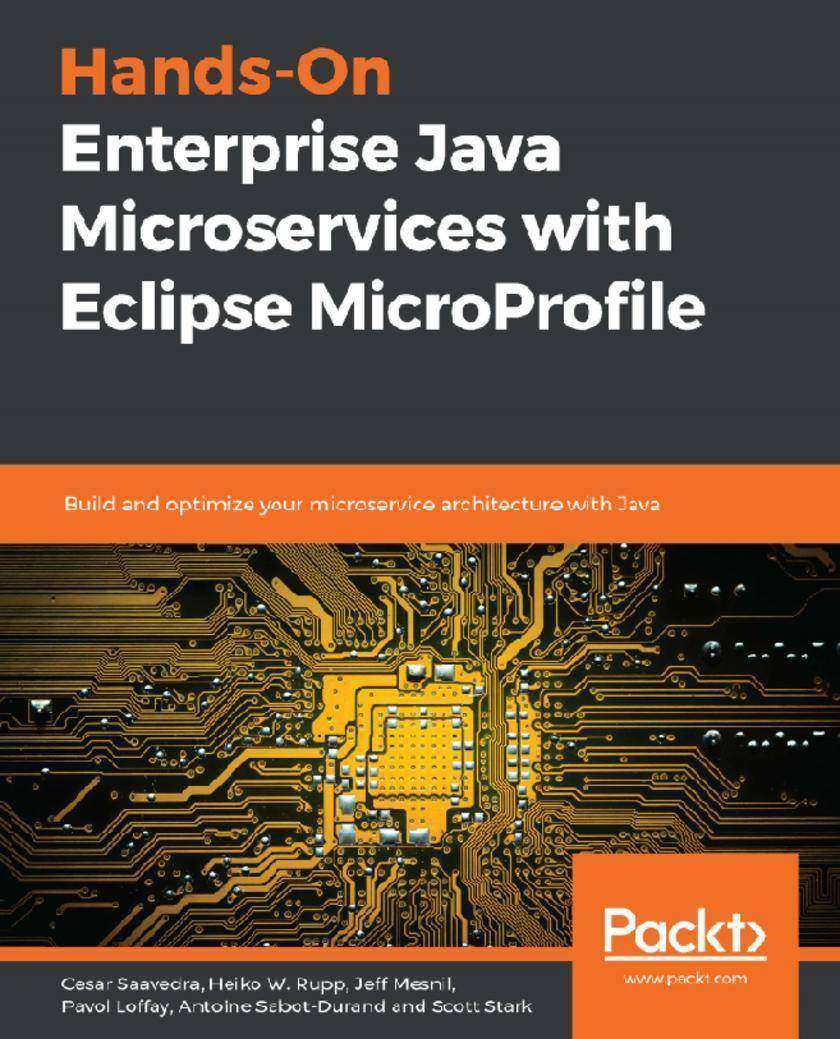
Hands-On Enterprise Java Microservices with Eclipse MicroProfile
¥63.21
An effective guide to designing, building, and deploying enterprise Java microservices with Eclipse MicroProfile Key Features * Create cloud-native microservices with ease using this detailed guide * Avoid vendor lock-in when implementing microservices using Eclipse MicroProfile * Discover why MicroProfile is a great specification for building microservices in multi-cloud environments Book Description Eclipse MicroProfile has gained momentum in the industry as a multi-vendor, interoperable, community-driven specification. It is a major disruptor that allows organizations with large investments in enterprise Java to move to microservices without spending a lot on retraining their workforce. This book is based on MicroProfile 2.2, however, it will guide you in running your applications in MicroProfile 3.0. You'll start by understanding why microservices are important in the digital economy and how MicroProfile addresses the need for enterprise Java microservices. You'll learn about the subprojects that make up a MicroProfile, its value proposition to organizations and developers, and its processes and governance. As you advance, the book takes you through the capabilities and code examples of MicroProfile’s subprojects - Config, Fault Tolerance, Health Check, JWT Propagation, Metrics, and OpenTracing. Finally, you’ll be guided in developing a conference application using Eclipse MicroProfile, and explore possible scenarios of what’s next in MicroProfile with Jakarta EE. By the end of this book, you'll have gained a clear understanding of Eclipse MicroProfile and its role in enterprise Java microservices. What you will learn * Understand why microservices are important in the digital economy * Analyze how MicroProfile addresses the need for enterprise Java microservices * Test and secure your applications with Eclipse MicroProfile * Get to grips with various MicroProfile capabilities such as OpenAPI and Typesafe REST Client * Explore reactive programming with MicroProfile Stream and Messaging candidate APIs * Discover and implement coding best practices using MicroProfile Who this book is for If you’re a Java developer who wants to create enterprise microservices, this book is for you. Familiarity with Java EE and the concept of microservices will help you get the most out of this book.
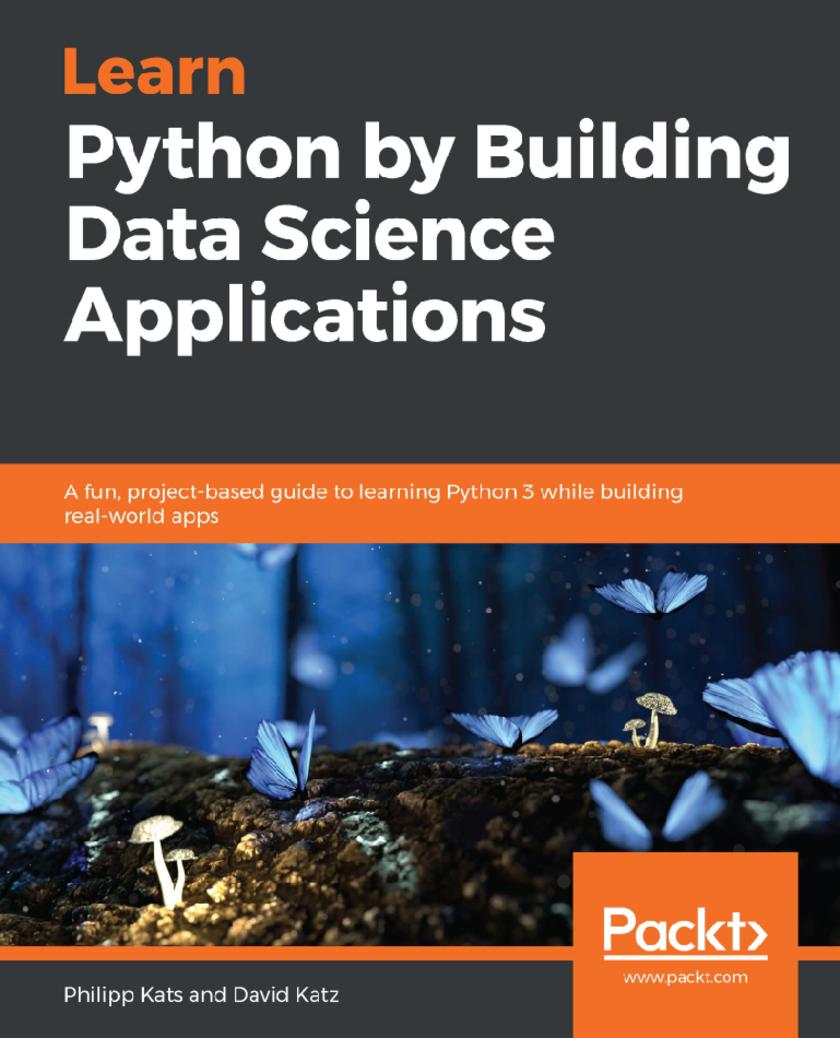
Learn Python by Building Data Science Applications
¥63.21
Understand the constructs of the Python programming language and use them to build data science projects Key Features * Learn the basics of developing applications with Python and deploy your first data application * Take your first steps in Python programming by understanding and using data structures, variables, and loops * Delve into Jupyter, NumPy, Pandas, SciPy, and sklearn to explore the data science ecosystem in Python Book Description Python is the most widely used programming language for building data science applications. Complete with step-by-step instructions, this book contains easy-to-follow tutorials to help you learn Python and develop real-world data science projects. The “secret sauce” of the book is its curated list of topics and solutions, put together using a range of real-world projects, covering initial data collection, data analysis, and production. This Python book starts by taking you through the basics of programming, right from variables and data types to classes and functions. You’ll learn how to write idiomatic code and test and debug it, and discover how you can create packages or use the range of built-in ones. You’ll also be introduced to the extensive ecosystem of Python data science packages, including NumPy, Pandas, scikit-learn, Altair, and Datashader. Furthermore, you’ll be able to perform data analysis, train models, and interpret and communicate the results. Finally, you’ll get to grips with structuring and scheduling scripts using Luigi and sharing your machine learning models with the world as a microservice. By the end of the book, you’ll have learned not only how to implement Python in data science projects, but also how to maintain and design them to meet high programming standards. What you will learn * Code in Python using Jupyter and VS Code * Explore the basics of coding – loops, variables, functions, and classes * Deploy continuous integration with Git, Bash, and DVC * Get to grips with Pandas, NumPy, and scikit-learn * Perform data visualization with Matplotlib, Altair, and Datashader * Create a package out of your code using poetry and test it with PyTest * Make your machine learning model accessible to anyone with the web API Who this book is for If you want to learn Python or data science in a fun and engaging way, this book is for you. You’ll also find this book useful if you’re a high school student, researcher, analyst, or anyone with little or no coding experience with an interest in the subject and courage to learn, fail, and learn from failing. A basic understanding of how computers work will be useful.
Learn Ethereum
¥63.21
Explore the blockchain-based decentralized platform and understand how Ethereum works with Dapps examples Key Features * Explore the Ethereum ecosystem and understand the latest research on the platform * Build decentralized apps (Dapps) using smart contracts and Ethereum with the help of practical examples * Learn to make your decentralized applications fast and highly secure Book Description Ethereum is a blockchain-based, decentralized computing platform that allows running smart contracts. This book provides a basic overview of how Ethereum works, its ecosystem, mining process, and the consensus mechanism. It also demonstrates a step-by-step approach for building decentralized applications. This book begins with the very basics of Blockchain technology. Then it dives deep into the Ethereum architecture, framework and tools in its ecosystem. It also provides you an overview of ongoing research on Ethereum, for example, Layer 1 and 2 scaling solution, Stablecoin, ICO/STO/IEO, etc. Next, it explains Solidity language in detail, and provides step-by-step instructions for designing, developing, testing, deploying, and monitoring decentralized applications. In addition, you’ll learn how to use Truffle, Remix, Infura, Metamask, and many other Ethereum technologies. It’ll also help you develop your own cryptocurrency by creating ERC20, and ERC721 smart contracts from scratch. Finally, we explain private blockchains, and you learn how to interact with smart contracts through wallets. What you will learn * Understand the concepts of blockchain and cryptocurrency * Master Ethereum development tools such as Truffle, Remix IDE and Infura * Delve into smart contract development * Develop DApps frontend using Node.js, React.js, and Web3js API * Learn Etherscan and other tools to secure and monitor smart contracts * Develop and debug smart contracts by working with Remix * Apply Truffle suite to compile, migrate, and unit test smart contracts * Explore smart contracts such as ERC20 token and decentralized digital market Who this book is for This book is for all developers and architects who want to explore Ethereum blockchain fundamentals and get started with building real-world decentralized applications. Knowledge of an object-oriented programming language such as JavaScript will be useful but not mandatory.
Hands-On Artificial Intelligence on Amazon Web Services
¥80.65
Perform cloud-based machine learning and deep learning using Amazon Web Services such as SageMaker, Lex, Comprehend, Translate, and Polly Key Features * Explore popular machine learning and deep learning services with their underlying algorithms * Discover readily available artificial intelligence(AI) APIs on AWS like Vision and Language Services * Design robust architectures to enable experimentation, extensibility, and maintainability of AI apps Book Description From data wrangling through to translating text, you can accomplish this and more with the artificial intelligence and machine learning services available on AWS. With this book, you’ll work through hands-on exercises and learn to use these services to solve real-world problems. You’ll even design, develop, monitor, and maintain machine and deep learning models on AWS. The book starts with an introduction to AI and its applications in different industries, along with an overview of AWS artificial intelligence and machine learning services. You’ll then get to grips with detecting and translating text with Amazon Rekognition and Amazon Translate. The book will assist you in performing speech-to-text with Amazon Transcribe and Amazon Polly. Later, you’ll discover the use of Amazon Comprehend for extracting information from text, and Amazon Lex for building voice chatbots. You will also understand the key capabilities of Amazon SageMaker such as wrangling big data, discovering topics in text collections, and classifying images. Finally, you’ll cover sales forecasting with deep learning and autoregression, before exploring the importance of a feedback loop in machine learning. By the end of this book, you will have the skills you need to implement AI in AWS through hands-on exercises that cover all aspects of the ML model life cycle. What you will learn * Gain useful insights into different machine and deep learning models * Build and deploy robust deep learning systems to production * Train machine and deep learning models with diverse infrastructure specifications * Scale AI apps without dealing with the complexity of managing the underlying infrastructure * Monitor and Manage AI experiments efficiently * Create AI apps using AWS pre-trained AI services Who this book is for This book is for data scientists, machine learning developers, deep learning researchers, and artificial intelligence enthusiasts who want to harness the power of AWS to implement powerful artificial intelligence solutions. A basic understanding of machine learning concepts is expected.
Complete Virtual Reality and Augmented Reality Development with Unity
¥88.28
Get close and comfortable with Unity and build applications that run on HoloLens, Daydream, and Oculus Rift Key Features * Build fun augmented reality applications using ARKit, ARCore, and Vuforia * Explore virtual reality by developing more than 10 engaging projects * Learn how to integrate AR and VR concepts together in a single application Book Description Unity is the leading platform to develop mixed reality experiences because it provides a great pipeline for working with 3D assets. Using a practical and project-based approach, this Learning Path educates you about the specifics of AR and VR development using Unity 2018 and Unity 3D. You’ll learn to integrate, animate, and overlay 3D objects on your camera feed, before moving on to implement sensor-based AR applications. You’ll explore various concepts by creating an AR application using Vuforia for both macOS and Windows for Android and iOS devices. Next, you’ll learn how to develop VR applications that can be experienced with devices, such as Oculus and Vive. You’ll also explore various tools for VR development: gaze-based versus hand controller input, world space UI canvases, locomotion and teleportation, timeline animation, and multiplayer networking. You’ll learn the Unity 3D game engine via the interactive Unity Editor and C# programming. By the end of this Learning Path, you’ll be fully equipped to develop rich, interactive mixed reality experiences using Unity. This Learning Path includes content from the following Packt products: * Unity Virtual Reality Projects - Second Edition by Jonathan Linowes * Unity 2018 Augmented Reality Projects by Jesse Glover What you will learn * Create 3D scenes to learn about world space and scale * Move around your scenes using locomotion and teleportation * Create filters or overlays that work with facial recognition software * Interact with virtual objects using eye gaze, hand controllers, and user input events * Design and build a VR storytelling animation with a soundtrack and timelines * Create social VR experiences with Unity networking Who this book is for If you are a game developer familiar with 3D computer graphics and interested in building your own AR and VR games or applications, then this Learning Path is for you. Any prior experience in Unity and C# will be an advantage. In all, this course teaches you the tools and techniques to develop engaging mixed reality applications.
Applied Deep Learning with Keras
¥62.12
Take your neural networks to a whole new level with the simplicity and modularity of Keras, the most commonly used high-level neural networks API. Key Features * Solve complex machine learning problems with precision * Evaluate, tweak, and improve your deep learning models and solutions * Use different types of neural networks to solve real-world problems Book Description Though designing neural networks is a sought-after skill, it is not easy to master. With Keras, you can apply complex machine learning algorithms with minimum code. Applied Deep Learning with Keras starts by taking you through the basics of machine learning and Python all the way to gaining an in-depth understanding of applying Keras to develop efficient deep learning solutions. To help you grasp the difference between machine and deep learning, the book guides you on how to build a logistic regression model, first with scikit-learn and then with Keras. You will delve into Keras and its many models by creating prediction models for various real-world scenarios, such as disease prediction and customer churning. You’ll gain knowledge on how to evaluate, optimize, and improve your models to achieve maximum information. Next, you’ll learn to evaluate your model by cross-validating it using Keras Wrapper and scikit-learn. Following this, you’ll proceed to understand how to apply L1, L2, and dropout regularization techniques to improve the accuracy of your model. To help maintain accuracy, you’ll get to grips with applying techniques including null accuracy, precision, and AUC-ROC score techniques for fine tuning your model. By the end of this book, you will have the skills you need to use Keras when building high-level deep neural networks. What you will learn * Understand the difference between single-layer and multi-layer neural network models * Use Keras to build simple logistic regression models, deep neural networks, recurrent neural networks, and convolutional neural networks * Apply L1, L2, and dropout regularization to improve the accuracy of your model * Implement cross-validate using Keras wrappers with scikit-learn * Understand the limitations of model accuracy Who this book is for If you have basic knowledge of data science and machine learning and want to develop your skills and learn about artificial neural networks and deep learning, you will find this book useful. Prior experience of Python programming and experience with statistics and logistic regression will help you get the most out of this book. Although not necessary, some familiarity with the scikit-learn library will be an added bonus.
Hands-On Design Patterns with Java
¥70.84
Understand Gang of Four, architectural, functional, and reactive design patterns and how to implement them on modern Java platforms, such as Java 12 and beyond Key Features * Learn OOP, functional, and reactive patterns for creating readable and maintainable code * Explore architectural patterns and practices for building scalable and reliable applications * Tackle all kinds of performance-related issues and streamline development using design patterns Book Description Java design patterns are reusable and proven solutions to software design problems. This book covers over 60 battle-tested design patterns used by developers to create functional, reusable, and flexible software. Hands-On Design Patterns with Java starts with an introduction to the Unified Modeling Language (UML), and delves into class and object diagrams with the help of detailed examples. You'll study concepts and approaches to object-oriented programming (OOP) and OOP design patterns to build robust applications. As you advance, you'll explore the categories of GOF design patterns, such as behavioral, creational, and structural, that help you improve code readability and enable large-scale reuse of software. You’ll also discover how to work effectively with microservices and serverless architectures by using cloud design patterns, each of which is thoroughly explained and accompanied by real-world programming solutions. By the end of the book, you’ll be able to speed up your software development process using the right design patterns, and you’ll be comfortable working on scalable and maintainable projects of any size. What you will learn * Understand the significance of design patterns for software engineering * Visualize software design with UML diagrams * Strengthen your understanding of OOP to create reusable software systems * Discover GOF design patterns to develop scalable applications * Examine programming challenges and the design patterns that solve them * Explore architectural patterns for microservices and cloud development Who this book is for If you are a developer who wants to learn how to write clear, concise, and effective code for building production-ready applications, this book is for you. Familiarity with the fundamentals of Java is assumed.
Salesforce CRM - The Definitive Admin Handbook
¥70.84
A definitive guide covering all the core concepts necessary to pass the Salesforce Administrator Certification exam Key Features * Understand critical design considerations for setting up Salesforce CRM * Facilitate and manage the transition from Salesforce Classic to Lightning Experience * Learn key functions of application security to manage user profiles and data Book Description Salesforce’s winter ’19 release offers a host of new features for CRM designed to meet your sales and marketing requirements. With this comprehensive guide to implementing Salesforce CRM, administrators of all levels can easily get a thorough understanding of the platform. This Salesforce handbook begins by guiding you in setting up users and security and then progresses to configuration, data management, and data analytics. You’ll discover process automation and approval mechanisms, while also exploring the functional areas of Sales Cloud, Service Cloud, Marketing Cloud, and Salesforce Chatter. This book covers Salesforce CRM system administration in a practical way, and it’ll serve as an invaluable reference for both new administrators and experienced professionals. Furthermore, you’ll also delve into Salesforce mobile apps and mobile administration, along with Salesforce Adoption Manager. You’ll gain insights into Lightning Experience, Salesforce's new app, and learn how its modern design and sleek interface helps you to build customizable components. Finally, we'll see how the two versions compare and help manage the transition from Salesforce Classic to Lightning Experience.?? By the end of the book, you will have mastered the techniques to configure and control various user interface features in Salesforce CRM. What you will learn * Configure a variety of user interface features in Salesforce CRM * Understand the capabilities of the Salesforce CRM sharing model * Explore Einstein Analytics - Salesforce's new wave of advanced reporting * Get to grips with the Lightning Process Builder workflow * Set up user profiles, security, and login access mechanisms * Find out how Apex and Visualforce coding can be used in Salesforce CRM * Manage the transition from Salesforce Classic to Lightning Experience * Implement data manipulation features to apply best practices in data management Who this book is for This book is for administrators who want to develop and strengthen their Salesforce CRM skills in the areas of configuration and system management. Whether you are a new or experienced professional, this book will enhance your knowledge and understanding of Salesforce CRM features.
Automated Testing in Microsoft Dynamics 365 Business Central
¥44.68
Learn how to write automated tests for Dynamics 365 Business Central and see how to implement it in your daily work Key Features * Leverage automated testing to advance over traditional manual testing methods * Write, design, and implement automated tests * Explore various testing frameworks and tools compatible with Microsoft Dynamics 365 Business Central Book Description Dynamics 365 Business Central is the new cloud-based SaaS ERP proposition from Microsoft. It’s not as simple as it used to be way back when it was called Navigator, Navision Financials, or Microsoft Business Solutions-Navision. Our development practices are becoming more formal, and with this, the call for test automation is pressing on us. This book will teach you to leverage testing tools available with Dynamics 365 Business Central to perform automated testing. We’ll begin with a quick introduction to automated testing, followed by an overview of test automation in Dynamics 365 Business Central. Then you’ll learn to design and build automated tests and we’ll go through some efficient methods to get from requirements to application and testing code. Lastly, you’ll learn to incorporate your own and Microsoft tests into your daily development practice. By the end of the book, you’ll be able to write your own automated tests for Dynamics 365 Business Central. What you will learn * Understand what automated tests are, and when and why to use them * Explore the five pillars of the Testability Framework of Business Central * Design and write automated tests for Business Central * Make use of standard automated tests and their helper libraries * Integrate automated tests into your development practice Who this book is for This book is for consultants, testers, developers, and development managers working with Microsoft Dynamics NAV and Business Central. Being a book on automated testing techniques, it also caters to both functional and technical development teams.
Programming Microsoft Dynamics 365 Business Central
¥88.28
Explore the fundamentals of Dynamics 365 Business Central and the Visual Studio Code development environment with the help of useful examples and case studies Key Features * Tailor your applications to best suit the needs of your business * Explore the latest features of Business Central with examples curated by industry experts * Integrate Business Central features in your applications with this comprehensive guide Book Description Microsoft Dynamics 365 Business Central is a full ERP business solution suite with a robust set of development tools to support customization and enhancement. These tools can be used to tailor Business Central's in-built applications to support complete management functions for finance, supply chain, manufacturing, and operations. Using a case study approach, this book will introduce you to Dynamics 365 Business Central and Visual Studio Code development tools to help you become a productive Business Central developer. You'll also learn how to evaluate a product's development capabilities and manage Business Central-based development and implementation. You'll explore application structure, the construction of and uses for each object type, and how it all fits together to build apps that meet special business requirements. By the end of this book, you'll understand how to design and develop high-quality software using the Visual Studio Code development environment, the AL language paired with the improved editor, patterns, and features. What you will learn * Programming using the AL language in the Visual Studio Code development environment * Explore functional design and development using AL * How to build interactive pages and learn how to extract data for users * How to use best practices to design and develop modifications for new functionality integrated with the standard Business Central software * Become familiar with deploying the broad range of components available in a Business Central system * Create robust, viable systems to address specific business requirements Who this book is for If you want to learn about Dynamics 365 Business Central's powerful and extensive built-in development capabilities, this is the book for you. ERP consultants and managers of Business Central development will also find this book helpful. Although you aren't expected to have worked with Dynamics Business Central, basic understanding of programming and familiarity with business application software will help you understand the concepts covered in this book.
Azure DevOps Server 2019 Cookbook
¥88.28
Over 70 recipes to effectively apply DevOps best practices and implement Agile, Git, CI-CD & Test automation using Azure DevOps Server (TFS) 2019 Key Features * Learn improving code quality using pull requests, branch policies, githooks and git branching design * Accelerate the deployment of high quality software by automating build and releases using CI-CD Pipelines. * Learn tried and tested techniques to automate database deployments, App Service & Function Deployments in Azure. Book Description Azure DevOps Server, previously known as Team Foundation Server (TFS), is a comprehensive on-premise DevOps toolset with a rich ecosystem of open source plugins. This book is your one stop guide to learn how to effectively use all of these Azure DevOps services to go from zero to DevOps. You will start by building high-quality scalable software targeting .NET, .NET core or Node.js applications. You will learn techniques that will help you to set up end-to-end traceability of your code changes from design through to release. Whether you are deploying software on-premise or in the cloud in App Service, Functions, or Azure VMs, this book will help you learn release management techniques to reduce release failures. Next, you will be able to secure application configuration by using Azure KeyVault. You will also learn how to create and release extensions to the Azure DevOps marketplace and reach million developer ecosystem for feedback. The working extension samples will allow you to iterate changes in your extensions easily and release updates to the marketplace quickly. By the end of this book, techniques provided in the book will help you break down the invisible silos between your software development teams. This will transform you from being a good software development team to an elite modern cross functional software development team. What you will learn * Set up a team project for an Agile delivery team, importing requirements from Excel * Plan,track, and monitor progress using self updating boards, Sprint and Kanban boards * Unlock the features of Git by using branch policies, Git pull requests, forks, and Git hooks * Build and release .NET core, SQL and Node.js applications using Azure Pipeline * Automate testing by integrating Microsoft and open source testing frameworks * Extend Azure DevOps Server to a million developer ecosystem Who this book is for This book is for anyone looking to succeed with DevOps. The techniques in this book apply to all roles of the software development lifecycle including developers, testers, architects, configuration analysts, site reliability engineers and release managers. If you are a new user you’ll learn how to get started; if you are an experienced user you’ll learn how to launch your project into a modern and mature DevOps enabled software development team.
C++ Game Development By Example
¥62.12
Explore modern game programming and rendering techniques to build games using C++ programming language and its popular libraries Key Features * Learn how you can build basic 2D and complex 3D games with C++ * Understand shadows, texturing, lighting, and rendering in 3D game development using OpenGL * Uncover modern graphics programming techniques and GPU compute methods using the Vulkan API Book Description Although numerous languages are currently being used to develop games, C++ remains the standard for fabricating expert libraries and tool chains for game development. This book introduces you to the world of game development with C++. C++ Game Development By Example starts by touching upon the basic concepts of math, programming, and computer graphics and creating a simple side-scrolling action 2D game. You'll build a solid foundation by studying basic game concepts such as creating game loops, rendering 2D game scenes using SFML, 2D sprite creation and animation, and collision detection. The book will help you advance to creating a 3D physics puzzle game using modern OpenGL and the Bullet physics engine. You'll understand the graphics pipeline, which entails creating 3D objects using vertex and index buffers and rendering them to the scene using vertex and fragment shaders. Finally, you'll create a basic project using the Vulkan library that'll help you get to grips with creating swap chains, image views, render passes, and frame buffers for building high-performance graphics in your games. By the end of this book, you’ll be ready with 3 compelling projects created with SFML, the Vulkan API, and OpenGL, and you'll be able take your game and graphics programming skills to the next level. What you will learn * Understand shaders and how to write a basic vertex and fragment shader * Build a Visual Studio project and add SFML to it * Discover how to create sprite animations and a game character class * Add sound effects and background music to your game * Grasp how to integrate Vulkan into Visual Studio * Create shaders and convert them to the SPIR-V binary format Who this book is for If you’re a developer keen to learn game development with C++ or get up to date with game development, this book is for you. Some knowledge of C++ programming is assumed.

Learn D3.js
¥62.12
Explore the power of D3.js 5 and its integration with web technologies for building rich and interactive data visualization solutions Key Features * Explore the latest D3.js 5 for creating charts, plots, and force-directed graphics * Practical guide for creating interactive graphics and data-driven apps with JavaScript * Build Real-time visualization and transition on web using SVG with D3.js Book Description This book is a practical hands-on introduction to D3 (Data-driven Documents): the most popular open-source JavaScript library for creating interactive web-based data visualizations. Based entirely on open web standards, D3 provides an integrated collection of tools for efficiently binding data to graphical elements. If you have basic knowledge of HTML, CSS and JavaScript you can use D3.js to create beautiful interactive web-based data visualizations. D3 is not a charting library. It doesn’t contain any pre-defined chart types, but can be used to create whatever visual representations of data you can imagine. The goal of this book is to introduce D3 and provide a learning path so that you obtain a solid understanding of its fundamental concepts, learn to use most of its modules and functions, and gain enough experience to create your own D3 visualizations. You will learn how to create bar, line, pie and scatter charts, trees, dendograms, treemaps, circle packs, chord/ribbon diagrams, sankey diagrams, animated network diagrams, and maps using different geographical projections. Fundamental concepts are explained in each chapter and then applied to a larger example in step-by-step tutorials, complete with full code, from hundreds of examples you can download and run. This book covers D3 version 5 and is based on ES2015 JavaScript. What you will learn * Learn to use D3.js version 5 and web standards to create beautiful interactive data-driven visualizations for the web * Bind data to DOM elements, applying different scales, color schemes and configuring smooth animated transitions for data updates * Generate data structures and layouts for many popular chart formats * Apply interactive behaviors to any chart * Create thematic maps based on GIS data using different geographical projections with interactive behaviors * Load, parse and transform data from JSON and CSV formats Who this book is for The book is intended for web developers, web designers, data scientists, artists, and any developer who wish to create interactive data visualization for the Web using D3. The book assumes basic knowledge of HTML, CSs, and JavaScript.
Go Web Development Cookbook
¥81.74
86 recipes on how to build fast, scalable, and powerful web services and applications with Go About This Book ? Become proficient in RESTful web services ? Build scalable, high-performant web applications in Go ? Get acquainted with Go frameworks for web development Who This Book Is For This book is for Go developers interested in learning how to use Go to build powerful web applications. A background in web development is expected. What You Will Learn ? Create a simple HTTP and TCP web server and understand how it works ? Explore record in a MySQL and MongoDB database ? Write and consume RESTful web service in Go ? Invent microservices in Go using Micro – a microservice toolkit ? Create and Deploy the Beego application with Nginx ? Deploy Go web application and Docker containers on an AWS EC2 instance In Detail Go is an open source programming language that is designed to scale and support concurrency at the language level. This gives you the liberty to write large concurrent web applications with ease. From creating web application to deploying them on Amazon Cloud Services, this book will be your one-stop guide to learn web development in Go. The Go Web Development Cookbook teaches you how to create REST services, write microservices, and deploy Go Docker containers. Whether you are new to programming or a professional developer, this book will help get you up to speed with web development in Go. We will focus on writing modular code in Go; in-depth informative examples build the base, one step at a time. You will learn how to create a server, work with static files, SQL, NoSQL databases, and Beego. You will also learn how to create and secure REST services, and create and deploy Go web application and Go Docker containers on Amazon Cloud Services. By the end of the book, you will be able to apply the skills you've gained in Go to create and explore web applications in any domain. Style and approach This book helps you learn core Go concepts faster by taking a recipe-based approach.
Mastering Spring Cloud
¥90.46
Learn how to build, test, secure, deploy, and efficiently consume services across distributed systems. About This Book ? Explore the wealth of options provided by Spring Cloud for wiring service dependencies in microservice systems. ? Create microservices utilizing Spring Cloud's Netflix OSS ? Architect your cloud-native data using Spring Cloud. Who This Book Is For This book appeals to developers keen to take advantage of Spring cloud, an open source library which helps developers quickly build distributed systems. Knowledge of Java and Spring Framework will be helpful, but no prior exposure to Spring Cloud is required. What You Will Learn ? Abstract Spring Cloud's feature set ? Create microservices utilizing Spring Cloud's Netflix OSS ? Create synchronous API microservices based on a message-driven architecture. ? Explore advanced topics such as distributed tracing, security, and contract testing. ? Manage and deploy applications on the production environment In Detail Developing, deploying, and operating cloud applications should be as easy as local applications. This should be the governing principle behind any cloud platform, library, or tool. Spring Cloud–an open-source library–makes it easy to develop JVM applications for the cloud. In this book, you will be introduced to Spring Cloud and will master its features from the application developer's point of view. This book begins by introducing you to microservices for Spring and the available feature set in Spring Cloud. You will learn to configure the Spring Cloud server and run the Eureka server to enable service registration and discovery. Then you will learn about techniques related to load balancing and circuit breaking and utilize all features of the Feign client. The book now delves into advanced topics where you will learn to implement distributed tracing solutions for Spring Cloud and build message-driven microservice architectures. Before running an application on Docker container s, you will master testing and securing techniques with Spring Cloud. Style and approach This comprehensive guide covers the advanced features of Spring Cloud and communicates them through a practical approach to explore the underlying concepts of how, when, and why to use them.


