


 购物车
购物车 个人中心
个人中心
PostGIS Cookbook - Second Edition
¥90.46
Create and manage spatial data with PostGIS About This Book ? Import and export geographic data from the PostGIS database using the available tools ? Maintain, optimize, and fine-tune spatial data for long-term viability ? Utilize the parallel support functionality that was introduced in PostgreSQL 9.6 Who This Book Is For This book is for developers who need some quick solutions for PostGIS. Prior knowledge of PostgreSQL and spatial concepts would be an added advantage. What You Will Learn ? Import and export geographic data from the PostGIS database using the available tools ? Structure spatial data using the functionality provided by a combination of PostgreSQL and PostGIS ? Work with a set of PostGIS functions to perform basic and advanced vector analyses ? Connect PostGIS with Python ? Learn to use programming frameworks around PostGIS ? Maintain, optimize, and fine-tune spatial data for long-term viability ? Explore the 3D capabilities of PostGIS, including LiDAR point clouds and point clouds derived from Structure from Motion (SfM) techniques ? Distribute 3D models through the Web using the X3D standard ? Use PostGIS to develop powerful GIS web applications using Open Geospatial Consortium web standards ? Master PostGIS Raster In Detail PostGIS is a spatial database that integrates the advanced storage and analysis of vector and raster data, and is remarkably flexible and powerful. PostGIS provides support for geographic objects to the PostgreSQL object-relational database and is currently the most popular open source spatial databases. If you want to explore the complete range of PostGIS techniques and expose related extensions, then this book is for you. This book is a comprehensive guide to PostGIS tools and concepts which are required to manage, manipulate, and analyze spatial data in PostGIS. It covers key spatial data manipulation tasks, explaining not only how each task is performed, but also why. It provides practical guidance allowing you to safely take advantage of the advanced technology in PostGIS in order to simplify your spatial database administration tasks. Furthermore, you will learn to take advantage of basic and advanced vector, raster, and routing approaches along with the concepts of data maintenance, optimization, and performance, and will help you to integrate these into a large ecosystem of desktop and web tools. By the end, you will be armed with all the tools and instructions you need to both manage the spatial database system and make better decisions as your project's requirements evolve. Style and approach This comprehensive guide uses a problem-solving approach to help you acquire a solid understanding of PostGIS.
Working with Odoo 11 - Third Edition
¥90.46
Transform and modernize your businesses and upgrade your enterprise management skills with Odoo 11, the most comprehensive management software About This Book ? Use project management along with analytics for better reporting ? Build an Odoo module and integrate it with other platforms with this practical guide ? Explore new design and mobile updates from the Odoo enterprise Who This Book Is For This book is for beginners, and will help you learn advanced-level features with Odoo such as creating your own custom modules. You do not need any prior knowledge of Odoo. What You Will Learn ? Configure a functioning customer relationship management system ? Set up a purchasing and receiving system ? Implement manufacturing operations and processes using real-world examples ? Discover the capabilities of Odoo's financial accounting and reporting features ? Integrate powerful human resource applications ? Utilize Odoo's project management application to organize tasks ? Customize Odoo without writing a line of code In Detail Odoo is an all-in-one management software that offers an array of business applications, forming a complete suite of enterprise management applications. Odoo 11 comes with advances on usability, speed, and design. Working with Odoo 11 starts with how to set up Odoo, both online and on your own server. You’ll then configure the basic company settings required to quickly get your first Odoo system up and running. Later, you’ll explore customer relationship management in Odoo and its importance in a modern business environment. You'll then dive into purchasing applications with Odoo, learn some of the primary functionalities of ERP systems for manufacturing operations, and use analytic accounting to provide better reporting. After that, you'll learn how to work with Odoo for mobile, and finally, you will walk through the recent Odoo 11 features with respect to the community and enterprise edition, giving you a complete understanding of what Odoo can do for your business. Style and approach A guide to learning the advanced features of Odoo 11, to enable customization of Odoo modules to suite ones' business needs.
Expert AWS Development
¥81.74
Key concepts, sample applications, best practices, and troubleshooting tips to build highly scalable applications in AWS. About This Book ? Design highly available, cost efficient, fault tolerant, and scalable distributed systems ? A practical guide that will help you build, deploy, and manage applications with ease. ? Develop effective solutions with AWS SDK and Lambda Who This Book Is For This book targets developers who would like to build and manage web and mobile applications and services on the AWS platform. If you are an architect you will be able to take a deep dive and use examples that can be readily applied to real world scenarios. Some prior programming experience is assumed along with familiarity of cloud computing. What You Will Learn ? Learn how to get up and running with AWS Developer Tools. ? Integrate the four major phases in the Release Processes. Source, Build, Test and Production. ? Learn how to integrate Continuous Integration, Continuous Delivery, and Continuous Deployment in AWS. ? Make secure, scalable and fault tolerant applications. ? Understand different architectures and deploy complex architectures within minutes In Detail Continuous deployment and Agile methodology have enabled huge advances in modern applications. This book will enable the reader to make use of this rapidly evolving technology to build highly scalable applications within AWS using different architectures. You will begin with installation of AWS SDK and you will get hands-on experience on creating an application using AWS Management Console and AWS Command Line Interface (CLI). Next you will be integrating Applications with AWS services such as DynamoDB, Amazon Kinesis, AWS Lambda, Amazon SQS and Amazon SWF Following this you will get well versed with CI/CD workflow and work with four major phases in Release processes – Source, Build, Test and Production. Next you will learn to apply AWS developer tools in your Continuous Integration (CI) and Continuous Deployment (CD) WorkFlow. Later you will learn about User Authentication using Amazon Cognito and also how you can evaluate the best architecture as per your infrastructure costs. You will learn about Amazon EC2 service and deploy an app using Amazon EC2.You will also get well versed with container service which is Amazon EC2 Container Service (Amazon ECS) and you will learn to deploy an app using Amazon ECS. Along with EC2 and ECS, you will also deploying a practical real-world example of a CI/CD application with the Serverless Application Framework which is known as AWS Lambda. Finally you will learn how to build, develop and deploy the Application using AWS Developer tools like AWS CodeCommit, AWS CodeBuild, AWS CodeDeploy and AWS CodePipeline as per project needs. Also you can develop and deploy applications within minutes using AWS CodeStar from wizard. By the end of this book, the reader will effectively build, deploy, and manage applications on AWS along with scaling and securing applications with best practices and troubleshooting tips. Style and approach This book covers follows an approach where you will learn the key concepts followed by a real world example and some tips and tricks to make building and deploying easier
VMware NSX Cookbook
¥90.46
Network virtualization at your fingertips About This Book ? Over 70 practical recipes created by two VCIX-NV certified NSX experts ? Explore best practices to deploy, operate, and upgrade VMware NSX for vSphere ? Leverage NSX REST API using various tools from Python in VMware vRealize Orchestrator Who This Book Is For If you are a security and network administrator and looking to gain an intermediate level for network and security virtualization, then this book is for you. The reader should have a basic knowledge with VMware NSX. What You Will Learn ? Understand, install, and configure VMware NSX for vSphere solutions ? Configure logical switching, routing, and Edge Services Gateway in VMware NSX for vSphere ? Learn how to plan and upgrade VMware NSX for vSphere ? Learn how to use built-in monitoring tools such as Flow Monitoring, Traceflow, Application Rule Manager, and Endpoint Monitoring ? Learn how to leverage the NSX REST API for management and automation using various tools from Python to VMware vRealize Orchestrator In Detail This book begins with a brief introduction to VMware's NSX for vSphere Network Virtualization solutions and how to deploy and configure NSX components and features such as Logical Switching, Logical Routing, layer 2 bridging and the Edge Services Gateway. Moving on to security, the book shows you how to enable micro-segmentation through NSX Distributed Firewall and Identity Firewall and how to do service insertion via network and guest introspection. After covering all the feature configurations for single-site deployment, the focus then shifts to multi-site setups using Cross-vCenter NSX. Next, the book covers management, backing up and restoring, upgrading, and monitoring using built-in NSX features such as Flow Monitoring, Traceflow, Application Rule Manager, and Endpoint Monitoring. Towards the end, you will explore how to leverage VMware NSX REST API using various tools from Python to VMware vRealize Orchestrator. Style and approach The book follows a practical, recipe-based approach and teaches readers how to leverage VMware NSX and implement these recipes directly into their enterprise.
Seven NoSQL Databases in a Week
¥63.21
A beginner's guide to get you up and running with Cassandra, DynamoDB, HBase, InfluxDB, MongoDB, Neo4j, and Redis About This Book ? Covers the basics of 7 NoSQL databases and how they are used in the enterprises ? Quick introduction to MongoDB, DynamoDB, Redis, Cassandra, Neo4j, InfluxDB, and Hbase ? Includes effective techniques for database querying and management Who This Book Is For If you are a budding DBA or a developer who wants to get started with the fundamentals of NoSQL databases, this book is for you. Relational DBAs who want to get insights into the various offerings of popular NoSQL databases will also find this book to be very useful. What You Will Learn ? Understand how MongoDB provides high-performance, high-availability, and automatic scaling ? Interact with your Neo4j instances via database queries, Python scripts, and Java application code ? Get familiar with common querying and programming methods to interact with Redis ? Study the different types of problems Cassandra can solve ? Work with HBase components to support common operations such as creating tables and reading/writing data ? Discover data models and work with CRUD operations using DynamoDB ? Discover what makes InfluxDB a great choice for working with time-series data In Detail This is the golden age of open source NoSQL databases. With enterprises having to work with large amounts of unstructured data and moving away from expensive monolithic architecture, the adoption of NoSQL databases is rapidly increasing. Being familiar with the popular NoSQL databases and knowing how to use them is a must for budding DBAs and developers. This book introduces you to the different types of NoSQL databases and gets you started with seven of the most popular NoSQL databases used by enterprises today. We start off with a brief overview of what NoSQL databases are, followed by an explanation of why and when to use them. The book then covers the seven most popular databases in each of these categories: MongoDB, Amazon DynamoDB, Redis, HBase, Cassandra, InfluxDB, and Neo4j. The book doesn't go into too much detail about each database but teaches you enough to get started with them. By the end of this book, you will have a thorough understanding of the different NoSQL databases and their functionalities, empowering you to select and use the right database according to your needs. Style and approach This book is a quick-start guide with short and simple introductory content on the seven popular databases.
Rust Standard Library Cookbook
¥81.74
Explore the Rust Standard library and compose algorithms with minimal dependency on external libraries About This Book ? Develop high-quality, fast, and portable applications by leveraging the power of Rust's Standard library. ? Practical recipes that will help you work with the Standard library to boost your productivity as a Rust developer. ? Learn about most relevant external crates to be used along with the Standard library. Who This Book Is For This book is for developers who would like to explore the power of Rust and learn to use the STL for various functionalities. A basic Rust programming knowledge is assumed. What You Will Learn ? How to use the basic modules of the library: strings, command line access, and more. ? Implement collections and folding of collections using vectors, Deque, linked lists, and more. ? Handle various file types , compressing and decompressing data. ? Search for files with glob patterns. ? Implement parsing through various formats such as CSV, TOML, and JSON. ? Utilize drop trait , the Rust version of destructor. ? Resource locking with Bilocks. In Detail Mozilla’s Rust is gaining much attention with amazing features and a powerful library. This book will take you through varied recipes to teach you how to leverage the Standard library to implement efficient solutions. The book begins with a brief look at the basic modules of the Standard library and collections. From here, the recipes will cover packages that support file/directory handling and interaction through parsing. You will learn about packages related to advanced data structures, error handling, and networking. You will also learn to work with futures and experimental nightly features. The book also covers the most relevant external crates in Rust. By the end of the book, you will be proficient at using the Rust Standard library. Style and approach This recipe-based practical guide presents each topic with step-by-step instructions on how you can create fast and efficient applications utilizing Rust's Standard library packages.
Mastering Microsoft Power BI
¥90.46
Design, create and manage robust Power BI solutions to gain meaningful business insights About This Book ? Master all the dashboarding and reporting features of Microsoft Power BI ? Combine data from multiple sources, create stunning visualizations and publish your reports across multiple platforms ? A comprehensive guide with real-world use cases and examples demonstrating how you can get the best out of Microsoft Power BI Who This Book Is For Business Intelligence professionals and existing Power BI users looking to master Power BI for all their data visualization and dashboarding needs will find this book to be useful. While understanding of the basic BI concepts is required, some exposure to Microsoft Power BI will be helpful. What You Will Learn ? Build efficient data retrieval and transformation processes with the Power Query M Language ? Design scalable, user-friendly DirectQuery and Import Data Models ? Develop visually rich, immersive, and interactive reports and dashboards ? Maintain version control and stage deployments across development, test, and production environments ? Manage and monitor the Power BI Service and the On-premises data gateway ? Develop a fully on-premise solution with the Power BI Report Server ? Scale up a Power BI solution via Power BI Premium capacity and migration to Azure Analysis Services or SQL Server Analysis Services In Detail This book is intended for business intelligence professionals responsible for the design and development of Power BI content as well as managers, architects and administrators who oversee Power BI projects and deployments. The chapters flow from the planning of a Power BI project through the development and distribution of content to the administration of Power BI for an organization. BI developers will learn how to create sustainable and impactful Power BI datasets, reports, and dashboards. This includes connecting to data sources, shaping and enhancing source data, and developing an analytical data model. Additionally, top report and dashboard design practices are described using features such as Bookmarks and the Power KPI visual. BI managers will learn how Power BI’s tools work together such as with the On-premises data gateway and how content can be staged and securely distributed via Apps. Additionally, both the Power BI Report Server and Power BI Premium are reviewed. By the end of this book, you will be confident in creating effective charts, tables, reports or dashboards for any kind of data using the tools and techniques in Microsoft PowerBI. Style and approach This book consists of real-world examples on Power BI that target novices as well as intermediate Power BI users. It goes deep into the technical issues, covers additional protocols, and many more real-live examples.
Splunk 7 Essentials - Third Edition
¥73.02
Transform machine data into powerful analytical intelligence using Splunk About This Book ? Analyze and visualize machine data to step into the world of Splunk! ? Leverage the exceptional analysis and visualization capabilities to make informed decisions for your business ? This easy-to-follow, practical book can be used by anyone - even if you have never managed data before Who This Book Is For This book is for the beginners who want to get well versed in the services offered by Splunk 7. If you want to be a data/business analyst or want to be a system administrator, this book is what you want. No prior knowledge of Splunk is required. What You Will Learn ? Install and configure Splunk for personal use ? Store event data in Splunk indexes, classify events into sources, and add data fields ? Learn essential Splunk Search Processing Language commands and best practices ? Create powerful real-time or user-input dashboards ? Be proactive by implementing alerts and scheduled reports ? Tips from the Fez: best practices using Splunk features and add-ons ? Understand security and deployment considerations for taking Splunk to an organizational level In Detail Splunk is a search, reporting, and analytics software platform for machine data, which has an ever-growing market adoption rate. More organizations than ever are adopting Splunk to make informed decisions in areas such as IT operations, information security, and the Internet of Things. The first two chapters of the book will get you started with a simple Splunk installation and set up of a sample machine data generator, called Eventgen. After this, you will learn to create various reports, dashboards, and alerts. You will also explore Splunk's Pivot functionality to model data for business users. You will then have the opportunity to test-drive Splunk's powerful HTTP Event Collector. After covering the core Splunk functionality, you'll be provided with some real-world best practices for using Splunk, and information on how to build upon what you've learned in this book. Throughout the book, there will be additional comments and best practice recommendations from a member of the SplunkTrust Community, called "Tips from the Fez". Style and approach This fast-paced, example-rich guide will help you analyze and visualize machine data with Splunk through simple, practical instructions and recommendations.
VMware Cross-Cloud Architecture
¥90.46
Enhance your virtualization skills by mastering storage and network virtualization with automation across different Clouds About This Book ? Migrate and build your applications in Hybrid Cloud with VMware Cross Cloud components and services ? Gain in-depth configuration insights of VMware Cross Cloud architecture ? Learn to migrate applications from VMware to AWS and IBM Cloud Who This Book Is For This book is for administrators, Cloud architects and network engineers who want to globalize their infrastructure using VMware and AWS services. An initial setup of workloads and data center is beneficial. What You Will Learn ? Install and configure the Cloud foundation with Cross-Cloud services ? Configure vSphere high availability with the vCenter redundancy setup ? Architect and configure VMware with AWS Cloud ? Deploy VMware components in IBM Soft Layer ? Extend your DR setup with VMware to consume DRaaS ? Design and configure software-defined networking ? Implement compliance regulations to fix violations In Detail Over the past two decades, VMware vSphere has been known as the most trusted and reliable virtualization platform. VMware Cross-Cloud Architecture shows you how to design and configure Cross Cloud Architecture by using VMware Cloud Foundation and vRealize Suite with various use cases across private, public, and hybrid Cloud. This book takes you through everything from a basic understanding of virtualization to advanced aspects of storage and network virtualization, clustering, automation, and management. This book will be your guide to designing all aspects of Cloud. We start with the challenges faced by a traditional data center, define problem statements for you, and then brief you on respective solutions. Moving on, all kinds of virtualization and Cloud offerings from AWS and IBM Soft Layer are introduced and discussed in detail. Then, you'll learn how to design IT infrastructures for new and existing applications with a combination of Cloud Foundation, vRealize Suite, and vSphere enabled with VSAN and NSX. Furthermore, you'll learn how to design and configure high availability, disaster recovery, and apply an appropriate compliance matrix. Toward the end of the book, you will learn how to calculate the TCO/ROI, along with the VMware products packaging and licensing in detail. Style and approach This book follows a step-by-step, practical approach which will help you to have a better understanding of the cloud technology and the steps required to quickly reap its benefits while at the same time lowering your IT implementation risk and cost.
Advanced Node.js Development
¥73.02
Takes you through creating your own API, building a full real-time web app, securing your Node systems, and practical applications of the latest Async and Await technologies. It maps out everything in a comprehensive, easy-to-follow package designed to get you up and running quickly. About This Book ? Entirely project-based and practical ? Explains the "why" of Node.js features, not just the "how", providing with a deep understanding and enabling you to easily apply concepts in your own applications ? Covers the full range of technologies around Node.js – npm, MongoDB, version control with Git, and many more Who This Book Is For This book is for anyone looking to launch their own Node applications, switch careers, or freelance as a Node developer. You should have a basic understanding of JavaScript in order to follow this book. This book follows directly on from Learning Node.js Development, but more advanced readers can benefit from this book without having read the first part. What You Will Learn ? Develop, test, and deploy real-world Node.js applications ? Master Node.js by building practical, working examples ? Use awesome third-party Node modules such as MongoDB, Mongoose, Socket.io, and Express ? Create real-time web applications ? Explore async and await in ES7 In Detail Advanced Node.js Development is a practical, project-based book that provides you with all you need to progress as a Node.js developer. Node is a ubiquitous technology on the modern web, and an essential part of any web developer’s toolkit. If you're looking to create real-world Node applications, or you want to switch careers or launch a side-project to generate some extra income, then you're in the right place. This book was written around a single goal: turning you into a professional Node developer capable of developing, testing, and deploying real-world production applications. There's no better time to dive in. According to the 2018 Stack Overflow Survey, Node is in the top ten for back-end popularity and back-end salary. This book is built from the ground up around the latest version of Node.js (version 9.x.x). You'll be learning all the cutting-edge features available only in the latest software versions. This book delivers advanced skills that you need to become a professional Node developer. Along this journey you'll create your own API, you'll build a full real-time web app and create projects that apply the latest Async and Await technologies. Andrew Mead maps everything out for you in this book so that you can learn how to build powerful Node.js projects in a comprehensive, easy-to-follow package designed to get you up and running quickly. Style and approach This book is entirely project-based. From the very beginning, you'll be programming every single app and completing various challenges designed to help test and reinforce what you've learned. There's no copying-and-pasting here. This book is about writing code and building projects.
Hands-On High Performance with Spring 5
¥90.46
A hands-on guide to creating, monitoring, and tuning a high performance Spring web application About This Book ? Understand common performance pitfalls and improve your application's performance ? Build and deploy strategies for complex applications using the microservice architecture ? Understand internals of JVM - the core of all Java Runtime Environments Who This Book Is For If you’re a Spring developer who’d like to build high performance applications and have more control over your application's performance in production and development, this book is for you. Some familiarity with Java, Maven, and Eclipse is necessary. What You Will Learn ? Master programming best practices and performance improvement with bean wiring ? Analyze the performance of various AOP implementations ? Explore database interactions with Spring to optimize design and configuration ? Solve Hibernate performance issues and traps ? Leverage multithreading and concurrent programming to improve application performance ? Gain a solid foundation in JVM performance tuning using various tools ? Learn the key concepts of the microservice architecture and how to monitor them ? Perform Spring Boot performance tuning, monitoring, and health checks In Detail While writing an application, performance is paramount. Performance tuning for real-world applications often involves activities geared toward detecting bottlenecks. The recent release of Spring 5.0 brings major advancements in the rich API provided by the Spring framework, which means developers need to master its tools and techniques to achieve high performance applications. Hands-On High Performance with Spring 5 begins with the Spring framework's core features, exploring the integration of different Spring projects. It proceeds to evaluate various Spring specifications to identify those adversely affecting performance. You will learn about bean wiring configurations, aspect-oriented programming, database interaction, and Hibernate to focus on the metrics that help identify performance bottlenecks. You will also look at application monitoring, performance optimization, JVM internals, and garbage collection optimization. Lastly, the book will show you how to leverage the microservice architecture to build a high performance and resilient application. By the end of the book, you will have gained an insight into various techniques and solutions to build and troubleshoot high performance Spring-based applications. Style and approach This book takes a step-by-step approach with focused examples to teach you how to increase application performance.
Mastering High Performance with Kotlin
¥81.74
Find out how to write Kotlin code without overhead and how to use different profiling tools and bytecode viewer to inspect expressions of Kotlin language. About This Book ? Apply modern Kotlin features to speed up processing and implement highly efficient and reliable codes. ? Learn memory optimization, concurrency, multi-threading, scaling, and caching techniques to achieve high performance. ? Learn how to prevent unnecessary overhead and use profiling tools to detect performance issues. Who This Book Is For This book is for Kotlin developers who would like to build reliable and high-performance applications. Prior Kotlin programming knowledge is assumed. What You Will Learn ? Understand the importance of high performance ? Learn performance metrics ? Learn popular design patterns currently being used in Kotlin ? Understand how to apply modern Kotlin features to data processing ? Learn how to use profling tools ? Discover how to read bytecode ? Learn to perform memory optimizations ? Uncover approaches to the multithreading environment In Detail The ease with which we write applications has been increasing, but with it comes the need to address their performance. A balancing act between easily implementing complex applications and keeping their performance optimal is a present-day requirement In this book, we explore how to achieve this crucial balance, while developing and deploying applications with Kotlin. The book starts by analyzing various Kotlin specifcations to identify those that have a potentially adverse effect on performance. Then, we move on to monitor techniques that enable us to identify performance bottlenecks and optimize performance metrics. Next, we look at techniques that help to us achieve high performance: memory optimization, concurrency, multi threading, scaling, and caching. We also look at fault tolerance solutions and the importance of logging. We'll also cover best practices of Kotlin programming that will help you to improve the quality of your code base. By the end of the book, you will have gained some insight into various techniques and solutions that will help to create high-performance applications in the Kotlin environment Style and approach This book guides you through how to use profiling tools to detect performance issues and build high-performance applications in the Kotlin environment.
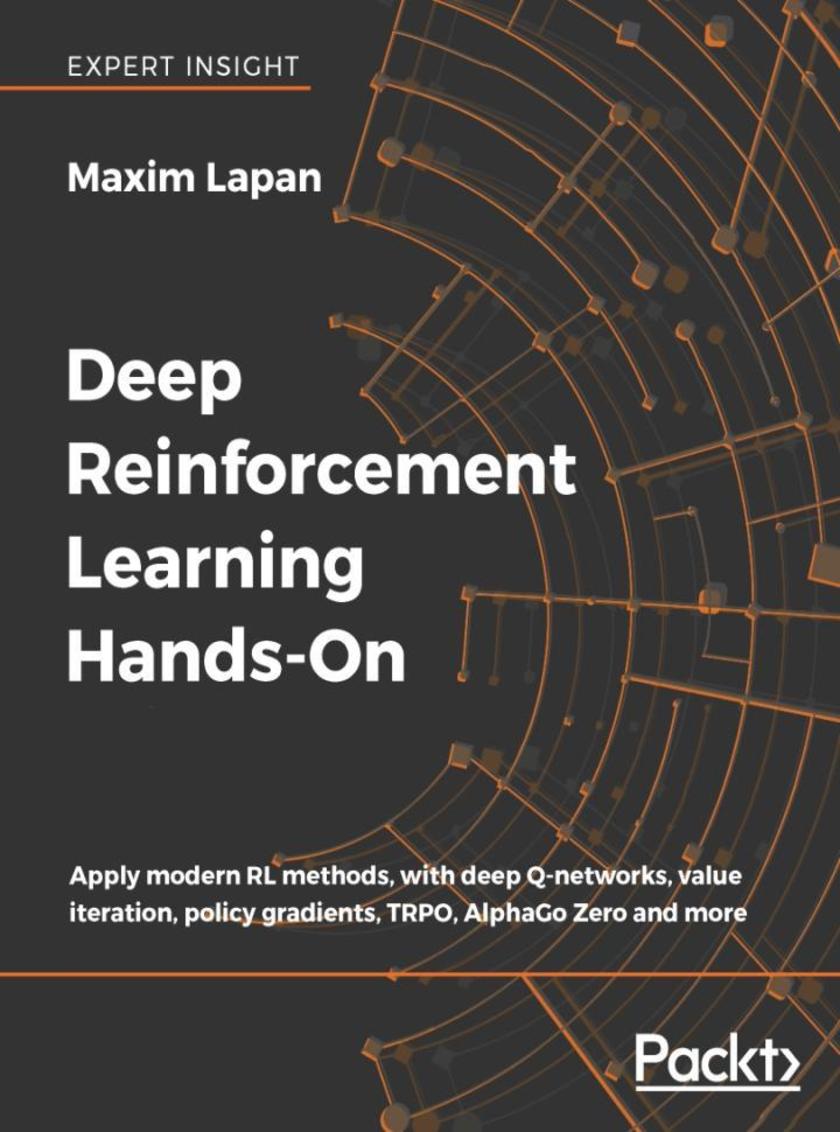
Deep Reinforcement Learning Hands-On
¥66.58
This practical guide will teach you how deep learning (DL) can be used to solve complex real-world problems. About This Book ? Explore deep reinforcement learning (RL), from the first principles to the latest algorithms ? Evaluate high-profile RL methods, including value iteration, deep Q-networks, policy gradients, TRPO, PPO, DDPG, D4PG, evolution strategies and genetic algorithms ? Keep up with the very latest industry developments, including AI-driven chatbots Who This Book Is For Some fluency in Python is assumed. Basic deep learning (DL) approaches should be familiar to readers and some practical experience in DL will be helpful. This book is an introduction to deep reinforcement learning (RL) and requires no background in RL. What You Will Learn ? Understand the DL context of RL and implement complex DL models ? Learn the foundation of RL: Markov decision processes ? Evaluate RL methods including Cross-entropy, DQN, Actor-Critic, TRPO, PPO, DDPG, D4PG and others ? Discover how to deal with discrete and continuous action spaces in various environments ? Defeat Atari arcade games using the value iteration method ? Create your own OpenAI Gym environment to train a stock trading agent ? Teach your agent to play Connect4 using AlphaGo Zero ? Explore the very latest deep RL research on topics including AI-driven chatbots In Detail Recent developments in reinforcement learning (RL), combined with deep learning (DL), have seen unprecedented progress made towards training agents to solve complex problems in a human-like way. Google's use of algorithms to play and defeat the well-known Atari arcade games has propelled the field to prominence, and researchers are generating new ideas at a rapid pace. Deep Reinforcement Learning Hands-On is a comprehensive guide to the very latest DL tools and their limitations. You will evaluate methods including Cross-entropy and policy gradients, before applying them to real-world environments. Take on both the Atari set of virtual games and family favorites such as Connect4. The book provides an introduction to the basics of RL, giving you the know-how to code intelligent learning agents to take on a formidable array of practical tasks. Discover how to implement Q-learning on 'grid world' environments, teach your agent to buy and trade stocks, and find out how natural language models are driving the boom in chatbots. Style and approach Deep Reinforcement Learning Hands-On explains the art of building self-learning agents using algorithms and practical examples. Experiment with famous examples, such as Google's defeat of well-known Atari arcade games.
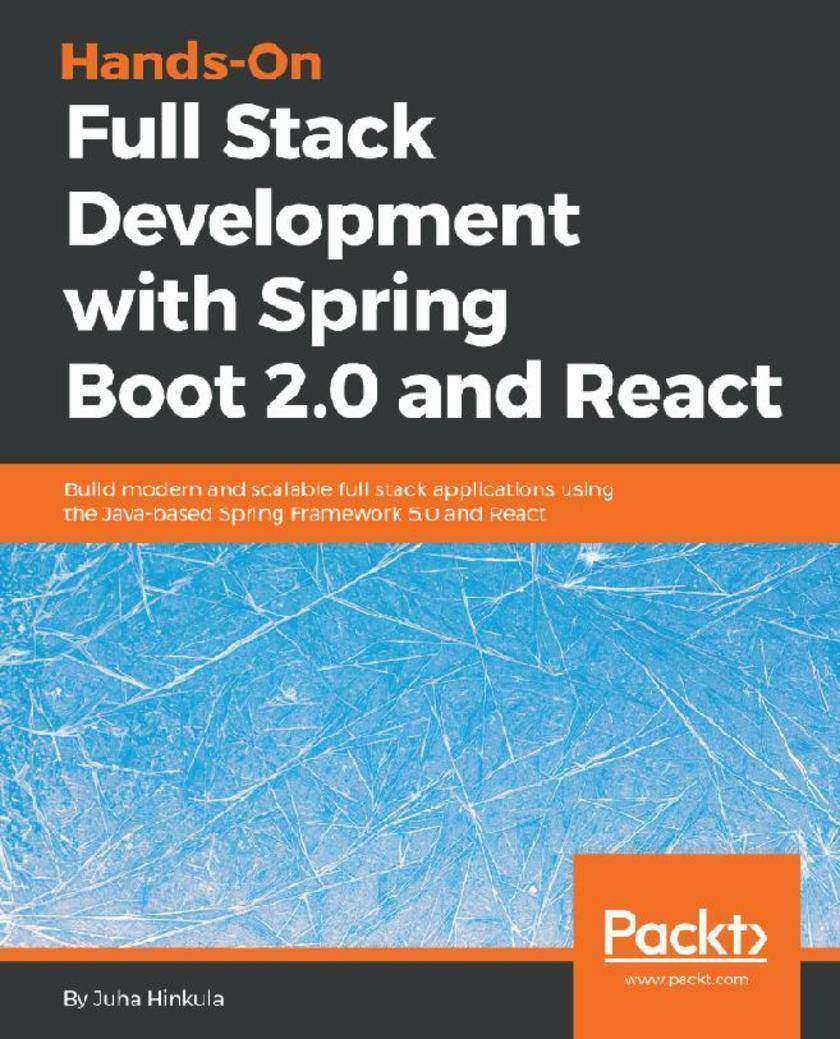
Hands-On Full Stack Development with Spring Boot 2.0 and React
¥74.11
Develop efficient and modern full-stack applications using Spring Boot and React 16 About This Book ? Develop resourceful backends using Spring Boot and faultless frontends using React. ? Explore the techniques involved in creating a full-stack app by going through a methodical approach. ? Learn to add CRUD functionalities and use Material UI in the user interface to make it more user-friendly. Who This Book Is For Java developers who are familiar with Spring, but have not yet built full-stack applications What You Will Learn ? Create a RESTful web service with Spring Boot ? Understand how to use React for frontend programming ? Gain knowledge of how to create unit tests using JUnit ? Discover the techniques that go into securing the backend using Spring Security ? Learn how to use Material UI in the user interface to make it more user-friendly ? Create a React app by using the Create React App starter kit made by Facebook In Detail Apart from knowing how to write frontend and backend code, a full-stack engineer has to tackle all the problems that are encountered in the application development life cycle, starting from a simple idea to UI design, the technical design, and all the way to implementing, testing, production, deployment, and monitoring. This book covers the full set of technologies that you need to know to become a full-stack web developer with Spring Boot for the backend and React for the frontend. This comprehensive guide demonstrates how to build a modern full-stack application in practice. This book will teach you how to build RESTful API endpoints and work with the data access Layer of Spring, using Hibernate as the ORM. As we move ahead, you will be introduced to the other components of Spring, such as Spring Security, which will teach you how to secure the backend. Then, we will move on to the frontend, where you will be introduced to React, a modern JavaScript library for building fast and reliable user interfaces, and its app development environment and components. You will also create a Docker container for your application. Finally, the book will lay out the best practices that underpin professional full-stack web development. Style and approach A step-by-step guide to building full-stack applications along with best practices to make your Full-stack development journey easier
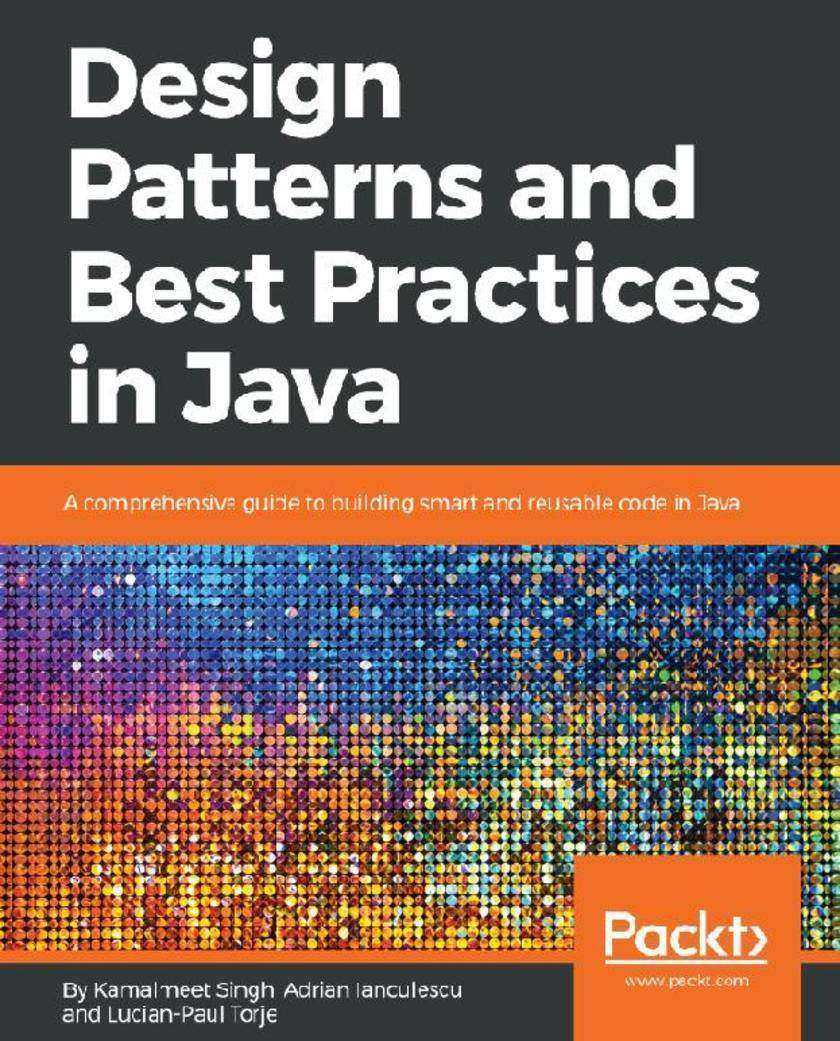
Design Patterns and Best Practices in Java
¥74.11
Create various design patterns to master the art of solving problems using Java About This Book ? This book demonstrates the shift from OOP to functional programming and covers reactive and functional patterns in a clear and step-by-step manner ? All the design patterns come with a practical use case as part of the explanation, which will improve your productivity ? Tackle all kinds of performance-related issues and streamline your development Who This Book Is For This book is for those who are familiar with Java development and want to be in the driver’s seat when it comes to modern development techniques. Basic OOP Java programming experience and elementary familiarity with Java is expected. What You Will Learn ? Understand the OOP and FP paradigms ? Explore the traditional Java design patterns ? Get to know the new functional features of Java ? See how design patterns are changed and affected by the new features ? Discover what reactive programming is and why is it the natural augmentation of FP ? Work with reactive design patterns and find the best ways to solve common problems using them ? See the latest trends in architecture and the shift from MVC to serverless applications ? Use best practices when working with the new features In Detail Having a knowledge of design patterns enables you, as a developer, to improve your code base, promote code reuse, and make the architecture more robust. As languages evolve, new features take time to fully understand before they are adopted en masse. The mission of this book is to ease the adoption of the latest trends and provide good practices for programmers. We focus on showing you the practical aspects of smarter coding in Java. We'll start off by going over object-oriented (OOP) and functional programming (FP) paradigms, moving on to describe the most frequently used design patterns in their classical format and explain how Java’s functional programming features are changing them. You will learn to enhance implementations by mixing OOP and FP, and finally get to know about the reactive programming model, where FP and OOP are used in conjunction with a view to writing better code. Gradually, the book will show you the latest trends in architecture, moving from MVC to microservices and serverless architecture. We will finish off by highlighting the new Java features and best practices. By the end of the book, you will be able to efficiently address common problems faced while developing applications and be comfortable working on scalable and maintainable projects of any size. Style and approach This book explains design patterns in a step-by-step manner with clear and concise code explanations.
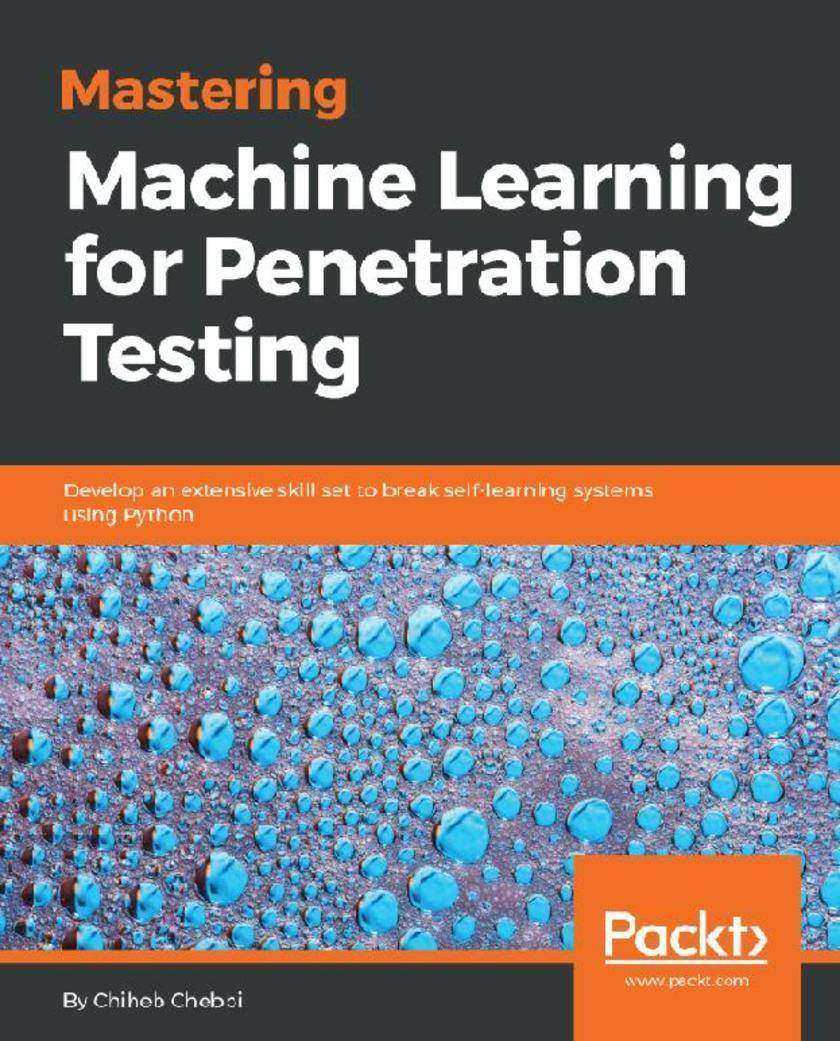
Mastering Machine Learning for Penetration Testing
¥66.58
Become a master at penetration testing using machine learning with Python About This Book ? Identify ambiguities and breach intelligent security systems ? Perform unique cyber attacks to breach robust systems ? Learn to leverage machine learning algorithms Who This Book Is For This book is for pen testers and security professionals who are interested in learning techniques to break an intelligent security system. Basic knowledge of Python is needed, but no prior knowledge of machine learning is necessary. What You Will Learn ? Take an in-depth look at machine learning ? Get to know natural language processing (NLP) ? Understand malware feature engineering ? Build generative adversarial networks using Python libraries ? Work on threat hunting with machine learning and the ELK stack ? Explore the best practices for machine learning In Detail Cyber security is crucial for both businesses and individuals. As systems are getting smarter, we now see machine learning interrupting computer security. With the adoption of machine learning in upcoming security products, it’s important for pentesters and security researchers to understand how these systems work, and to breach them for testing purposes. This book begins with the basics of machine learning and the algorithms used to build robust systems. Once you’ve gained a fair understanding of how security products leverage machine learning, you'll dive into the core concepts of breaching such systems. Through practical use cases, you’ll see how to find loopholes and surpass a self-learning security system. As you make your way through the chapters, you’ll focus on topics such as network intrusion detection and AV and IDS evasion. We’ll also cover the best practices when identifying ambiguities, and extensive techniques to breach an intelligent system. By the end of this book, you will be well-versed with identifying loopholes in a self-learning security system and will be able to efficiently breach a machine learning system. Style and approach This book takes a step-by-step approach to identify the loop holes in a self-learning security system. You will be able to efficiently breach a machine learning system with the help of best practices towards the end of the book.
Mastering Linux Shell Scripting
¥63.21
Master the complexities of Bash shell scripting and unlock the power of shell for your enterprise About This Book ? Identify high-level steps such as verifying user input ? Using the command line and conditional statements in creating/executing simple shell scripts ? Create and edit dynamic shell scripts to manage complex and repetitive tasks ? Leverage the command-line to bypass GUI and automate common tasks Who This Book Is For If you are a Linux administrator or a system administrator and are interested in automating tasks in your daily lives, saving time and effort, this book is for you. Basic shell scripting and command-line experience will be required. Familiarity with the tasks you need to automate will be helpful. What You Will Learn ? Make, execute, and debug your first Bash script ? Create interactive scripts that prompt for user input ? Foster menu structures for operators with little command-line experience ? Develop scripts that dynamically edit web configuration files to produce a new virtual host ? Write scripts that use AWK to search and reports on log files ? Draft effective scripts using functions as building blocks, reducing maintenance and build time ? Make informed choices by comparing different script languages such as Python with BASH In Detail In this book, you’ll discover everything you need to know to master shell scripting and make informed choices about the elements you employ. Grab your favorite editor and start writing your best Bash scripts step by step. Get to grips with the fundamentals of creating and running a script in normal mode, and in debug mode. Learn about various conditional statements' code snippets, and realize the power of repetition and loops in your shell script. You will also learn to write complex shell scripts. This book will also deep dive into file system administration, directories, and system administration like networking, process management, user authentications, and package installation and regular expressions. Towards the end of the book, you will learn how to use Python as a BASH Scripting alternative. By the end of this book, you will know shell scripts at the snap of your fingers and will be able to automate and communicate with your system with keyboard expressions. Style and approach The book will capture your attention and keep you engaged with the simplicity and clarity of each explanation. Every step is accompanied by screenshots so you can cross-check the results before moving on.
Microsoft Operations Management Suite Cookbook
¥73.02
Manage on-premises and cloud IT assets from one console About This Book ? Empower yourself with practical recipes to collect and analyze operational insights on Windows and Linux servers in your on premises datacenters and in any public cloud environments such as Azure and AWS. ? Build capabilities through practical tasks and techniques to collect and analyze machine data ? Address business challenges and discover means to accommodate workloads and instances in a low cost manner Who This Book Is For This book is written for the IT professional and general reader who is interested in technology themes such as DevOps, Big Data Analytics, and digital transformation concepts. Azure and other cloud platform administrators, cloud professionals, and technology analysts who would like to solve everyday problems quickly and efficiently with hybrid management tools available in the Microsoft product ecosystem will derive much value from this book. Prior experience with OMS 2012 would be helpful. What You Will Learn ? Understand the important architectural considerations and strategies for OMS ? Use advanced search query commands and strategies to derive insights from indexed data ? Make use of alerting in OMS such as alert actions, and available options for the entire lifecycle of the alert ? Discover some practical tips for monitoring Azure container service containers and clusters using OMS ? Review and use the backup options available through the Azure backup service, as well as data recovery options available through Azure Site Recovery (ASR) ? Understand how to advance important DevOps concepts within your IT organization ? Learn how to manage configurations and automate process In Detail Microsoft Operations Management Suite Cookbook begins with an overview of how to hit the ground running with OMS insights and analytics. Next, you will learn to search and analyze data to retrieve actionable insights, review alert generation from the analyzed data, and use basic and advanced Log search queries in Azure Log Analytics. Following this, you will explore some other management solutions that provide functionality related to workload assessment, application dependency mapping, automation and configuration management, and security and compliance. You will also become well versed with the data protection and recovery functionalities of OMS Protection and Recovery, and learn how to use Azure Automation components and features in OMS. Finally you will learn how to evaluate key considerations for using the Security and Audit solution, and working with Security and Compliance in OMS. By the end of the book, you will be able to configure and utilize solution offerings in OMS, understand OMS workflows, how to unlock insights, integrate capabilities into new or existing workflows, manage configurations, and automate tasks and processes. Style and approach This is a recipe based guide where early chapters introduce the main concepts and key capabilities, and the later chapters delve into more advance concepts.
Neural Networks: Neural Networks Tools and Techniques for Beginners
¥40.79
Neural Networks: Neural Networks Tools and Techniques for Beginners
Kindle Fire HD HDX 8 & 10 Rooting Guide
¥40.79
Kindle Fire HD HDX 8 & 10 Rooting Guide

Kindle Fire HD HDX 8 & 10 Tablet Complete Manual User Guide
¥40.79
Kindle Fire HD HDX 8 & 10 Tablet Complete Manual User Guide


