


 购物车
购物车 个人中心
个人中心
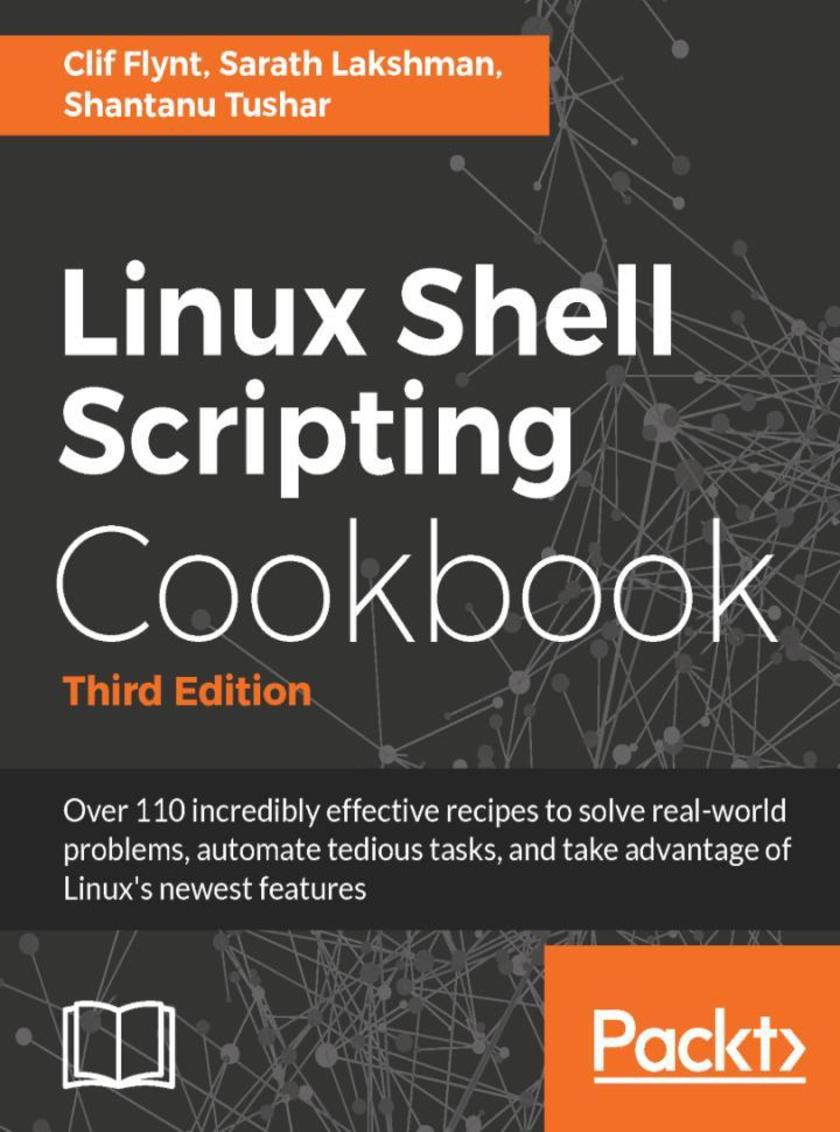
Linux Shell Scripting Cookbook - Third Edition
¥90.46
Do amazing things with the shell About This Book ? Become an expert in creating powerful shell *s and explore the full possibilities of the shell ? Automate any administrative task you could imagine, with shell *s ? Packed with easy-to-follow recipes on new features on Linux, particularly, Debian-based, to help you accomplish even the most complex tasks with ease Who This Book Is For If you are a beginner or an intermediate Linux user who wants to master the skill of quickly writing *s and automate tasks without reading the entire man pages, then this book is for you. You can start writing *s and one-liners by simply looking at the relevant recipe and its de*ions without any working knowledge of shell *ing or Linux. Intermediate / advanced users, system administrators / developers, and programmers can use this book as a reference when they face problems while coding. What You Will Learn ? Interact with websites via *s ? Write shell *s to mine and process data from the Web ? Automate system backups and other repetitive tasks with crontab ? Create, compress, and encrypt archives of your critical data. ? Configure and monitor Ethernet and wireless networks ? Monitor and log network and system activity ? Tune your system for optimal performance ? Improve your system's security ? Identify resource hogs and network bottlenecks ? Extract audio from video files ? Create web photo albums ? Use git or fossil to manage revision control and interact with FOSS projects ? Create and maintain Linux containers and Virtual Machines ? Run a private Cloud server In Detail The shell is the most powerful tool your computer provides. Despite having it at their fingertips, many users are unaware of how much the shell can accomplish. Using the shell, you can generate databases and web pages from sets of files, automate monotonous admin tasks such as system backups, monitor your system's health and activity, identify network bottlenecks and system resource hogs, and more. This book will show you how to do all this and much more. This book, now in its third edition, describes the exciting new features in the newest Linux distributions to help you accomplish more than you imagine. It shows how to use simple commands to automate complex tasks, automate web interactions, download videos, set up containers and cloud servers, and even get free SSL certificates. Starting with the basics of the shell, you will learn simple commands and how to apply them to real-world issues. From there, you'll learn text processing, web interactions, network and system monitoring, and system tuning. Software engineers will learn how to examine system applications, how to use modern software management tools such as git and fossil for their own work, and how to submit patches to open-source projects. Finally, you'll learn how to set up Linux Containers and Virtual machines and even run your own Cloud server with a free SSL Certificate from letsencrypt.org. Style and approach This book will take you through useful real-world recipes designed to make your daily life easier when working with the shell.
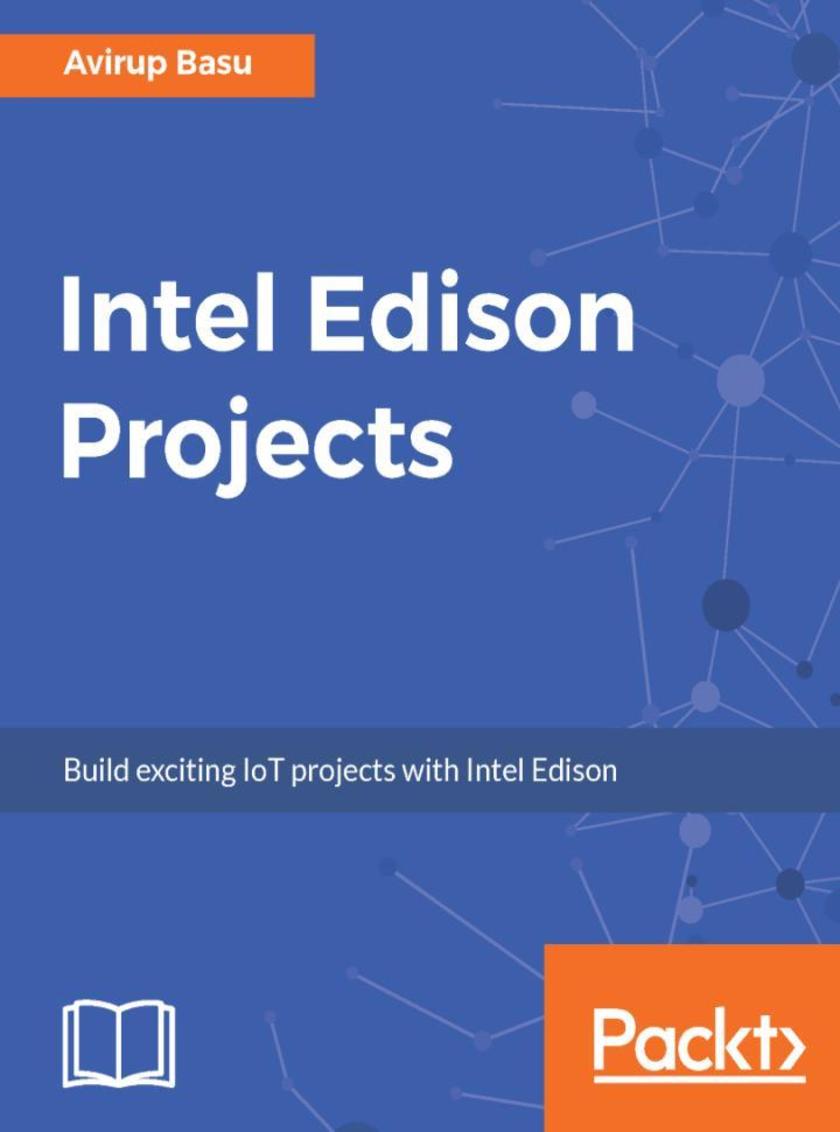
Intel Edison Projects
¥63.21
Build powerful Robots and IoT solutions using Intel Edison About This Book ? Learn to build advanced level robots with Intel Edison and Arduino ? Efficiently build and program home automation and IoT projects with Intel Edison ? Master the skills of creating enticing projects with Intel Edison. Who This Book Is For If you are a hobbyist, robot engineer, IoT enthusiast, programmer, or developer who wants to create autonomous projects with Intel Edison, then this book is for you. Prior programming knowledge would be beneficial. What You Will Learn ? Program your device using the Arduino processor language, Python, and Node.js ? Interface different sensors with the Intel Edison ? Build a home automation system using MQTT, Android, and WPF ? Perform face detection using Intel Edison ? Develop a high-speed line follower robot ? Control a robot using a PC application and an custom controller In Detail Change the way you look at embedded electronics with Intel Edison. It is a small computing platform packed with a set of robust features to deliver hands-on performance, durability, and software support. This book is a perfect place to kickstart development and rapid prototyping using Intel Edison. It will start by introducing readers to the Intel Edison board and explaining how to get started with it. You will learn how to build a mini weather station, which will help you to acquire temperature and smoke level and push it to the IoT platform. Then you will see how to build a home automation device and control your appliances using an Android app. Furthermore, we will build a security system using a webcam to detect faces and perform voice recognition. Toward the end, the book will demonstrate how you can build two robots, which will be based on different line sensing sensors and can be controlled by a PC. The book will guide the readers through each and every step of execution of a project, using Intel Edison. Style and approach A project-based guide that will take the readers through various domains of projects like robotics, IoT and so on.
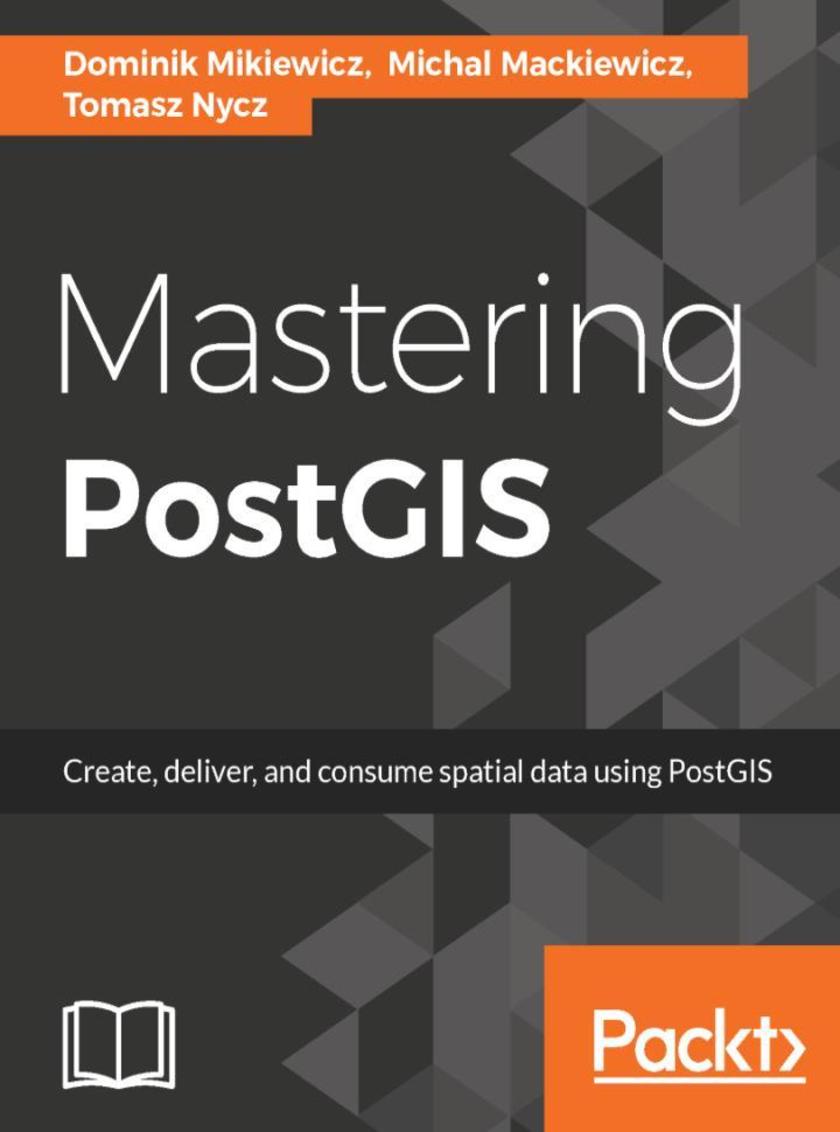
Mastering PostGIS
¥62.12
Write efficient GIS applications using PostGIS - from data creation to data consumption About This Book ? Learn how you can use PostGIS for spatial data analysis and manipulation ? Optimize your queries and build custom functionalities for your GIS application ? A comprehensive guide with hands-on examples to help you master PostGIS with ease Who This Book Is For If you are a GIS developer or analyst who wants to master PostGIS to build efficient, scalable GIS applications, this book is for you. If you want to conduct advanced analysis of spatial data, this book will also help you. The book assumes that you have a working installation of PostGIS in place, and have working experience with PostgreSQL. What You Will Learn ? Refresh your knowledge of the PostGIS concepts and spatial databases ? Solve spatial problems with the use of SQL in real-world scenarios ? Practical walkthroughs of application development examples using Postgis, GeoServer and OpenLayers. ? Extract, transform and load your spatial data ? Expose data directly or through web services. ? Consume your data in both desktop and web clients In Detail PostGIS is open source extension onf PostgreSQL object-relational database system that allows GIS objects to be stored and allows querying for information and location services. The aim of this book is to help you master the functionalities offered by PostGIS- from data creation, analysis and output, to ETL and live edits. The book begins with an overview of the key concepts related to spatial database systems and how it applies to Spatial RMDS. You will learn to load different formats into your Postgres instance, investigate the spatial nature of your raster data, and finally export it using built-in functionalities or 3th party tools for backup or representational purposes. Through the course of this book, you will be presented with many examples on how to interact with the database using JavaScript and Node.js. Sample web-based applications interacting with backend PostGIS will also be presented throughout the book, so you can get comfortable with the modern ways of consuming and modifying your spatial data. Style and approach This book is a comprehensive guide covering all the concepts you need to master PostGIS. Packed with hands-on examples, tips and tricks, even the most advanced concepts are explained in a very easy-to-follow manner. Every chapter in the book does not only focus on how each task is performed, but also why.
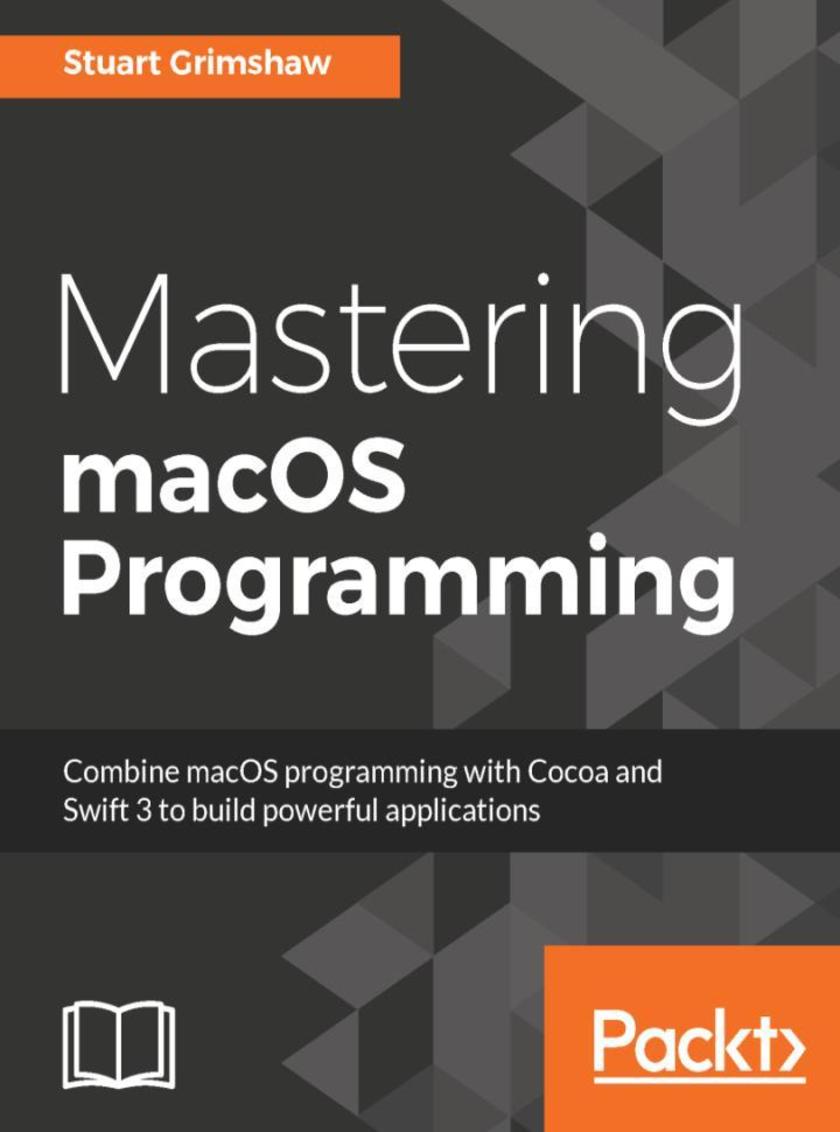
Mastering macOS Programming
¥80.65
Take your macOS Sierra to the next level using the latest tools, designs, and best coding practices while developing with Swift 3.0 About This Book ? Learn to harness the power of macOS with the elegance of the Swift programming language ? Become highly competent in building apps on the macOS platform ? Get the most in-depth guide with a hands-on approach on the latest version of macOS Who This Book Is For This book is for developers who have some experience with macOS and want to take their skills to next level by unlocking the full potential of latest version of macOS with Swift 3 to build impressive applications. Basic knowledge of Swift will be beneficial but is not required. What You Will Learn ? Combine beautiful design with robust code for the very best user experience ? Bring the best coding practices to the new macOS Sierra ? See what's new in Swift 3.0 and how best to leverage the Swift language ? Master Apple's tools, including Xcode, Interface Builder, and Instruments ? Use Unix and other common command-line tools to increase productivity ? Explore the essential Cocoa frameworks, including networking, animation, audio, and video In Detail macOS continues to lead the way in desktop operating systems, with its tight integration across the Apple ecosystem of platforms and devices. With this book, you will get an in-depth knowledge of working on macOS, enabling you to unleash the full potential of the latest version using Swift 3 to build applications. This book will help you broaden your horizons by taking your programming skills to next level. The initial chapters will show you all about the environment that surrounds a developer at the start of a project. It introduces you to the new features that Swift 3 and Xcode 8 offers and also covers the common design patterns that you need to know for planning anything more than trivial projects. You will then learn the advanced Swift programming concepts, including memory management, generics, protocol orientated and functional programming and with this knowledge you will be able to tackle the next several chapters that deal with Apple's own Cocoa frameworks. It also covers AppKit, Foundation, and Core Data in detail which is a part of the Cocoa umbrella framework. The rest of the book will cover the challenges posed by asynchronous programming, error handling, debugging, and many other areas that are an indispensable part of producing software in a professional environment. By the end of this book, you will be well acquainted with Swift, Cocoa, and AppKit, as well as a plethora of other essential tools, and you will be ready to tackle much more complex and advanced software projects. Style and approach This comprehensive guide takes a hands-on practical approach incorporating a visually-rich format rather than a text heavy format. The focus is on teaching the core concepts through a series of small projects and standalone examples so you gain expertise with various aspects of macOS application development.
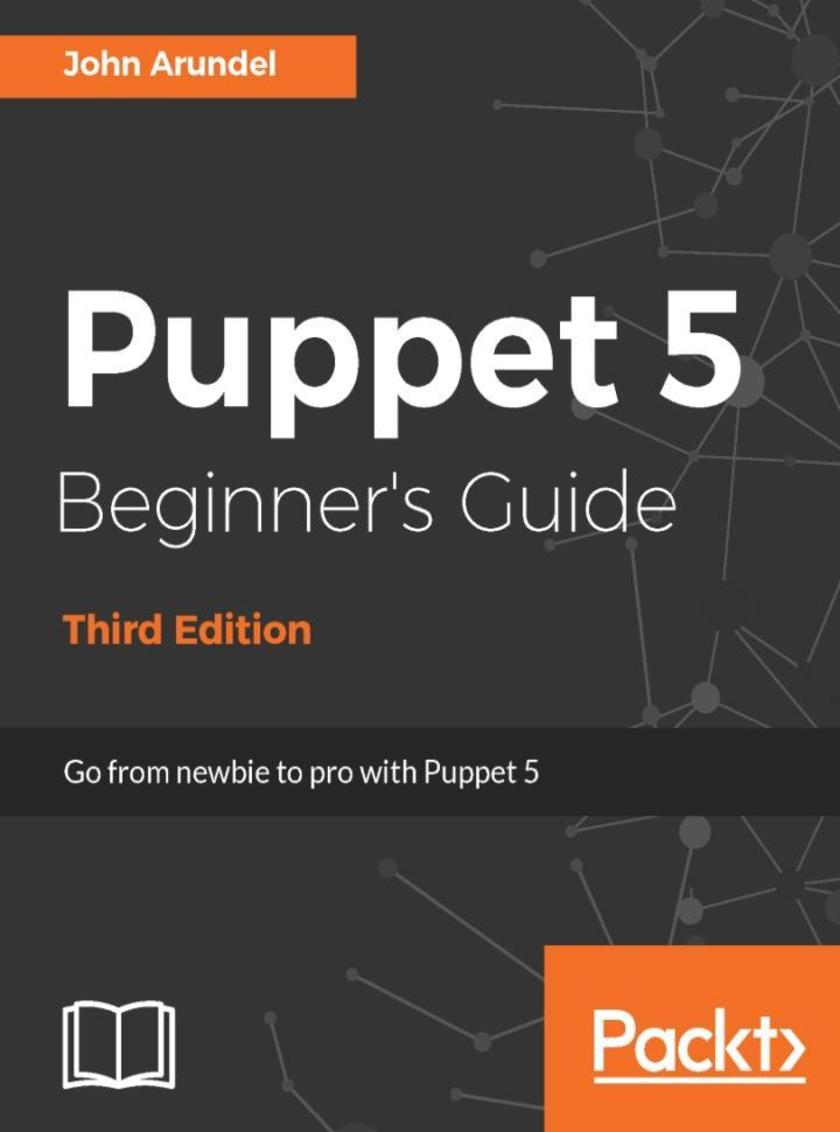
Puppet 5 Beginner's Guide - Third Edition
¥71.93
Puppet 5 Beginner’s Guide, Third Edition is a practical guide that gets you up and running with the very latest features of Puppet 5. About This Book ? Develop skills to run Puppet 5 on single or multiple servers without hiccups ? Use Puppet to create and manage cloud resources such as Amazon EC2 instances ? Take full advantage of powerful new features of Puppet including loops, data types, Hiera integration, and container management Who This Book Is For Puppet 5 Beginner’s Guide, Third Edition is designed for those who are new to Puppet, including system administrators and developers who are looking to manage computer server systems for configuration management. No prior programming or system administration experience is assumed. What You Will Learn ? Understand the latest Puppet 5 features ? Install and set up Puppet and discover the latest and most advanced features ? Configure, build, and run containers in production using Puppet’s industry-leading Docker support ? Deploy configuration files and templates at super-fast speeds and manage user accounts and access control ? Automate your IT infrastructure ? Use the latest features in Puppet 5 onward and its official modules ? Manage clouds, containers, and orchestration ? Get to know the best practices to make Puppet more reliable and increase its performance In Detail Puppet 5 Beginner’s Guide, Third Edition gets you up and running with the very latest features of Puppet 5, including Docker containers, Hiera data, and Amazon AWS cloud orchestration. Go from beginner to confident Puppet user with a series of clear, practical examples to help you manage every aspect of your server setup. Whether you’re a developer, a system administrator, or you are simply curious about Puppet, you’ll learn Puppet skills that you can put into practice right away. With practical steps giving you the key concepts you need, this book teaches you how to install packages and config files, create users, set up scheduled jobs, provision cloud instances, build containers, and so much more. Every example in this book deals with something real and practical that you’re likely to need in your work, and you’ll see the complete Puppet code that makes it happen, along with step-by-step instructions for what to type and what output you’ll see. All the examples are available in a GitHub repo for you to download and adapt for your own server setup. Style and approach This tutorial is packed with quick step-by-step instructions that are immediately applicable for beginners. This is an easy-to-read guide, to learn Puppet from scratch, that explains simply and clearly all you need to know to use this essential IT power tool, while applying these solutions to real-world scenarios.
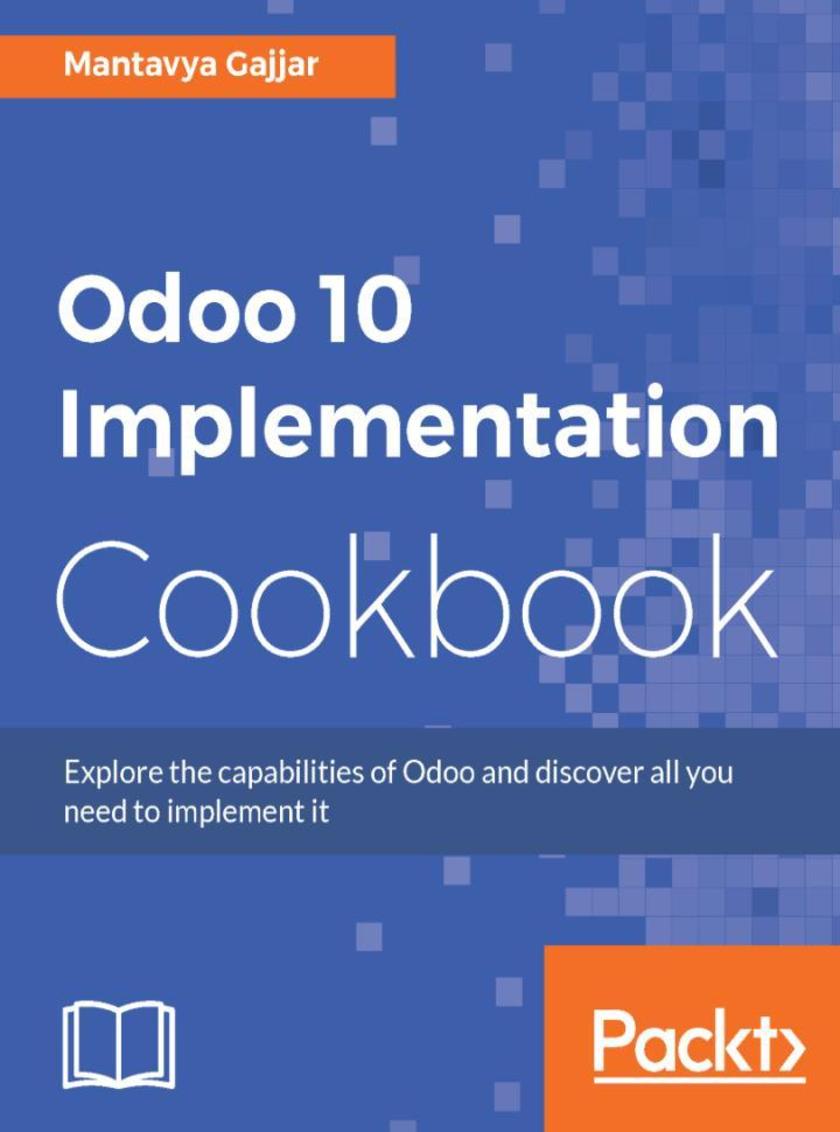
Odoo 10 Implementation Cookbook
¥99.18
Comprehensive tasks covering Odoo 10 in the right way About This Book ? Reduce implementation costs and improve major benchmarks relating to storage space and speed. ? Implement the approval hierarchy and user and access rights, configure the company and language, and so on. ? Cover all platforms such as mobile, web, content management, and e-commerce. Who This Book Is For This book is targeted towards Odoo functional users and project managers who would like to use it for their organization. No expertise in Odoo is required. What You Will Learn ? Learn the modern way of doing sales and managing sales contracts. ? Create and configure your products and manage your sales quotations ? Set up an online shop and start selling online with Odoo eCommerce ? Manage multi-currency transactions and create a deferred revenue plan and link it with products ? Administer vendors and products and request quotations, confirm orders, and get them delivered ? Manage quality control in the warehouse and manual and real-time inventory stock valuations. ? Manage projects and project forecasting via grid and Gantt views ? Implement Human Resource apps and manage the employee appraisal process ? Manage Workcenters and the product lifecycle ? Track worker activity with tablets and launch new changes in production In Detail Odoo is a Python-based ERP system and is completely open source. Odoo is a comprehensive suite of business applications offering a wealth of functionalities that can be deployed to meet your business needs. This book will help you manage the different functionalities of your business and optimize it. You will learn in detail about the various facets of the business process such as sales, accounting, purchases, manufacturing, and inventory. We will cover each of these topics in detail and learn how Odoo handles all these tasks with much ease. With its modular approach, you will be able to build customized solutions, take advantage of the Odoo 10 system in your organization, and master basic administration. We will cover modules and applications in Odoo that will help optimize quality checks. You will also be able to customize major reporting functions for your teams and set up forms and documents for sales, purchase, inventory, and so on. By the end of the book, you will be able to use the major functionalities of Odoo 10 and fully implement them into your business. Style and approach The book follows a recipe-based format; the recipes are filled with real-world use cases and various functional topics.
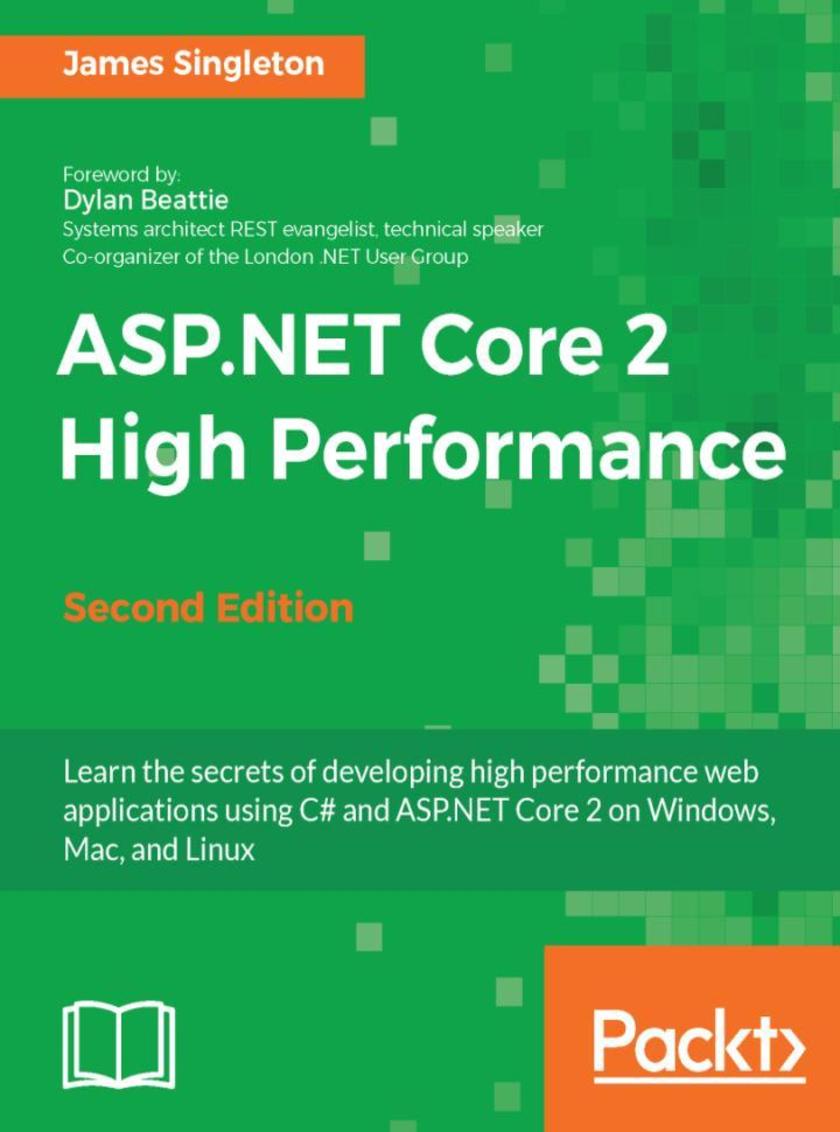
ASP.NET Core 2 High Performance - Second Edition
¥90.46
Learn how to develop web applications that deploy cross-platform and are optimized for high performance using ASP.NET Core 2 About This Book ? Master high-level web app performance improvement techniques using ASP.NET Core 2.0 ? Find the right balance between premature optimization and inefficient code ? Design workflows that run asynchronously and are resilient to transient performance issues Who This Book Is For This book is aimed for readers who can build a web application and have some experience with ASP.NET or some other web application framework (such as Ruby on Rails or Django). They can be people who are happy learning details independently but who struggle to discover the topics that they should be researching. The reader should be interested in improving the performance of their web app and in learning about ASP.NET Core and modern C#. What You Will Learn ? Understand ASP.NET Core 2 and how it differs from its predecessor ? Address performance issues at the early stages of development ? Set up development environments on Windows, Mac, and Linux ? Measure, profile and find the most significant problems ? Identify the differences between development workstations and production infrastructures, and how these can exacerbate problems ? Boost the performance of your application but with an eye to how it affects complexity and maintenance ? Explore a few cutting-edge techniques such as advanced hashing and custom transports In Detail The ASP.NET Core 2 framework is used to develop high-performance and cross-platform web applications. It is built on .NET Core 2 and includes significantly more framework APIs than version 1. This book addresses high-level performance improvement techniques. It starts by showing you how to locate and measure problems and then shows you how to solve some of the most common ones. Next, it shows you how to get started with ASP.NET Core 2 on Windows, Mac, Linux, and with Docker containers. The book illustrates what problems can occur as latency increases when deploying to a cloud infrastructure. It also shows you how to optimize C# code and choose the best data structures for the job. It covers new features in C# 6 and 7, along with parallel programming and distributed architectures. By the end of this book, you will be fixing latency issues and optimizing performance problems, but you will also know how this affects the complexity and maintenance of your application. Finally, we will explore a few highly advanced techniques for further optimization. Style and approach A step-by-step practical guide filled with real-world use cases and examples
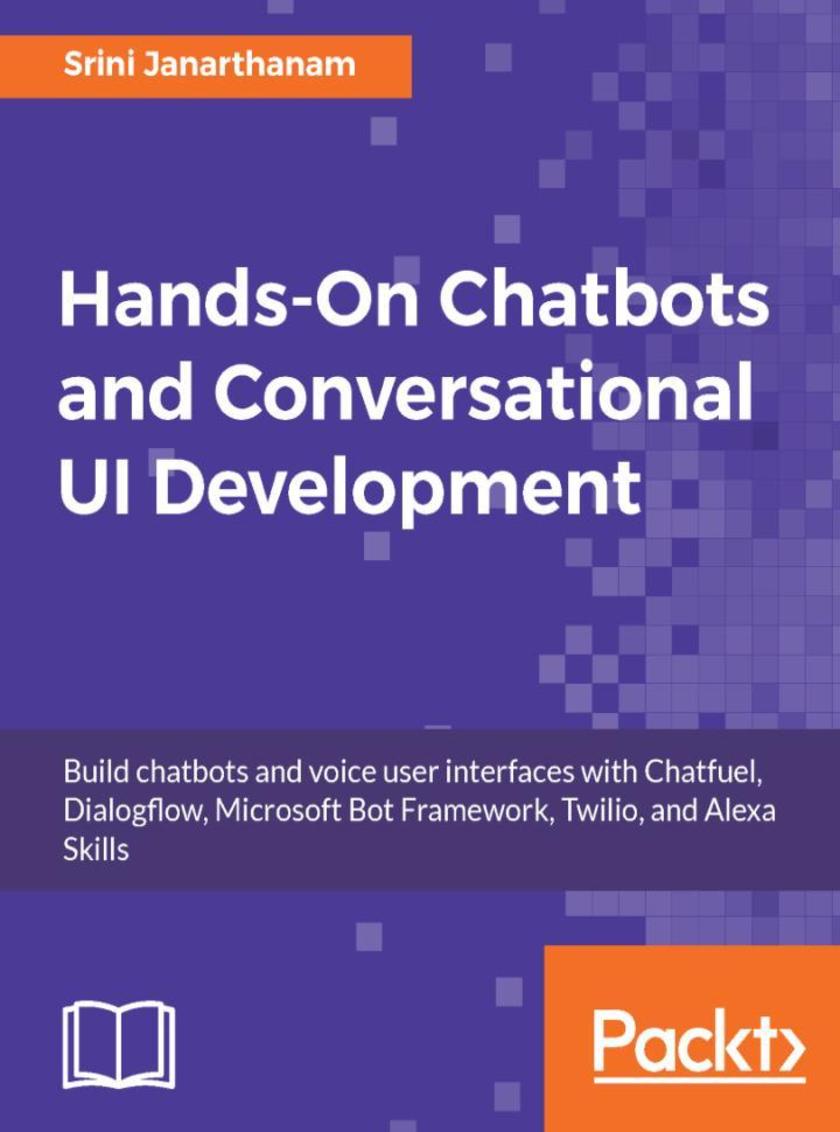
Hands-On Chatbots and Conversational UI Development
¥71.93
Build over 8 chatbots and conversational user interfaces with leading tools such as Chatfuel, Dialogflow, Microsoft Bot Framework, Twilio, Alexa Skills, and Google Actions and deploying them on channels like Facebook Messenge, Amazon Alexa and Google Home About This Book ? Understand the different use cases of Conversational UIs with this project-based guide ? Build feature-rich Chatbots and deploy them on multiple platforms ? Get real-world examples of voice-enabled UIs for personal and home assistance Who This Book Is For This book is for developers who are interested in creating interactive conversational UIs/Chatbots. A basic understanding of JavaScript and web APIs is required. What You Will Learn ? Design the flow of conversation between the user and the chatbot ? Create Task model chatbots for implementing tasks such as ordering food ? Get new toolkits and services in the chatbot ecosystem ? Integrate third-party information APIs to build interesting chatbots ? Find out how to deploy chatbots on messaging platforms ? Build a chatbot using MS Bot Framework ? See how to tweet, listen to tweets, and respond using a chatbot on Twitter ? Publish chatbots on Google Assistant and Amazon Alexa In Detail Conversation as an interface is the best way for machines to interact with us using the universally accepted human tool that is language. Chatbots and voice user interfaces are two flavors of conversational UIs. Chatbots are real-time, data-driven answer engines that talk in natural language and are context-aware. Voice user interfaces are driven by voice and can understand and respond to users using speech. This book covers both types of conversational UIs by leveraging APIs from multiple platforms. We'll take a project-based approach to understand how these UIs are built and the best use cases for deploying them. We'll start by building a simple messaging bot from the Facebook Messenger API to understand the basics of bot building. Then we move on to creating a Task model that can perform complex tasks such as ordering and planning events with the newly-acquired-by-Google Dialogflow and Microsoft Bot framework. We then turn to voice-enabled UIs that are capable of interacting with users using speech with Amazon Alexa and Google Home. By the end of the book, you will have created your own line of chatbots and voice UIs for multiple leading platforms. Style and approach This is a practical book, where each chapter focuses on a chatbot project. The chapters take a step-by-step approach to help you build intelligent chatbots that act as personal assistants.
Enterprise Cloud Security and Governance
¥80.65
Build a resilient cloud architecture to tackle data disasters with ease About This Book ? Gain a firm grasp of Cloud data security and governance, irrespective of your Cloud platform ? Practical examples to ensure you secure your Cloud environment efficiently ? A step-by-step guide that will teach you the unique techniques and methodologies of Cloud data governance Who This Book Is For If you are a cloud security professional who wants to ensure cloud security and data governance no matter the environment, then this book is for you. A basic understanding of working on any cloud platform would be beneficial. What You Will Learn ? Configure your firewall and Network ACL ? Protect your system against DDOS and application-level attacks ? Explore cryptography and data security for your cloud ? Get to grips with configuration management tools to automate your security tasks ? Perform vulnerability scanning with the help of the standard tools in the industry ? Learn about central log management In Detail Modern day businesses and enterprises are moving to the Cloud, to improve efficiency and speed, achieve flexibility and cost effectiveness, and for on-demand Cloud services. However, enterprise Cloud security remains a major concern because migrating to the public Cloud requires transferring some control over organizational assets to the Cloud provider. There are chances these assets can be mismanaged and therefore, as a Cloud security professional, you need to be armed with techniques to help businesses minimize the risks and misuse of business data. The book starts with the basics of Cloud security and offers an understanding of various policies, governance, and compliance challenges in Cloud. This helps you build a strong foundation before you dive deep into understanding what it takes to design a secured network infrastructure and a well-architected application using various security services in the Cloud environment. Automating security tasks, such as Server Hardening with Ansible, and other automation services, such as Monit, will monitor other security daemons and take the necessary action in case these security daemons are stopped maliciously. In short, this book has everything you need to secure your Cloud environment with. It is your ticket to obtain industry-adopted best practices for developing a secure, highly available, and fault-tolerant architecture for organizations. Style and approach This book follows a step-by-step, practical approach to secure your applications and data when they are located remotely.
Building Large-Scale Web Applications with Angular
¥90.46
A definitive guide on frontend development with Angular from design to deployment Key Features *Develop web applications from scratch using Angular and TypeScript *Explore reactive programming principles and RxJS to develop and test apps easily *Study continuous integration and deployment on the AWS cloud Book Description If you have been burnt by unreliable JavaScript frameworks before, you will be amazed by the maturity of the Angular platform. Angular enables you to build fast, efficient, and real-world web apps. In this Learning Path, you'll learn Angular and to deliver high-quality and production-grade Angular apps from design to deployment. You will begin by creating a simple fitness app, using the building blocks of Angular, and make your final app, Personal Trainer, by morphing the workout app into a full-fledged personal workout builder and runner with an advanced directive building - the most fundamental and powerful feature of Angular. You will learn the different ways of architecting Angular applications using RxJS, and some of the patterns that are involved in it. Later you’ll be introduced to the router-first architecture, a seven-step approach to designing and developing mid-to-large line-of-business apps, along with popular recipes. By the end of this book, you will be familiar with the scope of web development using Angular, Swagger, and Docker, learning patterns and practices to be successful as an individual developer on the web or as a team in the Enterprise. This Learning Path includes content from the following Packt products: *Angular 6 by Example by Chandermani Arora, Kevin Hennessy *Architecting Angular Applications with Redux, RxJS, and NgRx by Christoffer Noring *Angular 6 for Enterprise-Ready Web Applications by Doguhan Uluca What you will learn *Develop web applications from scratch using Angular and TypeScript *Explore reactive programming principles, RxJS to develop and test apps efficiently *Study continuous integration and deployment your Angular app on the AWS cloud Who this book is for If you're a JavaScript or frontend developer looking to gain comprehensive experience of using Angular for end-to-end enterprise-ready applications, this Learning Path is for you.
CentOS Quick Start Guide
¥71.93
A concise walk-through of CentOS 7, starting from installation to securing it’s environment. Key Features *No previous Linux environment experience needed for reading this book *Get comfortable with a popular and stable Red Hat Enterprise Linux distribution *Most of the command line based concepts are explained with graphics Book Description Linux kernel development has been the worlds largest collaborative project to date. With this practical guide, you will learn Linux through one of its most popular and stable distributions. This book will introduce you to essential Linux skills using CentOS 7. It describes how a Linux system is organized, and will introduce you to key command-line concepts you can practice on your own. It will guide you in performing basic system administration tasks and day-to-day operations in a Linux environment. You will learn core system administration skills for managing a system running CentOS 7 or a similar operating system, such as RHEL 7, Scientific Linux, and Oracle Linux. You will be able to perform installation, establish network connectivity and user and process management, modify file permissions, manage text files using the command line, and implement basic security administration after covering this book. By the end of this book, you will have a solid understanding of working with Linux using the command line. What you will learn *Understand file system hierarchy and essential command-line skills *Use Vi editor, I/O redirections and how to work with common text manipulating tools *Create, delete, modify user accounts and manage passwords and their aging policy *Manage file ownership, permissions, and ACL *Execute process management and monitoring on the command line *Validate and manage network configuration using nmcli *Manage remote logins using SSH and file transfer using SCP and Rsync *Understand system logging, how to control system services with systemd and systemctl, and manage firewalId Who this book is for Any individual who wants to learn how to use Linux as server or desktop in his environment. Whether you are a developer, budding system administrator, or tech lover with no previous Linux administration background, you will be able to start your journey in Linux using CentOS 7 with this book.
Microsoft Power BI Complete Reference
¥90.46
Design, develop, and master efficient Power BI solutions for impactful business insights Key Features *Get to grips with the fundamentals of Microsoft Power BI *Combine data from multiple sources, create visuals, and publish reports across platforms *Understand Power BI concepts with real-world use cases Book Description Microsoft Power BI Complete Reference Guide gets you started with business intelligence by showing you how to install the Power BI toolset, design effective data models, and build basic dashboards and visualizations that make your data come to life. In this Learning Path, you will learn to create powerful interactive reports by visualizing your data and learn visualization styles, tips and tricks to bring your data to life. You will be able to administer your organization's Power BI environment to create and share dashboards. You will also be able to streamline deployment by implementing security and regular data refreshes. Next, you will delve deeper into the nuances of Power BI and handling projects. You will get acquainted with planning a Power BI project, development, and distribution of content, and deployment. You will learn to connect and extract data from various sources to create robust datasets, reports, and dashboards. Additionally, you will learn how to format reports and apply custom visuals, animation and analytics to further refine your data. By the end of this Learning Path, you will learn to implement the various Power BI tools such as on-premises gateway together along with staging and securely distributing content via apps. This Learning Path includes content from the following Packt products: *Microsoft Power BI Quick Start Guide by Devin Knight et al. *Mastering Microsoft Power BI by Brett Powell What you will learn *Connect to data sources using both import and DirectQuery options *Leverage built-in and custom visuals to design effective reports *Administer a Power BI cloud tenant for your organization *Deploy your Power BI Desktop files into the Power BI Report Server *Build efficient data retrieval and transformation processes Who this book is for Microsoft Power BI Complete Reference Guide is for those who want to learn and use the Power BI features to extract maximum information and make intelligent decisions that boost their business. If you have a basic understanding of BI concepts and want to learn how to apply them using Microsoft Power BI, then Learning Path is for you. It consists of real-world examples on Power BI and goes deep into the technical issues, covers additional protocols, and much more.
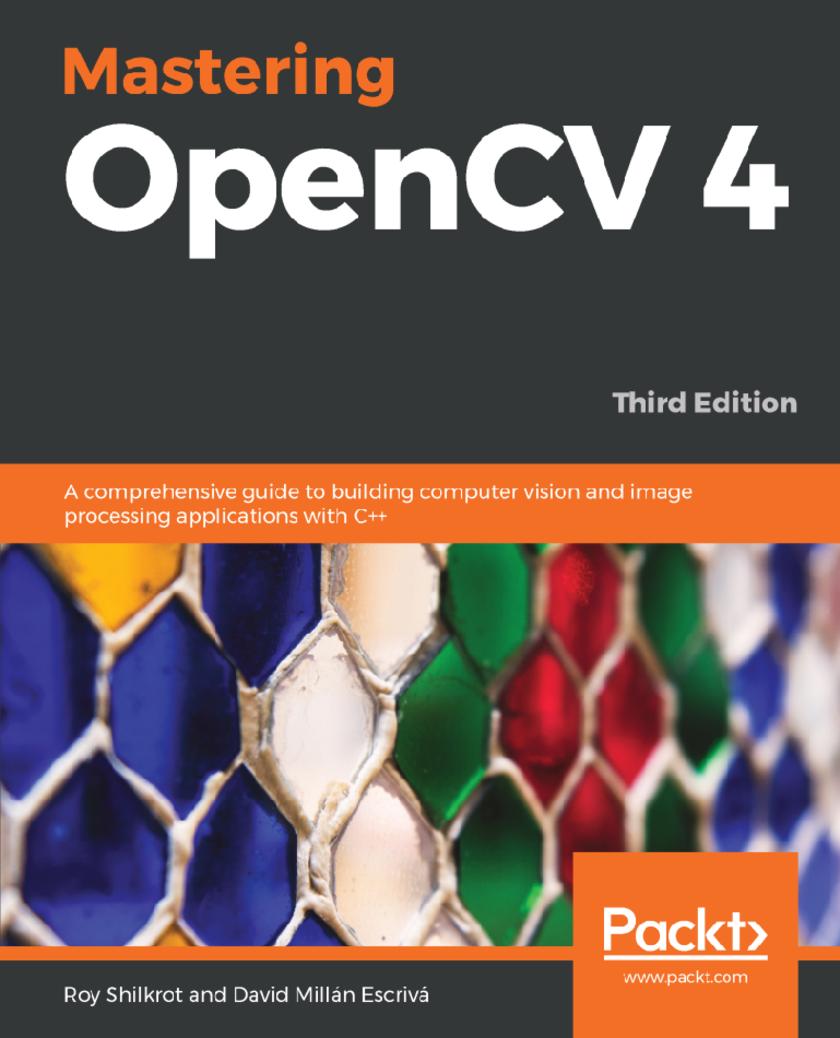
Mastering OpenCV 4
¥81.74
Work on practical computer vision projects covering advanced object detector techniques and modern deep learning and machine learning algorithms Key Features *Learn about the new features that help unlock the full potential of OpenCV 4 *Build face detection applications with a cascade classifier using face landmarks *Create an optical character recognition (OCR) model using deep learning and convolutional neural networks Book Description Mastering OpenCV, now in its third edition, targets computer vision engineers taking their first steps toward mastering OpenCV. Keeping the mathematical formulations to a solid but bare minimum, the book delivers complete projects from ideation to running code, targeting current hot topics in computer vision such as face recognition, landmark detection and pose estimation, and number recognition with deep convolutional networks. You’ll learn from experienced OpenCV experts how to implement computer vision products and projects both in academia and industry in a comfortable package. You’ll get acquainted with API functionality and gain insights into design choices in a complete computer vision project. You’ll also go beyond the basics of computer vision to implement solutions for complex image processing projects. By the end of the book, you will have created various working prototypes with the help of projects in the book and be well versed with the new features of OpenCV4. What you will learn *Build real-world computer vision problems with working OpenCV code samples *Uncover best practices in engineering and maintaining OpenCV projects *Explore algorithmic design approaches for complex computer vision tasks *Work with OpenCV’s most updated API (v4.0.0) through projects *Understand 3D scene reconstruction and Structure from Motion (SfM) *Study camera calibration and overlay AR using the ArUco Module Who this book is for This book is for those who have a basic knowledge of OpenCV and are competent C++ programmers. You need to have an understanding of some of the more theoretical/mathematical concepts, as we move quite quickly throughout the book.
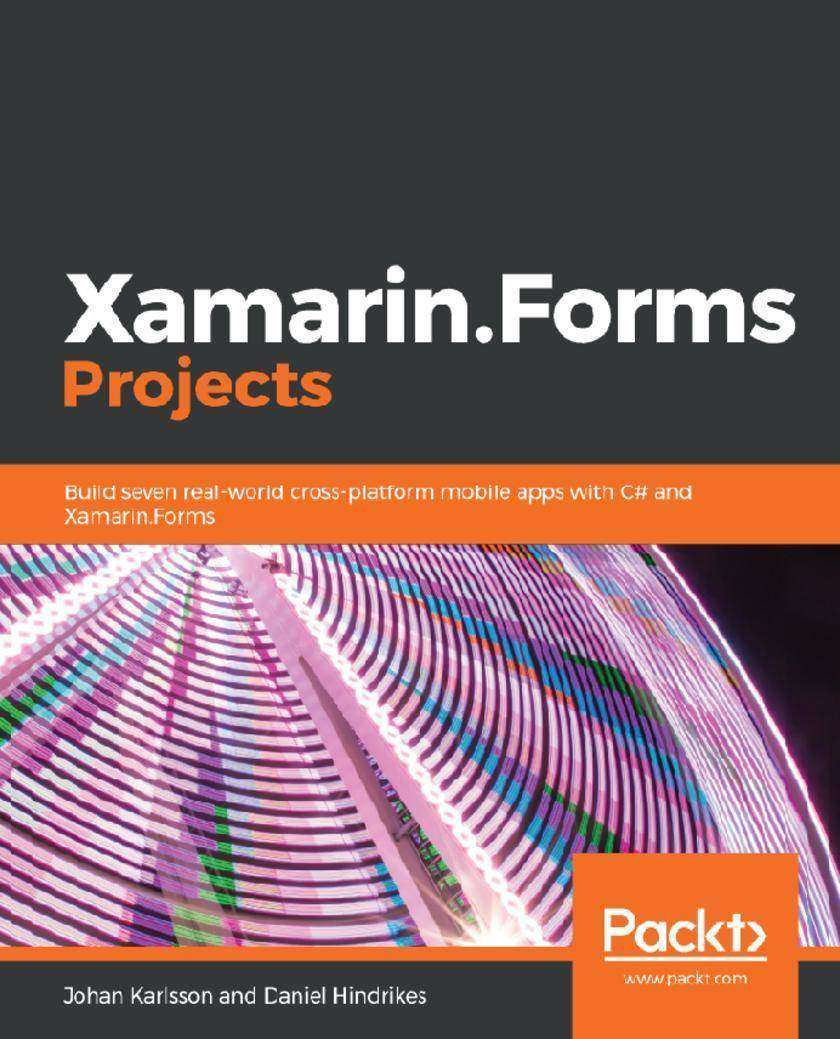
Xamarin.Forms Projects
¥71.93
Explore Xamarin.Forms to develop dynamic applications Key Features *Explore SQLite through Xamarin to store locations for various location-based applications *Make a real-time serverless chat service by using Azure SignalR service *Build Augmented Reality application with the power of UrhoSharp together with ARKit and ARCore Book Description Xamarin.Forms is a lightweight cross-platform development toolkit for building applications with a rich user interface. In this book you'll start by building projects that explain the Xamarin.Forms ecosystem to get up and running with building cross-platform applications. We'll increase in difficulty throughout the projects, making you learn the nitty-gritty of Xamarin.Forms offerings. You'll gain insights into the architecture, how to arrange your app's design, where to begin developing, what pitfalls exist, and how to avoid them. The book contains seven real-world projects, to get you hands-on with building rich UIs and providing a truly cross-platform experience. It will also guide you on how to set up a machine for Xamarin app development. You'll build a simple to-do application that gets you going, then dive deep into building advanced apps such as messaging platform, games, and machine learning, to build a UI for an augmented reality project. By the end of the book, you'll be confident in building cross-platforms and fitting Xamarin.Forms toolkits in your app development. You'll be able to take the practice you get from this book to build applications that comply with your requirements. What you will learn *Set up a machine for Xamarin development *Get to know about MVVM and data bindings in Xamarin.Forms *Understand how to use custom renderers to gain platform-specific access *Discover Geolocation services through Xamarin Essentials *Create an abstraction of ARKit and ARCore to expose as a single API for the game *Learn how to train a model for image *classification with Azure Cognitive Services Who this book is for This book is for mobile application developers who want to start building native mobile apps using the powerful Xamarin.Forms and C#. Working knowledge of C#, .NET, and Visual Studio is required.
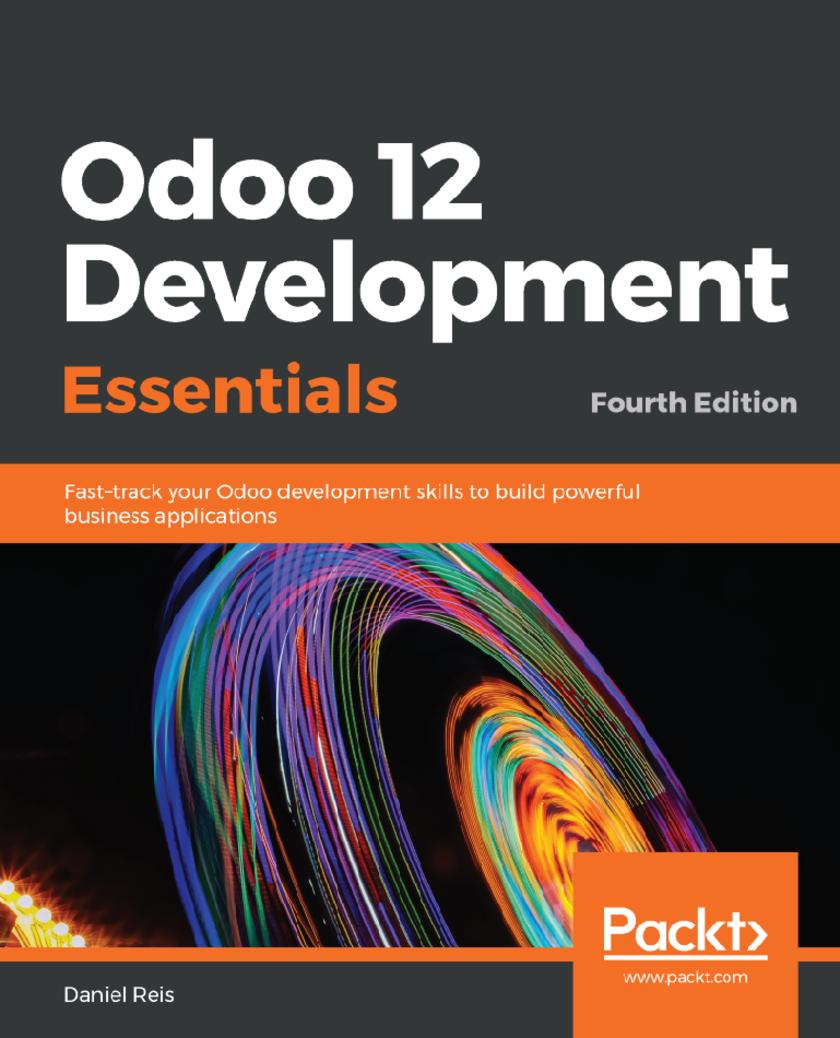
Odoo 12 Development Essentials
¥81.74
Extend your skills with Odoo 12 to build resourceful and open source business applications Key Features *Explore Odoo 12 capabilities to develop business applications *Program business logic and manipulate data to implement specific business rules in your applications *Integrate Python APIs for building customizable and scalable business logic Book Description Odoo is one of the best platforms for open source ERP and CRM. Its latest version, Odoo 12, brings with it new features and updates in Python packages to develop more customizable applications with additional cloud capabilities. The book begins by covering the development essentials for building business applications. You will start your journey by learning how to install and configure Odoo, and then transition from having no specific knowledge of Odoo to being ready for application development. You will develop your first Odoo application and understand topics such as models and views. Odoo 12 Development Essentials will also guide you in using server APIs to add business logic, helping you lay a solid foundation for advanced topics. As you progress through the chapters, you will be equipped to build and customize your applications and explore the new features in Odoo 12, such as cloud integration, to scale your business applications. You will get insights into building business logic and integrating various APIs into your application. By the end of the book, you will be able to build a business application from scratch by using the latest version of Odoo. What you will learn *Manage Odoo server instances *Create a new Odoo application from scratch using the most frequently used elements *Develop new models and use inheritance to extend existing models *Use ORM methods in the Odoo server and from external clients *Create Kanban views using QWeb effectively *Build custom web and website CMS pages *Use external APIs to integrate Odoo with external applications *Add automated tests and techniques to debug module business logic Who this book is for If you are a developer familiar with Python and MVC design and want to build business applications using Odoo, this book is for you.
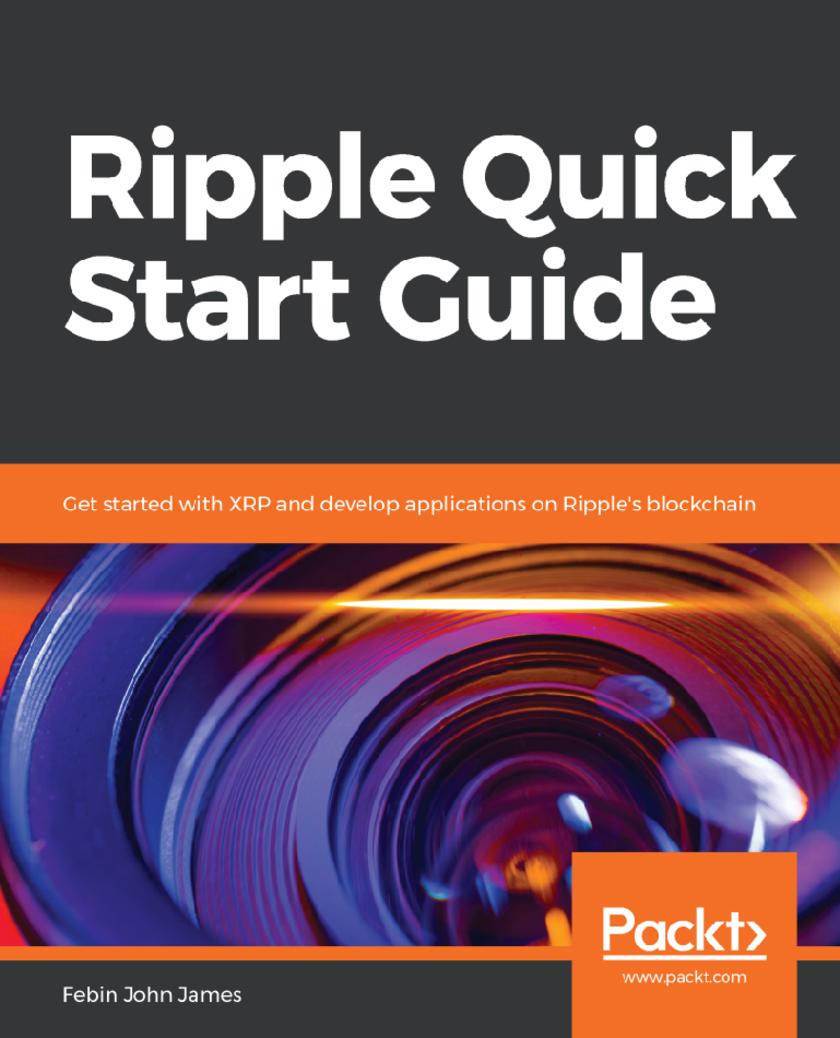
Ripple Quick Start Guide
¥54.49
Learn to work with XRP and build applications on Ripple's blockchain Key Features *Learn to use Ripple’s decentralized system for transfering digital assets globally *A simpilfied and shortened learning curve to understand the Ripple innovation and Blockchain *Takes a hands-on approach to work with XRP – Ripple’s native currency Book Description This book starts by giving you an understanding of the basics of blockchain and the Ripple protocol. You will then get some hands-on experience of working with XRP. You will learn how to set up a Ripple wallet and see how seamlessly you can transfer money abroad. You will learn about different types of wallets through which you can store and transact XRP, along with the security precautions you need to take to keep your money safe. Since Ripple is currency agnostic, it can enable the transfer of value in USD, EUR, and any other currency. You can even transfer digital assets using Ripple. You will see how you can pay an international merchant with their own native currency and how Ripple can exchange it on the ?y. Once you understand the applications of Ripple, you will learn how to create a conditionally-held escrow using the Ripple API, and how to send and cash checks. Finally, you will also understand the common misconceptions people have about Ripple and discover the potential risks you must consider before making investment decisions. By the end of this book, you will have a solid foundation for working with Ripple's blockchain. Using it, you will be able to solve problems caused by traditional systems in your respective industry. What you will learn *Understand the fundamentals of blockchain and Ripple *Learn how to choose a Ripple wallet *Set up a Ripple wallet to send and receive XRP *Learn how to protect your XRP *Understand the applications of Ripple *Learn how to work with the Ripple API *Learn how to build applications on check and escrow features of Ripple Who this book is for This book is for anyone interested in getting their hands on Ripple technology and learn where it can be used to gain competitive advantages in their respective fields. For most parts of the book, you need not have any pre-requisite knowledge. However, you need to have basic background of JavaScript to write an escrow.
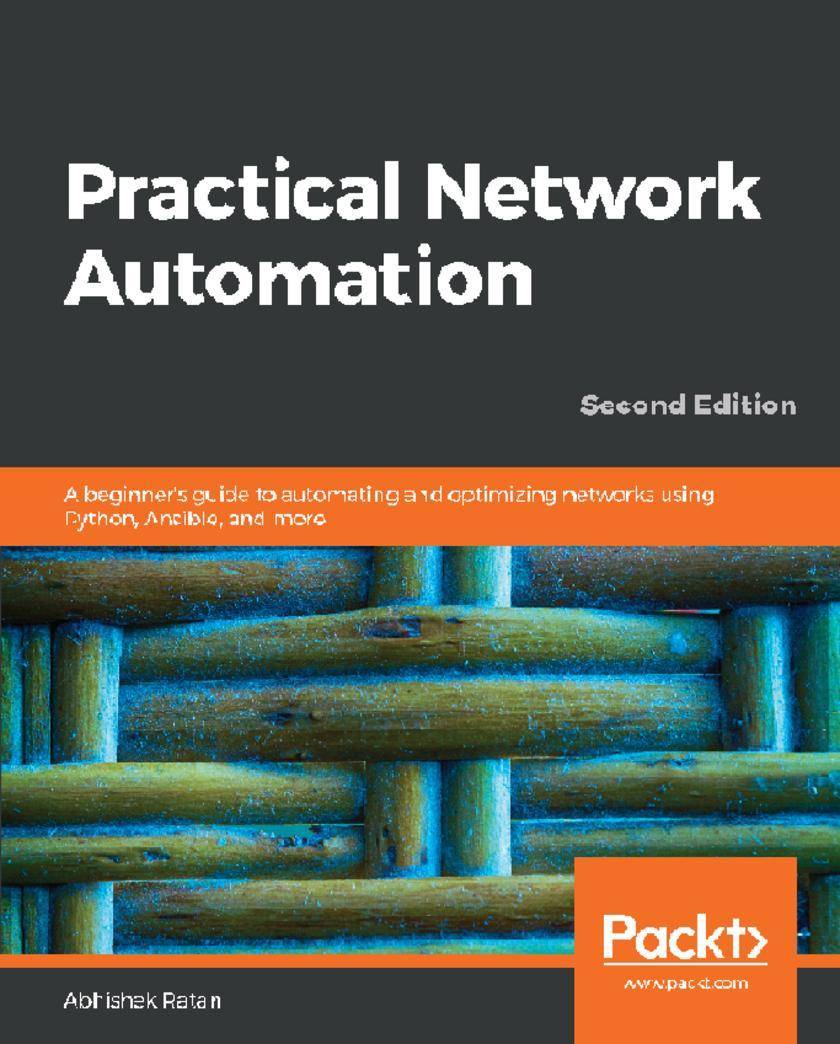
Practical Network Automation
¥71.93
Leverage the power of Python, Ansible and other network automation tools to make your network robust and more secure Key Features *Get introduced to the concept of network automation with relevant use cases *Apply Continuous Integration and DevOps to improve your network performance *Implement effective automation using tools such as Python, Ansible, and more Book Description Network automation is the use of IT controls to supervise and carry out everyday network management functions. It plays a key role in network virtualization technologies and network functions. The book starts by providing an introduction to network automation, and its applications, which include integrating DevOps tools to automate the network efficiently. It then guides you through different network automation tasks and covers various data digging and performing tasks such as ensuring golden state configurations using templates, interface parsing. This book also focuses on Intelligent Operations using Artificial Intelligence and troubleshooting using chatbots and voice commands. The book then moves on to the use of Python and the management of SSH keys for machine-to-machine (M2M) communication, all followed by practical use cases. The book also covers the importance of Ansible for network automation, including best practices in automation; ways to test automated networks using tools such as Puppet, SaltStack, and Chef; and other important techniques. Through practical use-cases and examples, this book will acquaint you with the various aspects of network automation. It will give you the solid foundation you need to automate your own network without any hassle. What you will learn *Get started with the fundamental concepts of network automation *Perform intelligent data mining and remediation based on triggers *Understand how AIOps works in operations *Trigger automation through data factors *Improve your data center's robustness and security through data digging *Get access infrastructure through API Framework for chatbot and voice interactive troubleshootings *Set up communication with SSH-based devices using Netmiko Who this book is for If you are a network engineer or a DevOps professional looking for an extensive guide to help you automate and manage your network efficiently, then this book is for you. No prior experience with network automation is required to get started, however you will need some exposure to Python programming to get the most out of this book.
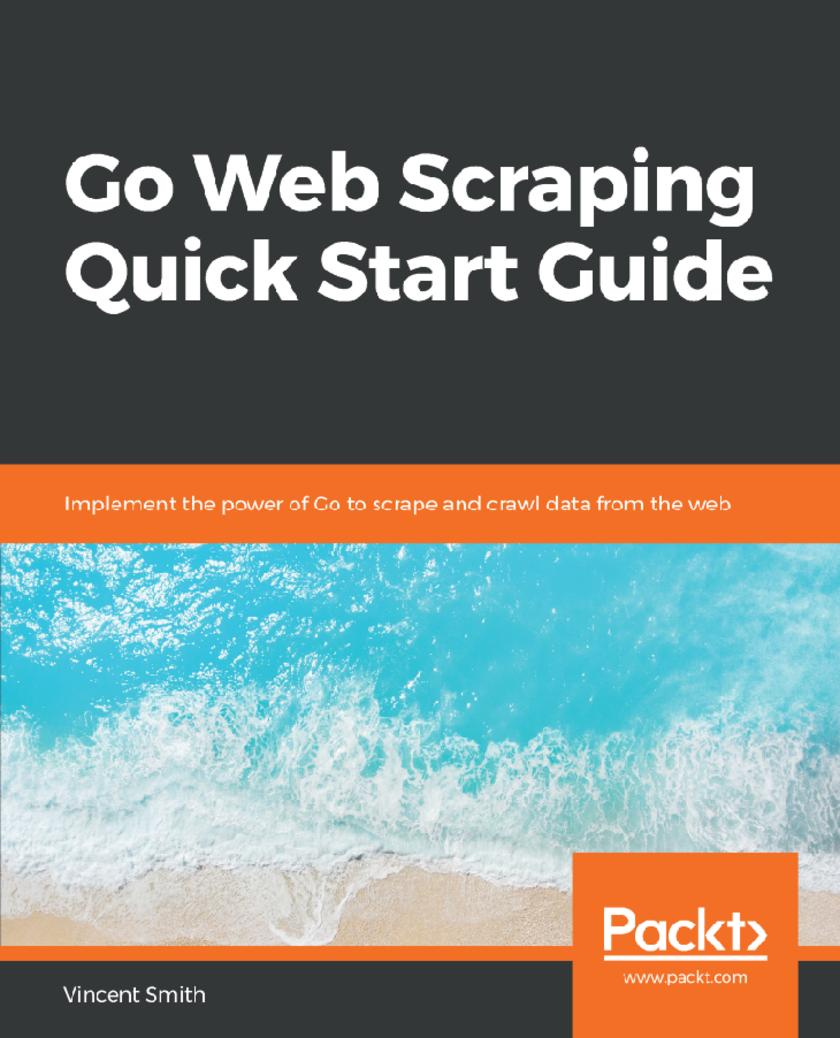
Go Web Scraping Quick Start Guide
¥45.77
Learn how some Go-specific language features help to simplify building web scrapers along with common pitfalls and best practices regarding web scraping. Key Features * Use Go libraries like Goquery and Colly to scrape the web * Common pitfalls and best practices to effectively scrape and crawl * Learn how to scrape using the Go concurrency model Book Description Web scraping is the process of extracting information from the web using various tools that perform scraping and crawling. Go is emerging as the language of choice for scraping using a variety of libraries. This book will quickly explain to you, how to scrape data data from various websites using Go libraries such as Colly and Goquery. The book starts with an introduction to the use cases of building a web scraper and the main features of the Go programming language, along with setting up a Go environment. It then moves on to HTTP requests and responses and talks about how Go handles them. You will also learn about a number of basic web scraping etiquettes. You will be taught how to navigate through a website, using a breadth-first and then a depth-first search, as well as find and follow links. You will get to know about the ways to track history in order to avoid loops and to protect your web scraper using proxies. Finally the book will cover the Go concurrency model, and how to run scrapers in parallel, along with large-scale distributed web scraping. What you will learn * Implement Cache-Control to avoid unnecessary network calls * Coordinate concurrent scrapers * Design a custom, larger-scale scraping system * Scrape basic HTML pages with Colly and JavaScript pages with chromedp * Discover how to search using the "strings" and "regexp" packages * Set up a Go development environment * Retrieve information from an HTML document * Protect your web scraper from being blocked by using proxies * Control web browsers to scrape JavaScript sites Who this book is for Data scientists, and web developers with a basic knowledge of Golang wanting to collect web data and analyze them for effective reporting and visualization.
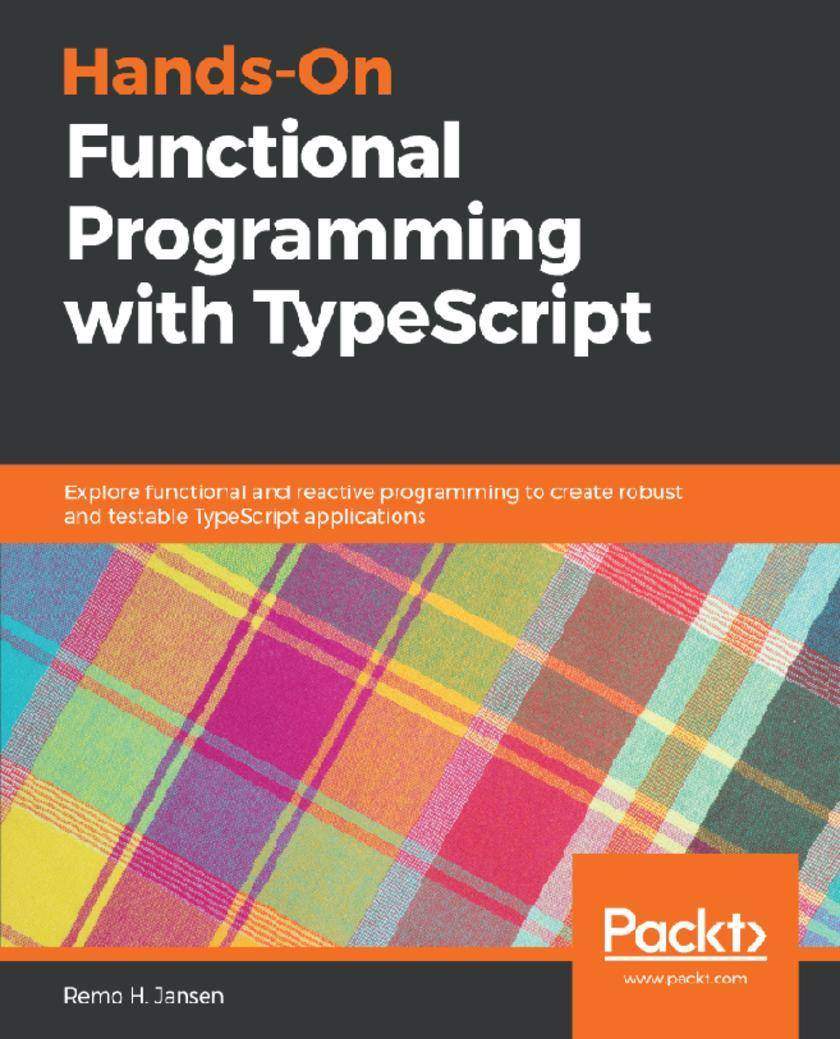
Hands-On Functional Programming with TypeScript
¥63.21
Discover the power of functional programming, lazy evaluation, monads, concurrency, and immutability to create succinct and expressive implementations Key Features * Get a solid understanding of how to apply functional programming concepts in TypeScript * Explore TypeScript runtime features such as event loop, closures, and Prototypes * Gain deeper knowledge on the pros and cons of TypeScript Book Description Functional programming is a powerful programming paradigm that can help you to write better code. However, learning functional programming can be complicated, and the existing literature is often too complex for beginners. This book is an approachable introduction to functional programming and reactive programming with TypeScript for readers without previous experience in functional programming with JavaScript, TypeScript , or any other programming language. The book will help you understand the pros, cons, and core principles of functional programming in TypeScript. It will explain higher order functions, referential transparency, functional composition, and monads with the help of effective code examples. Using TypeScript as a functional programming language, you’ll also be able to brush up on your knowledge of applying functional programming techniques, including currying, laziness, and immutability, to real-world scenarios. By the end of this book, you will be confident when it comes to using core functional and reactive programming techniques to help you build effective applications with TypeScript. What you will learn * Understand the pros and cons of functional programming * Delve into the principles, patterns, and best practices of functional and reactive programming * Use lazy evaluation to improve the performance of applications * Explore functional optics with Ramda * Gain insights into category theory functional data structures such as Functors and Monads * Use functions as values, so that they can be passed as arguments to other functions Who this book is for This book is designed for readers with no prior experience of functional programming with JavaScript, TypeScript or any other programming language. Some familiarity with TypeScript and web development is a must to grasp the concepts in the book easily.
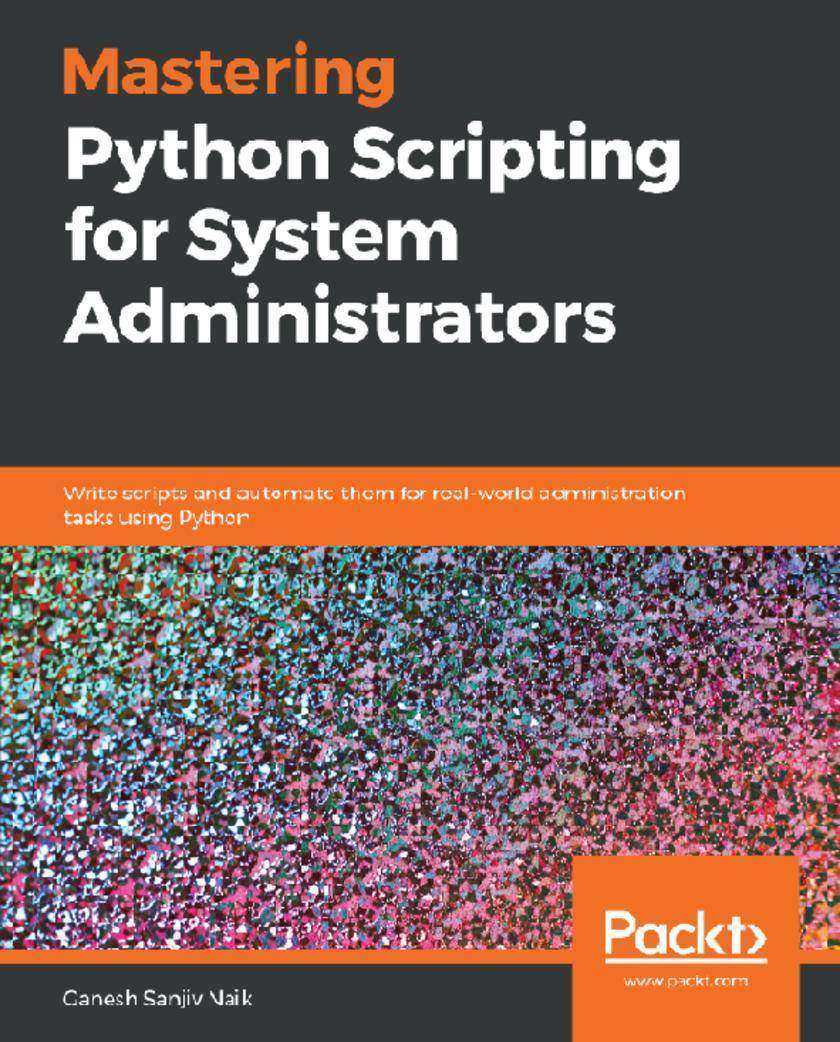
Mastering Python Scripting for System Administrators
¥81.74
Leverage the features and libraries of Python to administrate your environment efficiently. Key Features * Learn how to solve problems of system administrators and automate routine activities * Learn to handle regular expressions, network administration * Building GUI, web-scraping and database administration including data analytics Book Description Python has evolved over time and extended its features in relation to every possible IT operation. Python is simple to learn, yet has powerful libraries that can be used to build powerful Python scripts for solving real-world problems and automating administrators' routine activities. The objective of this book is to walk through a series of projects that will teach readers Python scripting with each project. This book will initially cover Python installation and quickly revise basic to advanced programming fundamentals. The book will then focus on the development process as a whole, from setup to planning to building different tools. It will include IT administrators' routine activities (text processing, regular expressions, file archiving, and encryption), network administration (socket programming, email handling, the remote controlling of devices using telnet/ssh, and protocols such as SNMP/DHCP), building graphical user interface, working with websites (Apache log file processing, SOAP and REST APIs communication, and web scraping), and database administration (MySQL and similar database data administration, data analytics, and reporting). By the end of this book, you will be able to use the latest features of Python and be able to build powerful tools that will solve challenging, real-world tasks What you will learn * Understand how to install Python and debug Python scripts * Understand and write scripts for automating testing and routine administrative activities * Understand how to write scripts for text processing, encryption, decryption, and archiving * Handle files, such as pdf, excel, csv, and txt files, and generate reports * Write scripts for remote network administration, including handling emails * Build interactive tools using a graphical user interface * Handle Apache log files, SOAP and REST APIs communication * Automate database administration and perform statistical analysis Who this book is for This book would be ideal for users with some basic understanding of Python programming and who are interested in scaling their programming skills to command line scripting and system administration. Prior knowledge of Python would be necessary.
Ensemble Machine Learning Cookbook
¥81.74
Implement machine learning algorithms to build ensemble models using Keras, H2O, Scikit-Learn, Pandas and more Key Features * Apply popular machine learning algorithms using a recipe-based approach * Implement boosting, bagging, and stacking ensemble methods to improve machine learning models * Discover real-world ensemble applications and encounter complex challenges in Kaggle competitions Book Description Ensemble modeling is an approach used to improve the performance of machine learning models. It combines two or more similar or dissimilar machine learning algorithms to deliver superior intellectual powers. This book will help you to implement popular machine learning algorithms to cover different paradigms of ensemble machine learning such as boosting, bagging, and stacking. The Ensemble Machine Learning Cookbook will start by getting you acquainted with the basics of ensemble techniques and exploratory data analysis. You'll then learn to implement tasks related to statistical and machine learning algorithms to understand the ensemble of multiple heterogeneous algorithms. It will also ensure that you don't miss out on key topics, such as like resampling methods. As you progress, you’ll get a better understanding of bagging, boosting, stacking, and working with the Random Forest algorithm using real-world examples. The book will highlight how these ensemble methods use multiple models to improve machine learning results, as compared to a single model. In the concluding chapters, you'll delve into advanced ensemble models using neural networks, natural language processing, and more. You’ll also be able to implement models such as fraud detection, text categorization, and sentiment analysis. By the end of this book, you'll be able to harness ensemble techniques and the working mechanisms of machine learning algorithms to build intelligent models using individual recipes. What you will learn * Understand how to use machine learning algorithms for regression and classification problems * Implement ensemble techniques such as averaging, weighted averaging, and max-voting * Get to grips with advanced ensemble methods, such as bootstrapping, bagging, and stacking * Use Random Forest for tasks such as classification and regression * Implement an ensemble of homogeneous and heterogeneous machine learning algorithms * Learn and implement various boosting techniques, such as AdaBoost, Gradient Boosting Machine, and XGBoost Who this book is for This book is designed for data scientists, machine learning developers, and deep learning enthusiasts who want to delve into machine learning algorithms to build powerful ensemble models. Working knowledge of Python programming and basic statistics is a must to help you grasp the concepts in the book.


