


 购物车
购物车 个人中心
个人中心
Game Development with Swift
¥71.93
If you wish to create and publish fun iOS games using Swift, then this book is for you. You should be familiar with basic programming concepts. However, no prior game development or Apple ecosystem experience is required.
Salt Cookbook
¥80.65
If you are a professional associated with system and infrastructure management, looking at automated infrastructure and deployments, then this book is for you. No prior experience of Salt is required.
Blueprints Visual Scripting for Unreal Engine
¥54.49
Whether you are an experienced game designer or artist looking to test your latest idea, or a complete novice looking to build their first video game, this is a great place to start learning how to build complex game mechanics quickly and easily without writing any text code. No programming experience required!
Learning Ionic
¥80.65
This book is intended for those who want to learn how to build hybrid mobile applications using Ionic. It is also ideal for people who want to explore theming for Ionic apps. Prior knowledge of AngularJS is essential to complete this book successfully.
Building Telephony Systems with OpenSER
¥80.65
This book is a well illustrated, step-by-step guide to building a SIP based network using OpenSER. This book is for readers who want to understand how to build a SIP provider from scratch using OpenSER. Telephony and Linux experience will be helpful but is not essential. Readers need not have prior knowledge of OpenSER.
Ruby on Rails Web Mashup Projects
¥80.65
This book is project-based. The format of each project is similar, with a statement of the project, discussion of the main protocols involved, an overview of the API, and then complete code for building the project. You will be led methodically through concrete steps to build the mashup, with asides to explain the theory behind the code. This book is for Ruby on Rails developers who want to expand the features of their site by consuming remote external data and services. Basic knowledge of Ruby on Rails programming is required but you need not have any experience of any of the APIs used.
Microsoft Dynamics AX Implementation Guide
¥99.18
Your all-in-one guide to exploring and implementing Microsoft Dynamics AX About This Book From project kick-off to go live and upgrade, learn what to expect in each phase of the project This book guides you through the entire journey of a Dynamics AX implementation project, helping you to avoid the common pitfalls and adapt industry knowledge and best practices for your own project This one-stop guide is packed with key tools and techniques to aid your Dynamics AX implementation Who This Book Is For This book is for IT project managers, solution architects, and consultants who are planning to implement or are in the process of implementing or upgrading Dynamics AX. To use this book, you must have a working Dynamics AX system in place and must be familiar with the basics of Dynamics AX. What You Will Learn Prepare for a great start with effective project management and planning from the beginning Gather details early using effective requirement-gathering tools and techniques Gain tools and techniques for effective infrastructure planning and hardware sizing Get to grips with integration and data migration through planning and strategy Familiarize yourself with the reporting and BI tools Master functional and technical design to customize existing features and designs in your own projects Manage your configuration and you’re your configuration from one environment to another Learn industry’s best practices and recommendations on customization development and performance tuning In Detail Microsoft Dynamics AX is Enterprise Resource Planning (ERP) software that supports multi-site operations across various countries, providing international processing within the company. It is an ERP solution with a lot of features and functionality, and it provides support across the fields of financial, distribution, supply chain, project, customer relationship, HR, and field service management. This book is all about simplifying the overall implementation process of Dynamics AX. The purpose of this book is to help IT managers and solution architects implement Dynamics AX to increase the success rate of Dynamics AX projects. This all-in-one guide will take you through an entire journey of a Dynamics AX implementation, ensuring you avoid commonly-made mistakes during implementation. You’ll begin with the installation of Dynamics AX and the basic requirements. Then, you’ll move onto data migration, reporting, functional and technical design, configuration, and performance tuning. By the end of the book, you will know how to plan and execute Dynamics AX right, on your first attempt, using insider industry knowledge and best practices. Style and approach This is a progressive, easy-to-follow book that summarizes numerous aspects you need to know to make your Dynamics AX implementations successful using code examples to get you hands-on.
Extending Unity with Editor Scripting
¥80.65
Put Unity to use for your video games by creating your own custom tools with editor *ing About This Book Acquire a good understanding of extending Unity’s editor capabilities for a platformer game by using Gizmos, custom inspectors, editor windows, *able objects, and more Learn to configure and get control over your asset import pipeline using asset preprocessors A step-by-step, comprehensible guide to creating and customizing a build pipeline that fits the necessities of your video game development team Who This Book Is For This book is for anyone who has a basic knowledge of Unity programming using C# and wants to learn how to extend and create custom tools using Unity editor *ing to improve the development workflow and make video game development easier. What You Will Learn Use Gizmos to create visual aids for debugging Extend the editor capabilities using custom inspectors, property and decorator drawers, editor windows, and handles Save your video game data in a persistent way using *able objects Improve the look and feel of your custom tools using GUIStyles and GUISkins Configure and control the asset import pipeline Improve the build creation pipeline Distribute the custom tools in your team or publish them in the Asset Store In Detail One of Unity's most powerful features is the extensible editor it has. With editor *ing, it is possible to extend or create functionalities to make video game development easier. For a Unity developer, this is an important topic to know and understand because adapting Unity editor *ing to video games saves a great deal of time and resources. This book is designed to cover all the basic concepts of Unity editor *ing using a functional platformer video game that requires workflow improvement. You will commence with the basics of editor *ing, exploring its implementation with the help of an example project, a level editor, before moving on to the usage of visual cues for debugging with Gizmos in the scene view. Next, you will learn how to create custom inspectors and editor windows and implement custom GUI. Furthermore, you will discover how to change the look and feel of the editor using editor GUIStyles and editor GUISkins. You will then explore the usage of editor *ing in order to improve the development pipeline of a video game in Unity by designing ad hoc editor tools, customizing the way the editor imports assets, and getting control over the build creation process. Step by step, you will use and learn all the key concepts while creating and developing a pipeline for a simple platform video game. As a bonus, the final chapter will help you to understand how to share content in the Asset Store that shows the creation of custom tools as a possible new business. By the end of the book, you will easily be able to extend all the concepts to other projects. Style and approach This book uses a step-by-step approach that will help you finish with a level editor tool, a custom configuration for the asset import pipeline, and a build pipeline totally adjusted to the video game.
RESTful Java Web Services - Second Edition
¥80.65
Design scalable and robust RESTful web services with JAX-RS and Jersey extension APIs About This Book Get to grips with the portable Java APIs used for JSON processing Design solutions to produce, consume, and visualize RESTful web services using WADL, RAML, and Swagger A step-by-step guide packed with many real-life use-cases to help you build efficient and secure RESTful web APIs in Java Who This Book Is For If you are a web developer with a basic understanding of the REST concepts but are new to the idea of designing and developing RESTful web services, this is the book for you. As all the code samples for the book are written in Java, proficiency in Java is a must. What You Will Learn Introduce yourself to the RESTful software architectural style and the REST API design principles Make use of the JSR 353 APIs and Jackson API for JSON processing Build portable RESTful web APIs, making use of the JAX-RS 2.0 API Simplify API development using the Jersey extension APIs Secure your RESTful web services with various authentication and authorization mechanisms Get to grips with the various metadata solutions to describe, produce, and consume RESTful web services Understand the design and coding guidelines to build well-performing RESTful APIs See how the role of RESTful web services changes with emerging technologies and trends In Detail REST (REpresentational State Transfer) is a simple yet powerful software architecture style to create scalable web services and allow them to be simple, lightweight, and fast. The REST API uses HTTP and JSON, so that it can be used with many programming languages such as Ruby, Java, Python, and Scala. Its use in Java seems to be the most popular though, because of the API's reusability. This book is a guide to developing RESTful web services in Java using the popular RESTful framework APIs available today. You will begin with gaining an in-depth knowledge of the RESTful software architectural style and its relevance in modern applications. Further, you will understand the APIs to parse, generate, transform, and query JSON effectively. Then, you will see how to build a simple RESTful service using the popular JAX-RS 2.0 API along with some real-world examples. This book will introduce you to the Jersey framework API, which is used to simplify your web services. You will also see how to secure your services with various authentication mechanisms. You will get to grips with various solutions to describe, produce, consume, and visualize RESTful web services. Finally, you will see how to design your web services to equip them for the future technological advances, be it Cloud or mobile computing. By the end of this book, you will be able to efficiently build robust, scalable, and secure RESTful web services, making use of the JAX-RS and Jersey framework extensions. Style and approach This book is written as a step-by-step guide to designing and developing robust RESTful web services. Each topic is explained in a simple and easy-to-understand manner with lots of real-life use-cases and their solutions.
Raspberry Pi LED Blueprints
¥54.49
Design, build, and test LED-based projects using the Raspberry Pi About This Book Implement real LED-based projects for Raspberry Pi Learn to interface various LED modules such as LEDs, 7-segment, 4-digits 7 segment, and dot matrix to Raspberry Pi Get hands-on experience by exploring real-time LEDs with this project-based book Who This Book Is For This book is for those who want to learn how to build Raspberry Pi projects utilising LEDs, 7 segment, 4-digits 7 segment, and dot matrix modules. You also will learn to implement those modules in real applications, including interfacing with wireless modules and the Android mobile app. However, you don't need to have any previous experience with the Raspberry Pi or Android platforms. What You Will Learn Control LEDs, 7 segments, and 4-digits 7 segment from a Raspberry Pi Expand Raspberry Pi’s GPIO Build a countdown timer Build a digital clock display Display numbers and characters on dot matrix displays Build a traffic light controller Build a remote home light control with a Bluetooth low energy module and Android Build mobile Internet-controlled lamps with a wireless module and Android In Detail Blinking LED is a popular application when getting started in embedded development. By customizing and utilising LED-based modules into the Raspberry Pi board, exciting projects can be obtained. A countdown timer, a digital clock, a traffic light controller, and a remote light controller are a list of LED-based inspired project samples for Raspberry Pi. An LED is a simple actuator device that displays lighting and can be controlled easily from a Raspberry Pi. This book will provide you with the ability to control LEDs from Raspberry Pi, starting from describing an idea through designing and implementing several projects based on LEDs, such as, 7-segments, 4-digits 7 segment, and dot matrix displays. Beginning with step-by-step instructions on installation and configuration, this book can either be read from cover to cover or treated as an essential reference companion to your Raspberry Pi. Samples for the project application are provided such as a countdown timer, a digital clock, a traffic light controller, a remote light controller, and an LED-based Internet of Things, so you get more practice in the art of Raspberry Pi development. Raspberry Pi LED Blueprints is an essential reference guide full of practical solutions to help you build LED-based applications. Style and approach This book follows a step-by-step approach to LED-based development for Raspberry Pi, explained in a conversational and easy-to-follow style. Each topic is explained sequentially in the process of building an application, and detailed explanations of the basic and advanced features are included.
WordPress 4.0 Site Blueprints - Second Edition
¥80.65
Create a variety of exciting sites for e-commerce, networking, video streaming, and more, using WordPress About This Book Build ten different types of website using WordPress Transfer your static site to WordPress and create sites to make money, build communities, and share your ideas The projects in the book will teach you how to use free themes and plugins without any prior coding experience Who This Book Is For WordPress Site Blueprints is suitable for new or experienced WordPress users. You don’t need to be a PHP developer or have ever created a WordPress theme or plugin. Instead the book will help you use themes and plugins (all free) to create a wide range of sites. Familiarity with the WordPress interface will help you but you don’t need to be able to write code. What You Will Learn Migrate your old static site into WordPress Create a network of sites for other people to work with each other Build a great store using the free WooCommerce plugin Create a video streaming site linked to YouTube Create a review site for products, services, or anything you’d like Create a jobs board so people can post jobs and apply for them Create websites that focus on networking such as a social media site, a communications center for your team, and a membership site to build a community Create a beautiful gallery site to showcase your photography In Detail WordPress is the world’s most popular Content Management System (CMS) and you can use it to create any kind of site you or your clients need. Using free plugins and themes for WordPress, you can create a store, a social media site, a review site, a video site, a network of sites or a community site, and more. Wordpress makes your job of creating your own website simple and hassle-free! If you’ve started using WordPress to create a blog or simple website, you’ll have had a taste of the opportunities offered by this massively popular CMS. This book will take you through the process of creating ten popular kinds of site using WordPress with free plugins and themes, each chapter covering various functionality of the web. After having learned how to migrate from your static site to Wordpress in the first chapter, you will then explore the world of social networking websites followed focusing on e-commerce. Without writing too much code, you’ll be able to create a store, a video streaming site, a team communications site, a jobs board, and more. This book is a one-stop solution to resolve all your worries about creating a website that will give the best experience to your users. Style and approach A project-based step-by-step guide to creating ten different types of popular website using WordPress. This book takes you through clear and logical steps, with screenshots and tips along the way to help you follow the guide and learn how to get more from WordPress.
Learning Dynamics NAV Patterns
¥63.21
Create solutions that are easy to maintain, quick to upgrade, and follow proven concepts and designs About This Book Design software that is maintainable outside the ecosystem of their creators Ensure quality by following patterns that have been proved to work Over two dozen practical Architectural and Design patterns Who This Book Is For Learning Dynamics NAV Patterns is intended for developers, architects, (technical) consultants, and application managers. You may have very little or no knowledge about NAV patterns, but you should be acquainted with programming. What You Will Learn Apply object-oriented practices to C/AL programming Structure your application to avoid merge conflicts Refactor legacy code and avoid anti-patterns Design decision trees to decide when to use which patterns Clone codes and their application in Dynamics NAV Make your application extensible by creating predefined hooks and facades In Detail Microsoft Dynamics NAV is a complete ERP system, which also contains a robust set of development tools to support customization and enhancement. These include an object designer for each of the seven application object types, a business application oriented programming language with .NET interface capability, a compiler, a debugger, and programming testing language support. Learning Dynamics NAV Patterns will guide you through the NAV way of solving problems. This book will first introduce you to patterns and the software architecture of the NAV and then help you to build an example application. Then, it walks you through the details of architectural patterns, design patterns, and implementation patterns. This book will also talk about anti-patterns and handling legacy code. Finally, it teaches you to build solutions using patterns. Proven patterns and best practices will help you create better solutions that are easy to maintain in larger teams across several locations. It will guide you through combining abstract patterns using easy-to-understand examples and will help you decide which patterns to use in which scenarios. Style and approach This book explains the concepts of patterns, code structuring, and object-oriented concepts in a way that is easy to understand for Dynamics NAV specialists through practical examples.
SignalR – Real-time Application Development - Second Edition
¥71.93
A fast-paced guide to develop, test, and deliver real-time communication in your .Net applications using SignalR About This Book Build and test real-time apps in .Net using the new features of SignalR Explore the fundamentals and the new methods and functions in the latest version of SignalR along with developing a complete application from scratch A progressive, hands-on guide to gain an understanding of the SignalR framework Who This Book Is For If you are a .Net developer with good understanding of the .Net platform then this is an ideal book for you to learn how to build real-time apps using the SignalR framework. What You Will Learn Explore the basic knowledge and understanding of SignalR Get to know how to connect client to the server Connecting a client with a server and setting a hub Creating group connections together Understand how to have state in the client to have specific operations Securing SignalR connections How to scale SignalR across multiple servers Building a client for WPF Building a client using Xamarin targeting Windows, iPhone and Android Get to grips with monitoring the traffic in SignalR using Fiddler for Windows and Charles for OSX Setting up code to host SignalR using OWIN In Detail With technology trends, demands on software have changed with more and more skilled users. Over the past few years, with services such as Facebook, Twitter and push notifications on smartphones, users are now getting used to being up to date with everything that happens all the time. With SignalR, the applications stay connected and will generate notifications when something happens either from the system or by other users thus giving new opportunities to enter into this new, exciting world of real-time application development. This is a step-by-step guide that follows a practical approach helping you as a developer getting to get started with SignalR by learning its fundamentals. It will help you through building real-time applications using the new methods and functions in the SignalR framework. Starting from getting persistent connections with the server, you will learn the basics of connecting a client to the server and how the messaging works. This will be followed by setting up a hub on the server and consuming it from a JavaScript client. Next you will be taught how you can group connections together to send messages. We will then go on to know how you can have state in the client to handle specific operations like connecting or disconnecting. Then, moving on you will learn how to secure your SignalR connections using OWIN and scaling SignalR across multiple servers. Next you will learn building a client for WPF and building a client using Xamarin that targets Windows Phone, iPhone and Android. Lastly, you will learn how to monitor the traffic in SignalR using Fiddler, Charles and hosting SignalR using OWIN. Style and approach This is an example- oriented and comprehensive guide to learning the fundamentals of SignalR to build real-time applications. It will help you build real-time applications on the .Net platform in a step-by-step manner along with giving teaching techniques to deal with possible performance bottlenecks and other key topics.
Learning Android Google Maps
¥90.46
Integrate Google Maps with your Android application to offer feature-rich and interactive maps About This Book Set up the development environment and obtain the Google API key to create your first map application Create a cutting edge Google maps application by implementing all the concepts learned A step-by-step tutorial guide that is full of pragmatic examples Who This Book Is For If you are an Android developer and want to integrate maps into your application, then this book is definitely for you. This book is intended for novice Android application developers who would like to get up and running with map rich applications using Google Maps. Some basic development experience would be helpful but it's not a mandate. What You Will Learn Get to know about the basic development environment setup needed to create a successful map application Generate an SHA1 fingerprint, obtain an API key, and create a basic map application Detect different types of maps and implement them in your application Add information to your map such as markers, overlays, information windows, and shapes Explore the interaction with maps and work with gestures Change the different camera views in your map application Work with real-time GPS location data and implementing it in your application Apply Street View and integrate the StreetViewPanoroma fragment to your application Employ the native Google maps application to solve some of the tasks using intents Create a cutting edge Google maps application by implementing all the concepts learned In Detail This book helps you to overcome the most common problems faced by users and helps you create a successful map application without any hassle. The book starts with a brief de*ion of how to set up an environment and obtain an API key to create your map application. This book will teach you about adding markers, overlays, and information windows to the map in detail. You will then dive deep into customizing various types of maps and working with location data and Google Street view. By the end of this book, you will be able to create succinct map applications in Android using Google maps efficiently. Style and approach The book is tailored for the reader with a fundamental approach to Android Google Maps providing a step-by-step introduction to Android Google Maps. It focuses on simple, easy-to-understand examples that are pragmatic and serve as useful basis for real-world applications. Different topics are approached in a bottom-up fashion, gradually going from the simplest foundations to the most advanced features.
Spring Boot Cookbook
¥54.49
Over 35 recipes to help you build, test, and run Spring applications using Spring Boot About This Book Learn to create different types of Spring Boot applications, configure behavior, and add custom components Become more efficient in testing, deploying, and monitoring Spring Boot based applications This is a practical guide that will help Spring developers to develop and deploy applications using Spring Boot Who This Book Is For If you are a Spring Developer who has good knowledge level and understanding of Spring Boot and application development and now want to learn efficient Spring Boot development techniques in order to make the existing development process more efficient, then this book is for you. What You Will Learn Create Spring Boot applications from scratch Configure and tune web applications and containers Create custom Spring Boot auto-configurations and starters Use Spring Boot Test framework with JUnit, Cucumber, and Spock Configure and tune web applications and containers Deploy Spring Boot as self-starting executables and Docker containers Monitor data using DropWizard, Graphite, and Dashing In Detail Spring Boot is Spring's convention-over-configuration solution. This feature makes it easy to create Spring applications and services with absolute minimum fuss. Spring Boot has the great ability to be customized and enhanced, and is specifically designed to simplify development of a new Spring application. This book will provide many detailed insights about the inner workings of Spring Boot, as well as tips and recipes to integrate the third-party frameworks and components needed to build complex enterprise-scale applications. The book starts with an overview of the important and useful Spring Boot starters that are included in the framework, and teaches you to create and add custom Servlet Filters, Interceptors, Converters, Formatters, and PropertyEditors to a Spring Boot web application. Next it will cover configuring custom routing rules and patterns, adding additional static asset paths, and adding and modifying servlet container connectors and other properties such as enabling SSL. Moving on, the book will teach you how to create custom Spring Boot Starters, and explore different techniques to test Spring Boot applications. Next, the book will show you examples of configuring your build to produce Docker images and self-executing binary files for Linux/OSX environments. Finally, the book will teach you how to create custom health indicators, and access monitoring data via HTTP and JMX. Style and approach This book is a cohesive collection of recipes that provide developers with a set of connected guidelines on how to build, configure, and customize their application, starting from the design and development stages, all the way through testing, deployment, and production monitoring.
Learning Penetration Testing with Python
¥90.46
Utilize Python *ing to execute effective and efficient penetration tests About This Book Understand how and where Python *s meet the need for penetration testing Familiarise yourself with the process of highlighting a specific methodology to exploit an environment to fetch critical data Develop your Python and penetration testing skills with real-world examples Who This Book Is For If you are a security professional or researcher, with knowledge of different operating systems and a conceptual idea of penetration testing, and you would like to grow your knowledge in Python, then this book is ideal for you. What You Will Learn Familiarise yourself with the generation of Metasploit resource files Use the Metasploit Remote Procedure Call (MSFRPC) to automate exploit generation and execution Use Python’s Scrapy, network, socket, office, Nmap libraries, and custom modules Parse Microsoft Office spreadsheets and eXtensible Markup Language (XML) data files Write buffer overflows and reverse Metasploit modules to expand capabilities Exploit Remote File Inclusion (RFI) to gain administrative access to systems with Python and other *ing languages Crack an organization’s Internet perimeter Chain exploits to gain deeper access to an organization’s resources Interact with web services with Python In Detail Python is a powerful new-age *ing platform that allows you to build exploits, evaluate services, automate, and link solutions with ease. Python is a multi-paradigm programming language well suited to both object-oriented application development as well as functional design patterns. Because of the power and flexibility offered by it, Python has become one of the most popular languages used for penetration testing. This book highlights how you can evaluate an organization methodically and realistically. Specific tradecraft and techniques are covered that show you exactly when and where industry tools can and should be used and when Python fits a need that proprietary and open source solutions do not. Initial methodology, and Python fundamentals are established and then built on. Specific examples are created with vulnerable system images, which are available to the community to test *s, techniques, and exploits. This book walks you through real-world penetration testing challenges and how Python can help. From start to finish, the book takes you through how to create Python *s that meet relative needs that can be adapted to particular situations. As chapters progress, the * examples explain new concepts to enhance your foundational knowledge, culminating with you being able to build multi-threaded security tools, link security tools together, automate reports, create custom exploits, and expand Metasploit modules. Style and approach This book is a practical guide that will help you become better penetration testers and/or Python security tool developers. Each chapter builds on concepts and tradecraft using detailed examples in test environments that you can simulate.
Mastering Embedded Linux Programming
¥90.46
Harness the power of Linux to create versatile and robust embedded solutions About This Book Create efficient and secure embedded devices using Linux Minimize project costs by using open source tools and programs Explore each component technology in depth, using sample implementations as a guide Who This Book Is For This book is ideal for Linux developers and system programmers who are already familiar with embedded systems and who want to know how to create best-in-class devices. A basic understanding of C programming and experience with systems programming is needed. What You Will Learn Understand the role of the Linux kernel and select an appropriate role for your application Use Buildroot and Yocto to create embedded Linux systems quickly and efficiently Create customized bootloaders using U-Boot Employ perf and ftrace to identify performance bottlenecks Understand device trees and make changes to accommodate new hardware on your device Write applications that interact with Linux device drivers Design and write multi-threaded applications using POSIX threads Measure real-time latencies and tune the Linux kernel to minimize them In Detail Mastering Embedded Linux Programming takes you through the product cycle and gives you an in-depth de*ion of the components and options that are available at each stage. You will begin by learning about toolchains, bootloaders, the Linux kernel, and how to configure a root filesystem to create a basic working device. You will then learn how to use the two most commonly used build systems, Buildroot and Yocto, to speed up and simplify the development process. Building on this solid base, the next section considers how to make best use of raw NAND/NOR flash memory and managed flash eMMC chips, including mechanisms for increasing the lifetime of the devices and to perform reliable in-field updates. Next, you need to consider what techniques are best suited to writing applications for your device. We will then see how functions are split between processes and the usage of POSIX threads, which have a big impact on the responsiveness and performance of the final device The closing sections look at the techniques available to developers for profiling and tracing applications and kernel code using perf and ftrace. Style and approach This book is an easy-to-follow and pragmatic guide consisting of an in-depth analysis of the implementation of embedded devices. Each topic has a logical approach to it; this coupled with hints and best practices helps you understand embedded Linux better.
Learning Hunk
¥63.21
Visualize and analyze your Hadoop data using Hunk About This Book Explore your data in Hadoop and NoSQL data stores Create and optimize your reporting experience with advanced data visualizations and data analytics A comprehensive developer's guide that helps you create outstanding analytical solutions efficiently Who This Book Is For If you are Hadoop developers who want to build efficient real-time Operation Intelligence Solutions based on Hadoop deployments or various NoSQL data stores using Hunk, this book is for you. Some familiarity with Splunk is assumed. What You Will Learn Deploy and configure Hunk on top of Cloudera Hadoop Create and configure Virtual Indexes for datasets Make your data presentable using the wide variety of data visualization components and knowledge objects Design a data model using Hunk best practices Add more flexibility to your analytics solution via extended SDK and custom visualizations Discover data using MongoDB as a data source Integrate Hunk with AWS Elastic MapReduce to improve scalability In Detail Hunk is the big data analytics platform that lets you rapidly explore, analyse, and visualize data in Hadoop and NoSQL data stores. It provides a single, fluid user experience, designed to show you insights from your big data without the need for specialized skills, fixed schemas, or months of development. Hunk goes beyond typical data analysis methods and gives you the power to rapidly detect patterns and find anomalies across petabytes of raw data. This book focuses on exploring, analysing, and visualizing big data in Hadoop and NoSQL data stores with this powerful full-featured big data analytics platform. You will begin by learning the Hunk architecture and Hunk Virtual Index before moving on to how to easily analyze and visualize data using Splunk Search Language (SPL). Next you will meet Hunk Apps which can easy integrate with NoSQL data stores such as MongoDB or Sqqrl. You will also discover Hunk knowledge objects, build a semantic layer on top of Hadoop, and explore data using the friendly user-interface of Hunk Pivot. You will connect MongoDB and explore data in the data store. Finally, you will go through report acceleration techniques and analyze data in the AWS Cloud. Style and approach A step-by-step guide starting right from the basics and deep diving into the more advanced and technical aspects of Hunk.
Learning Material Design
¥63.21
Master Material Design and create beautiful, animated interfaces for mobile and web applications About This Book Master the highly acclaimed Material Design paradigm and give your apps and pages the look that everyone is talking about Get a mix of key theoretical concepts combined with enough practical examples to put each theory into practice so you can create elegant material interfaces with Android Studio and Polymer Written by Kyle Mew, successful author with over a decade of mobile and web development experience, this book has both the touch of a developer as well as an experienced writer Who This Book Is For This book is ideal for web developers and designers who are interested in implementing Material Design in their mobile and web apps. No prior knowledge or experience of Material Design is required, but some familiarity with procedural languages such as Java and markup languages such as HTML will provide an advantage. What You Will Learn Implement Material Design on both mobile and web platforms that work on older handsets and browsers Design stylish layouts with the Material Theme Create and manage cards, lists, and grids Design and implement sliding drawers for seamless navigation Coordinate components to work together Animate widgets and create transitions and animation program flow Use Polymer to bring Material Design to your web pages In Detail Google's Material Design language has taken the web development and design worlds by storm. Now available on many more platforms than Android, Material Design uses color, light, and movements to not only generate beautiful interfaces, but to provide intuitive navigation for the user. Learning Material Design will teach you the fundamental theories of Material Design using code samples to put these theories into practice. Focusing primarily on Android Studio, you’ll create mobile interfaces using the most widely used and powerful material components, such as sliding drawers and floating action buttons. Each section will introduce the relevant Java classes and APIs required to implement these components. With the rules regarding structure, layout, iconography, and typography covered, we then move into animation and transition, possibly Material Design's most powerful concept, allowing complex hierarchies to be displayed simply and stylishly. With all the basic technologies and concepts mastered, the book concludes by showing you how these skills can be applied to other platforms, in particular web apps, using the powerful Polymer library. Style and approach Learning Material Design combines the theories behind material design with practical examples of how these can be implemented and further reinforcing the guidelines covering style, layout and structure.
Mastering Backbone.js
¥90.46
Design and build scalable web applications using Backbone.jsAbout This BookLevel up your Backbone.js skills and create professional web applications with the best practicesUse the Backbone.js components in the right way and avoid maintenance nightmaresImprove your development workflow from application design to deploymentApply the best practices given in this tutorial to solve day-to-day problems in your applicationsWho This Book Is ForThis book is for those developers who know the basic concepts of Backbone.js and want to build scalable applications with it. If you are looking for the best practices of using Backbone.js applied to real work applications, this book is for you. You will be able to apply architectural principles to create amazing web applications easily.What You Will LearnBuild web applications that scale with Backbone.jsDesign a powerful architecture that eliminates maintenance nightmaresUse common patterns and best practices in Backbone.js web applications developmentsPack your applications to be deployed to production environmentsClean up your code organization to a simple and maintainable architectureTest your components and get confidence with your codeDeal with common scenarios like file uploading and login issuesIn DetailBackbone.js is a popular library to build single page applications used by many start-ups around the world because of its flexibility, robustness and simplicity. It allows you to bring your own tools and libraries to make amazing webapps with your own rules. However, due to its flexibility it is not always easy to create scalable applications with it. By learning the best practices and project organization you will be able to create maintainable and scalable web applications with Backbone.js.With this book you will start right from organizing your Backbone.js application to learn where to put each module and how to wire them. From organizing your code in a logical and physical way, you will go on to delimit view responsibilities and work with complex layouts.Synchronizing models in a two-way binding can be difficult and with sub resources attached it can be even worse. The next chapter will explain strategies for how to deal with these models. The following chapters will help you to manage module dependencies on your projects, explore strategies to upload files to a RESTful API and store information directly in the browser for using it with Backbone.js. After testing your application, you are ready to deploy it to your production environment. The final chapter will cover different flavors of authorization.The Backbone.js library can be difficult to master, but in this book you will get the necessary skill set to create applications with it, and you will be able to use any other library you want in your stack.Style and approachThis book takes a tutorial approach to help you scale your Backbone.js applications. It builds a web application using the best practices and applies architectural design principles to develop maintainable web-apps. Each chapter explains the design decisions and improves the project that is used as an example alongside the book.
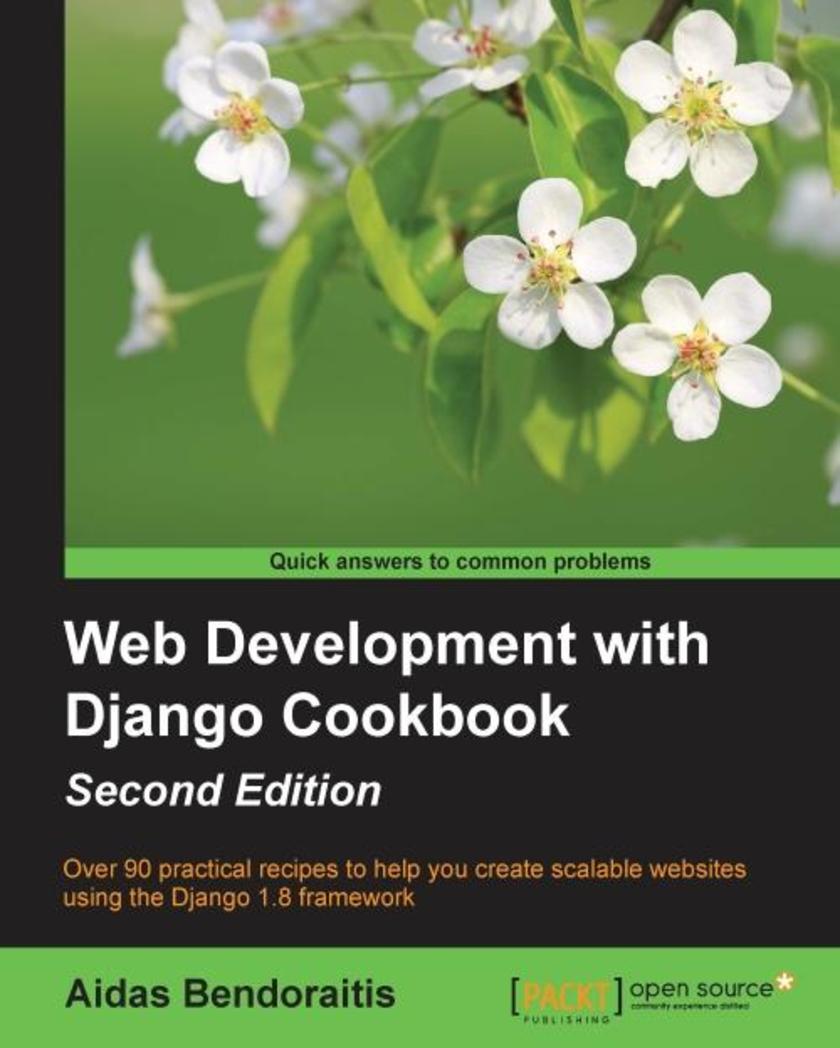
Web Development with Django Cookbook - Second Edition
¥90.46
Over 70 practical recipes to help you create scalable websites using the Django 1.8 frameworkAbout This BookThis is the latest book on the market that will help you take advantage of the new features added to Django 1.8This book consists of recipes of varying complexities to help you create multilingual, responsive, and scalable websites with DjangoThis updated edition teaches you major Django functions and will help you improve your skills by developing models, forms, views, and templatesWho This Book Is ForThis book is for intermediate-level and professional Django users who need to build projects that are multilingual, functional on devices of different screen sizes, and that scale over a period of time. If you have created websites with Django but you want to sharpen your knowledge and learn some good approaches to different aspects of web development, you should definitely read this book.What You Will LearnGet started with the basic configuration necessary to start any Django projectBuild a database structure out of reusable model mixinsManage forms and views and get to know some useful patterns that are used to create themCreate handy template filters and tags that you can reuse in every projectIntegrate your own functionality into the Django CMSManage hierarchical structures with MPTTImport data from local sources and external web services as well as exporting your data to third partiesImplement a multilingual search with HaystackTest and deploy your project efficientlyIn DetailDjango is a web framework that was designed to strike a balance between rapid web development and high performance. It has the capacity to handle applications with high levels of user traffic and interaction, and can integrate with massive databases on the backend, constantly collecting and processing data in real time.Through this book, you'll discover that collecting data from different sources and providing it to others in different formats isn't as difficult as you thought. It follows a task-based approach to guide you through all the web development processes using the Django framework. We’ll start by setting up the virtual environment for a Django project and configuring it. Then you’ll learn to write reusable pieces of code for your models and find out how to manage database schema changes using South migrations. After that, we’ll take you through working with forms and views to enter and list data. With practical examples on using templates and JavaScript together, you will discover how to create the best user experience. In the final chapters, you'll be introduced to some programming and debugging tricks and finally, you will be shown how to test and deploy the project to a remote dedicated server.By the end of this book, you will have a good understanding of the new features added to Django 1.8 and be an expert at web development processes.Style and approachEvery chapter consists of practical examples and a mix of basic and advanced recipes that will guide you through the entire web development process, starting from project configuration and taking you right through to deployment.


