


 购物车
购物车 个人中心
个人中心
Data Acquisition Using LabVIEW
¥63.21
Transform physical phenomena into computer-acceptable data using a truly object-oriented language About This Book Create your own data acquisition system independently using LabVIEW and build interactive dashboards Collect data using National Instrument's and third-party, open source, affordable hardware Step-by-step real-world examples using various tools that illustrate the fundamentals of data acquisition Who This Book Is For If you are an engineer, scientist, experienced hobbyist, or student, you will highly benefit from the content and examples illustrated in this book. A working knowledge of precision testing, measurement instruments, and electronics, as well as a background in computer fundamentals and programming is expected. What You Will Learn Create a virtual instrument which highlights common functionality of LabVIEW Get familiarized with common buses such as Serial, GPIB, and SCPI commands Staircase signal acquisition using NI-DAQmx Discover how to measure light intensity and distance Master LabVIEW debugging techniques Build a data acquisition application complete with an installer and required drivers Utilize open source microcontroller Arduino and a 32-bit Arduino compatible Uno32 using LabVIEW programming environment In Detail NI LabVIEW's intuitive graphical interface eliminates the steep learning curve associated with text-based languages such as C or C++. LabVIEW is a proven and powerful integrated development environment to interact with measurement and control hardware, analyze data, publish results, and distribute systems. This hands-on tutorial guide helps you harness the power of LabVIEW for data acquisition. This book begins with a quick introduction to LabVIEW, running through the fundamentals of communication and data collection. Then get to grips with the auto-code generation feature of LabVIEW using its GUI interface. You will learn how to use NI-DAQmax Data acquisition VIs, showing how LabVIEW can be used to appropriate a true physical phenomenon (such as temperature, light, and so on) and convert it to an appropriate data type that can be manipulated and analyzed with a computer. You will also learn how to create Distribution Kit for LabVIEW, acquainting yourself with various debugging techniques offered by LabVIEW to help you in situations where bugs are not letting you run your programs as intended. By the end of the book, you will have a clear idea how to build your own data acquisition system independently and much more. Style and approach A hands-on practical guide that starts by laying down the software and hardware foundations necessary for subsequent data acquisition-intensive chapters. The book is packed full of specific examples with software screenshots and schematic diagrams to guide you through the creation of each virtual instrument.
Mastering Qt 5
¥80.65
Master application development by writing succinct, robust, and reusable code with Qt 5 About This Book Unleash the power of Qt 5 with C++14 Integrate useful third-party libraries such as OpenCV Package and deploy your application on multiple platforms Who This Book Is For This book will appeal to developers and programmers who would like to build GUI-based applications. Knowledge of C++ is necessary and the basics of Qt would be helpful. What You Will Learn Create stunning UIs with Qt Widget and Qt Quick Develop powerful, cross-platform applications with the Qt framework Design GUIs with the Qt Designer and build a library in it for UI preview Handle user interaction with the Qt signal/slot mechanism in C++ Prepare a cross-platform project to host a third-party library Build a Qt application using the OpenCV API Use the Qt Animation framework to display stunning effects Deploy mobile apps with Qt and embedded platforms In Detail Qt 5.7 is an application development framework that provides a great user experience and develops full-capability applications with Qt Widgets, QML, and even Qt 3D. This book will address challenges in successfully developing cross-platform applications with the Qt framework. Cross-platform development needs a well-organized project. Using this book, you will have a better understanding of the Qt framework and the tools to resolve serious issues such as linking, debugging, and multithreading. Your journey will start with the new Qt 5 features. Then you will explore different platforms and learn to tame them. Every chapter along the way is a logical step that you must take to master Qt. The journey will end in an application that has been tested and is ready to be shipped. Style and approach This is an easy-to-follow yet comprehensive guide to building applications in Qt. Each chapter covers increasingly advanced topics, with subjects grouped according to their complexity as well as their usefulness. Packed with practical examples and explanations, Mastering Qt contains everything you need to take your applications to the next level.
Effective Robotics Programming with ROS - Third Edition
¥90.46
Find out everything you need to know to build powerful robots with the most up-to-date ROS About This Book This comprehensive, yet easy-to-follow guide will help you find your way through the ROS framework Successfully design and simulate your 3D robot model and use powerful robotics algorithms and tools to program and set up your robots with an unparalleled experience by using the exciting new features from Robot Kinetic Use the latest version of gazebo simulator, OpenCV 3.0, and C++11 standard for your own algorithms Who This Book Is For This book is suitable for an ROS beginner as well as an experienced ROS roboticist or ROS user or developer who is curious to learn ROS Kinetic and its features to make an autonomous Robot. The book is also suitable for those who want to integrate sensors and embedded systems with other software and tools using ROS as a framework. What You Will Learn Understand the concepts of ROS, the command-line tools, visualization GUIs, and how to debug ROS Connect robot sensors and actuators to ROS Obtain and analyze data from cameras and 3D sensors Use Gazebo for robot/sensor and environment simulation Design a robot and see how to make it map the environment, navigate autonomously, and manipulate objects in the environment using MoveIt! Add vision capabilities to the robot using OpenCV 3.0 Add 3D perception capabilities to the robot using the latest version of PCL In Detail Building and programming a robot can be cumbersome and time-consuming, but not when you have the right collection of tools, libraries, and more importantly expert collaboration. ROS enables collaborative software development and offers an unmatched simulated environment that simplifies the entire robot building process. This book is packed with hands-on examples that will help you program your robot and give you complete solutions using open source ROS libraries and tools. It also shows you how to use virtual machines and Docker containers to simplify the installation of Ubuntu and the ROS framework, so you can start working in an isolated and control environment without changing your regular computer setup. It starts with the installation and basic concepts, then continues with more complex modules available in ROS such as sensors and actuators integration (drivers), navigation and mapping (so you can create an autonomous mobile robot), manipulation, Computer Vision, perception in 3D with PCL, and more. By the end of the book, you’ll be able to leverage all the ROS Kinetic features to build a fully fledged robot for all your needs. Style and approach This book is packed with hands-on examples that will help you program your robot and give you complete solutions using ROS open source libraries and tools. All the robotics concepts and modules are explained and multiple examples are provided so that you can understand them easily.
Mastering Text Mining with R
¥71.93
Master text-taming techniques and build effective text-processing applications with R About This Book Develop all the relevant skills for building text-mining apps with R with this easy-to-follow guide Gain in-depth understanding of the text mining process with lucid implementation in the R language Example-rich guide that lets you gain high-quality information from text data Who This Book Is For If you are an R programmer, analyst, or data scientist who wants to gain experience in performing text data mining and analytics with R, then this book is for you. Exposure to working with statistical methods and language processing would be helpful. What You Will Learn Get acquainted with some of the highly efficient R packages such as OpenNLP and RWeka to perform various steps in the text mining process Access and manipulate data from different sources such as JSON and HTTP Process text using regular expressions Get to know the different approaches of tagging texts, such as POS tagging, to get started with text analysis Explore different dimensionality reduction techniques, such as Principal Component Analysis (PCA), and understand its implementation in R Discover the underlying themes or topics that are present in an unstructured collection of documents, using common topic models such as Latent Dirichlet Allocation (LDA) Build a baseline sentence completing application Perform entity extraction and named entity recognition using R In Detail Text Mining (or text data mining or text analytics) is the process of extracting useful and high-quality information from text by devising patterns and trends. R provides an extensive ecosystem to mine text through its many frameworks and packages. Starting with basic information about the statistics concepts used in text mining, this book will teach you how to access, cleanse, and process text using the R language and will equip you with the tools and the associated knowledge about different tagging, chunking, and entailment approaches and their usage in natural language processing. Moving on, this book will teach you different dimensionality reduction techniques and their implementation in R. Next, we will cover pattern recognition in text data utilizing classification mechanisms, perform entity recognition, and develop an ontology learning framework. By the end of the book, you will develop a practical application from the concepts learned, and will understand how text mining can be leveraged to analyze the massively available data on social media. Style and approach This book takes a hands-on, example-driven approach to the text mining process with lucid implementation in R.
Mastering React Native
¥80.65
Leverage frontend development skills to build impressive iOS and Android applications with React Native About This Book Apply flexbox to get layout and build rich animations that bring your React Native application to life Integrate third-party libraries and develop customized components that run natively on iOS and Android platforms Combine React Native with Redux, Redux middleware, and a remote API to build scalable data-driven applications Who This Book Is For This book is for anyone who wants to build cross-platform native mobile applications using only JavaScript and the React Native framework. In particular, this book is especially useful for front-end developers who want to use their current skillset to build mobile applications. An existing working knowledge of JavaScript will help you get the most out of this book. What You Will Learn Implement native React Native components and APIs Explore React’s JSX syntax Manage data using Redux and Redux middleware Build applications with React Native on both iOS and Android platforms Perform animations in your applications using the animation APIs Understand routing and Navigator comparison Create your own Native module In Detail React Native has completely revolutionized mobile development by empowering JavaScript developers to build world-class mobile apps that run natively on mobile platforms. This book will show you how to apply JavaScript and other front-end skills to build cross-platform React Native applications for iOS and Android using a single codebase. This book will provide you with all the React Native building blocks necessary to become an expert. We’ll give you a brief explanation of the numerous native components and APIs that come bundled with React Native including Images, Views, ListViews, WebViews, and much more. You will learn to utilize form inputs in React Native. You’ll get an overview of Facebook’s Flux data architecture and then apply Redux to manage data with a remote API. You will also learn to animate different parts of your application, as well as routing using React Native’s navigation APIs. By the end of the book, you will be able to build cutting-edge applications using the React Native framework. Style and approach This comprehensive guide will take your React Native skills to the next level. It shows you how to develop a clear workflow to build scalable applications, and how to implement the architectural concepts covered to build applications that shine in the real world.
Object-Oriented JavaScript - Third Edition
¥80.65
Learn everything you need to know about object-oriented JavaScript with this comprehensive guide. Enter the world of cutting-edge development! About This Book This book has been updated to cover all the new object-oriented features introduced in ECMAScript 6 It makes object-oriented programming accessible and understandable to web developers Write better and more maintainable JavaScript code while exploring interactive examples that can be used in your own *s Who This Book Is For This book is ideal for new to intermediate JavaScript developers who want to prepare themselves for web development problems solved by object-oriented JavaScript! What You Will Learn Apply the basics of object-oriented programming in the JavaScript environment Use a JavaScript Console with complete mastery Make your programs cleaner, faster, and compatible with other programs and libraries Get familiar with Iterators and Generators, the new features added in ES6 Find out about ECMAScript 6’s Arrow functions, and make them your own Understand objects in Google Chrome developer tools and how to use them Use a mix of prototypal inheritance and copying properties in your workflow Apply reactive programming techniques while coding in JavaScript In Detail JavaScript is an object-oriented programming language that is used for website development. Web pages developed today currently follow a paradigm that has three clearly distinguishable parts: content (HTML), presentation (CSS), and behavior (JavaScript). JavaScript is one important pillar in this paradigm, and is responsible for the running of the web pages. This book will take your JavaScript skills to a new level of sophistication and get you prepared for your journey through professional web development. Updated for ES6, this book covers everything you will need to unleash the power of object-oriented programming in JavaScript while building professional web applications. The book begins with the basics of object-oriented programming in JavaScript and then gradually progresses to cover functions, objects, and prototypes, and how these concepts can be used to make your programs cleaner, more maintainable, faster, and compatible with other programs/libraries. By the end of the book, you will have learned how to incorporate object-oriented programming in your web development workflow to build professional JavaScript applications. Style and approach Filled with practical instructions, the book shows you how to implement object-oriented features of JavaScript in the real world. The to-the-point nature of the book will benefit developers who are looking for a fast-paced guide to learn object-oriented JavaScript.
React Design Patterns and Best Practices
¥80.65
Build modular applications that are easy to scale using the most powerful components and design patterns that React can offer you right now About This Book Dive into the core patterns and components of React.js in order to master your application's design Improve their debugging skills using the DevTools This book is packed with easy-to-follow examples that can be used to create reusable code and extensible designs Who This Book Is For If you want to increase your understanding of React and apply it to real-life application development, then this book is for you. What You Will Learn Write clean and maintainable code Create reusable components applying consolidated techniques Use React effectively in the browser and node Choose the right styling approach according to the needs of the applications Use server-side rendering to make applications load faster Build high-performing applications by optimizing components In Detail Taking a complete journey through the most valuable design patterns in React, this book demonstrates how to apply design patterns and best practices in real-life situations, whether that's for new or already existing projects. It will help you to make your applications more flexible, perform better, and easier to maintain – giving your workflow a huge boost when it comes to speed without reducing quality. We'll begin by understanding the internals of React before gradually moving on to writing clean and maintainable code. We'll build components that are reusable across the application, structure applications, and create forms that actually work. Then we'll style React components and optimize them to make applications faster and more responsive. Finally, we'll write tests effectively and you'll learn how to contribute to React and its ecosystem. By the end of the book, you'll be saved from a lot of trial and error and developmental headaches, and you will be on the road to becoming a React expert. Style and approach The design patterns in the book are explained using real-world, step-by-step examples. For each design pattern, there are hints about when to use it and when to look for something more suitable. This book can also be used as a practical guide, showing you how to leverage design patterns.
Extending Microsoft Dynamics NAV 2016 Cookbook
¥99.18
Make the most of your NAV deployment by extending and customizing it with a variety of expert tools About This Book Extend Dynamics in a cost-effective manner by using tools that are ready at your disposal Solve common business problems with the valuable features and flexibility of Dynamics NAV Follow practical and easy-to-grasp examples, illustrations, and coding to make the most out of Dynamics NAV in your organisation Who This Book Is For This book is for Dynamics NAV developers and administrators who have a good knowledge level and understanding of Dynamics NAV application development and administration. What You Will Learn Develop a module in Dynamics NAV using C/AL Build relationships with COM technologies Develop and integrate COM with Dynamics NAV 2016 Call the framework members from C/AL Develop an event in the .NET framework and see how to subscribe to it using C/AL Automate the deployment into Dynamics NAV Develop Windows Client Control add-Ins Deploy your resource automatically from Visual Studio Install and Configure Windows Client Control add-Ins Integrate Dynamics NAV with Sharepoint In Detail Microsoft Dynamics NAV is an enterprise resource planning (ERP) software suite for organizations. The system offers specialized functionality for manufacturing, distribution, government, retail, and other industries. Its integrated development environment enables customizations with minimal disruption to business processes. The book starts explaining the new features of Dynamics NAV along with how to create and modify a simple module. Moving on, you will learn the importance of thinking beyond the boundaries of C/AL development and the possibilities opened by with it. Next, you will get to know how COM can be used to extend the functionalities of Dynamics NAV. You’ll find out how to extend the Dynamics NAV 2016 version using .NET interoperability and will see the steps required to subscribe to .NET events in order to extend Dynamics NAV. Finally, you’ll see the cmdlets available to manage extension packages. By the end of the book, you will have the knowledge needed to become more efficient in selecting the extending methods, developing and deploying them to the Dynamics NAV, and practicing the best practices. Style and approach The book follows a practical recipe-based approach focusing on real-world scenarios and giving you all the information you need to build a strong Dynamics NAV implementation.
Enduring CSS
¥71.93
Learn to really THINK about CSS, and how to create CSS that endures continual iteration, multiple authors, and yet always produces predictable results About This Book Address the problems of CSS at scale, avoiding the shortfalls of scaling CSS. The shortfalls of conventional approaches to scaling CSS. Develop consistent and enforceable selector naming conventions with ECSS. Learn how to organize project structure to more easily isolate and decouple visual components. Who This Book Is For This is a book for working CSS authors involved in large projects. This is a book that tackles create enduring CSS for large-scale projects. What You Will Learn The problems of CSS at scale—specificity, the cascade and styles intrinsically tied to element structure. The shortfalls of conventional approaches to scaling CSS. The ECSS methodology and the problems it solves. How to develop consistent and enforceable selector naming conventions with ECSS. How to organise project structure to more easily isolate and decouple visual components. How to handle state changes in the DOM with ARIA or override selectors. How to apply ECSS to web applications and visual modules. Considerations of CSS tooling and processing: Sass/PostCSS and linting. Addressing the notion of CSS selector speed with hard data and browser representative insight In Detail Learn with me, Ben Frain, about how to really THINK about CSS and how to use CSS for any size project! I'll show you how to write CSS that endures continual iteration, multiple authors, and yet always produces predictable results. Enduring CSS, often referred to as ECSS, offers you a robust and proven approach to authoring and maintaining style sheets at scale. Enduring CSS is not a book about writing CSS, as in the stuff inside the curly braces. This is a book showing you how to think about CSS, and be a smarter developer with that thinking! It's about the organisation and architecture of CSS—the parts outside the braces. I will help you think about the aspects of CSS development that become the most difficult part of writing CSS in larger projects. You’ll learn about the problems of authoring CSS at scale—including specificity, the cascade and styles intrinsically tied to document structure. I'll introduce you to the ECSS methodology, and show you how to develop consistent and enforceable selector naming conventions. We'll cover how to apply ECSS to your web applications and visual model, and how you can organize your project structure wisely, and handle visual state changes with ARIA, providing greater accessibility considerations. In addition, we'll take a deep look into CSS tooling and process considerations. Finally we will address performance considerations by examining topics such as CSS selector speed with hard data and browser-representative insight. Style and approach Learn with me, Ben Frain, about how to really think about CSS. This is a book to deal with writing CSS for large-scale, rapidly changing web projects and applications. This isn't a book about writing CSS, as in the stuff inside the curly braces - this is a book about the organisation and architecture of CSS; the parts outside the braces!
Implementing Oracle Integration Cloud Service
¥99.18
Understand everything you need to know about Oracle’s Integration Cloud Service and how to utilize it optimally for your business About This Book The only guide to Integration Cloud Service in the market Focused on practical action to deliver business value A professional’s guide to an expensive product, providing comprehensive training, and showing how to extract real business value from the product Who This Book Is For This book is ideal for any IT professional working with ICS, any Oracle application or cloud solution developer or analyst who wants to work with ICS to deliver business value. What You Will Learn Use ICS to integrate different systems together without needing to be a developer Gain understanding of what a number of technologies and standards provide – without needing to understand the fine details of those standards and technologies Understand the use of connectors that Oracle provide from technology based connections such as file and database connections to SaaS solutions ranging from Salesforce to Twitter Enrich data and extend SaaS integration to route to different instances Utilize a number of tools to help develop and check that your integrations work before connecting to live systems Introduce and explain integration concepts so that the integrations created are maintainable and sustainable for the longer term Provide details on how to keep up to date with the features that Oracle and partners provide in the future Get special connections developed to work with ICS In Detail Businesses are built on data, and applications that access that data. In modern businesses the same cloud-based data stores and applications might be accessed by hundreds of different applications from thousands of different devices via APIs. To make this happen, APIs must be wired together i.e. integrated. Oracle Integration Cloud Service provides a complete method for integrating enterprise applications in the cloud. Integration Cloud Service (ICS) provides a cloud hosted means to integrate systems together using a graphical means to define and represent integrations. This book will be a comprehensive, hands-on guide to building successful, high-availability integrations on ICS. This book sets out to demonstrate how ICS can be used to effectively implement integrations that work both in the cloud and on premise. It starts with a fast, practical introduction to what ICS can do for your business and then shows how ICS allows you to develop integrations not only quickly but in a way that means they are maintainable and extensible. Gradually it moves into more advanced integrations, showing how to achieve sophisticated results with ICS and work with external applications. Finally the book shows you how to monitor cloud apps and go beyond ICS to build even more powerful integrated applications. By the end of the book, you will the knowledge on how to use ICS to solve your own integration needs and harness the technologies in a maintainable and sustainable manner. Style and approach This book will take a pragmatic approach and will be a business-focused guide to delivering business value with ICS.
Learning Nagios - Third Edition
¥90.46
Learn and monitor your entire IT infrastructure to ensure your systems, applications, services, and business function effectively. About This Book Packed with tips, tricks and illustrations, the book will explain the configuration and monitoring concepts in a simplified manner Experience the scalability and flexibility of Nagios in a very practical and easy-to-understand approach. Unleash the power of Nagios Core and Nagios XI 5 to monitor and secure your infrastructure with ease. Who This Book Is For This book is targeted at System Administrators, both, who have no prior knowledge of Nagios as well as readers experienced with it. It not only covers the basics of Nagios but also the advanced features. What You Will Learn Set up and use the built-in Nagios web interface Upskill the additional interfaces available for Nagios to monitor your IT infrastructure Learn how to perform various checks using both, Nagios standard plugins and third-party plugins Explore the working of notifications and events in Nagios Familiarize yourself with SNMP and use it for monitoring devices such as routers, switches, modems and printers Discover how can be Nagios can be customized and tailored to your needs Get to know more about the entreprise version of Nagios, Nagios XI In Detail Nagios, a powerful and widely used IT monitoring and management software for problem -solving. It detects problems related to your organizations infrastructure and helps in resolving the issue before it impacts the business. Following the success of the previous edition, this book will continue to help you monitor the status of network devices and also notify the system administrators of network problems. Starting with the fundamentals, the book will teach you how to install and configure Nagios for your environment. The book helps you learn how to end downtimes, adding comments and generating reports using the built-in Web interface of Nagios. Moving on, you will be introduced to the third-party web interfaces and applications for checking the status and report specific information. As you progress further in Learning Nagios, you will focus on the standard set of Nagios plugins and also focus on teach you how to efficiently manage large configurations and using templates. Once you are up to speed with this, you will get to know the concept and working of notifications and events in Nagios. The book will then uncover the concept of passive check and shows how to use NRDP (Nagios Remote Data Processor). The focus then shifts to how Nagios checks can be run on remote machines and SNMP (Simple Network Management Protocol) can be used from Nagios. Lastly, the book will demonstrate how to extend Nagios by creating custom check commands, custom ways of notifying users and showing how passive checks and NRDP can be used to integrate your solutions with Nagios. By the end of the book, you will be a competent system administrator who could monitor mid-size businesses or even large scale enterprises. Style and approach This will be a practical learning guide for system administrators which will teach them everything about Nagios along with implementing it for your organization and then ending with securing it.

Mastering SoapUI
¥65.39
Master the art of testing and automating your SOA using SoapUI About This Book Design real-time test automation frameworks for Enterprise applications using SoapUI Learn how to solve test automation issues for complex systems A complete guide to understanding SOA automation from quality assurance to business assurance Who This Book Is For The book is intended for test architects, SOA test specialists, automation testers, test managers, and software developers who have a good understanding of SOA, web services, Groovy Scripting, and the SOAP UI tool. What You Will Learn Familiarize yourself with Test Web services from functional, nonfunctional, and security aspects Learn to test real-time service orchestrations Design test automation solutions for SOA-based Enterprise applications Learn multilayer test automation Selenium plus SoapUI under a single umbrella Integrate your SoapUI framework with Jenkins In Detail SoapUI is an open-source cross-platform testing application that provides complete test coverage and supports all the standard protocols and technologies. This book includes real-time examples of implementing SoapUI to achieve quality and business assurance. Starting with the features and functionalities of SoapUI, the book will then focus on functional testing, load testing, and security testing of web services. Furthermore, you will learn how to automate your services and then design data-driven, keyword-driven, and hybrid-driven frameworks in SoapUI. Then the book will show you how to test UIs and services using SoapUI with the help of Selenium. You will also learn how to integrate SoapUI with Jenkins for CI and SoapUI test with QC with backward- and forward-compatibility. The final part of the book will show you how to virtualize a service response in SoapUI using Service Mocking. You will finish the journey by discovering the best practices for SoapUI test automation and preparing yourself for the online certification of SoapUI. Style and approach Filled with real-time examples, this book will help readers take their knowledge to the next level. This book is a comprehensive guide that will cover the end-to-end life cycle of implementing SoapUI in various phases of software testing and the software development life cycle.
Visualforce Development Cookbook - Second Edition
¥90.46
Discover over 70 real-world examples to overcome the most complex concepts you will face developing with Visualforce About This Book This book provides an enhanced user experience with dynamically-generated, reactive pages Access data over additional channels via public web sites and mobile pages Packed with easy-to-follow recipes, including step-by-step instructions and Apex/Visualforce code downloads this title is the all in one package you need to get more from Visualforce. Who This Book Is For This book will be beneficial to developers who are already well-versed with the basics of Visualforce. An awareness of the standard component library and the purpose of controllers is expected. What You Will Learn Pass parameters between Visualforce pages Update attributes in component controllers Avoid validation errors with action regions Refresh record details from embedded Visualforce Create and develop a website template from scratch Get to know about the Salesforce Lightening Design system and use Visualforce in Salesforce1 Effectively tackle frequently-faced problems while developing Visualforce pages In Detail Visualforce is a framework that allows developers to build sophisticated, custom user interfaces that can be hosted natively on the Force.com platform. The Visualforce framework includes a tag-based markup language, similar to HTML that is used to write the Visualforce pages and a set of controllers that are used to write business logic to the Visualforce pages. Visualforce Development Cookbook provides solutions to a variety of challenges faced by Salesforce developers and demonstrates how easy it is to build rich, interactive pages using Visualforce. Whether you are looking to make a minor addition to the standard page functionality or override it completely, this book will provide you with the help you require throughout. You will start by learning about the simple utilities and will build up to more advanced techniques for data visualization and to reuse functionality. You will learn how to perform various tasks such as creating multiple records from a single page, visualizing data as charts, using JavaScript to enhance client-side functionality, building a public website, and making data available to a mobile device. With an interesting chapter on tackling common issues faced while developing Visualforce pages, the book provides lots of practical examples to enhance and extend your Salesforce user interface. Style and approach Following a cookbook structure, the book provides recipes on some essential technical scenarios and a few that focus on real-world development problems. This book is packed with illustrations and contains lots of code samples to improve your understanding.
Mastering Predictive Analytics with Python
¥90.46
Exploit the power of data in your business by building advanced predictive modeling applications with Python About This Book Master open source Python tools to build sophisticated predictive models Learn to identify the right machine learning algorithm for your problem with this forward-thinking guide Grasp the major methods of predictive modeling and move beyond the basics to a deeper level of understanding Who This Book Is For This book is designed for business analysts, BI analysts, data scientists, or junior level data analysts who are ready to move from a conceptual understanding of advanced analytics to an expert in designing and building advanced analytics solutions using Python. You’re expected to have basic development experience with Python. What You Will Learn Gain an insight into components and design decisions for an analytical application Master the use Python notebooks for exploratory data analysis and rapid prototyping Get to grips with applying regression, classification, clustering, and deep learning algorithms Discover the advanced methods to analyze structured and unstructured data Find out how to deploy a machine learning model in a production environment Visualize the performance of models and the insights they produce Scale your solutions as your data grows using Python Ensure the robustness of your analytic applications by mastering the best practices of predictive analysis In Detail The volume, diversity, and speed of data available has never been greater. Powerful machine learning methods can unlock the value in this information by finding complex relationships and unanticipated trends. Using the Python programming language, analysts can use these sophisticated methods to build scalable analytic applications to deliver insights that are of tremendous value to their organizations. In Mastering Predictive Analytics with Python, you will learn the process of turning raw data into powerful insights. Through case studies and code examples using popular open-source Python libraries, this book illustrates the complete development process for analytic applications and how to quickly apply these methods to your own data to create robust and scalable prediction services. Covering a wide range of algorithms for classification, regression, clustering, as well as cutting-edge techniques such as deep learning, this book illustrates not only how these methods work, but how to implement them in practice. You will learn to choose the right approach for your problem and how to develop engaging visualizations to bring the insights of predictive modeling to life Style and approach This book emphasizes on explaining methods through example data and code, showing you templates that you can quickly adapt to your own use cases. It focuses on both a practical application of sophisticated algorithms and the intuitive understanding necessary to apply the correct method to the problem at hand. Through visual examples, it also demonstrates how to convey insights through insightful charts and reporting.
Laravel 5.x Cookbook
¥90.46
A recipe-based book to help you efficiently create amazing PHP-based applications with Laravel 5.x About This Book Leverage the amazing new features of Laravel 5.x to create cutting-edge responsive PHP applications. Create apps with interoperability features and extend these features to your existing applications as well. Over 60 recipes that combine tried and tested Laravel tips for getting your app working. Who This Book Is For The ideal target audience for this book is PHP developers who have some basic PHP programming knowledge. No previous experience with Laravel is required for this book. What You Will Learn Optimize Your Gulp and Elixir Workflow Use Travis to run tests with every push Build and test your view-based route in PHPUnit Explore workflows for migrations and seeding Implement Angular in your Laravel applications Set up a user authentication system Integrate the new Billing library and Stripe in your Laravel application Use the Artisan command-line tool Test your App in Production with Behat In Detail Laravel is a prominent member of a new generation of web frameworks. It is one of the most popular PHP frameworks and is also free and an open source. Laravel 5 is a substantial upgrade with a lot of new toys, at the same time retaining the features that made Laravel wildly successful. It comes with plenty of architectural as well as design-based changes. The book is a blend of numerous recipes that will give you all the necessary tips you need to build an application. It starts with basic installation and configuration tasks and will get you up-and-running in no time. You will learn to create and customize your PHP app and tweak and re-design your existing apps for better performance. You will learn to implement practical recipes to utilize Laravel’s modular structure, the latest method injection, route caching, and interfacing techniques to create responsive modern-day PHP apps that stand on their own against other apps. Efficient testing and deploying techniques will make you more confident with your Laravel skills as you move ahead with this book. Towards the end of the book, you will understand a number of add-ons and new features essential to finalize your application to make it ready for sub*ions. You will be empowered to get your application out to the world. Style and approach This book will have a practical recipe-based approach with dedicated recipes on your daily Laravel tasks (as well as on more advanced issues) that will help you become a pro with Laravel 5.x
Mobile Application Development: JavaScript Frameworks
¥135.15
Enhance your JavaScript skills by venturing into the domain of developing mobile applications About This Book .Extend your JavaScript skillset to build, test, and launch mobile apps with confidence .Follow three sample projects to experience Ionic’s impressive capabilities .Extend the power of Apache Cordova by creating your own Apache Cordova cross-platform mobile plugins Who This Book Is For This Learning Path is for JavaScript web developers looking to develop mobile applications using various JavaScript descendent technologies. It is for anyone who wants to learn how to build fast and stylish native mobile app using the skills they already have. If you are already using React on the web, we’re confident you’ll be able to quickly get up and running with React Native for iOS and Android. See Ionic in action, and find out how it can transform the way you build mobile apps. What You Will Learn .Develop, build, run, and deploy great cross-platform mobile applications using Apache Cordova .Create complete mobile apps using Apache Cordova that runs on Apple iOS, Google Android, and Windows Phone .Create a neat user interface for your mobile application using jQuery Mobile .Gain an in-depth understanding of how React Native works behind the scenes .Write your own custom native UI components .Develop native modules in Objective-C and Java that interact with JavaScript .Get to know Ionic by creating three complete mobile applications In Detail A great mobile app is rapidly becoming crucial for a huge range of businesses. With a great app, your customers or your readers don’t come to you – you go with them, just a few clicks and swipes away. This Learning Path shows you how to build awesome mobile apps with some of the best tools currently being used by some of the smartest developers in the industry. Taking you through JavaScript impressive development ecosystem – from jQuery Mobile to React, through to Ionic – we’ll show you how to put your skills into practice so you can build your next mobile apps with confidence and style. In this Learning Path, from jQuery to React, to Ionic, we’ll cover everything you need to start In the first module you’ll learn how to get stuck into Apache Cordova and find out how to use it as the key platform for developing your mobile app. It offers an efficient way to develop hybrid apps, which means you won’t have to connect to platform specific APIs or use their UI framework, and can instead harness your JavaScript web development skills. Make sure you have your HTML, CSS and jQuery skills at the ready. In Module 2 we’ll show you how to take advantage of React Native. It has a reputation for having a steep learning curve, but we’ll make it easy for you, making sure you make full use of your existing knowledge and getting you up and running with a sample application. You’ll also learn how to create components, how to create multiple screens, as well as using native UI components and accessing native APIs. In the third and final module you’ll get started with Ionic. With three practical projects you can build yourself, we’ve made sure that you’ll be learning by doing – which means you’ll not only develop new skills much more quickly, but you’ll have produced something tangible at the end of it! This Learning Path combines some of the best that Packt has to offer in one complete, curated package. It includes content from the following Packt products: .JavaScript Mobile Application Development by Hazem Saleh .Getting Started with React Native by Ethan Holmes and Tom Bray .Ionic Framework By Example by Sani Yusuf Style and approach This Learning Path course provides a simple and easy way to build mobile applications in JavaScript descendent technologies such as jQuery, ReactJS, and Ionic.
Unity 5.x 2D Game Development Blueprints
¥71.93
Explore the features of Unity 5 for 2D game development by building three amazing game projects About This Book Explore the 2D architecture of Unity 5, and the tools and techniques for developing 2D games Discover how to use Unity’s 2D tools, including Sprites, physics, and maps, to create different genres of games Practical tutorial on the intermediate and advanced development concepts in Unity 5 to create three interesting and fully functional games Who This Book Is For If you've got the basics of 2D development down, push your skills with the projects in this hands-on guide.Diversify your portfolio and learn the skills needed to build a range of awesome 2D game genres. What You Will Learn Explore and understand the vital role of sprites in 2D games Move, animate, and integrate sprites into a 2D platform game Set up User Interfaces (UIs) to keep track of the progress through the games Apply 2D Physics to improve gameplay believability Learn the foundation of Level Design and how to quickly create 2D Maps Discover NPC design, event triggers, and AI programming Create an epic strategy game, challenging all the skills acquired in the book In Detail Flexible, powerful, and full of rich features, Unity 5 is the engine of choice for AAA 2D and 3D game development. With comprehensive support for over 20 different platforms, Unity boasts a host of great new functions for making 2D games. Learn how to leverage these new options into awesome 2D games by building three complete game projects with the Unity game tutorials in this hands-on book. Get started with a quick overview of the principle concepts and techniques needed for making 2D games with Unity, then dive straight in to practical development. Build your own version of Super Mario Brothers as you learn how to animate sprites, work with physics, and construct brilliant UIs in order to create a platformer game. Go on a quest to create a RPG game discovering NPC design, event triggers, and AI programming. Finally, put your skills to the test against a real challenge - designing and constructing a complex strategy game that will draw on and develop all your previously learned skills. Style and approach This is a practical and easy-to-follow guide that starts with the basics and gradually delves into the process of creating 2D games. With step-by-step instructions on how to build three games, followed by a detailed explanation of each example, you will understand the concepts not just in theory, but also by applying the knowledge you gain in practice.
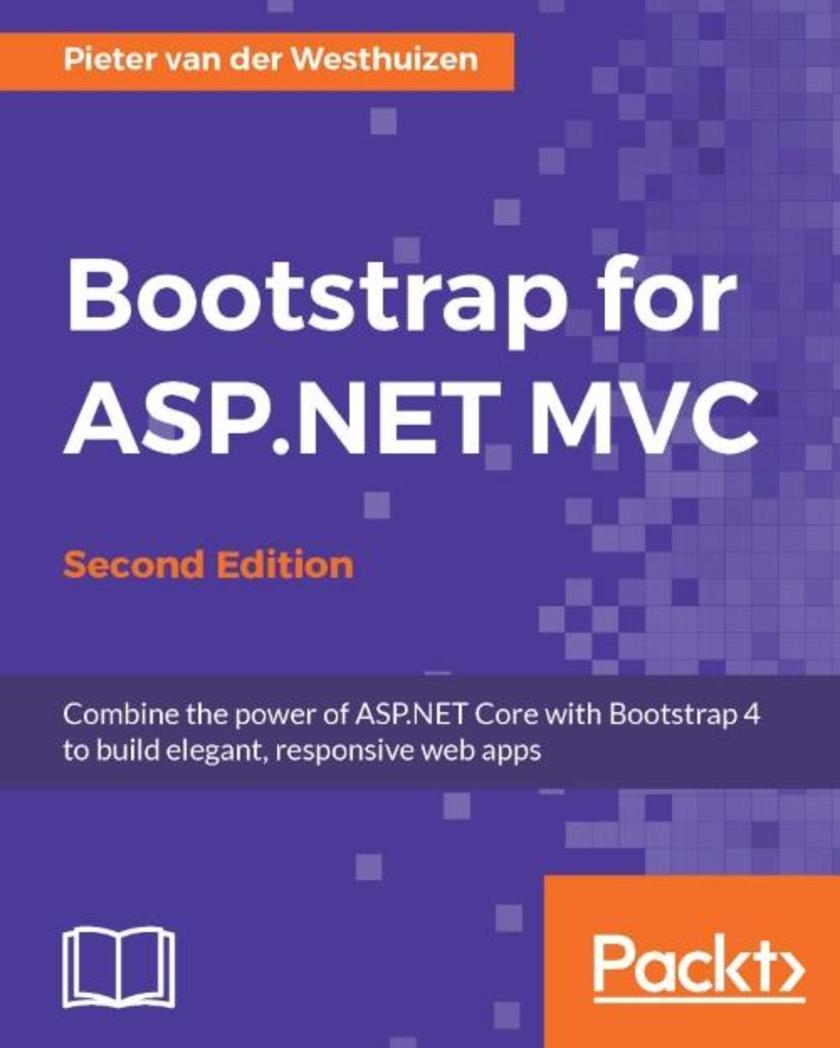
Bootstrap for ASP.NET MVC - Second Edition
¥71.93
Combine the power of ASP.NET Core with Bootstrap 4 to build elegant, responsive web apps About This Book Updated for Bootstrap 4 and ASP.Net MVC 6, this book shows how to take advantage of the latest new features introduced in both of these industry-leading frameworks Build responsive, mobile-ready apps by combining the power of ASP.NET MVC with Bootstrap Grasp the intricacies of Bootstrap and how to use it with ASP.NET MVC Build your own tools and helpers to assist you in creating ASP.NET MVC Bootstrap sites easily and quickly Master the use of Bootstrap components and plugins with ASP.NET MVC Who This Book Is For If you are an ASP.NET MVC developer and would like to know how to incorporate Bootstrap into your projects, then this book is invaluable to you. Developers with entry-level experience of ASP.NET MVC development and limited experience with Bootstrap will also benefit from this book. What You Will Learn Create a new ASP.NET MVC project that uses Bootstrap for its styling and learn how to include external libraries using the new package managers Learn to use the various Bootstrap CSS and HTML elements, and how to use the new Bootstrap 4 grid layout system Explore the different input groups and implement alerts, progress bars, and badges Explore JavaScript components by illustrating and walking through the process of using JavaScript/jQuery to add interactivity to Twitter Bootstrap components Build your own ASP.NET MVC helpers and tag helpers to reduce the amount of HTML needed to generate Bootstrap elements Convert a Bootstrap HTML template into a usable ASP.NET MVC project Use the jQuery DataTables plugin with Bootstrap and ASP.NET MVC In Detail One of the leading open source frontend frameworks, Bootstrap has undergone a significant change and introduced several features that make designing compelling, next-generation UIs much simpler. Integrating Bootstrap with ASP.NET's powerful components can further enhance its capabilities. This book guides you through the process of creating an ASP.NET MVC website from scratch using Bootstrap. After a primer on the fundamentals of Bootstrap, you will learn your way around and create a new ASP.NET MVC project in Visual Studio. You will move on to learn about the various Bootstrap components as well as techniques to include them in your own projects. The book includes practical examples to show you how to use open-source plugins with Bootstrap and ASP.NET MVC and guides you through building an ASP.NET MVC website using Bootstrap, utilizing layout and user-interface components. At the end of this book, you will find some valuable tips and tricks to help you get the most out of your Bootstrap-integrated and ASP.NET MVC-integrated website. Style and approach This is a compact, step-by-step guide that focuses on combining the power of Bootstrap with ASP.Net MVC to build next-generation web apps. With clear instructions, this book will show how to build a complete ASP.Net MVC-integrated web app from scratch using Bootstrap. It will also cover several tricks for integrating Bootstrap and ASP.Net MVC, and getting the most out of both frameworks.
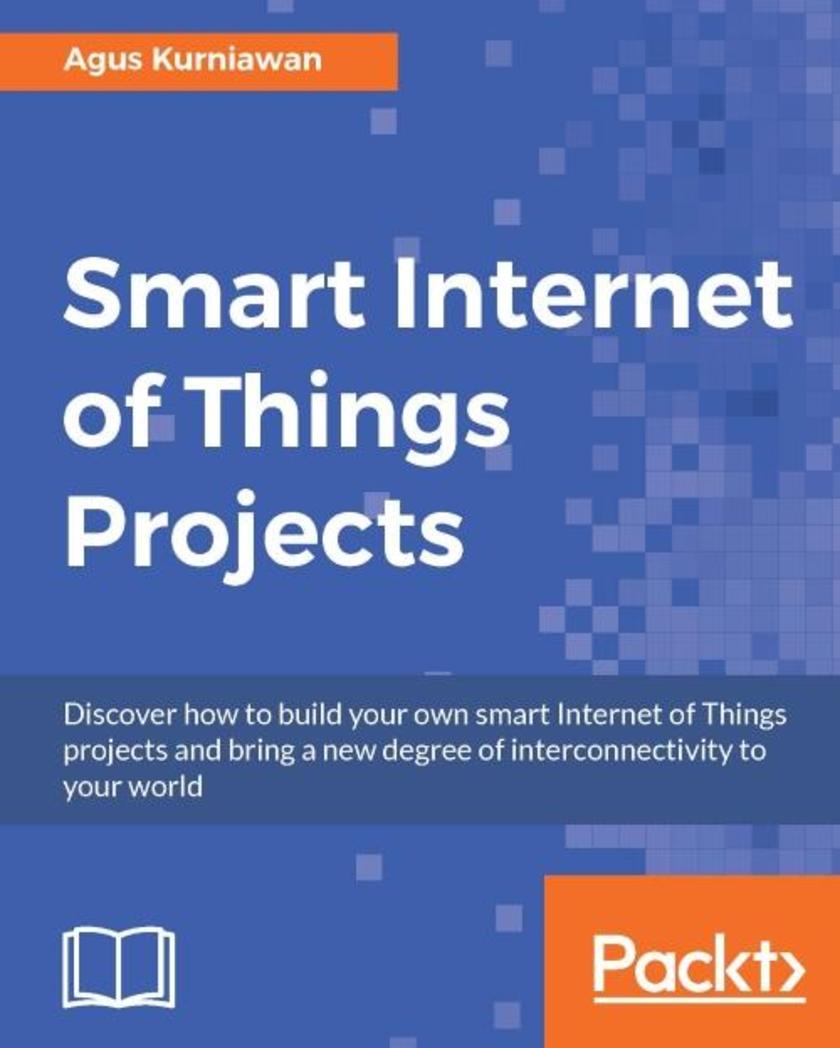
Smart Internet of Things Projects
¥71.93
Discover how to build your own smart Internet of Things projects and bring a new degree of interconnectivity to your world About This Book Learn how to extract and analyse data from physical devices and build smart IoT projects Master the skills of building enticing projects such as a neural network autonomous car, computer vision through a camera, and cloud-based IoT applications This project-based guide leverages revolutionary computing chips such as Raspberry Pi, Arduino, and so on Who This Book Is For If you are hobbyist who is keen on making smart IoT projects, then this book is for you. You should have a basic knowledge of Python. What You Will Learn Implement data science in your IoT projects and build a smart temperature controller Create a simple machine learning application and implement decision system concepts Develop a vision machine using OpenCV Build a robot car with manual and automatic control Implement speech modules with your own voice commands for IoT projects Connect IoT to a cloud-based server In Detail Internet of Things (IoT) is a groundbreaking technology that involves connecting numerous physical devices to the Internet and controlling them. Creating basic IoT projects is common, but imagine building smart IoT projects that can extract data from physical devices, thereby making decisions by themselves. Our book overcomes the challenge of analyzing data from physical devices and accomplishes all that your imagination can dream up by teaching you how to build smart IoT projects. Basic statistics and various applied algorithms in data science and machine learning are introduced to accelerate your knowledge of how to integrate a decision system into a physical device. This book contains IoT projects such as building a smart temperature controller, creating your own vision machine project, building an autonomous mobile robot car, controlling IoT projects through voice commands, building IoT applications utilizing cloud technology and data science, and many more. We will also leverage a small yet powerful IoT chip, Raspberry Pi with Arduino, in order to integrate a smart decision-making system in the IoT projects. Style and approach The book follows a project-based approach to building smart IoT projects using powerful boards such as the Raspberry Pi, Arduino, and the IoT chip.
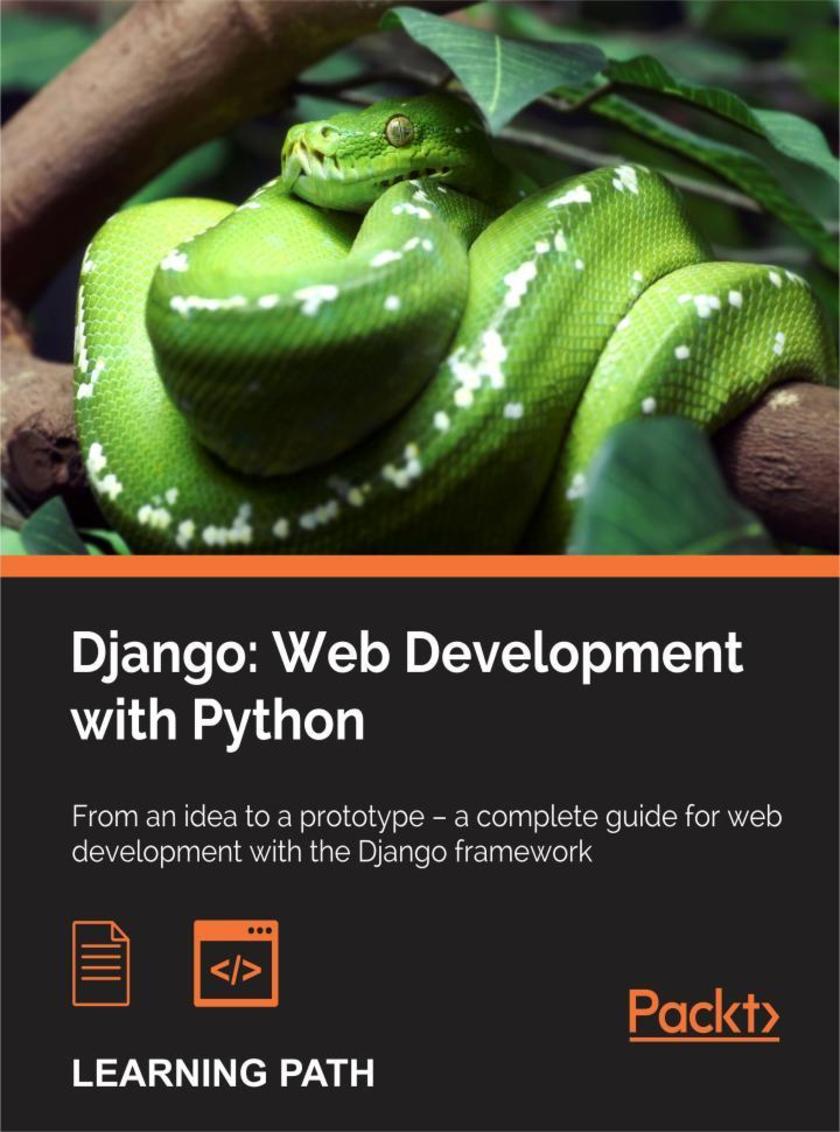
Django: Web Development with Python
¥152.59
From an idea to a prototype – a complete guide for web development with the Django framework About This Book Explore the best practices to develop applications of a superior quality with Django framework Unravel the common problems of web development in Django This course teaches you major Django functions and will help you improve your skills by developing models, forms, views, and templates Experience the challenges of working on an end-to-end social network project Who This Book Is For Web developers who want to use modern Python-based web frameworks like Django to build powerful web applications. The course is mostly self-contained and introduces web development with Python to a reader who is familiar with web development concepts and can help him become an expert in this trade. It’s intended for all levels of web developers, both students and practitioners from novice to experts. What You Will Learn Use Django models to store information in the database and generate queries to access a database across models Quickly develop web pages to create, read, update, and delete data from the model using class-based views Generate very maintainable forms with Django Import data from local sources and external web services as well as exporting your data to third parties Deep dive into various aspects of Django from models and views to testing and deployment Familiarize yourself with the various nuances of web development such as browser attacks and databases In Detail Data science is hot right now, and the need for multitalented developers is greater than ever before. A basic grounding in building apps with a framework as minimalistic, powerful, and easy-to-learn as Django will be a useful skill to launch your career as an entrepreneur or web developer. Django is a web framework that was designed to strike a balance between rapid web development and high performance. This course will take you on a journey to become an efficient web developer thoroughly understanding the key concepts of Django framework. This learning path is divided into three modules. The course begins with basic concepts of the Django framework. The first module, Django Essentials, is like a practical guide, filled with many real-world examples to build highly effective Django web application. After getting familiar with core concepts of Django, it's time to practice your learning from the first module with the help of over 90 recipes available in this module. In the second module, Web Development with Django Cookbook, you'll learn varying complexities to help you create multilingual, responsive, and scalable websites with Django. By the end of this module, you will have a good understanding of the new features added to Django 1.8 and be an expert at web development processes.The next step is to discover the latest best practices and idioms in this rapidly evolving Django framework. This is what you'll be learning in our third module, Django Design Patterns and Best Practices. This module will teach you common design patterns to develop better Django code. By the end of the module, you will be able to leverage the Django framework to develop a fully functional web application with minimal effort. Style and approach This course includes all the resources that will help you jump into the web development field with Django and learn how to make scalable and robust web applications. The aim is to create a smooth learning path that will teach you how to get started with the powerful Django framework and perform various web development techniques in depth. Through this comprehensive course, you'll learn web development with Django from scratch to finish!
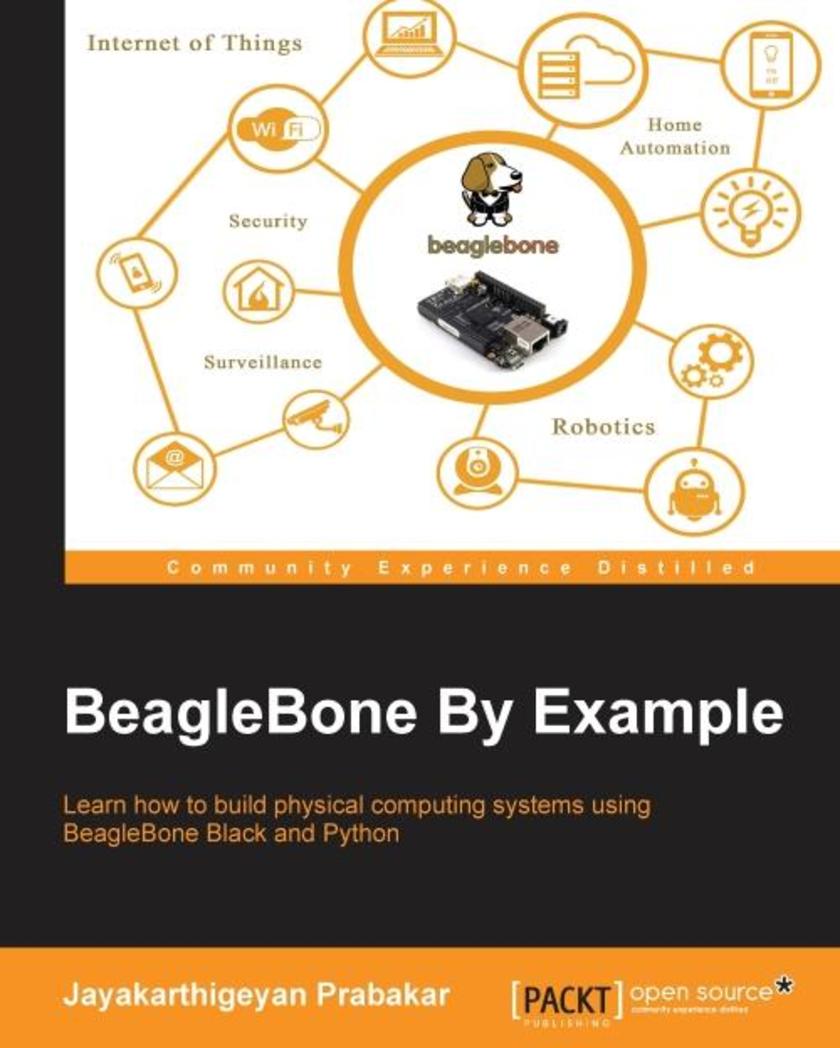
BeagleBone By Example
¥71.93
Learn how to build physical computing systems using BeagleBone Black and Python About This Book Get to grips with the fundamentals of BeagleBone Leverage Python *s to program BeagleBone for your requirements Build four exciting projects, from home automation to a tele-controlled robot Who This Book Is For This book is intended for hobbyists and consumers who wish to create impressive projects using BeagleBone. You must be familiar with Python programming. What You Will Learn Program on BeagleBone Black using Python Interface sensors and actuators to BeagleBone Black Build your own real-time physical computing systems Connect physical computing systems to cloud servers Build your own home automation and home security system Build your own tele-controlled robot with real-time video streaming In Detail BeagleBone is a low cost, community-supported development platform to develop a variety of electronic projects. This book will introduce you to BeagleBone and get you building fun, cool, and innovative projects with it. Start with the specifications of BeagleBone Black and its operating systems, then get to grips with the GPIOs available in BeagleBone Black. Work through four types of exciting projects: building real-time physical computing systems, home automation, image processing for a security system, and building your own tele-controlled robot and learn the fundamentals of a variety of projects in a single book. By the end of this book, you will be able to write code for BeagleBone in order to operate hardware and impart decision-making capabilities with the help of efficient coding in Python. Style and approach This book is a step by step guide that will walk you through the fundamentals of building different projects using BeagleBone Black.


