


 购物车
购物车 个人中心
个人中心
Mastering Active Directory
¥107.90
Become a master at managing enterprise identity infrastructure by leveraging Active Directory About This Book ? Manage your Active Directory services for Windows Server 2016 effectively ? Automate administrative tasks in Active Directory using PowerShell ? Manage your organization's network with ease Who This Book Is For If you are an Active Directory administrator, system administrator, or network professional who has basic knowledge of Active Directory and are looking to gain expertise in this topic, this is the book for you. What You Will Learn ? Explore the new features in Active Directory Domain Service 2016 ? Automate AD tasks with PowerShell ? Get to know the advanced functionalities of the schema ? Learn about Flexible Single Master Operation (FSMO) roles and their placement ? Install and migrate Active directory from older versions to Active Directory 2016 ? Manage Active Directory objects using different tools and techniques ? Manage users, groups, and devices effectively ? Design your OU structure in the best way ? Audit and monitor Active Directory ? Integrate Azure with Active Directory for a hybrid setup In Detail Active Directory is a centralized and standardized system that automates networked management of user data, security, and distributed resources and enables interoperation with other directories. If you are aware of Active Directory basics and want to gain expertise in it, this book is perfect for you. We will quickly go through the architecture and fundamentals of Active Directory and then dive deep into the core components, such as forests, domains, sites, trust relationships, OU, objects, attributes, DNS, and replication. We will then move on to AD schemas, global catalogs, LDAP, RODC, RMS, certificate authorities, group policies, and security best practices, which will help you gain a better understanding of objects and components and how they can be used effectively. We will also cover AD Domain Services and Federation Services for Windows Server 2016 and all their new features. Last but not least, you will learn how to manage your identity infrastructure for a hybrid-cloud setup. All this will help you design, plan, deploy, manage operations on, and troubleshoot your enterprise identity infrastructure in a secure, effective manner. Furthermore, I will guide you through automating administrative tasks using PowerShell cmdlets. Toward the end of the book, we will cover best practices and troubleshooting techniques that can be used to improve security and performance in an identity infrastructure. Style and approach This step-by-step guide will help you master the core functionalities of Active Directory services using Microsoft Server 2016 and PowerShell, with real-world best practices at the end.
QlikView for Developers
¥116.62
Drive value and insight by developing business critical applications with QlikView 12 About This Book ? Develop your own scalable and maintainable QlikView applications ? Learn time-saving techniques for making your QlikView development more efficient ? A one-stop guide to developing BI applications with QlikView Who This Book Is For This book is for anyone interested in working with QlikView or who has attended QlikView Developer training. The book caters for all QlikView developers, beginners and experts alike, and anyone who wants to improve their QlikView skills. What You Will Learn ? Understand important changes made in QlikView 12 ? Learn the techniques and best practices to transform data in QlikView via *s ? Load data from disparate sources to build an associative Data Model ? Build robust data models and overcome common modeling challenges ? Designing data visualization objects to present performance measures with charts and tables ? Learn to use dimensions and expressions in QlikView objects ? Utilize QlikView's built-in aggregation functions to achieve complex calculations ? Create Point In Time reporting and achieving complex calculations using Set Analysis ? Create a consistent and interactive user interface ? Ensure your QlikView applications and data are protected ? Optimize the QlikView Data Model ? Constructing a data architecture that supports scalable QlikView deployments ? Learn time-saving techniques for making your QlikView development more efficient In Detail QlikView is one of the most flexible and powerful Business Intelligence platforms around. If you want to build data into your organization, build it around QlikView. Don't get caught in the gap between data and knowledge – find out how QlikView can help you unlock insights and data potential with ease. Whether you're new to QlikView or want to get up to speed with the features and functionality of QlikView, this book starts at a basic level and delves more deeply to demonstrate how to make QlikView work for you, and make it meet the needs of your organization. Using a real-world use-case to highlight the extensive impact of effective business analytics, this book might well be your silver bullet for success. A superb hands-on guide to get you started by exploring the fundamentals of QlikView before learning how to successfully implement it, technically and strategically. You'll learn valuable tips, tricks, and insightful information on loading different types of data into QlikView, and how to model it effectively. You will also learn how to write useful *s for QlikView to handle potentially complex data transformations in a way that is simple and elegant. From ensuring consistency and clarity in your data models, to techniques for managing expressions using variables, this book makes sure that your QlikView projects are organized in a way that's most productive for you and key stakeholders. Style and approach This book will help you learn QlikView Development from a basic to a practitioner level using a step-by-step approach. It is smartly built around a practical case study – HighCloud Airlines – to help you gain an in-depth understanding of how to build applications for Business Intelligence using QlikView.
Distributed Computing in Java 9
¥80.65
Explore the power of distributed computing to write concurrent, scalable applications in Java About This Book ? Make the best of Java 9 features to write succinct code ? Handle large amounts of data using HPC ? Make use of AWS and Google App Engine along with Java to establish a powerful remote computation system Who This Book Is For This book is for basic to intermediate level Java developers who is aware of object-oriented programming and Java basic concepts. What You Will Learn ? Understand the basic concepts of parallel and distributed computing/programming ? Achieve performance improvement using parallel processing, multithreading, concurrency, memory sharing, and hpc cluster computing ? Get an in-depth understanding of Enterprise Messaging concepts with Java Messaging Service and Web Services in the context of Enterprise Integration Patterns ? Work with Distributed Database technologies ? Understand how to develop and deploy a distributed application on different cloud platforms including Amazon Web Service and Docker CaaS Concepts ? Explore big data technologies ? Effectively test and debug distributed systems ? Gain thorough knowledge of security standards for distributed applications including two-way Secure Socket Layer In Detail Distributed computing is the concept with which a bigger computation process is accomplished by splitting it into multiple smaller logical activities and performed by diverse systems, resulting in maximized performance in lower infrastructure investment. This book will teach you how to improve the performance of traditional applications through the usage of parallelism and optimized resource utilization in Java 9. After a brief introduction to the fundamentals of distributed and parallel computing, the book moves on to explain different ways of communicating with remote systems/objects in a distributed architecture. You will learn about asynchronous messaging with enterprise integration and related patterns, and how to handle large amount of data using HPC and implement distributed computing for databases. Moving on, it explains how to deploy distributed applications on different cloud platforms and self-contained application development. You will also learn about big data technologies and understand how they contribute to distributed computing. The book concludes with the detailed coverage of testing, debugging, troubleshooting, and security aspects of distributed applications so the programs you build are robust, efficient, and secure. Style and approach This is a step-by-step practical guide with real-world examples.
Expert Delphi
¥90.46
Become a developer superhero and build stunning cross-platform apps with Delphi About This Book ? A one-stop guide on Delphi to help you build cross-platform apps ? This book covers important concepts such as the FireMonkey library, shows you how to interact with the Internet of Things, and enables you to integrate with Cloud services ? The code is explained in detail with observations on how to create native apps for Ios and Android with a single code base Who This Book Is For If you want to create stunning applications for mobile, desktop, the cloud, and the Internet of Things, then this book is for you. This book is for developers who would like to build native cross-platform apps with a single codebase for iOS and Android. A basic knowledge of Delphi is assumed, although we do cover a primer on the language. What You Will Learn ? Understand the basics of Delphi and the FireMonkey application platform as well as the specifics of Android and iOS platforms ? Complete complex apps quickly with access to platform features and APIs using a single, easy-to-maintain code base ? Work with local data sources, including embedded SQL databases, REST servers, and Backend-as-a-Service providers ? Take full advantage of mobile hardware capabilities by working with sensors and Internet of Things gadgets and devices ? Integrate with cloud services and data using REST APIs and scalable multi-tier frameworks for outstanding multi-user and social experience ? Architect and deploy powerful mobile back-end services and get super-productive by leveraging Delphi IDE agile functionality ? Get to know the best practices for writing a high-quality, reliable, and maintainable codebase in the Delphi Object Pascal language In Detail Delphi is the most powerful Object Pascal IDE and component library for cross-platform native app development. It enables building natively compiled, blazingly fast apps for all major platforms including Android, iOS, Windows, Mac, and Linux. If you want to build server-side applications, create web services, and have clear GUIs for your project, then this book is for you. The book begins with a basic primer on Delphi helping you get accustomed to the IDE and the Object Pascal language and will then quickly move on to advanced-level concepts. Through this book, we’ll help you understand the architecture of applications and will teach you the important concepts of the FireMonkey library, show you how to build server-side services, and enable you to interact with the Internet of Things. Towards the end, you will learn to integrate your app with various web services and deploy them. By the end of the book, you will be able to build powerful, cross-platform, native apps for iOS and Android with a single code base. Style and approach This book will help you build cross-platform mobile apps with Delphi using a step-by-step approach.
Learning Angular for .NET Developers
¥71.93
Build efficient web apps and deliver great results by integrating Angular and the .NET framework About This Book ? Become a more productive developer and learn to use frameworks that implement good development practices ? Achieve advanced autocompletion, navigation, and refactoring in Angular using Type* ? Follow a gradual introduction to the concepts with a lot of examples and explore the evolution of a production-ready application Who This Book Is For If you are a .NET developer who now wants to efficiently build single-page applications using the new features that Angular 4 has to offer, then this book is for you. Familiarity of HTML, CSS, and JavaScript is assumed to get the most from this book. What You Will Learn ? Create a standalone Angular application to prototype user interfaces ? Validate complex forms with Angular version 4 and use Bootstrap to style them ? Build RESTful web services that work well with single-page applications ? Use Gulp and Bower in Visual Studio to run tasks and manage JavaScript packages ? Implement automatic validation for web service requests to reduce your boilerplate code ? Use web services with Angular version 4 to offload and secure your application logic ? Test your Angular version 4 and web service code to improve the quality of your software deliverables In Detail Are you are looking for a better, more efficient, and more powerful way of building front-end web applications? Well, look no further, you have come to the right place! This book comprehensively integrates Angular version 4 into your tool belt, then runs you through all the new options you now have on hand for your web apps without bogging you down. The frameworks, tools, and libraries mentioned here will make your work productive and minimize the friction usually associated with building server-side web applications. Starting off with building blocks of Angular version 4, we gradually move into integrating TypeScript and ES6. You will get confident in building single page applications and using Angular for prototyping components. You will then move on to building web services and full-stack web application using ASP.NET WebAPI. Finally, you will learn the development process focused on rapid delivery and testability for all application layers. Style and approach This book covers everything there is to know about getting well-acquainted with Angular 4 and .NET without bogging you down. Everything is neatly laid out under clear headings for quick consultation, offering you the information required to understand a concept immediately, with short, relevant examples of each feature.
Frank Kane's Taming Big Data with Apache Spark and Python
¥71.93
Frank Kane’s hands-on Spark training course, based on his bestselling Taming Big Data with Apache Spark and Python video, now available in a book. Understand and analyze large data sets using Spark on a single system or on a cluster. About This Book ? Understand how Spark can be distributed across computing clusters ? Develop and run Spark jobs efficiently using Python ? A hands-on tutorial by Frank Kane with over 15 real-world examples teaching you Big Data processing with Spark Who This Book Is For If you are a data scientist or data analyst who wants to learn Big Data processing using Apache Spark and Python, this book is for you. If you have some programming experience in Python, and want to learn how to process large amounts of data using Apache Spark, Frank Kane’s Taming Big Data with Apache Spark and Python will also help you. What You Will Learn ? Find out how you can identify Big Data problems as Spark problems ? Install and run Apache Spark on your computer or on a cluster ? Analyze large data sets across many CPUs using Spark’s Resilient Distributed Datasets ? Implement machine learning on Spark using the MLlib library ? Process continuous streams of data in real time using the Spark streaming module ? Perform complex network analysis using Spark’s GraphX library ? Use Amazon's Elastic MapReduce service to run your Spark jobs on a cluster In Detail Frank Kane’s Taming Big Data with Apache Spark and Python is your companion to learning Apache Spark in a hands-on manner. Frank will start you off by teaching you how to set up Spark on a single system or on a cluster, and you’ll soon move on to analyzing large data sets using Spark RDD, and developing and running effective Spark jobs quickly using Python. Apache Spark has emerged as the next big thing in the Big Data domain – quickly rising from an ascending technology to an established superstar in just a matter of years. Spark allows you to quickly extract actionable insights from large amounts of data, on a real-time basis, making it an essential tool in many modern businesses. Frank has packed this book with over 15 interactive, fun-filled examples relevant to the real world, and he will empower you to understand the Spark ecosystem and implement production-grade real-time Spark projects with ease. Style and approach Frank Kane’s Taming Big Data with Apache Spark and Python is a hands-on tutorial with over 15 real-world examples carefully explained by Frank in a step-by-step manner. The examples vary in complexity, and you can move through them at your own pace.
Learning pandas - Second Edition
¥90.46
Get to grips with pandas—a versatile and high-performance Python library for data manipulation, analysis, and discovery About This Book ? Get comfortable using pandas and Python as an effective data exploration and analysis tool ? Explore pandas through a framework of data analysis, with an explanation of how pandas is well suited for the various stages in a data analysis process ? A comprehensive guide to pandas with many of clear and practical examples to help you get up and using pandas Who This Book Is For This book is ideal for data scientists, data analysts, Python programmers who want to plunge into data analysis using pandas, and anyone with a curiosity about analyzing data. Some knowledge of statistics and programming will be helpful to get the most out of this book but not strictly required. Prior exposure to pandas is also not required. What You Will Learn ? Understand how data analysts and scientists think about of the processes of gathering and understanding data ? Learn how pandas can be used to support the end-to-end process of data analysis ? Use pandas Series and DataFrame objects to represent single and multivariate data ? Slicing and dicing data with pandas, as well as combining, grouping, and aggregating data from multiple sources ? How to access data from external sources such as files, databases, and web services ? Represent and manipulate time-series data and the many of the intricacies involved with this type of data ? How to visualize statistical information ? How to use pandas to solve several common data representation and analysis problems within finance In Detail You will learn how to use pandas to perform data analysis in Python. You will start with an overview of data analysis and iteratively progress from modeling data, to accessing data from remote sources, performing numeric and statistical analysis, through indexing and performing aggregate analysis, and finally to visualizing statistical data and applying pandas to finance. With the knowledge you gain from this book, you will quickly learn pandas and how it can empower you in the exciting world of data manipulation, analysis and science. Style and approach ? Step-by-step instruction on using pandas within an end-to-end framework of performing data analysis ? Practical demonstration of using Python and pandas using interactive and incremental examples
Modern C++ Programming Cookbook
¥90.46
Over 100 recipes to help you overcome your difficulties with C++ programming and gain a deeper understanding of the working of modern C++ About This Book ? Explore the most important language and library features of C++17, including containers, algorithms, regular expressions, threads, and more, ? Get going with unit testing frameworks Boost.Test, Google Test and Catch, ? Extend your C++ knowledge and take your development skills to new heights by making your applications fast, robust, and scalable. Who This Book Is For If you want to overcome difficult phases of development with C++ and leverage its features using modern programming practices, then this book is for you. The book is designed for both experienced C++ programmers as well as people with strong knowledge of OOP concepts. What You Will Learn ? Get to know about the new core language features and the problems they were intended to solve ? Understand the standard support for threading and concurrency and know how to put them on work for daily basic tasks ? Leverage C++’s features to get increased robustness and performance ? Explore the widely-used testing frameworks for C++ and implement various useful patterns and idioms ? Work with various types of strings and look at the various aspects of compilation ? Explore functions and callable objects with a focus on modern features ? Leverage the standard library and work with containers, algorithms, and iterators ? Use regular expressions for find and replace string operations ? Take advantage of the new filesystem library to work with files and directories ? Use the new utility additions to the standard library to solve common problems developers encounter including string_view, any , optional and variant types In Detail C++ is one of the most widely used programming languages. Fast, efficient, and flexible, it is used to solve many problems. The latest versions of C++ have seen programmers change the way they code, giving up on the old-fashioned C-style programming and adopting modern C++ instead. Beginning with the modern language features, each recipe addresses a specific problem, with a discussion that explains the solution and offers insight into how it works. You will learn major concepts about the core programming language as well as common tasks faced while building a wide variety of software. You will learn about concepts such as concurrency, performance, meta-programming, lambda expressions, regular expressions, testing, and many more in the form of recipes. These recipes will ensure you can make your applications robust and fast. By the end of the book, you will understand the newer aspects of C++11/14/17 and will be able to overcome tasks that are time-consuming or would break your stride while developing. Style and approach This book follows a recipe-based approach, with examples that will empower you to implement the core programming language features and explore the newer aspects of C++.
Mastering Non-Functional Requirements
¥71.93
This book covers the most critical 24 NFRs that are applicable to IT applications and systems. About This Book ? Explains three stages of nonfunctional requirements, that is, analysis, architecture, and assessment ? In-depth knowledge of NFR framework and taxonomy that provides guidance around the modelling phase for the NFRs ? Coverage of 24 critical and pivotal NFRs, including the analysis, architecture, and assessment. Who This Book Is For The primary audience for this title are the gamut of roles starting from IT consultant to chief architects who are responsible to deliver strategic, tactical, and operational engagements for fortune 100 customers worldwide. Nonfunctional requirements are the key to any software / IT program. They cannot be overlooked or ignored. The book provides a comprehensive approach from analysis, architecture, and measurement of nonfunctional requirements. The book includes considerations for bespoke (Java, .Net, and COTS applications). These are applicable to IT applications from various domains. The book outlines the methodology for capturing the NFRs and also describes a framework that can be leveraged by analysts and architects for tackling NFRs for various engagements. The audience for this book include business analysts, enterprise architects, business architects, solution architects, technical architects/designers, domain/security/integration architects, software developers, support engineers and test engineers, technical project managers, project leads/technical leads/technical project managers, and students from the computer science/IT stream What You Will Learn ? Learn techniques related to the analysis, architecture, and monitoring of NFRs ? Understand the various tools, techniques, and processes in order to improve the overall quality of the desired outcomes ? Embrace the best practices of architecting, metrics, and success factors for NFRs ? Identify the common pitfalls to be avoided and the patterns to leverage ? Understand taxonomy and framework for NFRs ? Learn the design guidelines for architecting applications and systems relating to NFRs ? Abstract different methodologies to analyze and gather NFRs In Detail Non-functional Requirements are key to any software/IT program and cannot be overlooked or ignored. This book provides a comprehensive approach to the analysis, architecture, and measurement of NFRs. It includes considerations for bespoke Java, .NET, and COTS applications that are applicable to IT applications/systems in different domains. The book outlines the methodology for capturing the NFRs and also describes a framework that can be leveraged by analysts and architects for tackling NFRs for various engagements. This book starts off by explaining the various KPIs, taxonomies, and methods for identifying NFRs. Learn the design guidelines for architecting applications and systems relating to NFRs and design principles to achieve the desired outcome. We will then move on to various key tiers/layers and patterns pertaining to the business, database, and integrating tiers. After this, we will dive deep into the topics pertaining to techniques related to monitoring and measurement of NFRs, such as sizing, analytical modeling, and quality assurance. Lastly, we end the book by describing some pivotal NFRs and checklists for the software quality attributes related to the business, application, data, and infrastructure domains. Style and approach The book takes a pragmatic approach, describing various techniques related to the analysis of NFRs, the architecture of NFRs, and assessment of NFRs.
Implementing Azure Solutions
¥90.46
A practical guide that enhances your skills in implementing Azure solutions for your organization About This Book ? Confidently configure, deploy, and manage cloud services and virtual machines ? Implement a highly-secured environment and respond to threats with increased visibility ? This comprehensive guide is packed with exciting practical scenarios that enable you to implement Azure solutions with ease Who This Book Is For This book is for IT architects, system and network admins, and DevOps engineers who are aware of Azure solutions and want to implement them for their organization. What You Will Learn ? Implement virtual networks, network gateways, Site-to-Site VPN, ExpressRoute, routing, and network devices ? Understand the working of different storage accounts in Azure ? Plan, deploy, and secure virtual machines ? Deploy and manage Azure Containers ? Get familiar with some common Azure usage scenarios In Detail Microsoft Azure has numerous effective solutions that shape the future of any business. However, the major challenge that architects and administrators face are implementing these solutions appropriately. Our book focuses on various implementation scenarios that will help overcome the challenge of implementing Azure’s solutions in a very efficient manner and will also help you to prepare for Microsoft Architect exam. You will not only learn how to secure a newly deployed Azure Active Directory but also get to know how Azure Active Directory Synchronization could be implemented. To maintain an isolated and secure environment so that you can run your virtual machines and applications, you will implement Azure networking services. Also to manage, access, and secure your confidential data, you will implement storage solutions. Toward the end, you will explore tips and tricks to secure your environment. By the end, you will be able to implement Azure solutions such as networking, storage, and cloud effectively. Style and approach This step-by-step guide focuses on implementing various Azure solutions for your organization. The motive is to provide a comprehensive exposure and ensure they can implement these solutions with ease.
Akka Cookbook
¥90.46
Learn how to use the Akka framework to build effective applications in Scala About This Book ? Covers a discussion on Lagom—the newest launched Akka framework that is built to create complex microservices easily ? The recipe approach of the book allows the reader to know important and independent concepts of Scala and Akka in a seamless manner ? Provides a comprehensive understanding of the Akka actor model and implementing it to create reactive web applications Who This Book Is For If you are a Scala developer who wants to build scalable and concurrent applications, then this book is for you. Basic knowledge of Akka will help you take advantage of this book. What You Will Learn ? Control an actor using the ContolAware mailbox ? Test a fault-tolerant application using the Akka test kit ? Create a parallel application using futures and agents ? Package and deploy Akka application inside Docker ? Deploy remote actors programmatically on different nodes ? Integrate Streams with Akka actors ? Install Lagom and create a Lagom project In Detail Akka is an open source toolkit that simplifies the construction of distributed and concurrent applications on the JVM. This book will teach you how to develop reactive applications in Scala using the Akka framework. This book will show you how to build concurrent, scalable, and reactive applications in Akka. You will see how to create high performance applications, extend applications, build microservices with Lagom, and more. We will explore Akka's actor model and show you how to incorporate concurrency into your applications. The book puts a special emphasis on performance improvement and how to make an application available for users. We also make a special mention of message routing and construction. By the end of this book, you will be able to create a high-performing Scala application using the Akka framework. Style and approach This highly practical recipe-based approach will allow you to build scalable, robust, and reactive applications using the Akka framework.
Mastering Reactive JavaScript
¥71.93
Expand your boundaries by creating applications empowered with real-time data using RxJs without compromising performance About This Book ? Handle an infinite stream of incoming data using RxJs without going crazy ? Explore important RxJs operators that can help you improve your code readability ? Get acquainted with the different techniques and operators used to handle data traffic, which occurs when you receive data faster than you can process Who This Book Is For If you're a web developer with some basic JavaScript programming knowledge who wants to implement the reactive programming paradigm with JavaScript, then this book is for you. What You Will Learn ? Get to know the basics of functional reactive programming using RxJs ? Process a continuous flow of data with linear memory consumption ? Filter, group, and react to changes in your system ? Discover how to deal with data traffic ? Compose operators to create new operators and use them in multiple observables to avoid code repetition ? Explore transducers and see how they can improve your code readability ? Detect and recover from errors in observables using Retry and Catch operators ? Create your own reactive application: a real-time webchat In Detail If you’re struggling to handle a large amount of data and don’t know how to improve your code readability, then reactive programming is the right solution for you. It lets you describe how your code behaves when changes happen and makes it easier to deal with real-time data. This book will teach you what reactive programming is, and how you can use it to write better applications. The book starts with the basics of reactive programming, what Reactive Extensions is, and how can you use it in JavaScript along with some reactive code using Bacon. Next, you’ll discover what an Observable and an Observer are and when to use them.You'll also find out how you can query data through operators, and how to use schedulers to react to changes. Moving on, you’ll explore the RxJs API, be introduced to the problem of data traffic (backpressure), and see how you can mitigate it. You’ll also learn about other important operators that can help improve your code readability, and you’ll see how to use transducers to compose operators. At the end of the book, you’ll get hands-on experience of using RxJs, and will create a real-time web chat using RxJs on the client and server, providing you with the complete package to master RxJs. Style and approach This easy-to-follow guide is full of hands-on examples of reactive programming. Each topic is explained and placed in context, and for the more inquisitive there are more details of the concepts used, ending with an application using the concepts learned through the book.
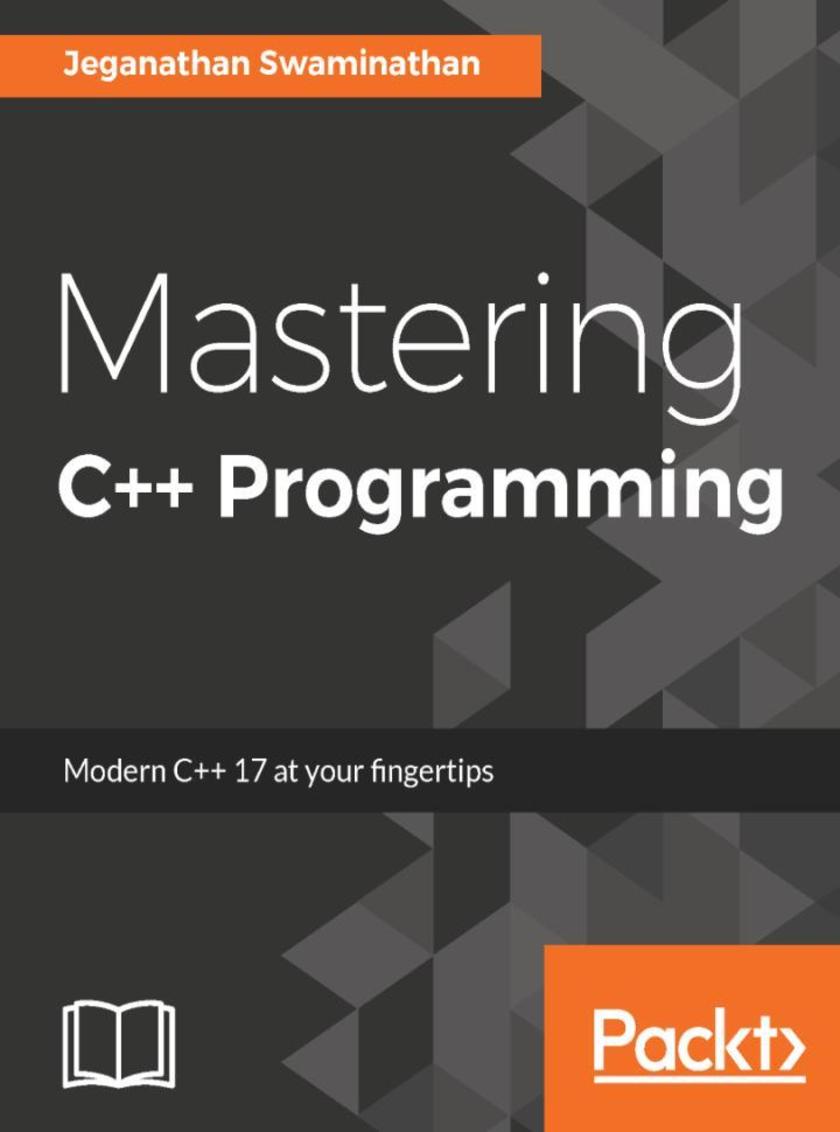
Mastering C++ Programming
¥90.46
Take your C++ coding to the next level by leveraging the latest features and advanced techniques to building high performing, reliable applications. About This Book ? Get acquainted with the latest features in C++ 17 ? Take advantage of the myriad of features and possibilities that C++ offers to build real-world applications ? Write clear and expressive code in C++, and get insights into how to keep your code error-free Who This Book Is For This book is for experienced C++ developers. If you are a novice C++ developer, then it’s highly recommended that you get a solid understanding of the C++ language before reading this book What You Will Learn ? Write modular C++ applications in terms of the existing and newly introduced features ? Identify code-smells, clean up, and refactor legacy C++ applications ? Leverage the possibilities provided by Cucumber and Google Test/Mock to automate test cases ? Test frameworks with C++ ? Get acquainted with the new C++17 features ? Develop GUI applications in C++ ? Build portable cross-platform applications using standard C++ features In Detail C++ has come a long way and has now been adopted in several contexts. Its key strengths are its software infrastructure and resource-constrained applications. The C++ 17 release will change the way developers write code, and this book will help you master your developing skills with C++. With real-world, practical examples explaining each concept, the book will begin by introducing you to the latest features in C++ 17. It encourages clean code practices in C++ in general, and demonstrates the GUI app-development options in C++. You’ll get tips on avoiding memory leaks using smart-pointers. Next, you’ll see how multi-threaded programming can help you achieve concurrency in your applications. Moving on, you’ll get an in-depth understanding of the C++ Standard Template Library. We show you the concepts of implementing TDD and BDD in your C++ programs, and explore template-based generic programming, giving you the expertise to build powerful applications. Finally, we’ll round up with debugging techniques and best practices.By the end of the book, you’ll have an in-depth understanding of the language and its various facets. Style and approach This straightforward guide will help you level up your skills in C++ programming, be it for enterprise software or for low-latency applications like games. Filled with real-world, practical examples, this book will take you gradually up the steep learning curve that is C++.
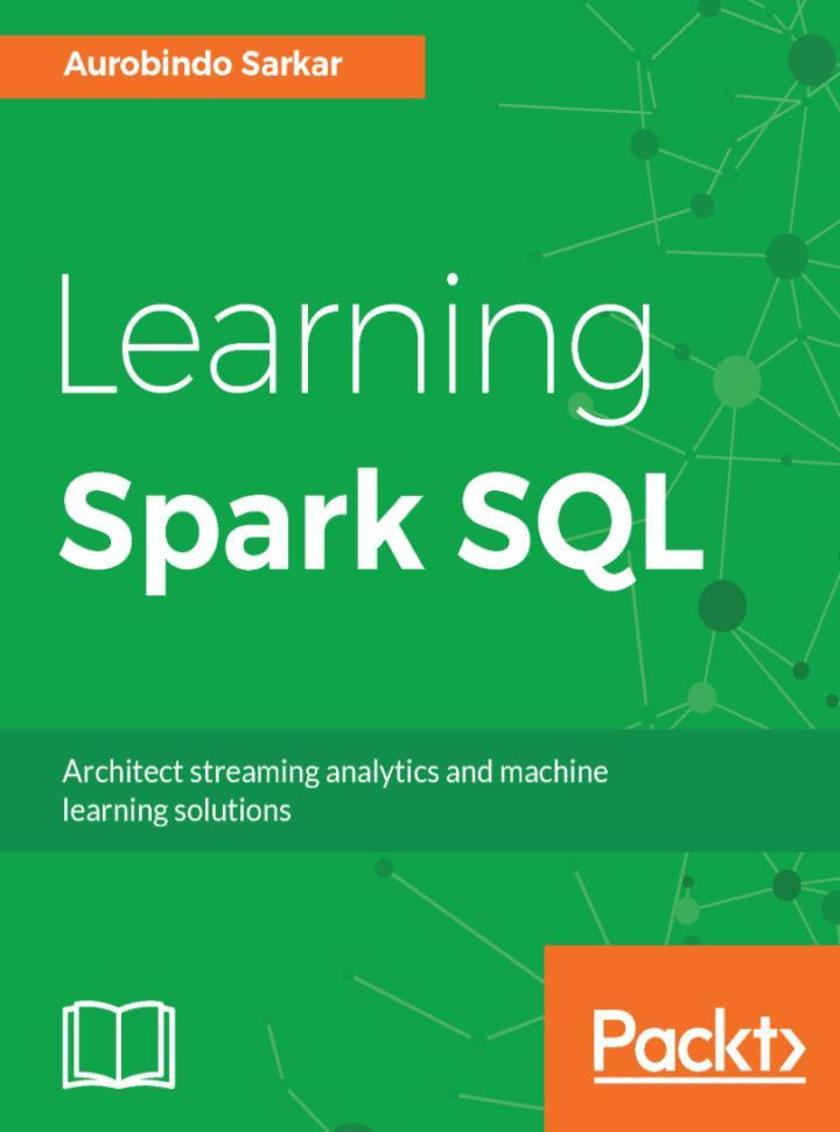
Learning Spark SQL
¥99.18
Design, implement, and deliver successful streaming applications, machine learning pipelines and graph applications using Spark SQL API About This Book ? Learn about the design and implementation of streaming applications, machine learning pipelines, deep learning, and large-scale graph processing applications using Spark SQL APIs and Scala. ? Learn data exploration, data munging, and how to process structured and semi-structured data using real-world datasets and gain hands-on exposure to the issues and challenges of working with noisy and "dirty" real-world data. ? Understand design considerations for scalability and performance in web-scale Spark application architectures. Who This Book Is For If you are a developer, engineer, or an architect and want to learn how to use Apache Spark in a web-scale project, then this is the book for you. It is assumed that you have prior knowledge of SQL querying. A basic programming knowledge with Scala, Java, R, or Python is all you need to get started with this book. What You Will Learn ? Familiarize yourself with Spark SQL programming, including working with DataFrame/Dataset API and SQL ? Perform a series of hands-on exercises with different types of data sources, including CSV, JSON, Avro, MySQL, and MongoDB ? Perform data quality checks, data visualization, and basic statistical analysis tasks ? Perform data munging tasks on publically available datasets ? Learn how to use Spark SQL and Apache Kafka to build streaming applications ? Learn key performance-tuning tips and tricks in Spark SQL applications ? Learn key architectural components and patterns in large-scale Spark SQL applications In Detail In the past year, Apache Spark has been increasingly adopted for the development of distributed applications. Spark SQL APIs provide an optimized interface that helps developers build such applications quickly and easily. However, designing web-scale production applications using Spark SQL APIs can be a complex task. Hence, understanding the design and implementation best practices before you start your project will help you avoid these problems. This book gives an insight into the engineering practices used to design and build real-world, Spark-based applications. The book's hands-on examples will give you the required confidence to work on any future projects you encounter in Spark SQL. It starts by familiarizing you with data exploration and data munging tasks using Spark SQL and Scala. Extensive code examples will help you understand the methods used to implement typical use-cases for various types of applications. You will get a walkthrough of the key concepts and terms that are common to streaming, machine learning, and graph applications. You will also learn key performance-tuning details including Cost Based Optimization (Spark 2.2) in Spark SQL applications. Finally, you will move on to learning how such systems are architected and deployed for a successful delivery of your project. Style and approach This book is a hands-on guide to designing, building, and deploying Spark SQL-centric production applications at scale.
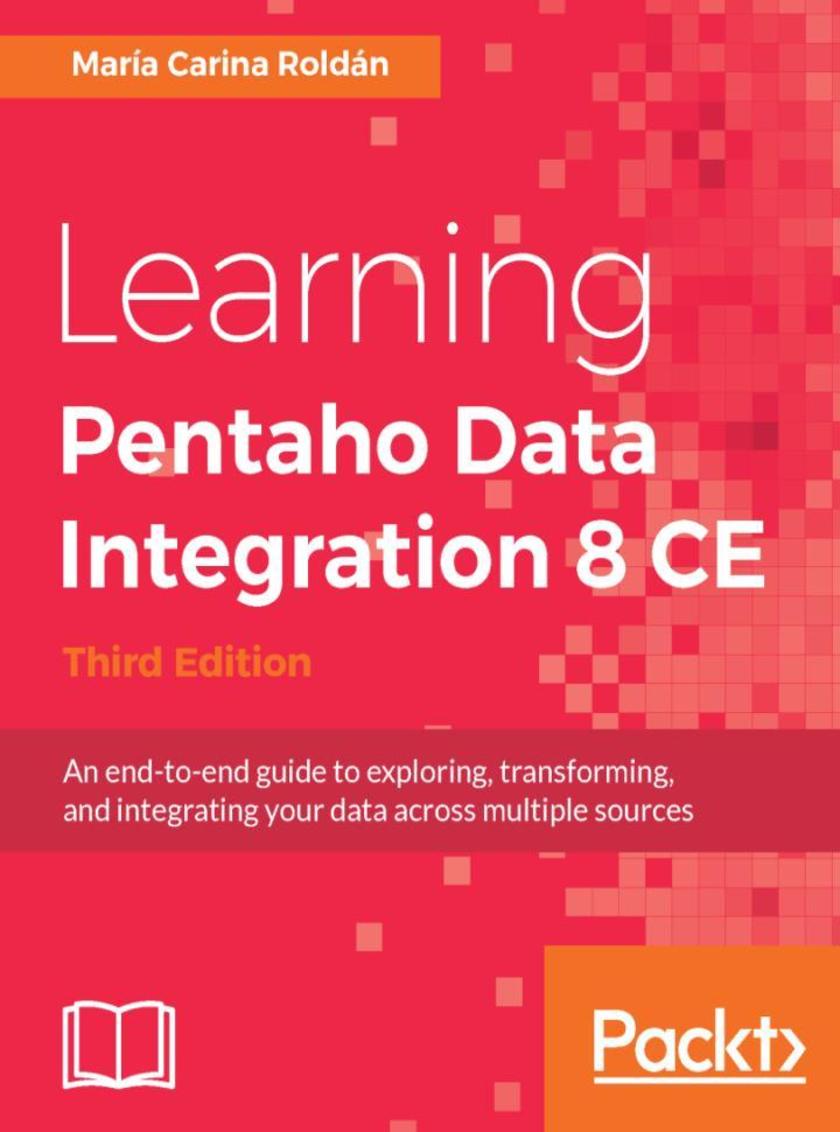
Learning Pentaho Data Integration 8 CE - Third Edition
¥90.46
Get up and running with the Pentaho Data Integration tool using this hands-on, easy-to-read guide About This Book ? Manipulate your data by exploring, transforming, validating, and integrating it using Pentaho Data Integration 8 CE ? A comprehensive guide exploring the features of Pentaho Data Integration 8 CE ? Connect to any database engine, explore the databases, and perform all kind of operations on relational databases Who This Book Is For This book is a must-have for software developers, business intelligence analysts, IT students, or anyone involved or interested in developing ETL solutions. If you plan on using Pentaho Data Integration for doing any data manipulation task, this book will help you as well. This book is also a good starting point for data warehouse designers, architects, or anyone who is responsible for data warehouse projects and needs to load data into them. What You Will Learn ? Explore the features and capabilities of Pentaho Data Integration 8 Community Edition ? Install and get started with PDI ? Learn the ins and outs of Spoon, the graphical designer tool ? Learn to get data from all kind of data sources, such as plain files, Excel spreadsheets, databases, and XML files ? Use Pentaho Data Integration to perform CRUD (create, read, update, and delete) operations on relationaldatabases ? Populate a data mart with Pentaho Data Integration ? Use Pentaho Data Integration to organize files and folders, run daily processes, deal with errors, and more In Detail Pentaho Data Integration(PDI) is an intuitive and graphical environment packed with drag-and-drop design and powerful Extract-Tranform-Load (ETL) capabilities. This book shows and explains the new interactive features of Spoon, the revamped look and feel, and the newest features of the tool including transformations and jobs Executors and the invaluable Metadata Injection capability. We begin with the installation of PDI software and then move on to cover all the key PDI concepts. Each of the chapter introduces new features, enabling you to gradually get practicing with the tool. First, you will learn to do all kind of data manipulation and work with simple plain files. Then, the book teaches you how you can work with relational databases inside PDI. Moreover, you will be given a primer on data warehouse concepts and you will learn how to load data in a data warehouse. During the course of this book, you will be familiarized with its intuitive, graphical and drag-and-drop design environment. By the end of this book, you will learn everything you need to know in order to meet your data manipulation requirements. Besides, your will be given best practices and advises for designing and deploying your projects. Style and approach Step by step guide filled with practical, real world scenarios and examples.
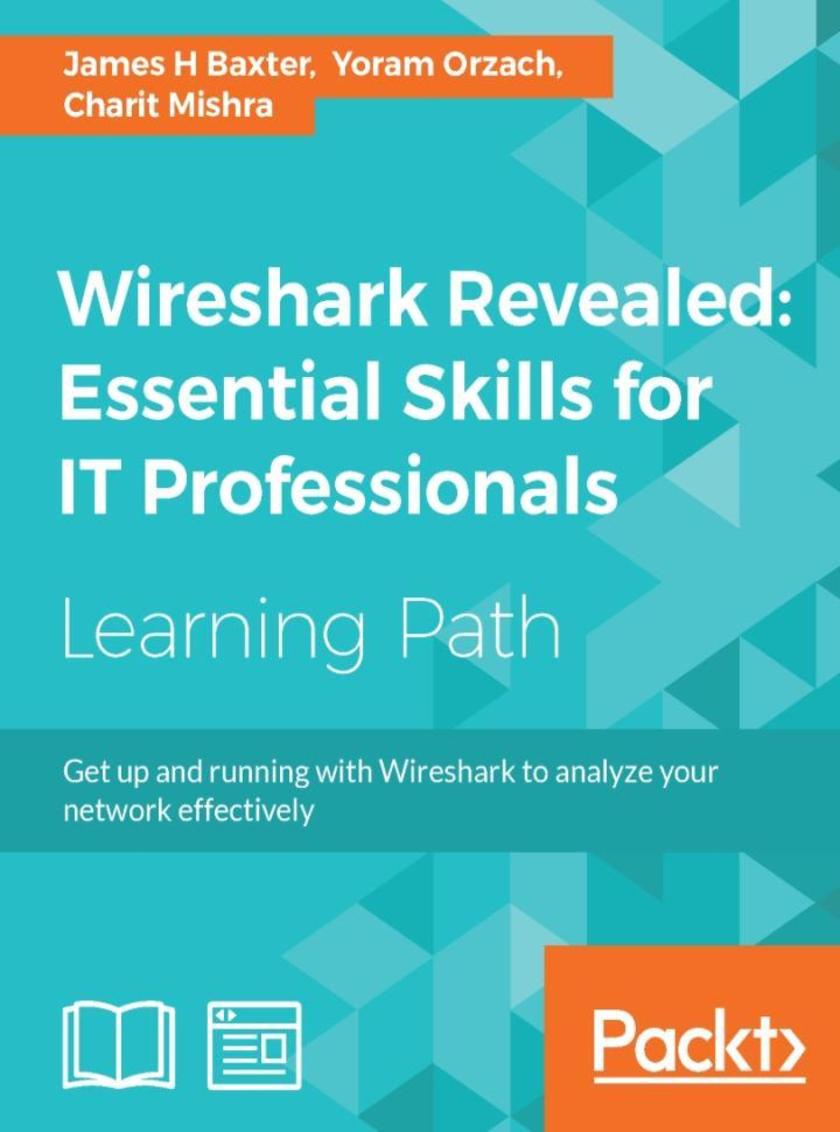
Wireshark Revealed: Essential Skills for IT Professionals
¥179.84
Master Wireshark and discover how to analyze network packets and protocols effectively, along with engaging recipes to troubleshoot network problems About This Book ? Gain valuable insights into the network and application protocols, and the key fields in each protocol ? Use Wireshark’s powerful statistical tools to analyze your network and leverage its expert system to pinpoint network problems ? Master Wireshark and train it as your network sniffer Who This Book Is For This book is aimed at IT professionals who want to develop or enhance their packet analysis skills. A basic familiarity with common network and application services terms and technologies is assumed. What You Will Learn ? Discover how packet analysts view networks and the role of protocols at the packet level ? Capture and isolate all the right packets to perform a thorough analysis using Wireshark’s extensive capture and display filtering capabilities ? Decrypt encrypted wireless traffic ? Use Wireshark as a diagnostic tool and also for network security analysis to keep track of malware ? Find and resolve problems due to bandwidth, throughput, and packet loss ? Identify and locate faults in communication applications including HTTP, FTP, mail, and various other applications – Microsoft OS problems, databases, voice, and video over IP ? Identify and locate faults in detecting security failures and security breaches in the network In Detail This Learning Path starts off installing Wireshark, before gradually taking you through your first packet capture, identifying and filtering out just the packets of interest, and saving them to a new file for later analysis. You will then discover different ways to create and use capture and display filters. By halfway through the book, you'll be mastering Wireshark features, analyzing different layers of the network protocol, and looking for any anomalies.We then start Ethernet and LAN switching, through IP, and then move on to TCP/UDP with a focus on TCP performance problems. It also focuses on WLAN security. Then, we go through application behavior issues including HTTP, mail, DNS, and other common protocols. This book finishes with a look at network forensics and how to locate security problems that might harm the network.This course provides you with highly practical content explaining Metasploit from the following books: 1) Wireshark Essentials 2) Network Analysis Using Wireshark Cookbook 3) Mastering Wireshark Style and approach This step-by-step guide follows a practical approach, starting from the basic to the advanced aspects. Through a series of real-world examples, this learning path will focus on making it easy for you to become an expert at using Wireshark.
Apache Kafka 1.0 Cookbook
¥63.21
Simplify real-time data processing by leveraging the power of Apache Kafka 1.0 About This Book ? Use Kafka 1.0 features such as Confluent platforms and Kafka streams to build efficient streaming data applications to handle and process your data ? Integrate Kafka with other Big Data tools such as Apache Hadoop, Apache Spark, and more ? Hands-on recipes to help you design, operate, maintain, and secure your Apache Kafka cluster with ease Who This Book Is For This book is for developers and Kafka administrators who are looking for quick, practical solutions to problems encountered while operating, managing or monitoring Apache Kafka. If you are a developer, some knowledge of Scala or Java will help, while for administrators, some working knowledge of Kafka will be useful. What You Will Learn ? Install and configure Apache Kafka 1.0 to get optimal performance ? Create and configure Kafka Producers and Consumers ? Operate your Kafka clusters efficiently by implementing the mirroring technique ? Work with the new Confluent platform and Kafka streams, and achieve high availability with Kafka ? Monitor Kafka using tools such as Graphite and Ganglia ? Integrate Kafka with third-party tools such as Elasticsearch, Logstash, Apache Hadoop, Apache Spark, and more In Detail Apache Kafka provides a unified, high-throughput, low-latency platform to handle real-time data feeds. This book will show you how to use Kafka efficiently, and contains practical solutions to the common problems that developers and administrators usually face while working with it. This practical guide contains easy-to-follow recipes to help you set up, configure, and use Apache Kafka in the best possible manner. You will use Apache Kafka Consumers and Producers to build effective real-time streaming applications. The book covers the recently released Kafka version 1.0, the Confluent Platform and Kafka Streams. The programming aspect covered in the book will teach you how to perform important tasks such as message validation, enrichment and composition.Recipes focusing on optimizing the performance of your Kafka cluster, and integrate Kafka with a variety of third-party tools such as Apache Hadoop, Apache Spark, and Elasticsearch will help ease your day to day collaboration with Kafka greatly. Finally, we cover tasks related to monitoring and securing your Apache Kafka cluster using tools such as Ganglia and Graphite. If you're looking to become the go-to person in your organization when it comes to working with Apache Kafka, this book is the only resource you need to have. Style and approach Following a cookbook recipe-based approach, we’ll teach you how to solve everyday difficulties and struggles you encounter using Kafka through hands-on examples.
Cacti Beginner's Guide - Second Edition
¥80.65
A comprehensive guide to learning Cacti and using it to implement performance measurement and reporting within a Network Operations Center About This Book ? A complete Cacti book that focuses on the basics as well as the advanced concepts you need to know for implementing a Network Operations Center ? A step-by-step Beginner's Guide with detailed instructions on how to create and implement custom plugins ? Written by Thomas Urban – creator of the "Cereus" and "NMID" plugins for Cacti known as Phalek in the Cacti forum Who This Book Is For If you are a network operator and want to use Cacti for implementing performance measurement for trending, troubleshooting, and reporting purposes, then this book is for you. You only need to know the basics of network management and SNMP. What You Will Learn ? Setting up Cacti on Linux and Windows systems ? Extending the core functionality by using the plugin architecture ? Building your own custom plugins ? Creating your own custom data input method to retrieve data from your systems ? Using SNMP, SSH, and WMI to retrieve remote performance data ? Designing and create enterprise-class reports with the reporting plugins ? Implementing threshold-based alerting using the Thold plugin ? Automating common administrative tasks utilizing the command-line interface and the automate functionality ? Migrating Cacti to new servers ? Building a multi remote-poller environment In Detail Cacti is a performance measurement tool that provides easy methods and functions for gathering and graphing system data. You can use Cacti to develop a robust event management system that can alert on just about anything you would like it to. But to do that, you need to gain a solid understanding of the basics of Cacti, its plugin architecture, and automation concepts. Cacti Beginner's Guide will introduce you to the wide variety of features of Cacti and will guide you on how to use them for maximum effectiveness. Advanced topics such as the plugin architecture and Cacti automation using the command-line interface will help you build a professional performance measurement system. Designed as a beginner's guide, the book starts off with the basics of installing and using Cacti, and also covers the advanced topics that will show you how to customize and extend the core Cacti functionalities. The book offers essential tutorials for creating advanced graphs and using plugins to create enterprise-class reports to show your customers and colleagues. From data templates to input methods and plugin installation to creating your own customized plugins, this book provides you with a rich selection of step-by-step instructions to reach your goals. It covers all you need to know to implement professional performance measurement techniques with Cacti and ways to fully customize Cacti to fit your needs. You will also learn how to migrate Cacti to new servers. Lastly you will also be introduced to the latest feature of building a scalable remote poller environment. By the end of the book, you will be able to implement and extend Cacti to monitor, display, and report the performance of your network exactly the way you want. Style and approach Written for beginners to Cacti, this book contains step-by-step instructions and hands-on tutorials for network operators to learn how to implement and use the core Cacti functions.
Qlik Sense: Advanced Data Visualization for Your Organization
¥179.84
Perform Interactive Data Analysis with Smarter Visualizations and Support your Enterprise-wide Analytical Needs About This Book ? Get a practical demonstration of discovering data for sales, human resources, and more using Qlik Sense ? Create dynamic dashboards for business intelligence and predictive analytics ? Create and collaborate comprehensive analytical solutions using Rattle and Qlik Sense Who This Book Is For This course is for anyone who wishes to understand and utilize the various new approaches to business intelligence actively in their business practice. Knowing the basics of business intelligence concepts would be helpful when picking up this course, but is not mandatory. What You Will Learn ? Build simple visualization models with Rattle and Qlik Sense Desktop ? Get to grips with the life cycle and new visualization functions of a Qlik Sense application ? Discover simple ways to examine data and get it ready for analysis ? Visualize your data with Qlik Sense's engaging and informative graphs ? Build efficient and responsive Associative Models ? Optimize Qlik Sense for sales, human resources, and demographic data discovery ? Explore various tips and tricks of navigation for the Qlik Sense? front end ? Develop creative extensions for your Qlik Sense? dashboard In Detail Qlik Sense is powerful and creative visual analytics software that allows users to discover data, explore it, and dig out meaningful insights in order to make a profit and make decisions for your business. This course begins by introducing you to the features and functions of the most modern edition of Qlik Sense so you get to grips with the application. The course will teach you how to administer the data architecture in Qlik Sense, enabling you to customize your own Qlik Sense application for your business intelligence needs. It also contains numerous recipes to help you overcome challenging situations while creating fully featured desktop applications in Qlik Sense. It explains how to combine Rattle and Qlik Sense Desktop to apply predictive analytics to your data to develop real-world interactive data applications. The course includes premium content from three of our most popular books: ? Learning Qlik Sense: The Official Guide Second Edition ? Qlik Sense Cookbook ? Predictive Analytics using Rattle and Qlik Sense On completion of this course, you will be self-sufficient in improving your data analysis and will know how to apply predictive analytics to your datasets. Through this course, you will be able to create predictive models and data applications, allowing you to explore your data insights much deeper. Style and approach The course will follow a practical approach with rich set of examples through which it will demonstrate its concepts, features and its implementation. The course will also feature numerous solutions which will cover entire spectrum of BI use cases.
Building RESTful Web services with Go
¥80.65
Explore the necessary concepts of REST API development by building few real world services from scratch. About This Book ? Follow best practices and explore techniques such as clustering and caching to achieve a reactive, scalable web service ? Leverage the Buffalo Framework to quickly implement RESTful endpoints ? Learn to implement a client library for a RESTful web service using Go Who This Book Is For This book is intended for those who want to learn to build RESTful web services with a framework like Buffalo. To make best use of the code samples included in the book, you should have a basic knowledge of Go programming. What You Will Learn ? Create HTTP handler and introspect the Gorilla Mux router ? OAuth 2 implementation with Go ? Build RESTFul API with go-restful, Revel.Go and Buffalo Go ? Create REST API with MongoDB and Go ? Build a working client library and unit test for REST API ? Debug, test, and profile RESTful APIs with each of the frameworks ? Optimize and scale REST API using microservices In Detail REST is an architectural style that tackles the challenges of building scalable web services and in today's connected world, APIs have taken a central role on the web. APIs provide the fabric through which systems interact, and REST has become synonymous with APIs. The depth, breadth, and ease of use of Go, makes it a breeze for developers to work with it to build robust Web APIs. This book takes you through the design of RESTful web services and leverages a framework like Buffalo Go to implement these services. The book starts with a brief introduction to REST API development and how it transformed the modern web. You will learn how to handle routing and authentication of web services along with working with middleware for internal service. The book explains how to use Go frameworks to build RESTful web services and work with MongoDB to create REST API. You will learn how to integrate Postgres SQL and JSON with a Go web service and build a client library in Go for consuming REST API. You will learn how to scale APIs using the microservice architecture and deploy the REST APIs using Nginx as a proxy server. Finally you will learn how to metricize a REST API using an API Gateway. By the end of the book you will be proficient in building RESTful APIs in Go. Style and approach This book is a step-by-step, hands-on guide to designing and building RESTful web services.
TypeScript 2.x By Example
¥80.65
Leverage the power of Type* 2.0 using real-world examples About This Book ? Begin with the fundamentals of TypeScript and learn how to write better JavaScript code ? Build three amazing applications throughout the book ? Leverage the power of tools such as Angular 2 and NativeScript to build for the web as well as for mobile Who This Book Is For Web developers who would like to learn how to use TypeScript to build amazing applications will benefit from this book. What You Will Learn ? Design your first project in Visual Studio ? Learn about the different data types in TypeScript ? Create web applications in an object-oriented fashion using TypeScript ? Build a Trello application using TypeScript's complex features. ? Explore the tools available in a web application ecosystem to write unit test cases ? Deploy web applications to cloud and assign resources to the application In Detail The TypeScript language, compiler, and open source development toolset brings JavaScript development up to the enterprise level. It allows you to use ES5, ES6, and ES7 JavaScript language features today, including classes, interfaces, generics, modules, and more. Its simple typing syntax enables building large, robust applications using object-oriented techniques and industry-standard design principles. This book aims at teaching you how to get up and running with TypeScript development in the most practical way possible. Taking you through two exciting projects built from scratch, you will learn the basics of TypeScript, before progressing to functions, generics, promises, and callbacks. Then, you’ll get to implement object-oriented programming as well as optimize your applications with effective memory management. You’ll also learn to test and secure your applications, before deploying them. Starting with a basic SPA built using Angular, you will progress on to building, maybe, a Chat application or a cool application. You’ll also learn how to use NativeScript to build a cool mobile application. Each of these applications with be explained in detail, allowing you to grasp the concepts fast. By the end of this book, you will have not only built two amazing projects but you will also have the skills necessary to take your development to the next level. Style and approach Example-based approach to get you quickly started with Type*


