


 购物车
购物车 个人中心
个人中心
Learning Elastic Stack 6.0
¥63.21
Deliver end-to-end real-time distributed data processing solutions by leveraging the power of Elastic Stack 6.0 About This Book ? Get to grips with the new features introduced in Elastic Stack 6.0 ? Get valuable insights from your data by working with the different components of the Elastic stack such as Elasticsearch, Logstash, Kibana, X-Pack, and Beats ? Includes handy tips and techniques to build, deploy and manage your Elastic applications efficiently on-premise or on the cloud Who This Book Is For This book is for data professionals who want to get amazing insights and business metrics from their data sources. If you want to get a fundamental understanding of the Elastic Stack for distributed, real-time processing of data, this book will help you. A fundamental knowledge of JSON would be useful, but is not mandatory. No previous experience with the Elastic Stack is required. What You Will Learn ? Familiarize yourself with the different components of the Elastic Stack ? Get to know the new functionalities introduced in Elastic Stack 6.0 ? Effectively build your data pipeline to get data from terabytes or petabytes of data into Elasticsearch and Logstash for searching and logging ? Use Kibana to visualize data and tell data stories in real-time ? Secure, monitor, and use the alerting and reporting capabilities of Elastic Stack ? Take your Elastic application to an on-premise or cloud-based production environment In Detail The Elastic Stack is a powerful combination of tools for distributed search, analytics, logging, and visualization of data from medium to massive data sets. The newly released Elastic Stack 6.0 brings new features and capabilities that empower users to find unique, actionable insights through these techniques. This book will give you a fundamental understanding of what the stack is all about, and how to use it efficiently to build powerful real-time data processing applications. After a quick overview of the newly introduced features in Elastic Stack 6.0, you’ll learn how to set up the stack by installing the tools, and see their basic configurations. Then it shows you how to use Elasticsearch for distributed searching and analytics, along with Logstash for logging, and Kibana for data visualization. It also demonstrates the creation of custom plugins using Kibana and Beats. You’ll find out about Elastic X-Pack, a useful extension for effective security and monitoring. We also provide useful tips on how to use the Elastic Cloud and deploy the Elastic Stack in production environments. On completing this book, you’ll have a solid foundational knowledge of the basic Elastic Stack functionalities. You’ll also have a good understanding of the role of each component in the stack to solve different data processing problems. Style and approach This step-by-step guide will show you the Elastic Stack, covering all the components through interactive and easy-to-follow examples. It also includes handy tips.
Android Wear Projects
¥80.65
A fun way to create interesting and cool apps for your Wearable device using Android programming. About This Book ? Create real-time Android Wear apps from scratch and become a pro Android Wear Developer ? Learn to create apps specially dedicated to the Android Wear platform ? Design custom Wear UIs and create interactive Watch faces Who This Book Is For The book is for Android developers with a good understanding of programming and developing applications on Android, but they need not have any experience of creating Wear apps. What You Will Learn ? Design and build Wear apps. ? Learn how to use offline storage in Wear apps. ? Understand sensors and how to work with them ? Work with standalone applications of the wear 2.0 API. ? Create a map application for Android Wear devices ? Write a watch face and understand more about Wear 2.0 ? Work with firebase realtime database and firebase functions ? Create a chatting application that has wear companion app In Detail Android Wear Projects is your opportunity to step into the exciting new world of Android Wear app development. This book will help you to master the skills in Android Wear programming and give you a complete insight on wear app development. You will create five different Android Wear apps just like the most popular Android Wear apps. You will create a To-do list, a city maps app, a Wear messenger, Wear fitness tracker and Watch face. While you create these apps you will learn to create custom notifications, receive voice inputs in notifications, add pages to notifications and stack notifications. You will see how to create custom wear app layouts, the custom UIs specially designed for Wear. You will learn to handle and manage data and syncing data with other devices, create interactive Watch faces and also ensure the safety and security of your Wear apps by testing and securing your apps before you deploy them on the app store. Style and approach This book will take a project based tutorial style approach where every chapter will create a separate android Wear app and highlight different features of android Wear apps.
Docker on Windows
¥90.46
Learn how to run new and old Windows applications in Docker containers. About This Book ? Package traditional .NET Frameworks apps and new .NET Core apps as Docker images, and run them in containers for increased efficiency, portability, and security ? Design and implement distributed applications that run across connected containers, using enterprise-grade open source software from public Docker images ? Build a full Continuous Deployment pipeline for a .NET Framework application, and deploy it to a highly-available Docker swarm running in the cloud Who This Book Is For If you want to modernize an old monolithic application without rewriting it, smooth the deployment to production, or move to DevOps or the cloud, then Docker is the enabler for you. This book gives you a solid grounding in Docker so you can confidently approach all of these scenarios. What You Will Learn ? Comprehend key Docker concepts: images, containers, registries, and swarms ? Run Docker on Windows 10, Windows Server 2016, and in the cloud ? Deploy and monitor distributed solutions across multiple Docker containers ? Run containers with high availability and fail-over with Docker Swarm ? Master security in-depth with the Docker platform, making your apps more secure ? Build a Continuous Deployment pipeline by running Jenkins in Docker ? Debug applications running in Docker containers using Visual Studio ? Plan the adoption of Docker in your own organization In Detail Docker is a platform for running server applications in lightweight units called containers. You can run Docker on Windows Server 2016 and Windows 10, and run your existing apps in containers to get significant improvements in efficiency, security, and portability. This book teaches you all you need to know about Docker on Windows, from 101 to deploying highly-available workloads in production. This book takes you on a Docker journey, starting with the key concepts and simple examples of how to run .NET Framework and .NET Core apps in Windows Docker containers. Then it moves on to more complex examples—using Docker to modernize the architecture and development of traditional ASP.NET and SQL Server apps. The examples show you how to break up monoliths into distributed apps and deploy them to a clustered environment in the cloud, using the exact same artifacts you use to run them locally. To help you move confidently to production, it then explains Docker security, and the management and support options. The book finishes with guidance on getting started with Docker in your own projects, together with some real-world case studies for Docker implementations, from small-scale on-premises apps to very large-scale apps running on Azure. Style and approach Using a step-by-step approach, this book shows you how to use Docker on Windows. It includes practical examples and real-world technical and business scenarios that will help you effectively implement Docker in your environment.There are over 50 examples of Dockerized applications, using C# .NET projects as the source and packaging them into Docker images.
Metasploit for Beginners
¥63.21
An easy to digest practical guide to Metasploit covering all aspects of the framework from installation, configuration, and vulnerability hunting to advanced client side attacks and anti-forensics. About This Book ? Carry out penetration testing in highly-secured environments with Metasploit ? Learn to bypass different defenses to gain access into different systems. ? A step-by-step guide that will quickly enhance your penetration testing skills. Who This Book Is For If you are a penetration tester, ethical hacker, or security consultant who wants to quickly learn the Metasploit framework to carry out elementary penetration testing in highly secured environments then, this book is for you. What You Will Learn ? Get to know the absolute basics of the Metasploit framework so you have a strong foundation for advanced attacks ? Integrate and use various supporting tools to make Metasploit even more powerful and precise ? Set up the Metasploit environment along with your own virtual testing lab ? Use Metasploit for information gathering and enumeration before planning the blueprint for the attack on the target system ? Get your hands dirty by firing up Metasploit in your own virtual lab and hunt down real vulnerabilities ? Discover the clever features of the Metasploit framework for launching sophisticated and deceptive client-side attacks that bypass the perimeter security ? Leverage Metasploit capabilities to perform Web application security scanning In Detail This book will begin by introducing you to Metasploit and its functionality. Next, you will learn how to set up and configure Metasploit on various platforms to create a virtual test environment. You will also get your hands on various tools and components used by Metasploit. Further on in the book, you will learn how to find weaknesses in the target system and hunt for vulnerabilities using Metasploit and its supporting tools. Next, you'll get hands-on experience carrying out client-side attacks. Moving on, you'll learn about web application security scanning and bypassing anti-virus and clearing traces on the target system post compromise. This book will also keep you updated with the latest security techniques and methods that can be directly applied to scan, test, hack, and secure networks and systems with Metasploit. By the end of this book, you'll get the hang of bypassing different defenses, after which you'll learn how hackers use the network to gain access into different systems. Style and approach This tutorial is packed with step-by-step instructions that are useful for those getting started with Metasploit. This is an easy-to-read guide to learning Metasploit from scratch that explains simply and clearly all you need to know to use this essential IT power tool.
Cloud Native Python
¥90.46
Build cloud native applications in Python About This Book ? This is the only reliable resource that showcases the tools and techniques you need build robust and resilient cloud native applications in Python ? Learn how to architect your application on both, the AWS and Azure clouds for high availability ? Assess, monitor, and troubleshoot your applications in the cloud Who This Book Is For This book is ideal for developers with a basic knowledge of Python who want to learn to build, test, and scale their Python-based applications. No prior experience of writing microservices in Python is required. What You Will Learn ? Get to know “the way of the cloud”, including why developing good cloud software is fundamentally about mindset and discipline ? Know what microservices are and how to design them ? Create reactive applications in the cloud with third-party messaging providers ? Build massive-scale, user-friendly GUIs with React and Flux ? Secure cloud-based web applications: the do’s, don’ts, and options ? Plan cloud apps that support continuous delivery and deployment In Detail Businesses today are evolving so rapidly that having their own infrastructure to support their expansion is not feasible. As a result, they have been resorting to the elasticity of the cloud to provide a platform to build and deploy their highly scalable applications. This book will be the one stop for you to learn all about building cloud-native architectures in Python. It will begin by introducing you to cloud-native architecture and will help break it down for you. Then you’ll learn how to build microservices in Python using REST APIs in an event driven approach and you will build the web layer. Next, you’ll learn about Interacting data services and building Web views with React, after which we will take a detailed look at application security and performance. Then, you’ll also learn how to Dockerize your services. And finally, you’ll learn how to deploy the application on the AWS and Azure platforms. We will end the book by discussing some concepts and techniques around troubleshooting problems that might occur with your applications after you’ve deployed them. This book will teach you how to craft applications that are built as small standard units, using all the proven best practices and avoiding the usual traps. It's a practical book: we're going to build everything using Python 3 and its amazing tooling ecosystem. The book will take you on a journey, the destination of which, is the creation of a complete Python application based on microservices over the cloud platform Style and approach Filled with examples, this book takes a step-by-step approach to teach you each and every configuration you need to make your application highly available and fault tolerant.
Machine Learning Algorithms
¥90.46
Build strong foundation for entering the world of Machine Learning and data science with the help of this comprehensive guide About This Book ? Get started in the field of Machine Learning with the help of this solid, concept-rich, yet highly practical guide. ? Your one-stop solution for everything that matters in mastering the whats and whys of Machine Learning algorithms and their implementation. ? Get a solid foundation for your entry into Machine Learning by strengthening your roots (algorithms) with this comprehensive guide. Who This Book Is For This book is for IT professionals who want to enter the field of data science and are very new to Machine Learning. Familiarity with languages such as R and Python will be invaluable here. What You Will Learn ? Acquaint yourself with important elements of Machine Learning ? Understand the feature selection and feature engineering process ? Assess performance and error trade-offs for Linear Regression ? Build a data model and understand how it works by using different types of algorithm ? Learn to tune the parameters of Support Vector machines ? Implement clusters to a dataset ? Explore the concept of Natural Processing Language and Recommendation Systems ? Create a ML architecture from scratch. In Detail As the amount of data continues to grow at an almost incomprehensible rate, being able to understand and process data is becoming a key differentiator for competitive organizations. Machine learning applications are everywhere, from self-driving cars, spam detection, document search, and trading strategies, to speech recognition. This makes machine learning well-suited to the present-day era of Big Data and Data Science. The main challenge is how to transform data into actionable knowledge. In this book you will learn all the important Machine Learning algorithms that are commonly used in the field of data science. These algorithms can be used for supervised as well as unsupervised learning, reinforcement learning, and semi-supervised learning. A few famous algorithms that are covered in this book are Linear regression, Logistic Regression, SVM, Naive Bayes, K-Means, Random Forest, TensorFlow, and Feature engineering. In this book you will also learn how these algorithms work and their practical implementation to resolve your problems. This book will also introduce you to the Natural Processing Language and Recommendation systems, which help you run multiple algorithms simultaneously. On completion of the book you will have mastered selecting Machine Learning algorithms for clustering, classification, or regression based on for your problem. Style and approach An easy-to-follow, step-by-step guide that will help you get to grips with real -world applications of Algorithms for Machine Learning.
Analytics for the Internet of Things (IoT)
¥80.65
Break through the hype and learn how to extract actionable intelligence from the flood of IoT data About This Book ? Make better business decisions and acquire greater control of your IoT infrastructure ? Learn techniques to solve unique problems associated with IoT and examine and analyze data from your IoT devices ? Uncover the business potential generated by data from IoT devices and bring down business costs Who This Book Is For This book targets developers, IoT professionals, and those in the field of data science who are trying to solve business problems through IoT devices and would like to analyze IoT data. IoT enthusiasts, managers, and entrepreneurs who would like to make the most of IoT will find this equally useful. A prior knowledge of IoT would be helpful but is not necessary. Some prior programming experience would be useful What You Will Learn ? Overcome the challenges IoT data brings to analytics ? Understand the variety of transmission protocols for IoT along with their strengths and weaknesses ? Learn how data flows from the IoT device to the final data set ? Develop techniques to wring value from IoT data ? Apply geospatial analytics to IoT data ? Use machine learning as a predictive method on IoT data ? Implement best strategies to get the most from IoT analytics ? Master the economics of IoT analytics in order to optimize business value In Detail We start with the perplexing task of extracting value from huge amounts of barely intelligible data. The data takes a convoluted route just to be on the servers for analysis, but insights can emerge through visualization and statistical modeling techniques. You will learn to extract value from IoT big data using multiple analytic techniques. Next we review how IoT devices generate data and how the information travels over networks. You’ll get to know strategies to collect and store the data to optimize the potential for analytics, and strategies to handle data quality concerns. Cloud resources are a great match for IoT analytics, so Amazon Web Services, Microsoft Azure, and PTC ThingWorx are reviewed in detail next. Geospatial analytics is then introduced as a way to leverage location information. Combining IoT data with environmental data is also discussed as a way to enhance predictive capability. We’ll also review the economics of IoT analytics and you’ll discover ways to optimize business value. By the end of the book, you’ll know how to handle scale for both data storage and analytics, how Apache Spark can be leveraged to handle scalability, and how R and Python can be used for analytic modeling. Style and approach This book follows a step-by-step, practical approach to combine the power of analytics and IoT and help you get results quickly
Java 9 Regular Expressions
¥63.21
Solve real world problems using Regex in Java. About This Book ? Discover regular expressions and how they work ? Implement regular expressions with Java to your code base ? Learn to use regular expressions in emails, URLs, paths, and IP addresses Who This Book Is For This book is for Java developers who would like to understand and use regular expressions. A basic knowledge of Java is assumed. What You Will Learn ? Understand the semantics, rules, and core concepts of writing Java code involving regular expressions ? Learn about the java.util.Regex package using the Pattern class, Matcher class, code snippets, and more ? Match and capture text in regex and use back-references to the captured groups ? Explore Regex using Java String methods and regex capabilities in the Java Scanner API ? Use zero-width assertions and lookarounds in regex ? Test and optimize a poorly performing regex and various other performance tips In Detail Regular expressions are a powerful tool in the programmer's toolbox and allow pattern matching. They are also used for manipulating text and data. This book will provide you with the know-how (and practical examples) to solve real-world problems using regex in Java. You will begin by discovering what regular expressions are and how they work with Java. This easy-to-follow guide is a great place from which to familiarize yourself with the core concepts of regular expressions and to master its implementation with the features of Java 9. You will learn how to match, extract, and transform text by matching specific words, characters, and patterns. You will learn when and where to apply the methods for finding patterns in digits, letters, Unicode characters, and string literals. Going forward, you will learn to use zero-length assertions and lookarounds, parsing the source code, and processing the log files. Finally, you will master tips, tricks, and best practices in regex with Java. Style and approach This book will take readers through this learning journey using simple, easy-to-understand, step-by-step instructions and hands-on examples at every stage.
Microsoft System Center 2016 Orchestrator Cookbook - Second Edition
¥107.90
Over 30 recipes to automate your mission-critical tasks using the new and powerful Microsoft System Center 2016 Orchestrator About This Book ? Create powerful runbooks for the entire System Center 2016 product line ? Explore System Center 2016 Orchestrator to manage and automate your datacenter ? A recipe-based guide to using SCO efficiently Who This Book Is For If you are a system administrator and want to simplify the process of automating system administration tasks using System Center Orchestrator 2016 then this book is for you. A basic knowledge of SCO is expected What You Will Learn ? Create Runbooks for IT Service Management processes ? Design and create Runbooks for System Center Confguration Manager and Virtual Machine Manager ? Set up System Center Orchestrator, making it highly available ? Create branching, looping, and child Runbooks to completely master System Center 2016 Orchestrator ? Implement a security model for your System Center Orchestrator deployment and to execute Runbooks ? Manage and automate your Datacenter with powerful Runbooks ? Automate your System Center environment In Detail With Microsoft System Center 2016 Orchestrator Cookbook, you will start by learning how to efficiently install and secure System Center Orchestrator. You will then learn how you can create configuration files for SCO 2016. After initial installation and configuration, you will soon be planning and creating functional and fault-tolerant System Center runbooks to automate daily tasks and routine operations. Next you will delve into runbooks; you will learn how to create powerful and advanced runbooks such as Building your Runbook without a Dead End. You will also learn to create simple and advanced runbooks for your daily tasks. Towards the end of the book, you will learn to use SCO for other interesting tasks and also learn to maintain and perform SCO health checks. By the end of the book, you will be able to automate your administrative tasks successfully with SCO. Style and approach This book is written in a practical, cookbook style with numerous chapters and recipes focusing on creating runbooks to automate mission-critical and everyday administration tasks.
Java 9 Programming Blueprints
¥90.46
Build a variety of real-world applications by taking advantage of the newest features of Java 9 About This Book ? See some of the new features of Java 9 and be introduced to parts of the Java SDK ? This book provides a set of diverse, interesting projects that range in complexity from fairly simple to advanced and cover HTTP 2.0 ? Take advantage of Java's new modularity features to write real-world applications that solve a variety of problems Who This Book Is For This book is for Java developers who are already familiar with the language. Familiarity with more advanced topics, such as network programming and threads, would be helpful, but is not assumed. What You Will Learn ? Learn how to package Java applications as modules by using the Java Platform Module System ? Implement process management in Java by using the all-new process handling API ? Integrate your applications with third-party services in the cloud ? Interact with mail servers using JavaMail to build an application that filters spam messages ? Learn to use JavaFX to build rich GUI based applications, which are an essential element of application development ? Write microservices in Java using platform libraries and third-party frameworks ? Integrate a Java application with MongoDB to build a cloud-based note taking application In Detail Java is a powerful language that has applications in a wide variety of fields. From playing games on your computer to performing banking transactions, Java is at the heart of everything. The book starts by unveiling the new features of Java 9 and quickly walks you through the building blocks that form the basis of writing applications. There are 10 comprehensive projects in the book that will showcase the various features of Java 9. You will learn to build an email filter that separates spam messages from all your inboxes, a social media aggregator app that will help you efficiently track various feeds, and a microservice for a client/server note application, to name a few. The book covers various libraries and frameworks in these projects, and also introduces a few more frameworks that complement and extend the Java SDK. Through the course of building applications, this book will not only help you get to grips with the various features of Java 9, but will also teach you how to design and prototype professional-grade applications with performance and security considerations. Style and approach This is a learn-as-you-build practical guide to building full-fledged applications using Java 9. With a project-based approach, we’ll improve your Java skills. You will experience a variety of solutions to problems with Java.
NGINX Cookbook
¥80.65
A practical book on real-world NGINX deployments to get you up and running quickly. About This Book ? Be the first to immerse yourself in the NGINX 1.9x web server and explore the plethora of advanced features. ? Master the skills of load balancing TCP-based applications and implementing HTTP/2. ? A recipe-based approach book that provides you with up-to-date information on NGINX, allowing you to implement specific use cases immediately. Who This Book Is For This book is aimed at smaller-to-medium developers, who are just getting started with NGINX. It assumes they already understand the basics of how a web server works and how basic networking works. What You Will Learn ? Practical, real-world examples and recipes on how to use NGINX ? Common CMS deployments such as WordPress, Joomla and more ? NGINX configurations for frameworks such as Ruby on Rails, Django and more ? Detailed SSL recipes, including HTTP/2 ? Real world rewrite examples ? Basic web and TCP load balancing configuration ? Bandwidth management and connection limiting ? Detailed NGINX deployment scen+BO377arios with Docker ? Performance tuning and monitoring of your NGINX deployments ? OpenResty deployment guides ? Advanced deployments with NGINX Plus features In Detail NGINX Cookbook covers the basics of configuring NGINX as a web server for use with common web frameworks such as WordPress and Ruby on Rails, through to utilization as a reverse proxy. Designed as a go-to reference guide, this book will give you practical answers based on real-world deployments to get you up and running quickly. Recipes have also been provided for multiple SSL configurations, different logging scenarios, practical rewrites, and multiple load balancing scenarios. Advanced topics include covering bandwidth management, Docker container usage, performance tuning, OpenResty, and the NGINX Plus commercial features. By the time you've read this book, you will be able to adapt and use a wide variety of NGINX implementations to solve any problems you have. Style and approach With practical, real-world examples and recipes on how to use NGINX, this go-to book will remain valid for many years. Included are detailed recipes that solve very specific and sometimes complicated user scenarios with NGINX. Readers will think "Ah, so that's how you do it!" after reading a chapter/sub-chapter. Each scenario in the book is thoroughly tested and validated, especially, when it comes to direct cut and paste code scenarios, where possible, we made test code available so that the reader can instantly see the system in action
Microsoft Dynamics 365 Extensions Cookbook
¥99.18
More than 80 recipes to help you leverage the various extensibility features available for Microsoft Dynamics and solve problems easily About This Book ? Customize, configure, and extend the vanilla features of Dynamics 365 to deliver bespoke CRM solutions fit for any organization ? Implement business logic using point-and-click configuration, plugins, and client-side *s with MS Dynamics 365 ? Built a DevOps pipeline as well as Integrate Dynamics 365 with Azure and other platforms Who This Book Is For This book is for developers, administrators, consultants, and power users who want to learn about best practices when extending Dynamics 365 for enterprises. You are expected to have a basic understand of the Dynamics CRM/365 platform. What You Will Learn ? Customize, configure, and extend Microsoft Dynamics 365 ? Create business process automation ? Develop client-side extensions to add features to the Dynamics 365 user interface ? Set up a security model to securely manage data with Dynamics 365 ? Develop and deploy clean code plugins to implement a wide range of custom behaviors ? Use third-party applications, tools, and patterns to integrate Dynamics 365 with other platforms ? Integrate with Azure, Java, SSIS, PowerBI, and Octopus Deploy ? Build an end-to-end DevOps pipeline for Dynamics 365 In Detail Microsoft Dynamics 365 is a powerful tool. It has many unique features that empower organisations to bridge common business challenges and technology pitfalls that would usually hinder the adoption of a CRM solution. This book sets out to enable you to harness the power of Dynamics 365 and cater to your unique circumstances. We start this book with a no-code configuration chapter and explain the schema, fields, and forms modeling techniques. We then move on to server-side and client-side custom code extensions. Next, you will see how best to integrate Dynamics 365 in a DevOps pipeline to package and deploy your extensions to the various SDLC environments. This book also covers modern libraries and integration patterns that can be used with Dynamics 365 (Angular, 3 tiers, and many others). Finally, we end by highlighting some of the powerful extensions available. Throughout we explain a range of design patterns and techniques that can be used to enhance your code quality; the aim is that you will learn to write enterprise-scale quality code. Style and approach This book takes a recipe-based approach, delivering practical examples and use cases so that you can identify the best possible approach to extend your Dynamics 365 deployment and tackle your specific business problems.
Puppet: Mastering Infrastructure Automation
¥152.59
Start pulling the strings of your IT infrastructure effectively with Puppet – learn how to configure, customize and manage your systems more intelligently in an enterprise deployment. About This Book ? Step-by-step instructions to jump start your Puppet deployment and automate your IT configurations ? Design, implement, and deploy Puppet in your infrastructure and tackle everyday IT infrastructure challenges ? Gain expert understanding of Puppet's latest and most advanced features Who This Book Is For If you're an experienced IT professional and a new Puppet user, this course will provide you with all you need to know to go from installation to advanced automation. What You Will Learn ? Write and employ individual Puppet manifests ? Understand how Puppet implements system abstraction ? Use Puppet to manage network, cloud, and virtualization devices ? Manage and test the Puppet code workflow ? Tweak, hack, and adapt the Puppet extension points ? Use exported resources to orchestrate change between machines ? Debug a puppetserver using Java techniques In Detail Puppet is a configuration management tool that allows you to automate all your IT configurations, giving you control. It was written for and by system administrators to manage large numbers of systems efficiently and prevent configuration drifts. Puppet gives you control of what you do to each node, when you do it, and how you do it.This Learning Path will take you from the basics of Puppet to extending it and then mastering it. We will start off with a primer on Puppet, its installation and get a sneak peek under its hood. We will then move on to designing and deploying your Puppet architecture, learning best practices for writing reusable and maintainable code, and executing, testing, and deploying Puppet across your systems. Finally, we will deal with problems of scale and exceptions in your code, automate workflows, and support multiple developers working simultaneously.This course is based on the following books: 1. Puppet 4 Essentials - Second Edition 2. Extending Puppet - Second Edition 3. Mastering Puppet - Second Edition Style and approach This learning path follows a practical approach, starting from the basic commands to advanced aspects. Through a series of examples you will learn the most important skills essential to manage your IT infrastructure effectively.
BeagleBone Robotic Projects - Second Edition
¥71.93
Exciting new capabilities to enable even easier DIY robotics with BeagleBone Blue About This Book ? Build powerful robots with the all new BeagleBone Blue ? Communicate with your robot and teach it to detect and respond to its environment ? Control walking, rolling, swimming, and flying robots with your iOS and Android mobile devices Who This Book Is For This book is for anyone who is curious about using new, low-cost hardware to create robotic projects and have previously been the domain of research labs, major universities, or defence departments. Some programming experience would be useful, but if you know how to use a personal computer, you can use this book to construct far more complex systems than you would have thought possible. What You Will Learn ? Power on and configure the BeagleBone Blue ? Get to know Simple programming techniques to enable the unique hardware capabilities of the BeagleBone Blue. ? Connect standard hardware to enable your projects to see, speak, hear, and move ? Build advanced capabilities into your projects, such as GPS and sonar sensors ? Build complex projects that can fly, or go under or on the water In Detail BeagleBone Blue is effectively a small, light, cheap computer in a similar vein to Raspberry Pi and Arduino. It has all of the extensibility of today’s desktop machines, but without the bulk, expense, or noise. This project guide provides step-by-step instructions that enable anyone to use this new, low-cost platform in some fascinating robotics projects. By the time you are finished, your projects will be able to see, speak, listen, detect their surroundings, and move in a variety of amazing ways. The book begins with unpacking and powering up the components. This includes guidance on what to purchase and how to connect it all successfully, and a primer on programming the BeagleBone Blue. You will add additional software functionality available from the open source community, including making the system see using a webcam, hear using a microphone, and speak using a speaker. You will then learn to use the new hardware capability of the BeagleBone Blue to make your robots move, as well as discover how to add sonar sensors to avoid or find objects. Later, you will learn to remotely control your robot through iOS and Android devices. At the end of this book, you will see how to integrate all of these functionalities to work together, before developing the most impressive robotics projects: Drone and Submarine. Style and approach Develop practical example projects with detailed explanations, combine the projects in a vast number of ways to create different robot designs, or work through them in sequence to discover the full capability of the BeagleBone Blue.
Domain-Driven Design in PHP
¥90.46
Real examples written in PHP showcasing DDD Architectural Styles, Tactical Design, and Bounded Context Integration About This Book ? Focuses on practical code rather than theory ? Full of real-world examples that you can apply to your own projects ? Shows how to build PHP apps using DDD principles Who This Book Is For This book is for PHP developers who want to apply a DDD mindset to their code. You should have a good understanding of PHP and some knowledge of DDD. This book doesn’t dwell on the theory, but instead gives you the code that you need. What You Will Learn ? Correctly design all design elements of Domain-Driven Design with PHP ? Learn all tactical patterns to achieve a fully worked-out Domain-Driven Design ? Apply hexagonal architecture within your application ? Integrate bounded contexts in your applications ? Use REST and Messaging approaches In Detail Domain-Driven Design (DDD) has arrived in the PHP community, but for all the talk, there is very little real code. Without being in a training session and with no PHP real examples, learning DDD can be challenging. This book changes all that. It details how to implement tactical DDD patterns and gives full examples of topics such as integrating Bounded Contexts with REST, and DDD messaging strategies. In this book, the authors show you, with tons of details and examples, how to properly design Entities, Value Objects, Services, Domain Events, Aggregates, Factories, Repositories, Services, and Application Services with PHP. They show how to apply Hexagonal Architecture within your application whether you use an open source framework or your own. Style and approach This highly practical book shows developers how to apply domain-driven design principles to PHP. It is full of solid code examples to work through.
Mastering Java EE Development with WildFly
¥90.46
Your one stop solution to create highly scalable enterprise grade Java applications with WildFly. About This Book ? Master Java EE development with the latest WildFly 10 application server. ? Integrate with JSF and JMS and use efficient load balancing techniques to create real-time apps ? Integrate your backend JavaScript code seamlessly into Java applications Who This Book Is For If you are a Java developer with at least basic knowledge of Java EE, then this book is for you. No previous knowledge of WildFly is required. What You Will Learn ? Configure the development environment along with native and cloud installation of WildFly ? Write a DB schema and the relative entities and how to use the relationships between the entities ? Analyze with examples all the java annotations to manage the EJB and the configuration to get better performances ? Write different REST services through the EJB ? Implement Web sockets 1.0 and know why and when use the web sockets ? Work with Active MQ and write JMS clients to manage the authentication and authorization in the clients ? Configure the mail server through the wildfly console ? Learn how and when to use a new feature JAX-RS 2.0, which is the asynchronous call through REST ? Use the new JSF features of Wildfly 10 such as Mojarra 2.2, JSF 2.2, Richfaces 4.5 In Detail Packed with rich assets and APIs, Wildfly 10 allows you to create state-of-the-art Java applications. This book will help you take your understanding of Java EE to the next level by creating distributed Java applications using Wildfly. The book begins by showing how to get started with a native installation of WildFly and it ends with a cloud installation. After setting up the development environment, you will implement and work with different WildFly features, such as implementing JavaServer Pages. You will also learn how you can use clustering so that your apps can handle a high volume of data traffic. You will also work with enterprise JavaBeans, solve issues related to failover, and implement Java Message Service integration. Moving ahead, you will be working with Java Naming and Directory Interface, Java Transaction API, and use ActiveMQ for message relay and message querying. This book will also show you how you can use your existing backend JavaScript code in your application. By the end of the book, you’ll have gained the knowledge to implement the latest Wildfly features in your Java applications. Style and approach Each part of this book shows you how to use different features of WildFly 10 to create enterprise grade Java applications as easily as possible.
Learning RxJava
¥80.65
Reactive Programming with Java and ReactiveX About This Book ? Explore the essential tools and operators RxJava provides, and know which situations to use them in ? Delve into Observables and Subscribers, the core components of RxJava used for building scalable and performant reactive applications ? Delve into the practical implementation of tools to effectively take on complex tasks such as concurrency and backpressure Who This Book Is For The primary audience for this book is developers with at least a fundamental mastery of Java. Some readers will likely be interested in RxJava to make programs more resilient, concurrent, and scalable. Others may be checking out reactive programming just to see what it is all about, and to judge whether it can solve any problems they may have. What You Will Learn ? Learn the features of RxJava 2 that bring about many significant changes, including new reactive types such as Flowable, Single, Maybe, and Completable ? Understand how reactive programming works and the mindset to "think reactively" ? Demystify the Observable and how it quickly expresses data and events as sequences ? Learn the various Rx operators that transform, filter, and combine data and event sequences ? Leverage multicasting to push data to multiple destinations, and cache and replay them ? Discover how concurrency and parallelization work in RxJava, and how it makes these traditionally complex tasks trivial to implement ? Apply RxJava and Retrolambda to the Android domain to create responsive Android apps with better user experiences ? Use RxJava with the Kotlin language to express RxJava more idiomatically with extension functions, data classes, and other Kotlin features In Detail RxJava is a library for composing asynchronous and event-based programs using Observable sequences for the JVM, allowing developers to build robust applications in less time. Learning RxJava addresses all the fundamentals of reactive programming to help readers write reactive code, as well as teach them an effective approach to designing and implementing reactive libraries and applications. Starting with a brief introduction to reactive programming concepts, there is an overview of Observables and Observers, the core components of RxJava, and how to combine different streams of data and events together. You will also learn simpler ways to achieve concurrency and remain highly performant, with no need for synchronization. Later on, we will leverage backpressure and other strategies to cope with rapidly-producing sources to prevent bottlenecks in your application. After covering custom operators, testing, and debugging, the book dives into hands-on examples using RxJava on Android as well as Kotlin. Style and approach This book will be different from other Rx books, taking an approach that comprehensively covers Rx concepts and practical applications.
Mastering Kali Linux for Web Penetration Testing
¥90.46
Master the art of exploiting advanced web penetration techniques with Kali Linux 2016.2 About This Book ? Make the most out of advanced web pen-testing techniques using Kali Linux 2016.2 ? Explore how Stored (a.k.a. Persistent) XSS attacks work and how to take advantage of them ? Learn to secure your application by performing advanced web based attacks. ? Bypass internet security to traverse from the web to a private network. Who This Book Is For This book targets IT pen testers, security consultants, and ethical hackers who want to expand their knowledge and gain expertise on advanced web penetration techniques. Prior knowledge of penetration testing would be beneficial. What You Will Learn ? Establish a fully-featured sandbox for test rehearsal and risk-free investigation of applications ? Enlist open-source information to get a head-start on enumerating account credentials, mapping potential dependencies, and discovering unintended backdoors and exposed information ? Map, scan, and spider web applications using nmap/zenmap, nikto, arachni, webscarab, w3af, and NetCat for more accurate characterization ? Proxy web transactions through tools such as Burp Suite, OWASP's ZAP tool, and Vega to uncover application weaknesses and manipulate responses ? Deploy SQL injection, cross-site *ing, Java vulnerabilities, and overflow attacks using Burp Suite, websploit, and SQLMap to test application robustness ? Evaluate and test identity, authentication, and authorization schemes and sniff out weak cryptography before the black hats do In Detail You will start by delving into some common web application architectures in use, both in private and public cloud instances. You will also learn about the most common frameworks for testing, such as OWASP OGT version 4, and how to use them to guide your efforts. In the next section, you will be introduced to web pentesting with core tools and you will also see how to make web applications more secure through rigorous penetration tests using advanced features in open source tools. The book will then show you how to better hone your web pentesting skills in safe environments that can ensure low-risk experimentation with the powerful tools and features in Kali Linux that go beyond a typical *-kiddie approach. After establishing how to test these powerful tools safely, you will understand how to better identify vulnerabilities, position and deploy exploits, compromise authentication and authorization, and test the resilience and exposure applications possess. By the end of this book, you will be well-versed with the web service architecture to identify and evade various protection mechanisms that are used on the Web today. You will leave this book with a greater mastery of essential test techniques needed to verify the secure design, development, and operation of your customers' web applications. Style and approach An advanced-level guide filled with real-world examples that will help you take your web application’s security to the next level by using Kali Linux 2016.2.
Go Cookbook
¥80.65
Bridge the gap between basic understanding of Go and use of its advanced features About This Book ? Discover a number of recipes and approaches to develop modern back-end applications ? Put to use the best practices to combine the recipes for sophisticated parallel tools ? This book is based on Go 1.8, which is the latest version Who This Book Is For This book is for web developers, programmers, and enterprise developers. Basic knowledge of the Go language is assumed. Experience with back-end application development is not necessary, but may help understand the motivation behind some of the recipes. What You Will Learn ? Test your application using advanced testing methodologies ? Develop an awareness of application structures, interface design, and tooling ? Create strategies for third-party packages, dependencies, and vendoring ? Get to know tricks on treating data such as collections ? Handle errors and cleanly pass them along to calling functions ? Wrap dependencies in interfaces for ease of portability and testing ? Explore reactive programming design patterns in Go In Detail Go (a.k.a. Golang) is a statically-typed programming language first developed at Google. It is derived from C with additional features such as garbage collection, type safety, dynamic-typing capabilities, additional built-in types, and a large standard library. This book takes off where basic tutorials on the language leave off. You can immediately put into practice some of the more advanced concepts and libraries offered by the language while avoiding some of the common mistakes for new Go developers. The book covers basic type and error handling. It explores applications that interact with users, such as websites, command-line tools, or via the file system. It demonstrates how to handle advanced topics such as parallelism, distributed systems, and performance tuning. Lastly, it finishes with reactive and serverless programming in Go. Style and approach This guide is a handy reference for developers to quickly look up Go development patterns. It is a companion to other resources and a reference that will be useful long after reading it through the first time. Each recipe includes working, simple, and tested code that can be used as a reference or foundation for your own applications.
Learning Salesforce Einstein
¥99.18
Incorporate the power of Einstein in your Salesforce application About This Book ? Make better predictions of your business processes using prediction and predictive modeling ? Build your own custom models by leveraging PredictionIO on the Heroku platform ? Integrate Einstein into various cloud services to predict sales, marketing leads, insights into news feeds, and more Who This Book Is For This book is for developers, data scientists, and Salesforce-experienced consultants who want to explore Salesforce Einstein and its current offerings. It assumes some prior experience with the Salesforce platform. What You Will Learn ? Get introduced to AI and its role in CRM and cloud applications ? Understand how Einstein works for the sales, service, marketing, community, and commerce clouds ? Gain a deep understanding of how to use Einstein for the analytics cloud ? Build predictive apps on Heroku using PredictionIO, and work with Einstein Predictive Vision Services ? Incorporate Einstein in the IoT cloud ? Test the accuracy of Einstein through Salesforce reporting and Wave analytics In Detail Dreamforce 16 brought forth the latest addition to the Salesforce platform: an AI tool named Einstein. Einstein promises to provide users of all Salesforce applications with a powerful platform to help them gain deep insights into the data they work on. This book will introduce you to Einstein and help you integrate it into your respective business applications based on the Salesforce platform. We start off with an introduction to AI, then move on to look at how AI can make your CRM and apps smarter. Next, we discuss various out-of-the-box components added to sales, service, marketing, and community clouds from salesforce to add Artificial Intelligence capabilities. Further on, we teach you how to use Heroku, PredictionIO, and the force.com platform, along with Einstein, to build smarter apps. The core chapters focus on developer content and introduce PredictionIO and Salesforce Einstein Vision Services. We explore Einstein Predictive Vision Services, along with analytics cloud, the Einstein Data Discovery product, and IOT core concepts. Throughout the book, we also focus on how Einstein can be integrated into CRM and various clouds such as sales, services, marketing, and communities. By the end of the book, you will be able to embrace and leverage the power of Einstein, incorporating its functions to gain more knowledge. Salesforce developers will be introduced to the world of AI, while data scientists will gain insights into Salesforce’s various cloud offerings and how they can use Einstein’s capabilities and enhance applications. Style and approach This book takes a straightforward approach to explain Salesforce Einstein and all of its potential applications. Filled with examples, the book presents the facts along with seasoned advice and real-world use cases to ensure you have all the resources you need to incorporate the power of Einstein in your work.
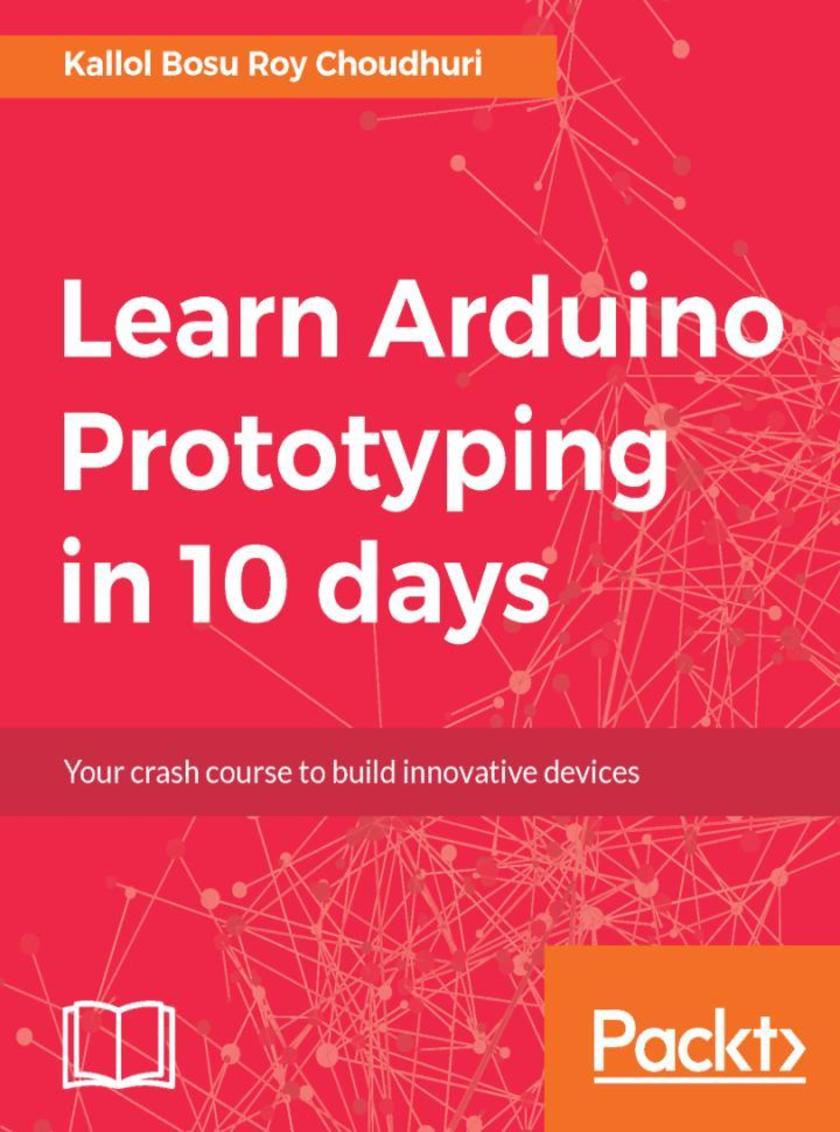
Learn Arduino Prototyping in 10 days
¥63.21
The ultimate power-packed crash course in building Arduino-based projects in just 10 days! About This Book ? A carefully designed 10-day crash course, covering major project/device types, with 20+ unique hands-on examples ? Get easy-to-understand explanations of basic electronics fundamentals and commonly used C sketch functions ? This step-by-step guide with 90+ diagrams and 50+ important tips will help you become completely self-reliant and confident Who This Book Is For This book is a beginner’s crash course for professionals, hobbyists, and students who are tech savvy, have a basic level of C programming knowledge, and basic familiarity with electronics, be it for embedded systems or the Internet of Things. What You Will Learn ? Write Arduino sketches and understand the fundamentals of building prototype circuits using basic electronic components, such as resistors, transistors, and diodes ? Build simple, compound, and standalone devices with auxiliary storage (SD card), a DC battery, and AC power supplies ? Deal with basic sensors and interface sensor modules by using sensor datasheets ? Discover the fundamental techniques of prototyping with actuators ? Build remote-controlled devices with infrared (IR), radio frequency (RF), and telephony with GSM ? Learn IoT edge device prototyping (using ESP8266) and IoT cloud configuration In Detail This book is a quick, 10-day crash course that will help you become well acquainted with the Arduino platform. The primary focus is to empower you to use the Arduino platform by applying basic fundamental principles. You will be able to apply these principles to build almost any type of physical device. The projects you will work through in this book are self-contained micro-controller projects, interfacing with single peripheral devices (such as sensors), building compound devices (multiple devices in a single setup), prototyping standalone devices (powered from independent power sources), working with actuators (such as DC motors), interfacing with an AC-powered device, wireless devices (with Infrared, Radio Frequency and GSM techniques), and finally implementing the Internet of Things (using the ESP8266 series Wi-Fi chip with an IoT cloud platform). The first half of the book focuses on fundamental techniques and building basic types of device, and the final few chapters will show you how to prototype wireless devices. By the end of this book, you will have become acquainted with the fundamental principles in a pragmatic and scientific manner. You will also be confident enough to take up new device prototyping challenges. Style and approach This step-by- step guide will serve as a quick, 10-day crash course to help you become well acquainted with the Arduino platform.


