


 购物车
购物车 个人中心
个人中心
In the Vault
¥9.00
An undertaker finds himself trapped in the vault where coffins are stored during winter for burial in the spring, and is mysteriously injured when he escapes.
Hypnos
¥9.00
"Hypnos" is a short story by H.P. Lovecraft, penned in March 1922 and first published in the May 1923 issue of National Amateur. The narrator, a sculptor, recounts meeting a mysterious man in a railway station. The moment the man opened his "immense, sunken and widely luminous eyes", the narrator knew that the stranger would become his friend-–"the only friend of one who had never possessed a friend before". In the eyes of the stranger he saw the knowledge of the mysteries he always sought to learn
The Dunwich Horror
¥9.00
In H.P. Lovecraft’s, "The Dunwich Horror", we are told the story of Wilbur Whateley, the son of a deformed albino mother and an unknown father (alluded to in passing by the mad Old Whateley as "Yog-Sothoth"), and the strange events surrounding his birth and precocious development. Wilbur matures at an abnormal rate, reaching manhood within a decade. All the while, his sorcerer grandfather indoctrinates him into certain dark rituals and the study of witchcraft.
The Descendant
¥9.00
"The Descendant" is a story fragment by American horror fiction writer H. P. Lovecraft, believed to have been written in 1927.[1] It was first published in the journal Leaves in 1938, after Lovecraft's death.

Dagon
¥9.00
The story is the testament of a tortured, morphine-addicted man who relates an incident that occurred during his service as an officer during World War I. In the unnamed narrator's account, his cargo ship is captured by an Imperial German sea-raider in "one of the most open and least frequented parts of the broad Pacific"
The Crawling Chaos
¥9.00
"The Crawling Chaos" is a short story by American writers H. P. Lovecraft and Winifred V. Jackson (first published April 1921 in the United Cooperative. As in their other collaboration, "The Green Meadow", the tale was credited to "Elizabeth Berkeley" (Jackson) and "Lewis Theobald, Jun" (Lovecraft). The story begins with the narrator describing the effects of opium and the fantastical vistas it can inspire. The narrator then tells of his sole experience with opium in which he was accidentally administered an overdose by a doctor during the "year of the plague".
The Colour Out of Space
¥9.00
"The Colour Out of Space" is a first-person narrative written from the perspective of an unnamed surveyor from Boston. In order to prepare for the construction of a new reservoir in Massachusetts, he surveys a rural area that is to be flooded near Lovecraft's fictional town of Arkham. He comes across a mysterious patch of land, an abandoned five-acre farmstead, which is completely devoid of all life.
The Book
¥9.00
"The Book" is an unfinished short story by American horror fiction writer H. P. Lovecraft, believed to have been written in late 1933. It was first published in the journal Leaves in 1938, after Lovecraft's death. In the story fragment, the narrator is given an ancient book by a strange bookseller, and when he takes it home and examines it, weird and sinister events ensue.

La última fada
¥9.00
Novela basada en dos leyendas artúricas: "Tristán e Isolda" y "Merlín y Viviana", entreteje textos conocidos con versiones nuevas con el objetivo de moralizar a un público lector, presumiblemente de fe única, poseedor de prejuicios religiosos arraigados en la cultura de la época.

El cisne de Vilamorta
¥9.00
EL CISNE DE VILAMORTA : Leocadia, la maestra de Vilamorta, ama apasionadamente al joven y apuesto Segundo ( el cisne ) al que recibe en su casa y de vez en cuando hace algún obsequio, ya que Segundo aunque estudió derecho , no trabaja. Leocadia tiene un hijo deficiente producto de una violación incestuosa de un tío con el que vivía en Ourense. Segundo aspira a conseguir una colocación en Madrid que le permita darse a conocer en el mundo literario de la capital. Llega a Vilamorta un político influyente ( don Victoriano ). Viene a curarse con las aguas del balneario. El poeta se enamora de la joven mujer del político ( Nieves ) y ella coquetea con él , pero el marido muere y la viuda marcha a Madrid sin querer saber nada de Segundo ...

El tesoro de Gastón
¥9.00
Una novela que sigue siendo de actualidad. Gastón,un joven adinerado que despilfarra gran parte de la fortuna que le ha heredadosu madre, descubre que puede vivir de una manera distinta, recuperar lo que ha perdido y de paso, encontrarse con el amor y honestidad que no había experimentado antes. Escrita de forma sencilla y accesible, "El tesoro de Gastón" es una de las muchas fabulosas obras escritas por la condesa Emilia Pardo Bazán.

Rilla of Ingleside
¥9.00
Anne Shirley has left Redmond College behind to begin a new job and a new chapter of her life away from Green Gables. Now she faces a new challenge: the Pringles. They're known as the royal family of Summerside - and they quickly let Anne know she is not the person they had wanted as principal of Summerside High School. But as she settles into the cozy tower room at Windy Poplars, Anne finds she has great allies in the widows Aunt Kate and Aunt Chatty – and in their irrepressible housekeeper, Rebecca Dew. As Anne learns Summerside's strangest secrets, winning the support of the prickly Pringles becomes only the first of her delicious triumphs.
Time Regained
¥9.00
The final volume of Remembrance of Things Past chronicles the years of World War I, when, as M. de Charlus reflects on a moonlit walk, Paris threatens to become another Pompeii. Years later, after the war's end, Proust's narrator returns to Paris, where Mme. Verdurin has become the Princesse de Guermantes. He reflects on time, reality, jealousy, artistic creation, and the raw material for literature-his past life.
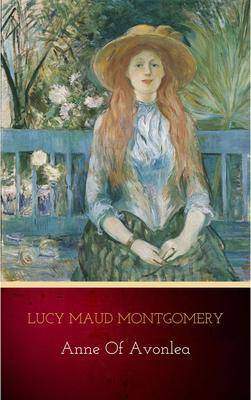
Anne of Avonlea
¥9.00
Following Anne of Green Gables (1908), the book covers the second chapter in the life of Anne Shirley. This book follows Anne from the age of 16 to 18, during the two years that she teaches at Avonlea school. It includes many of the characters from Anne of Green Gables, as well as new ones like Mr Harrison, Miss Lavendar Lewis, Paul Irving, and the twins Dora and Davy.

Alexander's Bridge
¥9.00
Alexander's Bridge is the first novel by American author Willa Cather. First published in 1912, it was re-released with an author's preface in 1922. It also ran as a serial in McClure's, giving Cather some free time from her work for that magazine.
The Whisperer in Darkness
¥9.00
The story is told by Albert N. Wilmarth, an instructor of literature at Miskatonic University in Arkham. When local newspapers report strange things seen floating in rivers during a historic Vermont flood, Wilmarth becomes embroiled in a controversy about the reality and significance of the sightings, though he sides with the skeptics. Wilmarth uncovers old legends about monsters living in the uninhabited hills who abduct people who venture or settle too close to their territory.
The Unnamable
¥9.00
"The Unnamable" is a horror short story by American author H. P. Lovecraft. It was written in September 1923, first published in the July 1925 issue of Weird Tales, and first collected in Beyond the Wall of Sleep. Carter, a weird fiction writer, who is likely the Randolph Carter who features in some of Lovecraft's other tales such as The Statement of Randolph Carter, meets with his close friend, Joel Manton, in a cemetery near an old, dilapidated house on Meadow Hill in the town of Arkham, Massachusetts. As the two sit upon a weathered tomb, Carter tells Manton the tale of an indescribable entity that allegedly haunts the house and surrounding area. He contends that because such an entity cannot be perceived by the five senses, it becomes impossible to quantify and accurately describe, thus earning itself the term unnamable.
The Tree on the Hill
¥9.00
The story is written in first person. It depicts the main character going outside Hampden and finding a special tree. The tree makes him day dream about a big temple in a land with three suns. The temple was half-violet, half-blue. Some shadows attracted him into the inside. He thought he saw three flaming eyes watching him and he shouted twice and the vision was gone.
The Strange High House in the Mist
¥9.00
"The Strange High House in the Mist" is a short story by H. P. Lovecraft. Written on November 9, 1926, it was first published in the October 1931 issue of Weird Tales. It concerns a character traveling to the titular house which is perched on the top of cliff which seems inaccessible both by land and sea, yet is apparently inhabited. Thomas Olney, a "philosopher" visiting the town of Kingsport, Massachusetts with his family, is intrigued by a strange house on a cliff overlooking the ocean. It is unaccountably high and old and the locals have a generations-long dread of the place which no one is known to have visited.
The Statement of Randolph Carter
¥9.00
"The Statement of Randolph Carter" is a short story by H. P. Lovecraft. Written December 1919, it was first published in The Vagrant, May 1920. It tells of a traumatic event in the life of Randolph Carter, a student of the occult loosely representing Lovecraft himself. It is the first story in which Carter appears and is part of Lovecraft's Dream Cycle.
The Shunned House
¥9.00
"The Shunned House" is a horror fiction novelette by American author H. P. Lovecraft, written on October 16–19, 1924. It was first published in the October 1937 issue of Weird Tales. The Shunned House of the title is based on an actual house in Providence, Rhode Island, built around 1763 and still standing at 135 Benefit Street. Lovecraft was familiar with the house because his aunt Lillian Clark lived there in 1919-20 as a companion to Mrs. H. C. Babbit. However, it was another house in Elizabeth, New Jersey that actually compelled Lovecraft to write the story.


