


 购物车
购物车 个人中心
个人中心

Just Friends? (Mills & Boon M&B)
¥9.71
NICU nurse Diego and consultant Izzy are supposed to just be colleagues. After all, she’s carrying her dead husband’s child. But can a kiss change everything? St Pirans: Part 1 - The Secret Son Part 2 - The Big Move Part 3 - Too Much At Stake Part 4 - The Wedding Part 5 - Pregnant Cinderella Part 6 - Just Friends? Part 7 - Baby Emergency Part 8 - Staying the Night Part 9 - A Family At Last Stay tuned for more in the St Pirans series!

The Wedding (Mills & Boon M&B)
¥9.71
You are cordially invited to the wedding of the year! But can Penhally’s favourite couple Dr. Nick Tremayne and midwife Kate Althorpe make it down the aisle without a hitch? St Pirans: Part 1 - The Secret Son Part 2 - The Big Move Part 3 - Too Much At Stake Part 4 - The Wedding Part 5 - Pregnant Cinderella Part 6 - Just Friends? Part 7 - Baby Emergency Part 8 - Staying the Night Part 9 - A Family At Last Stay tuned for more in the St Pirans series!

Too Much At Stake (Mills & Boon M&B)
¥9.71
Dr Nick Tremayne has always loved midwife Kate – and her son Jem. But when his real role in Jem’s life is revealed, will Nick be able to hold onto the people he cares most about? St Pirans: Part 1 - The Secret Son Part 2 - The Big Move Part 3 - Too Much At Stake Part 4 - The Wedding Part 5 - Pregnant Cinderella Part 6 - Just Friends? Part 7 - Baby Emergency Part 8 - Staying the Night Part 9 - A Family At Last Stay tuned for more in the St Pirans series!
Report on the Threatened City
¥9.71
From the winner of the Nobel Prize for Literature, Doris Lessing, a distinctive science fiction short story. Unknown observers send reports on a city that is threatened with destruction. They gather information on the inhabitants and their behaviour. It soon becomes clear that this is far from an alien planet. As in many of her acclaimed science fiction novels, in ‘Report on the Threatened City’, Doris Lessing uses the traditions of this genre to examine the world we know and human nature itself, from a completely new and often unforgiving perspective. This story also appears in the collection The Temptation of Jack Orkney.
An Old Woman and Her Cat
¥9.71
From the winner of the Nobel Prize for Literature, Doris Lessing, a short story about a woman’s gradual drift outside the limits of society. An old woman, with gipsy blood, begins to find the conventions of society stifling – when her husband dies, and her children leave home, she embraces a marginal, unconventional existence, accompanied by her faithful cat. ‘An Old Woman and Her Cat’ brilliantly combines Doris Lessing’s unforgiving examination of our society – and those it cannot accommodate and ulitmately fails – with a wonderful portrait of her favourite animal – the cat. This story also appears in the collection The Temptation of Jack Orkney.

The Disappearance of Mr Davenheim:A Hercule Poirot Short Story
¥9.71
A classic Agatha Christie short story, available individually for the first time as an ebook. Mr Davenheim, a wealthy financier, leaves his home to mail a letter, then fails to return. The story fills the newspapers and intrigues Hercule Poirot, who challenges Inspector Japp that he can solve the case before the police, and without leaving his flat.

The Plymouth Express:A Hercule Poirot Short Story
¥9.71
A classic Agatha Christie short story, available individually for the first time as an ebook. When Ebenezer Halliday’s daughter’s body is found stuffed underneath a train seat, the wealthy American industrialist hires Hercule Poirot to locate the murderer and over one hundred thousand dollars’ worth of stolen jewels.
The King of Clubs:A Hercule Poirot Short Story
¥9.71
A classic Agatha Christie short story, available individually for the first time as an ebook. Hercule Poirot is asked by Prince Paul of Maurania to solve the murder of Henry Reedburn, which has greatly distressed the Prince’s fiancée, the famous dancer Valerie Saintclair. The only other witnesses seem to be a family of four who were playing bridge near an open window when she staggered in, crying ‘Murder!’

The Tuesday Night Club:A Miss Marple Short Story
¥9.71
A classic Agatha Christie short story, available individually for the first time as an ebook. After a supper of canned lobster and a dessert of canned trifle, three people become ill and Mrs Jones is found dead. Although a bought of botulism is suspected, the Tuesday Night Club is keen to investigate further…
The Thumb Mark of St Peter:A Miss Marple Short Story
¥9.71
A classic Agatha Christie short story, available individually for the first time as an ebook. Fifteen years ago, Miss Marple’s niece, Mabel Denman was accused of murdering her husband. Mabel’s marriage had been an unhappy one, as Geoffrey had been abusive and violent. Can Miss Marple clear her niece’s name and reveal the true perpetrator?
The Affair of the Pink Pearl:An Agatha Christie Short Story
¥9.71
A classic Agatha Christie short story, available individually for the first time as an ebook. While staying at the Laurels with the Kingston Bruce family, Mrs Hamilton Betts discovers that her valuable pink pearl is missing. Presumed to have been stolen by another houseguest, the concerned host contacts the Beresford’s for help.
The Case of the Middle-Aged Wife:An Agatha Christie Short Story
¥9.71
A classic Agatha Christie short story, available individually for the first time as an ebook. Maria Packington suspects her husband of having an affair. In an attempt to revitalise her marriage, she responds to an advert from Mr Parker Pyne – who promises to provide solutions to unhappiness. Maria’s life soon undergoes a rapid transformation…
The Case of the Discontented Soldier:An Agatha Christie Short Story
¥9.71
A classic Agatha Christie short story, available individually for the first time as an ebook. When civilian life proves too dull for Major Wilbrahams he contacts Parker Pyne in order to escape his boredom. Pyne’s assistant arranges a chance meeting with the beautiful Freda Clegg and the two join forces, but on leaving for Africa they encounter more than they had bargained for.
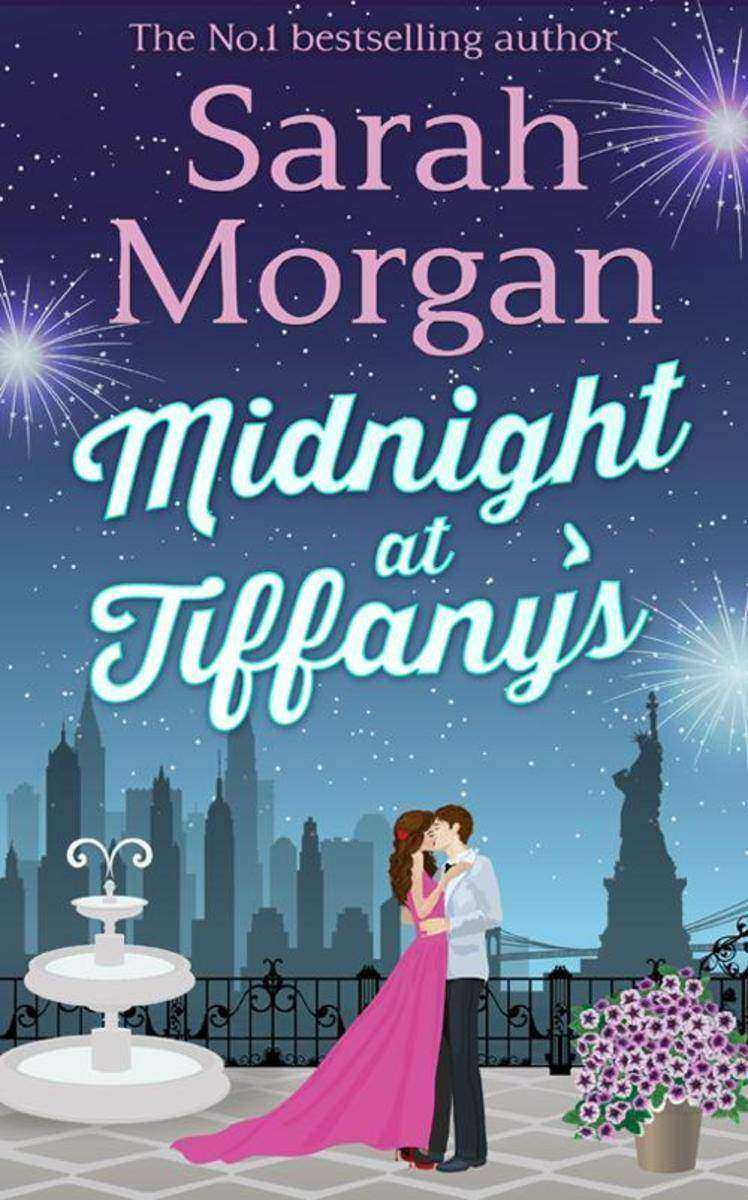
Midnight At Tiffany's
¥9.71
Matilda is a New York waitress by day, but an aspiring author by night – and she loves to write about kickass heroines! So when she meets gorgeous millionaire Chase Adams, she decides to channel them and act on their sizzling attraction! One magical night later, she's living the dream, but will a trip to Tiffany's make it a reality?
Tough Justice: Burned (Part 3 Of 8) (Tough Justice, Book 3)
¥9.71
Justice is worth every sacrifice. Part 3 of 8 in the chilling, high-octane FBI thriller TOUGH JUSTICE from NYT bestselling author Carla Cassidy and Tyler Anne Snell, Carol Ericson and Gail Barrett. She burned Moretti. . . now it’s his turn. Destroying Moretti was Special Agent Lara Grant’s biggest coup—but she paid a heavy price to make the bust. She’ll do anything to keep him – and her secrets – behind bars. But even from jail, Lara knows he’s playing the FBI like a maestro. So when her boss’s daughter is kidnapped, it’s personal…and not just for Lara! With the team at breaking point, it’s up to Lara to keep everyone focused. Until a chilling photo is delivered to her home address. Moretti knows where she lives. And he knows what she’s hiding… Tough Justice: Exposed (Part 1 of 8) by Carla Cassidy Tough Justice: Watched (Part 2 of 8) by Tyler Anne Snell Tough Justice: Burned (Part 3 of 8) by Carol Ericson Tough Justice: Trapped (Part 4 of 8) by Gail Barrett Tough Justice: Twisted (Part 5 of 8) by Gail Barrett Tough Justice: Ambushed (Part 6 of 8) by Carol Ericson Tough Justice: Betrayed (Part 7 of 8) by Tyler Anne Snell Tough Justice: Hunted (Part 8 of 8) by Carla Cassidy
Tough Justice: Trapped (Part 4 Of 8) (Tough Justice, Book 4)
¥9.71
Justice is worth every sacrifice. Part 4 of 8 in the chilling, high-octane FBI thriller TOUGH JUSTICE from NYT bestselling author Carla Cassidy and Tyler Anne Snell, Carol Ericson and Gail Barrett. Can they get out of this investigation alive? Special Agent Lara Grant’s team are racing against the clock to prove infamous crime boss Moretti is behind a recent series of murders. With each lead ending up in a body bag, Lara’s trapped by the weight of her own guilt. How many would still be alive if it weren’t for her troubled history with the villain? But he won’t quit, so neither can Lara. The sniper is the key to finding the link between Moretti and the current cases. But before they can reach him, Moretti hits closer to home than Lara could have imagined . . . Tough Justice: Exposed (Part 1 of 8) by Carla Cassidy Tough Justice: Watched (Part 2 of 8) by Tyler Anne Snell Tough Justice: Burned (Part 3 of 8) by Carol Ericson Tough Justice: Trapped (Part 4 of 8) by Gail Barrett Tough Justice: Twisted (Part 5 of 8) by Gail Barrett Tough Justice: Ambushed (Part 6 of 8) by Carol Ericson Tough Justice: Betrayed (Part 7 of 8) by Tyler Anne Snell Tough Justice: Hunted (Part 8 of 8) by Carla Cassidy
The Kidnapped Prime Minister:A Hercule Poirot Short Story
¥9.71
A classic Agatha Christie short story, available individually for the first time as an ebook. Just as the end of the First World War is drawing to an end, the prime minister is kidnapped and it is down to Hercule Poirot to locate him and avert an international crisis before a crucial conference convenes.
My Dad’s a Policeman
¥9.71
The second novel, and first quick read title, from Sunday Times and New York Times bestselling author Cathy Glass. My Dad's a Policeman is a dramatic and engaging story of a young boy with an alcoholic mother. Lonely, bullied and desperate for a life of happiness and security he tells everyone he meets his dad's a policeman. Fast-paced and compelling, this short story from Cathy Glass follows the experiences of a Ryan, a small and lonely 12-year-old boy who struggles to fit in. In an attempt to make friends, and discourage the school bullies from picking on him, Ryan tells his peers that his dad is a policeman. When the police actually turn up on Ryan's doorstep, to take him away from his alcoholic mother and put him in care, his life crumbles. It's not long before Ryan has run away, taking a long bus ride back across the city, desperate to get back to the inner-city life he knows. Keeping a low profile, and sneaking in to his best friend's house late a night for shelter, he soon discovers that he's not the only one who appears to be stretching the truth about the happiness of his home life.
Grave Danger
¥9.71
The annual Thriller anthology of short fiction, now in its third year, brings together the most exciting mystery and suspense writers. This year's collection, Love Is Murder, is edited by Sandra Brown. Among the featured authors is New York Times bestselling author Heather Graham, whose original short story "Grave Danger" is now available as a free ebook. For special-effects artist Ali MacGregor, it can be hard to tell fantasy from reality. Especially when her coworker Victor leaves her alone in the studio one night, surrounded by scary creations–zombies, werewolves and mangled corpses. And then she hears footsteps…. Footsteps that shouldn't be there. Nearby, Ali's ex, cop Greg Austin, is called to the graveyard set of a horror movie after a real corpse appears. But the dead man isn't who his ID says he is. And Victor isn't who he seems to be, either. Greg quickly realizes that Ali, the woman he's never stopped loving, is in grave danger….
McKenna Homecoming (Fast Fiction)
¥9.71
Fast Fiction Romantic - short stories with a Happy Ever After In ten years, a lot has changed for Alec McKenna. Since high school, he's transformed from the devil-may-care football star to a hardworking corporate executive. And now Alec the man has to answer for the mistakes of Alec the teenage rebel. So when he gets the invitation to his ten-year high-school reunion, he goes for one reason—Leah Andrews. The one person he can't leave in the past. The one he hurt the most. In ten years, little has changed for Leah Andrews. She feels like she's been treading the same water for a decade. And just as her life is about to change, Alec McKenna reappears. Leah doesn't want to go backward, but she can't deny the strength of her feelings for Alec, even after ten years. And if Alec can change, maybe he can help her find her way forward. And the way home…to him
50 Quick Christmas Facts
¥9.71
This book is a quick read on Christmas facts you probably did not know! What are the names of Santa's Reindeers? Do you know who made the first Christmas Cards? Find out these facts and more in this quick read fact book!


