


 购物车
购物车 个人中心
个人中心

Serengeti III
¥435.56
Serengeti National Park is one of the world's most diverse ecosystems, a natural laboratory for ecology, evolution, and conservation, with a history that dates back at least four million years to the beginnings of human evolution. The third book of a ground- breaking series, Serengeti III is the result of a long-term integrated research project that documents changes to this unique ecosystem every ten years.Bringing together researchers from a wide range of disciplines-ecologists, paleontologists, economists, social scientists, mathematicians, and disease specialists- this volume focuses on the interactions between the natural system and the human-dominated agricultural system. By examining how changes in rainfall, wildebeest numbers, commodity prices, and human populations have impacted the Serengeti ecosystem, the authors conclude that changes in the natural system have affected human welfare just as changes in the human system have impacted the natural world. To promote both the conservation of biota and the sustainability of human welfare, the authors recommend community-based conservation and protected-area conservation. Serengeti III presents a timely and provocative look at the conservation status of one of earth's most renowned ecosystems.
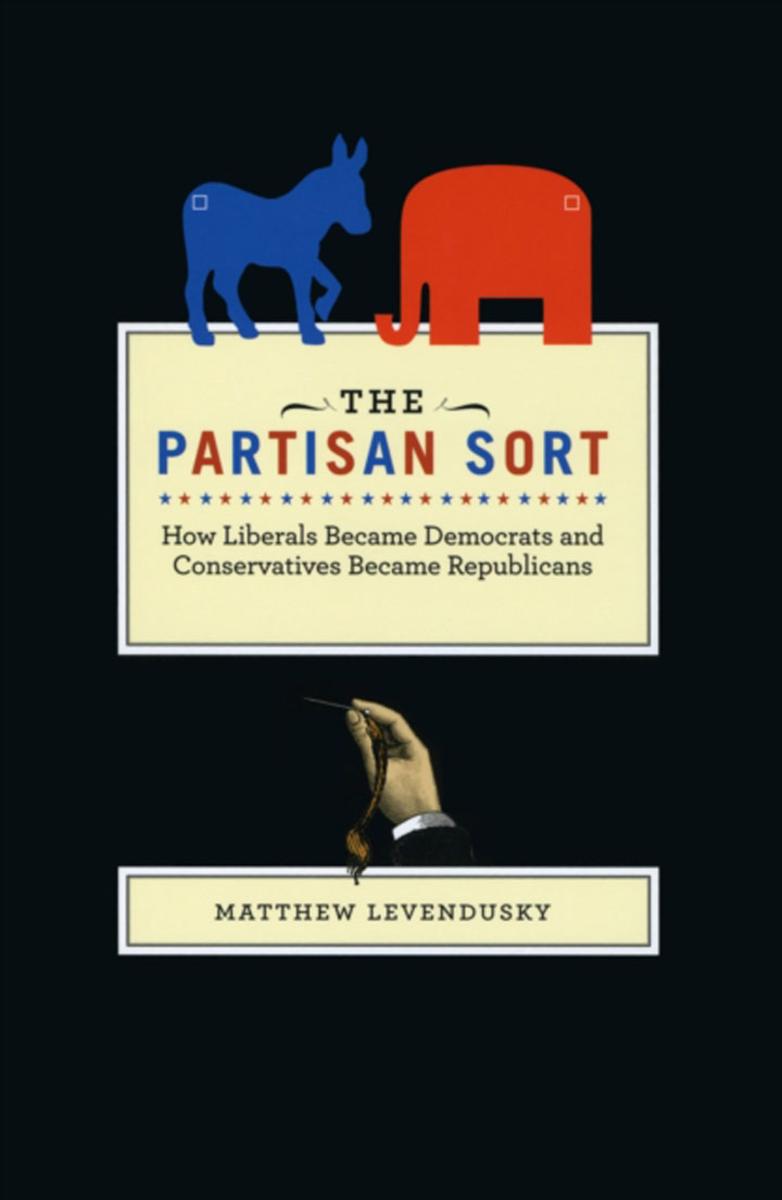
Partisan Sort
¥206.01
As Washington elites drifted toward ideological poles over the past few decades, did ordinary Americans follow their leadIn The Partisan Sort, Matthew Levendusky reveals that we have responded to this trend-but not, for the most part, by becoming more extreme ourselves. While polarization has filtered down to a small minority of voters, it also has had the more significant effect of reconfiguring the way we sort ourselves into political parties.In a marked realignment since the 1970s-when partisan affiliation did not depend on ideology and both major parties had strong liberal and conservative factions-liberals today overwhelmingly identify with Democrats, as conservatives do with Republicans. This "e;sorting,"e; Levendusky contends, results directly from the increasingly polarized terms in which political leaders define their parties. Exploring its far-reaching implications for the American political landscape, he demonstrates that sorting makes voters more loyally partisan, allowing campaigns to focus more attention on mobilizing committed supporters. Ultimately, Levendusky concludes, this new link between party and ideology represents a sea change in American politics.

Long Is the Way and Hard
¥223.57
Celebrating its one-hundredth anniversary in February 2009, the National Association for the Advancement of Colored People (NAACP) has been the leading and best-known African American civil rights organization in the United States. It has played a major, and at times decisive, role in most of the important developments in the twentieth century civil rights struggle. Drawing on original and previously unpublished scholarship from leading researchers in the United States, Britain, and Europe, this important collection of sixteen original essays offers new and invaluable insights into the work and achievements of the association. The first part of the book offers challenging reappraisals of two of the NAACP's best-known national spokespersons, Walter White and Roy Wilkins. Other essays analyze the association's cultural initiatives and the key role played by its public-relations campaigns in the mid 1950s to counter segregationist propaganda and win over the hearts and minds of American public opinion in the wake of the NAACP's landmark legal victory in Brown v. Board of Education. Others provide thought-provoking accounts of the association's complex and difficult relationship with Martin Luther King, the post-World War II Civil Rights movement, and Black Power radicals of the 1960s. The second part of the collection focuses on the work of the NAACP at state, city, and local levels, examining its grassroots organization throughout the nation from Chicago, Cleveland, and Detroit in the North, to California in the West, as well as states across the South including Virginia, Arkansas, Alabama, Louisiana, and Texas. Providing detailed and fascinating information on hitherto little explored aspects of the association's work, these studies complement the previous essays by demonstrating the impact national initiatives had on local activists and analyzing the often-strained relations between the NAACP national office in New York and its regional branches.


