


 购物车
购物车 个人中心
个人中心
25 Books Every Christian Should Read
¥105.17
For more than twenty years Renovaré has pioneered the use of spiritual classics for deepening our lives of discipleship. Their highly praised compendiums Devotional Classics and Spiritual Classics have sold 500,000 copies. Now they have put together a prestigious editorial board and polled respected Christian leaders and thinkers from a variety of Christian traditions, including Catholic, Orthodox, and Protestant, to present the twenty-five most spiritually influential and important books for Christians to read. There are books that should be shaping the church, our faith, and our engagement in the world. From timeless classics like The Imitation of Christ to unexpected selections like Fyodor Dostoevsky’s The Brothers Karamazov and the poetry of Gerard Manley Hopkins, 25 Books Every Christian Should Read provides historical background for each work and explains its importance for modern Christians, while including selected readings from every book to get you started. In addition, each chapter ends with discussion questions to the work for use in small groups or for personal reflection. 25 Books Every Christian Should Read is a pivotal resource for the future of Christianity, an invitation into the fullness and richness of the Christian tradition.

I'll Quit Tomorrow
¥88.56
This bestselling recovery classic has helped untold thousands of alcoholics onto the road to recovery. Written by the founder of the Johnson Institute in Minneapolis, one of the country's most successful training programs for treatment providers, I'll Quit Tomorrow present the concepts and methods that have brought new hope to alcoholics and their families, friends, and employers. Abstinence is not the only objective of Johnson's breakthrough methods -- his therapy aims at restoring the ego strength of the victim to assure permanent recovery. Johnson outlines a dynamic plan of intervention and treatment that will block the progress of alcoholism and lead to a richer, more productive life.

The New Basics
¥94.10
Dr. Michel Cohen, named by the New York Post as the hip, "must-have" pediatrician, has an important message for parents: Don't worry so much. In an easy-reference alphabetical format, The New Basics clearly lays out the concerns you may face as aparent and explains how to solve them -- without fuss, without stress, and without harming your child by using unnecessary medicines or interventions.With sensitivity and love, Dr. Michel describes proven techniques for keeping your children healthy and happy without driving yourself crazy. He will show you how to set positive habits for sleeping and eating and how to treat ailments early and effectively. You'll learn when antibiotics are helpful and when they can be harmful. If you're having trouble breast feeding, pumping, or bottle weaning, Dr. Michel has the advice to set you back on track. If after several months your baby is still not sleeping through the night, The New Basics will provide you with tried-and-true methods to help ease this difficult transition for babies and parents.Dr. Michel recognizes that you're probably asking the same questions his own patients' parents frequently ask, so he includes a section called "Real Questions from Real Parents" throughout the book. You'll find important answers about treating asthma, head injuries, fevers, stomach bugs, colic, earaches, and other ailments. More than just a book on how to care for your child's physical well-being, The New Basics also covers such parenting challenges as biting, hitting, ADD, separation anxiety, how to prevent the terrible twos (and threes and fours ...), and preparing your child for a new sibling.

Desperate Sons
¥155.02
A groundbreaking narrative a historical political thriller that explores the role of the Sons of Liberty in the American Revolution.More than two hundred years ago, a group of British colonists in America decided that the conditions under which they were governed had become intolerable. Angry and frustrated that King George III and the British Parliament had ignored their lawful complaints and petitions, they decided to take action.Knowing that their deeds often directed at individuals and property were illegal, and punishable by imprisonment and even death, these agitators plotted and conducted their missions in secret to protect their identities as well as the identities of those who supported them. Calling themselves the Sons of Liberty, they gathered together in a radical society committed to imposing forcible change. Those determined men including second cousins Samuel and John Adams, Paul Revere, Patrick Henry, and John Hancock saw themselves as patriots. Yet to the Crown, and to many of the Sons' fellow colonists, the revolutionaries were terrorists who deserved death for their treason.In this gripping narrative, Les Standiford reveals how this group of intelligent, committed men, motivated by economics and political belief, began a careful campaign of interlocking events that would channel feelings of vague injustice into an armed rebellion of common cause, which would defeat an empire and give birth to a radical political experiment a new nation known as the United States.
Ten Days to Self-Esteem
¥105.17
Do you wake up dreading the dayDo you feel ciscouraged with what you've accomplished in lifeDo you want greater self-esteem, productivity, and joy in daily livingIf so, you will benefit from this revolutionary way of brightening your moods without drugs or lengthy therapy. All you need is your own common sense and the easy-to-follow methods revealed in this book by one of the country's foremost authorities on mood and personal relationship problems. In Ten Days to Self-esteem, Dr. David Burns presents innovative, clear, and compassionate methods that will help you identify the causes of your mood slumps and develop a more positive outlook on life. You will learn thatYou feel the way you think: Negative feelings like guilt, anger, and depression do not result from the bad things that happen to you, but from the way you think about these events. This simple but revolutionary idea can change your life!You can change the way you feel: You will discover why you get depressed and learn how to brighten your outlook when you're in a slump.You can enjoy greater happiness, productivity, and intimacy without drugs or lengthy therapy.Can a self-help book do all thisStudies show that two thirds of depressed readers of Dr. Burns's classic bestseller, Feeling Good: The New Mood Therapy, experienced dramatic felief in just four weeks without psychotherapy or antidepressant medications. Three-year follow-up studies revealed that readers did not relapse but continued to enjoy their positive outlook. Ten Days to Self-esteem offers a powerful new tool that provides hope and healing in ten easy steps. The methods are based on common sense and are not difficult to apply. Research shows that they really work!Feeling good feels wonderful. You owe it to yourself to feel good!

Going Dutch
¥106.61
On November 5, 1688, William of Orange, Protestant ruler of the Dutch Republic, landed at Torbay in Devon with a force of twenty thousand men. Five months later, William and his wife, Mary, were jointly crowned king and queen after forcing James II to abdicate. Yet why has history recorded this bloodless coup as an internal Glorious Revolution rather than what it truly was: a full-scale invasion and conquest by a foreign nationThe remarkable story of the relationship between two of Europe's most important colonial powers at the dawn of the modern age, Lisa Jardine's Going Dutch demonstrates through compelling new research in political and social history how Dutch tolerance, resourcefulness, and commercial acumen had effectively conquered Britain long before William and his English wife arrived in London.

Flex
¥155.02
The workplace around the world is changing growing increasingly multicultural, female, and younger. Experts often tell CEOs and managers what not to do, and corporate diversity programs can often appear to be like defensive measures against lawsuits and harassment charges. While technology has connected all of us as a global workforce, it has not equipped us with the capability to interact genuinely with people. In order to be successful in this new global business environment, we need to rethink the way we lead others.Flex offers a new approach a proactive strategy for managers to understand and leverage difference effectively in this new global economy.Flex shows managers how to understand the power gap the social distance between you and those in the workplace of different cultures, ages, and gender; stretch your management style and bridge the gap with more effective communication and feedback tools; and multiply the effect by teaching these skills to others and closing the power gap with clients, customers, and partners to create innovative solutions. Creating flex in a company's management style will affect all aspects of developing existing leaders, attracting future talent, and building relationships with customers in this competitive marketplace. Flex shows you how.
The Life and Times of Call the Midwife
¥166.09
The real stories, lives and dramas behind the smash hit BBC series Call the Midwife which premieres on PBS September 30, 2012.The official companion to seasons one and two, The Life and Times of Call the Midwife, gives fans a deeper insight into the period, the stories and the characters, and how Call the Midwife, based on the bestselling memoirs by Jennifer Worth, was brought to the screen. With never before seen photographs taken on set as well as unique sketches and exclusive interviews and anecdotes, this book truly takes you behind the scenes. Discover the hidden secrets of the nurses and nuns of Nonnatus House and delve deeper into the historical context of the series with chapters detailing birth, health, faith, fashion, beauty, street life and food. From the team who brought you The World of Downton Abbey, high production values and attention to detail will create the ultimate and beautifully packaged gift purchase this Christmas that no fan of the show could bare to be without.
Primed to Perform
¥166.09
Why do some workplace cultures inspire energy and innovation, while others fuel anxiety, boredom, or cynicismUntil now, such legendary cultures have seemed like magic beyond our control. However, behind every culture is a surprisingly elegant science. Primed to Perform proves that the highest-performing cultures are built on a simple truth: why people work affects how well they work. Great organizations inspire the three most powerful motives for work play, purpose, and potential and eliminate the three most destructive emotional pressure, economic pressure, and inertia. They create total motivation (or ToMo, for short). Total motivation cultures create the highest-performing employees and the most adaptive organizations.Authors Neel Doshi and Lindsay McGregor show that extraordinary performance at companies like Southwest Airlines, Starbucks, Apple, and Whole Foods comes from cultures that inspire total motivation. They describe how investment professionals, salespeople, teachers, and CEOs perform better when driven by total motivation. And, most important, they share how you can build a culture that inspires total motivation in every moment of every day.Primed to Perform builds on over a century of academic thinking as well as the authors' original research into how ToMo drives performance at iconic companies. It introduces the authors' highly predictive new measurement tool, the total motivation factor, which allows leaders to measure the strength of their culture and understand how it changes over time. It gives leaders the tools to transform their own workplaces.High-performing cultures can't be left to chance; organizations must create systems that shape and maintain them. Whether you're a five-person team or a start-up, an elementary school or a university, a nonprofit or a mega-institution, Primed to Perform shows you how.

150 Best New Kitchen Ideas
¥166.09
150 Best New Kitchen Ideas offers interior designers and homeowners the latest in modern and traditional kitchen design. Showcasing 150 profiles of the most exciting kitchen designs from around the world, this stunning compendium provides innovative solutions and practical advice for creating attractive, functional, and affordable kitchens, no matter the size of the space. Explore the diversity of current trends from concept design to beautiful finished kitchens—there is no shortage of ideas or wares to make cooking a much more pleasant experience. The newest addition to the 150 Best series, this indispensable guide, illustrated with hundreds of photographs, is an inspirational source of original ideas to create a beautiful new kitchen.

150 Best New Bathroom Ideas
¥166.09
An essential reference and the latest in the popular 150 Best series, 150 Best New Bathroom Ideas offers an in-depth look at modern bathroom designs created by internationally renowned architects and designers.Inside, readers will discover harmonious approaches and practical materials to use when designing bathrooms, from light fixtures and color schemes to floor, wall, and window treatments. Along with numerous ideas for the shower, toilet, sink, and bathtub, this book is an indispensable guide to designing an attractive, functional, and cost-effective bathroom. Featuring hundreds of photographs, 150 Best New Bathroom Ideas explores the diversity of current trends and is an excellent source of ideas for homeowners, designers, interior decorators, and architects. From the glamorous and roomy bath-spa to the small but smart powder room, bathrooms can make a big statement with creative ideas that are as stylish as they are useful.

Venus Envy
¥90.77
A behind-the-scenes look at the hugely popular and often controversial world of women's tennis featuring such household names as Venus and Serena Williams and Anna Kournikova. At a time when attendance and TV ratings for women's tennis are at an all-time high, Sports Illustrated writer L.Jon Wertheim, draws on his investigative talents and knowledge of the game to infiltrate the heretofore closed locker rooms of the women's tour and chronicle this remarkable era in the sport's history. With a narrative sweep that rockets along like a Venus Williams serve, it takes the reader from the year's first Grand Slam tournament--where a top player ignited a firestorm of controversy when she decided to come out-- to Venus' epochal victory at Wimbledon to the U.S. Open where Serena Williams defends her title and all the whistle-stop tournaments in between where the Russian vixen Anna Kournikova sent hormonally challenged teenagers, not to mention male sportswriters, into a frenzy, Venus Envy offers the reader the equivalent of a center-court seat and an all-access locker room pass. The book will contain a wealth of previously unreported, inside-the-locker room anecdotes about the marquee names in women's tennis and should engender much off-the-book-page coverage. There are more identifiable stars than ever before and the rivalries are intense and often rancorous. The book will even appeal to those readers with only a passing interest in tennis since many of the players have transcended the sport, appearing on the covers of magazine like GQ, Rolling Stone and Vogue.

Living in a Nutshell
¥95.39
A fireplace on wheelsA chandelier light by XeroxA shrink-wrapped designer closetThese are just a few of the more than one hundred innovative projects in Living in a Nutshell, a DIY guide of decorating ideas that fool the eye into seeing and believing a little lair is larger and more glamorous than its four walls. Here are fresh ideas for enhancing every living area of a tiny space. All are simple, affordable, portable, and big on style. An illustrated survival tool kit as well as extensive listings of untapped, off-the-beaten-track design resources and a select buying guide round out this invaluable book.

Art & Sole
¥168.43
A Spectacular Selection of More Than 150 Fantasy Art Shoes from the Stuart Weitzman CollectionWhen Stuart Weitzman opened its first boutique on Madison Avenue, its displays of specially commissioned fantasy shoes quickly became a destination, drawing crowds form all over the world to its magical windows. The best of this carefully curated collection is on display in book form for the first time in this unique gift volume, where these imaginative creations are presented in vivid detail. With its inventive and beautifully crafted footwear in a vast range of materials from watercolor paper to playing cards, from fresh flowers to frosting this stunning showcase where fashion and fantasy meet will thrill shoe and art lovers alike.

HarperCollins e-books
¥90.83
In between her fairy-tale wedding and her premature death, there lived the most beloved royal presence of our century, surely as multifaceted as any celebrity of our time. The radical twists and turns in her brief life drew the fascination of millions. Yet the most photographed woman in the world was also the least quoted--her actual words were seldom heard, and never gathered, until now. This unique book is the result of a scrupulous worldwide search for every one of Diana's significant quotes. Upon reading this collection, one will find that behind her shy veneer dwelled a woman of extraordinary resourcefulness, stamina, and, perhaps above all, vulnerability. In fact, her open frankness about the events and people around her is both disarming and startling. The reader will discover the sharp clarity, endless warmth, and ready wit that she brought to her legendary life in this intimate self-portrait. This is the closest we will ever get to an autobiography from the People's Princess.

Heat Wave
¥95.39
From the author of the bestselling Dorothy Dandridge comes a dazzling look at one of America's brightest and most troubled theatrical stars. Almost no other star of the twentieth century reimagined herself with such audacity and durable talent as did Ethel Waters. In this enlightening and engaging biography, Donald Bogle resurrects this astonishing woman from the annals of history, shedding new light on the tumultuous twists and turns of her seven-decade career, which began in Black vaudeville and reached new heights in the steamy nightclubs of 1920s Harlem. Bogle traces Waters' life from her poverty-stricken childhood to her rise in show business; her career as one of the early blues and pop singers, with such hits as "Am I Blue?," "Stormy Weather," and "Heat Wave"; her success as an actress, appearing in such films and plays as The Member of the Wedding and Mamba's Daughters; and through her lonely, painful final years. He illuminates Waters' turbulent private life, including her complicated feelings toward her mother and various lovers; her heated and sometimes well-known feuds with such entertainers as Josephine Baker, Billie Holiday, and Lena Horne; and her tangled relationships with such legends as Irving Berlin, Duke Ellington, Harold Clurman, Elia Kazan, Count Basie, Darryl F. Zanuck, Vincente Minnelli, Fred Zinnemann, Moss Hart, and John Ford.In addition, Bogle explores the ongoing racial battles, growing paranoia, and midlife religious conversion of this bold, brash, wildly talented woman while examining the significance of her highly publicized life to audiences unaccustomed to the travails of a larger-than-life African American woman.Wonderfully atmospheric, richly detailed, and drawn from an array of candid interviews, Heat Wave vividly brings to life a major cultural figure of the twentieth century a charismatic, complex, and compelling woman, both tragic and triumphant.

Lost Worlds
¥156.04
The author of The Back of Beyond continues the chronicle of his odyssey into some of the farthest corners of the world, from the Mountains of the Moon in Zaire, to wilderness Tasmania, to the unknown regions of New Guinea.

Paper Trails
¥83.03
In the 1970s and 1980s, before he earned national acclaim for his award-winning novels, Pete Dexter was a newspaper columnist. Every week, in a few hundred words, Dexter cut directly to the heart of the American character at a time of national turmoil and crucial change. With haunting urgency, his columns laid bare the violence, hypocrisy, and desperation he saw on the streets of Philadelphia and in the places he visited across the country. But he reveled, too, in the lighter side of his own life, sharing scenes with the indefatigable Mrs. Dexter, their young daughter, and a series of unforgettable creatures who strayed into their lives. No matter what caught Dexter's eye, it was illuminated by his dark, brilliant humor. Collected here for the first time are eighty-two of the best of those spellbinding, finely wrought pieces with a new introduction by the author assembled by Rob Fleder, editor of the bestselling Sports Illustrated 50th Anniversary Book. Paper Trails is searing, heart-breaking, and irresistibly funny, sometimes all at once. As Pete Hamill says in his foreword, these essays "are as good as it ever gets."

Follow the Roar
¥84.16
With his career at a standstill and his golf game a shadow of its former mediocrity, TV writer and ESPN.com contributor Bob Smiley decided the time had come to turn to the one person who might be able to help: Tiger Woods. So, in January of 2008, Smiley set out to follow the game's greatest player from the gallery for every hole of an entire season and to absorb all that he could.Smiley traveled from the seaside cliffs of San Diego to the deserts of Dubai, through the hallowed gates of Augusta National, and on to arguably the greatest U.S. Open of all time back at Torrey Pines, where, in a legendary duel with charismatic journeyman Rocco Mediate, Woods won his fourteenth major on one leg.Smiley chronicles every dramatic and often hysterical moment of his journey with Tiger, including his off-course run-ins with Arabian sandstorms, ex-con ticket scalpers, and the motley assortment of strangers who became friends along the way.Told from the perspective of a true golf fan, Follow the Roar is a once-in-a-lifetime adventure through the most spectacular and inspiring season in Tiger Woods's celebrated career. In addition to the thrill of witnessing all 604 holes Woods played in '08, Smiley found in Tiger both inspiration and the gutsy embodiment of what it really means to be an athlete and a man.

Freedom
¥88.56
There are few men who are as quintessentially American as Sonny Barger. He is patriotic a veteran who loves his country. He is independent choosing his own path on his motorcycle, living life on his own terms. He is outspoken he has boldly criticized injustices in American law and society despite the backlash this has evoked from the establishment. Yet the element that he finds most important, most sacred, most American, is freedom.In Freedom, Sonny articulates many of the principles he employs in his own life. Whether he is regarded as a leader, a rebel, a revolutionary, a criminal, or a soldier, Sonny's outlook has been influenced not just by school but by the military, prison, and his experiences riding with the world's most notorious motorcycle club. It was on these various journeys that he learned the lessons that are most important in his life and the qualities he respects when he sees them in others:IndependenceCustomize Yourself; Originals Don't Come Off an Assembly LineToughnessTemper the Steel to Forge a Strong BladeFairness Treat Me Good, I'll Treat You Better; Treat Me Bad, I'll Treat You Worse Presented in the form of fifty credos, this book gives Sonny Barger's perspective on how to live a life that embodies the most fundamental of American virtues: freedom.
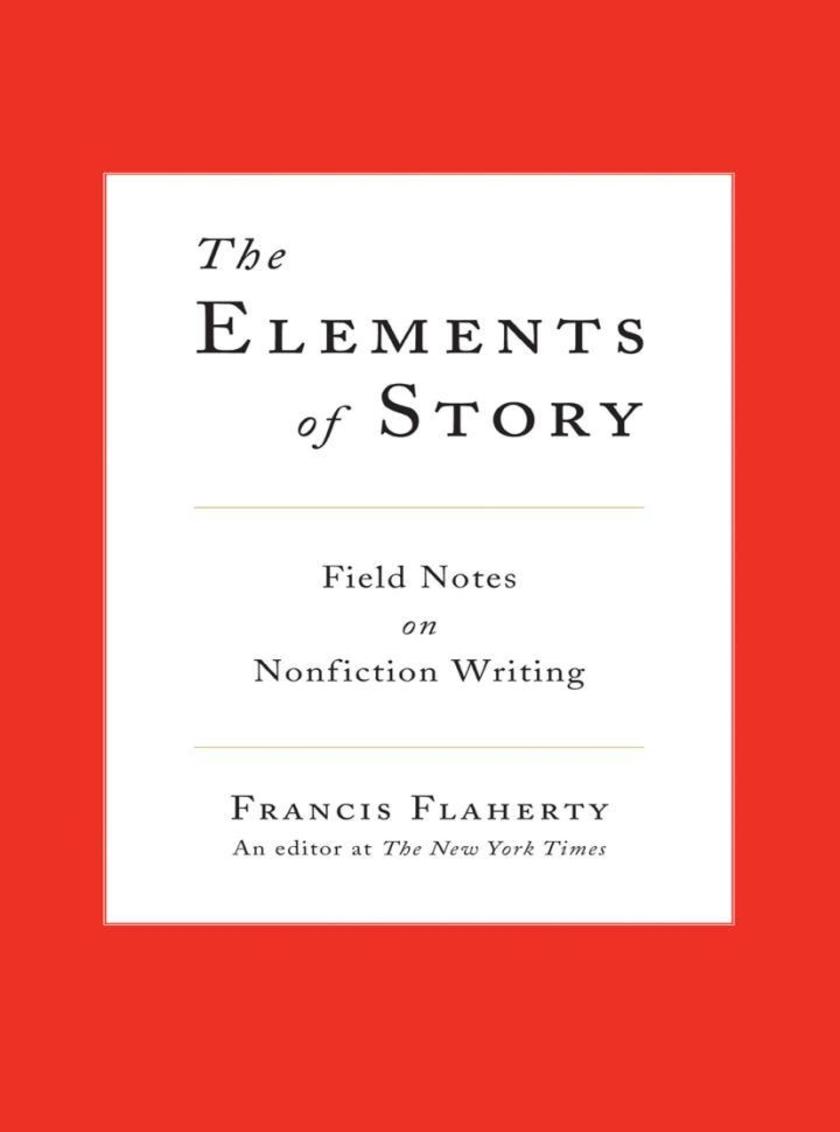
The Elements of Story
¥95.39
Most writing books dwell on common issues of style and grammar. Yet most writers also confront complex problems of story design.This 50-rule guide by Francis Flaherty, a New York Times editor, offers much-needed solutions and sage advice to address these concerns. "Sometimes, say things sideways," Flaherty writes. "The reader will be grateful." "White is whitest on black," he observes. "Let contrast work for you." Through such hard-won, story-level insights, sprinkled with examples from real stories and leavened with a good dose of newsroom memoir, The Elements of Story merits a spot on every writer's shelf.


