


 购物车
 个人中心


The Good, the Bad, and the Undead
¥55.31
It's a tough life for witch Rachel Morgan, sexy, independent bounty hunter, prowling the darkest shadows of downtown Cincinnati for criminal creatures of the night.She can handle the leather-clad vamps and even tangle with a cunning demon or two. But a serial killer who feeds on the experts in the most dangerous kind of black magic is definitely pressing the limits.Confronting an ancient, implacable evil is more than just child's play -- and this time, Rachel will be lucky to escape with her very soul.

Catalogue of Death
¥55.31
At last, construction begins on a new library for Bellehaven, a gift of Franklin Harrington, scion of old Bellehaven money, and one of the locally famous Harrington triplets. But when a freak snowstorm hits, Bellehaven is brought to its knees. Not so Miss Helma Zukas who is at her post, dispensing library information, overseeing wayward employees, and soothing a busload of stranded gamblers. Suddenly, an explosion rocks the snowy day, destroying the library site, killing the benefactor and a penny pinching city finance czar. The snow melts but not trouble. Shockingly, Ms. Moon thrusts the new library project onto Helma. And Helma soon discovers why, uncovering secrets and shady dealings from start to finish secrets in the library, in the City, and in the Harrington family – secrets worth killing for.

The Death of an Irish Consul
¥49.05
It's a rare occurrence when Chief Inspector of Detectives Peter McGarr leaves the shores of his beloved Ireland -- but this time he has little choice. The blood of two prominent British subjects -- both former S.I.S. chiefs, both brutally murdered -- is staining Irish soil. And Sir Colin Cummings, the current head of Britain's elite secret service -- and potential third victim -- en route to Italy, with McGarr coming along for the man's protection. A macabre conspiracy of murder and revenge is spreading its tentacles across several nations, and McGarr's time spent amidst the charm and rustic beauty of Siena promises to be anything but restful. Because there are many hidden players in this most deadly game -- from ex-spies to Communist rabble rousers to wealthy Italian industrialists. And a single misstep could place one dedicated and inquisitive Chief Inspector of the Garda Soichana directly in the line of killing fire.

The Death of an Irish Lass
¥49.05
The dead woman is an enigma a local lass who emigrated to America some years back, now perched atop a seven hundred foot cliff high above the pounding Irish surf . . . with two passports, a pistol, and $27,000 U.S. dollars in her coat pocket. The brutality of May Quirk's murder along with the accompanying death of her unborn child haunts Chief Superintendent Peter McGarr of the Special Crimes Unit. What was it that brought her home to County Clare to dieMcGarr is determined to find out, as his investigation carries him into the twisted core of a deadly conspiracy centered around money, madness, and lethal politics . . . and leads him far from his own home to a dark place where a dedicated Irish policeman is easy prey.

Hawke: Showdown at Dead End Canyon
¥42.03
There's no peace for Mason Hawke from the ghosts of his past. A drifter and a loner, he's not looking for trouble when he rides into Wyoming Territory –– but it's waiting for him nonetheless. Coming to the rescue of a wealthy landowner's daughter who was kidnapped by a pair of inept outlaws, Hawke finds himself an unlikely hero in a town called Green River. But his unsought celebrity has earned him some powerful enemies, including a land–hungry lady with a crooked official in her pocket and a ruthless killer on a leash. Justice, it seems, is an illusion in this place where fraud and fortune hunting dance with cold–blooded murder. But all that is about to change in a brutal hail of gunfire now that Hawke has come to play.

The Fires
¥90.77
Smoke has as many different scents as skin. Part of the pleasure is not knowing what it will be -- sulfurous or closer to incense or airier and sweeter as I imagine the smell of clouds.Ella is a connoisseur of fire, a woman enthralled by it as other women are by love. She savors the seductive promise of a spark, the caress of a curling wisp of smoke, the all-consuming hunger of a spreading blaze. Ella's heart seethes with a rage that can be spoken only with tongues of flame.In her remarkable first novel, Rene Steinke has created a narrator so lyrical and lucid in her madness as to raise the book to the level of romance. Trapped in a sleepy Indiana town, torn by inner demons that drive her to pyromania and promiscuity, Ella is at once entirely original and unforgettably real.As she struggles to come to terms with her family's tormented past and her own uncertain future, she draws the mesmerized reader ever deeper into her scorched soul, revealing a sensuality that will spiral into final, fiery destruction -- unless it can be quenched by love.
OpenCV with Python By Example
¥90.46
Build real-world computer vision applications and develop cool demos using OpenCV for Python About This Book Learn how to apply complex visual effects to images using geometric transformations and image filters Extract features from an image and use them to develop advanced applications Build algorithms to help you understand the image content and perform visual searches Who This Book Is For This book is intended for Python developers who are new to OpenCV and want to develop computer vision applications with OpenCV-Python. This book is also useful for generic software developers who want to deploy computer vision applications on the cloud. It would be helpful to have some familiarity with basic mathematical concepts such as vectors, matrices, and so on. What You Will Learn Apply geometric transformations to images, perform image filtering, and convert an image into a cartoon-like image Detect and track various body parts such as the face, nose, eyes, ears, and mouth Stitch multiple images of a scene together to create a panoramic image Make an object disappear from an image Identify different shapes, segment an image, and track an object in a live video Recognize an object in an image and build a visual search engine Reconstruct a 3D map from images Build an augmented reality application In Detail Computer vision is found everywhere in modern technology. OpenCV for Python enables us to run computer vision algorithms in real time. With the advent of powerful machines, we are getting more processing power to work with. Using this technology, we can seamlessly integrate our computer vision applications into the cloud. Web developers can develop complex applications without having to reinvent the wheel. This book will walk you through all the building blocks needed to build amazing computer vision applications with ease. We start off with applying geometric transformations to images. We then discuss affine and projective transformations and see how we can use them to apply cool geometric effects to photos. We will then cover techniques used for object recognition, 3D reconstruction, stereo imaging, and other computer vision applications. This book will also provide clear examples written in Python to build OpenCV applications. The book starts off with simple beginner’s level tasks such as basic processing and handling images, image mapping, and detecting images. It also covers popular OpenCV libraries with the help of examples. The book is a practical tutorial that covers various examples at different levels, teaching you about the different functions of OpenCV and their actual implementation. Style and approach This is a conversational-style book filled with hands-on examples that are really easy to understand. Each topic is explained very clearly and is followed by a programmatic implementation so that the concept is solidified. Each topic contributes to something bigger in the following chapters, which helps you understand how to piece things together to build something big and complex.
Troubleshooting Ubuntu Server
¥80.65
Make life at the office easier for server administrators by helping them build resilient Ubuntu server systems About This Book Tackle the issues you come across in keeping your Ubuntu server up and running Build server machines and troubleshoot cloud computing related issues using Open Stack Discover tips and best practices to be followed for minimum maintenance of Ubuntu Server 3 Who This Book Is For This book is for a vast audience of Linux system administrators who primarily work on Debian-based systems and spend long hours trying fix issues with the enterprise server. Ubuntu is already one of the most popular OSes and this book targets the most common issues that most administrators have to deal with. With the right tools and definite solutions, you will be able to keep your Ubuntu servers in the pink of health. What You Will Learn Deploy packages and their dependencies with repositories Set up your own DNS and network for Ubuntu Server Authenticate and validate users and their access to various systems and services Maintain, monitor, and optimize your server resources and avoid tremendous load Get to know about processes, assigning and changing priorities, and running processes in background Optimize your shell with tools and provide users with an improved shell experience Set up separate environments for various services and run them safely in isolation Understand, build, and deploy OpenStack on your Ubuntu Server In Detail Ubuntu is becoming one of the favorite Linux flavors for many enterprises and is being adopted to a large extent. It supports a wide variety of common network systems and the use of standard Internet services including file serving, e-mail, Web, DNS, and database management. A large scale use and implementation of Ubuntu on servers has given rise to a vast army of Linux administrators who battle it out day in and day out to make sure the systems are in the right frame of operation and pre-empt any untoward incidents that may result in catastrophes for the businesses using it. Despite all these efforts, glitches and bugs occur that affect Ubuntu server's network, memory, application, and hardware and also generate cloud computing related issues using OpenStack. This book will help you end to end. Right from setting up your new Ubuntu Server to learning the best practices to host OpenStack without any hassles. You will be able to control the priority of jobs, restrict or allow access users to certain services, deploy packages, tackle issues related to server effectively, and reduce downtime. Also, you will learn to set up OpenStack, and manage and monitor its services while tuning the machine with best practices. You will also get to know about Virtualization to make services serve users better. Chapter by chapter, you will learn to add new features and functionalities and make your Ubuntu server a full-fledged, production-ready system. Style and approach This book contains topic-by-topic discussion in an easy-to-understand language with loads of examples to help you take care of Ubuntu Server. Plenty of screenshots will guide you through a step-by-step approach.
Mastering Python Scientific Computing
¥71.93
A complete guide for Python programmers to master scientific computing using Python APIs and tools About This Book The basics of scientific computing to advanced concepts involving parallel and large scale computation are all covered. Most of the Python APIs and tools used in scientific computing are discussed in detail The concepts are discussed with suitable example programs Who This Book Is For If you are a Python programmer and want to get your hands on scientific computing, this book is for you. The book expects you to have had exposure to various concepts of Python programming. What You Will Learn Fundamentals and components of scientific computing Scientific computing data management Performing numerical computing using NumPy and SciPy Concepts and programming for symbolic computing using SymPy Using the plotting library matplotlib for data visualization Data analysis and visualization using Pandas, matplotlib, and IPython Performing parallel and high performance computing Real-life case studies and best practices of scientific computing In Detail In today's world, along with theoretical and experimental work, scientific computing has become an important part of scientific disciplines. Numerical calculations, simulations and computer modeling in this day and age form the vast majority of both experimental and theoretical papers. In the scientific method, replication and reproducibility are two important contributing factors. A complete and concrete scientific result should be reproducible and replicable. Python is suitable for scientific computing. A large community of users, plenty of help and documentation, a large collection of scientific libraries and environments, great performance, and good support makes Python a great choice for scientific computing. At present Python is among the top choices for developing scientific workflow and the book targets existing Python developers to master this domain using Python. The main things to learn in the book are the concept of scientific workflow, managing scientific workflow data and performing computation on this data using Python. The book discusses NumPy, SciPy, SymPy, matplotlib, Pandas and IPython with several example programs. Style and approach This book follows a hands-on approach to explain the complex concepts related to scientific computing. It details various APIs using appropriate examples.
Learning Predictive Analytics with R
¥90.46
Get to grips with key data visualization and predictive analytic skills using R About This Book Acquire predictive analytic skills using various tools of R Make predictions about future events by discovering valuable information from data using R Comprehensible guidelines that focus on predictive model design with real-world data Who This Book Is For If you are a statistician, chief information officer, data scientist, ML engineer, ML practitioner, quantitative analyst, and student of machine learning, this is the book for you. You should have basic knowledge of the use of R. Readers without previous experience of programming in R will also be able to use the tools in the book. What You Will Learn Customize R by installing and loading new packages Explore the structure of data using clustering algorithms Turn unstructured text into ordered data, and acquire knowledge from the data Classify your observations using Na?ve Bayes, k-NN, and decision trees Reduce the dimensionality of your data using principal component analysis Discover association rules using Apriori Understand how statistical distributions can help retrieve information from data using correlations, linear regression, and multilevel regression Use PMML to deploy the models generated in R In Detail R is statistical software that is used for data analysis. There are two main types of learning from data: unsupervised learning, where the structure of data is extracted automatically; and supervised learning, where a labeled part of the data is used to learn the relationship or scores in a target attribute. As important information is often hidden in a lot of data, R helps to extract that information with its many standard and cutting-edge statistical functions. This book is packed with easy-to-follow guidelines that explain the workings of the many key data mining tools of R, which are used to discover knowledge from your data. You will learn how to perform key predictive analytics tasks using R, such as train and test predictive models for classification and regression tasks, score new data sets and so on. All chapters will guide you in acquiring the skills in a practical way. Most chapters also include a theoretical introduction that will sharpen your understanding of the subject matter and invite you to go further. The book familiarizes you with the most common data mining tools of R, such as k-means, hierarchical regression, linear regression, association rules, principal component analysis, multilevel modeling, k-NN, Na?ve Bayes, decision trees, and text mining. It also provides a de*ion of visualization techniques using the basic visualization tools of R as well as lattice for visualizing patterns in data organized in groups. This book is invaluable for anyone fascinated by the data mining opportunities offered by GNU R and its packages. Style and approach This is a practical book, which analyzes compelling data about life, health, and death with the help of tutorials. It offers you a useful way of interpreting the data that’s specific to this book, but that can also be applied to any other data.
VMware vRealize Orchestrator Essentials
¥80.65
Get hands-on experience with vRealize Orchestrator and automate your VMware environment About This Book Gain an in-depth understanding of vRO in the VMware infrastructure Create your own advanced vRO *s using JavaScript A step-by-step tutorial to manage and create workflows with vRO Who This Book Is For This book is for VMware vSphere administrators who have minimal experience with automation tools and want to learn how to effectively automate their environment with VMware vRealize Orchestrator. A basic understanding of the VMware vSphere terms and concepts would be helpful. What You Will Learn Familiarize yourself with the Orchestrator architecture and Explore how plugins can expand Orchestrator's capabilitiesExplore how plug-ins can expand Orchestrator’s capabilities Deploy and configure the vRealize Orchestrator appliance Schedule and run workflows using the vSphere Web Client Create your own workflows with minimal work Use workflow presentations to improve your automation projects Integrate JavaScript to enhance your workflows Debug your workflows for errors and fix them Learn how to create, import, and export packages, to enable easy exchange solutions with others In Detail The automation of virtual environments has become the focus of many endeavors. VMware vRealize Orchestrator is a tool that enables you to automate not only your VMware environments, but also the surrounding hardware and software infrastructure. Orchestrator is also a central tool in the VMware cloud initiative and is extensively used by products such as vRealize Automation. In this book, you will learn how Orchestrator is able to help you automate your complete VMware infrastructure as well as its surrounding hardware and software. After deploying and configuring the vRealize Orchestrator appliance, you will learn how to run the existing workflows that are a part of the Orchestrator library. You will also see how the vSphere Web Client integration of Orchestrator reduces the time you spend on your daily admin tasks. The main aspect here is to learn how to create new workflows from existing ones. You will also look at how you can create completely new workflows. This includes learning about JavaScript and using presentation features to improve the layout and user friendliness of your workflows. Toward the end, you will learn to check for errors in your workflows and debug them. By the time you're done with the book, you'll be proficient in managing your workflows. Style and approach This book follows a sequential approach with ample screenshots in the examples that convey a deeper understanding of all Orchestrator-related tasks.
QGIS Blueprints
¥90.46
Develop analytical location-based web applications with QGIS About This Book Tame geographic information workflows with QGIS blueprints for smart web applications Create geographic web applications using QGIS and free/open source software Blueprints provide real-world applications covering many use cases Who This Book Is For This book encompasses relatively experienced GIS developers who have a strong grounding in the fundamentals of GIS development. They will have used QGIS before, but are looking to understand how to develop more complex, layered map applications that expose various data sets, utilize different visualizations, and are consumable (usable) by end users What You Will Learn Review geographic information principles and the application of these principles in the QGIS free/open source ecosystem Perform advanced analysis with site selection, hydrologic, and topological networks Build performant web applications by tile caching and generating static assets Provide collaborative editing capabilities for your team or community Develop custom and dynamic analysis and visualization capabilities Select the best components from desktop and web, for your use case Integrate it with social media and crowdsourcing In Detail QGIS, the world’s most popular free/open source desktop geographic information system software, enables a wide variety of use cases involving location – previously only available through expensive specialized commercial software. However, designing and executing a multi-tiered project from scratch on this complex ecosystem remains a significant challenge. This book starts with a primer on QGIS and closely related data, software, and systems. We’ll guide you through six use-case blueprints for geographic web applications. Each blueprint boils down a complex workflow into steps you can follow to reduce time lost to trial and error. By the end of this book readers should be able to build complex layered applications that visualize multiple data sets, employing different types of visualization, and give end users the ability to interact with and manipulate this data for the purpose of analysis. Style and approach This is a comprehensive guide to the application of QGIS and free/open source software in creating web applications from analysis. Step-by-step blueprints guide the reader through analytical and web development topics and designs.
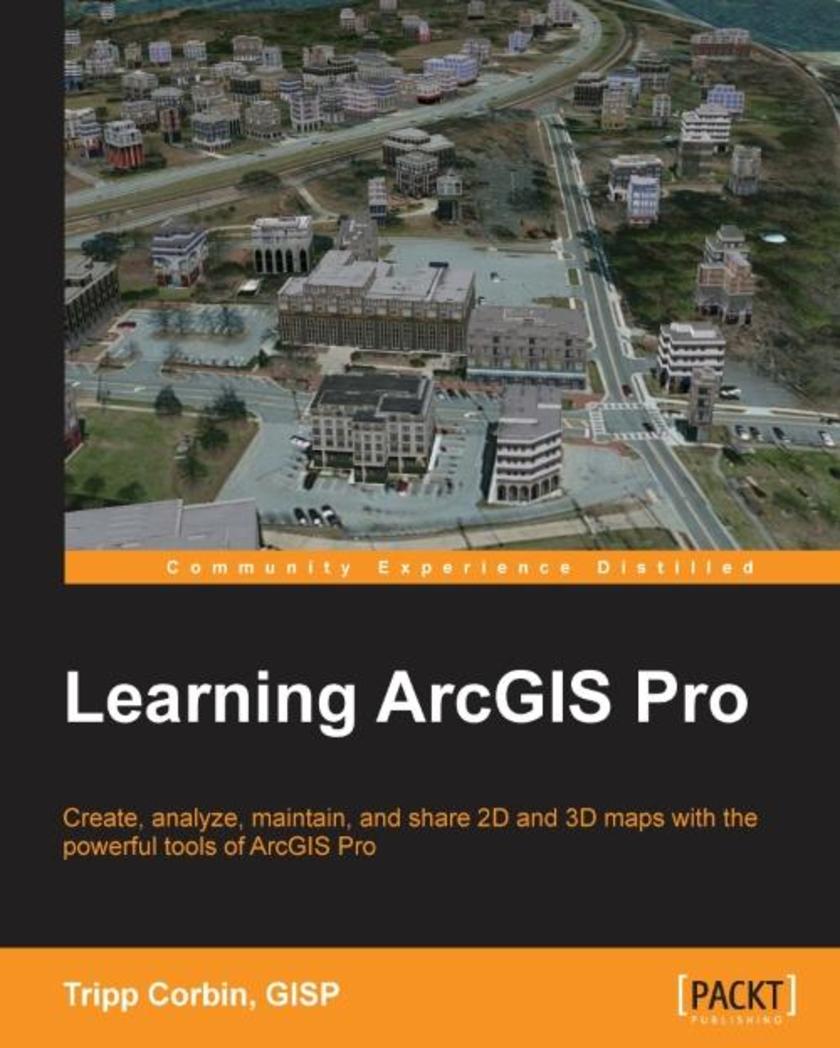
Learning ArcGIS Pro
¥90.46
Create, analyze, maintain, and share 2D and 3D maps with the powerful tools of ArcGIS Pro About This Book Visualize GIS data in 2D and 3D maps Create GIS projects for quick and easy access to data, maps, and analysis tools A practical guide that helps to import maps, globes, and scenes from ArcMap, ArcScene, or ArcGlobe Who This Book Is For This book is for anyone wishing to learn how ArcGIS Pro can be used to create maps and perform geospatial analysis. It will be especially helpful for those that have used ArcMap and ArcCatalog in the past and are looking to migrate to Esri’s newest desktop GIS solution. Though previous GIS experience is not required, you must have a solid foundation using Microsoft Windows. It is also helpful if you understand how to manage folders and files within the Microsoft Windows environment. What You Will Learn Install ArcGIS Pro and assign Licenses to users in your organization Navigate and use the ArcGIS Pro ribbon interface to create maps and perform analysis Create and manage ArcGIS Pro GIS Projects Create 2D and 3D maps to visualize and analyze data Author map layouts using cartographic tools and best practices to show off the results of your analysis and maps Import existing map documents, scenes, and globes into your new ArcGIS Pro projects quickly Create standardized workflows using Tasks Automate analysis and processes using ModelBuilder and Python In Detail ArcGIS Pro is Esri’s newest desktop GIS application with powerful tools for visualizing, maintaining, and analyzing data. ArcGIS Pro makes use of the modern ribbon interface and 64-bit processing to increase the speed and efficiency of using GIS. It allows users to create amazing maps in both 2D and 3D quickly and easily.This book will take you from software installation to performing geospatial analysis. It is packed with how-to’s for a host of commonly-performed tasks. You will start by learning how to download and install the software including hardware limitations and recommendations. Then you are exposed to the new Ribbon interface and how its smart design can make finding tools easier.After you are exposed to the new interface, you are walked through the steps to create a new GIS Project to provide quick access to project resources. With a project created, you will learn how to construct 2D and 3D maps including how to add layers, adjust symbology, and control labeling. Next you will learn how to access and use analysis tools to help you answer real-world questions.Lastly, you will learn how processes can be automated and standardized in ArcGIS Pro using Tasks, Models, and Python Scripts.This book will provide an invaluable resource for all those seeking to use ArcGIS Pro as their primary GIS application or for those looking to migrate from ArcMap and ArcCatalog. Style and approach This book includes detailed explanations of the GIS functionality and workflows in ArcGIS Pro. These are supported by easy-to-follow exercises that will help you gain an understanding of how to use ArcGIS Pro to perform a range of tasks.

Android 6 Essentials
¥54.49
Design, build, and create your own applications using the full range of features available in Android 6 About This Book Learn how to utilize the robust features of Android 6 to design, develop, and publish better Android applications Get useful guidance on creating new apps or migrating existing apps to support features such as app permissions, app links, fingerprint authentication, etc A fast paced guide, packed with hands-on examples that ties all the features such as API, audio, video, camera, tab customization together under a single cover Who This Book Is For This book is for Android developers who are looking to move their applications into the next Android version with ease. What You Will Learn Familiarize yourself with the features of Android 6 Code with the new Android permissions model Use apps auto backup and restore lost data automatically Increase user engagement with apps through an assistant using triggers and providing contextual assistance Assess and handle proper usage of the API Work with Audio, Video,Camera in Android 6 Utilize the new features in Android for professional purposes Understand and code Chrome’s custom tabs In Detail Android 6 is the latest and greatest version of the Android operating system, and comes packed with cutting edge new features for you to harness for the benefit of building better applications. This step-by-step guide will take you through the basics of the Android Marshmallow permissions model and beyond into other crucial areas such as the Audio,Video,Camera API and Android’s at work features. Learn how to create, deploy, and manage Android applications with Marshmallow’s API and the latest functionalities. The combination of instructions and real-world examples will make your application deployment and testing a breeze. Style and approach This easy-to-follow, step-by-step tutorial provides explanations and examples to add the new Android 6 features to your skill set. Each chapter provides sequential steps and detailed information about the API, as well as best practices and testing options.
Python for Secret Agents - Volume II
¥45.77
Gather, analyze, and decode data to reveal hidden facts using Python, the perfect tool for all aspiring secret agents About This Book Discover the essential features of Python programming: statements, variables, expressions, and many of the built-in data types Use Python’s standard library to do more sophisticated data gathering and analysis Written by a Python programming expert, with over 35 years' experience as a consultant, teacher, author and software developer Who This Book Is For This book is for Secret Agents who have some exposure to Python. Our focus is on the Field Agents who are ready to do more sophisticated and complex programming in Python. We'll stick to simple statistics for the most part. A steady hand with a soldering iron is not required, but a skilled field agent should be able to assemble a working Arduino circuit to gather their own sensor data.What You Will Learn Upgrade Python to the latest version and discover its latest and greatest tools Use Python libraries to extract data from log files that are designed more for people to read than for automated analysis Summarize log files and extract meaningful information Gather data from social networking sites and leverage your experience of analyzing log files to summarize the data you find Extract text and images from social networking sites Parse the complex and confusing data structures in a PDF file to extract meaningful text that we can analyze Connect small, intelligent devices to our computer to use them as remote sensors Use Python to analyze measurements from sensors to calibrate them and use sensors efficiently In Detail Python is easy to learn and extensible programming language that allows any manner of secret agent to work with a variety of data. Agents from beginners to seasoned veterans will benefit from Python's simplicity and sophistication. The standard library provides numerous packages that move beyond simple beginner missions. The Python ecosystem of related packages and libraries supports deep information processing. This book will guide you through the process of upgrading your Python-based toolset for intelligence gathering, analysis, and communication. You'll explore the ways Python is used to analyze web logs to discover the trails of activities that can be found in web and database servers. We'll also look at how we can use Python to discover details of the social network by looking at the data available from social networking websites. Finally, you'll see how to extract history from PDF files, which opens up new sources of data, and you’ll learn about the ways you can gather data using an Arduino-based sensor device. Style and approach Each chapter will include a background briefing that covers an essential Python technology. After some in-depth exploration of the features, the chapter will conclude with a mission that is a concrete application of the Python tools and techniques covered.
Mastering XenApp?
¥99.18
Master the skills required to implement CitrixXenApp7.6 to deploy a complete Citrix?-hosted application from scratch About This Book Learn to implement and configure components of CitrixXenApp7.6, which are XenServer?, XenApp?, CitrixLicense server, PVS, Storefront, CitrixReceiver, and Netscaler to secure WAN traffic Build the XenApp7.6 environment independently and perform tests to make sure the components are working as expected for internal and external traffic Implement advanced tools in CitrixXenAppto build and manage a cost effective, secure, and high-performing application delivery infrastructure with this comprehensive guide Who This Book Is For This is book is for administrators who are currently managing the implemented environment and want to learn how to deploy the CitrixHosted virtualization solution for the application in a windows server 2012 R2 environment. A reasonable knowledge and understanding of core XenAppelements and concepts used during virtualizing applications are assumed. What You Will Learn Understand how to set up Hypervisor, install the management console, configure the storage repository, and create a virtual machine on hypervisor Set up an Infrastructure component and explore ways to tune them up so that they can be used for Citrixenvironment Set up a Domain controller, DHCP, Certificate authority, and SQL server for static database for CitrixXenAppValidate the CitrixXenApp7.6 solution to make sure components are communicating properly Manage the essential Citrixcomponents – Director, Licensing, and Policies with the Help of Citrixstudio Optimize the behavior of an Application and share desktop via Policies Installing and configuring CitrixProvisioning services to deliver CitrixXenApp7.6 virtual machines Secure the external Delivery of an application and shared desktop via netscaler to enjoy mobility In Detail CitrixXenAppis one of the leading pieces of Application delivery software that delivers Windows compatible apps to users on any device, anywhere. CitrixXenAppalso gives administrators the ability to manage and control the freedom of mobility by increasing the security and saving costs at the same time. This book will provide you with all the knowledge required to successfully deploy and master a complete Citrixhosted application. First, it will cover essential concepts of the architecture of XenApp?. You will then learn how to set up Hypervisor and how to set up Infrastructure components. Next you will learn how to Set up CitrixComponents, XenAppresources, PVS, and Netscaler. We will further look at how to prepare the environment for Rollout. Additionally, you will learn how to configure the Citrixcomponents such as CitrixDirector. Moreover, you’ll learn about shared desktop for delivery to end users and the application of policies for effective and secure delivery. Finally, you will learn how to implement provisioning services for a CitrixXenApp7.6 environment. Style and approach This book is based on a course outline and hence takes a very practical approach so you will understand how to implement the components of XenAppin a production environment. Complemented with many best practices and troubleshooting concepts of XenApp?, this book will help you master XenAppswiftly.
Monitoring Docker
¥71.93
Monitor your Docker containers and their apps using various native and third-party tools with the help of this exclusive guide!About This Book Get the only book that covers multiple methods to monitoring Docker Containers -your one-stop solution to all your Docker monitoring needs Learn how to implement third-party tools such as Datalog, cAdvisor, and more with this example-rich, hands-on guide Learn how to efficiently monitor Docker containers and get an edge over other administrators while maintaining apps on these containers Who This Book Is For This book is for DevOps engineers and system administrators who manage Docker containers and want to better manage these containers using expert techniques and methods and better maintain applications built on Docker. What You Will Learn Discover the tools built into Docker to gain an insight into your containers’ performance Augment Docker’s built-in tools with modern tools such as cAdvisor from Google, SysDig by Draios, and Soundcloud’s Prometheus Integrate the monitoring of your containers with more traditional monitoring solutions such as Zabbix Take advantage of the various SaaS offerings from third parties to move monitoring away from your local infrastructure and into the cloud Discover the various ways to ship your applications’ logs from the container to a central logging service Get the most out of your application and resources with the right implementation of your monitoring method In Detail This book will show you how monitoring containers and keeping a keen eye on the working of applications helps improve the overall performance of the applications that run on Docker. With the increased adoption of Docker containers, the need to monitor which containers are running, what resources they are consuming, and how these factors affect the overall performance of the system has become the need of the moment. This book covers monitoring containers using Docker's native monitoring functions, various plugins, as well as third-party tools that help in monitoring. Well start with how to obtain detailed stats for active containers, resources consumed, and container behavior. We also show you how to use these stats to improve the overall performance of the system. Next, you will learn how to use SysDig to both view your containers performance metrics in real time and record sessions to query later. By the end of this book, you will have a complete knowledge of how to implement monitoring for your containerized applications and make the most of the metrics you are collecting Style and approach This is an easy-to-follow guide with plenty of hands-on examples that can be executed both on your local machine and externally hosted services.
Mastering OAuth 2.0
¥80.65
Create powerful applications to interact with popular service providers such as Facebook, Google, Twitter, and more by leveraging the OAuth 2.0 Authorization Framework About This Book Learn how to use the OAuth 2.0 protocol to interact with the world's most popular service providers, such as Facebook, Google, Instagram, Slack, Box, and more Master the finer details of this complex protocol to maximize the potential of your application while maintaining the utmost of security Step through the construction of a real-world working application that logs you in with your Facebook account to create a compelling infographic about the most important person in the world—you! Who This Book Is Fo If you are an application developer, software architect, security engineer, or even a casual programmer looking to leverage the power of OAuth, Mastering OAuth 2.0 is for you. Covering basic topics such as registering your application and choosing an appropriate workflow, to advanced topics such as security considerations and extensions to the specification, this book has something for everyone. A basic knowledge of programming and OAuth is recommended. What You Will Learn Discover the power and prevalence of OAuth 2.0 and use it to improve your application's capabilities Step through the process of creating a real-world application that interacts with Facebook using OAuth 2.0 Examine the various workflows described by the specification, looking at what they are and when to use them Learn about the many security considerations involved with creating an application that interacts with other service providers Develop your debugging skills with dedicated pages for tooling and troubleshooting Build your own rich, powerful applications by leveraging world-class technologies from companies around the world In Detail OAuth 2.0 is a powerful authentication and authorization framework that has been adopted as a standard in the technical community. Proper use of this protocol will enable your application to interact with the world's most popular service providers, allowing you to leverage their world-class technologies in your own application. Want to log your user in to your application with their Facebook accountWant to display an interactive Google Map in your applicationHow about posting an update to your user's LinkedIn feedThis is all achievable through the power of OAuth. With a focus on practicality and security, this book takes a detailed and hands-on approach to explaining the protocol, highlighting important pieces of information along the way. At the beginning, you will learn what OAuth is, how it works at a high level, and the steps involved in creating an application. After obtaining an overview of OAuth, you will move on to the second part of the book where you will learn the need for and importance of registering your application and types of supported workflows. You will discover more about the access token, how you can use it with your application, and how to refresh it after expiration. By the end of the book, you will know how to make your application architecture robust. You will explore the security considerations and effective methods to debug your applications using appropriate tools. You will also have a look at special considerations to integrate with OAuth service providers via native mobile applications. In addition, you will also come across support resources for OAuth and credentials grant. Style and approach With a focus on practicality and security, Mastering OAuth 2.0 takes a top-down approach at exploring the protocol. Discussed first at a high level, examining the importance and overall structure of the protocol, the book then dives into each subject, adding more depth as we proceed. This all culminates in an example application that will be built, step by step, using the valuable and practical knowledge you have gained.
Apache Oozie Essentials
¥63.21
Unleash the power of Apache Oozie to create and manage your big data and machine learning pipelines in one go About This Book Teaches you everything you need to know to get started with Apache Oozie from scratch and manage your data pipelines effortlessly Learn to write data ingestion workflows with the help of real-life examples from the author’s own personal experience Embed Spark jobs to run your machine learning models on top of Hadoop Who This Book Is For If you are an expert Hadoop user who wants to use Apache Oozie to handle workflows efficiently, this book is for you. This book will be handy to anyone who is familiar with the basics of Hadoop and wants to automate data and machine learning pipelines. What You Will Learn Install and configure Oozie from source code on your Hadoop cluster Dive into the world of Oozie with Java MapReduce jobs Schedule Hive ETL and data ingestion jobs >Import data from a database through Sqoop jobs in HDFS Create and process data pipelines with Pig, hive *s as per business requirements. Run machine learning Spark jobs on Hadoop Create quick Oozie jobs using Hue Make the most of Oozie’s security capabilities by configuring Oozie’s security In Detail As more and more organizations are discovering the use of big data analytics, interest in platforms that provide storage, computation, and analytic capabilities is booming exponentially. This calls for data management. Hadoop caters to this need. Oozie fulfils this necessity for a scheduler for a Hadoop job by acting as a cron to better analyze data. Apache Oozie Essentials starts off with the basics right from installing and configuring Oozie from source code on your Hadoop cluster to managing your complex clusters. You will learn how to create data ingestion and machine learning workflows. This book is sprinkled with the examples and exercises to help you take your big data learning to the next level. You will discover how to write workflows to run your MapReduce, Pig ,Hive, and Sqoop *s and schedule them to run at a specific time or for a specific business requirement using a coordinator. This book has engaging real-life exercises and examples to get you in the thick of things. Lastly, you’ll get a grip of how to embed Spark jobs, which can be used to run your machine learning models on Hadoop. By the end of the book, you will have a good knowledge of Apache Oozie. You will be capable of using Oozie to handle large Hadoop workflows and even improve the availability of your Hadoop environment. Style and approach This book is a hands-on guide that explains Oozie using real-world examples. Each chapter is blended beautifully with fundamental concepts sprinkled in-between case study solution algorithms and topped off with self-learning exercises.
Puppet 4 Essentials - Second Edition
¥80.65
Acquire skills to manage your IT infrastructure effectively with Puppet About This BookBreeze through Puppet 4’s key features and performance improvements to bring real advantage to your IT infrastructureDiscover Puppet best practices to help you avoid common mistakes and pitfallsBlitz through easy-to-follow examples to get to grips with Puppet and succeed with everyday IT automationWho This Book Is ForIf you're an experienced IT professional and a new Puppet user, this book will provide you with all you need to know to go from installation to advanced automation in no time at all. Get a rapid introduction to the essential topics and then tackle Puppet for advanced automation.What You Will LearnWrite and employ individual Puppet manifestsUnderstand how Puppet implements system abstractionDeploy the Puppet master and agentsLeverage and extend Facter to summarize your systems Create modular and reusable Puppet code Extend your code base with publicly available Puppet modules Use the modern features of Puppet 4 Separate logic from data using Hiera In Detail Puppet is a configuration management tool that allows you to automate all your IT configurations, giving you control over what you do to each Puppet Agent in a network, and when and how you do it. In this age of digital delivery and ubiquitous Internet presence, it's becoming increasingly important to implement scalable and portable solutions, not only in terms of software, but also the systems that run it. The free Ruby-based tool Puppet has established itself as the most successful solution to manage any IT infrastructure. Ranging from local development environments through complex data center setups to scalable cloud implementations, Puppet allows you to handle them all with a unified approach. Puppet 4 Essentials, Second Edition gets you started rapidly and intuitively as you’ll put Puppet’s tools to work right away. It will also highlight the changes associated with performance improvements as well as the new language features in Puppet 4. We’ll start with a quick introduction to Puppet to get you managing your IT systems quickly. You will then learn about the Puppet Agent that comes with an all-in-one (AIO) package and can run on multiple systems. Next, we’ll show you the Puppet Server for high-performance communication and passenger packages. As you progress through the book, the innovative structure and approach of Puppet will be explained with powerful use cases. The difficulties that are inherent to a complex and powerful tool will no longer be a problem for you as you discover Puppet's fascinating intricacies. By the end of the book, you will not only know how to use Puppet, but also its companion tools Facter and Hiera, and will be able to leverage the flexibility and expressive power implemented by their tool chain. Style and approach This quick learning guide for Puppet follows a practical approach, starting with some basic commands that you can use from the shell right away. It comprises a series of examples that will get you familiar with the most important aspects of Puppet in a flash.

ArcGIS Blueprints
¥99.18
Explore the robust features of Python to create real-world ArcGIS applications through exciting, hands-on projects About This Book Get to grips with the big world of Python add-ins and wxPython in GUI development to implement their features in your application Integrate advanced Python libraries, ArcPy mapping, and data access module techniques to develop a mapping application Construct a top-notch intermediate-to-advanced project by accessing ArcGIS Server and ArcGIS Online resources through the ArcGIS REST API using a project-based approach Who This Book Is For If you have prior experience building simple apps with ArcGIS and now have a fancy for developing a more challenging and complex desktop application in ArcGIS, then this book is ideal for you. What You Will Learn Automate the creation of creative output data visualizations including maps, charts, and graphs Explore ways to use the ArcPy Mapping module and Data-driven Pages to automate the creation of map books in your own project Develop applications that use the Plotly platform and library to create stunning charts and graphs that can be integrated into ArcGIS Desktop Build tools that access REST services and download data to a local geodatabase Design, build, and integrate advanced GUIs with wxPython and ArcGIS Desktop in ArcGIS Get clued up about constructing applications that export data to Google Earth Pro to automate time-consuming complex processes Maximize the access of ArcGIS Server and ArcGIS Online using the ArcGIS REST API with Python In Detail This book is an immersive guide to take your ArcGIS Desktop application development skills to the next level It starts off by providing detailed de*ion and examples of how to create ArcGIS Desktop Python toolboxes that will serve as containers for many of the applications that you will build. We provide several practical projects that involve building a local area/community map and extracting wildfire data. You will then learn how to build tools that can access data from ArcGIS Server using the ArcGIS REST API. Furthermore, we deal with the integration of additional open source Python libraries into your applications, which will help you chart and graph advanced GUI development; read and write JSON, CSV, and XML format data sources; write outputs to Google Earth Pro, and more. Along the way, you will be introduced to advanced ArcPy Mapping and ArcPy Data Access module techniques and use data-driven Pages to automate the creation of map books. Finally, you will learn advanced techniques to work with video and social media feeds. By the end of the book, you will have your own desktop application without having spent too much time learning sophisticated theory. Style and approach This is an easy-to-follow, project-based guide that guides you through the whole ArcGIS theme with practical, real-world examples and a systematic approach.


