


 购物车
 个人中心

Voice User Interface Projects
¥69.75
Build optimized applications in Kotlin by learning how to make use of the standard library features the smart way Key Features *Get the most out of the Kotlin library to develop high-quality portable applications *Explore the powerful support for data processing and I/O operations *Discover ways to enhance your Android application development Book Description Given the verbosity of Java, developers have turned to Kotlin for effective software development. The Kotlin standard library provides vital tools that make day-to-day Kotlin programming easier. This library features the core attributes of the language, such as algorithmic problems, design patterns, data processing, and working with files and data streams. The recipes in this book offer coding solutions that can be readily executed. The book covers various topics related to data processing, I/O operations, and collections transformation. We'll walk through effective design patterns in Kotlin and you'll understand how coroutines add new features to JavaScript. As you make your way through the chapters, you'll learn how to implement clean, reusable functions and scalable interfaces containing default implementations. In the concluding chapters, we'll provide recipes on functional programming concepts, such as lambdas, monads, functors, and Kotlin scoping functions. By the end of the book, you'll be able to address a range of problems that Kotlin developers face by implementing easy-to-follow solutions. What you will learn *Work with ranges, progressions, and sequences in use cases *Add new functionalities to current classes with Kotlin extensions *Understand elements such as lambdas, closures, and monads *Build a REST API consumer with Retrofit and a coroutine adapter *Discover useful tips and solutions for making your Android projects *Explore the benefits of standard library features Who this book is for This book is for software developers who are familiar with Kotlin’s basics and want to discover more advanced features and concepts, especially those provided by the Kotlin standard library. It’s also ideal for experienced software developers who are familiar with the functional programming paradigm and other programming languages who want to switch to Kotlin. It will also help Java developers switch to Kotlin and integrate it into existing Java Virtual Machine (JVM) projects.
Mastering The Faster Web with PHP, MySQL, and JavaScript
¥66.58
Make web applications run faster by using advanced PHP, SQL and JavaScript techniques About This Book ? Use a customized PHP stack to create efficient data-driven web applications ? Ensure seamless implementation of a JavaScript & HTML 5 CSS based frontend and PHP based backend. ? Learn about problem identification, best strategies, and UI design patterns as well to build a clean, fast web application Who This Book Is For The audience for this book would be PHP developers who have some basic knowledge of PHP programming and Web technologies. JavaScript programming knowledge is not necessary. What You Will Learn ? Install, confgure, and use profling and benchmarking testing tools ? Understand how to recognize optimizable data structures and functions to effectively optimize a PHP7 application ? Diagnose bad SQL query performance and discover ways to optimize it ? Grasp modern SQL techniques to optimize complex SQL queries ? Identify and simplify overly complex JavaScript code ? Explore and implement UI design principles that effectively enhance the performance ? Combine web technologies to boost web server performance In Detail This book will get you started with the latest benchmarking, profiling and monitoring tools for PHP, MySQL and JavaScript using Docker-based technologies. From optimizing PHP 7 code to learning asynchronous programming, from implementing Modern SQL solutions to discovering Functional JavaScript techniques, this book covers all the latest developments in Faster Web technologies. You will not only learn to determine the best optimization strategies, but also how to implement them. Along the way, you will learn how to profile your PHP scripts with Blackfire.io, monitor your Web applications, measure database performance, optimize SQL queries, explore Functional JavaScript, boost Web server performance in general and optimize applications when there is nothing left to optimize by going beyond performance. After reading this book, you will know how to boost the performance of any Web application and make it part of what has come to be known as the Faster Web. Style and approach The book has a step by step practical approach to developing highly efficient Web applications, with many practical and useful code snippets.
Truffle Quick Start Guide
¥50.13
Develop, test, and deploy decentralized applications for Ethereum platform About This Book ? Build your first Ethereum Dapp with Truffle: the most popular Ethereum development framework ? Build, compile, and deploy smart contracts in your development environment ? Embrace Blockchains and utilize it to create new generation of secured and scalable apps Who This Book Is For This book is for web developers who are interested in the new world blockchain. Some basic understanding of JavaScript and web services is required. No prior knowledge of Decentralized applications or blockchain is required. What You Will Learn ? Understand the fundamentals of Truffle and Web3 ? Build a decentralized application with Truffle, while choosing the correct Ethereum client ? Connect your Dapp to Ethereum clients including Geth, Parity, and Ganache ? Migrate and test your Dapp with the correct networks such as Ropsten and Rinkeby ? Package a decentralized application into a user-friendly product by integrating Truffle with JavaScript frameworks such as Angular, React and Vue ? Explore tools including Ethereum Package Manager, the Registrar and browser wallets, and exploit third-party smart contract libraries. ? Evaluate the common migration pitfalls and how to mitigate them In Detail Truffle is a world-class development environment, testing framework and asset pipeline for Ethereum, aiming to make life as an Ethereum developer easier. If you are a web developer wanting to try your hand at developing Dapps with Truffle, then this is the book for you. This book will teach you to write smart contracts and build Dapps with Truffle. You will begin with covering the basics of Truffle, briefly explaining how it integrates Solidity and Web3, in orderto start building a mini decentralized application. Also, you will dive into migration, testing and integrating Truffle with the use of popular JavaScript frameworks. Lastly, you will ship your decentralized application and package it into a product. Moreover, you will go through the best practices in Truffle,so as to increase your proficiency in building Dapps with Truffle. By the end of the book, you will be able to write smart contracts and build decentralized applications with Truffle on Ethereum blockchains. Style and approach An intuitive, step-by-step and engaging guide that will teach you to build a real-world, decentralized application with Truffle.
C++ Reactive Programming
¥81.74
Learn how to implement the reactive programming paradigm with C++ and build asynchronous and concurrent applications About This Book ? Efficiently exploit concurrency and parallelism in your programs ? Use the Functional Reactive programming model to structure programs ? Understand reactive GUI programming to make your own applications using Qt Who This Book Is For If you’re a C++ developer interested in using reactive programming to build asynchronous and concurrent applications, you’ll find this book extremely useful. This book doesn’t assume any previous knowledge of reactive programming. What You Will Learn ? Understand language-level concurrency in C++ ? Explore advanced C++ programming for the FRP ? Uncover the RxCpp library and its programming model ? Mix the FP and OOP constructs in C++ 17 to write well-structured programs ? Master reactive microservices in C++ ? Create custom operators for RxCpp ? Learn advanced stream processing and error handling In Detail Reactive programming is an effective way to build highly responsive applications with an easy-to-maintain code base. This book covers the essential functional reactive concepts that will help you build highly concurrent, event-driven, and asynchronous applications in a simpler and less error-prone way. C++ Reactive Programming begins with a discussion on how event processing was undertaken by different programming systems earlier. After a brisk introduction to modern C++ (C++17), you’ll be taken through language-level concurrency and the lock-free programming model to set the stage for our foray into the Functional Programming model. Following this, you’ll be introduced to RxCpp and its programming model. You’ll be able to gain deep insights into the RxCpp library, which facilitates reactive programming. You’ll learn how to deal with reactive programming using Qt/C++ (for the desktop) and C++ microservices for the Web. By the end of the book, you will be well versed with advanced reactive programming concepts in modern C++ (C++17). Style and approach The book includes real-world problems that you will solve with the reactive programming model. It highlights the way event processing has evolved in the programming world.
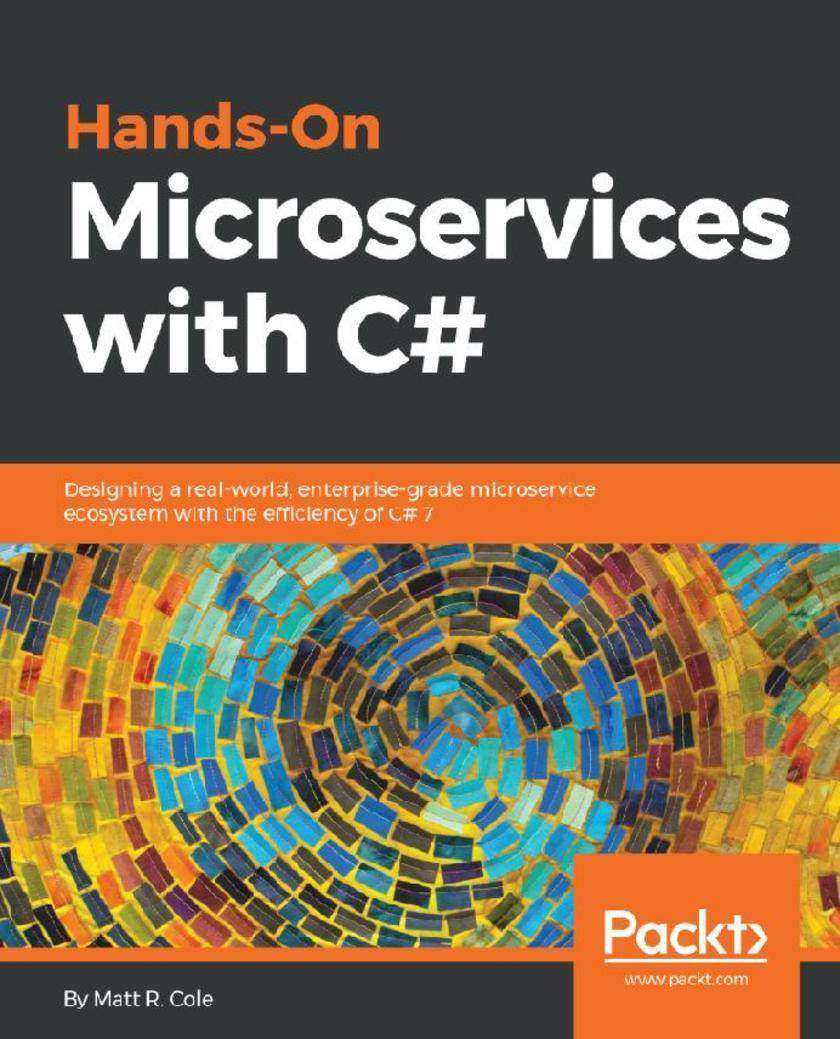
Hands-On Microservices with C#
¥81.74
Build enterprise-grade microservice ecosystems with intensive case studies using C# About This Book ? Learn to build message-based microservices ? Packed with case studies to explain the intricacies of large-scale microservices ? Build scalable, modular, and robust architectures with C# Who This Book Is For C# developers, software architects, and professionals who want to master the art of designing the microservice architecture that is scalable based on environment. Developers should have a basic understanding of.NET application development using C# and Visual Studio What You Will Learn ? Explore different open source tools within the context of designing microservices ? Learn to provide insulation to exception-prone function calls ? Build common messages used between microservices for communication ? Learn to create a microservice using our base class and interface ? Design a quantitative financial machine microservice ? Learn to design a microservice that is capable of using Blockchain technology In Detail C# is a powerful language when it comes to building applications and software architecture using rich libraries and tools such as .NET. This book will harness the strength of C# in developing microservices architectures and applications. This book shows developers how to develop an enterprise-grade, event-driven, asynchronous, message-based microservice framework using C#, .NET, and various open source tools. We will discuss how to send and receive messages, how to design many types of microservice that are truly usable in a corporate environment. We will also dissect each case and explain the code, best practices, pros and cons, and more. Through our journey, we will use many open source tools, and create file monitors, a machine learning microservice, a quantitative financial microservice that can handle bonds and credit default swaps, a deployment microservice to show you how to better manage your deployments, and memory, health status, and other microservices. By the end of this book, you will have a complete microservice ecosystem you can place into production or customize in no time. Style and approach A step-by-step guide that enables readers to create a complete microservice ecosystem they can place into production or customize in no time.
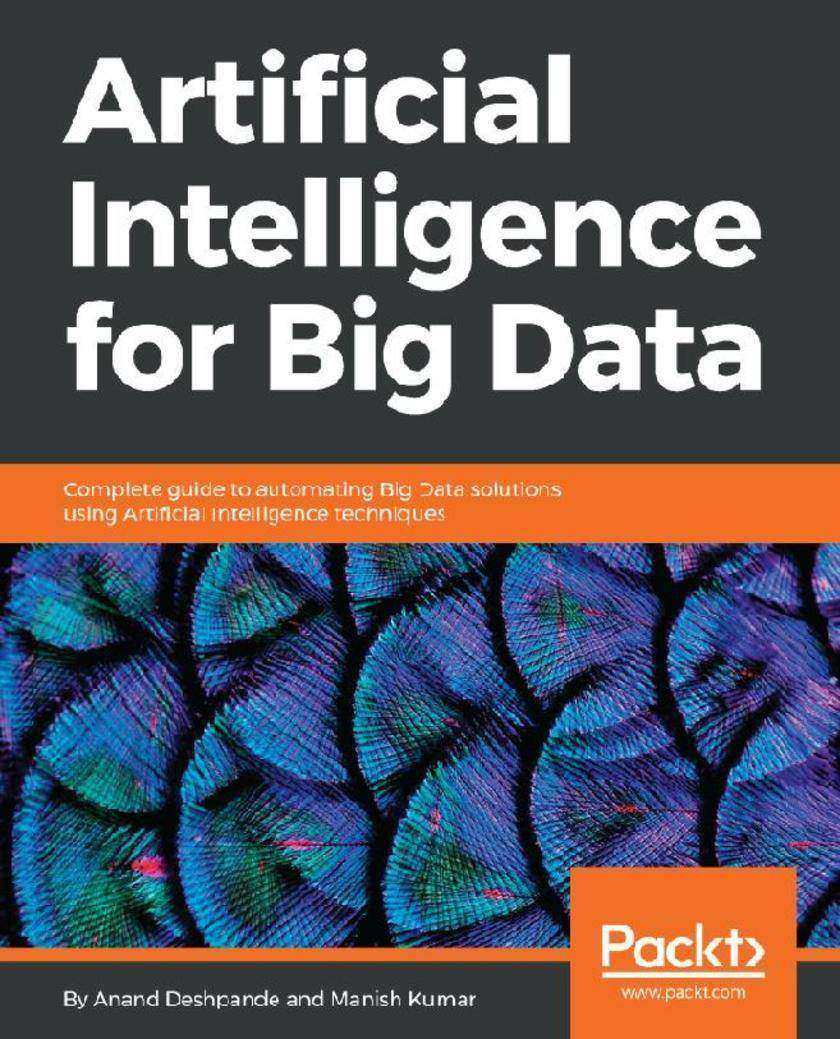
Artificial Intelligence for Big Data
¥81.74
Build next-generation Artificial Intelligence systems with Java About This Book ? Implement AI techniques to build smart applications using Deeplearning4j ? Perform big data analytics to derive quality insights using Spark MLlib ? Create self-learning systems using neural networks, NLP, and reinforcement learning Who This Book Is For This book is for you if you are a data scientist, big data professional, or novice who has basic knowledge of big data and wish to get proficiency in Artificial Intelligence techniques for big data. Some competence in mathematics is an added advantage in the field of elementary linear algebra and calculus. What You Will Learn ? Manage Artificial Intelligence techniques for big data with Java ? Build smart systems to analyze data for enhanced customer experience ? Learn to use Artificial Intelligence frameworks for big data ? Understand complex problems with algorithms and Neuro-Fuzzy systems ? Design stratagems to leverage data using Machine Learning process ? Apply Deep Learning techniques to prepare data for modeling ? Construct models that learn from data using open source tools ? Analyze big data problems using scalable Machine Learning algorithms In Detail In this age of big data, companies have larger amount of consumer data than ever before, far more than what the current technologies can ever hope to keep up with. However, Artificial Intelligence closes the gap by moving past human limitations in order to analyze data. With the help of Artificial Intelligence for big data, you will learn to use Machine Learning algorithms such as k-means, SVM, RBF, and regression to perform advanced data analysis. You will understand the current status of Machine and Deep Learning techniques to work on Genetic and Neuro-Fuzzy algorithms. In addition, you will explore how to develop Artificial Intelligence algorithms to learn from data, why they are necessary, and how they can help solve real-world problems. By the end of this book, you'll have learned how to implement various Artificial Intelligence algorithms for your big data systems and integrate them into your product offerings such as reinforcement learning, natural language processing, image recognition, genetic algorithms, and fuzzy logic systems. Style and approach An easy-to-follow, step-by-step guide to help you get to grips with real-world applications of Artificial Intelligence for big data using Java
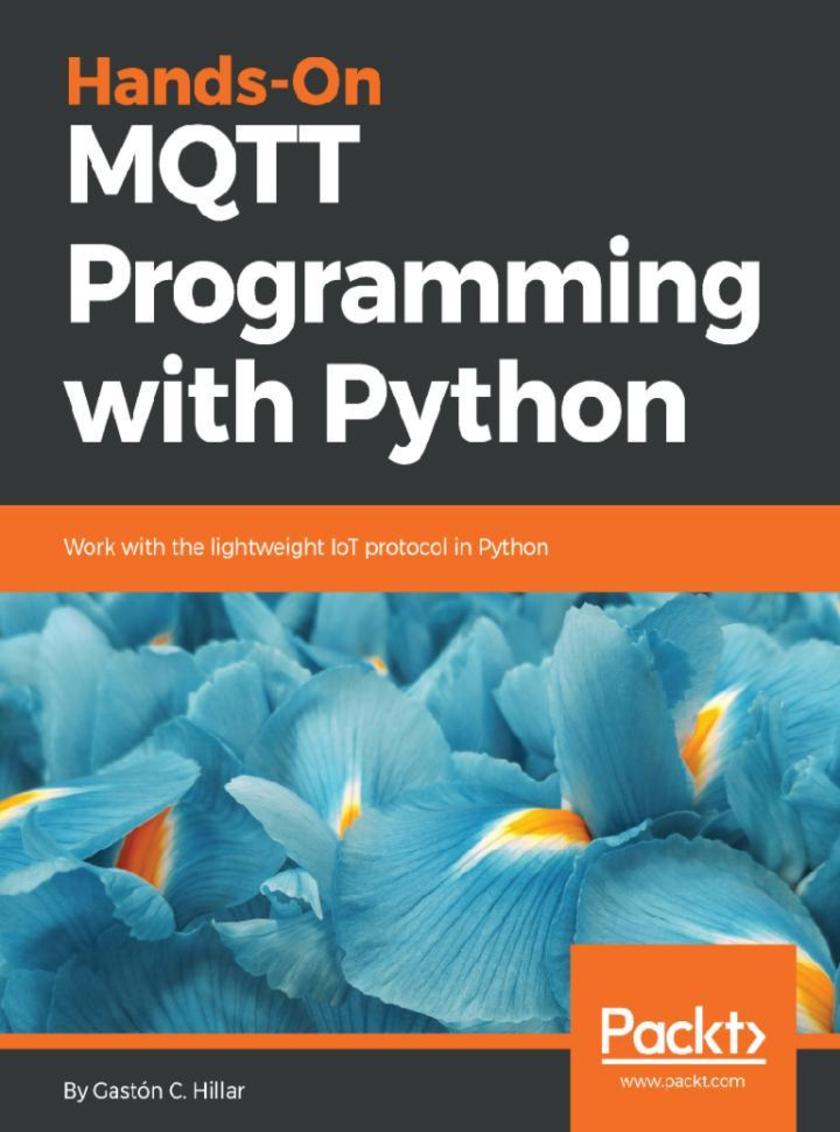
Hands-On MQTT Programming with Python
¥63.21
Explore the features included in the latest versions of MQTT for IoT and M2M communications and use them with modern Python 3. About This Book ? Make your connected devices less prone to attackers by understanding security mechanisms ? Take advantage of MQTT features for IoT and Machine-to-Machine communications ? The only book that covers MQTT with a single language, Python Who This Book Is For This book is for developers who want to learn about the MQTT protocol for their IoT projects. Prior knowledge of working with IoT and Python will be helpful. What You Will Learn ? Learn how MQTT and its lightweight messaging system work ? Understand the MQTT puzzle: clients, servers (formerly known as brokers), and connections ? Explore the features included in the latest versions of MQTT for IoT and M2M communications ? Publish and receive MQTT messages with Python ? Learn the difference between blocking and threaded network loops ? Take advantage of the last will and testament feature ? Work with cloud-based MQTT interfaces in Python In Detail MQTT is a lightweight messaging protocol for small sensors and mobile devices. This book explores the features of the latest versions of MQTT for IoT and M2M communications, how to use them with Python 3, and allow you to interact with sensors and actuators using Python. The book begins with the specific vocabulary of MQTT and its working modes, followed by installing a Mosquitto MQTT broker. You will use different utilities and diagrams to understand the most important concepts related to MQTT. You will learn to?make all the necessary configuration to work with digital certificates for encrypting all data sent between the MQTT clients and the server. You will also work with the different Quality of Service levels and later analyze and compare their overheads. You will write Python 3.x code to control a vehicle with MQTT messages delivered through encrypted connections (TLS 1.2), and learn how leverage your knowledge of the MQTT protocol to build a solution based on requirements. Towards the end, you will write Python code to use the PubNub cloud-based real-time MQTT provider to monitor a surfing competition. In the end, you will have a solution that was built from scratch by analyzing the requirements and then write Python code that will run on water-proof IoT boards connected to multiple sensors in surfboards. Style and approach This book shows you what MQTT is, and how to install and secure an MQTT server. You will write Python 3 code to control a vehicle with MQTT messages, test and improve, then monitor a surfing competition with cloud-based real-time MQTT providers.
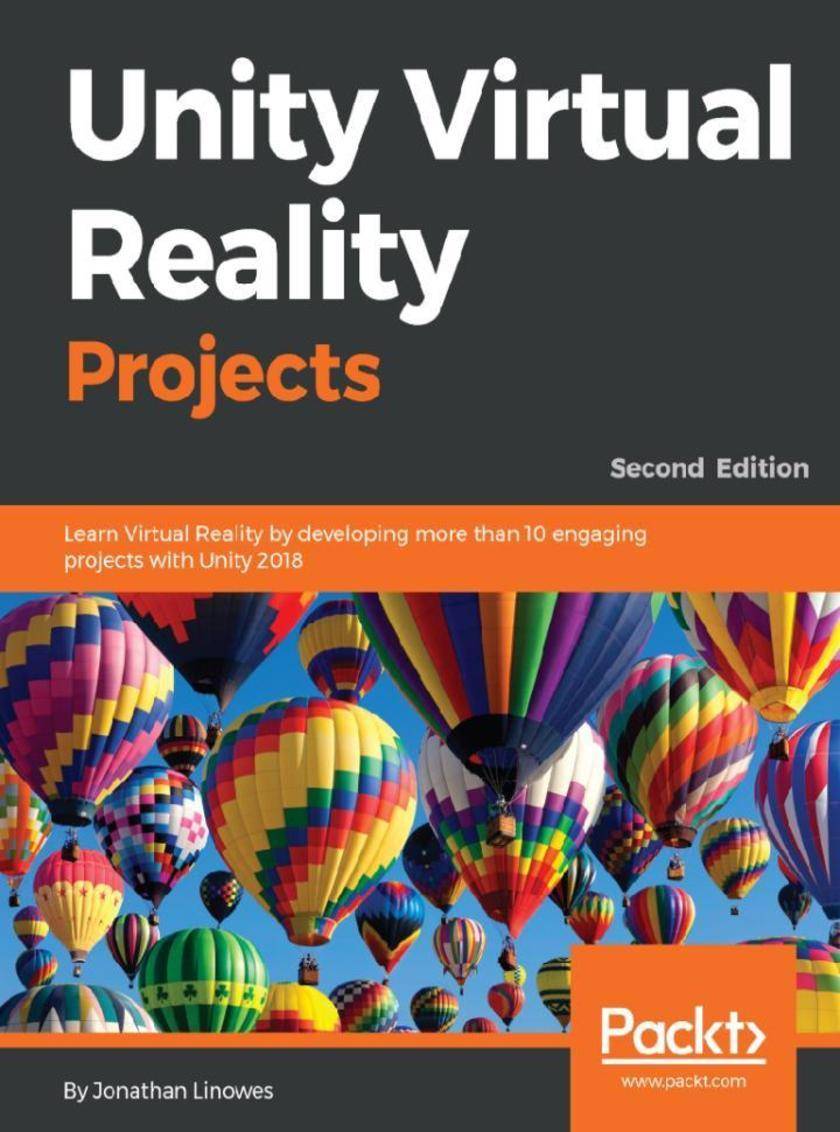
Unity Virtual Reality Projects
¥90.46
Explore the latest features of Unity 2018 to create immersive VR projects for Oculus Rift, HTC Vive, Daydream and Gear VR About This Book ? A project-based guide to teach you how to develop immersive and fun VR applications using Unity 3D ? Build experiences with interactable objects, physics, UI, animations, C# scripting, and other Unity features ? Explore the world of VR by building experiences such as diorama, first-person characters, 360-degree projections, social VR, audio fireball game, and VR storytelling Who This Book Is For If you're a non-programmer unfamiliar with 3D computer graphics, or experienced in both but new to virtual reality, and are interested in building your own VR games or applications, then this book is for you. Any experience in Unity is an advantage. What You Will Learn ? Create 3D scenes with Unity and other 3D tools while learning about world space and scale ? Build and run VR applications for specific headsets, including Oculus, Vive, and Daydream ? Interact with virtual objects using eye gaze, hand controllers, and user input events ? Move around your VR scenes using locomotion and teleportation ? Implement an audio fireball game using physics and particle systems ? Implement an art gallery tour with teleportation and data info ? Design and build a VR storytelling animation with a soundtrack and timelines ? Create social VR experiences with Unity networking In Detail Unity has become the leading platform for building virtual reality games, applications, and experiences for this new generation of consumer VR devices. Unity Virtual Reality Projects walks you through a series of hands-on tutorials and in-depth discussions on using the Unity game engine. With its practical and project-based approach, this book will get you up to speed with the specifics of Virtual Reality development in Unity. You will learn how to use Unity to develop VR applications that can be experienced with devices such as Oculus, Daydream, and Vive. Among the many topics and projects, you will explore gaze-based versus hand controller input, world space UI canvases, locomotion and teleportation, software design patterns, 360-degree media, timeline animation, and multiplayer networking. You will learn the Unity 3D game engine via the interactive Unity Editor as well as C# programming. By the end of the book, you will be fully equipped to develop rich, interactive virtual reality experiences using Unity. Style and approach A practical step-by-step guide to building impressive VR experiences with Unity 2018.
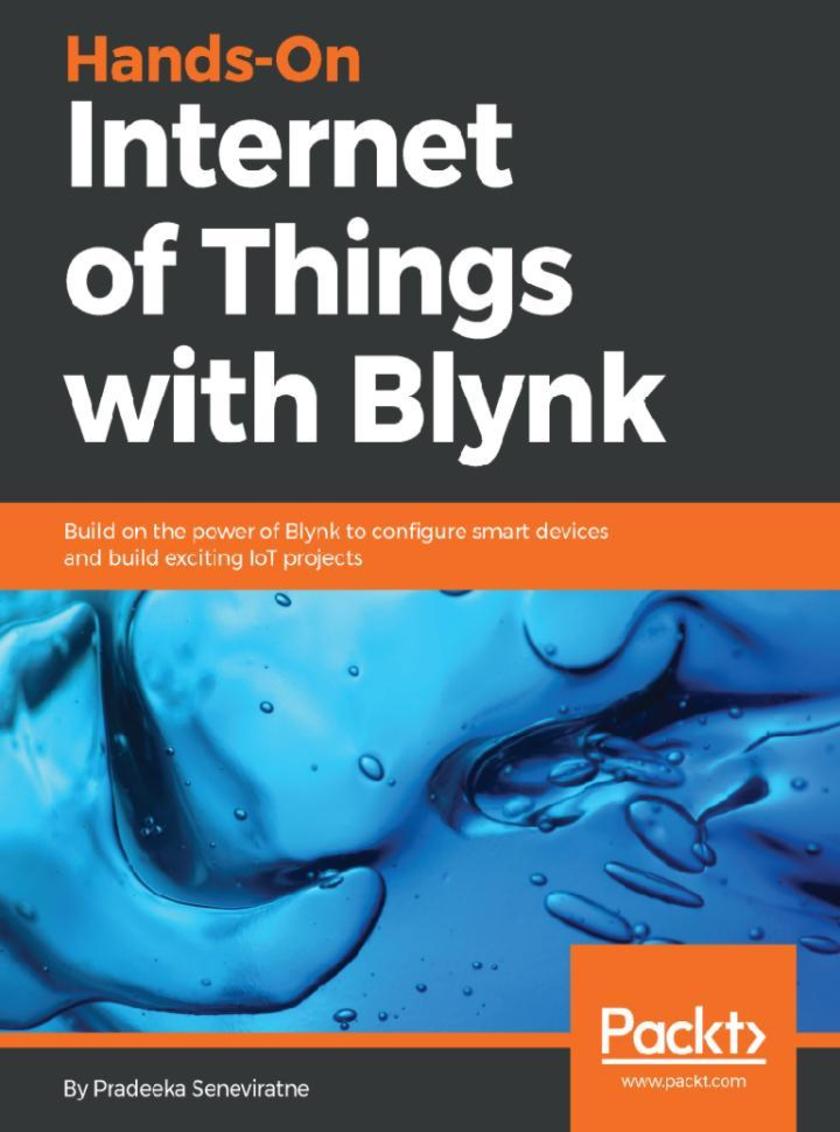
Hands-On Internet of Things with Blynk
¥63.21
Connect things to create amazing IoT applications in minutes About This Book ? Use Blynk cloud and Blynk server to connect devices ? Build IoT applications on Android and iOS platforms ? A practical guide that will show how to connect devices using Blynk and Raspberry Pi 3 Who This Book Is For This book is targeted at any stakeholder working in the IoT sector who wants to understand how Blynk works and build exciting IoT projects. Prior understanding of Raspberry Pi, C/C++, and electronics is a must. What You Will Learn ? Build devices using Raspberry Pi and various sensors and actuators ? Use Blynk cloud to connect and control devices through the Blynk app ? Connect devices to Blynk cloud and server through Ethernet and Wi-Fi ? Make applications using Blynk apps (App Builder) on Android and iOS platforms ? Run Blynk personal server on the Windows, MAC, and Raspberry Pi platforms In Detail Blynk, known as the most user-friendly IoT platform, provides a way to build mobile applications in minutes. With the Blynk drag-n-drop mobile app builder, anyone can build amazing IoT applications with minimal resources and effort, on hardware ranging from prototyping platforms such as Arduino and Raspberry Pi 3 to industrial-grade ESP8266, Intel, Sierra Wireless, Particle, Texas Instruments, and a few others. This book uses Raspberry Pi as the main hardware platform and C/C++ to write sketches to build projects. The first part of this book shows how to set up a development environment with various hardware combinations and required software. Then you will build your first IoT application with Blynk using various hardware combinations and connectivity types such as Ethernet and Wi-Fi. Then you'll use and configure various widgets (control, display, notification, interface, time input, and some advanced widgets) with Blynk App Builder to build applications. Towards the end, you will learn how to connect with and use built-in sensors on Android and iOS mobile devices. Finally you will learn how to build a robot that can be controlled with a Blynk app through the Blynk cloud and personal server. By the end of this book, you will have hands-on experience building IoT applications using Blynk. Style and approach A step-by-step guide that will help you build simple yet exciting project in no time.
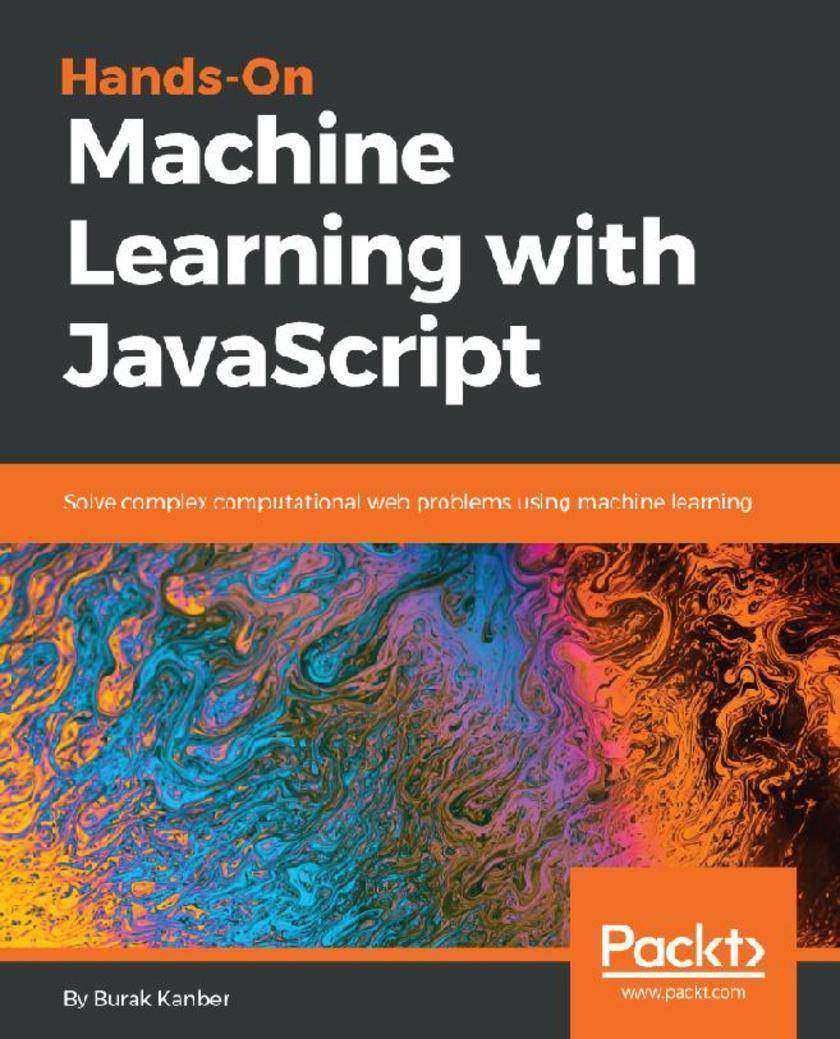
Hands-on Machine Learning with JavaScript
¥81.74
A definitive guide to creating an intelligent web application with the best of machine learning and JavaScript About This Book ? Solve complex computational problems in browser with JavaScript ? Teach your browser how to learn from rules using the power of machine learning ? Understand discoveries on web interface and API in machine learning Who This Book Is For This book is for you if you are a JavaScript developer who wants to implement machine learning to make applications smarter, gain insightful information from the data, and enter the field of machine learning without switching to another language. Working knowledge of JavaScript language is expected to get the most out of the book. What You Will Learn ? Get an overview of state-of-the-art machine learning ? Understand the pre-processing of data handling, cleaning, and preparation ? Learn Mining and Pattern Extraction with JavaScript ? Build your own model for classification, clustering, and prediction ? Identify the most appropriate model for each type of problem ? Apply machine learning techniques to real-world applications ? Learn how JavaScript can be a powerful language for machine learning In Detail In over 20 years of existence, JavaScript has been pushing beyond the boundaries of web evolution with proven existence on servers, embedded devices, Smart TVs, IoT, Smart Cars, and more. Today, with the added advantage of machine learning research and support for JS libraries, JavaScript makes your browsers smarter than ever with the ability to learn patterns and reproduce them to become a part of innovative products and applications. Hands-on Machine Learning with JavaScript presents various avenues of machine learning in a practical and objective way, and helps implement them using the JavaScript language. Predicting behaviors, analyzing feelings, grouping data, and building neural models are some of the skills you will build from this book. You will learn how to train your machine learning models and work with different kinds of data. During this journey, you will come across use cases such as face detection, spam filtering, recommendation systems, character recognition, and more. Moreover, you will learn how to work with deep neural networks and guide your applications to gain insights from data. By the end of this book, you'll have gained hands-on knowledge on evaluating and implementing the right model, along with choosing from different JS libraries, such as NaturalNode, brain, harthur, classifier, and many more to design smarter applications. Style and approach This is a practical tutorial that uses hands-on examples to step through some real-world applications of machine learning. Without shying away from the technical details, you will explore machine learning with JavaScript using clear and practical examples.
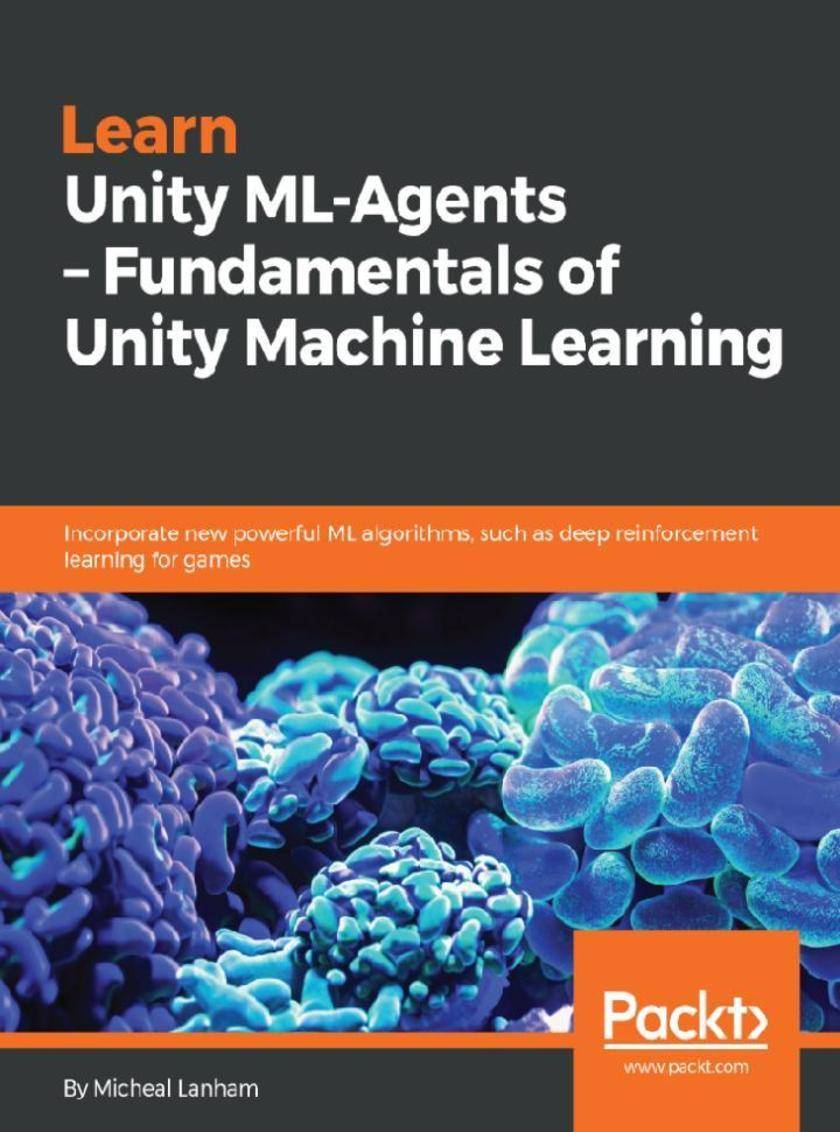
Learn Unity ML-Agents – Fundamentals of Unity Machine Learning
¥54.49
Transform games into environments using machine learning and Deep learning with Tensorflow, Keras, and Unity About This Book ? Learn how to apply core machine learning concepts to your games with Unity ? Learn the Fundamentals of Reinforcement Learning and Q-Learning and apply them to your games ? Learn How to build multiple asynchronous agents and run them in a training scenario Who This Book Is For This book is intended for developers with an interest in using Machine learning algorithms to develop better games and simulations with Unity. The reader will be required to have a working knowledge of C# and a basic understanding of Python. What You Will Learn ? Develop Reinforcement and Deep Reinforcement Learning for games. ? Understand complex and advanced concepts of reinforcement learning and neural networks ? Explore various training strategies for cooperative and competitive agent development ? Adapt the basic script components of Academy, Agent, and Brain to be used with Q Learning. ? Enhance the Q Learning model with improved training strategies such as Greedy-Epsilon exploration ? Implement a simple NN with Keras and use it as an external brain in Unity ? Understand how to add LTSM blocks to an existing DQN ? Build multiple asynchronous agents and run them in a training scenario In Detail Unity Machine Learning agents allow researchers and developers to create games and simulations using the Unity Editor, which serves as an environment where intelligent agents can be trained with machine learning methods through a simple-to-use Python API. This book takes you from the basics of Reinforcement and Q Learning to building Deep Recurrent Q-Network agents that cooperate or compete in a multi-agent ecosystem. You will start with the basics of Reinforcement Learning and how to apply it to problems. Then you will learn how to build self-learning advanced neural networks with Python and Keras/TensorFlow. From there you move o n to more advanced training scenarios where you will learn further innovative ways to train your network with A3C, imitation, and curriculum learning models. By the end of the book, you will have learned how to build more complex environments by building a cooperative and competitive multi-agent ecosystem. Style and approach This book focuses on the foundations of ML, RL and DL for building agents in a game or simulation
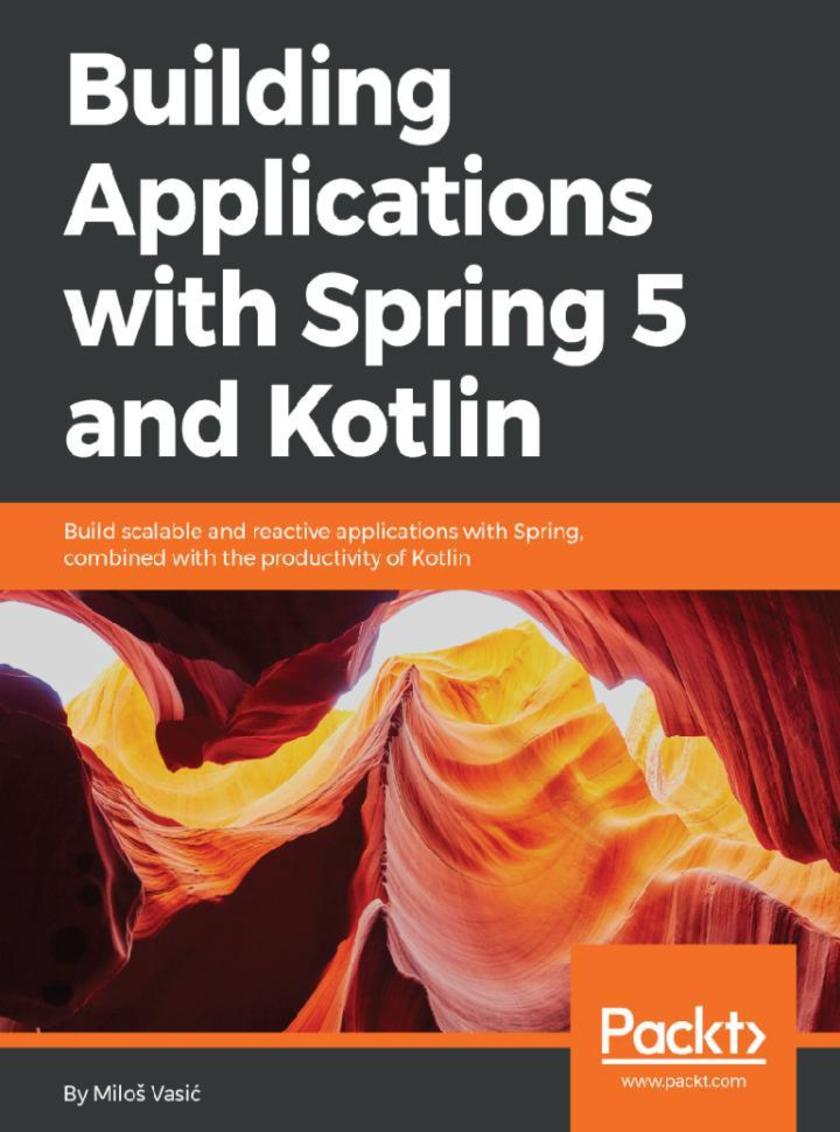
Building Applications with Spring 5 and Kotlin
¥81.74
Learn to build a full-fledged application in Spring and Kotlin taking a reactive, microservice-based approach for scalability and robustness in the cloud About This Book ? Build a full-fledged application in Spring and Kotlin ? Architect your application to take a microservice-based approach in the cloud ? Integrate your application with a variety of Spring components Who This Book Is For Developers comfortable using Spring who have basic knowledge of Kotlin and want to take their development skills to the next level and build enterprise-grade applications will benefit from this book. What You Will Learn ? Explore Spring 5 concepts with Kotlin ? Learn both dependency injections and complex configurations ? Utilize Spring Data, Spring Cloud, and Spring Security in your applications ? Create efficient reactive systems with Project Reactor ? Write unit tests for your Spring/Kotlin applications ? Deploy applications on cloud platforms like AWS In Detail Kotlin is being used widely by developers because of its light weight, built-in null safety, and functional and reactive programming aspects. Kotlin shares the same pragmatic, innovative and opinionated mindset as Spring, so they work well together. Spring when combined with Kotlin helps you to reach a new level of productivity. This combination has helped developers to create Functional Applications using both the tools together. This book will teach you how to take advantage of these developments and build robust, scalable and reactive applications with ease. In this book, you will begin with an introduction to Spring and its setup with Kotlin. You will then dive into assessing the design considerations of your application. Then you will learn to use Spring (with Spring Boot) along with Kotlin to build a robust backend in a microservice architecture with a REST based collaboration, and leverage Project Reactor in your application. You’ll then learn how to integrate Spring Data and Spring Cloud to manage configurations for database interaction and cloud deployment. You’ll also learn to use Spring Security to beef up security of your application before testing it with the JUnit framework and then deploying it on a cloud platform like AWS. Style and approach Everything you learn will be demonstrated on real-world Spring project. In each chapter we will cover some of Spring features and apply it on our project. We will guide you from the project initialization till the project deployment.
Learn Red – Fundamentals of Red
¥63.21
Discover how to use the next-generation language Red for full-stack development, from systems coding over user-interfaces to blockchain programming About This Book ? Explore the latest features of Red to build scalable, fast, and secure applications ? Learn graphical programming and build highly sophisticated reactive applications ? Get familiar with the specific concepts and techniques of Red development, like working with series, viewing code as data, and using dialects. Who This Book Is For This book is for software developers and architects who want to learn Red because of its conciseness, flexibility, and expressiveness, and more specifically for its possibilities in GUI apps and blockchain / smart contracts programming. Some knowledge of the basic concepts and experience of any programming language is assumed. What You Will Learn ? Set up your Red environment to achieve the highest productivity ? Get grounded in Red, gaining experience and insight through many examples and exercises ? Build simple, compact, and portable applications ? Analyze streams of data through Parse ? Compose GUI applications with View and Draw ? Get prepared for smart contract blockchain programming in Red In Detail A key problem of software development today is software bloat, where huge toolchains and development environments are needed in software coding and deployment. Red significantly reduces this bloat by offering a minimalist but complete toolchain. This is the first introductory book about it, and it will get you up and running with Red as quickly as possible. This book shows you how to write effective functions, reduce code redundancies, and improve code reuse. It will be helpful for new programmers who are starting out with Red to explore its wide and ever-growing package ecosystem and also for experienced developers who want to add Red to their skill set. The book presents the fundamentals of programming in Red and in-depth informative examples using a step-by-step approach. You will be taken through concepts and examples such as doing simple metaprogramming, functions, collections, GUI applications, and more. By the end of the book, you will be fully equipped to start your own projects in Red. Style and approach This book will gently guide you step by step into the fascinating programming universe of the Red language, offering real-world examples and practical exercises to sharpen your insight.
Docker for Serverless Applications
¥73.02
Build applications and infrastructures that leverage Function-as-a-Service and Docker About This Book ? Implement containerization in Serverless/FaaS environments ? Utilize Docker as a functional unit of work for Serverless/FaaS platforms ? Use Docker as a portable infrastructure for Serverless Applications Who This Book Is For If you are a Developer, a Docker Engineer, a DevOps Engineer, or any stakeholder interested in learning the use of Docker on Serverless environments then this book is for you. What You Will Learn ? Learn what Serverless and FaaS applications are ? Get acquainted with the architectures of three major serverless systems ? Explore how Docker technologies can help develop Serverless applications ? Create and maintain FaaS infrastructures ? Set up Docker infrastructures to serve as on-premises FaaS infrastructures ? Define functions for Serverless applications with Docker containers In Detail Serverless applications have gained a lot of popularity among developers and are currently the buzzwords in the tech market. Docker and serverless are two terms that go hand-in-hand. This book will start by explaining serverless and Function-as-a-Service (FaaS) concepts, and why they are important. Then, it will introduce the concepts of containerization and how Docker fits into the Serverless ideology. It will explore the architectures and components of three major Docker-based FaaS platforms, how to deploy and how to use their CLI. Then, this book will discuss how to set up and operate a production-grade Docker cluster. We will cover all concepts of FaaS frameworks with practical use cases, followed by deploying and orchestrating these serverless systems using Docker. Finally, we will also explore advanced topics and prototypes for FaaS architectures in the last chapter. By the end of this book, you will be in a position to build and deploy your own FaaS platform using Docker. Style and approach A practical guide that offers a simple way to easily understand Serverless Applications utilizing Docker as the development environment.
Solidity Programming Essentials
¥63.21
Learn the most powerful and primary programming language for writing smart contracts and find out how to write, deploy, and test smart contracts in Ethereum. About This Book ? Get you up and running with Solidity Programming language ? Build Ethereum Smart Contracts with Solidity as your scripting language ? Learn to test and deploy the smart contract to your private Blockchain Who This Book Is For This book is for anyone who would like to get started with Solidity Programming for developing an Ethereum smart contract. No prior knowledge of EVM is required. What You Will Learn ? Learn the basics and foundational concepts of Solidity and Ethereum ? Explore the Solidity language and its uniqueness in depth ? Create new accounts and submit transactions to blockchain ? Get to know the complete language in detail to write smart contracts ? Learn about major tools to develop and deploy smart contracts ? Write defensive code using exception handling and error checking ? Understand Truffle basics and the debugging process In Detail Solidity is a contract-oriented language whose syntax is highly influenced by JavaScript, and is designed to compile code for the Ethereum Virtual Machine. Solidity Programming Essentials will be your guide to understanding Solidity programming to build smart contracts for Ethereum and blockchain from ground-up. We begin with a brief run-through of blockchain, Ethereum, and their most important concepts or components. You will learn how to install all the necessary tools to write, test, and debug Solidity contracts on Ethereum. Then, you will explore the layout of a Solidity source file and work with the different data types. The next set of recipes will help you work with operators, control structures, and data structures while building your smart contracts. We take you through function calls, return types, function modifers, and recipes in object-oriented programming with Solidity. Learn all you can on event logging and exception handling, as well as testing and debugging smart contracts. By the end of this book, you will be able to write, deploy, and test smart contracts in Ethereum. This book will bring forth the essence of writing contracts using Solidity and also help you develop Solidity skills in no time. Style and approach Solidity is a high-level programming language best understood using examples. After covering basic concepts of Ethereum and Solidity, programming constructs will be explained with help of examples. As chapters progress, deployment, usage and testing of contacts will form major aspect of the book. Troubleshooting and unit testing is an important exercise and skill to master this language will also be covered in this book.
Building Serverless Applications with Python
¥90.46
Building efficient Python applications at minimal cost by adopting serverless architectures About This Book ? Design and set up a data flow between cloud services and custom business logic ? Make your applications efficient and reliable using serverless architecture ? Build and deploy scalable serverless Python APIs Who This Book Is For This book is for Python developers who would like to learn about serverless architecture. Python programming knowledge is assumed. What You Will Learn ? Understand how AWS Lambda and Microsoft Azure Functions work and use them to create an application ? Explore various triggers and how to select them, based on the problem statement ? Build deployment packages for Lambda functions ? Master the finer details about building Lambda functions and versioning ? Log and monitor serverless applications ? Learn about security in AWS and Lambda functions ? Scale up serverless applications to handle huge workloads and serverless distributed systems in production ? Understand SAM model deployment in AWS Lambda In Detail Serverless architectures allow you to build and run applications and services without having to manage the infrastructure. Many companies have adopted this architecture to save cost and improve scalability. This book will help you design serverless architectures for your applications with AWS and Python. The book is divided into three modules. The first module explains the fundamentals of serverless architecture and how AWS lambda functions work. In the next module, you will learn to build, release, and deploy your application to production. You will also learn to log and test your application. In the third module, we will take you through advanced topics such as building a serverless API for your application. You will also learn to troubleshoot and monitor your app and master AWS lambda programming concepts with API references. Moving on, you will also learn how to scale up serverless applications and handle distributed serverless systems in production. By the end of the book, you will be equipped with the knowledge required to build scalable and cost-efficient Python applications with a serverless framework. Style and approach The book takes a pragmatic approach, using a real-world example to demonstrate building efficient, secure, and scalable serverless applications.
C# 7 and .NET Core 2.0 High Performance
¥81.74
Improve the speed of your code and optimize the performance of your apps About This Book ? Understand the common performance pitfalls and improve your application’s performance ? Get to grips with multi-threaded and asynchronous programming in C# ? Develop highly performant applications on .NET Core using microservice architecture Who This Book Is For This book is for .NET developers looking at improving the speed of their code or simply wanting to take their skills to the next level. Basic C# knowledge is assumed. What You Will Learn ? Measure application performance using BenchmarkDotNet ? Explore the techniques to write multithreaded applications ? Leverage TPL and PLinq libraries to perform asynchronous operations ? Get familiar with data structures to write optimized code ? Understand design techniques to increase your application’s performance ? Learn about memory management techniques in .NET Core ? Develop a containerized application based on microservices architecture ? Learn tools and techniques to monitor application performance In Detail While writing an application, performance is paramount. Performance tuning for realworld applications often involves activities geared toward fnding bottlenecks; however, this cannot solve the dreaded problem of slower code. If you want to improve the speed of your code and optimize an application's performance, then this book is for you. C# 7 and .NET Core 2.0 High Performance begins with an introduction to the new features of what?explaining how they help in improving an application's performance. Learn to identify the bottlenecks in writing programs and highlight common performance pitfalls, and learn strategies to detect and resolve these issues early. You will explore multithreading and asynchronous programming with .NET Core and learn the importance and effcient use of data structures. This is followed with memory management techniques and design guidelines to increase an application’s performance. Gradually, the book will show you the importance of microservices architecture for building highly performant applications and implementing resiliency and security in .NET Core. After reading this book, you will learn how to structure and build scalable, optimized, and robust applications in C#7 and .NET. Style and approach This book will be a step by step easy to follow guide with focused examples to increase performance of applications and provide optimization techniques.
Tkinter GUI Programming by Example
¥90.46
Leverage the power of Python and its de facto GUI framework to build highly interactive interfaces About This Book ? The fundamentals of Python and GUI programming with Tkinter. ? Create multiple cross-platform projects by integrating a host of third-party libraries and tools. ? Build beautiful and highly-interactive user interfaces that target multiple devices. Who This Book Is For This book is for beginners to GUI programming who haven’t used Tkinter yet and are eager to start building great-looking and user-friendly GUIs. Prior knowledge of Python programming is expected. What You Will Learn ? Create a scrollable frame via theCanvas widget ? Use the pack geometry manager andFrame widget to control layout ? Learn to choose a data structurefor a game ? Group Tkinter widgets, such asbuttons, canvases, and labels ? Create a highly customizablePython editor ? Design and lay out a chat window In Detail Tkinter is a modular, cross-platform application development toolkit for Python. When developing GUI-rich applications, the most important choices are which programming language(s) and which GUI framework to use. Python and Tkinter prove to be a great combination. This book will get you familiar with Tkinter by having you create fun and interactive projects. These projects have varying degrees of complexity. We'll start with a simple project, where you'll learn the fundamentals of GUI programming and the basics of working with a Tkinter application. After getting the basics right, we'll move on to creating a project of slightly increased complexity, such as a highly customizable Python editor. In the next project, we'll crank up the complexity level to create an instant messaging app. Toward the end, we'll discuss various ways of packaging our applications so that they can be shared and installed on other machines without the user having to learn how to install and run Python programs. Style and approach Step by Step guide with real world examples
Learn Docker - Fundamentals of Docker 18.x
¥73.02
Enhance your software deployment workflow using containers About This Book ? Get up-and-running with basic to advanced concepts of Docker ? Get acquainted with concepts such as Docker containers, Docker images, orchestrators and so on. ? Practical test-based approach to learning a prominent containerization tool Who This Book Is For This book is targeted at system administrators, operations engineers, DevOps engineers, and developers or stakeholders who are interested in getting started with Docker from scratch. No prior experience with Docker Containers is required. What You Will Learn ? Containerize your traditional or microservice-based application ? Share or ship your application as an immutable container image ? Build a Docker swarm and a Kubernetes cluster in the cloud ? Run a highly distributed application using Docker Swarm or Kubernetes ? Update or rollback a distributed application with zero downtime ? Secure your applications via encapsulation, networks, and secrets ? Know your options when deploying your containerized app into the cloud In Detail Docker containers have revolutionized the software supply chain in small and big enterprises. Never before has a new technology so rapidly penetrated the top 500 enterprises worldwide. Companies that embrace containers and containerize their traditional mission-critical applications have reported savings of at least 50% in total maintenance cost and a reduction of 90% (or more) of the time required to deploy new versions of those applications. Furthermore they are benefitting from increased security just by using containers as opposed to running applications outside containers. This book starts from scratch, introducing you to Docker fundamentals and setting up an environment to work with it. Then we delve into concepts such as Docker containers, Docker images, Docker Compose, and so on. We will also cover the concepts of deployment, orchestration, networking, and security. Furthermore, we explain Docker functionalities on public clouds such as AWS. By the end of this book, you will have hands-on experience working with Docker containers and orchestrators such as SwarmKit and Kubernetes. Style and approach The simple end-to-end guide will help you learn everything about how to containerize, ship, and run both a traditional application and a modern microservice-based application on-premise or in the cloud.
Mastering Geospatial Analysis with Python
¥90.46
Explore GIS processing and learn to work with various tools and libraries in Python. About This Book ? Analyze and process geospatial data using Python libraries such as; Anaconda, GeoPandas ? Leverage new ArcGIS API to process geospatial data for the cloud. ? Explore various Python geospatial web and machine learning frameworks. Who This Book Is For The audience for this book includes students, developers, and geospatial professionals who need a reference book that covers GIS data management, analysis, and automation techniques with code libraries built in Python 3. What You Will Learn ? Manage code libraries and abstract geospatial analysis techniques using Python 3. ? Explore popular code libraries that perform specific tasks for geospatial analysis. ? Utilize code libraries for data conversion, data management, web maps, and REST API creation. ? Learn techniques related to processing geospatial data in the cloud. ? Leverage features of Python 3 with geospatial databases such as PostGIS, SQL Server, and SpatiaLite. In Detail Python comes with a host of open source libraries and tools that help you work on professional geoprocessing tasks without investing in expensive tools. This book will introduce Python developers, both new and experienced, to a variety of new code libraries that have been developed to perform geospatial analysis, statistical analysis, and data management. This book will use examples and code snippets that will help explain how Python 3 differs from Python 2, and how these new code libraries can be used to solve age-old problems in geospatial analysis. You will begin by understanding what geoprocessing is and explore the tools and libraries that Python 3 offers. You will then learn to use Python code libraries to read and write geospatial data. You will then learn to perform geospatial queries within databases and learn PyQGIS to automate analysis within the QGIS mapping suite. Moving forward, you will explore the newly released ArcGIS API for Python and ArcGIS Online to perform geospatial analysis and create ArcGIS Online web maps. Further, you will deep dive into Python Geospatial web frameworks and learn to create a geospatial REST API. Style and approach The book takes a practical, example-driven approach to teach you GIS analysis and automation techniques with Python 3.
Machine Learning Solutions
¥73.02
Practical, hands-on solutions in Python to overcome any problem in Machine Learning About This Book ? Master the advanced concepts, methodologies, and use cases of machine learning ? Build ML applications for analytics, NLP and computer vision domains ? Solve the most common problems in building machine learning models Who This Book Is For This book is for the intermediate users such as machine learning engineers, data engineers, data scientists, and more, who want to solve simple to complex machine learning problems in their day-to-day work and build powerful and efficient machine learning models. A basic understanding of the machine learning concepts and some experience with Python programming is all you need to get started with this book. What You Will Learn ? Select the right algorithm to derive the best solution in ML domains ? Perform predictive analysis effciently using ML algorithms ? Predict stock prices using the stock index value ? Perform customer analytics for an e-commerce platform ? Build recommendation engines for various domains ? Build NLP applications for the health domain ? Build language generation applications using different NLP techniques ? Build computer vision applications such as facial emotion recognition In Detail Machine learning (ML) helps you find hidden insights from your data without the need for explicit programming. This book is your key to solving any kind of ML problem you might come across in your job. You’ll encounter a set of simple to complex problems while building ML models, and you'll not only resolve these problems, but you’ll also learn how to build projects based on each problem, with a practical approach and easy-to-follow examples. The book includes a wide range of applications: from analytics and NLP, to computer vision domains. Some of the applications you will be working on include stock price prediction, a recommendation engine, building a chat-bot, a facial expression recognition system, and many more. The problem examples we cover include identifying the right algorithm for your dataset and use cases, creating and labeling datasets, getting enough clean data to carry out processing, identifying outliers, overftting datasets, hyperparameter tuning, and more. Here, you'll also learn to make more timely and accurate predictions. In addition, you'll deal with more advanced use cases, such as building a gaming bot, building an extractive summarization tool for medical documents, and you'll also tackle the problems faced while building an ML model. By the end of this book, you'll be able to fine-tune your models as per your needs to deliver maximum productivity. Style and approach This book is a step-by-step guide on how to develop machine learning applications for various domains. Each chapter of this book contains the practical guide on how to build specific machine learning applications from its base-line approach to the best possible approach. Basic necessary concepts, conman mistakes for every approach and optimization techniques are discussed for each application.


