


 购物车
购物车 个人中心
个人中心
What Dress Makes of Us (Illustated)
¥8.09
Practical clothing advice for women, first published in 1897. "Did you ever observe, dear comrade, what an element of caricature lurks in clothes? A short, round coat on a stout man seems to exaggerate his proportions to such a ridiculous degree that the profile of his manly form suggests "the robust bulge of an old jug." A bonnet decorated with loops of ribbon and sprays of grass, or flowers that fall aslant, may give a laughably tipsy air to the long face of a saintly matron of pious and conservative habits. A peaked hat and tight-fitting, long-skirted coat may so magnify the meagre physical endowments of a tall, slender girl that she attains the lank and longish look of a bottle of hock..."
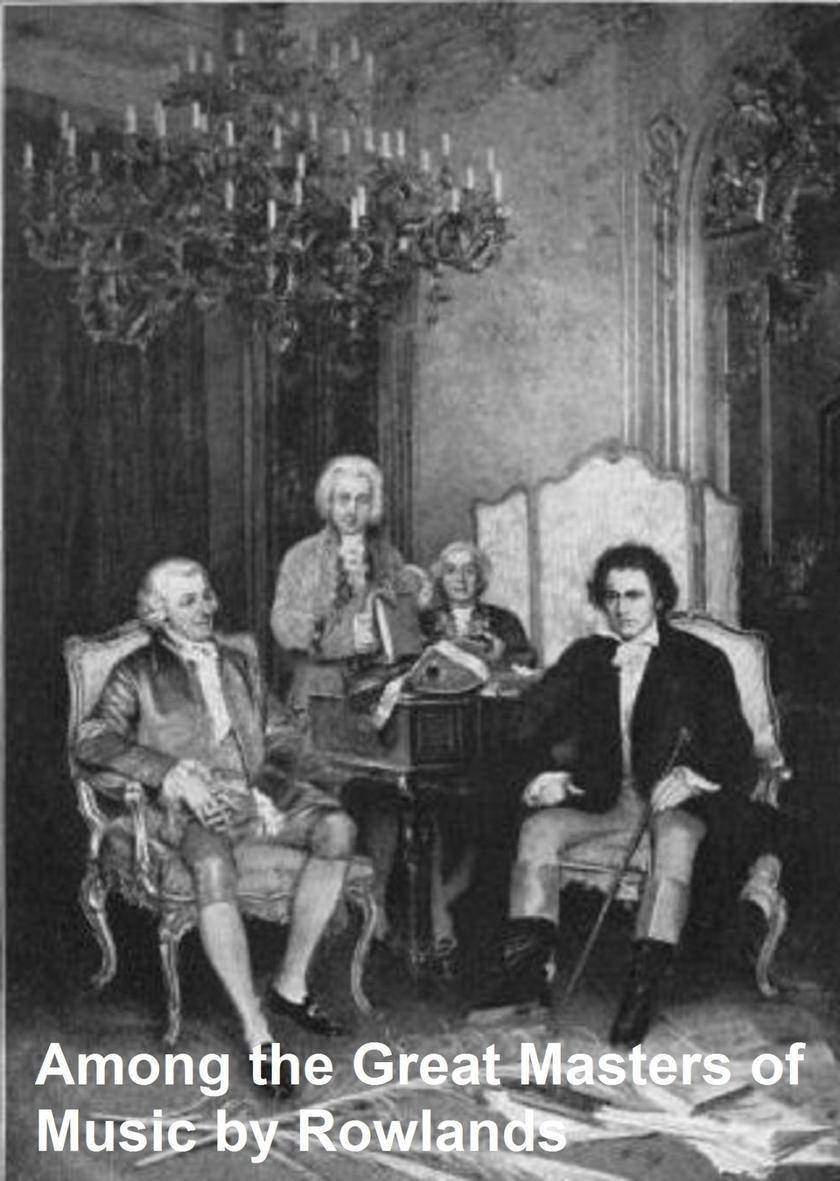
Among the Great Masters of Music
¥8.09
First published in 1906. 32 illustrations. Chapters cover: St. Cecilia, Palestrina, Lulli, Stradivarius, Tartini, Bach, Handel, Bluck, Mozart, Linley, Haydn, Web, Beethoven, Schubert, Rouget de Lisle, Paganini, Mendelssohn, Chopin, Meyerbeer, Wagner, and Liszt.
Black Arrow
¥8.09
Historical novel, set during the Wars of the Roses in England. According to Wikipedia: "Robert Louis Balfour Stevenson (13 November 1850–3 December 1894), was a Scottish novelist, poet, essayist and travel writer. He was the man who "seemed to pick the right word up on the point of his pen, like a man playing spillikins", as G. K. Chesterton put it."
The Bottle Imp
¥8.09
Short story set in Hawaii. According to the Author's Note: "Any student of that very unliterary product, the English drama of the early part of the century, will here recognise the name and the root idea of a piece once rendered popular by the redoubtable O. Smith. The root idea is there and identical, and yet I hope I have made it a new thing. And the fact that the tale has been designed and written for a Polynesian audience may lend it some extraneous interest nearer home." According to Wikipedia: "Robert Louis Balfour Stevenson (13 November 1850–3 December 1894), was a Scottish novelist, poet, essayist and travel writer. He was the man who "seemed to pick the right word up on the point of his pen, like a man playing spillikins", as G. K. Chesterton put it."
Confidence
¥8.09
Classic Henry James novel. According to Wikipedia: "Henry James, (1843 – 1916), son of theologian Henry James Sr., brother of the philosopher and psychologist William James and diarist Alice James, was an American-born British author. He is one of the key figures of 19th century literary realism; the fine art of his writing has led many academics to consider him the greatest master of the novel and novella form. He spent much of his life in England and became a British subject shortly before his death. He is primarily known for a series of major novels in which he portrayed the encounter of America with Europe. His plots centered on personal relationships, the proper exercise of power in such relationships, and other moral questions. His method of writing from the point of view of a character within a tale allowed him to explore the phenomena of consciousness and perception, and his style in later works has been compared to impressionist painting."
Woman in White
¥8.09
According to Wikipedia: "The Woman in White is an epistolary novel written by Wilkie Collins in 1859, serialized in 1859–1860, and first published in book form in 1860. It is considered to be among the first mystery novels and is widely regarded as one of the first (and finest) in the genre of 'sensation novels'. The story is considered an early example of detective fiction with the hero, Walter Hartright, employing many of the sleuthing techniques of later private detectives."
Lay Morals and Other Essays
¥8.09
A collection of essays, beginning with ruminations on ethics. The book starts: "The problem of education is twofold: first to know, and then to utter. Every one who lives any semblance of an inner life thinks more nobly and profoundly than he speaks; and the best of teachers can impart only broken images of the truth which they perceive. Speech which goes from one to another between two natures, and, what is worse, between two experiences, is doubly relative. The speaker buries his meaning; it is for the hearer to dig it up again; and all speech, written or spoken, is in a dead language until it finds a willing and prepared hearer. Such, moreover, is the complexity of life, that when we condescend upon details in our advice, we may be sure we condescend on error; and the best of education is to throw out some magnanimous hints. No man was ever so poor that he could express all he has in him by words, looks, or actions; his true knowledge is eternally incommunicable, for it is a knowledge of himself..."
The Warlord of Mars
¥8.09
Science fiction adventure first published in 1918. According to Wikipedia: "Edgar Rice Burroughs (1875 – 1950) was an American author, best known for his creation of the jungle hero Tarzan and the heroic John Carter, although he produced works in many genres.

Essays on Paul Bourget
¥8.09
Short collection of short essays, including "What Paul Bourget Thinks of Us" and "A Little Note to M. Paul Bourget". According to Wikipedia: "Samuel Langhorne Clemens (November 30, 1835 - April 21, 1910), better known by the pen name Mark Twain, was a humorist, satirist, lecturer and writer from the United States of America. Twain is most noted for his novels Adventures of Huckleberry Finn, which has since been called the Great American Novel, and The Adventures of Tom Sawyer. He is also known for his quotations. During his lifetime, Twain became a friend to presidents, artists, leading industrialists and European royalty. Twain enjoyed immense public popularity, and his keen wit and incisive satire earned him praise from both critics and peers. American author William Faulkner called Twain 'the father of American literature.'"
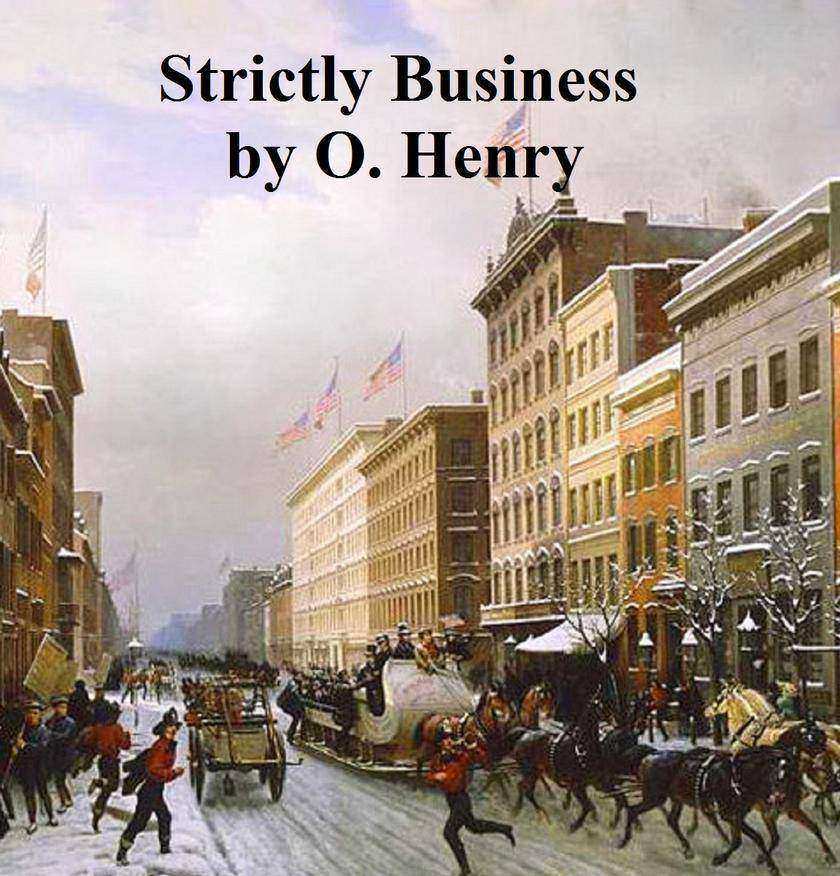
Strictly Business: More Stories of the Four Million
¥8.09
According to Wikipedia: "O. Henry was the pen name of American writer William Sydney Porter (September 11, 1862 – June 5, 1910). O. Henry short stories are known for wit, wordplay, warm characterization and clever twist endings…. Most of O. Henry's stories are set in his own time, the early years of the 20th century. Many take place in New York City, and deal for the most part with ordinary people: clerks, policemen, waitresses. Fundamentally a product of his time, O. Henry's work provides one of the best English examples of catching the entire flavor of an age. Whether roaming the cattle-lands of Texas, exploring the art of the "gentle grafter," or investigating the tensions of class and wealth in turn-of-the-century New York, O. Henry had an inimitable hand for isolating some element of society and describing it with an incredible economy and grace of language. Some of his best and least-known work resides in the collection Cabbages and Kings, a series of stories which each explore some individual aspect of life in a paralytically sleepy Central American town while each advancing some aspect of the larger plot and relating back one to another in a complex structure which slowly explicates its own background even as it painstakingly erects a town which is one of the most detailed literary creations of the period. The Four Million is another collection of stories. It opens with a reference to Ward McAllister's "assertion that there were only 'Four Hundred' people in New York City who were really worth noticing. But a wiser man has arisen—the census taker—and his larger estimate of human interest has been preferred in marking out the field of these little stories of the 'Four Million.'" To O. Henry, everyone in New York counted. He had an obvious affection for the city, which he called "Bagdad-on-the-Subway,"
Some Short Stories
¥8.09
Collection of classic Henry James short stories, including Brooksmith, The Real Thing, The Story of It, Flickerbridge, and Mrs. Medwin. According to Wikipedia: "Henry James, (1843 – 1916), son of theologian Henry James Sr., brother of the philosopher and psychologist William James and diarist Alice James, was an American-born British author. He is one of the key figures of 19th century literary realism; the fine art of his writing has led many academics to consider him the greatest master of the novel and novella form. He spent much of his life in England and became a British subject shortly before his death. He is primarily known for a series of major novels in which he portrayed the encounter of America with Europe. His plots centered on personal relationships, the proper exercise of power in such relationships, and other moral questions. His method of writing from the point of view of a character within a tale allowed him to explore the phenomena of consciousness and perception, and his style in later works has been compared to impressionist painting."
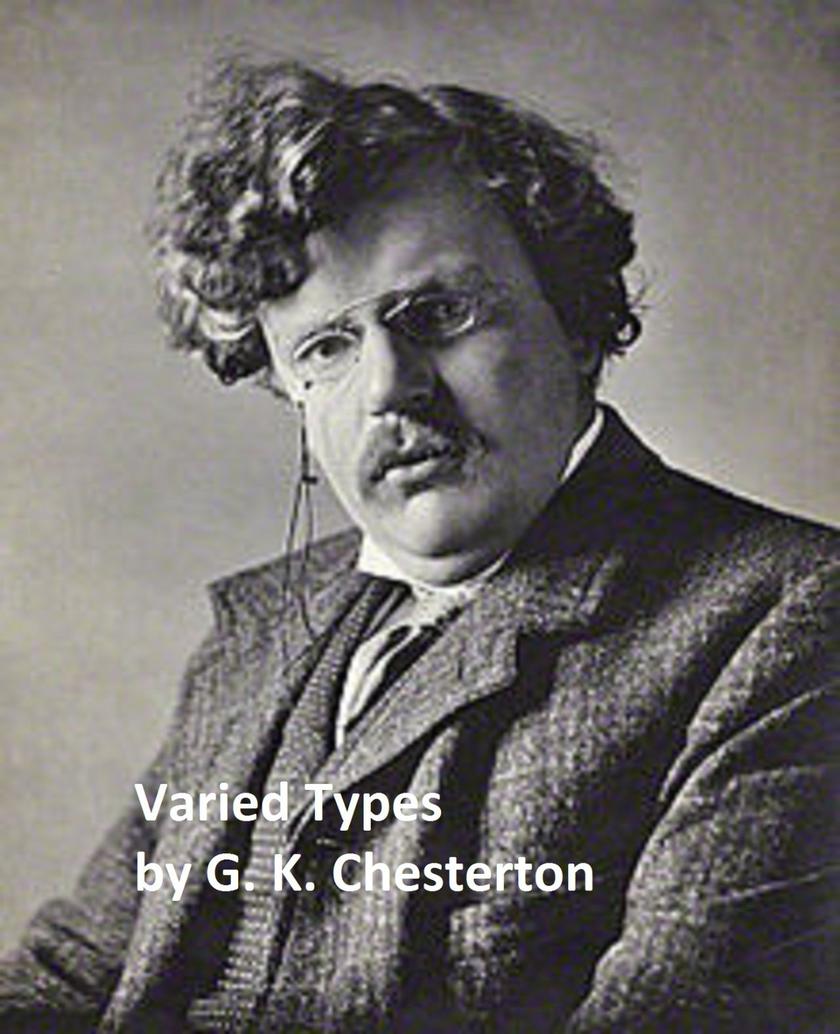
Varied Types
¥8.09
Collection of essays (many of the essays from the collection "Twelve Types", plus more). According to Wikipedia: "Gilbert Keith Chesterton (1874 - 1936) was an influential English writer of the early 20th century. His prolific and diverse output included journalism, philosophy, poetry, biography, Christian apologetics, fantasy and detective fiction. Chesterton has been called the "prince of paradox."[1] He wrote in an off-hand, whimsical prose studded with startling formulations. For example: "Thieves respect property. They merely wish the property to become their property that they may more perfectly respect it."[2] He is one of the few Christian thinkers who are equally admired and quoted by both liberal and conservative Christians, and indeed by many non-Christians. Chesterton's own theological and political views were far too nuanced to fit comfortably under the "liberal" or "conservative" banner."
A Life's Morning
¥8.09
Classic novel. According to Wikipedia: "George Robert Gissing (November 22, 1857 – December 28, 1903) was an English novelist who wrote twenty-three novels between 1880 and 1903. From his early naturalistic works, he developed into one of the most accomplished realists of the late-Victorian era. ... In 1880 when his first novel, Workers in the Dawn, proved to be an abject failure, he became a private tutor to keep poverty from the door. In 1883, he separated from his wife, now an alcoholic, but gave her a weekly income on what little money he had until her death in 1888. In 1884 his second novel, The Unclassed, which saw a marked improvement in style and characterisation, met with moderate critical acclaim. After this Gissing published novels almost on a yearly basis, but so little money did they bring him, that for several more years he had to continue working as a tutor. Although notoriously exploited by his publishers, he was able to visit Italy in 1889 from the sale of the copyright of The Nether World, his most pessimistic book. Between 1891 and 1897 (his so-called middle period) Gissing produced his best works, which include New Grub Street, Born in Exile, The Odd Women, In the Year of Jubilee, and The Whirlpool. In advance of their time, they variously deal with the growing commercialism of the literary market, religious charlatanism, the situation of emancipated women in a male-dominated society, the poverty of the working classes, and marriage in a decadent world. During this period, having belatedly become aware of the financial rewards of writing short stories for the press, he produced almost seventy stories. As a result he was able to give up teaching. ... The middle years of the decade saw Gissing's reputation reach new heights: by some critics he is counted alongside George Meredith and Thomas Hardy as one of the best three novelists of his day. He also enjoyed new friendships with fellow writers such as Henry James, and H.G. Wells, and came into contact with many other up and coming writers such as Joseph Conrad and Stephen Crane. ... In 1903 Gissing published The Private Papers of Henry Ryecroft, which brought him much acclaim. This is his most autobiographical work. It is the memoir of the last happy years of a writer who had struggled much like Gissing, but thanks to a late legacy had been able to give up writing to retire to the countryside."
Thyrza
¥8.09
Classic novel. According to Wikipedia: "George Robert Gissing (November 22, 1857 – December 28, 1903) was an English novelist who wrote twenty-three novels between 1880 and 1903. From his early naturalistic works, he developed into one of the most accomplished realists of the late-Victorian era. ... In 1880 when his first novel, Workers in the Dawn, proved to be an abject failure, he became a private tutor to keep poverty from the door. In 1883, he separated from his wife, now an alcoholic, but gave her a weekly income on what little money he had until her death in 1888. In 1884 his second novel, The Unclassed, which saw a marked improvement in style and characterisation, met with moderate critical acclaim. After this Gissing published novels almost on a yearly basis, but so little money did they bring him, that for several more years he had to continue working as a tutor. Although notoriously exploited by his publishers, he was able to visit Italy in 1889 from the sale of the copyright of The Nether World, his most pessimistic book. Between 1891 and 1897 (his so-called middle period) Gissing produced his best works, which include New Grub Street, Born in Exile, The Odd Women, In the Year of Jubilee, and The Whirlpool. In advance of their time, they variously deal with the growing commercialism of the literary market, religious charlatanism, the situation of emancipated women in a male-dominated society, the poverty of the working classes, and marriage in a decadent world. During this period, having belatedly become aware of the financial rewards of writing short stories for the press, he produced almost seventy stories. As a result he was able to give up teaching. ... The middle years of the decade saw Gissing's reputation reach new heights: by some critics he is counted alongside George Meredith and Thomas Hardy as one of the best three novelists of his day. He also enjoyed new friendships with fellow writers such as Henry James, and H.G. Wells, and came into contact with many other up and coming writers such as Joseph Conrad and Stephen Crane. ... In 1903 Gissing published The Private Papers of Henry Ryecroft, which brought him much acclaim. This is his most autobiographical work. It is the memoir of the last happy years of a writer who had struggled much like Gissing, but thanks to a late legacy had been able to give up writing to retire to the countryside."
The Town Traveller
¥8.09
Classic novel. According to Wikipedia: "George Robert Gissing (November 22, 1857 – December 28, 1903) was an English novelist who wrote twenty-three novels between 1880 and 1903. From his early naturalistic works, he developed into one of the most accomplished realists of the late-Victorian era. ... In 1880 when his first novel, Workers in the Dawn, proved to be an abject failure, he became a private tutor to keep poverty from the door. In 1883, he separated from his wife, now an alcoholic, but gave her a weekly income on what little money he had until her death in 1888. In 1884 his second novel, The Unclassed, which saw a marked improvement in style and characterisation, met with moderate critical acclaim. After this Gissing published novels almost on a yearly basis, but so little money did they bring him, that for several more years he had to continue working as a tutor. Although notoriously exploited by his publishers, he was able to visit Italy in 1889 from the sale of the copyright of The Nether World, his most pessimistic book. Between 1891 and 1897 (his so-called middle period) Gissing produced his best works, which include New Grub Street, Born in Exile, The Odd Women, In the Year of Jubilee, and The Whirlpool. In advance of their time, they variously deal with the growing commercialism of the literary market, religious charlatanism, the situation of emancipated women in a male-dominated society, the poverty of the working classes, and marriage in a decadent world. During this period, having belatedly become aware of the financial rewards of writing short stories for the press, he produced almost seventy stories. As a result he was able to give up teaching. ... The middle years of the decade saw Gissing's reputation reach new heights: by some critics he is counted alongside George Meredith and Thomas Hardy as one of the best three novelists of his day. He also enjoyed new friendships with fellow writers such as Henry James, and H.G. Wells, and came into contact with many other up and coming writers such as Joseph Conrad and Stephen Crane. ... In 1903 Gissing published The Private Papers of Henry Ryecroft, which brought him much acclaim. This is his most autobiographical work. It is the memoir of the last happy years of a writer who had struggled much like Gissing, but thanks to a late legacy had been able to give up writing to retire to the countryside."

Drift from Two Shores, collection of stories
¥8.09
Collection of stories, including: The Man on the Beach, Two Saints of the Foot-Hills, "Jinny", Roger Catron's Friend, "Who Was My Quiet Friend?", The Hoodlum Band, The Man Whose Yoke Was Not Easy, My Friend the Tramp, The man from Solano, The Office Seeker, A Sleeping-Car Experience, Morning on the Avenue, and With the Entrees. According to Wikipedia: "Bret Harte (August 25, 1836[2] – May 6, 1902) was an American author and poet, best remembered for his accounts of pioneering life in California. He was born in Albany, New York. ... He moved to California in 1853, later working there in a number of capacities, including miner, teacher, messenger, and journalist. He spent part of his life in the northern California coast town now known as Arcata, then just a mining camp on Humboldt Bay. His first literary efforts, including poetry and prose, appeared in The Californian, an early literary journal edited by Charles Henry Webb. In 1868 he became editor of The Overland Monthly, another new literary magazine, but this one more in tune with the pioneering spirit of excitement in California. His story, "The Luck of Roaring Camp," appeared in the magazine's second edition, propelling Harte to nationwide fame... Determined to pursue his literary career, in 1871 he and his family traveled back East, to New York and eventually to Boston, where he contracted with the publisher of The Atlantic Monthly for an annual salary of $10,000, "an unprecedented sum at the time." His popularity waned, however, and by the end of 1872 he was without a publishing contract and increasingly desperate. He spent the next few years struggling to publish new work (or republish old), delivering lectures about the gold rush, and even selling an advertising jingle to a soap company. In 1878 Harte was appointed to the position of United States Consul in the town of Krefeld, Germany and then to Glasgow in 1880. In 1885 he settled in London. During the thirty years he spent in Europe, he never abandoned writing, and maintained a prodigious output of stories that retained the freshness of his earlier work. He died in England in 1902 of throat cancer and is buried at Frimley."
Vandover and the Brute
¥8.09
Classic novel. According to Wikipedia: "Benjamin Franklin Norris, Jr. (March 5, 1870 – October 25, 1902) was an American novelist, during the Progressive Era, writing predominantly in the naturalist genre. His notable works include McTeague (1899), The Octopus: A California Story (1901), and The Pit (1903). Although he did not openly support socialism as a political system, his work nevertheless evinces a socialist mentality and influenced socialist/progressive writers such as Upton Sinclair. Like many of his contemporaries, he was profoundly influenced by the advent of Darwinism, and Thomas Henry Huxley's philosophical defense of it. Norris was particularly influenced by an optimistic strand of Darwinist philosophy taught by Joseph LeConte, whom Norris studied under while at the University of California, Berkeley. Through many of his novels, notably McTeague, runs a preoccupation with the notion of the civilized man overcoming the inner "brute," his animalistic tendencies. His peculiar, and often confused, brand of Social Darwinism also bears the influence of the early criminologist Cesare Lombroso and the French naturalist Emile Zola."
The Club of Queer Trades
¥8.09
Classic novel. According to Wikipedia: "Gilbert Keith Chesterton (1874 - 1936) was an influential English writer of the early 20th century. His prolific and diverse output included journalism, philosophy, poetry, biography, Christian apologetics, fantasy and detective fiction. Chesterton has been called the "prince of paradox."[1] He wrote in an off-hand, whimsical prose studded with startling formulations. For example: "Thieves respect property. They merely wish the property to become their property that they may more perfectly respect it."[2] He is one of the few Christian thinkers who are equally admired and quoted by both liberal and conservative Christians, and indeed by many non-Christians. Chesterton's own theological and political views were far too nuanced to fit comfortably under the "liberal" or "conservative" banner."
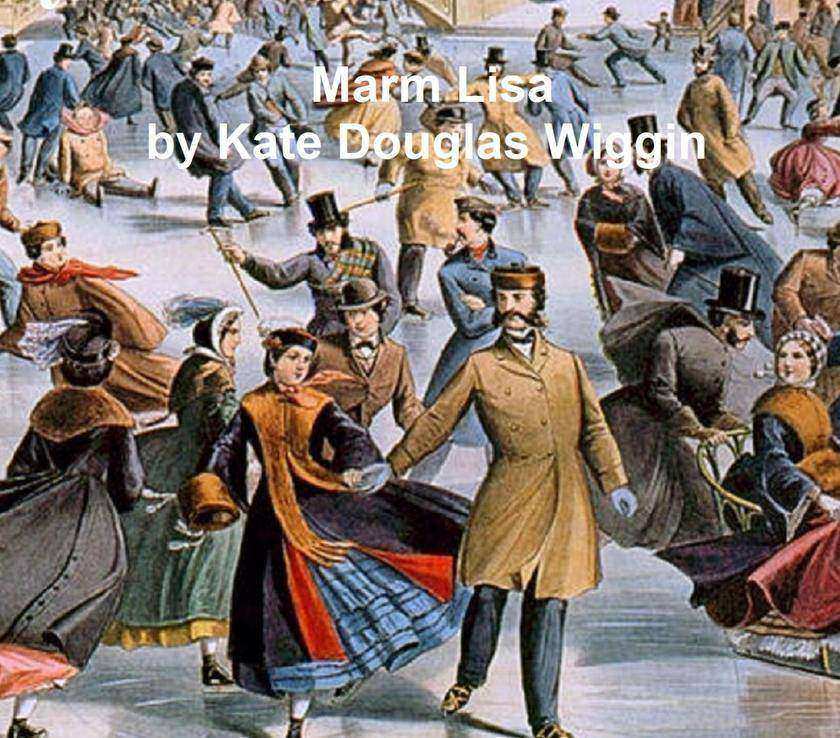
Marm Lisa
¥8.09
Classic novel. According to Wikipedia: "Kate Douglas Wiggin ( 1856 - 1923) was an American children's author and educator. Kate Douglas Smith Wiggin was born in Philadelphia, and was of Welsh descent. She started the first free kindergarten in San Francisco in 1878 (the Silver Street Free Kindergarten). With her sister in the 1880s she also established a training school for kindergarten teachers. She was also a writer of children's books, the best known being The Birds' Christmas Carol (1887) and Rebecca of Sunnybrook Farm (1903)."
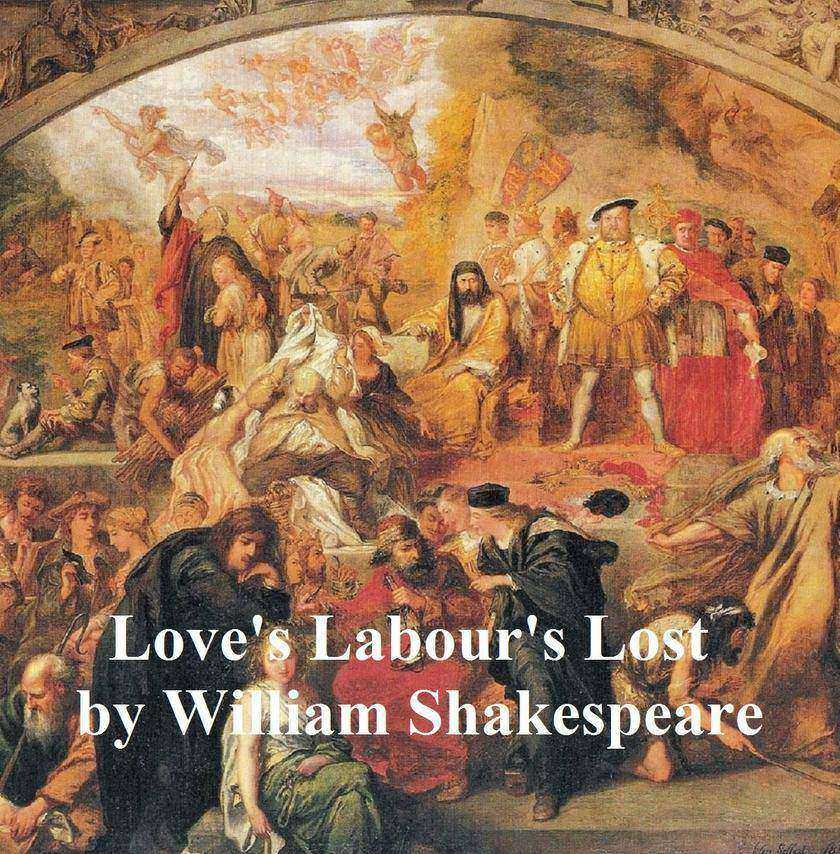
Love's Labour's Lost with line numbers
¥8.09
The classic comedy. According to Wikipedia: "Love's Labour's Lost is one of William Shakespeare's early comedies, believed to have been written in the mid-1590s, and first published in 1598. It was adapted as a musical film featuring Kenneth Branagh in 2000."
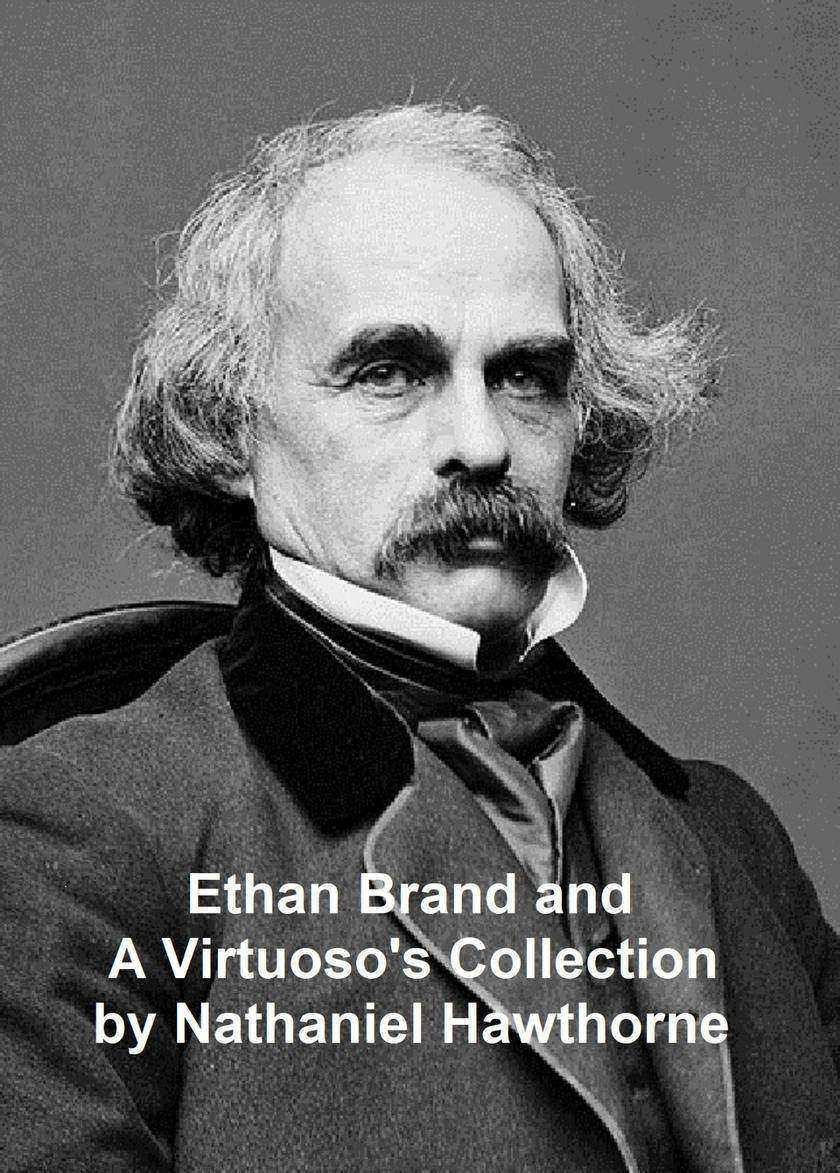
Ethan Brand and A Virtuoso's Collection
¥8.09
Two short stories by Nathaniel Hawthorne related to the legend of "the wandering Jew". According to Wikipedia: "Nathaniel Hawthorne (1804 –1864) was an American novelist and short story writer... Much of Hawthorne's writing centers around New England and many feature moral allegories with a Puritan inspiration. His fiction works are considered part of the Romantic movement and, more specifically, dark romanticism. His themes often center on the inherent evil and sin of humanity and his works often have moral messages and deep psychological complexity. His published works include novels, short stories, and a biography of his friend Franklin Pierce."


