


 购物车
 个人中心


The Rise and Fall of the Confederate Government
¥8.09
The President of the Confederate States of America presents his side of the story. The Preface begins: "The object of this work has been from historical data to show that the Southern States had rightfully the power to withdraw from a Union into which they had, as sovereign communities, voluntarily entered; that the denial of that right was a violation of the letter and spirit of the compact between the States; and that the war waged by the Federal Government against the seceding States was in disregard of the limitations of the Constitution, and destructive of the principles of the Declaration of Independence." According to Wikipedia: "Jefferson Finis Davis (June 3, 1808 – December 6, 1889) was an American politician who served as President of the Confederate States of America for its entire history, 1861 to 1865, during the American Civil War. A West Point graduate, Davis fought in the Mexican-American War as a colonel of a volunteer regiment, and was the United States Secretary of War under Franklin Pierce. Both before and after his time in the Pierce Administration, he served as a U.S. Senator from Mississippi. As a senator he argued against secession but believed each state was sovereign and had an unquestionable right to secede from the Union. Davis resigned from the Senate in January 1861, after receiving word that Mississippi had seceded from the Union. The following month, he was provisionally appointed President of the Confederate States of America. He was elected to a six-year term that November. During his presidency, Davis was not able to find a strategy to defeat the larger, more industrially developed Union. Davis' insistence on independence, even in the face of crushing defeat, prolonged the war. After Davis was captured in 1865, he was charged with treason, though not convicted, and stripped of his eligibility to run for public office. This limitation was removed in 1978, 89 years after his death. While not disgraced, he was displaced in Southern affection after the war by its leading general, Robert E. Lee."
Commenting and Commentaries
¥8.09
Addressed to the students of The Pastors' College, Metropolitan Tabernacle, and first published in 1890. Spurgeon was a Baptist preacher in England, known as "the Prince of Preachers". According to Wikipedia: "Charles Haddon Spurgeon, commonly C.H. Spurgeon, ( 1834 – 1892) was a British Reformed Baptist preacher who remains highly influential among Christians of different denominations, among whom he is still known as the "Prince of Preachers." He also founded the charity organization now known as Spurgeon's, that works worldwide with families and children, as well as a famous theological college which after his death was called after him: Spurgeon's College. Spurgeon was a prolific author of many types of works including sermons, an autobiography, a commentary, books on prayer, a devotional, a magazine, and more. Many sermons were transcribed as he spoke and were translated into many languages during his lifetime. Arguably, no other author, Christian or otherwise, has more material in print than C.H. Spurgeon."
Campaign of the Indus
¥8.09
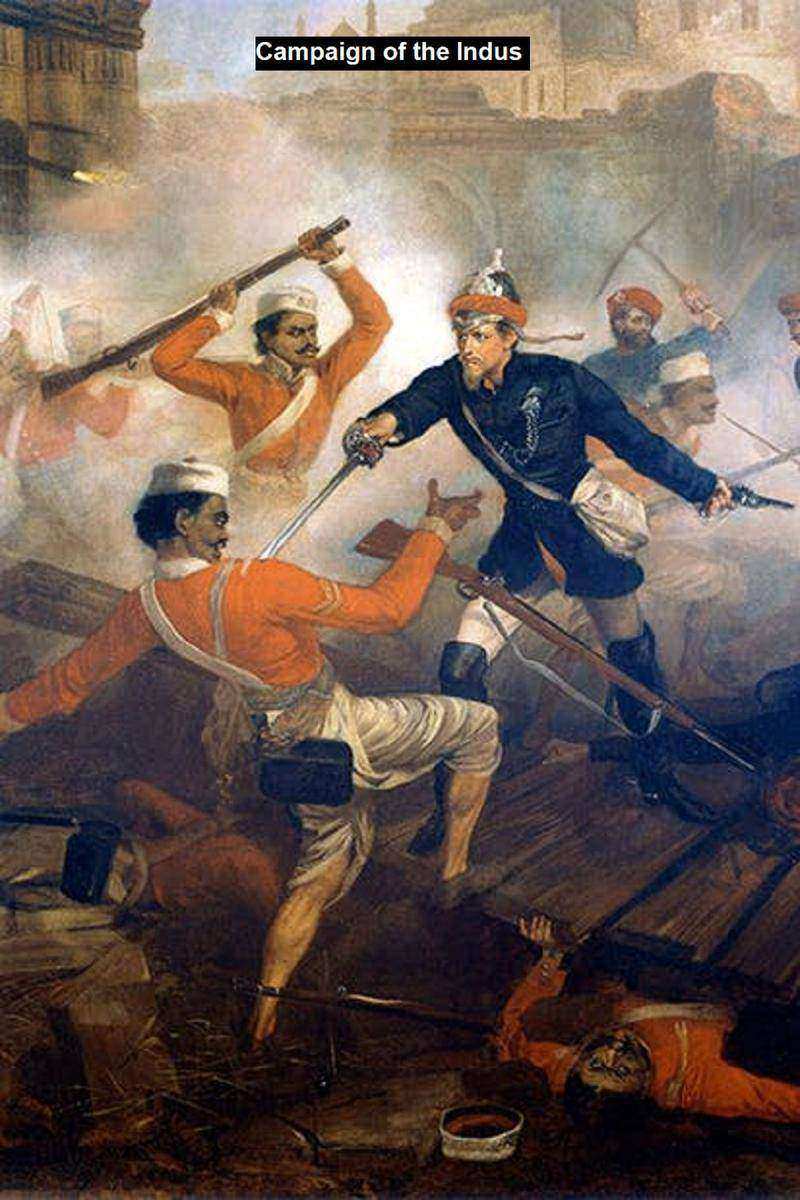
First published in 1840. According to the Introduction: "The circumstance of an English army penetrating into Central Asia, through countries which had not been traversed by European troops since Alexander the Great led his victorious army from the Hellespont to the Jaxartes and Indus, is so strong a feature in our military history, that I have determined, at the suggestion of my friends, to print those letters received from my son which detail any of the events of the campaign. As he was actively engaged with the Bombay division, his narrative may be relied upon so far as he had an opportunity of witnessing its operations; and it being my intention to have only a few copies printed, to give to those friends who may take an interest in his letters, I need not apologize for the familiar manner in which they are written, as they were intended by him only for his own family, without an idea of their being printed. A history, however, may be collected from them most honourable to the British soldiers, both Europeans and natives of India. They shew the patience with which, for more than twelve months, the soldiers bore all their deprivations and fatiguing marches through countries until then unknown to them, whether moving through arid sands or rocky passes, under a burning sun; or over desolate mountains, amidst the most severe frosts, with scarcely an interval of repose. Neither was their gallantry less conspicuous than their patience, when they had the good fortune to find an enemy who ventured to face them."

The Social Contract
¥8.09
According to Wikipedia: "Of The Social Contract, Or Principles of Political Right (Du contrat social ou Principes du droit politique; 1762) by Jean-Jacques Rousseau is a book in which Rousseau theorized about the best way to establish a political community in the face of the problems of commercial society, which he had already identified in his Discourse on Inequality (1754). The Social Contract helped inspire political reforms or revolutions in Europe, especially in France. The Social Contract argued against the idea that monarchs were divinely empowered to legislate; as Rousseau asserts, only the people, who are sovereign, have that all-powerful right... Jean-Jacques Rousseau (28 June 1712 – 2 July 1778) was a Genevan philosopher, writer, and composer of the 18th century. His political philosophy influenced the French Revolution as well as the overall development of modern political, sociological, and educational thought. Rousseau's novel Emile, or On Education is a treatise on the education of the whole person for citizenship. His sentimental novel Julie, or the New Heloise was of importance to the development of pre-romanticism and romanticism in fiction. Rousseau's autobiographical writings — his Confessions, which initiated the modern autobiography, and his Reveries of a Solitary Walker — exemplified the late 18th-century movement known as the Age of Sensibility, and featured an increased focus on subjectivity and introspection that later characterized modern writing. His Discourse on Inequality and The Social Contract are cornerstones in modern political and social thought."
The Meditations of Marcus Aurelius
¥18.56
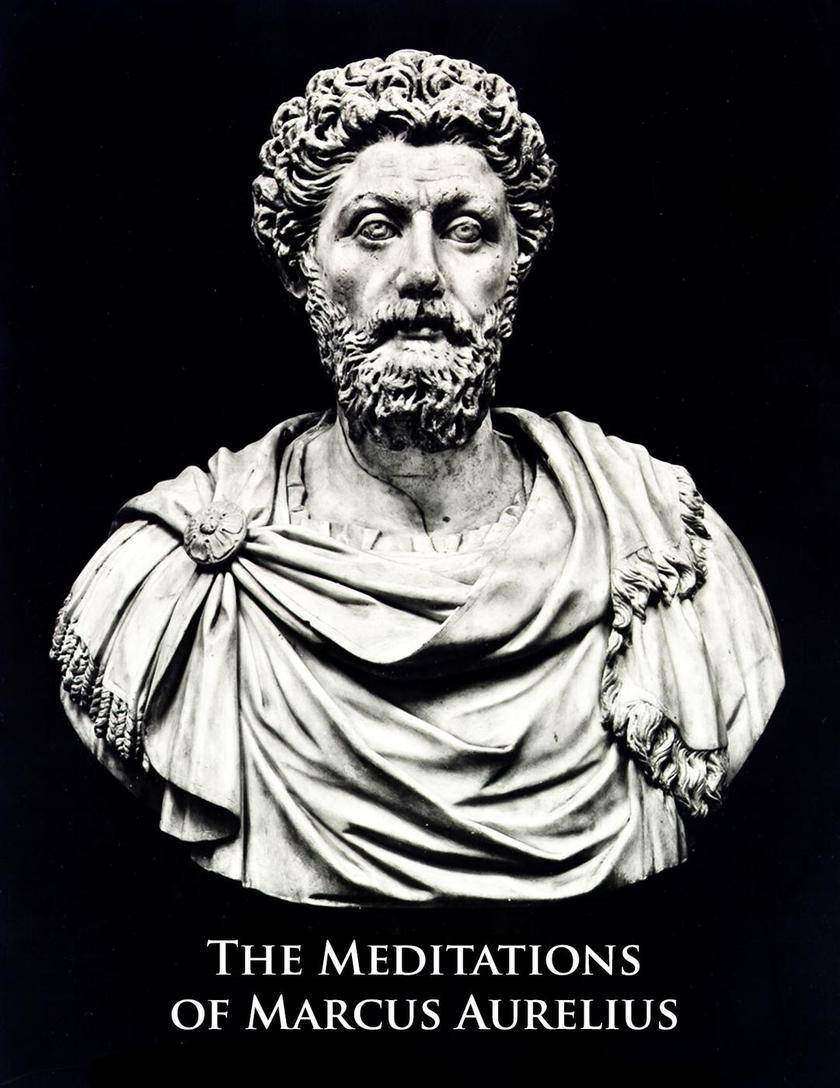
Marcus Aurelius was a Roman Emperor from 161 to 180. He ruled with Lucius Verus as co-emperor from 161 until Verus' death in 169. He was the last of the Five Good Emperors, and is also considered one of the most important Stoic philosophers. During his reign, the Empire defeated a revitalized Parthian Empire in the East; Aurelius' general Avidius Cassius sacked the capital Ctesiphon in 164. In central Europe, Aurelius fought the Marcomanni, Quadi, and Sarmatians with success during the Marcomannic Wars, with the threat of the Germanic tribes beginning to represent a troubling reality for the Empire. A revolt in the East led by Avidius Cassius failed to gain momentum and was suppressed immediately. Marcus Aurelius' Stoic tome Meditations, written in Greek while on campaign between 170 and 180, is still revered as a literary monument to a philosophy of service and duty, describing how to find and preserve equanimity in the midst of conflict by following nature as a source of guidance and inspiration.
France at War: On the Frontier of Civilisation
¥8.09
Dodo Collections brings you another classic from Rudyard Kipling, ‘France at War: On the Frontier of Civilisation.’ ? In 1915, in the second year of the Great War, Kipling made a tour as a journalist on the front of some of the French armed forces. His report of what he had seen of the military activity was published in six articles in the Daily Telegraph, in England, and in the New York Sun. He published some (censored) articles of war journalism in 1915, collected as The New Army in Training and France at War. ? Kipling's works of fiction include The Jungle Book (1894), Kim (1901), and many short stories, including "The Man Who Would Be King" (1888). His poems include "Mandalay" (1890), "Gunga Din" (1890), "The Gods of the Copybook Headings" (1919), "The White Man's Burden" (1899), and "If—" (1910). He is regarded as a major innovator in the art of the short story; his children's books are classics of children's literature; and one critic described his work as exhibiting "a versatile and luminous narrative gift". ? Kipling was one of the most popular writers in England, in both prose and verse, in the late 19th and early 20th centuries. Henry James said: "Kipling strikes me personally as the most complete man of genius (as distinct from fine intelligence) that I have ever known." In 1907, he was awarded the Nobel Prize in Literature, making him the first English-language writer to receive the prize, and its youngest recipient to date Among other honours, he was sounded out for the British Poet Laureateship and on several occasions for a knighthood, all of which he declined
The Light of Asia
¥8.09
According to Wikipedia: "Sir Edwin Arnold (10 June 1832 – 24 March 1904) was an English poet and journalist, who is most known for his work, The Light of Asia… . The literary task which he set before him was the interpretation in English verse of the life and philosophy of the East. His chief work with this object is The Light of Asia which was translated into various languages such as Hindi (tr. by Acharya Ram Chandra Shukla). It appeared in 1879 and was an immediate success, going through numerous editions in England and America, though its permanent place in literature is quite uncertain. It is an Indian epic, dealing with the life and teaching of the Buddha."

Grace
¥8.09
According to Wikipedia: "Lewis Sperry Chafer (February 27, 1871 – August 22, 1952) was the founder and first president of Dallas Theological Seminary, and an influential founding member of modern Christian Dispensationalism.

Three Sermons and Prayers
¥8.09
According to Wikipedia: "Jonathan Swift (30 November 1667 – 19 October 1745) was an Anglo-Irish satirist, essayist, political pamphleteer (first for the Whigs, then for the Tories), poet and cleric who became Dean of St. Patrick's Cathedral, Dublin. He is remembered for works such as Gulliver's Travels, A Modest Proposal, A Journal to Stella, Drapier's Letters, The Battle of the Books, An Argument Against Abolishing Christianity, and A Tale of a Tub. Swift is probably the foremost prose satirist in the English language, and is less well known for his poetry. Swift originally published all of his works under pseudonyms—such as Lemuel Gulliver, Isaac Bickerstaff, M.B. Drapier—or anonymously. He is also known for being a master of two styles of satire: the Horatian and Juvenalian styles."
Salvation
¥8.09
According to Wikipedia: "Lewis Sperry Chafer (February 27, 1871 – August 22, 1952) was the founder and first president of Dallas Theological Seminary, and an influential founding member of modern Christian Dispensationalism.
No and Yes
¥8.09
According to Wikipedia: "Mary Baker Eddy (born Mary Morse Baker July 16, 1821 – December 3, 1910) was the founder of the Christian Science movement. Deeply religious, she advocated Christian Science as a spiritual practical solution to health and moral issues. She wrote Science and Health with Key to the Scriptures, founded The First Church of Christ, Scientist of Boston in 1879, and several periodicals including The Christian Science Monitor. She took the name Mary Baker Glover from her first marriage and was also known as Mary Baker Glover Eddy or Mary Baker G. Eddy from her third marriage. She did much spiritual teaching, lecturing, and instantaneous healing. Her influence continues to grow through her writings."

Matthew Henry's Concise Commentary on the Bible
¥8.09
According to Wikipedia: "Matthew Henry (18 October 1662 – 22 June 1714), was an English non-conformist clergyman. He was born at Broad Oak, a farmhouse on the borders of Flintshire and Shropshire. His father, Philip Henry, had just been ejected by the Act of Uniformity 1662. Unlike most of his fellow-sufferers, Philip possessed some private means, and was thus able to give his son a good education. Matthew went first to a school at Islington, and then to Gray's Inn. He soon gave up his legal studies for theology, and in 1687 became minister of a Presbyterian congregation at Chester. He moved again in 1712 to Mare Street, Hackney. Two years later (22 June 1714), he died suddenly of apoplexy at the Queen's Aid House (41 High Street) in Nantwich while on a journey from Chester to London. Henry's well-known Exposition of the Old and New Testaments (1708–1710) is a commentary of a practical and devotional rather than of a critical kind, covering the whole of the Old Testament, and the Gospels and Acts in the New Testament. After the author's death, the work was finished by a number of ministers, and edited by G. Burder and John Hughes in 1811. Not a work of textual criticism, its attempt at good sense, discrimination, its high moral tone and simple piety with practical application, combined with the well-sustained flow of its English style, made it one of the most popular works of its type. Matthew Henry's six volume Complete Commentary, originally published in 1706, provides an exhaustive verse by verse study of the Bible. His commentaries are still in use to this day. Henry's commentaries are primarily exegetical, dealing with the scripture text as presented. Henry's prime intention was explanation, not translation or textual research."
Introduction to ‘The Zoology of the Voyage of H.M.S. Beagle’ by Charles Darwin
¥8.09
This eBook features the unabridged text of ‘Introduction to ‘The Zoology of the Voyage of H.M.S. Beagle’ by Charles Darwin - Delphi Classics (Illustrated)’ from the bestselling edition of ‘The Complete Works of Charles Darwin’. Having established their name as the leading publisher of classic literature and art, Delphi Classics produce publications that are individually crafted with superior formatting, while introducing many rare texts for the first time in digital print. The Delphi Classics edition of Darwin includes original annotations and illustrations relating to the life and works of the author, as well as individual tables of contents, allowing you to navigate eBooks quickly and easily. eBook features: * The complete unabridged text of ‘Introduction to ‘The Zoology of the Voyage of H.M.S. Beagle’ by Charles Darwin - Delphi Classics (Illustrated)’ * Beautifully illustrated with images related to Darwin’s works * Individual contents table, allowing easy navigation around the eBook * Excellent formatting of the text Please visit www.delphiclassics.com to learn more about our wide range of titles
Cyrus the Great
¥8.09
According to Wikipedia: "Jacob Abbott (November 14, 1803 – October 31, 1879) was an American writer of children's books. Abbott was born at Hallowell, Maine to Jacob and Betsey Abbott. He graduated from Bowdoin College in 1820; studied at Andover Theological Seminary in 1821, 1822, and 1824; was tutor in 1824-1825, and from 1825 to 1829 was professor of mathematics and natural philosophy at Amherst College; was licensed to preach by the Hampshire Association in 1826; founded the Mount Vernon School for Young Ladies in Boston in 1829, and was principal of it in 1829-1833; was pastor of Eliot Congregational Church (which he founded), at Roxbury, Massachusetts in 1834-1835; and was, with his brothers, a founder, and in 1843-1851 a principal of Abbott's Institute, and in 1845-1848 of the Mount Vernon School for Boys, in New York City. He was a prolific author, writing juvenile fiction, brief histories, biographies, religious books for the general reader, and a few works in popular science. He died in Farmington, Maine, where he had spent part of his time after 1839, and where his brother, Samuel Phillips Abbott, founded the Abbott School."

Genghis Khan
¥8.09
According to Wikipedia: "Jacob Abbott (November 14, 1803 – October 31, 1879) was an American writer of children's books. Abbott was born at Hallowell, Maine to Jacob and Betsey Abbott. He graduated from Bowdoin College in 1820; studied at Andover Theological Seminary in 1821, 1822, and 1824; was tutor in 1824-1825, and from 1825 to 1829 was professor of mathematics and natural philosophy at Amherst College; was licensed to preach by the Hampshire Association in 1826; founded the Mount Vernon School for Young Ladies in Boston in 1829, and was principal of it in 1829-1833; was pastor of Eliot Congregational Church (which he founded), at Roxbury, Massachusetts in 1834-1835; and was, with his brothers, a founder, and in 1843-1851 a principal of Abbott's Institute, and in 1845-1848 of the Mount Vernon School for Boys, in New York City. He was a prolific author, writing juvenile fiction, brief histories, biographies, religious books for the general reader, and a few works in popular science. He died in Farmington, Maine, where he had spent part of his time after 1839, and where his brother, Samuel Phillips Abbott, founded the Abbott School."
Mary Queen of Scots
¥8.09
According to Wikipedia: "Jacob Abbott (November 14, 1803 – October 31, 1879) was an American writer of children's books. Abbott was born at Hallowell, Maine to Jacob and Betsey Abbott. He graduated from Bowdoin College in 1820; studied at Andover Theological Seminary in 1821, 1822, and 1824; was tutor in 1824-1825, and from 1825 to 1829 was professor of mathematics and natural philosophy at Amherst College; was licensed to preach by the Hampshire Association in 1826; founded the Mount Vernon School for Young Ladies in Boston in 1829, and was principal of it in 1829-1833; was pastor of Eliot Congregational Church (which he founded), at Roxbury, Massachusetts in 1834-1835; and was, with his brothers, a founder, and in 1843-1851 a principal of Abbott's Institute, and in 1845-1848 of the Mount Vernon School for Boys, in New York City. He was a prolific author, writing juvenile fiction, brief histories, biographies, religious books for the general reader, and a few works in popular science. He died in Farmington, Maine, where he had spent part of his time after 1839, and where his brother, Samuel Phillips Abbott, founded the Abbott School."
The Renascence of Hebrew Literature
¥8.09
Chapters include: In Italy, In German, In Poland and Austria, in Lithuania, The Romantic Movement, The Emancipation Movement, The Conflict with Rabbinism, Reformers and Conservatives, The National Progressive Movement, The Contributors to Ha-Shahar, The Novels of Smolenskin, and Contemporaneous Literature. From the Translator's Note: "The modern chapter in the history of Hebrew literature herewith presented to English readers was written by Dr. Nahum Slouschz as his thesis for the doctorate at the University of Paris, and published in book form in 1902. A few years later (1906-1907), the author himself put his Essay into Hebrew, and it was brought out as a publication of the _Tushiyah_, under the title _Korot ha-Safrut ha-'Ibrit ha-Hadashah_. The Hebrew is not, however, a mere translation of the French book. The material in the latter was revised and extended, and the presentation was considerably changed, in view of the different attitude toward the subject naturally taken by Hebrew readers, as compared with a Western public, Jewish or non-Jewish."
The Borgias
¥8.09
Popular biography of the Borgia family. According to Wikipedia: "Alexandre Dumas, born Dumas Davy de la Pailleterie (24 July 1802 – 5 December 1870)[1] was a French writer, best known for his historical novels of high adventure which have made him one of the most widely read French authors in the world. Many of his novels, including The Count of Monte Cristo, The Three Musketeers, Twenty Years After, and The Vicomte de Bragelonne were originally serialized. He also wrote plays and magazine articles and was a prolific correspondent... From 1839 to 1841 Dumas, with the assistance of several friends, compiled Celebrated Crimes, an eight-volume collection of essays on famous criminals and crimes from European history, including Beatrice Cenci, Martin Guerre, Cesare and Lucrezia Borgia as well as more recent incidents, including the cases of executed alleged murderers Karl Ludwig Sand and Antoine Fran?ois Desrues."
Of the Nature of Things
¥8.09
Classic work of philosophy, in English translation. Titus Lucretius Carus (ca. 99 BC – ca. 55 BC) was a Roman poet and philosopher. His only known work is an epic philosophical poem laying out the beliefs of Epicureanism, De rerum natura, translated into English as On the Nature of Things or "On the Nature of the Universe".

Inaugural Addresses Washington to Obama
¥8.09
Collection of speeches by U.S. presidents. According to Wikipedia: "The inauguration of the President of the United States takes place during the commencement of a new term of a President of the United States, which is every four years... "
Half-Century of Conflict
¥8.09
Part 6 of the Parkman series "France and England in North America". According to Wikipedia: "Francis Parkman (September 16, 1823 - November 8, 1893) was an American historian, best known as author of The Oregon Trail: Sketches of Prairie and Rocky-Mountain Life and his monumental seven volume France and England in North America. These works are still valued as history and especially as literature, although the biases of his work have met with criticism. "


