


 购物车
购物车 个人中心
个人中心
The History of the Conquest of Peru
¥8.09
According to Wikipedia: "The Spanish conquest of the Inca Empire was one of the most important campaigns in the Spanish colonization of the Americas. After years of preliminary exploration and military skirmishes, 168 Spanish soldiers under Francisco Pizarro and their native allies captured the Sapa Inca Atahualpa in the 1532 Battle of Cajamarca. It was the first step in a long campaign that took decades of fighting but ended in Spanish victory and colonization of the region as the Viceroyalty of Peru. The conquest of the Inca Empire led to spin-off campaigns into present-day Chile and Colombia as well as expeditions towards the Amazon Basin.... William Hickling Prescott (May 4, 1796 – January 29, 1859) was an American historian, known for his books The History of the Reign of Ferdinand and Isabella the Catholic and The History of the Conquest of Mexico… After ten years of study, he published in 1837 his History of Ferdinand and Isabella, which at once gained for him a high place among historians. It was followed in 1843 by the History of the Conquest of Mexico, and in 1847 by the Conquest of Peru. His last work was the History of Philip II, of which the third volume appeared in 1858, and which was left unfinished. In that year he had an apoplectic shock, and another in 1859 was the cause of his death. In all his works he displayed great research, impartiality, and an admirable narrative power. The great disadvantage at which, owing to his very imperfect vision, he worked, makes the first of these qualities specially remarkable, for his authorities in a foreign tongue were read to him, while he had to write on a frame for the blind. Prescott was a man of amiable and benevolent character, and enjoyed the friendship of many of the most distinguished men in Europe as well as in America. Much of Prescott's work was based on his researches with unpublished documents in archives in Spain."
Arthurian Chronicles: Roman de Brut
¥8.09
According to Wikipedia: "Wace (c. 1115 – c. 1183) was an Anglo-Norman poet, who was born in Jersey and brought up in mainland Normandy (he tells us in the Roman de Rou that he was taken as a child to Caen), ending his career as Canon of Bayeux. His extant works include: Roman de Brut - a verse history of Britain and Roman de Rou - a verse history of the Dukes of Normandy. Other works, also in verse, include lives of Saint Margaret and Saint Nicholas. Roman de Brut (c. 1155) was based on the Historia Regum Britanniae of Geoffrey of Monmouth. It cannot be regarded as a history in any modern sense, although Wace often distinguishes between what he knows and what he does not know, or has been unable to find out. Wace narrates the founding of Britain, by Brutus of Troy, to the end of the legendary British history created by Geoffrey of Monmouth."
From Sail to Steam
¥8.09
Classic work of history. According to Wikipedia: "Alfred Thayer Mahan (September 27, 1840 - December 1, 1914) was a United States Navy officer, geostrategist, and educator. His ideas on the importance of sea power influenced navies around the world, and helped prompt naval buildups before World War I. Several ships were named USS Mahan, including the lead vessel of a class of destroyers. His research into naval History led to his most important work, The Influence of Seapower Upon History, 1660-1783, published in 1890."

The Prince
¥8.09
Based largley on examples from the life of Cesare Borgia (son of Pope Alexander VI and sister of Lucrezia Borgia), this book was intended as practical advice for how to unify Italy with force. Machiavelli begins with the assumption that the end justifies the means -- so any action is permitted that leads to a unified Italy. His work has served for centuries as a handbook for would-be dictators and conquerors. According to Wikipedia: "Niccolò di Bernardo dei Machiavelli (1469 – 1527) was an Italian diplomat, political philosopher, musician, poet and playwright. Machiavelli was a figure of the Italian Renaissance, and a servant of the Florentine republic. In June of 1498, following the ouster and execution of Savonarola, the Great Council elected Machiavelli as the Secretary to the second Chancery of the Republic of Florence. He is most famous — or notorious — for one of his shorter works, The Prince, sometimes described as a work of realist political theory. However, both that text and the more substantial republican Discourses on Livy — as well as History of Florence (commissioned by the Medici family) — were printed only after his death, all appearing in the early 1530s. In his own lifetime, while he circulated The Prince among friends, the only work Machiavelli promoted through printing was his dialogue on The Art of War. But generations from the sixteenth century onwards were most attracted and repelled by the cynical approach to power on display in The Prince, Discourses and History. Whatever Machiavelli's own intentions (and they remain a matter of heated debate), his name became synonymous with ruthless politics, deceit and the pursuit of power by any means."
Jacob’s Room by Virginia Woolf - Delphi Classics (Illustrated)
¥8.09
This eBook features the unabridged text of ‘Jacob’s Room by Virginia Woolf - Delphi Classics (Illustrated)’ from the bestselling edition of ‘The Complete Works of Virginia Woolf’. Having established their name as the leading publisher of classic literature and art, Delphi Classics produce publications that are individually crafted with superior formatting, while introducing many rare texts for the first time in digital print. The Delphi Classics edition of Woolf includes original annotations and illustrations relating to the life and works of the author, as well as individual tables of contents, allowing you to navigate eBooks quickly and easily. eBook features: * The complete unabridged text of ‘Jacob’s Room by Virginia Woolf - Delphi Classics (Illustrated)’ * Beautifully illustrated with images related to Woolf’s works * Individual contents table, allowing easy navigation around the eBook * Excellent formatting of the text Please visit www.delphiclassics.com to learn more about our wide range of titles
Is Life Worth Living Without Immortality?
¥8.09
Dodo Collections brings you another classic from M. M. Mangasarian, ‘Is Life Worth Living Without Immortality?’ ? This book is based upon the famous lecture delivered before the Independent Religious Society, Chicago?by Mangasarian. ? Born in Mashger (now within Turkey) in the Ottoman Empire, M. M. Mangasarian attended Robert College in Constantinople, and was ordained as minister in Marsovan in 1878. In about 1880 he enrolled at Princeton University. He was pastor at a Presbyterian church in Philadelphia from 1882 to 1885, when he resigned, becoming an independent preacher and a lecturer on "independent religion" in New York. In 1892 he became leader of the Ethical Culture Society of Chicago, a group established by Felix Adler. In 1900 he organized the Independent Religious Society of Chicago, a rationalist group, of which he remained pastor until 1925. He retired to Piedmont, California, where he lived for the rest of his life. ? During his life Mangasarian wrote a number of books. His most popular, including The Truth About Jesus — Is He a Myth? (1909) and The Bible Unveiled (1911), deal with the evidence against the existence of an historical Jesus. He also wrote hundreds of essays and lectures on questions of the times. His books and essays were translated into French, German, Spanish, and other foreign languages. The general subject of his writing was religious criticism and the philosophy of religion. ? Mangasarian considered himself a Rationalist or a Secularist not an Atheist, since he considered atheism a non-verifiable belief system.
Experiences of a Dug-out: 1914-1918
¥8.09
A different commentary on the First World War, this memoir is a compelling and insightful not from a soldier who has served in the front line but rather from a man who served in the war office. Thoroughly compulsive reading, putting so much into context and giving great insight into the major strategic decisions of the First World War.
Thoughts of the Emperor Marcus Aurelius Antoninus
¥8.09
According to Wikipedia: "Marcus Aurelius (26 April 121 – 17 March 180 AD), was Roman Emperor from 161 to 180 AD. He ruled with Lucius Verus as co-emperor from 161 until Verus' death in 169. He was the last of the "Five Good Emperors", and is also considered one of the most important Stoic philosophers... Marcus Aurelius' Stoic tome Meditations, written in Greek while on campaign between 170 and 180, is still revered as a literary monument to a philosophy of service and duty, describing how to find and preserve equanimity in the midst of conflict by following nature as a source of guidance and inspiration."
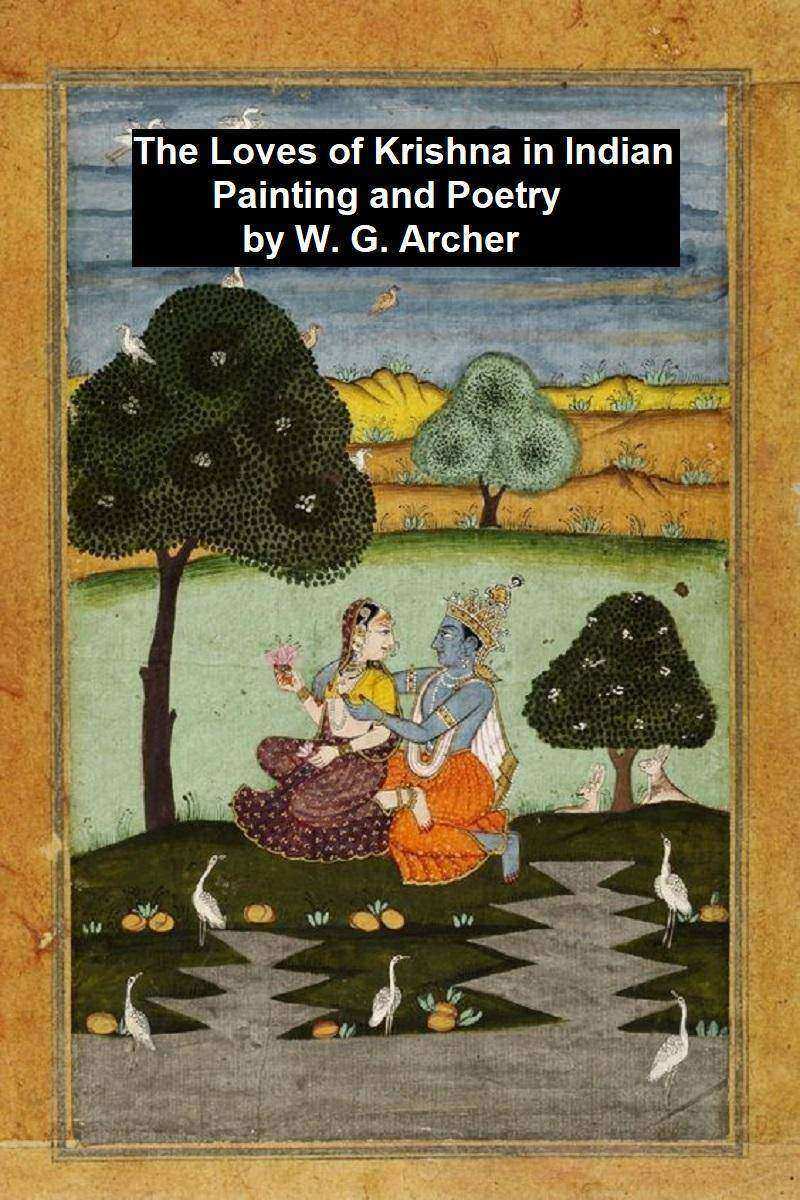
Loves of Krishna
¥8.09
The Introduction explains: "During the twentieth century, a certain type of Indian painting began to fascinate the West. Unlike Mughal art, it was a product of Hindu courts in Rajasthan and the Punjab Hills and unlike Mughal painting, its chief concern was with the varied phases of romance. Ladies would be shown brooding in their chambers as storm clouds mounted in the sky. A girl might be portrayed desperately fondling a plantain tree, gripping a pet falcon, the symbol of her lover, or hurrying through the rainy darkness intent only on reaching a longed-for tryst. A prince would appear lying on a terrace, his outstretched arms striving vainly to detain a calm beauty or welcoming with delight a bashful girl as she slowly advanced. In all these pictures, romantic love was treated as the highest good and physical passion was interpreted with a freshness and innocence unequalled in the world's art."

The Will to Believe and Other Essays in Popular Philosophy
¥8.09
According to Wikipedia: ""The Will to Believe" is a lecture by William James, first published in 1896, which defends, in certain cases, the adoption of a belief without prior evidence of its truth. In particular, James is concerned in this lecture about defending the rationality of religious faith even lacking sufficient evidence of religious truth. James' central argument in "The Will to Believe" hinges on the idea that access to the evidence for whether or not certain beliefs are true depends crucially upon first adopting those beliefs without evidence. As an example, James argues that it can be rational to have unsupported faith in one's own ability to accomplish tasks that require confidence. Importantly, James points out that this is the case even for pursuing scientific inquiry. James then argues that like belief in one's own ability to accomplish a difficult task, religious faith can also be rational even if one at the time lacks evidence for the truth of one's religious belief.
The History of Rome
¥8.09
Mommsen's history of the Roman Republic in five volumes. These volumes cover from the founding of Rome up to the disintegration of the First Triumvirate (Caesar, Pompey, Crassus). The author cites dates in the Roman style, AUC, from the founding of the city in 753 BC. A table at the end shows modern-day equivalents. According to Wikipedia, Mommsen is "generally regarded as the greatest classicist of the 19th century." This work complements Gibbon's "Decline and Fall of the Roman Empire".
The Vital Message
¥8.09
Work of spiritualism by the author of Sherlock Holmes. According to the Preface: "In "The New Revelation" the first dawn of the coming change has been described. In "The Vital Message" the sun has risen higher, and one sees more clearly and broadly what our new relations with the Unseen may be. As I look into the future of the human race I am reminded of how once, from amid the bleak chaos of rock and snow at the head of an Alpine pass, I looked down upon the far stretching view of Lombardy, shimmering in the sunshine and extending in one splendid panorama of blue lakes and green rolling hills until it melted into the golden haze which draped the far horizon. Such a promised land is at our very feet which, when we attain it, will make our present civilisation seem barren and uncouth. Already our vanguard is well over the pass. Nothing can now prevent us from reaching that wonderful land which stretches so clearly before those eyes which are opened to see it."
Indian Frontier Policy
¥8.09
According to Wikipedia: "General Sir John Miller Adye GCB (1 November 1819 – 26 August 1900) was a British general and amateur artist." According to the Preface: "The subject of our policy on the North-West frontier of India is one of great importance, as affecting the general welfare of our Eastern Empire, and is specially interesting at the present time, when military operations on a considerable scale are being conducted against a combination of the independent tribes along the frontier. It must be understood that the present condition of affairs is no mere sudden outbreak on the part of our turbulent neighbours. Its causes lie far deeper, and are the consequences of events in bygone years."
The War in South Africa
¥8.09
Account of the Boer War, first published in 1902. According to Wikipedia: "Sir Arthur Ignatius Conan Doyle (22 May 1859 – 7 July 1930) was a Scottish physician and writer who is most noted for his fictional stories about the detective Sherlock Holmes, which are generally considered milestones in the field of crime fiction. He is also known for writing the fictional adventures of a second character he invented, Professor Challenger, and for popularising the mystery of the Mary Celeste. He was a prolific writer whose other works include fantasy and science fiction stories, plays, romances, poetry, non-fiction, and historical novels.

The Rise and Fall of the Confederate Government
¥8.09
The President of the Confederate States of America presents his side of the story. The Preface begins: "The object of this work has been from historical data to show that the Southern States had rightfully the power to withdraw from a Union into which they had, as sovereign communities, voluntarily entered; that the denial of that right was a violation of the letter and spirit of the compact between the States; and that the war waged by the Federal Government against the seceding States was in disregard of the limitations of the Constitution, and destructive of the principles of the Declaration of Independence." According to Wikipedia: "Jefferson Finis Davis (June 3, 1808 – December 6, 1889) was an American politician who served as President of the Confederate States of America for its entire history, 1861 to 1865, during the American Civil War. A West Point graduate, Davis fought in the Mexican-American War as a colonel of a volunteer regiment, and was the United States Secretary of War under Franklin Pierce. Both before and after his time in the Pierce Administration, he served as a U.S. Senator from Mississippi. As a senator he argued against secession but believed each state was sovereign and had an unquestionable right to secede from the Union. Davis resigned from the Senate in January 1861, after receiving word that Mississippi had seceded from the Union. The following month, he was provisionally appointed President of the Confederate States of America. He was elected to a six-year term that November. During his presidency, Davis was not able to find a strategy to defeat the larger, more industrially developed Union. Davis' insistence on independence, even in the face of crushing defeat, prolonged the war. After Davis was captured in 1865, he was charged with treason, though not convicted, and stripped of his eligibility to run for public office. This limitation was removed in 1978, 89 years after his death. While not disgraced, he was displaced in Southern affection after the war by its leading general, Robert E. Lee."
Six Non-Fiction Books
¥8.09
This book-collection file includes six books. Three are on war -- The Great Boer War, The War in South Africa, and A Visit to Three Fronts, June 1916. Two are on Spiritualism -- The New Revelation and The Vital Message. And one on Medicine -- Round the Red Lamp: Facts and Fancies of the Medical Life. According to Wikipedia: "Sir Arthur Ignatius Conan Doyle, DL (22 May 1859 – 7 July 1930) was an author most noted for his stories about the detective Sherlock Holmes, which are generally considered a major innovation in the field of crime fiction, and for the adventures of Professor Challenger. He was a prolific writer whose other works include science fiction stories, historical novels, plays and romances, poetry, and non-fiction."

The History of a Crime
¥8.09
Hugo's condemnation of Napoleon III. According to Wikipedia: "Victor-Marie Hugo (26 February 1802 – 22 May 1885) was a French poet, playwright, novelist, essayist, visual artist, statesman, human rights activist and exponent of the Romantic movement in France. In France, Hugo's literary fame comes first from his poetry but also rests upon his novels and his dramatic achievements. Among many volumes of poetry, Les Contemplations and La Légende des siècles stand particularly high in critical esteem, and Hugo is sometimes identified as the greatest French poet. Outside France, his best-known works are the novels Les Misérables and Notre-Dame de Paris (known in English also as The Hunchback of Notre Dame). Though a committed conservative royalist when he was young, Hugo grew more liberal as the decades passed; he became a passionate supporter of republicanism, and his work touches upon most of the political and social issues and artistic trends of his time. He is buried in the Panthéon."
Apocrypha (King James Version)
¥8.09
Long-revered religious works that were excluded from the King James version of the Bible, including: The First Book of Esdras, The Second Book of Esdras Esdras [sometimes Fourth Book of Ezra], The Greek Additions to Esther, The First Book of the Maccabees, The Second Book of the Maccabees, The Book of Tobit, The Book of Judith, The Wisdom of Solomon, The Book of Sirach (or Ecclesiasticus), The Book of Baruch, The Epistle (or letter) of Jeremiah, The Book of Susanna (in Daniel), The Prayer of Azariah, and The Prayer of Manasseh.

France at War: On the Frontier of Civilisation
¥8.09
Dodo Collections brings you another classic from Rudyard Kipling, ‘France at War: On the Frontier of Civilisation.’ ? In 1915, in the second year of the Great War, Kipling made a tour as a journalist on the front of some of the French armed forces. His report of what he had seen of the military activity was published in six articles in the Daily Telegraph, in England, and in the New York Sun. He published some (censored) articles of war journalism in 1915, collected as The New Army in Training and France at War. ? Kipling's works of fiction include The Jungle Book (1894), Kim (1901), and many short stories, including "The Man Who Would Be King" (1888). His poems include "Mandalay" (1890), "Gunga Din" (1890), "The Gods of the Copybook Headings" (1919), "The White Man's Burden" (1899), and "If—" (1910). He is regarded as a major innovator in the art of the short story; his children's books are classics of children's literature; and one critic described his work as exhibiting "a versatile and luminous narrative gift". ? Kipling was one of the most popular writers in England, in both prose and verse, in the late 19th and early 20th centuries. Henry James said: "Kipling strikes me personally as the most complete man of genius (as distinct from fine intelligence) that I have ever known." In 1907, he was awarded the Nobel Prize in Literature, making him the first English-language writer to receive the prize, and its youngest recipient to date Among other honours, he was sounded out for the British Poet Laureateship and on several occasions for a knighthood, all of which he declined
American Notes
¥8.09
Dodo Collections brings you another classic from Charles Dickens, ‘American Notes.’ ? American Notes is a fascinating account of nineteenth-century America sketched with Charles Dickens's characteristic wit and charm. When Charles Dickens set out for America in 1842 he was the most famous man of his day to travel there - curious about the revolutionary new civilization that had captured the English imagination. His frank and often humorous descriptions cover everything from his comically wretched sea voyage to his sheer astonishment at the magnificence of the Niagara Falls, while he also visited hospitals, prisons and law courts and found them exemplary. But Dickens's opinion of America as a land ruled by money, built on slavery, with a corrupt press and unsavoury manners, provoked a hostile reaction on both sides of the Atlantic. American Notes is an illuminating account of a great writer's revelatory encounter with the New World ? Charles Dickens was an English writer and social critic. He created some of the world's best-known fictional characters and is regarded as the greatest novelist of the Victorian era. His works enjoyed unprecedented popularity during his lifetime, and by the twentieth century critics and scholars had recognised him as a literary genius. His novels and short stories enjoy lasting popularity. Born in Portsmouth, Dickens left school to work in a factory when his father was incarcerated in a debtors' prison. Despite his lack of formal education, he edited a weekly journal for 20 years, wrote 15 novels, five novellas, hundreds of short stories and non-fiction articles, lectured and performed extensively, was an indefatigable letter writer, and campaigned vigorously for children's rights, education, and other social reforms. ? A prolific 19th Century author of short stories, plays, novellas, novels, fiction and non-fiction; during his lifetime Dickens became known the world over for his remarkable characters, his mastery of prose in the telling of their lives, and his depictions of the social classes, morals and values of his times. Some considered him the spokesman for the poor, for he definitely brought much awareness to their plight, the downtrodden and the have-nots. He had his share of critics, like Virginia Woolf and Henry James, but also many admirers, even into the 21st Century.
The Meditations of Marcus Aurelius
¥18.56
Marcus Aurelius was a Roman Emperor from 161 to 180. He ruled with Lucius Verus as co-emperor from 161 until Verus' death in 169. He was the last of the Five Good Emperors, and is also considered one of the most important Stoic philosophers. During his reign, the Empire defeated a revitalized Parthian Empire in the East; Aurelius' general Avidius Cassius sacked the capital Ctesiphon in 164. In central Europe, Aurelius fought the Marcomanni, Quadi, and Sarmatians with success during the Marcomannic Wars, with the threat of the Germanic tribes beginning to represent a troubling reality for the Empire. A revolt in the East led by Avidius Cassius failed to gain momentum and was suppressed immediately. Marcus Aurelius' Stoic tome Meditations, written in Greek while on campaign between 170 and 180, is still revered as a literary monument to a philosophy of service and duty, describing how to find and preserve equanimity in the midst of conflict by following nature as a source of guidance and inspiration.


