


 购物车
购物车 个人中心
个人中心
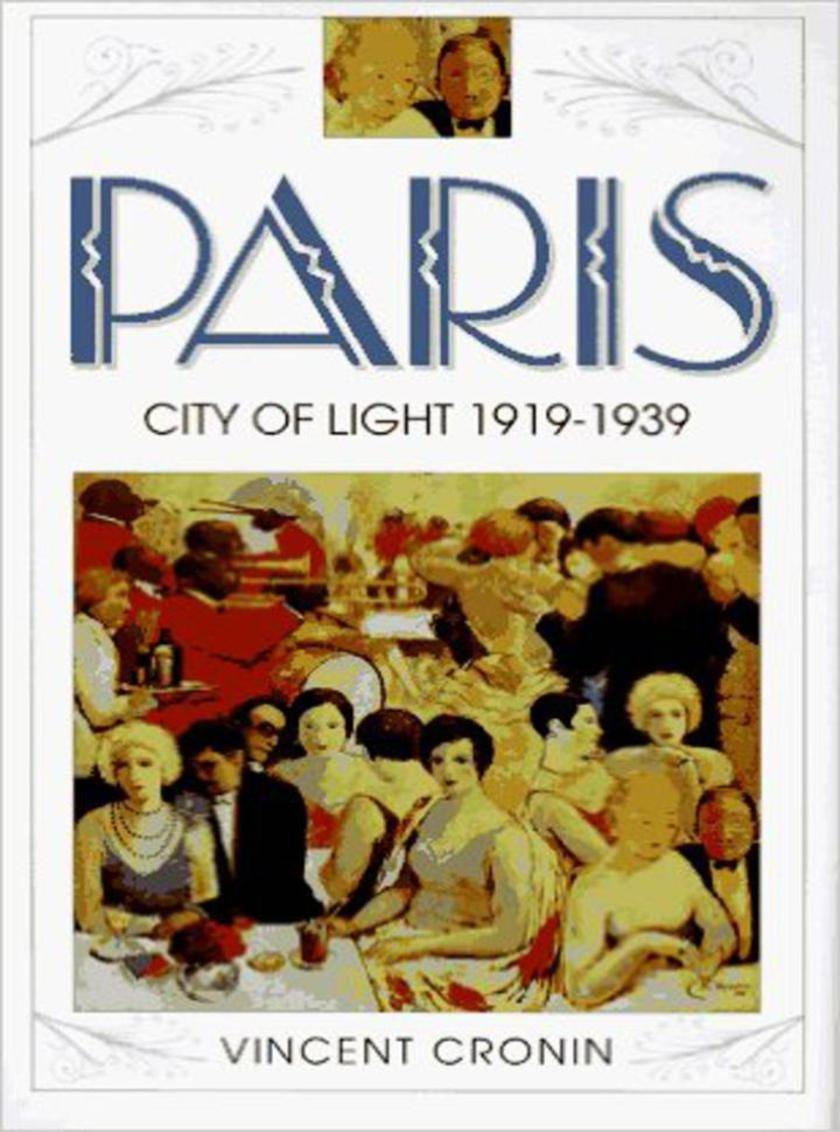
Paris, City of Light: 1919–1939 (Text Only)
¥154.12
In the early days of Cubism, when writers and painters led bohemian lives in Montmartre, a familiar figure in the studios and cafes was a young journalist named Roland Dorgelès. With high brow, long straight nose, lean face and steady blue eyes, smartly turned out, often in a long black coat with astrakhan collar, he was well liked for his cheerful manner, vein of poetry and adventurousness.Dorgelès came of petit bourgeois parents. The father, a travelling textile salesman, was often absent and did not get along with his wife, who transferred her affection to her only son without however becoming possessive. She gave him a Catholic upbringing and encouraged him to read good authors, his favourites being Molière and Courteline. After an unsuccessful spell at the Ecole des Arts décoratifs he decided on a literary career. He became a journalist of the Paris scene, had two short plays put on and indulged in light-hearted practical jokes: calling the fire brigade to extinguish a nonexistent fire in the flat of a rival in love and, on another occasion, to protest against the thick glass on certain paintings in the Louvre, installing himself in front of one such painting, producing razor, cream and brush, soaping his face and calmly shaving as though in front of a mirror.

1066: The Hidden History of the Bayeux Tapestry
¥85.74
Five miles from the coast at Arromanches, in the gently shelving valley of the River Aure, lies the historic Norman town of Bayeux. From a distance the medieval cathedral emerges first into view, a faint impression of towers and spires, which gradually falls into sharper perspective as you approach the fringes of the town. War has touched Bayeux, but not scarred it. A ring road circumscribes the old centre, like a protective wall, and within its confines lies a network of shadowy streets and old stone buildings; and here and there the late-medieval frontage of a half-timbered house protrudes into the sunlight, as if it had emerged unwittingly out of the past into the present. At the centre of the town rises the enormous cathedral, a Gothic masterpiece built upon a Romanesque shell, its stark western towers, completed in the days of William the Conqueror, still soaring above the family of little houses gathered closely around its base. But it is not the cathedral, remarkable as it is, that every year draws half a million visitors to Bayeux. They come to see one of the most famous, intricate and mysterious works of art that has ever been made. Signs directing you to this masterpiece are dotted around the centre of the town. They are marked with a single descriptive word, in French and in English: ‘Tapisserie. Tapestry’. Here, in Bayeux, anything else would be redundant.

The Lazy Golfer’s Companion
¥100.06
It is 09.48 on a sunny Saturday; the scene of a typical club fourball, almost anywhere in the world. On the first tee, Doug and Brian have been loitering around for four or five minutes, swishing the odd club and talking sotto voce about share prices. With one eye on the clock, as their starting time is 09.50 (where on earth are Matt and Bob?) they are also wondering if they will finish the round in time for a leisurely drink. The ritual session at the nineteenth is indispensable for all.The ‘early birds’, an assorted bunch of club members who tee off often at first light (possibly because wives demand they are back in “reasonable” time for shopping, visits or even gardening) are well over the horizon. Moodily they watch the four in front criss-crossing the fairway in the mid-foreground at an agonisingly slow amble.

Railway Day Trips: 160 classic train journeys around Britain
¥95.06
From a very young age Julian Holland has had a fascination with railways. He is a writer and photographer on many railway books, including the highly acclaimed and award winning The Times Mapping the Railways (2011), Exploring Britain’s Lost Railways (2013) and Great Railway Journeys of the World (HarperCollins, 2014). As well as being passionate about train travel, Julian is a leading commentator in the media on railways.
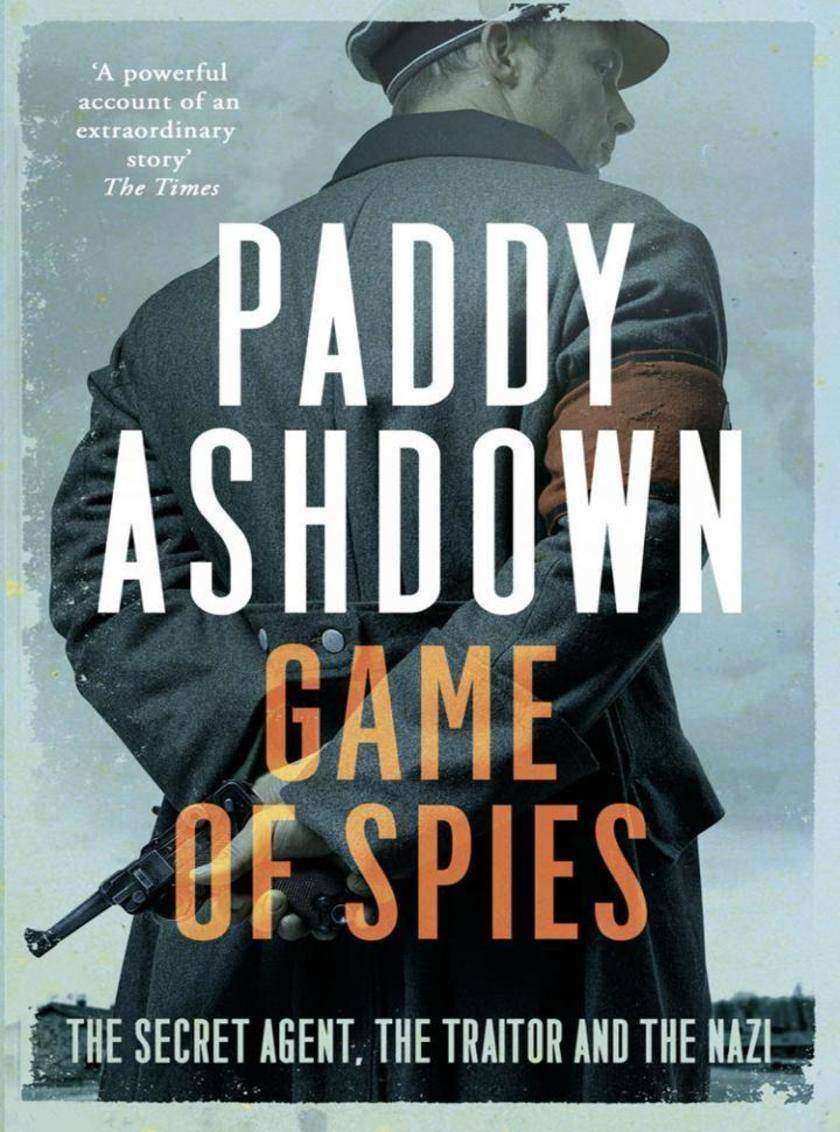
Game of Spies: The Secret Agent, the Traitor and the Nazi, Bordeaux 1942-1944
¥73.58
After service as a Royal Marine and as an intelligence officer for the UK security services, Paddy Ashdown was a Member of Parliament for Yeovil from 1983 to 2001, and leader of the Liberal Democrats from 1988 until 1999. Later he was the international High Representative for Bosnia and Herzegovina from 2002 to 2006. He was made a Knight Grand Cross of the Most Distinguished Order of Saint Michael and Saint George in 2006.
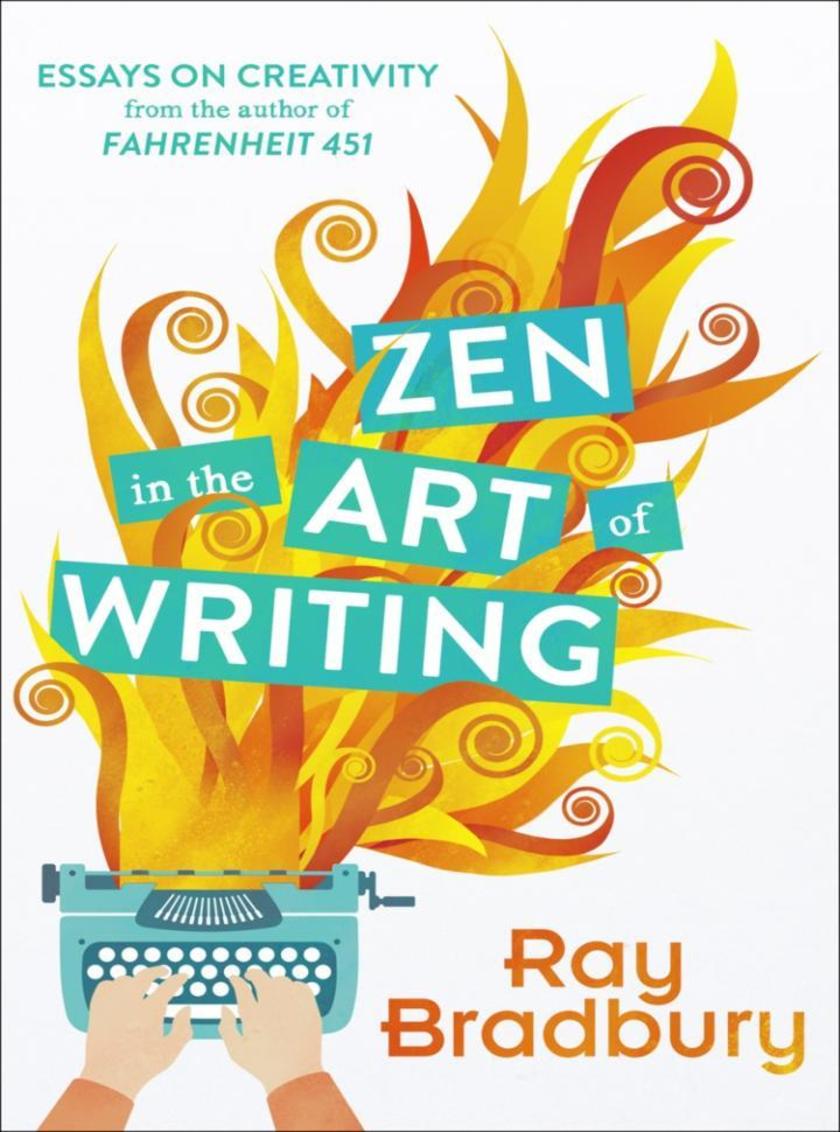
Zen in the Art of Writing
¥67.49
One of the greatest science fiction and fantasy writers of all time, Ray Bradbury was born in Waukegan, Illinois, in 1920. He moved with his family to Los Angeles in 1934. Since his first story appeared in Weird Tales when he was twenty years old, he published some 500 short stories, novels, plays, scripts and poems. Among his many famous works are Fahrenheit 451, The Illustrated Man and The Martian Chronicles. Ray Bradbury died in 2012 at the age of 91.

God’s Secret Agents: Queen Elizabeth's Forbidden Priests and the Hatching of the
¥102.51
A thrilling account of treachery, loyalty and martyrdom in Elizabethan England from an exceptional new writer. As darkness fell on the evening of Friday, 28 October 1588, just weeks after the defeat of the Spanish Armada, two young Englishmen landed in secret on a Norfolk beach. They were Jesuit priests. Their aim was to achieve by force of argument what the Armada had failed to do by force of arms: return England to the Catholic Church. Eighteen years later their mission had been shattered by the actions of a small group of terrorists, the Gunpowder Plotters; they themselves had been accused of designing ‘that most horrid and hellish conspiracy’; and the future of every Catholic they had come to save depended on the silence of an Oxford joiner, builder of priest-holes, being tortured in the Tower of London. ‘God’s Secret Agents’ tells the story of Elizabeth’s ‘other’ England, a country at war with an unseen enemy, a country peopled – according to popular pamphlets and Government proclamations – with potential traitors, fifth-columnists and assassins. And it tells this story from the perspective of that unseen ‘enemy’, England’s Catholics, a beleaguered, alienated minority, struggling to uphold its faith. Ultimately, ‘God’s Secret Agents’ is the story of men who would die for their cause undone by men who would kill for it.
Edge of Empire: Conquest and Collecting in the East 1750–1850
¥78.38
Talented historian Maya Jasonoff offers an alternative history of the British Empire. It is not about conquest – but rather a collection of startling and fascinating personal accounts of cross-cultural exchange from those who found themselves on the edges of Empire. A Palladian mansion filled with Western art in the centre of old Calcutta, the Mughal Emperor’s letters in an archive in the French Alps, the names of Italian adventurers scratched into the walls of Egyptian temples: in this imaginative book, Maya Jasanoff delves into the stories behind artefacts like these to uncover the lives of collectors in India and Egypt who lived on the frontiers of European empire. ‘Edge of Empire’ traces their exploits to tell an intimate history of imperialism. Written and researched on four continents, ‘Edge of Empire’ tells a story about the making of European empires, ones that break away from the grand narratives of power, exploitation, and resistance, to delve into the personal dimensions of imperialism. She asks what people brought to imperial frontiers and what they took away, and what motives drove them, whether ambition, opportunism, curiosity or greed. This rich and compelling book enters a world where people lived, loved and died, and identified with each other across cultures much more than our prejudices about ‘Empire’ might suggest.
Consuming Passions: Leisure and Pleasure in Victorian Britain
¥80.25
A delightful and fascinating social history of Victorians at leisure, told through the letters, diaries, journals and novels of nineteenth-century men and women, from the author of the bestselling ‘The Victorian House’. Imagine a world where only one in five people owns a book, where just one in ten has a knife or a fork – a world where five people out of every six do not own a cup to hold a hot drink. That was what England was like in the early eighteenth century. Yet by the close of the nineteenth century, the Industrial Revolution had brought with it not just factories, railways, mines and machines but also fashion, travel, leisure and pleasure. Leisure became an industry – a cornucopia of excitement for the masses – and it was spread by newspapers, advertising, promotions and publicity – all of which were eighteenth-century creations. It was Josiah Wedgwood and his colleagues who invented money-back guarantees, free delivery and celebrity endorsements. New technology such as the railways brought audiences to ever-more-elaborate extravaganzas, whether it was theatrical spectaculars with breathtaking pyrotechnics and hundreds of extras – ‘hippodramas' recreating the battle of Waterloo – or the Great Exhibition itself, proudly displaying 'the products of all quarters of the globe' under twenty-two acres of the sparkling 'Crystal Palace'. In ‘Consuming Passions’, the bestselling author of ‘The Victorian House’ explores this dramatic revolution in science, technology and industry – and how a world of thrilling sensation, lavish spectacle and unimaginable theatricality was born.

Rites of Peace: The Fall of Napoleon and the Congress of Vienna
¥80.25
Following on from his epic ‘1812: Napoleon's Fatal March on Moscow’, bestselling author Adam Zamoyski has written the dramatic story of the Congress of Vienna. In the wake of his disastrous Russian campaign of 1812, Napoleon's imperious grip on Europe began to weaken, raising the question of how the Continent was to be reconstructed after his defeat. There were many who dreamed of a peace to end all wars, in which the interests of peoples as well as those of rulers would be taken into account. But what followed was an unseemly and at times brutal scramble for territory by the most powerful states, in which countries were traded as if they had been private and their inhabitants counted like cattle. The results, fixed at the Congress of Vienna in 1815, not only laid the foundations of the European world we know; it put in place a social order and a security system that lie at the root of many of the problems which dog the world today. Although the defining moments took place in Vienna, and the principle players included Tsar Alexander I of Russia, the Austrian Chancellor Metternich, the Duke of Wellington and the French master of diplomacy Talleyrand, as well as Napoleon himself, the accepted view of the gathering of statesmen reordering the Continent in elegant salons is a false one. Many of the crucial questions were decided on the battlefield or in squalid roadside cottages amid the vagaries of war. And the proceedings in Vienna itself were not as decorous as is usually represented. Drawing on a wide range of first-hand sources in six languages, which include not only official documents, private letters, diaries and first-hand accounts, but also the reports of police spies and informers, Adam Zamoyski gets below the thin veneer of courtliness and reveals that the new Europe was forged by men in thrall to fear, greed and lust, in an atmosphere of moral depravity in which sexual favours were traded as readily as provinces and the 'souls' who inhabited them. He has created a chilling account, full of menace as well as frivolity.
The Sisters Who Would Be Queen: The tragedy of Mary, Katherine and Lady Jane Gre
¥81.03
The dramatic untold story of the three tragic Grey sisters, all heirs to the Tudor throne, all victims to their royal blood. Lady Jane Grey is an icon of innocence abused. Remembered as the ‘Nine Days Queen’, she has been mythologized as a child-woman sacrificed to political expedience. But behind the legend lay a rebellious adolescent who became a leader, and no mere victim. Growing up in her shadow, Jane’s sisters Katherine and Mary would have to tread carefully to survive. The dramatic lives of the younger Grey sisters remain little known, but both women became heirs and rivals to the Tudor monarchs, Mary and Elizabeth I. To gain Queen Mary’s trust, teenaged Katherine ignored Jane’s final request not to change her religion, only to risk her life with a marriage that threatened Queen Elizabeth’s throne. While Katherine’s friends fought to save her, the youngest Grey sister, Mary, stayed at court. Though too poor and plain to be significant, she looked set to escape the burden of her royal blood. But then she too fell in love and incurred the Queen’s fury. Exploding the many myths of Lady Jane’s life, and casting fresh light onto Elizabeth’s reign, acclaimed historian Leanda de Lisle brings the Grey sisters’ tumultuous world to life: at a time when a royal marriage could gain you a kingdom, or cost you everything.
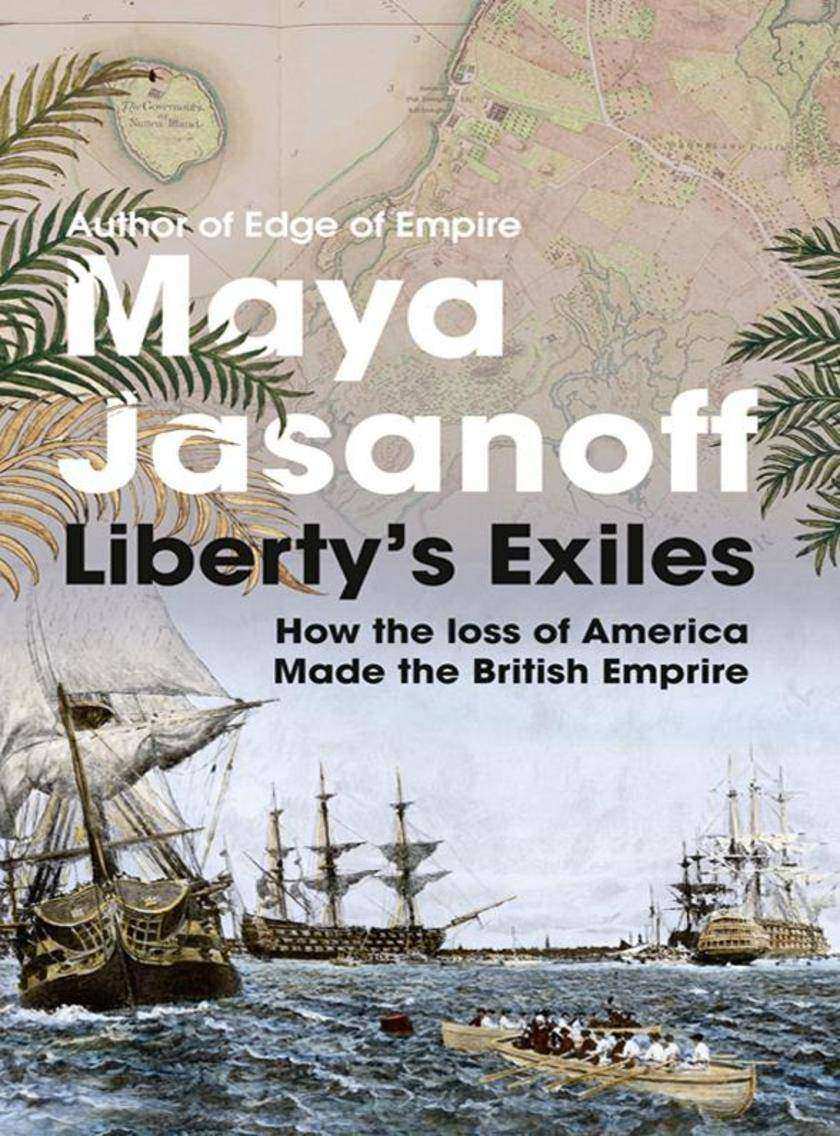
Liberty’s Exiles: The Loss of America and the Remaking of the British Empire.
¥90.84
From the author of ‘Edge of Empire’ comes a fascinating, thought-provoking and alternative history of the American Revolution – that of those Americans who remained loyal to the British Empire. George Washington's triumphant entrance into New York City in 1783 marked the end of the American Revolution; the British were gone, the patriots were back and a key moment inscribed itself in the annals of the emerging United States. Territorial independence had effectively begun. Although widely perceived as a struggle between nations, the reality of the American Revolution is a strikingly different one. This was a war in which Britons fought Britons and Americans fought Americans. It was also one in which hundreds of thousands of American Loyalists, from Georgia to Maine, took Britain's side. And, when George Washington arrived in New York on that November day, they were forced to face up to a very tough situation; would they be free? Would they be safe? Would they retain their property and their jobs? Would they have to leave? As many as 200,000 American Loyalists left the United States. They lost their homes and their possessions and had little choice but to build new lives elsewhere in the British Empire. In ‘The Imperial Exile’, Maya Jasanoff examines the story of the Loyalist refugees, focusing on the life of one woman - Elizabeth Johnston - and her family, who reconstructed their lives in four different imperial settings: St Augustine, Edinburgh, Jamaica and Nova Scotia. Their movements speak eloquently of a larger history of exile, mobility and the shaping of the British Empire in the wake of the American War. A rich, compelling and untold history.

I Didn’t Do It For You: How the World Used and Abused a Small African Nation (Te
¥81.03
One small East African country embodies the battered history of the continent: patronised by colonialists, riven by civil war, confused by Cold War manoeuvring, proud, colorful, with Africa's best espresso and worst rail service. Michela Wrong brilliantly reveals the contradictions and comedy, past and present, of Eritrea. Just as the beat of a butterfly’s wings is said to cause hurricanes on the other side of the world, so the affairs of tiny Eritrea reverberate onto the agenda of superpower strategists. This new book on Africa is from the author of the critically acclaimed In the Footsteps of Mr Kurtz. Eritrea is a little-known country scarred by decades of conflict and occupation. It has weathered the world's longest-running guerrilla war, and the dogged determination that secured victory against Ethiopia, its giant neighbour, is woven into the national psyche. Fascist Italy wanted Eritrea as the springboard for a new, racially-pure Roman empire, Britain sold off its industry for scrap, the US needed headquarters for its state-of-the-art spy station and the Soviet Union used it as a pawn in a proxy war. Michela Wrong reveals the breathtaking abuses this tiny nation has suffered and, with the sharp eye for detail that was the hallmark of her account of Mobutu's Congo, she tells the story of colonialism itself. Along the way, we meet a formidable Emperor, a guerrilla fighter who taught himself French cuisine in the bush, and a chemist who arranged the heist of his own laboratory. An arresting blend of travelogue and history, ‘I Didn't Do It For You’ pierces the dark heart of our colonial history.

The Ocean Railway
¥81.52
An epic social history of steamship travel from the 19th-century to the ‘Lusitania’, the ‘Mauretania’ and the ‘Titanic’. The great transatlantic steamships became emblems of an age, of a Victorian audacity of spirit-cathedrals to man's harnessing of new technology. Through the innovations and designs of key engineers and shipping magnates – Samuel Cunard, Isambard Kingdom Brunel and Edward Knights Collins – ‘the largest movable objects in human history' were created. To the wealthy, steamships represented glamorous travel, but to most they offered cheap passage out of Europe to the New World. At their peak, steamships delivered one million new Americans each year, transforming the world’s oceans from barriers into highways. In this fascinating history, Stephen Fox chronicles the tragedies that marked the evolution of the ocean liner, including the 1852 sinking of the ‘Arctic’, with the loss of three hundred and twenty-two lives, and the early 20th-century losses of the ‘Lusitania’ and the ‘Titanic’. Using contemporary records, diaries and writing, he penetrates the experience of transatlantic passage and examines the societies created on the vast floating cities, ‘a kind of third human environment, neither land nor sea but partaking of each, and bridging them in unprecedented ways’.
LZ-’75: Across America with Led Zeppelin
¥18.74
Stephen Davis’s brilliantly-written personal account of criss-crossing America with Led Zeppelin on their 1975 tour. A warts-and-all snapshot of the world’s biggest hard-rock band at their peak. As a young rock writer Stephen Davis landed the ultimate commission – touring America with Led Zeppelin. This is a personal account by Davis of his journey, which saw him crossing the country with the band on board the Starship, their famous Boeing passenger jet, complete with deep shag purple carpet, electric pianos, girlfriends and star-struck hangers-on. This is also the story of one of the hardest-living bands in the world at their peak. For Robert Plant, Jimmy Page, John Paul Jones and John Bonham, the most beautiful women in America tear their spangled jackets from them and riots start outside their gigs. LZ-75 captures a few perfect months in rock, when Led Zeppelin epitomised the free-living rock dream, but, like Icarus, their wings were already beginning to melt. It wouldn't be long before John Bonham died of a vodka overdose, and punk killed their brand of monumental rock. With it's up-close-and-personal accounts of band members, managers, groupies, fans and drug-dealers, there's a lot of Almost Famous about this book – Led Zep's 1975 tour is in fact the very one on which Cameron Crowe's film was based. Stephen Davis was barely twenty in 1975, but now he is recognised as one of the best rock writers in the world. He is the author of the mega-selling Hammer of the Gods – a biography of Led Zeppelin. He recently unearthed his notebooks of the 1975 tour – which he didn't use for Hammer of the Gods – to write LZ-75. LZ-75: Across America with Led Zeppelin is a wonderful and unique thing – a beautifully succinct account of a single moment in rock, when no lyric was too far-fetched, no drink went undrunk and no expense was ever, ever spared. It's a moment that will never be repeated.
S.C.O.R.E. for Life
¥134.68
Have you ever choked during a performanceHave you ever been told how much talent you have, yet you're not reaching itAre you self-conscious or doubtful during performancesDoes your level of concentration fluctuate wildlyDo you feel overwhelmed at timesWe all dream of overcoming our challenges. We dream of the perfect job, achieving new wealth, of living the life we choose in harmony with the people we love. For many of us, the dream stops there. We wonder what leads some extraordinary people to confront and exceed their goals and compete at the highest level, while others run in place, distracted by fears and a sense of intimidation. We seek the insights that will liberate us from anxiety and self-doubt. In this book, Jim Fannin shares a collection of ideas and daily exercises that transform everyday performers into true champions. Using the secrets of Fannin's time-tested S.C.O.R.E. System (Self-Discipline, Concentration, Optimism, Relaxation, and Enjoyment), S.C.O.R.E. for Life shows you how to balance and apply these five principles in every arena of life. The result: more moments, days, and years performing and thinking in the state of flow we call the "Zone," and more of the results and success that matter. Every chapter includes reader-friendly tests and exercises, like the "90-Second Rule" (a lesson in discipline) and "The Palm Tree Versus the Oak Tree" (a lesson in adaptability). For more than thirty years, Jim Fannin has coached hundreds of top-performing athletes and business leaders, who testify to what the S.C.O.R.E. System can do. It is a tried and proven blueprint for realizing our extraordinary human potential and overcoming the fears and worries that hold us back. With commitment and consistent use of this success formula, you will blaze new paths to personal and professional achievement.
A Gift Of Miracles
¥90.06
This treasury of all-new true miracle stories from the bestselling authors of Christmas Miracles, The Magic of Christmas Miracles, and Mothers' Miracles offers the real-life wonder their readers have come to love. Some highlights:A disk jockey's selection of music has an astounding unintended effect a comatose Polish woman begins to softly sing along with a song from her childhood.While body surfing, a man is slammed by a wave and hears his neck snap. Unable to move, he begins to swallow water to hasten death. Instead, he feels himself lifted from the water, gliding safely to shore.A school janitor befriends a student, only to learn that she is the daughter of his long-lost son and his very own granddaughter.A Gift of Miracles, like its predecessors, will remind readers and their families that in the midst of our hectic and sometimes frightening world, magic, mystery, and miracles happen. And that if we look hard enough in the corners of our own lives, we, too, can find miracles.
The Practice of Saying No
¥88.56
In The Practice of Saying No, beloved author and preacher Barbara Brown Taylor reflects on the meaning of keeping the Sabbath: of saying no to work and doing, but instead celebrating stopping, resting on the porch, and taking the time to recognize our interconnectedness. The Practice of Saying No will appeal to anyone seeking more meaning and spirituality in their everyday lives. Barbara Brown Taylor, acclaimed author of Leaving Church and An Altar in the World (from which this eSelect is taken), writes with the honesty of Elizabeth Gilbert (Eat, Pray, Love) and the spiritual depth of Anne Lamott (Grace, Eventually) and reveals how to encounter the sacred as a natural part of everyday life.
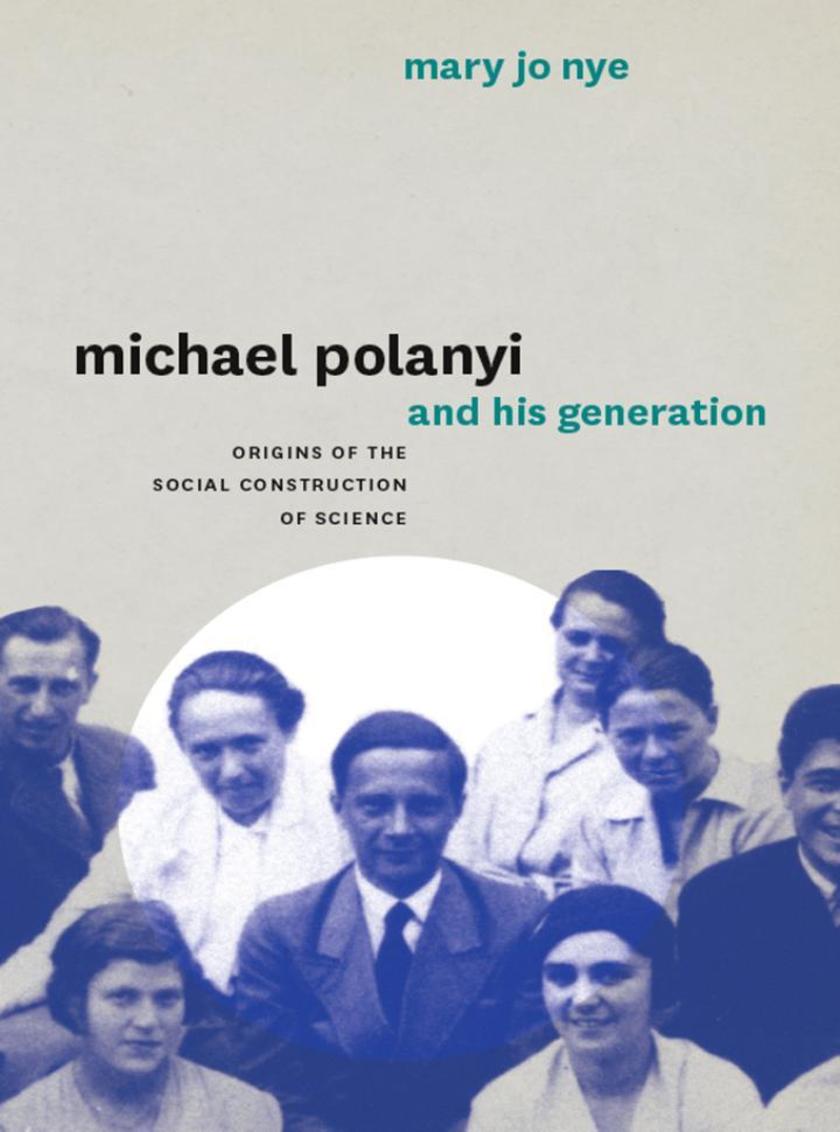
Michael Polanyi and His Generation
¥247.21
In Michael Polanyi and His Generation, Mary Jo Nye investigates the role that Michael Polanyi and several of his contemporaries played in the emergence of the social turn in the philosophy of science. This turn involved seeing science as a socially based enterprise that does not rely on empiricism and reason alone but on social communities, behavioral norms, and personal commitments. Nye argues that the roots of the social turn are to be found in the scientific culture and political events of Europe in the 1930s, when scientific intellectuals struggled to defend the universal status of scientific knowledge and to justify public support for science in an era of economic catastrophe, Stalinism and Fascism, and increased demands for applications of science to industry and social welfare.?At the center of this struggle was Polanyi, who Nye contends was one of the first advocates of this new conception of science. Nye reconstructs Polanyi's scientific and political milieus in Budapest, Berlin, and Manchester from the 1910s to the 1950s and explains how he and other natural scientists and social scientists of his generation-including J. D. Bernal, Ludwik Fleck, Karl Mannheim, and Robert K. Merton-and the next, such as Thomas Kuhn, forged a politically charged philosophy of science, one that newly emphasized the social construction of science.
Walter Ralegh's "e;History of the World"e …
¥247.21
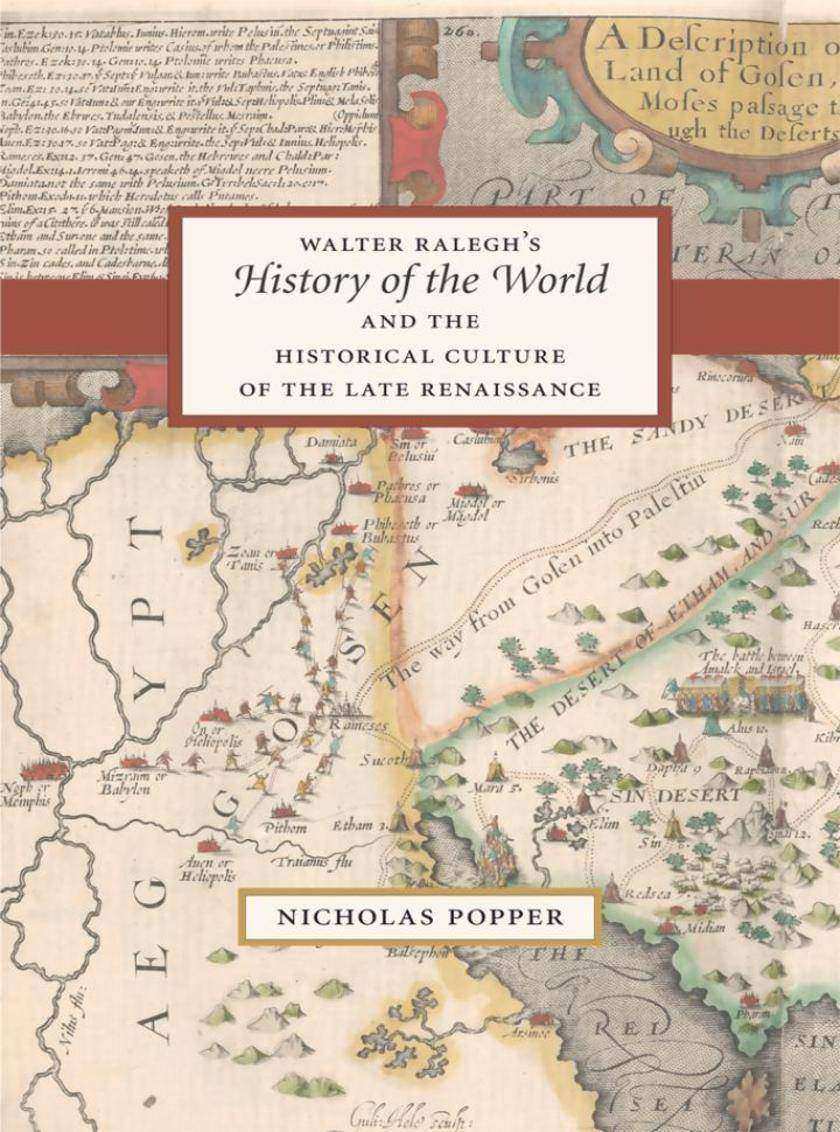
Imprisoned in the Tower of London after the death of Queen Elizabeth in 1603, Sir Walter Ralegh spent seven years producing his massive History of the World.?Created with the aid of a library of more than five hundred books that he was allowed to keep in his quarters, this incredible work of English vernacular would become a best seller, with nearly twenty editions, abridgments, and continuations issued in the years that followed.Nicholas Popper uses Ralegh's?History?as a touchstone in this lively exploration of the culture of history writing and historical thinking in the late Renaissance. From Popper we learn why early modern Europeans ascribed heightened value to the study of the past and how scholars and statesmen began to see historical expertise as not just a foundation for political practice and theory, but as a means of advancing their power in the courts and councils of contemporary Europe. The rise of historical scholarship during this period encouraged the circulation of its methods to other disciplines, transforming Europe's intellectual-and political-regimes. More than a mere study of Ralegh's History of the World, Popper's book reveals how the methods that historians devised to illuminate the past structured the dynamics of early modernity in Europe and England.
Recombinant University
¥329.62
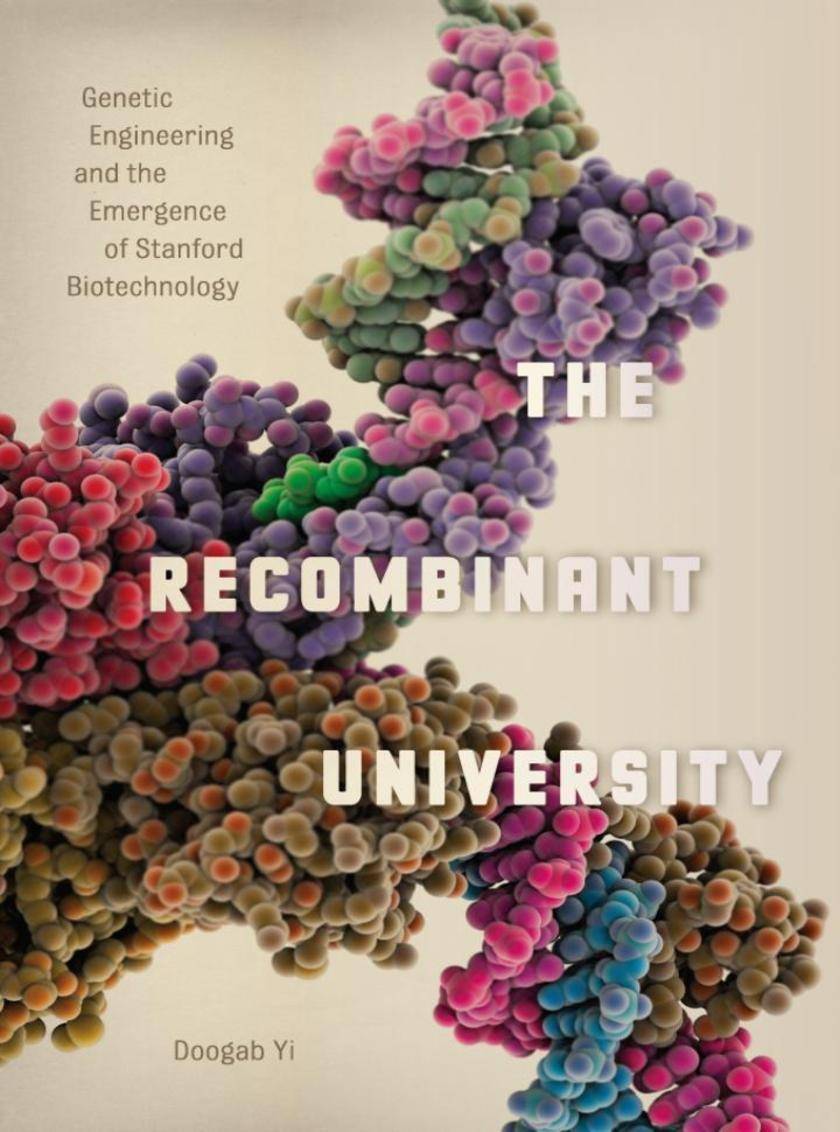
The advent of recombinant DNA technology in the 1970s was a key moment in the history of both biotechnology and the commercialization of academic research. Doogab Yi's The Recombinant University draws us deeply into the academic community in the San Francisco Bay Area, where the technology was developed and adopted as the first major commercial technology for genetic engineering. In doing so, it reveals how research patronage, market forces, and legal developments from the late 1960s through the early 1980s influenced the evolution of the technology and reshaped the moral and scientific life of biomedical researchers.Bay Area scientists, university administrators, and government officials were fascinated by and increasingly engaged in the economic and political opportunities associated with the privatization of academic research. Yi uncovers how the attempts made by Stanford scientists and administrators to demonstrate the relevance of academic research were increasingly mediated by capitalistic conceptions of knowledge, medical innovation, and the public interest. Their interventions resulted in legal shifts and moral realignments that encouraged the privatization of academic research for public benefit. The Recombinant University brings to life the hybrid origin story ofbiotechnology and the ways the academic culture of science has changed in tandem with the early commercialization of recombinant DNA technology.


