


 购物车
 个人中心

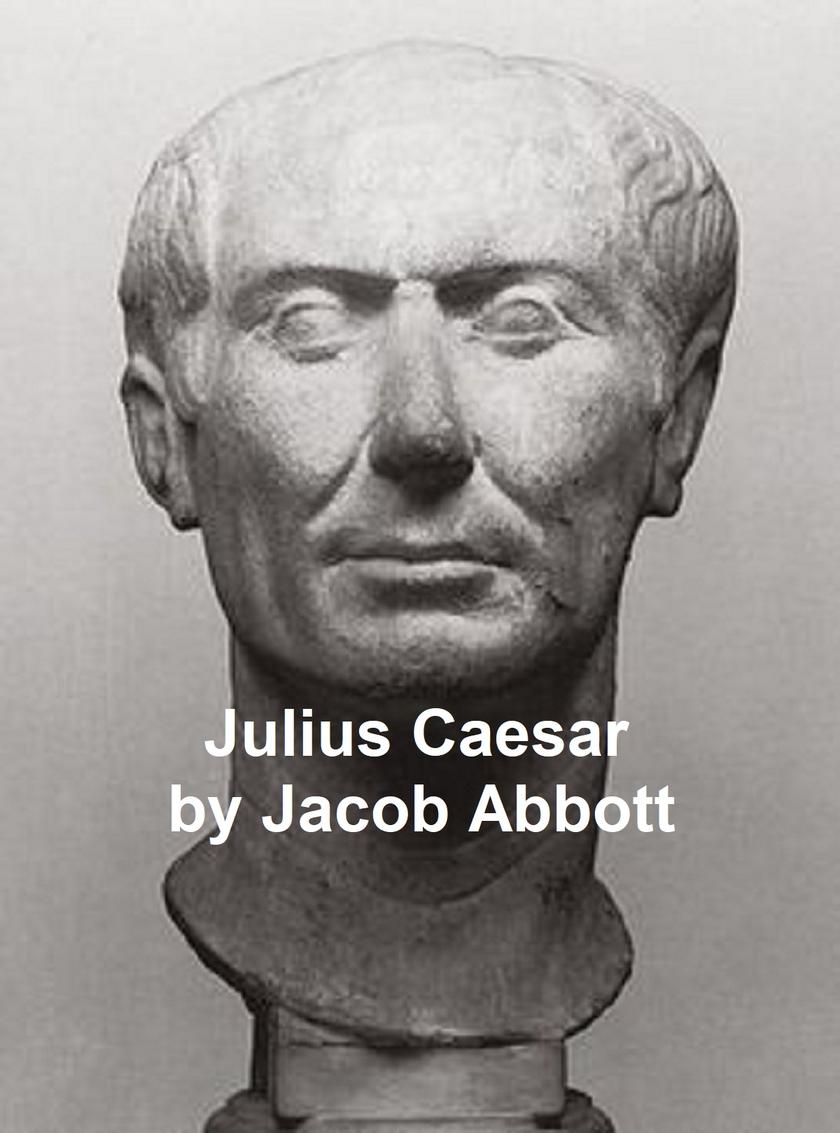
History of Julius Caesar
¥8.09
According to Wikipedia: "Jacob Abbott (November 14, 1803 – October 31, 1879) was an American writer of children's books. Abbott was born at Hallowell, Maine to Jacob and Betsey Abbott. He graduated from Bowdoin College in 1820; studied at Andover Theological Seminary in 1821, 1822, and 1824; was tutor in 1824-1825, and from 1825 to 1829 was professor of mathematics and natural philosophy at Amherst College; was licensed to preach by the Hampshire Association in 1826; founded the Mount Vernon School for Young Ladies in Boston in 1829, and was principal of it in 1829-1833; was pastor of Eliot Congregational Church (which he founded), at Roxbury, Massachusetts in 1834-1835; and was, with his brothers, a founder, and in 1843-1851 a principal of Abbott's Institute, and in 1845-1848 of the Mount Vernon School for Boys, in New York City. He was a prolific author, writing juvenile fiction, brief histories, biographies, religious books for the general reader, and a few works in popular science. He died in Farmington, Maine, where he had spent part of his time after 1839, and where his brother, Samuel Phillips Abbott, founded the Abbott School."
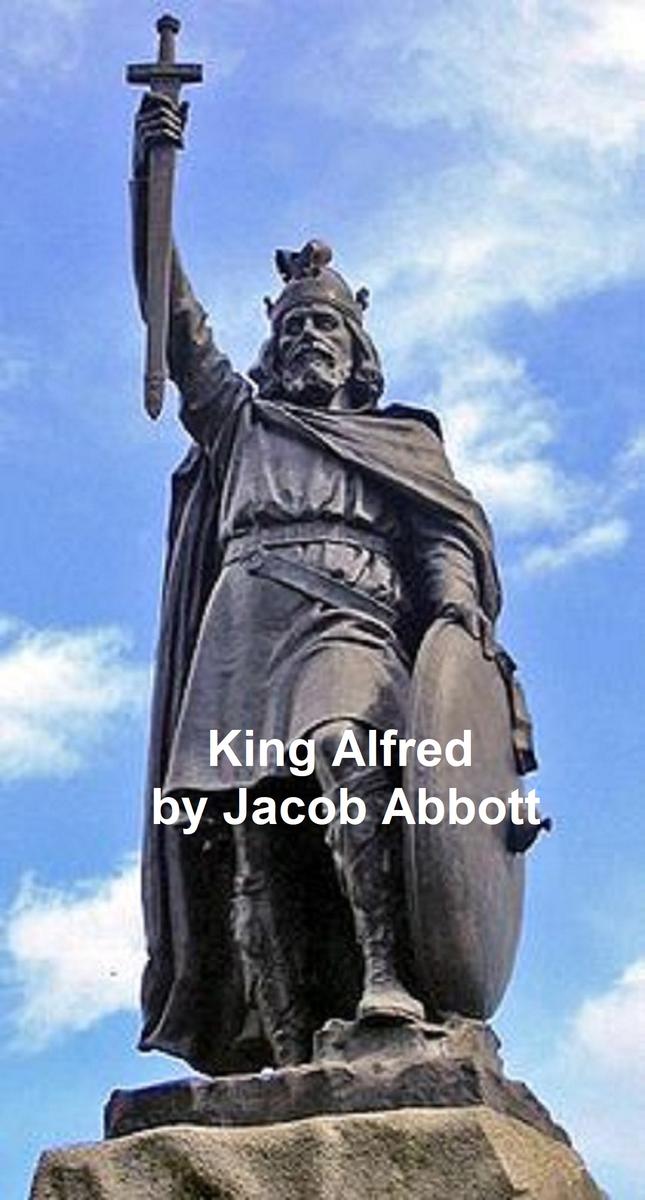
King Alfred of England
¥8.09
According to Wikipedia: "Jacob Abbott (November 14, 1803 – October 31, 1879) was an American writer of children's books. Abbott was born at Hallowell, Maine to Jacob and Betsey Abbott. He graduated from Bowdoin College in 1820; studied at Andover Theological Seminary in 1821, 1822, and 1824; was tutor in 1824-1825, and from 1825 to 1829 was professor of mathematics and natural philosophy at Amherst College; was licensed to preach by the Hampshire Association in 1826; founded the Mount Vernon School for Young Ladies in Boston in 1829, and was principal of it in 1829-1833; was pastor of Eliot Congregational Church (which he founded), at Roxbury, Massachusetts in 1834-1835; and was, with his brothers, a founder, and in 1843-1851 a principal of Abbott's Institute, and in 1845-1848 of the Mount Vernon School for Boys, in New York City. He was a prolific author, writing juvenile fiction, brief histories, biographies, religious books for the general reader, and a few works in popular science. He died in Farmington, Maine, where he had spent part of his time after 1839, and where his brother, Samuel Phillips Abbott, founded the Abbott School."
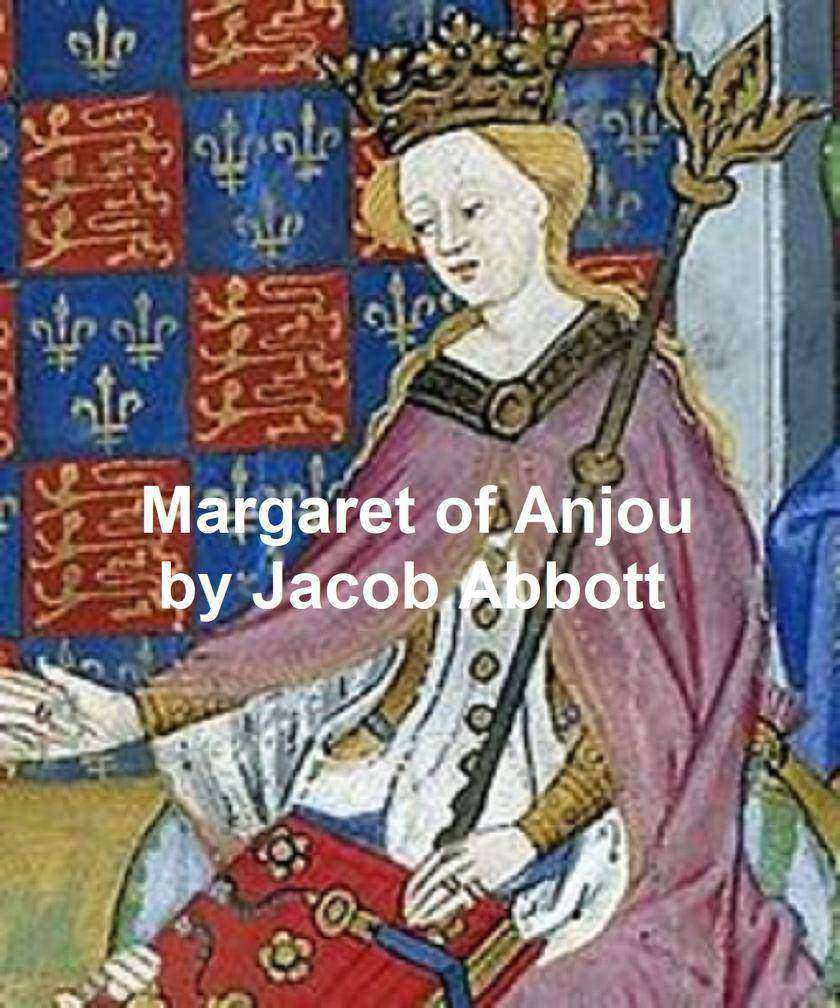
Margaret of Anjou
¥8.09
According to Wikipedia: "Jacob Abbott (November 14, 1803 – October 31, 1879) was an American writer of children's books. Abbott was born at Hallowell, Maine to Jacob and Betsey Abbott. He graduated from Bowdoin College in 1820; studied at Andover Theological Seminary in 1821, 1822, and 1824; was tutor in 1824-1825, and from 1825 to 1829 was professor of mathematics and natural philosophy at Amherst College; was licensed to preach by the Hampshire Association in 1826; founded the Mount Vernon School for Young Ladies in Boston in 1829, and was principal of it in 1829-1833; was pastor of Eliot Congregational Church (which he founded), at Roxbury, Massachusetts in 1834-1835; and was, with his brothers, a founder, and in 1843-1851 a principal of Abbott's Institute, and in 1845-1848 of the Mount Vernon School for Boys, in New York City. He was a prolific author, writing juvenile fiction, brief histories, biographies, religious books for the general reader, and a few works in popular science. He died in Farmington, Maine, where he had spent part of his time after 1839, and where his brother, Samuel Phillips Abbott, founded the Abbott School."
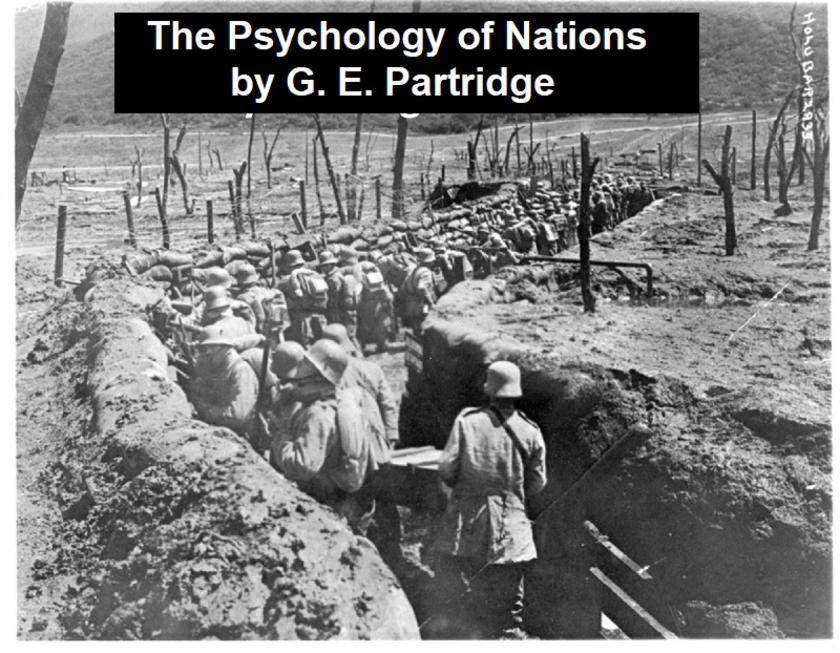
The Psychology of Nations
¥8.09
This "contribution to the philosophy of history" was first published soon after the First World War.

A Short History of England
¥8.09
History as seen by a famous novelist and essayist. The Introduction begins: "It will be very reasonably asked why I should consent, though upon a sort of challenge, to write even a popular essay in English history, who make no pretence to particular scholarship and am merely a member of the public. The answer is that I know just enough to know one thing: that a history from the standpoint of a member of the public has not been written. What we call the popular histories should rather be called the anti-popular histories. They are all, nearly without exception, written against the people; and in them the populace is either ignored or elaborately proved to have been wrong." According to Wikipedia: "Gilbert Keith Chesterton (29 May 1874 – 14 June 1936) was an influential English writer of the early 20th century. His prolific and diverse output included journalism, philosophy, poetry, biography, Christian apologetics, fantasy and detective fiction. Chesterton has been called the "prince of paradox." Time magazine, in a review of a biography of Chesterton, observed of his writing style: "Whenever possible Chesterton made his points with popular sayings, proverbs, allegories—first carefully turning them inside out."
The Civilization of Renaissance in Italy
¥8.09
Classic 19th century history book. According to Wikipedia: "Carl Jacob Christoph Burckhardt (May 25, 1818, Basel, Switzerland – August 8, 1897, Basel) was a historian of art and culture, and an influential figure in the historiography of each field. He is known as one of the major progenitors of cultural history, albeit in a form very different from how cultural history is conceived and studied in academia today. Siegfried Giedion described Burckhardt's achievement in the following terms: "The great discoverer of the age of the Renaissance, he first showed how a period should be treated in its entirety, with regard not only for its painting, sculpture and architecture, but for the social institutions of its daily life as well."Burckhardt's best known work is The Civilization of the Renaissance in Italy (1860).
History of the Britons
¥8.09
According to Wikipedia: "Nennius was a Welsh monk of the 9th century. He has traditionally been attributed with the authorship of the Historia Brittonum, based on the prologue affixed to that work, This attribution is widely considered a secondary (10th century) tradition. Nennius was a student of Elvodugus, commonly identified with the bishop Elfodd who convinced British ecclesiastics to accept the Continental dating for Easter, and who died in 809 according to the Annales Cambriae. Nennius is believed to have lived in the area made up by present day Brecknockshire and Radnorshire counties in Powys, Wales. He lived outside the Anglo-Saxon kingdoms, isolated by mountains in a rural society."
The Imitation of Christ
¥8.09
According to Wikipedia: "The Imitation of Christ (Latin: De Imitatione Christi) by Thomas à Kempis is a Christian devotional book. It was first composed in Latin ca.1418-1427.[1][2] It is a handbook for spiritual life arising from the Devotio Moderna movement, where Kempis was a member.[3] The Imitation is perhaps the most widely read devotional work next to the Bible,[2][4] and is regarded as a devotional and religious classic

The Cumberland Road
¥8.09
Volume 10 of the series "Historic Highways of America". According to Wikipedia: "Archer Butler Hulbert (26 Jan 1873 – 24 Dec 1933), historical geographer, writer, and professor of American history... He was Vice-Principal of the Putnam Military Academy, Zanesville, Ohio, until 1897. Hulbert then did newspaper work in Korea in 1897 and '98: he was editor of the Korean Independent (Seoul) and edited Far East American newspapers... He was Professor of American History at Marietta College 1904-18. After Marietta College, Hulbert became a lecturer in American History at Clark University from 1918 to 1919. He also was a lecturer at the University of Chicago in 1904 and 1923; and he served as archivist for the Harvard Commission on Western History (1912-16). Hulbert's last position was at Colorado College, from 1920 until his death... Hulbert's interest in trails dated from fishing trips taken during his college, when he noticed Indian trails. This interest led at first to his 16 volumes of Historic Highways of America (1902-05)."
Pioneer Roads, Part 2
¥8.09
Volume 12 of the series "Historic Highways of America". According to Wikipedia: "Archer Butler Hulbert (26 Jan 1873 – 24 Dec 1933), historical geographer, writer, and professor of American history... He was Vice-Principal of the Putnam Military Academy, Zanesville, Ohio, until 1897. Hulbert then did newspaper work in Korea in 1897 and '98: he was editor of the Korean Independent (Seoul) and edited Far East American newspapers... He was Professor of American History at Marietta College 1904-18. After Marietta College, Hulbert became a lecturer in American History at Clark University from 1918 to 1919. He also was a lecturer at the University of Chicago in 1904 and 1923; and he served as archivist for the Harvard Commission on Western History (1912-16). Hulbert's last position was at Colorado College, from 1920 until his death... Hulbert's interest in trails dated from fishing trips taken during his college, when he noticed Indian trails. This interest led at first to his 16 volumes of Historic Highways of America (1902-05)."
The Reign of Tiberius
¥8.09
"Out of the first six Annals of Tacitus, with his account of German and Life of Agricola." According to Wikipedia: "Publius (or Gaius) Cornelius Tacitus (c. AD 56 – after 117) was a senator and a historian of the Roman Empire. The surviving portions of his two major works—the Annals and the Histories—examine the reigns of the Roman Emperors Tiberius, Claudius, Nero, and those who reigned in the Year of the Four Emperors (AD 69). These two works span the history of the Roman Empire from the death of Augustus in AD 14 to the years of the First Jewish–Roman War in AD 70. There are substantial lacunae in the surviving texts, including a gap in the Annals that is four books long."
Conspiracy of Cataline and Jugurthine War
¥8.09
A literal translation. According to Wikipedia: "Gaius Sallustius Crispus, usually anglicised as Sallust (86 BC – c. 35 BC) was a Roman historian, politician, and novus homo from a provincial plebeian family. Sallust was born at Amiternum in the country of the Sabines and was a popularis, opposer of the old Roman aristocracy throughout his career, and later a partisan of Julius Caesar. Sallust is the earliest known Roman historian with surviving works to his name, of which we have Catiline's War (about the conspiracy in 63 BC of L. Sergius Catilina), The Jugurthine War (about Rome's war against the Numidians from 111 to 105 BC), and the Histories (of which only fragments survive). Sallust was primarily influenced by the Greek historian Thucydides and amassed great (and ill-gotten) wealth from his governorship of Africa."
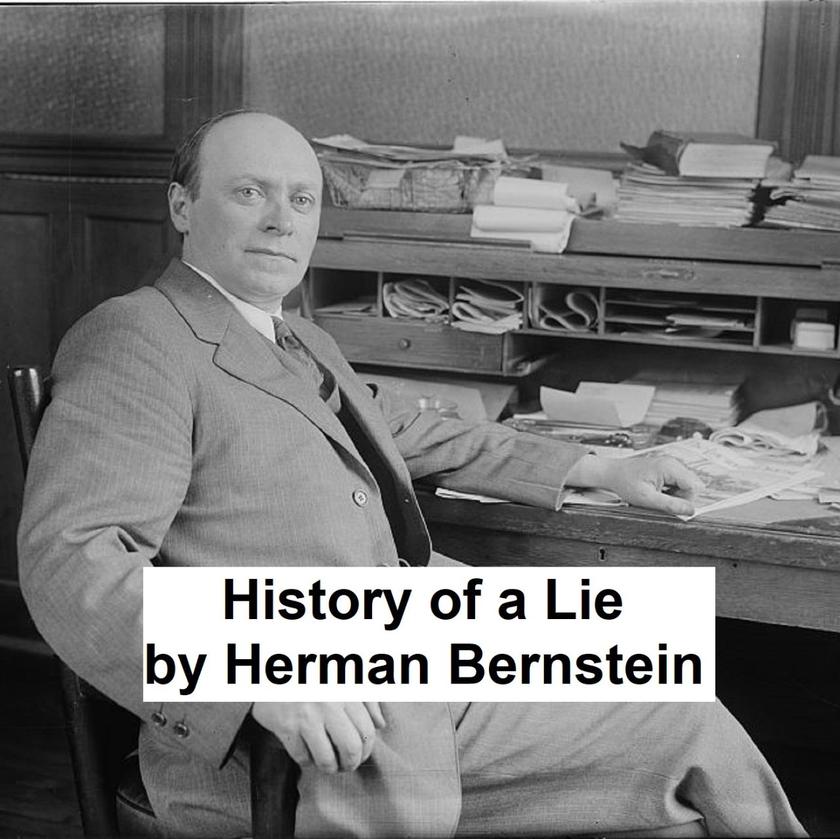
History of a Lie
¥8.09
Classic in the history of anti-semitism. First published in 1921. According to the Foreword: "This is the history of a Lie--of a cruel and terrible Lie invented for the purpose of defaming the entire Jewish people. Given out as fiction, by a German anti-Semitic writer, involved in the Waldeck forgery case, who concealed his identity under the pen-name of an Englishman, it was gradually changed and elaborated, and finally groomed as fact. Agents of the Russian secret police department and of the unscrupulous "Black Hundreds" then utilized this fiction as the framework for the "protocols" through which they sought to crush the Jews and prop up the tottering Russian dynasty." According to Wikipedia: "Herman Bernstein (September 21, 1876 – August 31, 1935) was an American journalist, poet, novelist, playwright, translator, Jewish activist, and diplomat."
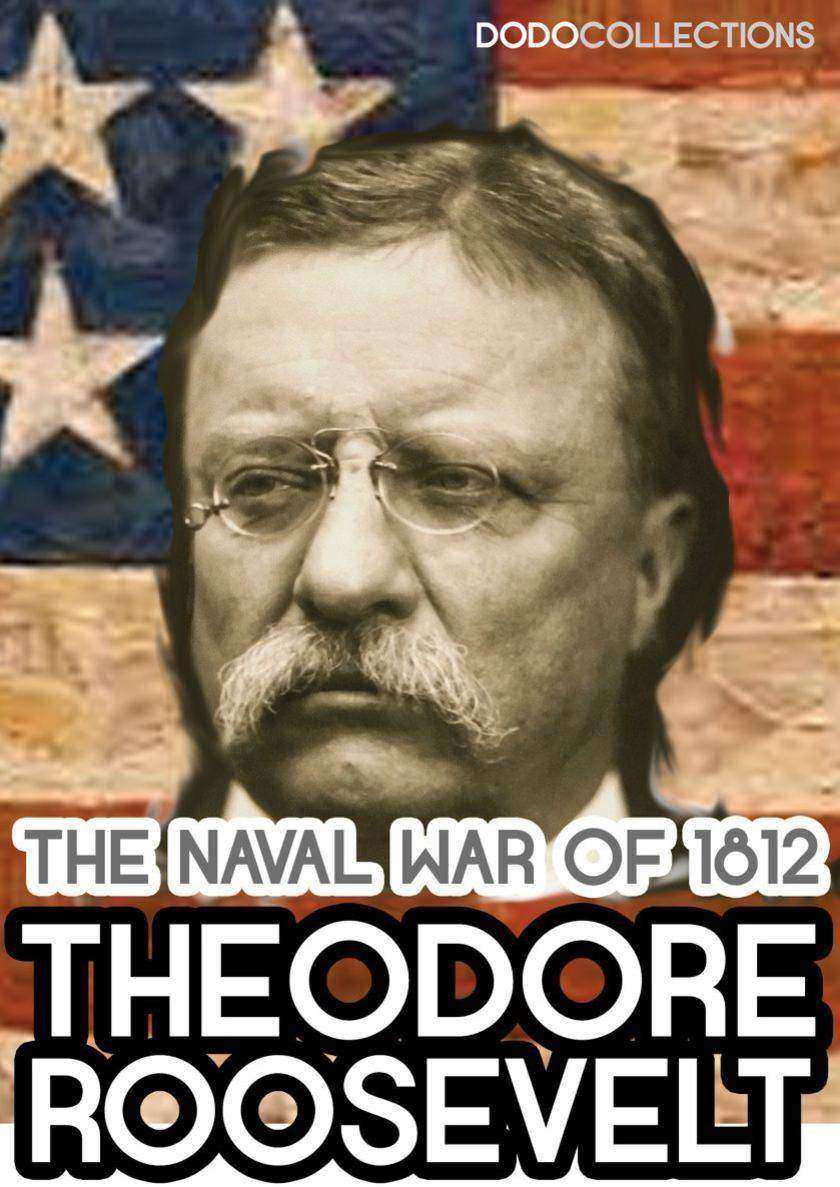
The Naval War of 1812
¥8.09
Dodo Collections brings you another classic from Theodore Roosevelt, ‘The Naval War of 1812.’ ? Roosevelt was 23 when this was published. He had just been elected to the New York State Assembly; it was begun as his senior thesis at Harvard. A masterpiece, for those of us who relish naval history. This is a remarkable piece of historical writing, based on original documents, ships’ logs, letters, official correspondence, study of blueprints and plans. He had to learn about sailing while he was writing the book. ? Theodore Roosevelt, Jr., also known as T.R., and to the public (but never to friends and intimates) as Teddy, was the twenty-sixth President of the United States, and a leader of the Republican Party and of the Progressive Movement. He became the youngest President in United States history at the age of 42. He served in many roles including Governor of New York, historian, naturalist, explorer, author, and soldier. Roosevelt is most famous for his personality: his energy, his vast range of interests and achievements, his model of masculinity, and his "cowboy" persona. Roosevelt was mostly home schooled by tutors and his parents. ? Biographer H. W. Brands argues that "The most obvious drawback to the home schooling Roosevelt received was uneven coverage of the various areas of human knowledge." He was solid in geography (as a result of self study during travels), and bright in history, biology, French, and German; however, he struggled in mathematics and the classical languages. He entered Harvard College on September 27, 1876; his father told him "Take care of your morals first, your health next, and finally your studies".
Critique of Pure Reason
¥8.09
According to Wikipedia: "Immanuel Kant (22 April 1724 – 12 February 1804) was an 18th-century German philosopher from the Prussian city of K?nigsberg (now Kaliningrad, Russia). He is regarded as one of the most influential thinkers of modern Europe and of the late Enlightenment. Kant created a new widespread perspective in philosophy which is influencing enlightened philosophy until the 21st Century. He published important works of epistemology as also scripts in coherence to religion, law and history. His most important work is the Critique of Pure Reason, an investigation into the limitations and structure of reason itself. It encompasses an attack on traditional metaphysics and epistemology, and highlights Kant's own contribution to these areas. The other main works of his maturity are the Critique of Practical Reason, which concentrates on ethics, and the Critique of Judgment, which investigates aesthetics and teleology."

The Kingdom in History and Prophecy
¥8.09
According to Wikipedia: "Lewis Sperry Chafer (February 27, 1871 – August 22, 1952) was the founder and first president of Dallas Theological Seminary, and an influential founding member of modern Christian Dispensationalism.
Satan
¥8.09
According to Wikipedia: "Lewis Sperry Chafer (February 27, 1871 – August 22, 1952) was the founder and first president of Dallas Theological Seminary, and an influential founding member of modern Christian Dispensationalism.
Common Sense, Plus Burke's Speech on Conciliation with America
¥8.09
This file includes both Common Sense by Thomas Paine (1776) and Edmund Burke's Speech on Conciliation with America (1775). According to Wikipedia: "Common Sense is a pamphlet written by Thomas Paine. It was first published anonymously on January 10, 1776, during the American Revolution. Common Sense, signed "Written by an Englishman", became an immediate success... Edmund Burke PC (12 January [NS] 1729–9 July 1797) was an Irish statesman, author, orator, political theorist and philosopher who, after moving to England, served for many years in the House of Commons of Great Britain as a member of the Whig party. He is mainly remembered for his support of the cause of the American Revolutionaries, and for his later opposition to the French Revolution. The latter led to his becoming the leading figure within the conservative faction of the Whig party, which he dubbed the "Old Whigs", in opposition to the pro–French Revolution "New Whigs", led by Charles James Fox... In the House of Commons on 22 March 1775 Burke delivered a speech (published in May 1775) on reconciliation with America."
Creative Unity
¥8.09
According to Wikipedia: "Rabindranath Tagore (7 May 1861 – 7 August 1941), sobriquet Gurudev, was an Indian-Bengali polymath who reshaped his region's literature and music. Author of Gitanjali and its "profoundly sensitive, fresh and beautiful verse", he became the first non-European Nobel laureate by earning the 1913 Prize in Literature. In translation his poetry was viewed as spiritual and mercurial; his seemingly mesmeric personality, flowing hair, and other-worldly dress earned him a prophet-like reputation in the West. His "elegant prose and magical poetry" remain largely unknown outside Bengal."
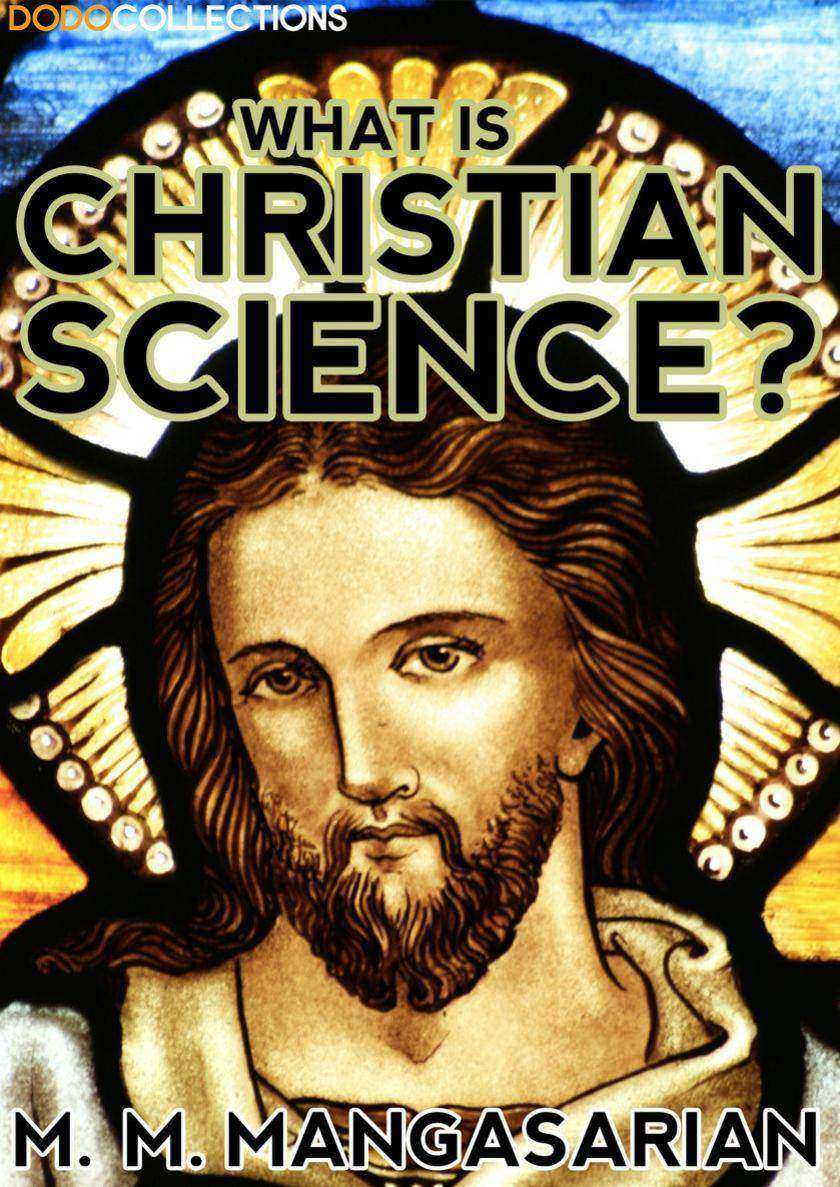
What is Christian Science?
¥8.09
Dodo Collections brings you another classic from M.M Mangasarian, ‘What is Christian Science?’ In this book the author makes an earnest endeavor to understand Christian Science and define its mission. He scrupulously verifies all his citations and references, and appeals to the judgment of those who are willing to hear both sides of the question. Mangasar Magurditch Mangasarian was an American rationalist and secularist of Armenian descent. Mangasarian considered himself a Rationalist or a Secularist not an Atheist, since he considered atheism a non-verifiable belief system. He was pastor at a Presbyterian church in Philadelphia, which he resigned from, becoming an independent preacher and a lecturer on "independent religion" in New York.
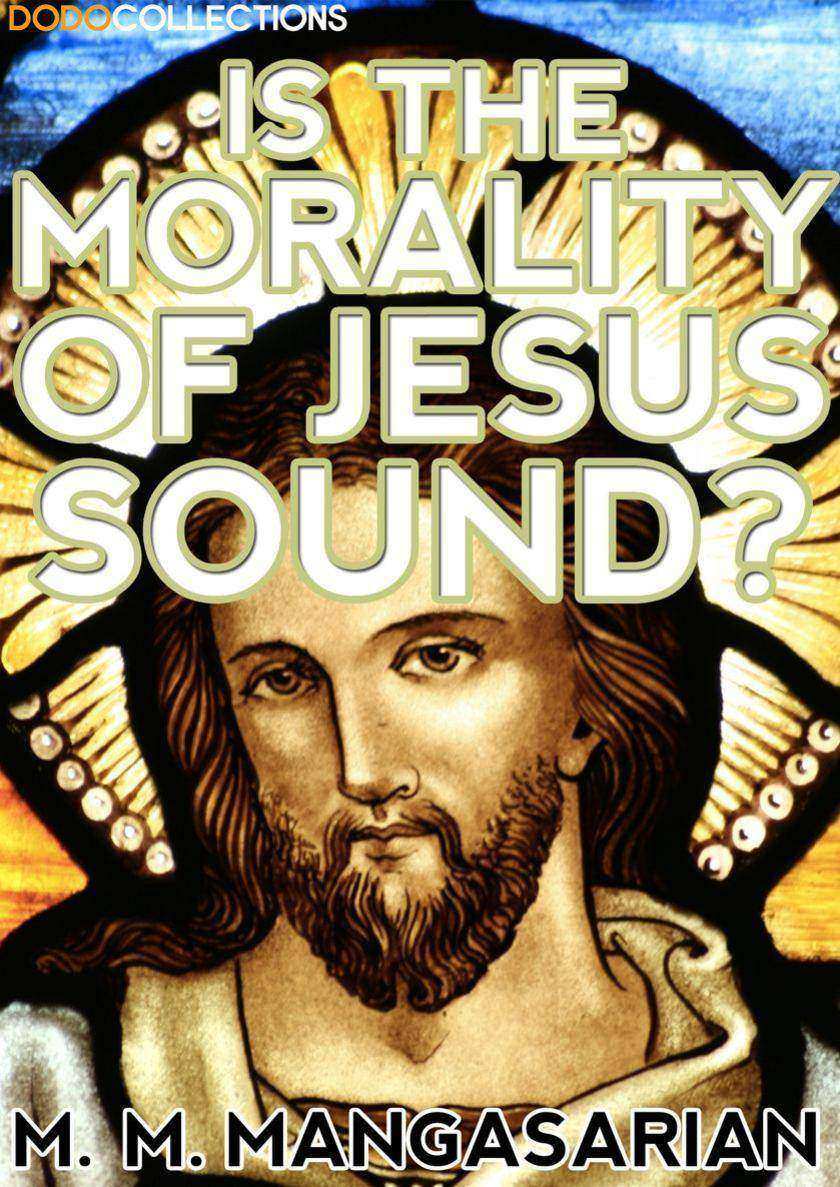
Is the Morality of Jesus Sound?
¥8.09
Dodo Collections brings you another classic from M. M. Mangasarian, ‘Is the Morality of Jesus Sound?’ ? This book is based upon the famous lecture delivered before the Independent Religious Society, Chicago by Mangasarian. ? Born in Mashger (now within Turkey) in the Ottoman Empire, M. M. Mangasarian attended Robert College in Constantinople, and was ordained as minister in Marsovan in 1878. In about 1880 he enrolled at Princeton University. He was pastor at a Presbyterian church in Philadelphia from 1882 to 1885, when he resigned, becoming an independent preacher and a lecturer on "independent religion" in New York. In 1892 he became leader of the Ethical Culture Society of Chicago, a group established by Felix Adler. In 1900 he organized the Independent Religious Society of Chicago, a rationalist group, of which he remained pastor until 1925. He retired to Piedmont, California, where he lived for the rest of his life. ? During his life Mangasarian wrote a number of books. His most popular, including The Truth About Jesus — Is He a Myth? (1909) andThe Bible Unveiled (1911), deal with the evidence against the existence of an historical Jesus. He also wrote hundreds of essays and lectures on questions of the times. His books and essays were translated into French, German, Spanish, and other foreign languages. The general subject of his writing was religious criticism and the philosophy of religion. Mangasarian considered himself a Rationalist or a Secularist not an Atheist, since he considered atheism a non-verifiable belief system.


