


 购物车
 个人中心

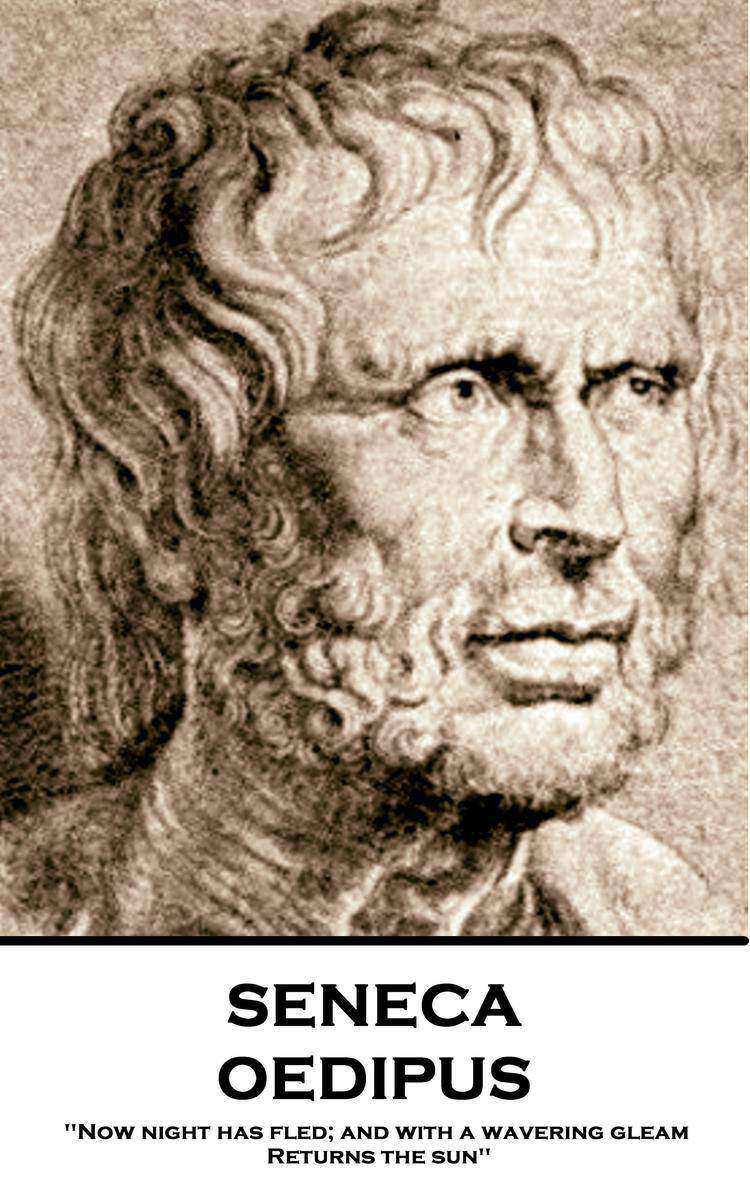
Oedipus - 'Now night has fled; and with a wavering gleam Returns the sun''
¥14.03
Lucius Annaeus Seneca, more readily known as Seneca the Younger, was born at Cordoba in the Roman province of Baetica in Hispania in approx 4 BC.Seneca attests that he was taken to Rome at a young age and educated in literature, grammar, and rhetoric; the standard education of high-born Romans. He also received philosophical training.Much of his life is not well documented but accounts do lean towards a pattern of ill-health at times. His breathing difficulties are thought to be the result of asthma and during his mid-twenties he contracted tuberculosis.He was sent to Egypt to live with his aunt, whose husband, Gaius Galerius, was Prefect of Egypt. In 31 AD he returned to Rome with her and, with her influence, was elected quaestor and with it the right to sit in the Roman Senate.Seneca's early career as a senator was successful and he was fulsomely praised for his oratory. A story related that emperor Caligula was so offended by Seneca's oratorical success that he ordered him to commit suicide. Seneca's ill-health prevented that.In 41 AD, Claudius became emperor, and Seneca was promptly cited by the new empress Messalina of adultery with Julia Livilla, the sister of Caligula and Agrippina.After trial the Senate pronounced a death sentence, which Claudius then commuted to exile. Seneca was to now spend the next eight years in Corsica. From this period of exile survive two of his earliest works-both consolations.In 49 AD Agrippina married her uncle Claudius, and through her Seneca was recalled to Rome. Agrippina appointed him, as tutor to her son, the future emperor Nero.Nero's early rule, during which he followed the advice of Seneca and Burrus, was competent. However, within a few years both Seneca and Burrus had lost their influence.In 58 AD the senator Publius Suillius Rufus made a series of public attacks on him saying that, Seneca had acquired a personal fortune of three hundred million sestertii. In response, Seneca brought a series of prosecutions for corruption against him. Suillius was dispatched into exile.After Burrus's death in 62 AD, Seneca's influence further declined. He adopted a quiet lifestyle at his country estates, concentrating on his studies and seldom visiting Rome. It was during these final few years that he composed two of his greatest works: 'Naturales Quaestiones'-an encyclopedia of the natural world; and his 'Letters to Lucilius'-which document his philosophical thoughts.In AD 65, Seneca was caught up in the aftermath of the Pisonian plot to kill Nero. Nero ordered him to kill himself. Seneca followed tradition by opening several veins in order to bleed to death. It was a sad conclusion for a man who has been called the first great Western thinker on the complex nature and role of gratitude in human relationships.
Tempest
¥17.56
William Shakespeare was born in Stratford-upon-Avon in late April 1565 and baptised there on 26th April. He was one of eight children. Little is known about his life but what is evident is the enormous contribution he has made to world literature. His writing was progressive, magnificent in scope and breathtaking in execution. His plays and sonnets helped enable the English language to speak with a voice unmatched by any other. William Shakespeare died on April 23rd 1616, survived by his wife and two daughters. He was buried two days after his death in the chancel of the Holy Trinity Church. The epitaph on the slab which covers his grave includes the following passage, Good friend, for Jesus's sake forbear, To dig the dust enclosed here. Blessed me the man that spares these stones, And cursed be he that moves my bones. Here we publish his comedy from 1611 'The Tempest'.
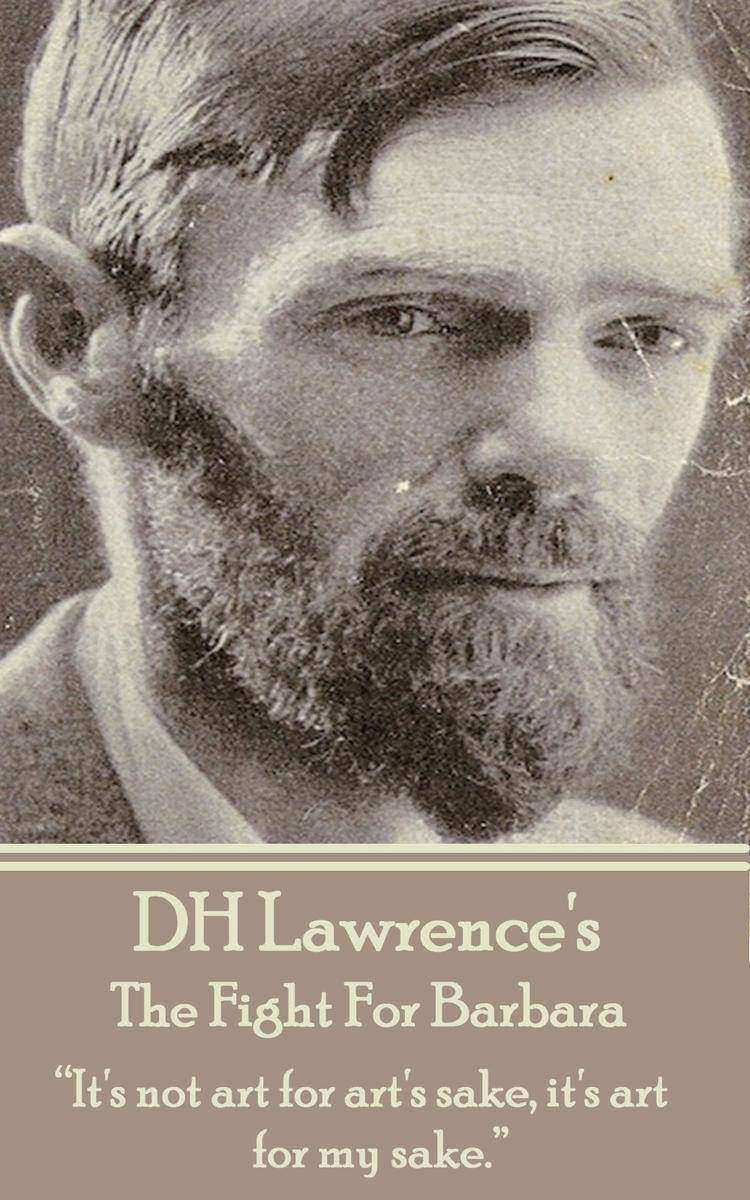
Fight For Barbara - It's not art for art's sake, it's art for my sake.
¥35.22
For many of us DH Lawrence was a schoolboy hero. Who can forget sniggering in class at the mention of Women In Love or Lady Chatterley's Lover? Lawrence was a talented if nomadic writer whose novels were passionately received, suppressed at times and generally at odds with Establishment values. This of course did not deter him. At his death in 1930 at the young age of 44 he was more often thought of as a pornographer but in the ensuing years he has come to be more rightly regarded as one of the most imaginative writers these shores have produced. As well as his novels and of course his poetry - he wrote in excess of 800 of them he was also a very talented playwright. These works have not been given quite the attention they deserve. Here we publish 'The Fight For Barbara'.
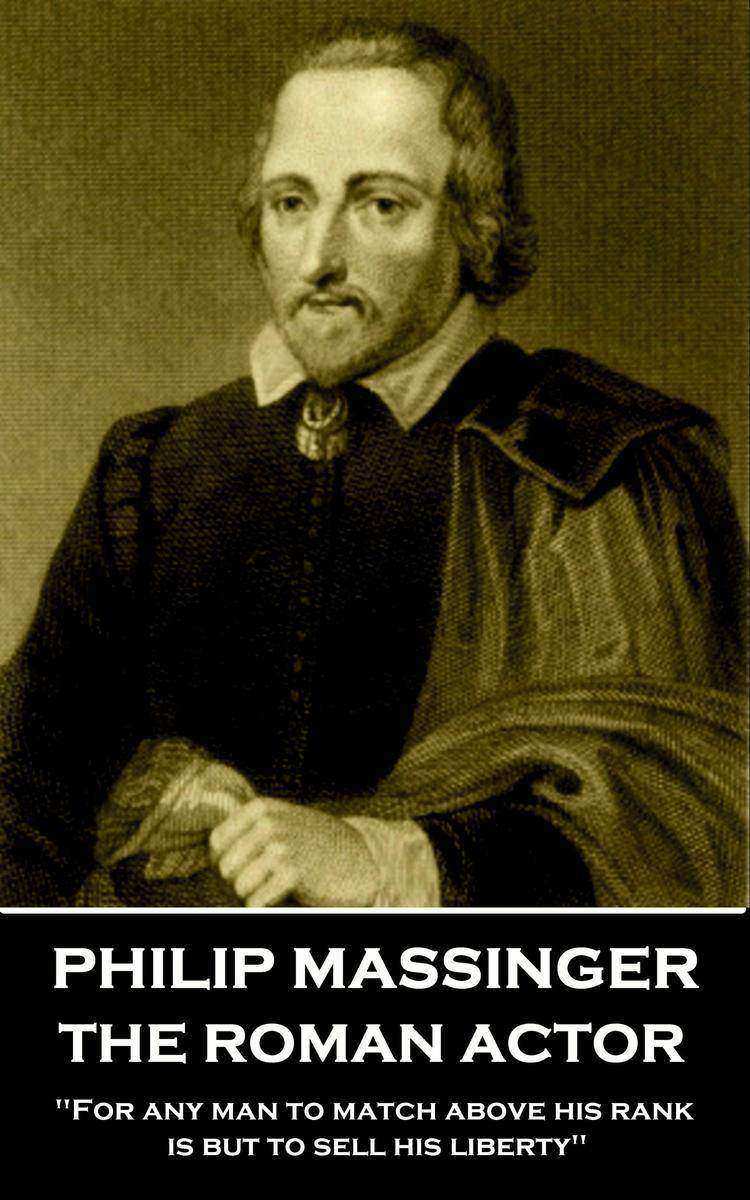
Roman Actor - For any man to match above his rank is but to sell his liberty
¥23.45
Philip Massinger was baptized at St. Thomas's in Salisbury on November 24th, 1583.Massinger is described in his matriculation entry at St. Alban Hall, Oxford (1602), as the son of a gentleman. His father, who had also been educated there, was a member of parliament, and attached to the household of Henry Herbert, 2nd Earl of Pembroke. The Earl was later seen as a potential patron for Massinger.He left Oxford in 1606 without a degree. His father had died in 1603, and accounts suggest that Massinger was left with no financial support this, together with rumours that he had converted to Catholicism, meant the next stage of his career needed to provide an income.Massinger went to London to make his living as a dramatist, but he is only recorded as author some fifteen years later, when The Virgin Martyr (1621) is given as the work of Massinger and Thomas Dekker.During those early years as a playwright he wrote for the Elizabethan stage entrepreneur, Philip Henslowe. It was a difficult existence. Poverty was always close and there was constant pleading for advance payments on forthcoming works merely to survive.After Henslowe died in 1616 Massinger and John Fletcher began to write primarily for the King's Men and Massinger would write regularly for them until his death.The tone of the dedications in later plays suggests evidence of his continued poverty. In the preface of The Maid of Honour (1632) he wrote, addressing Sir Francis Foljambe and Sir Thomas Bland: "e;I had not to this time subsisted, but that I was supported by your frequent courtesies and favours."e;The prologue to The Guardian (1633) refers to two unsuccessful plays and two years of silence, when the author feared he had lost popular favour although, from the little evidence that survives, it also seems he had involved some of his plays with political characters which would have cast shadows upon England's alliances.Philip Massinger died suddenly at his house near the Globe Theatre on March 17th, 1640. He was buried the next day in the churchyard of St. Saviour's, Southwark, on March 18th, 1640. In the entry in the parish register he is described as a "e;stranger,"e; which, however, implies nothing more than that he belonged to another parish.
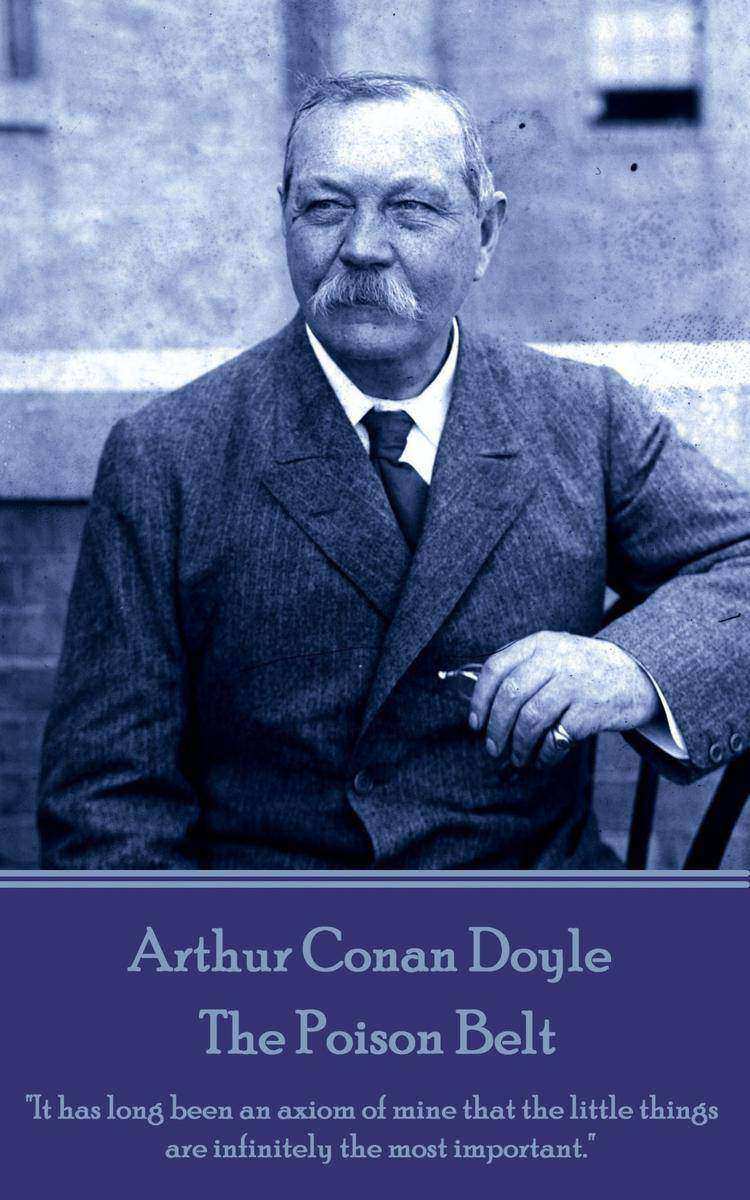
Arthur Conan Doyle
¥21.09
Arthur Conan Doyle's The Poison Belt is another work of fiction by the author of the celebrated masterpiece The Adventures of Sherlock Holmes. The novella centers around apocalyptic disasters that threaten to end human existence on Earth. Professor Challenger, an English scientist who is interested in preserving nature and human life, anticipates the Earth's contact with a poison belt of ether. The dangerous gas is believed to have the power to suffocate all living beings to death. Professor Challenger invites his closest companions, Malone, Roxton and Summerlee, to join him and his wife in his house. They are asked to bring oxygen tanks with them to find that Challenger has prepared a sealed room to protect their lives. Later, from their little shelter, Challenger's team watch the destruction of the outside world and the dying of almost everything. When they finally run out of oxygen, they are pushed to get out of the sealed room. Yet, to their surprise, they do not die. The Earth has passed through the poison belt and humanity has survived.
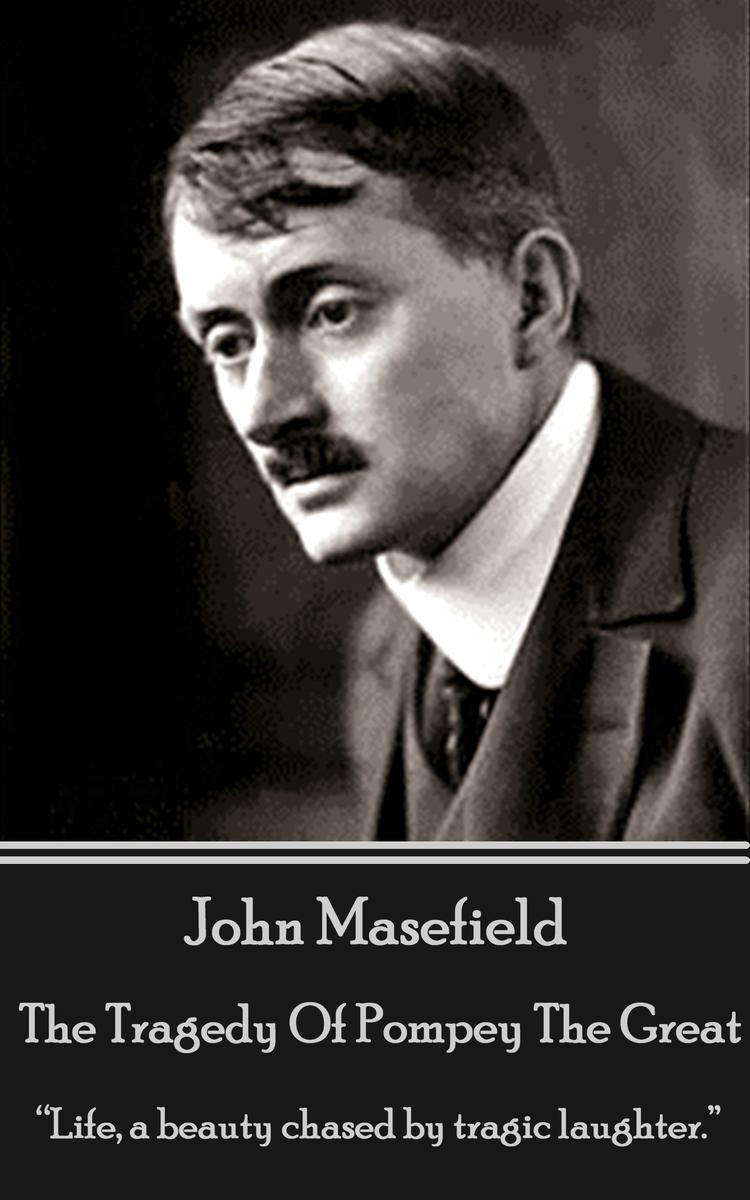
Tragedy Of Pompey The Great - Life, a beauty chased by tragic laughter.
¥32.86
John Edward Masefield was born in 1878 in the sleepy market town of Ledbury in rural Hertfordshire. An idyllic childhood was ruined when he was left an orphan and sent to live with an Aunt who decided his education and life would be better spent at sea. At age 13 he boarded a school ship and there his love of writing and reading blossomed. By 1899 he began to publish and apart from brief service during World War I he now had a life of writing and lecture tours. He published much; novels, poetry and even an account of the disastrous war effort in the Dardanelles at Gallipoli. Upon the death of Robert Bridges in 1930, Masefield was given the prestigious position of Poet Laureate, a role he would fulfill until his death; the only poet to hold the position for a longer period was Alfred, Lord Tennyson. Despite later ill health and the death of his wife in 1960, Masefield continued to write. In 1966, he published his last book of poems, In Glad Thanksgiving, at the age of 88. In the latter part of 1966 gangrene was diagnosed in his ankle. This gradually spread through his leg and claimed his life on May 12, 1967. He was cremated and his ashes placed in the Poet's Corner of Westminster Abbey. Here we present The Tragedy Of Pompey The Great.
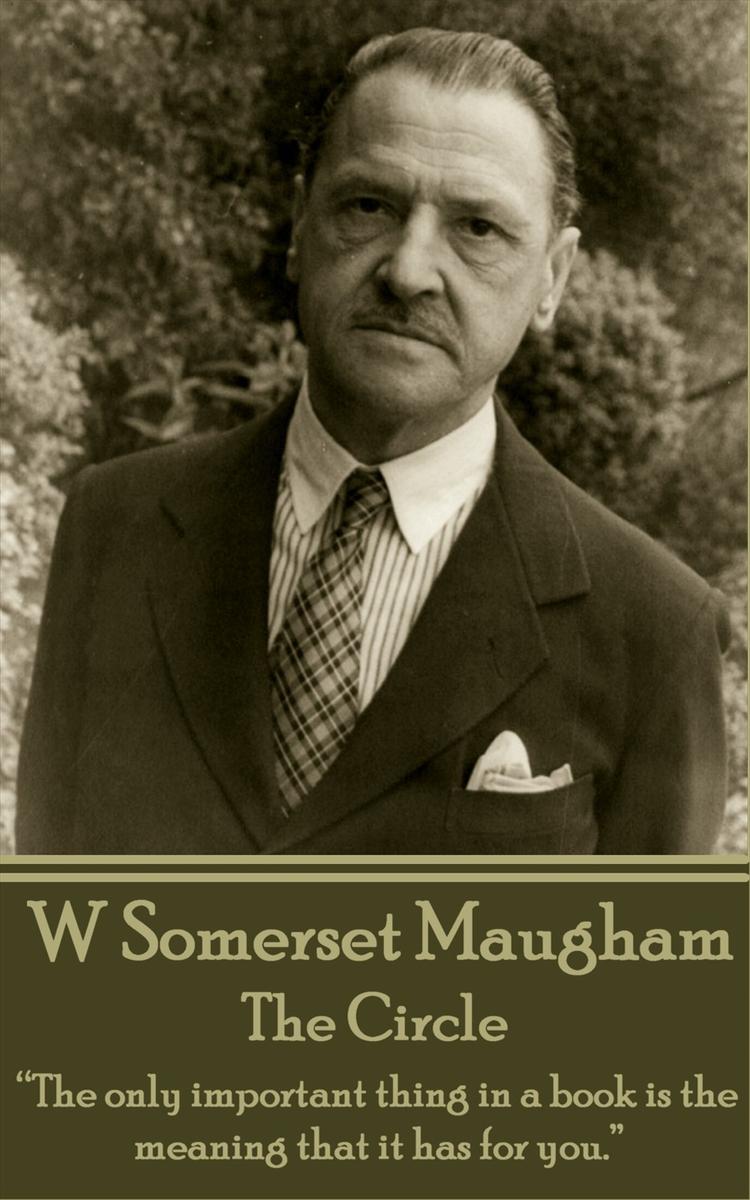
Circle - The only important thing in a book is the meaning that it has for you.
¥26.98
William Somerset Maugham was born on 25 January 1874 and was to become a playwright and novelist of staggering talent. Losing both his parents at age 10, he was raised by a paternal uncle. Maugham eventually trained and qualified as a doctor. The initial print run of his first novel, Liza of Lambeth, published in 1897, sold out so rapidly that Maugham gave up medicine to write full-time. His life was certainly full, as the short biography at the end of this book will attest to, but it is also a life full of marvellous works and dedication to his art. Here we publish The Circle.

Noble Gentleman - Free from the clamor of the troubled Court
¥38.75
The English dramatists Francis Beaumont and John Fletcher, collaborated in their writing during the reign of James I of England (James VI of Scotland, 1567-1625; in England he reigned from 1603).Beaumont & Fletcher began to collaborate as writers soon after they met. After notable failures of their solo works their first joint effort, Philaster, was a success and tragicomedy was the genre they explored and built upon. There would be many further successes to follow.There is an account that at the time the two men shared everything. They lived together in a house on the Bankside in Southwark, "e;they also lived together in Bankside, sharing clothes and having one wench in the house between them."e; Or as another account puts it "e;sharing everything in the closest intimacy."e;Whatever the truth of this they were now recognised as perhaps the best writing team of their generation, so much so, that their joint names was applied to all the works in which either, or both, had a pen including those with Philip Massinger, James Shirley and Nathan Field.The first Beaumont and Fletcher folio of 1647 contained 35 plays; 53 plays were included in the second folio in 1679. Other works bring the total plays in the canon to about 55. However there appears here to have been some duplicity on the account of the publishers who seemed to attribute so many to the team. It is now thought that the work between solely by Beaumont and Fletcher amounts to approximately 15 plays, though of course further works by them were re-worked by others and the originals lost.After Beaumont's early death in 1616 Fletcher continued to write and, at his height was, by many standards, the equal of Shakespeare in popularity until his own death in 1625.
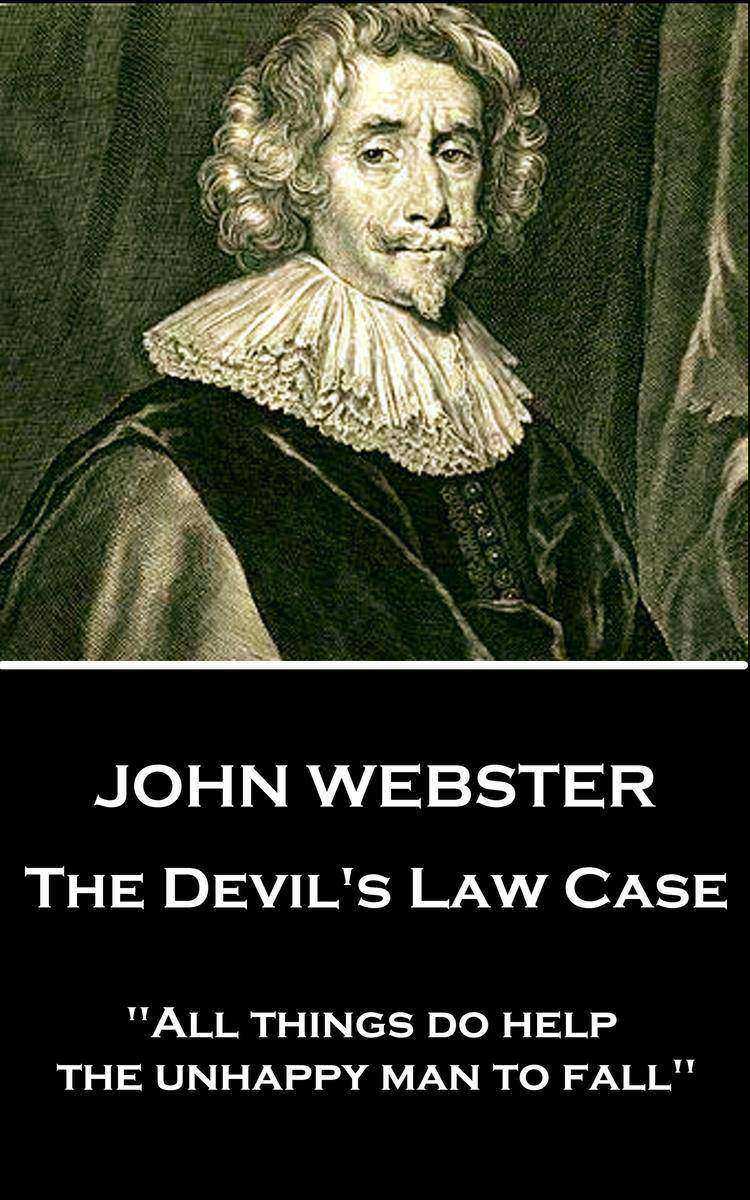
Devil's Law Case - All things do help the unhappy man to fall
¥25.80
John Webster is known primarily for his two Jacobean tragedies, The Duchess of Malfi and The White Devil. Much of the detail and chronology of his life that led to these two pivotal works is, however, unknown. His father, a carriage maker also named John Webster, married a blacksmith's daughter, Elizabeth Coates, on November 4th, 1577, and it is likely that Webster was born within a year or two in or near London. The family lived in St. Sepulchre's parish. Both his father and his uncle, Edward Webster, were Freemen of the Merchant Taylors' Company and Webster attended Merchant Taylors' School in Suffolk Lane, London. Some accounts say he began to study law but nothing is certain although there are some legal aspects to his later works to suggest this may have been so. By 1602, Webster was employed working as part of various teams of playwrights on history plays, though unfortunately most were never printed and therefore do not survive. These include a tragedy Caesar's Fall (written with Michael Drayton, Thomas Dekker, Thomas Middleton and Anthony Munday), and a collaboration with Thomas Dekker; Christmas Comes but Once a Year (1602). This factory line assembly of plays may seem rather odd to us today but plays then ran for much shorter durations and consequently a steady supply had to be assured. Webster's relationship with Dekker seems to have been a good one. Together they wrote Sir Thomas Wyatt, printed in 1607, although it is thought first performed in 1602 and two city comedies, Westward Ho! in 1604 and Northward Ho! in 1605. It seems Webster also adapted, in 1604, John Marston's The Malcontent for staging by the King's Men. On March 18th, 1606 Webster married the 17-year-old Sara Peniall at St Mary's Church, Islington. Sara was 7 months pregnant and marrying during Lent required the issuing of a special permit, hence the certainty of the date. Their first child, John, was baptised at the parish of St Dunstan-in-the-West on March 8th, 1606. Records show that on the death of a neighbour, who died in 1617, several bequests were made to the Webster family and it is therefore thought that other children were born to the couple. Despite his ability to write comedy, and to collaborate with others, Webster is remembered best for his sole authorship on two brooding English tragedies based on Italian sources. The White Devil, retells the intrigues involving Vittoria Accoramboni, an Italian woman assassinated at the age of 28. It was performed at the open-air Red Bull Theatre in 1612 but was unsuccessful, perhaps being too high brow for a working-class audience. In 1614 The Duchess of Malfi was first performed by the King's Men, most probably in the indoor Blackfriars Theatre and to a more high-brow audience. It proved to be more successful. The play Guise, based on French history, was also written but him but no text has survived. Webster wrote one more play on his own: The Devil's Law Case (c. 1617-1619), a tragicomedy. He continued to write thereafter but always in collaboration and usually city comedies; Anything for a Quiet Life (c. 1621), with Thomas Middleton, and A Cure for a Cuckold (c. 1624), with William Rowley. In 1624, he also co-wrote a topical play about a recent scandal, Keep the Widow Waking (with John Ford, Rowley and Dekker). The play itself is lost, although its plot is known from a court case. There is also some certainty that he contributed to the tragicomedy The Fair Maid of the Inn with John Fletcher, John Ford, and Phillip Massinger. His Appius and Virginia, was probably written with Thomas Heywood, and is of uncertain date. It is believed, mainly from Thomas Heywood's Hierarchie of the Blessed Angels (licensed 7 November 1634) that speaks of him in the past tense that John Webster had died at some point in that year of 1634.
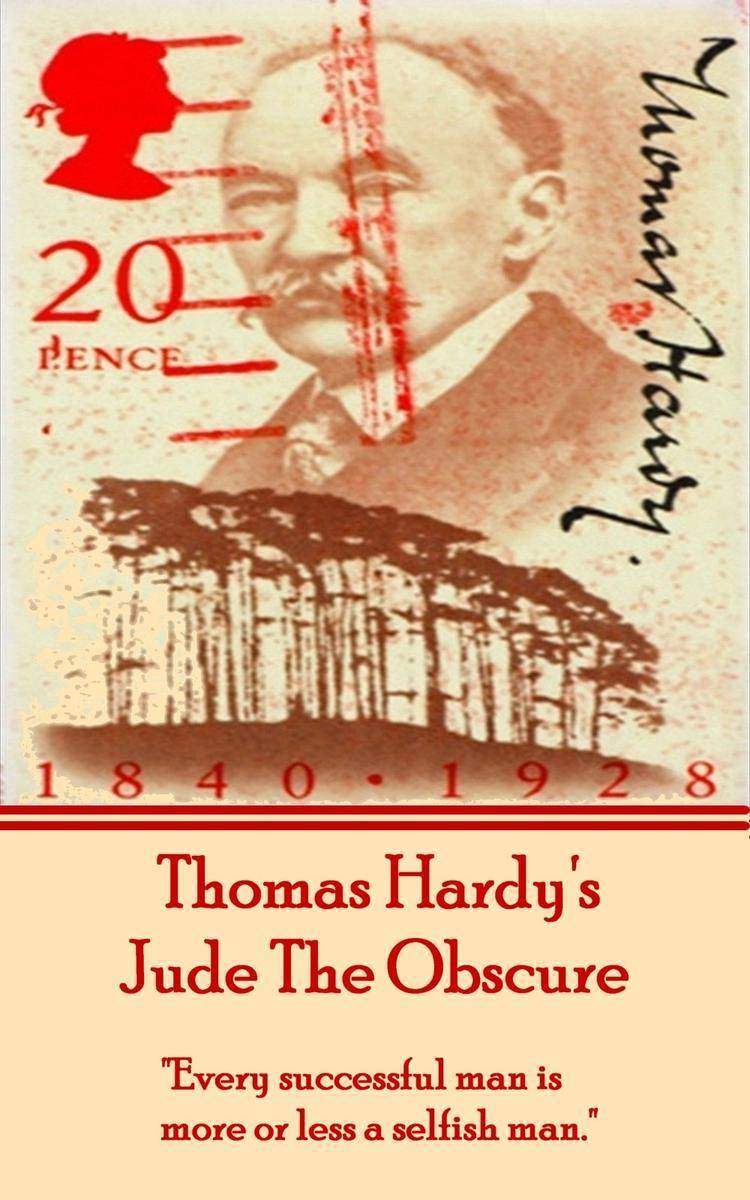
Jude The Obscure, By Thomas Hardy - Every successful man is more or less a selfi
¥23.45
Thomas Hardy (2nd June 1840 - 11th January 1928), celebrated poet and writer, was born in a modest thatched cottage near Dorchester in the West country, to a builder father. His mother came from a line of intelligent, lively and ambitious women so ensured her son had the best formal education available for their modest means although this ended when he was 16. He became a draughtsman specialising in the building of churches was able to give it up to be a full time writer and poet with the publication of Far From the Madding Crown which became a bestseller and like much of his work was serialised. His writing reflects his passionate beliefs for social reform and exposes the hypocrisy of the rules of the Victorian age which constrained many freedoms with convention and restricted the transcending of class boundaries. His novels are almost entirely set in rural Wessex which although fictional is clearly rooted in the SW counties of England where he was born and lived most of his life. Hardy's writing caused controversy in his lifetime but despite this he was highly praised and showered with honorary doctorates from many universities, a knighthood, which he refused and in 1910 the prestigious Order of the Merit. Jude the Obscure is "e;the sort of man who was born to ache a good deal."e; He is desperate to study at Christminster, the fictionalised Oxford University, and whilst self educated to a sufficient standard, his humble rural background prevents admission. Furthermore, he is distracted by the sensual Arabella and falls in love with the educated. emancipated new woman, Sue creating as Hardy states "e;a deadly war waged between flesh and spirit"e;. Whilst doomed love and unfulfilled ambition are the dominant themes, the frank criticism of marriage and fearless exploration of sexuality caused so much protest for its supposed indecency and the ensuing bitter criticism, made this Hardy's final novel and many agree also his finest. The novel continues to inspire the modern mind as the recent film directed by Michael Winterbottom and starring Christopher Eccleston and Kate Winslet as Jude and Sue attests.
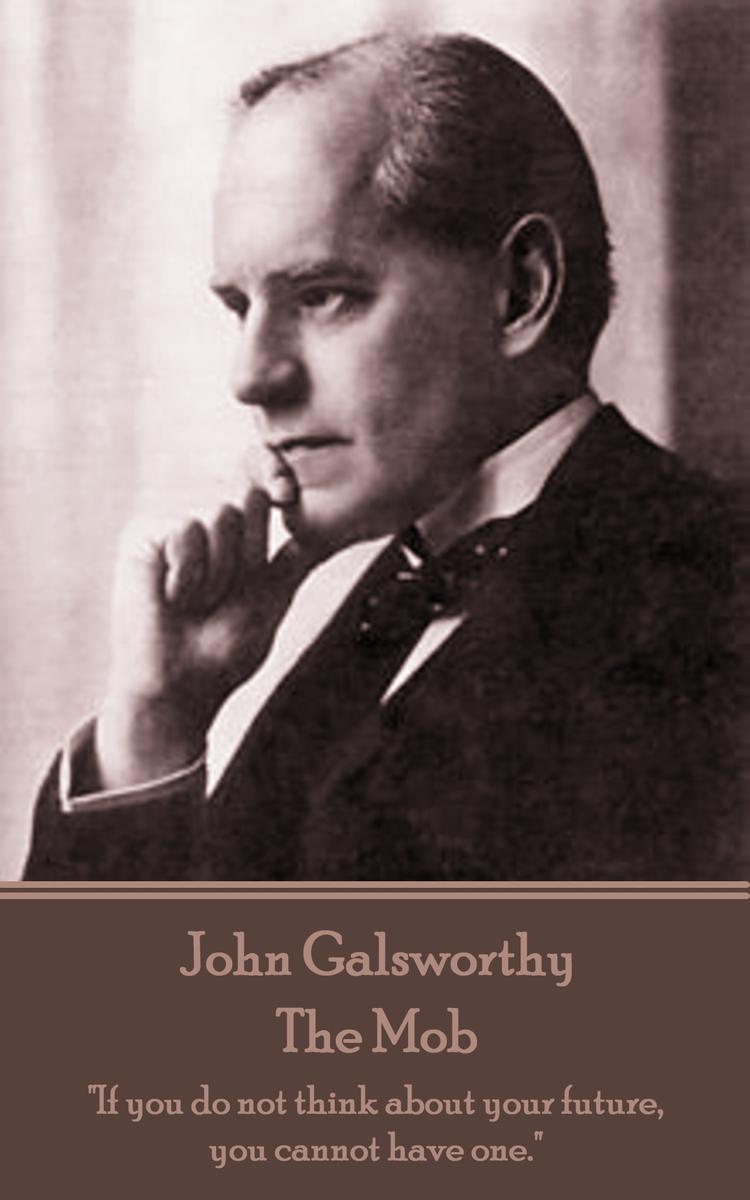
Mob - If you do not think about your future, you cannot have one.
¥21.09
John Galsworthy was born at Kingston Upon Thames in Surrey, England, on August 14th 1867 to a wealthy and well established family. His schooling was at Harrow and New College, Oxford before training as a barrister and being called to the bar in 1890. However, Law was not attractive to him and he travelled abroad becoming great friends with the novelist Joseph Conrad, then a first mate on a sailing ship. In 1895 Galsworthy began an affair with Ada Nemesis Pearson Cooper, the wife of his cousin Major Arthur Galsworthy. The affair was kept a secret for 10 years till she at last divorced and they married on 23rd September 1905. Galsworthy first published in 1897 with a collection of short stories entitled "e;The Four Winds"e;. For the next 7 years he published these and all works under his pen name John Sinjohn. It was only upon the death of his father and the publication of "e;The Island Pharisees"e; in 1904 that he published as John Galsworthy. His first play, The Silver Box in 1906 was a success and was followed by "e;The Man of Property"e; later that same year and was the first in the Forsyte trilogy. Whilst today he is far more well know as a Nobel Prize winning novelist then he was considered a playwright dealing with social issues and the class system. Here we publish Villa Rubein, a very fine story that captures Galsworthy's unique narrative and take on life of the time. He is now far better known for his novels, particularly The Forsyte Saga, his trilogy about the eponymous family of the same name. These books, as with many of his other works, deal with social class, upper-middle class lives in particular. Although always sympathetic to his characters, he reveals their insular, snobbish, and somewhat greedy attitudes and suffocating moral codes. He is now viewed as one of the first from the Edwardian era to challenge some of the ideals of society depicted in the literature of Victorian England. In his writings he campaigns for a variety of causes, including prison reform, women's rights, animal welfare, and the opposition of censorship as well as a recurring theme of an unhappy marriage from the women's side. During World War I he worked in a hospital in France as an orderly after being passed over for military service. He was appointed to the Order of Merit in 1929, after earlier turning down a knighthood, and awarded the Nobel Prize in 1932 though he was too ill to attend. John Galsworthy died from a brain tumour at his London home, Grove Lodge, Hampstead on January 31st 1933. In accordance with his will he was cremated at Woking with his ashes then being scattered over the South Downs from an aeroplane.

Theft - The function of man is to live, not to exist.
¥38.75
John Griffith "e;Jack"e; London was born John Griffith Chaney on January 12th, 1876 in San Francisco. His father, William Chaney, was living with his mother Flora Wellman when she became pregnant. Chaney insisted she have an abortion. Flora's response was to turn a gun on herself. Although her wounds were not severe the trauma made her temporarily deranged. In late 1876 his mother married John London and the young child was brought to live with them as they moved around the Bay area, eventually settling in Oakland where Jack completed grade school. Jack also worked hard at several jobs, sometimes 12-18 hours a day, but his dream was university. He was lent money for that and after intense studying enrolled in the summer of 1896 at the University of California in Berkeley. In 1897, at 21 , Jack searched out newspaper accounts of his mother's suicide attempt and the name of his biological father. He wrote to William Chaney, then living in Chicago. Chaney said he could not be London's father because he was impotent; and casually asserted that London's mother had relations with other men. Jack, devastated by the response, quit Berkeley and went to the Klondike. Though equally because of his continuing dire finances Jack might have taken that as the excuse he needed to leave. In the Klondike Jack began to gather material for his writing but also accumulated many health problems, including scurvy, hip and leg problems many of which he then carried for life. By the late 1890's Jack was regularly publishing short stories and by the turn of the century full blown novels. By 1904 Jack had married, fathered two children and was now in the process of divorcing. A stint as a reporter on the Russo-Japanese war of 1904 was equal amounts trouble and experience. But that experience was always put to good use in a remarkable output of work. Twelve years later Jack had amassed a wealth of writings many of which remain world classics. He had a reputation as a social activist and a tireless friend of the workers. And yet on November 22nd 1916 Jack London died in a cottage on his ranch at the age of only 40. Here we present Theft.
Persians - For know that no one is free, except Zeus
¥11.67
schylus is often regarded as the father of Greek tragedy; he moved play writing from the simple interaction of a single character and a chorus to one where many characters interact and thereby create more dynamic and dramatic situations. schylus, was the son of Euphorion, and a scion of a Eupatrid or noble family. He was born at Eleusis 525 B.C., or, as the Greeks calculated time, in the fourth year of the 63rd Olympiad. He first worked at a vineyard and whilst there claimed to have been visited by Dionysis in a dream and told to turn his attention to the tragic art. It was a dream that would deliver a rich and incredible legacy through his writing talents. His earliest tragedy, composed when he was twenty-six years of age, failed to win the fabled Dionysia, (a revered festival of theatre) and it was not until fifteen years later that he gained this victory in 484BC going on to win it again in 472 BC (for The Persians), 467 BC (for Seven Against Thebes) and 463 BC (for The Suppliants). schylus was also known for his military skills and was ready to fight in defence of Athens whenever the call was made. He and his brother, Cynegeirus, fought against Darius's invading Persian army at the Battle of Marathon in 490 BCE and, although the Greeks won against overwhelming odds, Cynegeirus died in the battle, which had a naturally had a profound effect on schylus. He made several visits to the important Greek city of Syracuse in Sicily at the invitation of the tyrant Hieron, and it is thought that he also travelled extensively in the region of Thrace. His writing continued to be the envy of others. With the series of plays of which Seven Against Thebes was a part, his supremacy was undisputed. He was the "e;father of tragedy."e; schylus made many changes to dramatic form. The importance of the chorus was demoted and a second added to give prominence to the dialogue and making that interchange the leading feature of the play. He removed all deeds of bloodshed from the public view, and in their place provided various spectacular elements, improving the costumes, making the masks more expressive and convenient, and probably adopting the cothurnus to increase the stature of the performers. Finally, he established the custom of contending for the prize with trilogies, an inter-connecting set of three independent dramas. The closing years of the life of schylus were mainly spent in Sicily, which he had first visited soon after his defeat at the Dionysia by Sophocles. schylus returned to Athens to produce his Orestean trilogy, probably the finest of his works, although the Eumenides, the last of the three plays, revealed so openly his aristocratic tendencies that he became extremely unpopular, and returned to Sicily for the last time in 458 BCE and it was there that he died, while visiting the city of Gela in 456 or 455 BCE.
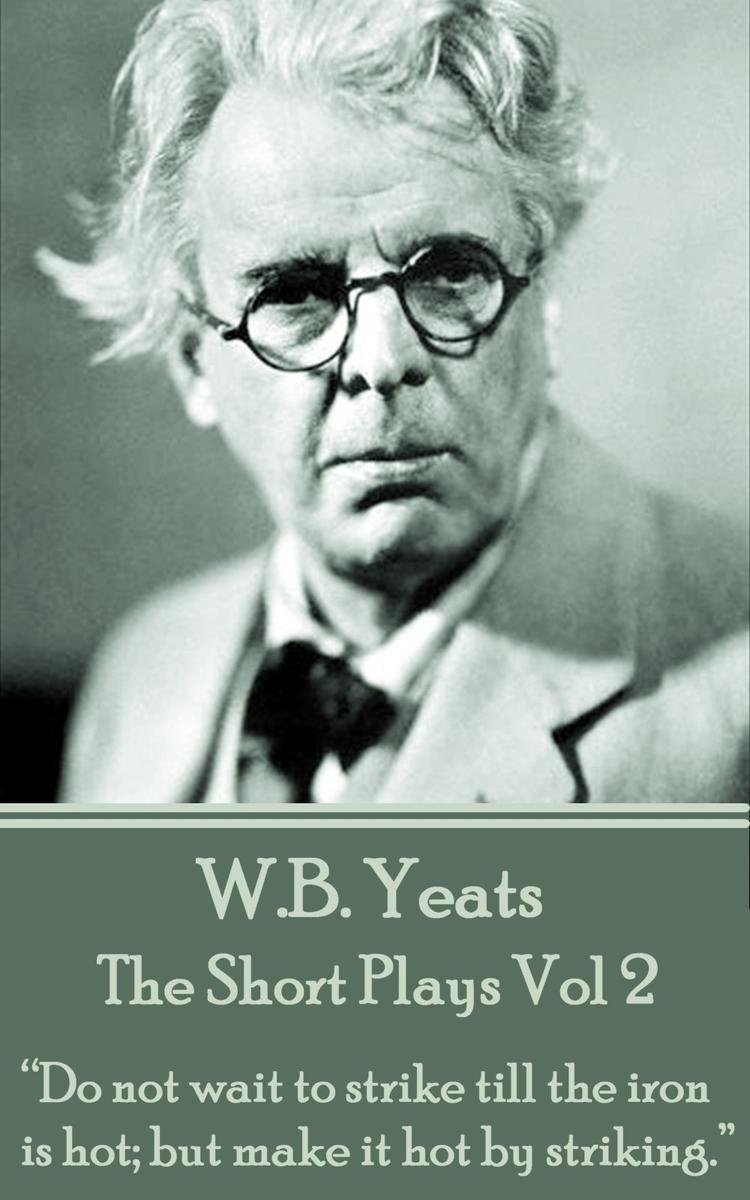
Short Plays Vol 2 - Do not wait to strike till the iron is hot; but make it hot
¥35.22
William Butler Yeats (1865 - 1939) is best described as Ireland's national poet in addition to being one of the major twentieth-century literary figures of the English tongue. To many literary critics, Yeats represents the 'Romantic poet of modernism,' which is quite revealing about his extraordinary style that combines between the outward emphasis on the expression of emotions and the extensive use of symbolism, imagery and allusions. Yeats also wrote prose and drama and established himself as the spokesman of the Irish cause. His fame was greatly boosted mainly after he received the Nobel Prize in Literature in 1923. His life was marked by his many love stories, by his great interest in oriental mysticism and occultism as well as by political engagement since he served as an Irish senator for two terms. Today, although William Butler Yeats's contribution to literary modernism and to Irish nationalism remains incontestable. Here we publish a collection of his short plays that stand as testament to his talents. Including; On Baile's Strand, The Land Of Heart's Desire and The Hour Glass
Ghosts (1881)
¥23.45
Henrik Ibsen (20th March, 1828 - 23rd May, 1906) is often referred to as the father of realism and ranked just below Shakespeare as Europe's greatest ever playwright especially as his plays are performed most frequently throughout the world after Shakespeare's. He was Norwegian and although set his plays in Norway, he wrote them in Danish and lived most of his professional life in Italy and Germany. His affect on the theatre is still evident today and shapes the distinction of plays being art as opposed to entertainment since he broke down all previous traditions and explored issues, developed characterisation, revealed uncomfortable truths, challenged assumptions and brokedown facades in ourselves as well as society. These factors are clearly demonstrated in Ghosts which exposes painful and hidden past secrets that affect many of the characters. The protagonist, Mrs Alving, is a wealthy middle aged widow who was the victim of an alcoholic unfaithful husband. She searches to make sense of her life and comes to realise that her husband was suffocated by convention and is unwilling to let her life go the same way. The play tackles many taboo topics of its day like assisted suicide, premarital sex, incest, syphilis and criticism of the church and whilst these issues are no longer the hot potatoes they were, Ibsen's strong characterisation and haunting prose make this a powerful relevant drama.
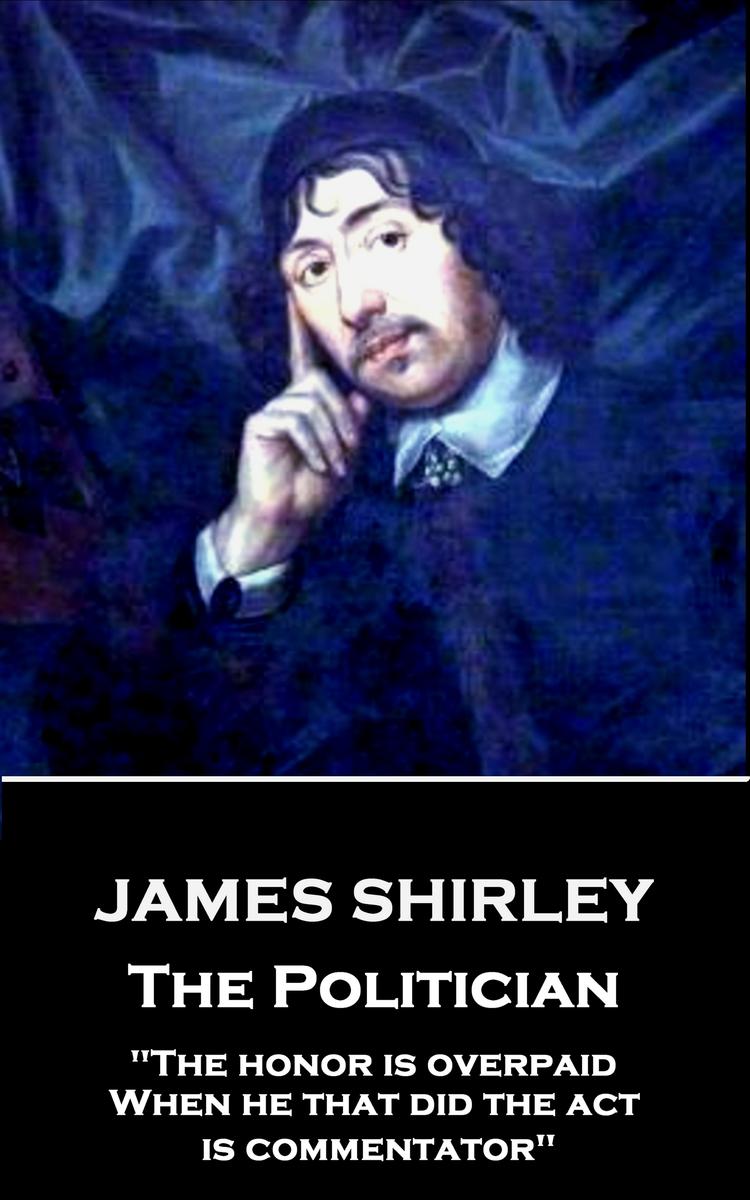
Politician - The honor is overpaid, When he that did the act is commentator
¥25.80
James Shirley was born in London in September 1596. His education was through a collection of England's finest establishments: Merchant Taylors' School, London, St John's College, Oxford, and St Catharine's College, Cambridge, where he took his B.A. degree in approximately 1618. He first published in 1618, a poem entitled Echo, or the Unfortunate Lovers. As with many artists of this period full details of his life and career are not recorded. Sources say that after graduating he became "e;a minister of God's word in or near St Albans."e; A conversion to the Catholic faith enabled him to become master of St Albans School from 1623-25. He wrote his first play, Love Tricks, or the School of Complement, which was licensed on February 10th, 1625. From the given date it would seem he wrote this whilst at St Albans but, after its production, he moved to London and to live in Gray's Inn. For the next two decades, he would write prolifically and with great quality, across a spectrum of thirty plays; through tragedies and comedies to tragicomedies as well as several books of poetry. Unfortunately, his talents were left to wither when Parliament passed the Puritan edict in 1642, forbidding all stage plays and closing the theatres. Most of his early plays were performed by Queen Henrietta's Men, the acting company for which Shirley was engaged as house dramatist. Shirley's sympathies lay with the King in battles with Parliament and he received marks of special favor from the Queen. He made a bitter attack on William Prynne, who had attacked the stage in Histriomastix, and, when in 1634 a special masque was presented at Whitehall by the gentlemen of the Inns of Court as a practical reply to Prynne, Shirley wrote the text-The Triumph of Peace. Shirley spent the years 1636 to 1640 in Ireland, under the patronage of the Earl of Kildare. Several of his plays were produced by his friend John Ogilby in Dublin in the first ever constructed Irish theatre; The Werburgh Street Theatre. During his years in Dublin he wrote The Doubtful Heir, The Royal Master, The Constant Maid, and St. Patrick for Ireland. In his absence from London, Queen Henrietta's Men sold off a dozen of his plays to the stationers, who naturally, enough published them. When Shirley returned to London in 1640, he finished with the Queen Henrietta's company and his final plays in London were acted by the King's Men. On the outbreak of the English Civil War Shirley served with the Earl of Newcastle. However when the King's fortunes began to decline he returned to London. There his friend Thomas Stanley gave him help and thereafter Shirley supported himself in the main by teaching and publishing some educational works under the Commonwealth. In addition to these he published during the period of dramatic eclipse four small volumes of poems and plays, in 1646, 1653, 1655, and 1659. It is said that he was "e;a drudge"e; for John Ogilby in his translations of Homer's Iliad and the Odyssey, and survived into the reign of Charles II, but, though some of his comedies were revived, his days as a playwright were over. His death, at age seventy, along with that of his wife, in 1666, is described as one of fright and exposure due to the Great Fire of London which had raged through parts of London from September 2nd to the 5th. He was buried at St Giles in the Fields, in London, on October 29th, 1666.

Hecuba - He was a wise man who originated the idea of God
¥14.03
Euripides is rightly lauded as one of the great dramatists of all time. In his lifetime, he wrote over 90 plays and although only 18 have survived they reveal the scope and reach of his genius. Euripides is identified with many theatrical innovations that have influenced drama all the way down to modern times, especially in the representation of traditional, mythical heroes as ordinary people in extraordinary circumstances. As would be expected from a life lived 2,500 years ago, details of it are few and far between. Accounts of his life, written down the ages, do exist but whether much is reliable or surmised is open to debate. Most accounts agree that he was born on Salamis Island around 480 BC, to mother Cleito and father Mnesarchus, a retailer who lived in a village near Athens. Upon the receipt of an oracle saying that his son was fated to win "e;crowns of victory"e;, Mnesarchus insisted that the boy should train for a career in athletics. However, what is clear is that athletics was not to be the way to win crowns of victory. Euripides had been lucky enough to have been born in the era as the other two masters of Greek Tragedy; Sophocles and schylus. It was in their footsteps that he was destined to follow. His first play was performed some thirteen years after the first of Socrates plays and a mere three years after schylus had written his classic The Oristria. Theatre was becoming a very important part of the Greek culture. The Dionysia, held annually, was the most important festival of theatre and second only to the fore-runner of the Olympic games, the Panathenia, held every four years, in appeal. Euripides first competed in the City Dionysia, in 455 BC, one year after the death of schylus, and, incredibly, it was not until 441 BC that he won first prize. His final competition in Athens was in 408 BC. The Bacchae and Iphigenia in Aulis were performed after his death in 405 BC and first prize was awarded posthumously. Altogether his plays won first prize only five times. Euripides was also a great lyric poet. In Medea, for example, he composed for his city, Athens, "e;the noblest of her songs of praise"e;. His lyric skills however are not just confined to individual poems: "e;A play of Euripides is a musical whole....one song echoes motifs from the preceding song, while introducing new ones."e; Much of his life and his whole career coincided with the struggle between Athens and Sparta for hegemony in Greece but he didn't live to see the final defeat of his city. Euripides fell out of favour with his fellow Athenian citizens and retired to the court of Archelaus, king of Macedon, who treated him with consideration and affection. At his death, in around 406BC, he was mourned by the king, who, refusing the request of the Athenians that his remains be carried back to the Greek city, buried him with much splendor within his own dominions. His tomb was placed at the confluence of two streams, near Arethusa in Macedonia, and a cenotaph was built to his memory on the road from Athens towards the Piraeus.
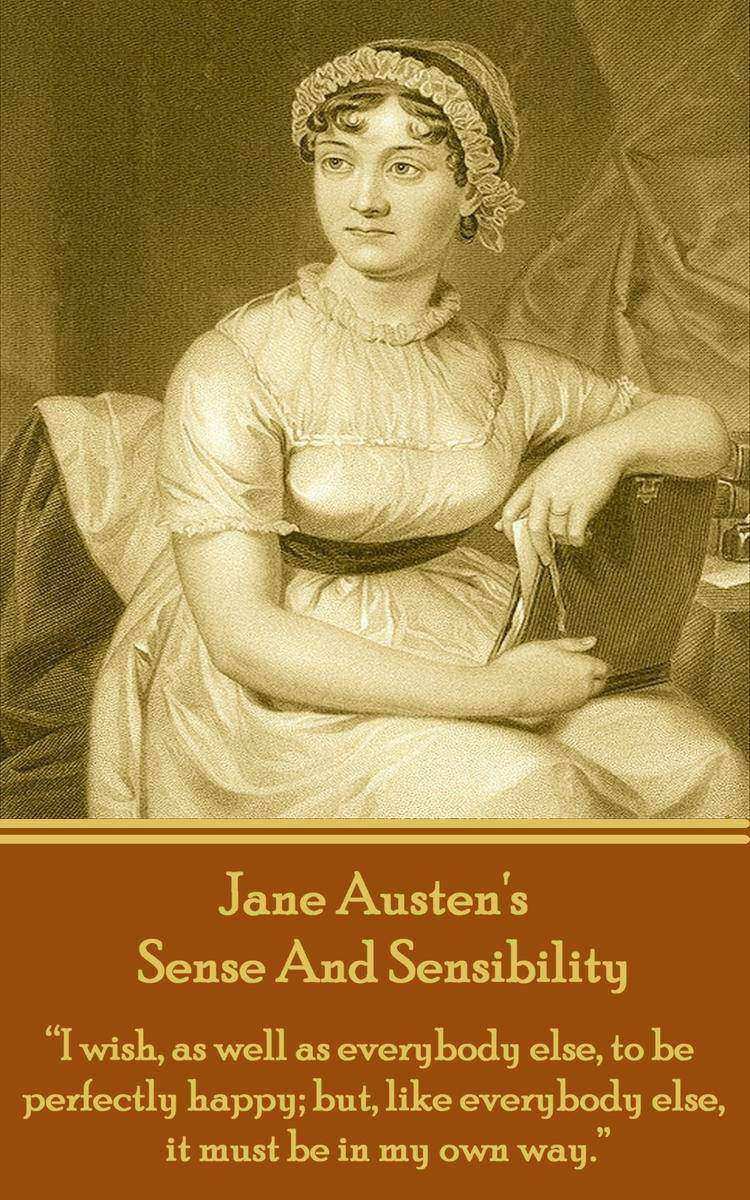
Sense And Sensibility
¥23.45
Sense and Sensibility (1811) is Jane Austen's first published novel. It is a book about love and romance that follows the life of Elinor and Marianne Dashwood. When their father dies and his property goes to his son and first wife, the Dashwood sisters move with their family to live in a modest cottage in Devonshire where start their romantic adventures and heartbreaks. The cottage belongs to their mother's cousin Sir John Middleton who welcomes them and presents them to his family and friends. One of John's friends, Colonel Brandon, soon falls in love with Marianne, yet the latter finds him unattractive and too old for her age. She later meets the philandering John Willoughby and becomes interested in him to be drowned in grief when he leaves to do business in London. As for Elinor, she develops a relationship with Edward Ferrars before they move to Devonshire. When the two sisters are disappointed by their lovers who go with other women, the novel depicts the different ways they react as well as their wavering between passion and reason. By the end of the novel, Edward comes to mend his relationship with Elinor and marries her while Marianne marries Colonel Brandon. We've also included a concise and informative biography of Jane's works and life at the end of the book. We hope it helps to give a little context and colour about how her life interacted with her art.
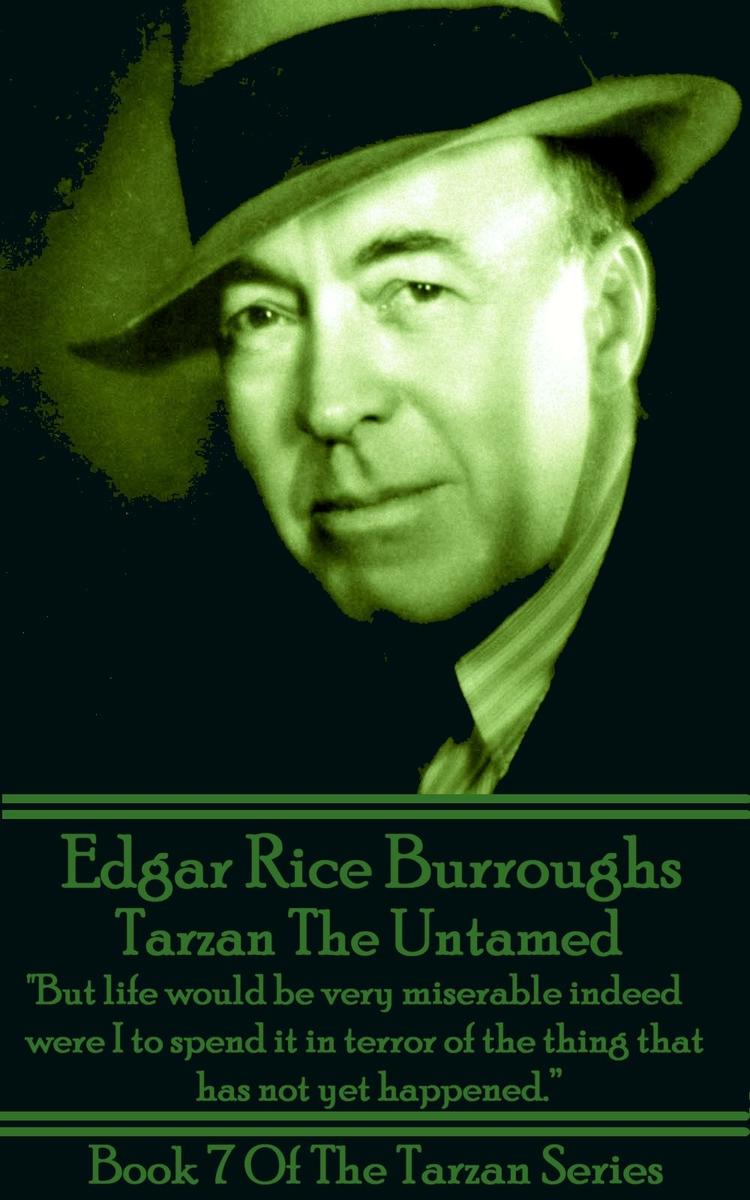
Tarzan The Untamed
¥35.22
Edgar Rice Burroughs was born on September 1, 1875, in Chicago, Illinois. His early career was unremarkable. After failing to enter West Point he enlisted in the 7th Calvary but was discharged after heart problems were diagnosed. A series of short term jobs gave no indication as to a career path but finally, in 1911, married and with two young children, he turned his hand to writing. He aimed his works squarely at the very popular pulp serial magazines. His first effort 'Under The Moons Of Mars' ran in Munsey's Magazine in 1912 under the pseudonym Norman Bean. With its success he began writing full time. A continuing theme of his work was to develop series so that each character had ample opportunities to return in sequels. John Carter was in the Mars series and there was another on Venus and one on Pellucidar among others. But perhaps the best known is Tarzan. Indeed Burroughs wanted so much to capitalise upon the brand that he introduced a syndicated Tarzan comic strip, movies and merchandise. He purchased a large ranch north of Los Angeles, California, which he named "e;Tarzana."e; The surrounding communities outside the ranch voted in 1927 to adopt the name as their own. By 1932 Burroughs set up his own company to print his own books. Here we publish the seventh in the Tarzan series 'Tarzan the Untamed'. Another cultural classic.
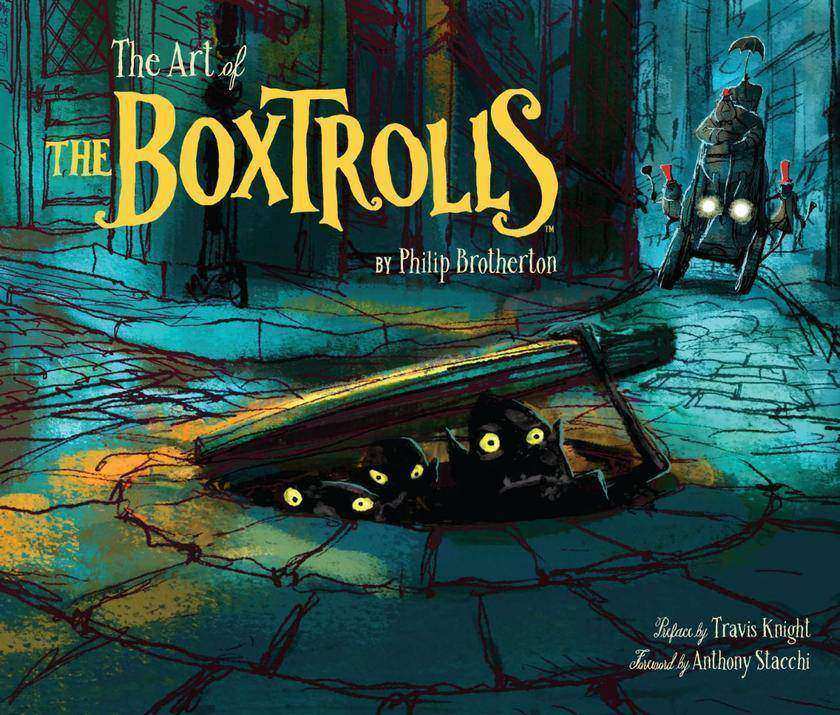
Art of The Boxtrolls
¥305.97
LAIKA, the studio behind the hit films Coraline and ParaNorman, introduces audiences to a new breed of family: the Boxtrolls, a community of quirky, mischievous creatures who have lovingly raised an orphaned human boy named Eggs in the amazing cavernous home they've built beneath the streets of Cheesebridge. When the town's villain, Archibald Snatcher, comes up with a plot to get rid of the Boxtrolls, Eggs decides to venture above ground where he meets and teams up with fabulously feisty Winnie to devise a daring plan to save Eggs' family. The Art of The Boxtrolls features the amazingly detailed artwork that went into this film's creation, including character sketches, puppets, textiles, set dressing, and 3-D printed facial models, alongside the story of the film's development.
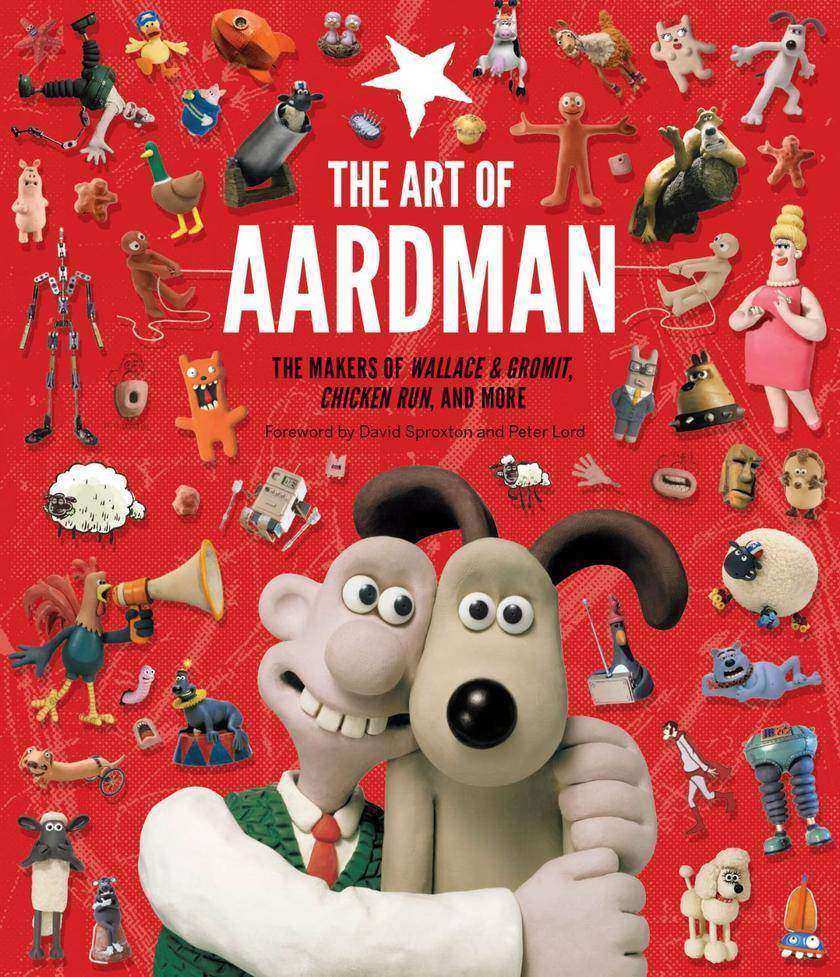
Art of Aardman - The Makers of Wallace & Gromit, Chicken Run, and More
¥188.25
See the iconic, energetic art of Aardman Animations like never before! The Art of Aardman takes readers on an unforgettable, behind-the-scenes journey through the studio's archives. This collection features original character sketches and never-before-seen concept art, offering a unique look inside the studio that created Chicken Run, Morph, and, of course, Wallace & Gromit. Kicking things off with forewords from founders Peter Lord and David Sproxton, this celebration of all-things Aardman is a must-have for all animation fans.


