


 购物车
 个人中心

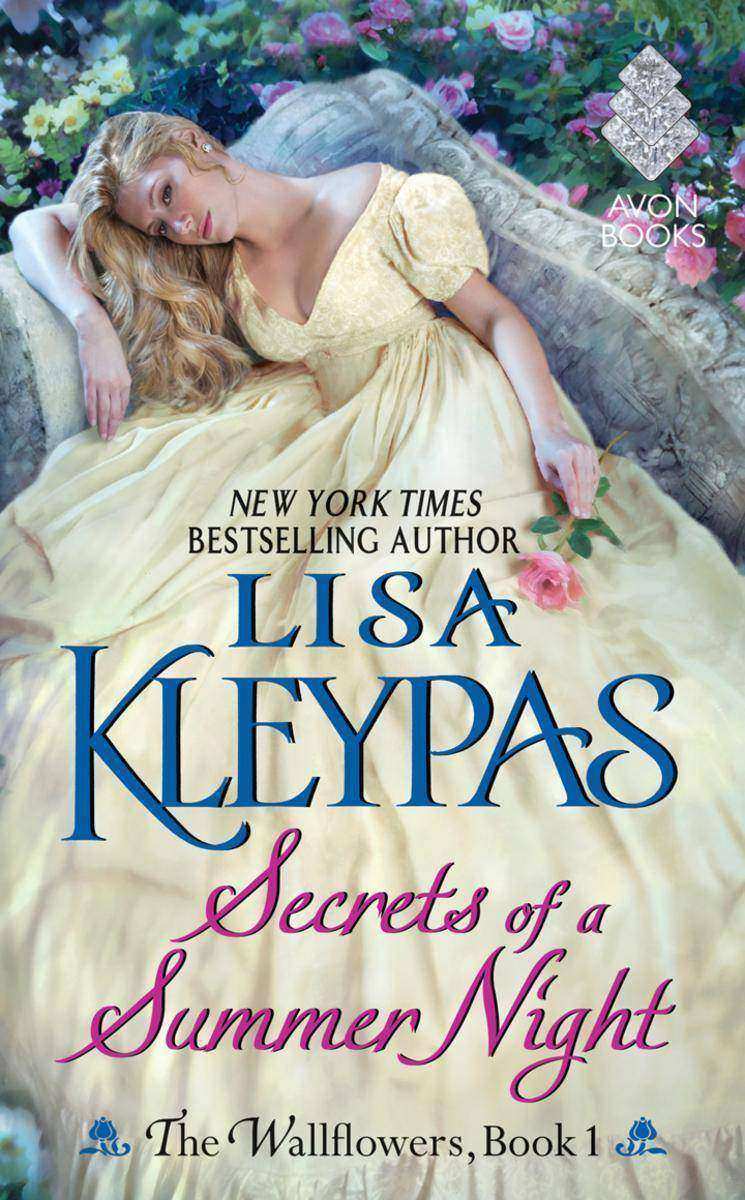
Secrets of a Summer Night
¥35.01
Four young ladies enter London society with one common goal: they must use their feminine wit and wiles to find a husband.So a daring husband-hunting scheme is born. Annabelle Peyton, determined to save her family from disaster, decides to use her beauty and wit to tempt a suitable nobleman into making an offer of marriage. But Annabelle's most intriguing and persistent admirer, wealthy, powerful Simon Hunt, has made it clear that while he will introduce her to irresistible pleasure he will not offer marriage. Annabelle is determined to resist his unthinkable proposition . . . but it is impossible in the face of such skillful seduction. Her friends, looking to help, conspire to entice a more suitable gentleman to offer for Annabelle, for only then will she be safe from Simon and her own longings. But on one summer night, Annabelle succumbs to Simon's passionate embrace and tempting kisses . . . and she discovers that love is the most dangerous game of all.

Scandal in Spring
¥42.03
"I want you to do everything you've ever imagined doing with me…" With those scandalous words, Daisy Bowman, the sole "Wallflower" yet to be married, seals her fate with the last man she ever expected to tempt her. After spending three London seasons searching for a husband, Daisy Bowman's father has told her in no uncertain terms that she must find a husband. Now. And if Daisy can't snare an appropriate suitor, she will marry the man he chooses the ruthless and aloof Matthew Swift. Daisy is horrified. A Bowman never admits defeat, and she decides to do whatever it takes to marry someone . . . anyone . . . other than Matthew. But she doesn't count on Matthew's unexpected charm . . . or the blazing sensuality that soon flares beyond both their control. And Daisy discovers that the man she has always hated just might turn out to be the man of her dreams. But right at the moment of sweet surrender, a scandalous secret is uncovered . . . one that could destroy both Matthew and a love more passionate and irresistible than Daisy's wildest fantasies.
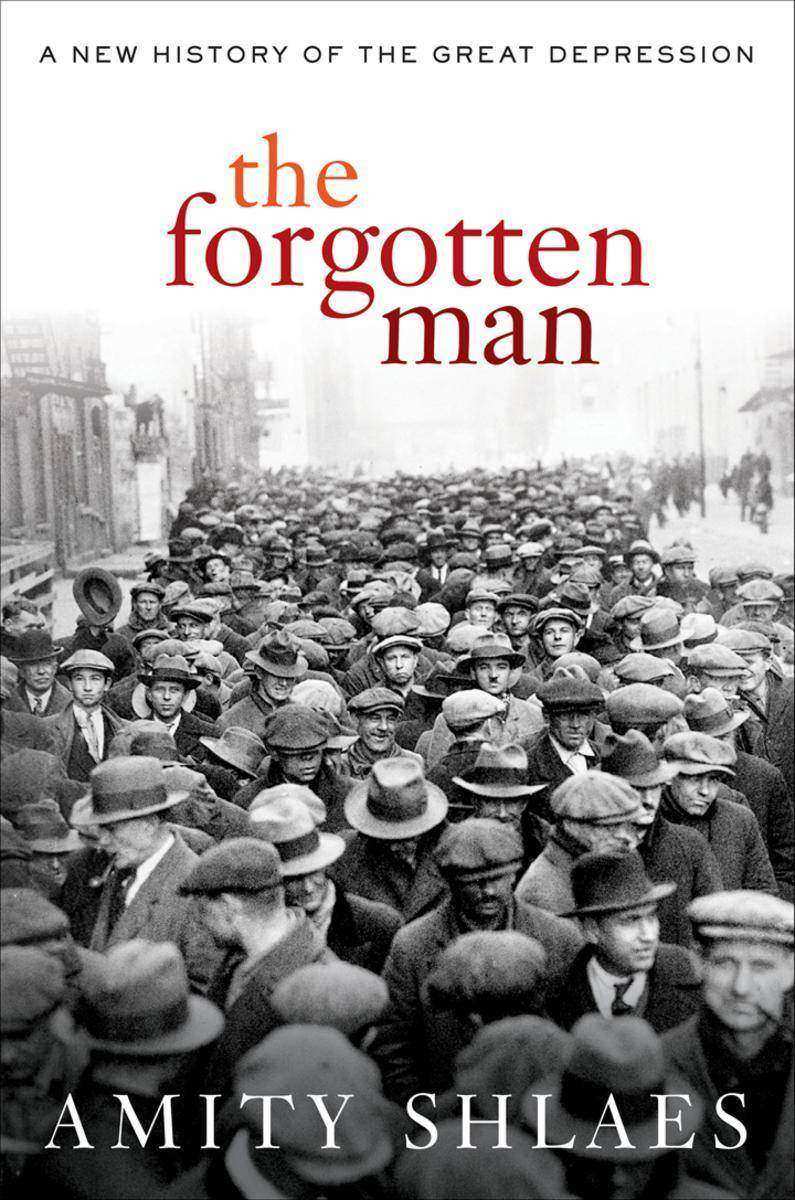
The Forgotten Man
¥106.31
In The Forgotten Man , Amity Shlaes, one of the nation's most-respected economic commentators, offers a striking reinterpretation of the Great Depression. She traces the mounting agony of the New Dealers and the moving stories of individual citizens who through their brave perseverance helped establish the steadfast character we recognize as American today.

If Only Politicians Had Brains
¥24.44
Hopefully you are old enough to remember‘Yes Minister.’Does government really work like thatIf it does, you really need a sense of humour to examine not only its workings but also its nonworkings. That is exactly what’ If Only Politicians Had Brains’ does , examine government workings with a sense of humour. Ten years ago BSE was going to destroy mankind (if mankind ate beef ). So far less than 150 people have died – over a twelve year period. ‘If Only Politicians Had Brains ’takes an, often times , humorous look– with serious intents– at the politically manufactured creations designed to divert public attention away from the real issues. Why do so many people“ fall for “the smoke and mirrors trap that makes“ Hustle ” the successful programme that it isTerenceO?Halloran has a thirty (plus) year experience of dealing with government through British Chambers of Commerce and the Federation of Small Businesses at local and central government level . This is a chance to share his insight into the real “ smoke and mirror ” minds of a group of people that will do anything to prove that they, and only they ,know how they should run your life..
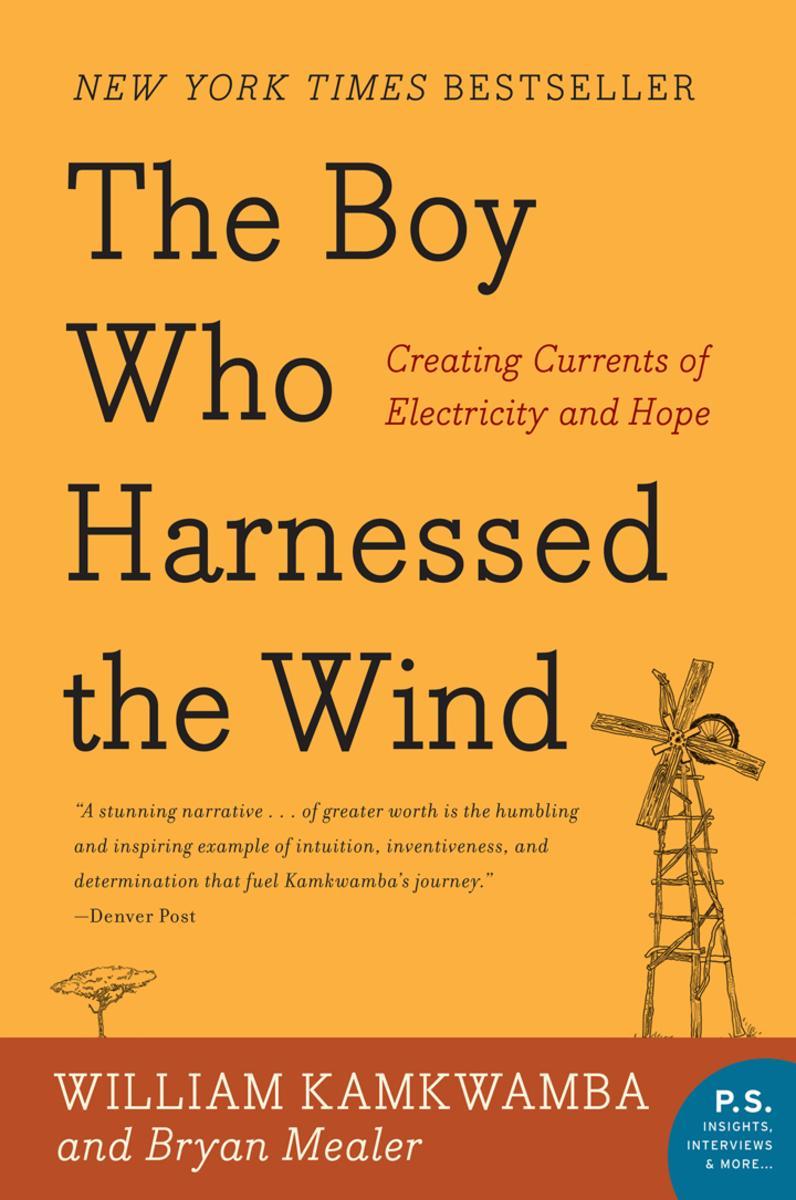
The Boy Who Harnessed the Wind
¥90.51
William Kamkwamba was born in Malawi, a country where magic ruled and modern science was mystery. It was also a land withered by drought and hunger, and a place where hope and opportunity were hard to find. But William had read about windmills in a book called Using Energy, and he dreamed of building one that would bring electricity and water to his village and change his life and the lives of those around him. His neighbors may have mocked him and called him misala crazy but William was determined to show them what a little grit and ingenuity could do. Enchanted by the workings of electricity as a boy, William had a goal to study science in Malawi's top boarding schools. But in 2002, his country was stricken with a famine that left his family's farm devastated and his parents destitute. Unable to pay the eighty-dollar-a-year tuition for his education, William was forced to drop out and help his family forage for food as thousands across the country starved and died. Yet William refused to let go of his dreams. With nothing more than a fistful of cornmeal in his stomach, a small pile of once-forgotten science textbooks, and an armory of curiosity and determination, he embarked on a daring plan to bring his family a set of luxuries that only two percent of Malawians could afford and what the West considers a necessity electricity and running water. Using scrap metal, tractor parts, and bicycle halves, William forged a crude yet operable windmill, an unlikely contraption and small miracle that eventually powered four lights, complete with homemade switches and a circuit breaker made from nails and wire. A second machine turned a water pump that could battle the drought and famine that loomed with every season. Soon, news of William's magetsi a mphepo his "electric wind" spread beyond the borders of his home, and the boy who was once called crazy became an inspiration to those around the world. Here is the remarkable story about human inventiveness and its power to overcome crippling adversity. The Boy Who Harnessed the Wind will inspire anyone who doubts the power of one individual's ability to change his community and better the lives of those around him.
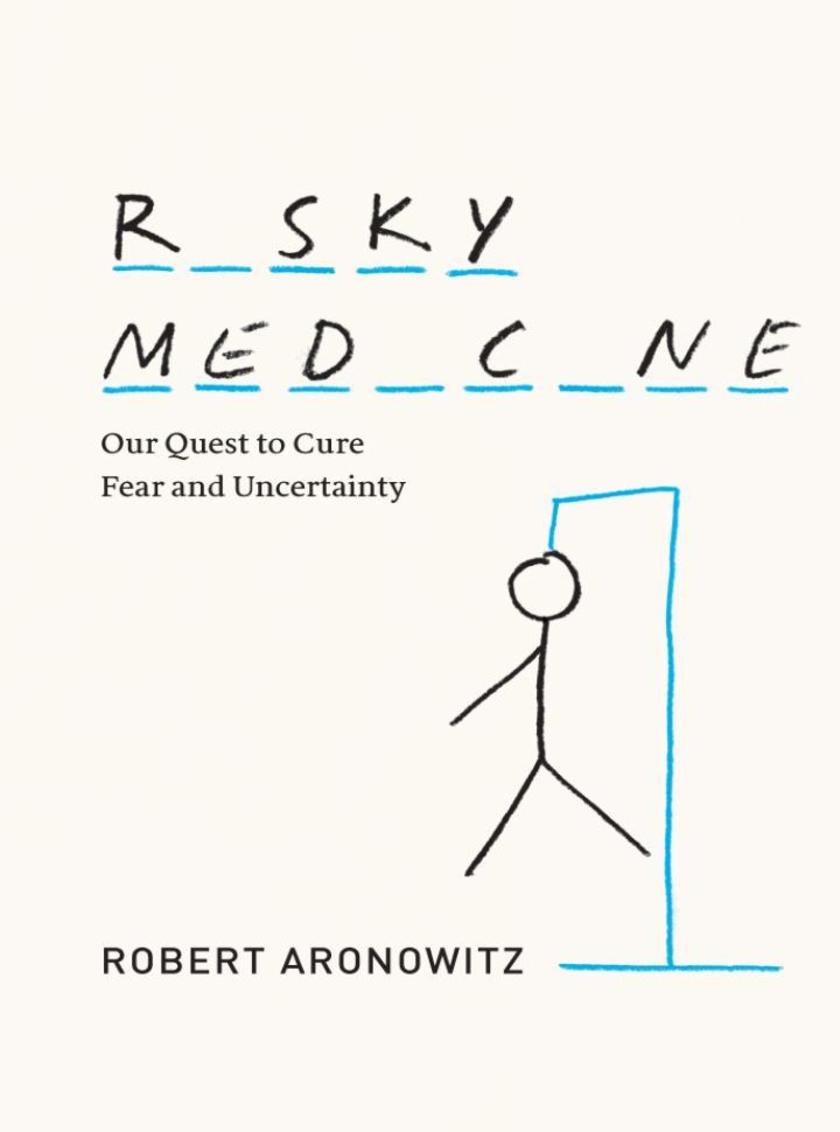
Risky Medicine
¥147.15
Will ever-more sensitive screening tests for cancer lead to longer, better lives Will anticipating and trying to prevent the future complications of chronic disease lead to better health Not always, says Robert Aronowitz in Risky Medicine. In fact, it often is hurting us.Exploring the transformation of health care over the last several decades that has led doctors to become more attentive to treating risk than treating symptoms or curing disease, Aronowitz shows how many aspects of the health system and clinical practice are now aimed at risk reduction and risk control. He argues that this transformation has been driven in part by the pharmaceutical industry, which benefits by promoting its products to the larger percentage of the population at risk for a particular illness, rather than the smaller percentage who are actually affected by it. Meanwhile, for those suffering from chronic illness, the experience of risk and disease has been conflated by medical practitioners who focus on anticipatory treatment as much if not more than on relieving suffering caused by disease. Drawing on such controversial examples as HPV vaccines, cancer screening programs, and the cancer survivorship movement, Aronowitz argues that patients and their doctors have come to believe, perilously, that far too many medical interventions are worthwhile because they promise to control our fears and reduce uncertainty.Risky Medicine is a timely call for a skeptical response to medicine's obsession with risk, as well as for higher standards of evidence for risk-reducing interventions and a rebalancing of health care to restore an emphasis on the actual curing of and caring for people suffering from disease.?
Elephant Don
¥147.15
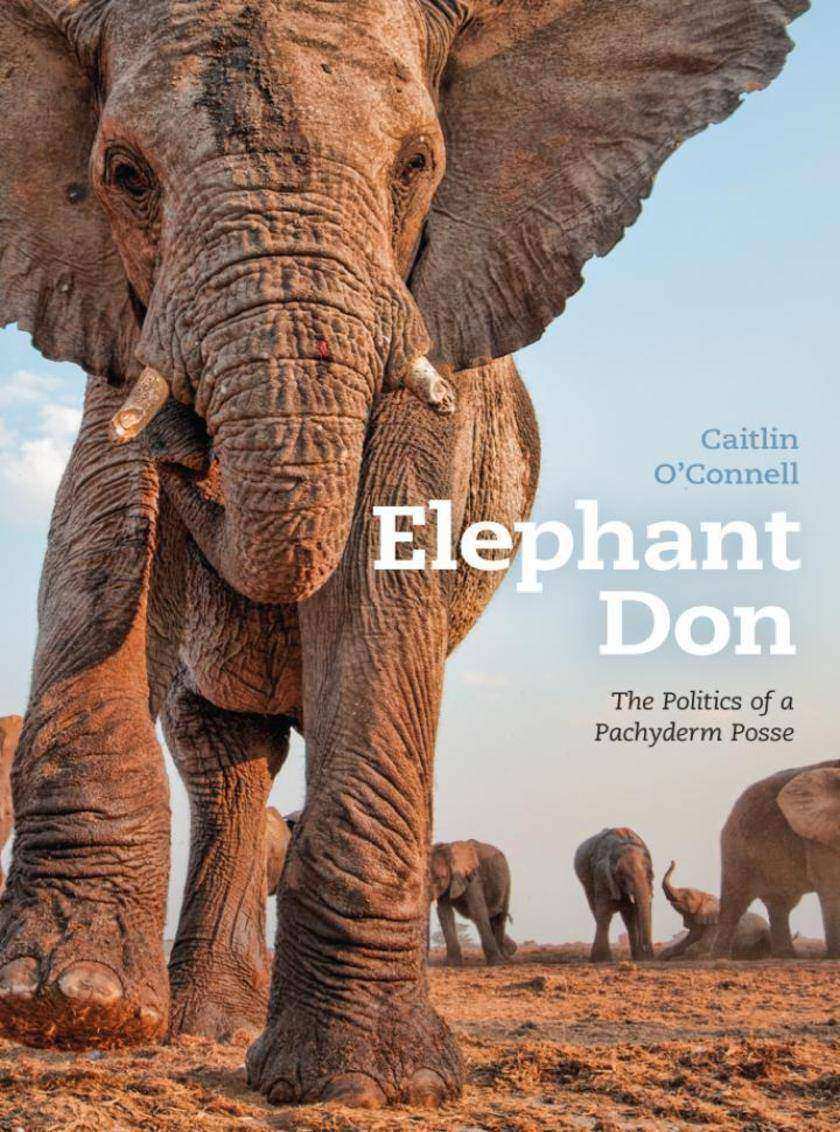
Meet Greg. He's a stocky guy with an outsized swagger. He's been the intimidating yet sociable don of his posse of friends-including Abe, Keith, Mike, Kevin, Torn Trunk, and Willie. But one arid summer the tide begins to shift and the third-ranking Kevin starts to get ambitious, seeking a higher position within this social club. But this is no ordinary tale of gangland betrayal-Greg and his entourage are bull elephants in Etosha National Park, Namibia, where, for the last twenty-three years, Caitlin O'Connell has been a keen observer of their complicated friendships.In Elephant Don, O'Connell, one of the leading experts on elephant communication and social behavior, offers a rare inside look at the social world of African male elephants. Elephant Don tracks Greg and his group of bulls as O'Connell tries to understand the vicissitudes of male friendship, power struggles, and play. A frequently heart-wrenching portrayal of commitment, loyalty, and affection between individuals yearning for companionship, it vividly captures an incredible repertoire of elephant behavior and communication. ?Greg, O'Connell shows, is sometimes a tyrant and other times a benevolent dictator as he attempts to hold onto his position at the top. Though Elephant Don is Greg's story, it is also the story of O'Connell and the challenges and triumphs of field research in environs more hospitable to lions and snakes than scientists.Readers will be drawn into dramatic tales of an elephant society at once exotic and surprisingly familiar, as O'Connell's decades of close research reveal extraordinary discoveries about a male society not wholly unlike our own. Surely we've all known a Greg or two, and through this book we may come to know them in a whole new light.

Siena
¥147.15
Jane Tylus's Siena is a compelling and intimate portrait of this most secretive of cities, often overlooked by travelers to Italy. Cultural history, intellectual memoir, travelogue, and guidebook, it takes the reader on a quest of discovery through the well- and not-so-well-traveled roads and alleys of a town both medieval and modern.?As Tylus leads us through the city, she shares her passion for Siena in novelistic prose, while never losing sight of the historical complexities that have made Siena one of the most fascinating and beautiful towns in Europe. Today, Siena can appear on the surface standoffish and old-fashioned, especially when compared to its larger, flashier cousins Rome and Florence. But first impressions wear away as we learn from Tylus that Siena was an innovator among the cities of Italy: the first to legislate the building and maintenance of its streets, the first to publicly fund its university, the first to institute a municipal bank, and even the first to ban automobile traffic from its city center.?We learn about Siena's great artistic and architectural past, hidden behind centuries of painting and rebuilding, and about the distinctive characters of its different neighborhoods, exemplified in the Palio, the highly competitive horserace that takes place twice a year in the city's main piazza and that serves as both a dividing and a uniting force for the Sienese. Throughout we are guided by the assured voice of a seasoned scholar with a gift for spinning a good story and an eye for the telling detail, whether we are traveling Siena's modern highways, exploring its underground tunnels, tracking the city's financial history, or celebrating giants of painting like Simone Martini or giants of the arena, Siena's former Serie A soccer team.?A practical and engaging guide for tourists and armchair travelers alike, Siena is a testament to the powers of community and resilience in a place that is not quite as timeless and serene as it may at first appear.
Enduring Truths
¥370.82
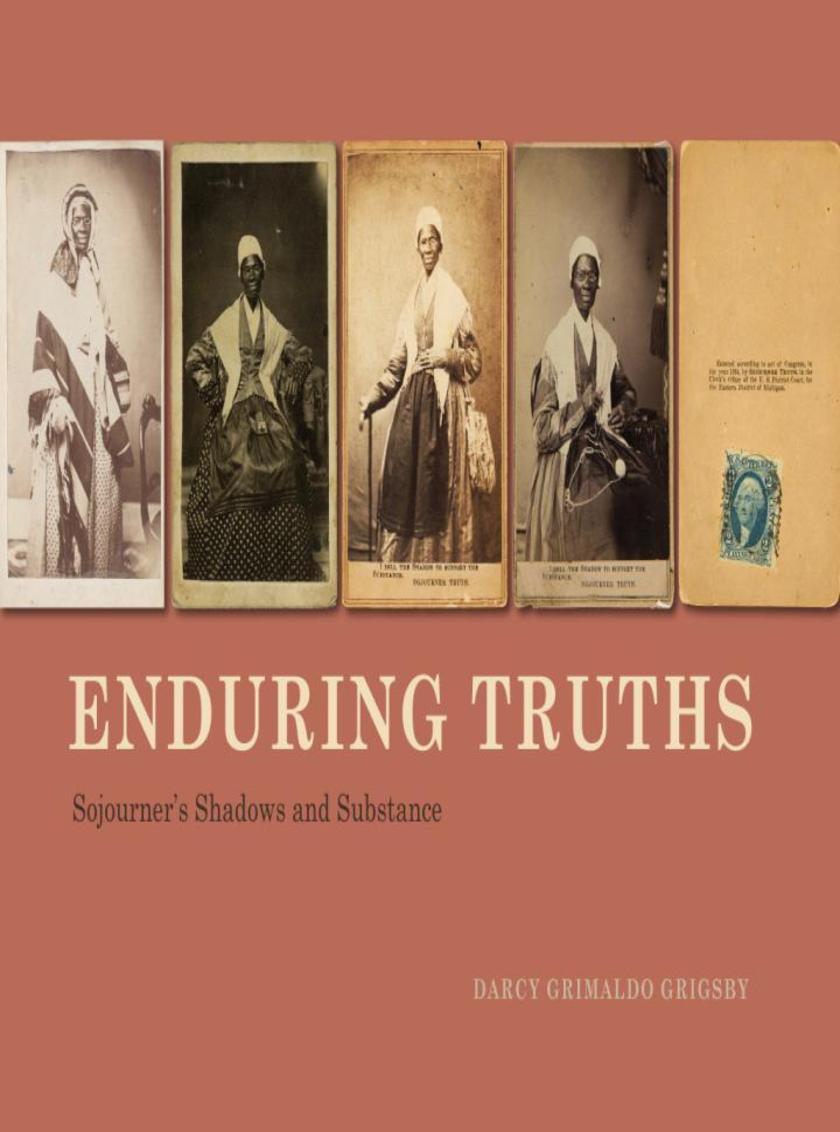
Runaway slave Sojourner Truth gained fame in the nineteenth century as an abolitionist, feminist, and orator and earned a living partly by selling photographic carte de visite portraits of herself at lectures and by mail. Cartes de visite, similar in format to calling cards, were relatively inexpensive collectibles that quickly became a new mode of mass communication. Despite being illiterate, Truth copyrighted her photographs in her name and added the caption "e;I Sell the Shadow to Support the Substance. Sojourner Truth."e;Featuring the largest collection of Truth's photographs ever published,?Enduring Truths?is the first book to explore how she used her image, the press, the postal service, and copyright laws to support her activism and herself. Darcy Grimaldo Grigsby establishes a range of important contexts for Truth's portraits, including the strategic role of photography and copyright for an illiterate former slave; the shared politics of Truth's cartes de visite and federal banknotes, which were both created to fund the Union cause; and the ways that photochemical limitations complicated the portrayal of different skin tones. Insightful and powerful,?Enduring Truths?shows how Truth made her photographic portrait worth money in order to end slavery-and also became the strategic author of her public self.
Medieval Misogyny and the Invention of Western Romantic Love
¥288.41
Until now the advent of Western romantic love has been seen as a liberation from-or antidote to-ten centuries of misogyny. In this major contribution to gender studies, R. Howard Bloch demonstrates how similar the ubiquitous antifeminism of medieval times and the romantic idealization of woman actually are.Through analyses of a broad range of patristic and medieval texts, Bloch explores the Christian construction of gender in which the flesh is feminized, the feminine is aestheticized, and aesthetics are condemned in theological terms. Tracing the underlying theme of virginity from the Church Fathers to the courtly poets, Bloch establishes the continuity between early Christian antifeminism and the idealization of woman that emerged in the twelfth and thirteenth centuries. In conclusion he explains the likely social, economic, and legal causes for the seeming inversion of the terms of misogyny into those of an idealizing tradition of love that exists alongside its earlier avatar until the current era.This startling study will be of great value to students of medieval literature as well as to historians of culture and gender.
Sundays at Sinai
¥447.34
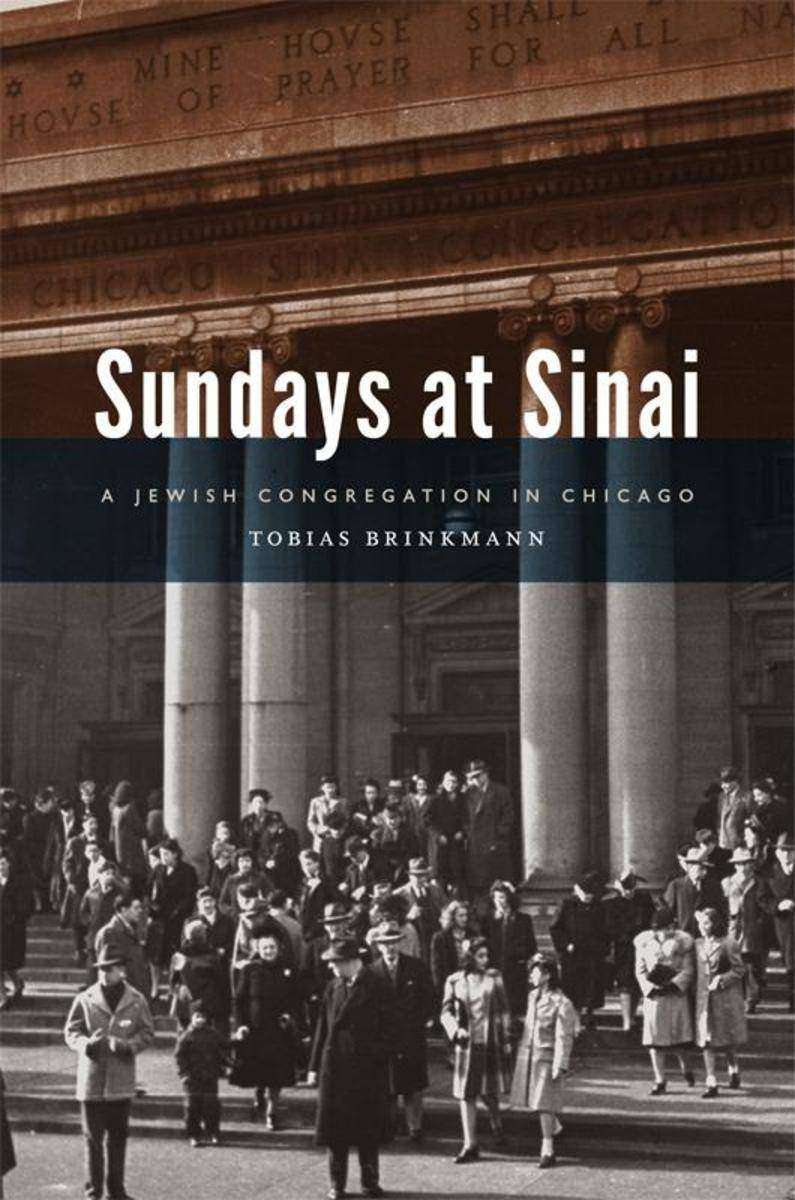
First established 150 years ago, Chicago Sinai is one of America's oldest Reform Jewish congregations. Its founders were upwardly mobile and civically committed men and women, founders and partners of banks and landmark businesses like Hart Schaffner & Marx, Sears & Roebuck, and the giant meatpacking firm Morris & Co. As explicitly modern Jews, Sinai's members supported and led civic institutions and participated actively in Chicago politics. Perhaps most radically, their Sunday services, introduced in 1874 and still celebrated today, became a hallmark of the congregation.In Sundays at Sinai, Tobias Brinkmann brings modern Jewish history, immigration, urban history, and religious history together to trace the roots of radical Reform Judaism from across the Atlantic to this rapidly growing American metropolis. ?Brinkmann shines a light on the development of an urban reform congregation, illuminating Chicago Sinai's practices and history, and its contribution to Christian-Jewish dialogue in the United States. Chronicling Chicago Sinai's radical beginnings in antebellum Chicago to the present, Sundays at Sinai is the extraordinary story of a leading Jewish Reform congregation in one of America's great cities.
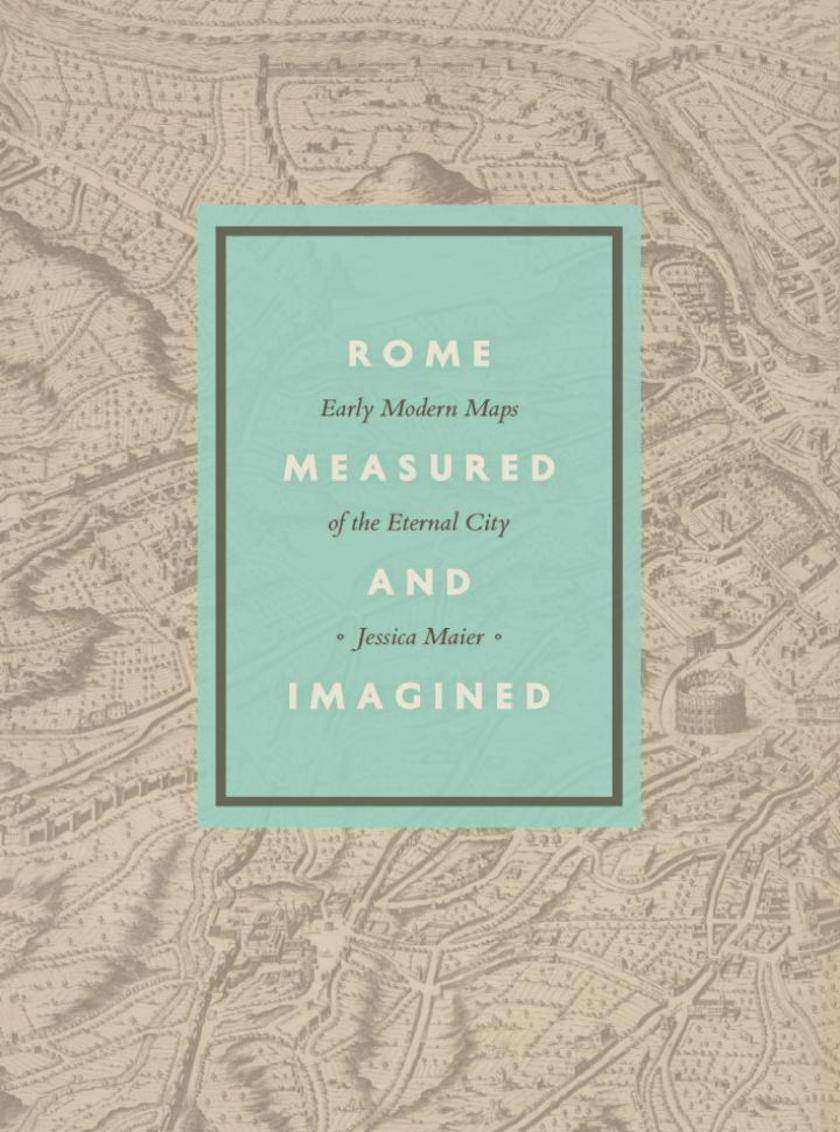
Rome Measured and Imagined
¥412.02
At the turn of the fifteenth century, Rome was in the midst of a dramatic transformation from what the fourteenth-century poet Petrarch had termed a "e;crumbling city"e; populated by "e;broken ruins"e; into a prosperous Christian capital. Scholars, artists, architects, and engineers fascinated by Rome were spurred to develop new graphic modes for depicting the city-and the genre known as the city portrait exploded.In Rome Measured and Imagined, Jessica Maier explores the history of this genre-which merged the accuracy of scientific endeavor with the imaginative aspects of art-during the rise of Renaissance print culture. Through an exploration of works dating from the fifteenth to the eighteenth centuries, her book interweaves the story of the city portrait with that of Rome itself.Highly interdisciplinary and beautifully illustrated with nearly one hundred city portraits, Rome Measured and Imagined advances the scholarship on Renaissance Rome and print culture in fascinating ways.
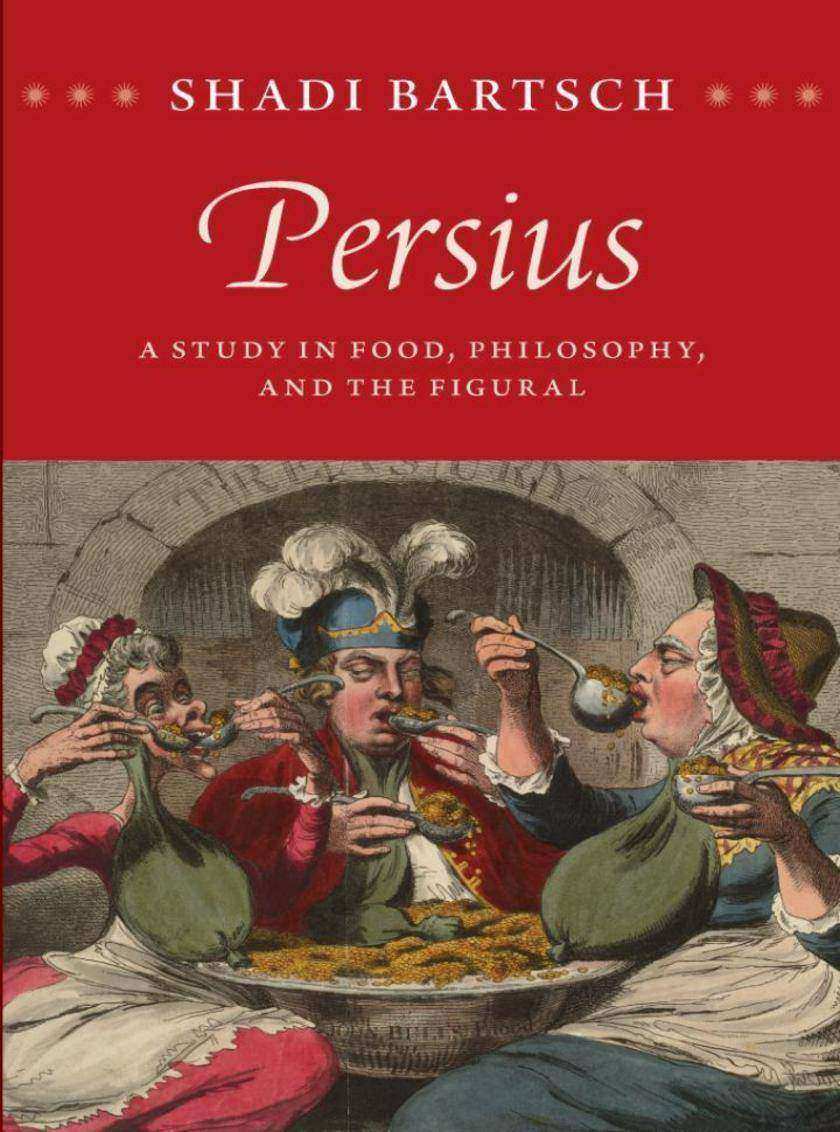
Persius
¥412.02
The Roman poet and satirist Persius (34-62 CE) was unique among his peers for lampooning literary and social conventions from a distinctly Stoic point of view. A curious amalgam of mocking wit and philosophy, his Satires are rife with violent metaphors and unpleasant imagery and show little concern for the reader's enjoyment or understanding.In Persius, Shadi Bartsch explores this Stoic framework and argues that Persius sets his own bizarre metaphors of food, digestion, and sexuality against more appealing imagery to show that the latter-and the poetry containing ?it-harms rather than helps its audience. Ultimately, he encourages us to abandon metaphor altogether in favor of the non-emotive abstract truths of Stoic philosophy, to live in a world where neither alluring poetry, nor rich food, nor sexual charm play a role in philosophical teaching.

Culture of Disaster
¥394.36
From antiquity through the Enlightenment, disasters were attributed to the obscure power of the stars or the vengeance of angry gods. As philosophers sought to reassess the origins of natural disasters, they also made it clear that humans shared responsibility for the damages caused by a violent universe. This far-ranging book explores the way writers, thinkers, and artists have responded to the increasingly political concept of disaster from the Enlightenment until today.?Marie-Hlne Huet argues that post-Enlightenment culture has been haunted by the sense of emergency that made natural catastrophes and human deeds both a collective crisis and a personal tragedy. From the plague of 1720 to the cholera of 1832, from shipwrecks to film dystopias, disasters raise questions about identity and memory, technology, control, and liability. In her analysis, Huet considers anew the mythical figures of Medusa and Apollo, theories of epidemics, earthquakes, political crises, and films such as Blow-Up and Blade Runner. With its scope and precision, The Culture of Disaster will appeal to a wide public interested in modern culture, philosophy, and intellectual history.

Man Who Thought He Was Napoleon
¥370.82
The Man Who Thought He Was Napoleon?is built around a bizarre historical event and an off-hand challenge. The eventIn December 1840, nearly twenty years after his death, the remains of Napoleon were returned to Paris for burial-and the next day, the director of a Paris hospital for the insane admitted fourteen men who claimed to be Napoleon. The challenge, meanwhile, is the claim by great French psychiatrist Jean-Etienne-Dominique Esquirol (1772-1840) that he could recount the history of France through asylum registries.From those two components, Laure Murat embarks on an exploration of the surprising relationship between history and madness. She uncovers countless stories of patients whose delusions seem to be rooted in the historical or political traumas of their time, like the watchmaker who believed he lived with a new head, his original having been removed at the guillotine. In the troubled wake of the Revolution, meanwhile, French physicians diagnosed a number of mental illnesses tied to current events, from "e;revolutionary neuroses"e; and "e;democratic disease"e; to the "e;ambitious monomania"e; of the Restoration. How, Murat asks, do history and psychiatry, the nation and the individual psyche, interface?A fascinating history of psychiatry-but of a wholly new sort-The Man Who Thought He Was Napoleon?offers the first sustained analysis of the intertwined discourses of madness, psychiatry, history, and political theory.

Islanded
¥370.82
How did the British come to conquer South Asia in the late eighteenth and early nineteenth centuriesAnswers to this question usually start in northern India, neglecting the dramatic events that marked Britain's contemporaneous subjugation of the island of Sri Lanka. In Islanded, Sujit Sivasundaram reconsiders the arrival of British rule in South Asia as a dynamic and unfinished process of territorialization and state building, revealing that the British colonial project was framed by the island's traditions and maritime placement and built in part on the model they provided.?Using palm-leaf manu*s from Sri Lanka to read the official colonial archive, Sivasundaram tells the story of two sets of islanders in combat and collaboration. He explores how the British organized the process of "e;islanding"e;: they aimed to create a separable unit of colonial governance and trade in keeping with conceptions of ethnology, culture, and geography. But rather than serving as a radical rupture, he reveals, islanding recycled traditions the British learned from Kandy, a kingdom in the Sri Lankan highlands whose customs-from strategies of war to views of nature-fascinated the British. Picking up a range of unusual themes, from migration, orientalism, and ethnography to botany, medicine, and education, Islanded is an engaging retelling of the advent of British rule.
Calle Florista
¥147.15
This World and That OneSometimes you defy it,I am not that, watching a strangercry like a dog when she thinks she's aloneat the kitchen window, hands forgottenunder the running tap.The curtains blow out, flap the other side of the sill.In you one hole fills another,stacked like cups.You remember your hands.Connie Voisine's third book of poems centers on the border between the United States and Mexico, celebrating the stunning, severe desert landscape found there. This setting marks the occasion as well for Voisine to explore themes of splitting and friction in both human and political contexts. Whose space is this border, she asks, and what voice can possibly tell the story of this place?In a wry, elegiac mode, the poems of Calle Florista take us both to the edge of our country and the edge of our faith in art and the world. This is mature work, offering us poems that oscillate between the articulation of complex, private sensibilities and the directness of a poet cracking the private self open-and making it vulnerable to the wider world.
Forms of Attention
¥129.49
Sir Frank Kermode, the British scholar, instructor, and author, was an inspired critic.?Forms of Attention is based on a series of three lectures he gave on canon formation, or how we choose what art to value. The essay on Botticelli traces the artist's sudden popularity in the nineteenth century for reasons that have more to do with poetry than painting. In the second essay, Kermode reads Hamlet from a very modern angle, offering a useful (and playful) perspective for a contemporary audience. The final essay is a defense of literary criticism as a process and conversation that, while often conflating knowledge with opinion, keeps us reading great art and working with-and for-literature.?"e;Kermode's volume has the virtue of a lecturer's accessible style designed for a listening audience. It is also self-consciously spare of 'naked criticism.' There is, nonetheless, an abundance of learned commentary, steady substance, and unveiled critical excellence. Which is to say the volume is a useful and engaging reflection of its learned author."e;-London Review of Books
Learning to Look
¥123.61
Sometimes seeing is more difficult for the student of art than believing. Taylor, in a book that has sold more than 300,000 copies since its original publication in 1957, has helped two generations of art students "e;learn to look."e;This handy guide to the visual arts is designed to provide a comprehensive view of art, moving from the analytic study of specific works to a consideration of broad principles and technical matters. Forty-four carefully selected illustrations afford an excellent sampling of the wide range of experience awaiting the explorer.The second edition of Learning to Look includes a new chapter on twentieth-century art. Taylor's thoughtful discussion of pure forms and our responses to them gives the reader a few useful starting points for looking at art that does not reproduce nature and for understanding the distance between contemporary figurative art and reality.

Rembrandt's Jews
¥175.40
There is a popular and romantic myth about Rembrandt and the Jewish people. One of history's greatest artists, we are often told, had a special affinity for Judaism. With so many of Rembrandt's works devoted to stories of the Hebrew Bible, and with his apparent penchant for Jewish themes and the sympathetic portrayal of Jewish faces, it is no wonder that the myth has endured for centuries.Rembrandt's Jews puts this myth to the test as it examines both the legend and the reality of Rembrandt's relationship to Jews and Judaism. In his elegantly written and engrossing tour of Jewish Amsterdam-which begins in 1653 as workers are repairing Rembrandt's Portuguese-Jewish neighbor's house and completely disrupting the artist's life and livelihood-Steven Nadler tells us the stories of the artist's portraits of Jewish sitters, of his mundane and often contentious dealings with his neighbors in the Jewish quarter of Amsterdam, and of the tolerant setting that city provided for Sephardic and Ashkenazic Jews fleeing persecution in other parts of Europe. As Nadler shows, Rembrandt was only one of a number of prominent seventeenth-century Dutch painters and draftsmen who found inspiration in Jewish subjects. Looking at other artists, such as the landscape painter Jacob van Ruisdael and Emmanuel de Witte, a celebrated painter of architectural interiors, Nadler is able to build a deep and complex account of the remarkable relationship between Dutch and Jewish cultures in the period, evidenced in the dispassionate, even ordinary ways in which Jews and their religion are represented-far from the demonization and grotesque caricatures, the iconography of the outsider, so often found in depictions of Jews during the Middle Ages and the Renaissance.Through his close look at paintings, etchings, and drawings; in his discussion of intellectual and social life during the Dutch Golden Age; and even through his own travels in pursuit of his subject, Nadler takes the reader through Jewish Amsterdam then and now-a trip that, under ever-threatening Dutch skies, is full of colorful and eccentric personalities, fiery debates, and magnificent art.
Hegel, Heidegger, and the Ground of History
¥182.47
In this wide-ranging and thoughtful study, Michael Allen Gillespie explores the philosophical foundation, or ground, of the concept of history. Analyzing the historical conflict between human nature and freedom, he centers his discussion on Hegel and Heidegger but also draws on the pertinent thought of other philosophers whose contributions to the debate is crucial-particularly Rousseau, Kant, and Nietzsche.


