


 购物车
 个人中心

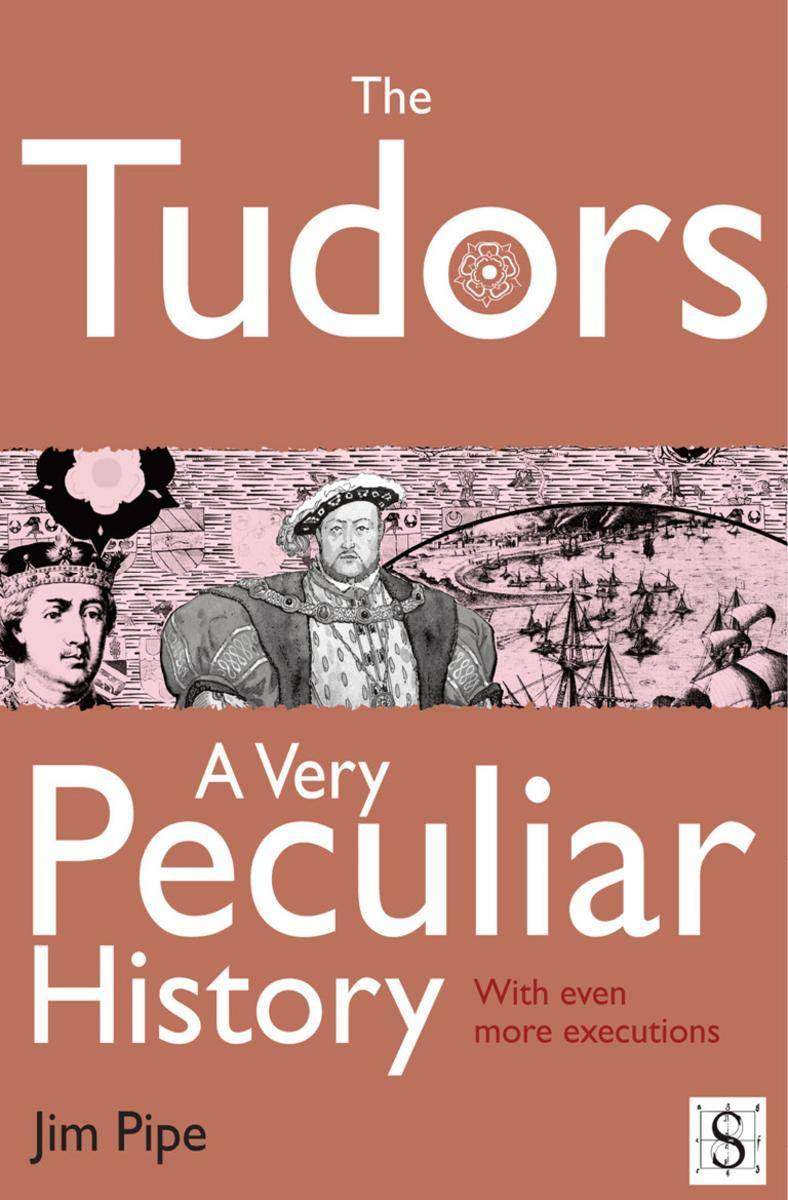
Tudors, A Very Peculiar History
¥58.76
The Tudors were an odd bunch, even weirder than their subjects, perhaps. When they weren't beheading wives and enemies they were threatening to, or going around earning themselves nicknames like 'Bloody Mary' and 'The 9 Day Queen'. 'The Tudors: A Very Peculiar History; tells the story of the Tudor monarchs, their castles, their lives and their subjects in a time when it was fashionable to slash up your clothes for that 'fresh from battle' look. The book details each monarch's reign and casts light on the more bizarre elements of their time in power, right down to an analysis of their seals and signatures and the various torture and execution methods they liked to use.
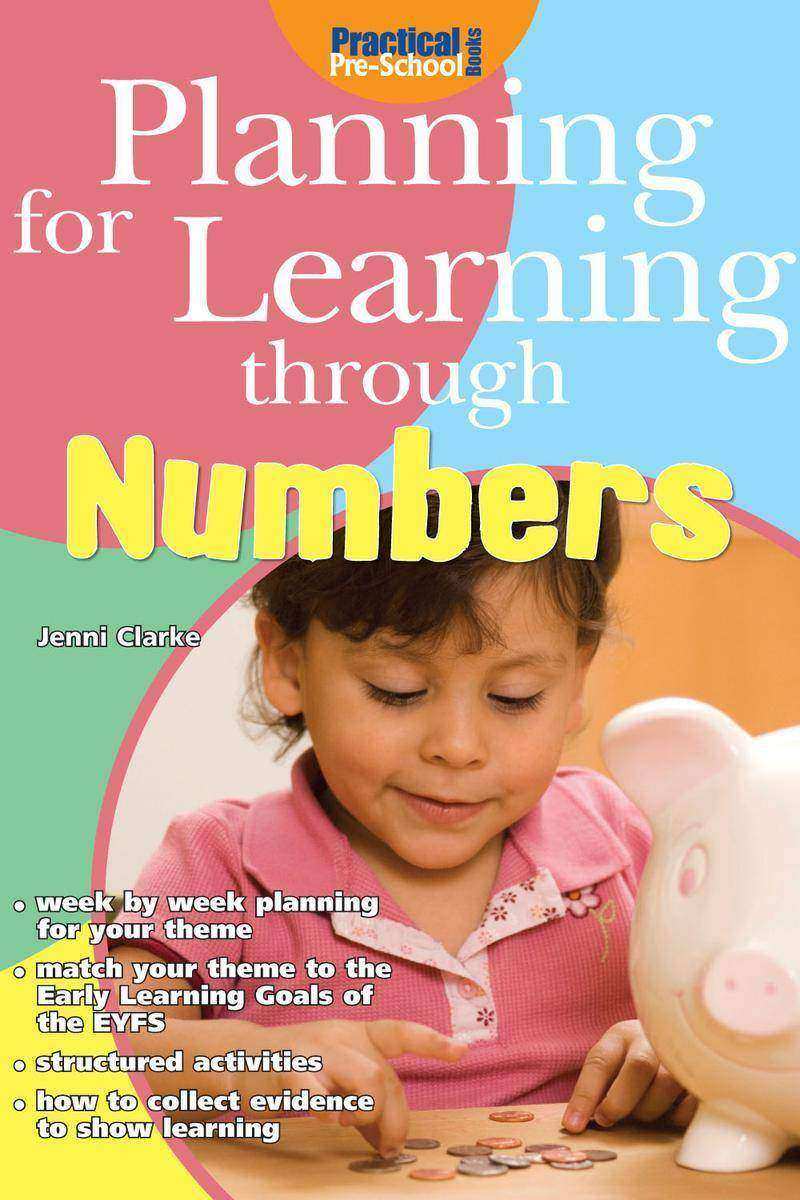
Planning for Learning through Numbers
¥73.48
Plan for six weeks of learning covering all six areas of learning and development of the EYFS through the topic of numbers. The Planning for Learning series is a series of topic books written around the Early Years Foundation Stage designed to make planning easy. This book takes you through six weeks of activities on the theme of numbers. Each activity is linked to a specific Early Learning Goal, and the book contains a skills overview so that practitioners can keep track of which areas of learning and development they are promoting. This book also includes a photocopiable page to give to parents with ideas for them to get involved with their children's topic, as well as ideas for bringing the six weeks of learning together. The weekly themes in this book include: finding numbers outdoors, musical numbers, cooking with numbers, arty numbers, shopping with numbers, and we love numbers. This book is a great way to bring numbers and early problem solving and numeracy skills into all areas of the curriculum so children learn about them in a fun and unpressured way.

How to Sparkle at Science Investigations
¥112.72
Help to develop your pupils' investigation skills using the attractively laid out worksheets in How to Sparkle at Science Investigations. Using familiar contexts, the sheets provide opportunities for children to develop their observational skills, make measurements, plan and carry out investigations, and draw conclusions from their results. Worksheet themes include: Mr Happy and Healthy; what do plants need to grow?; is it see through?; which hat for Teddy?; we're going on a materials hunt; which magnet is the strongest?; making a circuit; and investigating sails.

Evidently Yours
¥34.24
Ever get the feeling of that constant thought of someone on your mind? You've liked her a long time and she's all you ever think about. Everything about her that you know is perfect and her smile is always in your mind, but her smile is also the only thing that cheers you up. You wonder if she wants you and if she does you're the happiest guy on earth, but if she doesn't you know there's no one else you could ever want so much. I'm a fool in love with you and I can't quite explain why; you make me feel great every time that I see you and you are the only one in this world that matters. You're everything from nothing I've never ever truly known and you're the smile in my dreams. All the time I feel alone. This is my love poetry... at its finest - Dominic Clemow.

How to Sparkle at Nursery Rhymes
¥112.72
The rhythm of nursery rhymes helps children to remember the words which, in turn, helps to develop their auditory memory skills. When they have learned the words and then see them in print, they can 'read' them, Not only will this give them a greater understanding of how the written word represents the sung or spoken word, but it will also help to develop their visual memory. The worksheets contain a mixture of activities, including: putting pictures in the right sequence ;tracing letters and writing simple words; colouring pictures; attaching words to the right object; visual memory reinforcement; finding rhyming words.

Prince William and Kate Middleton
¥19.52
This excellent quick-read biography of the life so far of Prince William and Kate Middleton is a fascinating read, and will make an wonderful addition to the library of any fan of the British Royal Family. Tracking William's life from birth, through school, the death of his mother Princess Diana, university, his career in the forces, his engagement to Kate and more, it also looks at Miss Middleton's background and is full of interesting facts about their lives. Containing many colour pictures, this royal mini biography has been specially formatted for today's e-readers and is written by top-selling celebrity biographer Chris Peacock.
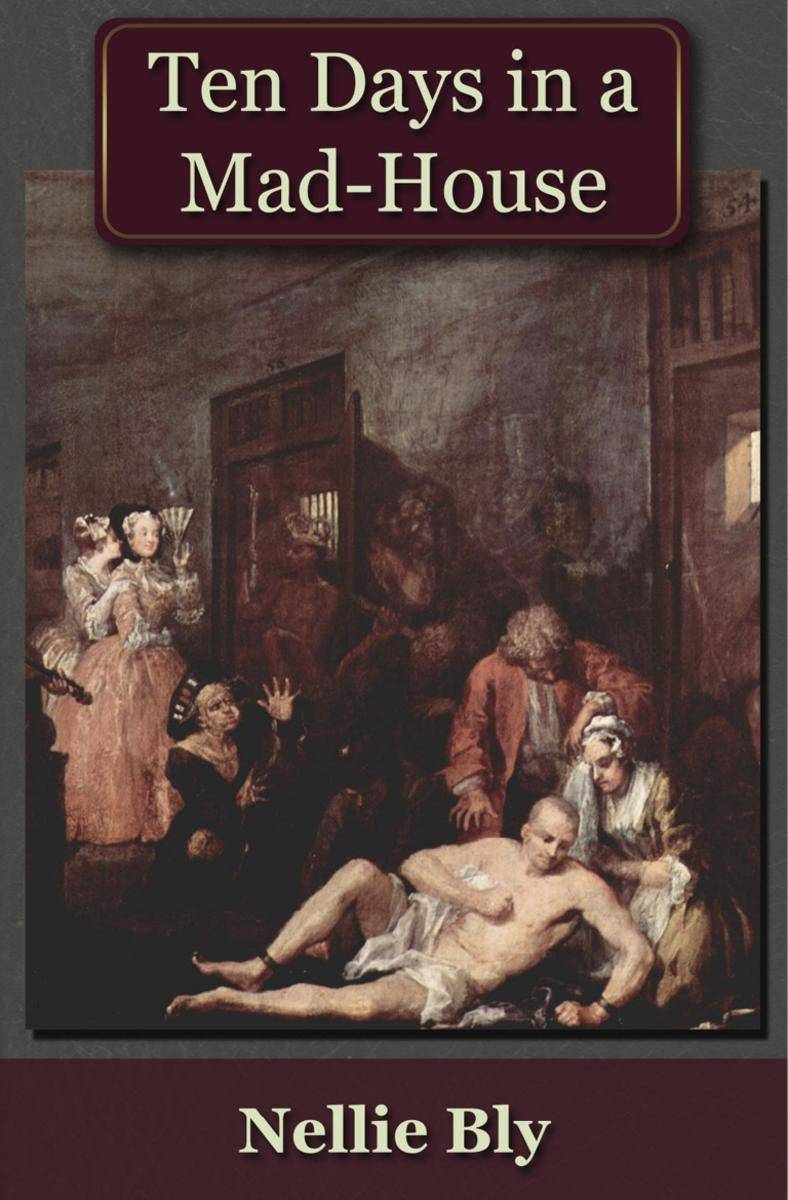
Ten Days in a Mad-House
¥29.33
This is the true story of reporter Nellie Bly, who pretends to be insane, and manages to get herself committed into an insane asylum in the USA. This revised second digital edition is a fascinating account, specially formatted for today's e-readers by Andrews UK.

Planning for Learning through Where I Live
¥73.48
Plan for six weeks of learning covering all six areas of learning and development of the EYFS through the topic of where I live. The Planning for Learning series is a series of topic books written around the Early Years Foundation Stage designed to make planning easy. This book takes you through six weeks of activities on the theme of the local area and where children live. Each activity is linked to a specific Early Learning Goal, and the book contains a skills overview so that practitioners can keep track of which areas of learning and development they are promoting. This book also includes a photocopiable page to give to parents with ideas for them to get involved with their children's topic, as well as ideas for bringing the six weeks of learning together.The weekly themes in this book include: on the high street; people where I live; parks and gardens; safe and strong; getting around and big buildings.
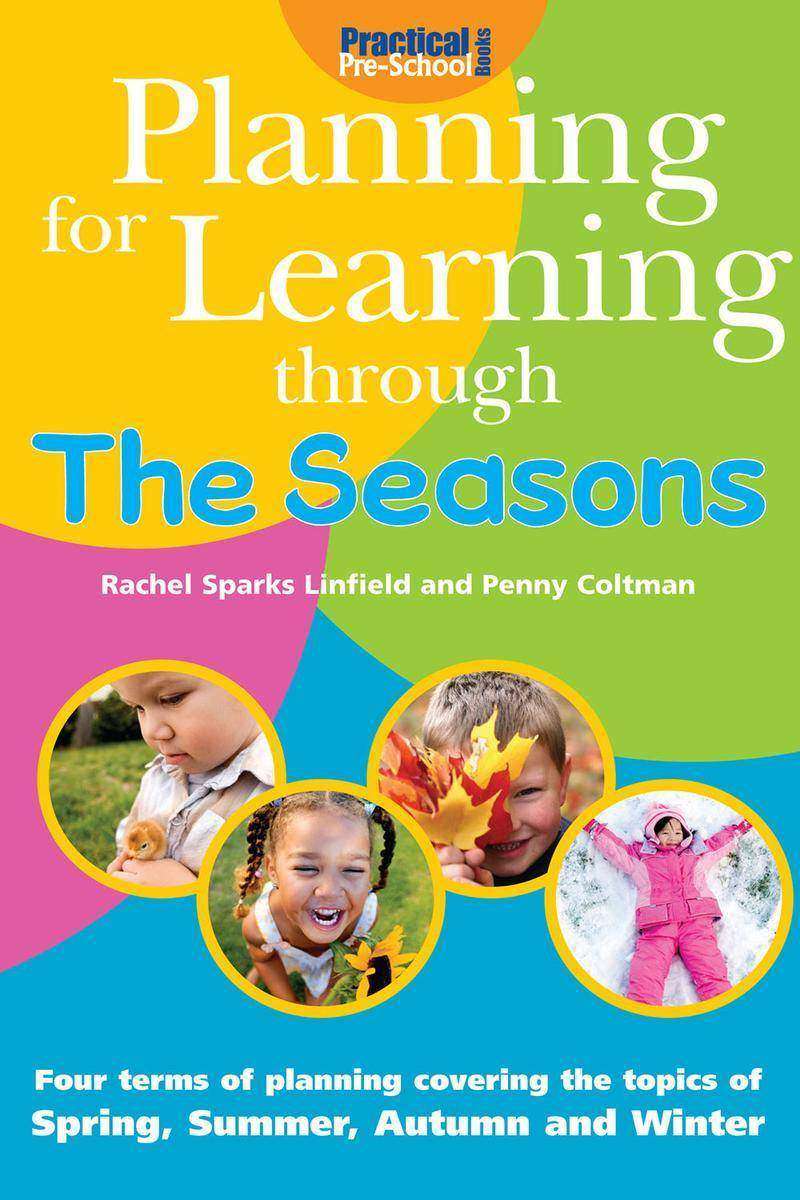
Planning for Learning through the Seasons
¥186.29
Plan for six weeks of learning for each season with this bumper edition, covering all six areas of learning and development of the EYFS. This bumper edition contains all the material contained in Planning for Learning Through Spring, Summer, Autumn and Winter in one value book. Ideal for helping young children to explore the seasons, whatever the time of year, with this step-by-step guide to planning fun activities that cover a wide range of Early Learning Goals. This title comes with advice on observing and assessing children's learning, as well as how to record evidence of learning. It also includes photocopiable sheets for parents to take and extend the learning at home. A must-have for any early years setting wanting easy to dip into planning all year round.
Prometheus Bound - I know how men in exile feed on dreams
¥11.67
schylus is often regarded as the father of Greek tragedy; he moved play writing from the simple interaction of a single character and a chorus to one where many characters interact and thereby create more dynamic and dramatic situations. schylus, was the son of Euphorion, and a scion of a Eupatrid or noble family. He was born at Eleusis 525 B.C., or, as the Greeks calculated time, in the fourth year of the 63rd Olympiad. He first worked at a vineyard and whilst there claimed to have been visited by Dionysis in a dream and told to turn his attention to the tragic art. It was a dream that would deliver a rich and incredible legacy through his writing talents. His earliest tragedy, composed when he was twenty-six years of age, failed to win the fabled Dionysia, (a revered festival of theatre) and it was not until fifteen years later that he gained this victory in 484BC going on to win it again in 472 BC (for The Persians), 467 BC (for Seven Against Thebes) and 463 BC (for The Suppliants). schylus was also known for his military skills and was ready to fight in defence of Athens whenever the call was made. He and his brother, Cynegeirus, fought against Darius's invading Persian army at the Battle of Marathon in 490 BCE and, although the Greeks won against overwhelming odds, Cynegeirus died in the battle, which had a naturally had a profound effect on schylus. He made several visits to the important Greek city of Syracuse in Sicily at the invitation of the tyrant Hieron, and it is thought that he also travelled extensively in the region of Thrace. His writing continued to be the envy of others. With the series of plays of which Seven Against Thebes was a part, his supremacy was undisputed. He was the "e;father of tragedy."e; schylus made many changes to dramatic form. The importance of the chorus was demoted and a second added to give prominence to the dialogue and making that interchange the leading feature of the play. He removed all deeds of bloodshed from the public view, and in their place provided various spectacular elements, improving the costumes, making the masks more expressive and convenient, and probably adopting the cothurnus to increase the stature of the performers. Finally, he established the custom of contending for the prize with trilogies, an inter-connecting set of three independent dramas. The closing years of the life of schylus were mainly spent in Sicily, which he had first visited soon after his defeat at the Dionysia by Sophocles. schylus returned to Athens to produce his Orestean trilogy, probably the finest of his works, although the Eumenides, the last of the three plays, revealed so openly his aristocratic tendencies that he became extremely unpopular, and returned to Sicily for the last time in 458 BCE and it was there that he died, while visiting the city of Gela in 456 or 455 BCE.
Dead Souls - The longer and more carefully we look at a funny story, the sadder
¥25.80
Nikolai Vasilievich Gogol was born on 31st March 1809 in present day Ukraine which was then the Russian Cossack village of Sorochyntsi. Nikolai's parents were relatively affluent; his mother's family were Polish landowners and his father, who wrote poetry in Ukrainian and Russian, was a descendant of Ukrainian Cossacks. Nikolai had a good education and started writing as a teenager whilst still at school although did consider becoming an actor due to his formidable talent at mimicry. On leaving school he went to St Petersburg but found it hard getting any work either in the civil service or as an actor. He self published a romantic poem but it was critically savaged to the extent that he swore never to write poetry again and also considered emigrating to the US. Fortunately, he persevered with his writing and produced a series of stories about his home in Ukraine in a colloquial and whimsical style that captured many literary admirers including the esteemed poet Pushkin. Nikolai was eventually able to abandon his work teaching and produced powerful books brilliantly and savagely satirising the inequities of the Russian system and its corrupt bureaucracy. His creative talents declined in later years and he became heavily influenced by a sadistic fanatical priest and died semi insane on 4th March 1852. He remains the father of Russian realism as evidenced here by his classic 'Dead Souls'
In The Zone - Why can't you remember your Shakespeare and forget the third-rater
¥14.03
Eugene Gladstone O'Neill was born on October 16, 1888 in a hotel bedroom in what is now Times Square, New York. Much of his childhood was spent in the comfort of books at boarding schools whilst his actor father was on the road and his Mother contended with her own demons. He spent only a year at University - Princeton - and various reasons have been given for his departure. However whatever his background and education denied or added to his development it is agreed amongst all that he was a playwright of the first rank and possibly America's greatest. His introduction of realism into American drama was instrumental in its development and paved a path for many talents thereafter. Of course his winning of both the Pulitzer Prize (4 times) and the Nobel Prize are indicative of his status. His more famous and later works do side with the disillusionment and personal tragedy of those on the fringes of society but continue to build upon ideas and structures he incorporated in his early one act plays. Eugene O'Neill suffered from various health problems, mainly depression and alcoholism. In the last decade he also faced a Parkinson's like tremor in his hands which made writing increasingly difficult. But out of such difficulties came plays of the calibre of The Iceman Cometh, Long Day's Journey Into Night, and A Moon for the Misbegotten. Eugene O'Neill died in Room 401 of the Sheraton Hotel on Bay State Road in Boston, on November 27, 1953, at the age of 65. As he was dying, he whispered his last words: "e;I knew it. I knew it. Born in a hotel room and died in a hotel room."e;

Enemy of the People (1882)
¥23.45
Henrik Ibsen (20th March, 1828 - 23rd May, 1906) is often referred to as the father of realism and ranked just below Shakespeare as Europe's greatest ever playwright especially as his plays are performed most frequently throughout the world after Shakespeare's. Ibsen was Norwegian and although set his plays in Norway, he wrote them in Danish and lived most of his professional life in Italy and Germany. His affect on the theatre is still evident today and shapes the distinction of plays being art as opposed to entertainment since he broke down all previous traditions and explored issues, developed characterisation, revealed uncomfortable truths, challenged assumptions and brokedown facades in ourselves as well as society. These factors are clearly demonstrated in Enemy of the People, a story of a man, Dr Stockman, who shows great courage in doing the right thing in the face of extreme social pressure and intolerance. He has been involved in developing medicinal baths in his small coastal community in Norway which have proved a profitable and successful tourist attraction. However, he finds out that waste products are contaminating the water and resulting in serious illnesses for some of the tourists. He sends his detailed report to the authorities and finds that not only are they unwilling to take any action but the townspeople brand him a lunatic. He finds himself marginalised and realises that in matters of right and wrong, the individual is superior to the masses. He says: "e;A minority may be right; a majority is always wrong."e; This remarkable play is seen as Ibsen's denunciation of the masses and a scathing indictment on community and democracy. It is surprisingly relevant with our contemporary concerns of both the environment and whistleblowers and definitely worth a read.
Sign of the Four - Jealousy is a strange transformer of characters.
¥15.21
If ever a writer needed an introduction Arthur Conan Doyle would not be considered that man. After all, Sherlock Holmes is perhaps the foremost literary detective of any age. Add to this canon his stories of science fiction and his poems, his historical novels, his plays, his political campaigning, his efforts in establishing a Court of Appeal and there is little room for anything else. Except he was also an exceptional writer of short stories of the horrific and macabre. Something very different from what you might expect. Born in Arthur Conan Doyle was born on 22 May 1859 at 11 Picardy Place, Edinburgh, Scotland. From 1876 - 1881 he studied medicine at the University of Edinburgh following which he was employed as a doctor on the Greenland whaler Hope of Peterhead in 1880 and, after his graduation, as a ship's surgeon on the SS Mayumba during a voyage to the West African coast in 1881. Arriving in Portsmouth in June of that year with less than GBP10 (GBP700 today) to his name, he set up a medical practice at 1 Bush Villas in Elm Grove, Southsea. The practice was initially not very successful. While waiting for patients, Conan Doyle again began writing stories and composed his first novel The Mystery of Cloomber. Although he continued to study and practice medicine his career was now firmly set as a writer. And thereafter great works continued to pour out of him.
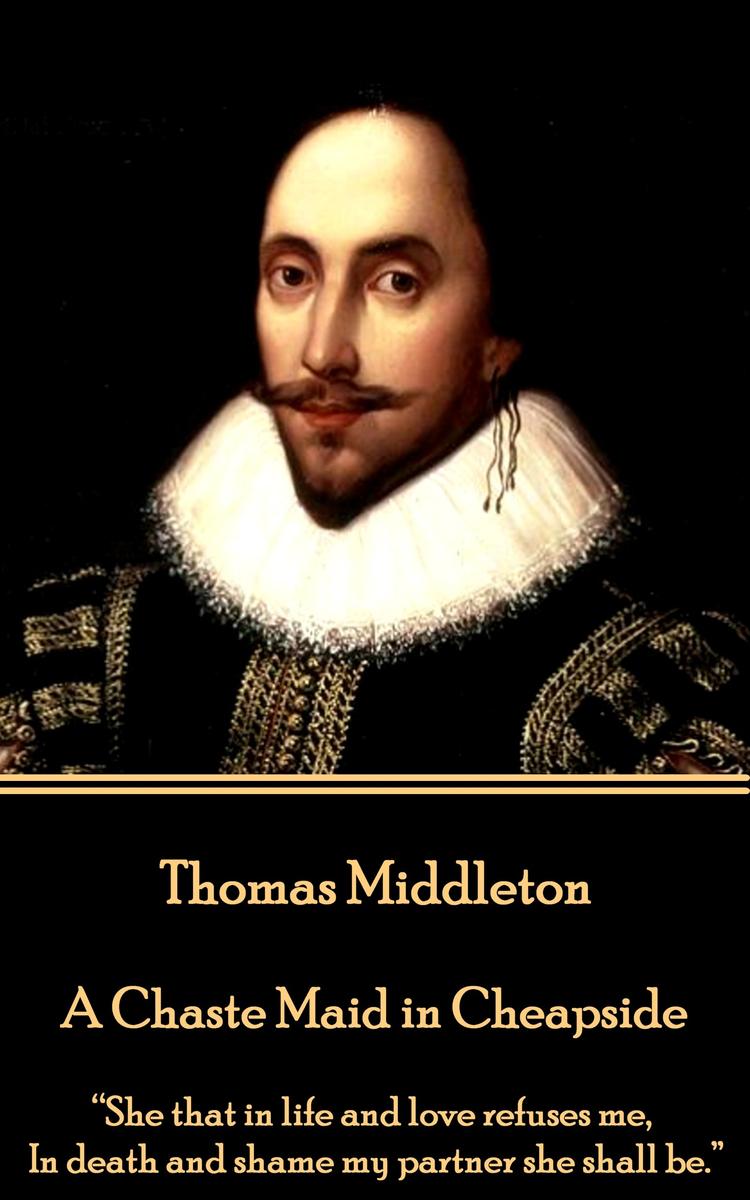
Chaste Maid in Cheapside - She that in life and love refuses me
¥23.45
Thomas Middleton was born in London in April 1580 and baptised on 18th April. Middleton was aged only five when his father died. His mother remarried but this unfortunately fell apart into a fifteen year legal dispute regarding the inheritance due Thomas and his younger sister. By the time he left Oxford, at the turn of the Century, Middleton had and published Microcynicon: Six Snarling Satirese which was denounced by the Archbishop of Canterbury and publicly burned. In the early years of the 17th century, Middleton wrote topical pamphlets. One - Penniless Parliament of Threadbare Poets was reprinted several times and the subject of a parliamentary inquiry. These early years writing plays continued to attract controversy. His writing partnership with Thomas Dekker brought him into conflict with Ben Jonson and George Chapman in the so-called War of the Theatres. His finest work with Dekker was undoubtedly The Roaring Girl, a biography of the notorious Mary Frith. In the 1610s, Middleton began another playwriting partnership, this time with the actor William Rowley, producing another slew of plays including Wit at Several Weapons and A Fair Quarrel. The ever adaptable Middleton seemed at ease working with others or by himself. His solo writing credits include the comic masterpiece, A Chaste Maid in Cheapside, in 1613. In 1620 he was officially appointed as chronologer of the City of London, a post he held until his death. The 1620s saw the production of his and Rowley's tragedy, and continual favourite, The Changeling, and of several other tragicomedies. However in 1624, he reached a peak of notoriety when his dramatic allegory A Game at Chess was staged by the King's Men. Though Middleton's approach was strongly patriotic, the Privy Council silenced the play after only nine performances at the Globe theatre, having received a complaint from the Spanish ambassador. What happened next is a mystery. It is the last play recorded as having being written by Middleton. Thomas Middleton died at his home at Newington Butts in Southwark in the summer of 1627, and was buried on July 4th, in St Mary's churchyard which today survives as a public park in Elephant and Castle.
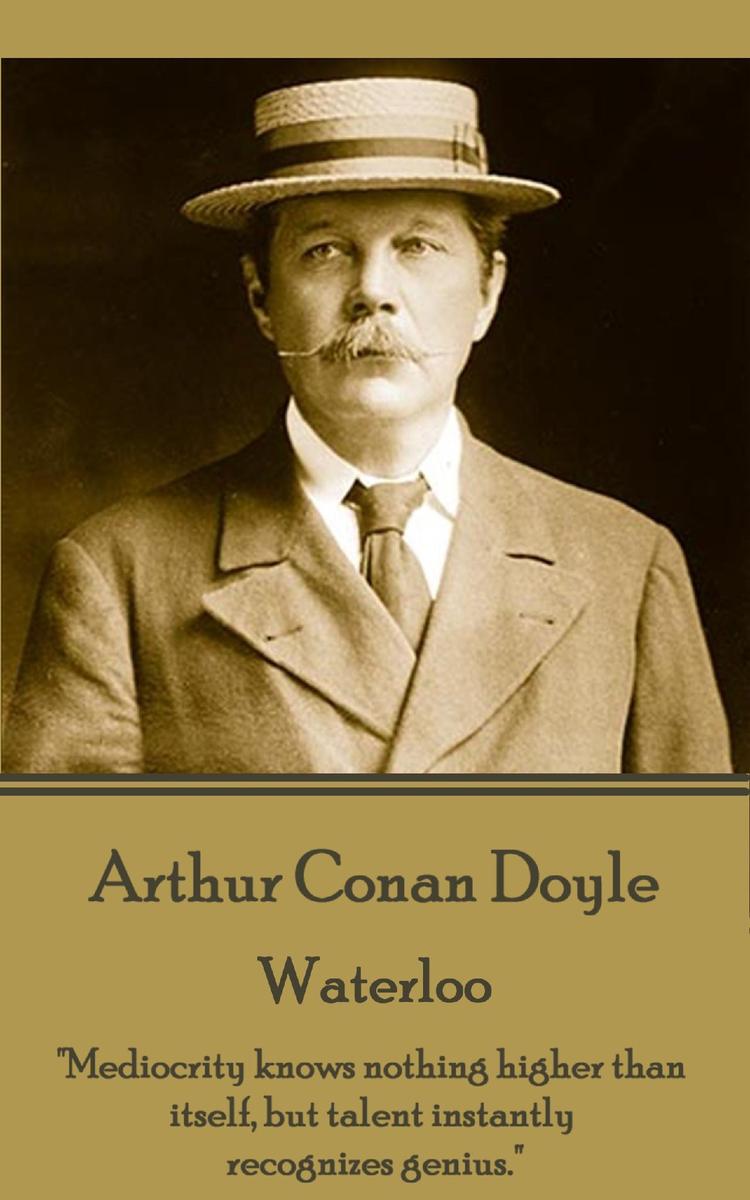
Waterloo - Mediocrity knows nothing higher than itself, but talent instantly rec
¥11.67
If ever a writer needed an introduction Arthur Conan Doyle would not be considered that man. After all, Sherlock Holmes is perhaps the foremost literary detective of any age. Add to this canon his stories of science fiction and his poems, his historical novels, his plays, his political campaigning, his efforts in establishing a Court Of Appeal and there is little room for anything else. Except he was also an exceptional writer of short stories of the horrific and macabre. Something very different from what you might expect. Born in Arthur Conan Doyle was born on 22 May 1859 at 11 Picardy Place, Edinburgh, Scotland. From 1876 - 1881 he studied medicine at the University of Edinburgh following which he was employed as a doctor on the Greenland whaler Hope of Peterhead in 1880 and, after his graduation, as a ship's surgeon on the SS Mayumba during a voyage to the West African coast in 1881. Arriving in Portsmouth in June of that year with less than GBP10 (GBP700 today) to his name, he set up a medical practice at 1 Bush Villas in Elm Grove, Southsea. The practice was initially not very successful. While waiting for patients, Conan Doyle again began writing stories and composed his first novel The Mystery of Cloomber. Although he continued to study and practice medicine his career was now firmly set as a writer. And thereafter great works continued to pour out of him.
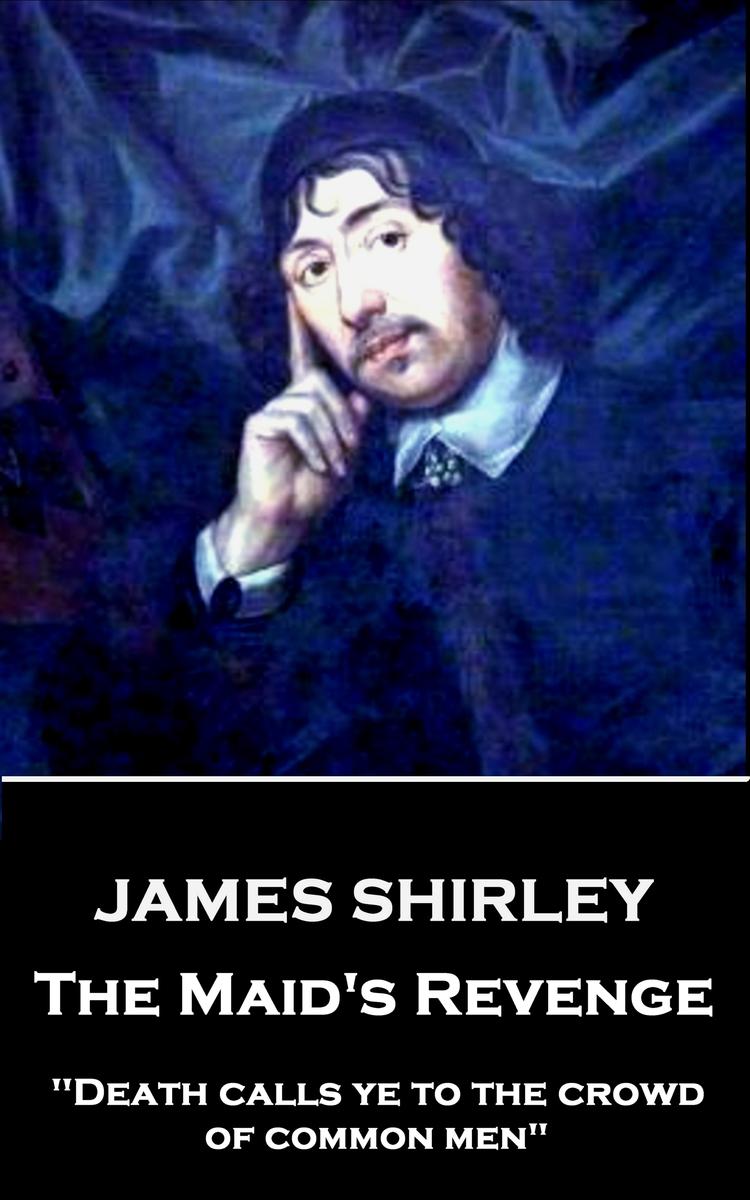
Maid's Revenge - Death calls ye to the crowd of common men
¥25.80
James Shirley was born in London in September 1596. His education was through a collection of England's finest establishments: Merchant Taylors' School, London, St John's College, Oxford, and St Catharine's College, Cambridge, where he took his B.A. degree in approximately 1618. He first published in 1618, a poem entitled Echo, or the Unfortunate Lovers. As with many artists of this period full details of his life and career are not recorded. Sources say that after graduating he became "e;a minister of God's word in or near St Albans."e; A conversion to the Catholic faith enabled him to become master of St Albans School from 1623-25. He wrote his first play, Love Tricks, or the School of Complement, which was licensed on February 10th, 1625. From the given date it would seem he wrote this whilst at St Albans but, after its production, he moved to London and to live in Gray's Inn. For the next two decades, he would write prolifically and with great quality, across a spectrum of thirty plays; through tragedies and comedies to tragicomedies as well as several books of poetry. Unfortunately, his talents were left to wither when Parliament passed the Puritan edict in 1642, forbidding all stage plays and closing the theatres. Most of his early plays were performed by Queen Henrietta's Men, the acting company for which Shirley was engaged as house dramatist. Shirley's sympathies lay with the King in battles with Parliament and he received marks of special favor from the Queen. He made a bitter attack on William Prynne, who had attacked the stage in Histriomastix, and, when in 1634 a special masque was presented at Whitehall by the gentlemen of the Inns of Court as a practical reply to Prynne, Shirley wrote the text-The Triumph of Peace. Shirley spent the years 1636 to 1640 in Ireland, under the patronage of the Earl of Kildare. Several of his plays were produced by his friend John Ogilby in Dublin in the first ever constructed Irish theatre; The Werburgh Street Theatre. During his years in Dublin he wrote The Doubtful Heir, The Royal Master, The Constant Maid, and St. Patrick for Ireland. In his absence from London, Queen Henrietta's Men sold off a dozen of his plays to the stationers, who naturally, enough published them. When Shirley returned to London in 1640, he finished with the Queen Henrietta's company and his final plays in London were acted by the King's Men. On the outbreak of the English Civil War Shirley served with the Earl of Newcastle. However when the King's fortunes began to decline he returned to London. There his friend Thomas Stanley gave him help and thereafter Shirley supported himself in the main by teaching and publishing some educational works under the Commonwealth. In addition to these he published during the period of dramatic eclipse four small volumes of poems and plays, in 1646, 1653, 1655, and 1659. It is said that he was "e;a drudge"e; for John Ogilby in his translations of Homer's Iliad and the Odyssey, and survived into the reign of Charles II, but, though some of his comedies were revived, his days as a playwright were over. His death, at age seventy, along with that of his wife, in 1666, is described as one of fright and exposure due to the Great Fire of London which had raged through parts of London from September 2nd to the 5th. He was buried at St Giles in the Fields, in London, on October 29th, 1666.
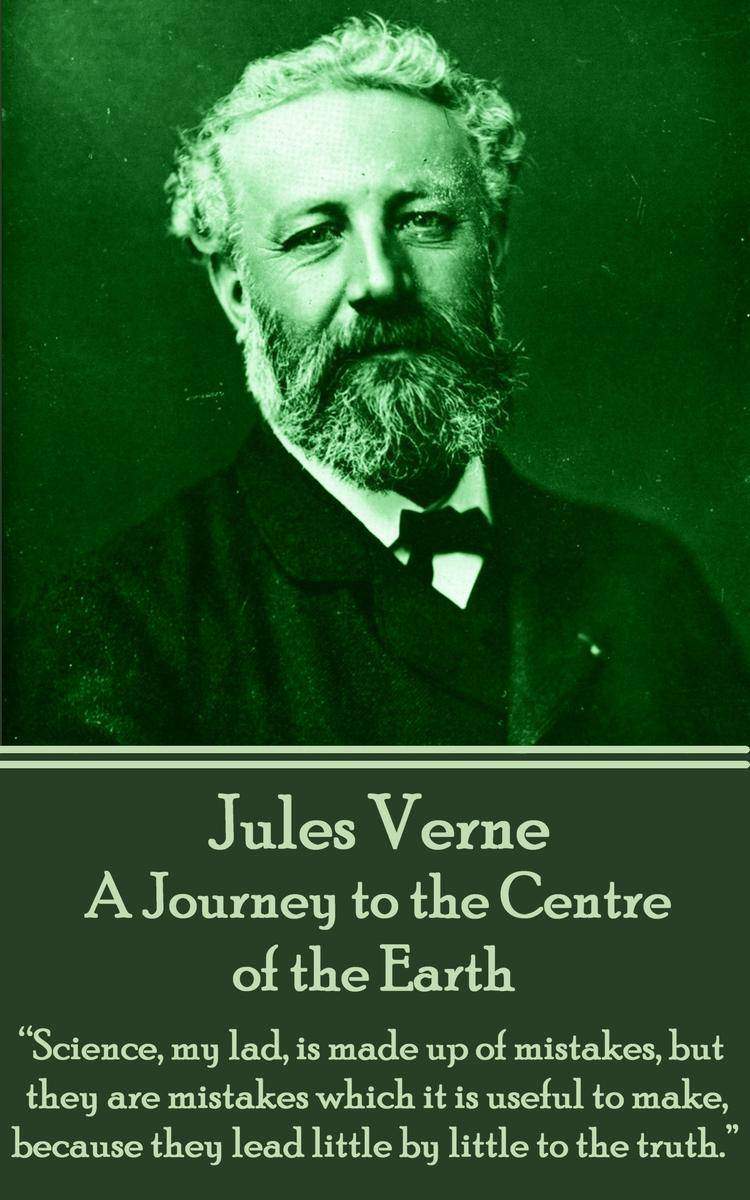
Journey to the Centre of the Earth
¥29.33
Jules Gabriel Verne was born on February 8th, 1828 on Ile Feydeau, a small artificial island on the Loire River in Nantes. His father wanted his son to take over the family law practice. Jules started along this course and despite graduating with a licence en droit in January 1851 was soon diverted by the lure of literature and by his own ambitious talents in this direction. He wrote for the theatre and for magazines and soon with the publication of his first novel; Five Weeks in a Balloon on January 31st, 1863 he had begun his career as an admired and popular author. For many, many years the works flowed, usually no less than and often more than two volumes per year. His meticulous research and imaginative setting and narratives soon established him as a top selling author and he became both famous and wealthy. By publishing firstly as a serialised book and then as a complete book sales swelled as did his reputation. His earnings increased further due to the runaway success from the stage adaptations of Le tour du monde en quatre-vingts jours (1874) and Michel Strogoff (1876), Strangely he was overlooked for honours. He was not even nominated for membership of the Academie Francaise. After the death of both his mother and Hetzel, Jules began to publish darker works but still at a prodigious rate. In 1888, Jules entered politics and was elected town councillor of Amiens, and then served for fifteen years. Jules was now entering the last period of his life. His works continued to flow albeit at a slower pace. His reconciled with his son, Michel who now became an active contributor to his father's works and, when the senior Verne died, would continue to contribute and publish his father's works, ensuring that the work was kept in the public eye and the legacy preserved. On March 24th, 1905, while ill with diabetes, Jules Verne died at his home at 44 Boulevard Longueville, Amiens. As a legacy Jules Verne is forever remembered as 'The Father of Science Fiction'. With his rigorous research Jules was not only able to make his works realistic but also to project forward and predict many new things that would eventually come to pass - either in real life or as the basis for others to use in their own science fiction. Extraordinary indeed.
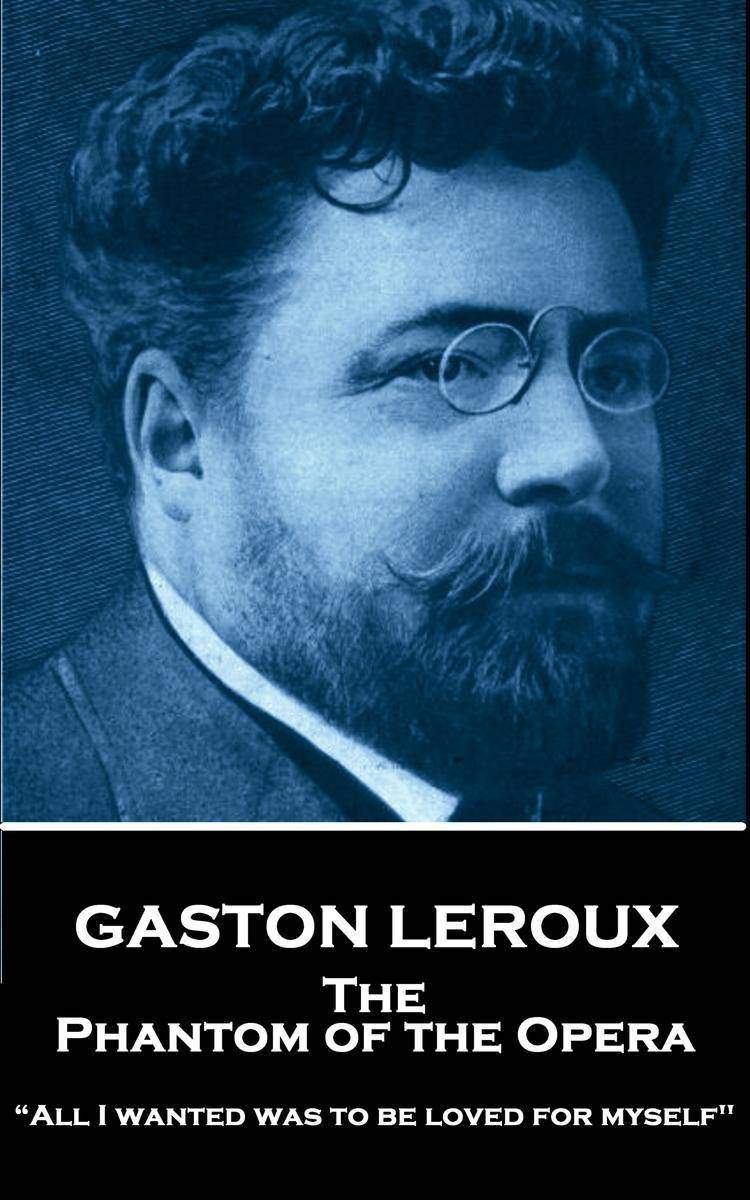
Phantom of the Opera - All I wanted was to be loved for myself
¥23.45
Gaston Louis Alfred Leroux was born on May 6th, 1868, in Paris, France. Leroux was schooled in Normandy and went to Paris to study Law where he graduated in 1889. As a young man he inherited a fortune, valued even then in the millions of francs, and lived excessively until it was almost all quickly spent. In 1890, he began working as a court reporter and theater critic for L'Echo de Paris. He became an international correspondent for Le Matin and covered perhaps his most important story in 1905 when he witnessed and wrote about the Russian Revolution. Lerouxs' reporting instincts were also used for in-depth coverage of the former Paris Opera being used as cells to house prisoners of the Paris Commune in the basement. He abruptly switched careers in 1907 to write fiction. His first effort was the Mystery of the Yellow Room. This was the first in a series of the Adventures of Rouletabillet. From then until the mid-1920s he wrote prolifically, becoming a firm favourite to his French audience and increasingly to a growing market abroad thanks to the numerous translations and his growing reputation. By 1919, Leroux had seen the potential in the growing film industry and together with Arthur Bernede they formed a film company, Societe des Cineromans, to publish novels and simultaneously turn them into films. As an author Leroux works are placed alongside Sir Arthur Conan Doyle's in the United Kingdom and Edgar Allan Poe's in the United States. His Phantom of the Opera is one of the world's classic treasures and is constantly being adapted into other media; from films and TV to radio as well as an audiobook. Leroux was honoured by the French State with a Chevalier de la Legion d'honneur in 1902. Gaston Leroux died in Nice, in Southern France, on April 15th, 1927.
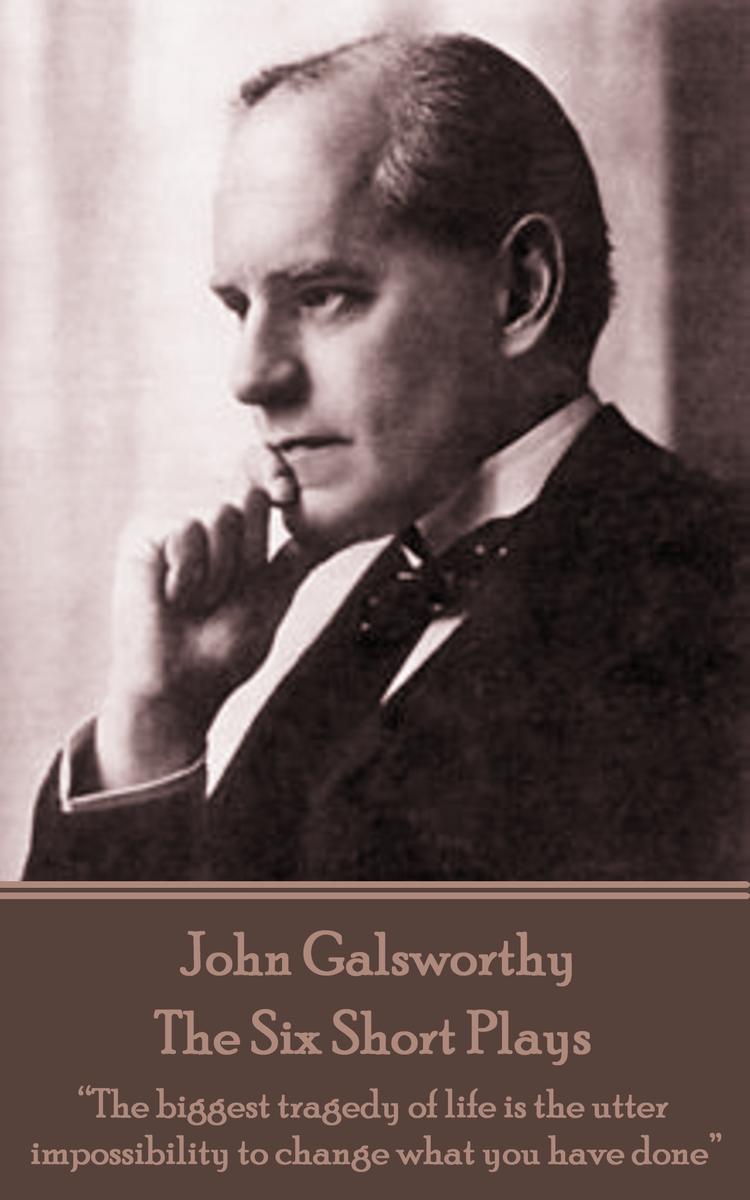
Six Short Plays
¥21.09
John Galsworthy was born at Kingston Upon Thames in Surrey, England, on August 14th 1867 to a wealthy and well established family. His schooling was at Harrow and New College, Oxford before training as a barrister and being called to the bar in 1890. However, Law was not attractive to him and he travelled abroad becoming great friends with the novelist Joseph Conrad, then a first mate on a sailing ship. In 1895 Galsworthy began an affair with Ada Nemesis Pearson Cooper, the wife of his cousin Major Arthur Galsworthy. The affair was kept a secret for 10 years till she at last divorced and they married on 23rd September 1905. Galsworthy first published in 1897 with a collection of short stories entitled "e;The Four Winds"e;. For the next 7 years he published these and all works under his pen name John Sinjohn. It was only upon the death of his father and the publication of "e;The Island Pharisees"e; in 1904 that he published as John Galsworthy. His first play, The Silver Box in 1906 was a success and was followed by "e;The Man of Property"e; later that same year and was the first in the Forsyte trilogy. Whilst today he is far more well know as a Nobel Prize winning novelist then he was considered a playwright dealing with social issues and the class system. Here we publish Villa Rubein, a very fine story that captures Galsworthy's unique narrative and take on life of the time. He is now far better known for his novels, particularly The Forsyte Saga, his trilogy about the eponymous family of the same name. These books, as with many of his other works, deal with social class, upper-middle class lives in particular. Although always sympathetic to his characters, he reveals their insular, snobbish, and somewhat greedy attitudes and suffocating moral codes. He is now viewed as one of the first from the Edwardian era to challenge some of the ideals of society depicted in the literature of Victorian England. In his writings he campaigns for a variety of causes, including prison reform, women's rights, animal welfare, and the opposition of censorship as well as a recurring theme of an unhappy marriage from the women's side. During World War I he worked in a hospital in France as an orderly after being passed over for military service. He was appointed to the Order of Merit in 1929, after earlier turning down a knighthood, and awarded the Nobel Prize in 1932 though he was too ill to attend. John Galsworthy died from a brain tumour at his London home, Grove Lodge, Hampstead on January 31st 1933. In accordance with his will he was cremated at Woking with his ashes then being scattered over the South Downs from an aeroplane.
Wind In The Willows (Mermaids Classics)
¥35.22
The Wind in the Willows by Kenneth Grahame (1859 - 1932) is a childrens novel based on four anthropomorphised animals. The story begins with a Mole who adventures outside of his underground world. The book was first published in 1908 as an un-illustrated (plain text) edition. Mermaids Classics, an imprint of Mermaids Publishing brings the very best of old classic literature to a modern era of digital reading by producing high quality books in ebook format. All of the Mermaids Classics epublications are reproductions of classic antique books that were originally published in print format, mostly over a century ago and are now republished in digital format as ebooks. Begin to build your collection of digital books by looking for more literary gems from Mermaids Classics.


