


 购物车
购物车 个人中心
个人中心
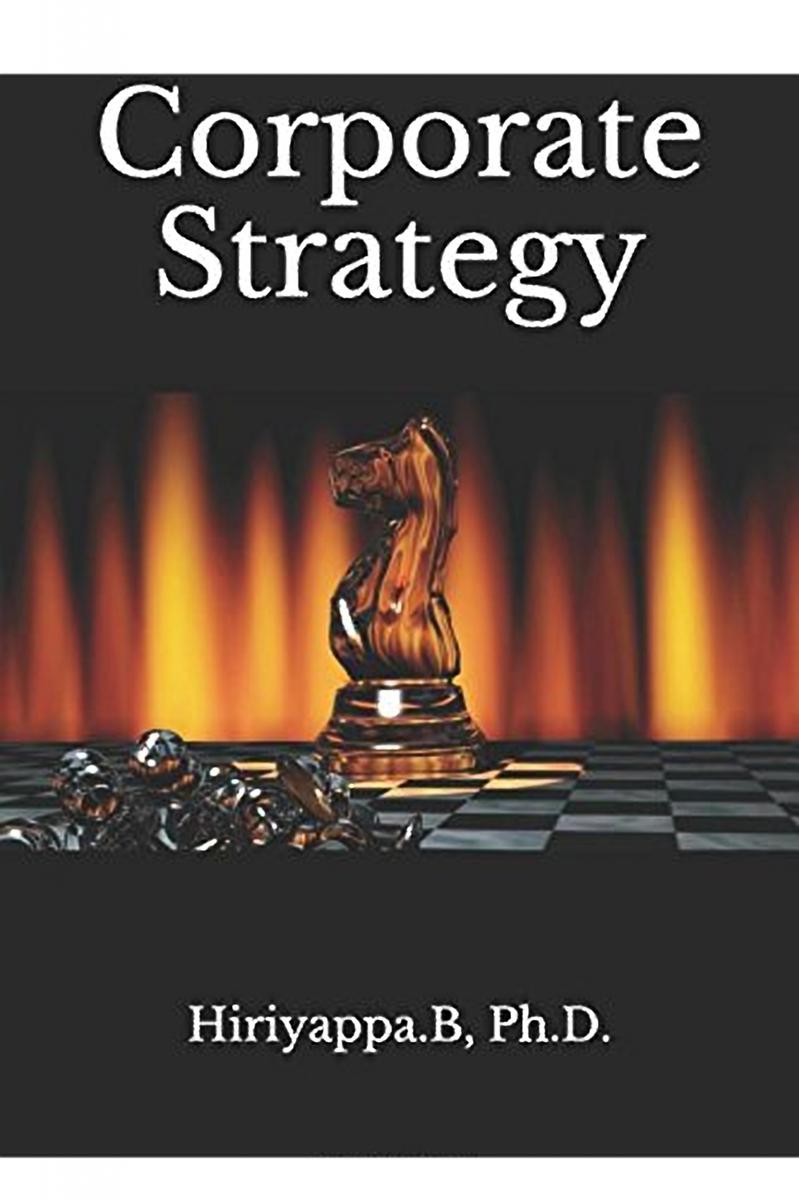
Corporate Strategy
¥40.79
Corporate Strategy
Origin of Species: A Tutorial Study Guide
¥32.62
Origin of Species: A Tutorial Study Guide

Endocrine System: A Tutorial Study Guide
¥40.79
Endocrine System: A Tutorial Study Guide
Sensory System: A Tutorial Study Guide
¥40.79
Sensory System: A Tutorial Study Guide

Principles of Biology: Animal Systems: A Tutorial Study Guide (box set)
¥326.92
Principles of Biology: Animal Systems: A Tutorial Study Guide (box set)
Neurotransmitter Pathways: A Tutorial Study Guide
¥32.62
Neurotransmitter Pathways: A Tutorial Study Guide

Renal System: A Tutorial Study Guide
¥32.62
Renal System: A Tutorial Study Guide

Schizophrenia: A Tutorial Study Guide
¥32.62
Schizophrenia: A Tutorial Study Guide

Motivating for STEM Success
¥81.67
Motivating for STEM Success

Clinical Updates in the Management of Severe Asthma
¥0.01
Clinical Updates in the Management of Severe Asthma

Tools and Function Lists: Engineering Tools Manual
¥20.44
Tools and Function Lists: Engineering Tools Manual

The Secret Agent: "A Simple Tale"
¥18.74
AMONG the ranks of the great astronomers it would be difficult to find one whose life presents more interesting features and remarkable vicissitudes than does that of Galileo. We may consider him as the patient investigator and brilliant discoverer. We may consider him in his private relations, especially to his daughter, Sister Maria Celeste, a woman of very remarkable character ; and we have also the pathetic drama at the close of Galileo's life, when the philosopher drew down upon himself the thunders of the Inquisition. The materials for the sketch of this astonishing man are sufficiently abundant. We make special use in this place of those charming letters which his daughter wrote to him from her convent home. More than a hundred of these have been preserved, and it may well be doubted whether any more beautiful and touching series of letters addressed to a parent by a dearly loved child have ever been written. An admirable account of this correspondence is contained in a little book entitled "The Private Life of Galileo," published anonymously by Messrs. Macmillan in 1870, and I have been much indebted to the author of that volume for many of the facts contained in this chapter. Galileo was born at Pisa, on 18th February, 1564. He was the eldest son of Vincenzo de Bonajuti de Galilei, a Florentine noble. Notwithstanding his illustrious birth and descent, it would seem that the home in which the great philosopher's childhood was spent was an impoverished one. It was obvious at least that the young Galileo would have to be provided with some profession by which he might earn a livelihood. From his father he derived both by inheritance and by precept a keen taste for music, and it appears that he became an excellent performer on the lute. He was also endowed with considerable artistic power, which he cultivated diligently. Indeed, it would seem that for some time the future astronomer entertained the idea of devoting himself to painting as a profession. His father, however, decided that he should study medicine. Accordingly, we find that when Galileo was seventeen years of age, and had added a knowledge of Greek and Latin to his acquaintance with the fine arts, he was duly entered at the University of Pisa. AMONG the ranks of the great astronomers it would be difficult to find one whose life presents more interesting features and remarkable vicissitudes than does that of Galileo. We may consider him as the patient investigator and brilliant discoverer. We may consider him in his private relations, especially to his daughter, Sister Maria Celeste, a woman of very remarkable character ; and we have also the pathetic drama at the close of Galileo's life, when the philosopher drew down upon himself the thunders of the Inquisition. The materials for the sketch of this astonishing man are sufficiently abundant. We make special use in this place of those charming letters which his daughter wrote to him from her convent home. More than a hundred of these have been preserved, and it may well be doubted whether any more beautiful and touching series of letters addressed to a parent by a dearly loved child have ever been written. An admirable account of this correspondence is contained in a little book entitled "The Private Life of Galileo," published anonymously by Messrs. Macmillan in 1870, and I have been much indebted to the author of that volume for many of the facts contained in this chapter.

The Secret Garden
¥23.30
IT was just a year after the death of Galileo, that an infant came into the world who was christened Isaac Newton. Even the great fame of Galileo himself must be relegated to a second place in comparison with that of the philosopher who first expounded the true theory of the universe. Isaac Newton was born on the 25th of December (old style), 1642, at Woolsthorpe, in Lincolnshire, about a half-mile from Colsterworth, and eight miles south of Grantham. His father, Mr. Isaac Newton, had died a few months after his marriage to Harriet Ayscough, the daughter of Mr. James Ayscough, of Market Overton, in Rutlandshire. The little Isaac was at first so excessively frail and weakly that his life was despaired of. The watchful mother, however, tended her delicate child with such success that he seems to have thriven better than might have been expected from the circumstances of his infancy, and he ultimately acquired a frame strong enough to outlast the ordinary span of human life.For three years they continued to live at Woolsthorpe, the widow's means of livelihood being supplemented by the income from another small estate at Sewstern, in a neighbouring part of Leicestershire. In 1645, Mrs. Newton took as a second husband the Rev. Barnabas Smith, and on moving to her new home, about a mile from Woolsthorpe, she entrusted little Isaac to her mother, Mrs. Ayscough. In due time we find that the boy was sent to the public school at Grantham, the name of the master being Stokes. For the purpose of being near his work, the embryo philosopher was boarded at the house of Mr. Clark, an apothecary at Grantham. We learn from Newton himself that at first he had a very low place in the class lists of the school, and was by no means one of those model school-boys who find favour in the eyes of the school-master by attention to Latin grammar. Isaac's first incentive to diligent study seems to have been derived from the circumstance that he was severely kicked by one of the boys who was above him in the class. This indignity had the effect of stimulating young Newton's activity to such an extent that he not only attained the desired object of passing over the head of the boy who had maltreated him, but continued to rise until he became the head of the school.The play-hours of the great philosopher were devoted to pursuits very different from those of most school-boys. His chief amusement was found in making mechanical toys and various ingenious contrivances. He watched day by day with great interest the workmen engaged in constructing a windmill in the neighbourhood of the school, the result of which was that the boy made a working model of the windmill and of its machinery, which seems to have been much admired, as indicating his aptitude for mechanics. We are told that Isaac also indulged in somewhat higher flights of mechanical enterprise. He constructed a carriage, the wheels of which were to be driven by the hands of the occupant, while the first philosophical instrument he made was a clock, which was actuated by water. He also devoted much attention to the construction of paper kites, and his skill in this respect was highly appreciated by his schoolfellows. Like a true philosopher, even at this stage he experimented on the best methods of attaching the string, and on the proportions which the tail ought to have. He also made lanthorns of paper to provide himself with light as he walked to school in the dark winter mornings.
The Time Machine
¥18.74
zet olarak tüm tp almalar & Bilim felsefesi & Hayat hikayesi & Metodolojisi ve Tahlilleri ilaveli bni Sin, daha ocukluunda, evresini hayrete düüren bir zek ve hafza rnei gstermitir. Küük yata ann bütün, ilimlerini renmiti. Gündüz ve gece okumakla vakit geirir, mum nda saatlerce, ou zaman sabahlara kadar alrd. Pek az uyurdu. Buhara Emiri Nuh bni Mansur’u ar bir hastalktan kurtard ve bu yüzden de Samanoullar saraynn kütüphanesinde alma iznini ald. Bu sayede pek ok eseri elinin altnda bulduu iin vaktini kitap okumak ve yazmakla geirdi. Hükümdar ldüü zaman o, henüz yirmi yandayd ve Buhr'dan ayrlarak Harzem'e gitti: EI-Brni gibi büyük bir hret ve deerin, onun alkanlna, bilgisine deer vermesi, kendisini yanna kabul etmesi, beraber almas, hakknda kskanla yol at. Bu yüzden takibata bile urad. Harzem'de barnamayarak yeniden yollara dütü. ehirden ehre dolaarak nihayet Hemedan'a kadar geldi ve orada kalmaya karar verdi. bni Sn, ou fizik, astronomi ve felsefeyle ilgili olarak 150 civarnda eser yazmt. Farsa olan birka dnda bunlarn hepsi Arapa'dr. ünkü o devirde ilim eserlerini Arap diliyle yazmak detti. Arapa'ya bu bakmdan deer verilirdi. Bilhassa tp ilmine dair aratrmalar son derece orijinal ve dorudur. Bu yüzden dou ve bat hekimliine kelimenin tam anlamyla, 600 yl, hükmetmitir. Eserleri Bat dillerine Latince yoluyla evrilerek Avicenna diye hrete ulaan bni Sin, yanl olarak bir süre Avrupa'da ranl hekim ve filozof olarak tannmtr. Bunun da sebebi, eserlerini Türke yazmam olmasndandr… Bununla beraber, batllar da kendisini Hkim-i Tb, yani hekimlerin piri ve hükümdar olarak kabul etmilerdir. 16 yandayken pratik hekimlie balayan bni Sin, resm saray doktorluu da yapmtr. NDEKLER: BN- SNA’NIN HAYATI ve ALIMALARI ESERLER bn-i Sina’nn Felsefi Anlay Varlk ve Mantk BN- SNA VE VARLIK FELSEFES VARLIK FELSEFES VE BN SNA* Varla likin Grüleri: BN- SNA’DA 3 MESELE A- VARLIK BLNC’NN NCEL B- NAYET VE ERRN LAH KAZADA BULUNUU (KTLK PROBLEM) C-FLLERN ALLAHTAN SUDURU BN- SNA’NIN BLM FELSEFES SLAMDA SMYA VE BN- SNA’NIN SMYAYA KATKILARI.. Tarihi zgemii nkar ve Muhalefet Batya Etkisi BN- SNA’NIN TIP FELSEFES BN- SNANIN TIP TARHNDEK YER…. Tp Sahasndaki Baz Bulular TIBBIN KANUNU ESER HAKKINDA.. BN- SNA’NIN FA FELSEFES BN- SNA’NIN VARLIK VE EVREN FELSEFES BN- SNA VE SUDUR NAZARYES… BN- SNA VE SPNOZADA DN VE FELSEFE LKLER B. BN SN FELSEFESNDE LEMN KIDEM/EZELL SORUNU C. GENEL DEERLENDRME SLAM METAFZ VE BN- SNA slam Metafiziine Ksa Bir Bak: bn Sn’ya Gre Nefsin Bedenden Ayrl Sonras Durumu BN- SNA’NIN “El-rtü ve’t-Tenbhtü fi’l-Mantk ve’l-Hikme” Kitab Hakknda BN- SNA VE ETM BN- SNA’NIN PSKOLOJK YAKLAIMLARI bn Sina’nn Aile Siyasetine Dair Risalesindeki Temel Grüleri KEND AZINDAN BN- SNA Genlik ve Olgunluk Devresi (M. 997 -1005) Seyahatler Devresi (M.1005-1014) (bn-i Sn’nn Hayatnda) Büveyhler Devresi bn-i Sn’nn Hayatnda Kkyler Devresi (M. 1024 -1037) BN- SNA’DA NAMAZ VE FA BALANTISI BN- SN’NIN NAMAZ RSALES Namazn Mahiyeti: Namaz: Namaz, nefs-i natkann, gk cisimlerine benzemesi ve ebed sevap istemek iin Mutlak olan Hakk’a tapnmas demektir. Namazn hakikati: Namazn Zahir ve Batna Ayrlmas Beyanndadr: Bu blüm nceki iki ksm namazdan her birinin kime ve hangi snfa vacib olduunu bildirir: BN- SNA’NIN RUH LE LGL KASDES ZETLE BN- SNANIN BLME KATKILARI BN- SNANIN UNUTULMAYAN SZLER

Goriot apó
¥8.67
These Essays, or rather Lectures, contain the first-fruits of the earliest systematic attempt to apply the theory of Evolution to the products of human handiwork. In their original form they have long been difficult to obtain; and they are reprinted now to supply the needs of candidates for the Oxford Diploma in Anthropology, and of the numerous visitors to the Pitt-Rivers Museum in Oxford. But they will certainly appeal to a far wider public also, as a brief and authentic statement of their author’s discoveries. The four Essays are reprinted substantially as they were first delivered and published. But verbal errors and actual misquotations have been corrected; and allusions to specimens or diagrams exhibited during the original discourses, but not published, have been replaced so far as possible by references to similar objects figured in the Plates. The Plates are photographic reproductions of the original illustrations, with the exception of Plates V, XIII, XVII, XVIII. Of these, Plate XIII has simply been re-drawn, from a faded original; Plates XVII and XVIII have been translated, without loss of detail, from colours to monochrome shading; Plate V has been reconstituted from illustrations quoted in the text, with the permission of their publisher, Mr. Murray. Plate XXI is reproduced, by permission of Sir John Evans, from the paper which it illustrated originally. The footnotes demand a word of explanation. The author, as the original publications show, was not precise in indicating his sources: he frequently gave, as a quotation, the general sense rather than the exact words of his authority; and occasionally his memory played him false. In the reprint, the precise references have been identified, and are given in full, and obvious errors in the text have been either amended or corrected in a footnote. The editor desires to acknowledge much valuable help in the search for references from Miss C. M. Prior, of Headington.

The Americans: "American Problems from the Point of View of a Psychologist"
¥28.61
"The Americans" by Hugo Munsterberg stands alongside Alexis de Tocqueville's American Democracy as one of the great works on the New World written by a scholar deeply familiar with the Old World. When originally published, it gave the German public a sense of American life, and was described as "a book which deals in a detailed way with the political, economic, intellectual, and social aspects of American culture." Munsterberg, a world-renowned psychologist at the turn of the twentieth century, noted that "its purpose is to interpret systematically the democratic ideals of America."??The primary aim of The Americans is to study the people and America's inner tendencies. It offers a "philosophy of Americanism," the ideology of a people writ whole. Munsterberg's sense of the "spirit" of a people, rather than facts about the people, is revealed in his four cardinal chapters: Self-Direction, Self-Realization, Self-Perfection, and Self-Assertion. While he covers the economic premises of the free market and the politics of party affairs, he considers these the least important. Instead it is the lasting forces and tendencies of American life, rather than problems of the day, that occupy the author. ??This focus was shared by German readers, for whom the book was conceived, and for those in the United States who read the book in English.The dynamic of strong basic tendencies of democratic forces and lesser, but significant, aristocratic tendencies underwrites the strains and tensions in American society. It also defines the special nature of a book, written more than one hundred years ago, that retains its lively sense of purpose and deep insight into American life. ??One could well say that this book is required reading in this day and age for Americans and Europeans alike:??"This is a neglected masterpiece.."
Slavery
¥27.88
The first question to be proposed by a rational being is, not what is profitable, but what is Right. Duty must be primary, prominent, most conspicuous, among the objects of human thought and pursuit. If we cast it down from its supremacy, if we inquire first for our interests and then for our duties, we shall certainly err. We can never see the Right clearly and fully, but by making it our first concern. No judgment can be just or wise, but that which is built on the conviction of the paramount worth and importance of Duty. This is the fundamental truth, the supreme law of reason; and the mind, which does not start from this in its inquiries into human affairs, is doomed to great, perhaps fatal error. The Right is the supreme good, and includes all oth-er goods. In seeking and adhering to it, we secure our true and only happiness. All prosperity, not founded on it, is built on sand. If human affairs are controlled, as we believe, by Almighty Rectitude and Impartial Goodness, then to hope for happiness from wrong do-ing is as insane as to seek health and prosperity by rebelling against the laws of nature, by sowing our seed on the ocean, or making poison our common food. There is but one unfailing good; and that is, fidelity to the Everlasting Law written on the heart, and rewritten and republished in God's Word. Slavery ought to be discussed. We ought to think, feel, speak, and write about it. But whatever we do in regard to it should be done with a deep feeling of re-sponsibility, and so done as not to put in jeopardy the peace of the slave-holding States. On this point public opinion has not been and cannot be too strongly pro-nounced. Slavery, indeed, from its very nature, must be a ground of alarm wherever it exists. Slavery and security can by no device be joined together. But we may not, must not, by rashness and passion increase the peril. To instigate the slave to insurrection is a crime for which no rebuke and no punishment can be too severe. This would be to involve slave and master in common ruin. It is not enough to say, that the Constitution is violated by any action endangering the slave-holding portion of our country. A higher law than the Constitution forbids this unholy interference. Were our national union dissolved, we ought to reprobate, as sternly as we now do, the slightest manifestation of a disposition to stir up a servile war. Still more, were the free and the slave-holding States not only separated, but engaged in the fiercest hostilities, the former would deserve the abhorrence of the world, and the indignation of Heaven, were they to resort to insurrection and massacre as means of victory. Better were it for us to bare our own breasts to the knife of the slave, than to arm him with it against his master. ? ABOUT AUTHOR William Ellery Channing (1780 – 1842) was the foremost Unitarian preacher in the United States in the early nineteenth century and along with Andrews Norton, (1786-1853), one of Unitarianism's leading theologians. He was known for his articulate and impassioned sermons and public speeches, and as a prominent thinker in the liberal theology of the day. Channing's religion and thought were among the chief influences on the New England Transcendentalists, though he never countenanced their views, which he saw as extreme. The beliefs he espoused, especially within his "Baltimore Sermon" of May 5, 1819, at the ordination of a future famous theologian and educator in his own right, Jared Sparks, (1789-1866), as the first minister (1819-1823) of the newly organized (1817) "First Independent Church of Baltimore" (later the "First Unitarian Church of Baltimore (Unitarian and Universalist)"). Here he espoused his principles and tenets of the developing philosophy and theology of "Unitarianism" resulted in the organization later in 1825 of the first Unitarian denomination in America (American Unitarian Association) and the later developments and mergers between Unitarians and Universalists resulting finally in the Unitarian Universalist Association of America in 1961. In later years Channing addressed the topic of slavery, although he was never an ardent abolitionist. Channing wrote a book in 1835, entitled, "SLAVERY" James Munroe and Company, publisher. Channing, however, has been described as a "romantic racist" in "Black Abolitionism: A Quest for Human Dignity" by Beverly Eileen Mitchell (133–38). He held a common American belief about the inferiority of African people and slaves and held a belief that once freed, Africans would need overseers. The overseers (largely former slave masters) were necessary because the slaves would lapse into laziness. Furthermore, he did not join the abolitionist movement because he did not agree with their way of conducting themselves, and he felt that voluntary associations limited a person's autonomy. Therefore, he often chose to remain separate from organizations and reform movements. This middle position characterized his attitude about

Smokiana
¥27.88
Although Smoking is generally associated with Tobacco only, yet there are other plants whose leaves are used for similar purposes & these will be referred to as we come to the different means of using them. Our first Woodcut of Tobacco is from STELLA—ROMA 1669. a work of great value as giving Pipes & the Hookah of Persia as well as Plants but we will start with some of the growths now most generally known of the “NICOTIANA” Family which is very widely spread over the face of the Earth & has of late made great strides in Borneo & Sumatra. We are greatly indebted to old German woodcuts for solid infor-mation anent details of Habits & customs of the 16th. Century which our own people have not handed down to us, take for instance “Hans Sachs.” Book of Trades. Had smoking been in vogue in his day he would have given it—or rather Jost Ammon would have illustrated it so here in 1616 A.D. we find a Sturdy German, blowing a tremendous cloud. It is taken from an old work now in Frankfurt—viz

A Tangled Tale: "The Mathematical Recreations of Lewis Carroll for Childs"
¥27.80
TO MY PUPIL.?Beloved pupil! Tamed by thee,?Addish-, Subtrac-, Multiplica-tion,?Division, Fractions, Rule of Three,?Attest thy deft manipulation!??Then onward! Let the voice of Fame?From Age to Age repeat thy story,?Till thou hast won thyself a name?Exceeding even Euclid's glory!??This Tale originally appeared as a serial in The Monthly Packet, beginning in April, 1880. The writer's intention was to embody in each Knot (like the medicine so dexterously, but ineffectually, con-cealed in the jam of our early childhood) one or more mathematical questions "in Arithmetic, Algebra, or Geometry, as the case might be" for the amusement, and possible edification, of the fair readers of that Magazine.?LEWIS CARROLL???"Goblin, lead them up and down."???The ruddy glow of sunset was already fading into the sombre shadows of night, when two travellers might have been observed swiftly—at a pace of six miles in the hour—descending the rugged side of a mountain; the younger bounding from crag to crag with the agility of a fawn, while his companion, whose aged limbs seemed ill at ease in the heavy chain armour habitually worn by tourists in that district, toiled on painfully at his side.??As is always the case under such circumstances, the younger knight was the first to break the silence.?"A goodly pace, I trow!" he exclaimed. "We sped not thus in the ascent!"??"Goodly, indeed!" the other echoed with a groan. "We clomb it but at three miles in the hour."?"And on the dead level our pace is——?" the younger suggested; for he was weak in statistics, and left all such details to his aged companion.?"Four miles in the hour," the other wearily replied. "Not an ounce more," he added, with that love of metaphor so common in old age, "and not a farthing less!"??"'Twas three hours past high noon when we left our hostelry," the young man said, musingly. "We shall scarce be back by supper-time. Perchance mine host will roundly deny us all food!"?"He will chide our tardy return," was the grave reply, "and such a rebuke will be meet."?"A brave conceit!" cried the other, with a merry laugh. "And should we bid him bring us yet another course, I trow his answer will be tart!"
The Way To Geometry
¥27.80
Plato saith “tov peov akei gewmetreiv”, That "God doth alwayes worke by Geometry", that is, as the wiseman doth interprete it, Sap. XI. 21. Omnia in mensura & numero & pondere disponere. Dispose all things by measure, and number, and weight: Or, as the learned Plutarch speaketh; He adorneth and layeth out all the parts of the world according to ra-te, proportion, and similitude. ??Now who, I pray you, understandeth what these termes meane, but he which hath some meane skill in Geometry? Therefore none but such an one, may be able to declare and teach these things unto ot-hers.??How many things are there in holy Scripture which may not well be understood without some meane skill in Geometry? The Fabricke and bignesse of Noah's Arke: The Sciagraphy of the Temple set out by Ezechiel, Who may understand, but he that is skilfull in these Arts? I speake not of many and sundry words both in the New and Old Testaments, whose genuine and proper signification is merely Geometricall: And cannot well be conceived but of a Geometer.??To the Reader:??Friendly Reader, that which is here set forth to thy view, is a Translation out of Ramus. ??Formerly indeed Translated by one Mr. Thomas Hood, but never before set forth with the Demonst-rations and Diagrammes, which being cut before the Authors death, and the Worke it selfe finished, the Coppie I having in mine hands, never had thought for the promulgation of it, but that it should have died with its Author, considering no small prejudice usually attends the printing of dead mens Workes, and wee see the times, the world is now all eare and tongue, the most given with the Athenians, to little else than to heare and tell newes: ??And if Apelles that skilfull Artist alwayes found so-mewhat to be amended in those Pictures which he had most curiously drawne; surely much in this Worke might have beene amended if the Authour had lived to refine it..
Cosmoza. Iubirea cosmic?
¥73.49
O investiga?ie ?tiin?ific? pentru ?n?elegerea ?i ?mbun?t??irea capacit??ii min?iiViitorul min?ii umane aduce un subiect rezervat c?ndva exclusiv domeniului science-fiction ?ntr-o realitate nou? ?i surprinz?toare. Acest tur de for?? ?tiin?ific dezv?luie cercet?rile uimi?toare care se efectueaz? ?n laboratoa?rele de top din lumea ?ntreag? – toate baz?ndu-se pe ultimele descoperiri din neuro?tiin?? ?i fizic? – incluz?nd expe?rimente recente ?n telepatie, controlul min?ii, telechinezie ?i ?nregistrarea amintirilor ?i a visurilor.Lectura acestei c?r?i este o aventur? uimitoare nu doar pentru fanii SF, ci ?i pentru pasiona?ii de fizic?, medicin?, neuro?tiin??, care vor descoperi aici vastele posibilit??i ale creierului uman.?Kaku are darul de a explica idei incredibil de complexe ?ntr-un limbaj pe care-l poate ?n?elege ?i un cititor neavizat." - San Francisco Chronicle


