


 购物车
购物车 个人中心
个人中心

A Tangled Tale: "The Mathematical Recreations of Lewis Carroll for Childs"
¥27.80
TO MY PUPIL.?Beloved pupil! Tamed by thee,?Addish-, Subtrac-, Multiplica-tion,?Division, Fractions, Rule of Three,?Attest thy deft manipulation!??Then onward! Let the voice of Fame?From Age to Age repeat thy story,?Till thou hast won thyself a name?Exceeding even Euclid's glory!??This Tale originally appeared as a serial in The Monthly Packet, beginning in April, 1880. The writer's intention was to embody in each Knot (like the medicine so dexterously, but ineffectually, con-cealed in the jam of our early childhood) one or more mathematical questions "in Arithmetic, Algebra, or Geometry, as the case might be" for the amusement, and possible edification, of the fair readers of that Magazine.?LEWIS CARROLL???"Goblin, lead them up and down."???The ruddy glow of sunset was already fading into the sombre shadows of night, when two travellers might have been observed swiftly—at a pace of six miles in the hour—descending the rugged side of a mountain; the younger bounding from crag to crag with the agility of a fawn, while his companion, whose aged limbs seemed ill at ease in the heavy chain armour habitually worn by tourists in that district, toiled on painfully at his side.??As is always the case under such circumstances, the younger knight was the first to break the silence.?"A goodly pace, I trow!" he exclaimed. "We sped not thus in the ascent!"??"Goodly, indeed!" the other echoed with a groan. "We clomb it but at three miles in the hour."?"And on the dead level our pace is——?" the younger suggested; for he was weak in statistics, and left all such details to his aged companion.?"Four miles in the hour," the other wearily replied. "Not an ounce more," he added, with that love of metaphor so common in old age, "and not a farthing less!"??"'Twas three hours past high noon when we left our hostelry," the young man said, musingly. "We shall scarce be back by supper-time. Perchance mine host will roundly deny us all food!"?"He will chide our tardy return," was the grave reply, "and such a rebuke will be meet."?"A brave conceit!" cried the other, with a merry laugh. "And should we bid him bring us yet another course, I trow his answer will be tart!"
The Way To Geometry
¥27.80
Plato saith “tov peov akei gewmetreiv”, That "God doth alwayes worke by Geometry", that is, as the wiseman doth interprete it, Sap. XI. 21. Omnia in mensura & numero & pondere disponere. Dispose all things by measure, and number, and weight: Or, as the learned Plutarch speaketh; He adorneth and layeth out all the parts of the world according to ra-te, proportion, and similitude. ??Now who, I pray you, understandeth what these termes meane, but he which hath some meane skill in Geometry? Therefore none but such an one, may be able to declare and teach these things unto ot-hers.??How many things are there in holy Scripture which may not well be understood without some meane skill in Geometry? The Fabricke and bignesse of Noah's Arke: The Sciagraphy of the Temple set out by Ezechiel, Who may understand, but he that is skilfull in these Arts? I speake not of many and sundry words both in the New and Old Testaments, whose genuine and proper signification is merely Geometricall: And cannot well be conceived but of a Geometer.??To the Reader:??Friendly Reader, that which is here set forth to thy view, is a Translation out of Ramus. ??Formerly indeed Translated by one Mr. Thomas Hood, but never before set forth with the Demonst-rations and Diagrammes, which being cut before the Authors death, and the Worke it selfe finished, the Coppie I having in mine hands, never had thought for the promulgation of it, but that it should have died with its Author, considering no small prejudice usually attends the printing of dead mens Workes, and wee see the times, the world is now all eare and tongue, the most given with the Athenians, to little else than to heare and tell newes: ??And if Apelles that skilfull Artist alwayes found so-mewhat to be amended in those Pictures which he had most curiously drawne; surely much in this Worke might have beene amended if the Authour had lived to refine it..
The Secret Life of the Mind: How Our Brain Thinks, Feels and Decides
¥73.58
Mariano Sigman, a physicist by training, is an international leading figure in the cognitive neuroscience of learning and decision making. He is the founder of the Integrative Neuroscience Laboratory at the University of Buenos Aires. Sigman is the only Latin American scientist to be a director of the Human Brain Project, was awarded a Human Frontiers Career Development Award, the National Prize of Pphysics, the Young Investigator Prize of "College de France," the IBM Scalable Data Analytics Award, and is a scholar of the James S. McDonnell Foundation.

This Fight is Our Fight: The Battle to Save Working People
¥81.03
Elizabeth Warren is the senior U.S. Senator from Massachusetts. A former Harvard Law School professor, she is the author of ten books, including A Fighting Chance, a national bestseller that received widespread critical acclaim. One of nation’s most influential progressives, she has long been a champion of working families and the middle class. The mother of two and grandmother of three, she lives in Cambridge, Massachusetts, with her husband, Bruce Mann.
Other Minds: The Octopus and the Evolution of Intelligent Life
¥73.58
Peter Godfrey-Smith is a distinguished professor of history and the philosophy of science at the University of Sydney. He is the author of four books, including Darwinian Populations and Natural Selection, which won the 2010 Lakatos Award for an outstanding work on the philosophy of science. His underwater videos of octopuses have been featured in National Geographic and New Scientist.
Inferior: How Science Got Women Wrong – and the New Research That’s Rewriting Th
¥73.58
Angela Saini is an award-winning science journalist, author and broadcaster.

Spix’s Macaw: The Race to Save the World’s Rarest Bird (Text Only)
¥73.48
Tony Juniper is the Executive Director of Friends of the Earth and co-author of the award-winning PARROTS. He lives in Cambridge, and campaigns in the UK and worldwide on a broad range of environmental issues.

Churchill’s Black Dog (Text Only)
¥76.22
Benjamin Woolley is an award-winning writer and broadcaster. He is the author of the best-selling The Queen's Conjuror: The Life and Magic of Dr John Dee. His first book, Virtual Worlds was short-listed for the Rhone-Poulenc prize and has been translated into eight languages. His second, 'The Bride of Science', examined the life of Ada Lovelace, Lord Byron's daughter. He has written and presented documentaries for the BBC on subjects ranging from the fight for liberty during the English Civil War to the end of the Space Age. He has won the Arts Journalist of the Year award and an Emmy for his commentary for Discovery's 'Three Minutes to Impact'. He lives in London.
Out of the Shadow of a Giant: How Newton Stood on the Shoulders of Hooke and Hal
¥81.03
John Gribbin gained a PhD from the Institute of Astronomy in Cambridge (then under the leadership of Fred Hoyle), before working as a science journalist for Nature and later New Scientist. Mary Gribbin is a teacher with a special gift for communicating difficult concepts, and she is a previous winner of the TES Junior Information Book Award. They have co-written several titles for adults and children. John has written many bestselling popular science books, including Erwin Schr?dinger and the Quantum Revolution, In Search of the Multiverse and The Universe: A Biography. John and Mary are both Visiting Fellows at the University of Sussex.
Secrets of the Human Body
¥73.58
Chris van Tulleken trained in medicine in Oxford and is a Member of the Royal College of Physicians. He has a diploma in Tropical Medicine from the London School of Tropical Medicine and after more than a decade working in the NHS he is now doing a PhD in Molecular Virology under the supervision of Greg Towers at UCL. Xand van Tulleken has a diploma in Tropical Medicine, a Diploma in International Humanitarian Assistance and a Master’s in Public Health from Harvard, where he was a Fulbright Scholar. He is a contributing editor to the first edition of the Oxford Handbook of Humanitarian Medicine and has worked for Doctors of the World, Merlin and the World Health Organisation in humanitarian crises around the world. Chris and Xand have worked on a number of projects together, including Operation Ouch!, a 2x BAFTA-winning children’s health show on CBBC. Additionally, the two have collaborated on Horizon: Fat vs Sugar, Horizon: Is Binge Drinking Really That Bad for You?, The Secret Life of Twins and Operation Ouch: Blow Your Mind. And in their younger and slightly fuller-haired days, Chris and Xand starred in a series called Medicine Men Go Wild, a show in which they did, in fact, go wild. Andrew Cohen is Head of the BBC Science Unit and the Executive Producer of the BBC series Secrets of the Human Body. He has been responsible for a wide range of science documentaries including Horizon, the Wonders trilogy, Stargazing Live and Human Universe. He lives in London with his wife and three children.
Music and the Mind
¥73.58
The editor, Anthony Storr, is a doctor, psychiatrist and analyst (trained in the school of C.G.) and author of 'Jung' (a Fontana Modern Master,1973) amongst many others.
Early Humans (Collins New Naturalist Library, Book 134)
¥257.90
Nick Ashton has been a curator at the British Museum for over 30 years, specialising in Lower and Middle Palaeolithic archaeology. He helps curate the extensive stone tool collections from these periods and has directed and published major excavation projects at the Lower Palaeolithic sites of High Lodge, Barnham, Elveden and Hoxne (all in Suffolk). He is currently Co-Director of the Pathways to Ancient Britain Project funded by the Calleva Foundation. His work focuses on the earliest occupation of northern Europe, currently being investigated through fieldwork at Happisburgh (Norfolk), the early human adaptation to northern environments and the investigation of when Britain first became an island.
Children’s Party Games (Collins Gem)
¥38.36
Ever faced a crowd of fifteen 5-year olds and quaked? Well, here is your chance to bring order and calm to the party proceedings. Just consult your Gem and you can prepare for those half forgotten games such as Musical Bumps, Simon Says and Blind Man’s Buff. Collins Gem Children’s Party Games provides clear advice and instructions on the most popular family and party games. It is an invaluable guide for organizing children’s and family parties, for wet weekends, Christmas family holidays as well as train or car journeys. The clear instructions also include: Number and age of participants How long the game lasts What equipment is required How to prepare for the game For hours of family games and entertainment look no further than this Gem.

A Book of Britain: The Lore, Landscape and Heritage of a Treasured Countryside
¥368.46
In this remarkable, landmark publication, countryman Sir Johnny Scott evokes all that is romantic about the British countryside, its people, customs and traditions. Over its 600 gloriously illustrated pages, Johnny draws on his wisdom and knowledge to reveal a forgotten culture, and encourages us all to rediscover a beautiful Britain. “I always think of nightingales when spring arrives in the south of England and winter is still reluctant to release its grip north of the Border. I heard my first as a very small child while staying with my grandparents on the Ashdown Forest. My sister woke me one night with an excited whisper, 'A nightingale! You must listen to the nightingale sing!' Together we sat on the window seat, gazing across moonlit lawns towards the forest. At that moment, as if nature had not already done enough to impress, the most wonderful sound I had ever heard filled the silence, as the nightingale started to sing. A rapid succession of varied, unconstructed notes, some harsh, some liquid, sung with great exuberance and vigour, changed to a long, slow, pleading song that rose in volume to a sudden piteous crescendo, before reverting to a tune of jollity and mirth. In my mind's eye I saw it erect and glowing, somewhere in the darkness among the oak trees, but no amount of searching that morning produced a single golden feather.” Throughout the pages of A Book of Britain, Johnny Scott celebrates the landscape and people and reveals why, through centuries of careful management, conservation and cultivation, Britain looks as it does. We discover Royal forests and protected oaks; learn animal behaviour and how best to observe wildlife whether on the moors or in your garden; we learn about traditional country sports from familiar hobbies such as fishing and shooting to lesser-known activities such as “swan upping”. Johnny teaches us to look to animals and nature to predict the weather, and reveals many customs and traditions that are in danger of being lost. This book is a gift in every sense – not only in its sheer scope and presence, but in the rich legacy it will leave behind for future generations.
Why Us?: How Science Rediscovered the Mystery of Ourselves (Text Only)
¥73.58
The imperative to 'know thyself' is both fundamental and profoundly elusive – for how can we ever truly comprehend the drama and complexity of the human experience? In ‘Why Us?’ James Le Fanu offers a fascinating exploration of the power and limits of science to penetrate the deep mysteries of our existence, challenging the certainty that has persisted since Charles Darwin's Origin of Species that we are no more than the fortuitous consequence of a materialist evolutionary process. That challenge arises, unexpectedly, from the two major projects that promised to provide definitive proof for this most influential of scientific theories. The first is the astonishing achievement of the Human Genome Project, which, it was anticipated, would identify the genetic basis of those characteristics that distinguish humans from their primate cousins. The second is the phenomenal advance in brain imaging that now permits neuroscientists to observe the brain 'in action' and thus account for the remarkable properties of the human mind. But that is not how it has turned out. It is simply not possible to get from the monotonous sequence of genes along the Double Helix to the near infinite diversity of the living world, nor to translate the electrical firing of the brain into the creativity of the human mind. This is not a matter of not knowing all the facts. Rather, science has inadvertently discovered that its theories are insufficient to conjure the wonder of the human experience from the bare bones of our genes and brains. We stand on the brink of a tectonic shift in our understanding of ourselves that will witness the rediscovery of the central premise of Western philosophy that there is 'more than we can know'. Lucid, compelling and utterly engaging, ‘Why Us?’ offers a convincing and provocative vision of the new science of being human.
Cancer on Trial
¥270.76
Until the early 1960s, cancer treatment consisted primarily of surgery and radiation therapy. Most practitioners then viewed the treatment of terminally ill cancer patients with heroic courses of chemotherapy as highly questionable. The randomized clinical trials that today sustain modern oncology were relatively rare and prompted stiff opposition from physicians, who were loath to assign patients randomly to competing treatments. Yet today these trials form the basis of medical oncology. How did such a spectacular change occurHow did medical oncology pivot from a nonentity and, in some regards, a reviled practice to the central position it now occupies in modern medicineIn Cancer on Trial Peter Keating and Alberto Cambrosio explore how practitioners established a new style of practice, at the center of which lies the cancer clinical trial. Far from mere testing devices, these trials have become full-fledged experiments that have redefined the practices of clinicians, statisticians, and biologists. Keating and Cambrosio investigate these trials and how they have changed since the 1960s, all the while demonstrating their significant impact on the progression of oncology. A novel look at the institution of clinical cancer research and therapy, this book will be warmly welcomed by historians, sociologists, and anthropologists of science and medicine, as well as clinicians and researchers in the cancer field.

BMW 3 Series - E36 Restoration Tips & Techniques
¥24.44
A practical restoration manual on the E36, the 3 Series BMWs built between 1990 & 1999. Covers all models from the 316 compact to the M3. Advice is given on acquiring a good pre-owned example plus restoring & modifying engines, bodywork, trim, electrics, suspension & mechanical parts. Detailed information on Alpina & M3 cars. A total of 148 fully illustrated colour and black & white
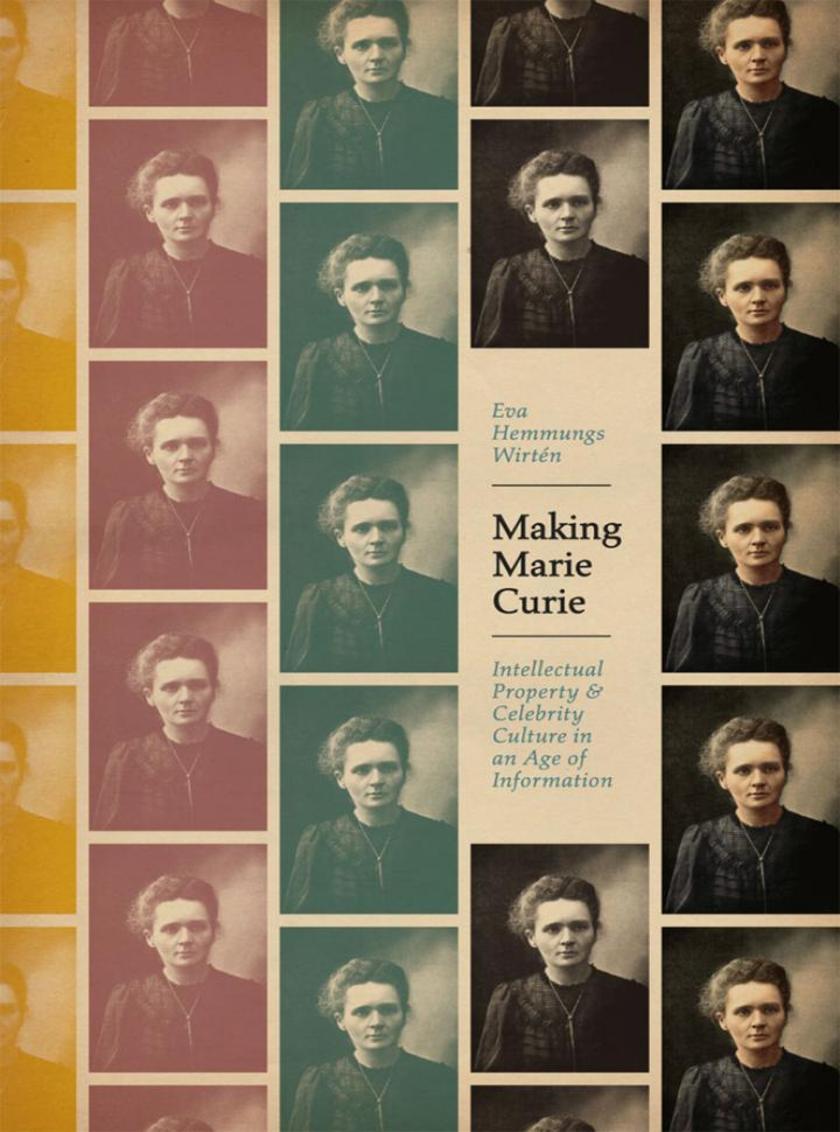
Making Marie Curie
¥288.41
In many ways, Marie Curie represents modern science. Her considerable lifetime achievements-the first woman to be awarded a Nobel Prize, the only woman to be awarded the Prize in two fields, and the only person to be awarded Nobel Prizes in multiple sciences-are studied by schoolchildren across the world. When, in 2009, the New Scientist carried out a poll for the "e;Most Inspirational Female Scientist of All Time,"e; the result was a foregone conclusion: Marie Curie trounced her closest runner-up, Rosalind Franklin, winning double the number of Franklin's votes. She is a role model to women embarking on a career in science, the pride of two nations-Poland and France-and, not least of all, a European Union brand for excellence in science.Making Marie Curie explores what went into the creation of this icon of science. It is not a traditional biography, or one that attempts to uncover the "e;real"e; Marie Curie. Rather, Eva Hemmungs Wirtn, by tracing a career that spans two centuries and a world war, provides an innovative and historically grounded account of how modern science emerges in tandem with celebrity culture under the influence of intellectual property in a dawning age of information. She explores the emergence of the Curie persona, the information culture of the period that shaped its development, and the strategies Curie used to manage and exploit her intellectual property. How did one create and maintain for oneself the persona of scientist at the beginning of the twentieth centuryWhat special conditions bore upon scientific women, and on married women in particularHow was French identity claimed, established, and subvertedHow, and with what consequences, was a scientific reputation secured?In its exploration of these questions and many more, Making Marie Curie provides a composite picture not only of the making of Marie Curie, but the making of modern science itself.
Analyzing Animal Societies
¥288.41
Animals lead rich social lives. They care for one another, compete for resources, and mate. Within a society, social relationships may be simple or complex and usually vary considerably, both between different groups of individuals and over time. These social systems are fundamental to biological organization, and animal societies are central to studies of behavioral and evolutionary biology.?But how do we study animal societies How do we take observations of animals fighting, grooming, or forming groups and produce a realistic de*ion or model of their societies?Analyzing AnimalSocieties presents a conceptual framework for analyzing social behavior and demonstrates how to put this framework into practice by collecting suitable data on the interactions and associations of individuals so that relationships can be described, and, from these, models can be derived.In addition to presenting the tools, Hal Whitehead illustrates their applicability using a wide range of real data on a variety of animal species-from bats and chimps to dolphins and birds. The techniques that Whitehead describes will be profitably adopted by scientists working with primates, cetaceans, birds, and ungulates, but the tools can be used to study societies of invertebrates, amphibians, and even humans.?Analyzing AnimalSocieties will become a standard reference for those studying vertebrate social behavior and will give to these studies the kind of quality standard already in use in other areas of the life sciences.
Science in the Age of Computer Simulation
¥247.21
Computer simulation was first pioneered as a scientific tool in meteorology and nuclear physics in the period following World War II, but it has grown rapidly to become indispensible in a wide variety of scientific disciplines, including astrophysics, high-energy physics, climate science, engineering, ecology, and economics. Digital computer simulation helps study phenomena of great complexity, but how much do we know about the limits and possibilities of this new scientific practiceHow do simulations compare to traditional experimentsAnd are they reliableEric Winsberg seeks to answer these questions in Science in the Age of Computer Simulation.Scrutinizing these issue with a philosophical lens, Winsberg explores the impact of simulation on such issues as the nature of scientific evidence; the role of values in science; the nature and role of fictions in science; and the relationship between simulation and experiment, theories and data, and theories at different levels of de*ion. Science in the Age of Computer Simulation will transform many of the core issues in philosophy of science, as well as our basic understanding of the role of the digital computer in the sciences.
Victorian Popularizers of Science
¥353.16
The ideas of Charles Darwin and his fellow Victorian scientists have had an abiding effect on the modern world. But at the time The Origin of Species was published in 1859, the British public looked not to practicing scientists but to a growing group of professional writers and journalists to interpret the larger meaning of scientific theories in terms they could understand and in ways they could appreciate. Victorian Popularizers of Science focuses on this important group of men and women who wrote about science for a general audience in the second half of the nineteenth century.Bernard Lightman examines more than thirty of the most prolific, influential, and interesting popularizers of the day, investigating the dramatic lecturing techniques, vivid illustrations, and accessible literary styles they used to communicate with their audience. By focusing on a forgotten coterie of science writers, their publishers, and their public, Lightman offers new insights into the role of women in scientific inquiry, the market for scientific knowledge, tensions between religion and science, and the complexities of scientific authority in nineteenth-century Britain.


