


 购物车
购物车 个人中心
个人中心

Broken: Part 3 of 3: A traumatised girl. Her troubled brother. Their shocking se
¥23.45
Rosie Lewis is a full-time foster carer. She has been working in this field for over a decade. Before that, she worked in the special units team in the police force.Based in northern England, Rosie writes under a pseudonym to protect the identities of the children she looks after.
Mind Time: How ten mindful minutes can enhance your work, health and happiness
¥95.75
Michael Chaskalson Michael is one of the pioneers of mindfulness teaching and research in Europe. He is the author of the agenda-setting The Mindful Workplace and Mindfulness in Eight Weeks. Based on his 40 years of personal practice of mindfulness and related disciplines, Michael now shares his insights and research with audiences worldwide as a keynote speaker, coach, consultant, and teacher. Michael is founder and CEO of Mindfulness Works and a Professor of Practice at Ashridge Business School. Dr Megan Reitz Megan is Associate Professor of Leadership and Dialogue at Ashridge Business School where she speaks, researches, and consults on the intersection of leadership, change, dialogue and mindfulness. She has presented her research to audiences throughout the world and is the author of Dialogue in Organizations.
Tell Me How it Ends: An Essay in Forty Questions
¥44.24
Valeria Luiselli was born in Mexico City in 1983. She is the author of the novels Faces in the Crowd and The Story of My Teeth, and of a collection of essays called Sidewalks. Her work has been published in magazines and newspapers such as Letras Libres, the New York Times, the New Yorker, Freeman’s, El Pais and Harper’s and she is published in fifteen languages. She is currently professor of Romance Language and Literature at Hofstra University and lives in New York City.

Stalkers
¥46.11
‘IT’S THE NIGHTS that are the worst. I don’t know where he is, but my imagination tells me he is close at hand. In daylight I can keep the fears down; at night I am alone with the terror that he has created. If he rings me every ten minutes I think I will go mad with it; if he does not ring I worry that he is outside, watching me.’

Healing Your Emotions: Discover your five element type and change your life
¥117.82
Angela & John Hicks are the joint principals of the College of Integrated Chinese medicine in Reading. Angela is author of The Five Laws for Healthy Living, Principles of Acupuncture and Principles of Chinese Medicine. John is author of Principles of Chinese Herbal Medicine. They have been practising for over 17 years.

Revolting!: How the Establishment are Undermining Democracy and What They’re Afr
¥51.50
Mick Hume is a journalist and author of ‘Trigger Warning: Is the Fear of Being Offensive Killing Free Speech?’ He is editor-at-large of Spiked and writes regularly on free-speech issues. He had a weekly column in The Times for ten years, and was described as ‘Britain’s only libertarian Marxist newspaper columnist’. More recently he has written in defence of freedom of speech and a free press in The Times, the Sunday Times, the Independent and the Sun.
The Greatest Benefit to Mankind: A Medical History of Humanity
¥184.23
Roy Porter is Professor of the Social History of Medicine at the Wellcome Institute for the History of Medicine. He is the editor of the Fontana History of Science series, and the author of over sixty-five books, including the acclaimed bestseller ‘London: A Social History’. His book on the history of madness in England, ‘Mind Forg’d Manacles’, won the Leo Gershoy Prize.
Botany (Collins Internet-Linked Dictionary of)
¥63.27
Compiled by a team of scientists,and edited by Jill Bailey in consultation with Sir John Burnett, Chairman of the Trustees,National Biodiversity Network and Dr Andrew Lack,Senior Lecturer in Environmental Biology,Oxford Brookes University
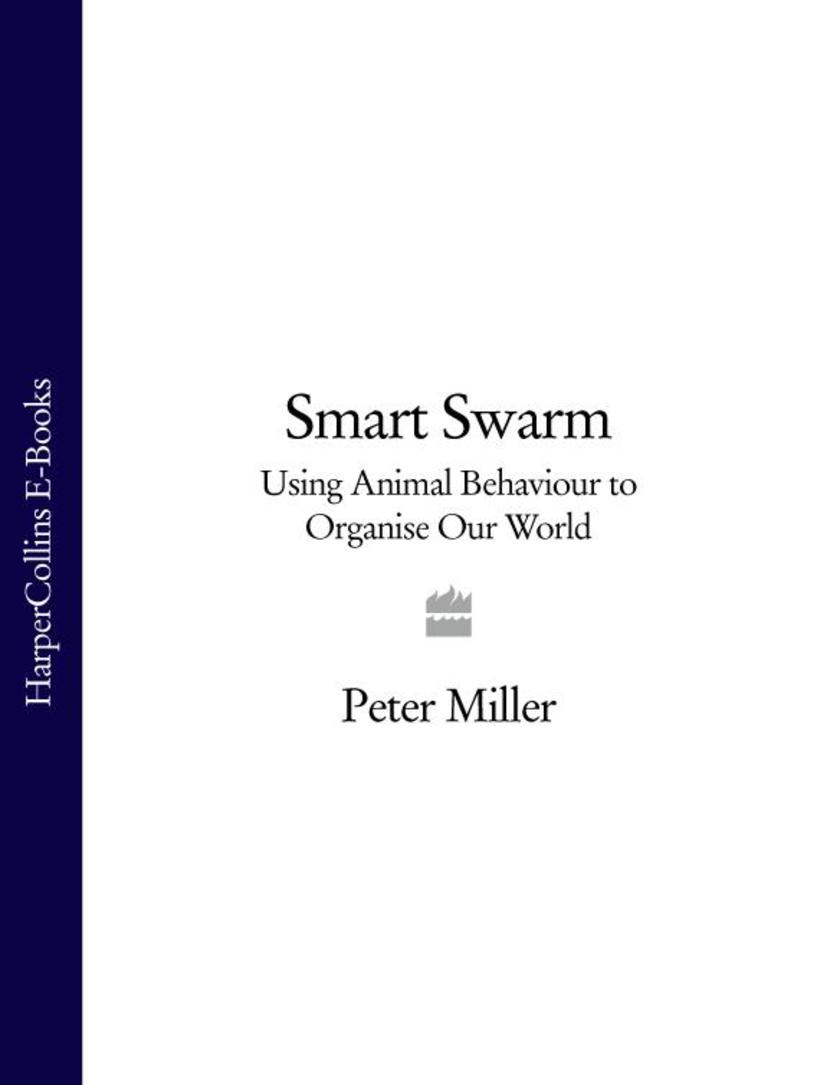
Smart Swarm: Using Animal Behaviour to Organise Our World
¥72.30
How Understanding Flocks, Schools and Colonies Can Make Us Better at Communicating, Decision Making and Getting Things Done. The modern world may be obsessed with speed and productivity, but twenty-first century humans actually have much to learn from the ancient instincts of swarms. A fascinating new take on the concept of collective intelligence and its colourful manifestations in some of our most complex problems, Smart Swarm introduces a compelling new understanding of the real experts on solving our own complex problems relating to such topics as business, politics, and technology. Based on extensive globe-trotting research, this lively tour from National Geographic reporter Peter Miller introduces thriving throngs of ant colonies, which have inspired computer programs for streamlining factory processes, telephone networks, and truck routes; termites, used in recent studies for climate-control solutions; schools of fish, on which the U.S. military modelled a team of robots; and many other examples of the wisdom to be gleaned about the behaviour of crowds-among critters and corporations alike. In the tradition of James Surowiecki's The Wisdom of Crowds and the innovative works of Malcolm Gladwell, Smart Swarm is an entertaining yet enlightening look at small-scale phenomena with big implications for us all.

Trouble in Paradise: Uncovering the Dark Secrets of Britain’s Most Remote Island
¥72.40
A shocking exposé of the terrible secrets at the heart of the Pitcairn Island community – a tale of systematic child abuse and rape which stretches back over 40 years. Pitcairn Island – home to the descendants of the mutineers of the Bounty – has long been thought of as a tropical paradise. Wild and remote, it is Britain’s most isolated outpost and a fantasy destination for many. But in 1999, British police, alerted by unsettling reports of a rape, descended on the island. Their investigation developed into a major enquiry which revealed that Pitcairn was the site of widespread and horrific sexual abuse instigated by the island men on girls as young as twelve. Scarcely a man on the island was untainted by the allegations, and almost none of the women had escaped, though most residents feigned ignorance, even when their own daughters were abused. Abusers included the magistrates and police officers as well as brothers and uncles. Few of the victims were able to leave the island; those who did never went back. Kathy Marks was one of only six journalists permitted to live on the island while she reported on the ensuing trial and witnessed Pitcairn's domestic workings first-hand. In this riveting account she documents a society gone badly astray, leaving lives shattered, codes broken and a paradise truly lost.
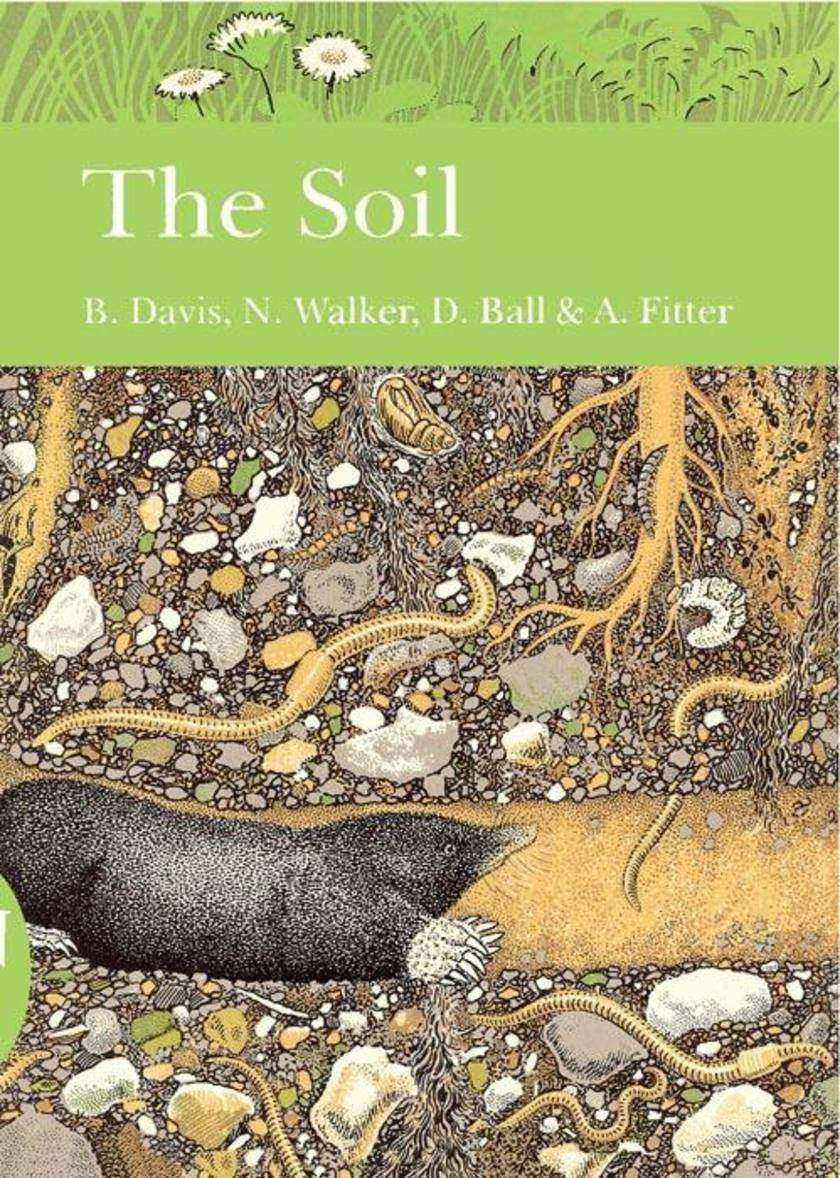
The Soil (Collins New Naturalist Library, Book 77)
¥456.66
The soil is one of the great unsung disappearing resources, with over 100m tonnes being destroyed every year. This edition is exclusive to newnaturalists.com The soil is the work place of farmers and gardeners, but it is also a fascinating environment inhabited by insects that can leap into the air to a record height, multilegged scavengers that are vital to the decomposition of plant matter and the long, thin, entwining strands of thousands of species of fungi. Although soil plays a vital role in the functioning of the world, it has often been overlooked, mainly because it contains a huge range of different fields, all of which have become specialities in their own right. This book brings together specialists in these fields to give a broad overview of the staggering advances that have been made since Sir John Russel's The World Of Soil was published in this series in 1947. The first two chapters introduce the physical structure of the soil. The next four chapters deal with the specific animals and plants and how they exploit this environment. The final four chapters describe how these animals interact and how man has used and abused the soil in his striving to gain more and more from this resource.

Fecske-torony
¥63.03
I shall be grateful to any Reader of this book who will point out any mistakes or misprints he may happen to notice in it, or any passage which he thinks is not clearly expressed. I have a quantity of MS. in hand for Parts II and III, and hope to be able——should life, and health, and opportunity, be granted to me, to publish them in the course of the next few years. Their contents will be as follows:— PART II. ADVANCED.Further investigations in the subjects of Part I. Propositions of other forms (such as “Not-all x are y”). Triliteral and Multiliteral Propositions (such as “All abc are de”). Hypotheticals. Dilemmas. &c. &c. Part III. TRANSCENDENTAL.Analysis of a Proposition into its Elements. Numerical and Geometrical Problems. The Theory of Inference. The Construction of Problems. And many other Curiosa Logica. Introduction TO LEARNERS.[N.B. Some remarks, addressed to Teachers, will be found in the Appendix]The Learner, who wishes to try the question fairly, whether this little book does, or does not, supply the materials for a most interesting mental recreation, is earnestly advised to adopt the following Rules:— (1) Begin at the beginning, and do not allow yourself to gratify a mere idle curiosity by dipping into the book, here and there. This would very likely lead to your throwing it aside, with the remark “This is much too hard for me!”, and thus losing the chance of adding a very large item to your stock of mental delights. This Rule (of not dipping) is very desirable with other kinds of books——such as novels, for instance, where you may easily spoil much of the enjoyment you would otherwise get from the story, by dipping into it further on, so that what the author meant to be a pleasant surprise comes to you as a matter of course. Some people, I know, make a practice of looking into Vol. III first, just to see how the story ends: and perhaps it is as well just to know that all ends happily——that the much-persecuted lovers do marry after all, that he is proved to be quite innocent of the murder, that the wicked cousin is completely foiled in his plot and gets the punishment he deserves, and that the rich uncle in India (Qu. Why in India? Ans. Because, somehow, uncles never can get rich anywhere else) dies at exactly the right moment——before taking the trouble to read Vol. I. This, I say, is just permissible with a novel, where Vol. III has a meaning, even for those who have not read the earlier part of the story; but, with a scientific book, it is sheer insanity: you will find the latter part hopelessly unintelligible, if you read it before reaching it in regular course. (2) Don’t begin any fresh Chapter, or Section, until you are certain that you thoroughly understand the whole book up to that point, and that you have worked, correctly, most if not all of the examples which have been set. So long as you are conscious that all the land you have passed through is absolutely conquered, and that you are leaving no unsolved difficulties behind you, which will be sure to turn up again later on, your triumphal progress will be easy and delightful. Otherwise, you will find your state of puzzlement get worse and worse as you proceed, till you give up the whole thing in utter disgust. (3) When you come to any passage you don’t understand, read it again: if you still don’t understand it, read it again: if you fail, even after three readings, very likely your brain is getting a little tired. In that case, put the book away, and take to other occupations, and next day, when you come to it fresh, you will very likely find that it is quite easy.(4) If possible, find some genial friend, who will read the book along with you, and will talk over the difficulties with you. Talking is a wonderful smoother-over of difficulties. When I come upon anything——in Logic or in any other hard subject——that entirely puzzles me, I find it a capital plan to talk it over, aloud. ? ? ? ? ? L. C.29, Bedford Street, Strand. February 21, 1896.
Mon Agent
¥11.77
Realmente, o estudo dos fluidos e das for?as radiantes leva, necessariamente, às formas invisíveis da vida, pois a elas se relaciona fortemente. E por aí que a Ciência nova chegará a reconhecer a existência do mundo dos espíritos e que as imensas perspectivas do Além se abrir abrir?o diante dela.'
The Valley of Fear: Illustrated
¥18.74
Darwin, ?nsan dahil tüm canl? türlerinin do?al se?i-lim yoluyla bir ya da birka? ortak ata-dan evrildi?ini ?ne sürmü? ve o günün ?artlar?na g?re bu teoriyi destekleyen pek ?ok kan?t sunmu?tur. Darwin'in fikirleri üzerine in?a edilen modern evrim teorisi, bugün biyoloji biliminin temeli ve birle?tirici ??esidir. Evrimin ger?ekle?ti?i ger?e?i Charles Darwin'in ya?ad??? d?nemde, do?al se?ilim teorisinin evrimin ana a??klamas? oldu?u ise 1930'lu y?llarda bilim dünyas? taraf?ndan kabul g?rmü?tür. Darwin'in orijinal teorileri modern evrimsel biyolojinin temelini olu?turmakta, hayat?n ?e?itlili?i üzerine birle?tirici bir mant?ksal a??klama sunmaktad?r. Darwin'in Hayat? da dahil Evrim teorisi ve türlerin k?keni eserini tüm y?nleriyle ele alan bu ba?ucu eserini mutlaka okuman?z? ?neriyoruz.. DARW?N K?MD?R? ?nsan dahil tüm?canl??türlerinin?do?al se?ilim?yoluyla bir ya da birka??ortak atadan?evrildi?ini??ne sürmü? ve o günün ?artlar?na g?re bu teoriyi destekleyen pek ?ok kan?t sunmu?tur.?Darwin'in fikirleri üzerine in?a edilen modern?evrim teorisi, bugün?biyoloji?biliminin temeli ve birle?tirici ??esidir. Evrimin ger?ekle?ti?i ger?e?i Charles Darwin'in ya?ad??? d?nemde, do?al se?ilim teorisinin evrimin ana a??klamas? oldu?u ise 1930'lu y?llarda bilim dünyas? taraf?ndan kabul g?rmü?tür.?Darwin'in orijinal teorileri modern evrimsel biyolojinin temelini olu?turmakta, hayat?n ?e?itlili?i üzerine birle?tirici bir mant?ksal a??klama sunmaktad?r. Darwin'in?do?a tarihine?duydu?u ilgi, ?nce?Edinburgh ?niversitesi'nde?t?p, sonra?Cambridge ?niversitesi'nde?teoloji?okurken geli?ti. Beagle?gemisinde yapt??? be? senelik yolculuk s?ras?nda, zaman?n me?hur jeolo?u?Charles Lyell'?n ortaya att???, ge?mi?teki jeolojik süre?lerin bugünkülerle ayn? oldu?unu savunan teoriyi destekleyecek pek ?ok g?zlem yapt? ve iyi bir jeolog olarak ünlendi.?Ayn? yolculukta, canl?lar?n co?rafi da??l?m? ve?fosiller?üzerine yapt??? dikkatli g?zlemler sonucunda, türlerin birbirine d?nü?ümüyle ilgilenmeye ba?lad? ve 1838'de?do?al se?ilim?fikrini geli?tirdi.?Daha ?nce benzer fikirlerin "sapk?nl?k" olarak nitelendirildi?ini ve bast?r?ld???n? g?rmü? oldu?undan, uzun süre fikirlerini en yak?n arkada?lar? d???nda kimseye a?mad?.?Olas? itirazlara en iyi ?ekilde cevap verebilmek i?in ara?t?rma yapmaya ve kan?t toplamaya ba?lad?.?1858'de?Alfred Russell Walla-ce'dan ald??? bir mektubu okuyunca, Wallace-'?n da kendisininkine benzer bir teori geli?tirdi?ini anlad?, ve nihayet teorisini yay?mlamaya karar verdi. 1859'da yay?mlad????On the Origin of Speci-es?(Türlerin K?keni ?zerine) adl? kitab?, canl?lar?n ortak atalardan evrilerek ?e?itlendi?i fikrinin geni? kabul g?rmesini sa?lad?. Daha sonra yay?mlad????The Descent of Man, and Selection in Relation to Sex?(?nsan?n Türeyi?i, ve Cinsiyete Mahsus Se?ilim) kitab?nda insan evrimini ve cinsel se?ilim fikrini inceledi.?The Expression of the Emotions in Man and Animals (?nsan ve Hayvanlarda Duygular?n ?fadesi) adl? kitab?nda ise insanlar?n ve hayvanlar?n duygular?n? ifade edi? ?ekilleri aras?ndaki benzerlikleri ortaya koydu.
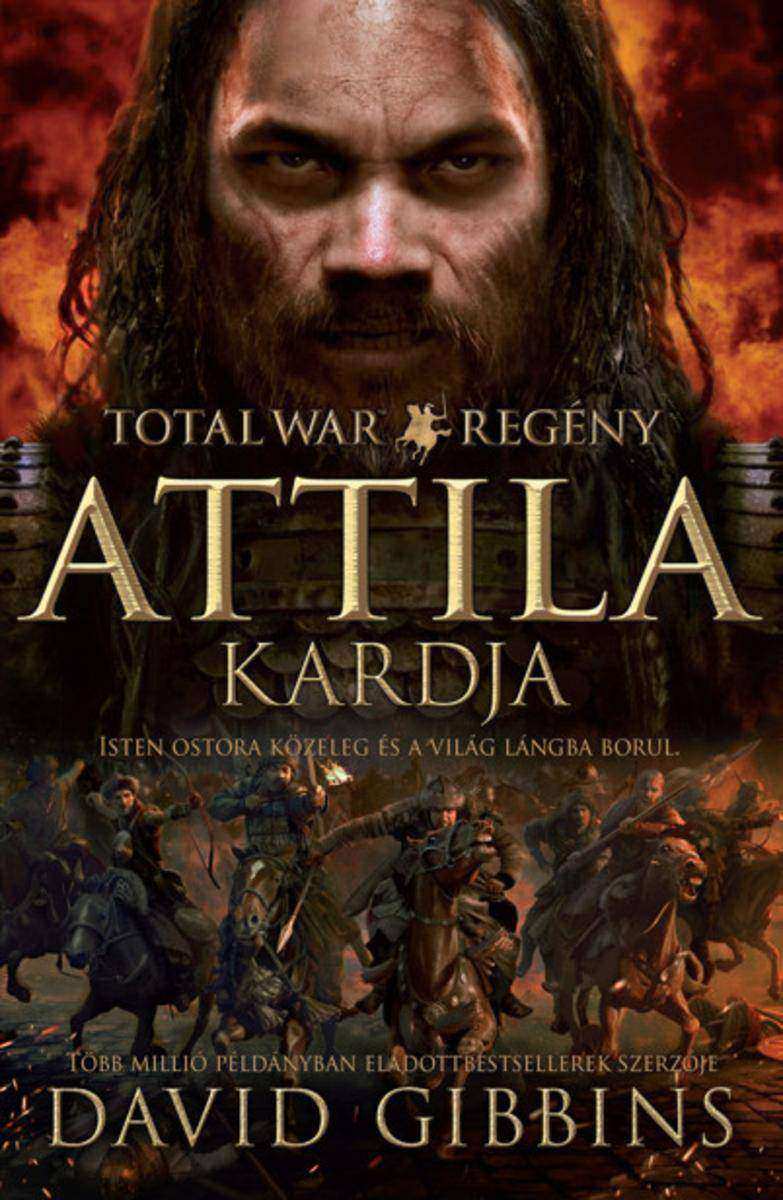
TOTAL WAR: Attila kardja
¥34.58
Not many years ago the group Insecta was held even by Zoologists to include numberless small creatures—centipedes, spiders, mites, etc.—which further study has shown to present essential differences of structure, and in popular language any fairly minute animal is still an insect, just as any insect is popularly a “fly”—or, in the United States, a “bug.” Scientifically the use of the term Insect is now much restricted, though still extensive enough in all conscience, since it includes many more than a quarter of a million known species. Zoologists recognise a large group of animals characterised by having no internal skeleton but a more or less firm external coating of a peculiar substance called chitin, often strengthened by calcareous deposits, which necessitates the presence of joints in their bodies, and especially in their limbs if they are to move freely, just as medieval suits of armour required to be jointed. These are the Arthropoda. One subdivision of this group consists of aquatic animals, breathing by gills, and known as Crustacea. Crabs, lobsters, shrimps and “water-fleas” are familiar examples, and with the exception of the so-called land-crabs the only Crustaceans habitually found on land are wood-lice. The other Arthropoda are air-breathing, and since their characteristic breathing organs are branching tubes known as tracheae, the term Tracheata is sometimes used to include them all. They fall naturally into three divisions, the Myriapoda, the Insecta and the Arachnida, and it is in this last-named division that we shall find the spiders. The Myriapoda are the centipedes and millipedes, and having said this we may dismiss them, for insects and arachnids are strictly limited as to legs; and no myriapod can ever be mistaken for a spider. The Arachnida are so varied in structure that it is not easy to give characteristics common to them all, and to any general statement there are bound to be exceptions, but for practical purposes it may be said that while an insect, when mature, has only six legs, and a pair of feelers or antennae of quite different structure, Arachnids have normally eight legs, and their feeling organs are not antennae but leg-like “pedipalps.”
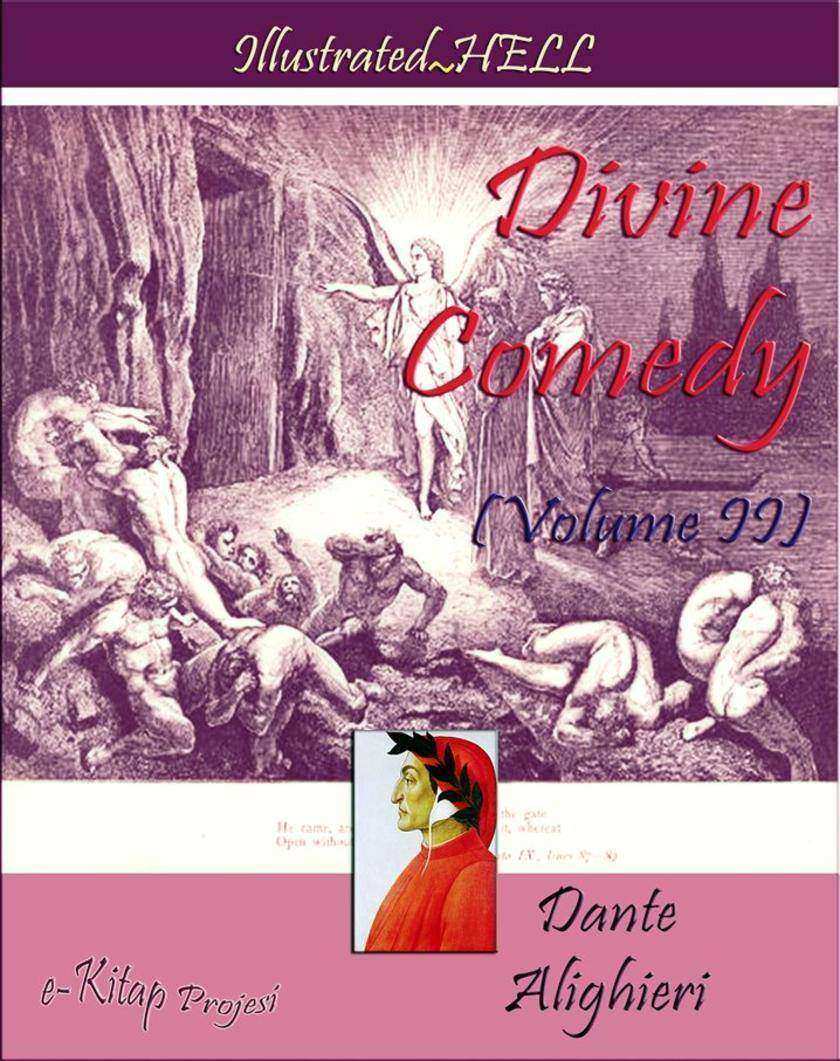
Divine Comedy (Volume II): Illustrated Hell
¥18.74
Micrographia is a historic book by Robert Hooke, detailing the then thirty-year-old Hooke's observations through various lenses. Published in September 1665, the first major publication of the Royal Society, it was the first scientific best-seller, inspiring a wide public interest in the new science of microscopy. It is also notable for coining the biological term cell. Observations: Hooke most famously describes a fly's eye and a plant cell (where he coined that term because plant cells, which are walled, reminded him of a monk's quarters). Known for its spectacular copperplate engravings of the miniature world, particularly its fold-out plates of insects, the text itself reinforces the tremendous power of the new microscope. The plates of insects fold out to be larger than the large folio itself, the engraving of the louse in particular folding out to four times the size of the book. Although the book is best known for demonstrating the power of the microscope, Micrographia also describes distant planetary bodies, the wave theory of light, the organic origin of fossils, and various other philosophical and scientific interests of its author. Publication: Published under the aegis of The Royal Society, the popularity of the book helped further the society's image and mission of being "the" scientifically progressive organization of London. Micrographia also focused attention on the miniature world, capturing the public's imagination in a radically new way. This impact is illustrated by Samuel Pepys' reaction upon completing the tome: "the most ingenious book that I ever read in my life." Hooke also selected several objects of human origin; among these objects were the jagged edge of a honed razor and the point of a needle, seeming blunt under the microscope. His goal may well have been as a way to contrast the flawed products of mankind with the perfection of nature (and hence, in the spirit of the times, of biblical creation). About Author: Robert Hooke (1635 – 1703) was an English natural philosopher, architect and polymath.His adult life comprised three distinct periods: as a scientific inquirer lacking money; achieving great wealth and standing through his reputation for hard work and scrupulous honesty following the great fire of 1666, but eventually becoming ill and party to jealous intellectual disputes. These issues may have contributed to his relative historical obscurity. He was at one time simultaneously the curator of experiments of the Royal Society and a member of its council, Gresham Professor of Geometry and a Surveyor to the City of London after the Great Fire of London, in which capacity he appears to have performed more than half of all the surveys after the fire. He was also an important architect of his time – though few of his buildings now survive and some of those are generally misattributed – and was instrumental in devising a set of planning controls for London whose influence remains today. Allan Chapman has characterised him as "England's Leonardo".Robert Gunther's Early Science in Oxford, a history of science in Oxford during the Protectorate, Restoration and Age of Enlightenment, devotes five of its fourteen volumes to Hooke.Hooke studied at Wadham College during the Protectorate where he became one of a tightly knit group of ardent Royalists led by John Wilkins. Here he was employed as an assistant to Thomas Willis and to Robert Boyle, for whom he built the vacuum pumps used in Boyle's gas law experiments. He built some of the earliest Gregorian telescopes and observed the rotations of Mars and Jupiter. In 1665 he inspired the use of microscopes for scientific exploration with his book, Micrographia. Based on his microscopic observations of fossils, Hooke was an early proponent of biological evolution. He investigated the phenomenon of refraction, deducing the wave theory of light, and was the first to suggest that matter expands when heated and that air is made of small particles separated by relatively large distances. He performed pioneering work in the field of surveying and map-making and was involved in the work, though his plan for London on a grid system was rejected in favour of rebuilding along the existing routes. He also came near to an experimental proof that gravity follows an inverse square law, and hypothesised that such a relation governs the motions of the planets, an idea which was subsequently developed by Newton.
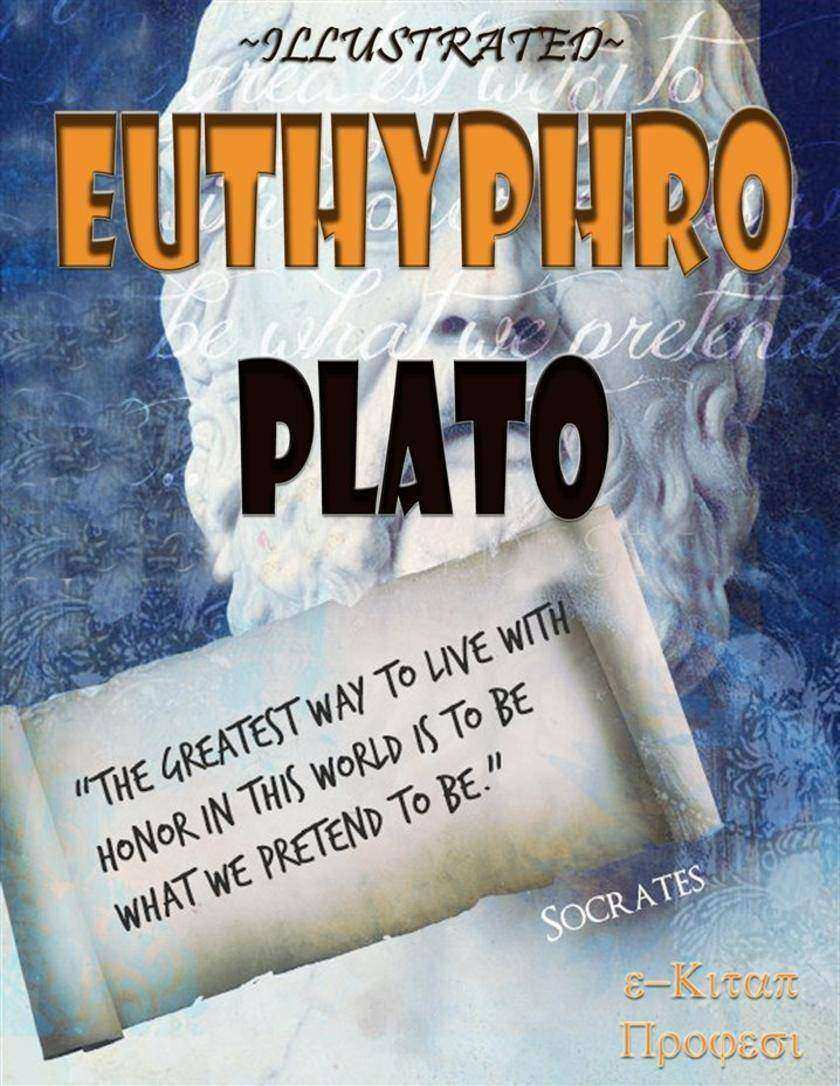
Euthyphro
¥9.24
On the Origin of Species, published on 24 November 1859, is a work of scientific literature by Charles Darwin which is considered to be the foundation of evolutionary biology. Its full title was On the Origin of Species by Means of Natural Selection, or the Preservation of Favoured Races in the Struggle for Life. For the sixth edition of 1872, the short title was changed to The Origin of Species. Darwin's book introduced the scientific theory that populations evolve over the course of generations through a process of natural selection. It presented a body of evidence that the diversity of life arose by common descent through a branching pattern of evolution. Darwin included evidence that he had gathered on the Beagle expedition in the 1830s and his subsequent findings from research, correspondence, and experimentation. Various evolutionary ideas had already been proposed to explain new findings in biology. There was growing support for such ideas among dissident anatomists and the general public, but during the first half of the 19th century the English scientific establishment was closely tied to the Church of England, while science was part of natural theology. Ideas about the transmutation of species were controversial as they conflicted with the beliefs that species were unchanging parts of a designed hierarchy and that humans were unique, unrelated to other animals. The political and theological implications were intensely debated, but transmutation was not accepted by the scientific mainstream. The book was written for non-specialist readers and attracted widespread interest upon its publication. As Darwin was an eminent scientist, his findings were taken seriously and the evidence he presented generated scientific, philosophical, and religious discussion. The debate over the book contributed to the campaign by T. H. Huxley and his fellow members of the X Club to secularise science by promoting scientific naturalism. Within two decades there was widespread scientific agreement that evolution, with a branching pattern of common descent, had occurred, but scientists were slow to give natural selection the significance that Darwin thought appropriate. During the "eclipse of Darwinism" from the 1880s to the 1930s, various other mechanisms of evolution were given more credit. With the development of the modern evolutionary synthesis in the 1930s and 1940s, Darwin's concept of evolutionary adaptation through natural selection became central to modern evolutionary theory, and it has now become the unifying concept of the life sciences. Summary of Darwin's theory: Darwin's theory of evolution is based on key facts and the inferences drawn from them, which biologist Ernst Mayr summarised as follows: ? Every species is fertile enough that if all offspring survived to reproduce the population would grow (fact).? Despite periodic fluctuations, populations remain roughly the same size (fact).? Resources such as food are limited and are relatively stable over time (fact).? A struggle for survival ensues (inference).? Individuals in a population vary significantly from one another (fact).? Much of this variation is inheritable (fact).? Individuals less suited to the environment are less likely to survive and less likely to reproduce; individuals more suited to the environment are more likely to survive and more likely to reproduce and leave their inheritable traits to future generations, which produces the process of natural selection (inference).? This slowly effected process results in populations changing to adapt to their environments, and ultimately, these variations accumulate over time to form new species (inference).
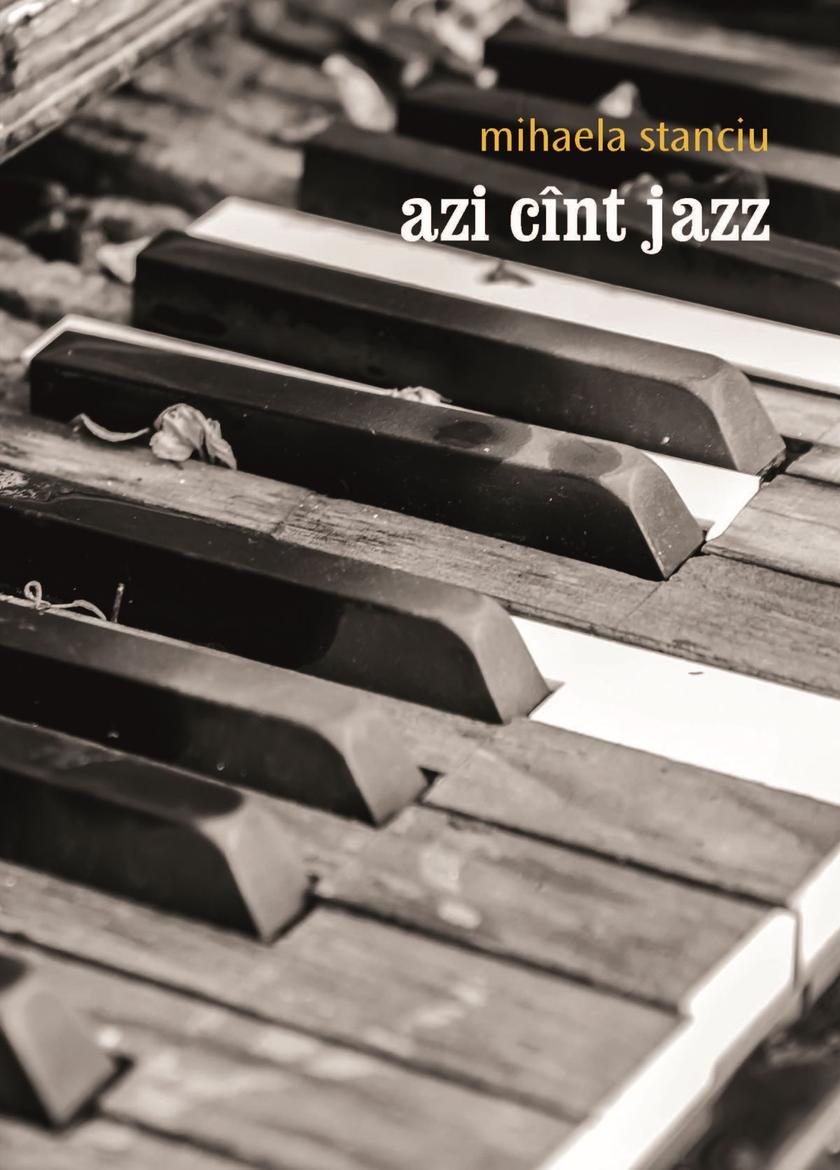
Azi cant jazz
¥24.44
sszefoglaló knyvem olyan témát mutat be, amivel már tbb ismeretterjeszt írásban találkozhatott az olvasó, ám ezúttal olyan részletekkel és érdekességekkel találkozunk, amit eme knyvek alig, vagy egyáltalán nem taglalnak. E szerzeményben végigkvetjük a Fld mélyérl induló izzó anyagot, a kérgen át a felszínig, ahol tüzet és pusztítást zúdít mindenre és mindenkire a kzelben. Bemutatom, hogy mi lesz a kihlt lávából, és milyen formákat hoz létre. Ezen külnleges természeti képzdmények kialakulását és fejdését vesszük górcs alá. Megismerkedünk pár külnleges tzhányóval, amik pusztításuk révén rendkívüli hatással voltak nemcsak krnyezetükre, hanem az emberiségre is. Olyan ismereteket mutatunk be, amelyek meglepetést okozhatnak az olvasóknak.

Székely és más finomságok kerek pocakoknak
¥28.86
Боли в руках, ногах, коленях периодически испытывают многие, а с возрастом болевые ощущения усиливаются. В этой книге представлена подробная информация о заболеваниях, которые становятся причиной неприятных симптомов. Вы вновь ощутите радость от движения без боли! ? Клинические симптомы, диагностика и лечение заболеваний: артрит, остеоартроз, синдром усталых ног, подагра и др. ? Народные методы лечения: настои, отвары, компрессы, ванны ? Лечебная гимнастика, массаж и самомассаж, рефлексо- и парафинотерапия ? Рецепты здорового питания ? Очищение организма и профилактика заболеваний ? ?Скорая помощь? для снятия боли. Boli v rukah, nogah, kolenjah periodicheski ispytyvajut mnogie, a s vozrastom bolevye oshhushhenija usilivajutsja. V jetoj knige predstavlena podrobnaja informacija o zabolevanijah, kotorye stanovjatsja prichinoj neprijatnyh simptomov. Vy vnov' oshhutite radost' ot dvizhenija bez boli! ? Klinicheskie simptomy, diagnostika i lechenie zabolevanij: artrit, osteoartroz, sindrom ustalyh nog, podagra i dr. ? Narodnye metody lechenija: nastoi, otvary, kompressy, vanny ? Lechebnaja gimnastika, massazh i samomassazh, reflekso- i parafinoterapija ? Recepty zdorovogo pitanija ? Ochishhenie organizma i profilaktika zabolevanij ? ?Skoraja pomoshh'? dlja snjatija boli.

Pataki Emma naplója
¥58.29
Восстановление зрения без вмешательства врачей! Здесь детально описаны самые действенные методики улучшения зрения Э. Аветисова, М. Норбекова, П. Брэгга, У. Бейтса. Книга расскажет, как избавиться от проблем со зрением, а тесты позволят выявить различные заболевания глаз на ранней стадии. Также вы узнаете о проверенных веками способах восстановления зрения с помощью йоги, аюрведы, цигуна и др. Средства народной медицины, упражнения и рекомендации по лечебному питанию помогут излечить глаукому, катаракту и др. Vosstanovlenie zrenija bez vmeshatel'stva vrachej! Zdes' detal'no opisany samye dejstvennye metodiki uluchshenija zrenija Je. Avetisova, M. Norbekova, P. Brjegga, U. Bejtsa. Kniga rasskazhet, kak izbavit'sja ot problem so zreniem, a testy pozvoljat vyjavit' razlichnye zabolevanija glaz na rannej stadii. Takzhe vy uznaete o proverennyh vekami sposobah vosstanovlenija zrenija s pomoshh'ju jogi, ajurvedy, ciguna i dr. Sredstva narodnoj mediciny, uprazhnenija i rekomendacii po lechebnomu pitaniju pomogut izlechit' glaukomu, kataraktu i dr.
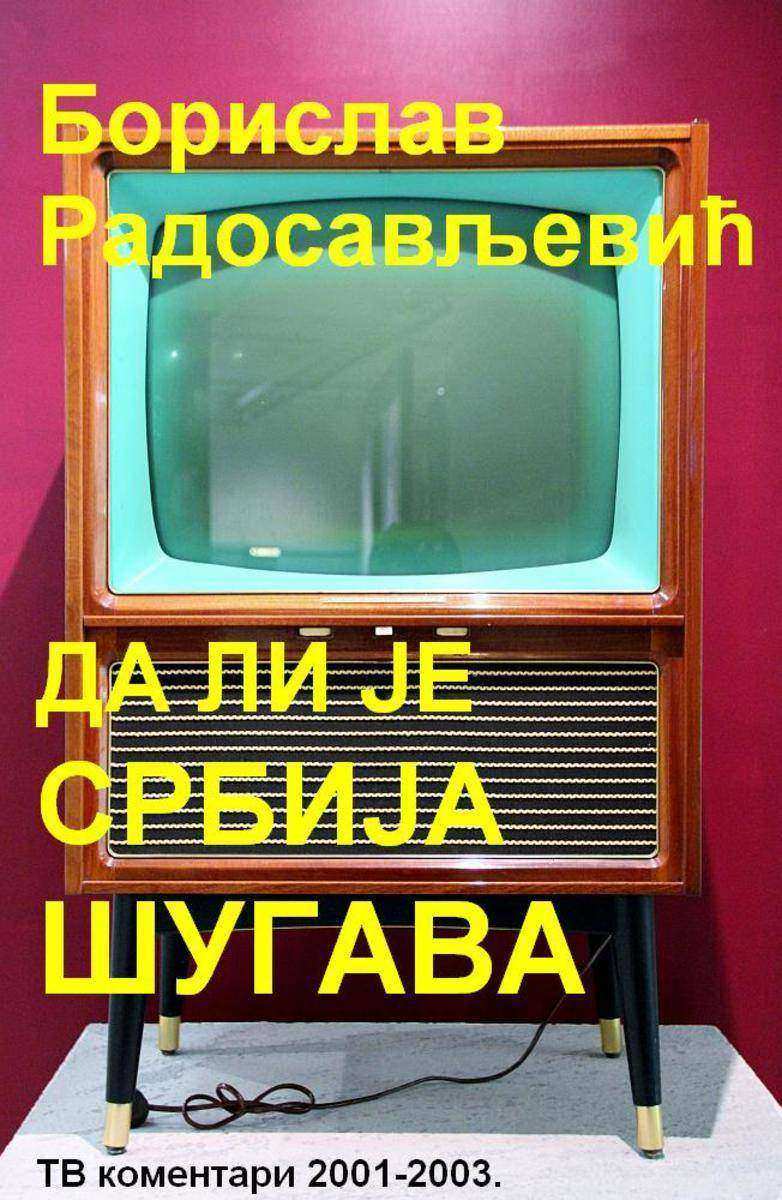
Да ли ?е Срби?а шугава
¥27.96
Автор книги?– кандидат медицинских наук, врач с?многолетним опытом – просто и?понятно рассказывает о?здоровье и?отвечает на?самые распространенные вопросы. ? Предвестники серьезных недугов ??Факторы риска заболеваний сердца ??Тест на?определение склонности к?гипертонии ? Симптомы и диагностика распространенных заболеваний ??При каких признаках нужно немедленно обращаться к?врачу ??Традиционные и?народные способы профилактики и?лечения артериальной гипертензии, ишемической болезни, стенокардии, аритмии, сердечной недостаточности и?др. ??Лечение травами ??Лечебное питание ??Лечебная физкультура и?многое другое. Avtor knigi?– kandidat medicinskih nauk, vrach s?mnogoletnim opytom – prosto i?ponjatno rasskazyvaet o?zdorov'e i?otvechaet na?samye rasprostranennye voprosy. ? Predvestniki ser'eznyh nedugov ??Faktory riska zabolevanij serdca ??Test na?opredelenie sklonnosti k?gipertonii ? Simptomy i diagnostika rasprostranennyh zabolevanij ??Pri kakih priznakah nuzhno nemedlenno obrashhat'sja k?vrachu ??Tradicionnye i?narodnye sposoby profilaktiki i?lechenija arterial'noj gipertenzii, ishemicheskoj bolezni, stenokardii, aritmii, serdechnoj nedostatochnosti i?dr. ??Lechenie travami ??Lechebnoe pitanie ??Lechebnaja fizkul'tura i?mnogoe drugoe.


