


 购物车
购物车 个人中心
个人中心
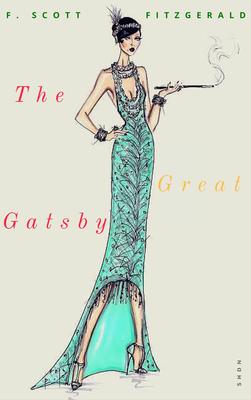
The Great Gatsby
¥8.75
In 1922, F. Scott Fitzgerald announced his decision to write "something new--something extraordinary and beautiful and simple + intricately patterned." That extraordinary, beautiful, intricately patterned, and above all, simple novel became The Great Gatsby, arguably Fitzgerald's finest work and certainly the book for which he is best known. A portrait of the Jazz Age in all of its decadence and excess, Gatsby captured the spirit of the author's generation and earned itself a permanent place in American mythology. Self-made, self-invented millionaire Jay Gatsby embodies some of Fitzgerald's--and his country's--most abiding obsessions: money, ambition, greed, and the promise of new beginnings. "Gatsby believed in the green light, the orgiastic future that year by year recedes before us. It eluded us then, but that's no matter--tomorrow we will run faster, stretch out our arms farther.... And one fine morning--" Gatsby's rise to glory and eventual fall from grace becomes a kind of cautionary tale about the American Dream. It's also a love story, of sorts, the narrative of Gatsby's quixotic passion for Daisy Buchanan. The pair meet five years before the novel begins, when Daisy is a legendary young Louisville beauty and Gatsby an impoverished officer. They fall in love, but while Gatsby serves overseas, Daisy marries the brutal, bullying, but extremely rich Tom Buchanan. After the war, Gatsby devotes himself blindly to the pursuit of wealth by whatever means--and to the pursuit of Daisy, which amounts to the same thing. "Her voice is full of money," Gatsby says admiringly, in one of the novel's more famous descriptions. His millions made, Gatsby buys a mansion across Long Island Sound from Daisy's patrician East Egg address, throws lavish parties, and waits for her to appear. When she does, events unfold with all the tragic inevitability of a Greek drama, with detached, cynical neighbor Nick Carraway acting as chorus throughout. Spare, elegantly plotted, and written in crystalline prose, The Great Gatsby is as perfectly satisfying as the best kind of poem.
To the Lighthouse
¥8.75
To the Lighthouse (5 May 1927) is a novel by Virginia Woolf. A landmark novel of high modernism, the text, centering on the Ramsay family and their visits to the Isle of Skye in Scotland between 1910 and 1920, skillfully manipulates temporality and psychological exploration. To the Lighthouse follows and extends the tradition of modernist novelists like Marcel Proust and James Joyce, where the plot is secondary to philosophical introspection, and the prose can be winding and hard to follow. The novel includes little dialogue and almost no action; most of it is written as thoughts and observations. The novel recalls the power of childhood emotions and highlights the impermanence of adult relationships. One of the book's several themes is the ubiquity of transience.
Think And Grow Rich
¥8.75
Think and Grow Rich' is the world's most widely acclaimed motivational book on success ever published. It became the must-have bible of prosperity and success for millions of readers since its initial publication in 1937. Napoleon Hill, America's most beloved motivational author, devoted 25 years to finding out how the wealthy became that way. After interviewing over 500 of the most affluent men and women of his time, he uncovered the secret to great wealth. By understanding and applying the thirteen simple steps that constitute Hill's formula, you can achieve your goals, change your life and join the ranks of the rich and successful. This book has changed countless lives and it can change yours!
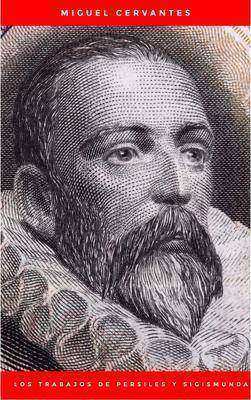
Los Trabajos de Persiles y Sigismunda
¥8.82
Los trabajos de Persiles y Sigismunda es la última obra de Miguel de Cervantes. Pertenece al subgénero de la novela bizantina. El propio autor la consideró su mejor obra; sin embargo la crítica da este título unánimemente a Don Quijote de la Mancha. En ella escribió la dedicatoria al Conde de Lemos el 19 de abril de 1616, cuatro días antes de morir, donde se despide de la vida citando estos versos: Puesto ya el pie en el estribo, con las ansias de la muerte, gran se?or, esta te escribo.
The Canterville Ghost
¥8.82
The Canterville Ghost is a popular 1887 novella by Oscar Wilde, widely adapted for the screen and stage. “The Canterville Ghost” is a parody featuring a dramatic spirit named Sir Simon and the United States minister (ambassador) to the Court of St. James's, Hiram B. Otis. Mr. Otis travels to England with his family and moves into a haunted country house. Lord Canterville, the previous owner of the house, warns Mr. Otis that the ghost of Sir Simon de Canterville has haunted it ever since he killed his wife, Eleonore, three centuries before. But Mr. Otis dismisses the ghost story as bunk and disregards Lord Canterville’s warnings. When the Otises learn that the house is indeed haunted, they succeed in victimizing the ghost and in disregarding age-old British traditions. What emerges is a satire of American materialism, a lampoon of traditional British values, and an amusing twist on the traditional gothic horror tale.
The Picture of Dorian Gray
¥8.82
Oscar Wilde's story of a fashionable young man who sells his soul for eternal youth and beauty is one of his most popular works. Written in Wilde's characteristically dazzling manner, full of stinging epigrams and shrewd observations, the tale of Dorian Gray's moral disintegration caused something of a scandal when it first appeared in 1890. Wilde was attacked for his decadence and corrupting influence, and a few years later the book and the aesthetic/moral dilemma it presented became issues in the trials occasioned by Wilde's homosexual liaisons, trials that resulted in his imprisonment. Of the book's value as autobiography, Wilde noted in a letter, "Basil Hallward is what I think I am: Lord Henry what the world thinks me: Dorian what I would like to be--in other ages, perhaps."
The Code of Hammurabi
¥8.82
The Code of Hammurabi (Codex Hammurabi) is a well-preserved ancient law code, created ca. 1790 BC (middle chronology) in ancient Babylon. It was enacted by the sixth Babylonian king, Hammurabi. One nearly complete example of the Code survives today, inscribed on a seven foot, four inch tall basalt stele in the Akkadian language in the cuneiform script. One of the first written codes of law in recorded history. These laws were written on a stone tablet standing over eight feet tall (2.4 meters) that was found in 1901.
El saludo de las brujas
¥8.82
Un amor apasionado que se vuelve imposible. La historia de un príncipe que no amaba a su esposa la cual termina yéndose con un plebeyo. Las calles de París están en esta novela invadidas de intrigas, conspiraciones e ambiciones...
Une nichée de gentilshommes
¥8.82
Après un bonheur incomplet, mensonger, qu'il vécut avec sa femme, et la séparation douloureuse qui s'en suivit, Lavretzky apprend la mort de celle-ci. Il rencontre Lise. Trouvera t-il enfin le bonheur auprès d'elle? Ce roman figure parmi les plus achevés de l'auteur sur le plan esthétique. Les personnages y sont traités avec justesse et poésie.
Rudin
¥8.82
Rudin, by Ivan Turgenev, is a Russian fiction classic and a nostalgic story of a man in his late twenties, torn between his much loved but barbaric homeland and a comfortable but unsatisfactory life in Europe. Translated by Constance Garnett, 1894 edition. The novel begins with the introduction of three of the characters – Aleksandra, Lezhnev, and Pandalevskii. Pandalevskii relates to Aleksandra Dar’ya Mikhailovna’s invitation to come and meet a Baron Muffel’. Instead of the Baron, Rudin arrives and captivates everyone immediately with his intelligent and witty speeches during the argument with Pigasov.

Virgin Soil
¥8.82
VIRGIN SOIL by Ivan Sergeyevich Turgenev (1818-1883) is his last and longest novel. In it he finally says everything yet unsaid on the subject of social change, idealism and yet futility of revolutions, serfs and peasants, and the upper classes. The hero, Nezhdanov -- the disillusioned young son of a nobleman -- and the Populist movement are young idealists working to bridge the gap between the common people and the nobility, and through them Turgenev works out his own troubled thoughts about social reform and tradition, vitality and stagnation. The ideas of gradual reform shown here are eventually to be supplanted by the extremism of the Russian Revolution -- but that is yet to come.
Collection
¥8.82
CONTENTS: The Golden Age Dream Days The Reluctant Dragon The Wind in the Willows
Dream Days
¥8.82
The further adventures of five brothers and sisters growing up in the English countryside in the late nineteenth century. Sequel to "The Golden Age."
Chéri-Bibi et Cécily: Premières Aventures de Chéri-Bibi - Tome II
¥8.82
Suite des Cages flottantes. Extrait : Et alors votre mari a administré une gifle formidable au baron, qui est allé rouler dans les placards en cassant de la porcelaine de prix. Oh ! ?a a été admirablement fait ! Maxime a toujours eu une poigne très solide. Là-dessus, il est parti en disant : ? J’attends vos témoins. ? Le baron m’a prié d’être son premier témoin. Je me suis récusé. J’ai toujours été beaucoup plus l’ami de Maxime que celui du baron ; enfin, madame, je suis aussi votre ami, à vous, et je viens offrir mes services au marquis.
Du Sang sur la Néva: Les Ténébreuses - Tome II
¥8.82
Gaston Leroux est un romancier fran?ais, né le 6 mai 1868 à Paris (10e arr.) et mort le 15 avril 1927 à Nice (Alpes-Maritimes). Il est surtout connu pour ses romans policiers empreints de fantastique.
Les Cages flottantes: Premières Aventures de Chéri-Bibi - Tome I
¥8.82
Le terrible Chéri-Bibi réussit, avec ses compagnons d'infortune, à se rendre ma?tre du navire qui le conduit au bagne de Cayenne. Il raconte qu'il a été accusé à tort du meurtre du marquis du Touchais dont le fils a épousé Cécily, la fille de son patron, dont il était lui-même fort amoureux. Or, le jeune marquis, qui trompe sa femme, passe avec son yacht à proximité du navire...
La Reine du Sabbat
¥8.82
L’action se passe dans un pays que l’auteur nomme Austrasie par pure convenance, car sa capitale est Vienne, on y parle allemand et la famille impériale est décimée par des deuils, dont une double mort à Mayerling. C’est dire que l’on est en Autriche et que l’auteur donne sa version très personnelle des drames qu’a réellement connus la dynastie des Habsbourg. Le livre a été écrit en 1911, alors que l’empereur Fran?ois-Joseph (Fran?ois tout court dans le texte) régnait encore et que ces deuils étaient tout récents, ce qui expliquerait la très relative pudeur de l’auteur. Il n’est pas possible de résumer ce roman sans en donner les clés et par là en g?cher irrémédiablement la lecture. Disons que c’est une histoire de vengeance et de mort, une histoire terriblement sanglante. L’assassinat qui constitue le prologue du livre n’est qu’un aspect, presque secondaire, de l’intrigue. Mais si le feuilleton ne compte plus les invraisemblances, si l’auteur a recours à tous les artifices les plus classiques du genre : sosies, portes secrètes, déguisements, talents extraordinaires des héros, il faut reconna?tre que l’histoire est remarquablement construite, se développe de fa?on à soutenir constamment l’intérêt du lecteur et que les épisodes s’embo?tent parfaitement les uns à la suite des autres.
The Merry Wives of Windsor
¥8.82
The Merry Wives of Windsor is a comedy by William Shakespeare, first published in 1602, though believed to have been written prior to 1597. It features the fat knight Sir John Falstaff, and is Shakespeare's only play to deal exclusively with contemporary Elizabethan era English middle class life. It has been adapted for the opera on occasions.
The Lost World
¥8.82
The Lost World is a novel released in 1912 by Arthur Conan Doyle concerning an expedition to a plateau in South America where prehistoric animals (dinosaurs and other extinct creatures) still survive. The character of Professor Challenger was introduced in this book. Interestingly, for a seminal work of dinosaur-related fiction, the animals only occupy a small portion of the narrative. Much more time is devoted to a war between early human hominids and a vicious tribe of ape-like creatures.
The Sign of the Four
¥8.82
First published in 1890, The Sign of Four is Sir Arthur Conan Doyle's second book starring legendary detective Sherlock Holmes. The story is complex, involving a secret between four ex-cons from India and a hidden treasure. More complex than the first Holmes novel, The Sign of Four also introduces the detective's drug habit and leaves breadcrumbs for the reader that lead toward the final resolution.

Through the Magic Door
¥8.82
Through the Magic Door (1907) is an essay by Arthur Conan Doyle: his subject is the charisma and charm of books. Doyle invites readers to enjoy the greatest minds of all times through what they have left behind and argues that, when we read, the selfishness and hopelessness of the world can be left behind.


