


 购物车
购物车 个人中心
个人中心
New Grub Street
¥40.79
Milvain, one of the two central characters of the novel is a modern young man driven by pure financial ambition in navigating his literary career. He accepts that he will always despise the people he writes for, networks within the appropriate social circle to create opportunity, and authors articles for popular periodicals. Reardon prefers to write novels of a more literary bent and refuses to pander to contemporary tastes until, as a last-gasp measure against financial ruin, he attempts a popular novel.
New Grub Street
¥40.79
Milvain, one of the two central characters of the novel is a modern young man driven by pure financial ambition in navigating his literary career. He accepts that he will always despise the people he writes for, networks within the appropriate social circle to create opportunity, and authors articles for popular periodicals. Reardon prefers to write novels of a more literary bent and refuses to pander to contemporary tastes until, as a last-gasp measure against financial ruin, he attempts a popular novel.
Off on a Comet
¥40.79
A comet called Gallia touches the Earth in its flight and collects a few small chunks of it. On the territory that was carried away by the comet there remained a total of thirty-six people of French, English, Spanish and Russian nationality. These people did not realize at first what had happened, and considered the collision an earthquake.
Off on a Comet
¥40.79
A comet called Gallia touches the Earth in its flight and collects a few small chunks of it. On the territory that was carried away by the comet there remained a total of thirty-six people of French, English, Spanish and Russian nationality. These people did not realize at first what had happened, and considered the collision an earthquake.

Men, Women, and Boats
¥40.79
A collection of tales, sketches and stories by the master of American naturalism and realism Stephen Crane featuring: The Scotch Express, London Impressions, The Snake, The Mesmeric Mountain, A Tent in Agony, The Dark Brown Dog, And Experiment in Misery, and other stories.
Men, Women, and Boats
¥40.79
A collection of tales, sketches and stories by the master of American naturalism and realism Stephen Crane featuring: The Scotch Express, London Impressions, The Snake, The Mesmeric Mountain, A Tent in Agony, The Dark Brown Dog, And Experiment in Misery, and other stories.
Politics: A Treatise on Government
¥40.79
The Politics of Aristotle is the second part of a treatise of which the Ethics is the first part. It looks back to the Ethics as the Ethics looks forward to the Politics. For Aristotle did not separate, as we are inclined to do, the spheres of the statesman and the moralist. In the Ethics he has described the character necessary for the good life, but that life is for him essentially to be lived in society, and when in the last chapters of the Ethics he comes to the practical application of his inquiries, that finds expression not in moral exhortations addressed to the individual but in a description of the legislative opportunities of the statesman.
Politics: A Treatise on Government
¥40.79
The Politics of Aristotle is the second part of a treatise of which the Ethics is the first part. It looks back to the Ethics as the Ethics looks forward to the Politics. For Aristotle did not separate, as we are inclined to do, the spheres of the statesman and the moralist. In the Ethics he has described the character necessary for the good life, but that life is for him essentially to be lived in society, and when in the last chapters of the Ethics he comes to the practical application of his inquiries, that finds expression not in moral exhortations addressed to the individual but in a description of the legislative opportunities of the statesman.
Poetics
¥40.79
Aristotle's Poetics is the earliest surviving work of dramatic theory and the first extant philosophical treatise to focus on literary theory. In it, Aristotle offers an account of what he calls poetry.
In the Year of Jubilee
¥40.79
The story of the romantic and sexual initiation of a suburban heroine, Nancy Lord which Gissing wrote after his return from Exeter. He took lodgings with his second wife at 76 Burton Road, Brixton where South London provided new literary inspiration. He went for long walks through nearby Camberwell, soaking up impressions of the way of life he saw emerging there.
The Whirlpool
¥40.79
Alma's farther looses fortunes at his bank and commits suicide forcing his 20 years old daughter to go abroad to make plans and pursue her career. Two admirers follow her: Cyrus Redgrave a wealthy bachelor who makes an indecent proposal and Harvey Rolfe whom she ends up marrying.
The Absentee
¥40.79
Lord Colambre finds that his mother Lady Clonbrony's attempts to buy her way into the high society of London are only ridiculed, while his father, Lord Clonbrony, is in serious debt as a result of his wife's lifestyle. His mother wishes him to marry an heiress, Miss Broadhurst, who is a friend of Grace Nugent. However, Colambre has already fallen in love with his cousin, Grace Nugent, who lives with the family as a companion to Lady Clonbrony. Worried that his mother will pressure him into a marriage with someone he does not love, Colambre decides to leave the London social scene and visit his ancestral home in County Wicklow in Ireland.

Where There is Love, There is God Also
¥40.79
In the town there was a shoemaker by the name of Martin, who lived in a basement with a tiny little window looking out into the street. Martin could see the people pass, and though he only got a glimpse of their feet, he still knew every one, for Martin could recognize people by their boots. Martin had lived in that basement for many a long year and had numbers of acquaintances.
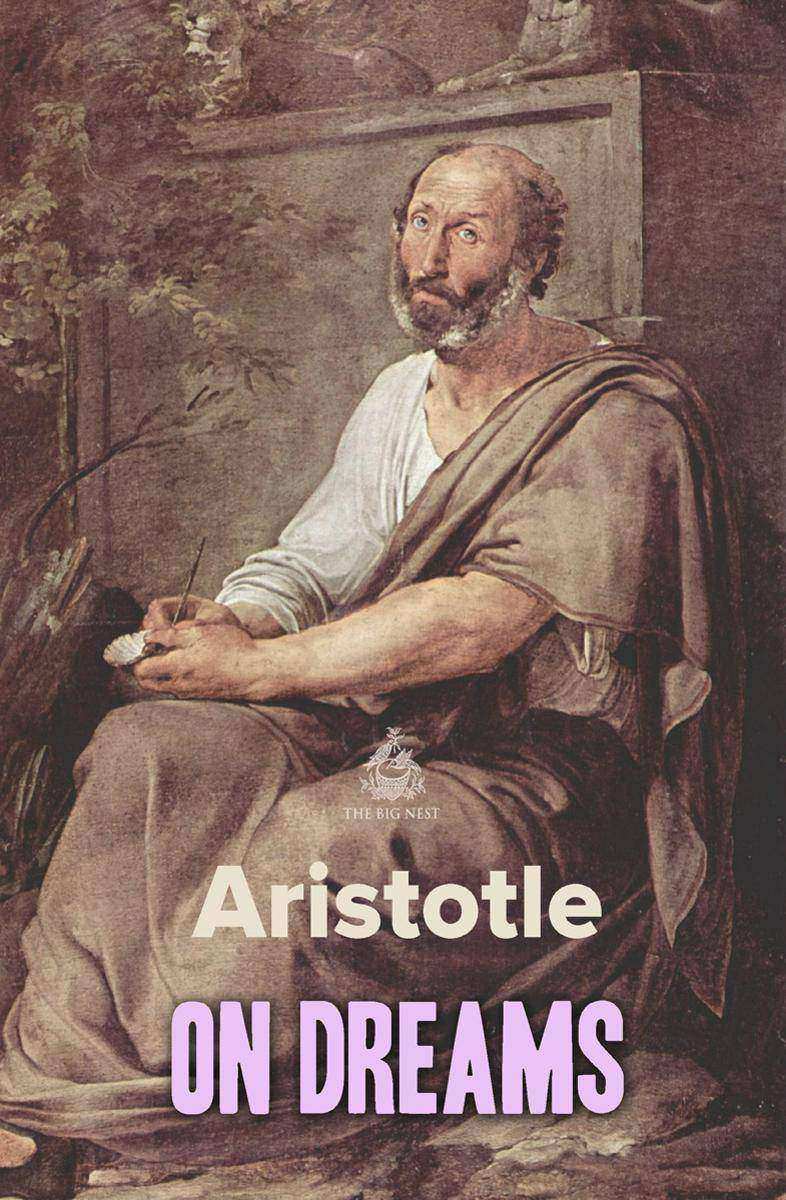
On Dreams
¥40.79
We must, in the next place, investigate the subject of the dream, and first inquire to which of the faculties of the soul it presents itself, i.e. whether the affection is one which pertains to the faculty of intelligence or to that of sense-perception; for these are the only faculties within us by which we acquire knowledge.
On the Heavens
¥40.79
The science which has to do with nature clearly concerns itself for the most part with bodies and magnitudes and their properties and movements, but also with the principles of this sort of substance, as many as they may be. For of things constituted by nature some are bodies and magnitudes, some possess body and magnitude, and some are principles of things which possess these. Now a continuum is that which is divisible into parts always capable of subdivision, and a body is that which is every way divisible.
Apology
¥40.79
Apology presents the speech of self-defence given by Socrates in his trial for impiety and corruption specifically against the charges of corrupting the young, and by not believing in the gods in whom the city believes, but in other daimonia that are novel.
Madam How and Lady Why
¥40.79
A delightful children's classic dealing with questions of natural life with plentiful and colourful examples of how things work, and more importantly, why such things as rain, snow, wind and others happen.
The Nether World
¥40.79
Michael Snowdon inherits a substantial sum of money from his deceased son and decides to return from Australia to London. He spends only on necessities and lives like a poor man despite being able to live comfortably. His fortune is kept a secret even from his close friends and relatives.
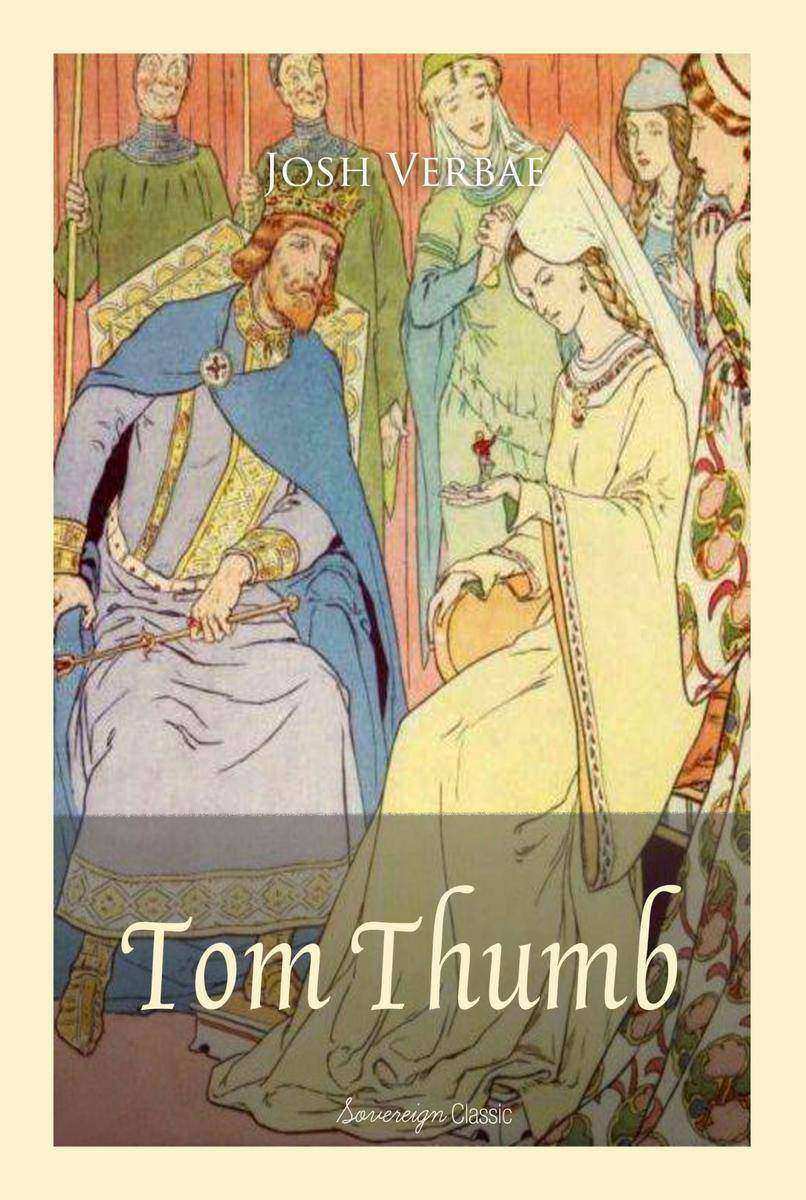
Tom Thumb
¥40.79
Long ago, in the merry days of good King Arthur, there lived a ploughman and his wife. They were very poor, but would have been contented and happy if only they could have had a little child. One day, having heard of the great fame of the magician Merlin, who was living at the Court of King Arthur, the wife persuaded her husband to go and tell him of their trouble. Having arrived at the Court, the man besought Merlin with tears in his eyes to give them a child, saying that they would be quite content even though it should be no bigger than his thumb. Merlin determined to grant the request, and what was the countryman’s astonishment to find when he reached home that his wife had a son, who, wonderful to relate, was no bigger than his father’s thumb!

Walden and Civil Disobedience
¥40.79
Walden follows Thoreau's experiences over the course of two years, two months, and two days in a cabin he built near Walden Pond, amidst woodland owned by his friend and mentor Ralph Waldo Emerson. In Civil Disobedience Thoreau argues that individuals should not permit governments to overrule or atrophy their consciences, and that they have a duty to avoid allowing such acquiescence to enable the government to make them the agents of injustice.


