The Godson
¥40.79
A son was born to a poor peasant. He rejoiced and went to a neighbour to ask him to stand as godfather to the boy. The neighbour refused. He did not want to be godfather to a poor man’s son. So the peasant went to another neighbour and he, too, refused. He walked from house to house, but could find no one who would be godfather to his son, so he set out to another village.
The Analects
¥40.79
Confucius believed that the welfare of a country depended on the moral cultivation of its people, beginning from the nation's leadership. He believed that individuals could begin to cultivate an all-encompassing sense of virtue through ren, and that the most basic step to cultivating ren was devotion to one's parents and older siblings. He taught that one's individual desires do not need to be suppressed, but that people should be educated to reconcile their desires via rituals and forms of propriety, through which people could demonstrate their respect for others and their responsible roles in society.
Ultimii martori
¥51.50
Lucrarea aceasta se bazeaz? pe teza de doctorat a autorului, sus?inut? ?n iunie 2008, Problema drept??ii ?i restituirea propriet??ilor ?n Rom?nia post-decembrist?, fiind ?ns? o versiune modificat? a tezei. Dup? cum m?rturise?te autorul, unele pasaje tehnice au fost adaptate, pentru a putea fi u?or inteligibile pentru publicul larg. Cartea de fa?? este rezultatul unor ample cercet?ri, ?ncepute ?n 2002. ?Nu mai cred c? principala datorie a filosofului moral este de a produce ?solu?ii? (sentin?e) la problemele etice percepute ca atare ?ntr-un univers social. […] La fel ca ?ntr-un tribunal, pledoariile sunt utile, ?i e bine s? se foloseasc? de argumente c?t mai puternice ?i mai rafinate. Dar, la fel cum cercetarea ?n materie de drept nu-?i poate propune ca obiectiv principal producerea de pledoarii specific avoca?ilor (cu toate c? examinarea fundamentelor legii poate conferi o greutate suplimentar? unei pledoarii particulare sau alteia), tot a?a cercetarea de ordin etic nu-?i poate propune ca obiectiv ceva similar pledoariilor.“ Con?inutul este organizat ?n 7 capitole, concluzii ?i o bibliografie, util? f?r? ?ndoial? pentru oricine ar dori s? aprofundeze chestiunile abordate de autor. Introducerea este urmat? de o discu?ie conceptual? ?i metodologic? despre repara?ie (capitolul 2), rectificare, restitu?ie, drepturile de proprietate ?i evaluarea moral? a restitu?iei. Celelalte capitole se ocup? de urm?toarele teme: nedreptatea na?ionaliz?rii (capitolul 3), restitu?ia post-comunist? (capitolul 4), argumentul coasian (capitolul 5), restitu?ia ?i dreptatea transgenera?ional? (capitolul 6), principiul nozickian al rectific?rii nedrept??ilor (capitolul 7). ?Am ?ncercat apoi s? analizez ce anume presupune c?utarea unui r?spuns la o ?ntrebare de tipul ?Este restitu?ia justificat? ?? (?n 2.3.) Rezultatul important, cred, a fost acela c? nu exist? un r?spuns simplu, ?i c? o astfel de ?ntrebare este prost formulat?. Am propus ?n loc alte cinci ?ntreb?ri, mai precise : dac? actul na?ionaliz?rii a fost unul nedrept, dac? o politic? restitutiv? risc? sau nu s? ?ndrepte o nedreptate trecut? ?nf?ptuind o alta, dac? putem identifica cu precizie obiectele restitu?iei ?i dac? orizontul temporal introduce elemente importante ?n cadrul de evaluare moral? (at?t ca atare, c?t ?i ?n dimensiunea sa intergenera?ional?). ?n primul r?nd, putem afirma c? politica aleas? imediat dup? 1989 (cea a men?inerii status-quo-ului, ?n speran?a c? lucrurile se vor rezolva cumva de la sine sau ca o solu?ie ideal? se va prezenta ?n mod miraculos) a fost at?t lipsit? de vreo justificare moral?, c?t ?i neinspirat? din punct de vedere pragmatic.“
Laws
¥40.79
The Laws are discussed by three representatives of Athens, Crete, and Sparta. The Athenian, as might be expected, is the protagonist or chief speaker, while the second place is assigned to the Cretan, who, as one of the leaders of a new colony, has a special interest in the conversation. At least four-fifths of the answers are put into his mouth. The Spartan is every inch a soldier, a man of few words himself, better at deeds than words. The Athenian talks to the two others, although they are his equals in age, in the style of a master discoursing to his scholars; he frequently praises himself; he entertains a very poor opinion of the understanding of his companions.
The Athenian Constitution
¥40.79
The Constitution of the Athenians describes the political system of ancient Athens. The treatise was composed between 330 and 322 BC.
Прода?ться все: Джефф Безос та ера Amazon
¥36.79
Dignità o miseria della natura umana? ?C'è un principio supposto prevalere tra molti che è del tutto incompatibile con ogni virtù o senso morale [...] Questo principio è che ogni benevolenza è mera ipocrisia, l'amicizia un inganno, lo spirito pubblico una farsa, la fedeltà un trucco per procurare fiducia e confidenza; e mentre tutti noi, in fondo, perseguiamo solo il nostro interesse privato, indossiamo questi bei travestimenti in modo da abbassare le difese degli altri ed esporli maggiormente alle nostre astuzie e macchinazioni?... Le meditazioni senza tempo di uno dei più grandi filosofi europei. SOMMARIO: Introduzione e avvertenza ai testi / Nota bibliografica: una mappa degli studi (di Fabrizio Pinna) - David Hume: Dignità o miseria della natura umana? / L'Amore di Sé. APPENDICE: Of the Dignity or Meanness of Human Nature; Of Self-love; My Own Life & Letter from Adam Smith, LL. D. to William Strahan, Esq.; Of the Reason of Animals; Of the Immortality of the Soul; Of Superstition and Enthusiasm; Of some Verbal Disputes. LE COLLANE IN/DEFINIZIONI & CON(TRO)TESTI
Liberty Girl
¥19.05
Human reason, in one sphere of its cognition, is called upon to consider questions, which it cannot decline, as they are presented by its own nature, but which it cannot answer, as they transcend every faculty of the mind. It falls into this difficulty without any fault of its own. It begins with principles, which cannot be dispensed with in the field of experience, and the truth and sufficiency of which are, at the same time, insured by experience. With these principles it rises, in obedience to the laws of its own nature, to ever higher and more remote conditions. But it quickly discovers that, in this way, its labours must remain ever incomplete, because new questions never cease to present themselves; and thus it finds itself compelled to have recourse to principles which transcend the region of experience, while they are regarded by common sense without distrust. It thus falls into confusion and contradictions, from which it conjectures the presence of latent errors, which, however, it is unable to discover, because the principles it employs, transcending the limits of experience, cannot be tested by that criterion. The arena of these endless contests is called Metaphysic.Time was, when she was the queen of all the sciences; and, if we take the will for the deed, she certainly deserves, so far as regards the high importance of her object-matter, this title of honour. Now, it is the fashion of the time to heap contempt and scorn upon her; and the matron mourns, forlorn and forsaken, like Hecuba: At first, her gover Modo maxima rerum, Tot generis, natisque potens... Nunc trahor exul, inops. —Ovid, Metamorphoses. xiii under the administration of the dogmatists, was an absolute despotism. But, as the legislative continued to show traces of the ancient barbaric rule, her empire gradually broke up, and intestine wars introduced the reign of anarchy; while the sceptics, like nomadic tribes, who hate a permanent habitation and settled mode of living, attacked from time to time those who had organized themselves into civil communities. But their number was, very happily, small; and thus they could not entirely put a stop to the exertions of those who persisted in raising new edifices, although on no settled or uniform plan. In recent times the hope dawned upon us of seeing those disputes settled, and the legitimacy of her claims established by a kind of physiology of the human understanding—that of the celebrated Locke. But it was found that—although it was affirmed that this so-called queen could not refer her descent to any higher source than that of common experience, a circumstance which necessarily brought suspicion on her claims—as this genealogy was incorrect, she persisted in the advancement of her claims to sovereignty. Thus metaphysics necessarily fell back into the antiquated and rotten constitution of dogmatism, and again became obnoxious to the contempt from which efforts had been made to save it. At present, as all methods, according to the general persuasion, have been tried in vain, there reigns nought but weariness and complete indifferentism—the mother of chaos and night in the scientific world, but at the same time the source of, or at least the prelude to, the re-creation and reinstallation of a science, when it has fallen into confusion, obscurity, and disuse from ill directed effort. I do not mean by this a criticism of books and systems, but a critical inquiry into the faculty of reason, with reference to the cognitions to which it strives to attain without the aid of experience; in other words, the solution of the question regarding the possibility or impossibility of metaphysics, and the determination of the origin, as well as of the extent and limits of this science. All this must be done on the basis of principles. ABOUT AUTHOR: That all our knowledge begins with experience there can be no doubt. For how is it possible that the faculty of cognition should be awakened into exercise otherwise than by means of objects which affect our senses, and partly of themselves produce representations, partly rouse our powers of understanding into activity, to compare to connect, or to separate these, and so to convert the raw material of our sensuous impressions into a knowledge of objects, which is called experience? In respect of time, therefore, no knowledge of ours is antecedent to experience, but begins with it. But, though all our knowledge begins with experience, it by no means follows that all arises out of experience. For, on the contrary, it is quite possible that our empirical knowledge is a compound of that which we receive through impressions, and that which the faculty of cognition supplies from itself (sensuous impressions giving merely the occasion), an addition which we cannot distinguish from the original element given by sense, till long practice has made us attentive to, and skilful in separating it. It is, therefore, a question which requires close investigation, and not to b
Пришестя робот?в.
¥31.07
"Wilde è profetico sin dalle prima righe, quando denuncia la prevalenza dell’emozione sulla razionalità, male principe del nostro tempo, e poi del pietismo sull’emancipazione, male di tanta politica di pseudo sinistra" (dall'Introduzione di Alfredo Sgarlato). Wilde: ?perché la vita raggiunga la sua più elevata perfezione, ci vuole qualche cosa di più. Ciò che ci vuole è l'individualismo?, ?Utopia? Una carta geografica del mondo in cui non sia segnato il paese dell'Utopia, non varrebbe la pena d'essere guardata, perché vi mancherebbe il paese in cui l'Umanità atterra ogni giorno. Ma non appena v'è sbarcata, ella guarda più lontano, scorge una terra ancora più bella, e spiega di nuovo le vele. Progredire significa realizzare l'Utopia?. SOMMARIO: Introduzione (di Alfredo Sgarlato) - Postfazione. Breve biblio-nota ai testi e alla traduzione (di Fabrizio Pinna) - OSCAR WILDE Società e libertà: elogio dell'individualismo - APPENDICE I Oscar Wilde, Rapporti fra il socialismo e l'individualismo (di Luigi Fabbri, 1913) - APPENDICE II The Soul of Man under Socialism (1891). LA COLLANA IN/DEFINIZIONI
佛堂讲话
¥18.00
道源法师关于念佛的完整示,包括对念佛的目的、方法、功德等的详细的讲解,为修行净土宗的修行者提供了如何正确念佛的方便法门。
地藏本愿经外二部
¥18.00
对佛教经典《地藏本愿经》《佛说盂兰盆经》《佛说父母恩重难报经》三部经的翻译解释。
中阿含经
¥18.00
《中阿含经》共六十卷,共收经二百二十二部,,分为五诵十八品,为东晋僧伽提婆与僧伽罗叉所译。本书节选了《中阿含经》中的二十部经。读者可从中体察《中阿含经》之全貌,领会佛陀当年为众比丘说法传教的殷殷苦心,并了解一些佛教历史,理解有关佛说的基本教义、基本理论,一步坚定学习佛教,信奉善行,自度度人,常乐我净的信心。
楞伽经
¥18.00
《楞伽经》,七卷,十品,全称《大乘楞伽经》。现奉献给读者的这部《楞伽经》,是唐译本。由于此译本几经校勘,加之采用以梵本对照前两个译本的方法,因此,义理方面较前其他版本更准确、完备,文字之表述也更加通畅、流利,受到佛教界的一致肯定和推崇 在众多大乘经典中,《楞伽经》*突出的特在其融会贯通,它不仅融会了大小二乘,而且贯通了空有二宗;不仅糅合了如来藏系和唯识系的思想,而且融摄了性相二宗。在中国佛教中,它既是「法相唯识宗」依据的经典之一,同时也是禅宗初祖达磨传付慧可的重要经典,其对中国佛教的影响可见一斑。
药师经
¥18.00
《药师经》全名《药师琉璃光如来本愿功德经》,是佛陀应文殊师利菩萨要求而示的净土法门,为佛教中的净土经典之一。它的主要宗教价值在于描绘了东方琉璃净土,宣说了药师如来的本愿功德,是药师佛信仰主要依据的经典。经典中叙说东方琉璃世界是药师佛因地所发十二大愿而证成的,就其主旨来说,是使众生早证菩提;但另一方面,药师佛也注重为众生求得现世的安乐,这与阿弥陀佛的偏向来生安乐不同,故为佛教界将药师法门视为现世众生消灾延寿法门的缘由。又,本经除了表述药师佛的信仰,还对药师佛信仰和阿弥陀佛信仰作了沟通,此为本经另一特色所在。
安乐集
¥18.00
本书旨在弘扬西方阿弥陀佛的净土教义,提出了一系列关于净土信仰和往生方法的理论,并大量引证各种经律论释,多达五十余部,以申明净土要义。全书以《观无量寿经》的趣旨,统以贯之,由于道绰时代正逢北周武帝毁佛,形成佛教末法思想的普遍,再加上诸宗派多排斥净土法门,故本书中亦多有论辩,着重于破除异议,使得净土法门在社会上广泛盛行,深社会各阶层中。
般舟三昧经
¥18.00
本经为现存大乘经典中*早时期问世的作品,也是有关弥陀经典中的*早文献,是净土经典的*早先驱。《般舟三昧经》说西方世界须摩提国阿弥陀佛有种种相好威仪庄严,放大光明。若有人一心系念此佛,经过一日夜或七昼夜,就可甚深禅定,面见此佛。 《般舟三昧经》归纳起来说,大体上有三个特:一、以持名念佛,往生净土;二、念佛三昧为一切三昧之王;三、禅净离合,归于净土。这三个特,为本经作为净土思想*先驱的地位和价值。 佛教徒以成佛作为自己修持的*终归宿。“般舟三味”的行持,能令十方诸佛现前。本经以有系统的层次揭“三昧”是确切可得的。
宗镜录
¥18.00
对佛教经典《宗镜录》的翻译解释。
禅话与净话
¥18.00
本书分两大部分,即禅话与净话。作者分别将佛门禅净的特色深地释义,并且以历代禅净兼修的大德为例证,破斥持门户之见者。书中以“念佛至一心不乱,便是禅定;参禅至彻见自性,即是净土”为立论的根据,写出了禅宗与净土宗同为佛教派别的异与同。
金光明经
¥18.00
此经当属初期大乘经典,与《般若经》、《维摩经》、《法华经》等约略同时,与本经<*净地陀罗尼品>内容相同。 从内容上看,此经<分别三身品>和《法华经.寿量品》所说相通,反映出大乘佛教对佛如来观念的变化。 在教义理论上,此经基本上同于《般若经》的说空与《法华经》的法身常在思想。原始佛教也有空观,即诸法缘起故诸法皆空,而大乘的空观则更彻底,不仅诸法皆空,而且诸法皆空思想的自体也必须是空的。
南朝佛教与文学
¥34.00
作者将佛教与中国文学的研究集中起来,从学术高度客观考察和分析这个结合阶段的特。书中对卷帙浩繁的佛教文献行梳理、征引;对南朝佛教的发展、佛教思想的衍变,对南朝重要的文人和重要的文学事实同佛教的关系,作了相当全面的分析和研究。这有助于读者全面了解南朝这一时期的历史文化和佛教对文学多层面的影响。
泰州学派:儒家精神与乡村建设
¥35.00
本书从当代中国农村社会发展中的基本问题出发,考察16世纪的平民儒家学派泰州学派在参与乡村建设中的思想及实践活动,认为平民可以通过汲取儒学等文化资源,担当农村社会建设的主力。作为乡村建设实践,泰州学派形成家族建设与社会建设两翼,通过创造性转化,活跃在20世纪的各种乡村建设实验中。
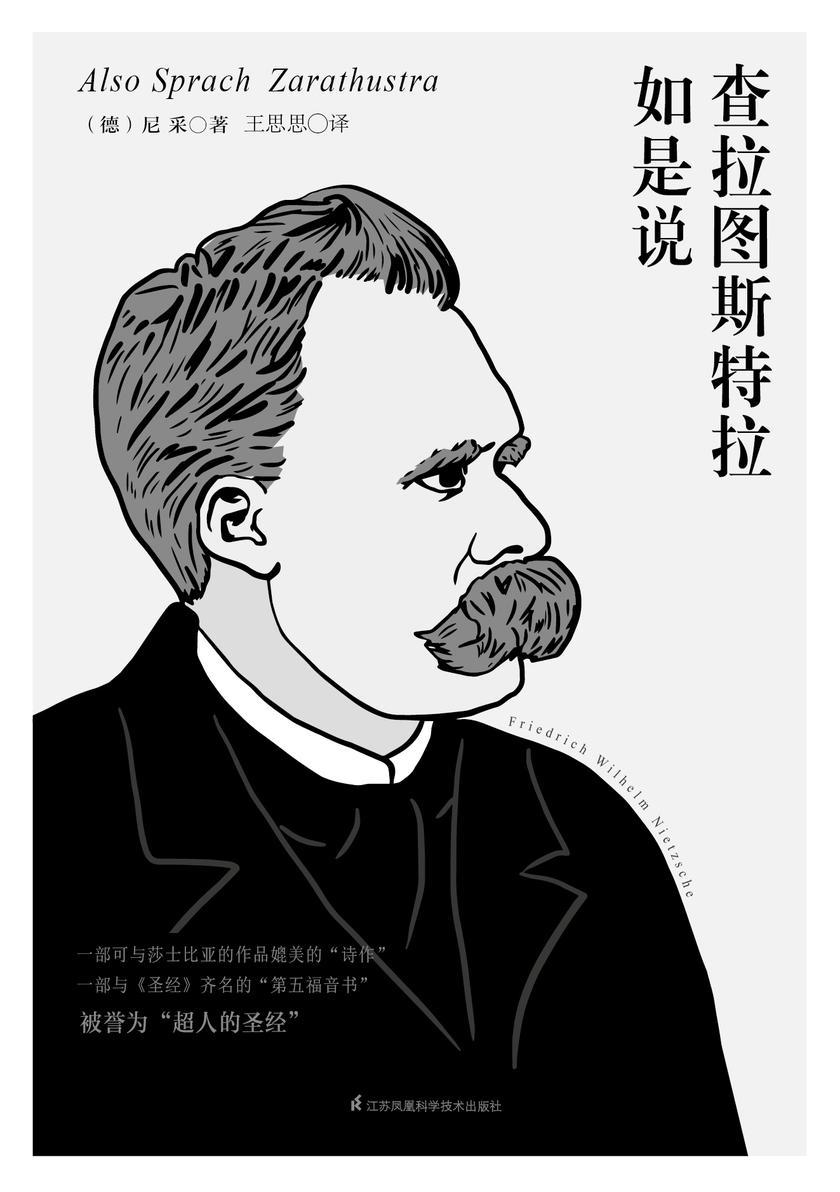
尼采全集(第一辑)(第一卷至第四卷)
¥202.44
本套装包括《查拉图斯特拉如是说》《朝霞》《墨西拿的田园诗》《快乐的知识》《人性的,太人性的》《见解与箴言杂录》《漫游者和他的影子》《悲剧的诞生》《不合时宜的思考》《1870-1873年遗作》。《查拉图斯特拉如是说》是德国哲学家、思想家尼采的一部里程碑式的作品,几乎包括了尼采的全部思想;这本以散文诗体写就的杰作,以振聋发聩的奇异灼见和横空出世的警世招语宣讲 “超人哲学”和“权力意志”,横扫了基督教所造成的精神奴性的方方面面,谱写了一曲自由主义的人性壮歌。《快乐的知识》是尼采后期的重要作品,创作于大病初愈之后,浓缩了尼采思想的精髓,对诸如生命、个体与群体能、爱情、文艺、哲学、科学、道德、法律、宗教、社会发展等问题都进行了简明而深刻的论述,语言凝练而隽永,思想鲜明而锐利,行文多为警句或短诗,思想火花处处闪现,令人读后有痛快淋漓之感。《人性的,太人性的》用格言体写成,从各方面探讨了世界与人生的基本问题,作者对西方形而上学传统及其影响下的西方文化进行了全面批判,一方面肯定人性中值得肯定的方面,希望挖掘人的潜力,使人类变得更优秀;另一方面又对人性的弱点和缺点,尤其对西方文化传统下形成的这种弱点和缺点,进行了尖刻的讽刺和挖苦。作者寄希望于“自由精灵”,也就是能超越传统思维方式、传统道德观念而自由思想的人。 《悲剧的诞生》是对古希腊酒神现象的重视,尼采立足于这种不登大雅之堂的现象,把它当作理解高雅的希腊悲剧、希腊艺术、希腊精神的钥匙,从中提升出一种哲学来。

购物车
个人中心