


 购物车
购物车 个人中心
个人中心
Last Entry
¥18.74
A NEW AND FACETIOUS INTRODUCTION TO THE ENGLISH TONGUEBy Percival LeighEmbellished with upwards of forty-five Characteristic IllustrationsBy JOHN LEECH. Fashion requires, and like the rest of her sex, requires because she requires, that before a writer begins the business of his book, he should give an account to the world of his reasons for producing it; and therefore, to avoid singularity, we shall proceed with the statement of our own, excepting only a few private ones, which are neither here nor there. To advance the interests of mankind by promoting the cause of Education; to ameliorate the conversation of the masses; to cultivate Taste, and diffuse Refinement; these are the objects we have in view in submitting a Comic English Grammar to the patronage of a discerning Public. Few persons there are, whose ears are so extremely obtuse, as not to be frequently annoyed at the violations of Grammar by which they are so often assailed. It is really painful to be forced, in walking along the streets, to hear such phrases as, "That 'ere omnibus." "Where've you bin?" "Vot's the odds?" and the like. Very dreadful expressions are also used by cartmen and others in addressing their horses. What can possibly induce a human being to say "Gee woot!" "'Mather way!" or "Woa not to mention the atrocious "Kim aup!" of the barbarous butcher's boy. It is notorious that the above and greater enormities are perpetrated in spite of the number of Grammars already before the world. This fact sufficiently excuses the present addition to the stock; and as serious English Grammars have hitherto failed to effect the desired reformation, we are induced to attempt it by means of a Comic one. With regard to the moral tendency of our labors, we may be here permitted to remark, that they will tend, if successful, to the suppression of evil speaking ; and as the Spartans used to exhibit a tipsy slave to their children with a view to disgust them with drunkenness, and We will not allow a man to give an old woman a dose of rhubarb if he have not acquired at least half a dozen sciences; but we permit a quack to sell as much poison as he pleases. When one man runs away with another's wife, and, being on that account challenged to fight a duel, shoots the aggrieved party through the head, the latter is said to receive satisfaction. We never take a glass of wine at dinner without getting somebody else to do the same, as if we wanted encouragement; and then, before we venture to drink, we bow to each other across the table, preserving all the while a most wonderful gravity. This, however, it may be said, is the natural result of endeavoring to keep one another in countenance. The way in which we imitate foreign manners and customs is very amusing. Savages stick fish-bones through their noses; our fair countrywomen have hoops of metal poked through their ears. The Caribs flatten the forehead; the Chinese compress the foot; and we possess similar contrivances for reducing the figure of a young lady to a resemblance to an hour-glass or a devil-on-two-sticks. There being no other assignable motive for these and the like proceedings, it is reasonable to suppose that they are adopted, as schoolboys say, "for fun." We could go on, were it necessary, adducing facts to an almost unlimited extent; but we consider that enough has now been said in proof of the comic character of the national mind. And in conclusion, if any other than an English or American author can be produced, equal in point of wit, humor, and drollery, to Swift, Sterne, Dickens, or Paulding, we hereby engage to eat him; albeit we have no pretensions to the character of a "helluo librorum." "English Grammar," according to Lindley Murray, "is the art of speaking and writing the English language with propriety." The English language, written and spoken with propriety, is commonly called the King's English.

Life Is A Dream
¥18.74
To my thinking, all modern English books on the Devil and his works are unsatisfactory. They all run in the same groove, give the same cases of witchcraft, and, moreover, not one of them is illustrated. I have endeavoured to remedy this by localizing my facts, and by reproducing all the engravings I could find suitable to my purpose. I have also tried to give a succinct account of demonology and witchcraft in England and America, by adducing authorities not usually given, and by a painstaking research into old cases, carefully taking everything from original sources, and bringing to light very many cases never before republished. For the benefit of students, I have given—as an Appendix—a list of the books consulted in the preparation of this work, which, however, the student must remember is not an exhaustive bibliography on the subject, but only applies to this book, whose raison d’être is its localization. The frontispiece is supposed to be the only specimen of Satanic caligraphy in existence, and is[Pg vi] taken from the ‘Introductio in Chaldaicam Linguam,’ etc., by Albonesi (Pavia, 1532). The author says that by the conjuration of Ludovico Spoletano the Devil was called up, and adjured to write a legible and clear answer to a question asked him. Some invisible power took the pen, which seemed suspended in the air, and rapidly wrote what is facsimiled. The writing was given to Albonesi (who, however, confesses that no one can decipher it), and his chief printer reproduced it very accurately. I am told by experts that in some of the characters may be found a trace of Amharic, a language spoken in its purity in the province of Amhara (Ethiopia), and which, according to a legend, was the primeval language spoken in Eden. JOHN ASHTON. CHAPTER IUniversal Belief in the Personality of the Devil, as portrayed by the British Artist—Arguments in Favour of his Personality—Ballad—‘Terrible and Seasonable Warning to Young Men.’ The belief in a good and evil influence has existed from the earliest ages, in every nation having a religion. The Egyptians had their Typho, the Assyrians their Ti-a-mat (the Serpent), the Hebrews their Beelzebub, or Prince of Flies,[1] and the Scandinavians their Loki. And many religions teach that the evil influence has a stronger hold upon mankind than the good influence—so great, indeed, as to nullify it in a large degree. Christianity especially teaches this: ‘Enter ye by the narrow gate; for wide is the gate, and broad is the way, that leadeth to destruction, and many be they that enter in thereby. For narrow is the gate, and straitened the way, that leadeth unto life, and few be they that find it.’ This doctrine of the great power of the Devil, or evil influence over man, is preached from every pulpit, under every form of Christianity, throughout the world; and although at the present time it is only confined to the greater moral power of the Devil over man, at an earlier period it was an article of belief that he was able to exercise a greater physical power. This was coincident with a belief in his personality; and it is only in modern times that that personality takes an alluring form. In the olden days the Devil was always depicted as ugly and repulsive as the artist could represent him, and yet he could have learned a great deal from the modern Chinese and Japanese. The ‘great God Pan,’ although he was dead, was resuscitated in order to furnish a type for ‘the Prince of Darkness’; and, accordingly, he was portrayed with horns, tail and cloven feet, making him an animal, according to a mot attributed to Cuvier, ‘graminivorous, and decidedly ruminant’; while, to complete his classical ensemble, he was invested with the forked sceptre of Pluto, only supplemented with another tine.

The Blood Ship
¥18.74
DRAWING is the expression of an idea: “Art must come from within, and not from without. This fact has led some to assert that the study of nature is not essential to the student, and that careful training in the study of the representation of the actual appearance is mechanical and harmful. Such persons forget that all art ideas and sentiments must be based upon natural objects, and that a person who cannot represent truly what he sees will be entirely unable to express the simplest ideal conceptions so that others may appreciate them. Study of nature is, then, of the first and greatest importance to the art student.A drawing may be made in outline, in light and shade, or in color. The value of the drawing artistically does not depend upon the medium used, but upon the individuality of the draughtsman making it. The simplest pencil sketch may have much more merit than an elaborate colored drawing made by one who is unable to represent truly the facts of nature, or who sees, instead of the beauty and poetry, the ugliness and the imperfections of the subject. OBJECTS FOR STUDY:We hear a great deal now about the cultivation of the sense of beauty by the choice of drawing models. Many go so far as to say that nothing but the most beautiful forms should be given from the start, and, asserting that the cube, cylinder,and other type forms are not beautiful, they say that they should not be used, but that beautiful variations of these type forms should be provided. More definite information than this is rarely given. We are not told what natural objects are beautiful, and cheap enough to be provided, or how these objects of beauty are to be obtained, if they are not provided by the city. Such advice as to the use of beautiful models must be very pleasant and valuable to the drawing teacher, who so often fails to secure the money necessary to provide the cheap wooden models costing a few cents each ; and we do not wonder that special and regular teachers often regard this subject as one having no standards and no authorities. Much of all this commotion about beautiful objects of study is raised by those who, suffering from criticism, have in the desire to escape it plunged headlong from one set of mechanical rules for a series of lessons for the public schools, to another set less arbitrary in certain directions, but still mechanical, and if possible, more harmful than before, because attempting more.The average teacher can readily learn to discover at a glance whether or not the drawing of a cube represents the object as it might appear. She can do this even without seeing the model from the pupil's position; and the student can compare his drawing with the object and discover its errors more easily than he can in the drawing of a cast, a leaf, a figure,or any other object of beauty, in which the beauty depends upon lines which are subtile and which require a trained eye to see at all truly.
The Invisible Man
¥18.74
To present at a single glance a comprehensive view of the History of English Church Architecture from the Heptarchy to the Reformation, and to do this in a manner, which, without taxing too seriously the memory of the student, may enable him to fix in his mind the limits, and the general outline of the inquiry he is about to enter upon, is the object of the present treatise.? Instead therefore of entering, as is usual in elementary works of this nature, into a detailed account of all the parts of an Ecclesiastical structure, a certain portion only of such a building has for this purpose been selected, and so exhibited in the garb in which it appeared at successive intervals of time, as to present to the reader a means of comparison that will enable him readily to apprehend the gradual change of form through which it passed from the Eleventh to the Sixteenth Centuries, and at once to recognise the leading characteristics of the several Periods into which it is here proposed to divide the History of our National Architecture. Having thus fixed these leading characteristics in his mind, he will then be in a condition to follow us hereafter, if he pleases, into the detail of the whole subject, and to become familiar with those niceties of distinction, the detection of which—escaping, as they do, the eye of the general observer—contributes so materially to the enjoyment of the study, and a perfect acquaintance with which is so absolutely essential to a correct understanding of the true History of the Art.?That this mode of approaching the study of this subject is a convenient one, will probably be admitted by those who may remember the difficulties they encoun-tered, in their early attempts to acquire a general conception of the scheme of the History of Church Architecture, as given in most of the manuals now in use; and the complexity of detail in which they found themselves immediately involved on the very threshold of their inquiry.? It has been the practice in most elementary works on Church Architecture to derive the illustrations of the subject, indifferently from the smaller and the larger buildings of the Kingdom; and by implication to assign an equal authority to both. It will be readily admitted, however, that the History of an Art is to be gathered from its principal Monuments, and not from those the design or execution of which may have been entrusted to other than the ablest masters of the Period: in the choice, therefore, of the examples which have been selected to illustrate the series of changes which are described in the following pages, reference has been made principally to the great Cathedral, Abbey, and Collegiate Churches of the Kingdom, and occasionally only to some of the larger Parish Churches whose size or importance would seem to bring them under the above denomination.??Church Architecture in England, from its earliest existence down to the Sixteenth Century, was in a state of constant progress, or transition, and this progress appears to have been carried on, with certain exceptions in different parts of the country, very nearly simultaneously. It follows from this circumstance, first, That it is impossible to divide our National Architecture correctly into any number of distinct Orders or Styles; and secondly, That any Division of its History into a given number of Periods, must necessarily be an arbitrary one. It is nevertheless absolutely essential for the purpose of conveniently describing the long series of noble monuments which remain to us, that we should adopt some system of chronological arrangement, which may enable us to group, and to classify them in a distinct and intelligible manner: and although no broad lines of demarcation in this connected series are discernible—so gradual was the change—yet so rapid and so complete was it also, that a period of fifty years did not elapse without a material alteration in the form and fashion of every detail of a building. ?

Mashi, and Other Stories
¥18.74
L'art pour tous was written in the year 1862 by Stéphane Mallarmé. This book is one of the most popular novels of Stéphane Mallarmé, and has been translated into several other languages around the world.This book is published by Booklassic which brings young readers closer to classic literature globally.
The Last of the Mohicans
¥18.74
ROMANCE and the HISTORY of walled cities are inseparable. Who has not felt this to be so at the sight of hoary ruins lichen-clad and ivy-mantled, that proudly rear their battered crests despite the ravages of time and man’s destructive instincts. It is within walled cities that the life of civilized man began: the walls guarded him against barbarian foes, behind their shelter he found the security necessary to his cultural development, in their defence he showed his finest qualities. And such a city—and such a history is that of Ancient Byzantium, the City of Constantine, the Castle of C?sar. What wonder then that man should endeavour to express by pen and pencil his sense of the greatness and beauty, the Romance of a Walled City such as Constantinople. The more so that a movement is on foot to remove these ancient landmarks of the history of Europe and Asia. True there are other works on this same subject, works by men deeply learned in the history of this fair city, works that bid fair to outlive the city walls if the fell intent of destroying them is carried into execution, and from these men and their works I derived inspiration and information, and so wish to chronicle my gratitude to them—Sir Edwin Pears and Professor van Millingen of Robert College, Constantinople. There are many others too in Constantinople to whom my thanks are due—His Majesty’s Vice-Consul, my host, his colleagues, now my friends, and many others too numerous to mention. They all have helped me in this work, and I am grateful for the opportunity offered me of here recording my thankfulness for their kind offices.B. Granville Baker.
Hints for Lovers: "The Secret Nature and Psychology of Love"
¥18.74
The Aeneid is widely considered Virgil's finest work and one of the most important poems in the history of western literature. Virgil worked on the Aeneid during the last eleven years of his life (29–19 BC), commissioned, according to Propertius, by Augustus. The epic poem consists of 12 books in dactylic hexameter verse which describe the journey of Aeneas, a warrior fleeing the sack of Troy, to Italy, his battle with the Italian prince Turnus, and the foundation of a city from which Rome would emerge. The Aeneid's first six books describe the journey of Aeneas from Troy to Rome. Virgil made use of several models in the composition of his epic; Homer the preeminent classical epicist is everywhere present, but Virgil also makes especial use of the Latin poet Ennius and the Hellenistic poet Apollonius of Rhodes among the various other writers to which he alludes. Although the Aeneid casts itself firmly into the epic mode, it often seeks to expand the genre by including elements of other genres such as tragedy and aetiological poetry. Ancient commentators noted that Virgil seems to divide the Aeneid into two sections based on the poetry of Homer; the first six books were viewed as employing the Odyssey as a model while the last six were connected to the Iliad. Book 1 (at the head of the Odyssean section) opens with a storm which Juno, Aeneas' enemy throughout the poem, stirs up against the fleet. The storm drives the hero to the coast of Carthage, which historically was Rome's deadliest foe. The queen, Dido, welcomes the ancestor of the Romans, and under the influence of the gods falls deeply in love with him. At a banquet in Book 2, Aeneas tells the story of the sack of Troy, the death of his wife, and his escape, to the enthralled Carthaginians, while in Book 3 he recounts to them his wanderings over the Mediterranean in search of a suitable new home. Jupiter in Book 4 recalls the lingering Aeneas to his duty to found a new city, and he slips away from Carthage, leaving Dido to commit suicide, cursing Aeneas and calling down revenge in a symbolic anticipation of the fierce wars between Carthage and Rome. In Book 5, Aeneas' father Anchises dies and funeral games are celebrated for him. On reaching Cumae, in Italy in Book 6, Aeneas consults the Cumaean Sibyl, who conducts him through theUnderworld where Aeneas meets the dead Anchises who reveals Rome's destiny to his son. Book 7 (beginning the Iliadic half) opens with an address to the muse and recounts Aeneas' arrival in Italy and betrothal to Lavinia, daughter of King Latinus. Lavinia had already been promised to Turnus, the king of the Rutulians, who is roused to war by the Fury Allecto, and Amata Lavinia's mother. In Book 8, Aeneas allies with King Evander, who occupies the future site of Rome, and is given new armor and a shield depicting Roman history. Book 9 records an assault by Nisus and Euryalus on the Rutulians, Book 10, the death of Evander's young son Pallas, and 11 the death of the Volscian warrior princess Camilla and the decision to settle the war with a duel between Aeneas and Turnus. The Aeneid ends in Book 12 with the taking of Latinus' city, the death of Amata, and Aeneas' defeat and killing of Turnus, whose pleas for mercy are spurned. The final book ends with the image of Turnus' soul lamenting as it flees to the underworld.
![The Tempest: [Illustrated Edition]](https://platform-permanent.ddimg.cn/pt-media-info-soa-resource/digital/product/52/9/1901165209_ii_cover.jpg?version=c2f05298-6ac9-40bf-9bd1-3eebfd9c57c6)
The Tempest: [Illustrated Edition]
¥18.80
“THE TEMPEST” is Shakespeare's last book. The story Prospero relates is that he is the rightful Duke of Milan and that his younger brother, Antonio, betrayed him, seizing his title and property. Twelve years earlier, Prospero and Miranda were put out to sea in little more than a raft. Miraculously, they both survived and arrived safely on this island, where Prospero learned to control the magic that he now uses to manipulate everyone on the island. Upon his arrival, Prospero rescued a sprite, Ariel, who had been imprisoned by the witch Sycorax. Ariel wishes to be free and his freedom has been promised within two days.??The last inhabitant of the island is the child of Sycorax and the devil: Caliban, whom Prospero has enslaved. Caliban is a natural man, uncivilized and wishing only to have his island returned to him to that he can live alone in peace.??Soon the royal party from the ship is cast ashore and separated into three groups. The king's son, Ferdinand, is brought to Prospero, where he sees Miranda, and the two fall instantly in love. Meanwhile, Alonso, the king of Naples, and the rest of his party have come ashore on another part of the island. Alonso fears that Ferdinand is dead and grieves for the loss of his son. Antonio, Prospero's younger brother, has also been washed ashore with the king's younger brother, Sebastian. ??Antonio easily convinces Sebastian that Sebastian should murder his brother and seize the throne for himself. This plot to murder Alonso is similar to Antonio's plot against his own brother, Prospero, 12 years earlier.??Another part of the royal party — the court jester and the butler — has also come ashore. Trinculo and Stefano each stumble upon Caliban, and each immediately sees a way to make money by exhibiting Caliban as a monster recovered from this uninhabited island. Stefano has come ashore in a wine cask, and soon Caliban, Trinculo, and Stefano are drunk. While drinking, Caliban hatches a plot to murder Prospero and enrolls his two new acquaintances as accomplices. Ariel is listening, however, and reports the plot to Prospero.??Next, Prospero stages a masque to celebrate the young couple's betrothal, with goddesses and nymphs entertaining the couple with singing and dancing. While Ferdinand and Miranda have been celebrating their love, Alonso and the rest of the royal party have been searching for the king's son. Exhausted from the search and with the king despairing of ever seeing his son alive, Prospero has ghosts and an imaginary banquet brought before the king's party. A god-like voice accuses Antonio, Alonso, and Sebastian of their sins, and the banquet vanishes. The men are all frightened, and Alonso, Antonio, and Sebastian run away.??Prospero punishes Caliban, Trinculo, and Stefano with a run through a briar patch and swim in a scummy pond. Having accomplished what he set out to do, Prospero has the king's party brought in. Prospero is clothed as the rightful Duke of Milan, and when the spell has been removed, Alonso rejects all claims to Prospero's dukedom and apologizes for his mistakes. Within moments, Prospero reunites the king with his son, Ferdinand. Alonso is especially pleased to learn of Miranda's existence and that Ferdinand will marry her.?Prospero then turns to his brother, Antonio, who offers no regrets or apology for his perfidy. ??Nevertheless, Prospero promises not to punish Antonio as a traitor. When Caliban is brought in, Caliban tells Prospero that he has learned his lesson. His two co-conspirators, Trinculo and Stefano, will be punished by the king. Soon, the entire party retires to Prospero's cell to celebrate and await their departure home. Only Prospero is left on stage.??In a final speech, Prospero tells the audience that only with their applause will he be able to leave the island with the rest of the party. Prospero leaves the stage to the audience's applause.
Romeo and Juliet
¥18.88
"Romeo and Juliet" is a tragic play written early in the career of William Shakespeare about two teenage "star-cross'd lovers" whose untimely deaths ultimately unite their feuding households. It was among Shakespeare's most popular plays during his lifetime and, along with Hamlet, is one of his most frequently performed plays. Today, the title characters are regarded as archetypal "young lovers"??PROLOGUE:?Two households, both alike in dignity,?In fair Verona, where we lay our scene,?From ancient grudge break to new mutiny,?Where civil blood makes civil hands unclean.?From forth the fatal loins of these two foes?A pair of star-cross'd lovers take their life;?Whole misadventured piteous overthrows?Do with their death bury their parents' strife.?The fearful passage of their death-mark'd love,?And the continuance of their parents' rage,?Which, but their children's end, nought could remove,?Is now the two hours' traffic of our stage;?The which if you with patient ears attend,?What here shall miss, our toil shall strive to mend.
A Midsummer Night's Dream
¥18.88
“Midsummer Night's Dream” is Shakespeare's classic tale of two couples who can't quite pair up to everyone's satisfaction. Demetrius and Lysander love Hermia. ??Hermia loves Lysander but has been promised to Demetrius by her father. Hermia's best friend Helena loves Demetrius, but in his obsession for Hermia Demetrius barely even notices her smitten friend. ??When Hermia and Lysander plan to elope all four find themselves in the forest late at night where the fairy Puck and his lord Oberon wreck havoc on the humans with a love potion that causes the victim to fall in love with the first thing they see upon waking.??- Some Books of Shakespeare:?- Romeo and Juliet (1597)?- Hamlet (1599)?- Macbeth (1606)?- Julius Caesar (1599)?- Othello (1603)?- The Merchant of Venice (1598)?- Much Ado About Nothing (1600)?- King Lear (1606)?- The Taming of the Shrew (1594)?- The Comedy of Errors (1594)

Poems of an identical imagination
¥19.05
Poems of an identical imagination
Letters of Wolfgang Amadeus Mozart
¥19.52
The private letters to friends and family of one of history's greatest musical minds, Wolfgang Amadeus Mozart. A wonderful look into the personal life of the great composer.Translated into English and with full notes on names and phrases used in the letters.
Celebrated Crimes 'The Cenci', 'The Countess of St Geran' and 'Karl Ludwig Sand'
¥19.52
This text was taken from 'Celebrated Crimes', a series of essays on famous criminals and crimes by the author of 'The Count of Monte Cristo' and 'The Three Musketeers', Alexandre Dumas, and contains the text from three of the books in the series. This volume contains books on Beatrice Cenci, an Italian noblewoman committed of murder in the 16th century. The Countess of Saint-Geran Karl Ludwig Sand, convicted of murder in the early 19th century
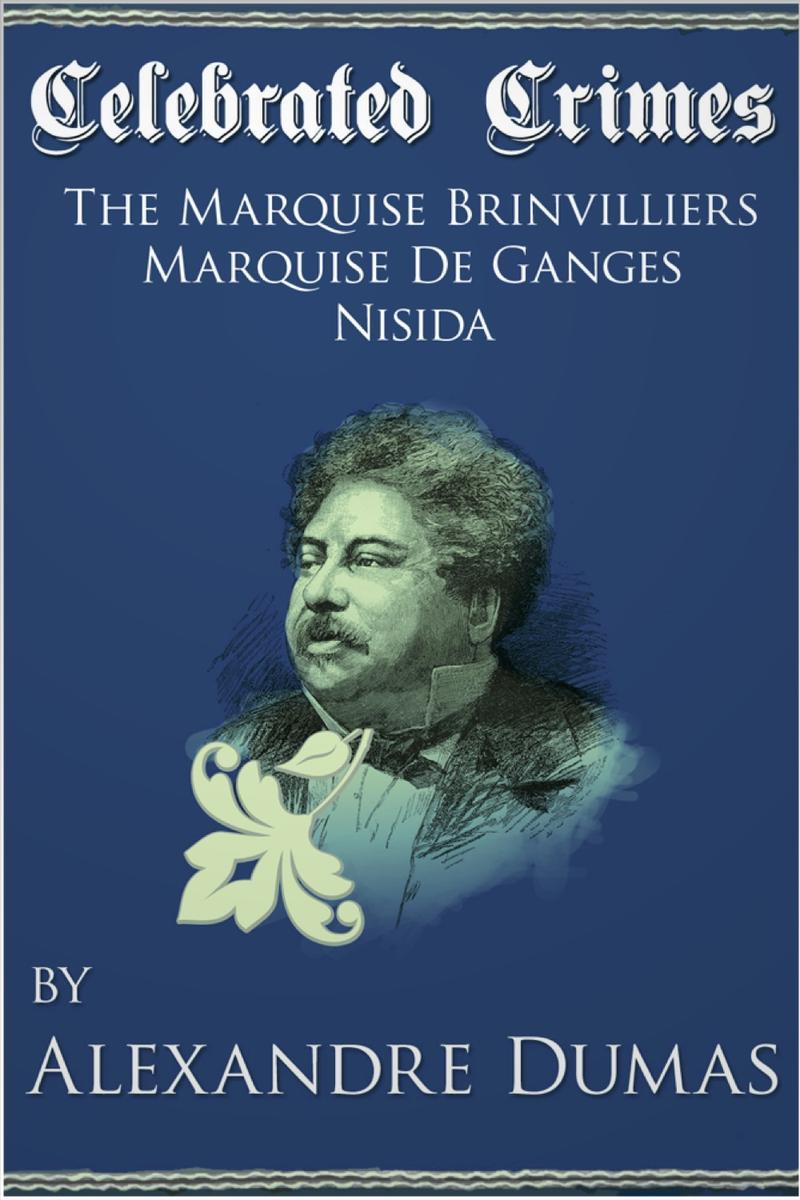
Celebrated Crimes 'Marquise de Brinvilliers', 'Marquise de Ganges' and 'Nisida'
¥19.52
Three writings taken from 'Celebrated Crimes', a series of essays on famous criminals and crimes by the author of 'The Count of Monte Cristo' and 'The Three Musketeers', Alexandre Dumas.

101 Amazing Red Hot Chili Peppers Facts
¥19.52
Are you the world's biggest Red Hot Chili Peppers Fan? Do you know everything there is to know about Anthony, Flea and the rest of the boys? Then this is the book for you! In this easy-to-digest eBook are 101 facts about your favourite band - do you know all of them?Test yourself and your friends with these handily-packaged facts easily organised into categories for maximum enjoyment. Sections include the members of the band, how they formed, awards they have won and some crazy facts about their antics over the years. Show everyone that you are the master of RHCP knowledge!

90s Movies Quiz Book
¥19.52
How well do you know your 90s Movies? This Quiz book will test even the most avid fan, with questions that span the 90s films of all genres! Test yourself and your friends with this 90s Movies Quiz Book.
Back to the Future Quiz Book
¥19.52
Are you a fan of the film - Back To The Future - Do you think you know all there is to know about the film. Containing questions about the plot, characters and actors, as well as facts about the making of the film. This fun quiz book will test you, your family and friends knowledge of this great film.

Firefly Quiz Book
¥19.52
Firefly is the brainchild of the hugely talented Joss Whedon. A space western drama that lasted on 14 episodes but in that time gathered a hardcore and vociferous following that like to call themselves Browncoats. This quiz book contains well over 100 questions from subjects like the original crew of the Firefly-class ship Serenity, the interpersonal relationships of the crew members, the deadly Reavers, the antics of the hero they call Jayne and many more. Prepare to test your knowledge on this short lived but much loved series.You can't stop the signal.
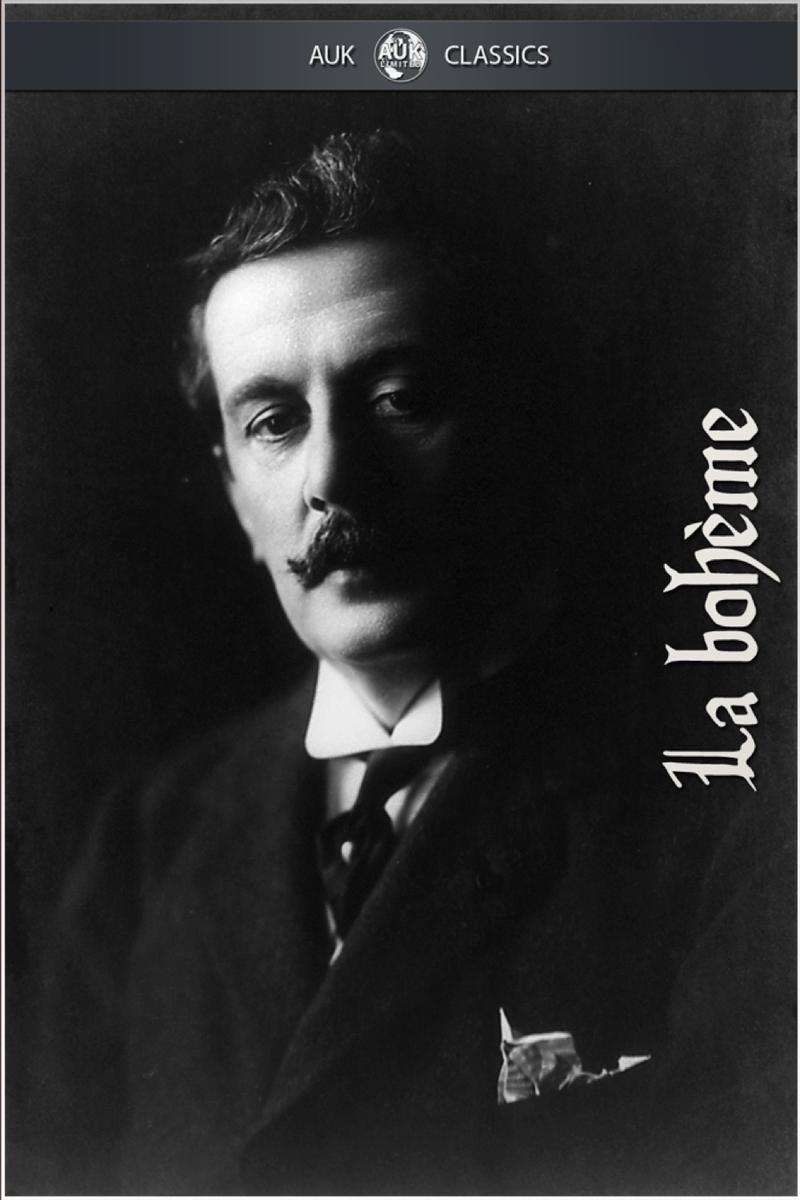
La Boheme
¥19.52
The full english text for the opera La Boheme by Giacomo Puccini. A romantic tragedy about the love between a poet, Rodolfo, and a seamstress, Mimi.

101 Amazing Facts about Chocolate
¥19.52
Did you know that the Latin name for the tree from which we get the seed that we turn into chocolate translates as 'Food of the Gods'? Or that eating chocolate can in fact help prevent tooth decay? Separated into sections such as chocolate through history, chocolate around the world, the production process and more, this interesting read contains over one hundred facts. Whether you are a complete chocoholic or you just want to learn more about a hugely fascinating subject then this is the book for you.
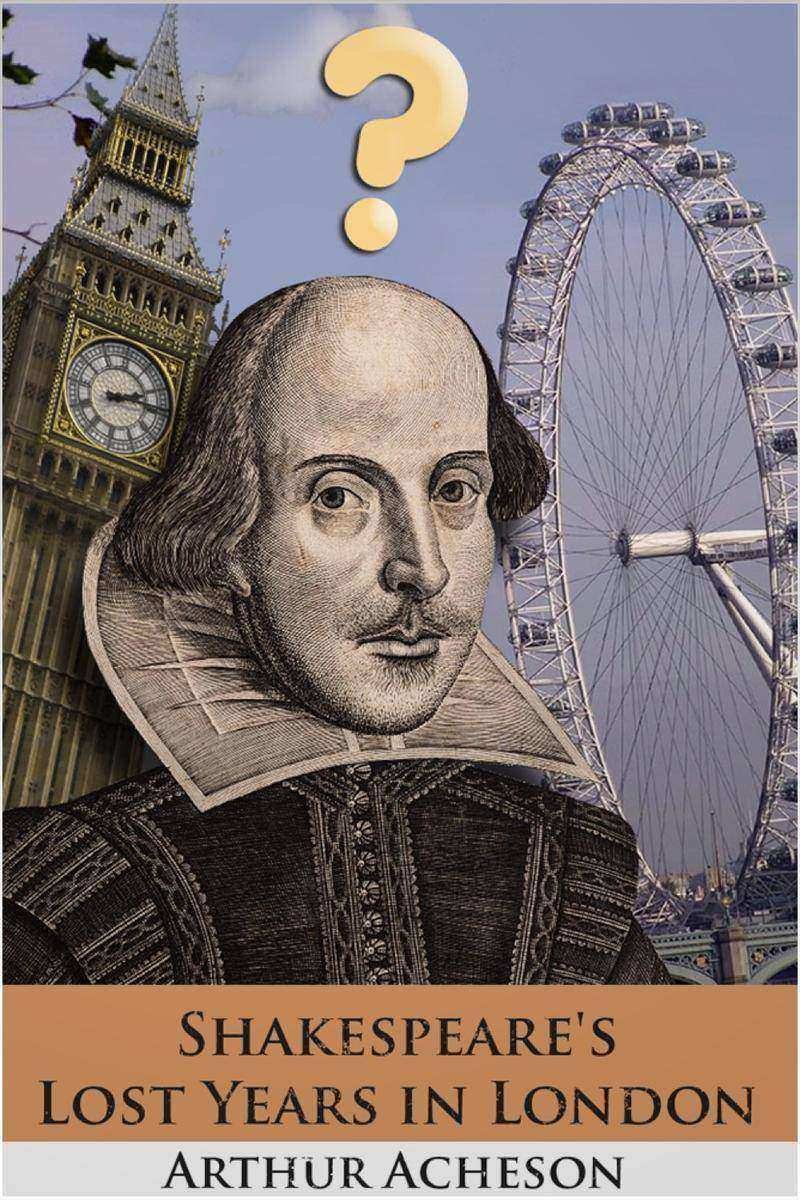
Shakespeare's Lost Years in London
¥19.52
Between the years of 1586 and 1592 there is very little historical information on the life of William Shakespeare. This work tries to fill in that gap, although it does, like many other works on the subject, delve quite a bit into invention and conjecture.


