


 购物车
购物车 个人中心
个人中心
Under Wellington's Command
¥8.09
Historical novel set in Spain, where the British battled the French in the Napoleonic Wars. The Preface begins: ""As many boys into whose hands the present volume may fall will not have read my last year's book, With Moore in Corunna, of which this is a continuation, it is necessary that a few words should be said, to enable them to take up the thread of the story. It was impossible, in the limits of one book, to give even an outline of the story of the Peninsular War, without devoting the whole space to the military operations. It would, in fact, have been a history rather than a tale; and it accordingly closed with the passage of the Douro, and the expulsion of the French from Portugal." According to Wikipedia: "George Alfred Henty (8 December 1832 - 16 November 1902), referred to as G. A. Henty, was a prolific English novelist, special correspondent, and Imperialist born in Trumpington, Cambridgeshire, England. He is best known for his historical adventure stories that were popular in the late 19th century. His works include Out on the Pampas (1871), The Young Buglers (1880), With Clive in India (1884) and Wulf the Saxon (1895)."
Jack Archer
¥8.09
Historical novel set in the Crimean War. According to Wikipedia: "George Alfred Henty (8 December 1832 - 16 November 1902), referred to as G. A. Henty, was a prolific English novelist, special correspondent, and Imperialist born in Trumpington, Cambridgeshire, England. He is best known for his historical adventure stories that were popular in the late 19th century. His works include Out on the Pampas (1871), The Young Buglers (1880), With Clive in India (1884) and Wulf the Saxon (1895)."
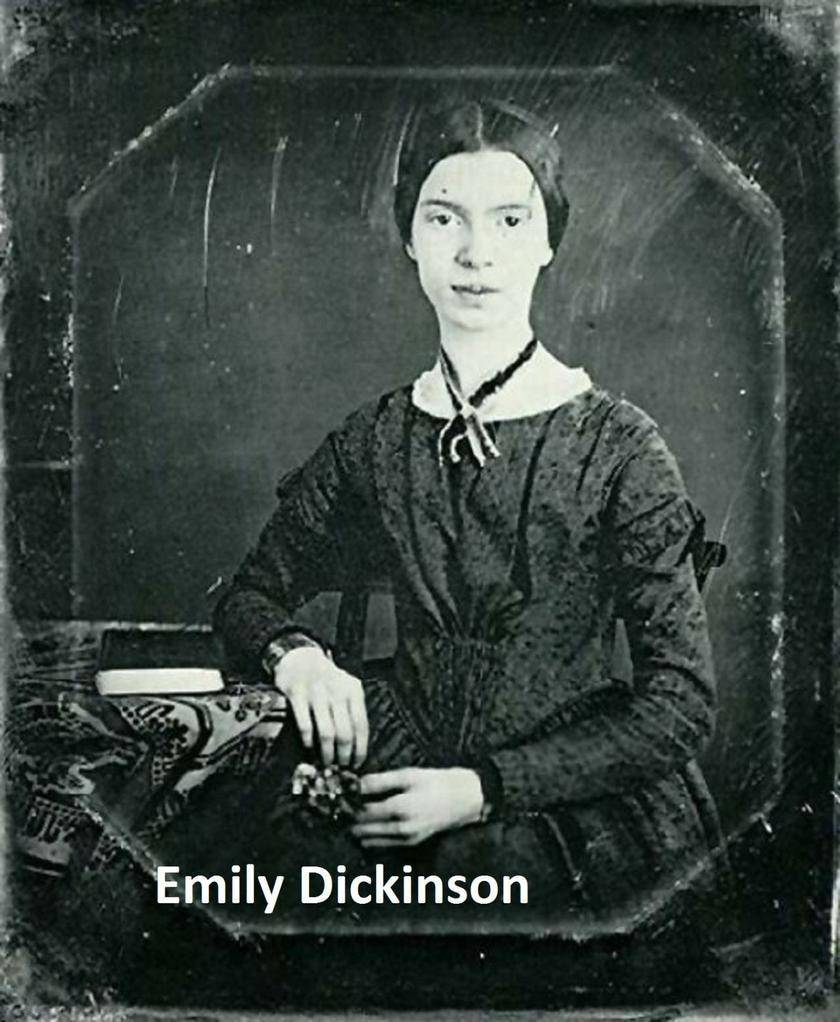
Emily Dickinson
¥8.09
All three series. This edition is based on on the first published collection, edited by Mabel Loomis Todd and T.W. Higginson, which was released in three "series", the first of which appeared in 1890. According to Wikipedia, Mabel Loomis Todd "became friends with the Dickinsons, and though she never met Emily Dickinson in person, the two women exchanged letters. After Emily's death in 1886, hundreds of her unpublished poems were discovered. In 1888, Emily's sister Lavinia asked Todd to copy and organize the poems, which were to be sent to the publisher Thomas Wentworth Higginson. The first volume of Poems by Emily Dickinson was published in 1890. This version included many alterations by Todd. In 1896, Todd and the Dickinson family had a falling-out over a legal battle regarding property owned by Austin Dickinson. As a result, Emily Dickinson's manuscripts were split between the two families. In 1945, Todd's daughter Millicent published some of the poems from Todd's portion of the manuscripts."
The Soul of Man: An essay
¥8.09
An essay. According to Wikipedia: "Oscar Fingal O'Flahertie Wills Wilde (1854 - 1900) was an Irish playwright, novelist, poet, and author of short stories. Known for his barbed wit, he was one of the most successful playwrights of late Victorian London, and one of the greatest celebrities of his day. As the result of a famous trial, he suffered a dramatic downfall and was imprisoned for two years of hard labour after being convicted of the offence of 'gross indecency.'"
Modern Mythology
¥8.09
Anthropology and theory of myths and myth-making. According to Wikipedia: "Andrew Lang (March 31, 1844, Selkirk - July 20, 1912, Banchory, Kincardineshire) was a prolific Scots man of letters. He was a poet, novelist, and literary critic, and contributor to anthropology. He now is best known as the collector of folk and fairy tales."
The Tragic Muse
¥8.09
Classic Henry James novel. According to Wikipedia: "Henry James, (1843 – 1916), son of theologian Henry James Sr., brother of the philosopher and psychologist William James and diarist Alice James, was an American-born British author. He is one of the key figures of 19th century literary realism; the fine art of his writing has led many academics to consider him the greatest master of the novel and novella form. He spent much of his life in England and became a British subject shortly before his death. He is primarily known for a series of major novels in which he portrayed the encounter of America with Europe. His plots centered on personal relationships, the proper exercise of power in such relationships, and other moral questions. His method of writing from the point of view of a character within a tale allowed him to explore the phenomena of consciousness and perception, and his style in later works has been compared to impressionist painting."
What Daisy Knew
¥8.09
Classic Henry James novel. According to Wikipedia: "Henry James, (1843 – 1916), son of theologian Henry James Sr., brother of the philosopher and psychologist William James and diarist Alice James, was an American-born British author. He is one of the key figures of 19th century literary realism; the fine art of his writing has led many academics to consider him the greatest master of the novel and novella form. He spent much of his life in England and became a British subject shortly before his death. He is primarily known for a series of major novels in which he portrayed the encounter of America with Europe. His plots centered on personal relationships, the proper exercise of power in such relationships, and other moral questions. His method of writing from the point of view of a character within a tale allowed him to explore the phenomena of consciousness and perception, and his style in later works has been compared to impressionist painting."
The Life of Nelson
¥8.09
Classic biography. According to Wikipedia: "Alfred Thayer Mahan (September 27, 1840 - December 1, 1914) was a United States Navy officer, geostrategist, and educator. His ideas on the importance of sea power influenced navies around the world, and helped prompt naval buildups before World War I. Several ships were named USS Mahan, including the lead vessel of a class of destroyers. His research into naval History led to his most important work, The Influence of Seapower Upon History,1660-1783, published in 1890."
Anne of Avonlea
¥8.09
Classic children's novel. According to Wikipedia: "Lucy Maud Montgomery, (always called "Maud" by family and friends) and publicly known as L. M. Montgomery, (1874-1942) was a Canadian author, best known for a series of novels beginning with Anne of Green Gables, published in 1908. Anne of Green Gables was an immediate success. The central character, Anne, an orphaned girl, made Montgomery famous in her lifetime and gave her an international following. The first novel was followed by a series of sequels with Anne as the central character. The novels became the basis for the highly acclaimed 1985 CBC television miniseries, Anne of Green Gables and several other television movies and programs, including Road to Avonlea, which ran in Canada and the U.S. from 1990-1996."
Quarante-Cinq
¥8.09
Roman historique classique mis en place pendant les guerres protestantes en France, dans le fran?ais original. Selon Wikipédia: "Alexandre Dumas, père (fran?ais pour" père ", apparenté à" Senior "en anglais), né Dumas Davy de la Pailleterie (24 juillet 1802 - 5 décembre 1870) était un écrivain fran?ais, mieux connu pour ses nombreux romans historiques de grande aventure qui ont fait de lui l'un des auteurs fran?ais les plus lus au monde, dont plusieurs de ses romans, dont Le Comte de Monte-Cristo, Les Trois Mousquetaires et Le Vicomte de Bragelonne, écrit des pièces de thé?tre et des articles de magazines et était un correspondant prolifique. "
The Fifth Queen
¥8.09
Classic historical novel set in the time of Henry VIII, first published in 1908. According to Wikipedia: "Ford Madox Ford (December 17, 1873 – June 26, 1939) was an English novelist, poet, critic and editor whose journals, The English Review and The Transatlantic Review, were instrumental in the development of early 20th-century English literature. He is now best remembered for The Good Soldier (1915) and the Parade's End tetralogy."

Privy Seal, His Last Venture
¥8.09
Classic historical novel set in the time of Henry VIII, first published in 1908. According to Wikipedia: "Ford Madox Ford (December 17, 1873 – June 26, 1939) was an English novelist, poet, critic and editor whose journals, The English Review and The Transatlantic Review, were instrumental in the development of early 20th-century English literature. He is now best remembered for The Good Soldier (1915) and the Parade's End tetralogy."
By England's Aid
¥8.09
Classic historical novel. "In my preface to By Pike and Dyke I promised in a future story to deal with the closing events of the War of Independence in Holland. The period over which that war extended was so long, and the incidents were so numerous and varied, that it was impossible to include the whole within the limit of a single book. The former volume brought the story of the struggle down to the death of the Prince of Orange and the capture of Antwerp; the present gives the second phase of the war, when England, who had long unofficially assisted Holland, threw herself openly into the struggle, and by her aid mainly contributed to the successful issue of the war. In the first part of the struggle the scene lay wholly among the low lands and cities of Holland and Zeeland, and the war was strictly a defensive one, waged against overpowering odds." According to Wikipedia: "George Alfred Henty (8 December 1832 - 16 November 1902), referred to as G. A. Henty, was a prolific English novelist, special correspondent, and Imperialist born in Trumpington, Cambridgeshire, England. He is best known for his historical adventure stories that were popular in the late 19th century. His works include Out on the Pampas (1871), The Young Buglers (1880), With Clive in India (1884) and Wulf the Saxon (1895)"
Bill Nye's Comic History of England.txt
¥8.09
Classic humor, first published in 1896. "HEREIN WILL BE FOUND A RECITAL OF THE MANY EVENTFUL EVENTS WHICH TRANSPIRED IN ENGLAND FROM THE DRUIDS TO HENRY VIII. THE AUTHOR DOES NOT FEEL IT INCUMBENT ON HIM TO PRESERVE MORE THAN THE DATES AND FACTS, AND THESE ARE CORRECT, BUT THE LIGHTS AND SHADES OF THE VARIOUS PICTURES AND THE ORNAMENTAL WORDS FURNISHED TO ADORN THE CHARACTERS AND EVENTS ARE THE SOLE INVENTION OF THIS HISTORIAN."
Carnival of Crime in Connecticut
¥8.09
Classic humorous short story. According to Wikipedia: "Samuel Langhorne Clemens (November 30, 1835 -April 21, 1910), better known by the pen name Mark Twain, was a humorist, satirist, lecturer and writer from the United States of America. Twain is most noted for his novels Adventures of Huckleberry Finn, which has since been called the Great American Novel, and The Adventures of Tom Sawyer. He is also known for his quotations. During his lifetime, Twain became a friend to presidents, artists, leading industrialists and European royalty. Twain enjoyed immense public popularity, and his keen wit and incisive satire earned him praise from both critics and peers. American author William Faulkner called Twain 'the father of American literature.'"
White Fang
¥8.09
According to Wikipedia: "White Fang is a novel by American author Jack London (1876–1916) — and the name of the book's eponymous character, a wild wolfdog. First serialized in Outing magazine, it was published in 1906. The story takes place in Yukon Territory and the Northwest Territories, Canada, during the 1890s Klondike Gold Rush and details White Fang's journey to domestication. It is a companion novel (and a thematic mirror) to London's best-known work, The Call of the Wild, which is about a kidnapped, domesticated dog embracing his wild ancestry to survive and thrive in the wild. Much of White Fang is written from the viewpoint of the titular canine character, enabling London to explore how animals view their world and how they view humans. White Fang examines the violent world of wild animals and the equally violent world of humans."
The Road
¥8.09
Classic Jack London short stories, including CONFESSION, HOLDING HER DOWN, PICTURES, "PINCHED", THE PEN, HOBOES THAT PASS IN THE NIGHT, ROAD-KIDS AND GAY-CATS, TWO THOUSAND STIFFS, and BULLS. According to Wikipedia: "Jack London (1876 – 1916) was an American author who wrote The Call of the Wild, White Fang, and The Sea Wolf along with many other popular books. A pioneer in the then-burgeoning world of commercial magazine fiction, he was one of the first Americans to make a lucrative career exclusively from writing."
Dutch Courage and Other Stories
¥8.09
Classic Jack London short stories, including DUTCH COURAGE, TYPHOON OFF THE COAST OF JAPAN, THE LOST POACHER, THE BANKS OF THE SACRAMENTO, CHRIS FARRINGTON: ABLE SEAMAN, TO REPEL BOARDERS, AN ADVENTURE IN THE UPPER SEA, BALD-FACE, IN YEDDO BAY, and WHOSE BUSINESS IS TO LIVE. According to Wikipedia: "Jack London (1876 – 1916) was an American author who wrote The Call of the Wild, White Fang, and The Sea Wolf along with many other popular books. A pioneer in the then-burgeoning world of commercial magazine fiction, he was one of the first Americans to make a lucrative career exclusively from writing."
A La Recherche du Temps Perdu
¥8.09
Les quatre premiers volumes: Du c?té de chez Swann, 1913; A L'Ombre des Jeunes Filles en Fleurs, 1919 ; Le C?té de Guermantes, 1920-1921; and Sodome et Gommorrhe, 1921-1922. Selon Wikipédia: "Valentin Louis Georges Eugène Marcel Proust (10 Juillet 1871 - 18 Novembre 1922) était un romancier, essayiste et critique fran?ais, mieux connu comme l'auteur de ? la recherche du temps perdu (en anglais, ? la recherche de Lost Time, anciennement traduit par Remembrance of Things Past), une ?uvre monumentale de fiction du vingtième siècle publiée en sept parties de 1913 à 1927 ... Commencé en 1909, ? la recherche du temps perdu se compose de sept volumes couvrant 3.200 pages et fourmillant Graham Greene a qualifié Proust de ?plus grand romancier du XXe siècle?, et W. Somerset Maugham a qualifié le roman de ?plus grande fiction à ce jour?. Proust est mort avant de pouvoir terminer sa révision des projets. et les preuves des volumes finaux, dont les trois derniers ont été publiés à titre posthume et édités par son frère Robert. "
The Octopus, A Story of California
¥8.09
Classic novel. According to Wikipedia: "Benjamin Franklin Norris, Jr. (March 5, 1870 – October 25, 1902) was an American novelist, during the Progressive Era, writing predominantly in the naturalist genre. His notable works include McTeague (1899), The Octopus: A California Story (1901), and The Pit (1903). Although he did not openly support socialism as a political system, his work nevertheless evinces a socialist mentality and influenced socialist/progressive writers such as Upton Sinclair. Like many of his contemporaries, he was profoundly influenced by the advent of Darwinism, and Thomas Henry Huxley's philosophical defense of it. Norris was particularly influenced by an optimistic strand of Darwinist philosophy taught by Joseph LeConte, whom Norris studied under while at the University of California, Berkeley. Through many of his novels, notably McTeague, runs a preoccupation with the notion of the civilized man overcoming the inner "brute," his animalistic tendencies. His peculiar, and often confused, brand of Social Darwinism also bears the influence of the early criminologist Cesare Lombroso and the French naturalist Emile Zola."
Manalive
¥8.09
Classic novel. According to Wikipedia: "Gilbert Keith Chesterton (1874 - 1936) was an influential English writer of the early 20th century. His prolific and diverse output included journalism, philosophy, poetry, biography, Christian apologetics, fantasy and detective fiction. Chesterton has been called the "prince of paradox."[1] He wrote in an off-hand, whimsical prose studded with startling formulations. For example: "Thieves respect property. They merely wish the property to become their property that they may more perfectly respect it."[2] He is one of the few Christian thinkers who are equally admired and quoted by both liberal and conservative Christians, and indeed by many non-Christians. Chesterton's own theological and political views were far too nuanced to fit comfortably under the "liberal" or "conservative" banner."


