


 购物车
购物车 个人中心
个人中心

The Alchemist
¥8.09
The Alchemist is a comedy by English playwright Ben Jonson. First performed in 1610 by the King's Men, it is generally considered Jonson's best and most characteristic comedy; Samuel Taylor Coleridge claimed that it had one of the three most perfect plots in literature. The play's clever fulfilment of the classical unities and vivid depiction of human folly have made it one of the few Renaissance plays (except the works of Shakespeare) with a continuing life on stage (except for a period of neglect during the Victorian era).
Pragmatism:A New Name for Some Old Ways of Thinking
¥8.09
A profoundly influential figure in American psychology, William James (1842–1910) was also a philosopher of note, who used Charles S. Peirce's theories of pragmatism as a basis for his own conception of that influential philosophy. For James, this meant an emphasis on "radical empiricism" and the concept that the meaning of any idea — philosophical, political, social, or otherwise — has validity only in terms of its experiential and practical consequences. James propounded his theories of pragmatism in this book, one of the most important in American philosophy. In a sense, he wished to test competing systems of thought in the "marketplace of actual experience" to determine their validity, i.e. whether adopting a particular philosophical theory or way of looking at the world makes an actual difference in individual conduct or in how we perceive and react to the varieties of experience. In these pages, James not only makes a strong case for his own ideas, but mounts a powerful attack against the transcendental and rationalist tradition. For anyone interested in William James or the history of American philosophical thought, Pragmatism is an essential and thought provoking reference. In this handy, inexpensive edition, it will challenge and stimulate any thinking person.

Herland
¥8.09
Herland is a utopian novel from 1915, written by feminist Charlotte Perkins Gilman. The book describes an isolated society composed entirely of women, who reproduce via parthenogenesis (asexual reproduction). The result is an ideal social order: free of war, conflict, and domination. It first appeared as a serial in The Forerunner, a magazine edited and written by Gilman between 1909 and 1916. The book is the middle volume in her utopian trilogy; it was preceded by Moving the Mountain (1911), and followed with a sequel, With Her in Ourland (1916). It was not published in book form until 1979. ? The story is told from the perspective of Vandyck "Van" Jennings, a student of sociology who, along with two friends (Terry O. Nicholson and Jeff Margrave), forms an expedition party to explore an area of uncharted land where it is rumored lives a society consisting entirely of women. The three friends do not entirely believe the rumors because they are unable to think of a way how human reproduction could occur without males. The men speculate about what a society of women would be like, each guessing differently based on the stereotype of women which he holds most dear: Jeff regarding women as things to be served and protected; Terry viewing them as things to be conquered and won.
Lord of the World
¥8.09
Lord of the World is a 1907 novel by Monsignor Robert Hugh Benson that centers upon the reign of the Anti-Christ and the End of the World. It has been called prophetic by Dale Ahlquist, Joseph Pearce, Pope Benedict XVI and Pope Francis. ? In early 21st century London, two priests, the white-haired Father Percy Franklin and the younger Father John Francis, are visiting the subterranean lodgings of the elderly Mr. Templeton. A Catholic and former Tory who witnessed the marginalization of his religion and the destruction of his Party, Mr. Templeton describes to the two priests the last century of British and world history. ? Since the Labour Party took control of the British Government in 1917, the House of Lords has been abolished, the British Royal Family has been deposed, Oxford and Cambridge have been closed down and all their professors exiled to Ireland. Marxism and Secular Humanism, which are described as the instruments of Freemasonry, dominate both culture and government. The Anglican Communion has been disestablished since 1929 and, like all forms of Protestantism, is almost extinct. The world now has only three main religious forces: Catholicism, Secular Humanism, and "the Eastern religions." ? Nationalism has been destroyed by Marxist internationalism and the world has been divided into three power-blocs. The first, which is generally marked in red on maps, is an European Confederation of Marxist one-party states and their colonies in Africa that use Esperanto for a world language. The second, marked in yellow, is "The Eastern Empire", whose Emperor, the "Son of Heaven", descends from both the Japanese and Chinese Imperial Families. The third, the blue marked, "The American Republic", consists of North, South, and Central America. ? In a move that almost toppled Marxism in the Confederation during the 1970s and '80s, the Eastern Empire invaded, annexed, and now rules India, Australia, New Zealand, as well as all of Russia east of the Ural Mountains. For this and other reasons, Mr. Templeton explains, the Confederation and the Eastern Empire are now on the brink of a global war. ? After Mr. Templeton completes his story, Fathers Franklin and Francis return to their spartan apartments at Westminster Cathedral.
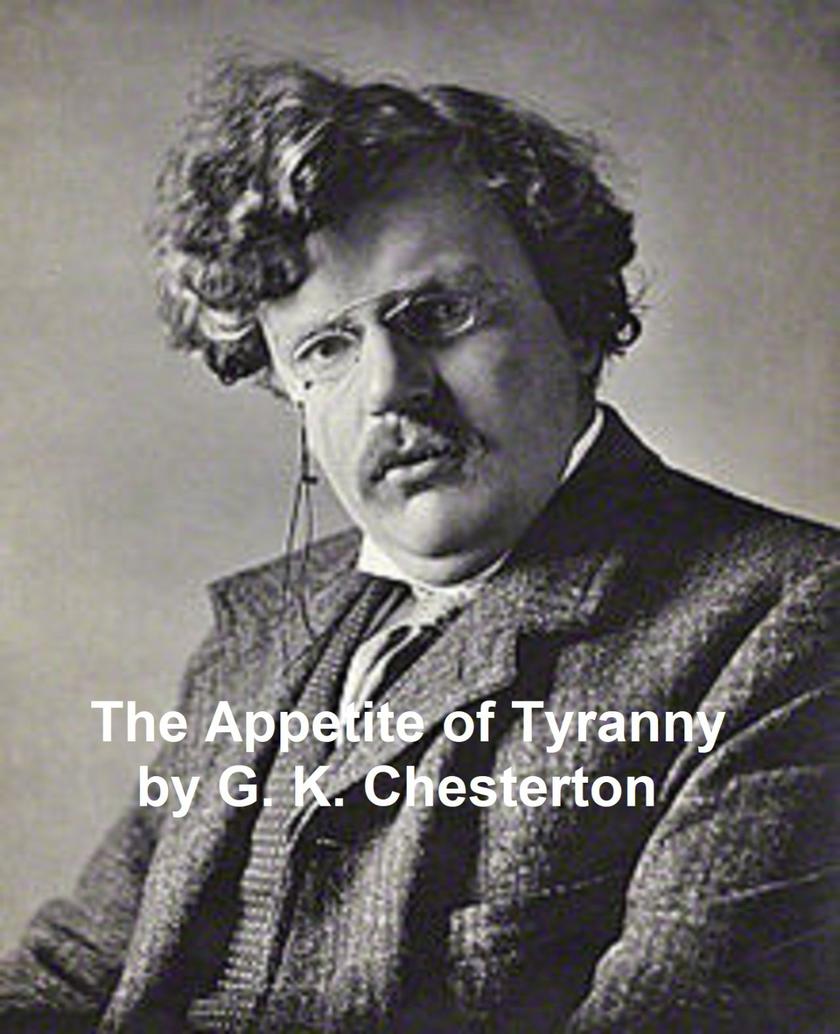
The Appetite of Tyranny
¥8.09
Long satiric essay. According to Wikipedia: "Gilbert Keith Chesterton (1874 - 1936) was an influential English writer of the early 20th century. His prolific and diverse output included journalism, philosophy, poetry, biography, Christian apologetics, fantasy and detective fiction. Chesterton has been called the "prince of paradox."[1] He wrote in an off-hand, whimsical prose studded with startling formulations. For example: "Thieves respect property. They merely wish the property to become their property that they may more perfectly respect it."[2] He is one of the few Christian thinkers who are equally admired and quoted by both liberal and conservative Christians, and indeed by many non-Christians. Chesterton's own theological and political views were far too nuanced to fit comfortably under the "liberal" or "conservative" banner."
Another Study of Woman
¥8.09
Long story. According to Wikipedia: "Honore de Balzac (May 20, 1799 - August 18, 1850) was a nineteenth-century French novelist and playwright. His magnum opus was a sequence of almost 100 novels and plays collectively entitled La Comedie humaine, which presents a panorama of French life in the years after the fall of Napoleon Bonaparte in 1815. Due to his keen observation of detail and unfiltered representation of society, Balzac is regarded as one of the founders of realism in European literature. He is renowned for his multi-faceted characters; even his lesser characters are complex, morally ambiguous and fully human. Inanimate objects are imbued with character as well; the city of Paris, a backdrop for much of his writing, takes on many human qualities."
The Mirror of the Sea
¥8.09
Classic Conrad short stories. According to Wikipedia: "Joseph Conrad (1857 – 1924) was a Polish-born English novelist. Many critics regard him as one of the greatest novelists in the English language—a fact that is remarkable, as he did not learn to speak English fluently until he was in his twenties (and always with a strong Polish accent). He became a naturalized British subject in 1886. Conrad is recognized as a master prose stylist. Some of his works have a strain of romanticism, but more importantly he is recognized as an important forerunner of modernist literature. His narrative style and anti-heroic characters have influenced many writers, including Ernest Hemingway, D. H. Lawrence, F. Scott Fitzgerald, Graham Greene, William S. Burroughs, Joseph Heller, V.S. Naipaul, Italo Calvino and J. M. Coetzee."
The Magic City
¥8.09
Novel for children. According to Wikipedia: "Edith Nesbit (married name Edith Bland; 15 August 1858 – 4 May 1924) was an English author and poet whose children's works were published under the name of E. Nesbit. She wrote or collaborated on over 60 books of fiction for children, several of which have been adapted for film and television. She was also a political activist and co-founded the Fabian Society, a precursor to the modern Labour Party.... Nesbit published approximately 40 books for children, both novels and collections of stories. Collaborating with others, she published almost as many more. According to her biographer Julia Briggs, Nesbit was "the first modern writer for children": "(Nesbit) helped to reverse the great tradition of children's literature inaugurated by [Lewis] Carroll, [George] MacDonald and Kenneth Grahame, in turning away from their secondary worlds to the tough truths to be won from encounters with things-as-they-are, previously the province of adult novels." Briggs also credits Nesbit with having invented the children's adventure story. Among Nesbit's best-known books are The Story of the Treasure Seekers (1898) and The Wouldbegoods (1899), which both recount stories about the Bastables, a middle class family that has fallen on relatively hard times. Her children's writing also included numerous plays and collections of verse. She created an innovative body of work that combined realistic, contemporary children in real-world settings with magical objects and adventures and sometimes travel to fantastic worlds."
The LeRouge Case
¥8.09
Classic French detective novel, in English translation. According to Wikipedia: "?mile Gaboriau (November 9, 1832 – September 28, 1873) was a French writer, novelist, journalist, and a pioneer of detective fiction... after publishing some novels and miscellaneous writings, found his real gift in L'Affaire Lerouge (1866). The book, which was Gaboriau's first detective novel, introduced an amateur detective. It also introduced a young police officer named Monsieur Lecoq, who was the hero in three of Gaboriau's later detective novels. The character of Lecoq was based on a real-life thief turned police officer, Eugène Fran?ois Vidocq (1775–1857)." One of Robert Louis Stevenson's favorite authors.
Caught in the Net
¥8.09
Classic French mystery novel, in English translation. According to Wikipedia: "Emile Gaboriau (November 9, 1832 - September 28, 1873), was a French writer, novelist, and journalist, and a pioneer of modern detective fiction." One of Robert Louis Stevenson's favorite authors.

File No. 113
¥8.09
According to Wikipedia: "?mile Gaboriau (November 9, 1832 – September 28, 1873) was a French writer, novelist, journalist, and a pioneer of detective fiction... after publishing some novels and miscellaneous writings, found his real gift in L'Affaire Lerouge (1866). The book, which was Gaboriau's first detective novel, introduced an amateur detective. It also introduced a young police officer named Monsieur Lecoq, who was the hero in three of Gaboriau's later detective novels. The character of Lecoq was based on a real-life thief turned police officer, Eugène Fran?ois Vidocq (1775–1857)."
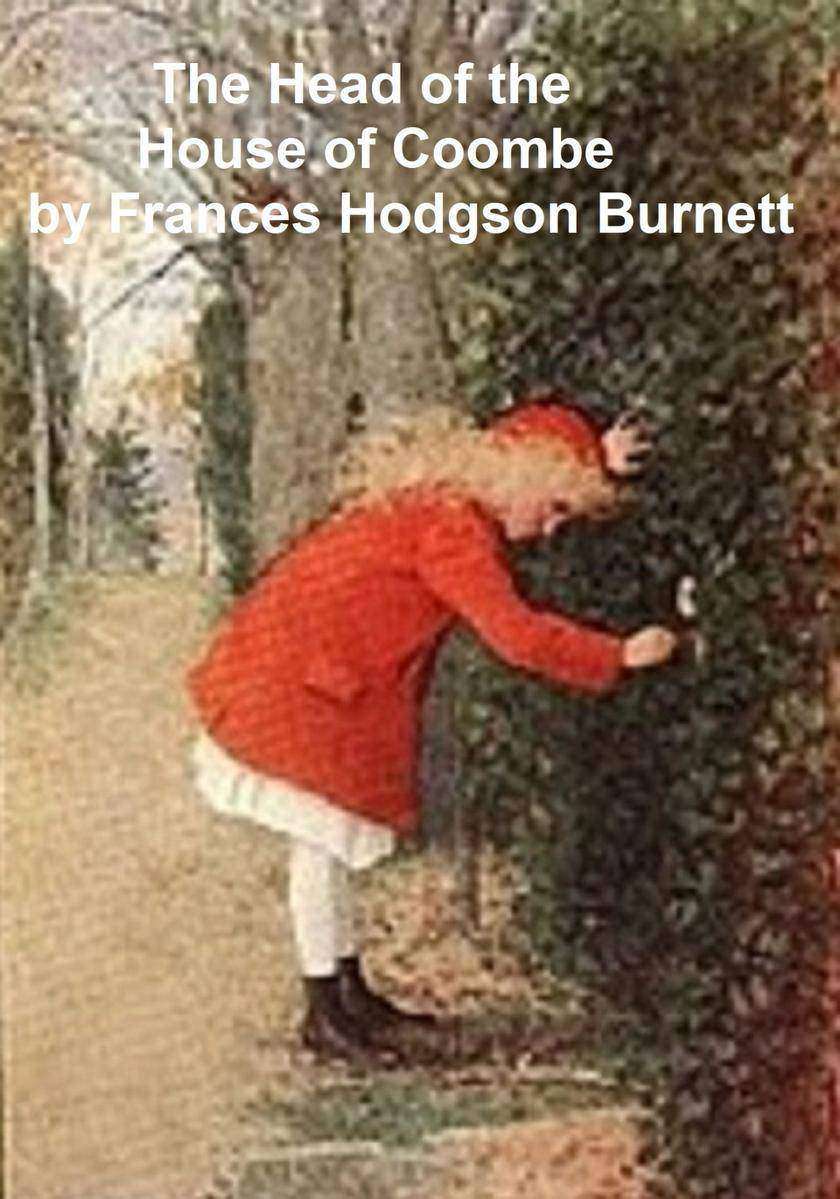
The Head of the House of Coombe
¥8.09
Novel for children. According to Wikipedia: "Frances Hodgson Burnett, ( 1849 - 1924) was an English–American playwright and author. She is best known for her children's stories, in particular The Secret Garden, A Little Princess, and Little Lord Fauntleroy. Born Frances Eliza Hodgson in Cheetham Hill, Manchester, her father died in 1854, and the family had to endure poverty and squalor in the Victorian slums of Manchester. Following the death of her mother in 1867, an 18-year-old Frances was now the head of a family of four younger siblings. She turned to writing to support them all, with a first story published in Godey's Lady's Book in 1868. Soon after she was being published regularly in Godey's, Scribner's Monthly, Peterson's Ladies' Magazine and Harper's Bazaar. Her main writing talent was combining realistic detail of working-class life with a romantic plot. Her first novel was published in 1877; That Lass o' Lowrie's was a story of Lancashire life. After moving with her husband to Washington, D.C., Burnett wrote the novels Haworth's (1879), Louisiana (1880), A Fair Barbarian (1881), and Through One Administration (1883), as well as a play, Esmeralda (1881), written with William Gillette...Her later works include Sara Crewe (1888) - later rewritten as A Little Princess (1905); The Lady of Quality (1896) - considered one of the best of her plays; and The Secret Garden (1909), the children's novel for which she is probably best known today. The Lost Prince was published in 1915..."
Baron Trigault's Vengeance
¥8.09
Classic French mystery, in English translation. Sequel to The Count's Millions. According to Wikipedia: "?mile Gaboriau (November 9, 1832 – September 28, 1873) was a French writer, novelist, journalist, and a pioneer of detective fiction... after publishing some novels and miscellaneous writings, found his real gift in L'Affaire Lerouge (1866). The book, which was Gaboriau's first detective novel, introduced an amateur detective. It also introduced a young police officer named Monsieur Lecoq, who was the hero in three of Gaboriau's later detective novels. The character of Lecoq was based on a real-life thief turned police officer, Eugène Fran?ois Vidocq (1775–1857)." One of Robert Louis Stevenson's favorite authors.
Modern Broods, Or Developments Unlooked For
¥8.09
Novel for teens. According to Wikipedia: "Charlotte Mary Yonge ( 1823 - 1901), was an English novelist, known for her huge output, now mostly out of print. ... She began writing in 1848, and published during her long life about 100 works, chiefly novels. ... Among the best known of her works are The Heir of Redclyffe, Heartsease, and The Daisy Chain. A Book of Golden Deeds is a collection of true stories of courage and self-sacrifice. She also wrote Cameos from English History, Life of John Coleridge Patteson: Missionary Bishop of the Melanesian Islands and Hannah More.... Although Yonge's work is largely out of print today, during her lifetime she was admired and respected by such notable literary figures as Alfred Tennyson and Henry James, and strongly influenced the Pre-Raphaelite Brotherhood, especially William Morris and D. G. Rossetti."
The Author of Beltraffio
¥8.09
Classic Henry James long story. According to Wikipedia: "Henry James, (1843 – 1916), son of theologian Henry James Sr., brother of the philosopher and psychologist William James and diarist Alice James, was an American-born British author. He is one of the key figures of 19th century literary realism; the fine art of his writing has led many academics to consider him the greatest master of the novel and novella form. He spent much of his life in England and became a British subject shortly before his death. He is primarily known for a series of major novels in which he portrayed the encounter of America with Europe. His plots centered on personal relationships, the proper exercise of power in such relationships, and other moral questions. His method of writing from the point of view of a character within a tale allowed him to explore the phenomena of consciousness and perception, and his style in later works has been compared to impressionist painting."
Penelope's Irish Experiences
¥8.09
Novel from the Penelope series. According to Wikipedia: "Kate Douglas Wiggin ( 1856 - 1923) was an American children's author and educator. Kate Douglas Smith Wiggin was born in Philadelphia, and was of Welsh descent. She started the first free kindergarten in San Francisco in 1878 (the Silver Street Free Kindergarten). With her sister in the 1880s she also established a training school for kindergarten teachers. She was also a writer of children's books, the best known being The Birds' Christmas Carol (1887) and Rebecca of Sunnybrook Farm (1903)."
The Bottle Imp
¥8.09
Short story set in Hawaii. According to the Author's Note: "Any student of that very unliterary product, the English drama of the early part of the century, will here recognise the name and the root idea of a piece once rendered popular by the redoubtable O. Smith. The root idea is there and identical, and yet I hope I have made it a new thing. And the fact that the tale has been designed and written for a Polynesian audience may lend it some extraneous interest nearer home." According to Wikipedia: "Robert Louis Balfour Stevenson (13 November 1850–3 December 1894), was a Scottish novelist, poet, essayist and travel writer. He was the man who "seemed to pick the right word up on the point of his pen, like a man playing spillikins", as G. K. Chesterton put it."
Confidence
¥8.09
Classic Henry James novel. According to Wikipedia: "Henry James, (1843 – 1916), son of theologian Henry James Sr., brother of the philosopher and psychologist William James and diarist Alice James, was an American-born British author. He is one of the key figures of 19th century literary realism; the fine art of his writing has led many academics to consider him the greatest master of the novel and novella form. He spent much of his life in England and became a British subject shortly before his death. He is primarily known for a series of major novels in which he portrayed the encounter of America with Europe. His plots centered on personal relationships, the proper exercise of power in such relationships, and other moral questions. His method of writing from the point of view of a character within a tale allowed him to explore the phenomena of consciousness and perception, and his style in later works has been compared to impressionist painting."
Woman in White
¥8.09
According to Wikipedia: "The Woman in White is an epistolary novel written by Wilkie Collins in 1859, serialized in 1859–1860, and first published in book form in 1860. It is considered to be among the first mystery novels and is widely regarded as one of the first (and finest) in the genre of 'sensation novels'. The story is considered an early example of detective fiction with the hero, Walter Hartright, employing many of the sleuthing techniques of later private detectives."
The Pension Beaurepas
¥8.09
Classic Henry James short story. According to Wikipedia: "Henry James, (1843 – 1916), son of theologian Henry James Sr., brother of the philosopher and psychologist William James and diarist Alice James, was an American-born British author. He is one of the key figures of 19th century literary realism; the fine art of his writing has led many academics to consider him the greatest master of the novel and novella form. He spent much of his life in England and became a British subject shortly before his death. He is primarily known for a series of major novels in which he portrayed the encounter of America with Europe. His plots centered on personal relationships, the proper exercise of power in such relationships, and other moral questions. His method of writing from the point of view of a character within a tale allowed him to explore the phenomena of consciousness and perception, and his style in later works has been compared to impressionist painting."
The Carmina of Catullus
¥8.09
Sir Richard Burton's racy English translation of Latin poetry. This edition includes the original Latin, plus Burton's verse translation, plus Leonard Smither's prose translation. According to Wikipedia: "Gaius Valerius Catullus (ca. 84 BC – ca. 54 BC) was a Roman poet of the 1st century BC. His surviving works are still read widely, and continue to influence poetry and other forms of art." "Captain Sir Richard Francis Burton KCMG FRGS (19 March 1821 – 20 October 1890) was an English explorer, translator, writer, soldier, orientalist, ethnologist, linguist, poet, hypnotist, fencer and diplomat. He was known for his travels and explorations within Asia and Africa as well as his extraordinary knowledge of languages and cultures. According to one count, he spoke 29 European, Asian, and African languages. Burton's best-known achievements include traveling in disguise to Mecca, making an unexpurgated translation of The Book of One Thousand Nights and A Night (the collection is more commonly called The Arabian Nights in English because of Andrew Lang's abridgement) and the Kama Sutra and journeying with John Hanning Speke as the first Europeans, guided by Omani merchants who traded in the region, to visit the Great Lakes of Africa in search of the source of the Nile. He was a prolific author and wrote numerous books and scholarly articles about subjects including travel, fencing and ethnography. He was a captain in the army of the East India Company serving in India (and later, briefly, in the Crimean War). Following this he was engaged by the Royal Geographical Society to explore the east coast of Africa and led an expedition guided by the locals which discovered Lake Tanganyika. In later life he served as British consul in Fernando Po, Damascus and, finally, Trieste. He was a Fellow of the Royal Geographical Society and was awarded a knighthood (KCMG) in 1886."


