


 购物车
购物车 个人中心
个人中心

The Beautiful and Damned by F. Scott Fitzgerald - Delphi Classics (Illustrated)
¥8.09
This eBook features the unabridged text of ‘The Beautiful and Damned by F. Scott Fitzgerald - Delphi Classics (Illustrated)’ from the bestselling edition of ‘The Complete Works of F. Scott Fitzgerald’. Having established their name as the leading publisher of classic literature and art, Delphi Classics produce publications that are individually crafted with superior formatting, while introducing many rare texts for the first time in digital print. The Delphi Classics edition of Fitzgerald includes original annotations and illustrations relating to the life and works of the author, as well as individual tables of contents, allowing you to navigate eBooks quickly and easily. eBook features: * The complete unabridged text of ‘The Beautiful and Damned by F. Scott Fitzgerald - Delphi Classics (Illustrated)’ * Beautifully illustrated with images related to Fitzgerald’s works * Individual contents table, allowing easy navigation around the eBook * Excellent formatting of the text Please visit www.delphiclassics.com to learn more about our wide range of titles

Homer’s Contest by Friedrich Nietzsche - Delphi Classics (Illustrated)
¥8.09
This eBook features the unabridged text of ‘Homer’s Contest by Friedrich Nietzsche - Delphi Classics (Illustrated)’ from the bestselling edition of ‘The Complete Works of Friedrich Nietzsche’. Having established their name as the leading publisher of classic literature and art, Delphi Classics produce publications that are individually crafted with superior formatting, while introducing many rare texts for the first time in digital print. The Delphi Classics edition of Nietzsche includes original annotations and illustrations relating to the life and works of the author, as well as individual tables of contents, allowing you to navigate eBooks quickly and easily. eBook features: * The complete unabridged text of ‘Homer’s Contest by Friedrich Nietzsche - Delphi Classics (Illustrated)’ * Beautifully illustrated with images related to Nietzsche’s works * Individual contents table, allowing easy navigation around the eBook * Excellent formatting of the text Please visit www.delphiclassics.com to learn more about our wide range of titles
The Shades of the Wilderness
¥8.09
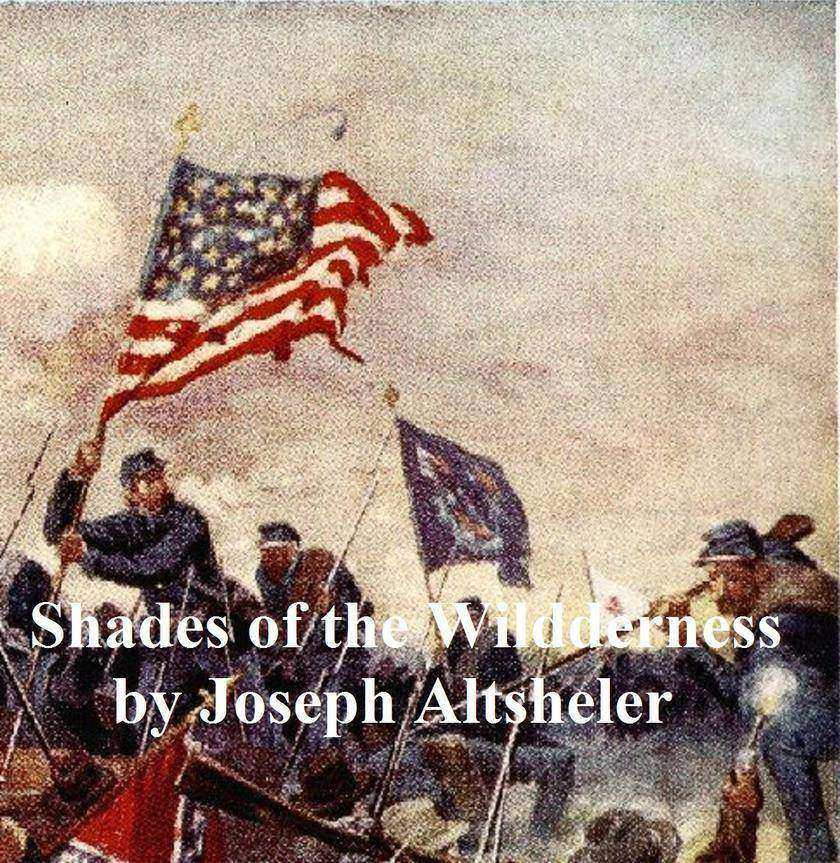
Historical novel from the Civil War series. "The Shades of the Wilderness" is the seventh volume of the Civil War Series, of which the predecessors have been "The Guns of Bull Run," "The Guns of Shiloh," "The Scouts of Stonewall," "The Sword of Antietam", "The Star of Gettysburg" and "The Rock of Chickamauga." The romance in this story reverts to the Southern side and deals with the fortunes of Harry Kenton and his friends. It takes them on the retreat from Gettysburg, gives the hero a short period of social life in Richmond, describes the great battles of the Wilderness and Spottsylvania, and ends with the deadlock in the trenches before Petersburg. According to Wikipedia: "Joseph Alexander Altsheler (1862 - 1919), was an American author of popular juvenile historical fiction. Altsheler was born in Three Springs, Kentucky to Joseph and Louise Altsheler. In 1885, he took a job at the Louisville Courier-Journal as a reporter and later, an editor. He started working for the New York World in 1892, first as the paper's Hawaiian correspondent and then as the editor of the World's tri-weekly magazine. Due to a lack of suitable stories, he began writing children's stories for the magazine."

The Tree of Appomattox
¥8.09
Historical novel from the Civil War series. "The Tree of Appomattox" concludes the series of connected romances dealing with the Civil War, begun in "The Guns of Bull Run," and continued successively through "The Guns of Shiloh," "The Scouts of Stonewall," "The Sword of Antietam," "The Star of Gettysburg," "The Rock of Chickamauga" and "The Shades of the Wilderness" to the present volume. According to Wikipedia: "Joseph Alexander Altsheler (1862 - 1919), was an American author of popular juvenile historical fiction. Altsheler was born in Three Springs, Kentucky to Joseph and Louise Altsheler. In 1885, he took a job at the Louisville Courier-Journal as a reporter and later, an editor. He started working for the New York World in 1892, first as the paper's Hawaiian correspondent and then as the editor of the World's tri-weekly magazine. Due to a lack of suitable stories, he began writing children's stories for the magazine."

The Guns of Bull Run
¥8.09
Historical novel from the Civil War series. According to Wikipedia: "Joseph Alexander Altsheler (1862 - 1919), was an American author of popular juvenile historical fiction. Altsheler was born in Three Springs, Kentucky to Joseph and Louise Altsheler. In 1885, he took a job at the Louisville Courier-Journal as a reporter and later, an editor. He started working for the New York World in 1892, first as the paper's Hawaiian correspondent and then as the editor of the World's tri-weekly magazine. Due to a lack of suitable stories, he began writing children's stories for the magazine.

The Shadow of the North
¥8.09
Historical novel from the French and Indian War series. "The Shadow of the North," while an independent story, in itself, is also the second volume of the Great French and Indian War series which began with "The Hunters of the Hills." All the important characters of the first romance reappear in the second. According to Wikipedia: "Joseph Alexander Altsheler (1862 - 1919), was an American author of popular juvenile historical fiction. Altsheler was born in Three Springs, Kentucky to Joseph and Louise Altsheler. In 1885, he took a job at the Louisville Courier-Journal as a reporter and later, an editor. He started working for the New York World in 1892, first as the paper's Hawaiian correspondent and then as the editor of the World's tri-weekly magazine. Due to a lack of suitable stories, he began writing children's stories for the magazine."

The Texan Scouts
¥8.09
Historical novel from the Texan series. "The Texan Scouts," while a complete story in itself, continues the fortunes of Ned Fulton and his friends, who were central characters in "The Texan Star." According to Wikipedia: "Joseph Alexander Altsheler (1862 - 1919), was an American author of popular juvenile historical fiction. Altsheler was born in Three Springs, Kentucky to Joseph and Louise Altsheler. In 1885, he took a job at the Louisville Courier-Journal as a reporter and later, an editor. He started working for the New York World in 1892, first as the paper's Hawaiian correspondent and then as the editor of the World's tri-weekly magazine. Due to a lack of suitable stories, he began writing children's stories for the magazine."

Romeo und Juliette
¥8.09
Die Shakespeare-Trag?die, übersetzt von Christoph Martin Wieland. Wikipedia: "Romeo und Julia ist eine Trag?die, die früh in der Karriere von William Shakespeare über zwei jugendliche" Stern-überkreuzte Liebende "geschrieben wurde, deren pl?tzlicher Tod ihre verfeindeten Familien vereint. Es war zu Shakespeares popul?rsten Stücken zu seinen Lebzeiten mit Hamlet, ist eines seiner am h?ufigsten aufgeführten Stücke. Heute gelten die Titelfiguren als archetypische junge Liebhaber. "

Rambles Beyond Railways by Wilkie Collins - Delphi Classics (Illustrated)
¥8.09
This eBook features the unabridged text of ‘Rambles Beyond Railways by Wilkie Collins - Delphi Classics (Illustrated)’ from the bestselling edition of ‘The Complete Works of Wilkie Collins’. Having established their name as the leading publisher of classic literature and art, Delphi Classics produce publications that are individually crafted with superior formatting, while introducing many rare texts for the first time in digital print. The Delphi Classics edition of Collins includes original annotations and illustrations relating to the life and works of the author, as well as individual tables of contents, allowing you to navigate eBooks quickly and easily. eBook features: * The complete unabridged text of ‘Rambles Beyond Railways by Wilkie Collins - Delphi Classics (Illustrated)’ * Beautifully illustrated with images related to Collins’s works * Individual contents table, allowing easy navigation around the eBook * Excellent formatting of the text Please visit www.delphiclassics.com to learn more about our wide range of titles

Moments of Being by Virginia Woolf - Delphi Classics (Illustrated)
¥8.09
This eBook features the unabridged text of ‘Moments of Being by Virginia Woolf - Delphi Classics (Illustrated)’ from the bestselling edition of ‘The Complete Works of Virginia Woolf’. Having established their name as the leading publisher of classic literature and art, Delphi Classics produce publications that are individually crafted with superior formatting, while introducing many rare texts for the first time in digital print. The Delphi Classics edition of Woolf includes original annotations and illustrations relating to the life and works of the author, as well as individual tables of contents, allowing you to navigate eBooks quickly and easily. eBook features: * The complete unabridged text of ‘Moments of Being by Virginia Woolf - Delphi Classics (Illustrated)’ * Beautifully illustrated with images related to Woolf’s works * Individual contents table, allowing easy navigation around the eBook * Excellent formatting of the text Please visit www.delphiclassics.com to learn more about our wide range of titles

The Price of Love by Arnold Bennett - Delphi Classics (Illustrated)
¥8.09
This eBook features the unabridged text of ‘The Price of Love by Arnold Bennett - Delphi Classics (Illustrated)’ from the bestselling edition of ‘The Complete Works of Arnold Bennett’. Having established their name as the leading publisher of classic literature and art, Delphi Classics produce publications that are individually crafted with superior formatting, while introducing many rare texts for the first time in digital print. The Delphi Classics edition of Bennett includes original annotations and illustrations relating to the life and works of the author, as well as individual tables of contents, allowing you to navigate eBooks quickly and easily. eBook features: * The complete unabridged text of ‘The Price of Love by Arnold Bennett - Delphi Classics (Illustrated)’ * Beautifully illustrated with images related to Bennett’s works * Individual contents table, allowing easy navigation around the eBook * Excellent formatting of the text Please visit www.delphiclassics.com to learn more about our wide range of titles

Writer’s Diary by Virginia Woolf - Delphi Classics (Illustrated)
¥8.09
This eBook features the unabridged text of ‘Writer’s Diary by Virginia Woolf - Delphi Classics (Illustrated)’ from the bestselling edition of ‘The Complete Works of Virginia Woolf’. Having established their name as the leading publisher of classic literature and art, Delphi Classics produce publications that are individually crafted with superior formatting, while introducing many rare texts for the first time in digital print. The Delphi Classics edition of Woolf includes original annotations and illustrations relating to the life and works of the author, as well as individual tables of contents, allowing you to navigate eBooks quickly and easily. eBook features: * The complete unabridged text of ‘Writer’s Diary by Virginia Woolf - Delphi Classics (Illustrated)’ * Beautifully illustrated with images related to Woolf’s works * Individual contents table, allowing easy navigation around the eBook * Excellent formatting of the text Please visit www.delphiclassics.com to learn more about our wide range of titles

Lilian by Arnold Bennett - Delphi Classics (Illustrated)
¥8.09
This eBook features the unabridged text of ‘Lilian by Arnold Bennett - Delphi Classics (Illustrated)’ from the bestselling edition of ‘The Complete Works of Arnold Bennett’. Having established their name as the leading publisher of classic literature and art, Delphi Classics produce publications that are individually crafted with superior formatting, while introducing many rare texts for the first time in digital print. The Delphi Classics edition of Bennett includes original annotations and illustrations relating to the life and works of the author, as well as individual tables of contents, allowing you to navigate eBooks quickly and easily. eBook features: * The complete unabridged text of ‘Lilian by Arnold Bennett - Delphi Classics (Illustrated)’ * Beautifully illustrated with images related to Bennett’s works * Individual contents table, allowing easy navigation around the eBook * Excellent formatting of the text Please visit www.delphiclassics.com to learn more about our wide range of titles

The Vanguard by Arnold Bennett - Delphi Classics (Illustrated)
¥8.09
This eBook features the unabridged text of ‘The Vanguard by Arnold Bennett - Delphi Classics (Illustrated)’ from the bestselling edition of ‘The Complete Works of Arnold Bennett’. Having established their name as the leading publisher of classic literature and art, Delphi Classics produce publications that are individually crafted with superior formatting, while introducing many rare texts for the first time in digital print. The Delphi Classics edition of Bennett includes original annotations and illustrations relating to the life and works of the author, as well as individual tables of contents, allowing you to navigate eBooks quickly and easily. eBook features: * The complete unabridged text of ‘The Vanguard by Arnold Bennett - Delphi Classics (Illustrated)’ * Beautifully illustrated with images related to Bennett’s works * Individual contents table, allowing easy navigation around the eBook * Excellent formatting of the text Please visit www.delphiclassics.com to learn more about our wide range of titles

The Magic of Oz by L. Frank Baum - Delphi Classics (Illustrated)
¥8.09
This eBook features the unabridged text of ‘The Magic of Oz by L. Frank Baum - Delphi Classics (Illustrated)’ from the bestselling edition of ‘The Complete Works of L. Frank Baum’. Having established their name as the leading publisher of classic literature and art, Delphi Classics produce publications that are individually crafted with superior formatting, while introducing many rare texts for the first time in digital print. The Delphi Classics edition of Baum includes original annotations and illustrations relating to the life and works of the author, as well as individual tables of contents, allowing you to navigate eBooks quickly and easily. eBook features: * The complete unabridged text of ‘The Magic of Oz by L. Frank Baum - Delphi Classics (Illustrated)’ * Beautifully illustrated with images related to Baum’s works * Individual contents table, allowing easy navigation around the eBook * Excellent formatting of the text Please visit www.delphiclassics.com to learn more about our wide range of titles
Dot and Tot of Merryland by L. Frank Baum - Delphi Classics (Illustrated)
¥8.09
This eBook features the unabridged text of ‘Dot and Tot of Merryland by L. Frank Baum - Delphi Classics (Illustrated)’ from the bestselling edition of ‘The Complete Works of L. Frank Baum’. Having established their name as the leading publisher of classic literature and art, Delphi Classics produce publications that are individually crafted with superior formatting, while introducing many rare texts for the first time in digital print. The Delphi Classics edition of Baum includes original annotations and illustrations relating to the life and works of the author, as well as individual tables of contents, allowing you to navigate eBooks quickly and easily. eBook features: * The complete unabridged text of ‘Dot and Tot of Merryland by L. Frank Baum - Delphi Classics (Illustrated)’ * Beautifully illustrated with images related to Baum’s works * Individual contents table, allowing easy navigation around the eBook * Excellent formatting of the text Please visit www.delphiclassics.com to learn more about our wide range of titles

The Life and Adventures of Santa Claus by L. Frank Baum - Delphi Classics (Illus
¥8.09
This eBook features the unabridged text of ‘The Life and Adventures of Santa Claus by L. Frank Baum - Delphi Classics (Illustrated)’ from the bestselling edition of ‘The Complete Works of L. Frank Baum’. Having established their name as the leading publisher of classic literature and art, Delphi Classics produce publications that are individually crafted with superior formatting, while introducing many rare texts for the first time in digital print. The Delphi Classics edition of Baum includes original annotations and illustrations relating to the life and works of the author, as well as individual tables of contents, allowing you to navigate eBooks quickly and easily. eBook features: * The complete unabridged text of ‘The Life and Adventures of Santa Claus by L. Frank Baum - Delphi Classics (Illustrated)’ * Beautifully illustrated with images related to Baum’s works * Individual contents table, allowing easy navigation around the eBook * Excellent formatting of the text Please visit www.delphiclassics.com to learn more about our wide range of titles

The Border Legion by Zane Grey - Delphi Classics (Illustrated)
¥8.09
This eBook features the unabridged text of ‘The Border Legion by Zane Grey - Delphi Classics (Illustrated)’ from the bestselling edition of ‘The Collected Works of Zane Grey’. Having established their name as the leading publisher of classic literature and art, Delphi Classics produce publications that are individually crafted with superior formatting, while introducing many rare texts for the first time in digital print. The Delphi Classics edition of Grey includes original annotations and illustrations relating to the life and works of the author, as well as individual tables of contents, allowing you to navigate eBooks quickly and easily. eBook features: * The complete unabridged text of ‘The Border Legion by Zane Grey - Delphi Classics (Illustrated)’ * Beautifully illustrated with images related to Grey’s works * Individual contents table, allowing easy navigation around the eBook * Excellent formatting of the text Please visit www.delphiclassics.com to learn more about our wide range of titles

The Up Trail by Zane Grey - Delphi Classics (Illustrated)
¥8.09
This eBook features the unabridged text of ‘The Up Trail by Zane Grey - Delphi Classics (Illustrated)’ from the bestselling edition of ‘The Collected Works of Zane Grey’. Having established their name as the leading publisher of classic literature and art, Delphi Classics produce publications that are individually crafted with superior formatting, while introducing many rare texts for the first time in digital print. The Delphi Classics edition of Grey includes original annotations and illustrations relating to the life and works of the author, as well as individual tables of contents, allowing you to navigate eBooks quickly and easily. eBook features: * The complete unabridged text of ‘The Up Trail by Zane Grey - Delphi Classics (Illustrated)’ * Beautifully illustrated with images related to Grey’s works * Individual contents table, allowing easy navigation around the eBook * Excellent formatting of the text Please visit www.delphiclassics.com to learn more about our wide range of titles

The Mysterious Rider by Zane Grey - Delphi Classics (Illustrated)
¥8.09
This eBook features the unabridged text of ‘The Mysterious Rider by Zane Grey - Delphi Classics (Illustrated)’ from the bestselling edition of ‘The Collected Works of Zane Grey’. Having established their name as the leading publisher of classic literature and art, Delphi Classics produce publications that are individually crafted with superior formatting, while introducing many rare texts for the first time in digital print. The Delphi Classics edition of Grey includes original annotations and illustrations relating to the life and works of the author, as well as individual tables of contents, allowing you to navigate eBooks quickly and easily. eBook features: * The complete unabridged text of ‘The Mysterious Rider by Zane Grey - Delphi Classics (Illustrated)’ * Beautifully illustrated with images related to Grey’s works * Individual contents table, allowing easy navigation around the eBook * Excellent formatting of the text Please visit www.delphiclassics.com to learn more about our wide range of titles

The Boy Fortune Hunters in Alaska by L. Frank Baum - Delphi Classics (Illustrate
¥8.09
This eBook features the unabridged text of ‘The Boy Fortune Hunters in Alaska by L. Frank Baum - Delphi Classics (Illustrated)’ from the bestselling edition of ‘The Complete Works of L. Frank Baum’. Having established their name as the leading publisher of classic literature and art, Delphi Classics produce publications that are individually crafted with superior formatting, while introducing many rare texts for the first time in digital print. The Delphi Classics edition of Baum includes original annotations and illustrations relating to the life and works of the author, as well as individual tables of contents, allowing you to navigate eBooks quickly and easily. eBook features: * The complete unabridged text of ‘The Boy Fortune Hunters in Alaska by L. Frank Baum - Delphi Classics (Illustrated)’ * Beautifully illustrated with images related to Baum’s works * Individual contents table, allowing easy navigation around the eBook * Excellent formatting of the text Please visit www.delphiclassics.com to learn more about our wide range of titles


