Pursuit
¥4.58
"When all the gods had assembled in conference, Zeus arose among them and addressed them thus" . . . "it is with this line that Plato's story of Atlantis ends; and the words of Zeus remain unknown." -- Francis Bacon, New Atlantis Of all the writings of Plato the Timaeus is the most obscure and repulsive to the modern reader, and has nevertheless had the greatest influence over the ancient and mediaeval world. The obscurity arises in the infancy of physical science, out of the confusion of theological, mathematical, and physiological notions, out of the desire to conceive the whole of nature without any adequate knowledge of the parts, and from a greater perception of similarities which lie on the surface than of differences which are hidden from view. To bring sense under the control of reason; to find some way through the mist or labyrinth of appearances, either the highway of mathematics, or more devious paths suggested by the analogy of man with the world, and of the world with man; to see that all things have a cause and are tending towards an end—this is the spirit of the ancient physical philosopher. He has no notion of trying an experiment and is hardly capable of observing the curiosities of nature which are 'tumbling out at his feet,' or of interpreting even the most obvious of them. He is driven back from the nearer to the more distant, from particulars to generalities, from the earth to the stars. He lifts up his eyes to the heavens and seeks to guide by their motions his erring footsteps. But we neither appreciate the conditions of knowledge to which he was subjected, nor have the ideas which fastened upon his imagination the same hold upon us. For he is hanging between matter and mind; he is under the dominion at the same time both of sense and of abstractions; his impressions are taken almost at random from the outside of nature; he sees the light, but not the objects which are revealed by the light; and he brings into juxtaposition things which to us appear wide as the poles asunder, because he finds nothing between them. He passes abruptly from persons to ideas and numbers, and from ideas and numbers to persons,—from the heavens to man, from astronomy to physiology; he confuses, or rather does not distinguish, subject and object, first and final causes, and is dreaming of geometrical figures lost in a flux of sense. He contrasts the perfect movements of the heavenly bodies with the imperfect representation of them (Rep.), and he does not always require strict accuracy even in applications of number and figure (Rep.). His mind lingers around the forms of mythology, which he uses as symbols or translates into figures of speech. He has no implements of observation, such as the telescope or microscope; the great science of chemistry is a blank to him. It is only by an effort that the modern thinker can breathe the atmosphere of the ancient philosopher, or understand how, under such unequal conditions, he seems in many instances, by a sort of inspiration, to have anticipated the truth. The influence with the Timaeus has exercised upon posterity is due partly to a misunderstanding. In the supposed depths of this dialogue the Neo-Platonists found hidden meanings and connections with the Jewish and Christian Scriptures, and out of them they elicited doctrines quite at variance with the spirit of Plato. Believing that he was inspired by the Holy Ghost, or had received his wisdom from Moses, they seemed to find in his writings the Christian Trinity, the Word, the Church, the creation of the world in a Jewish sense, as they really found the personality of God or of mind..
Sea Rovers
¥23.30
Diego Rodríguez de Silva y Velázquez (June 6, 1599 – August 6, 1660) was a Spanish painter who was the leading artist in the court of King Philip IV and one of the most important painters of the Spanish Golden Age. He was an individualistic artist of the contemporary Baroque period, important as a portrait artist. In addition to numerous renditions of scenes of historical and cultural significance, he painted scores of portraits of the Spanish royal family, other notable European figures, and commoners, culminating in the production of his masterpiece Las Meninas (1656). From the first quarter of the nineteenth century, Velázquez's artwork was a model for the realist and impressionist painters, in particular ?douard Manet. Since that time, famous modern artists, including Pablo Picasso, Salvador Dalí and Francis Bacon, have paid tribute to Velázquez by recreating several of his most famous works. Early lifeBorn in Seville, Andalusia, Spain, Diego, the first child of Jo?o Rodrigues da Silva and Jerónima Velázquez, was baptized at the church of St Peter in Seville on Sunday, June 6, 1599. This christening must have followed the baby's birth by no more than a few weeks, or perhaps only a few days. Velázquez's paternal grandparents, Diego da Silva and Maria Rodrigues, had moved to Seville from their native Porto, Portugal decades earlier. As for Jo?o Rodrigues da Silva and his wife, both were born in Seville, and were married, also at the church of St Peter, on December 28, 1597. They came from the lesser nobility and were accorded the privileges generally enjoyed by the gentry. Velázquez was educated by his parents to fear God and, intended for a learned profession, received good training in languages and philosophy. Influenced by many artists he showed an early gift for art; consequently, he began to study under Francisco de Herrera, a vigorous painter who disregarded the Italian influence of the early Seville school. Velázquez remained with him for one year. It was probably from Herrera that he learned to use brushes with long bristles. After leaving Herrera's studio when he was 12 years old, Velázquez began to serve as an apprentice under Francisco Pacheco, an artist and teacher in Seville. Though considered a generally dull, undistinguished painter, Pacheco sometimes expressed a simple, direct realism in contradiction to the style of Raphael that he was taught. Velázquez remained in Pacheco's school for five years, studying proportion and perspective and witnessing the trends in the literary and artistic circles of Seville.To Madrid (early period) By the early 1620s, his position and reputation were assured in Seville. On April 23, 1618, Velázquez married Juana Pacheco (June 1, 1602 – August 10, 1660), the daughter of his teacher. She bore him two daughters—his only known family. The elder, Francisca de Silva Velázquez y Pacheco (1619–1658), married painter Juan Bautista Martínez del Mazo at the Church of Santiago in Madrid on August 21, 1633; the younger, Ignacia de Silva Velázquez y Pacheco, born in 1621, died in infancy. Velázquez produced notable works during this time. Known for his compositions of amusing genre scenes (also called bodegones), such as Old Woman Frying Eggs, his sacred subjects include Adoración de los Reyes (1619, The Adoration of the Magi), and Jesús y los peregrinos de Emaús (1626, Christ and the Pilgrims of Emmaus), both of which begin to express his more pointed and careful realism.
Mackó úr utazásai
¥8.83
Maszumé hétk?znapi kamaszlány a 60-as évek Iránjában. Iskolába menet meglát egy fiatalembert, akivel egymásba szeretnek. Maszumé bátyjai megtalálják ártatlan levelezésüket, húgukat megverik, majd máshoz kényszerítik feleségül. A lánynak fel kell adnia álmait, és el kell indulnia egy g?r?ngy?s úton, melyet a sors rendelt neki. Az ?tven évet fel?lel? regény a hazáját jól ismer? szerz? szemével k?veti végig Irán viharos t?rténelmét: a 60-as évek a sah elnyomó uralma alatt, majd az iszlám forradalom, mely visszahozta Iránba a k?zépkort, az iraki–iráni háború. A regényt, mely az utóbbi évtized legnagyobb bestsellere lett Iránban, kétszer is betiltották, azonban nem politikai tartalma miatt, hanem mert egy olyan független és er?s n? sorsát állítja példaképül, aki a sorscsapások és nehézségek ellenére sosem adja fel a reményt, s bár csendesen, mégis határozottan tiltakozik társadalmának elnyomó hagyományai ellen. Parinoush Saniee szociológus és pszichológus, t?bb regény szerz?je. A sors k?nyve els? regénye, melyet t?bb nyelvre fordítottak le, Olaszországban elnyerte a Boccaccio-díjat, Németországban bestseller lett. Az iráni írón? 1949-ben született, férjnél van, két fia külf?ld?n él.
Republic
¥27.39
THE earliest record we have of the employment of an infernal machine at all resembling the torpedo of the present day, was in 1585 at the siege of Antwerp. Here by means of certain small vessels, drifted down the stream, in each of which was placed a magazine of gunpowder, to be fired either by a trigger, or a combination of levers and clockwork, an Italian engineer, Lambelli, succeeded in demolishing a bridge that the enemy had formed over the Scheldt. So successful was this first attempt, and so tremendous was the effect produced on the spectators, by the explosion of one of these torpedoes, that further investigation of this new mode of Naval warfare was at once instituted.But it was not until some two hundred years after that any real progress was effected, though numerous attempts were made during this period, to destroy vessels by means of sub-marine infernal machines.It was owing to the fact, that the condition which is now considered as essential in torpedo warfare, viz., that the charge must be submerged, was then entirely ignored, that so long a standstill occurred in this new art of making war. Captain Bushnell, the Inventor of Torpedoes.—To Captain David Bushnell, of Connecticut, in 1775, is most certainly due the credit of inventing torpedoes, or as he termed them submarine magazines. For he first proved practically that a charge of gunpowder could be fired under water, which is incontestably the essence of submarine warfare. Submarine Boat.—To Captain Bushnell is also due the credit of first devizing a submarine boat for the purpose of conveying his magazines to the bottom of hostile ships and there exploding them.Drifting Torpedoes.—Another plan of his for destroying vessels, was that of connecting two of his infernal machines together by means of a line, and throwing them into the water, allowing the current to carry them across the bows of the attacked ship. Mode of Ignition.—The ignition of his magazines was generally effected by means of clockwork, which, when set in motion, would run for some time before exploding the machines, thus enabling the operators to get clear of the explosion.Captain Bushnell's few attempts to destroy our ships off the American coast in 1776 and 1777, with his submarine boat, and his drifting torpedoes were all attended with failure, a result generally experienced, where new inventions are for the first time subjected to the test of actual service. Robert Fulton.—Robert Fulton, an American, following in his footsteps, some twenty years after, revived the subject of submarine warfare, which during that interval seems to have been entirely forgotten. A resident in France, in 1797, he is found during that year making various experiments on the Seine with a machine which he had constructed, and by which he designed "to impart to carcasses of gunpowder a progressive motion under water, to a certain point, and there explode them."[A] Fulton's Failures.—Though these first essays of his resulted in failure, Fulton thoroughly believed in the efficacy of his schemes, and we find him, during that and succeeding years, vainly importunating the French and Dutch Governments, to grant him aid and support in carrying out experiments with his new inventions, whereby he might perfect them, and thus ensure to whichever government acceded to his views, the total destruction of their enemy's fleets. Bonaparte aids Fulton.—Though holding out such favourable terms, it was not until 1800, when Bonaparte became First Consul, that Fulton's solicitations were successful, and that money was granted him to carry out a series of experiments. In the following year (1801), under Bonaparte's immediate patronage, Fulton carried out various and numerous experiments in the harbour of Brest, principally with a submarine boat devised by him (named the Nautilus), subsequently to his invention of submarine carcasses as a means of approaching a ship and fixing one of his infernal machines beneath her..
Maga itt a tánctanár?
¥52.40
A magyar k?nyvkiadás legnagyobb adósságainak egyike ez a k?nyv. A világ t?bb országában a holokausztirodalom egyik legjelent?sebb remekm?veként tartják számon, Magyarországon 1982-ben jelent meg utoljára.Zsolt Béla, nagyváradi író, újságíró, a zsidót?rvények után nem folytathatta a pályáját. Munkaszolgálatra Ukrajnába került, az út onnan haza, majd a váradi gettóba, kés?bb Bergen-Belsenbe vezetett, egészen a szabadulásig.Zsolt Béla regénye nem artisztikus memoár. Vad, olykor az elviselhet?ség határáig kegyetlen és ?szinte visszaemlékezés, felzaklató olvasmány.Az olykor egymás kínjának is ?rül? társairól. Az elmebajig kegyetlen, egyszersmind a megtorlástól retteg? csend?r?kr?l. ?rulásról, kétségbeesésr?l, az újra és újra feltámadó hamis reményr?l, és mindennek okáról és céljáról: a zsidók kifosztásáról.Aki elolvassa a Kilenc koffert, megérti, miért nem tud a rémálomból eszmélni sok európai ország azóta sem.Zsolt Béla feleségének egész családja odaveszett, k?ztük az a Heyman ?va, akinek gettónaplója megjelent már t?bb nyelven, magyarul Piros bicikli címen.
5 Seconds of Summer Quiz Book
¥24.43
Are you a fan of 5 Seconds of Summer? Can you name all the band members? Have you followed the success of the Australian band from the early days through to supporting One Direction on tour and releasing their debut album? If you think you know all about the boys from down under, there is no better way to test your knowledge than with this fun quiz book. What was 5 Seconds of Summer originally going to be called? What record label produced the band's single 'Good Girls'? What award did 5 Seconds of Summer win at the 2014 Billboard Mid-Year Music Awards? The answers to these questions and more can all be found in this book. Packed with fun facts The 5 Seconds of Summer Quiz Book documents the band's journey to date. With 100 questions all about your favourite group, including songs, awards, tours and personal details about each individual member, this is the book fans of 5 Seconds of Summer won't want to be without.
The Prince (Hackett Classics)
¥8.82
Il Principe (The Prince) is a political treatise by the Florentine public servant and political theorist Niccolò Machiavelli. Originally called De Principatibus (About Principalities), it was written in 1513, but not published until 1532, five years after Machiavelli's death. The treatise is not representative of the work published during his lifetime, but it is the most remembered, and the work responsible for bringing "Machiavellian" into wide usage as a pejorative term. It has also been suggested by some critics that the piece is, in fact, a satire.
The Law
¥8.82
The Law, original French title La Loi, is a 1849 book by Frédéric Bastiat. It was published one year after the third French Revolution of 1848 and one year before his death of tuberculosis at age 49. The essay was influenced by John Locke's Second Treatise on Government and in turn influenced Henry Hazlitt's Economics in One Lesson. It is the work for which Bastiat is most famous along with The candlemaker's petition and the Parable of the broken window. In The Law, Bastiat states that "each of us has a natural right — from God — to defend his person, his liberty, and his property". The State is a "substitution of a common force for individual forces" to defend this right. The law becomes perverted when it punishes one's right to self-defense in favor of another's acquired right to plunder.
Makinelerin Evrimi: 4. Sanayi Devrimi
¥37.11
Endu?stri 4.0 d?nemi ile fabrikadaki u?retim ekipmanlar? birbirleriyle konu?up anla?acak ve gelecekte insans?z fabrikalar yayg?nla?acak. ?? kazalar? azalacak ve teknolojik verimlilik sa?lanacak. Yeni endu?stri devrimi hem enerji tasarrufu sa?layacak hem de maliyetleri du??u?recek. Alman Hu?ku?metinin u?retim su?re?lerini bilgisayarla?ma y?nu?nde te?vik etme ve yu?ksek teknolojiyle donatmas? projesi olarak kabul edilen Endu?stri 4.0, ayn? zamanda d?rdu?ncu? sanayi devrimi anlam?na geliyor. Endu?stri 4.0 ile tu?m yaz?l?m ve networklerde u?ru?n geli?tirme, u?retim ve servis su?re?lerinin ileti?imi, makinalar?n ve u?ru?nlerin ger?ek zamanl? bilgi al??veri?i, otonom kontrol ve optimizasyonu mu?mku?n olacak. 1784’te ortaya ??kan ilk sanayi devriminde, su ve buhar gu?cu?nu?n kullan?m?yla u?retim yap?lmas? hakim iken, 1870’lerde elektrik enerjisinin kullan?m?, ikinci sanayi devriminin de kap?lar?n? a?t?. Dijital devrim olarak da adland?r?labilecek u??u?ncu? sanayi devrimi ise, 1969’da elektronik ve bili?im teknolojilerinin kullan?m? ile ortaya ??kt?. 2013 y?l?na geldi?imizde ise internet uygulamalar?, yatay-dikey entegrasyonlu ve ger?ek zamanl? yeni de?er zincirleri, siber-fiziksel sistemler ve ak?ll? fabrikalar hayatlar?m?zdaki varl???n? gu??lendirdi. Yazar Hakk?nda [Tarkan ?zhan, 1969-] ???REN?M DURUMU: Trakya üniversitesi B?lüm: Fen Fakultesi Kimyager MESLE??: Borsac?, Trader, Portfoy Y?netimi Aktif ?al??ma süresi; 25 y?l
Ur?, prietenie, dragoste, c?s?torie
¥57.96
De la ?nfiin?area sa, acum o sut? de ani, MI6 a fost ?nconjurat de mister ?i a avut un aer aproape mitic. Pentru opinia public?, no?iunea de ?spion“ a fost modelat? de universurile fic?ionale ale unor scriitori precum Ian Fleming, p?rintele lui James Bond, ?i John le Carré, creatorul cerebralului Smiley. Gordon Corera le ofer? cititorilor s?i ?ansa unic?, f?r? precedent, de a p?trunde ?n aceast? lume secret? ?i de a observa realitatea care a stat la baza fic?iunii. Cartea prezint? pove?ti individuale – mai degrab? dec?t pe cele ale institu?iilor sau descrierea evolu?iei situa?iei politice de-a lungul timpului –, scopul fiind acela de a explora rela?iile unice ?i personale din spatele spionajului – ceea ce Graham Greene numea ?factorul uman“, cu alte cuvinte, ?n cazul de fa??, motiva?iile ?i loialit??ile unui spion sau ale unui tr?d?tor ?i faptele care decurg de aici.De la ?nceputurile R?zboiului Rece p?n? ?n ziua de azi, MI6 a suferit o transformare extraordinar?, devenind dintr-o organiza?ie de diletan?i, cu iz de club select, una modern?, profesionist?, dar nu mai pu?in controversat?. Iar Gordon Corera ?i dezv?luie deopotriv? e?ecurile ?i succesele de-a lungul timpului, ?n contextele politice aferente. Marile drame ale R?zboiului Rece, ridicarea ?i c?derea Zidului Berlinului, Criza Rachetelor Cubaneze, atacurile de la 11 septembrie 2001, r?zboiul din Irak – toate aceste evenimente care au marcat istoria reprezint? fundalul pentru pove?tile adev?rate cu spioni.Corera prezint? cazurile interesante ale celor care au spionat, au min?it, au ?n?elat ?i, ?n unele cazuri, chiar ?i-au pierdut via?a ?n slujba ??rii pe care au servit-o. ?i oric?t de palpitante ar fi c?r?ile sau filmele cu spioni, ve?i vedea c?, cel pu?in aici, via?a bate filmul.
Pe contrasens cu favorita pre?edintelui. Cronica unei campanii
¥57.14
Lucrarea abordeaz? cele mai relevante manifest?ri ale modernismului literar interbelic, propun?nd spre analiz? reprezentan?i ai poeziei (George Bacovia, Ion Barbu, Lucian Blaga, Ion Vinea, Ilarie Voronca, Tudor Arghezi), ai prozei (Anton Holban, Camil Petrescu, Max Blecher, Mircea Eliade), tendin?ele ?i mi?c?rile coagulate ?n jurul marilor reviste interbelice (Sbur?torul, Contimporanul, 75 H.P., Integral). Volumul se adreseaz? elevilor de liceu care doresc s?-?i aprofundeze cuno?tin?ele referitoare la una dintre cele mai importante v?rste literare rom?ne?ti, miz?nd ?i pe redescoperirea cititorului avizat, dornic s?-?i sus?in? punctele de vedere, s?-?i modeleze gustul estetic ?i s? descopere modele, ierarhii, valori.
101 Interesting Facts on Southend United
¥24.43
Is Southend United your local football club? Are you a lifelong fan of the Blues or new to the touchline? Do you know all about the team's long and fascinating past, which began in the Blue Boar pub in 1906? Would you like to find out more? If you answered yes to any of these questions, you are certain to enjoy 101 Interesting Facts on Southend United, all about the boys from Roots Hall. Perfect for challenging your friends on match days or teaching your children about the history of your local football team. This tribute to the Southend United will tell you everything you ever wanted to know about the Blues, including all the memorable faces that have played a part in the team's wins and losses through the years. This is a must-have book for Southend supporters of all ages, so why not relive all those unforgettable moments from days gone by and gen up on your favourite football club.
Sl?bim f?r? diete ?i suplimente alimentare
¥48.97
Conservatorismul pragmatic, conservatorismul lui David Hume, Edmund Burke i, n secolul XX, al lui Michael Oakeshott, se deosebete profund de reacionarism i de ultraconservatorismul virulent. Un conservator pragmatic este un om care gndete fr mituri caluzitoare i fr adevruri absolute, ce confisc i paralizeaz inteligena; este un adversar, i nu un adept, al utopiilor inverse, care aspir la restaurarea trecutului. El este un adept al moderaiei i al gradualismului – nu pentru ca ar avea oroare de schimbrile profunde, ci pentru ca tie c nimic important, nrdcinat ntr-o form de via omeneasc, nu poate fi schimbat brusc. Se comite adesea o confuzie ntre conservatorismul pragmatic i radicalismul de dreapta. Dar este vorba de o eroare de neiertat, cci cele doua forme ale Dreptei se opun diametral: Ostilitatea fa de radicalism, ostilitatea nencetat, implacabil, este definiia esenial a conservatorismului (Robert Cecil, Marchiz de Salisbury). Au existat i n Romania figuri celebre apropiate conservatorismului pragmatic, spre exemplu P. P. Carp. ns, din pcate, tradiia autohton este dominat de radicalismul de dreapta, ilustrat (virulent) de Eminescu i (seren) de Maiorescu, iar ulterior de generaia rtcit: Nae Ionescu, Mircea Eliade, Cioran i Noica.“ (Adrian-Paul Iliescu)
Zeii locuiesc l?ng? Olimp
¥32.62
Cartea este rezultatul anchetelor desf??urate ?n paginile revistei Contemporanul – anchete ce au abordat o problema delicat?, ocolit? de nu pu?ini c?rturari: ?Problema evreiasc?". Se pronun?? pe marginea acestei disputate teme actuale personalit??i ca, de pild?, Dumitru ?epeneag, Matei C?linescu, Ion Vianu, Irina Cajal, Ion Iano?i, Nicolae Breban, ?i nu pu?ini al?i importan?i actan?i ai vie?ii sociale, politice ?i culturale din Rom?nia de azi.Un manual indirect de istorie, cartea e destinata studen?ilor, elevilor, profesorilor, precum ?i publicului larg de cititori.
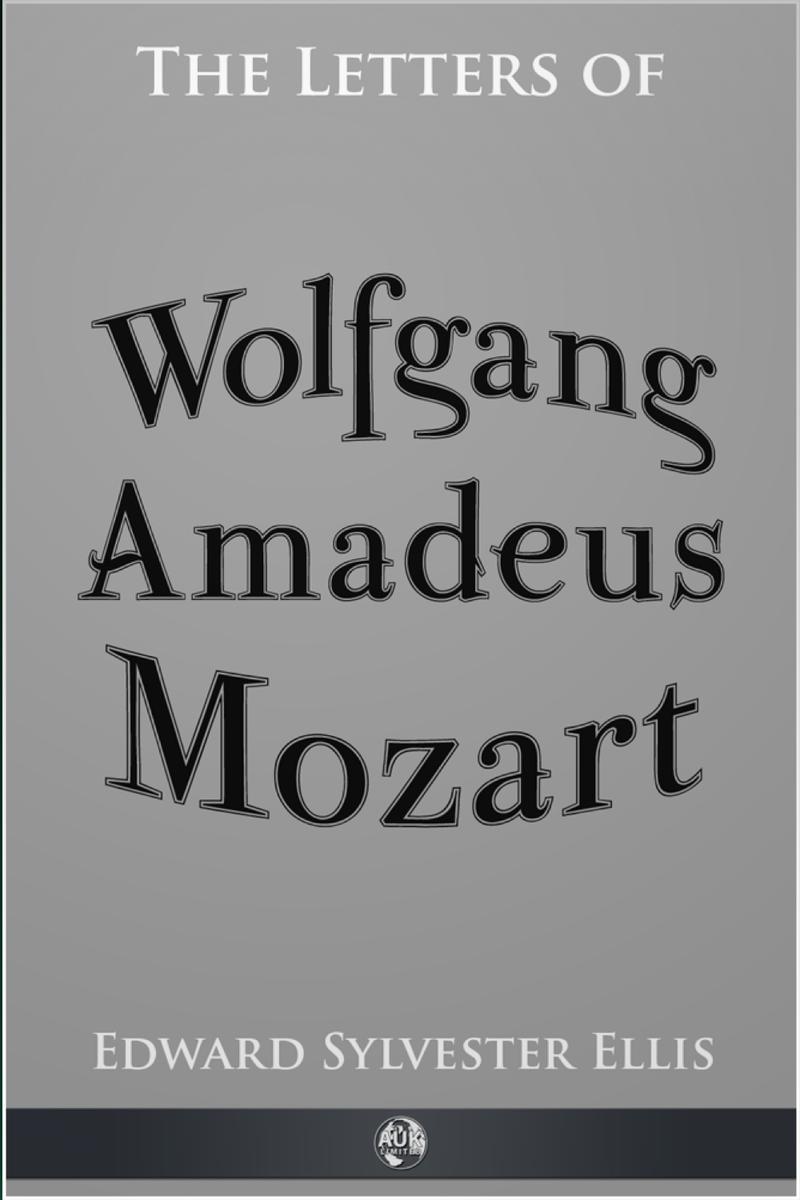
Letters of Wolfgang Amadeus Mozart
¥19.52
The private letters to friends and family of one of history's greatest musical minds, Wolfgang Amadeus Mozart. A wonderful look into the personal life of the great composer.Translated into English and with full notes on names and phrases used in the letters.

Hétf? csont nélkül
¥58.45
The dual purpose of the revision of this work has been simplification and amplification.?The language has been recast in parts and there have been added sub-titles within each chapter, cross-references and an index. Ideas such as "Religion as law," the Logos of Philo and the development of Messianism have been made as simple as these subjects admit of.??In seeking illustrations to vivify the narrative it is unfortunate that so little is available. Ah! if we had pictures of Hillel, of Akiba the Martyr, of Judah the Saint, of the Jamnia Academy, of the splendor of the Babylonian Exilarch. But this very absence of pictures is in itself a bit of Jewish history.??This new edition contains quotations from the literature of the periods covered, from the Apocrypha, Philo, Josephus and the Mishna. Three chapters have been added, two on "Stories and Sayings of the Sages of the Talmud" and one on "Rabbi Judah and his times."?Other chapters have been placed in more logical sequence. Both the Chronological Tables and the Notes are fuller. A new feature has been introduced in a "theme for discussion" at the close of each chapter that may be found helpful to study circles and Chautauqua societies. This has also been introduced in the recently issued "Modern Jewish History."??The author expresses his grateful indebtedness to Dr. David de Sola Pool for a most careful reading of the manuscript and for many corrections and suggestions; also to Mr. Philip Cowen for the aid rendered in collecting the illustrations. The author has availed himself of writings that have appeared on this epoch since the edition of 1904. He hopes he has succeeded in producing a more readable book.??When the impatient youth demands, like the heathen from Hillel, a definition of Judaism, bid him "go and learn" the history of the Jew. Let him follow the fascinating story from hoar antiquity, when the obscure Hebrews, "leaving kindred and father's house," took a bold and new departure for the land that God would show—the land that would show God.??Point to the colossal figure of Moses on Sinai, "greatest of the prophets," who gave the first uplifting impulse with his Ten Words of Faith and Duty. Trace with him the soul struggle of this "fewest of all peoples" to reach the truth of divinity—beginning with a crude conception that became steadily more exalted and more clarified with each successive age, until, at last, the idea is realized of an all-pervading Spirit, with "righteousness and justice as the pillars of His throne," the "refuge of all generations."??Make clear to him how the revelation of the divine will came to be expressed in Law. And, how the preservation and development of this Law, in the interpreting hands of prophets, scribes, rabbis, poets and philosophers, became henceforth the controlling motif of the history of the Jew, his modus vivendi, whether under Babylonians, Persians, Greeks, Romans, Arabians or Franks. Help him to see that through it the Jew held in his keeping the religious fate of Orient and Occident, that took from him their respective impressions of Islamism and Christianity.??Let him see the "God-intoxicated" teaching his message by living it; the Suffering Servant whose martyrdom brought healing to his smiters.??Then, perhaps, he may understand that no one definition can completely express the Faith of the Jew and his place in the divine economy. But with this glimpse of his history the grandeur of his inheritance will sink into his consciousness, becoming part of himself, and he will be thrilled with the tremendous responsibility devolving upon him as a member of the priest-people, the witnesses of God, whose mission was and is to "bring light to the Gentiles—that salvation may reach to the ends of the earth."??By e-Kitap Projesi, Illustrated by Murat Ukray..
10 plus 10 prozatori exemplari nominaliza?i la Nobel
¥40.79
Candide is characterised by its sarcastic tone, as well as by its erratic, fantastical and fast-moving plot. A picaresque novel with a story similar to that of a more serious bildungsroman, it parodies many adventure and romance clichés, the struggles of which are caricatured in a tone that is mordantly matter-of-fact. Still, the events discussed are often based on historical happenings, such as the Seven Years' War and the 1755 Lisbon earthquake. As philosophers of Voltaire's day contended with the problem of evil, so too does Candide in this short novel, albeit more directly and humorously. Voltaire ridicules religion, theologians, governments, armies, philosophies, and philosophers through allegory; most conspicuously, he assaults Leibniz and his optimism. Voltaire's men and women point his case against optimism by starting high and falling low. A modern could not go about it after this fashion.?He would not plunge his people into an unfamiliar misery. He would just keep them in the misery they were born to. But such an account of Voltaire's procedure is as misleading as the plaster cast of a dance. Look at his procedure again. Mademoiselle Cunégonde, the illustrious Westphalian, sprung from a family that could prove seventy-one quarterings, descends and descends until we find her earning her keep by washing dishes in the Propontis. The aged faithful attendant, victim of a hundred acts of rape by negro pirates, remembers that she is the daughter of a pope, and that in honor of her approaching marriage with a Prince of Massa-Carrara all Italy wrote sonnets of which not one was passable. We do not need to know French literature before Voltaire in order to feel, although the lurking parody may escape us, that he is poking fun at us and at himself. His laughter at his own methods grows more unmistakable at the last, when he caricatures them by casually assembling six fallen monarchs in an inn at Venice. A modern assailant of optimism would arm himself with social pity. There is no social pity in "Candide." Voltaire, whose light touch on familiar institutions opens them and reveals their absurdity, likes to remind us that the slaughter and pillage and murder which Candide?witnessed among the Bulgarians was perfectly regular, having been conducted according to the laws and usages of war. Had Voltaire lived today he would have done to poverty what he did to war. Pitying the poor, he would have shown us poverty as a ridiculous anachronism, and both the ridicule and the pity would have expressed his indignation. About Author: VOLTAIREFran?ois-Marie Arouet (1694 – 1778), known by his nom de plume Voltaire, was a French Enlightenment writer, historian and philosopher famous for his wit, his attacks on the established Catholic Church, and his advocacy of freedom of religion, freedom of expression, and separation of church and state. Voltaire was a versatile writer, producing works in almost every literary form, including plays, poems, novels, essays, and historical and scientific works. He wrote more than 20,000 letters and more than 2,000 books and pamphlets. He was an outspoken advocate, despite the risk this placed him in under the strict censorship laws of the time. As a satirical polemicist, he frequently made use of his works to criticize intolerance, religious dogma, and the French institutions of his day.
Arizona's Yesterday: [Illustrated]
¥8.09
This story belongs to the year 1837, and was regarded by the generations of that and a succeeding time as the most miraculous of all the recorded deliverances from death at sea. It may be told thus: Mr. Montagu Vanderholt sat at breakfast with his daughter Violet one morning in September. Vanderholt's house was one of a fine terrace close to Hyde Park. He was a rich man, a retired Cape merchant, and his life had been as chequered as Trelawney's, with nothing of romance and nothing of imagination in it. He was the son of honest parents, of Dutch extraction, and had run away to sea when about twelve years old. Nothing under the serious heavens was harsher, more charged with misery, suffering, dirt, and wretchedness, than seafaring in the days when young Vanderholt, with an idiot's cunning, fled to it from his father's comfortable little home. He got a ship, was three years absent, and on his return found both his father and mother dead. He went again to sea, and, fortunately for him, was shipwrecked in the neighbourhood of Simon's Bay. The survivors made their way to Cape Town, and presently young Vanderholt got a job, and afterwards a position. He then became a master, until, after some eight or ten years of heroic perseverance, attended by much good luck, behold Mr. Vanderholt full-blown into a colonial merchant prince. How much he was worth when he made up his mind to settle in England, after the death of his wife, and when he had disposed of his affairs so as to leave himself as free a man as ever he had been when he was a common Jack Swab, really signifies nothing. It is certain he had plenty, and plenty is enough, even for a merchant prince of Dutch extraction. Besides Violet, he had two sons, who will not make an appearance on this little brief stage. They are dismissed, therefore, with this brief reference—that both were in the army, and both, at the time of this tale, in India. Violet was Vanderholt's only daughter, and he loved her exceedingly. She was not beautiful, but she was fair to see, with a pretty figure, and an arch, gay smile. You saw the Dutch blood in her eyes, as you saw it in her father's, whose orbs of vision, indeed, were ridiculously small—scarcely visible in their bed of socket and lash. An English mother had come to Violet's help in this matter. Taking her from top to toe, with her surprising quantity of brown hair, soft complexion, good mouth, teeth, and figure, Violet Vanderholt was undoubtedly a fine girl. THE LAST ENTRY "OPINIONS OF THE PRESS ON THE LAST ENTRY": '"The Last Entry" is a rattling good salt-water yarn, told in the author's usual breezy, exhilarating style.'-”Daily Mail. 'In this new novel Mr. Russell has cleverly thrown its events into the year 1837, and there are one or two ingenious passages which add to the Diamond Jubilee interest which that date suggests.... "The Last Entry" is as certain of general popularity as any of Mr. Russell's former tales of the marvels of the sea.'-”Glasgow Herald. 'We do not think it possible for anyone to dip into this novel without desiring to finish it, and it adds another to the long list of successes of our best sea author.'-”Librarian. 'In addition to mutiny and murder, "The Last Entry" contains many of those good things which have made Mr. Russell's pages a joy to so many lovers of the sea during the last twenty years.... "The Last Entry" is a welcome addition to Mr. Clark Russell's library.'-”Speaker. 'The writer is as realistic and picturesque as usual in his vivid descriptions of the stagnant life on board the homeward-bound Indiaman.'-”Times. 'It is full of pleasant vigour.... As is always the case in Mr. Clark Russell's books, the elements are treated with the pen of an artist.'-”Standard. 'We expected plenty of go, of fresh and vigorous description of sea-faring life, coupled with a story which would not be wanting in interest. All this we have here.'”-Tablet.
Arany János – TOLDI
¥90.42
"Reportajele din aceast? carte vorbesc despre aspecte din istoria recent?, cum ar fi migra?ia, corup?ia, via?a ?n penitenciare sau problemele minorit??ilor, ?nchiderea spitalelor sau stresul care schimb? vie?i, crizele din s?n?tate, pove?ti ale unor oameni obi?nui?i, care fac lucruri speciale. Reg?sim, ?ns?, ?i pove?ti de demult, cum e cazul reportajelor despre lupt?torii anticomuni?ti din mun?i, despre tezaurul de la Pietroasele sau istoriile din satele s?se?ti. Reportajele surprind realit??i dintr-o Rom?nie aflat? ?n continu? schimbare, cu enorme discrepan?e. Sunt ca o fotografie a realit??ii. Cine le cite?te afl? cum se tr?ia sau cum se tr?ie?te ?n anumite locuri. Cum se schimb? sau de ce nu se schimb? lucrurile ?i mentalit??ile. Cartea cuprinde 30 de reportaje publicate ?n revista Dilema veche, dar ?i adapt?ri dup? reportaje sau documentare radio difuzate la Europa FM ?i Radio Rom?nia Actualit??i. Reportajul e un gen mai rar ?nt?lnit ast?zi ?n presa din Rom?nia. Dar asta nu se ?nt?mpl? din cauza lipsei de interes a publicului, ci din pricina lipsei de bani ?i de investi?ii ?ntr-o pres? de calitate. De fiecare dat? c?nd totu?i apar reportaje bine f?cute, se constat? c? publicul le urm?re?te cu interes, tot a?a cum urm?re?te reportajele ?i documentarele oferite de televiziunile str?ine. Asta fiindc? oamenii au nevoie de pove?ti. Un reportaj bine f?cut este de fapt o poveste adev?rat?. P?n? la urm?, ?i aceast? carte este o carte cu pove?ti adev?rate." (Liliana Nicolae)
Falling in Love
¥18.74
Art, with its finite means, cannot hope to record the infinite variety and com-plexity of Nature, and so contents itself with a partial statement, addressing this to the imagination for the full and perfect meaning. This inadequation, and the artificial ad-justments which it involves, are tolerated by right of what is known as artistic convention; and as each art has its own particular limitations, so each has its own particular conventions. Sculpture reproduces the forms of Nature, but discards the color without any shock to our ideas of verity; Painting gives us the color, but not the third dimension, and we are satisfied; and Architecture ispurely conventional, since it does not even aim at the imitation of natural form. The Conventions of Line Drawing,Of the kindred arts which group themselves under the head of Painting, none is based on such broad conventions as that with which we are immediately concerned—the art of Pen Drawing. In this medium, Nature's variety of color, when not positively ignored, is suggested by means of sharp black lines, of varying thickness, placed more or less closely together upon white paper; while natural form depends primarily for its representation upon arbitrary boundary lines. There is, of course, no authority in Na-ture for a positive outline: we see objects only by the difference in color of the other objects behind and around them. The technical capacity of the pen and ink medium, however, does not provide a value corresponding to every natural one, so that a broad interpretation has to be adopted which eliminates the less positive values; and, that form may not likewise be sacrificed, the outline becomes necessary, that light objects may stand relieved against light. This outline is the most characteristic, as it is the most indispensable, of the conventions of line drawing. To seek to abolish it only involves a resort to expedients no less artificial, and the results of all such attempts, dependent as they necessarily are upon elaboration of color, and a general indirectness of method, lack some of the best characteristics of pen drawing. More frequently, however, an elaborate color-scheme is merely a straining at the technical limitations of the pen in an effort to render the greatest possible number of values. It may be worth while to inquire whether excellence in pen drawing consists in thus dispensing with its recognized conventions, or in otherwise taxing the technical re-sources of the instrument. This involves the question of Style,—of what characteristic pen methods are,—a question which we will briefly consider...
Сила звички
¥36.13
UNGV?RY KRISZTI?N és TABAJDI G?BOR rendhagyó útikalauza a 20. század politikai diktatúrái és legmegrázóbb t?rténelmi eseményei mentén veszi lajstromba Budapest emlékeit. A szerz?páros olyan f?városi helyszíneket mutat be olvasóinak, amelyek jobbára ismeretlenek a turisták el?tt, a városlakók számára pedig már a félmúlt homályába vesznek. A fiatal kutatók budapesti sétáin feltárulnak az 1919-es Tanácsk?ztársaság és az azt k?vet? fehérterror, a német megszállás, a nyilas rémuralom és a zsidóüld?zés, a világháborús f?város, a szovjet megszállás és a Rákosi-diktatúra, az 1956-os forradalom és szabadságharc, végül a Kádár-korszak elfeledett vagy épp szándékosan titokban tartott t?rténeti helyszínei és emlékhelyei. Az egyes t?rténelmi eseményekhez k?thet? szobrok és m?emlékek kapcsán a szerz?k múlt és jelen emlékezetpolitikai t?rekvéseit is áttekintik. A t?rténészpáros kíméletlen és fájdalmas ?szinteséggel mutat rá: a múlt századi véres diktatúrák emlékei jel?letlenül bár, de ma is ott kísértenek a f?város utcáin – ideje lenne hát mindenkinek megismerni ?ket. UNGV?RY KRISZTI?N 1969-ben született Budapesten. Tanulmányait az ELTE BTK t?rténelem-német szakán végezte. Budapest ostromát feldolgozó doktori disszertációja k?nyv formájában is megjelent, és számos hazai, illetve külf?ldi kiadást megélt. 2001-t?l az 1956-os Intézet tudományos munkatársa, t?bb nemzetk?zi tudományos testület tagja. Kutatási területe a 20. század politika- és hadt?rténete, a széls?jobb mozgalmak, valamint az állambiztonság t?rténete. TABAJDI G?BOR 1980-ban született Budapesten. Az ELTE B?lcsészettudományi Karán t?rténelmet, politikaelméletet és filozófiát tanult. Jelenleg az Országos Széchényi K?nyvtár 1956-os Intézetének munkatársa. Eddig f?ként a 20. századi Magyarország politikat?rténetével kapcsolatos publikációi jelentek meg. F? kutatási területei: a magyar állambiztonsági szervek, illetve a pártállami rendszer m?k?désének t?rténete. A fiatal kutatókat t?m?rít? ?Fehér Hollók” munkacsoport koordinátora.

购物车
个人中心