


 购物车
购物车 个人中心
个人中心
Amor ?i galanterie bucure?tean?
¥61.83
Un periplu documentat prin lumea artelor plastice contemporane, un model de analiz? a fenomenului plastic actual, extrem de viu ?i incitant, ba chiar provoc?tor, ?n ciuda multiplelor probleme ridicate de tranzi?ia autohton?.
Autoportret la 28 de ani
¥54.10
Avangardismul rom?nesc r?m?ne a fi unul dintre curentele literare cele mai controversate ?i, ?n ultima instanta – ne demonstreaza aceasta monografie – cele mai putin cunoscute. Monografia abunda ?n informa?ii, aspecte, ?nt?mpl?ri, evenimente, mai pu?in sau deloc cunoscute. Cartea se adreseaz? elevilor, studen?ilor, precum ?i publicului larg de cititori.
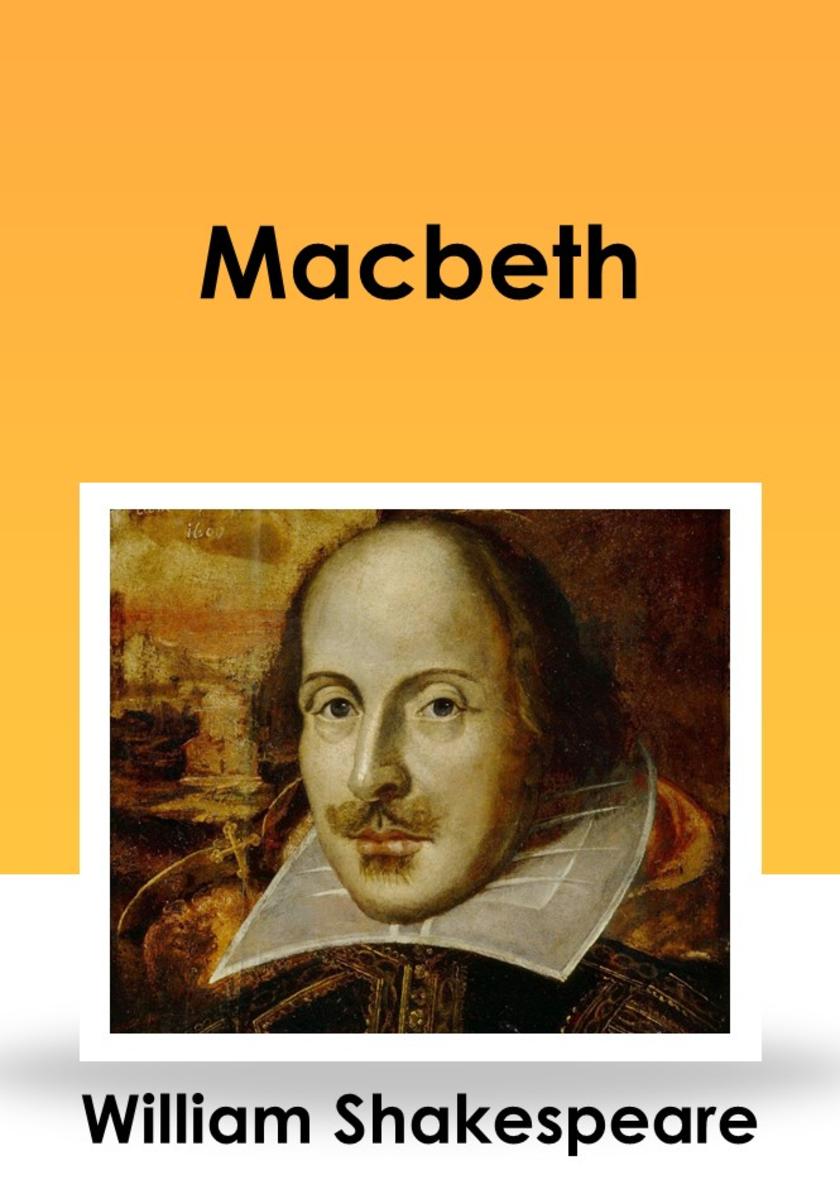
Macbeth
¥8.67
Demagóg, ?rült, gazember? Népvezér, próféta, mártír? E két véglet k?z?tt ingadozott Szálasi Ferenc megítélése kortársai szemében. Az utókor azonban k?zel sem ilyen megosztott személyét illet?en, Szálasi a 20. századi magyar t?rténelem talán legelutasítottabb alakja. K?tetünkben arra keressük a választ, miként vált azzá. Miért lépett egyáltalán a politika színpadára otthagyva ezzel a biztos karriert kínáló katonaságot? Milyen célok vezették? Mit gondolt és mit tett politikusként? Szálasi életútjának állomásairól számos egykori dokumentum vall, ami lehet?séget ad, hogy t?bb, olykor lényegesen eltér? néz?pontokból vizsgálhassuk ugyanazt az eseményt. K?nyvünkben megkíséreljük a sok esetben részrehajló – vagy éppen elfogult – kortársak írásai alapján áttekinteni Szálasi életútját: a katonáét, az ideológusét, a politikusét – gyermekkorától egészen haláláig. Végül pedig azt is bemutatjuk, miként viszonyul hozzá az utókor. A k?tetet életrajzi kronológia, válogatott bibliográfia, valamint térképek teszik teljessé. PAKSA RUDOLF 1981-ben született Ajkán, az ELTE-n doktorált t?rténelemb?l és 2009 októberét?l az MTA BTK T?rténettudományi Intézetének a munkatársa. ?rdekl?dési területe a modern kori magyar t?rténelem; kutatásai súlypontja a 19–20. századi historiográfia, a régi E?tv?s Collegium, valamint a Horthy-kori széls?jobboldali irányzatok.

?ti testvérek
¥43.16
Alessandro di Mariano di Vanni Filipepi, better known as Sandro Botticelli ( 1445 – 1510), was an Italian painter of the Early Renaissance. He belonged to the Florentine school under the patronage of Lorenzo de' Medici, a movement that Giorgio Vasari would characterize less than a hundred years later as a "golden age", a thought, suitably enough, he expressed at the head of his Vita of Botticelli. Botticelli's posthumous reputation suffered until the late 19th century; since then his work has been seen to represent the linear grace of Early Renaissance painting. Among his best known works are The Birth of Venus and Primavera. In 1481, Pope Sixtus IV summoned Botticelli and other prominent Florentine and Umbrian artists to fresco the walls of the Sistine Chapel. The iconological program was the supremacy of the Papacy. Sandro's contribution included the Temptations of Christ, the Punishment of the Rebels and Trial of Moses. He returned to Florence, and "being of a sophistical turn of mind, he there wrote a commentary on a portion of Dante and illustrated the Inferno which he printed, spending much time over it, and this abstention from work led to serious disorders in his living." Thus Vasari characterized the first printed Dante (1481) with Botticelli's decorations; he could not imagine that the new art of printing might occupy an artist. The masterpieces Primavera (c. 1482) and The Birth of Venus (c. 1485) were both seen by Vasari at the villa of Lorenzo di Pierfrancesco de' Medici at Castello in the mid-16th century, and until recently, it was assumed that both works were painted specifically for the villa. Recent scholarship suggests otherwise: the Primavera was painted for Lorenzo's townhouse in Florence, and The Birth of Venus was commissioned by someone else for a different site. By 1499, both had been installed at Castello. In these works, the influence of Gothic realism is tempered by Botticelli's study of the antique. But if the painterly means may be understood, the subjects themselves remain fascinating for their ambiguity. The complex meanings of these paintings continue to receive widespread scholarly attention, mainly focusing on the poetry and philosophy of humanists who were the artist's contemporaries. The works do not illustrate particular texts; rather, each relies upon several texts for its significance. Of their beauty, characterized by Vasari as exemplifying "grace" and by John Ruskin as possessing linear rhythm, there can be no doubt. In the mid-1480s, Botticelli worked on a major fresco cycle with Perugino, Domenico Ghirlandaio and Filippino Lippi, for Lorenzo the Magnificent's villa near Volterra; in addition he painted many frescoes in Florentine churches. In 1491 he served on a committee to decide upon a fa?ade for the Cathedral of Florence.
Csak a holttesteden át
¥57.47
In issuing this second treatise on Crayon Portraiture, Liquid Water Colors and French Crystals, for the use of photographers and amateur artists, I do so with the hope and assurance that all the requirements in the way of instruction for making crayon portraits on photographic enlargements and for finishing photographs in color will be fully met. To these I have added complete instructions for free-hand crayons. This book embodies the results of a studio experience of twenty-four years spent in practical work, in teaching, and in overcoming the everyday difficulties encountered, not alone in my own work, but in that of my pupils as well. Hence the book has been prepared with special reference to the needs of the student. It presents a brief course of precepts, and requires on the part of the pupil only perseverance in order that he may achieve excellence. The mechanical principles are few, and have been laid down in a few words; and, as nearly all students have felt, in the earlier period of their art work, the necessity of some general rules to guide them in the composition and arrangement of color, I have given, without entering into any profound discussion of the subject, a few of its practical precepts, which, it is hoped, will prove helpful. While this book does not treat of art in a very broad way, yet I am convinced that those who follow its teachings will, through the work they accomplish, be soon led to a higher appreciation of art. Although this kind of work does not create, yet who will say that it will not have accomplished much if it shall prove to be the first step that shall lead some student to devote his or her life to the sacred calling of art? It has been said that artists rarely, if ever, write on art, because they have the impression that the public is too ill-informed to understand them—that is, to understand their ordinarily somewhat technical method of expression. If, therefore, in the following pages I may sometimes seem to take more space and time for an explanation than appears necessary, I hope the student will overlook it, as I seek to be thoroughly understood. My hope with reference to this work is that it may prove of actual value to the earnest student in helping him reach the excellence which is the common aim of all true artists. ? ?J. A. Barhydt. About Author: To many who know nothing about the art of crayon portraiture, the mastery of it not only seems very difficult, but almost unattainable. In fact, any work of art of whatever description, which in its execution is beyond the knowledge or comprehension of the spectator, is to him a thing of almost supernatural character. Of course, this is more decided when the subject portrayed carries our thoughts beyond the realms of visible things. But the making of crayon portraits is not within the reach alone of the trained artist who follows it as a profession. I claim that any one who can learn to write can learn to draw, and that any one who can learn to draw can learn to make crayon portraits. Making them over a photograph, that is, an enlargement, is a comparatively simple matter, as it does not require as much knowledge of drawing as do free-hand crayons. But you must not suppose that, because the photographic enlargement gives you the drawing in line and an indistinct impression of the form in light and shade, you are not required to draw at all in making a crayon portrait over such an enlargement. Some knowledge of drawing is necessary, though not a perfect knowledge. Many people err in supposing that only the exceptionally skilled can produce the human features in life-like form upon the crayon paper. While recognizing great differences in natural aptitude for drawing in different persons, just as those who use the pen differ widely in their skill, some being able to write with almost mechanical perfection of form, I still hold that any one who is able to draw at all can succeed in producing creditable crayons.. J. A. Barhydt.
Mituri ?i legende ale antichit??ii
¥54.10
Cea dinti monografie care ofer o imagine cuprinztoare asupra receptrii literaturii romne n Cehia, cartea de fa este o incursiune n diversele etape ale totalitarismului comunist: stalinismul integral, perioada dezgheului, anii aizeci (cu transformrile din jurul Primverii de la Praga), urmai de perioada de normalizare care se ntinde pn la momentul Revoluiei de Catifea. Ineditul acestei lucrri este dat i de explorarea manifestrii unor opere i a unor personaliti literare romneti (precum Mircea Eliade, Constantin Virgil Gheorghiu sau Petru Dumitriu) n zona literar ceh prohibit din anii supui studiului, mai precis n publicaiile din exil i n revistele de tip samizdat. Cititorului i este oferit un tablou amplu asupra autorilor romni receptai cu predilecie de ctre cehi sub comunism i asupra tendinelor manifestate de romnitii cehi (coloana vertebral a procesului receptrii), de criticii literari i de recenzeni. Cartea definete o epoc n istoria raporturilor culturale dintre romni i cehi, dou popoare legate de un trecut adeseori comun i de o prietenie sincer.“ – Profesor dr. Mihai Mitu
Childe Harold's Pilgrimage
¥8.09
Byron's classic narrative poem. According to Wikipedia: "George Gordon Byron, later Noel, 6th Baron Byron FRS (1788 – 1824) was a British poet and a leading figure in Romanticism. Amongst Byron's best-known works are the brief poems When We Two Parted, She Walks in Beauty, and So, we'll go no more a roving, in addition to the narrative poems Childe Harold's Pilgrimage and Don Juan. He is regarded as one of the greatest European poets and remains widely read and influential, both in the English-speaking world and beyond. Byron's fame rests not only on his writings but also on his life, which featured extravagant living, numerous love affairs, debts, separation, and marital exploits. He was famously described by Lady Caroline Lamb as "mad, bad, and dangerous to know". Byron served as a regional leader of Italy's revolutionary organization, the Carbonari, in its struggle against Austria. He later traveled to fight against the Ottoman Empire in the Greek War of Independence, for which Greeks revere him as a national hero. He died from a fever in Messolonghi in Greece."
Great German Composers
¥8.09
First published in 1878. Chapters cover: Bach, Handel, Gluck, Haydn, Mozart, Beethoven, Schubert, Schumann, Chopin, Web, Mendelssohn, and Wagner.
Great Italian and French Composers
¥8.09
Chapters cover: Palestrixa, Puccini, Paisiello, Cimarosa, Rossini, Donizetti, Bellini, Verdi, Cherubini, Meiuel, Spontini, Halevy, Boieldieu, Auber, Meyerbeer, Founod, Thomas, and Berlioz. First published in 1878
Hernani
¥8.09
1411/5000 Le drame classique a d'abord joué et publié en 1830. La pièce elle-même est en fran?ais, mais l'introduction est en anglais. Selon Wikipedia: ? Hernani est un drame du poète fran?ais Victor Hugo Le jeu est ouvert à Paris le 25 Février, 1830 Aujourd'hui est le drame pour les manifestations qui ont accompagné la première, et pour l'opéra de Verdi Ernani l'inspiration que pour son .. mérites est ... Victor-Marie Hugo (26 Février 1802-1822 mai 1885) était un poète fran?ais, auteur dramatique, romancier, essayiste, artiste plasticien, homme d'?tat, des militants des droits de l'homme et des représentants du mouvement romantique en France en France, Hugo est littéraire renommée principalement de ses poèmes, mais aussi de ses romans et ses Leistungen.Von dramatique de nombreux livres de poésie sont Contemplations et la Légende des particulièrement élevé en siècle le prestige et Hugo parfois, il est considéré comme le plus grand poète fran?ais, ses ?uvres les plus célèbres hors de France les romans Les Misérables et Notre-Dame de Paris (aussi connu comme le bossu de Notre-Dame) royal quand il était jeune, Hugo est devenu plus libéral que les décennies passées; il est devenu un partisan passionné de républicanisme, et son travail touche les questions les plus politiques et sociales et les tendances artistiques de son époque. Il est enterré au Panthéon. "
Le Roi S'Amuse
¥8.09
Drame classique dans le texte original, publié en 1832. Selon Wikipedia: "Victor-Marie Hugo (26 février 1802 - 22 mai 1885) était un poète, dramaturge, romancier, essayiste, artiste visuel, homme d'?tat, militant des droits de l'homme et En France, la renommée littéraire de Hugo vient en premier lieu de sa poésie, mais repose aussi sur ses romans et ses réalisations dramatiques Parmi les nombreux volumes de poésie, Les Contemplations et La Légende des siècles tiennent particulièrement haut dans l'estime critique, et Hugo est parfois identifié comme le plus grand poète fran?ais.A l'extérieur de la France, ses ?uvres les plus connues sont les romans Les Misérables et Notre-Dame de Paris (connu aussi en anglais sous le nom de Le Bossu de Notre Dame). était jeune, Hugo devint plus libéral au fil des décennies, il devint un partisan passionné du républicanisme et son travail touche à la plupart des questions politiques et sociales et aux tendances artistiques de son temps. Il est enterré au Panthéon. "
Hamlet, with line numbers
¥8.09
The classic tragedy. According to Wikipedia: "Hamlet is a tragedy by William Shakespeare, believed to have been written between 1599 and 1601. The play, set in Denmark, recounts how Prince Hamlet exacts revenge on his uncle Claudius, who has murdered Hamlet's father, the King, and then taken the throne and married Hamlet's mother. The play vividly charts the course of real and feigned madness—from overwhelming grief to seething rage—and explores themes of treachery, revenge, incest, and moral corruption."
Julius Caesar, with line numbers
¥8.09
The classic tragedy. According to Wikipedia: "Julius Caesar is a tragedy by William Shakespeare, believed to have been written in 1599. It portrays the conspiracy against the Roman dictator of the same name, his assassination and its aftermath. It is one of several Roman plays that he wrote, based on true events from Roman history, which also include Coriolanus and Antony and Cleopatra. Although the title of the play is Julius Caesar, Caesar is not the main character in its action; he appears in only three scenes, and is killed at the beginning of the third act. The protagonist of the play is Marcus Brutus, and the central psychological drama is his struggle between the conflicting demands of honor, patriotism, and friendship. The play reflected the general anxiety of England over succession of leadership. At the time of its creation and first performance, Queen Elizabeth, a strong ruler, was elderly and had refused to name a successor, leading to worries that a civil war similar to that of Rome might break out after her death."
Shakespeare's Cymbeline in French
¥8.09
Cymbeline de Shakespeare, en traduction fran?aise. Selon Wikipédia: "Cymbeline est une pièce de William Shakespeare, basée sur des légendes concernant le premier roi celtique britannique Cunobelinus, bien que répertorié comme une tragédie dans le First Folio, les critiques modernes qualifient souvent Cymbeline de romance. et The Winter's Tale, qui traite des thèmes de l'innocence et de la jalousie, alors que la date précise de la composition reste inconnue, la pièce fut certainement produite dès 1611. "
Troilus and Cressida, with line numbers
¥8.09
Classic Shakespearean drama. According to Wikipedia: "Troilus and Cressida is a tragedy by William Shakespeare, believed to have been written in 1602. The play (also described as one of Shakespeare's problem plays) is not a conventional tragedy, since its protagonist (Troilus) does not die. The play ends instead on a very bleak note with the death of the noble Trojan Hector and destruction of the love between Troilus and Cressida. Throughout the play, the tone lurches wildly between bawdy comedy and tragic gloom, and readers and theatre-goers have frequently found it difficult to understand how one is meant to respond to the characters. However, several characteristic elements of the play (the most notable being its constant questioning of intrinsic values such as hierarchy, honor and love) have often been viewed as distinctly "modern"..."
The Tempest
¥8.09
Classic Shakespearean romance. According to Wikipedia: "The Tempest is a play written by William Shakespeare. Many scholars believe that it was written in 1610–11,[1] although some researchers have argued for an earlier dating.[2] While listed as a comedy when it was initially published in the First Folio of 1623, many modern editors have since re-labeled the play a romance. It did not attract a significant amount of attention before the closing of the theatres in 1642 and after the Restoration it attained popularity only in adapted versions.[3] Theatre productions began to reinstate the original Shakespearean text in the mid-19th century,[4] and in the 20th century, critics and scholars undertook a significant re-appraisal of the play's value, to the extent that it is now considered to be one of Shakespeare's greatest works."

Marijuana: A Beginners Guide To Growing Marijuana
¥7.66
LEARN HOW TO GROW MARIJUANA FOR YOURSELF!! Here Is A Preview Of What You'll Learn... Benefits of Growing Your Own Cannabis Indoor vs. Outdoor Growing The Basics of Growing Cannabis Dealing with Pests and Other Gardening Issues Types of Hydroponic Systems Harvesting Much, Much, More!
Beaucoup de Bruit pour Rien (Much Ado About Nothing in French)
¥8.09
Shakespeare comdey, traduit en fran?ais par Fran?ois Pierre Guillaume Guizot (1787 - 1874), historien fran?ais et homme d'?tat. Publié en 1862. Selon Wikipedia: "Beaucoup Ado About Nothing est une comédie écrite par William Shakespeare sur deux couples d'amoureux, Benedick et Beatrice, et Claudio et Hero Benedick et Beatrice sont engagés dans une" guerre joyeuse ", ils Parlez un kilomètre à la minute et proclamez leur mépris pour l'amour, le mariage et les autres.Par contraste, Claudio et Hero sont des jeunes gens doux qui sont rendus pratiquement sans voix par leur amour les uns pour les autres. "
Timon d'Athenes (Timon of Athens in French)
¥8.09
Traduit par Fran?ois Pierre Guillaume Guizot (1787 - 1874), historien fran?ais et homme d'?tat. Publié en 1862. Selon Wikipedia: "La vie de Timon d'Athènes est une pièce de William Shakespeare sur la fortune d'un Athénien nommé Timon (et probablement influencé par le philosophe du même nom, aussi), généralement considéré comme l'un des ses travaux les plus obscurs et les plus difficiles, groupés à l'origine avec les tragédies, sont généralement considérés comme tels, mais certains savants les groupent avec les pièces à problèmes.
Peines d'Amour Perdues (Love's Labour's Lost in French)
¥8.09
Comédie de Shakespeare, traduite en fran?ais par Fran?ois Pierre Guillaume Guizot (1787 - 1874), historien fran?ais et homme d'?tat. Publié en 1862. Selon Wikipedia: "Love's Labor's Lost est l'une des premières comédies de William Shakespeare, qui aurait été écrite au milieu des années 1590 et publiée pour la première fois en 1598".
The Merchant of Venice; Der Kaufmann von Venedig: Bilingual edition
¥8.09
Bilingual, English and German. Shakespeare comedy in English with line numbers and translated to German. According to Wikipedia: "The Merchant of Venice is a tragic comedy by William Shakespeare, believed to have been written between 1596 and 1598. Though classified as a comedy in the First Folio and sharing certain aspects with Shakespeare's other romantic comedies, the play is perhaps most remembered for its dramatic scenes, and is best known for Shylock and the famous 'Hath not a Jew eyes' speech. Also notable is Portia's speech about the 'quality of mercy'" Zweisprachig, Englisch und Deutsch. Shakespeare-Kom?die in Englisch mit Zeilennummern und ins Deutsche übersetzt. Laut Wikipedia: "The Merchant of Venice" ist eine tragische Kom?die von William Shakespeare, die vermutlich zwischen 1596 und 1598 entstanden ist. Obwohl sie im First Folio als Kom?die klassifiziert wurde und gewisse Aspekte mit Shakespeares anderen romantischen Kom?dien teilt, ist das Stück vielleicht Die meisten werden für ihre dramatischen Szenen in Erinnerung bleiben und sind am besten für Shylock und die berühmte 'Hath not a Jewy eyes' Rede bekannt. Bemerkenswert ist auch Portias Rede über die 'Qualit?t der Barmherzigkeit'. "


