


 购物车
购物车 个人中心
个人中心
La Songe d'une Nuit de'Ete (A Midsummer Night's Dream in French)
¥8.09
Comédie de Shakespeare, traduite en fran?ais par Fran?ois Pierre Guillaume Guizot (1787 - 1874), historien fran?ais et homme d'?tat. Publié en 1862. Selon Wikipedia: "Un Songe d'une nuit d'été est une pièce écrite par William Shakespeare, qui aurait été écrite entre 1590 et 1596. Elle décrit les événements entourant le mariage du duc d'Athènes, Thésée, et la Reine des Amazones, Hippolyta, dont les aventures de quatre jeunes amants athéniens et d'un groupe de six comédiens amateurs manipulés par les fées qui peuplent la forêt où se déroule la plus grande partie de la pièce. Les ?uvres les plus populaires de Shakespeare pour la scène et sont largement jouées à travers le monde. "
Troilus et Cressida, Troilus and Cressida in French
¥8.09
Traduit par Fran?ois Pierre Guillaume Guizot (1787 - 1874), historien fran?ais et homme d'?tat. Publié en 1862. Selon Wikipedia: "Troilus et Cressida est une tragédie de William Shakespeare, qui aurait été écrite en 1602. Il a également été décrit par Frederick S. Boas comme l'une des pièces à problèmes de Shakespeare. note avec la mort du noble cheval de Troie Hector et la destruction de l'amour entre Tro?lus et Cressida.Tout au long de la pièce, le ton s'écroule follement entre comédie débile et tristesse tragique, et les lecteurs et les spectateurs ont souvent du mal à comprendre comment on est Cependant, plusieurs éléments caractéristiques de la pièce (le plus notable étant sa remise en question constante de valeurs intrinsèques telles que la hiérarchie, l'honneur et l'amour) ont souvent été considérés comme nettement ?modernes? ..
La Legende des Siecles
¥8.09
Poème de livre classique, publié à l'origine en 1859. Le poème est en fran?ais; la préface est en anglais. Selon Wikipédia: ?La Légende des siècles est un recueil de poèmes de Victor Hugo, con?u comme une immense représentation de l'histoire et de l'évolution de l'humanité, écrite par intermittence entre 1855 et 1876, tandis que Victor Hugo exilé travaillait sur de nombreux autres projets. Des poèmes ont été publiés en trois séries en 1859, 1877 et 1883. Témoin d'un talent poétique inégalé dans lequel tout l'art de Hugo est évident, la Légende des Siècles est souvent considérée comme la seule véritable épopée fran?aise et, selon la formulation de Baudelaire, la seule ?popée moderne possible Le poète rêveur contemple le ?mur des siècles?, indistinct et terrible, sur lequel sont dessinées des scènes du passé, du présent et du futur, et où l'on peut voir toute la longue procession de l'humanité. de ces scènes, fugitivement per?u et entrecoupé de visions terrifiantes.Hugo ne cherchait ni l'exactitude historique ni l'exhaustivité, il se concentrait plut?t sur des figures obscures, habituelles ses propres inventions, qui incarnaient et symbolisaient leurs époques. En se proclamant dans la préface de la première série, ?c'est de l'histoire, espionnée à la porte de la légende?. Les poèmes, tour à tour lyriques, épiques et satiriques, forment une vision de l'expérience humaine, cherchant moins à résumer qu'à illustrer l'histoire de l'humanité, et à témoigner de son long voyage des ténèbres à la lumière. Wikipedia: "Victor-Marie Hugo (26 février 1802 - 22 mai 1885) était un poète, dramaturge, romancier, essayiste, artiste visuel, homme d'?tat, activiste des droits de l'homme et représentant du mouvement romantique en France. En France, la renommée littéraire de Hugo vient d'abord de sa poésie, mais repose aussi sur ses romans et ses réalisations dramatiques. "
Die Mitschuldigen, Ein Lustspiel in drei Aufzugen
¥8.09
Klassisches Spiel im originalen Deutsch. Laut Wikipedia: "Johann Wolfgang von Goethe (28. August 1749 - 22. M?rz 1832) war ein deutscher Schriftsteller. George Eliot nannte ihn" Deutschlands gr??ten Literaten ... und der letzte wahre Universalgelehrte auf der Erde. "Goethes Werke die Gebiete der Poesie, des Dramas, der Literatur, der Theologie, des Humanismus und der Wissenschaft, Goethes Hauptwerk, das als einer der H?hepunkte der Weltliteratur gepriesen wird, ist das zweiteilige Drama Faust. Goethes andere bekannte literarische Werke sind seine zahlreichen Gedichte, der Bildungsroman Wilhelm Meister und der Briefroman Die Leiden des jungen Werther. "
Four Plays
¥8.09
Deacon Brodie, Beau Austin, Admiral Guinea, and Robert Macaire. All co-written with W.E. Henley. According to Wikipedia: "Robert Louis (Balfour) Stevenson ( 1850 - 1894), was a Scottish novelist, poet, and travel writer, and a leading representative of Neo-romanticism in English literature. He was the man who "seemed to pick the right word up on the point of his pen, like a man playing spillikins", as G. K. Chesterton put it. He was also greatly admired by many authors, including Jorge Luis Borges, Ernest Hemingway, Rudyard Kipling, Vladimir Nabokov, and J. M. Barrie. Most modernist writers dismissed him, however, because he was popular and did not write within their definition of modernism. It is only recently that critics have begun to look beyond Stevenson's popularity and allow him a place in the canon."
Oeuvres complètes de Marcel Proust
¥24.44
Cet eBook énorme offre aux lecteurs l'occasion unique d'explorer des ?uvres de Marcel Proust en fran?ais. Caractéristiques: * '? la recherche du temps perdu' en sept tomes - complétes! * Introductions détaillées pour les romans et autres textes * Toutes les nouvelles * Illustré avec de nombreuses images relatives à la vie de Proust et ses oeuvres * Textes rares disponibles nulle part ailleurs * Images des première publications donnant un avant go?t des textes originaux * Comprend aussi des poèmes et des traductions * Bonus texte: MARCEL PROUST par PAUL SOUDAY - une étude détaillée de l'auteur. * Mis à jour avec le texte bonus MARCEL PROUST, SA VIE, SON ?UVRE PAR LEON PIERRE-QUINT - la première biographie sur Proust * Mis à jour avec le texte rare CHRONIQUES Veuillez aller sur www.delphiclassics.com pour parcourir nos autres titres TABLE DES MATIERES ? la recherche du temps perdu DU C?TE DE CHEZ SWANN ? L'OMBRE DES JEUNES FILLES EN FLEURS LE C?TE DE GUERMANTES SODOME ET GOMORRHE LA PRISONNIERE ALBERTINE DISPARUE (LA FUGITIVE) LE TEMPS RETROUV? Autres oeuvres LES PLAISIRS ET LES JOURS PASTICHES ET MELANGES ARTICLES DE ‘LA NOUVELLE REVUE FRAN?AISE’ CHRONIQUES Traductions LA BIBLE D'AMIENS SESAME ET LES LYS Critique littéraire MARCEL PROUST PAR PAUL SOUDAY Biographie MARCEL PROUST, SA VIE, SON ?UVRE par LEON PIERRE-QUINT Notice: ces oeuvres publiées bien après la mort de Proust sont encore soumises aux droits d’auteur et ne figurent donc pas dans cette collection. Cependant, une fois tombées dans le domaine public, elles seront ajoutées à cette intégrale sous la forme d’une mise à jour gratuite pour tous nos lecteurs. ? JEAN SANTEUIL ? CONTRE SAINTE-BEUVE ? CHARDIN ET REMBRANDT Visitez www.delphiclassics.com pour consulter nos autres collections, notamment ?mile Zola, Jules Verne, Gustave Flaubert, Moliére et Victor Hugo.
The Vital Needs Of The Dead: Chronicles
¥90.03
The Vital Needs of the Dead is a tender coming-of-age story set in the provinces of the Soviet Union during the second half of the 20th century. At the center of this story, praised by Russian critics for its blend of realism and lyrical sensibility, lies the relationship of young Gosha Sidelnikov with his alluring and mysterious grandmother Rosa, who becomes his caregiver when he is virtually abandoned by his busy and distant parents. This relationship colors Sidelnikov’s subsequent forays into first love and sexual awakening. Even after her death, memories of Rosa accompany him into his adventures and misadventures as a provincial student. Then, one miserably cold winter night, her voice commands him to immediately depart for a place he’s never been before, precipitating a mysterious chain of events.
Herstories. An Anthology of New Ukrainian Women Prose Writers
¥90.03
Women’s prose writing has exploded on the literary scene in Ukraine just prior to and following Ukrainian independence in 1991. Over the past two decades scores of fascinating new women authors have emerged. These authors write in a wide variety of styles and genres including short stories, novels, essays, and new journalism. In the collection you will find: realism, magical realism, surrealism, the fantastic, deeply intellectual writing, newly discovered feminist perspectives, philosophical prose, psychological mysteries, confessional prose, and much more.
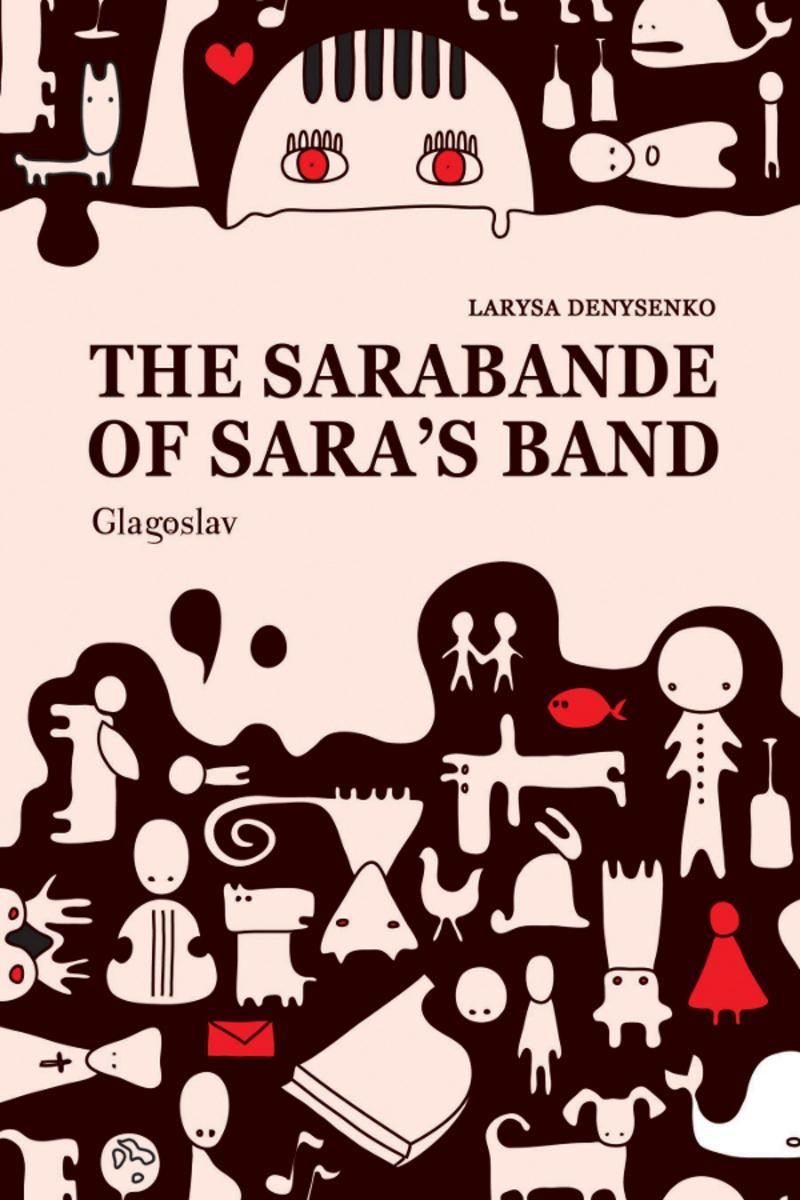
The Sarabande of Sara’s Band
¥90.03
Sarabande is a novel presented mostly through the rapid-fire interactions of the characters in one-on-one situations or in small groups. Most of the novel revolves around the male protagonist, the journalist Pavlo Dudnyk, who takes his schoolhood friend Sara Polonsky as his second wife. Sara, who blossomed from an inconspicuous overweight adolescent into a vivacious woman, used to mock him in school with the nickname “Underbutt” for his bony derriere that always needed padding on the classroom chairs. When Pavlo marries Sara, he doesn’t realize at first that he’s also married into her extended family, Sara’s band of Polonskys, with their myriad quirks and manifestations of peculiar behavior.
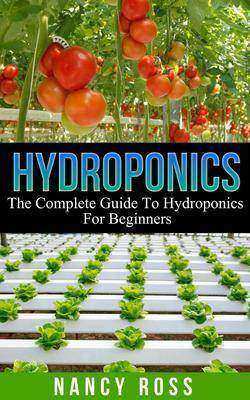
Hydroponics: The Complete Guide To Hydroponics For Beginners
¥7.66
DISCOVER THE TIPS YOU NEED TO START YOUR OWN HYDROPONICS GARDEN!!! Here Is A Preview Of What You'll Learn... BENEFITS OF HYDROPONICSCHOOSING YOUR HYDROPONICS SYSTEMPLANT NUTRITIONFINDING THE RIGHT LIGHTINGGROWING YOUR PLANTSMAKING ROOM FOR THE HYDROPONICS ? ? ? ? ? ? ? ? ? ? ? SYSTEMTIPS TO PREVENT ISSUESMUCH, MUCH, MORE!
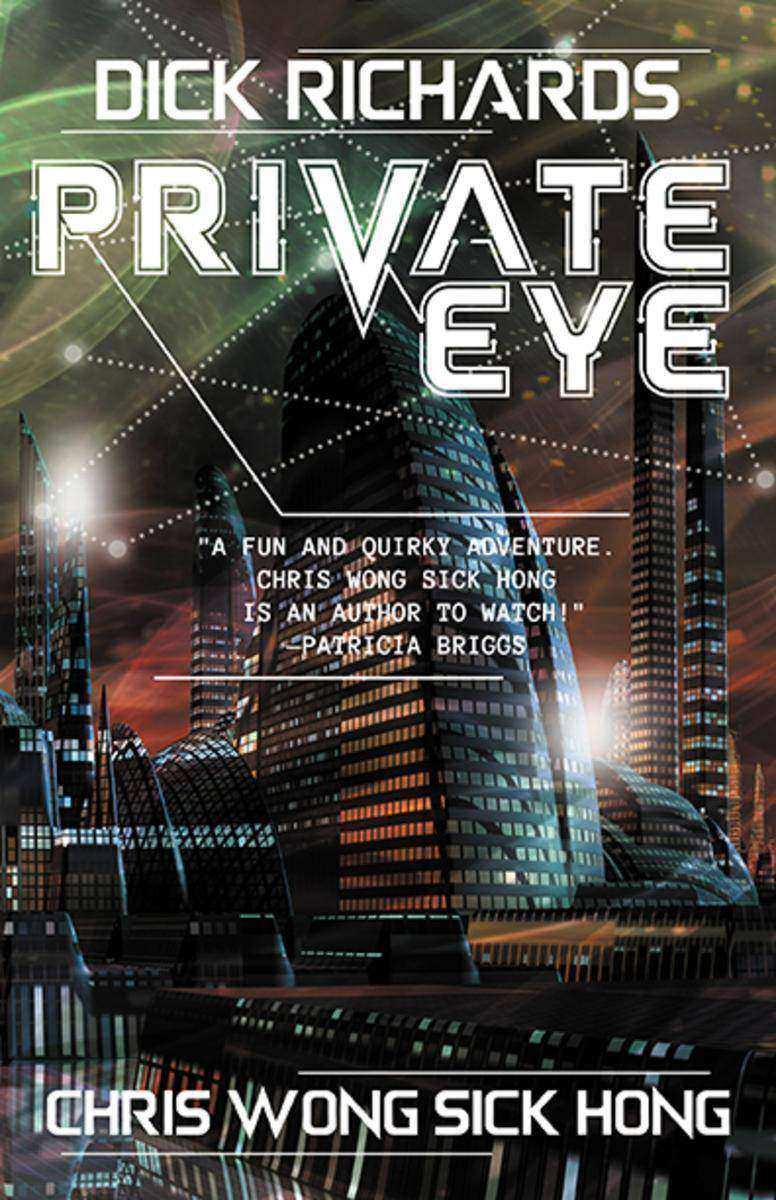
Dick Richards: Private Eye
¥23.14
"A fun and quirky adventure. Chris Sick Hong is an author to watch!" - Patricia Briggs Dick Richards lives and breathes a world full to bursting with technology and magic, wonder and whimsy. Skyscrapers kiss the edge of space, the magical races are quietly mixing back into thronging humanity, and itinerant superheroes are one step ahead of the law. Dick is at home in the seamy underbelly of this world—if you wrung his coat, it would drip cynicism. But when his latest case endangers his friends...?it becomes personal. ____________________________________________________________ Join Dick Richards on his next adventure! The 2nd part of the series,? Dick Richards: Planeswalker is now available as an ebook.?? Readers' reviews “ Chris Sick Hong knows his craft well and strikes a daring pose with DICK RICHARDS, PRIVATE EYE. Entertaining, informed and informing, humor and action driven, this Noir Cyberpunk adventure is sure to thrill and entertain. With tinges of Harrison’s Stainless Steel Rat and Gibson’s Burning Chrome, DICK RICHARDS forges a unique alloy of fantasy, magic, and science into an engaging and entertaining story. ”?- Kevin Noel Olson, author of TOCSIN CODEX " This is such a fun, quirky book. So many authors do the noir style badly, but Chris absolutely nails it. In a futuristic world that's like Blade Runner with elves, a jaded private detective gets drawn into a case that becomes increasingly dangerous...and increasingly personal. " - 5 star review on Goodreads? "I loved this book from start to finish. The world is engaging, the characters are colorful and interesting. The plot is engaging and dynamic. If you are a fan of the sci-fi genre, this is a great book to read. " - 5 star review on Amazon " I definitely recommend this to anyone looking for a fresh take on the traditional detective/mystery story. " - 4 star review on Amazon

My Brother’s War
¥38.62
It’s 1914 – the biggest war the world has known has just broken out in Europe. Far away in New Zealand, William is keen to join up and fight the Germans but his younger brother, Edmund, is totally against the war and refuses to fight. While William trains to be a soldier, Edmund is arrested for being a ‘conchie’ and locked up in prison. Then he too is made to work for the army. What happens on the terrible battlefields in France? Will either brother live to fight another day? This book is a triple award-winner by acclaimed New Zealand writer of YA fiction, David Hill.
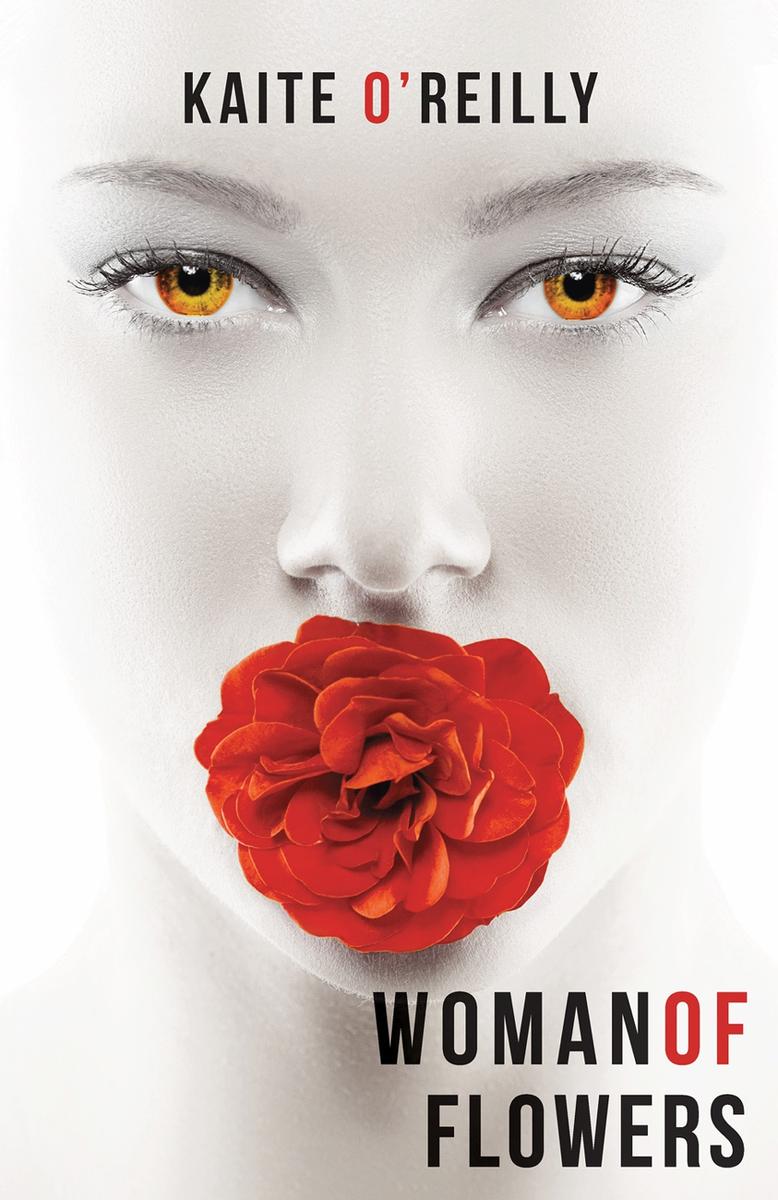
Woman of Flowers
¥40.79
Rose cannot remember what came before the house at the edge of the forest. Gwynne says he magicked her out of the flowers, but she’s not so sure. She has played the part of the perfect farmer’s wife for Lewis, who is kept firmly in place by his uncle Gwynne, and accepted her lonely existence. Then a stranger is seen in the forest. What lengths will she go to, to escape the life chosen for her? A contemporary tale of desire, beauty, betrayal and revenge. Award-winning Kaite O’Reilly has written for National Theatre Wales and the London 2012 Cultural Olympiad. Her work has been produced across the UK and internationally. Her awards include the Peggy Ramsay Award, and the Ted Hughes prize for New Works in Poetry.
Ein Sommernachtstraum - Mid-Summer Night's Dream
¥8.09
Shakespeare-Kom?die, ins Deutsche übersetzt. Laut Wikipedia: "Ein Sommernachtstraum ist ein Stück, das von William Shakespeare geschrieben wurde. Es soll zwischen 1590 und 1596 geschrieben worden sein. Es zeigt die Ereignisse um die Hochzeit des Herzogs von Athen, Theseus und der K?nigin von die Amazonen, Hippolyta.Sie schlie?en die Abenteuer von vier jungen athenischen Liebhabern und einer Gruppe von 6 Laiendarstellern ein, die von den Feen, die den Wald bewohnen, in dem das meiste Stück spielt, manipuliert werden.Das Stück ist eines von Shakespeares beliebtesten Werken für die Bühne und wird auf der ganzen Welt weit verbreitet. "
Mozart, the Man and the Artist, as Revealed in His Own Words
¥8.09
Biography, first published in1905. According to Wikipedia: "Wolfgang Amadeus Mozart (27 January 1756 – 5 December 1791), was a prolific and influential composer of the Classical era. He composed over 600 works, many acknowledged as pinnacles of symphonic, concertante, chamber, piano, operatic, and choral music. He is among the most enduringly popular of classical composers. Mozart showed prodigious ability from his earliest childhood in Salzburg. Already competent on keyboard and violin, he composed from the age of five and performed before European royalty; at 17 he was engaged as a court musician in Salzburg, but grew restless and traveled in search of a better position, always composing abundantly. While visiting Vienna in 1781, he was dismissed from his Salzburg position. He chose to stay in the capital, where he achieved fame but little financial security. During his final years in Vienna, he composed many of his best-known symphonies, concertos, and operas, and the Requiem. The circumstances of his early death have been much mythologized. He was survived by his wife Constanze and two sons. Mozart learned voraciously from others, and developed a brilliance and maturity of style that encompassed the light and graceful along with the dark and passionate—the whole informed by a vision of humanity "redeemed through art, forgiven, and reconciled with nature and the absolute."[2] His influence on subsequent Western art music is profound. Beethoven wrote his own early compositions in the shadow of Mozart, of whom Joseph Haydn wrote that "posterity will not see such a talent again in 100 years."
De Turkey and De Law
¥8.09
According to Wikipedia: "Zora Neale Hurston (January 7, 1891 – January 28, 1960) was an American folklorist and author during the time of the Harlem Renaissance, best known for the 1937 novel Their Eyes Were Watching God. In 2002, scholar Molefi Kete Asante listed Zora Neale Hurston on his list of 100 Greatest African Americans."
Homer's Iliad
¥8.09
Alexander Pope's verse translation (rhyming couplets). With 28 illustrations by John Flaxman. According to Wikipedia: "Homer is a legendary ancient Greek epic poet, traditionally said to be the author of the epic poems the Iliad and the Odyssey. The ancient Greeks generally believed that Homer was a historical individual, but modern scholars are skeptical: no reliable biographical information has been handed down from classical antiquity, and the poems themselves manifestly represent the culmination of many centuries of oral story-telling and a well-developed "formulaic" system of poetic composition. According to Martin West, "Homer" is "not the name of a historical poet, but a fictitious or constructed name." The poems are now widely regarded as the culmination of a long tradition of orally composed poetry, but the way in which they reached their final written form, and the role that an individual poet, or poets, played in this process is disputed... Alexander Pope (21 May 1688 – 30 May 1744) was an 18th-century English poet, best known for his satirical verse and for his translation of Homer. Famous for his use of the heroic couplet, he is the third-most frequently quoted writer in The Oxford Dictionary of Quotations, after Shakespeare and Tennyson... John Flaxman R.A. (6 July 1755 – 7 December 1826) was a British sculptor and draughtsman, and a leading figure in British and European Neoclassicism. Early in his career he worked as a modeller for Josiah Wedgwood's pottery. He spent several years in Rome, where he produced his first book illustrations. He was a prolific maker of funerary monuments."
Imaginary Invalid
¥8.09
According to Wikipedia: "The Imaginary Invalid (French: Le malade imaginaire) is a 1673 three-act comédie-ballet by the French playwright Molière with dance sequences and musical interludes by Marc-Antoine Charpentier. It was originally choreographed by Pierre Beauchamp. Molière had fallen out with the powerful court composer Jean-Baptiste Lully, with whom he had pioneered the comédie-ballet form a decade earlier, and had opted for the collaboration with Charpentier, Lully's rival and arguably a more gifted composer. Le malade imaginaire would turn out to be his last work. He collapsed during his fourth performance as Argan on 17 February and died soon after. Beyond the obvious irony, given the play's title, it is possible that Molière was poisoned by Lully, or at the jilted collaborator's instigation."
The Life and Death of Lord Cromwell
¥8.09
Elizabethan play, sometimes attributed in part to Shakespeare. According to Wikipedia: "William Shakespeare (baptised 26 April 1564 – died 23 April 1616) was an English poet and playwright, widely regarded as the greatest writer in the English language and the world's pre-eminent dramatist. He is often called England's national poet and the "Bard of Avon" (or simply "The Bard"). His surviving works consist of 38 plays, 154 sonnets, two long narrative poems, and several other poems. His plays have been translated into every major living language, and are performed more often than those of any other playwright."
The Admirable Crichton
¥8.09
Four-act play, first published in 1902. According to Wikipedia: "Sir James Matthew Barrie, 1st Baronet, (9 May 1860 – 19 June 1937) was a Scottish author and dramatist, best remembered today as the creator of Peter Pan. The child of a family of small-town weavers, he was educated in Scotland. He moved to London, where he developed a career as a novelist and playwright. There he met the Llewelyn Davies boys who inspired him in writing about a baby boy who has magical adventures in Kensington Gardens (included in The Little White Bird), then to write Peter Pan, or The Boy Who Wouldn't Grow Up, a "fairy play" about this ageless boy and an ordinary girl named Wendy who have adventures in the fantasy setting of Neverland. This play quickly overshadowed his previous work and although he continued to write successfully, it became his best-known work, credited with popularising the name Wendy, which was very uncommon previously.[1] Barrie unofficially adopted the Davies boys following the deaths of their parents. Before his death, he gave the rights to the Peter Pan works to Great Ormond Street Hospital, which continues to benefit from them."
Greek Sculpture: A Collection of 16 Pictures of Greek Marbles (Illustrated)
¥8.09
A collection of 16 pictures of Greek marbles (black and white), with introduction and interpretation by Estelle Hurll. According to Wikipedia: "Estelle May Hurll (1863–1924), a student of aesthetics, wrote a series of popular aesthetic analyses of art in the early twentieth century.Hurll was born 25 July 1863 in New Bedford, Massachusetts, daughter of Charles W. and Sarah Hurll. She attended Wellesley College, graduating in 1882. From 1884 to 1891 she taught ethics at Wellesley. Hurll received her A.M. from Wellesley in 1892. In earning her degree, Hurll wrote Wellesley's first master's thesis in philosophy under Mary Whiton Calkins; her thesis was titled "The Fundamental Reality of the Aesthetic." After earning her degree, Hurll engaged in a short career writing introductions and interpretations of art, but these activities ceased before she married John Chambers Hurll on 29 June 1908."


