


 购物车
购物车 个人中心
个人中心
The Winter's Tale, with line numbers
¥8.09
Classic Shakespearean romance, with line numbers. According to Wikipedia: "The Winter's Tale is a play by William Shakespeare, first published in the First Folio in 1623. Although it was listed as a comedy when it first appeared, some modern editors have relabeled the play a romance. Some critics, among them W. W. Lawrence ... consider it to be one of Shakespeare's "problem plays", because the first three acts are filled with intense psychological drama, while the last two acts are comedic and supply a happy ending."
Among the Great Masters of Music
¥8.09
First published in 1906. 32 illustrations. Chapters cover: St. Cecilia, Palestrina, Lulli, Stradivarius, Tartini, Bach, Handel, Bluck, Mozart, Linley, Haydn, Web, Beethoven, Schubert, Rouget de Lisle, Paganini, Mendelssohn, Chopin, Meyerbeer, Wagner, and Liszt.
Renaissance in Italy: The Age of the Despots
¥8.09
According to Wikipedia: "John Addington Symonds (5 October 1840 - 19 April 1893) was an English poet and literary critic… Meanwhile he was occupied with his major work, Renaissance in Italy, which appeared in seven volumes at intervals between 1875 and 1886. The Renaissance had been the subject of Symonds' prize essay at Oxford, and this had aroused a desire to produce a more complete picture of the reawakening of art and literature in Europe... He practically made his home at Davos. A charming picture of his life there is drawn in Our Life in the Swiss Highlands (1891). Symonds became a citizen of the town; he took part in its municipal business, made friends with the peasants and shared their interests. There he wrote most of his books: biographies of Shelley (1878), Philip Sidney (1886), Ben Jonson (1886) and Michelangelo (1893), several volumes of poetry and essays, and a translation of the Autobiography of Benvenuto Cellini (1887). There, too, he completed his study of the Renaissance, the work for which he is mainly remembered."
Renaissance in Italy: The Fine Arts
¥8.09
According to Wikipedia: "John Addington Symonds (5 October 1840 - 19 April 1893) was an English poet and literary critic… Meanwhile he was occupied with his major work, Renaissance in Italy, which appeared in seven volumes at intervals between 1875 and 1886. The Renaissance had been the subject of Symonds' prize essay at Oxford, and this had aroused a desire to produce a more complete picture of the reawakening of art and literature in Europe... He practically made his home at Davos. A charming picture of his life there is drawn in Our Life in the Swiss Highlands (1891). Symonds became a citizen of the town; he took part in its municipal business, made friends with the peasants and shared their interests. There he wrote most of his books: biographies of Shelley (1878), Philip Sidney (1886), Ben Jonson (1886) and Michelangelo (1893), several volumes of poetry and essays, and a translation of the Autobiography of Benvenuto Cellini (1887). There, too, he completed his study of the Renaissance, the work for which he is mainly remembered."

The Importance of Being Earnest: A Trivial Comedy for Serious People
¥8.09
Wilde's best-known play. According to Wikipedia: "Oscar Fingal O'Flahertie Wills Wilde (1854 - 1900) was an Irish playwright, novelist, poet, and author of short stories. Known for his barbed wit, he was one of the most successful playwrights of late Victorian London, and one of the greatest celebrities of his day. As the result of a famous trial, he suffered a dramatic downfall and was imprisoned for two years of hard labour after being convicted of the offence of 'gross indecency.'"
Le Roi Jean (King John in French)
¥8.09
L'histoire de Shakespeare joue King John, en traduction fran?aise. Selon Wikipedia: "La vie et la mort du roi John, une pièce d'histoire de William Shakespeare, dramatise le règne de John, roi d'Angleterre (gouverné 1199-1216), fils d'Henri II d'Angleterre et d'Aliénor d'Aquitaine et père de Henry III d'Angleterre On pense qu'il a été écrit au milieu des années 1590, mais il n'a pas été publié avant d'être publié dans le premier folio en 1623. "
Henry V in French
¥8.09
Pièce d'histoire de Shakespeare, Henry V, en traduction fran?aise. Selon Wikipédia: "Henry V est une pièce d'histoire de William Shakespeare, dont on pense qu'elle a été écrite vers 1599. Ses titres complets sont The Cronicle History of Henri Quint (dans le texte du premier quarto) et The Life of Henry the Fifth (dans le premier texte du Folio) raconte l'histoire du roi Henry V d'Angleterre, en se concentrant sur les événements qui ont précédé et suivi la bataille d'Azincourt (1415) pendant la guerre de Cent Ans.
Henri VI, Premiere Partie (Henry VI Part I in French)
¥8.09
Pièce d'histoire de Shakespeare, Henry VI Part One, en traduction fran?aise. Selon Wikipédia: "Henry VI, Part 1 ou la première partie de Henry le Sixt (souvent écrit comme 1 Henry VI) est une pièce d'histoire de William Shakespeare, et peut-être Thomas Nashe, qui aurait été écrit en 1591, et mis en La vie du roi Henry VI d'Angleterre Alors que 2 Henri VI traite de l'incapacité du roi à réprimer les querelles de ses nobles et de l'inévitabilité des conflits armés, 3 Henry VI traite des horreurs de ce conflit, 1 Henry VI traite de la perte des territoires fran?ais de l'Angleterre et les machinations politiques menant aux guerres des roses, comme le système politique anglais est déchiré par les querelles personnelles et la jalousie mesquine.
Henri VI, Seconde Partie (Henry VI Part II in French)
¥8.09
Pièce d'histoire de Shakespeare, Henry VI Deuxième partie, en traduction fran?aise. Selon Wikipédia: "Henry VI, Part 2 ou la deuxième partie de Henry le Sixt (souvent écrit comme 2 Henry VI) est une pièce d'histoire de William Shakespeare qui aurait été écrite en 1591, et placée pendant la vie du roi Henri VI Alors que 1 Henri VI traite principalement de la perte des territoires fran?ais de l'Angleterre et des machinations politiques menant aux guerres des Roses, et 3 Henry VI traite des horreurs de ce conflit, 2 Henri VI se concentre sur l'incapacité du roi à apaiser les querelles de ses nobles, la mort de son conseiller de confiance, le duc Humphrey de Gloucester, l'ascension du duc d'York et l'inévitabilité des conflits armés, ce qui aboutit à la première bataille de la guerre, la première bataille de St Albans. "
The Old Debauchees
¥8.09
Play first published in 1732. According to Wikipedia: "Henry Fielding (22 April 1707 – 8 October 1754) was an English novelist and dramatist known for his rich earthy humour and satirical prowess, and as the author of the novel Tom Jones. Aside from his literary achievements, he has a significant place in the history of law-enforcement, having founded (with his half-brother John) what some have called London's first police force, the Bow Street Runners, using his authority as a magistrate. His younger sister, Sarah, also became a successful writer."
Barrack Room Ballads
¥8.09
Dodo Collections brings you another classic from Rudyard Kipling, ‘Barrack Room Ballads.’ ? The Barrack-Room Ballads is a series of songs and poems by Rudyard Kipling, dealing with the late-Victorian British Army and mostly written in a vernacular dialect. ? The series contains some of Kipling's most well-known work, including the poems "Gunga Din", "Tommy" and "Danny Deever", and helped consolidate his early fame as a poet. ? Joseph Rudyard Kipling was an English short-story writer, poet, and novelist. He wrote tales and poems of British soldiers in India and stories for children. He was born in Bombay, in the Bombay Presidency of British India, and was taken by his family to England when he was five years old. ? Kipling's works of fiction include The Jungle Book (1894), Kim (1901), and many short stories, including "The Man Who Would Be King" (1888). His poems include "Mandalay" (1890), "Gunga Din" (1890), "The Gods of the Copybook Headings" (1919), "The White Man's Burden" (1899), and "If—" (1910). He is regarded as a major innovator in the art of the short story; his children's books are classics of children's literature; and one critic described his work as exhibiting "a versatile and luminous narrative gift". ? Kipling was one of the most popular writers in England, in both prose and verse, in the late 19th and early 20th centuries. Henry James said: "Kipling strikes me personally as the most complete man of genius (as distinct from fine intelligence) that I have ever known." In 1907, he was awarded the Nobel Prize in Literature, making him the first English-language writer to receive the prize, and its youngest recipient to date Among other honours, he was sounded out for the British Poet Laureateship and on several occasions for a knighthood, all of which he declined.
Drum-Taps
¥8.09
Dodo Collections brings you another classic from Walt Whitman, ‘Drum-Taps’. Drum-taps is a collection of poetry by Walt Whitman first published in 1865. The collection originally consisted of 53 poems (not including the 18 poems of Sequel to Drum-Taps added later in the year). Walter "Walt" Whitman (May 31, 1819 – March 26, 1892) was an American poet, essayist and journalist. A humanist, he was a part of the transition between transcendentalism and realism, incorporating both views in his works. Whitman is among the most influential poets in the American canon, often called the father of free verse. His work was very controversial in its time, particularly his poetry collection Leaves of Grass, which was described as obscene for its overt sexuality. Born in Huntington on Long Island, Whitman worked as a journalist, a teacher, a government clerk, and—in addition to publishing his poetry—was a volunteer nurse during the American Civil War. Early in his career, he also produced a temperance novel, Franklin Evans (1842). Whitman's major work, Leaves of Grass, was first published in 1855 with his own money. The work was an attempt at reaching out to the common person with an American epic. He continued expanding and revising it until his death in 1892. After a stroke towards the end of his life, he moved to Camden, New Jersey, where his health further declined. When he died at age 72, his funeral became a public spectacle. Whitman's sexuality is often discussed alongside his poetry. Though biographers continue to debate his sexuality, he is usually described as either homosexual or bisexual in his feelings and attractions. However, there is disagreement among biographers as to whether Whitman had actual sexual experiences with men. Whitman was concerned with politics throughout his life. He supported the Wilmot Proviso and opposed the extension of slavery generally. His poetry presented an egalitarian view of the races, though his attitude in life reflected many of the racial prejudices common to nineteenth-century America and his opposition to slavery was not necessarily based on belief in the equality of races per se. At one point he called for the abolition of slavery, but later he saw the abolitionist movement as a threat to democracy.
Les Joyeuses Bourgeoises de Windsor (The Merry Wives of Windsor in French)
¥8.09
Comédie Shakespeare, traduit en fran?ais. Selon Wikipedia: "The Merry Wives of Windsor est une comédie de William Shakespeare, publiée pour la première fois en 1602, mais qui aurait été écrite avant 1597. Elle présente le gros chevalier Sir John Falstaff, et est la seule pièce de Shakespeare vie contemporaine de la classe moyenne anglaise élisabéthaine. "
Sonnets from the Portuguese
¥8.09
Very short collection of love poems. According to Wikipedia: "Elizabeth Barrett Browning (1806 – 1861) was one of the most respected poets of the Victorian era."
Waste Land
¥8.09
According to Wikipedia, "The Waste Land is a 434-line Modernist poem by T. S. Eliot published in 1922. It has been called "one of the most important poems of the 20th century." Despite the poem's obscurity-its shifts between satire and prophecy, its abrupt and unannounced changes of speaker, location and time, its elegiac but intimidating summoning up of a vast and dissonant range of cultures and literatures-the poem has become a familiar touchstone of modern literature. Among its famous phrases are "April is the cruellest month" (its first line); "I will show you fear in a handful of dust"; and (its last line) the mantra in the Sanskrit language "Shantih shantih shantih." Thomas Stearns Eliot (September 26, 1888 - January 4, 1965) was an American-born English poet, playwright, and literary critic, arguably the most important English-language poet of the 20th century. The poem that made his name, The Love Song of J. Alfred Prufrock started in 1910 and published in Chicago in 1915-is regarded as a masterpiece of the modernist movement. He followed this with what have become some of the best-known poems in the English language, including Gerontion (1920), The Waste Land (1922), The Hollow Men (1925), Ash Wednesday (1930), and Four Quartets (1945). He is also known for his seven plays, particularly Murder in the Cathedral (1935). He was awarded the Nobel Prize in Literature in 1948."
King John/ Leben und Tod des Konigs Johann: Bilingual edition
¥8.09
Bilingual, English and German. Shakespeare history play King John, in English with line numbers and in German translation. According to Wikipedia: "The Life and Death of King John, a history play by William Shakespeare, dramatises the reign of John, King of England (ruled 1199–1216), son of Henry II of England and Eleanor of Aquitaine and father of Henry III of England. It is believed to have been written in the mid-1590s but was not published until it appeared in the First Folio in 1623." Zweisprachig, Englisch und Deutsch. Shakespeare Geschichte spielen King John, in Englisch mit Zeilennummern und in deutscher ?bersetzung. Laut Wikipedia: "Das Leben und der Tod von K?nig John, ein Geschichtsstück von William Shakespeare, dramatisiert die Herrschaft von John, K?nig von England (regierte 1199-1216), Sohn von Heinrich II. Von England und Eleonore von Aquitanien und Vater von Henry Es wird angenommen, dass es in der Mitte der 1590er Jahre geschrieben wurde, aber nicht ver?ffentlicht wurde, bis es im Ersten Folio 1623 erschien.
Der Kaufmann von Venedig
¥8.09
Shakespeare-Kom?die in deutscher ?bersetzung. Laut Wikipedia: "The Merchant of Venice" ist eine tragische Kom?die von William Shakespeare, die vermutlich zwischen 1596 und 1598 entstanden ist. Obwohl sie im First Folio als Kom?die klassifiziert wurde und gewisse Aspekte mit Shakespeares anderen romantischen Kom?dien teilt, ist das Stück vielleicht Die meisten werden für ihre dramatischen Szenen in Erinnerung bleiben und sind am besten für Shylock und die berühmte Rede "Hath not a jude eyes" bekannt. Bemerkenswert ist auch Portis Rede über die "Qualit?t der Barmherzigkeit". "

Back to Methuselah
¥8.09
According to Wikipedia: "Back to Methuselah (A Metabiological Pentateuch), by George Bernard Shaw consists of a preface (An Infidel Half Century) and a series of five plays: In the Beginning: B.C. 4004 (In the Garden of Eden), The Gospel of the Brothers Barnabas: Present Day, The Thing Happens: A.D. 2170, Tragedy of an Elderly Gentleman: A.D. 3000, and As Far as Thought Can Reach: A.D. 31,920. All were written during 1918-20, published simultaneously by Constable (London) and Brentano's (New York) in 1921, and first performed in the United States in 1922 by the New York Theatre Guild at the old Garrick Theatre and, in Britain, at the Birmingham Repertory Theatre in 1923." According to Wikipedia: "George Bernard Shaw (26 July 1856 – 2 November 1950) was an Irish playwright and a co-founder of the London School of Economics. Although his first profitable writing was music and literary criticism, in which capacity he wrote many highly articulate pieces of journalism, his main talent was for drama, and he wrote more than 60 plays. Nearly all his writings deal sternly with prevailing social problems, but have a vein of comedy to make their stark themes more palatable. Shaw examined education, marriage, religion, government, health care, and class privilege. He was most angered by what he perceived as the exploitation of the working class, and most of his writings censure that abuse. An ardent socialist, Shaw wrote many brochures and speeches for the Fabian Society. He became an accomplished orator in the furtherance of its causes, which included gaining equal rights for men and women, alleviating abuses of the working class, rescinding private ownership of productive land, and promoting healthy lifestyles."

Wie Es Euch Gefallt - As You Like It
¥8.09
Shakespeare-Kom?die, in deutscher ?bersetzung. Laut Wikipedia: "As You Like It" handelt es sich um eine Pastoralkom?die von William Shakespeare, die vermutlich im Jahr 1599 oder Anfang 1600 geschrieben und erstmals im First Folio 1623 ver?ffentlicht wurde. Die erste Aufführung des Stücks ist ungewiss, obwohl eine Aufführung im Wilton House in 1603 wurde als eine M?glichkeit vorgeschlagen, wie Sie es m?gen, folgt seine Heldin Rosalind, wie sie Verfolgung in Hof ihres Onkels flieht, begleitet von ihrer Cousine Celia und Touchstone der Hofnarr, um Sicherheit und schlie?lich Liebe im Wald von Arden zu finden.
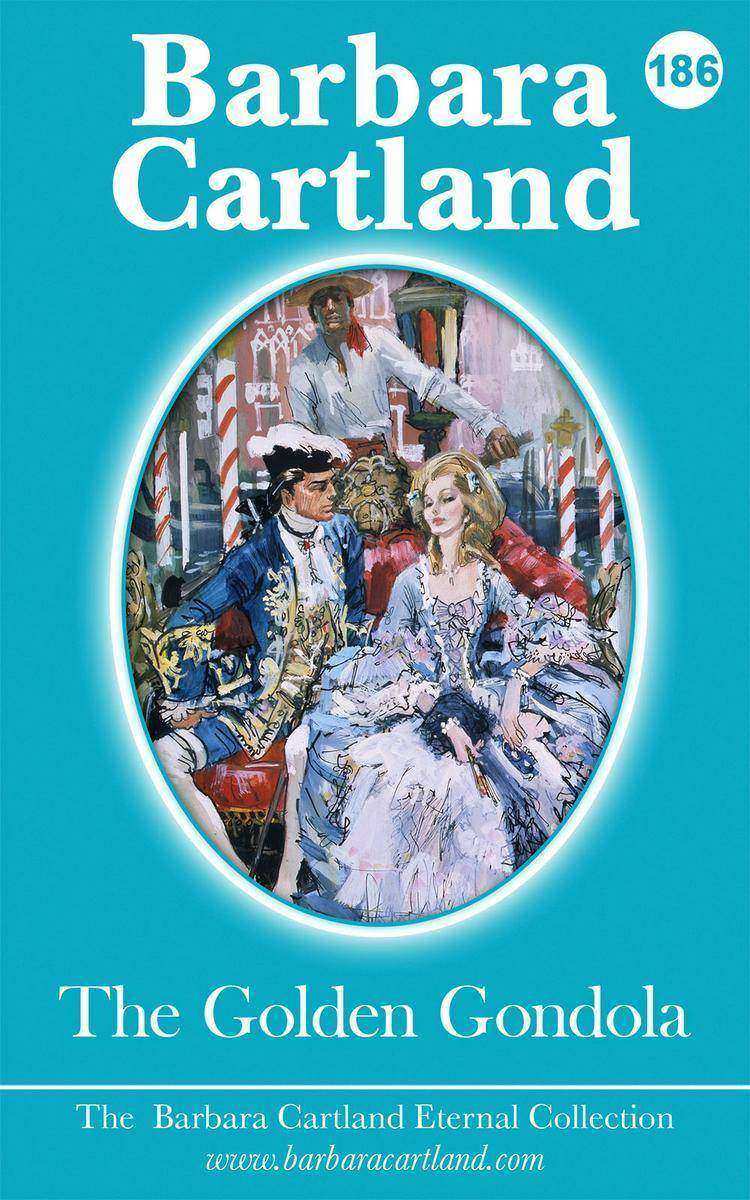
The Golden Gondola
¥52.40
The beautiful but innocent Paolina Mansfield almost loses her life when the ship that she is a passenger on is tragically wrecked in a storm off the coast of Italy. All aboard, including her father were lost, except just for herself and her handsome rescuer, Sir Harvey Drake, who is a descendant of the famous Sir Francis Drake himself. Already reduced to the point of penury by her father’s addiction to endless gambling, Paolina now has nothing left in her life and no family or friends to come to her aid. But Sir Harvey, by his own admission a ‘gentleman adventurer’, devises a grand plan for her that would save them both, as he also has many financial problems of own in Endland. As Paolina is so beautiful and captivating, he intends to marry her off to a wealthy suitor in Italy and share the resulting riches with her.? Presented to the highest echelons of Venice Society as his sister, Paolina’s demure beauty instantly bewitches some of Venice’s most illustrious and eligible gentlemen and she is overwhelmed by amorous approaches especially from the sinister and extremely rich Duke of Ferrara. Yet she is deeply unhappy. Because it seems that Paolina is condemned to marry someone she does not and cannot love and she has already lost her heart to her swashbuckling but penniless saviour.
Le Roi Lear (King Lear in French)
¥8.09
Traduit par Fran?ois Pierre Guillaume Guizot (1787 - 1874), historien fran?ais et homme d'?tat. Publié en 1864. Selon Wikipedia: "Le Roi Lear est une tragédie de William Shakespeare: le personnage titre descend dans la folie après avoir bêtement disposé de ses biens entre deux de ses trois filles en raison de leur flatterie, ce qui entra?ne des conséquences tragiques pour tous. basé sur la légende de Leir of Britain, un roi celtique pré-romain mythologique, il a été largement adapté à la scène et au cinéma, et le r?le de Lear a été convoité et joué par de nombreux acteurs parmi les plus accomplis au monde.


