


 购物车
购物车 个人中心
个人中心

Consulting Demons
¥101.00
In this gripping and colorful account of the American dream gone astray, Lewis Pinault provides the essential guidelines on how to get ahead and an enlightening perspective on the brutal infighting that can engulf even the most civilized consulting firm. This stunning expose of some of the most prestigious and respected names in the business leads you into a world where a client's interests are skillfully subordinated to those of the consultants, where money rules the day, and where principles and morals are unwelcome baggage.Humorous and insightful, this no-holds-barred account takes you behind the scenes of the dehumanizing indoctrination of an academic intellectual into an exploitative -- and exploited -- "global transformation contractor." Featuring new material dealing with the e-consulting industry's boom, bust, and its future, Consulting Demons offers the most complete look at an industry that exacts the highest prices for the most questionable standards of success.
Integrity
¥105.17
Integrity more than simple honesty, it's the key to success. A person with integrity has the ability to pull everything together, to make it all happen no matter how challenging the circumstances. Drawing on experiences from his work, Dr. Henry Cloud, a clinical psychologist, leadership coach, corporate consultant and nationally syndicated radio host, shows how our character can keep us from achieving all we want to (or could) be. In Integrity, Dr. Cloud explores the six qualities of character that define integrity, and how people with integrity: Are able to connect with others and build trust Are oriented toward reality Finish well Embrace the negative Are oriented toward increase Have an understanding of the transcendent Integrity is not something that you either have or don't, but instead is an exciting growth path that all of us can engage in and enjoy.
Winning the NFL Way
¥90.77
Being an NFL coach is the ultimate high-pressure job. Every Sunday a coach makes split-second decisions that will not only decide the fate of a game, but also his team's season and, ultimately, his own job.Meet Mike Holmgren, Jon Gruden, John Fox, Andy Reid, and Mike Sherman -- top NFL head coaches whose careers rest on their ability to lead other men to win in the fiercely competitive world of professional football.In this extraordinary collaboration with their agent Bob LaMonte, each of these five coaches shares his leadership principles. LaMonte takes you behind the scenes, where you'll be a fly on the wall as these men reveal how to win beyond the X's and O's. You will see how these successful leaders communicate with different personalities, develop vision, build trust in their people, and win loyalty, as well as overcome adversity and adapt to change.Through their colorful and motivational anecdotes, you'll gain unprecedented insights into the minds of some of the best coaches today and valuable lessons on what it means to be a leader and a champion.

Setting the Table
¥95.11
In October 1985, at age twenty-seven, Danny Meyer, with a good idea and scant experience, opened what would become one of New York City's most revered restaurants Union Square Cafe. Little more than twenty years later, Danny is the CEO of one of the world's most dynamic restaurant organizations, which includes eleven unique dining establishments, each at the top of its game. How has he done itHow has he consistently beaten the odds and set the competitive bar in one of the toughest trades around?In this landmark book, Danny shares the lessons he's learned while developing the winning recipe for doing the business he calls "enlightened hospitality." This innovative philosophy emphasizes putting the power of hospitality to work in a new and counterintuitive way: The first and most important application of hospitality is to the people who work for you, and then, in descending order of priority, to the guests, the community, the suppliers, and the investors. This way of prioritizing stands the more traditional business models on their heads, but Danny considers it the foundation of every success that he and his restaurants have achieved. Some of Danny's other insights: Hospitality is present when something happens for you. It is absent when something happens to you. These two simple concepts for and to express it all. Context, context, context, trumps the outdated location, location, location. Shared ownership develops when guests talk about a restaurant as if it's theirs. That sense of affiliation builds trust and invariably leads to repeat business. Err on the side of generosity: You get more by first giving more. Wherever your center lies, know it, name it, believe in it. When you cede your core values to someone else, it's time to quit. Full of behind-the-scenes history on the creation of Danny's most famous restaurants and the anecdotes, advice, and lessons he has accumulated on his long and ecstatic journey to the top of the American restaurant scene, Setting the Table is a treasure trove of innovative insights that are applicable to any business or organization.
Once Upon a Car
¥99.65
Once Upon a Car is the brilliantly reported inside-the-boardrooms-and-factories story of Detroit's fight for survival, going beyond the headlines to chronicle how the country's Big Three auto companies General Motors, Ford, and Chrysler teetered on the brink of collapse during the 2008 financial crisis. In a tale that reads like a corporate thriller, Bill Vlasic, who has covered the auto industry for more than fifteen years, first for the Detroit News and now for the New York Times, takes readers into the executive offices, assembly plants, and union halls to introduce a cast of memorable characters, many of whom are speaking out for the first time, including the executives who struggled to save their companies but in the end had to seek a controversial, last-gasp rescue from the U.S. government.Vlasic goes behind the scenes to portray the men at the top during Detroit's last stand. Rick Wagoner, the CEO of General Motors, tried to turn around a dying company, only to be forced to resign as a condition of the government bailout. Bill Ford, great-grandson of the legendary Henry Ford, had the will to keep Ford alive but needed the guts to hire an unknown outsider, Alan Mulally, to transform the company before it crashed. At Chrysler, leadership was constantly changing as new owners tried in vain to fix the smallest of the beleaguered Big Three. And through it all, the president of the United Auto Workers union, Ron Gettelfinger, fought to save the jobs of the men and women who build American-made cars and trucks.This tale of an iconic industry in crisis is more than a big business drama and provides a rich, unvarnished portrait of how Detroit's decline affected tens of thousands of workers and dozens of communities nationwide. The story moves from the gleaming corporate skyscrapers and massive auto plants to the halls of the U.S. Congress and into the Oval Office, where President Obama and his aides wrestled with how to keep General Motors and Chrysler from going out of business. Vlasic shows why the bailout worked, and how Detroit can succeed under new leadership and build automobiles equal to any in the world. Once Upon a Car tells a uniquely American tale of success, failure, and redemption. It is an important and illuminating chapter in an astonishing story that is still unfolding. And no one is more qualified to write it than Bill Vlasic.

From Voices to Results - Voice of Customer Questions, Tools and Analysis
¥69.75
Make the right decisions about your products and services by listening effectively to the people that matter – your customers About This Book ? Understand the core components, processes and technologies available for a VOC initiative ? Structure effective VOC programs and turn VOC into actionable product success ? A handy guide to help you identify the hidden needs of your customers and strengthen your relationship with them Who This Book Is For The book is for anyone who needs to get to know their customer, how they feel and what they think about a certain subject. If you are a stakeholder in any project responsible for customer relationships, this book will help you immensely. An awareness of VOC as a topic would be useful, although not essential. What You Will Learn ? Understand different unarticulated needs of your customers ? Deploy effective VOC in your organizations ? Identify and understand the different tools and processes to set up a successful VOC program ? Integrating your findings about your customers into successful products ? Effectively utilize VOC for a successful launch of your product In Detail This book is all about getting to know your customers – what they want and need, what they like and don’t like. Voice of the Customer is one of the most popular forms of market research combining both quantitative and qualitative methods. This book shows you how to engage with customers and understand their wants and needs, likes and dislikes – something which is becoming more in more important with the rise of an increasingly connected world. The book addresses the problem of understanding your customer and engaging with those customers. It also targets people who want to know how to do an effective VOC capture and analysis. As with any engagement/research based initiative, there is also a concern with the ROI. This book shows you how to overcome this problem as well. By the end of this book, you will have a thorough understanding of the relevant stages of a VOC project. It will show you how to devise an effective plan, direct the project to their objectives, and then show you how to collect the voice of the customer, with examples and templates for interviewing and surveying. Style and approach This book is a perfect blend of concepts and real-world use-cases which will help the businesses understand and therefore serve the customers better. Written in a very engaging manner, this book ensures you are able to grasp the theory and apply it in your business seamlessly.
One Minute Mentoring: How to find and work with a mentor - and why you’ll benefi
¥58.86
Ken Blanchard, Ph.D., is the Chief Spiritual Officer of the Ken Blanchard Companies, and a highly sought-after author, speaker, and business consultant. His perennial international bestsellers include The One Minute Manager, Raving Fans, Gung Ho!, and Whale Done!. He lives in California. One of the first employees of Twitter, Claire Diaz-Ortiz is an author, speaker, and businesswoman. She lives in Argentina.
Purposeful Retirement:How to Bring Happiness and Meaning to Your Retirement
¥77.31
Retirement and good living Are you getting ready to simplify life and move from the world of work to a life of retirement and good living ─ to enter a happy retirement? Retirement and good living: The author of Purposeful Retirement, Hyrum W. Smith, is one of the original creators of the popular Franklin Day Planner, the former Chairman and CEO of Franklin Covey Co., and the recognized “Father of Time Management”. In this book, Hyram shows you how you can move from your world of work, simplify life and enter what can be the most satisfying phase of your life ─ a new world of purposeful retirement and good living. Aging well and a happy retirement: You have had a successful career by almost all measures and now you are concerned about aging well and looking toward a happy retirement. You are definitely not a couch potato. ·How are you going to create a retirement that is meaningful and inspiring for your second act? ·Can you simplify life? ·Is there a way to make intelligent and anxiety free retirement planning choices? ·Can you learn from the lives and experiences of people who have found their pathway to happy retirement? ·What are their secrets to aging well and a happy retirement? Retirement guide: For four decades, Hyrum W. Smith has been empowering people to effectively govern their personal and professional lives. An award winning author, distinguished speaker, and successful businessman, Hyrum offers a tested and actionable retirement guide to finding that perfect retirement niche. In his book, Hyrum enables you to map the step-by-step route to a retirement that is not just enjoyable but is also deeply fulfilling on a personal level. Welcome to your new life of retirement and good living: This distinguished author, speaker, and businessman combines wit and enthusiasm with a gift for communicating compelling principles that inspire lasting personal change. Hyrum shares a lifetime of wisdom in this powerful retirement guide to discovering your true passion, re-imagining your life, and trying new possibilities. Welcome to a new life of retirement and good living ─ to a purposeful retirement.
Invest Like A Guru:Introduction To Value Investing
¥73.49
Investing like a guru is a detailed investment introduction book on value investing. The concept that is used by Warren Buffet, Charlie Munger and other billionaire Investors all through history. ?

The Marriage Contract by Honoré de Balzac - Delphi Classics (Illustrated)
¥8.09
This eBook features the unabridged text of ‘The Marriage Contract by Honoré de Balzac - Delphi Classics (Illustrated)’ from the bestselling edition of ‘The Collected Works of Honoré de Balzac’. Having established their name as the leading publisher of classic literature and art, Delphi Classics produce publications that are individually crafted with superior formatting, while introducing many rare texts for the first time in digital print. The Delphi Classics edition of Balzac includes original annotations and illustrations relating to the life and works of the author, as well as individual tables of contents, allowing you to navigate eBooks quickly and easily. eBook features: * The complete unabridged text of ‘The Marriage Contract by Honoré de Balzac - Delphi Classics (Illustrated)’ * Beautifully illustrated with images related to Balzac’s works * Individual contents table, allowing easy navigation around the eBook * Excellent formatting of the text Please visit www.delphiclassics.com to learn more about our wide range of titles

Maps of the Soul
¥90.84
Othman al-Sheikh is running away from the shadows of his past life in a small dusty village in the Libyan Desert. Tripoli, meanwhile, is a city in the process of transformation, moulded to the will of its Italian colonisers. Its decadent entertainments and extravagant riches conceal an underbelly of abject poverty and ruthless plotting. Othman falls for the city and its temptations. With a natural instinct for survival, he tries his luck in the capital, swept along by chance and opportunity.

The Confines of the Shadow: The Colonial Conquest
¥81.67
The Confines of the Shadow is a sequence of novels and short stories that map the transformation of the Libyan city of Benghazi from a sleepy Ottoman backwater in the 1910s to the second capital of an oil-rich kingdom in the 1960s. Alessandro Spina's saga begins in November 1912 with The Young Maronite, which sees Italian soldiers solidifying their control over Libya's coasts, leaving the Libyan rebels to withdraw to the desert and prepare for a war that would last until 1931, when by dint of sheer brutality, including the internment of tens of thousands of civilians into concentration camps, the Italians crushed the rebellion and murdered its widely respected leader, Omar al-Mukhtar. Employing a cosmopolitan array of characters, ranging from Ottoman functionaries, to Sanussi aristocrats and Italian officers, Spina chronicles Italy's colonial experience from the euphoria of conquest - giving us a front row seat to the rise and subsequent fall of Fascism in the aftermath of World War II - to the country's independence in the 1950s. Spina finally concludes his narrative with the discovery of Libya's vast oil and gas reserves, which triggered the tumultuous changes that led to Muammar Gaddafi's forty-two-year dictatorship. Distinguishing themselves by their intimate understanding of East and West, the novels that comprise The Confines of the Shadow are among the most significant achievements of 20th-century fiction and stand unchallenged as the only multi-generational epic about the European experience in North Africa. This is the first instalment of a three-volume translation, and it includes The Young Maronite, The Marriage of Omar and The Nocturnal Visitor, which are set between 1912 and 1927.

YOUTUBE ADS for MAXIMUM PROFITS
¥46.36
Step-By-Step Guide Makes It Easy To Get Targeted Traffic That Converts For Pennies Per Click With YouTube Advertising… YouTube is the 2nd BIGGEST search engine ?on the? internet?? has over 1 Billion users with hundreds of millions of hours of YouTube videos being watched daily with full engagement? YOUTUBE? ADS? for MAXIMUM? PROFITS Although often overlooked, YouTube advertising is one of the fastest, easiest ways to get affordable traffic flowing quickly… Engagement on YouTube is MASSIVE, and growing, with a 60% year over year increase in the number of hours people spend watching video… this means your ads get clicked It’s pretty obvious that YouTube is big and getting BIGGER… which means the advertising opportunity is MASSIVE! But, To See Success With YouTube Ads, You Must Know What You’re Doing… You can’t just throw up an ad and expect to start making big profits… Although YouTube ads is a very user-friendly platform, there are some details that you must pay attention to if you want to see success… If you do things the right way, you can find yourself raking in profits like crazy… in many cases right out of the gates… But if you do things wrong, you could find yourself wasting time, spinning your wheels, and ultimately wasting money… And it gets worse… Sadly, Many People That Try To Generate Traffic With YouTube Advertising Fail… That’s because they don’t fully understand what must be done to see success with YouTube ads. The KEY to success with YouTube is to pay attention to the details, and in order to do that, you really need to learn from someone that’s seen massive results from advertising on YouTube. Pay close attention, because today I’m going to show you a system that will take you by the hand and show you how to generate as much targeted traffic as you could ever want with YouTube advertising… This step-by-step guide will show you how to harness the power of YouTube’s ads platform to get fast results and traffic that generates a positive return on your marketing investment… How to get started with YouTube ads even if you’ve never made a video or logged into YouTube in your entire life… Step-by-step instructions to get your YouTube ads setup and ready to start generating traffic within just a few minutes… Creating your first video campaign the right way… Do this right, and you’ll find yourself getting massive ROIs…?? The tools of the trade… You’ll discover exactly which tools you need to get started… I’ll even show you how to start with little to no budget if you’re trying to do this on a shoestring… No camera? No problem… this book reveal the fastest way to create a professional looking video WITHOUT a video camera… using this simple method, you can get started today, even if you don’t have any high-tech equipment… The types of ads that work the best and generate the highest ROI are broken down… you’ll be a YouTube ads expert when you finish this training… The best way to track the success of your campaigns so you know when to call it quits on a campaign and when to scale things up to the next level… What if you could just cut to the chase and start making money right out of the gates? Wouldn’t that make a whole lot more sense? This guide to YouTube advertising was created by someone with experience creating and profiting from winning campaigns… Doesn’t it make more sense to learn from an expert and take a shortcut to success?

How to Get on in the World: A Ladder to Practical Success
¥40.79
The artist's idea of success is very different from that of the business man, and the scientist differs from both, as does the statesman from all three. We read of successful gamblers, burglars or freebooters, but no true success was ever won or ever can be won that sets at defiance the laws of God and man. To win, so that we ourselves and the world shall be the better for our having lived, we must begin the struggle, with a high purpose, keeping ever before our minds the characters and methods of the noble men who have succeeded along the same lines.

The Real Estate Primer:The Golden Rules of Buying and Selling
¥32.62
You would not set out to climb Everest without the right training and equipment. Same with real estate, do not even start unless you know what you are doing. This book can be your guide, it is the result of thirty years in a very competitive real estate market. Let the author walk you through the marketplace in this easy step-by-step guide. This will help you achieve your real estate goals and save your hard earned money. Learn how to: ·Set up your search. ·Assess value. ·Understand the golden rule of real estate. ·Overcome the hurdle of price. ·Read the real estate market. ·Negotiate to buy or sell. ·Auctions. ·Successfully invest. Geoffrey Gibson spent thirty years in the highly competitive real estate market of Sydney's Lower North Shore. He has sold some of Sydney's finest homes, and was also known for his marketing of the area's commercial, retail and industrial property. Learn more at www.GeoffreyGibson.com Business & Economics : Real Estate - Buying & Selling Homes
Social Trading For Beginners
¥16.35
social trading has grown by over 150% in the past two years with sites like eToro gaining over 2 million users. Y You can join in today and start making money just like the pros with no learning. In this guide book we will go though: - ·The best social trading platforms·How to choose a social trading platform·How to create your investors profile·How to choose the best traders: - This is an interactive guide book designed for all social trading beginners, you will also learn other aspects like ·managing your portfolio·how to deal with losing traders get your copy of social trading for dummies and learn how the end of day trading as we know it has come.

The Bitcoin Genesis
¥57.14
Unlike normal (fiat) currencies, bitcoin doesn’t have a central bank or a backing of a national government. Instead, it is regulated by complex algorithms with new coins being mined when computers solve complex equations. All this number crunching is tracked by the blockchain, a public ledger of all transactions which is distributed meaning there is no central point of the network that can be shut down. It’s perhaps analogate to file sharing protocol Bittorrent. You can obtain bitcoin by mining them yourself of buying them from an exchange but for that to happen you will first need a wallet. There are different ways to get a wallet, you can simply store yourself on your hard disk in wallet software running locally or you can use online service and have your coins stored in a cloud. Both have advantages and disadvantages. E.g. if your coins were stored locally, if something was to happen to your computer such as your hard disk getting destroyed you lose your cash. Conversely, if your coins are stored online in an exchange there are more likely to attract hackers. Famously in 2015, Mt. Gox, which was one of the largest bitcoin exchanges was hacked resulting in the virtual highest of 450,000 bitcoins with wooden valued at about 450 million dollars. While some coins have since been recovered, a large number are still missing due to the way the bitcoin protocol works, it's simply wasn't possible to hit the undo button. So, choose your wallet wisely.

Marchizul de Rio-Santo
¥42.92
Strategii verificate pentru succes profesional Dac? ne na?tem to?i cu un creier ?n esen?? asem?n?tor, atunci cum se face c?, ?n istorie, doar pu?ini oameni par s? exceleze cu adev?rat ?i s? ?i ?mplineasc? aceast? putere care exist? latent? ?n to?i? Robert Greene analizeaz? vie?ile mae?trilor pentru a spulbera miturile privind geniul ?i a demonstra c? s?rguin?a, r?bdarea, perseveren?a ?i ?ncrederea joac? un rol mult mai mare ?n ob?inerea succesului dec?t simplele capacit??i intelectuale. Cu ajutorul strategiilor de urmat pentru ?mplinirea poten?ialului ?i respect?nd pa?ii descri?i ?n carte, pa?i pe care i-au urmat, ?n evolu?ia lor profesional?, personalit??i ca Goethe, Einstein, Darwin sau Mozart, ne arat? autorul, ne putem dezvolta talentele cu care am fost ?nzestra?i la na?tere, astfel ?nc?t s? ne g?sim propria chemare ?i s? devenim lideri ?n orice domeniu de activitate.

Cómo ganar $ 100,000 por a?o en ingresos pasivos y viajar por el mundo
¥32.62
"Chase Andrews proporciona la hoja de ruta exacta que puede seguir para obtener $100,000 por a?o en ingresos pasivos." ?Muy valioso y altamente recomendado para aquellos que quieren comenzar a ganar dinero mientras duermen!"“Mark Anastasi, autor del best-seller del New York Times "The Laptop Millionaire”Si su objetivo es una isla remota o simplemente pasa más tiempo con su familia, este libro puede llevarlo allí. Descubra las 14 estrategias de ingresos pasivos que utilizan las personas comunes para recuperar el control de su tiempo y aprovechar al máximo sus vidas. Sí, ahora puede vivir el estilo de vida que siempre ha so?ado y disfrutar de múltiples flujos de ingresos.?Si está cansado de hacer a su jefe rico de trabajar de cheque a cheque, o simplemente quiere mejorar drásticamente su estilo de vida actual, este es el libro que puede cambiar todo.Siga los pasos que se detallan en este libro y tendrá todo esto más pronto de lo que creyó posible.?Millones de personas viven bajo sus propios términos, haciendo lo que aman, trabajando cuando eligen hacerlo, ganando el doble, el triple o más de lo que hicieron en sus trabajos "normales".??Está listo para unirse al movimiento? **Aquí hay una vista previa de lo que aprenderá**?Qué es el ingreso pasivo y por qué lo necesita más de lo que cree?Cómo hacer una fortuna vendiendo eBooks en Amazon Kindle?Cómo encontrar, analizar y vender productos físicos a través del programa FBA de Amazon?Cómo generar seis cifras por a?o en Bienes Raíces comprando solo dos propiedades por a?o?Cómo analizar el mercado de valores y hacer una matanza de opciones de compra y venta?Cómo hacer $ 100,000 por a?o gracias a eBooks?Cómo crear un sitio y monetizar con una guía paso a paso?Cómo crear un blog con una guía paso a paso?Cómo hacer dinero de los sitios de autoridad?Cómo encontrar y vender bienes raíces digitales (sitios web) para obtener enormes ganancias?Cómo convertir su oro y plata en activos que generan ingresos?Cómo crear una cartera de dividendos de seis cifras por a?o??Y mucho más!Obtenga su copia hoy y dé un paso más hacia la libertad financiera
Discipline Your Way to Success: The Definitive Guide to Success Through Self-Dis
¥24.44
Many inspired people miss the opportunities of being gifted the way they are because they don't have the will or the discipline to move the inspiration from their soul to their hands. If you are the kind of person that is full of inspiration, loads of ideas, and have plenty knocking around in your head, but none of that has materialized, then there is a good chance what you need is more discipline.?In most circles among adults, suggesting discipline is problematic because it feels like that word is reserved for kids. Yes, there is one kind of discipline that is reserved for kids. But the kind of discipline that you need to attain the kind of success you are thinking of is very different than the picture that emerges at the invocation of the word. The discipline you need is the kind that will allow you to take control over your thoughts and actions.?We may have all the other attributes that are required to be successful, but if we lack the discipline then all bets are off. That's usually where the problem is when you've gone through tons of books, tons of seminars, and you still can't translate inspiration into action.?This book will show you the reason discipline is elusive to many people and why the lack of success becomes the norm. You can't just turn on discipline in many cases, you need to understand yourself and understand the reason your greatness is stuck within you struggling to come out.?? Don't wait any longer! Scroll up and click the 'Buy Now' button and start instilling more discipline in your life to help achieve your dreams!
Blockchain Technology and DevOps
¥30.88
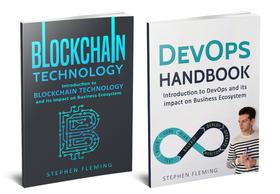
Blockchain Technology & DevOps BundleBook 1- Blockchain Technology: Introduction and its impact on Business EcosystemBLOCKCHAIN TECHNOLOGY BEYOND BITCOIN INVESTING……(Free Blockchain Booklet Inside- Resources for further study)Larry Summers (US Former Treasury Secretary) once exclaimed,” 40 years from now, Blockchain and all that followed from it will figure more prominently in that story than will Bitcoin.”This is the essence of my interest and research in Blockchain Technology. Most of the discussions or information is about Bitcoin investing and its implications on Fintech sector. But what if you have more in-depth curiosity like:- How would Blockchain Technology impact the day to day lives of common people?- How could the government leverage the Blockchain Technology to improve the service delivery?- How would the existing businesses be impacted and integrated with this new Technology?- How the current Businesses and Jobs would be transformed?- What are the other sectors where this Technology have been Implemented?The answer to these questions would pave the way for your future research of the topic. It would also help you to stay ahead of the race by learning the relevant applications of Blockchain Technology. My book is an attempt to understand and look Blockchain Technology beyond investing!Book 2- DevOps Handbook: Introduction and its impact on Business Ecosystem“It is not the strongest of the species that survive, nor the most intelligent, but the one most responsive to change.”- Charles DarwinAs the industry is moving towards maximum digitization there is a consensus that DevOps practices help you deliver software faster, more reliable, and with fewer errors.DevOps is set of practices and cultural values that have been proven to help organizations of all sizes improve their software release cycles, software quality, security, and ability to get rapid feedback on product development.This book is aimed at Consultant, Project Manager and people from techno-commercial profiles who would be explaining the benefits of DevOps to the client, internal leadership or project teams. As the crux of DevOps methodology lies in the cultural transformation of the organization, people who are stakeholders in shaping this change must understand the overall alignment of business goals with this methodology.You would get to explore:? ·What is DevOps·Relationship between Agile, Scrum, Kanban and DevOps·DevOps Adoption: Organizational cultural Change ·Emerging Trends·DevOps success stories In the Free Booklet you will find out: ·DevOps Job Market overview (No. of jobs, Mean salary etc.)·Insights into DevOps job application·People to follow the latest development


