


 购物车
购物车 个人中心
个人中心

Best Practices: Managing People
¥72.70
In today's hypercompetitive business climate, managers who help employees achieve their individual potential stand to get and stay ahead. Managing People, a comprehensive and essential resource for any manager on the run, shows you how.Learn to: Delegate the right work to the right employee Motivate people to outperform the competition Establish and empower effective teams Manage multiple projects and stay on track Inspire trust and lead in times of change The Collins Best Practices guides offer new and seasoned managers the essential information they need to achieve more, both personally and professionally. Designed to provide tried-and-true advice from the world's most influential business minds, they feature practical strategies and tips to help you get ahead.
FairTax: The Truth
¥82.80
In 2005, firebrand radio talk show host Neal Boortz and Georgia congressman John Linder created The FairTax Book, presenting the American public with a bold new plan designed to eliminate federal taxes and the IRS, jump-start the U.S. economy, bring back lost industries and jobs, and recapture billions of untaxed dollars hoarded by criminal and offshore businesses. Their book became an immediate #1 New York Times bestseller, propelling a powerful grassroots tax reform movement that's spreading like wildfire across our nation.Now, three years later, the authors are back to answer the outspoken and misinformed critics of their innovative proposal. Offering eye-opening new insights not covered in the original book, FairTax: The Truth debunks the negative myths and gross misrepresentations of this groundbreaking idea. The FairTax plan is simple, brilliant, and it will work enabling you to keep all the money in your paycheck; eliminating the fraud, hassle, and waste of our current system; and revolutionizing the way America pays for itself.

The One-Life Solution
¥83.03
Do you feel that if you could get rid of some of the chaos in your work life, you could take your performance to a greater levelDo you stay late at the office many nights, trying to empty an inbox that never seems to diminishDo you have difficulty dealing with cantankerous bosses or passive-aggressive coworkersDo you find yourself checking your BlackBerry almost against your will during dates, family dinners, or your children's soccer gamesIf you've answered yes to any of the above, chances are you feel fragmented, pulled in too many directions at once, frustrated. Your work life has taken over your personal life.In The One-Life Solution, Dr. Henry Cloud, consultant, bestselling author of the Boundaries series and Integrity, and clinical psychologist, examines the workplace. He demonstrates how our failure to maintain a unified life with good boundaries at the office not only blurs the line between the professional and the personal, but leaves us less equipped to deal with the problems of today's workplace: stress, heavy workload, and a blistering pace. As a result, we are overworked, overstressed, and unhappier than ever. Through real-world examples from years of working with leaders at companies large and small, Dr. Cloud shows us how to construct and enforce better boundaries against the technological devices, bullying bosses, and distracting coworkers who invade our time and space.From conducting an audit of your time, to developing a policy of who you are and what you stand for, to learning how to overcome a paralyzing inability to say no, Dr. Cloud provides invaluable strategies and *s for moving toward a more unified, coherent sense of self and a life that fully encompasses work, family, and spirituality. In a clear, conversational voice, he will help you develop the ability to: contain self-destructive behavior and keep it from spreading. define yourself and know who you are. set limits when needed. communicate effectively. learn how to improve your performance at the office and outside it. By starting to do what's best for you, you'll find the key to living the one happy, fulfilling life that only you can live.

Your Money or Your Life
¥88.56
As the host of Fox News Channel's Your World with Neil Cavuto and Cavuto on Business, Neil Cavuto reports on today's most influential business leaders and newsmakers. His great talent is to get beneath the issues, connecting people to the events that define them and changing the way that Americans think about their money. Ending each show with a provocative, insightful commentary, Cavuto stirs people to see the world in a new light, calling on them to think beyond the stories at hand and challenging people to reevaluate the world that they live in.In Your Money or Your Life, Cavuto compiles the best of these commentaries in one volume, creating a collection that is at once witty, thought-provoking, and inspiring. Covering a variety of topics from remembering life before 9/11, to providing tips for empty nesters Cavuto presents a wry yet evocative look at our world, one that speaks to the heart of the American condition. Spanning one of the most tumultuous decades in memory from the wild and chaotic Clinton years through the sobering challenges of the War on Terror Cavuto's words offer a window into our America at its best and its worst.
The Motley Fool Million Dollar Portfolio
¥90.77
In this long-anticipated, groundbreaking guide to building a portfolio, acclaimed stock pickers and Internet pioneers David and Tom Gardner lay bare the simple philosophy that they have used to help millions of grateful individual investors outfox the professionals on Wall Street. The research, the stories, and the results that underpin this book stem from the revolutionary and wildly successful "Motley Fool Million Dollar Portfolio"" a one-of-a-kind Web experiment in which individual investors follow along as Motley Fool co-founder Tom Gardner invests and manages $1 million of The Motley Fool's own money. In page after page of sound, sensible investment advice, readers are offered a rare glimpse into the inner workings of The Motley Fool machine and offered a first-class education in building, growing, and defending an individual portfolio, one investment strategy at a time. From learning to think like an investor to finding a first stock, from dividend investing to blue-chip bargains to small-cap treasures, from international investing to community-based online tools that are revolutionizing stock selection and asset allocation, this book takes the reader through the essential strategies for building any portfolio no matter how small its start or how big its ambitions.
Stop Whining--and Start Winning
¥95.39
Filled with the kind of contagious energy and upbeat attitude that has made Frank Pacetta one of America's most popular motivational speakers, this unique book is for anyone who wants a difference in the workplace. Whatever the occupation, organization, or industry, here are tried and tested solutions, techniques, rules and tactics that get the job done right. Whether you're a manager fed up with your worker's ho-hum attitude or an individual who can't seem to live up to your potential no matter how hard you try, this book will give you ideas that can put into immediate action -- a no-fail formula for ending the whining and instilling in yourself and your employees a winning spirit.

Man vs. Markets
¥99.65
After years of TV and radio coverage, gallons of newsprint ink, and billions of scholarly opinions on the blogosphere, do we really understand the financial engineering that brought the global economy to the brink?The terms and acronyms that make up the language of economics are enough to cause the layman's head to start spinning: leverage, securitization, futures, options, MBS, CDS, CDO. Luckily, we have veteran journalist Paddy Hirsch senior producer at APM's Marketplace and acknowledged Whiteboard Guru to help us crack the code. In Man vs. Markets, he proves that it's not impossible to understand what's going on in the glass-and-steel canyons of Wall Street; that most international financial transactions aren't all that different from those taking place every day in stores, in car dealerships, even on the playgrounds of Main Street.BondsThey're basically loans. FuturesYou probably used one when you ordered your Thanksgiving turkey last year. OptionsEver bought a fully transferable, returnable airline ticketThat's pretty much the same thing.With a winning combination of acquired wisdom, common sense, market savvy, and an outrageous sense of humor, Hirsch clearly explains and defines the instruments that power our financial system and very nearly caused its demise. Clever, insightful, hugely educational, and always entertaining, Man vs. Markets translates the often confusing language of finance, enabling every one of us to truly comprehend what makes the markets tick.

Beyond Reengineering
¥90.83
Reengineering has captured the imagination of managers and shareholders alike, sending corporations on journeys of radical business redesign that have already begun to transfigure global industry. Yet aside from earning them improvements in their business performance, the shift into more-process-centered organizations is causing fundamental changes in the corporate world, changes that business leaders are only now beginning to understand. What will the revolutions final legacy beBeyond Reengineering addresses this question, exploring reengineering's effects on such areas as: Jobs: What does process-centering do to the nature of jobsWhat does a process-centered workplace feel likeManagers: What is the new role of the manager in a process-centered companyEducation: What skills are vital in the process-centered working world, and how can young or inexperienced workers prepareSociety: What are the implications of process-centering for employment and the economy as a wholeInvestment: What are the characteristics of a successful 21st-century corporationAn informed look at one of the most profound changes to ever sweep the corporate world, Beyond Reengineering is the business manual for the 21st century.

Womenomics
¥83.03
You are not alone. Finally, here is a book that gets to the heart of what professional women want. You've probably been loath to admit it, but like most of us, you have had enough of the sixty-hour workweeks, the day-care dash, and the vacations that never get taken. You don't want to quit, you want to work but on your own terms and in ways that make it possible to have a life as well.Women have power. In Womenomics, journalists Shipman and Kay deal in facts, not stereotypes, providing a fresh perspective on the largely hidden power that women have in today's marketplace. WhyCompanies with more women managers are more profitable. Women do more of the buying. A talent shortage looms. Younger generations want to work flexibly, too. It all adds up to a workplace revolution that is great news for professional women not to mention men and businesses as well. As Brenda Barnes, CEO of Sara Lee, notes: Companies need to recognize that this kind of flexibility offers employees the ability to manage and balance their own careers and lives, which in turn improves productivity and employee morale.This new way of thinking and working is all the more valuable in a recession, as companies begin offering flexible schedules, four-day workweeks, and extended vacations as a way to avoid layoffs, save costs, and still reward employees. It is personal. Womenomics does more than marshal the evidence of this historic shift. It also shows women how to redefine success, be productive, and build satisfying careers that don't require an all-or-nothing lifestyle. Most appealing are the candid personal anecdotes from Shipman's and Kay's own experiences and the stories they have gathered from professional women around the country who are coping with the same issues.It is possible. Shipman and Kay don't waste time on what women can't do or can't have. Instead, they show women how to chart an empowering, exhilarating course to a richer life. Inspiring, practical, and persuasive, Womenomics offers a groundbreaking blueprint for changing the way you live and work with advice, guidance, and fact-based support that proves you don't have to do it all to have it all.

Best Practices: Hiring People
¥78.55
Filling your ranks with exceptional employees has never been more important or more challenging. Hiring People, a comprehensive and essential resource for any manager on the run, shows you how.Learn to: Attract, find, and retain top performers Conduct an effective talent search Get the most out of interviews Craft an irresistible offer Use recruiters effectively Build a referral network you can depend on The Collins Best Practices guides offer new and seasoned managers the essential information they need to achieve more, both personally and professionally. Designed to provide tried-and-true advice from the world's most influential business minds, they feature practical strategies and tips to help you get ahead.

Financially Ever After
¥95.39
Your Guide to Managing the Real Dollars and the Real Emotions of Your Relationship Too often with money, couples face two choices: fight and risk making the situation worse, or keep quiet and risk making the situation worse. Financially Ever After offers a third option: family financial fluency the insight, knowledge, and vocabulary every couple needs to communicate effectively about money. Jeff D. Opdyke, previously The Wall Street Journal's syndicated "Love Money" columnist, covers any and all financial issues that couples face, including budgeting, deciding on whether to have joint or individual accounts, dividing up family financial chores, confronting debt, making major purchases, as well as handling mortgages, employment, children, and even engagement rings. He offers dozens of real-life scenarios between couples, with *s and suggestions for how to broach delicate money-related subjects with your significant other, whether he or she has a shaky credit history or is feeling left out of family financial decision-making.The book also provides helpful tools to organize your financial life, such as a budgeting chart, a "scorecard" to track spending, and an "affordability calculator" to help you figure out how much buying a house will cost you.A must-read for any couple starting out, Financially Ever After lays the groundwork for building a healthy and thriving financial life together.
Monday Morning Choices
¥127.33
Learn to make the right decisions to achieve greater success Each of us has a different idea of success. Whether you strive for money, power, happiness, or love, your personal choices, the actions you take, and the relationships you choose to invest time and energy in, will determine whether you reach your goals. Internationally recognized leadership coach David Cottrell will show you how to make the right choices, even when they're hard.There are character choices that define the person you will be on the road to success. Cottrell shows you how to make The No-Victim Choice to overcome roadblocks, and The Integrity Choice, to listen to your gut and do the right thing, even when it's not the easiest thing to do. There are action choices you make to continue on your path to success. The Persistence Choice encourages you to bounce back from failure and learn lessons that will lead to your future success. The Do-Something Choice lets you to stop dreaming and start doing the things that will make you happy and successful. Finally, you make investment choices about the people you spend time with and develop relationships with. The Relationship Choice teaches you to invest your time in other successful people in order to contribute to your own future success.Learn to make all these choices and many more in Monday Morning Choices, and find yourself on the fast track to success!
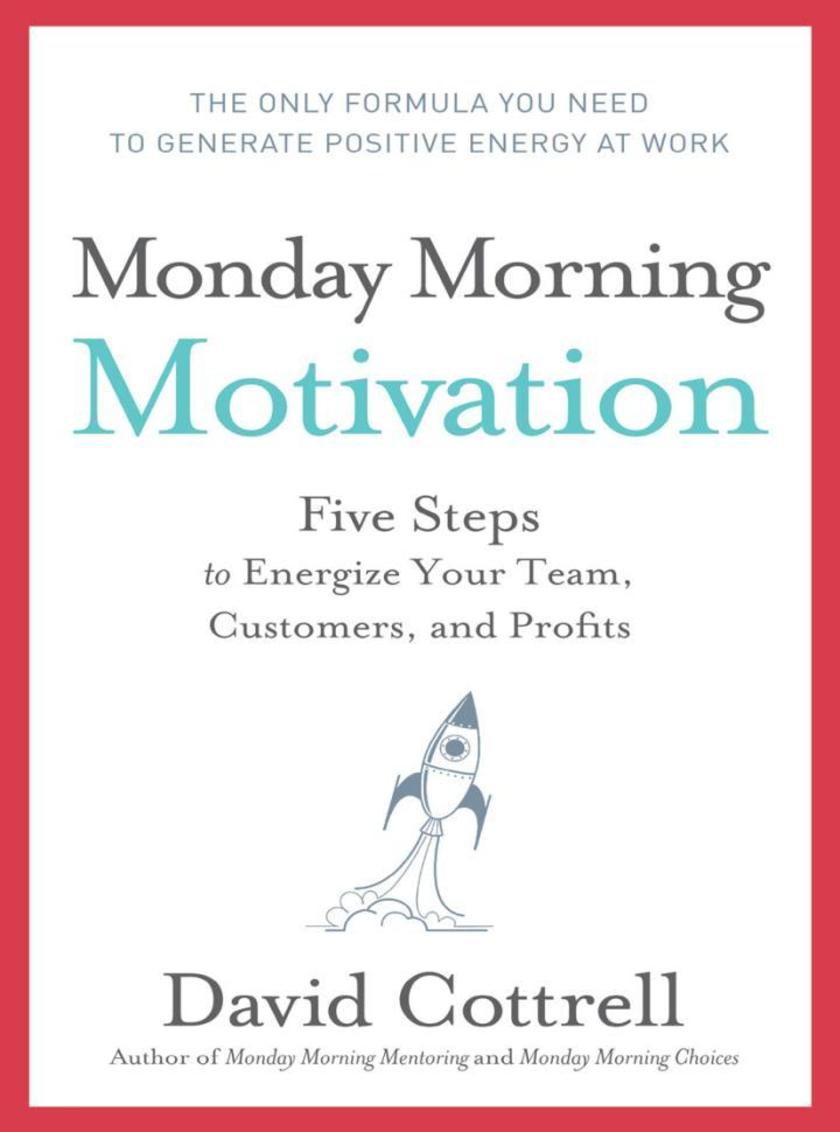
Monday Morning Motivation
¥123.63
How to generate the positive energy found in successful organizations What is organizational energyAccording to internationally recognized leadership coach David Cottrell, it is not short-term enthusiasm for the latest corporate program-of-the-week. Instead, it is grounded in something much deeper a solid commitment to an organization, its mission, and its values. When used positively, organizational energy strengthens and solidifies personal motivation, producing an unshakable desire to achieve bigger and better results. It is a precious resource your organization cannot afford to be without.In Monday Morning Motivation, Cottrell takes inspiration from Einstein's famous equation E=mc 2 to provide a step-by-step strategy you can use to access your organization's energy reservoir (E) and accelerate your people (m) to the next level of performance. Specifically, he reveals the vital conductors of energy (c) that you need to motivate your team and customers synchronization, speed, communication, customer passion, and integrity and expertly demonstrates the effect that your leadership style ( 2 ) has on the effectiveness of these conductors. Fortunately you don't need to be Einstein to learn and apply these principles to your organization. You just need one hour each week for ten weeks to consider Cottrell's helpful discussion questions and determine what you can do right now to become a better leader and motivator. If you do, you will launch your organization to greater results and a whole new stratosphere of job satisfaction.
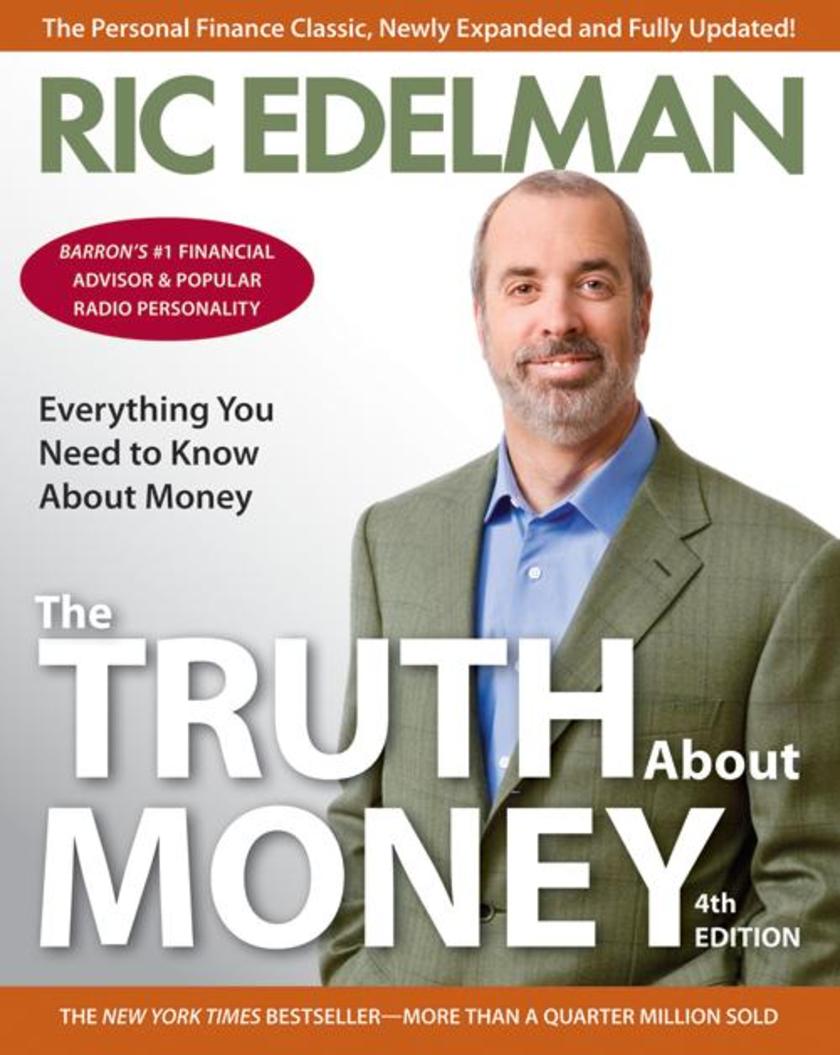
The Truth About Money 4th Edition
¥121.80
The Personal Finance Classic . . . that's fun to read!You Need the Truth About MoneyCompletely revised and expanded, The Truth About Money shows you everything you need to know about personal finance and explains it all in plain English. Investments, insurance, taxes, mortgages, leasing cars, getting out of debt, wealth planning for multimillion-dollar estates it's all here for you.Whether you're saving for college or retirement, buying a home or selling one, concerned about long-term care for yourself or your parents, worried about an impending job loss, or facing any financial decision, knowing what's in The Truth About Money will help you make great financial decisions.New to This EditionPlanning Your Retirement LifestyleLearn how to retire in comfort and financial security (and what to do when you get there) (pg. 485).The Best Investment ChoiceLearn how ETFs can help you create wealth while saving you big money (pg. 176).Target-Date FundsIt's what you don't know that can hurt you (pg. 269).Behavioral Finance and NeuroeconomicsLearn why you make bad financial decisions and how to break the cycle (pg. 224).Picking the Best FundsFind out the truth about Morningstar ratings (pg. 250).Are Your Parents Aging?See how best to provide help without harming yourself financially (pg. 374).The Most Important Financial Decision You'll MakeFind out how to make this decision successfully (pg. 631).Plus more than 100 Pages of New Content!

Financial Security in Troubled Times
¥83.93
In troubled times, it is only natural to worry about our financial security. That's why now is the time to act -- to preserve your financial well-being, and that of your family, and to ensure your peace of mind.Financial expert and best-selling author Ric Edelman has written this guide to help all of us quickly safeguard our economic lives. Edelman's eight-point action plan -- actions that you can take right now -- will help you protect yourself and your family, as well as your money, your income, your job, your home, your possessions, and your business. You'll learn how to manage the powerful emotions that can cloud your financial judgment, and find the guidelines you need to make the right investment decisions now that will secure your investments today and prepare you for the future.And because it is more important than ever that we be generous in our charitable giving, you will learn the best ways to give, so you can lend support to all our neighbors who are in such dire need of our help.Financial Security in Troubled Times will help all of us face the future, knowing that our financial house is in order and that we are ready to meet the challenges ahead.
How to Talk So People Listen
¥84.16
At a time when it's harder than ever to get and keep people's attention, we could all use some help. Enter Sonya Hamlin, author of the now classic How to Talk So People Listen (1988), and one of the country's leading communication experts. In this revised and updated edition, Sonya Hamlin, arguably America's leading communication expert, shows us how to successfully capture people's attention so that they listen, understand, and are persuaded by your message especially in the plugged in, fast paced, visually driven atmosphere that is today's workplace. Whether making a presentation to a large audience or dealing one on one with a client or colleague, or communicating by Email, Hamlin teaches us that one of the keys to making people listen is to think about and respond to what motivates them namely, self interest. She then provides tools to assess others' self interest and use it to get them to listen to your message. Hamlin also explains how to capitalize on the latest visual aids we have at our disposal today. We learn to determine what information needs or lends itself to visual presentation, and how to make visuals active, so that they serve as an extension of the speaker. In How To Talk So People Listen, you'll also find practical information on how to understand your audience, how to encourage your listeners to trust you, and how to be yourself when you're on the podium.
Wealth Happens One Day at a Time
¥90.77
Does a secure financial life seem to difficult to imagine let alone achieveDoes wealth strike you as an impossible dreamWhether you're living from paycheck to paycheck, or simply confused by the world of stocks, bonds, and brokers, it's never too late to change your situation. All you need is a little help.By spending just ten to fifteen minutes a day with this immensely helpful book, you'll discover that financial security is just steps away. Filled with the wisdom and advice of a seasoned expert, this year-old program for success shows you how to: change your attitude and change your life break out of debt and control your spending choose investments and make your money grow protect your gains and prepare for a comfortable retirement give your children or grandchildren a secure start in life and much more!
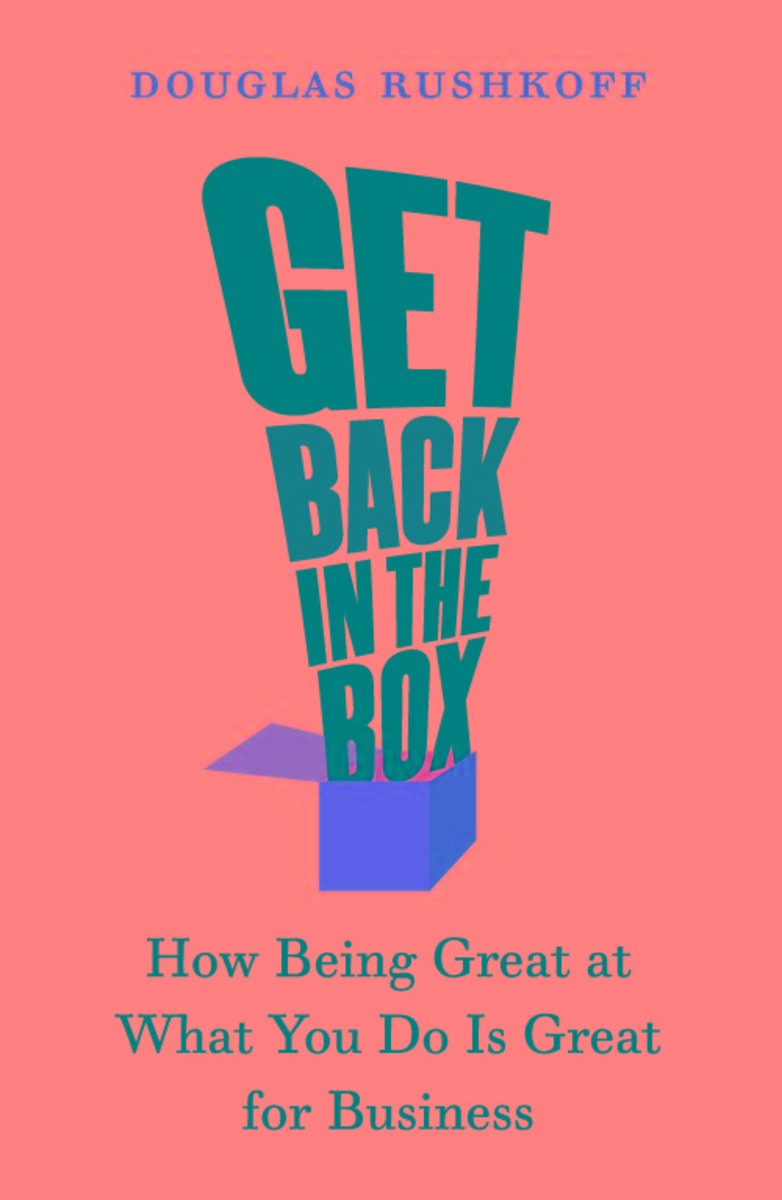
Get Back in the Box
¥84.28
Douglas Rushkoff was one of the first social commentators to identify the new culture around the internet. He has spent nearly a decade advising companies on the ways they can re-orient their businesses to the transformations the internet has caused. Through his speaking and consulting, Rushkoff has discovered an important and unrecognized shift in American business. Too many companies are panicked and operating in survival mode when the worst of the crisis has already passed. Likening the internet transformation to the intellectual and technological ferment of the Enlightment, Rushkoff suggests we have a remarkable opportunity to re-integrate our new perspective with the work we actually do. Instead of running around trying to "think out of the box," Rushkoff demonstrates, now is the time to "get back in the box" and improve the way we do our jobs, run our operations and drive innovation from the ground up. Combining stories gleaned from his consulting with a thrilling tour of history's dramatic moments and clever readings of cultural shift we've just experienced, Rushkoff offers a compelling vision of the simple and effective ways businesses can re-invigorate themselves.

What Really Works
¥95.39
Based on a groundbreaking study, analysing data on 200 management practices gathered over a 10 year period. Reveals the effectiveness of the 4+2 practices (4 primary and 2 of 4 possible secondary) practices that really matter the ones that, if followed rigorously, ensure sustained business success. With a new introduction by the authors. With hundreds of well known management practices and pre*ions promoted by consultants and available to business, which are really effective and contribute to the growth and continued success of a companyWhich do little or nothingBased on the "Evergreen Project," a massive, 5 year study involving the business school faculties of ten universities, the authors set out to find the management practices that truly promote long term growth and success. Their findings will revolutionize the art and practice of business management.The book shows that there are essentially six management practices that all successful companies must master simultaneously. They range from focusing on a strategy of growth to maintaining the depth and quality of human talent in the organization.

Becoming the Boss
¥94.10
The author of Getting from College to Career reinvents the concept of management for a new generation, offering a fresh and relevant approach to career success that shows Millennials how to make the next step: become a leader.We are in the midst of a leadership revolution, as power passes from Baby Boomers to Millennials, who are stepping into executive positions in corporations, government, and their own businesses. Becoming the Boss is a brisk, tech savvy success manual filled with real-world, actionable tips from an expert. Lindsey Pollak defines what Millennial generation leadership is and draws on original research, her own experience, and interviews with young managers and entrepreneurs to share the secrets of what makes them successful leaders and shows young professionals how to rise in their own careers. From learning to develop a style that appeals to your older colleagues to managing virtual employees to mastering the rules of social media etiquette, Becoming the Boss helps you identify your next professional move and shows you how to succeed once you get there.

The Creative Priority
¥99.65
How does your company define creativityOr doescreativity define your companyIn this remarkable book, Jerry Hirshberg, founder and president of Nissan Design International (NDI), distills his experience as leader of the world's hotbed of automotive innovation and reveals his strategy for designing an organization around creativity.In The Creative Priority Hirshberg weaves together enlightening real-world anecdotes with the story of NDI's genesis to illustrate eleven interlocking strategies that came to define NDI's creative priority. Richly illustrated with NDI's elegant designs and sketched, The Creative Priority is at once a compelling narrative, a rich store of hands-on experience, and a grab bag of breakthrough insights that can help your business perform its most vital function.


