


 购物车
购物车 个人中心
个人中心

Consulting Demons
¥101.00
In this gripping and colorful account of the American dream gone astray, Lewis Pinault provides the essential guidelines on how to get ahead and an enlightening perspective on the brutal infighting that can engulf even the most civilized consulting firm. This stunning expose of some of the most prestigious and respected names in the business leads you into a world where a client's interests are skillfully subordinated to those of the consultants, where money rules the day, and where principles and morals are unwelcome baggage.Humorous and insightful, this no-holds-barred account takes you behind the scenes of the dehumanizing indoctrination of an academic intellectual into an exploitative -- and exploited -- "global transformation contractor." Featuring new material dealing with the e-consulting industry's boom, bust, and its future, Consulting Demons offers the most complete look at an industry that exacts the highest prices for the most questionable standards of success.
Winning the NFL Way
¥90.77
Being an NFL coach is the ultimate high-pressure job. Every Sunday a coach makes split-second decisions that will not only decide the fate of a game, but also his team's season and, ultimately, his own job.Meet Mike Holmgren, Jon Gruden, John Fox, Andy Reid, and Mike Sherman -- top NFL head coaches whose careers rest on their ability to lead other men to win in the fiercely competitive world of professional football.In this extraordinary collaboration with their agent Bob LaMonte, each of these five coaches shares his leadership principles. LaMonte takes you behind the scenes, where you'll be a fly on the wall as these men reveal how to win beyond the X's and O's. You will see how these successful leaders communicate with different personalities, develop vision, build trust in their people, and win loyalty, as well as overcome adversity and adapt to change.Through their colorful and motivational anecdotes, you'll gain unprecedented insights into the minds of some of the best coaches today and valuable lessons on what it means to be a leader and a champion.

Setting the Table
¥95.11
In October 1985, at age twenty-seven, Danny Meyer, with a good idea and scant experience, opened what would become one of New York City's most revered restaurants Union Square Cafe. Little more than twenty years later, Danny is the CEO of one of the world's most dynamic restaurant organizations, which includes eleven unique dining establishments, each at the top of its game. How has he done itHow has he consistently beaten the odds and set the competitive bar in one of the toughest trades around?In this landmark book, Danny shares the lessons he's learned while developing the winning recipe for doing the business he calls "enlightened hospitality." This innovative philosophy emphasizes putting the power of hospitality to work in a new and counterintuitive way: The first and most important application of hospitality is to the people who work for you, and then, in descending order of priority, to the guests, the community, the suppliers, and the investors. This way of prioritizing stands the more traditional business models on their heads, but Danny considers it the foundation of every success that he and his restaurants have achieved. Some of Danny's other insights: Hospitality is present when something happens for you. It is absent when something happens to you. These two simple concepts for and to express it all. Context, context, context, trumps the outdated location, location, location. Shared ownership develops when guests talk about a restaurant as if it's theirs. That sense of affiliation builds trust and invariably leads to repeat business. Err on the side of generosity: You get more by first giving more. Wherever your center lies, know it, name it, believe in it. When you cede your core values to someone else, it's time to quit. Full of behind-the-scenes history on the creation of Danny's most famous restaurants and the anecdotes, advice, and lessons he has accumulated on his long and ecstatic journey to the top of the American restaurant scene, Setting the Table is a treasure trove of innovative insights that are applicable to any business or organization.
Monday Morning Motivation
¥123.63
How to generate the positive energy found in successful organizations What is organizational energyAccording to internationally recognized leadership coach David Cottrell, it is not short-term enthusiasm for the latest corporate program-of-the-week. Instead, it is grounded in something much deeper a solid commitment to an organization, its mission, and its values. When used positively, organizational energy strengthens and solidifies personal motivation, producing an unshakable desire to achieve bigger and better results. It is a precious resource your organization cannot afford to be without.In Monday Morning Motivation, Cottrell takes inspiration from Einstein's famous equation E=mc 2 to provide a step-by-step strategy you can use to access your organization's energy reservoir (E) and accelerate your people (m) to the next level of performance. Specifically, he reveals the vital conductors of energy (c) that you need to motivate your team and customers synchronization, speed, communication, customer passion, and integrity and expertly demonstrates the effect that your leadership style ( 2 ) has on the effectiveness of these conductors. Fortunately you don't need to be Einstein to learn and apply these principles to your organization. You just need one hour each week for ten weeks to consider Cottrell's helpful discussion questions and determine what you can do right now to become a better leader and motivator. If you do, you will launch your organization to greater results and a whole new stratosphere of job satisfaction.

Womenomics
¥83.03
You are not alone. Finally, here is a book that gets to the heart of what professional women want. You've probably been loath to admit it, but like most of us, you have had enough of the sixty-hour workweeks, the day-care dash, and the vacations that never get taken. You don't want to quit, you want to work but on your own terms and in ways that make it possible to have a life as well.Women have power. In Womenomics, journalists Shipman and Kay deal in facts, not stereotypes, providing a fresh perspective on the largely hidden power that women have in today's marketplace. WhyCompanies with more women managers are more profitable. Women do more of the buying. A talent shortage looms. Younger generations want to work flexibly, too. It all adds up to a workplace revolution that is great news for professional women not to mention men and businesses as well. As Brenda Barnes, CEO of Sara Lee, notes: Companies need to recognize that this kind of flexibility offers employees the ability to manage and balance their own careers and lives, which in turn improves productivity and employee morale.This new way of thinking and working is all the more valuable in a recession, as companies begin offering flexible schedules, four-day workweeks, and extended vacations as a way to avoid layoffs, save costs, and still reward employees. It is personal. Womenomics does more than marshal the evidence of this historic shift. It also shows women how to redefine success, be productive, and build satisfying careers that don't require an all-or-nothing lifestyle. Most appealing are the candid personal anecdotes from Shipman's and Kay's own experiences and the stories they have gathered from professional women around the country who are coping with the same issues.It is possible. Shipman and Kay don't waste time on what women can't do or can't have. Instead, they show women how to chart an empowering, exhilarating course to a richer life. Inspiring, practical, and persuasive, Womenomics offers a groundbreaking blueprint for changing the way you live and work with advice, guidance, and fact-based support that proves you don't have to do it all to have it all.

Giants of Enterprise
¥105.17
Seven business innovators and the empires they built. The pre eminent business historian of our time Richard S. Tedlow examines seven great CEOs who successfully managed cutting edge technology and formed enduring corporate empires. With the depth and clarity of a master Tedlow illuminates the minds lives and strategies behind the legendary successes of our times: . George Eastman and his invention of the Kodak camera; . Thomas Watson of IBM; . Henry Ford and his automobile; . Charles Revson and his use of television advertising to drive massive sales for Revlon; . Robert N. Noyce co inventor of the integrated circuit and founder of Intel; . Andrew Carnegie and his steel empire; . Sam Walton and his unprecedented retail machine Wal Mart.

The Gifted Boss
¥112.28
Want freedom from management, mediocrity and moronsEver wonder what the best bosses know that you don'tDo you want to have great employees, people who don't need to be managed and who make everyone around them work harder and raise the department to a higher standardThe Gifted Boss is management guru Dale Dauten's classic yet revolutionary guidebook on teaching managers how to spot and court talent and how to give great employees what they want and need. This is a comprehensive system full of valuable insight and lessons aimed at creating the best work environment for the best people. Throughout The Gifted Boss, Dale Dauten defines his different breed of leader as one who is able to shape a business environment and culture that is a magnet for self-motivated employees. Dauten's starting point is a powerful fact about hiring great employees: the best ones are almost never in the job market. His system also includes a discussion of "ideal turnover" and how the great managers employ "the secret skill" of "de-hiring" to gracefully move mediocre employees up or out. Throughout his discussions, Dauten incorporates priceless knowledge gained from an exhaustive search for America's best bosses. The wisdom he acquired was startling, and it pertained to every type of organization: "Different isn't always better, but better is always different." The Gifted Boss has already earned itself a cult following. Now, based on conversations with hundreds of readers, Dauten has revised his work by adding a quick-start guide to help his audience get fast results and a discussion guide to help executives share the book with their teams. Though new technology continues to bring new changes to communication in the workplace, The Gifted Boss still remains the essential guide to maneuvering the tricky world of managing the modern employee. It belongs on every businessperson's desk.
The Clean Tech Revolution
¥90.77
When industry giants such as GE, Toyota, and Sharp and investment firms such as Goldman Sachs are making multibillion-dollar investments in clean technology, the message is clear. Developing clean technologies is no longer a social issue championed by environmentalists; it's a moneymaking enterprise moving solidly into the business mainstream. In fact, as the economy faces unprecedented challenges from high energy prices, resource shortages, and global environmental and security threats, clean tech technologies designed to provide superior performance at a lower cost while creating significantly less waste than conventional offerings promises to be the next engine of economic growth.In The Clean Tech Revolution, authors Ron Pernick and Clint Wilder identify the major forces that have pushed clean tech from back-to-the-earth utopian dream to its current revolution among the inner circles of corporate boardrooms, on Wall Street trading floors, and in government offices around the globe. By highlighting eight major clean-tech sectors solar energy, wind power, biofuels and biomaterials, green buildings, personal transportation, the smart grid, mobile applications, and water filtration they uncover how investors, entrepreneurs, and individuals can profit from this next wave of technological innovation. Pernick and Wilder shine the spotlight on the winners among technologies, companies, and regions that are likely to reap the greatest benefits from clean tech and they show you why the time to act is now.Groundbreaking and authoritative, The Clean Tech Revolution is the must-read book to understand and profit from the clean technologies that are reshaping our fast-changing world.
Integrity
¥105.17
Integrity more than simple honesty, it's the key to success. A person with integrity has the ability to pull everything together, to make it all happen no matter how challenging the circumstances. Drawing on experiences from his work, Dr. Henry Cloud, a clinical psychologist, leadership coach, corporate consultant and nationally syndicated radio host, shows how our character can keep us from achieving all we want to (or could) be. In Integrity, Dr. Cloud explores the six qualities of character that define integrity, and how people with integrity: Are able to connect with others and build trust Are oriented toward reality Finish well Embrace the negative Are oriented toward increase Have an understanding of the transcendent Integrity is not something that you either have or don't, but instead is an exciting growth path that all of us can engage in and enjoy.

Best Practices: Hiring People
¥78.55
Filling your ranks with exceptional employees has never been more important or more challenging. Hiring People, a comprehensive and essential resource for any manager on the run, shows you how.Learn to: Attract, find, and retain top performers Conduct an effective talent search Get the most out of interviews Craft an irresistible offer Use recruiters effectively Build a referral network you can depend on The Collins Best Practices guides offer new and seasoned managers the essential information they need to achieve more, both personally and professionally. Designed to provide tried-and-true advice from the world's most influential business minds, they feature practical strategies and tips to help you get ahead.
Going Wireless
¥151.30
Going Wireless delivers the unexpected by showing how wireless is transforming every type of enterprise from micro-businesses to multi-national conglomerates.Award-winning technology journalist Jaclyn Easton begins with an in-depth look at owning your customers and clients through mobile commerce whether your company focuses on consumers or business-to-business.From there you will learn about the advantages of wirelessly fortifying your mobile workforce of itinerant executives, sales personnel, and field service technicians as well as how wireless is dramatically redefining customer service, marketing, and advertising.Going Wireless also delves deep inside the corporation. First you'll find out why most companies are "handsizing" in addition to deploying wireless technology to rejuvenate warehouses, supply chains, procurement procedures, data collection, competitive intelligence, and much more.The best part is that these scenarios are supported by over 40 brand-name success stories, including: How Sears saves millions by wirelessly enabling 100 percent of their appliance repair technicians; How the Gap proved that by sewing wireless technology in their clothing they could reduce labor distribution costs by 50 percent; How McKessanHBOC a Fortune 40 corporation used mobile technology to entirely eliminate all their manifest imaging costs. While most people associate wireless with cell phones and Palm handhelds, you'll also learn that wireless has been around for over 100 years and has spawned mobile options you've never heard of and is being used in ways you've never imagined.This makes Going Wireless the perfect book for executives and managers who need a comprehensive overview of the wireless options that can make their companies more competitive, more productive, and more profitable.
HarperCollins e-books
¥112.23
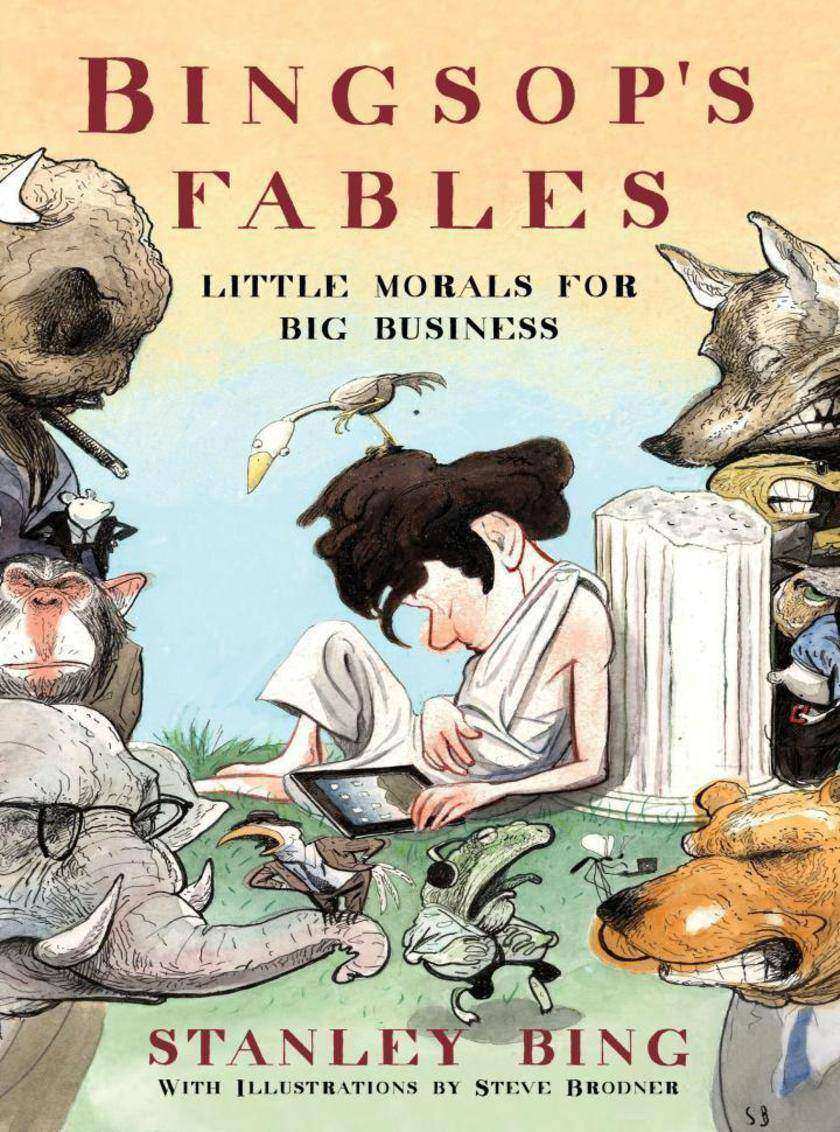
For more than twenty years, Stanley Bing has peerlessly explained corporate culture and strategy with wit and insight. Now he brings us this engaging and instructive book of white-collar fables that have charmed generations of businesspeople since Greece was glorious and Rome was grand, brilliant gems of wisdom flowing from the pen of the mysterious, legendary author known throughout the ancient corporate world by a single name: Bingsop. Bingsop's Fables is animated by a cast of archetypal characters that are as iconic and representative of human nature as were the jackdaw, the dull, the snake, the hare, the lion, the horse, and all the rest of the birds and beasts that populated the stories of that other fabulist, Aesop. The Stupid Investor, the Miserable Misery Mogul, the Ill-Tempered PR Person, and the Potentially Generous CEO each struts and frets his hour upon the stage and, in the end, presents us with a moral that rings so true it would hurt if we were not also laughing. Festooned with provocative, witty illustrations by New Yorker artist Steve Brodner, this lean, muscular edition will equally be at home on the shelves of aspiring hedge fund managers hoping to kill their elders as on the credenzas of those beleaguered executives who hear the next generation coming up fast from behind. No business library should be considered complete without it.
The Sellout
¥95.39
The definitive account of Wall Street's stunning collapse From critically acclaimed investigative journalist and CNBC personality Charles Gasparino comes a sweeping examination of the most recent volatile, anxiety-ridden era in our nation's socioeconomic history. The Sellout traces the implosion of the financial services business back to its roots in the late 1970s when Wall Street embraced a new business model predicated on taking enormous risks. It shows how a backwater business involving the trading of risky bonds packed with mortgages showered countless billions in profits on the financial industry but sowed the seeds of its ultimate demise. Gasparino walks readers through Wall Street's three-decades' love affair with risk, revealing a trail of culpability from the government bureaucrats who crafted housing policies that encouraged homeownership, to the Wall Street firms that underwrote and invested in risky debt, to the mortgage sellers who handed out loans to people without the financial wherewithal to pay them back, to the homeowners who became convinced they could afford mansions on blue-collar wages. The ongoing tumult in financial markets and the global economy began when some of our most esteemed financial institutions, our government, and even average citizens abdicated their collective responsibilities, eventually selling out investors and selling off the American Dream itself. In the spirit of classics such as Barbarians at the Gate and Liar's Poker, this page-turning narrative captures how avarice, arrogance, and sheer stupidity eroded Wall Street's dominance and profoundly weakened the financial security of millions of middle-class Americans. Eye-opening and engrossing, The Sellout provides the most thorough investigation to date of this latest gilded era.
The Upside of Turbulence
¥157.15
A provocative user's guide to a world where the only thing that doesn't change is change itself "Before I die," Albert Einstein once said, "I hope someone will clarify quantum physics for me. After I die, I hope God will explain turbulence to me." Einstein might have been more confused today: Turbulence, in all its manifestations, is on the rise. Financial markets gyrate. Commodity prices zig and zag. New technologies disrupt long-standing businesses and entire industries. Scientific discoveries overturn historical truisms. Dirty bombs and pension busts, natural disasters and flu pandemics, add to the tumult. We live in a world beset by turbulence.We often respond to turbulence by accelerating activities that worked in the past. We lapse into inertia when we should adapt with agility, and we cling to rigid dogmas when we should improvise. But throughout history, volatility has not only dethroned incumbent leaders, it has also created untold possibilities to create economic value. Turbulence has an upside, and companies that seize the opportunities arising out of seething markets will become tomorrow's champions. Based on more than a decade of research, The Upside of Turbulence draws lessons from companies that have consistently spotted and exploited opportunities that rivals have missed. The book explores realms ranging from improvisational comedy to the U.S. Marine Corp's combat doctrine. The result is a series of provocative insights that defy conventional wisdom. The book also introduces practical tools, which have been field-tested by executives around the world, to wrestle triumph out of turmoil.

Boundaries for Leaders
¥167.88
In Boundaries for Leaders, clinical psychologist and bestselling author Dr. Henry Cloud leverages his expertise of human behavior, neuroscience, and business leadership to explain how the best leaders set boundaries within their organizations--with their teams and with themselves--to improve performance and increase employee and customer satisfaction. In a voice that is motivating and inspiring, Dr. Cloud offers practical advice on how to manage teams, coach direct reports, and instill an organization with strong values and culture. Boundaries for Leaders: Take Charge of Your Business, Your Team, and Your Life is essential reading for executives and aspiring leaders who want to create successful companies with satisfied employees and customers, while becoming more resilient leaders themselves.

The Hard Thing About Hard Things
¥166.09
A lot of people talk about how great it is to start a business, but only Ben Horowitz is brutally honest about how hard it is to run one.In The Hard Thing About Hard Things, Ben Horowitz, cofounder of Andreessen Horowitz and one of Silicon Valley's most respected and experienced entrepreneurs, draws on his own story of founding, running, selling, buying, managing, and investing in technology companies to offer essential advice and practical wisdom for navigating the toughest problems business schools don't cover. His blog has garnered a devoted following of millions of readers who have come to rely on him to help them run their businesses. A lifelong rap fan, Horowitz amplifies business lessons with lyrics from his favorite songs and tells it straight about everything from firing friends to poaching competitors, from cultivating and sustaining a CEO mentality to knowing the right time to cash in.His advice is grounded in anecdotes from his own hard-earned rise from cofounding the early cloud service provider Loudcloud to building the phenomenally successful Andreessen Horowitz venture capital firm, both with fellow tech superstar Marc Andreessen (inventor of Mosaic, the Internet's first popular Web browser). This is no polished victory lap; he analyzes issues with no easy answers through his trials, including demoting (or firing) a loyal friend; whether you should incorporate titles and promotions, and how to handle them; if it's OK to hire people from your friend's company; how to manage your own psychology, while the whole company is relying on you; what to do when smart people are bad employees; why Andreessen Horowitz prefers founder CEOs, and how to become one; whether you should sell your company, and how to do it. Filled with Horowitz's trademark humor and straight talk, and drawing from his personal and often humbling experiences, The Hard Thing About Hard Things is invaluable for veteran entrepreneurs as well as those aspiring to their own new ventures.
New Ideas from Dead CEOs
¥95.39
New Ideas from Dead CEOs uncovers the secrets of success of great CEOs by giving readers an intimate look at their professional and personal lives. Why did Ray Kroc's plan for McDonald's thrive when many burger joints failedAnd how, decades later, did Krispy Kreme fail to heed Kroc's hard-won lessonsHow did Walt Disney's most dismal day as a young cartoonist radically change his careerWhen Estée Lauder was a child in Queens, New York, the average American spent $8 a year on toiletries. Why did she spot an opportunity in selling high-priced cosmetics, and why did she pound on Saks's doorsHow did Thomas Watson Jr. decide to roll the dice and put all of IBM's chips on computing, when his father thought it could be a losing ideaWe learn about these CEOs' greatest challenges and failures, and how they successfully rode the waves of demographic and technological change.New Ideas from Dead CEOs not only gives us fascinating insights into these CEOs' lives, but also shows how we can apply their ideas to the present-day triumphs and struggles of Sony, Dell, Costco, Carnival Cruises, Time Warner, and numerous other companies trying to figure out how to stay on top or climb back up. The featured CEOs in this book were not candidates for sainthood. Many of them knew "god" only as a prefix to "dammit." But they were devoted to their businesses, not just to their egos and their personal bank accounts and yachts. Extraordinarily fresh and deeply thoughtful, Todd G. Buchholz's New Ideas from Dead CEOs is a truly enjoyable and fun yet serious and realistic look at what we still have to learn and absorb from these decomposing CEOs.
HarperCollins e-books
¥95.39
Everything you thought you knew about saving, managing risk, and securing your financial future has changed. The world is very different in the wake of the biggest financial crisis since the Great Depression. Retirement accounts have been eviscerated, risk appetites diminished, and questions raised about age-old personal finance strategies such as "buy and hold" and the efficacy of relying heavily on stock mutual funds.In The Wall Street Journal Guide to the New Rules of Personal Finance, Dave Kansas offers guidelines for understanding the new regulations for finance firms, the rising importance of international investing, and the very different environment that now exists for home buyers. With valuable chapters on debt reduction, diversification, retirement planning, real estate, commodities, and other vital topics, this essential volume is designed to help the individual determine which tenets of an investing strategy remain sound and which deserve re-examination. It is the ultimate guide to profitably investing your money in a world that has fundamentally changed.

Force of Nature
¥157.15
What happens when a renowned river guide teams up with the CEO of one of the largest and least Earth-friendly corporations in the worldWhen it's former Wal-Mart CEO H. Lee Scott and white-water expert turned sustainability consultant Jib Ellison, the result is nothing less than a green business revolution.Wal-Mart long the target of local businesses, labor advocates, and environmentalists who deplore its outsourced, big-box methods has embraced an unprecedented green makeover, which is now spreading worldwide. The retail giant that rose from Sam Walton's Ozarks dime store is leveraging the power of 200 million weekly customers to drive waste, toxics, and carbon emissions out of its stores and products. Neither an act of charity nor an empty greenwash, Wal-Mart's green move reflects its river guide's simple, compelling philosophy: that the most sustainable, clean, energy-efficient, and waste-free company will beat its competitors every time. Not just in some distant, utopian future but today. From energy conservation, recycling, and hybrid trucks to reduced packaging and partnerships with environmentalists it once met only in court, Wal-Mart has used sustainability to boost its bottom line even in a tough economy belying the age-old claim that going green kills jobs and profits. Now the global apparel business, the American dairy industry, big agriculture, and even Wall Street are following Wal-Mart's lead, along with the 100,000 manufacturers whose products must become more sustainable to remain on Wal-Mart's shelves. Here Pulitzer Prize winner and bestselling author Edward Humes charts the course of this unlikely second industrial revolution, in which corporate titans who once believed profit and planet must be at odds are learning that the best business just may be a force of nature.
Extreme Productivity
¥155.02
A road-tested formula for improving your performance, from one of the business world's most successful and productive executives. Robert C. Pozen taught a full course load at Harvard Business School while serving as the full-time chairman of a global financial-services firm. He's written six books and hundreds of articles, raised a family with his wife of more than four decades, and served on many boards of local charities and public companies. Pozen is a prince of productivity, a man who has worked smarter and faster than almost everyone around him for more than forty years.In Extreme Productivity, Pozen reveals the secrets to workplace productivity and high performance. His book is for anyone feeling overwhelmed by an existing workload facing myriad competing demands and multiple time-sensitive projects. Offering antidotes to a calendar full of boring meetings and a backlog of e-mails, Extreme Productivity explains how to determine your highest priorities and match them with how you actually spend your time. Pozen shows that in order to be truly productive, professionals must make a critical shift in their mind-set: from hours worked to results produced. He helps people at all stages of their careers read, write, and make presentations quicker and more effectively. He provides professionals with practical tips on how to efficiently use their time in the office while leading full and productive personal lives as well.
Dot Complicated
¥156.69
From Randi Zuckerberg, social media and technology expert and former marketing executive at Facebook, comes a welcome, essential guide to understanding social media and technology and how they influence and inform our lives online and off.Technology and social media have changed, enhanced, and complicated every facet of our lives from how we interact with our friends to how we elect presidents, from how we manage our careers to how we support important causes, from how we find love to how we raise our children.The technology revolution is not going away. We can't hide from it or pretend that it's not changing our lives in a thousand different ways. So how do we dealIn Dot Complicated, Randi Zuckerberg shows us. Through first hand accounts of her time at Facebook and beyond, where Zuckerberg witnessed this remarkable shift, she details the opportunities and obstacles, problems and solutions, to this new online reality. In the process, she establishes rules to bring some much-needed order and clarity to our connected, complicated, and constantly changing lives online.The Internet, social networks, and smartphones,Zuckerberg writes, have given us amazing new tools and ways of communicating, collaborating, and living with one another. We can use new technology to understand and solve some very old challenges that individuals and communities around the world have faced since long before Facebook, or anything like it, existed.Invaluable, timely, and engaging, Dot Complicated reveals how to make it through your life online in one piece from the etiquette of unfriending and the power of crowdsourcing to the perils of photo tags and the importance of teaching your kids how to be tech savvy.


