


 购物车
购物车 个人中心
个人中心
QGIS Blueprints
¥90.46
Develop analytical location-based web applications with QGIS About This Book Tame geographic information workflows with QGIS blueprints for smart web applications Create geographic web applications using QGIS and free/open source software Blueprints provide real-world applications covering many use cases Who This Book Is For This book encompasses relatively experienced GIS developers who have a strong grounding in the fundamentals of GIS development. They will have used QGIS before, but are looking to understand how to develop more complex, layered map applications that expose various data sets, utilize different visualizations, and are consumable (usable) by end users What You Will Learn Review geographic information principles and the application of these principles in the QGIS free/open source ecosystem Perform advanced analysis with site selection, hydrologic, and topological networks Build performant web applications by tile caching and generating static assets Provide collaborative editing capabilities for your team or community Develop custom and dynamic analysis and visualization capabilities Select the best components from desktop and web, for your use case Integrate it with social media and crowdsourcing In Detail QGIS, the world’s most popular free/open source desktop geographic information system software, enables a wide variety of use cases involving location – previously only available through expensive specialized commercial software. However, designing and executing a multi-tiered project from scratch on this complex ecosystem remains a significant challenge. This book starts with a primer on QGIS and closely related data, software, and systems. We’ll guide you through six use-case blueprints for geographic web applications. Each blueprint boils down a complex workflow into steps you can follow to reduce time lost to trial and error. By the end of this book readers should be able to build complex layered applications that visualize multiple data sets, employing different types of visualization, and give end users the ability to interact with and manipulate this data for the purpose of analysis. Style and approach This is a comprehensive guide to the application of QGIS and free/open source software in creating web applications from analysis. Step-by-step blueprints guide the reader through analytical and web development topics and designs.
Getting Started with Python and Raspberry Pi
¥71.93
Learn to design and implement reliable Python applications on the Raspberry Pi using a range of external libraries, the Raspberry Pis GPIO port, and the camera module About This Book Learn the fundamentals of Python *ing and application programming Design user-friendly command-line and graphical user interfaces A step-by-step guide to learning Python programming with the Pi Who This Book Is For This book is designed for those who are unfamiliar with the art of Python development and want to get to know their way round the language and the many additional libraries that allow you to get a full application up and running in no time. What You Will Learn Fundamentals of Python applications Designing applications for multi-threading Interacting with electronics and physical devices Debugging applications when they go wrong Packaging and installing Python modules User interface design using Qt Building easy to use command-line interfaces Connecting applications to the Internet In Detail The Raspberry Pi is one of the smallest and most affordable single board computers that has taken over the world of hobby electronics and programming, and the Python programming language makes this the perfect platform to start coding with. The book will start with a brief introduction to Raspberry Pi and Python. We will direct you to the official documentation that helps you set up your Raspberry Pi with the necessary equipment such as the monitor, keyboard, mouse, power supply, and so on. It will then dive right into the basics of Python programming. Later, it will focus on other Python tasks, for instance, interfacing with hardware, GUI programming, and more. Once you get well versed with the basic programming, the book will then teach you to develop Python/Raspberry Pi applications. By the end of this book, you will be able to develop Raspberry Pi applications with Python and will have good understanding of Python programming for Raspberry Pi. Style and approach An easy-to-follow introduction to Python *ing and application development through clear conceptual explanations backed up by real-world examples on the Raspberry Pi.
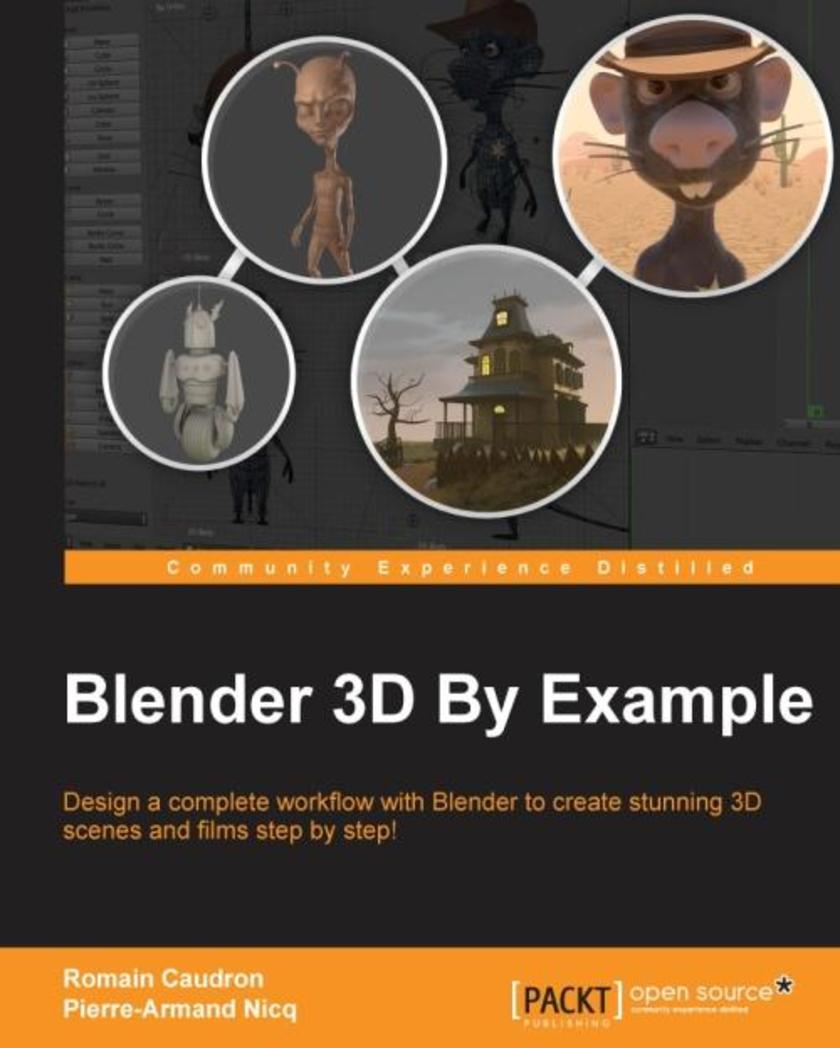
Blender 3D By Example
¥80.65
Design a complete workflow with Blender to create stunning 3D scenes and films step-by-step! About This Book Give life to a character within a full animated short film by learning the rigging and animation process Make use of the powerful tools available in Blender to produce professional-quality 3D characters and environments Discover advanced techniques by adding fur to a character, creating a grass field, and fine-tuning a shot with post-processing effects to enhance your creations Who This Book Is For This book will give any beginner the necessary skills and knowledge to create own 3D projects with Blender. You don't need to have any previous experience in 3D modeling, but if you do, then this book is a great way get you started with Blender. This book is for anyone who wants to learn Blender by creating concrete projects. What You Will Learn Understand the basics of 3D and how to navigate your way around the Blender interface Create a 3D robot toy model from start to finish using the basic modeling tools of Blender Make a full alien character using the skin mesh modifier and the sculpting tools with an artistic approach Use re-topology techniques to create a clean 3D version of the previously sculpted alien Model a full haunted house and its environment using more advanced modeling tools and techniques such as the Array Modifier, Instance duplication, or Curves Discover the power of the texture paint tool in order to add color to the haunted house Get to know the Cycles render engine by creating different materials for the house and the environment In Detail Blender is a powerful tool, stable, with an integral workflow that will allow you to understand your learning of 3D creation with serenity. Today, it is considered to be one of the most complete 3D packages on the market and it is free and open source! It is very efficient for many types of productions, such as 3D animated or live action films, architecture, research, or even game creation with its integrated game engine and its use of the Python language. Moreover, Blender has an active community that contributes to expanding its functionalities. Today, it is used in many professional products and by many companies. Through this book, you will create many types of concert projects using a step-by-step approach. You will start by getting to know the modeling tools available in Blender as you create a 3D robot toy. Then, you will discover more advanced techniques such as sculpting and re-topology by creating a funny alien character. After that, you will create a full haunted house scene. For the last project, you will create a short film featuring a rat cowboy shooting cheese in a rat trap! This will be a more complex project in which you learn how to rig, animate, compose advanced material, composite, and edit a full sequence. Each project in this book will give you more practice and increase your knowledge of the Blender tools. By the end of this book, you will master a workflow that you will be able to apply to your own creations. Style and approach This is an easy-to-follow book that is based on four concrete projects, with increasing levels of difficulty. Each chapter will teach you how to create these projects step-by-step. New tools and techniques are introduced in a theoretical and practical way, so you can apply them in your own projects later.
Groovy for Domain-specific Languages - Second Edition
¥90.46
Extend and enhance your Java applications with domain-specific *ing in Groovy About This Book Build domain-specific mini languages in Groovy that integrate seamlessly with your Java apps with this hands-on guide Increase stakeholder participation in the development process with domain-specific *ing in Groovy Get up to speed with the newest features in Groovy using this second edition and integrate Groovy-based DSLs into your existing Java applications. Who This Book Is For This book is for Java software developers who have an interest in building domain *ing into their Java applications. No knowledge of Groovy is required, although it will be helpful. This book does not teach Groovy, but quickly introduces the basic ideas of Groovy. An experienced Java developer should have no problems with these and move quickly on to the more involved aspects of creating DSLs with Groovy. No experience of creating a DSL is required. What You Will Learn Familiarize yourself with Groovy *ing and work with Groovy closures Use the meta-programming features in Groovy to build mini languages Employ Groovy mark-up and builders to simplify application development Familiarize yourself with Groovy mark-up and build your own Groovy builders Build effective DSLs with operator overloading, command chains, builders, and a host of other Groovy language features Integrate Groovy with your Java and JVM based applications In Detail The times when developing on the JVM meant you were a Java programmer have long passed. The JVM is now firmly established as a polyglot development environment with many projects opting for alternative development languages to Java such as Groovy, Scala, Clojure, and JRuby. In this pantheon of development languages, Groovy stands out for its excellent DSL enabling features which allows it to be manipulated to produce mini languages that are tailored to a project’s needs. A comprehensive tutorial on designing and developing mini Groovy based Domain Specific Languages, this book will guide you through the development of several mini DSLs that will help you gain all the skills needed to develop your own Groovy based DSLs with confidence and ease. Starting with the bare basics, this book will focus on how Groovy can be used to construct domain specific mini languages, and will go through the more complex meta-programming features of Groovy, including using the Abstract Syntax Tree (AST). Practical examples are used throughout this book to de-mystify these seemingly complex language features and to show how they can be used to create simple and elegant DSLs. Packed with examples, including several fully worked DSLs, this book will serve as a springboard for developing your own DSLs. Style and approach This book is a hands-on guide that will walk you through examples for building DSLs with Groovy rather than just talking about "metaprogramming with Groovy". The examples in this book have been designed to help you gain a good working knowledge of the techniques involved and apply these to producing your own Groovy based DSLs.
Learning Unity iOS Game Development
¥80.65
Build exciting games with Unity on iOS and publish them on the App Store About This Book Take advantage of Unity 5's new tools to create a fully interactive mobile game Learn how to connect your iTunes developer account and use Unity 5 to communicate with it Use your Macintosh computer to publish your game to the App Store Who This Book Is For This book is for iOS developers who want to learn how to build games with Unity for the iOS platform. Some prior experience in game development would be useful. What You Will Learn Create your own iTunes Connect Developer account and create an app within it Set up iTunes Game Center features in iTunes Connect so you can use them within Unity 5 Construct a game using C# that allows users to interactively control the game character Use Unity 5's editor window to create a custom editor tool specific for the game made in the book Store and keep track of data so the player is able to collect in-game pick-ups that can be used to purchase in-game goods Use all game features so the player is able to fully navigate menus between the front menu and in the game state Make, test, and finally release builds so you can play on your device and then submit the game to Apple for review In Detail Over recent years, the market for mobile game development using Unity has grown multi-fold with an overwhelming 600 million gamers playing games developed using Unity engine. The newly launched Unity 5 offers a wide range of dedicated and powerful tools for iOS developers who intend to follow the basics and gradually elevate their skills to revolutionize the way they design and publish games for the App Store. From beginners, to those who are experienced making video games, this book goes through the steps of using Unity 5 to make a game from the ground up and setting the game up with iTunes Game Center features. The book begins with an introduction to setting up an iTunes Connect developer account, this will allow you to use Unity to its full potential with iOS. You will create a new app in iTunes Connect with the settings for Apple approval. You will learn, in detail, how to use Unity 5 and the programming language C# to make a fully interactive game that keeps track of player progress, Game Center Leaderboards, and Achievements, as well as displaying iAds and offering In-App purchases. Moving on, you’ll discover how to create development and release builds, enabling you to test the game on your device before finally submitting the game for Apple’s approval. By the end of the book, you will have a complete understanding of how iTunes and Unity can be used in combination to build and publish a fully interactive and reliable game to the App Store. Style and approach This is a step-by-step guide that covers the fundamentals of gaming and reveals the secrets of building and monetizing games for the iOS platform.
Clojure High Performance Programming - Second Edition
¥63.21
Become an expert at writing fast and high performant code in Clojure 1.7.0 About This Book Enhance code performance by using appropriate Clojure features Improve the efficiency of applications and plan their deployment A hands-on guide to designing Clojure programs to get the best performance Who This Book Is For This book is intended for intermediate Clojure developers who are looking to get a good grip on achieving optimum performance. Having a basic knowledge of Java would be helpful. What You Will Learn Identify performance issues in Clojure programs using different profiling tools Master techniques to achieve numerical performance in Clojure Use Criterium library to measure latency of Clojure expressions Exploit Java features in Clojure code to enhance performance Avoid reflection and boxing with type hints Understand Clojure's concurrency and state-management primitives in depth Measure and monitor performance, and understand optimization techniques In Detail Clojure treats code as data and has a macro system. It focuses on programming with immutable values and explicit progression-of-time constructs, which are intended to facilitate the development of more robust programs, particularly multithreaded ones. It is built with performance, pragmatism, and simplicity in mind. Like most general purpose languages, various Clojure features have different performance characteristics that one should know in order to write high performance code. This book shows you how to evaluate the performance implications of various Clojure abstractions, discover their underpinnings, and apply the right approach for optimum performance in real-world programs. It starts by helping you classify various use cases and the need for them with respect to performance and analysis of various performance aspects. You will also learn the performance vocabulary that experts use throughout the world and discover various Clojure data structures, abstractions, and their performance characteristics. Further, the book will guide you through enhancing performance by using Java interoperability and JVM-specific features from Clojure. It also highlights the importance of using the right concurrent data structure and Java concurrency abstractions. This book also sheds light on performance metrics for measuring, how to measure, and how to visualize and monitor the collected data. At the end of the book, you will learn to run a performance profiler, identify bottlenecks, tune performance, and refactor code to get a better performance. Style and approach An easy-to-follow guide full of real-world examples and self-sufficient code snippets that will help you get your hands dirty with high performance programming with Clojure.
QlikView for Finance
¥63.21
Concoct dynamic business intelligence dashboards for financial analysis with QlikView About This Book Get accustomed to QlikView features for effective data analysis and visualization in Finance Employ the Memory data store, which refreshes data in real time, providing a faster response to business financial information A step-by step guide to using Qlikview features such as key performance indicators, interactive charts, and tables for financial analysis Who This Book Is For If you are a finance professional with basic knowledge of QlikView functions and wish to increase your knowledge of QlikView to apply it in the field of finance, then this book is for you. A good knowledge of financial aspects is an must-have. What You Will Learn Design Key Performance Indicators and extend your revenue ratio reporting Set up actions within a Text Object and create variables to make a chart toggle between visible and not visible Merge data from multiple sources to get more asset management options Examine good and bad practices in dashboard design and create a Group button to make more data available in less space Analyse the sales dashboard by adding tending lines and forecasting Create input boxes and use the input in formulas to perform “What If” analysis Examine the Key Performance Indicator (KPI) and Inventory Turnover, and investigate the usefulness of Pivot Create a QlikView analysis document and add data to it to gain deep insights In Detail This book is an effective step-by-step tutoring guide for financial analysis using Qlikview. It begins by teaching you the crucial concepts of Qlikview Finance to help you develop an effective understanding of financial data analysis and finance. The book then goes on to cover real-world, practical examples on the use of Qlikview for financial planning and analysis, expense management, risk management, and more. Moving on, topics such as Asset Management QlikView Dashboard and Retail Sales Analysis are covered in a strategic way. We then shift the focus to deal with the concepts of Inventory, Supply Chain, and Plant Coverage Dashboards. The book then reaches its conclusion by dealing with ways to share your QlikView insights. By the end of this book, you will have a good understanding of how to use Qlikview for numerous applications in finance. Style and approach This book is designed to explore what can be done in QlikView to facilitate Financial Analysis. It follows a step-by-step approach and each chapter has easy-to-follow, hands-on examples of important concepts.
Mastering Android NDK
¥90.46
Master the skills you need to develop portable, highly-functional Android applications using NDK About This Book Develop portable games using Android NDK and debug them on your desktop Familiarise yourself with different popular C++ libraries on Android and use them in your games Write multi-threaded code with graphics, sound, networking, and resource storage Who This Book Is For If you want to leverage your C++ skills in mobile development and increase the performance of your Android applications, then this is the book for you. Knowledge of C or C++ is assumed, including pointer manipulation, multi-threading, object-oriented programming concepts, and the basics of C++11. It would be an added advantage if you know how to develop applications without any IDE. What You Will Learn Explore popular C++ libraries and use them on Android Write portable, multithreaded native networking code Create portable audio framework using OpenAL Implement portable rendering framework using OpenGL ES 3 Debug mobile applications on your desktop machine Access resources from APK archives Render text with FreeType In Detail Android NDK is used for multimedia applications that require direct access to system resources. NDK is also the key for portability, which in turn allows a reasonably comfortable development and debugging process using familiar tools such as GCC and Clang toolchains. This is a hands-on guide to extending your game development skills with Android NDK. The book takes you through many clear, step-by-step example applications to help you further explore the features of Android NDK and some popular C++ libraries and boost your productivity by debugging the development process. Through the course of this book, you will learn how to write portable multi-threaded native code, use HTTP networking in C++, play audio files, use OpenGL ES 3, and render high-quality text. Each chapter aims to take you one step closer to building your application. By the end of this book, you will be able to create an engaging, complete gaming application. Style and approach This book adopts a step-by-step approach and each chapter is based on the material from the previous ones. The book focuses on putting to your knowledge of C++ use while you develop Android applications of your own.
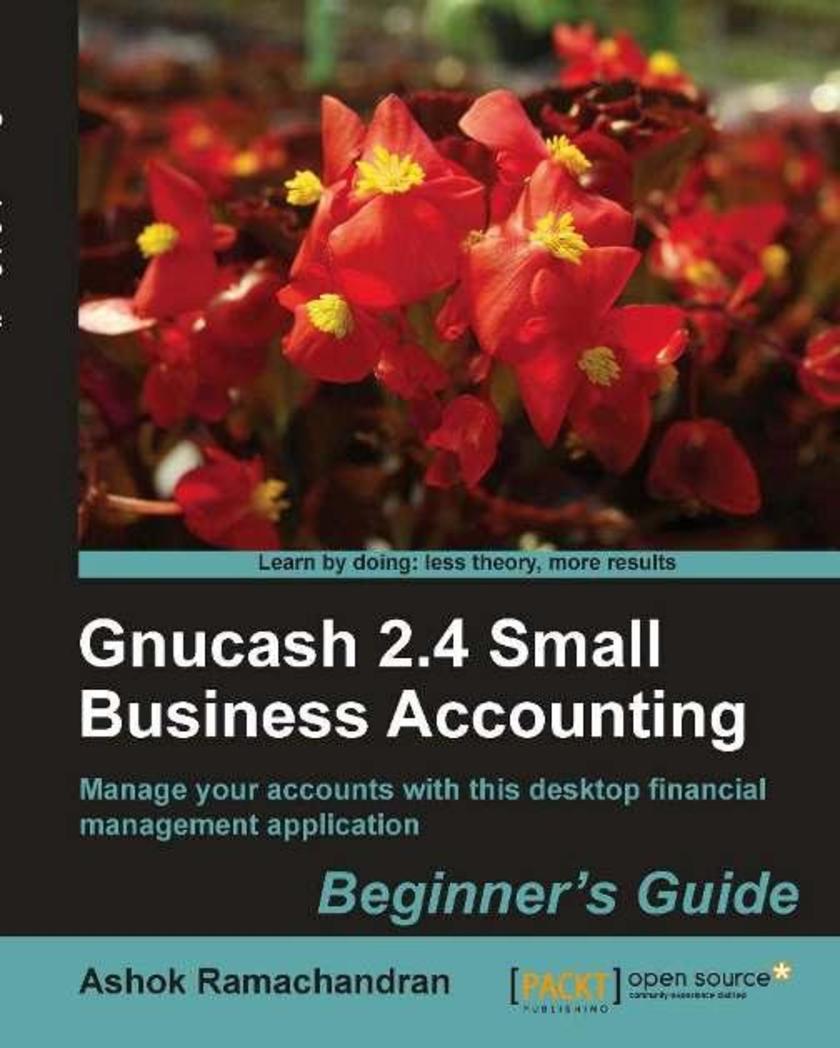
Gnucash 2.4 Small Business Accounting: Beginner's Guide
¥80.65
This book is a comprehensive beginner's guide that teaches you to use GnuCash from scratch with jargon-free step-by-step tutorials packed with tips. There are multiple choice questions to make learning more interesting and additional challenges thrown at the more adventurous user for a deep grasp of the topic. This book is written for you – the self-employed, the owner, partner or leader of micro-enterprises, home businesses, Small Office/Home Office (SOHO), and other small businesses – to help you maintain your books of accounts using GnuCash. This book is also for you – office-bearers of non-profits and students who want to learn accounting hands-on. If you are using a spreadsheet to maintain your business books and are wasting time, or you are handing over a shoe box of receipts to your high-priced accountant or are using another accounting application that is overkill for small business, get this book and download GnuCash.
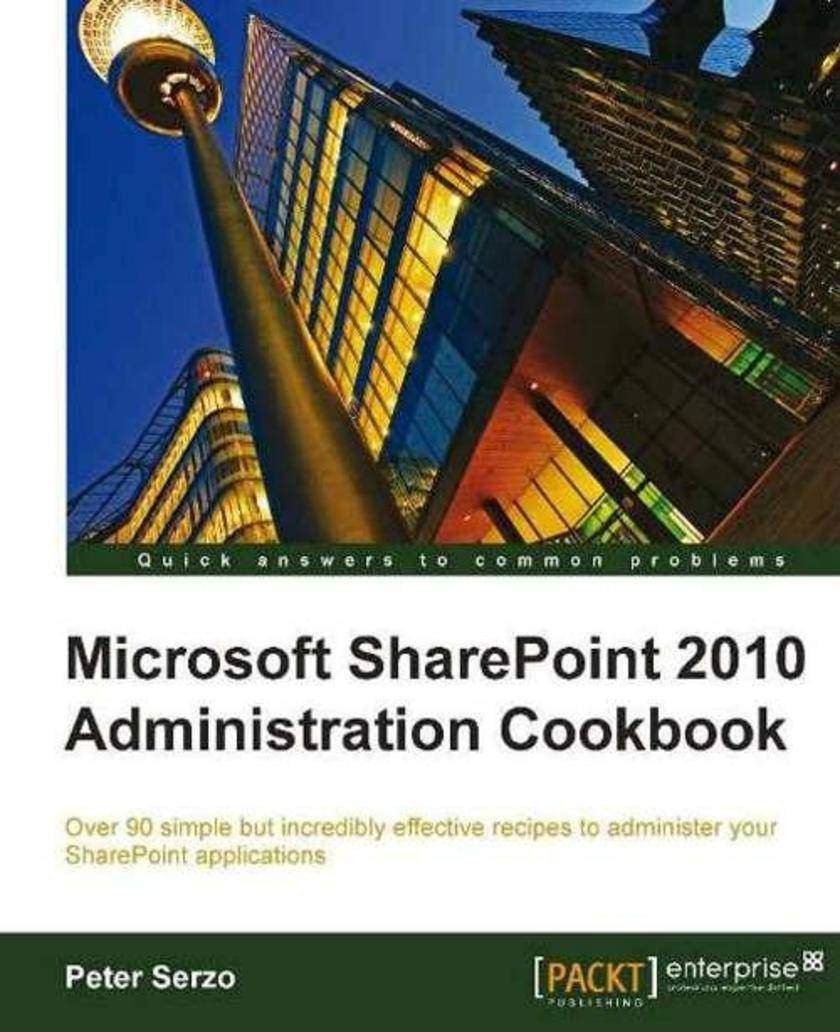
Microsoft SharePoint 2010 Administration Cookbook
¥80.65
Microsoft SharePoint 2010 Administration Cookbook contains step-by-step instructions for SharePoint administrators to gain control of their SharePoint environment. The book is designed so that you can refer to it chapter by chapter, or you can look at the list of recipes and read those that interest you in no particular order. If you are a SharePoint Administrator looking for solutions to the many problems faced while managing SharePoint, then this book is for you. It is written for SharePoint administrators who are either already working on SharePoint, or have recently started working and eager to learn more about SharePoint administration. You need to have some basic knowledge of SharePoint in order to follow the recipes in this book.
Microsoft Dynamics Sure Step 2010
¥107.90
A focused tutorial, this book is much more than just another step-by-step guide into project management. This book shows you how to implement Microsoft Dynamics Sure Step business solutions, with Microsoft Dynamics Sure Step providing the basis. This book will also help you to plan, align, and orchestrate your sales activities. It will orient you to tactics required to be efficient, proactive, goal driven and flexible in your Microsoft Dynamics engagements. If you are a Dynamics consultant, developer, or in a customer resources or sales role that requires guidance and knowledge of the ERP/CRM business solutions space or to deliver business solutions that meet or exceed the expectations of your organization, then this book is ideal for you.
PHP jQuery Cookbook
¥71.93
Written in Packt's cookbook style, this book presents numerous practical examples that you can use directly in your applications. The book covers most of the essential issues you will face while developing your web applications and gives solutions to them. Recipes in the book are written in a manner that will rapidly take you from a beginner to expert level. If you want to use PHP and jQuery together to create web applications this book is for you. It provides a large number of examples in each chapter that will take you from a basic developer to a pro by giving step-by-step instructions for each task in developing web applications using PHP and jQUery. All you need are JavaScript basics and you are on your way to building power web applications, with this book in hand.
Microsoft Azure: Enterprise Application Development
¥80.65
This fast-paced guide enables developers to design and build Enterprise applications for the cloud. You will find it easy to follow this book, as the authors use an actual online portal application for the case study. Throughout the development of the sample application there is discussion of important considerations for moving an application into the cloud. If you provide technological leadership to their enterprise—senior developers, architects, CIO/CTO and you want or need to guide your enterprise's application design to Azure, this is the perfect book for you! Since the examples are in .NET, the book will skew to MS-oriented developers. But a lot of what is discussed will be applicable to anyone wanting to work with Azure. No matter what language you use, you provision the application fabric the same way, and all the underlying concepts will be the same. You will need experience with Visual Studio, and some basic SQL Server knowledge.
Drupal 7 First Look
¥71.93
This hands-on guide takes a look at the main functional areas of Drupal that have significant new features. It explains these new features and how to use them, drawing attention to significant differences from how things used to behave, and giving the reader an idea of the kind of consequences these changes will bring to them. Drupal 7 First Look is written for site administrators, themers, and developers who have some experience with Drupal 6 (or even Drupal 5) and want to upgrade their sites, themes, or modules to Drupal 7 or just learn more about Drupal 7. No programming experience is required, but several code examples are covered for readers that want more in-depth information about building themes and modules.
OmniGraffle 5 Diagramming Essentials
¥80.65
This is a very visual book with more than 750 illustrations and screenshots, never leaving any intermediate steps out from the tutorials. It contains precise tutorials that explain the various tools, how to use them, and the visual results. The examples used in the book are an excellent starting point for your own diagrams, both as ideas and as true diagrams – all the diagrams in the book can be downloaded for your own use. This book is written for both beginners and seasoned users of OmniGraffle. If you are new to the software, then this book will teach you everything you need to know to make stunning diagrams. For seasoned OmniGraffle users, this book contains a lot of tricks and techniques that will save their work and time.
Microsoft Windows Communication Foundation 4.0 Cookbook for Developing SOA Appli
¥90.46
The recipes in this book are easy to understand and follow as the author discusses real-world scenarios. The range of topics covered in this book will bring out the forward-thinking WCF developer in you. It is not a comprehensive reference to the whole of WCF, but a practical guide that boosts proficiency when working with the various features of WCF. The examples are supported by relevant background information for ease of understanding. If you work with Windows Communication Foundation 4.0 and you want to be efficient when working with WCF features such as interoperability, proxy generation, and security, you will find this book very useful. With this book you will be able to find quick and handy solutions for various kinds of service development scenarios using Microsoft Windows Communication Foundation 4.0. To follow the recipes you will need to be comfortable with .NET Framework, C# programming, and the basics of SOA and how to develop them.
OpenStreetMap
¥71.93
This book introduces the OSM project, its aims and objectives, and its history, then guides you through the process of gathering, editing, and using OpenStreetMap data using a series of real-world examples. This book is the perfect aid for geographic-information professionals interested in using OpenStreetMap in their work and web designers and developers who want to include mapping in their sites, and want a distinctive style. It is for you if you have a need to use maps and geographic data for work or leisure, and want accurate, up-to-date maps showing the information you're interested in, without details you don't need. If you want to use maps for navigation and want more or less detail than traditional printed maps give this book is perfect for you.
IBM Lotus Sametime 8 Essentials: A User's Guide
¥80.65
As a user, you will learn, using real-world scenarios and tasks, exactly how to use all the features of Sametime. Beginning with how to install Sametime, we've included step-by-step de*ions and screen prints for each topic area in a clear easy-to-follow format. Each chapter builds on what you learn in earlier chapters and guides you into using the more advanced features of Sametime, but if you only want to develop your skills in one particular area, each chapter acts as a stand-alone module. If you want to learn how to use IBM Lotus Sametime, then this book is for you. No matter if you're new to Sametime or want to become a Sametime power user, this book contains something for you. The focus is on using Sametime as a user and does not include information about development or administration of a Sametime environment; but any user of Sametime in an organization will be able to take this book, sit down at their computer, and learn how to use each feature of Sametime from start to finish.
Building job sites with Joomla!
¥71.93
This will be a step-by-step tutorial - a workbook with practical approach. The book starts by looking at the important features that make a professional job site: adding and managing jobs, jobseekers and employers, providing online recruitment services, selling credits and managing credit system, SEO to drive huge traffic to your job site, and so on. This book includes a lot of screenshots which not only illustrate tasks but also create a visual impact. This book contains overall necessary information that is important for the understanding of job site development. If you are looking for building and managing a job site using Joomla! extensions then this book is for you. Prior knowledge of using extensions is not expected but Joomla! basics will be required.
Joomla! Accessibility
¥54.49
Fast-paced and to-the-point, this book takes you through the important topics of Microsoft Dynamics NAV with clear explanations and practical example code. The book's selection of topics is driven by what the working developer needs to know in order to become productive as quickly as possible. The business applications software designer/developer who: Wants to become productive in NAV C/SIDE C/AL development as quickly as possible Understands business applications and the associated software Has significant programming experience Has access to NAV including at least the Designer granules, preferably a full development license and a standard Cronus demo database Is willing to do the exercises to get hands-on experience The Reseller manager or executive who wants a concise, in depth view of NAVs development environment and tool set The technically knowledgeable manager or executive of a firm using NAV that is about to embark on a significant NAV enhancement project The technically knowledgeable manager or executive of a firm considering purchase of NAV as a highly customizable business applications platform The reader of this book: Does not need to be expert in object-oriented programming Does not need to have previous experience with NAV
Silverlight 4 User Interface Cookbook
¥90.46
Written in a Cookbook style, this book offers learning and techniques through recipes. It contains step-by-step instructions for designers and developers who want to learn about how to design and implement numerous user interface patterns with Silverlight. It will take you a step further by providing you with professional and proven user interface and user experience guidelines wherever possible. The book is designed in such a way that you can explore it chapter-by-chapter, or read it in any order. Written in a Cookbook style, this book offers learning and techniques through recipes. It contains step-by-step instructions for designers and developers who want to learn about how to design and implement numerous user interface patterns with Silverlight. It will take you a step further by providing you with professional and proven user interface and user experience guidelines wherever possible. The book is designed in such a way that you can explore it chapter-by-chapter, or read it in any order.


