


 购物车
购物车 个人中心
个人中心

Learn to Create WordPress Themes by Building 5 Projects
¥63.21
This book will help you take your first steps in the WordPress theme development process, with 5 different projects centered around creating unique and responsive WordPress themes About This Book ? Learn the basics of WordPress theme development in a step by step manner ? Make your themes more dynamic by integrating components of Bootstrap and JQuery ? 5 carefully-selected projects to help you get beyond the theory and create highly marketable WordPress themes from scratch Who This Book Is For If you are a blogger or a WordPress user who wants to learn how to create attractive, eye-catching WordPress themes, this book is for you. A basic understanding of HTML5, CSS, PHP, and some creativity is all you need to get started with this book. What You Will Learn ? Simple and advanced themes – covers basic syntax and files along with archives and search pages ? Photo Gallery – add simple animation and use the W3.CSS framework to design a photo gallery theme ? Wordstrap – incorporate Twitter Bootstrap into the theme and use the WP_NavWalker class ? E-commerce theme – build an e-commerce theme using the Foundation framework In Detail WordPress has emerged as a powerful, easy-to-use tool to design attractive, engaging websites. Themes play a big role in making WordPress as popular as it is today, and having an eye-catching, fully-functional theme could separate your website from the rest! This book will help you take your first steps in the WordPress theme development process, with 5 different projects centered around creating unique and responsive WordPress themes. Start with creating a simple WordPress theme using HTML5, CSS, and PHP. Then, you will move on to incorporate different APIs, widgets, and tools such as Bootstrap and jQuery to create more dynamic and highly-functional themes. Whether you want to create a photo gallery theme, a highly customizable e-commerce theme, or a theme designed to suit a particular business, this book will teach you everything you need to know. By the end of this highly interactive book, you will have the required mastery to develop WordPress themes from scratch. Style and approach This book takes a projects-based approach, where every project incrementally builds on your programming skills required to create different kinds of WordPress themes. With the difficulty of the projects ranging from basic to complex, this book will help you get beyond the theory and put your understanding of WordPress theme development to practical use.
AMP: Building Accelerated Mobile Pages
¥80.65
Engineer naturally lean web pages and leverage the latest web platform features to dramatically boost page speed About This Book ? The first book for web developers that shows how to put AMP to work ? Improve your website's mobile experience and get more traffic ? Practical methods to achieve a step change in performance quickly and easily Who This Book Is For This book is for experienced web developers who are aware of the impact of slow-loading web pages on conversion rates and user engagement, and who are seeking to serve content to their end users in a rich and enticing way using the Accelerated Mobile Pages framework. You should be familiar with HTML5, CSS3, JavaScript, and JSON. What You Will Learn ? Build, validate, and deploy AMP pages ? Create interactive user notifications, navigation menus, accordions, contact pages with forms and maps ? Monetize your traffic with a variety of ad styles and providers ? Analyze your traffic by integrating analytics providers and tracking user-behavior along several dimensions ? Embed social media with amp-youtube, amp-instagram, amp-twitter, and amp-facebook ? Build e-commerce functionality including product pages and shopping carts ? Deliver rich media experiences using AMP custom elements ? Use advanced deployment techniques to extend functionality ? Install ServiceWorkers and build Progressive Web Apps for offline use In Detail Google introduced the Accelerated Mobile Pages (AMP) project to give mobile users lightning-fast response times when accessing web pages on mobile devices. AMP delivers great user experiences by providing a framework for optimizing web pages that otherwise would take much longer to load on a mobile platform. This book shows how to solve page performance issues using the mobile web technologies available today. You will learn how to build instant-loading web pages, and have them featured more prominently on Google searches. If you want your website to succeed on mobile, if you care about SEO, and if you want to stay competitive, then this book is for you! You will go on a mobile web development journey that demonstrates with concrete examples how to build lightning-fast pages that will keep your visitors on-site and happy. This journey begins by showing how to build a simple blog article-style web page using AMP. As new concepts are introduced this page is gradually refined until you will have the skills and confidence to build a variety of rich and interactive mobile web pages. These will include e-commerce product pages, interactive forms and menus, maps and commenting systems, and even Progressive Web Apps. Style and approach Get step-by-step instructions to build web pages of different types, gain expert tricks to brand your pages without bloating them, and see methods to embed advertising.
Learn C# in 7 days
¥71.93
Learn C# in 7 days with practical examples, build a foundation for C# programming, and boost your skills to an advanced level About This Book ? Learn the basics of C# in 7 days ? Works as a reference guide describing the major features of C# ? Build easy and simple code through real-world example scenarios Who This Book Is For The book is for aspiring developers and absolute novices who want to get started with the world of programming. You do not need any knowledge of C# for this book. What You Will Learn ? Understand and set up the .NET environment ? Code in C# using the Visual Studio 2017 RC (preferable community edition) IDE ? Define variables, syntax, control flows, statements, and arrays etc through examples ? Understand the concepts of Object-Oriented Programming using C# ? Get acquainted with attributes, collection, generics, and LINQ ? Get your hands on class members such as Modifiers, Methods, Properties, Indexers, File I/O, Exception Handling, and Regex ? Build a real-world application using C# 7 In Detail This book takes a unique approach to teach C# to absolute beginners. You’ll learn the basics of the language in seven days. It takes a practical approach to explain the important concepts that build the foundation of the C# programming language. The book begins by teaching you the basic fundamentals using real-world practical examples and gets you acquainted with C# programming. We cover some important features and nuances of the language in a hands-on way, helping you grasp the concepts in a fluid manner. Later, you’ll explore the concepts of Object-Oriented Programming (OOP) through a real-world example. Then we dive into advanced-level concepts such as generics and collections, and you’ll get acquainted with objects and LINQ. Towards the end, you’ll build an application that covers all the concepts explained in the book. By the end of this book, you will have next-level skills and a good knowledge of the fundamentals of C#. Style and approach Fast paced guide to get you up-to-speed with the language. Every chapter is followed by an exercise that focuses on building something with the language. The codes of the exercises can be found on the Packt website
Jenkins 2.x Continuous Integration Cookbook - Third Edition
¥90.46
Get a problem-solution approach enriched with code examples for practical and easy comprehension About This Book ? Explore the use of more than 40 best-of-breed plug-ins for improving efficiency ? Secure and maintain Jenkins 2.x by integrating it with LDAP and CAS, which is a Single Sign-on solution ? Efficiently build advanced pipelines with pipeline as code, thus increasing your team's productivity Who This Book Is For If you are a Java developer, a software architect, a technical project manager, a build manager, or a development or QA engineer, then this book is ideal for you. A basic understanding of the software development life cycle and Java development is needed, as well as a rudimentary understanding of Jenkins. What You Will Learn ? Install and Configure Jenkins 2.x on AWS and Azure ? Explore effective ways to manage and monitor Jenkins 2.x ? Secure Jenkins 2.x using Matrix-based Security ? Deploying a WAR file from Jenkins 2.x to Azure App Services and AWS Beanstalk ? Automate deployment of application on AWS and Azure PaaS ? Continuous Testing – Unit Test Execution, Functional Testing and Load Testing In Detail Jenkins 2.x is one of the most popular Continuous Integration servers in the market today. It was designed to maintain, secure, communicate, test, build, and improve the software development process. This book will begin by guiding you through steps for installing and configuring Jenkins 2.x on AWS and Azure. This is followed by steps that enable you to manage and monitor Jenkins 2.x. You will also explore the ways to enhance the overall security of Jenkins 2.x. You will then explore the steps involved in improving the code quality using SonarQube. Then, you will learn the ways to improve quality, followed by how to run performance and functional tests against a web application and web services. Finally, you will see what the available plugins are, concluding with best practices to improve quality. Style and approach This book provides a problem-solution approach to some common tasks and some uncommon tasks using Jenkins 2.x and is well-illustrated with practical code examples.

CORS Essentials
¥63.21
Share code and assets across domains in Web applications with CORS About This Book ? A step-by-step guide but at a high level/fast pace. Not all steps are covered as a basic knowledge is assumed ? Provides a basic overview of the concepts but the focus is on providing the practical skills required to develop applications ? Focuses on providing practical examples Who This Book Is For Web developers have been limited by the Same Origin Policy and often wish they could spread their application across different domains. You know JavaScript and AJAX, and have run up against the Same Domain Policy, which is limiting your applications. What You Will Learn ? Why you need CORS: Bending the Same Origin Policy and basic CORS implementation, headers and XMLHttpRequest ? Creating proxies for CORS: Sometimes the header is not enough ? Security: vulnerabilities and how to secure your CORS application ? CORS implementations in Content Management systems ? Learn about CORS in Windows applications ? Take CORS on the Cloud ? Apply CORS in Node.js ? Best practices for CORS In Detail This book explains how to use CORS, including specific implementations for platforms such as Drupal, WordPress, IIS Server, ASP.NET, JBoss, Windows Azure, and Salesforce, as well as how to use CORS in the Cloud on Amazon AWS, YouTube, Mulesoft, and others. It examines limitations, security risks, and alternatives to CORS. It explores the W3C Specification and major developer documentation sources about CORS. It attempts to predict what kinds of extension to the CORS specification, or completely new techniques, will come in the future to address the limitations of CORS Web developers will learn how to share code and assets across domains with CORS. They will learn a variety of techniques that are rather similar in their method and syntax. The book is organized by similar types of framework and application, so it can be used as a reference. Developers will learn about special cases, such as when a proxy is necessary. And they will learn about some alternative techniques that achieve similar goals, and when they may be preferable to using CORS Style and approach A step-by-step guide filled with real-world applications
Mastering Ceph
¥80.65
Deep dive into the unified, distributed storage system in order to provide excellent performance About This Book ? Leverage Ceph's advanced features such as erasure coding, tiering, and Bluestore ? Solve large-scale problems with Ceph as a tool by understanding its strengths and weaknesses to develop the best solutions ? A practical guide that covers engaging use cases to help you use advanced features of Ceph effectively Who This Book Is For If you are a developer and an administrator who has deployed a Ceph cluster before and are curious about some of the most advanced features in order to improve performance then this book is for you What You Will Learn ?Know when and how to use some of Ceph's advanced new features ? Set up a test cluster with Ansible and some virtual machines using VirtualBox and Vagrant ?Develop novel solutions to massive problems with librados and shared object classes. ? Choose intelligent parameters for an erasure coded pool and set it up. ? Configure the Bluestore settings and see how they interact with different hardware configurations. ? Keep Ceph running through thick and thin with tuning, monitoring and disaster recovery advice. In Detail Mastering Ceph covers all that you need to know to use Ceph effectively. Starting with design goals and planning steps that should be undertaken to ensure successful deployments, you will be guided through to setting up and deploying the Ceph cluster, with the help of orchestration tools. Key areas of Ceph including Bluestore, Erasure coding and cache tiering will be covered with help of examples. Development of applications which use Librados and Distributed computations with shared object classes are also covered. A section on tuning will take you through the process of optimisizing both Ceph and its supporting infrastructure. Finally, you will learn to troubleshoot issues and handle various scenarios where Ceph is likely not to recover on its own. By the end of the book, you will be able to successfully deploy and operate a resilient high performance Ceph cluster. Style and approach A practical guide which has each chapter explaining the concept, sharing tips and tricks and a use case to implement the most powerful features of Ceph
Learning OpenDaylight
¥80.65
A practical guide to building programmable networks using OpenDaylight About This Book ? Learn and understand how SDN controllers operate and integrate with networks; this book's step-by-step tutorials will give you a strong foundation in SDN, NVF, and OpenDayLight. ? Learn how to map legacy Layer 2/3 networking technologies in the SDN world ? Add new services and capabilities to your infrastructure and quickly adopt SDN and NFV within your organization with OpenDayLight. ? Integrate and manage software-defined networks efficiently in your organization. ? Build innovative network applications with OpenDayLight and save time and resources. Who This Book Is For This book targets network engineers, network programmers and developers, administrators, and anyone with some level of networking experience who'd like to deploy OpenDayLight effectively. Familiarity with the day-to-day operations of computer networks is expected What You Will Learn ? Transition from legacy networking to software-defined networking ? Learn how SDN controllers work and manage a network using southbound and northbound APIs ? Learn how to deploy the OpenDayLight SDN controller and integrate it with virtual switches ? Understand the basic design and operation of the OpenDaylight platform ? Build simple MD-SAL OpenDaylight applications ? Build applications on top of OpenDayLight to trigger network changes based on different events ? Integrate OpenStack with OpenDayLight to build a fully managed network ? Learn how to build a software-defined datacenter using NFV and service-chaining technologies In Detail OpenDaylight is an open source, software-defined network controller based on standard protocols. It aims to accelerate the adoption of Software-Defined Networking (SDN) and create a solid foundation for Network Functions Virtualization (NFV). SDN is a vast subject; many network engineers find it difficult to get started with using and operating different SDN platforms. This book will give you a practical bridge from SDN theory to the practical, real-world use of SDN in datacenters and by cloud providers. The book will help you understand the features and use cases for SDN, NFV, and OpenDaylight. NFV uses virtualization concepts and techniques to create virtual classes for node functions. Used together, SDN and NFV can elevate the standards of your network architecture; generic hardware-saving costs and the advanced and abstracted software will give you the freedom to evolve your network in the future without having to invest more in costly equipment. By the end of this book, you will have learned how to design and deploy OpenDaylight networks and integrate them with physical network switches. You will also have mastered basic network programming over the SDN fabric. Style and approach This is a step-by-step tutorial aimed at getting you up-to-speed with OpenDayLight and ready to adopt it for your SDN (Software-Defined Networking) and NFV (Network Functions Virtualization) ecosystem.
Build Applications with Meteor
¥80.65
Build a variety of cross-platform applications with the world’s most complete full-stack JavaScript framework— Meteor About This Book ? Develop a set of real-world applications each exploring different features of Meteor ? Make your app more appealing by adding reactivity and responsiveness to it ? Work with the most powerful feature of Meteor—the “full stack reactivity”—through building real-time applications with many third party libraries Who This Book Is For If you are a developer who is looking forward to taking your application development skills with Meteor to next level by getting your hands-on different projects, this book is for you. What You Will Learn ? See how Meteor fits in the modern web application development by using its reactive data system ? Make your front-end behave consistently across environments by implementing a predictable state container with Redux ? Get familiar with React and overview of Angular 2 ? Add a map to your application with a real-time geolocation ? Plugin into Meteor social media APIs like Twitter’s streaming and Facebook’s Messenger ? Add search functionality from scratch to your existing app and data ? Add responsiveness with Bootstrap 4 and Google’s Material Design using Less and Sass ? Distribute your data across machines and data centers by adding Apache Cassandra to your existing stack. ? Learn how to scale your microservices with the high performant language neutral framework gRPC. ? Learn how to query multiple data sources using GraphQL. In Detail This book starts with the basic installation and overview of the main components in Meteor. You’ll get hands-on multiple versatile applications covering a wide range of topics from adding a front-end views with the hottest rendering technology React to implementing a microservices oriented architecture.All the code is written with ES6/7 which is the latest significantly improved JavaScript language. We’ll also look at real-time data streaming, server to server data exchange, responsive styles on the front-end, full-text search functionality, and integration of many third-party libraries and APIs using npm. By the end of the book, you’ll have the skills to quickly prototype and even launch your next app idea in a matter of days. Style and Approach This book takes an easy-to-follow project-based approach. Each project starts with the goal of what you will learn and an overview the technologies used.
Swift 4 Protocol-Oriented Programming - Third Edition
¥71.93
Build fast and powerful applications by harnessing the power of protocol-oriented programming in Swift 4 About This Book ? Leverage the power of protocol-oriented programming in your applications and learn from real-world use cases ? Create a flexible code base with protocols and protocol extensions ? Leverage the power of generics in Swift 4 to create very flexible frameworks Who This Book Is For This book is for Swift developers who want to learn and implement protocol-oriented programming in their real-world applications.. What You Will Learn ? Understand the differences between object-oriented programming and protocol-oriented programming ? Explore the different types that Swift offers and what pitfalls to avoid ? Delve into generics and generic programming ? Learn how to implement Copy-On-Write within your custom types ? Implement several design patterns in a protocol-oriented way ? Design applications by prioritizing the protocol first and the implementation types second In Detail Swift has become the number one language used in iOS and macOS development. The Swift standard library is developed using protocol-oriented programming techniques, generics, and first-class value semantics; therefore, every Swift developer should understand these powerful concepts and how to take advantage of them in their application design. This book will help you understand the differences between object-oriented programming and protocol-oriented programming. It will demonstrate how to work with protocol-oriented programming using real-world use cases. You will gain a solid knowledge of the various types that can be used in Swift and the differences between value and reference types. You will be taught how protocol-oriented programming techniques can be used to develop very flexible and easy-to-maintain code. By the end of the book, you will have a thorough understanding of protocol-oriented programming and how to utilize it to build powerful and practical applications. Style and approach This book is written for developers who learn best by working with code, so every concept discussed in this book is reinforced with real code examples.
Mastering CSS
¥71.93
Rich Finelli's modern CSS training course, based on his bestselling Mastering CSS video, now available in a book. Master CSS from best practices to practical CSS coding. About This Book ? Learn CSS directly from Rich Finelli, author of the bestselling Mastering CSS training course ? From best practices to deep coding, Rich Finelli shares his CSS knowledge with you ? Rich Finelli covers the latest CSS updates with flexbox and works with retina devices Who This Book Is For This book is for web designers who wish to master the best practices of CSS in their web projects. You already know how to work with a web page, and want to use CSS to master website presentation. What You Will Learn ? Master fundamental CSS concepts like the anatomy of a rule set, the box model, and the differences between block and inline elements ? Employ flexbox to layout and align elements simply and cleanly ? Become proficient with CSS3 properties such as transitions, transforms, gradients, and animations ? Delve into modular, reusable, and scalable CSS for more organized and maintainable style sheets ? Understand media queries and other pillars of responsive web design ? Get creative with the @font-face property, Google Web Fonts, font services such as Typekit, as well as, icon fonts ? Understand the workflow for HiDPI (retina) devices using 2x images, SVG, and the srcset attribute In Detail Rich Finelli trains you in CSS deep learning and shows you the techniques you need to work in the world of responsive, feature-rich web applications. Based on his bestselling Mastering CSS training video, you can now learn with Rich in this book! Rich shares with you his skills in creating advanced layouts, and the critical CSS insights you need for responsive web designs, fonts, transitions, animations, and using flexbox. Rich begins your CSS training with a review of CSS best practices, such as using a good text editor to automate your authoring and setting up a CSS baseline. You then move on to create a responsive layout making use of floats and stylable drop-down menus, with Rich guiding you toward a modular-organized approach to CSS. Your training with Rich Finelli then dives into detail about working with CSS and the best solutions to make your websites work. You'll go with him into CSS3 properties, transforms, transitions, and animations. You’ll gain his understanding of responsive web designs, web fonts, icon fonts, and the techniques used to support retina devices. Rich expands your knowledge of CSS so you can master one of the most valuable tools in modern web design. Style and approach Let Rich Finelli train you in CSS! This book has a direct training style because it is based on Rich's bestselling Mastering CSS training course.
Learning Neo4j 3.x - Second Edition
¥90.46
Run blazingly fast queries on complex graph datasets with the power of the Neo4j graph database About This Book ? Get acquainted with graph database systems and apply them in real-world use cases ? Use Cypher query language, APOC and other Neo4j extensions to derive meaningful analysis from complex data sets. ? A practical guide filled with ready to use examples on querying, graph processing and visualizing information to build smarter spatial applications. Who This Book Is For This book is for developers who want an alternative way to store and process data within their applications. No previous graph database experience is required; however, some basic database knowledge will help you understand the concepts more easily. What You Will Learn ? Understand the science of graph theory, databases and its advantages over traditional databases. ? Install Neo4j, model data and learn the most common practices of traversing data ? Learn the Cypher query language and tailor-made procedures to analyze and derive meaningful representations of data ? Improve graph techniques with the help of precise procedures in the APOC library ? Use Neo4j advanced extensions and plugins for performance optimization. ? Understand how Neo4j's new security features and clustering architecture are used for large scale deployments. In Detail Neo4j is a graph database that allows traversing huge amounts of data with ease. This book aims at quickly getting you started with the popular graph database Neo4j. Starting with a brief introduction to graph theory, this book will show you the advantages of using graph databases along with data modeling techniques for graph databases. You'll gain practical hands-on experience with commonly used and lesser known features for updating graph store with Neo4j's Cypher query language. Furthermore, you'll also learn to create awesome procedures using APOC and extend Neo4j's functionality, enabling integration, algorithmic analysis, and other advanced spatial operation capabilities on data. Through the course of the book you will come across implementation examples on the latest updates in Neo4j, such as in-graph indexes, scaling, performance improvements, visualization, data refactoring techniques, security enhancements, and much more. By the end of the book, you'll have gained the skills to design and implement modern spatial applications, from graphing data to unraveling business capabilities with the help of real-world use cases. Style and approach A step-by-step approach of adopting Neo4j, the world's leading graph database. This book includes a lot of background information, helps you grasp the fundamental concepts behind this radical new way of dealing with connected data, and will give you lots of examples of use cases and environments where a graph database would be a great fit
Test-Driven iOS Development with Swift 4 - Third Edition
¥71.93
Use test-driven approach to develop highly-functional iOS apps with Swift 4 and Xcode 9 About This Book ? A practical guide to writing effective, organized, and clean code that works well ? Learn test-driven principles to help you build better-designed apps with fewer bugs ? A comprehensive overview of the techniques available for TDD in Swift Who This Book Is For To get the most out of this book, you will need some prior experience with Swift application development. You may have already heard about Test-Driven Development (TDD) but you don't need any prior experience of applying it to Swift applications. What You Will Learn ? Implement TDD in Swift application development ? Find bugs before you enter code using the TDD approach ? Use TDD to build models, view controllers, and views ? Test network code with asynchronous tests and stubs ? Write code that is a joy to read and maintain ? Develop functional tests to ensure the app works as planned In Detail Test-driven development (TDD) is a proven way to find software bugs early. Writing tests before you code improves the structure and maintainability of your apps. Using TDD, in combination with Swift 4's improved syntax, means there is no longer any excuse for writing bad code. This book will help you understand the process of TDD and how to apply it to your apps written in Swift. Through practical, real-world examples, you’ll learn how to implement TDD in context. You will begin with an overview of the TDD workflow and then delve into unit-testing concepts and code cycles. You will also plan and structure your test-driven iOS app, and write tests to drive the development of view controllers and helper classes. Next, you’ll learn how to write tests for network code and explore how the test-driven approach—in combination with stubs—helps you write network code even before the backend component is finished. Finally, the book will guide you through the next steps to becoming a testing expert by discussing integration tests, Behavior Driven Development (BDD), open source testing frameworks, and UI Tests (introduced in Xcode 9). Style and approach Using a step-by-step approach, you will develop an entire iOS app using TDD. During the course of the book, you will explore different strategies for writing tests for models, View Controllers, and networking code.
Switching to Angular - Third Edition
¥54.49
Switching to Angular, Third Edition is the go-to book to align and get started with the Angular JavaScript framework. Angular contributor and international speaker Minko Gechev will help you square up and start building Angular apps and provide you an insight to the Google’s vision for the framework. About This Book ? Get up to date with Google’s vision for Angular ? Align with Angular version 5 and beyond from any direction with confidence ? Start using TypeScript to supercharge your Angular applications ? Understand the new framework from AngularJS perspective using your prior experience ? Use Angular to quickly build fast and scalable enterprise applications Who This Book Is For This book is for software developers who want to align with a modern version of Angular that’s aligned with Google’s vision of Angular version 5 and beyond, using stable APIs that they can depend on today and in the future. Also for anyone assessing changes to Angular and squaring up for a strategic migration to Angular v5, and for AngularJS developers who want to transfer their mindset to modern Angular version 5 and beyond. What You Will Learn ? Align with Google’s vision for Angular version 5 and beyond ? Confidently move forwards with a long-term understanding of Angular ? Use stable APIs in Angular to build future-proof, blazingly fast, enterprise applications ? Work with TypeScript to supercharge your Angular applications ? Understand the core concepts of Angular, aligned with the vision from Google ? Be ready with Angular from any direction - whether you’re building new new apps with the Angular and ASP.NET stack or upgrading from AngularJS with ngUpgrade In Detail Align your work to stable APIs of Angular, version 5 and beyond, with Angular expert Minko Gechev. Angular is the modern Google framework for you to build high-performing, SEO-friendly, and robust web applications. Switching to Angular, Third Edition shows you how you can align your current and future development with Google’s long term vision for Angular. Gechev shares his expert knowledge and community involvement to give you the clarity you need to confidently switch into Angular and stable APIs. Minko Gechev helps you square up to Angular with an overview of the framework, and understand the long term building blocks of Google’s web framework. Gechev then gives you the lowdown on TypeScript, with a crash-course so you can take advantage of Angular in its native, statically-typed environment. You’ll next move on to see how you can line up with Angular dependency injection, plus how Angular router and forms, and Angular pipes, are designed to work for your projects today and in the future. You'll be squared up and aligned with the vision and techniques of the one Angular, and be ready to start building quick and efficient Angular applications. You’ll know how to take advantage of the latest Angular features, and the core, stable APIs that you can depend on. You’ll be ready to confidently plan your future with the Angular framework. Style and approach In this book, Minko Gechev continues his direct style of sharing knowledge about Angular that he's developed across more than 40 international presentations to Angular developers. First, Minko explains Google's vision of Angular to you, and then you dive into a clear tutorial to work with Angular that's aligned with Google's vision of Angular.
Practical Big Data Analytics
¥81.74
Get command of your organizational Big Data using the power of data science and analytics About This Book ? A perfect companion to boost your Big Data storing, processing, analyzing skills to help you take informed business decisions ? Work with the best tools such as Apache Hadoop, R, Python, and Spark for NoSQL platforms to perform massive online analyses ? Get expert tips on statistical inference, machine learning, mathematical modeling, and data visualization for Big Data Who This Book Is For The book is intended for existing and aspiring Big Data professionals who wish to become the go-to person in their organization when it comes to Big Data architecture, analytics, and governance. While no prior knowledge of Big Data or related technologies is assumed, it will be helpful to have some programming experience. What You Will Learn ? Get a 360-degree view into the world of Big Data, data science and machine learning ? Broad range of technical and business Big Data analytics topics that caters to the interests of the technical experts as well as corporate IT executives ? Get hands-on experience with industry-standard Big Data and machine learning tools such as Hadoop, Spark, MongoDB, KDB+ and R ? Create production-grade machine learning BI Dashboards using R and R Shiny with step-by-step instructions ? Learn how to combine open-source Big Data, machine learning and BI Tools to create low-cost business analytics applications ? Understand corporate strategies for successful Big Data and data science projects ? Go beyond general-purpose analytics to develop cutting-edge Big Data applications using emerging technologies In Detail Big Data analytics relates to the strategies used by organizations to collect, organize and analyze large amounts of data to uncover valuable business insights that otherwise cannot be analyzed through traditional systems. Crafting an enterprise-scale cost-efficient Big Data and machine learning solution to uncover insights and value from your organization's data is a challenge. Today, with hundreds of new Big Data systems, machine learning packages and BI Tools, selecting the right combination of technologies is an even greater challenge. This book will help you do that. With the help of this guide, you will be able to bridge the gap between the theoretical world of technology with the practical ground reality of building corporate Big Data and data science platforms. You will get hands-on exposure to Hadoop and Spark, build machine learning dashboards using R and R Shiny, create web-based apps using NoSQL databases such as MongoDB and even learn how to write R code for neural networks. By the end of the book, you will have a very clear and concrete understanding of what Big Data analytics means, how it drives revenues for organizations, and how you can develop your own Big Data analytics solution using different tools and methods articulated in this book. Style and approach This book equips you with a knowledge of various NoSQL tools, R, Python programming, cloud platforms, and techniques so you can use them to store, analyze, and deliver meaningful insights from your data.
OpenCV 3.x with Python By Example - Second Edition
¥81.74
Learn the techniques for object recognition, 3D reconstruction, stereo imaging, and other computer vision applications using examples on different functions of OpenCV. About This Book ? Learn how to apply complex visual effects to images with OpenCV 3.x and Python ? Extract features from an image and use them to develop advanced applications ? Build algorithms to help you understand image content and perform visual searches ? Get to grips with advanced techniques in OpenCV such as machine learning, artificial neural network, 3D reconstruction, and augmented reality Who This Book Is For This book is intended for Python developers who are new to OpenCV and want to develop computer vision applications with OpenCV and Python. This book is also useful for generic software developers who want to deploy computer vision applications on the cloud. It would be helpful to have some familiarity with basic mathematical concepts such as vectors, matrices, and so on. What You Will Learn ? Detect shapes and edges from images and videos ? How to apply filters on images and videos ? Use different techniques to manipulate and improve images ? Extract and manipulate particular parts of images and videos ? Track objects or colors from videos ? Recognize specific object or faces from images and videos ? How to create Augmented Reality applications ? Apply artificial neural networks and machine learning to improve object recognition In Detail Computer vision is found everywhere in modern technology. OpenCV for Python enables us to run computer vision algorithms in real time. With the advent of powerful machines, we have more processing power to work with. Using this technology, we can seamlessly integrate our computer vision applications into the cloud. Focusing on OpenCV 3.x and Python 3.6, this book will walk you through all the building blocks needed to build amazing computer vision applications with ease. We start off by manipulating images using simple filtering and geometric transformations. We then discuss affine and projective transformations and see how we can use them to apply cool advanced manipulations to your photos like resizing them while keeping the content intact or smoothly removing undesired elements. We will then cover techniques of object tracking, body part recognition, and object recognition using advanced techniques of machine learning such as artificial neural network. 3D reconstruction and augmented reality techniques are also included. The book covers popular OpenCV libraries with the help of examples. This book is a practical tutorial that covers various examples at different levels, teaching you about the different functions of OpenCV and their actual implementation. By the end of this book, you will have acquired the skills to use OpenCV and Python to develop real-world computer vision applications. Style and approach The book is a practical tutorial that covers various examples at different levels, teaching you about the different functions of OpenCV and their actual implementation.
Kotlin Programming Cookbook
¥90.46
Discover Android programming and web development by understanding the concepts of Kotlin Programming About This Book ? Practical solutions to your common programming problems with Kotlin 1.1 ? Leverage the functional power of Kotlin to ease your Android application development ? Learn to use Java code in conjunction with Kotlin Who This Book Is For This book will appeal to Kotlin developers keen to find solutions for their common programming problems. Java programming knowledge would be an added advantage. What You Will Learn ? Understand the basics and object-oriented concepts of Kotlin Programming ? Explore the full potential of collection frameworks in Kotlin ? Work with SQLite databases in Android, make network calls, and fetch data over a network ? Use Kotlin's Anko library for efficient and quick Android development ? Uncover some of the best features of Kotlin: Lambdas and Delegates ? Set up web service development environments, write servlets, and build RESTful services with Kotlin ? Learn how to write unit tests, integration tests, and instrumentation/acceptance tests. In Detail The Android team has announced first-class support for Kotlin 1.1. This acts as an added boost to the language and more and more developers are now looking at Kotlin for their application development. This recipe-based book will be your guide to learning the Kotlin programming language. The recipes in this book build from simple language concepts to more complex applications of the language. After the fundamentals of the language, you will learn how to apply the object-oriented programming features of Kotlin 1.1. Programming with Lambdas will show you how to use the functional power of Kotlin. This book has recipes that will get you started with Android programming with Kotlin 1.1, providing quick solutions to common problems encountered during Android app development. You will also be taken through recipes that will teach you microservice and concurrent programming with Kotlin. Going forward, you will learn to test and secure your applications with Kotlin. Finally, this book supplies recipes that will help you migrate your Java code to Kotlin and will help ensure that it's interoperable with Java. Style and approach This book explains concepts related to Kotlin Programming using a practical approach and with the help of easy-to-follow recipes.
Microservices with Clojure
¥81.74
The common patterns and practices of the microservice architecture and their application using the Clojure programming language. About This Book ? Relevance of the microservice architecture and benefits of Clojure's functional and simple features to implement it. ? Learn best practices and common principles to avoid common pitfalls while developing microservices. ? Learn how to use Pedestal to build your next microservices, secure them using JWT, and monitor them using the ELK stack Who This Book Is For You should have a working knowledge of programming in Clojure. However, no knowledge of RESTful architecture, microservices, or web services is expected. If you are looking to apply techniques to your own projects, taking your first steps into microservice architecture, this book is for you. What You Will Learn ? Explore the pros and cons of monolithic and microservice architectures ? Use Clojure to effectively build a reallife application using Microservices ? Gain practical knowledge of the Clojure Pedestal framework and how to use it to build Microservices ? Explore various persistence patterns and learn how to use Apache Kafka to build event-driven microservice architectures ? Secure your Microservices using JWT ? Monitor Microservices at scale using the ELK stack ? Deploy Microservices at scale using container orchestration platforms such as Kubernetes In Detail The microservice architecture is sweeping the world as the de facto pattern with which to design and build scalable, easy-tomaintain web applications. This book will teach you common patterns and practices, and will show you how to apply these using the Clojure programming language. This book will teach you the fundamental concepts of architectural design and RESTful communication, and show you patterns that provide manageable code that is supportable in development and at scale in production. We will provide you with examples of how to put these concepts and patterns into practice with Clojure. This book will explain and illustrate, with practical examples, how teams of all sizes can start solving problems with microservices. You will learn the importance of writing code that is asynchronous and non-blocking and how Pedestal helps us do this. Later, the book explains how to build Reactive microservices in Clojure that adhere to the principles underlying the Reactive Manifesto. We finish off by showing you various ways to monitor, test, and secure your microservices. By the end, you will be fully capable of setting up, modifying, and deploying a microservice with Clojure and Pedestal. Style and approach This book highlights the merits of the microservice architecture and its implementation with Clojure. Learn to implement microservices by migrating a monolithic application to a microservice-based architecture.
VMware vSphere 6.5 Cookbook - Third Edition
¥81.74
Deploy and manage VMware vSphere 6.5 components with ease. About This Book ? Simplified and to-the-point theory and practical recipes to deploy and manage vSphere 6.5 ? Discover the best ways to deploy stateless and stateful ESXi hosts and upgrade them ? Storage and network resource management ? Certificate management using VMCA ? Monitor the performance of a vSphere environment. Who This Book Is For If you are a system administrator, support professional, or anyone interested in learning how to install, configure, and manage a vSphere environment, then this book is for you. This task-oriented reference guide will also benefit consultants or infrastructure architects who design and deploy vSphere 6.5 environments. What You Will Learn ? Upgrade your existing vSphere environment or perform a fresh deployment. ? Automate the deployment and management of large sets of ESXi hosts in your vSphere Environment ? Configure and manage FC, iSCSI, and NAS storage, and get more control over how storage resources are allocated and managed ? Configure vSphere networking by deploying host-wide and data center-wide switches in your vSphere environment ? Configure high availability on a host cluster and learn how to enable the fair distribution and utilization of compute resources ? Patch and upgrade the vSphere environment ? Handle certificate request generation and renew component certificates ? Monitor performance of a vSphere environment In Detail VMware vSphere is a complete and robust virtualization product suite that helps transform data centers into simplified on-premises cloud infrastructures, providing for the automation and orchestration of workload deployment and life cycle management of the infrastructure. This book focuses on the latest release of VMware vSphere and follows a recipe-based approach, giving you hands-on instructions required to deploy and manage a vSphere environment. The book starts with the procedures involved in upgrading your existing vSphere infrastructure to vSphere 6.5, followed by deploying a new vSphere 6.5 environment. Then the book delves further into the procedures involved in managing storage and network access to the ESXi hosts and the virtual machines running on them. Moving on, the book covers high availability and fair distribution/utilization of clustered compute and storage resources. Finally, the book covers patching and upgrading the vSphere infrastructure using VUM, certificate management using VMCA, and finishes with a chapter covering the tools that can be used to monitor the performance of a vSphere infrastructure. Style and approach This book will quickly get you started with managing VMware components.
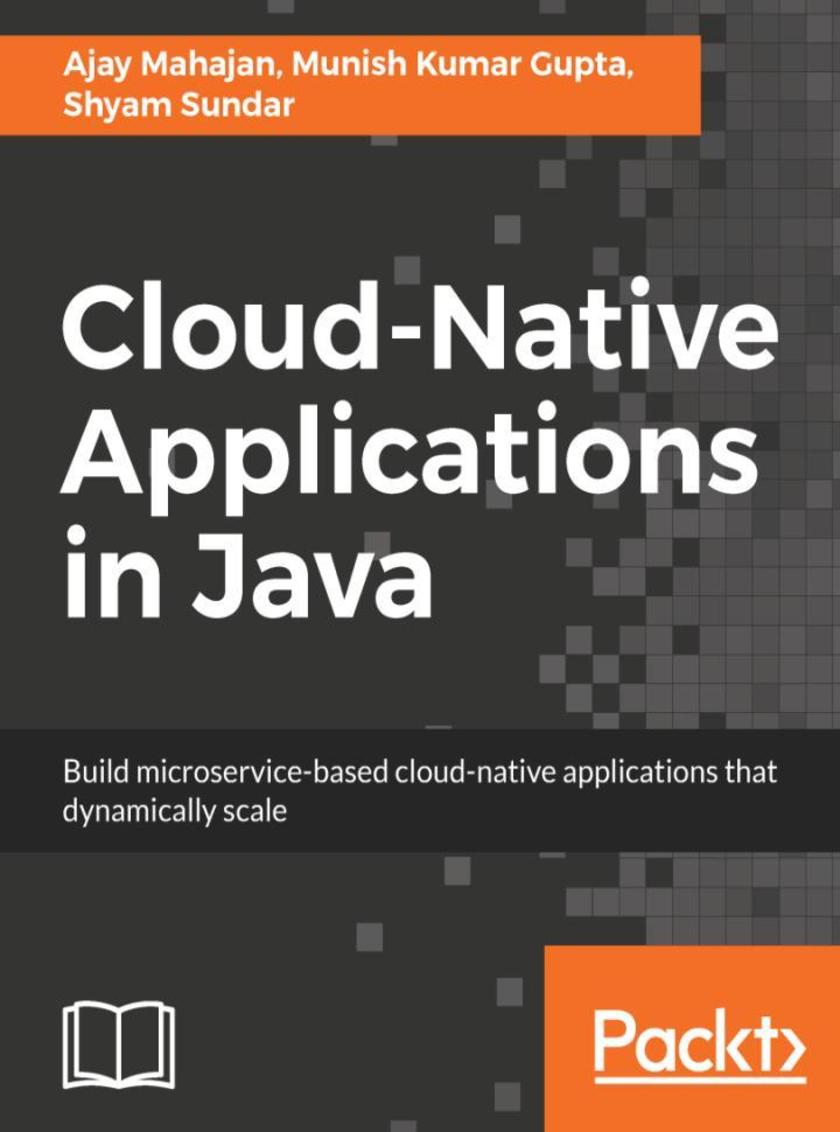
Cloud-Native Applications in Java
¥90.46
Highly available microservice-based web apps for Cloud with Java About This Book ? Take advantage of the simplicity of Spring to build a full-fledged application ? Let your applications run faster while generating smaller cloud service bills ? Integrate your application with various tools such as Docker and ElasticSearch and use specific tools in Azure and AWS Who This Book Is For Java developers who want to build secure, resilient, robust and scalable applications that are targeted for cloud based deployment, will find this book helpful. Some knowledge of Java, Spring, web programming and public cloud providers (AWS, Azure) should be sufficient to get you through the book. What You Will Learn ? See the benefits of the cloud environment when it comes to variability, provisioning, and tooling support ? Understand the architecture patterns and considerations when developing on the cloud ? Find out how to perform cloud-native techniques/patterns for request routing, RESTful service creation, Event Sourcing, and more ? Create Docker containers for microservices and set up continuous integration using Jenkins ? Monitor and troubleshoot an application deployed in the cloud environment ? Explore tools such as Docker and Kubernetes for containerization and the ELK stack for log aggregation and visualization ? Use AWS and Azure specific tools to design, develop, deploy, and manage applications ? Migrate from monolithic architectures to a cloud native deployment In Detail Businesses today are evolving so rapidly that they are resorting to the elasticity of the cloud to provide a platform to build and deploy their highly scalable applications. This means developers now are faced with the challenge of building build applications that are native to the cloud. For this, they need to be aware of the environment, tools, and resources they’re coding against. If you’re a Java developer who wants to build secure, resilient, robust, and scalable applications that are targeted for cloud-based deployment, this is the book for you. It will be your one stop guide to building cloud-native applications in Java Spring that are hosted in On-prem or cloud providers - AWS and Azure The book begins by explaining the driving factors for cloud adoption and shows you how cloud deployment is different from regular application deployment on a standard data centre. You will learn about design patterns specific to applications running in the cloud and find out how you can build a microservice in Java Spring using REST APIs You will then take a deep dive into the lifecycle of building, testing, and deploying applications with maximum automation to reduce the deployment cycle time. Gradually, you will move on to configuring the AWS and Azure platforms and working with their APIs to deploy your application. Finally, you’ll take a look at API design concerns and their best practices. You’ll also learn how to migrate an existing monolithic application into distributed cloud native applications. By the end, you will understand how to build and monitor a scalable, resilient, and robust cloud native application that is always available and fault tolerant. Style and approach Filled with examples, this book will build you an entire cloud-native application through its course and will stop at each point and explain in depth the functioning and design considerations that will make a robust, highly available application
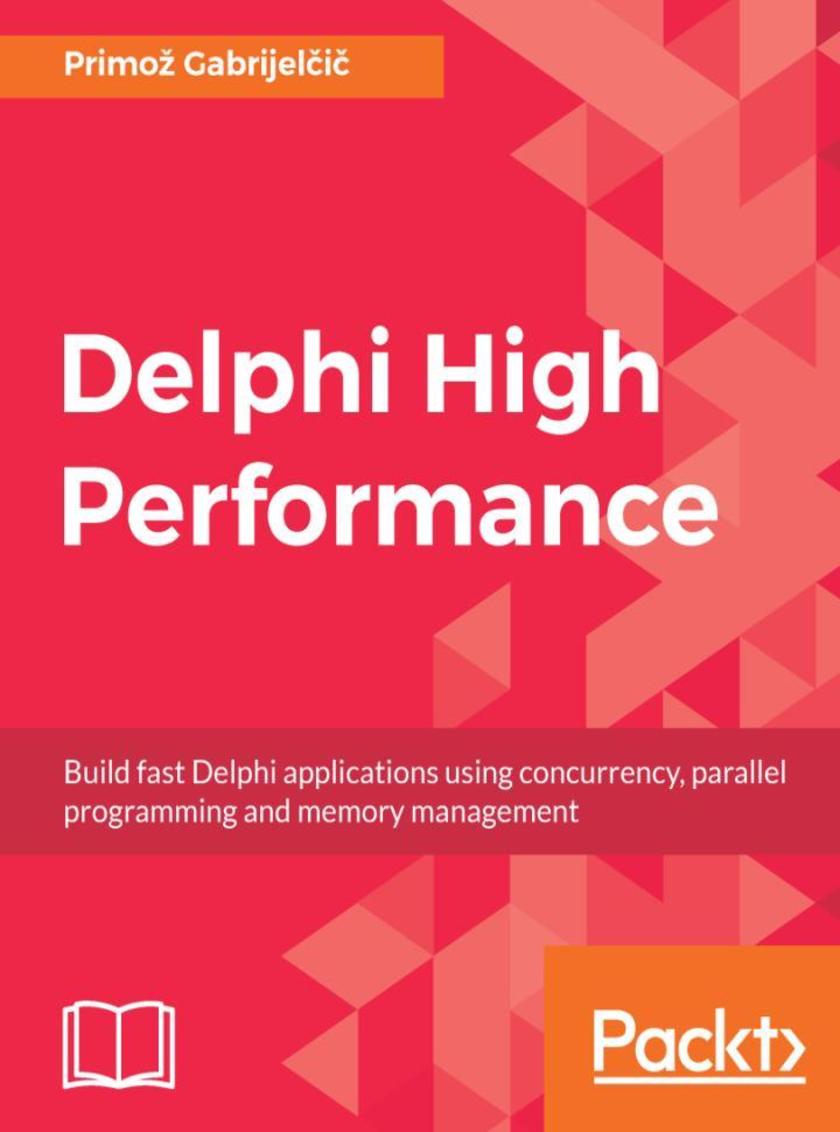
Delphi High Performance
¥81.74
Build fast, scalable, and high performing applications with Delphi About This Book ? Build efficient and concurrent applications in Delphi with focused examples ? Identify performance bottlenecks and apply the correct algorithm to increase the performance of applications. ? Delve into parallel programming and memory management to optimize your code Who This Book Is For This book is for Delphi developers who would like to build high performance applications with Delphi. Prior knowledge of Delphi is assumed. What You Will Learn ? Find performance bottlenecks and easily mitigate them ? Discover different approaches to fix algorithms ? Understand parallel programming and work with various tools included with Delphi ? Master the RTL for code optimization ? Explore memory managers and their implementation ? Leverage external libraries to write better performing programs In Detail Delphi is a cross-platform Integrated Development Environment (IDE) that supports rapid application development for Microsoft Windows, Apple Mac OS X, Google Android, iOS, and now Linux with RAD Studio 10.2. This book will be your guide to build efficient high performance applications with Delphi. The book begins by explaining how to find performance bottlenecks and apply the correct algorithm to fix them. It will teach you how to improve your algorithms before taking you through parallel programming. You’ll then explore various tools to build highly concurrent applications. After that, you’ll delve into improving the performance of your code and master cross-platform RTL improvements. Finally, we’ll go through memory management with Delphi and you’ll see how to leverage several external libraries to write better performing programs. By the end of the book, you’ll have the knowledge to create high performance applications with Delphi. Style and approach This book will take a step-by-step approach with focused examples to teach you how to increase the performance of applications.
Spring Boot 2.0 Cookbook - Second Edition
¥81.74
Take your application development skills to the next level by implementing Spring Boot features effectively About This Book ? This collection of effective recipes serves as guidelines for Spring Boot application development ? Get up to date with features of the latest version of Spring Boot 2.0 ? Tips and tricks to improve your efficiency through the stages of software development Who This Book Is For This book is for Java Developers who have good knowledge and understanding of Spring and Java application development. What You Will Learn ? Get to know Spring Boot Starters and create custom auto-configurations ? Work with custom annotations that enable bean activation ? Use DevTools to easily develop and debug applications ? Learn the effective testing techniques by integrating Cucumber and Spock ? Observe an eternal application configuration using Consul ? Move your existing Spring Boot applications to the cloud ? Use Hashicorp Consul and Netflix Eureka for dynamic Service Discovery ? Understand the various mechanisms that Spring Boot provides to examine an application’s health In Detail The Spring framework provides great flexibility for Java development, which also results in tedious configuration work. Spring Boot addresses the configuration difficulties of Spring and makes it easy to create standalone, production-grade Spring-based applications. This practical guide makes the existing development process more efficient. Spring Boot Cookbook 2.0 Second Edition smartly combines all the skills and expertise to efficiently develop, test, deploy, and monitor applications using Spring Boot on premise and in the cloud. We start with an overview of the important Spring Boot features you will learn to create a web application for a RESTful service. Learn to fine-tune the behavior of a web application by learning about custom routes and asset paths and how to modify routing patterns. Address the requirements of a complex enterprise application and cover the creation of custom Spring Boot starters. This book also includes examples of the new and improved facilities available to create various kinds of tests introduced in Spring Boot 1.4 and 2.0, and gain insights into Spring Boot DevTools. Explore the basics of Spring Boot Cloud modules and various Cloud starters to make applications in “Cloud Native” and take advantage of Service Discovery and Circuit Breakers. Style and approach This practical guide follows a recipe-based approach and provides extremely helpful guidelines to build, configure, and customize your Spring Boot applications.


