


 购物车
购物车 个人中心
个人中心
Mastering RethinkDB
¥80.65
Master the capabilities of RethinkDB and implement them to develop efficient real-time web applications. The way to better database development is here! About This Book Master the powerful ReQL queries to manipulate your JSON data, Learn how to develop scalable, real-time web applications using RethinkDB and Node.js and deploy them for production, A detailed, step-by-step guide to help you master the concepts of RethinkDB programming with ease Who This Book Is For This book caters to all the real-time application developers looking forward to master their skills using RethinkDB. A basic understanding of RethinkDB and Node.js is essential to get the most out of this book. What You Will Learn Master the web-based management console for data-center configuration (sharding, replication, and more), database monitoring, and testing queries. Run queries using the ReQL language Perform Geospatial queries (such as finding all the documents with locations within 5km of a given point). Deal with time series data, especially across various times zones. Extending the functionality of RethinkDB and integrate it with third party libraries such as ElasticSearch to enhance our search In Detail RethinkDB has a lot of cool things to be excited about: ReQL (its readable,highly-functional syntax), cluster management, primitives for 21st century applications, and change-feeds. This book starts with a brief overview of the RethinkDB architecture and data modeling, and coverage of the advanced ReQL queries to work with JSON documents. Then, you will quickly jump to implementing these concepts in real-world scenarios, by building real-time applications on polling, data synchronization, share market, and the geospatial domain using RethinkDB and Node.js. You will also see how to tweak RethinkDB's capabilities to ensure faster data processing by exploring the sharding and replication techniques in depth. Then, we will take you through the more advanced administration tasks as well as show you the various deployment techniques using PaaS, Docker, and Compose. By the time you have finished reading this book, you would have taken your knowledge of RethinkDB to the next level, and will be able to use the concepts in RethinkDB to develop efficient, real-time applications with ease. Style and approach This book is a unique blend of comprehensive theory and real-world examples to help you master RethinkDB.
Native Docker Clustering with Swarm
¥80.65
Deploy, configure, and run clusters of Docker containers with Swarm About This Book Get to grips with Docker Swarm, one of the key components of the Docker ecosystem. Optimize Swarm and SwarmKit features for scaling massive applications through containers. Learn about Docker’s scheduling tricks, high availability, security, and platform scalability. Who This Book Is For If you are a Linux admin or a Docker user who wants to natively manage Docker clusters, then this is the book for you. What You Will Learn Create and manage Swarm Mode clusters of any size Get a backstage view of the biggest Swarms ever built : Swarm2k and Swarm3k, with their 2,300 and 4,700 nodes Discovery mechanisms and Raft Deploy your containerized app on Swarm Administer Swarm clusters on AWS, Azure, and DigitalOcean Integrate Flocker volumes with Swarm Create and manage Swarms on OpenStack Magnum In Detail Docker Swarm serves as one of the crucial components of the Docker ecosystem and offers a native solution for you to orchestrate containers. It’s turning out to be one of the preferred choices for Docker clustering thanks to its recent improvements. This book covers Swarm, Swarm Mode, and SwarmKit. It gives you a guided tour on how Swarm works and how to work with Swarm. It describes how to set up local test installations and then moves to huge distributed infrastructures. You will be shown how Swarm works internally, what’s new in Swarmkit, how to automate big Swarm deployments, and how to configure and operate a Swarm cluster on the public and private cloud. This book will teach you how to meet the challenge of deploying massive production-ready applications and a huge number of containers on Swarm. You'll also cover advanced topics that include volumes, scheduling, a Libnetwork deep dive, security, and platform scalability. Style and approach A comprehensive guide that covers all aspects of Docker Swarm from setup to customization.
Windows Application Development Cookbook
¥90.46
Discover over 125 solution-based recipes to help you build applications for smartphones, tablets, and desktops About This Book Learn to build applications for Windows 10, the latest Windows version Develop your applications to be compatible with smartphones, tablets, and desktops This guide is packed with recipes covering major solutions to day-to-day problems faced by Windows programmers Who This Book Is For The book is dedicated to programmers with various experience of developing applications for Windows-based smartphones, tablets, and desktops—even beginners can find suitable content. What You Will Learn Start developing universal applications for Windows 10 Design user interface in the XAML language Use the MVVM design pattern with data binding Store data in files and in a database Use multimedia content and animations Capture data from built-in sensors Handle various Internet-based scenarios Test the application and submit it to the Windows Store In Detail Need to ensure you can always create the best Windows apps regardless of platformWhat you need are solutions to the biggest issues you can face, so you can always ensure you’re making the right choices and creating the best apps you can. The book starts with recipes that will help you set up the integrated development environment before you go ahead and design the user interface. You will learn how to use the MVVM design pattern together with data binding, as well as how to work with data in different file formats. Moving on, you will explore techniques to add animations and graphics to your application, and enable your solution to work with multimedia content. You will also see how to use sensors, such as an accelerometer and a compass, as well as obtain the current GPS location. You will make your application ready to work with Internet-based scenarios, such as composing e-mails or downloading files, before finally testing the project and submitting it to the Windows Store. By the end of the book, you will have a market-ready application compatible across different Windows devices, including smartphones, tablets, and desktops. Style and approach This quick-start book takes a cookbook format with recipes covering more than 125 solutions to help you create and build applications for Windows 10. The examples presented in the book use the free integrated development environment. A supporting set of codes that present solutions to problems described in particular chapters is available as well.
Fast Data Processing Systems with SMACK Stack
¥90.46
Combine the incredible powers of Spark, Mesos, Akka, Cassandra, and Kafka to build data processing platforms that can take on even the hardest of your data troubles! About This Book This highly practical guide shows you how to use the best of the big data technologies to solve your response-critical problems Learn the art of making cheap-yet-effective big data architecture without using complex Greek-letter architectures Use this easy-to-follow guide to build fast data processing systems for your organization Who This Book Is For If you are a developer, data architect, or a data scientist looking for information on how to integrate the Big Data stack architecture and how to choose the correct technology in every layer, this book is what you are looking for. What You Will Learn Design and implement a fast data Pipeline architecture Think and solve programming challenges in a functional way with Scala Learn to use Akka, the actors model implementation for the JVM Make on memory processing and data analysis with Spark to solve modern business demands Build a powerful and effective cluster infrastructure with Mesos and Docker Manage and consume unstructured and No-SQL data sources with Cassandra Consume and produce messages in a massive way with Kafka In Detail SMACK is an open source full stack for big data architecture. It is a combination of Spark, Mesos, Akka, Cassandra, and Kafka. This stack is the newest technique developers have begun to use to tackle critical real-time analytics for big data. This highly practical guide will teach you how to integrate these technologies to create a highly efficient data analysis system for fast data processing. We’ll start off with an introduction to SMACK and show you when to use it. First you’ll get to grips with functional thinking and problem solving using Scala. Next you’ll come to understand the Akka architecture. Then you’ll get to know how to improve the data structure architecture and optimize resources using Apache Spark. Moving forward, you’ll learn how to perform linear scalability in databases with Apache Cassandra. You’ll grasp the high throughput distributed messaging systems using Apache Kafka. We’ll show you how to build a cheap but effective cluster infrastructure with Apache Mesos. Finally, you will deep dive into the different aspect of SMACK using a few case studies. By the end of the book, you will be able to integrate all the components of the SMACK stack and use them together to achieve highly effective and fast data processing. Style and approach With the help of various industry examples, you will learn about the full stack of big data architecture, taking the important aspects in every technology. You will learn how to integrate the technologies to build effective systems rather than getting incomplete information on single technologies. You will learn how various open source technologies can be used to build cheap and fast data processing systems with the help of various industry examples
Tableau Cookbook – Recipes for Data Visualization
¥90.46
Create beautiful data visualizations and interactive dashboards with Tableau About This Book Delve into the features and functionalities of Tableau from the ground up with this step-by-step guide that has over 50 "follow-me" recipes Build rich visualizations to effectively highlight the underlying trends and patterns in your data Build beautiful interactive dashboards and storyboards to stitch your visualizations together and tell a story Who This Book Is For This book is for anyone who wishes to use Tableau. It will be of use to both beginners who want to learn Tableau from scratch and to more seasoned users who simply want a quick reference guide. This book is a ready reckoner guide for you. The book will be such that both new & existing Tableau users who don’t know, or can’t recall how to perform different Tableau tasks can use the book and be benefited from it. What You Will Learn Get to grips with the Tableau workspace and terminologies and understand what data sources you can connect Learn to create basic charts like bar chart, stacked bar, pie chart, line chart, area chart, tree map & word cloud Go even further with more advanced visualizations such as scatter plot, box & whiskers plot, dual axis, bullet chart, Histograms, Maps, etc Use pre-defined calculation and change its scope and direction to affect outcome Learn to define Parameters and call them into parametric calculations that provide outcomes based on user inputs Build Dashboards and use Actions to link multiple sheets on the dashboard Connect to multiple data sources using Data Blending, Multiple Table Join within the same data source as well as across data sources, Custom SQL and learn to work with data Extracts Compute statistical trends, build forecasting models and use Reference lines for benchmarking In Detail Data is everywhere and everything is data! Visualization of data allows us to bring out the underlying trends and patterns inherent in the data and gain insights that enable faster and smarter decision making. Tableau is one of the fastest growing and industry leading Business Intelligence platforms that empowers business users to easily visualize their data and discover insights at the speed of thought. Tableau is a self-service BI platform designed to make data visualization and analysis as intuitive as possible. Creating visualizations with simple drag-and-drop, you can be up and running on Tableau in no time. Starting from the fundamentals such as getting familiarized with Tableau Desktop, connecting to common data sources and building standard charts; you will walk through the nitty gritty of Tableau such as creating dynamic analytics with parameters, blended data sources, and advanced calculations. You will also learn to group members into higher levels, sort the data in a specific order & filter out the unnecessary information. You will then create calculations in Tableau & understand the flexibility & power they have and go on to building story-boards and share your insights with others. Whether you are just getting started or whether you need a quick reference on a "how-to" question, This book is the perfect companion for you Style and approach This cookbook takes a step-by-step approach and the text systematically evolves to cover more involved functionalities. Every recipe includes illustrative screenshots which provide a detailed visual resource for each step.
Effective Robotics Programming with ROS - Third Edition
¥90.46
Find out everything you need to know to build powerful robots with the most up-to-date ROS About This Book This comprehensive, yet easy-to-follow guide will help you find your way through the ROS framework Successfully design and simulate your 3D robot model and use powerful robotics algorithms and tools to program and set up your robots with an unparalleled experience by using the exciting new features from Robot Kinetic Use the latest version of gazebo simulator, OpenCV 3.0, and C++11 standard for your own algorithms Who This Book Is For This book is suitable for an ROS beginner as well as an experienced ROS roboticist or ROS user or developer who is curious to learn ROS Kinetic and its features to make an autonomous Robot. The book is also suitable for those who want to integrate sensors and embedded systems with other software and tools using ROS as a framework. What You Will Learn Understand the concepts of ROS, the command-line tools, visualization GUIs, and how to debug ROS Connect robot sensors and actuators to ROS Obtain and analyze data from cameras and 3D sensors Use Gazebo for robot/sensor and environment simulation Design a robot and see how to make it map the environment, navigate autonomously, and manipulate objects in the environment using MoveIt! Add vision capabilities to the robot using OpenCV 3.0 Add 3D perception capabilities to the robot using the latest version of PCL In Detail Building and programming a robot can be cumbersome and time-consuming, but not when you have the right collection of tools, libraries, and more importantly expert collaboration. ROS enables collaborative software development and offers an unmatched simulated environment that simplifies the entire robot building process. This book is packed with hands-on examples that will help you program your robot and give you complete solutions using open source ROS libraries and tools. It also shows you how to use virtual machines and Docker containers to simplify the installation of Ubuntu and the ROS framework, so you can start working in an isolated and control environment without changing your regular computer setup. It starts with the installation and basic concepts, then continues with more complex modules available in ROS such as sensors and actuators integration (drivers), navigation and mapping (so you can create an autonomous mobile robot), manipulation, Computer Vision, perception in 3D with PCL, and more. By the end of the book, you’ll be able to leverage all the ROS Kinetic features to build a fully fledged robot for all your needs. Style and approach This book is packed with hands-on examples that will help you program your robot and give you complete solutions using ROS open source libraries and tools. All the robotics concepts and modules are explained and multiple examples are provided so that you can understand them easily.
Mastering Text Mining with R
¥71.93
Master text-taming techniques and build effective text-processing applications with R About This Book Develop all the relevant skills for building text-mining apps with R with this easy-to-follow guide Gain in-depth understanding of the text mining process with lucid implementation in the R language Example-rich guide that lets you gain high-quality information from text data Who This Book Is For If you are an R programmer, analyst, or data scientist who wants to gain experience in performing text data mining and analytics with R, then this book is for you. Exposure to working with statistical methods and language processing would be helpful. What You Will Learn Get acquainted with some of the highly efficient R packages such as OpenNLP and RWeka to perform various steps in the text mining process Access and manipulate data from different sources such as JSON and HTTP Process text using regular expressions Get to know the different approaches of tagging texts, such as POS tagging, to get started with text analysis Explore different dimensionality reduction techniques, such as Principal Component Analysis (PCA), and understand its implementation in R Discover the underlying themes or topics that are present in an unstructured collection of documents, using common topic models such as Latent Dirichlet Allocation (LDA) Build a baseline sentence completing application Perform entity extraction and named entity recognition using R In Detail Text Mining (or text data mining or text analytics) is the process of extracting useful and high-quality information from text by devising patterns and trends. R provides an extensive ecosystem to mine text through its many frameworks and packages. Starting with basic information about the statistics concepts used in text mining, this book will teach you how to access, cleanse, and process text using the R language and will equip you with the tools and the associated knowledge about different tagging, chunking, and entailment approaches and their usage in natural language processing. Moving on, this book will teach you different dimensionality reduction techniques and their implementation in R. Next, we will cover pattern recognition in text data utilizing classification mechanisms, perform entity recognition, and develop an ontology learning framework. By the end of the book, you will develop a practical application from the concepts learned, and will understand how text mining can be leveraged to analyze the massively available data on social media. Style and approach This book takes a hands-on, example-driven approach to the text mining process with lucid implementation in R.
OpenStack for Architects
¥71.93
Design and implement successful private clouds with OpenStack About This Book Explore the various design choices available for cloud architects within an OpenStack deployment Craft an OpenStack architecture and deployment pipeline to meet the unique needs of your organization Create a product roadmap for Infrastructure as a Service in your organization using this hands-on guide Who This Book Is For This book is written especially for those who will design OpenStack clouds and lead their implementation. These people are typically cloud architects, but may also be in product management, systems engineering, or enterprise architecture. What You Will Learn Familiarize yourself with the components of OpenStack Build an increasingly complex OpenStack lab deployment Write compelling documentation for the architecture teams within your organization Apply Agile configuration management techniques to deploy OpenStack Integrate OpenStack with your organization's identity management, provisioning, and billing systems Configure a robust virtual environment for users to interact with Use enterprise security guidelines for your OpenStack deployment Create a product roadmap that delivers functionality quickly to the users of your platform In Detail Over the last five years, hundreds of organizations have successfully implemented Infrastructure as a Service (IaaS) platforms based on OpenStack. The huge amount of investment from these organizations, industry giants such as IBM and HP, as well as open source leaders such as Red Hat have led analysts to label OpenStack as the most important open source technology since the Linux operating system. Because of its ambitious scope, OpenStack is a complex and fast-evolving open source project that requires a diverse skill-set to design and implement it. This guide leads you through each of the major decision points that you'll face while architecting an OpenStack private cloud for your organization. At each point, we offer you advice based on the experience we've gained from designing and leading successful OpenStack projects in a wide range of industries. Each chapter also includes lab material that gives you a chance to install and configure the technologies used to build production-quality OpenStack clouds. Most importantly, we focus on ensuring that your OpenStack project meets the needs of your organization, which will guarantee a successful rollout. Style and approach This is practical, hands-on guide to implementing OpenStack clouds, where each topic is illustrated with real-world examples and then the technical points are proven in the lab.
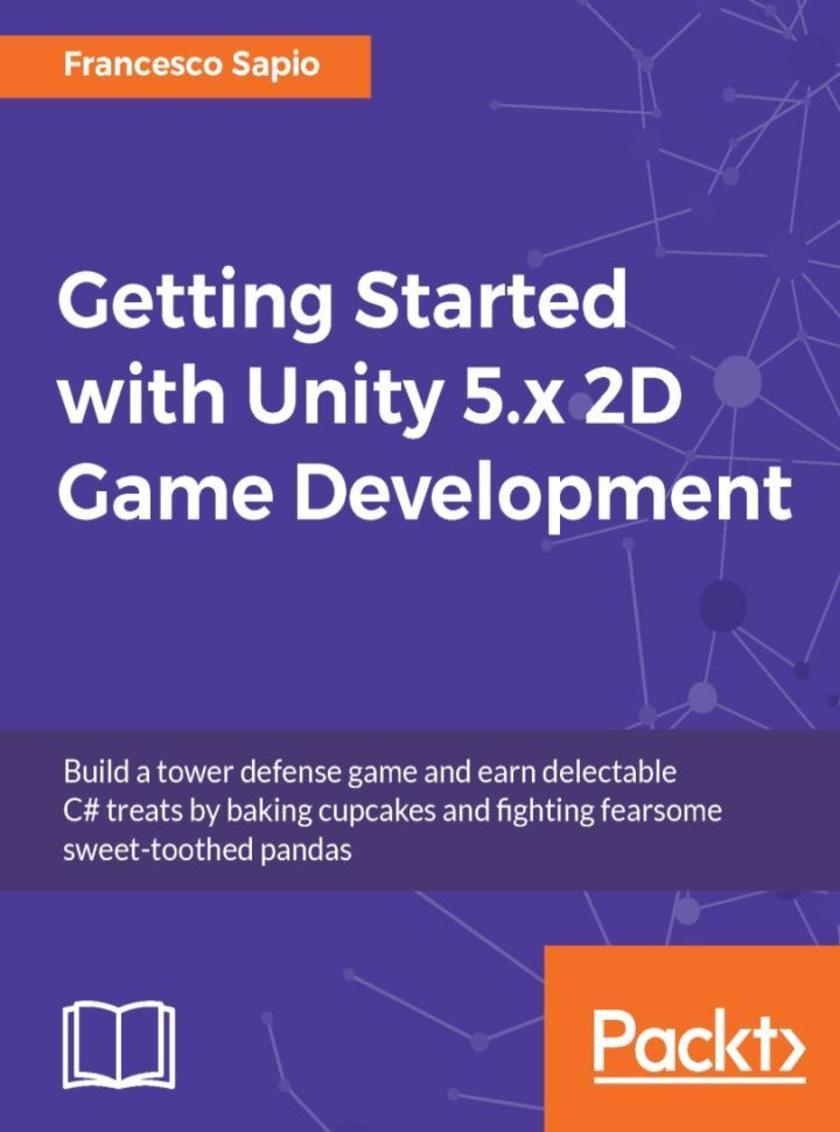
Getting Started with Unity 5.x 2D Game Development
¥80.65
Build a tower defense game and earn delectable C# treats by baking cupcakes and fighting fearsome sweet-toothed pandas About This Book Build a complete and exciting 2D Tower Defense game from scratch. Understand and learn to perform each phase of the game development pipeline Homework and exercises to improve your skills and take them to the next level Who This Book Is For If you are looking forward to get started with 2D game development, either if you are a newcomer to this world, or you came from 3D games or other game engines, this book is for you. Although there are many references to other resources throughout the book, it is assumed that you have a general understanding of C# and its syntax and structure. What You Will Learn Import and set up assets for 2D game development Design and implement dynamic and responsive User Interfaces Create and handle complex animation systems Unlock all the potentiality of the physics engine Implement Artificial Intelligence algorithms to give intelligence to your NPCs Script gameplay and overall bring your ideas to life In Detail Want to get started in the world of 2D game development with UnityThis book will take your hand and guide you through this amazing journey to let you know exactly what you need to build the games you want to build, without sacrificing quality. You will build a solid understanding of Unity 5.x, by focusing with the embedded tools to develop 2D games. In learning about these, along with accurate explanations and practical examples, you will design, develop, learn how to market and publish a delectable Tower Defense game about cupcakes versus pandas. Each chapter in this book is structured to give you a full understanding on a specific aspect of the workflow pipeline. Each of these aspects are essential for developing games in Unity. In a step-by-step approach, you will learn about each of the following phases: Game Design, Asset Importing, Scripting, User Interfaces, Animations, Physics, Artificial Intelligence, Gameplay Programming, Polishing and Improving, Marketing, Publishing and much more. This book provides you with exercises and homework at the end of each chapter so that you can level up your skills as a Unity game developer. In addition, each of these parts are centered on a common point of discussion with other learners just like you. Therefore, by sharing your ideas with other people you will not only develop your skills but you will also build a network. Style and approach This is a fun step-by-step approach in the whole pipeline of 2D game development in Unity, which is explained in a conversational and easy-to-follow style. Each topic is explained sequentially, allowing you to experience both basics and advanced features of Unity. By doing this, the book is able to provide you with a solid grasp on each of the topics. In this way, by engaging with the book’s content, exploring the additional references to further readings and completing the homework sections, you are able to challenge yourself and apply what you know in a variety of ways. Once you have finished reading this book, you will be well on your way to developing games from start to finish!
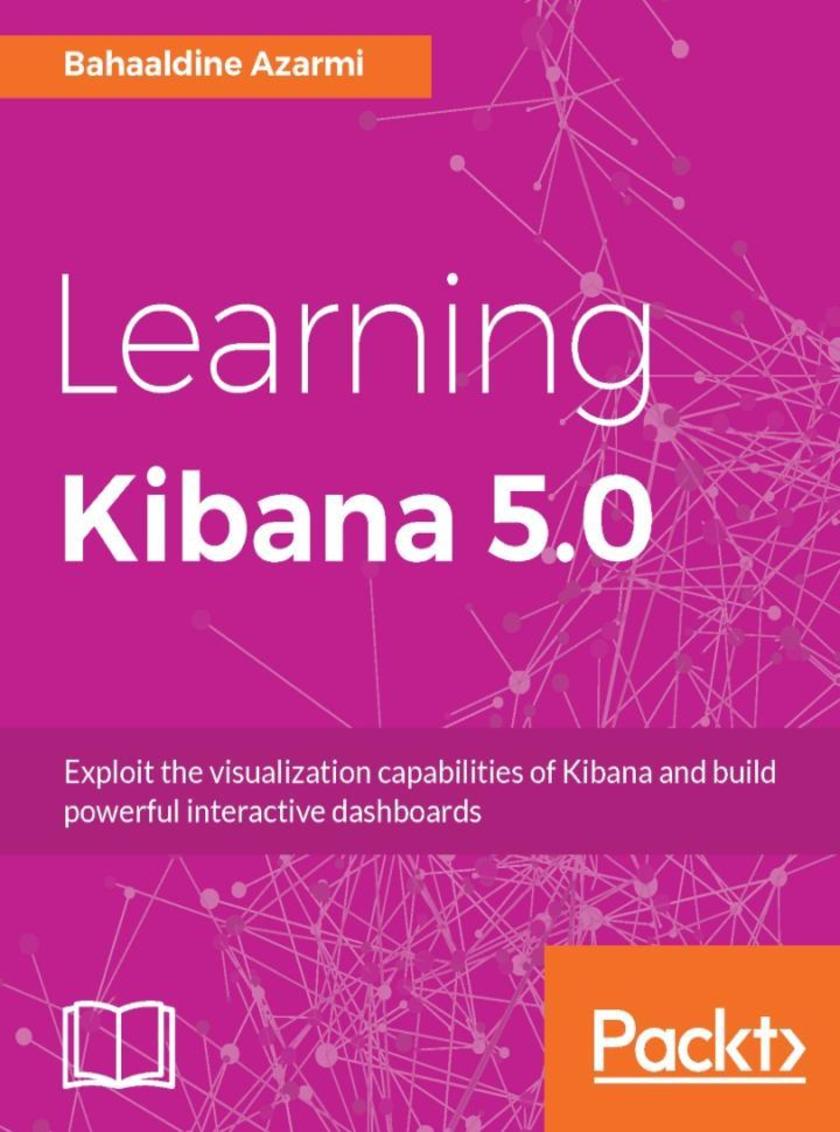
Learning Kibana 5.0
¥71.93
Exploit the visualization capabilities of Kibana and build powerful interactive dashboards About This Book Introduction to data-driven architecture and the Elastic stack Build effective dashboards for data visualization and explore datasets with Elastic Graph A comprehensive guide to learning scalable data visualization techniques in Kibana Who This Book Is For If you are a developer, data visualization engineer, or data scientist who wants to get the best of data visualization at scale then this book is perfect for you. A basic understanding of Elasticsearch and Logstash is required to make the best use of this book. What You Will Learn How to create visualizations in Kibana Ingest log data, structure an Elasticsearch cluster, and create visualization assets in Kibana Embed Kibana visualization on web pages Scaffold, develop, and deploy new Kibana & Timelion customizations Build a metrics dashboard in Timelion based on time series data Use the Graph plugin visualization feature and leverage a graph query Create, implement, package, and deploy a new custom plugin Use Prelert to solve anomaly detection challenges In Detail Kibana is an open source data visualization platform that allows you to interact with your data through stunning, powerful graphics. Its simple, browser-based interface enables you to quickly create and share dynamic dashboards that display changes to Elasticsearch queries in real time. In this book, you’ll learn how to use the Elastic stack on top of a data architecture to visualize data in real time. All data architectures have different requirements and expectations when it comes to visualizing the data, whether it’s logging analytics, metrics, business analytics, graph analytics, or scaling them as per your business requirements. This book will help you master Elastic visualization tools and adapt them to the requirements of your project. You will start by learning how to use the basic visualization features of Kibana 5. Then you will be shown how to implement a pure metric analytics architecture and visualize it using Timelion, a very recent and trendy feature of the Elastic stack. You will learn how to correlate data using the brand-new Graph visualization and build relationships between documents. Finally, you will be familiarized with the setup of a Kibana development environment so that you can build a custom Kibana plugin. By the end of this book you will have all the information needed to take your Elastic stack skills to a new level of data visualization. Style and approach This book takes a comprehensive, step-by-step approach to working with the visualization aspects of the Elastic stack. Every concept is presented in a very easy-to-follow manner that shows you both the logic and method of implementation. Real world cases are referenced to highlight how each of the key concepts can be put to practical use.
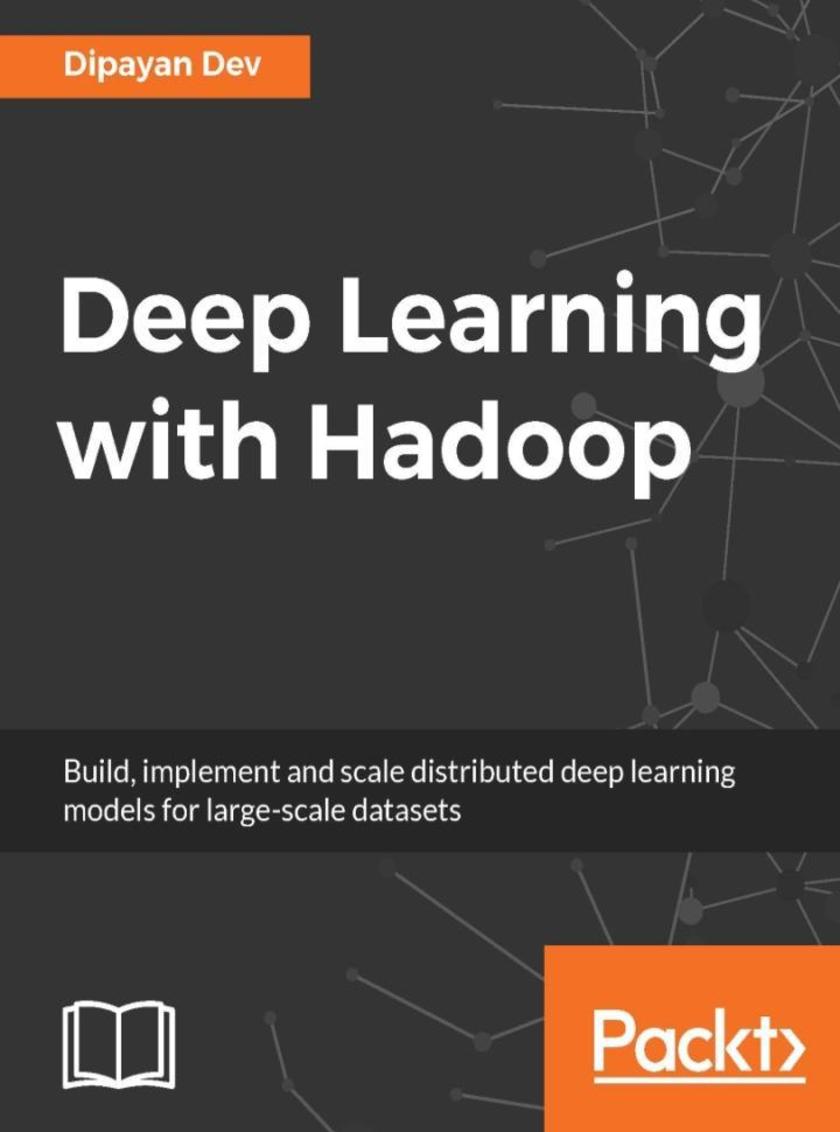
Deep Learning with Hadoop
¥71.93
Build, implement and scale distributed deep learning models for large-scale datasets About This Book Get to grips with the deep learning concepts and set up Hadoop to put them to use Implement and parallelize deep learning models on Hadoop’s YARN framework A comprehensive tutorial to distributed deep learning with Hadoop Who This Book Is For If you are a data scientist who wants to learn how to perform deep learning on Hadoop, this is the book for you. Knowledge of the basic machine learning concepts and some understanding of Hadoop is required to make the best use of this book. What You Will Learn Explore Deep Learning and various models associated with it Understand the challenges of implementing distributed deep learning with Hadoop and how to overcome it Implement Convolutional Neural Network (CNN) with deeplearning4j Delve into the implementation of Restricted Boltzmann Machines (RBM) Understand the mathematical explanation for implementing Recurrent Neural Networks (RNN) Get hands on practice of deep learning and their implementation with Hadoop. In Detail This book will teach you how to deploy large-scale dataset in deep neural networks with Hadoop for optimal performance. Starting with understanding what deep learning is, and what the various models associated with deep neural networks are, this book will then show you how to set up the Hadoop environment for deep learning. In this book, you will also learn how to overcome the challenges that you face while implementing distributed deep learning with large-scale unstructured datasets. The book will also show you how you can implement and parallelize the widely used deep learning models such as Deep Belief Networks, Convolutional Neural Networks, Recurrent Neural Networks, Restricted Boltzmann Machines and autoencoder using the popular deep learning library deeplearning4j. Get in-depth mathematical explanations and visual representations to help you understand the design and implementations of Recurrent Neural network and Denoising AutoEncoders with deeplearning4j. To give you a more practical perspective, the book will also teach you the implementation of large-scale video processing, image processing and natural language processing on Hadoop. By the end of this book, you will know how to deploy various deep neural networks in distributed systems using Hadoop. Style and approach This book takes a comprehensive, step-by-step approach to implement efficient deep learning models on Hadoop. It starts from the basics and builds the readers’ knowledge as they strengthen their understanding of the concepts. Practical examples are included in every step of the way to supplement the theory.
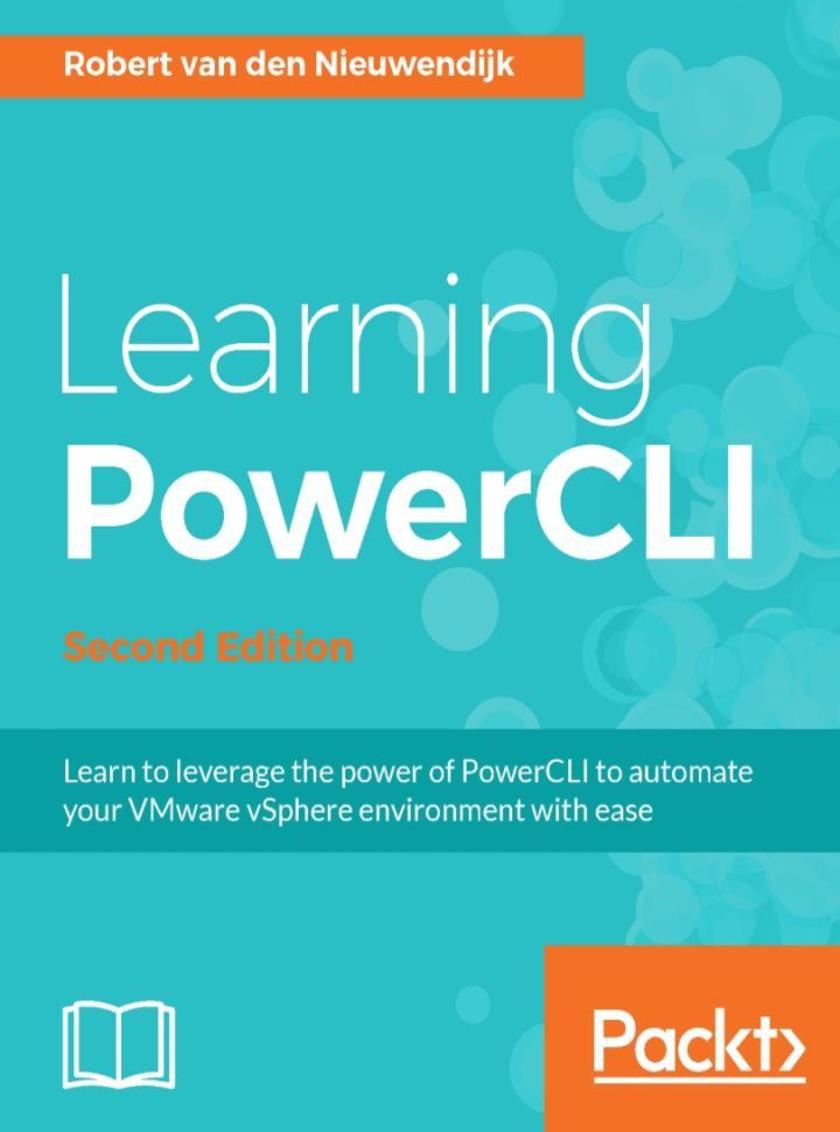
Learning PowerCLI - Second Edition
¥90.46
Learn to leverage the power of PowerCLI to automate your VMware vSphere environment with ease About This Book This is first book on the market that will enlighten you on the latest version of PowerCLI and how to implement it Effectively manage virtual machines, networks, and reports with the latest features of PowerCLI A comprehensive and practical book on automating VMware vSphere Who This Book Is For This book is ideal for you if you want to learn how to automate your VMware vSphere or vCloud infrastructure by getting the most out of PowerCLI. It’s assumed that you have some experience in administrating a vSphere or vCloud environment. Knowledge of Microsoft’s Windows PowerShell is not a prerequisite. What You Will Learn Explore PowerShell and PowerCLI cmdlets and their output objects See how to manage virtual machines and work with virtual networks Manage vCloud Director from PowerCLI Use Site Recovery Manager from PowerCLI to create a disaster recovery solution Manage NSX and vRealize Automation using REST API with PowerCLI Create and configure vSphere HA and DRS clusters Use vSphere Update Manager with PowerCLI to create patch baselines and scan hosts Explore reporting techniques to retrieve log files In Detail VMware vSphere PowerCLI, a free extension to Microsoft Windows PowerShell, enables you to automate the management of a VMware vSphere or vCloud environment. This book will show you how to automate your tasks and make your job easier. Starting with an introduction to the basics of PowerCLI, the book will teach you how to manage your vSphere and vCloud infrastructure from the command line. To help you manage a vSphere host overall, you will learn how to manage vSphere ESXi hosts, host profiles, host services, host firewall, and deploy and upgrade ESXi hosts using Image Builder and Auto Deploy. The next chapter will not only teach you how to create datastore and datastore clusters, but you’ll also work with profile-driven and policy-based storage to manage your storage. To create a disaster recovery solution and retrieve information from vRealize Operations, you will learn how to use Site Recovery Manager and vRealize Operations respectively. Towards the end, you’ll see how to use the REST APIs from PowerShell to manage NSX and vRealize Automation and create patch baselines, scan hosts against the baselines for missing patches, and re-mediate hosts. By the end of the book, you will be capable of using the best tool to automate the management and configuration of VMware vSphere. Style and approach This comprehensive book will teach system administrators everything about PowerCLI 6 and how to utilize it to automate VMware vSphere.
Microsoft System Center 2016 Service Manager Cookbook - Second Edition
¥107.90
Discover over 100 practical recipes to help you master the art of IT service management for your organization About This Book Unleash the capabilities of Microsoft System Center 2016 Service Manager Master the skills of configuring, deploying, managing, and troubleshooting your Service Manager 2016 This book contains practical recipes that leverage the key and newly added features and functionalities of Microsoft System Center 2016 Service Manager Who This Book Is For This book will be useful to IT professionals including SCSM administrators who want to configure and administer System Center Service Manager 2016 and understand how to solve specific problems and scenarios that arise. It will also be useful to users of Service Manager 2012 who want to learn about the new features and capabilities of the Service Manager 2016 release. It will be ideal if you have Service Manager experience as well as experience with other System Center products. What You Will Learn See a practical implementation of the ITSM framework and processes based on ITIL Deploy and configure the new Service Manager HTML5 Self-Service Portal along with Service Catalog design and configuration Get to know about Incident, Problem, and Change Management processes and configuration Get to grips with performing advanced personalization in Service Manager Discover how to set up and use automation with and within Service Manager 2016 Work with Service Manager Data Warehouse Find out what Security Roles are and how to implement them Learn how to upgrade from SCSM 2012 R2 to SCSM 2016 In Detail System Center Service Manager (SCSM) is an integrated platform that offers a simplified data center management experience by implementing best practices such as Incident Management, Service Request, and Change Control to achieve efficient service delivery across your organization. This book provides you with real-world recipes that can be used immediately and will show you how to configure and administer SCSM 2016. You’ll also find out how to solve particular problems and scenarios to take this tool further. You’ll start with recipes on implementing ITSM frameworks and processes and configuring Service Level Agreements (SLAs). Then, you'll work through deploying and configuring the HTML5 Self-Service Portal, configuring Incident and Problem Management, and designing and configuring Change and Release Management. You'll also learn about security roles and overall Microsoft SCSM 2016 administration. Toward the end of the book, we’ll look at advanced topics, such as presenting the wealth of information stored within the Service Manager Data Warehouse, standardizing SCSM deployments, and implementing automation. Style and approach This book will enlighten you on Microsoft System Center 2016 Service Manager through recipes that can be implemented directly in any enterprise. You can read the book from start to end if you’re a beginner, or just open up any chapter and start following the recipes as a reference for advanced users. This book consists of a pool of step-by-step recipes on how to perform activities in Service Manager.
Alfresco One 5.x Developer’s Guide - Second Edition
¥80.65
Discover what it means to be an expert developer by exploring the latest features available to you in Alfresco One 5.x About This Book Create reliable and secure enterprise apps with the latest Alfresco One 5.x platform Explore all the latest Alfresco One 5.x APIs such as the CMIS API, Alfresco One API, and the integrated RESTful API to get more out of your enterprise apps Unleash the power of the latest JavaScript engine and the JavaScript API for Alfresco to customize your existing apps for the Alfresco 5 platform Who This Book Is For If you’re an enterprise app developer who wants to create custom applications with Alfresco, then this book is for you. Previous knowledge with Alfresco would be helpful but is not necessary. What You Will Learn Create and manage a custom content model Configure the Alfresco Share user interface Build a new AngularJS 2.0 application Create business process definitions using Activiti Designer Discover the most common extensions provided by Alfresco Configure Alfresco to authenticate against LDAP, including & chaining" LDAP with Alfresco authentication Get familiar with the latest features of Alfresco Mobile SDK, Smart Search, and the new Angular framework In Detail Do you want to create more reliable and secure solutions for enterprise appsAlfresco One 5.x is your gateway to developing the best industry-standard enterprise apps and this book will help you to become a pro with Alfresco One 5.x development. This book will help you create a complete fully featured app for your organization and while you create that perfect app, you will explore and implement the new and intriguing features of Alfresco. The book starts with an introduction to the Alfresco platform and you’ll see how to configure and customize it. You will learn how to work with the content in a content management system and how you can extend it to your own use case. Next, you will find out how to work with Alfresco Share, an all-purpose user interface for general document management, and customize it. Moving on, you write web *s that create, read, and delete data in the back-end repository. Further on from that, you’ll work with a set of tools that Alfresco provides; to generate a basic AnglularJS application supporting use cases, to name a few authentication, document list, document view. Finally, you’ll learn how to develop your own Alfresco Mobile app and understand how Smart Folders and Search manager work. By the end of the book, you’ll know how to configure Alfresco to authenticate against LDAP, be able to set up Single Sign-On (SSO), and work with Alfresco’s security services. Style and approach This book takes a step-by-step practical tutorial-style approach helping you create a complete enterprise app using Alfresco.
Learning PySpark
¥80.65
Build data-intensive applications locally and deploy at scale using the combined powers of Python and Spark 2.0 About This Book Learn why and how you can efficiently use Python to process data and build machine learning models in Apache Spark 2.0 Develop and deploy efficient, scalable real-time Spark solutions Take your understanding of using Spark with Python to the next level with this jump start guide Who This Book Is For If you are a Python developer who wants to learn about the Apache Spark 2.0 ecosystem, this book is for you. A firm understanding of Python is expected to get the best out of the book. Familiarity with Spark would be useful, but is not mandatory. What You Will Learn Learn about Apache Spark and the Spark 2.0 architecture Build and interact with Spark DataFrames using Spark SQL Learn how to solve graph and deep learning problems using GraphFrames and TensorFrames respectively Read, transform, and understand data and use it to train machine learning models Build machine learning models with MLlib and ML Learn how to submit your applications programmatically using spark-submit Deploy locally built applications to a cluster In Detail Apache Spark is an open source framework for efficient cluster computing with a strong interface for data parallelism and fault tolerance. This book will show you how to leverage the power of Python and put it to use in the Spark ecosystem. You will start by getting a firm understanding of the Spark 2.0 architecture and how to set up a Python environment for Spark. You will get familiar with the modules available in PySpark. You will learn how to abstract data with RDDs and DataFrames and understand the streaming capabilities of PySpark. Also, you will get a thorough overview of machine learning capabilities of PySpark using ML and MLlib, graph processing using GraphFrames, and polyglot persistence using Blaze. Finally, you will learn how to deploy your applications to the cloud using the spark-submit command. By the end of this book, you will have established a firm understanding of the Spark Python API and how it can be used to build data-intensive applications. Style and approach This book takes a very comprehensive, step-by-step approach so you understand how the Spark ecosystem can be used with Python to develop efficient, scalable solutions. Every chapter is standalone and written in a very easy-to-understand manner, with a focus on both the hows and the whys of each concept.
Data Visualization with D3 4.x Cookbook - Second Edition
¥80.65
Discover over 65 recipes to help you create breathtaking data visualizations using the latest features of D3 About This Book Learn about D3 4.0 from the inside out and master its new features Utilize D3 packages to generate graphs, manipulate data, and create beautiful presentations Solve real-world visualization problems with the help of practical recipes Who This Book Is For If you are a developer familiar with HTML, CSS, and JavaScript, and you wish to get the most out of D3, then this book is for you. This book can serve as a desktop quick-reference guide for experienced data visualization developers. You’ll also find this book useful if you’re a D3 user who wants to take advantage of the new features introduced in D3 4.0. You should have previous experience with D3. What You Will Learn Get a solid understanding of the D3 fundamentals and idioms Use D3 to load, manipulate, and map data to any kind of visual representation on the web Create data-driven dynamic visualizations that update as the data does Leverage the various modules provided by D3 to create sophisticated, dynamic, and interactive charts and graphics Create data-driven transitions and animations within your visualizations Understand and leverage more advanced concepts such as force, touch, and Geo data visualizations In Detail This book gives you all the guidance you need to start creating modern data visualizations with D3 4.x that take advantage of the latest capabilities of JavaScript. The book starts with the basic D3 structure and building blocks and quickly moves on to writing idiomatic D3-style JavaScript code. You will learn how to work with selection to target certain visual elements on the page, then you will see techniques to represent data both in programming constructs and its visual metaphor. You will learn how map values in your data domain to the visual domain using scales, and use the various shape functions supported by D3 to create SVG shapes in visualizations. Moving on, you’ll see how to use and customize various D3 axes and master transition to add bells and whistles to otherwise dry visualizations. You’ll also learn to work with charts, hierarchy, graphs, and build interactive visualizations. Next you’ll work with Force, which is one of the most awe-inspiring techniques you can add to your visualizations, and you’ll implement a fully functional Choropleth map (a special purpose colored map) in D3. Finally, you’ll learn to unit test data visualization code and test-driven development in a visualization project so you know how to produce high-quality D3 code. Style and approach This step-by-step guide to mastering data visualizations with D3 will help you create amazing data visualizations with professional efficiency and precision. It is a solution-based guide in which you learn through practical recipes, illustrations, and code samples.
Big Data Visualization
¥80.65
Learn effective tools and techniques to separate big data into manageable and logical components for efficient data visualization About This Book This unique guide teaches you how to visualize your cluttered, huge amounts of big data with ease It is rich with ample options and solid use cases for big data visualization, and is a must-have book for your shelf Improve your decision-making by visualizing your big data the right way Who This Book Is For This book is for data analysts or those with a basic knowledge of big data analysis who want to learn big data visualization in order to make their analysis more useful. You need sufficient knowledge of big data platform tools such as Hadoop and also some experience with programming languages such as R. This book will be great for those who are familiar with conventional data visualizations and now want to widen their horizon by exploring big data visualizations. What You Will Learn Understand how basic analytics is affected by big data Deep dive into effective and efficient ways of visualizing big data Get to know various approaches (using various technologies) to address the challenges of visualizing big data Comprehend the concepts and models used to visualize big data Know how to visualize big data in real time and for different use cases Understand how to integrate popular dashboard visualization tools such as Splunk and Tableau Get to know the value and process of integrating visual big data with BI tools such as Tableau Make sense of the visualization options for big data, based upon the best suited visualization techniques for big data In Detail When it comes to big data, regular data visualization tools with basic features become insufficient. This book covers the concepts and models used to visualize big data, with a focus on efficient visualizations. This book works around big data visualizations and the challenges around visualizing big data and address characteristic challenges of visualizing like speed in accessing, understanding/adding context to, improving the quality of the data, displaying results, outliers, and so on. We focus on the most popular libraries to execute the tasks of big data visualization and explore "big data oriented" tools such as Hadoop and Tableau. We will show you how data changes with different variables and for different use cases with step-through topics such as: importing data to something like Hadoop, basic analytics. The choice of visualizations depends on the most suited techniques for big data, and we will show you the various options for big data visualizations based upon industry-proven techniques. You will then learn how to integrate popular visualization tools with graphing databases to see how huge amounts of certain data. Finally, you will find out how to display the integration of visual big data with BI using Cognos BI. Style and approach With the help of insightful real-world use cases, we’ll tackle data in the world of big data. The scalability and hugeness of the data makes big data visualizations different from normal data visualizations, and this book addresses all the difficulties encountered by professionals while visualizing their big data.
ServiceNow Cookbook
¥80.65
Over 50 practical and immediately applicable recipes to help you manage services in your enterprise environment efficiently About This Book Solve problems and challenges encountered while implementing or using ServiceNow in your organization Helps you build core administration, management, and maintenance skills to automate and orchestrate your IT environment Comes with recipes to improve the way you design and create automated workflows Who This Book Is For This book targets IT professionals and administrators who have some experience of working with ServiceNow already and are looking to solve regular or unique problems that surface when using ServiceNow. It’s advisable to have a basic level of administration experience with ServiceNow. Familiarity with JavaScript is assumed. What You Will Learn Grasp the basics, such as entering and navigation, required to implement ServiceNow Perform core configuration and management tasks Use the ServiceNow plugins to manage development Build and publish custom applications for service management Design data-driven apps to connect with outside worlds by getting into Client and server *ing Configure alerts and notifications and understand e-mail troubleshooting and watermarking Build and configure reports to set up your dashboard as per the requirement Create and configure workflow activities In Detail ServiceNow is the ideal platform for you to create enterprise-level applications, giving borh requesters and fulfillers better visibility and access to a process. With this title we’ll guide you through the world of ServiceNow, letting you take on the best the platform offers you with the least amount of hassle. Starting with the core configuration and management tasks, this book will help you build data-driven apps and it will also explore development best practices. You will learn to set up email notifications for users and work with the database view for reporting. Next, the book will guide you through creating various tasks from the workflow and show you how to make the most of the workflow utilities available in ServiceNow. Finally, the book will drive you through the auditing and diagnosing aspects of ServiceNow. By the end of this book, you will acquire immediately applicable skills to rectify everyday problems encountered on the ServiceNow platform. Style and approach This book follows a recipe-based problem-solution approach to address and dispel challenges faced when implementing and using ServiceNow on a regular basis. It will act as a quick solution when trying to solve specific problems without having to read an exhaustive tutorial.
Python: Real World Machine Learning
¥161.31
Learn to solve challenging data science problems by building powerful machine learning models using Python About This Book Understand which algorithms to use in a given context with the help of this exciting recipe-based guide This practical tutorial tackles real-world computing problems through a rigorous and effective approach Build state-of-the-art models and develop personalized recommendations to perform machine learning at scale Who This Book Is For This Learning Path is for Python programmers who are looking to use machine learning algorithms to create real-world applications. It is ideal for Python professionals who want to work with large and complex datasets and Python developers and analysts or data scientists who are looking to add to their existing skills by accessing some of the most powerful recent trends in data science. Experience with Python, Jupyter Notebooks, and command-line execution together with a good level of mathematical knowledge to understand the concepts is expected. Machine learning basic knowledge is also expected. What You Will Learn Use predictive modeling and apply it to real-world problems Understand how to perform market segmentation using unsupervised learning Apply your new-found skills to solve real problems, through clearly-explained code for every technique and test Compete with top data scientists by gaining a practical and theoretical understanding of cutting-edge deep learning algorithms Increase predictive accuracy with deep learning and scalable data-handling techniques Work with modern state-of-the-art large-scale machine learning techniques Learn to use Python code to implement a range of machine learning algorithms and techniques In Detail Machine learning is increasingly spreading in the modern data-driven world. It is used extensively across many fields such as search engines, robotics, self-driving cars, and more. Machine learning is transforming the way we understand and interact with the world around us. In the first module, Python Machine Learning Cookbook, you will learn how to perform various machine learning tasks using a wide variety of machine learning algorithms to solve real-world problems and use Python to implement these algorithms. The second module, Advanced Machine Learning with Python, is designed to take you on a guided tour of the most relevant and powerful machine learning techniques and you’ll acquire a broad set of powerful skills in the area of feature selection and feature engineering. The third module in this learning path, Large Scale Machine Learning with Python, dives into scalable machine learning and the three forms of scalability. It covers the most effective machine learning techniques on a map reduce framework in Hadoop and Spark in Python. This Learning Path will teach you Python machine learning for the real world. The machine learning techniques covered in this Learning Path are at the forefront of commercial practice. This Learning Path combines some of the best that Packt has to offer in one complete, curated package. It includes content from the following Packt products: Python Machine Learning Cookbook by Prateek Joshi Advanced Machine Learning with Python by John Hearty Large Scale Machine Learning with Python by Bastiaan Sjardin, Alberto Boschetti, Luca Massaron Style and approach This course is a smooth learning path that will teach you how to get started with Python machine learning for the real world, and develop solutions to real-world problems. Through this comprehensive course, you’ll learn to create the most effective machine learning techniques from scratch and more!
Entity Framework Core Cookbook - Second Edition
¥90.46
Leverage the full potential of Entity Framework with this collection of powerful and easy-to-follow recipes About This Book Learn how to use the new features of Entity Framework Core 1 Improve your queries by leveraging some of the advanced features Avoid common pitfalls Make the best of your .NET APIs by integrating with Entity Framework Who This Book Is For This book is for .NET developers who work with relational databases on a daily basis and understand the basics of Entity Framework, but now want to use it in a more efficient manner. You are expected to have some prior knowledge of Entity Framework. What You Will Learn Master the technique of using sequence key generators Validate groups of entities that are to be saved / updated Improve MVC applications that cover applications developed using ASP.NET MVC Core 1 Retrieve database information (table, column names, and so on) for entities Discover optimistic concurrency control and pessimistic concurrency control. Implement Multilatency on the data side of things. Enhance the performance and/or scalability of Entity Framework Core Explore and overcome the pitfalls of Entity Framework Core In Detail Entity Framework is a highly recommended Object Relation Mapping tool used to build complex systems. In order to survive in this growing market, the knowledge of a framework that helps provide easy access to databases, that is, Entity Framework has become a necessity. This book will provide .NET developers with this knowledge and guide them through working efficiently with data using Entity Framework Core. You will start off by learning how to efficiently use Entity Framework in practical situations. You will gain a deep understanding of mapping properties and find out how to handle validation in Entity Framework. The book will then explain how to work with transactions and stored procedures along with improving Entity Framework using query libraries. Moving on, you will learn to improve complex query scenarios and implement transaction and concurrency control. You will then be taught to improve and develop Entity Framework in complex business scenarios. With the concluding chapter on performance and scalability, this book will get you ready to use Entity Framework proficiently. Style and approach Filled with rich code-based examples, this book takes a recipe-based approach that will teach .NET developers to improve their understanding of Entity Framework and help them effortlessly apply this knowledge in everyday situations.
Learning Xcode 8
¥90.46
Learn how to use the power of Xcode to turn your next great app idea into a reality About This Book Learn the theory and tools behind app development using Swift 3 and Xcode 8 Build a fully featured iOS app, including a companion app for the Apple Watch Optimize, debug, and ultimately release your app on Test Flight and the App Store Who This Book Is For This book is intended for programmers looking to get a jump-start into the world of iOS development. Whether you’re a young student who has only spent a few months with Java, or a seasoned developer who has spent their career developing for a different platform, all that is expected is a basic understanding of a programming language such as C++, C#, or Java. What You Will Learn Understand the most important features of the Xcode IDE Write Swift 3 code for application data models and view controllers Prepare visual layouts for an iOS application using storyboards, size classes, and auto-layout Integrate many common technologies into an app, such as multi-touch gestures, CoreData, and notifications Build companion applications for the Apple Watch with watchOS 3 Debug applications using Xcode’s suite of debugging tools, and prevent bugs with unit testing Optimize an application using Xcode 8’s profiling tools and asset catalogs Distribute a beta application through TestFlight, and a finished application through the App Store In Detail Over the last few years, we’ve seen a breakthrough in mobile computing and the birth of world-changing mobile apps. With a reputation as one of the most user-centric and developer-friendly platforms, iOS is the best place to launch your next great app idea. As the official tool to create iOS applications, Xcode is chock full of features aimed at making a developer’s job easier, faster, and more fun. This book will take you from complete novice to a published app developer, and covers every step in between. You’ll learn the basics of iOS application development by taking a guided tour through the Xcode software and Swift programming language, before putting that knowledge to use by building your first app called “Snippets.” Over the course of the book, you will continue to explore the many facets of iOS development in Xcode by adding new features to your app, integrating gestures and sensors, and even creating an Apple Watch companion app. You’ll also learn how to use the debugging tools, write unit tests, and optimize and distribute your app. By the time you make it to the end of this book, you will have successfully built and published your first iOS application. Style and approach This easy-to-follow guide presents topics in a hands-on lecture format where concepts are introduced and explained, then used in an example as reinforcement. The first third of the book covers the separate building blocks of development, while the second two thirds cover the development of an app from start to finish.


