


 购物车
购物车 个人中心
个人中心
React: Building Modern Web Applications
¥171.12
Master the art of building dynamic, modern web applications with React About This Book Learn the hot new frontend web framework from Facebook – ReactJS, an easy way of developing the V in MVC and a better approach to software engineering in JavaScript A fast-paced guide to designing and building scalable and maintainable web apps with React.js Learn all the new ES6 features and be among the most prominent JavaScript developers who can write efficient JS programs as per the latest standards Master the art of building modern web applications using React Learn to build modern native iOS and Android applications using JavaScript and the incredible power of React Who This Book Is For This course is for web developers that want to unlock high performance dynamism in the applications that they create. If you want a comprehensive journey into one of the most important JavaScript frameworks around today, dive into this course. What You Will Learn Take control of the front end with reactive JavaScript programming Discover what ReactJS offers your development - before mastering it Create React elements with properties and children Use JSX to speed up your React development process Test your React components with the Jest test framework Learn the latest syntax of ES6 Execute ES6 in a non-supported ES6 environment Learn the principles of object-oriented programming Create a complete single-page application Use an application design plan to write smarter, more meaningful code Learn how to use animations to give extra style to your application Get to grips with the React Native environment Write your own custom native UI components Integrate native modules in Objective-C and Java that interact with JavaScript In Detail ReactJS has helped to transform the web as we know it. Designed by Facebook to help developers build rapid, responsive UI that can deal with data-intensive usage, it’s an essential component in any web developer’s skillset. This ReactJS course, in five connected modules, provides you with a fast, engaging and practical route into ReactJS—so you can build powerful, elegant, and modern web applications. Beginning with the Reactive Programming with JavaScript module, you will learn how to take advantage of a reactive and functional programming paradigm to rethink how you approach your JavaScript code. It’s built to help you understand the concepts, relevant and applicable for any frontend developer. You’ll then dive a little deeper into ReactJS. The second module gives you a rapid look through the fundamentals of ReactJS, showing you how to build a basic application and demonstrating how to implement the Flux architecture. In the third module you will get to grips with ES6—this will make you a more fluent JavaScript developer, giving you control over ReactJS. You can put your old JavaScript hacks aside and instead explore how to create ES6 custom iterators. In the final two modules you’ll learn how to fully master ReactJS, exploring its wider ecosystem of tools that have helped to make it one of the most important tools in web development today. Ending with insights and guidance on React Native, the tool built for today’s demand for native, intuitive user experiences and interfaces, with this course you can be confident in building dynamic and modern apps with React. Style and approach Consisting of five separate modules, journey from the fundamentals of reactive programming to the exciting possibilities of React Native. Each module builds on each other, helping you to incrementally develop your skills and knowledge.
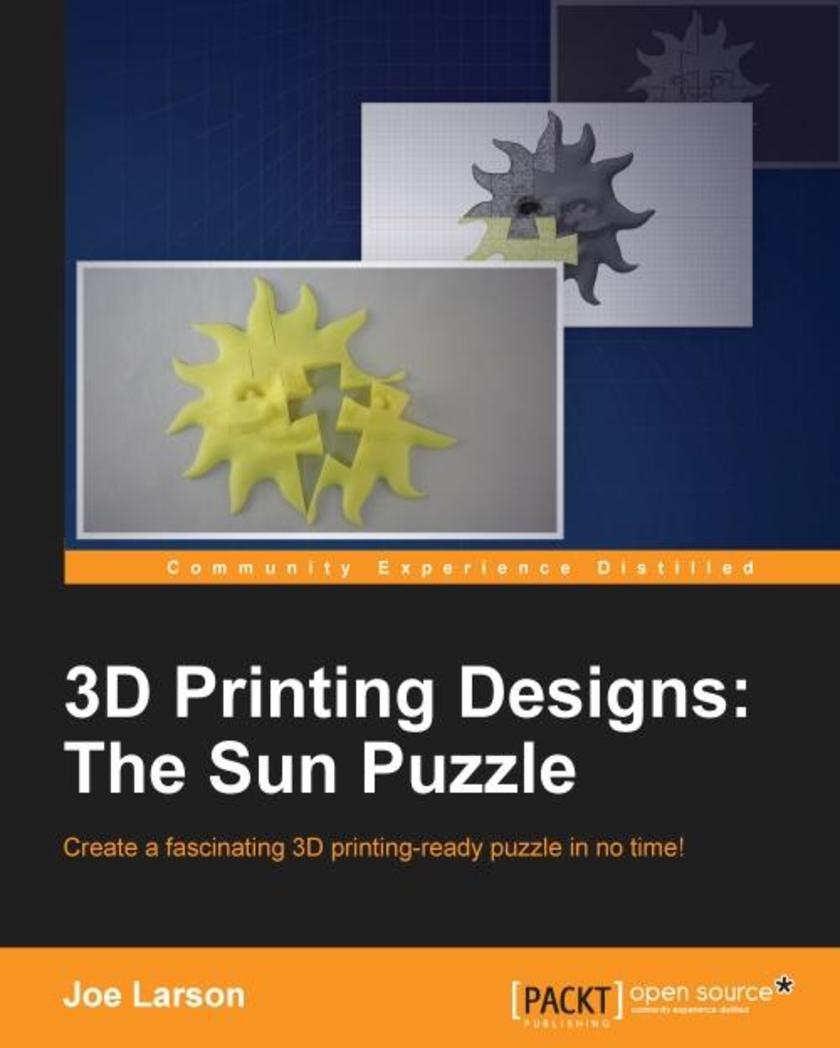
3D Printing Designs: The Sun Puzzle
¥35.96
Create a fascinating 3D printing-ready puzzle in no time! About This Book Learn how to design a 3D printable model from an existing physical object Rekindle your mathematical mind to design perfectly interlocking complex pieces of a puzzle Personalize the puzzle’s design with a photo or shape of your own choice Who This Book Is For The book is meant for fairly advanced 3D printing designers who know their way around Blender, and know how to print out basic shapes. What You Will Learn Design, manipulate, and export 3D models for 3D printing with Blender Master the art from creating meshes, scaling, subdivision, and adding detail with the Boolean modifier to sculpting a custom shape Cut a model into small pieces and learn to design complex interlocking joints In Detail Jigsaw puzzles derive their name from when they were cut from wood sheets using a hand-woodworking tool called a jig saw back in the 1760s. Have you ever wondered how a model idea for a jigsaw puzzle is articulated, and how it was made with these traditional toolsThrough this book, you will master the techniques of designing simple to complex puzzles models for 3D printing. We will quickly introduce you to some simple and effective principles of designing 3D printed objects using Blender. Through the course of the book, you'll explore various robust sculpting methods supported by Blender that allow you to edit objects with actions such as bends or curves, similar to drawing or building up a clay structure of different shapes and sizes. Finally, when the model is sculpted, you'll learn some methods to cut the model and carve out multiple pieces of perfectly-fitting edges of different geometries to complete the puzzle. Style and approach This practical guide explores the union of 3D printing techniques and working with Blender to create intuitive puzzle designs. With a step-by-step approach, you'll learn to use Blender’s shape editing tools to make a basic puzzle shape and combine that with the sculpted model to create the final piece for 3D printing.
ASP.NET Core 1.0 High Performance
¥90.46
Create fast, scalable, and high performance applications with C#, ASP.NET Core 1.0, and MVC 6 About This Book Learn the importance of measuring, profiling, and locating the most impactful problems Discover the common areas you might encounter performance problems and areas you don’t need to worry about Understand the differences between development workstations and production infrastructure and how these can amplify problems Design workflows that run asynchronously and are resilient to transient performance issues Who This Book Is For This book is for ASP.NET and C# developers who have experience with the MVC framework for web application development and are looking to deploy applications that will perform well in live production environments. These could be virtual machines or hosted by a cloud service provider such as AWS or Azure. What You Will Learn Why performance matters and when it should be considered Use different tools to measure performance Spot common performance issues, their root causes, and how to easily mitigate them Improve performance at the network level and I/O level, and how to optimize the application as a whole Work with caching and message queuing tools, including patterns and strategies Discover the dark side of performance improvement and find out how to manage complexity Monitor performance as part of continuous integration and regression testing Assess and solve performance issues with other advanced technologies In Detail ASP.NET Core is the new, open source, and cross-platform, web-application framework from Microsoft. It's a stripped down version of ASP.NET that's lightweight and fast. This book will show you how to make your web apps deliver high performance when using it. We'll address many performance improvement techniques from both a general web standpoint and from a C#, ASP.NET Core, and .NET Core perspective. This includes delving into the latest frameworks and demonstrating software design patterns that improve performance. We will highlight common performance pitfalls, which can often occur unnoticed on developer workstations, along with strategies to detect and resolve these issues early. By understanding and addressing challenges upfront, you can avoid nasty surprises when it comes to deployment time. We will introduce performance improvements along with the trade-offs that they entail. We will strike a balance between premature optimization and inefficient code by taking a scientific- and evidence-based approach. We'll remain pragmatic by focusing on the big problems. By reading this book, you'll learn what problems can occur when web applications are deployed at scale and know how to avoid or mitigate these issues. You'll gain experience of how to write high-performance applications without having to learn about issues the hard way. You'll see what's new in ASP.NET Core, why it's been rebuilt from the ground up, and what this means for performance. You will understand how you can now develop on and deploy to Windows, Mac OS X, and Linux using cross-platform tools, such as Visual Studio Code. Style and approach Starting with a drill down into the nuts and bolts of various performance parameters, you will get an understanding of the ASP.NET MVC 6 framework with the help of rich code-based examples that will equip you to build highly scalable and optimized applications.
Spring Microservices
¥90.46
Build scalable microservices with Spring, Docker, and Mesos About This Book Learn how to efficiently build and implement microservices in Spring, and how to use Docker and Mesos to push the boundaries of what you thought possible Examine a number of real-world use cases and hands-on code examples. Distribute your microservices in a completely new way Who This Book Is For If you are a Spring developers and want to build cloud-ready, internet-scale applications to meet modern business demands, then this book is for you Developers will understand how to build simple Restful services and organically grow them to truly enterprise grade microservices ecosystems. What You Will Learn Get to know the microservices development lifecycle process See how to implement microservices governance Familiarize yourself with the microservices architecture and its benefits Use Spring Boot to develop microservices Find out how to avoid common pitfalls when developing microservices Be introduced to end-to-end microservices written in Spring Framework and Spring Boot In Detail The Spring Framework is an application framework and inversion of the control container for the Java platform. The framework's core features can be used by any Java application, but there are extensions to build web applications on top of the Java EE platform. This book will help you implement the microservice architecture in Spring Framework, Spring Boot, and Spring Cloud. Written to the latest specifications of Spring, you'll be able to build modern, Internet-scale Java applications in no time. We would start off with the guidelines to implement responsive microservices at scale. We will then deep dive into Spring Boot, Spring Cloud, Docker, Mesos, and Marathon. Next you will understand how Spring Boot is used to deploy autonomous services, server-less by removing the need to have a heavy-weight application server. Later you will learn how to go further by deploying your microservices to Docker and manage it with Mesos. By the end of the book, you'll will gain more clarity on how to implement microservices using Spring Framework and use them in Internet-scale deployments through real-world examples. Style and approach The book follows a step by step approach on how to develop microservices using Spring Framework, Spring Boot, and a set of Spring Cloud components that will help you scale your applications.
VMware vSphere 6.x Datacenter Design Cookbook - Second Edition
¥107.90
Over 75 practical recipes to confidently design an efficient virtual datacenter with VMware vSphere 6.x About This Book Get the first book on the market that helps you design a virtualized data center with VMware vSphere 6 Achieve enhanced compute, storage, network, and management capabilities for your virtual data center Exciting and practical recipes help you to design a virtual data easily by leveraging the features of VMware vSphere 6 Who This Book Is For If you are an administrator or consultant interested in designing virtualized datacenter environments using VMware vSphere 6.x or previous versions of vSphere and the supporting components, this book is for you. It will help both new and experienced architects deliver professional VMware vSphere virtual datacenter designs. What You Will Learn Identify key factors related to a vSphere design and apply them to every step of the design process Mitigate security risks and meet compliance requirements in a vSphere design. Create a vSphere conceptual design by identifying technical and business requirements Determine the type of database to use based on the deployment size. Design for performance, availability, recoverability, manageability, and security Map the logical resource design into the physical vSphere design Create professional vSphere design documentation to ensure a successful implementation of the vSphere design Leverage the latest vSphere 6.x features to ensure manageability, performance, availability, and security in a virtual datacenter design In Detail VMware is the industry leader in data center virtualization. The vSphere 6.x suite of products provides a robust and resilient platform to virtualize server and application workloads. With the release of 6.x a whole range of new features has come along such as ESXi Security enhancements, fault tolerance, high availability enhancements, and virtual volumes, thus simplifying the secure management of resources, the availability of applications, and performance enhancements of workloads deployed in the virtualized datacenter. This book provides recipes to create a virtual datacenter design using the features of vSphere 6.x by guiding you through the process of identifying the design factors and applying them to the logical and physical design process. You’ll follow steps that walk you through the design process from beginning to end, right from the discovery process to creating the conceptual design; calculating the resource requirements of the logical storage, compute, and network design; mapping the logical requirements to a physical design; security design; and finally creating the design documentation. The recipes in this book provide guidance on making design decisions to ensure the successful creation, and ultimately the successful implementation, of a VMware vSphere 6.x virtual data center design. Style and Approach The book follows a recipe-based approach that consists of practical recipes to effectively design a virtual data center.
Extending Docker
¥90.46
Master the art of making Docker more extensible, composable, and modular by leveraging plugins and other supporting tools About This Book Get the first book on the market that shows you how to extend the capabilities of Docker using plugins and third-party tools Master the skills of creating various plugins and integrating great tools in order to enhance the functionalities of Docker A practical and learning guide that ensures your investment in Docker becomes more valuable Who This Book Is For This book is for developers and sys admins who are well versed Docker and have knowledge on basic programming languages. If you can’t wait to extend Docker and customize it to meet your requirements, this is the book for you! What You Will Learn Find out about Docker plugins and the problems they solve Gain insights into creating your own plugin Use Docker tools to extend the basic functionality of the core Docker engine Get to grips with the installation and configuration of third-party tools available to use with Docker plugins Install, configure, and use a scheduling service to manage the containers in your environment Enhance your day-to-day Docker usage through security, troubleshooting, and best practices In Detail With Docker, it is possible to get a lot of apps running on the same old servers, making it very easy to package and ship programs. The ability to extend Docker using plugins and load third-party plugins is incredible, and organizations can massively benefit from it. In this book, you will read about what first and third party tools are available to extend the functionality of your existing Docker installation and how to approach your next Docker infrastructure deployment. We will show you how to work with Docker plugins, install it, and cover its lifecycle. We also cover network and volume plugins, and you will find out how to build your own plugin. You’ll discover how to integrate it with Puppet, Ansible, Jenkins, Flocker, Rancher, Packer, and more with third-party plugins. Then, you’ll see how to use Schedulers such as Kubernetes and Amazon ECS. Finally, we’ll delve into security, troubleshooting, and best practices when extending Docker. By the end of this book, you will learn how to extend Docker and customize it based on your business requirements with the help of various tools and plugins. Style and approach An easy to follow guide with plenty of hands-on practical examples which can be executed both on your local machine or externally hosted services.
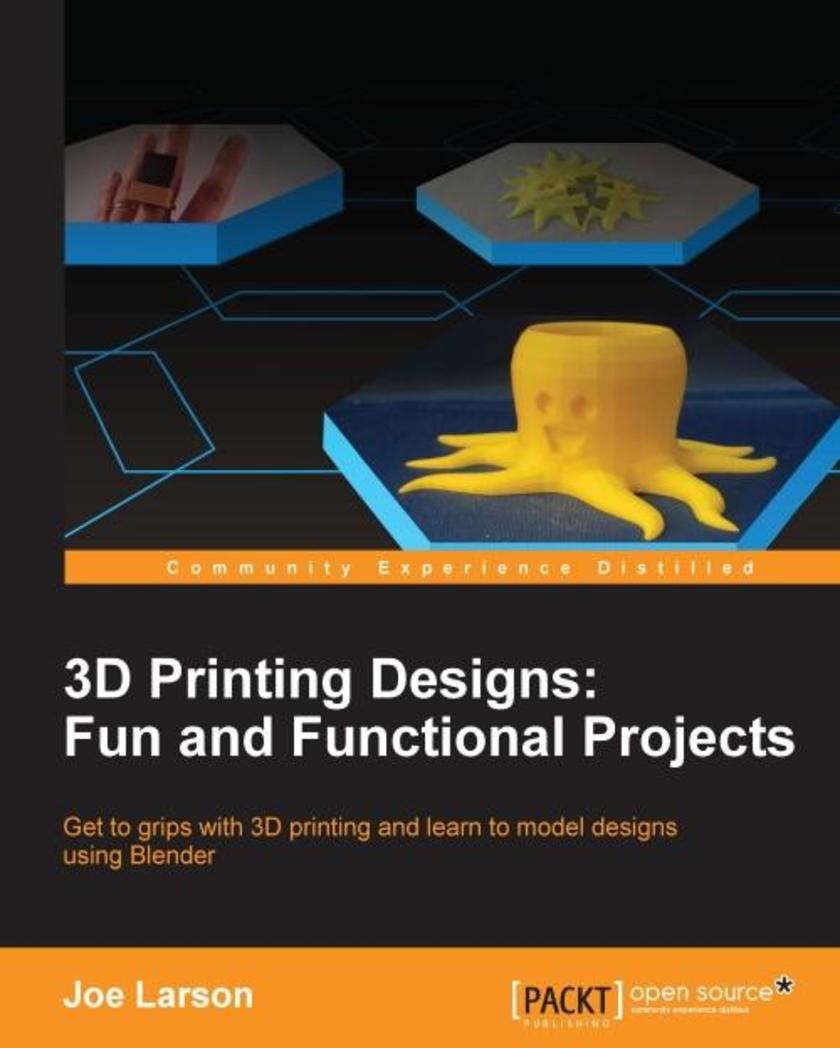
3D Printing Designs: Fun and Functional Projects
¥54.49
Get to grips with 3D printing and learn to model designs using Blender About This Book From the author who brought you the first practical look at 3D printing with 3D Printing Blueprints Get a comprehensive coverage of the prototyping techniques you need to know to start printing your own 3D designs Rekindle your mathematical genius to design personalized objects for complex puzzles Who This Book Is For If you’re new to the world of 3D printing, this is the book for you. Some basic knowledge of Blender and geometry would be helpful, but is not necessary. What You Will Learn Get to know about the different types of 3D printers and their limitations See how Y, H, and T shapes illustrate different ideas of successful 3D design for home 3D printers Set up and configure Blender to model a file for 3D printing Understand material characteristics, printing specifications, tolerances, and design tips Work through the techniques of editing complex meshes, smoothing, combining shapes, and exporting them into STL files for printing Break down complex geometries into multiple simple shapes and model them in layers using Blender Design, manipulate, and export 3D models for 3D printing with Blender Master the art of creating meshes, scaling, subdivision, and adding detail with the Boolean modifier as well as sculpting a custom shape Cut a model into small pieces and understand how to design complex interlocking joints that form a part of a jigsaw puzzle In Detail 3D printing has revolutionized the way that global industries conceptualize and design products for mass consumption. Considered as the next “trillion-dollar” business, every industry is in the race to equip its personnel with techniques to prototype and simplify complex manufacturing process. This book will take you through some simple to complex and effective principles of designing 3D printed objects using Blender. There is a comprehensive coverage of projects such as a 3D print-ready octopus pencil holder, which will teach you how to add basic geometric shapes, and use techniques such as extruding and subdividing to transform these shapes into complex meshes. Furthermore, you’ll learn to use various techniques to derive measurements for an object, model these objects using Blender, organize the parts into layers, and later combine them to create the desired object with the help of a 3D printable SD card holder ring design project. The final project will help you master the techniques of designing simple to complex puzzles models for 3D printing. Through the course of the book, we'll explore various robust sculpting methods supported by Blender to create objects. You’ll move, rotate, and scale the object, and manipulate the view. You’ll edit objects with actions such as bends or curves, similar to drawing or building up a clay structure of different shapes and sizes. By the end of the book, you will have gained thorough practical hands-on experience to be able to create a real-world 3D printable object of your choice. Style and approach This is a hands-on guide to the world of 3D printing. With the help of simple to complex projects, you'll learn various techniques to design 3D printable objects using Blender.
R: Data Analysis and Visualization
¥171.12
Master the art of building analytical models using R About This Book Load, wrangle, and analyze your data using the world's most powerful statistical programming language Build and customize publication-quality visualizations of powerful and stunning R graphs Develop key skills and techniques with R to create and customize data mining algorithms Use R to optimize your trading strategy and build up your own risk management system Discover how to build machine learning algorithms, prepare data, and dig deep into data prediction techniques with R Who This Book Is For This course is for data scientist or quantitative analyst who are looking at learning R and take advantage of its powerful analytical design framework. It’s a seamless journey in becoming a full-stack R developer. What You Will Learn Describe and visualize the behavior of data and relationships between data Gain a thorough understanding of statistical reasoning and sampling Handle missing data gracefully using multiple imputation Create diverse types of bar charts using the default R functions Familiarize yourself with algorithms written in R for spatial data mining, text mining, and so on Understand relationships between market factors and their impact on your portfolio Harness the power of R to build machine learning algorithms with real-world data science applications Learn specialized machine learning techniques for text mining, big data, and more In Detail The R learning path created for you has five connected modules, which are a mini-course in their own right. As you complete each one, you'll have gained key skills and be ready for the material in the next module! This course begins by looking at the Data Analysis with R module. This will help you navigate the R environment. You'll gain a thorough understanding of statistical reasoning and sampling. Finally, you'll be able to put best practices into effect to make your job easier and facilitate reproducibility. The second place to explore is R Graphs, which will help you leverage powerful default R graphics and utilize advanced graphics systems such as lattice and ggplot2, the grammar of graphics. You'll learn how to produce, customize, and publish advanced visualizations using this popular and powerful framework. With the third module, Learning Data Mining with R, you will learn how to manipulate data with R using code snippets and be introduced to mining frequent patterns, association, and correlations while working with R programs. The Mastering R for Quantitative Finance module pragmatically introduces both the quantitative finance concepts and their modeling in R, enabling you to build a tailor-made trading system on your own. By the end of the module, you will be well-versed with various financial techniques using R and will be able to place good bets while making financial decisions. Finally, we'll look at the Machine Learning with R module. With this module, you'll discover all the analytical tools you need to gain insights from complex data and learn how to choose the correct algorithm for your specific needs. You'll also learn to apply machine learning methods to deal with common tasks, including classification, prediction, forecasting, and so on. Style and approach Learn data analysis, data visualization techniques, data mining, and machine learning all using R and also learn to build models in quantitative finance using this powerful language.
Mastering Scala Machine Learning
¥90.46
Advance your skills in efficient data analysis and data processing using the powerful tools of Scala, Spark, and Hadoop About This Book This is a primer on functional-programming-style techniques to help you efficiently process and analyze all of your data Get acquainted with the best and newest tools available such as Scala, Spark, Parquet and MLlib for machine learning Learn the best practices to incorporate new Big Data machine learning in your data-driven enterprise to gain future scalability and maintainability Who This Book Is For Mastering Scala Machine Learning is intended for enthusiasts who want to plunge into the new pool of emerging techniques for machine learning. Some familiarity with standard statistical techniques is required. What You Will Learn Sharpen your functional programming skills in Scala using REPL Apply standard and advanced machine learning techniques using Scala Get acquainted with Big Data technologies and grasp why we need a functional approach to Big Data Discover new data structures, algorithms, approaches, and habits that will allow you to work effectively with large amounts of data Understand the principles of supervised and unsupervised learning in machine learning Work with unstructured data and serialize it using Kryo, Protobuf, Avro, and AvroParquet Construct reliable and robust data pipelines and manage data in a data-driven enterprise Implement scalable model monitoring and alerts with Scala In Detail Since the advent of object-oriented programming, new technologies related to Big Data are constantly popping up on the market. One such technology is Scala, which is considered to be a successor to Java in the area of Big Data by many, like Java was to C/C++ in the area of distributed programing. This book aims to take your knowledge to next level and help you impart that knowledge to build advanced applications such as social media mining, intelligent news portals, and more. After a quick refresher on functional programming concepts using REPL, you will see some practical examples of setting up the development environment and tinkering with data. We will then explore working with Spark and MLlib using k-means and decision trees. Most of the data that we produce today is unstructured and raw, and you will learn to tackle this type of data with advanced topics such as regression, classification, integration, and working with graph algorithms. Finally, you will discover at how to use Scala to perform complex concept analysis, to monitor model performance, and to build a model repository. By the end of this book, you will have gained expertise in performing Scala machine learning and will be able to build complex machine learning projects using Scala. Style and approach This hands-on guide dives straight into implementing Scala for machine learning without delving much into mathematical proofs or validations. There are ample code examples and tricks that will help you sail through using the standard techniques and libraries. This book provides practical examples from the field on how to correctly tackle data analysis problems, particularly for modern Big Data datasets.
Mastering React Native
¥80.65
Leverage frontend development skills to build impressive iOS and Android applications with React Native About This Book Apply flexbox to get layout and build rich animations that bring your React Native application to life Integrate third-party libraries and develop customized components that run natively on iOS and Android platforms Combine React Native with Redux, Redux middleware, and a remote API to build scalable data-driven applications Who This Book Is For This book is for anyone who wants to build cross-platform native mobile applications using only JavaScript and the React Native framework. In particular, this book is especially useful for front-end developers who want to use their current skillset to build mobile applications. An existing working knowledge of JavaScript will help you get the most out of this book. What You Will Learn Implement native React Native components and APIs Explore React’s JSX syntax Manage data using Redux and Redux middleware Build applications with React Native on both iOS and Android platforms Perform animations in your applications using the animation APIs Understand routing and Navigator comparison Create your own Native module In Detail React Native has completely revolutionized mobile development by empowering JavaScript developers to build world-class mobile apps that run natively on mobile platforms. This book will show you how to apply JavaScript and other front-end skills to build cross-platform React Native applications for iOS and Android using a single codebase. This book will provide you with all the React Native building blocks necessary to become an expert. We’ll give you a brief explanation of the numerous native components and APIs that come bundled with React Native including Images, Views, ListViews, WebViews, and much more. You will learn to utilize form inputs in React Native. You’ll get an overview of Facebook’s Flux data architecture and then apply Redux to manage data with a remote API. You will also learn to animate different parts of your application, as well as routing using React Native’s navigation APIs. By the end of the book, you will be able to build cutting-edge applications using the React Native framework. Style and approach This comprehensive guide will take your React Native skills to the next level. It shows you how to develop a clear workflow to build scalable applications, and how to implement the architectural concepts covered to build applications that shine in the real world.
Object-Oriented JavaScript - Third Edition
¥80.65
Learn everything you need to know about object-oriented JavaScript with this comprehensive guide. Enter the world of cutting-edge development! About This Book This book has been updated to cover all the new object-oriented features introduced in ECMAScript 6 It makes object-oriented programming accessible and understandable to web developers Write better and more maintainable JavaScript code while exploring interactive examples that can be used in your own *s Who This Book Is For This book is ideal for new to intermediate JavaScript developers who want to prepare themselves for web development problems solved by object-oriented JavaScript! What You Will Learn Apply the basics of object-oriented programming in the JavaScript environment Use a JavaScript Console with complete mastery Make your programs cleaner, faster, and compatible with other programs and libraries Get familiar with Iterators and Generators, the new features added in ES6 Find out about ECMAScript 6’s Arrow functions, and make them your own Understand objects in Google Chrome developer tools and how to use them Use a mix of prototypal inheritance and copying properties in your workflow Apply reactive programming techniques while coding in JavaScript In Detail JavaScript is an object-oriented programming language that is used for website development. Web pages developed today currently follow a paradigm that has three clearly distinguishable parts: content (HTML), presentation (CSS), and behavior (JavaScript). JavaScript is one important pillar in this paradigm, and is responsible for the running of the web pages. This book will take your JavaScript skills to a new level of sophistication and get you prepared for your journey through professional web development. Updated for ES6, this book covers everything you will need to unleash the power of object-oriented programming in JavaScript while building professional web applications. The book begins with the basics of object-oriented programming in JavaScript and then gradually progresses to cover functions, objects, and prototypes, and how these concepts can be used to make your programs cleaner, more maintainable, faster, and compatible with other programs/libraries. By the end of the book, you will have learned how to incorporate object-oriented programming in your web development workflow to build professional JavaScript applications. Style and approach Filled with practical instructions, the book shows you how to implement object-oriented features of JavaScript in the real world. The to-the-point nature of the book will benefit developers who are looking for a fast-paced guide to learn object-oriented JavaScript.
React Design Patterns and Best Practices
¥80.65
Build modular applications that are easy to scale using the most powerful components and design patterns that React can offer you right now About This Book Dive into the core patterns and components of React.js in order to master your application's design Improve their debugging skills using the DevTools This book is packed with easy-to-follow examples that can be used to create reusable code and extensible designs Who This Book Is For If you want to increase your understanding of React and apply it to real-life application development, then this book is for you. What You Will Learn Write clean and maintainable code Create reusable components applying consolidated techniques Use React effectively in the browser and node Choose the right styling approach according to the needs of the applications Use server-side rendering to make applications load faster Build high-performing applications by optimizing components In Detail Taking a complete journey through the most valuable design patterns in React, this book demonstrates how to apply design patterns and best practices in real-life situations, whether that's for new or already existing projects. It will help you to make your applications more flexible, perform better, and easier to maintain – giving your workflow a huge boost when it comes to speed without reducing quality. We'll begin by understanding the internals of React before gradually moving on to writing clean and maintainable code. We'll build components that are reusable across the application, structure applications, and create forms that actually work. Then we'll style React components and optimize them to make applications faster and more responsive. Finally, we'll write tests effectively and you'll learn how to contribute to React and its ecosystem. By the end of the book, you'll be saved from a lot of trial and error and developmental headaches, and you will be on the road to becoming a React expert. Style and approach The design patterns in the book are explained using real-world, step-by-step examples. For each design pattern, there are hints about when to use it and when to look for something more suitable. This book can also be used as a practical guide, showing you how to leverage design patterns.
Enduring CSS
¥71.93
Learn to really THINK about CSS, and how to create CSS that endures continual iteration, multiple authors, and yet always produces predictable results About This Book Address the problems of CSS at scale, avoiding the shortfalls of scaling CSS. The shortfalls of conventional approaches to scaling CSS. Develop consistent and enforceable selector naming conventions with ECSS. Learn how to organize project structure to more easily isolate and decouple visual components. Who This Book Is For This is a book for working CSS authors involved in large projects. This is a book that tackles create enduring CSS for large-scale projects. What You Will Learn The problems of CSS at scale—specificity, the cascade and styles intrinsically tied to element structure. The shortfalls of conventional approaches to scaling CSS. The ECSS methodology and the problems it solves. How to develop consistent and enforceable selector naming conventions with ECSS. How to organise project structure to more easily isolate and decouple visual components. How to handle state changes in the DOM with ARIA or override selectors. How to apply ECSS to web applications and visual modules. Considerations of CSS tooling and processing: Sass/PostCSS and linting. Addressing the notion of CSS selector speed with hard data and browser representative insight In Detail Learn with me, Ben Frain, about how to really THINK about CSS and how to use CSS for any size project! I'll show you how to write CSS that endures continual iteration, multiple authors, and yet always produces predictable results. Enduring CSS, often referred to as ECSS, offers you a robust and proven approach to authoring and maintaining style sheets at scale. Enduring CSS is not a book about writing CSS, as in the stuff inside the curly braces. This is a book showing you how to think about CSS, and be a smarter developer with that thinking! It's about the organisation and architecture of CSS—the parts outside the braces. I will help you think about the aspects of CSS development that become the most difficult part of writing CSS in larger projects. You’ll learn about the problems of authoring CSS at scale—including specificity, the cascade and styles intrinsically tied to document structure. I'll introduce you to the ECSS methodology, and show you how to develop consistent and enforceable selector naming conventions. We'll cover how to apply ECSS to your web applications and visual model, and how you can organize your project structure wisely, and handle visual state changes with ARIA, providing greater accessibility considerations. In addition, we'll take a deep look into CSS tooling and process considerations. Finally we will address performance considerations by examining topics such as CSS selector speed with hard data and browser-representative insight. Style and approach Learn with me, Ben Frain, about how to really think about CSS. This is a book to deal with writing CSS for large-scale, rapidly changing web projects and applications. This isn't a book about writing CSS, as in the stuff inside the curly braces - this is a book about the organisation and architecture of CSS; the parts outside the braces!
Extending Microsoft Dynamics NAV 2016 Cookbook
¥99.18
Make the most of your NAV deployment by extending and customizing it with a variety of expert tools About This Book Extend Dynamics in a cost-effective manner by using tools that are ready at your disposal Solve common business problems with the valuable features and flexibility of Dynamics NAV Follow practical and easy-to-grasp examples, illustrations, and coding to make the most out of Dynamics NAV in your organisation Who This Book Is For This book is for Dynamics NAV developers and administrators who have a good knowledge level and understanding of Dynamics NAV application development and administration. What You Will Learn Develop a module in Dynamics NAV using C/AL Build relationships with COM technologies Develop and integrate COM with Dynamics NAV 2016 Call the framework members from C/AL Develop an event in the .NET framework and see how to subscribe to it using C/AL Automate the deployment into Dynamics NAV Develop Windows Client Control add-Ins Deploy your resource automatically from Visual Studio Install and Configure Windows Client Control add-Ins Integrate Dynamics NAV with Sharepoint In Detail Microsoft Dynamics NAV is an enterprise resource planning (ERP) software suite for organizations. The system offers specialized functionality for manufacturing, distribution, government, retail, and other industries. Its integrated development environment enables customizations with minimal disruption to business processes. The book starts explaining the new features of Dynamics NAV along with how to create and modify a simple module. Moving on, you will learn the importance of thinking beyond the boundaries of C/AL development and the possibilities opened by with it. Next, you will get to know how COM can be used to extend the functionalities of Dynamics NAV. You’ll find out how to extend the Dynamics NAV 2016 version using .NET interoperability and will see the steps required to subscribe to .NET events in order to extend Dynamics NAV. Finally, you’ll see the cmdlets available to manage extension packages. By the end of the book, you will have the knowledge needed to become more efficient in selecting the extending methods, developing and deploying them to the Dynamics NAV, and practicing the best practices. Style and approach The book follows a practical recipe-based approach focusing on real-world scenarios and giving you all the information you need to build a strong Dynamics NAV implementation.
Implementing Oracle Integration Cloud Service
¥99.18
Understand everything you need to know about Oracle’s Integration Cloud Service and how to utilize it optimally for your business About This Book The only guide to Integration Cloud Service in the market Focused on practical action to deliver business value A professional’s guide to an expensive product, providing comprehensive training, and showing how to extract real business value from the product Who This Book Is For This book is ideal for any IT professional working with ICS, any Oracle application or cloud solution developer or analyst who wants to work with ICS to deliver business value. What You Will Learn Use ICS to integrate different systems together without needing to be a developer Gain understanding of what a number of technologies and standards provide – without needing to understand the fine details of those standards and technologies Understand the use of connectors that Oracle provide from technology based connections such as file and database connections to SaaS solutions ranging from Salesforce to Twitter Enrich data and extend SaaS integration to route to different instances Utilize a number of tools to help develop and check that your integrations work before connecting to live systems Introduce and explain integration concepts so that the integrations created are maintainable and sustainable for the longer term Provide details on how to keep up to date with the features that Oracle and partners provide in the future Get special connections developed to work with ICS In Detail Businesses are built on data, and applications that access that data. In modern businesses the same cloud-based data stores and applications might be accessed by hundreds of different applications from thousands of different devices via APIs. To make this happen, APIs must be wired together i.e. integrated. Oracle Integration Cloud Service provides a complete method for integrating enterprise applications in the cloud. Integration Cloud Service (ICS) provides a cloud hosted means to integrate systems together using a graphical means to define and represent integrations. This book will be a comprehensive, hands-on guide to building successful, high-availability integrations on ICS. This book sets out to demonstrate how ICS can be used to effectively implement integrations that work both in the cloud and on premise. It starts with a fast, practical introduction to what ICS can do for your business and then shows how ICS allows you to develop integrations not only quickly but in a way that means they are maintainable and extensible. Gradually it moves into more advanced integrations, showing how to achieve sophisticated results with ICS and work with external applications. Finally the book shows you how to monitor cloud apps and go beyond ICS to build even more powerful integrated applications. By the end of the book, you will the knowledge on how to use ICS to solve your own integration needs and harness the technologies in a maintainable and sustainable manner. Style and approach This book will take a pragmatic approach and will be a business-focused guide to delivering business value with ICS.
Angular 2 Cookbook
¥90.46
Discover over 70 recipes that provide the solutions you need to know to face every challenge in Angular 2 head on About This Book · A first-rate reference guide with a clear structure and intuitive index that gives you as a developer exactly the information you want in exactly the way you want it · Covers no legacy material from the outdated Angular release candidates; it is up-to-date with the latest release of Angular 2.4 · All the code in the book is explicitly written out, and every piece of code shown is a step towards building a simple working example Who This Book Is For This book is for developers who are competent with JavaScript and are looking to dive headfirst into the TypeScript edition of Angular 2. This book is also geared towards developers with experience in Angular 1 who are looking to make the transition. What You Will Learn · Understand how to best move an Angular 1 application to Angular 2 · Build a solid foundational understanding of the core elements of Angular 2 such as components, forms, and services · Gain an ability to wield complex topics such as Observables and Promises · Properly implement applications utilizing advanced topics such as dependency injection · Know how to maximize the performance of Angular 2 applications · Understand the best ways to take an Angular 2 application from TypeScript in a code editor to a fully function application served on your site · Get to know the best practices when organizing and testing a large Angular 2 application In Detail Angular 2 introduces an entirely new way to build applications. It wholly embraces all the newest concepts that are built into the next generation of browsers, and it cuts away all the fat and bloat from Angular 1. This book plunges directly into the heart of all the most important Angular 2 concepts for you to conquer. In addition to covering all the Angular 2 fundamentals, such as components, forms, and services, it demonstrates how the framework embraces a range of new web technologies such as ES6 and TypeScript syntax, Promises, Observables, and Web Workers, among many others. This book covers all the most complicated Angular concepts and at the same time introduces the best practices with which to wield these powerful tools. It also covers in detail all the concepts you'll need to get you building applications faster. Oft-neglected topics such as testing and performance optimization are widely covered as well. A developer that reads through all the content in this book will have a broad and deep understanding of all the major topics in the Angular 2 universe. Style and approach This book follows a cookbook approach—each recipe presents a unique problem to which the solution is presented in a clear, concise, and manner step-by-step manner. With practical hands-on guidance in each and every recipe, you’ll be able to get to grips with the concepts.
Docker Orchestration
¥80.65
A concise, fast-paced guide to orchestrating and deploying scalable services with Docker About This Book Explore the new features added to the core Docker Engine to make multi-container orchestration easy Leverage tools such as Docker Machine, Swarm, Compose, and third-party tools such as Kubernetes, Mesosphere, and CoreOS to orchestrate containers Use Docker Compose with Swarm and apply rolling updates for zero downtime deployments Who This Book Is For This book is aimed at Sysadmins and DevOps engineers who know what Docker does and are now looking to manage multiple containers on multiple hosts using the orchestration feature. What You Will Learn Build scalable, reliable services with Docker See how to manage a service in Docker using Docker Swarm, Kubernetes, and Mesosphere Discover simpler orchestration tools such as CoreOS/Fleet and Rancher Cattle Understand cluster-wide logging, system monitoring, and troubleshooting Build, test, and deploy containers using Continuous Integration Deploy cluster hosts on cloud services and automate your infrastructure In Detail Docker orchestration is what you need when transitioning from deploying containers individually on a single host to deploying complex multi-container apps on many machines. This book covers the new orchestration features of Docker 1.12 and helps you efficiently build, test, and deploy your application using Docker. You will be shown how to build multi-container applications using Docker Compose. You will also be introduced to the building blocks for multi-host Docker clusters such as registry, overlay networks, and shared storage using practical examples. This book gives an overview of core tools such as Docker Machine, Swarm, and Compose which will enhance your orchestration skills. You’ll learn how to set up a swarm using the decentralized building block. Next, you’ll be shown how to make the most out of the in-built orchestration feature of Docker engine and you’ll use third-party tools such as Kubernetes, Mesosphere, and CoreOS to orchestrate your existing process. Finally, you will learn to deploy cluster hosts on cloud services and automate your infrastructure. Style and approach This comprehensive guide will take you through the orchestration feature of Docker. Using practical examples, you will discover various tools that can be used to manage multiple containers with ease.
Tabular Modeling with SQL Server 2016 Analysis Services Cookbook
¥99.18
Expert tabular modeling techniques for building and deploying cutting-edge business analytical reporting solutions About This Book Build and deploy Tabular Model projects from relational data sources Leverage DAX and create high-performing calculated fields and measures Create ad-hoc reports based on a Tabular Model solution Useful tips to monitor and optimize your tabular solutions Who This Book Is For This book is for SQL BI professionals and Architects who want to exploit the full power of the new Tabular models in Analysis Services. Some knowledge of previous versions of Analysis services would be helpful but is not essential. What You Will Learn Learn all about Tabular services mode and how it speeds up development Build solutions using sample datasets Explore built-in actions and transitions in SSAS 2016 Implement row-column, and role-based security in a Tabular Data model Realize the benefits of in-memory and DirectQuery deployment modes Get up to date with the new features added to SQL Server 2016 Analysis Services Optimize Data Models and Relationships Usage In Detail SQL Server Analysis Service (SSAS) has been widely used across multiple businesses to build smart online analytical reporting solutions. It includes two different types of modeling for analysis services: Tabular and Multi Dimensional. This book covers Tabular modeling, which uses tables and relationships with a fast in-memory engine to provide state of the art compression algorithms and query performance. The book begins by quickly taking you through the concepts required to model tabular data and set up the necessary tools and services. As you learn to create tabular models using tools such as Excel and Power View, you’ll be shown various strategies to deploy your model on the server and choose a query mode (In-memory or DirectQuery) that best suits your reporting needs. You’ll also learn how to implement key and newly introduced DAX functions to create calculated columns and measures for your model data. Last but not least, you’ll be shown techniques that will help you administer and secure your BI implementation along with some widely used tips and tricks to optimize your reporting solution. By the end of this book, you’ll have gained hands-on experience with the powerful new features that have been added to Tabular models in SSAS 2016 and you’ll be able to improve user satisfaction with faster reports and analytical queries. Style and approach This book takes a practical, recipe-based approach where each recipe lists the steps to address or implement a solution. You will be provided with several approaches to creating a business intelligence semantic model using analysis services.
Moodle Theme Development
¥80.65
Build customized themes to make your Moodle courses engaging and interactive About This Book Leverage the power of Moodle 3 to create interactive and engaging themes for your courses Experience and integrate the power of Bootstrap and CSS into your Moodle app Implement your plans with illustrative examples to become a top notch designer Who This Book Is For If you are a Moodle administrator, developer, or designer and wish to enhance your Moodle site to make it visually attractive, then this book is for you. You should be familiar with web design techniques such as HTML and further experience with CSS would be helpful. What You Will Learn Plan a personalized Moodle theme from start to finish Install a Moodle theme in different operating systems and change Moodle’s theme settings Add your own customized logo and test your changes in several web browsers Customize the Moodle site to fit in with other elements such as websites and social networks, among others Create a design mock-up using graphics software Design themes that are capable of working with a huge number of different resolutions, screen sizes, screen orientations, and pixel densities Work with code to adjust the theme to users requirements Create new custom icons for your theme In Detail Theming is one of the main features of Moodle, and it can be used to customize your online courses and make them look exactly how you want them to,according to your target audience. If you have been looking for a book that will help you develop Moodle themes that you are proud of, and that your students will enjoy, then this is the book for you. We start off by introducing Moodle 3 and explaining what it is, how it works, and what tools you might need to create a stunning Moodle theme. We then show you how to choose and change the pre-installed Moodle themes in detailed steps, and explain what Moodle themes are and how they work. Next, we show you how to change an existing theme and test the changes that you have made. You can not only plan the customization of theme, but also tailor it using advanced Moodle theming processes; this book is your one-stop guide to creating your own personalized Moodle 3 theme. Style and approach This book acts as a comprehensive guide which helps you to create visually stunning and responsive themes to add that extra edge to your Moodle apps.
Data Acquisition Using LabVIEW
¥63.21
Transform physical phenomena into computer-acceptable data using a truly object-oriented language About This Book Create your own data acquisition system independently using LabVIEW and build interactive dashboards Collect data using National Instrument's and third-party, open source, affordable hardware Step-by-step real-world examples using various tools that illustrate the fundamentals of data acquisition Who This Book Is For If you are an engineer, scientist, experienced hobbyist, or student, you will highly benefit from the content and examples illustrated in this book. A working knowledge of precision testing, measurement instruments, and electronics, as well as a background in computer fundamentals and programming is expected. What You Will Learn Create a virtual instrument which highlights common functionality of LabVIEW Get familiarized with common buses such as Serial, GPIB, and SCPI commands Staircase signal acquisition using NI-DAQmx Discover how to measure light intensity and distance Master LabVIEW debugging techniques Build a data acquisition application complete with an installer and required drivers Utilize open source microcontroller Arduino and a 32-bit Arduino compatible Uno32 using LabVIEW programming environment In Detail NI LabVIEW's intuitive graphical interface eliminates the steep learning curve associated with text-based languages such as C or C++. LabVIEW is a proven and powerful integrated development environment to interact with measurement and control hardware, analyze data, publish results, and distribute systems. This hands-on tutorial guide helps you harness the power of LabVIEW for data acquisition. This book begins with a quick introduction to LabVIEW, running through the fundamentals of communication and data collection. Then get to grips with the auto-code generation feature of LabVIEW using its GUI interface. You will learn how to use NI-DAQmax Data acquisition VIs, showing how LabVIEW can be used to appropriate a true physical phenomenon (such as temperature, light, and so on) and convert it to an appropriate data type that can be manipulated and analyzed with a computer. You will also learn how to create Distribution Kit for LabVIEW, acquainting yourself with various debugging techniques offered by LabVIEW to help you in situations where bugs are not letting you run your programs as intended. By the end of the book, you will have a clear idea how to build your own data acquisition system independently and much more. Style and approach A hands-on practical guide that starts by laying down the software and hardware foundations necessary for subsequent data acquisition-intensive chapters. The book is packed full of specific examples with software screenshots and schematic diagrams to guide you through the creation of each virtual instrument.
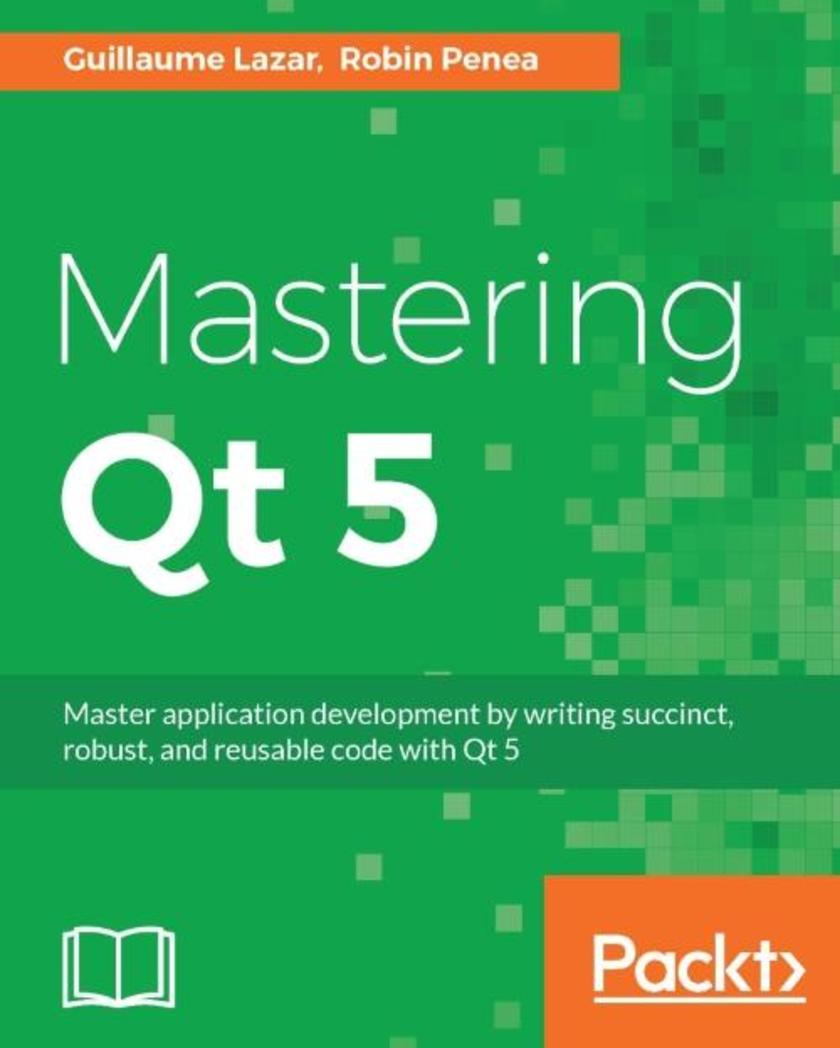
Mastering Qt 5
¥80.65
Master application development by writing succinct, robust, and reusable code with Qt 5 About This Book Unleash the power of Qt 5 with C++14 Integrate useful third-party libraries such as OpenCV Package and deploy your application on multiple platforms Who This Book Is For This book will appeal to developers and programmers who would like to build GUI-based applications. Knowledge of C++ is necessary and the basics of Qt would be helpful. What You Will Learn Create stunning UIs with Qt Widget and Qt Quick Develop powerful, cross-platform applications with the Qt framework Design GUIs with the Qt Designer and build a library in it for UI preview Handle user interaction with the Qt signal/slot mechanism in C++ Prepare a cross-platform project to host a third-party library Build a Qt application using the OpenCV API Use the Qt Animation framework to display stunning effects Deploy mobile apps with Qt and embedded platforms In Detail Qt 5.7 is an application development framework that provides a great user experience and develops full-capability applications with Qt Widgets, QML, and even Qt 3D. This book will address challenges in successfully developing cross-platform applications with the Qt framework. Cross-platform development needs a well-organized project. Using this book, you will have a better understanding of the Qt framework and the tools to resolve serious issues such as linking, debugging, and multithreading. Your journey will start with the new Qt 5 features. Then you will explore different platforms and learn to tame them. Every chapter along the way is a logical step that you must take to master Qt. The journey will end in an application that has been tested and is ready to be shipped. Style and approach This is an easy-to-follow yet comprehensive guide to building applications in Qt. Each chapter covers increasingly advanced topics, with subjects grouped according to their complexity as well as their usefulness. Packed with practical examples and explanations, Mastering Qt contains everything you need to take your applications to the next level.


