Learning Elastic Stack 6.0
¥63.21
Deliver end-to-end real-time distributed data processing solutions by leveraging the power of Elastic Stack 6.0 About This Book ? Get to grips with the new features introduced in Elastic Stack 6.0 ? Get valuable insights from your data by working with the different components of the Elastic stack such as Elasticsearch, Logstash, Kibana, X-Pack, and Beats ? Includes handy tips and techniques to build, deploy and manage your Elastic applications efficiently on-premise or on the cloud Who This Book Is For This book is for data professionals who want to get amazing insights and business metrics from their data sources. If you want to get a fundamental understanding of the Elastic Stack for distributed, real-time processing of data, this book will help you. A fundamental knowledge of JSON would be useful, but is not mandatory. No previous experience with the Elastic Stack is required. What You Will Learn ? Familiarize yourself with the different components of the Elastic Stack ? Get to know the new functionalities introduced in Elastic Stack 6.0 ? Effectively build your data pipeline to get data from terabytes or petabytes of data into Elasticsearch and Logstash for searching and logging ? Use Kibana to visualize data and tell data stories in real-time ? Secure, monitor, and use the alerting and reporting capabilities of Elastic Stack ? Take your Elastic application to an on-premise or cloud-based production environment In Detail The Elastic Stack is a powerful combination of tools for distributed search, analytics, logging, and visualization of data from medium to massive data sets. The newly released Elastic Stack 6.0 brings new features and capabilities that empower users to find unique, actionable insights through these techniques. This book will give you a fundamental understanding of what the stack is all about, and how to use it efficiently to build powerful real-time data processing applications. After a quick overview of the newly introduced features in Elastic Stack 6.0, you’ll learn how to set up the stack by installing the tools, and see their basic configurations. Then it shows you how to use Elasticsearch for distributed searching and analytics, along with Logstash for logging, and Kibana for data visualization. It also demonstrates the creation of custom plugins using Kibana and Beats. You’ll find out about Elastic X-Pack, a useful extension for effective security and monitoring. We also provide useful tips on how to use the Elastic Cloud and deploy the Elastic Stack in production environments. On completing this book, you’ll have a solid foundational knowledge of the basic Elastic Stack functionalities. You’ll also have a good understanding of the role of each component in the stack to solve different data processing problems. Style and approach This step-by-step guide will show you the Elastic Stack, covering all the components through interactive and easy-to-follow examples. It also includes handy tips.
Apache Kafka 1.0 Cookbook
¥63.21
Simplify real-time data processing by leveraging the power of Apache Kafka 1.0 About This Book ? Use Kafka 1.0 features such as Confluent platforms and Kafka streams to build efficient streaming data applications to handle and process your data ? Integrate Kafka with other Big Data tools such as Apache Hadoop, Apache Spark, and more ? Hands-on recipes to help you design, operate, maintain, and secure your Apache Kafka cluster with ease Who This Book Is For This book is for developers and Kafka administrators who are looking for quick, practical solutions to problems encountered while operating, managing or monitoring Apache Kafka. If you are a developer, some knowledge of Scala or Java will help, while for administrators, some working knowledge of Kafka will be useful. What You Will Learn ? Install and configure Apache Kafka 1.0 to get optimal performance ? Create and configure Kafka Producers and Consumers ? Operate your Kafka clusters efficiently by implementing the mirroring technique ? Work with the new Confluent platform and Kafka streams, and achieve high availability with Kafka ? Monitor Kafka using tools such as Graphite and Ganglia ? Integrate Kafka with third-party tools such as Elasticsearch, Logstash, Apache Hadoop, Apache Spark, and more In Detail Apache Kafka provides a unified, high-throughput, low-latency platform to handle real-time data feeds. This book will show you how to use Kafka efficiently, and contains practical solutions to the common problems that developers and administrators usually face while working with it. This practical guide contains easy-to-follow recipes to help you set up, configure, and use Apache Kafka in the best possible manner. You will use Apache Kafka Consumers and Producers to build effective real-time streaming applications. The book covers the recently released Kafka version 1.0, the Confluent Platform and Kafka Streams. The programming aspect covered in the book will teach you how to perform important tasks such as message validation, enrichment and composition.Recipes focusing on optimizing the performance of your Kafka cluster, and integrate Kafka with a variety of third-party tools such as Apache Hadoop, Apache Spark, and Elasticsearch will help ease your day to day collaboration with Kafka greatly. Finally, we cover tasks related to monitoring and securing your Apache Kafka cluster using tools such as Ganglia and Graphite. If you're looking to become the go-to person in your organization when it comes to working with Apache Kafka, this book is the only resource you need to have. Style and approach Following a cookbook recipe-based approach, we’ll teach you how to solve everyday difficulties and struggles you encounter using Kafka through hands-on examples.
Architectural Patterns
¥90.46
Learn the importance of architectural and design patterns in producing and sustaining next-generation IT and business-critical applications with this guide. About This Book ? Use patterns to tackle communication, integration, application structure, and more ? Implement modern design patterns such as microservices to build resilient and highly available applications ? Choose between the MVP, MVC, and MVVM patterns depending on the application being built Who This Book Is For This book will empower and enrich IT architects (such as enterprise architects, software product architects, and solution and system architects), technical consultants, evangelists, and experts. What You Will Learn ? Understand how several architectural and design patterns work to systematically develop multitier web, mobile, embedded, and cloud applications ? Learn object-oriented and component-based software engineering principles and patterns ? Explore the frameworks corresponding to various architectural patterns ? Implement domain-driven, test-driven, and behavior-driven methodologies ? Deploy key platforms and tools effectively to enable EA design and solutioning ? Implement various patterns designed for the cloud paradigm In Detail Enterprise Architecture (EA) is typically an aggregate of the business, application, data, and infrastructure architectures of any forward-looking enterprise. Due to constant changes and rising complexities in the business and technology landscapes, producing sophisticated architectures is on the rise. Architectural patterns are gaining a lot of attention these days. The book is divided in three modules. You'll learn about the patterns associated with object-oriented, component-based, client-server, and cloud architectures. The second module covers Enterprise Application Integration (EAI) patterns and how they are architected using various tools and patterns. You will come across patterns for Service-Oriented Architecture (SOA), Event-Driven Architecture (EDA), Resource-Oriented Architecture (ROA), big data analytics architecture, and Microservices Architecture (MSA). The final module talks about advanced topics such as Docker containers, high performance, and reliable application architectures. The key takeaways include understanding what architectures are, why they're used, and how and where architecture, design, and integration patterns are being leveraged to build better and bigger systems. Style and Approach This book adopts a hands-on approach with real-world examples and use cases.
Learning Alteryx
¥80.65
Implement your Business Intelligence solutions without any coding - by leveraging the power of the Alteryx platform About This Book ? Experience the power of codeless analytics using Alteryx, a leading Business Intelligence tool ? Uncover hidden trends and valuable insights from your data across different sources and make accurate predictions ? Includes real-world examples to put your understanding of the features in Alteryx to practical use Who This Book Is For This book is for aspiring data professionals who want to learn and implement self-service analytics from scratch, without any coding. Those who have some experience with Alteryx and want to gain more proficiency will also find this book to be useful. A basic understanding of the data science concepts is all you need to get started with this book. What You Will Learn ? Create efficient workflows with Alteryx to answer complex business questions ? Learn how to speed up the cleansing, data preparing, and shaping process ? Blend and join data into a single dataset for self-service analysis ? Write advanced expressions in Alteryx leading to an optimal workflow for efficient processing of huge data ? Develop high-quality, data-driven reports to improve consistency in reporting and analysis ? Explore the flexibility of macros by automating analytic processes ? Apply predictive analytics from spatial, demographic, and behavioral analysis and quickly publish, schedule ? Share your workflows and insights with relevant stakeholders In Detail Alteryx, as a leading data blending and advanced data analytics platform, has taken self-service data analytics to the next level. Companies worldwide often find themselves struggling to prepare and blend massive datasets that are time-consuming for analysts. Alteryx solves these problems with a repeatable workflow designed to quickly clean, prepare, blend, and join your data in a seamless manner. This book will set you on a self-service data analytics journey that will help you create efficient workflows using Alteryx, without any coding involved. It will empower you and your organization to take well-informed decisions with the help of deeper business insights from the data.Starting with the fundamentals of using Alteryx such as data preparation and blending, you will delve into the more advanced concepts such as performing predictive analytics. You will also learn how to use Alteryx’s features to share the insights gained with the relevant decision makers. To ensure consistency, we will be using data from the Healthcare domain throughout this book. The knowledge you gain from this book will guide you to solve real-life problems related to Business Intelligence confidently. Whether you are a novice with Alteryx or an experienced data analyst keen to explore Alteryx’s self-service analytics features, this book will be the perfect companion for you. Style and approach Comprehensive, step by step guide filled with real-world examples to step through the complex business questions using one of the leading data analytics platform.
Cacti Beginner's Guide - Second Edition
¥80.65
A comprehensive guide to learning Cacti and using it to implement performance measurement and reporting within a Network Operations Center About This Book ? A complete Cacti book that focuses on the basics as well as the advanced concepts you need to know for implementing a Network Operations Center ? A step-by-step Beginner's Guide with detailed instructions on how to create and implement custom plugins ? Written by Thomas Urban – creator of the "Cereus" and "NMID" plugins for Cacti known as Phalek in the Cacti forum Who This Book Is For If you are a network operator and want to use Cacti for implementing performance measurement for trending, troubleshooting, and reporting purposes, then this book is for you. You only need to know the basics of network management and SNMP. What You Will Learn ? Setting up Cacti on Linux and Windows systems ? Extending the core functionality by using the plugin architecture ? Building your own custom plugins ? Creating your own custom data input method to retrieve data from your systems ? Using SNMP, SSH, and WMI to retrieve remote performance data ? Designing and create enterprise-class reports with the reporting plugins ? Implementing threshold-based alerting using the Thold plugin ? Automating common administrative tasks utilizing the command-line interface and the automate functionality ? Migrating Cacti to new servers ? Building a multi remote-poller environment In Detail Cacti is a performance measurement tool that provides easy methods and functions for gathering and graphing system data. You can use Cacti to develop a robust event management system that can alert on just about anything you would like it to. But to do that, you need to gain a solid understanding of the basics of Cacti, its plugin architecture, and automation concepts. Cacti Beginner's Guide will introduce you to the wide variety of features of Cacti and will guide you on how to use them for maximum effectiveness. Advanced topics such as the plugin architecture and Cacti automation using the command-line interface will help you build a professional performance measurement system. Designed as a beginner's guide, the book starts off with the basics of installing and using Cacti, and also covers the advanced topics that will show you how to customize and extend the core Cacti functionalities. The book offers essential tutorials for creating advanced graphs and using plugins to create enterprise-class reports to show your customers and colleagues. From data templates to input methods and plugin installation to creating your own customized plugins, this book provides you with a rich selection of step-by-step instructions to reach your goals. It covers all you need to know to implement professional performance measurement techniques with Cacti and ways to fully customize Cacti to fit your needs. You will also learn how to migrate Cacti to new servers. Lastly you will also be introduced to the latest feature of building a scalable remote poller environment. By the end of the book, you will be able to implement and extend Cacti to monitor, display, and report the performance of your network exactly the way you want. Style and approach Written for beginners to Cacti, this book contains step-by-step instructions and hands-on tutorials for network operators to learn how to implement and use the core Cacti functions.
Qlik Sense: Advanced Data Visualization for Your Organization
¥179.84
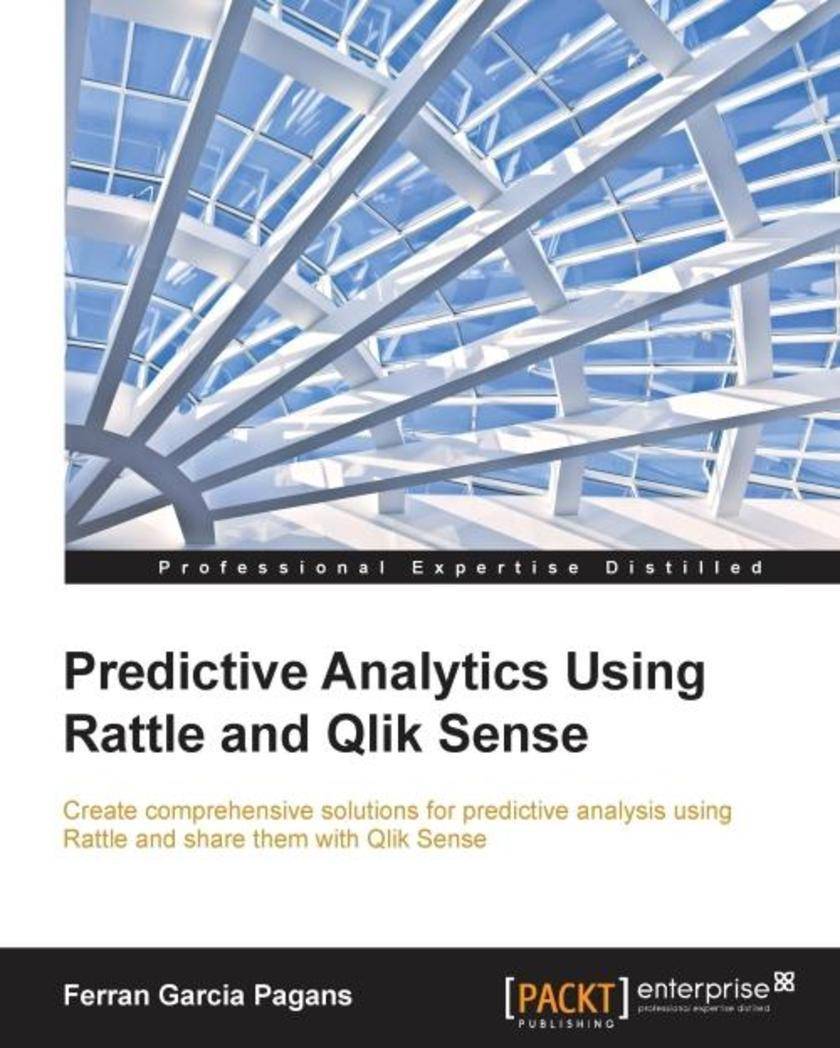
Perform Interactive Data Analysis with Smarter Visualizations and Support your Enterprise-wide Analytical Needs About This Book ? Get a practical demonstration of discovering data for sales, human resources, and more using Qlik Sense ? Create dynamic dashboards for business intelligence and predictive analytics ? Create and collaborate comprehensive analytical solutions using Rattle and Qlik Sense Who This Book Is For This course is for anyone who wishes to understand and utilize the various new approaches to business intelligence actively in their business practice. Knowing the basics of business intelligence concepts would be helpful when picking up this course, but is not mandatory. What You Will Learn ? Build simple visualization models with Rattle and Qlik Sense Desktop ? Get to grips with the life cycle and new visualization functions of a Qlik Sense application ? Discover simple ways to examine data and get it ready for analysis ? Visualize your data with Qlik Sense's engaging and informative graphs ? Build efficient and responsive Associative Models ? Optimize Qlik Sense for sales, human resources, and demographic data discovery ? Explore various tips and tricks of navigation for the Qlik Sense? front end ? Develop creative extensions for your Qlik Sense? dashboard In Detail Qlik Sense is powerful and creative visual analytics software that allows users to discover data, explore it, and dig out meaningful insights in order to make a profit and make decisions for your business. This course begins by introducing you to the features and functions of the most modern edition of Qlik Sense so you get to grips with the application. The course will teach you how to administer the data architecture in Qlik Sense, enabling you to customize your own Qlik Sense application for your business intelligence needs. It also contains numerous recipes to help you overcome challenging situations while creating fully featured desktop applications in Qlik Sense. It explains how to combine Rattle and Qlik Sense Desktop to apply predictive analytics to your data to develop real-world interactive data applications. The course includes premium content from three of our most popular books: ? Learning Qlik Sense: The Official Guide Second Edition ? Qlik Sense Cookbook ? Predictive Analytics using Rattle and Qlik Sense On completion of this course, you will be self-sufficient in improving your data analysis and will know how to apply predictive analytics to your datasets. Through this course, you will be able to create predictive models and data applications, allowing you to explore your data insights much deeper. Style and approach The course will follow a practical approach with rich set of examples through which it will demonstrate its concepts, features and its implementation. The course will also feature numerous solutions which will cover entire spectrum of BI use cases.
Building RESTful Web services with Go
¥80.65
Explore the necessary concepts of REST API development by building few real world services from scratch. About This Book ? Follow best practices and explore techniques such as clustering and caching to achieve a reactive, scalable web service ? Leverage the Buffalo Framework to quickly implement RESTful endpoints ? Learn to implement a client library for a RESTful web service using Go Who This Book Is For This book is intended for those who want to learn to build RESTful web services with a framework like Buffalo. To make best use of the code samples included in the book, you should have a basic knowledge of Go programming. What You Will Learn ? Create HTTP handler and introspect the Gorilla Mux router ? OAuth 2 implementation with Go ? Build RESTFul API with go-restful, Revel.Go and Buffalo Go ? Create REST API with MongoDB and Go ? Build a working client library and unit test for REST API ? Debug, test, and profile RESTful APIs with each of the frameworks ? Optimize and scale REST API using microservices In Detail REST is an architectural style that tackles the challenges of building scalable web services and in today's connected world, APIs have taken a central role on the web. APIs provide the fabric through which systems interact, and REST has become synonymous with APIs. The depth, breadth, and ease of use of Go, makes it a breeze for developers to work with it to build robust Web APIs. This book takes you through the design of RESTful web services and leverages a framework like Buffalo Go to implement these services. The book starts with a brief introduction to REST API development and how it transformed the modern web. You will learn how to handle routing and authentication of web services along with working with middleware for internal service. The book explains how to use Go frameworks to build RESTful web services and work with MongoDB to create REST API. You will learn how to integrate Postgres SQL and JSON with a Go web service and build a client library in Go for consuming REST API. You will learn how to scale APIs using the microservice architecture and deploy the REST APIs using Nginx as a proxy server. Finally you will learn how to metricize a REST API using an API Gateway. By the end of the book you will be proficient in building RESTful APIs in Go. Style and approach This book is a step-by-step, hands-on guide to designing and building RESTful web services.
Mastering VMware vSphere 6.5
¥90.46
Deliver great business value by adopting the virtualization platform VMware vSphere 6.5, from the design to the deployment About This Book ? This new edition is based on vSphere 6.5 and has described new features in different areas, including management, security, scalability, availability and so on. ? Design, deploy and manage VMware datacenters ? Implement monitoring and security of VMware workloads with ease. Who This Book Is For If you are an administrator, infrastructure engineer, IT architect, or an IT consultant and analyst who has basic knowledge of VMware vSphere and now wants to master it, then this book is for you. What You Will Learn ? Get a deep understanding of vSphere 6.5 functionalities ? Design and plan a virtualization environment based on vSphere 6.5 ? Manage and administer a vSphere 6.5 environment and resources ? Get tips for the VCP6-DCV and VCIX6-DCV exams (along with use of the vSphere 6 documentation) ? Implement different migration techniques to move your workload across different environments. ? Save your configuration, data and workload from your virtual infrastructure. In Detail VMware vSphere 6.5 provides a powerful, flexible and secure foundation for next-generation applications which helps you create an effective digital transformation. This book will be based on VMware vSphere 6.5 which empowers you to virtualize any complex application with ease. You’ll begin by getting an overview of all the products, solutions and features of the vSphere 6.5 suite, comparing the evolutions with the previous releases. Next ,you’ll design and plan a virtualization infrastructure to drive planning and performance analysis. Following this , you will be proceeding with workflow and installation of components. New network trends are also covered which will help you in optimally designing the vSphere environment. You will also learn the practices and procedures involved in configuring and managing virtual machines in a vSphere infrastructure. With vSphere 6.5, you’ll make use of significantly more powerful capabilities for patching, upgrading, and managing the configuration of the virtual environment. Next we’ll focus on specific availability and resiliency solutions in vSphere. Towards the end of the book you will get information on how to save your configuration, data and workload from your virtual infrastructure. By the end of the book you’ll learn about VMware vSphere 6.5 right from design to deployment and management. Style and Approach This book acts as a reference guide providing real-world scenarios and a possible baseline for each virtualization project based on VMware vSphere.
Learning Pentaho Data Integration 8 CE - Third Edition
¥90.46
Get up and running with the Pentaho Data Integration tool using this hands-on, easy-to-read guide About This Book ? Manipulate your data by exploring, transforming, validating, and integrating it using Pentaho Data Integration 8 CE ? A comprehensive guide exploring the features of Pentaho Data Integration 8 CE ? Connect to any database engine, explore the databases, and perform all kind of operations on relational databases Who This Book Is For This book is a must-have for software developers, business intelligence analysts, IT students, or anyone involved or interested in developing ETL solutions. If you plan on using Pentaho Data Integration for doing any data manipulation task, this book will help you as well. This book is also a good starting point for data warehouse designers, architects, or anyone who is responsible for data warehouse projects and needs to load data into them. What You Will Learn ? Explore the features and capabilities of Pentaho Data Integration 8 Community Edition ? Install and get started with PDI ? Learn the ins and outs of Spoon, the graphical designer tool ? Learn to get data from all kind of data sources, such as plain files, Excel spreadsheets, databases, and XML files ? Use Pentaho Data Integration to perform CRUD (create, read, update, and delete) operations on relationaldatabases ? Populate a data mart with Pentaho Data Integration ? Use Pentaho Data Integration to organize files and folders, run daily processes, deal with errors, and more In Detail Pentaho Data Integration(PDI) is an intuitive and graphical environment packed with drag-and-drop design and powerful Extract-Tranform-Load (ETL) capabilities. This book shows and explains the new interactive features of Spoon, the revamped look and feel, and the newest features of the tool including transformations and jobs Executors and the invaluable Metadata Injection capability. We begin with the installation of PDI software and then move on to cover all the key PDI concepts. Each of the chapter introduces new features, enabling you to gradually get practicing with the tool. First, you will learn to do all kind of data manipulation and work with simple plain files. Then, the book teaches you how you can work with relational databases inside PDI. Moreover, you will be given a primer on data warehouse concepts and you will learn how to load data in a data warehouse. During the course of this book, you will be familiarized with its intuitive, graphical and drag-and-drop design environment. By the end of this book, you will learn everything you need to know in order to meet your data manipulation requirements. Besides, your will be given best practices and advises for designing and deploying your projects. Style and approach Step by step guide filled with practical, real world scenarios and examples.
Alan Wake Guide
¥3.84
Alan Wake Guide
Learn How to MAKE & USE Wordpress Blogs for Beginners
¥24.44
Learn How to MAKE & USE Wordpress Blogs for Beginners
How to Learn Microsoft Office Powerpoint Quickly!
¥24.44
How to Learn Microsoft Office Powerpoint Quickly!
Applications to Support Normal and Critical Operations in a Tactical MLS System:
¥5.97
Applications to Support Normal and Critical Operations in a Tactical MLS System: Cybersecurity
Top Secrets Of Excel Dashboards: Save Your Time With MS Excel
¥24.44
Top Secrets Of Excel Dashboards: Save Your Time With MS Excel
Secrets of Access Database Development and Programming
¥24.44
Secrets of Access Database Development and Programming
20 Most Powerful Conditional Formatting Techniques
¥24.44
20 Most Powerful Conditional Formatting Techniques
The Singularity is Coming
¥26.73
The Singularity is Coming
DevOps and Microservices: Non-Programmer's Guide to DevOps and Microservices
¥29.18
DevOps and Microservices: Non-Programmer's Guide to DevOps and Microservices
Neural Networks: Neural Networks Tools and Techniques for Beginners
¥40.79
Neural Networks: Neural Networks Tools and Techniques for Beginners
Kindle Fire HD HDX 8 & 10 Rooting Guide
¥40.79
Kindle Fire HD HDX 8 & 10 Rooting Guide
Kindle Fire HD HDX 8 & 10 Tablet Complete Manual User Guide
¥40.79
Kindle Fire HD HDX 8 & 10 Tablet Complete Manual User Guide

购物车
个人中心