


 购物车
购物车 个人中心
个人中心
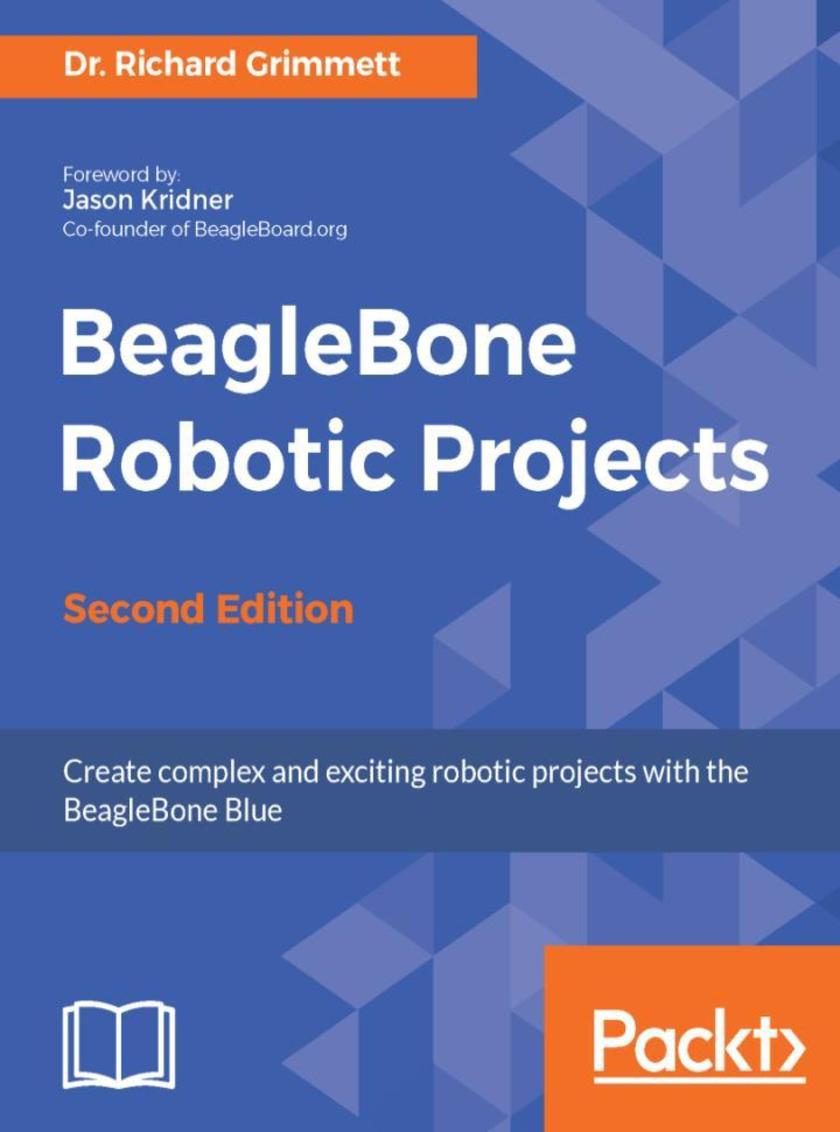
BeagleBone Robotic Projects - Second Edition
¥71.93
Exciting new capabilities to enable even easier DIY robotics with BeagleBone Blue About This Book ? Build powerful robots with the all new BeagleBone Blue ? Communicate with your robot and teach it to detect and respond to its environment ? Control walking, rolling, swimming, and flying robots with your iOS and Android mobile devices Who This Book Is For This book is for anyone who is curious about using new, low-cost hardware to create robotic projects and have previously been the domain of research labs, major universities, or defence departments. Some programming experience would be useful, but if you know how to use a personal computer, you can use this book to construct far more complex systems than you would have thought possible. What You Will Learn ? Power on and configure the BeagleBone Blue ? Get to know Simple programming techniques to enable the unique hardware capabilities of the BeagleBone Blue. ? Connect standard hardware to enable your projects to see, speak, hear, and move ? Build advanced capabilities into your projects, such as GPS and sonar sensors ? Build complex projects that can fly, or go under or on the water In Detail BeagleBone Blue is effectively a small, light, cheap computer in a similar vein to Raspberry Pi and Arduino. It has all of the extensibility of today’s desktop machines, but without the bulk, expense, or noise. This project guide provides step-by-step instructions that enable anyone to use this new, low-cost platform in some fascinating robotics projects. By the time you are finished, your projects will be able to see, speak, listen, detect their surroundings, and move in a variety of amazing ways. The book begins with unpacking and powering up the components. This includes guidance on what to purchase and how to connect it all successfully, and a primer on programming the BeagleBone Blue. You will add additional software functionality available from the open source community, including making the system see using a webcam, hear using a microphone, and speak using a speaker. You will then learn to use the new hardware capability of the BeagleBone Blue to make your robots move, as well as discover how to add sonar sensors to avoid or find objects. Later, you will learn to remotely control your robot through iOS and Android devices. At the end of this book, you will see how to integrate all of these functionalities to work together, before developing the most impressive robotics projects: Drone and Submarine. Style and approach Develop practical example projects with detailed explanations, combine the projects in a vast number of ways to create different robot designs, or work through them in sequence to discover the full capability of the BeagleBone Blue.
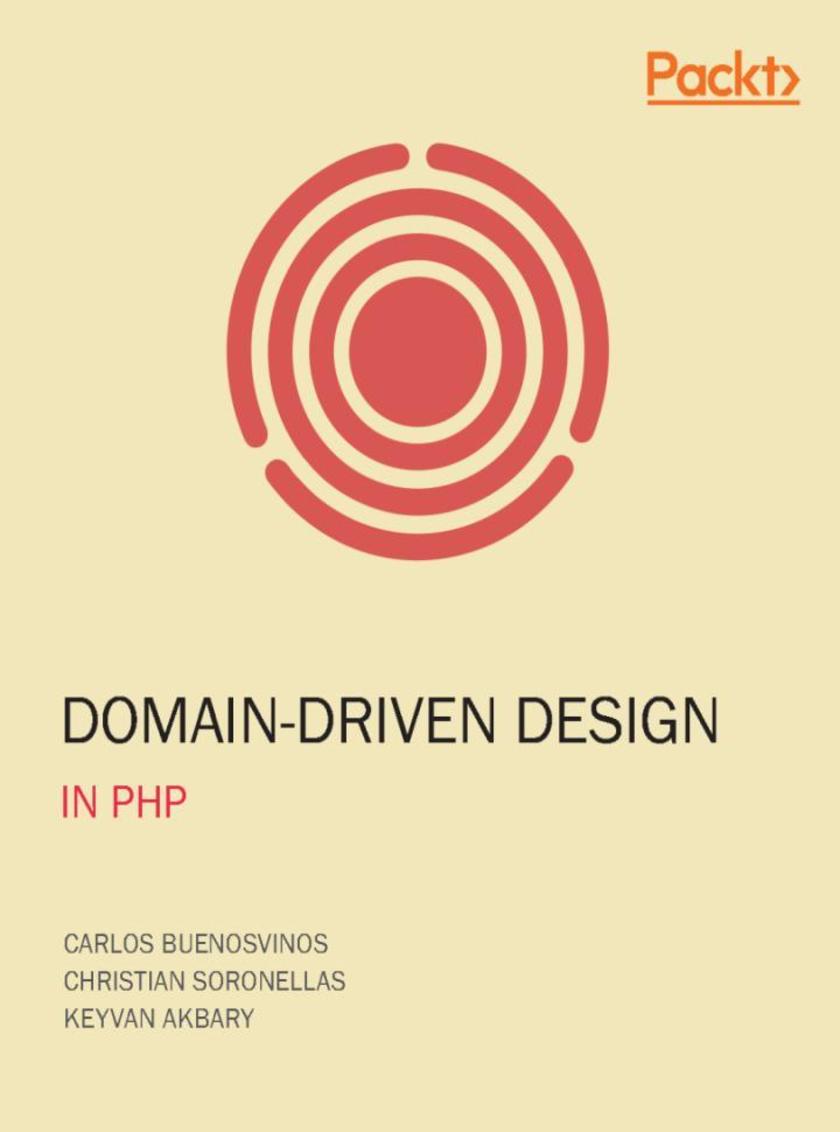
Domain-Driven Design in PHP
¥90.46
Real examples written in PHP showcasing DDD Architectural Styles, Tactical Design, and Bounded Context Integration About This Book ? Focuses on practical code rather than theory ? Full of real-world examples that you can apply to your own projects ? Shows how to build PHP apps using DDD principles Who This Book Is For This book is for PHP developers who want to apply a DDD mindset to their code. You should have a good understanding of PHP and some knowledge of DDD. This book doesn’t dwell on the theory, but instead gives you the code that you need. What You Will Learn ? Correctly design all design elements of Domain-Driven Design with PHP ? Learn all tactical patterns to achieve a fully worked-out Domain-Driven Design ? Apply hexagonal architecture within your application ? Integrate bounded contexts in your applications ? Use REST and Messaging approaches In Detail Domain-Driven Design (DDD) has arrived in the PHP community, but for all the talk, there is very little real code. Without being in a training session and with no PHP real examples, learning DDD can be challenging. This book changes all that. It details how to implement tactical DDD patterns and gives full examples of topics such as integrating Bounded Contexts with REST, and DDD messaging strategies. In this book, the authors show you, with tons of details and examples, how to properly design Entities, Value Objects, Services, Domain Events, Aggregates, Factories, Repositories, Services, and Application Services with PHP. They show how to apply Hexagonal Architecture within your application whether you use an open source framework or your own. Style and approach This highly practical book shows developers how to apply domain-driven design principles to PHP. It is full of solid code examples to work through.
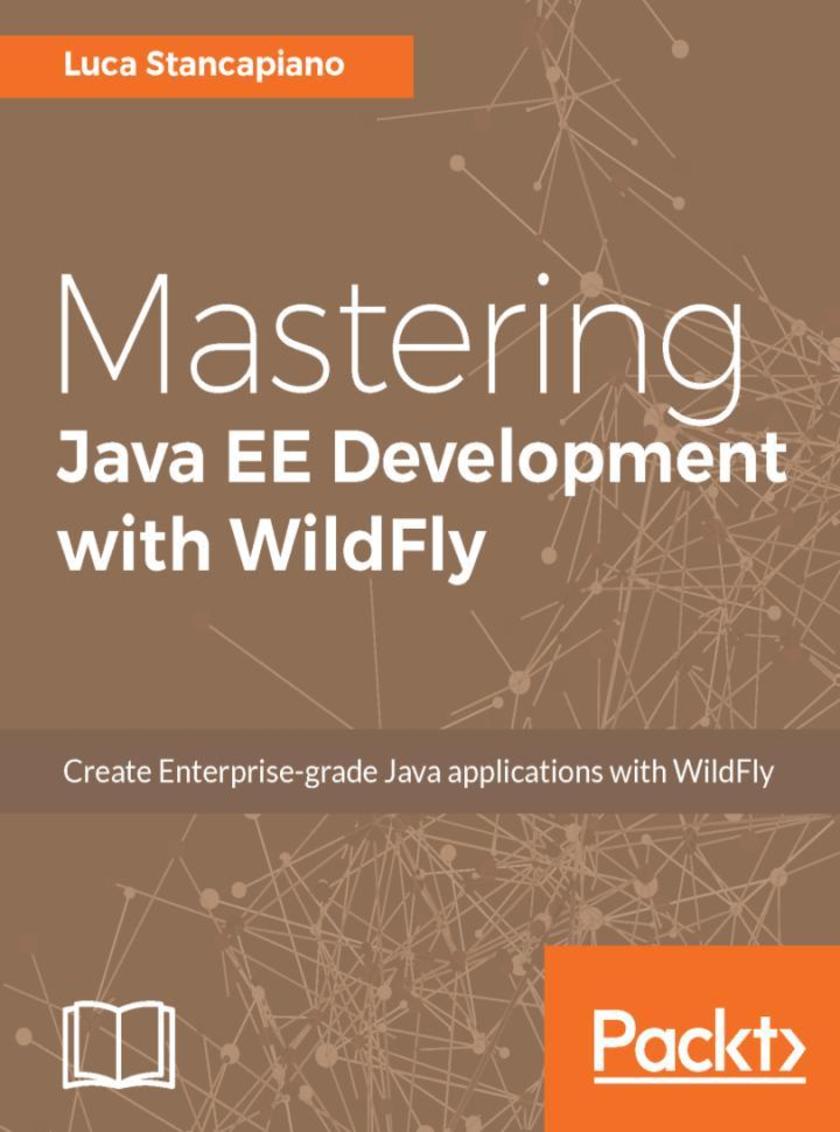
Mastering Java EE Development with WildFly
¥90.46
Your one stop solution to create highly scalable enterprise grade Java applications with WildFly. About This Book ? Master Java EE development with the latest WildFly 10 application server. ? Integrate with JSF and JMS and use efficient load balancing techniques to create real-time apps ? Integrate your backend JavaScript code seamlessly into Java applications Who This Book Is For If you are a Java developer with at least basic knowledge of Java EE, then this book is for you. No previous knowledge of WildFly is required. What You Will Learn ? Configure the development environment along with native and cloud installation of WildFly ? Write a DB schema and the relative entities and how to use the relationships between the entities ? Analyze with examples all the java annotations to manage the EJB and the configuration to get better performances ? Write different REST services through the EJB ? Implement Web sockets 1.0 and know why and when use the web sockets ? Work with Active MQ and write JMS clients to manage the authentication and authorization in the clients ? Configure the mail server through the wildfly console ? Learn how and when to use a new feature JAX-RS 2.0, which is the asynchronous call through REST ? Use the new JSF features of Wildfly 10 such as Mojarra 2.2, JSF 2.2, Richfaces 4.5 In Detail Packed with rich assets and APIs, Wildfly 10 allows you to create state-of-the-art Java applications. This book will help you take your understanding of Java EE to the next level by creating distributed Java applications using Wildfly. The book begins by showing how to get started with a native installation of WildFly and it ends with a cloud installation. After setting up the development environment, you will implement and work with different WildFly features, such as implementing JavaServer Pages. You will also learn how you can use clustering so that your apps can handle a high volume of data traffic. You will also work with enterprise JavaBeans, solve issues related to failover, and implement Java Message Service integration. Moving ahead, you will be working with Java Naming and Directory Interface, Java Transaction API, and use ActiveMQ for message relay and message querying. This book will also show you how you can use your existing backend JavaScript code in your application. By the end of the book, you’ll have gained the knowledge to implement the latest Wildfly features in your Java applications. Style and approach Each part of this book shows you how to use different features of WildFly 10 to create enterprise grade Java applications as easily as possible.
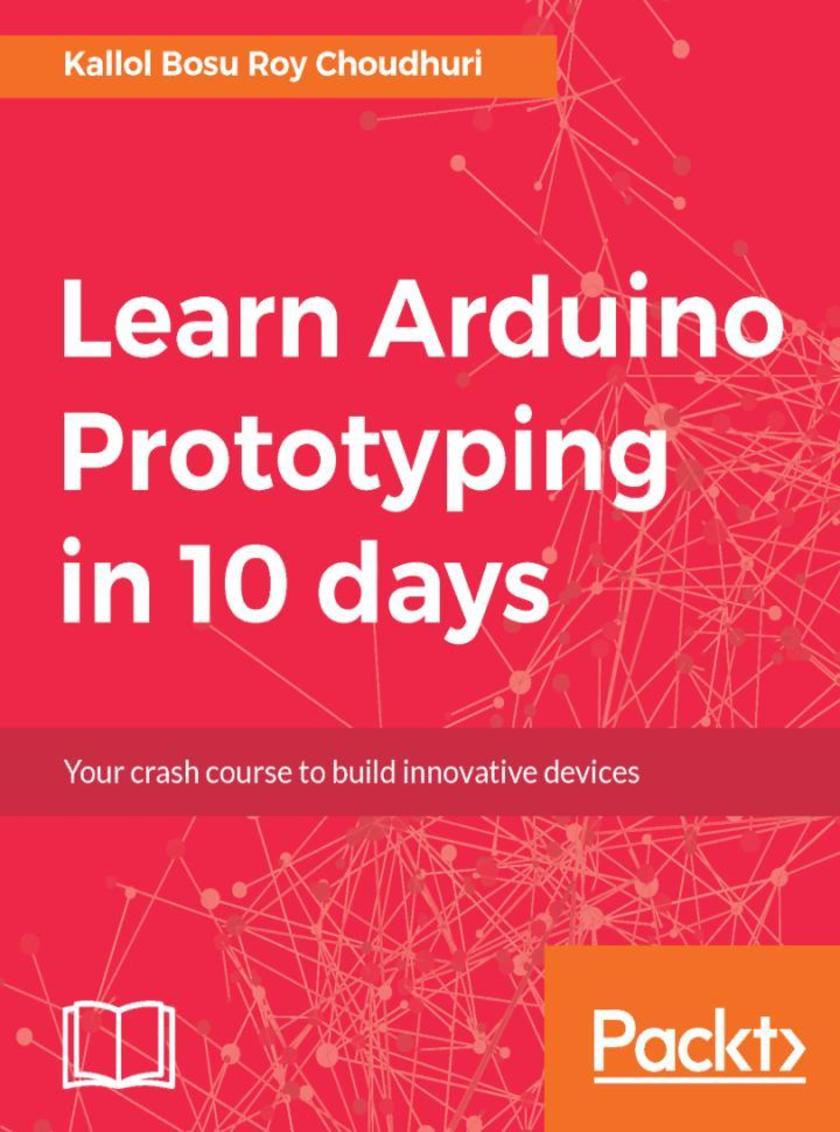
Learn Arduino Prototyping in 10 days
¥63.21
The ultimate power-packed crash course in building Arduino-based projects in just 10 days! About This Book ? A carefully designed 10-day crash course, covering major project/device types, with 20+ unique hands-on examples ? Get easy-to-understand explanations of basic electronics fundamentals and commonly used C sketch functions ? This step-by-step guide with 90+ diagrams and 50+ important tips will help you become completely self-reliant and confident Who This Book Is For This book is a beginner’s crash course for professionals, hobbyists, and students who are tech savvy, have a basic level of C programming knowledge, and basic familiarity with electronics, be it for embedded systems or the Internet of Things. What You Will Learn ? Write Arduino sketches and understand the fundamentals of building prototype circuits using basic electronic components, such as resistors, transistors, and diodes ? Build simple, compound, and standalone devices with auxiliary storage (SD card), a DC battery, and AC power supplies ? Deal with basic sensors and interface sensor modules by using sensor datasheets ? Discover the fundamental techniques of prototyping with actuators ? Build remote-controlled devices with infrared (IR), radio frequency (RF), and telephony with GSM ? Learn IoT edge device prototyping (using ESP8266) and IoT cloud configuration In Detail This book is a quick, 10-day crash course that will help you become well acquainted with the Arduino platform. The primary focus is to empower you to use the Arduino platform by applying basic fundamental principles. You will be able to apply these principles to build almost any type of physical device. The projects you will work through in this book are self-contained micro-controller projects, interfacing with single peripheral devices (such as sensors), building compound devices (multiple devices in a single setup), prototyping standalone devices (powered from independent power sources), working with actuators (such as DC motors), interfacing with an AC-powered device, wireless devices (with Infrared, Radio Frequency and GSM techniques), and finally implementing the Internet of Things (using the ESP8266 series Wi-Fi chip with an IoT cloud platform). The first half of the book focuses on fundamental techniques and building basic types of device, and the final few chapters will show you how to prototype wireless devices. By the end of this book, you will have become acquainted with the fundamental principles in a pragmatic and scientific manner. You will also be confident enough to take up new device prototyping challenges. Style and approach This step-by- step guide will serve as a quick, 10-day crash course to help you become well acquainted with the Arduino platform.
Practical Data Science Cookbook - Second Edition
¥80.65
Over 85 recipes to help you complete real-world data science projects in R and Python About This Book ? Tackle every step in the data science pipeline and use it to acquire, clean, analyze, and visualize your data ? Get beyond the theory and implement real-world projects in data science using R and Python ? Easy-to-follow recipes will help you understand and implement the numerical computing concepts Who This Book Is For If you are an aspiring data scientist who wants to learn data science and numerical programming concepts through hands-on, real-world project examples, this is the book for you. Whether you are brand new to data science or you are a seasoned expert, you will benefit from learning about the structure of real-world data science projects and the programming examples in R and Python. What You Will Learn ? Learn and understand the installation procedure and environment required for R and Python on various platforms ? Prepare data for analysis by implement various data science concepts such as acquisition, cleaning and munging through R and Python ? Build a predictive model and an exploratory model ? Analyze the results of your model and create reports on the acquired data ? Build various tree-based methods and Build random forest In Detail As increasing amounts of data are generated each year, the need to analyze and create value out of it is more important than ever. Companies that know what to do with their data and how to do it well will have a competitive advantage over companies that don’t. Because of this, there will be an increasing demand for people that possess both the analytical and technical abilities to extract valuable insights from data and create valuable solutions that put those insights to use. Starting with the basics, this book covers how to set up your numerical programming environment, introduces you to the data science pipeline, and guides you through several data projects in a step-by-step format. By sequentially working through the steps in each chapter, you will quickly familiarize yourself with the process and learn how to apply it to a variety of situations with examples using the two most popular programming languages for data analysis—R and Python. Style and approach This step-by-step guide to data science is full of hands-on examples of real-world data science tasks. Each recipe focuses on a particular task involved in the data science pipeline, ranging from readying the dataset to analytics and visualization
Mastering Active Directory
¥107.90
Become a master at managing enterprise identity infrastructure by leveraging Active Directory About This Book ? Manage your Active Directory services for Windows Server 2016 effectively ? Automate administrative tasks in Active Directory using PowerShell ? Manage your organization's network with ease Who This Book Is For If you are an Active Directory administrator, system administrator, or network professional who has basic knowledge of Active Directory and are looking to gain expertise in this topic, this is the book for you. What You Will Learn ? Explore the new features in Active Directory Domain Service 2016 ? Automate AD tasks with PowerShell ? Get to know the advanced functionalities of the schema ? Learn about Flexible Single Master Operation (FSMO) roles and their placement ? Install and migrate Active directory from older versions to Active Directory 2016 ? Manage Active Directory objects using different tools and techniques ? Manage users, groups, and devices effectively ? Design your OU structure in the best way ? Audit and monitor Active Directory ? Integrate Azure with Active Directory for a hybrid setup In Detail Active Directory is a centralized and standardized system that automates networked management of user data, security, and distributed resources and enables interoperation with other directories. If you are aware of Active Directory basics and want to gain expertise in it, this book is perfect for you. We will quickly go through the architecture and fundamentals of Active Directory and then dive deep into the core components, such as forests, domains, sites, trust relationships, OU, objects, attributes, DNS, and replication. We will then move on to AD schemas, global catalogs, LDAP, RODC, RMS, certificate authorities, group policies, and security best practices, which will help you gain a better understanding of objects and components and how they can be used effectively. We will also cover AD Domain Services and Federation Services for Windows Server 2016 and all their new features. Last but not least, you will learn how to manage your identity infrastructure for a hybrid-cloud setup. All this will help you design, plan, deploy, manage operations on, and troubleshoot your enterprise identity infrastructure in a secure, effective manner. Furthermore, I will guide you through automating administrative tasks using PowerShell cmdlets. Toward the end of the book, we will cover best practices and troubleshooting techniques that can be used to improve security and performance in an identity infrastructure. Style and approach This step-by-step guide will help you master the core functionalities of Active Directory services using Microsoft Server 2016 and PowerShell, with real-world best practices at the end.
QlikView for Developers
¥116.62
Drive value and insight by developing business critical applications with QlikView 12 About This Book ? Develop your own scalable and maintainable QlikView applications ? Learn time-saving techniques for making your QlikView development more efficient ? A one-stop guide to developing BI applications with QlikView Who This Book Is For This book is for anyone interested in working with QlikView or who has attended QlikView Developer training. The book caters for all QlikView developers, beginners and experts alike, and anyone who wants to improve their QlikView skills. What You Will Learn ? Understand important changes made in QlikView 12 ? Learn the techniques and best practices to transform data in QlikView via *s ? Load data from disparate sources to build an associative Data Model ? Build robust data models and overcome common modeling challenges ? Designing data visualization objects to present performance measures with charts and tables ? Learn to use dimensions and expressions in QlikView objects ? Utilize QlikView's built-in aggregation functions to achieve complex calculations ? Create Point In Time reporting and achieving complex calculations using Set Analysis ? Create a consistent and interactive user interface ? Ensure your QlikView applications and data are protected ? Optimize the QlikView Data Model ? Constructing a data architecture that supports scalable QlikView deployments ? Learn time-saving techniques for making your QlikView development more efficient In Detail QlikView is one of the most flexible and powerful Business Intelligence platforms around. If you want to build data into your organization, build it around QlikView. Don't get caught in the gap between data and knowledge – find out how QlikView can help you unlock insights and data potential with ease. Whether you're new to QlikView or want to get up to speed with the features and functionality of QlikView, this book starts at a basic level and delves more deeply to demonstrate how to make QlikView work for you, and make it meet the needs of your organization. Using a real-world use-case to highlight the extensive impact of effective business analytics, this book might well be your silver bullet for success. A superb hands-on guide to get you started by exploring the fundamentals of QlikView before learning how to successfully implement it, technically and strategically. You'll learn valuable tips, tricks, and insightful information on loading different types of data into QlikView, and how to model it effectively. You will also learn how to write useful *s for QlikView to handle potentially complex data transformations in a way that is simple and elegant. From ensuring consistency and clarity in your data models, to techniques for managing expressions using variables, this book makes sure that your QlikView projects are organized in a way that's most productive for you and key stakeholders. Style and approach This book will help you learn QlikView Development from a basic to a practitioner level using a step-by-step approach. It is smartly built around a practical case study – HighCloud Airlines – to help you gain an in-depth understanding of how to build applications for Business Intelligence using QlikView.
Expert Delphi
¥90.46
Become a developer superhero and build stunning cross-platform apps with Delphi About This Book ? A one-stop guide on Delphi to help you build cross-platform apps ? This book covers important concepts such as the FireMonkey library, shows you how to interact with the Internet of Things, and enables you to integrate with Cloud services ? The code is explained in detail with observations on how to create native apps for Ios and Android with a single code base Who This Book Is For If you want to create stunning applications for mobile, desktop, the cloud, and the Internet of Things, then this book is for you. This book is for developers who would like to build native cross-platform apps with a single codebase for iOS and Android. A basic knowledge of Delphi is assumed, although we do cover a primer on the language. What You Will Learn ? Understand the basics of Delphi and the FireMonkey application platform as well as the specifics of Android and iOS platforms ? Complete complex apps quickly with access to platform features and APIs using a single, easy-to-maintain code base ? Work with local data sources, including embedded SQL databases, REST servers, and Backend-as-a-Service providers ? Take full advantage of mobile hardware capabilities by working with sensors and Internet of Things gadgets and devices ? Integrate with cloud services and data using REST APIs and scalable multi-tier frameworks for outstanding multi-user and social experience ? Architect and deploy powerful mobile back-end services and get super-productive by leveraging Delphi IDE agile functionality ? Get to know the best practices for writing a high-quality, reliable, and maintainable codebase in the Delphi Object Pascal language In Detail Delphi is the most powerful Object Pascal IDE and component library for cross-platform native app development. It enables building natively compiled, blazingly fast apps for all major platforms including Android, iOS, Windows, Mac, and Linux. If you want to build server-side applications, create web services, and have clear GUIs for your project, then this book is for you. The book begins with a basic primer on Delphi helping you get accustomed to the IDE and the Object Pascal language and will then quickly move on to advanced-level concepts. Through this book, we’ll help you understand the architecture of applications and will teach you the important concepts of the FireMonkey library, show you how to build server-side services, and enable you to interact with the Internet of Things. Towards the end, you will learn to integrate your app with various web services and deploy them. By the end of the book, you will be able to build powerful, cross-platform, native apps for iOS and Android with a single code base. Style and approach This book will help you build cross-platform mobile apps with Delphi using a step-by-step approach.
Mastering Non-Functional Requirements
¥71.93
This book covers the most critical 24 NFRs that are applicable to IT applications and systems. About This Book ? Explains three stages of nonfunctional requirements, that is, analysis, architecture, and assessment ? In-depth knowledge of NFR framework and taxonomy that provides guidance around the modelling phase for the NFRs ? Coverage of 24 critical and pivotal NFRs, including the analysis, architecture, and assessment. Who This Book Is For The primary audience for this title are the gamut of roles starting from IT consultant to chief architects who are responsible to deliver strategic, tactical, and operational engagements for fortune 100 customers worldwide. Nonfunctional requirements are the key to any software / IT program. They cannot be overlooked or ignored. The book provides a comprehensive approach from analysis, architecture, and measurement of nonfunctional requirements. The book includes considerations for bespoke (Java, .Net, and COTS applications). These are applicable to IT applications from various domains. The book outlines the methodology for capturing the NFRs and also describes a framework that can be leveraged by analysts and architects for tackling NFRs for various engagements. The audience for this book include business analysts, enterprise architects, business architects, solution architects, technical architects/designers, domain/security/integration architects, software developers, support engineers and test engineers, technical project managers, project leads/technical leads/technical project managers, and students from the computer science/IT stream What You Will Learn ? Learn techniques related to the analysis, architecture, and monitoring of NFRs ? Understand the various tools, techniques, and processes in order to improve the overall quality of the desired outcomes ? Embrace the best practices of architecting, metrics, and success factors for NFRs ? Identify the common pitfalls to be avoided and the patterns to leverage ? Understand taxonomy and framework for NFRs ? Learn the design guidelines for architecting applications and systems relating to NFRs ? Abstract different methodologies to analyze and gather NFRs In Detail Non-functional Requirements are key to any software/IT program and cannot be overlooked or ignored. This book provides a comprehensive approach to the analysis, architecture, and measurement of NFRs. It includes considerations for bespoke Java, .NET, and COTS applications that are applicable to IT applications/systems in different domains. The book outlines the methodology for capturing the NFRs and also describes a framework that can be leveraged by analysts and architects for tackling NFRs for various engagements. This book starts off by explaining the various KPIs, taxonomies, and methods for identifying NFRs. Learn the design guidelines for architecting applications and systems relating to NFRs and design principles to achieve the desired outcome. We will then move on to various key tiers/layers and patterns pertaining to the business, database, and integrating tiers. After this, we will dive deep into the topics pertaining to techniques related to monitoring and measurement of NFRs, such as sizing, analytical modeling, and quality assurance. Lastly, we end the book by describing some pivotal NFRs and checklists for the software quality attributes related to the business, application, data, and infrastructure domains. Style and approach The book takes a pragmatic approach, describing various techniques related to the analysis of NFRs, the architecture of NFRs, and assessment of NFRs.
Implementing Azure Solutions
¥90.46
A practical guide that enhances your skills in implementing Azure solutions for your organization About This Book ? Confidently configure, deploy, and manage cloud services and virtual machines ? Implement a highly-secured environment and respond to threats with increased visibility ? This comprehensive guide is packed with exciting practical scenarios that enable you to implement Azure solutions with ease Who This Book Is For This book is for IT architects, system and network admins, and DevOps engineers who are aware of Azure solutions and want to implement them for their organization. What You Will Learn ? Implement virtual networks, network gateways, Site-to-Site VPN, ExpressRoute, routing, and network devices ? Understand the working of different storage accounts in Azure ? Plan, deploy, and secure virtual machines ? Deploy and manage Azure Containers ? Get familiar with some common Azure usage scenarios In Detail Microsoft Azure has numerous effective solutions that shape the future of any business. However, the major challenge that architects and administrators face are implementing these solutions appropriately. Our book focuses on various implementation scenarios that will help overcome the challenge of implementing Azure’s solutions in a very efficient manner and will also help you to prepare for Microsoft Architect exam. You will not only learn how to secure a newly deployed Azure Active Directory but also get to know how Azure Active Directory Synchronization could be implemented. To maintain an isolated and secure environment so that you can run your virtual machines and applications, you will implement Azure networking services. Also to manage, access, and secure your confidential data, you will implement storage solutions. Toward the end, you will explore tips and tricks to secure your environment. By the end, you will be able to implement Azure solutions such as networking, storage, and cloud effectively. Style and approach This step-by-step guide focuses on implementing various Azure solutions for your organization. The motive is to provide a comprehensive exposure and ensure they can implement these solutions with ease.
Learn Python in 7 Days
¥71.93
Learn efficient Python coding within 7 days About This Book ? Make the best of Python features ? Learn the tinge of Python in 7 days ? Learn complex concepts using the most simple examples Who This Book Is For The book is aimed at aspiring developers and absolute novice who want to get started with the world of programming. We assume no knowledge of Python for this book. What You Will Learn ? Use if else statement with loops and how to break, skip the loop ? Get acquainted with python types and its operators ? Create modules and packages ? Learn slicing, indexing and string methods ? Explore advanced concepts like collections, class and objects ? Learn dictionary operation and methods ? Discover the scope and function of variables with arguments and return value In Detail Python is a great language to get started in the world of programming and application development. This book will help you to take your skills to the next level having a good knowledge of the fundamentals of Python. We begin with the absolute foundation, covering the basic syntax, type variables and operators. We'll then move on to concepts like statements, arrays, operators, string processing and I/O handling. You’ll be able to learn how to operate tuples and understand the functions and methods of lists. We’ll help you develop a deep understanding of list and tuples and learn python dictionary. As you progress through the book, you’ll learn about function parameters and how to use control statements with the loop. You’ll further learn how to create modules and packages, storing of data as well as handling errors. We later dive into advanced level concepts such as Python collections and how to use class, methods, objects in python. By the end of this book, you will be able to take your skills to the next level having a good knowledge of the fundamentals of Python. Style and approach Fast paced guide to get you up-to-speed with the language. Every chapter is followed by an exercise that focuses on building something with the language. The codes of the exercises can be found on the Packt website
Akka Cookbook
¥90.46
Learn how to use the Akka framework to build effective applications in Scala About This Book ? Covers a discussion on Lagom—the newest launched Akka framework that is built to create complex microservices easily ? The recipe approach of the book allows the reader to know important and independent concepts of Scala and Akka in a seamless manner ? Provides a comprehensive understanding of the Akka actor model and implementing it to create reactive web applications Who This Book Is For If you are a Scala developer who wants to build scalable and concurrent applications, then this book is for you. Basic knowledge of Akka will help you take advantage of this book. What You Will Learn ? Control an actor using the ContolAware mailbox ? Test a fault-tolerant application using the Akka test kit ? Create a parallel application using futures and agents ? Package and deploy Akka application inside Docker ? Deploy remote actors programmatically on different nodes ? Integrate Streams with Akka actors ? Install Lagom and create a Lagom project In Detail Akka is an open source toolkit that simplifies the construction of distributed and concurrent applications on the JVM. This book will teach you how to develop reactive applications in Scala using the Akka framework. This book will show you how to build concurrent, scalable, and reactive applications in Akka. You will see how to create high performance applications, extend applications, build microservices with Lagom, and more. We will explore Akka's actor model and show you how to incorporate concurrency into your applications. The book puts a special emphasis on performance improvement and how to make an application available for users. We also make a special mention of message routing and construction. By the end of this book, you will be able to create a high-performing Scala application using the Akka framework. Style and approach This highly practical recipe-based approach will allow you to build scalable, robust, and reactive applications using the Akka framework.
Mastering Reactive JavaScript
¥71.93
Expand your boundaries by creating applications empowered with real-time data using RxJs without compromising performance About This Book ? Handle an infinite stream of incoming data using RxJs without going crazy ? Explore important RxJs operators that can help you improve your code readability ? Get acquainted with the different techniques and operators used to handle data traffic, which occurs when you receive data faster than you can process Who This Book Is For If you're a web developer with some basic JavaScript programming knowledge who wants to implement the reactive programming paradigm with JavaScript, then this book is for you. What You Will Learn ? Get to know the basics of functional reactive programming using RxJs ? Process a continuous flow of data with linear memory consumption ? Filter, group, and react to changes in your system ? Discover how to deal with data traffic ? Compose operators to create new operators and use them in multiple observables to avoid code repetition ? Explore transducers and see how they can improve your code readability ? Detect and recover from errors in observables using Retry and Catch operators ? Create your own reactive application: a real-time webchat In Detail If you’re struggling to handle a large amount of data and don’t know how to improve your code readability, then reactive programming is the right solution for you. It lets you describe how your code behaves when changes happen and makes it easier to deal with real-time data. This book will teach you what reactive programming is, and how you can use it to write better applications. The book starts with the basics of reactive programming, what Reactive Extensions is, and how can you use it in JavaScript along with some reactive code using Bacon. Next, you’ll discover what an Observable and an Observer are and when to use them.You'll also find out how you can query data through operators, and how to use schedulers to react to changes. Moving on, you’ll explore the RxJs API, be introduced to the problem of data traffic (backpressure), and see how you can mitigate it. You’ll also learn about other important operators that can help improve your code readability, and you’ll see how to use transducers to compose operators. At the end of the book, you’ll get hands-on experience of using RxJs, and will create a real-time web chat using RxJs on the client and server, providing you with the complete package to master RxJs. Style and approach This easy-to-follow guide is full of hands-on examples of reactive programming. Each topic is explained and placed in context, and for the more inquisitive there are more details of the concepts used, ending with an application using the concepts learned through the book.
User Experience Mapping
¥71.93
Understand your users, gain strategic insights, and make your product development more efficient with user experience mapping About This Book ? Detailed guidance on the major types of User Experience Maps. ? Learn to gain strategic insights and improve communication with stakeholders . ? Get an idea on creating wireflows, mental model maps, ecosystem maps and solution maps Who This Book Is For This book is for Product Manager, Service Managers and Designers who are keen on learning the user experience mapping techniques. What You Will Learn ? Create and understand all common user experience map types. ? Use lab or remote user research to create maps and understand users better. ? Design behavioral change and represent it visually. ? Create 4D user experience maps, the “ultimate UX deliverable”. ? Capture many levels of interaction in a holistic view. ? Use experience mapping in an agile team, and learn how maps help in communicating within the team and with stakeholders. ? Become more user focused and help your organisation become user-centric. In Detail Do you want to create better products and innovative solutions? User Experience Maps will help you understand users, gain strategic insights and improve communication with stakeholders. Maps can also champion user-centricity within the organisation. Two advanced mapping techniques will be revealed for the first time in print, the behavioural change map and the 4D UX map. You will also explore user story maps, task models and journey maps. You will create wireflows, mental model maps, ecosystem maps and solution maps. In this book, the author will show you how to use insights from real users to create and improve your maps and your product. The book describes each major User Experience map type in detail. Starting with simple techniques based on sticky notes moving to more complex map types. In each chapter, you will solve a real-world problem with a map. The book contains detailed, beginner level tutorials on creating maps using different software products, including Adobe Illustrator, Balsamiq Mockups, Axure RP or Microsoft Word. Even if you don’t have access to any of those, each map type can also be drawn with pen and paper. Beyond creating maps, the book will also showcase communication techniques and workshop ideas. Although the book is not intended to be a comprehensive guide to modern user experience or product management, its novel ideas can help you create better solutions. You will also learn about the Kaizen-UX management framework, developed by the author, now used by many agencies and in-house UX teams in Europe and beyond. Buying this map will give you hundreds of hours worth of user experience knowledge, from one of the world’s leading UX consultants. It will change your users’ world for the better. If you are still not convinced, we have hidden some cat drawings in it, just in case. Style and approach An easy to understand guide, filled with real world use cases on how to plan, prioritize and visualize your project on customer experience
Learning Android Game Development
¥63.21
Learn the art of making Android games and turn your game development dreams into reality About This Book ? Leverage the latest features of Android N to create real-world 2D games ? Architect a 2D game from scratch and level up your Android game development skill ? Transition from developing simple 2D games to 3D games using basic Java code Who This Book Is For If you are a mobile developer who has basic Java programming knowledge, then this book is ideal for you. Previous Android development experience is not needed; however, basic mobile development knowledge is essential. What You Will Learn ? Understand the nuts and bolts of developing highly interactive and interesting games for Android N ? Link the interface to the code used in games through simple methods ? Interact with the images on the screen and also learn to animate them ? Set and save the game state and save high scores, hit points, and so on for your games ? Get a grasp of various collision techniques and implement the bounding box technique ? Convert your 2D games to 3D games using Android N ? Get an understanding of the process of UI creation using Android Studio In Detail In this book, we’ll start with installing Android studio and its components, and setting it up ready for Android N. We teach you how to take inputs from users, create images and interact with them, and work with sprites to create animations. You’ll then explore the various collision detection methods and use sprites to create an explosion. Moving on, you’ll go through the process of UI creation and see how to create buttons as well as display the score and other parameters on screen. By the end of the book, you will have a working example and an understanding of a 2D platform game like Super Mario and know how to convert your 2D games to 3D games. Style and approach This easy-to-understand guide follows a step-by-step approach to building games, and contains plenty of graphical examples for you to follow and grasp quickly, giving you the chance to implement the concepts practically.
Python Web Scraping - Second Edition
¥63.21
Successfully scrape data from any website with the power of Python 3.x About This Book ? A hands-on guide to web scraping using Python with solutions to real-world problems ? Create a number of different web scrapers in Python to extract information ? This book includes practical examples on using the popular and well-maintained libraries in Python for your web scraping needs Who This Book Is For This book is aimed at developers who want to use web scraping for legitimate purposes. Prior programming experience with Python would be useful but not essential. Anyone with general knowledge of programming languages should be able to pick up the book and understand the principals involved. What You Will Learn ? Extract data from web pages with simple Python programming ? Build a concurrent crawler to process web pages in parallel ? Follow links to crawl a website ? Extract features from the HTML ? Cache downloaded HTML for reuse ? Compare concurrent models to determine the fastest crawler ? Find out how to parse JavaScript-dependent websites ? Interact with forms and sessions In Detail The Internet contains the most useful set of data ever assembled, most of which is publicly accessible for free. However, this data is not easily usable. It is embedded within the structure and style of websites and needs to be carefully extracted. Web scraping is becoming increasingly useful as a means to gather and make sense of the wealth of information available online. This book is the ultimate guide to using the latest features of Python 3.x to scrape data from websites. In the early chapters, you’ll see how to extract data from static web pages. You’ll learn to use caching with databases and files to save time and manage the load on servers. After covering the basics, you’ll get hands-on practice building a more sophisticated crawler using browsers, crawlers, and concurrent scrapers. You’ll determine when and how to scrape data from a JavaScript-dependent website using PyQt and Selenium. You’ll get a better understanding of how to submit forms on complex websites protected by CAPTCHA. You’ll find out how to automate these actions with Python packages such as mechanize. You’ll also learn how to create class-based scrapers with Scrapy libraries and implement your learning on real websites. By the end of the book, you will have explored testing websites with scrapers, remote scraping, best practices, working with images, and many other relevant topics. Style and approach This hands-on guide is full of real-life examples and solutions starting simple and then progressively becoming more complex. Each chapter in this book introduces a problem and then provides one or more possible solutions.
Mastering PostgreSQL 9.6
¥99.18
Master the capabilities of PostgreSQL 9.6 to efficiently manage and maintain your database About This Book ? Your one-stop guide to mastering the advanced concepts in PostgreSQL with ease ? Master query optimization, replication, and high availability with PostgreSQL ? Extend the functionalities of PostgreSQL to suit your organizational needs with minimum effort Who This Book Is For If you are a PostgreSQL data architect or an administrator who wants to understand how to implement advanced functionalities and master complex administrative tasks with PostgreSQL, then this book is perfect for you. Prior experience of administrating a PostgreSQL database and a working knowledge of SQL is required to make the best use of this book. What You Will Learn ? Get to grips with the advanced features of PostgreSQL 9.6 and handle advanced SQL ? Make use of the indexing features in PostgreSQL and fine-tune the performance of your queries ? Work with the stored procedures and manage backup and recovery ? Master the replication and failover techniques ? Troubleshoot your PostgreSQL instance for solutions to the common and not-so-common problems ? Learn how to migrate your database from MySQL and Oracle to PostgreSQL without any hassle In Detail PostgreSQL is an open source database used for handling large datasets (Big Data) and as a JSON document database. It also has applications in the software and web domains. This book will enable you to build better PostgreSQL applications and administer databases more efficiently. We begin by explaining the advanced database design concepts in PostgreSQL 9.6, along with indexing and query optimization. You will also see how to work with event triggers and perform concurrent transactions and table partitioning, along with exploring SQL and server tuning. We will walk you through implementing advanced administrative tasks such as server maintenance and monitoring, replication, recovery and high availability, and much more. You will understand the common and not-so-common troubleshooting problems and how you can overcome them. By the end of this book, you will have an expert-level command of the advanced database functionalities and will be able to implement advanced administrative tasks with PostgreSQL. Style and Approach This book is a comprehensive guide covering all the concepts you need to master PostgreSQL. Packed with hands-on examples, tips and tricks, even the most advanced concepts are explained in a very easy-to-follow manner. Every chapter in the book does not only focus on how each task is performed, but also why.
DevOps Bootcamp
¥71.93
Sharpen your DevOps knowledge with DevOps Bootcamp About This Book ? Improve your organization's performance to ensure smooth production of software and services. ? Learn how Continuous Integration and Continuous Delivery practices can be utilized to cultivate the DevOps culture. ? A fast-paced guide filled with illustrations and best practices to help you consistently ship quality software. Who This Book Is For The book is aimed at IT Developers and Operations—administrators who want to quickly learn and implement the DevOps culture in their organization. What You Will Learn ? Static Code Analysis using SOnarqube ? Configure a Maven-based JEE Web Application ? Perform Continuous Integration using Jenkins and VSTS ? Install and configure Docker ? Converge a Chef node using a Chef workstation ? Accomplish Continuous Delivery in Microsoft Azure VM and Microsoft Azure App Services (Azure Web Apps) using Jenkins ? Perform Load Testing using Apache JMeter ? Build and Release Automation using Visual Studio Team Services ? Monitor Cloud-based resources In Detail DevOps Bootcamp delivers practical learning modules in manageable chunks. Each chunk is delivered in a day, and each day is a productive one. Each day builds your competency in DevOps. You will be able to take the task you learn every day and apply it to cultivate the DevOps culture. Each chapter presents core concepts and key takeaways about a topic in DevOps and provides a series of hands-on exercises. You will not only learn the importance of basic concepts or practices of DevOps but also how to use different tools to automate application lifecycle management. We will start off by building the foundation of the DevOps concepts. On day two, we will perform Continuous Integration using Jenkins and VSTS both by configuring Maven-based JEE Web Application?. We will also integrate Jenkins and Sonar qube for Static Code Analysis. Further, on day three, we will focus on Docker containers where we will install and configure Docker and also create a Tomcat Container to deploy our Java based web application. On day four, we will create and configure the environment for application deployment in AWS and Microsoft Azure Cloud for which we will use Infrastructure as a Service and Open Source Configuration Management tool Chef. For day five, our focus would be on Continuous Delivery. We will automate application deployment in Docker container using Jenkins Plugin, AWS EC2 using Script, AWS Elastic Beanstalk using Jenkins Plugin, Microsoft Azure VM using *, and Microsoft Azure App Services Using Jenkins. We will also configure Continuous Delivery using VSTS. We will then learn the concept of Automated Testing on day six using Apache JMeter and URL-based tests in VSTS. Further, on day seven, we will explore various ways to automate application lifecycle management using orchestration. We will see how Pipeline can be created in Jenkins and VSTS, so the moment Continuous? Integration is completed successfully, Continuous Delivery will start and application will be deployed. On the final day, our focus would be on Security access to Jenkins and Monitoring of CI resources, and cloud-based resources in AWS and Microsoft Azure Platform as a Service. Style and Approach This book is all about fast and intensive learning. This means we don’t waste time in helping readers get started. The new content is basically about filling in with highly-effective examples to build new things, solving problems in newer and unseen ways, and solving real-world examples.
Working with Linux – Quick Hacks for the Command Line
¥71.93
Say goodbye to unproductive Linux habits and switch to the express lane About This Book ? Improve your terminal and command-line productivity by using powerful tools ? Sharpen your existing command-line skills and achieve complex tasks faster ? Save time and money by creating customized commands that automate day-to-day tasks Who This Book Is For This book is for system administrators and developers who know the basics of Linux and want to brush up and sharpen their skills. Prior experience with Linux shell is required. What You Will Learn ? Optimize the power of Guake by integrating it with ClipIt ? Deep dive into the workings of the console editor—Vim ? Explore the advanced concepts and best practices of shell *ing ? Edit large amounts of data quickly using Sed ? Use pipes and subshells to create customized commands ? Get to know how you can speed up the software development and make the terminal a handy companion In Detail Websites, online services, databases, and pretty much every other computer that offers public services runs on Linux. From small servers to clusters, Linux is anywhere and everywhere. With such a broad usage, the demand for Linux specialists is ever growing. For the engineers out there, this means being able to develop, interconnect, and maintain Linux environments. This book will help you increase your terminal productivity by using Terminator, Guake and other tools. It will start by installing Ubuntu and will explore tools and techniques that will help you to achieve more work with less effort. Next, it will then focus on Terminator, the ultimate terminal, and vim, one of the most intelligent console editors. Futhermore, the readers will see how they can increase their command line productivity by using sed, find, tmux, network, autoenv. The readers will also see how they can edit files without leaving the terminal and use the screen space efficiently and copy-paste like a pro. Towards the end, we focus on network settings, Git hacks, and creating portable environments for development and production using Docker. Through this book, you will improve your terminal productivity by seeing how to use different tools. Style and Approach This book takes a step-by-step approach using examples that show you how to automate tasks using terminal commands. You’ll work through easy-to-follow instructions so you learn to use the various Linux commands and tools such as Terminator, Guake, and others.
Wordpress Web Application Development - Third Edition
¥90.46
Learn in easy stages how to rapidly build leading-edge web applications from scratch. About This Book ? Develop powerful web applications rapidly with WordPress ? Explore the significant features and improvements introduced in WordPress 4.7 by learning the numerous tips and techniques in this book. ? Unleash the power of REST API endpoints to make your interaction with websites new and innovative. Who This Book Is For This book is targeted at WordPress developers and designers who want to develop quality web applications within a limited time frame and maximize their profits. A prior knowledge of basic web development and design is assumed. What You Will Learn ? Develop extendable plugins with the use of WordPress features in core modules ? Develop pluggable modules to extend the core features of WordPress as independent modules ? Manage permissions for a wide range of content types in web applications based on different user types ? Follow WordPress coding standards to develop reusable and maintainable code ? Build and customize themes beyond conventional web layouts ? Explore the power of core database tables and understand the limitations when designing database tables for large applications ? Integrate open source modules into WordPress applications to keep up with the latest open source technologies ? Customize the WordPress admin section and themes to create the look and feel of a typical web application In Detail WordPress is one of the most rapidly expanding markets on the Web. Learning how to build complex and scalable web applications will give you the ability and knowledge to step into the future of WordPress. WordPress 4.7 introduces some exciting new improvements and several bug fixes, which further improve the entire development process.This book is a practical, scenario-based guide to expanding the power of the WordPress core modules to develop modular and maintainable real-world applications from scratch. This book consistently emphasizes adapting WordPress features into web applications. It will walk you through the advanced usages of existing features such as access controlling; database handling; custom post types; pluggable plugins; content restrictions; routing; translation; caching; and many more, while you build the backend of a forum management application. This book begins by explaining how to plan the development of a web application using WordPress' core features. Once the core features are explained, you will learn how to build an application by extending them through custom plugin development. Finally, you will explore advanced non-functional features and application integration. After reading this book, you will have the ability to develop powerful web applications rapidly within limited time frames. Style and approach An extensive, practical guide that explains how to adapt WordPress features, both conventional and trending, for web applications.
Mastering VMware vSphere 6.5
¥90.46
Deliver great business value by adopting the virtualization platform VMware vSphere 6.5, from the design to the deployment About This Book ? This new edition is based on vSphere 6.5 and has described new features in different areas, including management, security, scalability, availability and so on. ? Design, deploy and manage VMware datacenters ? Implement monitoring and security of VMware workloads with ease. Who This Book Is For If you are an administrator, infrastructure engineer, IT architect, or an IT consultant and analyst who has basic knowledge of VMware vSphere and now wants to master it, then this book is for you. What You Will Learn ? Get a deep understanding of vSphere 6.5 functionalities ? Design and plan a virtualization environment based on vSphere 6.5 ? Manage and administer a vSphere 6.5 environment and resources ? Get tips for the VCP6-DCV and VCIX6-DCV exams (along with use of the vSphere 6 documentation) ? Implement different migration techniques to move your workload across different environments. ? Save your configuration, data and workload from your virtual infrastructure. In Detail VMware vSphere 6.5 provides a powerful, flexible and secure foundation for next-generation applications which helps you create an effective digital transformation. This book will be based on VMware vSphere 6.5 which empowers you to virtualize any complex application with ease. You’ll begin by getting an overview of all the products, solutions and features of the vSphere 6.5 suite, comparing the evolutions with the previous releases. Next ,you’ll design and plan a virtualization infrastructure to drive planning and performance analysis. Following this , you will be proceeding with workflow and installation of components. New network trends are also covered which will help you in optimally designing the vSphere environment. You will also learn the practices and procedures involved in configuring and managing virtual machines in a vSphere infrastructure. With vSphere 6.5, you’ll make use of significantly more powerful capabilities for patching, upgrading, and managing the configuration of the virtual environment. Next we’ll focus on specific availability and resiliency solutions in vSphere. Towards the end of the book you will get information on how to save your configuration, data and workload from your virtual infrastructure. By the end of the book you’ll learn about VMware vSphere 6.5 right from design to deployment and management. Style and Approach This book acts as a reference guide providing real-world scenarios and a possible baseline for each virtualization project based on VMware vSphere.


