


 购物车
购物车 个人中心
个人中心
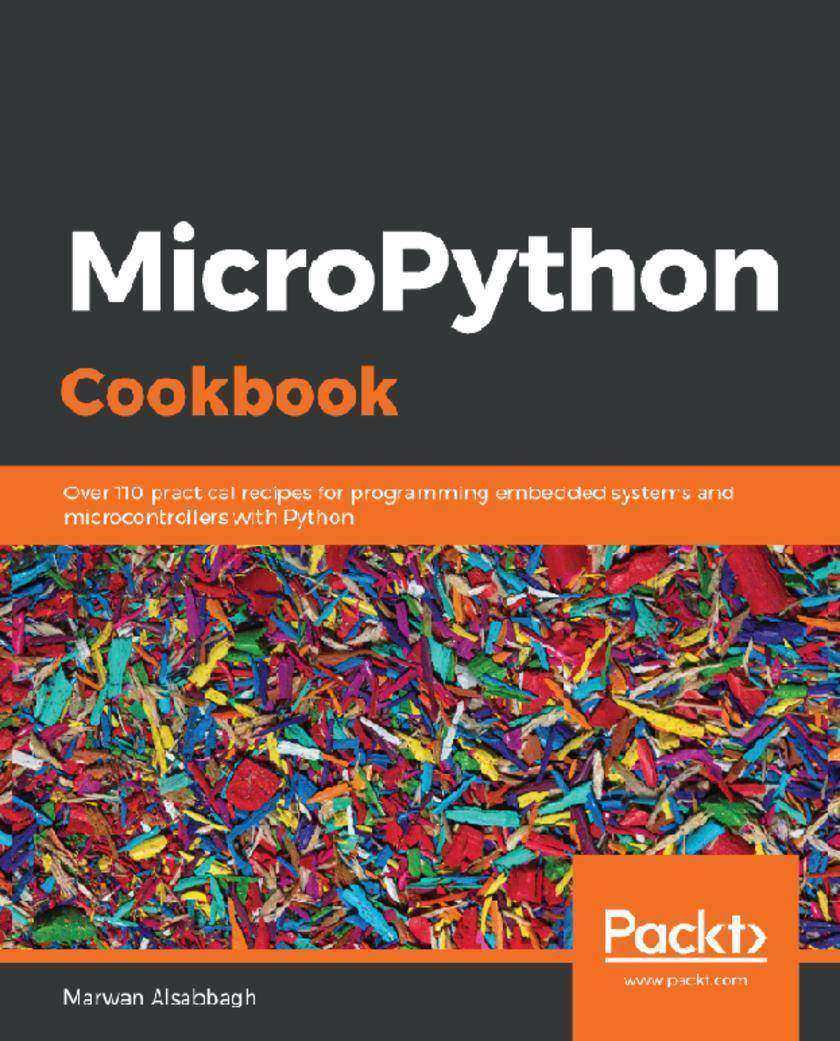
MicroPython Cookbook
¥70.84
Learn how you can control LEDs, make music, and read sensor data using popular microcontrollers such as Adafruit Circuit Playground, ESP8266, and the BBC micro:bit Key Features * Load and execute your first program with MicroPython * Program an IoT device to retrieve weather data using a RESTful API * Get to grips with integrating hardware, programming, and networking concepts with MicroPython Book Description MicroPython is an open source implementation of Python 3 that runs in embedded environments. With MicroPython, you can write clean and simple Python code to control hardware instead of using complex low-level languages like C and C++. This book guides you through all the major applications of the MicroPython platform to build and program projects that use microcontrollers. The MicroPython book covers recipes that’ll help you experiment with the programming environment and hardware programmed in MicroPython. You’ll find tips and techniques for building a variety of objects and prototypes that can sense and respond to touch, sound, position, heat, and light. This book will take you through the uses of MicroPython with a variety of popular input devices and sensors. You’ll learn techniques for handling time delays and sensor readings, and apply advanced coding techniques to create complex projects. As you advance, you’ll get to deal with Internet of Things (IoT) devices and integration with other online web services. Furthermore, you'll also use MicroPython to make music with bananas and create portable multiplayer video games that incorporate sound and light animations into the game play. By the end of the book, you'll have mastered tips and tricks to troubleshoot your development problems and push your MicroPython project to the next level! What you will learn * Execute code without any need for compiling or uploading using REPL (read-evaluate-print-loop) * Program and control LED matrix and NeoPixel drivers to display patterns and colors * Build projects that make use of light, temperature, and touch sensors * Configure devices to create Wi-Fi access points and use network modules to scan and connect to existing networks * Use Pulse Width Modulation to control DC motors and servos * Build an IoT device to display live weather data from the Internet at the touch of a button Who this book is for If you want to build and program projects that use microcontrollers, this book will offer you dozens of recipes to guide you through all the major applications of the MicroPython platform. Although no knowledge of MicroPython or microcontrollers is expected, a general understanding of Python is necessary to get started with this book.
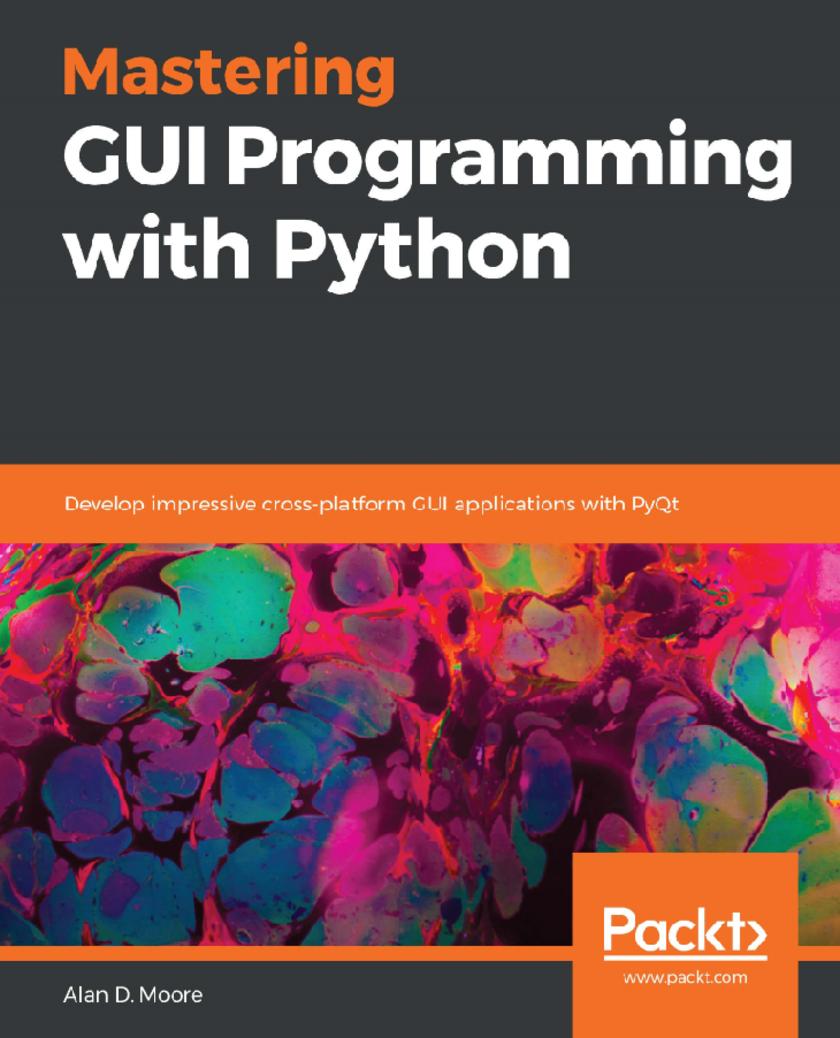
Mastering GUI Programming with Python
¥70.84
An advanced guide to creating powerful high-performance GUIs for modern, media-rich applications in various domains such as business and game development Key Features * Gain comprehensive knowledge of Python GUI development using PyQt 5.12 * Explore advanced topics including multithreaded programming, 3D animation, and SQL databases * Build cross-platform GUIs for Windows, macOS, Linux, and Raspberry Pi Book Description PyQt5 has long been the most powerful and comprehensive GUI framework available for Python, yet there is a lack of cohesive resources available to teach Python programmers how to use it. This book aims to remedy the problem by providing comprehensive coverage of GUI development with PyQt5. You will get started with an introduction to PyQt5, before going on to develop stunning GUIs with modern features. You will then learn how to build forms using QWidgets and learn about important aspects of GUI development such as layouts, size policies, and event-driven programming. Moving ahead, you’ll discover PyQt5’s most powerful features through chapters on audio-visual programming with QtMultimedia, database-driven software with QtSQL, and web browsing with QtWebEngine. Next, in-depth coverage of multithreading and asynchronous programming will help you run tasks asynchronously and build high-concurrency processes with ease. In later chapters, you’ll gain insights into QOpenGLWidget, along with mastering techniques for creating 2D graphics with QPainter. You’ll also explore PyQt on a Raspberry Pi and interface it with remote systems using QtNetwork. Finally, you will learn how to distribute your applications using setuptools and PyInstaller. By the end of this book, you will have the skills you need to develop robust GUI applications using PyQt. What you will learn * Get to grips with the inner workings of PyQt5 * Learn how elements in a GUI application communicate with signals and slots * Learn techniques for styling an application * Explore database-driven applications with the QtSQL module * Create 2D graphics with QPainter * Delve into 3D graphics with QOpenGLWidget * Build network and web-aware applications with QtNetwork and QtWebEngine Who this book is for This book is for programmers who want to create attractive, functional, and powerful GUIs using the Python language. You’ll also find this book useful if you are a student, professional, or anyone who wants to start exploring GUIs or take your skills to the next level. Although prior knowledge of the Python language is assumed, experience with PyQt, Qt, or GUI programming is not required.
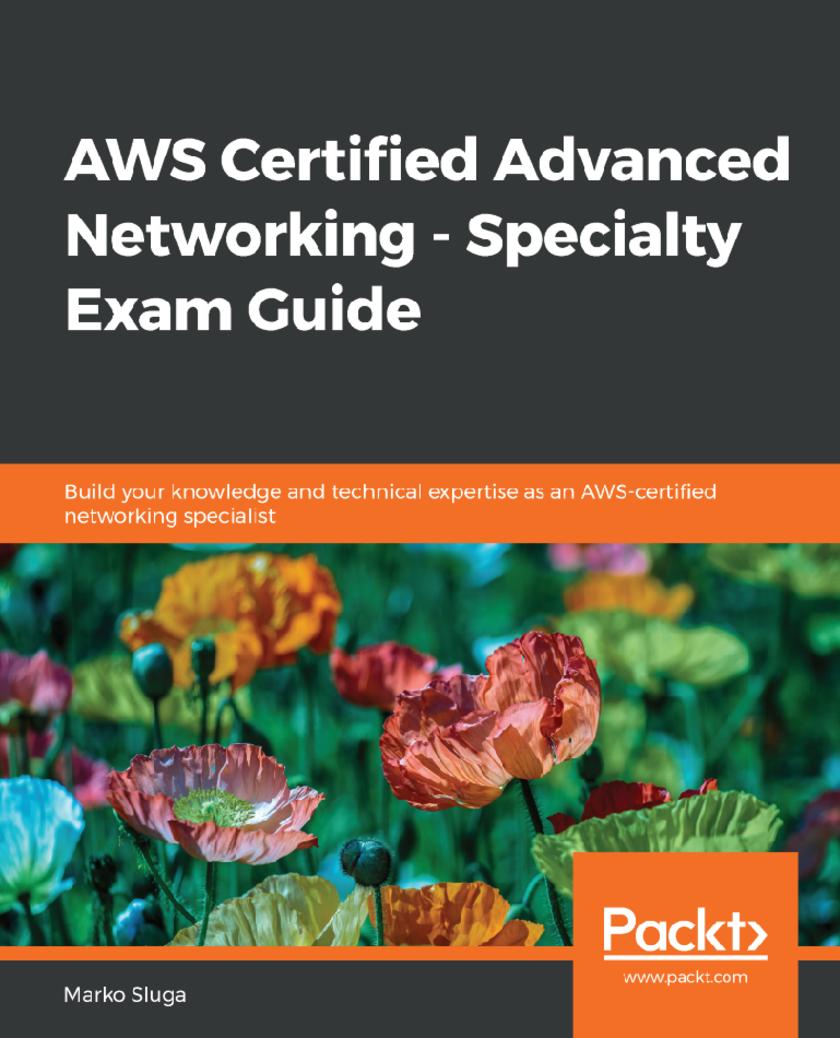
AWS Certified Advanced Networking - Specialty Exam Guide
¥62.12
Develop technical skills and expertise to automate AWS networking tasks Key Features * A fast paced guide that will help you pass the exam with confidence * Learn advanced skill sets to build effective AWS networking solutions * Enhance your AWS skills with practice exercises and mock tests Book Description Amazon has recently come up a with specialty certifications which validates a particular user's expertise that he/she would want to build a career in. Since the Cloud market now demands of AWS networking skills this becomes the most wanted certification to upheld ones industry portfolio. This book would be your ideal companion to getting skilled with complex and creative networking solutions. Cloud practitioners or associate-level certified individuals interested in validating advanced skills in networking can opt for this practical guide. This book will include topics that will help you design and implement AWS and hybrid IT network architectures along with some network automation tasks. You will also delve deep into topics that will help you design and maintain network architecture for all AWS services. Like most of our certification guides this book will also follow a unique approach of testing your learning with chapter-level practice exercises and certification-based mock tests. The exam mock tests will help you gauge whether you are ready to take the certification exam or not. This book will also be an advanced guide for networking professionals to enhance their networking skills and get certified. By the end of this book, you will be all equipped with AWS networking concepts and techniques and will have mastered core architectural best practices. What you will learn * Formulate solution plans and provide guidance on AWS architecture best practices * Design and deploy scalable, highly available, and fault-tolerant systems on AWS * Identify the tools required to replicate an on-premises network in AWS * Analyze the access and egress of data to and from AWS * Select the appropriate AWS service based on data, compute, database, or security requirements * Estimate AWS costs and identify cost control mechanisms Who this book is for If you are a system administrator, or a network engineer interested in getting certified with an advanced Cloud networking certification then this book is for you. Prior experience in Cloud administration and networking would be necessary.
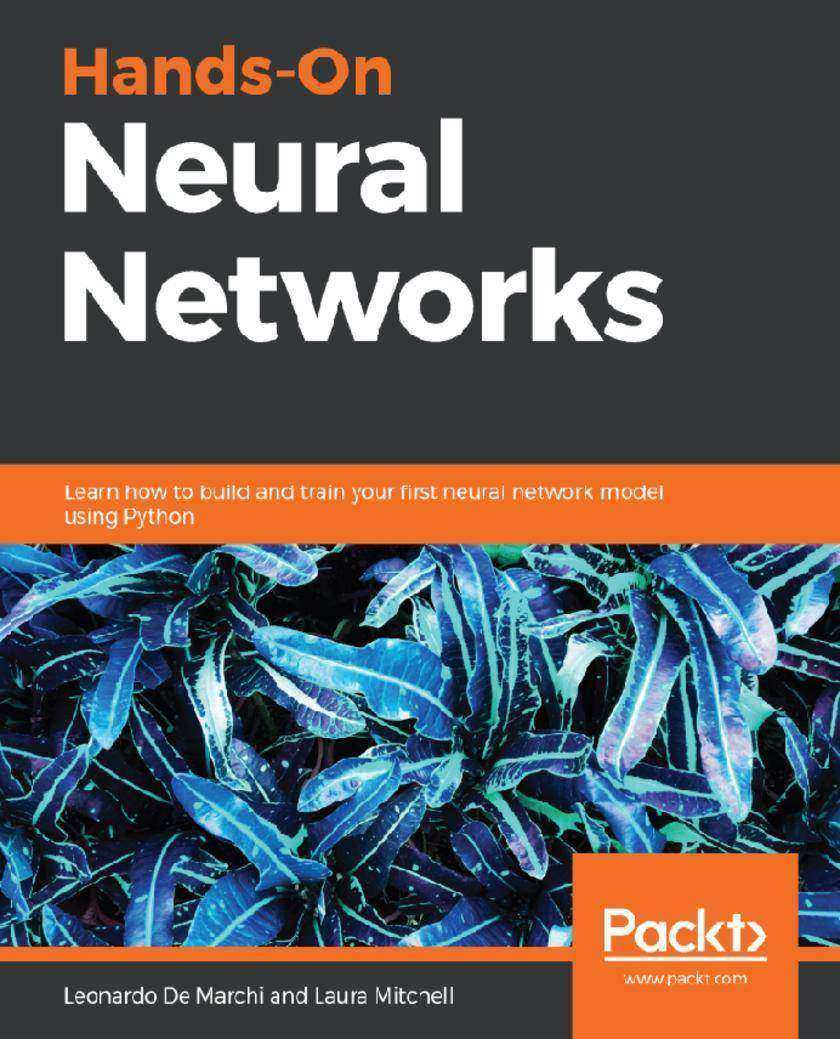
Hands-On Neural Networks
¥62.12
Design and create neural networks with deep learning and artificial intelligence principles using OpenAI Gym, TensorFlow, and Keras Key Features * Explore neural network architecture and understand how it functions * Learn algorithms to solve common problems using back propagation and perceptrons * Understand how to apply neural networks to applications with the help of useful illustrations Book Description Neural networks play a very important role in deep learning and artificial intelligence (AI), with applications in a wide variety of domains, right from medical diagnosis, to financial forecasting, and even machine diagnostics. Hands-On Neural Networks is designed to guide you through learning about neural networks in a practical way. The book will get you started by giving you a brief introduction to perceptron networks. You will then gain insights into machine learning and also understand what the future of AI could look like. Next, you will study how embeddings can be used to process textual data and the role of long short-term memory networks (LSTMs) in helping you solve common natural language processing (NLP) problems. The later chapters will demonstrate how you can implement advanced concepts including transfer learning, generative adversarial networks (GANs), autoencoders, and reinforcement learning. Finally, you can look forward to further content on the latest advancements in the field of neural networks. By the end of this book, you will have the skills you need to build, train, and optimize your own neural network model that can be used to provide predictable solutions. What you will learn * Learn how to train a network by using backpropagation * Discover how to load and transform images for use in neural networks * Study how neural networks can be applied to a varied set of applications * Solve common challenges faced in neural network development * Understand the transfer learning concept to solve tasks using Keras and Visual Geometry Group (VGG) network * Get up to speed with advanced and complex deep learning concepts like LSTMs and NLP * Explore innovative algorithms like GANs and deep reinforcement learning Who this book is for If you are interested in artificial intelligence and deep learning and want to further your skills, then this intermediate-level book is for you. Some knowledge of statistics will help you get the most out of this book.
Hands-On Computer Vision with TensorFlow 2
¥62.12
A practical guide to building high performance systems for object detection, segmentation, video processing, smartphone applications, and more. This book is based on the alpha version of TensorFlow 2. Key Features * Discover how to build, train, and serve your own deep neural networks with TensorFlow 2 and Keras * Apply modern solutions to a wide range of applications such as object detection and video analysis * Learn how to run your models on mobile devices and webpages and improve their performance Book Description Computer vision solutions are becoming increasingly common, making their way in fields such as health, automobile, social media, and robotics. This book will help you explore TensorFlow 2, the brand new version of Google's open source framework for machine learning. You will understand how to benefit from using convolutional neural networks (CNNs) for visual tasks. Hands-On Computer Vision with TensorFlow 2 starts with the fundamentals of computer vision and deep learning, teaching you how to build a neural network from scratch. You will discover the features that have made TensorFlow the most widely used AI library, along with its intuitive Keras interface, and move on to building, training, and deploying CNNs efficiently. Complete with concrete code examples, the book demonstrates how to classify images with modern solutions, such as Inception and ResNet, and extract specific content using You Only Look Once (YOLO), Mask R-CNN, and U-Net. You will also build Generative Adversarial Networks (GANs) and Variational Auto-Encoders (VAEs) to create and edit images, and LSTMs to analyze videos. In the process, you will acquire advanced insights into transfer learning, data augmentation, domain adaptation, and mobile and web deployment, among other key concepts. By the end of the book, you will have both the theoretical understanding and practical skills to solve advanced computer vision problems with TensorFlow 2.0. What you will learn * Create your own neural networks from scratch * Classify images with modern architectures including Inception and ResNet * Detect and segment objects in images with YOLO, Mask R-CNN, and U-Net * Tackle problems in developing self-driving cars and facial emotion recognition systems * Boost your application’s performance with transfer learning, GANs, and domain adaptation * Use recurrent neural networks for video analysis * Optimize and deploy your networks on mobile devices and in the browser Who this book is for If you’re new to deep learning and have some background in Python programming and image processing, like reading/writing image files and editing pixels, this book is for you. Even if you’re an expert curious about the new TensorFlow 2 features, you’ll find this book useful. While some theoretical explanations require knowledge in algebra and calculus, the book covers concrete examples for learners focused on practical applications such as visual recognition for self-driving cars and smartphone apps.
Caffe2 Quick Start Guide
¥44.68
Build and train scalable neural network models on various platforms by leveraging the power of Caffe2 Key Features * Migrate models trained with other deep learning frameworks on Caffe2 * Integrate Caffe2 with Android or iOS and implement deep learning models for mobile devices * Leverage the distributed capabilities of Caffe2 to build models that scale easily Book Description Caffe2 is a popular deep learning library used for fast and scalable training and inference of deep learning models on various platforms. This book introduces you to the Caffe2 framework and shows how you can leverage its power to build, train, and deploy efficient neural network models at scale. It will cover the topics of installing Caffe2, composing networks using its operators, training models, and deploying models to different architectures. It will also show how to import models from Caffe and from other frameworks using the ONNX interchange format. It covers the topic of deep learning accelerators such as CPU and GPU and shows how to deploy Caffe2 models for inference on accelerators using inference engines. Caffe2 is built for deployment to a diverse set of hardware, using containers on the cloud and resource constrained hardware such as Raspberry Pi, which will be demonstrated. By the end of this book, you will be able to not only compose and train popular neural network models with Caffe2, but also be able to deploy them on accelerators, to the cloud and on resource constrained platforms such as mobile and embedded hardware. What you will learn * Build and install Caffe2 * Compose neural networks * Train neural network on CPU or GPU * Import a neural network from Caffe * Import deep learning models from other frameworks * Deploy models on CPU or GPU accelerators using inference engines * Deploy models at the edge and in the cloud Who this book is for Data scientists and machine learning engineers who wish to create fast and scalable deep learning models in Caffe2 will find this book to be very useful. Some understanding of the basic machine learning concepts and prior exposure to programming languages like C++ and Python will be useful.
Learn Selenium
¥88.28
Learn end-to-end automation testing techniques for web and mobile browsers using Selenium WebDriver, AppiumDriver, Java, and TestNG Key Features * Explore the Selenium grid architecture and build your own grid for browser and mobile devices * Use ExtentReports for processing results and SauceLabs for cloud-based test services * Unlock the full potential of Selenium to test your web applications. Book Description Selenium WebDriver 3.x is an open source API for testing both browser and mobile applications. With the help of this book, you can build a solid foundation and can easily perform end-to-end testing on web and mobile browsers.You'll begin by being introduced to the Selenium Page Object Model for software development. You'll architect your own framework with a scalable driver class, Java utility classes, and support for third-party tools and plugins. You'll design and build a Selenium grid from scratch to enable the framework to scale and support different browsers, mobile devices, and platforms.You'll strategize and handle a rich web UI using the advanced WebDriver API and learn techniques to handle real-time challenges in WebDriver. You'll perform different types of testing, such as cross-browser testing, load testing, and mobile testing. Finally, you will also be introduced to data-driven testing, using TestNG to create your own automation framework.By the end of this Learning Path, you'll be able to design your own automation testing framework and perform data-driven testing with Selenium WebDriver. This Learning Path includes content from the following Packt products: * Selenium WebDriver 3 Practical Guide - Second Edition by Unmesh Gundecha * Selenium Framework Design in Data-Driven Testing by Carl Cocchiaro What you will learn * Use different mobile and desktop browser platforms with Selenium 3 * Use the Actions API for performing various keyboard and mouse actions * Design the Selenium Driver Class for local, remote, and third-party grid support * Build page object classes with the Selenium Page Object Model * Develop data-driven test classes using the TestNG framework * Encapsulate data using the JSON protocol * Build a Selenium Grid for RemoteWebDriver testing * Build and use utility classes in synchronization, file I/O, reporting and test listener classes Who this book is for This Learning Path is ideal for software quality assurance/testing professionals, software project managers, or software developers interested in using Selenium for testing their applications. Professionals responsible for designing and building enterprise-based testing frameworks will also find this Learning Path useful. Prior programming experience in Java are TestNG is necessary.
Hands-On Data Analysis with Pandas
¥79.56
Get to grips with pandas—a versatile and high-performance Python library for data manipulation, analysis, and discovery Key Features * Perform efficient data analysis and manipulation tasks using pandas * Apply pandas to different real-world domains using step-by-step demonstrations * Get accustomed to using pandas as an effective data exploration tool Book Description Data analysis has become a necessary skill in a variety of positions where knowing how to work with data and extract insights can generate significant value. Hands-On Data Analysis with Pandas will show you how to analyze your data, get started with machine learning, and work effectively with Python libraries often used for data science, such as pandas, NumPy, matplotlib, seaborn, and scikit-learn. Using real-world datasets, you will learn how to use the powerful pandas library to perform data wrangling to reshape, clean, and aggregate your data. Then, you will learn how to conduct exploratory data analysis by calculating summary statistics and visualizing the data to find patterns. In the concluding chapters, you will explore some applications of anomaly detection, regression, clustering, and classification, using scikit-learn, to make predictions based on past data. By the end of this book, you will be equipped with the skills you need to use pandas to ensure the veracity of your data, visualize it for effective decision-making, and reliably reproduce analyses across multiple datasets. What you will learn * Understand how data analysts and scientists gather and analyze data * Perform data analysis and data wrangling in Python * Combine, group, and aggregate data from multiple sources * Create data visualizations with pandas, matplotlib, and seaborn * Apply machine learning (ML) algorithms to identify patterns and make predictions * Use Python data science libraries to analyze real-world datasets * Use pandas to solve common data representation and analysis problems * Build Python scripts, modules, and packages for reusable analysis code Who this book is for This book is for data analysts, data science beginners, and Python developers who want to explore each stage of data analysis and scientific computing using a wide range of datasets. You will also find this book useful if you are a data scientist who is looking to implement pandas in machine learning. Working knowledge of Python programming language will be beneficial.
Microsoft Dynamics 365 Business Central Cookbook
¥80.65
Gain useful insights to help you efficiently build, test, and migrate customized solutions on Business Central cloud and on-premise platforms Key Features * Explore enhanced functionalities and development best practices in Business Central * Develop powerful Business Central projects using the AL language * Master the new Business Central with easy-to-follow recipes Book Description Microsoft Dynamics 365 Business Central is a complete business management solution that can help you streamline business processes, connect individual departments in your company, and enhance customer interactions. Ok. That first part was really professional sounding, right? Now, let’s get into what this cookbook is going to do for you: put simply, it’s going to help you get things done. This book will help you get to grips with the latest development features and tools for building applications using Business Central. You’ll find recipes that will guide you in developing and testing applications that can be deployed to the cloud or on-premises. For the old-schoolers out there, you’ll also learn how to take your existing Dynamics NAV customizations and move them to the new AL language platform. Also, if you haven’t figured it out already, we’re going to be using very normal language throughout the book to keep things light. After all, developing applications is fun, so why not have fun learning as well! What you will learn * Build and deploy Business Central applications * Use the cloud or local sandbox for application development * Customize and extend your base Business Central application * Create external applications that connect to Business Central * Create automated tests and debug your applications * Connect to external web services from Business Central Who this book is for This book is for Dynamics developers and administrators who want to become efficient in developing and deploying applications in Business Central. Basic knowledge and understanding of Dynamics application development and administration is assumed.
Rust Programming Cookbook
¥71.93
Practical solutions to overcome challenges in creating console and web applications and working with systems-level and embedded code, network programming, deep neural networks, and much more. Key Features * Work through recipes featuring advanced concepts such as concurrency, unsafe code, and macros to migrate your codebase to the Rust programming language * Learn how to run machine learning models with Rust * Explore error handling, macros, and modularization to write maintainable code Book Description Rust 2018, Rust's first major milestone since version 1.0, brings more advancement in the Rust language. The Rust Programming Cookbook is a practical guide to help you overcome challenges when writing Rust code. This Rust book covers recipes for configuring Rust for different environments and architectural designs, and provides solutions to practical problems. It will also take you through Rust's core concepts, enabling you to create efficient, high-performance applications that use features such as zero-cost abstractions and improved memory management. As you progress, you'll delve into more advanced topics, including channels and actors, for building scalable, production-grade applications, and even get to grips with error handling, macros, and modularization to write maintainable code. You will then learn how to overcome common roadblocks when using Rust for systems programming, IoT, web development, and network programming. Finally, you'll discover what Rust 2018 has to offer for embedded programmers. By the end of the book, you'll have learned how to build fast and safe applications and services using Rust. What you will learn * Understand how Rust provides unique solutions to solve system programming language problems * Grasp the core concepts of Rust to develop fast and safe applications * Explore the possibility of integrating Rust units into existing applications for improved efficiency * Discover how to achieve better parallelism and security with Rust * Write Python extensions in Rust * Compile external assembly files and use the Foreign Function Interface (FFI) * Build web applications and services using Rust for high performance Who this book is for The Rust cookbook is for software developers looking to enhance their knowledge of Rust and leverage its features using modern programming practices. Familiarity with Rust language is expected to get the most out of this book.
Learning DevOps
¥63.21
Simplify your DevOps roles with DevOps tools and techniques Key Features * Learn to utilize business resources effectively to increase productivity and collaboration * Leverage the ultimate open source DevOps tools to achieve continuous integration and continuous delivery (CI/CD) * Ensure faster time-to-market by reducing overall lead time and deployment downtime Book Description The implementation of DevOps processes requires the efficient use of various tools, and the choice of these tools is crucial for the sustainability of projects and collaboration between development (Dev) and operations (Ops). This book presents the different patterns and tools that you can use to provision and configure an infrastructure in the cloud. You'll begin by understanding DevOps culture, the application of DevOps in cloud infrastructure, provisioning with Terraform, configuration with Ansible, and image building with Packer. You'll then be taken through source code versioning with Git and the construction of a DevOps CI/CD pipeline using Jenkins, GitLab CI, and Azure Pipelines. This DevOps handbook will also guide you in containerizing and deploying your applications with Docker and Kubernetes. You'll learn how to reduce deployment downtime with blue-green deployment and the feature flags technique, and study DevOps practices for open source projects. Finally, you'll grasp some best practices for reducing the overall application lead time to ensure faster time to market. By the end of this book, you'll have built a solid foundation in DevOps, and developed the skills necessary to enhance a traditional software delivery process using modern software delivery tools and techniques What you will learn * Become well versed with DevOps culture and its practices * Use Terraform and Packer for cloud infrastructure provisioning * Implement Ansible for infrastructure configuration * Use basic Git commands and understand the Git flow process * Build a DevOps pipeline with Jenkins, Azure Pipelines, and GitLab CI * Containerize your applications with Docker and Kubernetes * Check application quality with SonarQube and Postman * Protect DevOps processes and applications using DevSecOps tools Who this book is for If you are a developer or a system administrator interested in understanding continuous integration, continuous delivery, and containerization with DevOps tools and techniques, this book is for you.
pfSense 2.x Cookbook
¥81.74
A practical, example-driven guide to configuring even the most advanced features of pfSense 2.x Key Features *Build a high-availability fault-tolerant security system with pfSense 2.x *Leverage the latest version of pfSense to secure your cloud environment *A recipe-based guide that will help you enhance your on-premise and cloud security principles Book Description pfSense is an open source distribution of the FreeBSD-based firewall that provides a platform for ?exible and powerful routing and firewalling. The versatility of pfSense presents us with a wide array of configuration options, which makes determining requirements a little more difficult and a lot more important compared to other offerings. pfSense 2.x Cookbook – Second Edition starts by providing you with an understanding of how to complete the basic steps needed to render a pfSense firewall operational. It starts by showing you how to set up different forms of NAT entries and firewall rules and use aliases and scheduling in firewall rules. Moving on, you will learn how to implement a captive portal set up in different ways (no authentication, user manager authentication, and RADIUS authentication), as well as NTP and SNMP configuration. You will then learn how to set up a VPN tunnel with pfSense. The book then focuses on setting up traffic shaping with pfSense, using either the built-in traffic shaping wizard, custom ?oating rules, or Snort. Toward the end, you will set up multiple WAN interfaces, load balancing and failover groups, and a CARP failover group. You will also learn how to bridge interfaces, add static routing entries, and use dynamic routing protocols via third-party packages. What you will learn *Configure the essential pfSense services (namely, DHCP, DNS, and DDNS) *Create aliases, firewall rules, NAT port-forward rules, and rule schedules *Create multiple WAN interfaces in load-balanced or failover configurations *Configure firewall redundancy with a CARP firewall failover *Configure backup/restoration and automatic configuration-file backup *Configure some services and perform diagnostics with command-line utilities Who this book is for This book is intended for all levels of network administrators. If you are an advanced user of pfSense, then you can flip to a particular recipe and quickly accomplish the task at hand; if you are new to pfSense, on the other hand, you can work through the book chapter by chapter and learn all of the features of the system from the ground up.
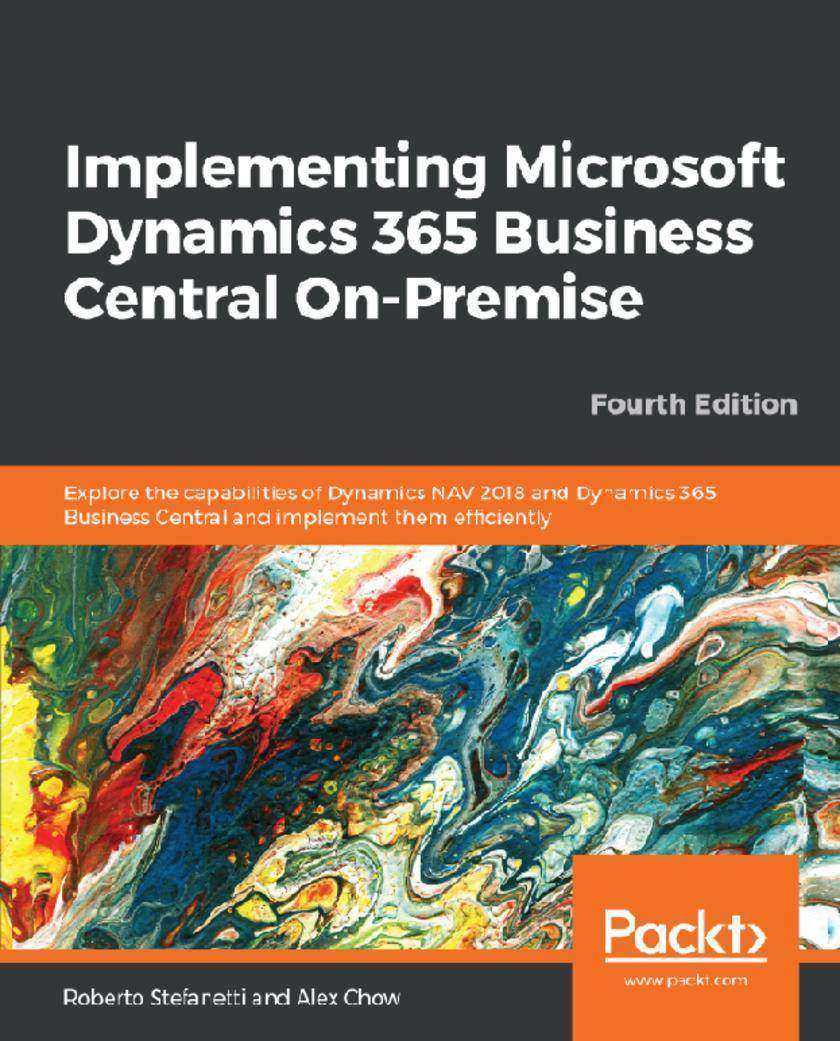
Implementing Microsoft Dynamics 365 Business Central On-Premise
¥90.46
Implement Business Central and explore methods to upgrade to NAV 2018 Key Features *Learn the key roles of Dynamics NAV partner and the roles within your customer's organization *Create configuration packages and perform data migration *Explore Microsoft Dynamics 365 Business Central to use Dynamics NAV 2018 functionalities in the Cloud Book Description Microsoft Dynamics Business Central is a full business solution suite and a complete ERP solution, which contains a robust set of development tools; these tools can help you to gain control over your business and can simplify supply chains, manufacturing, and operations. Implementing Microsoft Dynamics 365 Business Central On-Premise covers the latest features of Dynamics Business Central and NAV from the end users' and developers' perspectives. It also provides an insight into different tools available for implementation, whether it's a new installation or migrating from the previous version of Dynamics NAV. This book will take you from an introduction to Dynamics NAV 2018 through to exploring all the techniques related to implementation and migration. You will also learn to expand functionalities within your existing Microsoft Dynamics NAV installation, perform data analysis, and implement free third-party add-ons to your existing installation. As you progress through the book, you will learn to work with third-party add-on tools. In the concluding chapters, you will explore Dynamics 365 Business Central, the new Cloud solution based on the Microsoft NAV platform, and techniques for using Docker and Sandbox to develop applications. By the end of the book, you will have gained a deep understanding of the key components for successful Dynamics NAV implementation for an organization. What you will learn *Explore new features introduced in Microsoft Dynamics NAV 2018 *Migrate to Microsoft Dynamics NAV 2018 from previous versions *Learn abstract techniques for data analysis, reporting, and debugging *Install, configure, and use additional tools for business intelligence, document management, and reporting *Discover Dynamics 365 Business Central and several other Microsoft services *Utilize different tools to develop applications for Business Central Who this book is for Implementing Microsoft Dynamics 365 Business Central On-Premise is for Dynamics NAV partners and end users who want to know everything about Dynamics NAV implementation. This book is for you if you want to be a project manager or get involved with Dynamics NAV, but do not have the expertise to write code yourself. This book can also help you to understand the need to move to Business Central and its advantages.
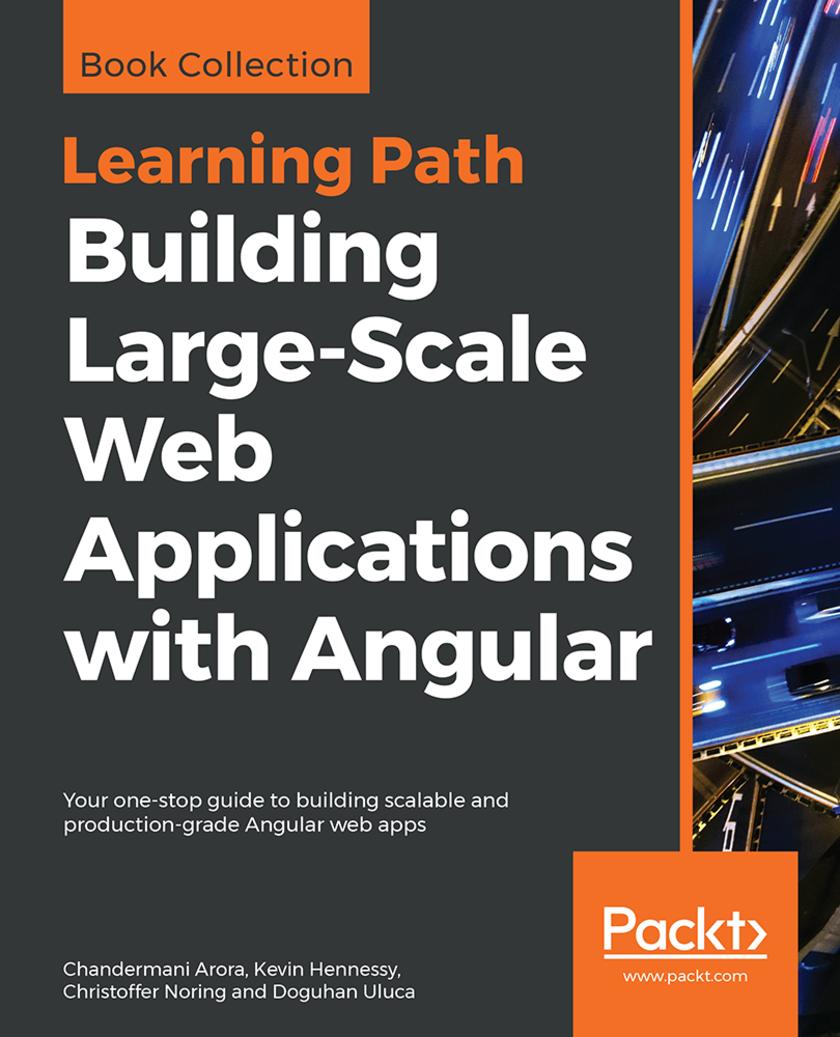
Building Large-Scale Web Applications with Angular
¥90.46
A definitive guide on frontend development with Angular from design to deployment Key Features *Develop web applications from scratch using Angular and TypeScript *Explore reactive programming principles and RxJS to develop and test apps easily *Study continuous integration and deployment on the AWS cloud Book Description If you have been burnt by unreliable JavaScript frameworks before, you will be amazed by the maturity of the Angular platform. Angular enables you to build fast, efficient, and real-world web apps. In this Learning Path, you'll learn Angular and to deliver high-quality and production-grade Angular apps from design to deployment. You will begin by creating a simple fitness app, using the building blocks of Angular, and make your final app, Personal Trainer, by morphing the workout app into a full-fledged personal workout builder and runner with an advanced directive building - the most fundamental and powerful feature of Angular. You will learn the different ways of architecting Angular applications using RxJS, and some of the patterns that are involved in it. Later you’ll be introduced to the router-first architecture, a seven-step approach to designing and developing mid-to-large line-of-business apps, along with popular recipes. By the end of this book, you will be familiar with the scope of web development using Angular, Swagger, and Docker, learning patterns and practices to be successful as an individual developer on the web or as a team in the Enterprise. This Learning Path includes content from the following Packt products: *Angular 6 by Example by Chandermani Arora, Kevin Hennessy *Architecting Angular Applications with Redux, RxJS, and NgRx by Christoffer Noring *Angular 6 for Enterprise-Ready Web Applications by Doguhan Uluca What you will learn *Develop web applications from scratch using Angular and TypeScript *Explore reactive programming principles, RxJS to develop and test apps efficiently *Study continuous integration and deployment your Angular app on the AWS cloud Who this book is for If you're a JavaScript or frontend developer looking to gain comprehensive experience of using Angular for end-to-end enterprise-ready applications, this Learning Path is for you.
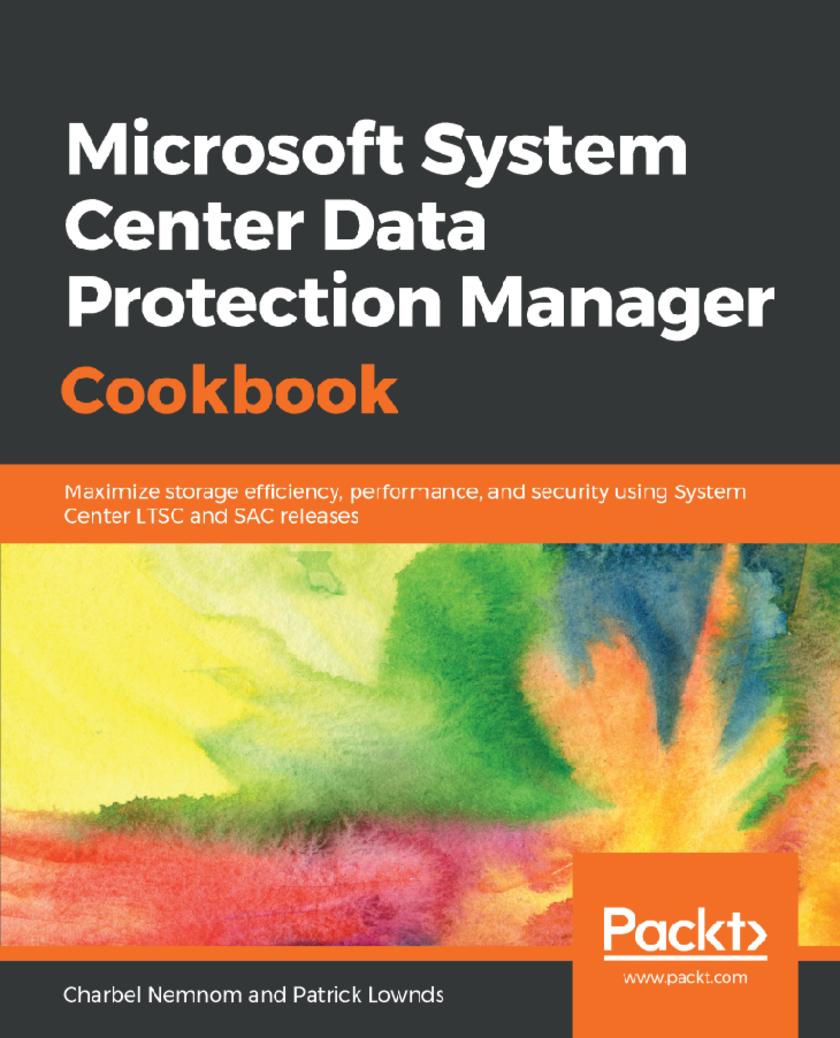
Microsoft System Center Data Protection Manager Cookbook
¥81.74
Over 60 recipes to achieve a robust and advanced backup and recovery solution leveraging SCDPM Key Features *Adapt to the modern data center design challenges and improve storage efficiency *Effective recipes to help you create your own robust architectural designs *Solve data protection and recovery problems in your organization Book Description System Center Data Protection Manager (SCDPM) is a robust enterprise backup and recovery system that contributes to your BCDR strategy by facilitating the backup and recovery of enterprise data. With an increase in data recovery and protection problems faced in organizations, it has become important to keep data safe and recoverable. This book contains recipes that will help you upgrade to SCDPM and it covers the advanced features and functionality of SCDPM. This book starts by helping you install SCDPM and then moves on to post-installation and management tasks. You will come across a lot of useful recipes that will help you recover your VMware and Hyper-V VMs. It will also walk you through tips for monitoring SCDPM in different scenarios. Next, the book will also offer insights into protecting windows workloads followed by best practices on SCDPM. You will also learn to back up your Azure Stack Infrastructure using Azure Backup. You will also learn about recovering data from backup and implementing disaster recovery. Finally, the book will show you how to configure the protection groups to enable online protection and troubleshoot Microsoft Azure Backup Agent. What you will learn *Install and prepare SQL Server for the SCDPM database *Reduce backup storage with SCDPM and data deduplication *Learn about the prerequisites for supported Hyper-V Server protection *Integrate SCDPM with other System Center products to build optimal services *Protect and restore the SCDPM database *Protect your data center by integrating SCDPM with Azure Backup *Manually create online recovery points and recover production data from Azure *Protect and learn about the requirements to recover Azure Stack with SCDPM Who this book is for If you are an SCDPM administrator, this book will help you verify your knowledge and provide you with everything you need to know about the new release of System Center Data Protection Manager.
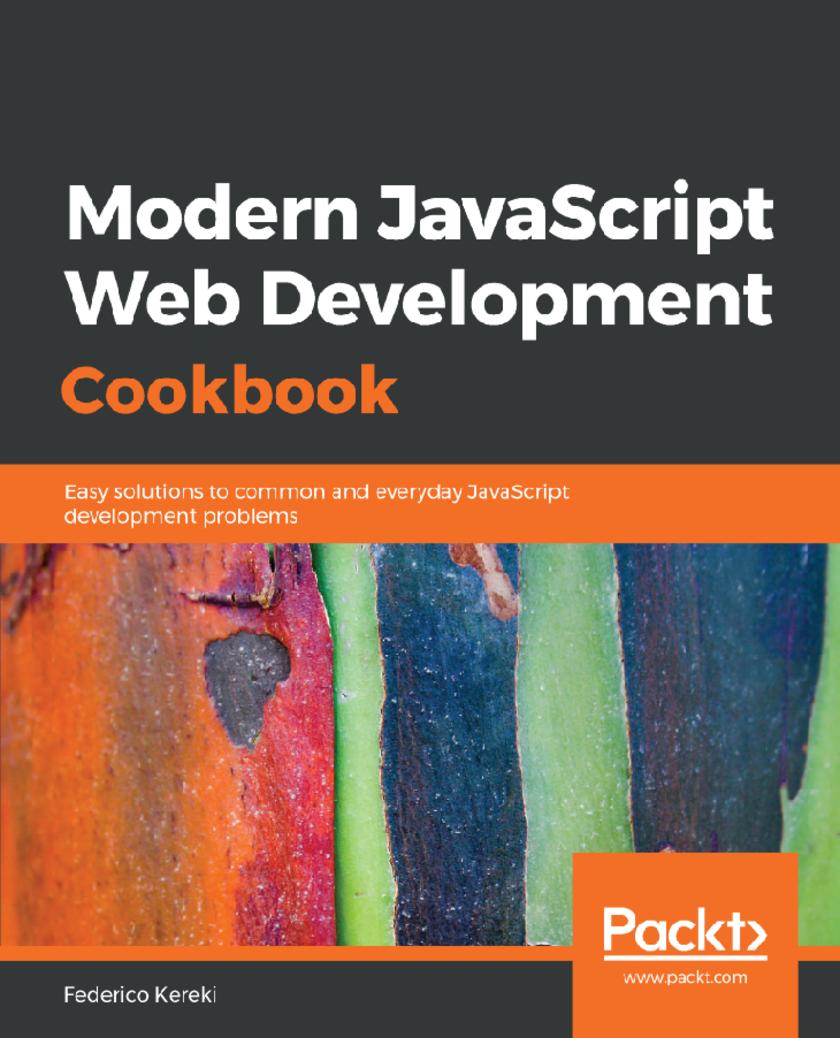
Modern JavaScript Web Development Cookbook
¥81.74
Over 90 recipes to help you write clean code, solve common JavaScript problems, and work on popular use cases like SPAs, microservices, native mobile development with Node, React, React Native and Electron. Key Features *Over 90 practical recipes to help you write clean and maintainable JavaScript codes with the latest ES8 *Leverage the power of leading web frameworks like Node and React to build modern web apps *Features comprehensive coverage of tools and techniques needed to create multi-platform apps with JavaScript Book Description JavaScript has evolved into a language that you can use on any platform. Modern JavaScript Web Development Cookbook is a perfect blend of solutions for traditional JavaScript development and modern areas that developers have lately been exploring with JavaScript. This comprehensive guide teaches you how to work with JavaScript on servers, browsers, mobile phones and desktops. You will start by exploring the new features of ES8. You will then move on to learning the use of ES8 on servers (with Node.js), with the objective of producing services and microservices and dealing with authentication and CORS. Once you get accustomed to ES8, you will learn to apply it to browsers using frameworks, such as React and Redux, which interact through Ajax with services. You will then understand the use of a modern framework to develop the UI. In addition to this, development for mobile devices with React Native will walk you through the benefits of creating native apps, both for Android and iOS. Finally, you’ll be able to apply your new-found knowledge of server-side and client-side tools to develop applications with Electron. What you will learn *Use the latest features of ES8 and learn new ways to code with JavaScript *Develop server-side services and microservices with Node.js *Learn to do unit testing and to debug your code *Build client-side web applications using React and Redux *Create native mobile applications for Android and iOS with React Native *Write desktop applications with Electron Who this book is for This book is for developers who want to explore the latest JavaScript features, frameworks, and tools for building complete mobile, desktop and web apps, including server and client-side code. You are expected to have working knowledge of JavaScript to get the most out of this book.
CentOS Quick Start Guide
¥71.93
A concise walk-through of CentOS 7, starting from installation to securing it’s environment. Key Features *No previous Linux environment experience needed for reading this book *Get comfortable with a popular and stable Red Hat Enterprise Linux distribution *Most of the command line based concepts are explained with graphics Book Description Linux kernel development has been the worlds largest collaborative project to date. With this practical guide, you will learn Linux through one of its most popular and stable distributions. This book will introduce you to essential Linux skills using CentOS 7. It describes how a Linux system is organized, and will introduce you to key command-line concepts you can practice on your own. It will guide you in performing basic system administration tasks and day-to-day operations in a Linux environment. You will learn core system administration skills for managing a system running CentOS 7 or a similar operating system, such as RHEL 7, Scientific Linux, and Oracle Linux. You will be able to perform installation, establish network connectivity and user and process management, modify file permissions, manage text files using the command line, and implement basic security administration after covering this book. By the end of this book, you will have a solid understanding of working with Linux using the command line. What you will learn *Understand file system hierarchy and essential command-line skills *Use Vi editor, I/O redirections and how to work with common text manipulating tools *Create, delete, modify user accounts and manage passwords and their aging policy *Manage file ownership, permissions, and ACL *Execute process management and monitoring on the command line *Validate and manage network configuration using nmcli *Manage remote logins using SSH and file transfer using SCP and Rsync *Understand system logging, how to control system services with systemd and systemctl, and manage firewalId Who this book is for Any individual who wants to learn how to use Linux as server or desktop in his environment. Whether you are a developer, budding system administrator, or tech lover with no previous Linux administration background, you will be able to start your journey in Linux using CentOS 7 with this book.
Hands-On RESTful Python Web Services
¥81.74
Explore the best tools and techniques to create lightweight, maintainable, and scalable Python web services Key Features *Combine Python with different data sources to build complex RESTful APIs from scratch *Configure and fine-tune your APIs using the best tools and techniques available *Use command-line and GUI tools to test CRUD operations performed by RESTful Web Services or APIs Book Description Python is the language of choice for millions of developers worldwide that builds great web services in RESTful architecture. This second edition of Hands-On RESTful Python Web Services will cover the best tools you can use to build engaging web services. This book shows you how to develop RESTful APIs using the most popular Python frameworks and all the necessary stacks with Python, combined with related libraries and tools. You’ll learn to incorporate all new features of Python 3.7, Flask 1.0.2, Django 2.1, Tornado 5.1, and also a new framework, Pyramid. As you advance through the chapters, you will get to grips with each of these frameworks to build various web services, and be shown use cases and best practices covering when to use a particular framework. You’ll then successfully develop RESTful APIs with all frameworks and understand how each framework processes HTTP requests and routes URLs. You’ll also discover best practices for validation, serialization, and deserialization. In the concluding chapters, you will take advantage of specific features available in certain frameworks such as integrated ORMs, built-in authorization and authentication, and work with asynchronous code. At the end of each framework, you will write tests for RESTful APIs and improve code coverage. By the end of the book, you will have gained a deep understanding of the stacks needed to build RESTful web services. What you will learn *Select the most appropriate framework based on requirements *Develop complex RESTful APIs from scratch using Python *Use requests handlers, URL patterns, serialization, and validations *Add authentication, authorization, and interaction with ORMs and databases *Debug, test, and improve RESTful APIs with four frameworks *Design RESTful APIs with frameworks and create automated tests Who this book is for This book is for web developers who have a working knowledge of Python and would like to build amazing web services by taking advantage of the various frameworks of Python. You should have some knowledge of RESTful APIs.
Python: Advanced Guide to Artificial Intelligence
¥90.46
Demystify the complexity of machine learning techniques and create evolving, clever solutions to solve your problems Key Features *Master supervised, unsupervised, and semi-supervised ML algorithms and their implementation *Build deep learning models for object detection, image classification, similarity learning, and more *Build, deploy, and scale end-to-end deep neural network models in a production environment Book Description This Learning Path is your complete guide to quickly getting to grips with popular machine learning algorithms. You'll be introduced to the most widely used algorithms in supervised, unsupervised, and semi-supervised machine learning, and learn how to use them in the best possible manner. Ranging from Bayesian models to the MCMC algorithm to Hidden Markov models, this Learning Path will teach you how to extract features from your dataset and perform dimensionality reduction by making use of Python-based libraries. You'll bring the use of TensorFlow and Keras to build deep learning models, using concepts such as transfer learning, generative adversarial networks, and deep reinforcement learning. Next, you'll learn the advanced features of TensorFlow1.x, such as distributed TensorFlow with TF clusters, deploy production models with TensorFlow Serving. You'll implement different techniques related to object classification, object detection, image segmentation, and more. By the end of this Learning Path, you'll have obtained in-depth knowledge of TensorFlow, making you the go-to person for solving artificial intelligence problems This Learning Path includes content from the following Packt products: *Mastering Machine Learning Algorithms by Giuseppe Bonaccorso *Mastering TensorFlow 1.x by Armando Fandango *Deep Learning for Computer Vision by Rajalingappaa Shanmugamani What you will learn *Explore how an ML model can be trained, optimized, and evaluated *Work with Autoencoders and Generative Adversarial Networks *Explore the most important Reinforcement Learning techniques *Build end-to-end deep learning (CNN, RNN, and Autoencoders) models Who this book is for This Learning Path is for data scientists, machine learning engineers, artificial intelligence engineers who want to delve into complex machine learning algorithms, calibrate models, and improve the predictions of the trained model. You will encounter the advanced intricacies and complex use cases of deep learning and AI. A basic knowledge of programming in Python and some understanding of machine learning concepts are required to get the best out of this Learning Path.
Microsoft Power BI Complete Reference
¥90.46
Design, develop, and master efficient Power BI solutions for impactful business insights Key Features *Get to grips with the fundamentals of Microsoft Power BI *Combine data from multiple sources, create visuals, and publish reports across platforms *Understand Power BI concepts with real-world use cases Book Description Microsoft Power BI Complete Reference Guide gets you started with business intelligence by showing you how to install the Power BI toolset, design effective data models, and build basic dashboards and visualizations that make your data come to life. In this Learning Path, you will learn to create powerful interactive reports by visualizing your data and learn visualization styles, tips and tricks to bring your data to life. You will be able to administer your organization's Power BI environment to create and share dashboards. You will also be able to streamline deployment by implementing security and regular data refreshes. Next, you will delve deeper into the nuances of Power BI and handling projects. You will get acquainted with planning a Power BI project, development, and distribution of content, and deployment. You will learn to connect and extract data from various sources to create robust datasets, reports, and dashboards. Additionally, you will learn how to format reports and apply custom visuals, animation and analytics to further refine your data. By the end of this Learning Path, you will learn to implement the various Power BI tools such as on-premises gateway together along with staging and securely distributing content via apps. This Learning Path includes content from the following Packt products: *Microsoft Power BI Quick Start Guide by Devin Knight et al. *Mastering Microsoft Power BI by Brett Powell What you will learn *Connect to data sources using both import and DirectQuery options *Leverage built-in and custom visuals to design effective reports *Administer a Power BI cloud tenant for your organization *Deploy your Power BI Desktop files into the Power BI Report Server *Build efficient data retrieval and transformation processes Who this book is for Microsoft Power BI Complete Reference Guide is for those who want to learn and use the Power BI features to extract maximum information and make intelligent decisions that boost their business. If you have a basic understanding of BI concepts and want to learn how to apply them using Microsoft Power BI, then Learning Path is for you. It consists of real-world examples on Power BI and goes deep into the technical issues, covers additional protocols, and much more.
Mastering OpenCV 4
¥81.74
Work on practical computer vision projects covering advanced object detector techniques and modern deep learning and machine learning algorithms Key Features *Learn about the new features that help unlock the full potential of OpenCV 4 *Build face detection applications with a cascade classifier using face landmarks *Create an optical character recognition (OCR) model using deep learning and convolutional neural networks Book Description Mastering OpenCV, now in its third edition, targets computer vision engineers taking their first steps toward mastering OpenCV. Keeping the mathematical formulations to a solid but bare minimum, the book delivers complete projects from ideation to running code, targeting current hot topics in computer vision such as face recognition, landmark detection and pose estimation, and number recognition with deep convolutional networks. You’ll learn from experienced OpenCV experts how to implement computer vision products and projects both in academia and industry in a comfortable package. You’ll get acquainted with API functionality and gain insights into design choices in a complete computer vision project. You’ll also go beyond the basics of computer vision to implement solutions for complex image processing projects. By the end of the book, you will have created various working prototypes with the help of projects in the book and be well versed with the new features of OpenCV4. What you will learn *Build real-world computer vision problems with working OpenCV code samples *Uncover best practices in engineering and maintaining OpenCV projects *Explore algorithmic design approaches for complex computer vision tasks *Work with OpenCV’s most updated API (v4.0.0) through projects *Understand 3D scene reconstruction and Structure from Motion (SfM) *Study camera calibration and overlay AR using the ArUco Module Who this book is for This book is for those who have a basic knowledge of OpenCV and are competent C++ programmers. You need to have an understanding of some of the more theoretical/mathematical concepts, as we move quite quickly throughout the book.


