


 购物车
购物车 个人中心
个人中心
Foundations of Blockchain
¥73.02
Learn the foundations of blockchain technology - its core concepts and algorithmic solutions across cryptography, peer-to-peer technology, and game theory. Key Features * Learn the core concepts and foundations of the blockchain and cryptocurrencies * Understand the protocols and algorithms behind decentralized applications * Master how to architect, build, and optimize blockchain applications Book Description Blockchain technology is a combination of three popular concepts: cryptography, peer-to-peer networking, and game theory. This book is for anyone who wants to dive into blockchain from first principles and learn how decentralized applications and cryptocurrencies really work. This book begins with an overview of blockchain technology, including key definitions, its purposes and characteristics, so you can assess the full potential of blockchain. All essential aspects of cryptography are then presented, as the backbone of blockchain. For readers who want to study the underlying algorithms of blockchain, you’ll see Python implementations throughout. You’ll then learn how blockchain architecture can create decentralized applications. You’ll see how blockchain achieves decentralization through peer-to-peer networking, and how a simple blockchain can be built in a P2P network. You’ll learn how these elements can implement a cryptocurrency such as Bitcoin, and the wider applications of blockchain work through smart contracts. Blockchain optimization techniques, and blockchain security strategies are then presented. To complete this foundation, we consider blockchain applications in the financial and non-financial sectors, and also analyze the future of blockchain. A study of blockchain use cases includes supply chains, payment systems, crowdfunding, and DAOs, which rounds out your foundation in blockchain technology. What you will learn * The core concepts and technical foundations of blockchain * The algorithmic principles and solutions that make up blockchain and cryptocurrencies * Blockchain cryptography explained in detail * How to realize blockchain projects with hands-on Python code * How to architect the blockchain and blockchain applications * Decentralized application development with MultiChain, NEO, and Ethereum * Optimizing and enhancing blockchain performance and security * Classical blockchain use cases and how to implement them Who this book is for This book is for anyone who wants to dive into blockchain technology from first principles and build a foundational knowledge of blockchain. Familiarity with Python will be helpful if you want to follow how the blockchain protocols are implemented. For readers who are blockchain application developers, most of the applications used in this book can be executed on any platform.
AWS Certified SysOps Administrator – Associate Guide
¥81.74
An effective guide to becoming an AWS Certified SysOps Administrator Key Features * Not only pass the certification with confidence but also enhance your skills to solving real-world scenarios. * A practical guide to getting you hands-on experience with application management, deployment, operation. * Enhance your AWS skills with practice questions and mock tests. Book Description AWS certifications are becoming one of the must have certifications for any IT professional working on an AWS Cloud platform. This book will act as your one stop preparation guide to validate your technical expertise in deployment, management, and operations on the AWS platform. Along with exam specific content this book will also deep dive into real world scenarios and hands-on instructions. This book will revolve around concepts like teaching you to deploy, manage, and operate scalable, highly available, and fault tolerant systems on AWS. You will also learn to migrate an existing on-premises application to AWS. You get hands-on experience in selecting the appropriate AWS service based on compute, data, or security requirements. This book will also get you well versed with estimating AWS usage costs and identifying operational cost control mechanisms. By the end of this book, you will be all prepared to implement and manage resources efficiently on the AWS cloud along with confidently passing the AWS Certified SysOps Administrator – Associate exam. What you will learn * Create and manage users, groups, and permissions using AWS IAM services * Create a secure VPC with public and private subnets, Network Access Control, and security groups * Get started with launching your first EC2 instance, and working with it * Handle application traffic with ELB and monitor AWS resources with CloudWatch * Work with S3, Glacier, and CloudFront * Work across distributed application components using SWF * Understand event-based processing with Lambda and messaging SQS and SNS in AWS * Get familiar with AWS deployment concepts and tools including Elastic Beanstalk, CloudFormation and AWS OpsWorks Who this book is for If you are a system administrator or a system engineer interested in leveraging the AWS platform to deploy applications then, this book is for you. IT professionals interested in passing the AWS Certified Sysops Administrator will also benefit from this book. Some basic understanding of working AWS components would do wonders.
C# 7 and .NET: Designing Modern Cross-platform Applications
¥90.46
Explore C# and the .NET Core framework to create applications and optimize them with ASP.NET Core 2 Key Features *Get to grips with multi-threaded, concurrent, and asynchronous programming in C# and .NET Core *Develop modern, cross-platform applications with .NET Core 2.0 and C# 7.0 *Create efficient web applications with ASP.NET Core 2. Book Description C# is a widely used programming language, thanks to its easy learning curve, versatility, and support for modern paradigms. The language is used to create desktop apps, background services, web apps, and mobile apps. .NET Core is open source and compatible with Mac OS and Linux. There is no limit to what you can achieve with C# and .NET Core. This Learning Path begins with the basics of C# and object-oriented programming (OOP) and explores features of C#, such as tuples, pattern matching, and out variables. You will understand.NET Standard 2.0 class libraries and ASP.NET Core 2.0, and create professional websites, services, and applications. You will become familiar with mobile app development using Xamarin.Forms and learn to develop high-performing applications by writing optimized code with various profiling techniques. By the end of C# 7 and .NET: Designing Modern Cross-platform Applications, you will have all the knowledge required to build modern, cross-platform apps using C# and .NET. This Learning Path includes content from the following Packt products: *C# 7.1 and .NET Core 2.0 - Modern Cross-Platform Development - Third Edition by Mark J. Price *C# 7 and .NET Core 2.0 High Performance by Ovais Mehboob Ahmed Khan What you will learn *Explore ASP.NET Core to create professional web applications *Master OOP with C# to increase code reusability and efficiency *Protect your data using encryption and hashing *Measure application performance using BenchmarkDotNet *Use design techniques to increase your application’s performance *Learn memory management techniques in .NET Core *Understand tools and techniques to monitor application performance Who this book is for This Learning Path is designed for developers who want to gain a solid foundation in C# and .NET Core, and want to build cross-platform applications. To gain maximum benefit from this Learning Path, you must have basic knowledge of C#.
Tableau 10 Complete Reference
¥90.46
Explore and understand data with the powerful data visualization techniques of Tableau, and then communicate insights in powerful ways Key Features *Apply best practices in data visualization and chart types exploration *Explore the latest version of Tableau Desktop with hands-on examples *Understand the fundamentals of Tableau storytelling Book Description Graphical presentation of data enables us to easily understand complex data sets. Tableau 10 Complete Reference provides easy-to-follow recipes with several use cases and real-world business scenarios to get you up and running with Tableau 10. This Learning Path begins with the history of data visualization and its importance in today's businesses. You'll also be introduced to Tableau - how to connect, clean, and analyze data in this visual analytics software. Then, you'll learn how to apply what you've learned by creating some simple calculations in Tableau and using Table Calculations to help drive greater analysis from your data. Next, you'll explore different advanced chart types in Tableau. These chart types require you to have some understanding of the Tableau interface and understand basic calculations. You’ll study in detail all dashboard techniques and best practices. A number of recipes specifically for geospatial visualization, analytics, and data preparation are also covered. Last but not least, you'll learn about the power of storytelling through the creation of interactive dashboards in Tableau. Through this Learning Path, you will gain confidence and competence to analyze and communicate data and insights more efficiently and effectively by creating compelling interactive charts, dashboards, and stories in Tableau. This Learning Path includes content from the following Packt products: *Learning Tableau 10 - Second Edition by N. Milligan *Getting Started with Tableau 2018.x by Tristan Guillevin What you will learn *Build effective visualizations, dashboards, and story points *Build basic to more advanced charts with step-by-step recipes *Become familiar row-level, aggregate, and table calculations *Dig deep into data with clustering and distribution models *Prepare and transform data for analysis *Leverage Tableau’s mapping capabilities to visualize data *Use data storytelling techniques to aid decision making strategy Who this book is for Tableau 10 Complete Reference is designed for anyone who wants to understand their data better and represent it in an effective manner. It is also used for BI professionals and data analysts who want to do better at their jobs.
QlikView: Advanced Data Visualization
¥90.46
Build powerful data analytics applications with this business intelligence tool and overcome all your business challenges Key Features *Master time-saving techniques and make your QlikView development more efficient *Perform geographical analysis and sentiment analysis in your QlikView applications *Explore advanced QlikView techniques, tips, and tricks to deliver complex business requirements Book Description QlikView is one of the most flexible and powerful business intelligence platforms around, and if you want to transform data into insights, it is one of the best options you have at hand. Use this Learning Path, to explore the many features of QlikView to realize the potential of your data and present it as impactful and engaging visualizations. Each chapter in this Learning Path starts with an understanding of a business requirement and its associated data model and then helps you create insightful analysis and data visualizations around it. You will look at problems that you might encounter while visualizing complex data insights using QlikView, and learn how to troubleshoot these and other not-so-common errors. This Learning Path contains real-world examples from a variety of business domains, such as sales, finance, marketing, and human resources. With all the knowledge that you gain from this Learning Path, you will have all the experience you need to implement your next QlikView project like a pro. This Learning Path includes content from the following Packt products: *QlikView for Developers by Miguel ?ngel García, Barry Harmsen *Mastering QlikView by Stephen Redmond *Mastering QlikView Data Visualization by Karl Pover What you will learn *Deliver common business requirements using advanced techniques *Load data from disparate sources to build associative data models *Understand when to apply more advanced data visualization *Utilize the built-in aggregation functions for complex calculations *Build a data architecture that supports scalable QlikView deployments *Troubleshoot common data visualization errors in QlikView *Protect your QlikView applications and data Who this book is for This Learning Path is designed for developers who want to go beyond their technical knowledge of QlikView and understand how to create analysis and data visualizations that solve real business needs. To grasp the concepts explained in this Learning Path, you should have a basic understanding of the common QlikView functions and some hands-on experience with the tool.
R Machine Learning Projects
¥71.93
Master a range of machine learning domains with real-world projects using TensorFlow for R, H2O, MXNet, and more Key Features *Master machine learning, deep learning, and predictive modeling concepts in R 3.5 *Build intelligent end-to-end projects for finance, retail, social media, and a variety of domains *Implement smart cognitive models with helpful tips and best practices Book Description R is one of the most popular languages when it comes to performing computational statistics (statistical computing) easily and exploring the mathematical side of machine learning. With this book, you will leverage the R ecosystem to build efficient machine learning applications that carry out intelligent tasks within your organization. This book will help you test your knowledge and skills, guiding you on how to build easily through to complex machine learning projects. You will first learn how to build powerful machine learning models with ensembles to predict employee attrition. Next, you’ll implement a joke recommendation engine and learn how to perform sentiment analysis on Amazon reviews. You’ll also explore different clustering techniques to segment customers using wholesale data. In addition to this, the book will get you acquainted with credit card fraud detection using autoencoders, and reinforcement learning to make predictions and win on a casino slot machine. By the end of the book, you will be equipped to confidently perform complex tasks to build research and commercial projects for automated operations. What you will learn *Explore deep neural networks and various frameworks that can be used in R *Develop a joke recommendation engine to recommend jokes that match users’ tastes *Create powerful ML models with ensembles to predict employee attrition *Build autoencoders for credit card fraud detection *Work with image recognition and convolutional neural networks *Make predictions for casino slot machine using reinforcement learning *Implement NLP techniques for sentiment analysis and customer segmentation Who this book is for If you’re a data analyst, data scientist, or machine learning developer who wants to master machine learning concepts using R by building real-world projects, this is the book for you. Each project will help you test your skills in implementing machine learning algorithms and techniques. A basic understanding of machine learning and working knowledge of R programming is necessary to get the most out of this book.
Python Deep Learning
¥71.93
Learn advanced state-of-the-art deep learning techniques and their applications using popular Python libraries Key Features *Build a strong foundation in neural networks and deep learning with Python libraries *Explore advanced deep learning techniques and their applications across computer vision and NLP *Learn how a computer can navigate in complex environments with reinforcement learning Book Description With the surge in artificial intelligence in applications catering to both business and consumer needs, deep learning is more important than ever for meeting current and future market demands. With this book, you’ll explore deep learning, and learn how to put machine learning to use in your projects. This second edition of Python Deep Learning will get you up to speed with deep learning, deep neural networks, and how to train them with high-performance algorithms and popular Python frameworks. You’ll uncover different neural network architectures, such as convolutional networks, recurrent neural networks, long short-term memory (LSTM) networks, and capsule networks. You’ll also learn how to solve problems in the fields of computer vision, natural language processing (NLP), and speech recognition. You'll study generative model approaches such as variational autoencoders and Generative Adversarial Networks (GANs) to generate images. As you delve into newly evolved areas of reinforcement learning, you’ll gain an understanding of state-of-the-art algorithms that are the main components behind popular games Go, Atari, and Dota. By the end of the book, you will be well-versed with the theory of deep learning along with its real-world applications. What you will learn *Grasp the mathematical theory behind neural networks and deep learning processes *Investigate and resolve computer vision challenges using convolutional networks and capsule networks *Solve generative tasks using variational autoencoders and Generative Adversarial Networks *Implement complex NLP tasks using recurrent networks (LSTM and GRU) and attention models *Explore reinforcement learning and understand how agents behave in a complex environment *Get up to date with applications of deep learning in autonomous vehicles Who this book is for This book is for data science practitioners, machine learning engineers, and those interested in deep learning who have a basic foundation in machine learning and some Python programming experience. A background in mathematics and conceptual understanding of calculus and statistics will help you gain maximum benefit from this book.
Serverless Integration Design Patterns with Azure
¥81.74
A practical guide that helps you progress to using modern integration methods and leverage new cloud capability models Key Features * Design critical hybrid integration solutions for your organization * Gain in-depth knowledge of how to build cloud-native integration solutions * Leverage cognitive services to build smart cloud solutions Book Description With more enterprises adapting cloud-based and API-based solutions, application integration has become more relevant and significant than ever before. Parallelly, Serverless Integration has gained popularity, as it helps agile organizations to build integration solutions quickly without having to worry about infrastructure costs. With Microsoft Azure’s serverless offerings, such as Logic Apps, Azure Functions, API Management, Azure Event Grid and Service Bus, organizations can build powerful, secure, and scalable integration solutions with ease. The primary objective of this book is to help you to understand various serverless offerings included within Azure Integration Services, taking you through the basics and industry practices and patterns. This book starts by explaining the concepts of services such as Azure Functions, Logic Apps, and Service Bus with hands-on examples and use cases. After getting to grips with the basics, you will be introduced to API Management and building B2B solutions using Logic Apps Enterprise Integration Pack. This book will help readers to understand building hybrid integration solutions and touches upon Microsoft Cognitive Services and leveraging them in modern integration solutions. Industry practices and patterns are brought to light at appropriate opportunities while explaining various concepts. What you will learn * Learn about the design principles of Microsoft Azure Serverless Integration * Get insights into Azure Functions, Logic Apps, Azure Event Grid and Service Bus * Secure and manage your integration endpoints using Azure API Management * Build advanced B2B solutions using Logic Apps, Enterprise Integration Pack * Monitor integration solutions using tools available on the market * Discover design patterns for hybrid integration Who this book is for Serverless Integration Design Patterns with Azure is for you if you are a solution architect or integration professional aiming to build complex cloud solutions for your organization. Developers looking to build next-level hybrid or cloud solutions will also find this book useful. Prior programming knowledge is necessary.
Hands-On Full-Stack Web Development with GraphQL and React
¥81.74
Unearth the power of GraphQL, React, Apollo, Node, and Express to build a scalable, production ready application Key Features * Build full stack applications with modern APIs using GraphQL and Apollo * Integrate Apollo into React and build frontend components using GraphQL * Implement a self-updating notification pop-up with a unique GraphQL feature called Subscriptions Book Description React, one of the most widely used JavaScript frameworks, allows developers to build fast and scalable front end applications for any use case. GraphQL is the modern way of querying an API. It represents an alternative to REST and is the next evolution in web development. Combining these two revolutionary technologies will give you a future-proof and scalable stack you can start building your business around. This book will guide you in implementing applications by using React, Apollo, Node.js and SQL. We'll focus on solving complex problems with GraphQL, such as abstracting multi-table database architectures and handling image uploads. Our client, and server will be powered by Apollo. Finally we will go ahead and build a complete Graphbook. While building the app, we'll cover the tricky parts of connecting React to the back end, and maintaining and synchronizing state. We'll learn all about querying data and authenticating users. We'll write test cases to verify the front end and back end functionality for our application and cover deployment. By the end of the book, you will be proficient in using GraphQL and React for your full-stack development requirements. What you will learn * Resolve data from multi-table database and system architectures * Build a GraphQL API by implementing models and schemas with Apollo and Sequelize * Set up an Apollo Client and build front end components using React * Use Mocha to test your full-stack application * Write complex React components and share data across them * Deploy your application using Docker Who this book is for The book is for web developers who want to enhance their skills and build complete full stack applications using industry standards. Familiarity with JavaScript, React, and GraphQL is expected to get the most from this book.
Mastering Adobe Captivate 2019
¥90.46
Create responsive eLearning content, including quizzes, demonstrations, simulations and Virtual Reality projects that fit on any device with Adobe Captivate 2019 Key Features * Build responsive, interactive and highly engaging eLearning content with Adobe Captivate 2019 * Build Virtual Reality eLearning experiences with Adobe Captivate 2019 * Assess your student knowledge with interactive and random quizzes * Seamlessly integrate your eLearning content with any SCORM or xAPI compliant LMS Book Description Adobe Captivate is used to create highly engaging, interactive, and responsive eLearning content. This book takes you through the production of a few pieces of eLearning content, covering all the project types and workflows of Adobe Captivate. First, you will learn how to create a typical interactive Captivate project. This will give you the opportunity to review all Captivate objects and uncover the application's main tools. Then, you will use the built-in capture engine of Captivate to create an interactive software simulation and a Video Demo that can be published as an MP4 video. Then, you will approach the advanced responsive features of Captivate to create a project that can be viewed on any device. And finally, you will immerse your learners in a 360o environment by creating Virtual Reality projects of Adobe Captivate. At the end of the book, you will empower your workflow and projects with the newer and most advanced features of the application, including variables, advanced actions, JavaScript, and using Captivate 2019 with other applications. If you want to produce high quality eLearning content using a wide variety of techniques, implement eLearning in your company, enable eLearning on any device, assess the effectiveness of the learning by using extensive Quizzing features, or are simply interested in eLearning, this book has you covered! What you will learn * Learn how to use the objects in Captivate to build professional eLearning content * Enhance your projects by adding interactivity, animations, and more * Add multimedia elements, such as audio and video, to create engaging learning experiences * Use themes to craft a unique visual experience * Use question slides to create SCORM-compliant quizzes that integrate seamlessly with your LMS * Make your content fit any device with responsive features of Captivate * Create immersive 360° experiences with Virtual Reality projects of Captivate 2019 * Integrate Captivate with other applications (such as PowerPoint and Photoshop) to establish a professional eLearning production workflow * Publish your project in a wide variety of formats including HTML5 and Flash Who this book is for If you are a teacher, instructional designer, eLearning developer, or human resources manager who wants to implement eLearning, then this book is for you. A basic knowledge of your OS is all it takes to create the next generation of responsive eLearning content.
SAP Business Intelligence Quick Start Guide
¥63.21
Designing and deploying solutions using the SAP BusinessObjects Business Intelligence platform 4.2. Key Features * Get up and running with the SAP BusinessObjects Business Intelligence platform * Perform effective data analysis and visualization for actionable insights * Enhance your BI strategy by creating different types of reports and dashboards using SAP BusinessObjects Book Description The SAP BusinessObjects Business Intelligence platform is a powerful reporting and analysis tool. This book is the ideal introduction to the SAP BusinessObjects Business Intelligence platform, introducing you to its data visualization, visual analytics, reporting, and dashboarding capabilities. The book starts with an overview of the BI platform and various data sources for reporting. Then, we move on to looking at data visualization, analysis, reporting, and analytics using BusinessObjects Business Intelligence tools. You will learn about the features associated with reporting, scheduling, and distribution and learn how to deploy the platform. Toward the end, you will learn about the strategies and factors that should be considered during deployment. By the end, you will be confident working with the SAP BusinessObjects Business Intelligence platform to deliver better insights for more effective decision making. What you will learn * Work with various tools to create interactive data visualization and analysis * Query, report, and analyze with SAP Business Objects Web Intelligence * Create a report in SAP Crystal Reports for Enterprise * Visualize and manipulate data using an SAP Lumira Storyboard * Deep dive into the workings of the SAP predictive analytics tool * Deploy and configure SAP BO Intelligence platform 4.2 Who this book is for This book is for Business Intelligence professionals and existing SAP ecosystem users who want to perform effective Business Intelligence using SAP BusinessObjects.
Hands-On Penetration Testing with Kali NetHunter
¥73.02
Convert Android to a powerful pentesting platform. Key Features * Get up and running with Kali Linux NetHunter * Connect your Android device and gain full control over Windows, OSX, or Linux devices * Crack Wi-Fi passwords and gain access to devices connected over the same network collecting intellectual data Book Description Kali NetHunter is a version of the popular and powerful Kali Linux pentesting platform, designed to be installed on mobile devices. Hands-On Penetration Testing with Kali NetHunter will teach you the components of NetHunter and how to install the software. You’ll also learn about the different tools included and how to optimize and use a package, obtain desired results, perform tests, and make your environment more secure. Starting with an introduction to Kali NetHunter, you will delve into different phases of the pentesting process. This book will show you how to build your penetration testing environment and set up your lab. You will gain insight into gathering intellectual data, exploiting vulnerable areas, and gaining control over target systems. As you progress through the book, you will explore the NetHunter tools available for exploiting wired and wireless devices. You will work through new ways to deploy existing tools designed to reduce the chances of detection. In the concluding chapters, you will discover tips and best practices for integrating security hardening into your Android ecosystem. By the end of this book, you will have learned to successfully use a mobile penetration testing device based on Kali NetHunter and Android to accomplish the same tasks you would traditionally, but in a smaller and more mobile form factor. What you will learn * Choose and configure a hardware device to use Kali NetHunter * Use various tools during pentests * Understand NetHunter suite components * Discover tips to effectively use a compact mobile platform * Create your own Kali NetHunter-enabled device and configure it for optimal results * Learn to scan and gather information from a target * Explore hardware adapters for testing and auditing wireless networks and Bluetooth devices Who this book is for Hands-On Penetration Testing with Kali NetHunter is for pentesters, ethical hackers, and security professionals who want to learn to use Kali NetHunter for complete mobile penetration testing and are interested in venturing into the mobile domain. Some prior understanding of networking assessment and Kali Linux will be helpful.
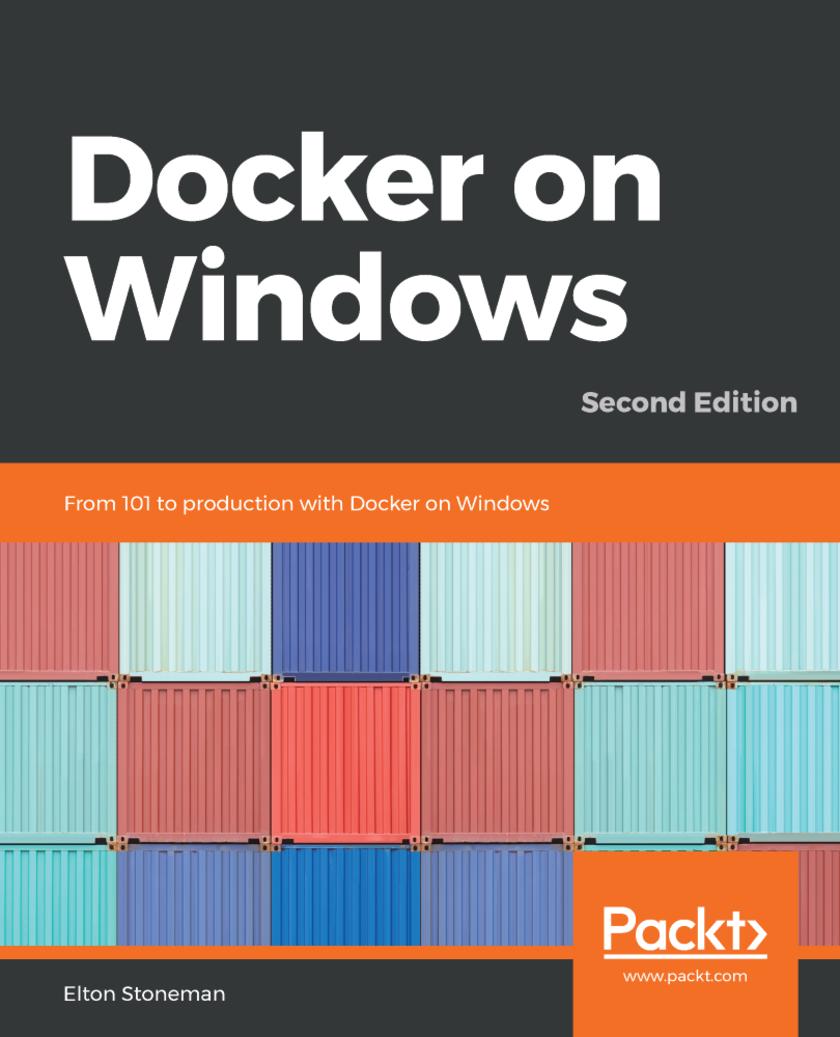
Docker on Windows
¥90.46
Learn how to run new and old applications in Docker containers on Windows - modernizing the architecture, improving security and maximizing efficiency. Key Features * Run .NET Framework and .NET Core apps in Docker containers for efficiency, security and portability * Design distributed containerized apps, using enterprise-grade open source software from Docker Hub * Build a CI/CD pipeline with Docker, going from source to a production Docker Swarm in the cloud Book Description Docker on Windows, Second Edition teaches you all you need to know about Docker on Windows, from the 101 to running highly-available workloads in production. You’ll be guided through a Docker journey, starting with the key concepts and simple examples of .NET Framework and .NET Core apps in Docker containers on Windows. Then you’ll learn how to use Docker to modernize the architecture and development of traditional ASP.NET and SQL Server apps. The examples show you how to break up legacy monolithic applications into distributed apps and deploy them to a clustered environment in the cloud, using the exact same artifacts you use to run them locally. You’ll see how to build a CI/CD pipeline which uses Docker to compile, package, test and deploy your applications. To help you move confidently to production, you’ll learn about Docker security, and the management and support options. The book finishes with guidance on getting started with Docker in your own projects. You’ll walk through some real-world case studies for Docker implementations, from small-scale on-premises apps to very large-scale apps running on Azure. What you will learn * Understand key Docker concepts: images, containers, registries and swarms * Run Docker on Windows 10, Windows Server 2019, and in the cloud * Deploy and monitor distributed solutions across multiple Docker containers * Run containers with high availability and failover with Docker Swarm * Master security in-depth with the Docker platform, making your apps more secure * Build a Continuous Deployment pipeline, running Jenkins and Git in Docker * Debug applications running in Docker containers using Visual Studio * Plan the adoption of Docker in your organization Who this book is for If you want to modernize an old monolithic application without rewriting it, smooth the deployment to production, or move to DevOps or the cloud, then Docker is the enabler for you. This book gives you a solid grounding in Docker so you can confidently approach all of these scenarios.
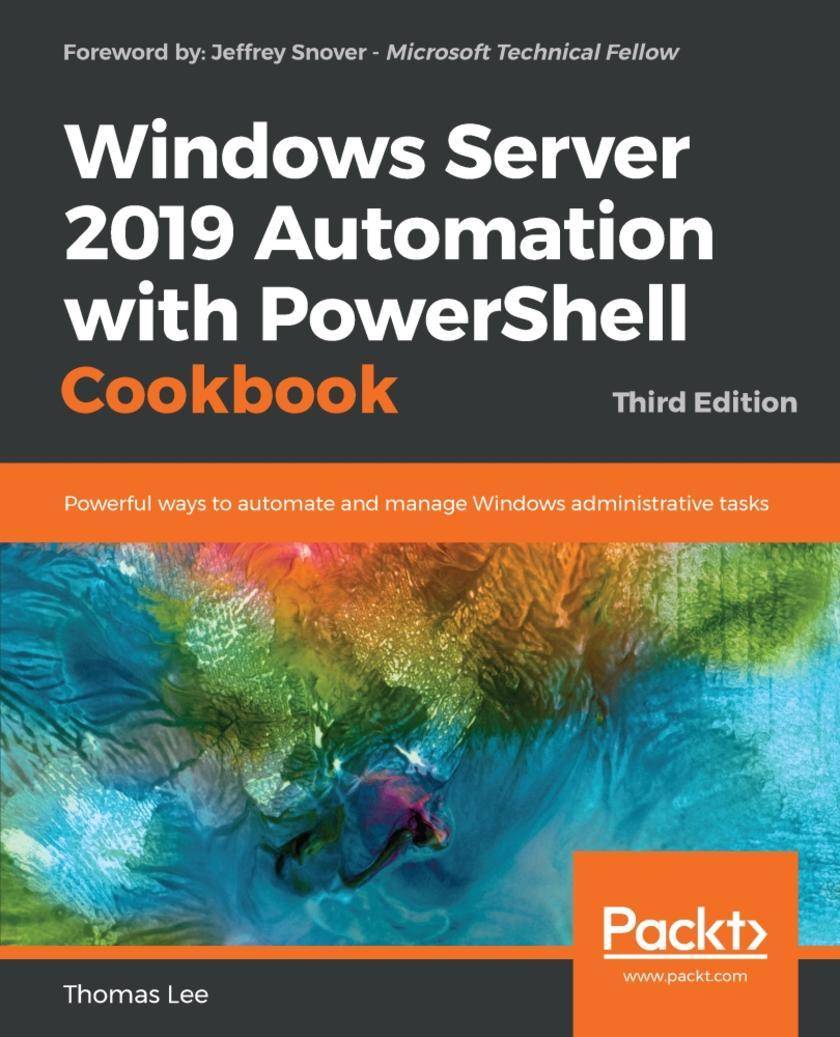
Windows Server 2019 Automation with PowerShell Cookbook
¥108.99
Automate Windows server tasks with the powerful features of the PowerShell Language Key Features * Leverage PowerShell to automate complex Windows server tasks * Master new features such as DevOps, and containers, and speed up their performance using PowerShell * Improve PowerShell's usability, and control and manage Windows-based environments by working through exciting recipes Book Description Windows Server 2019 represents the latest version of Microsoft’s flagship server operating system. It also comes with PowerShell Version 5.1 and has a number of additional features that IT pros find useful. The book helps the reader learn how to use PowerShell and manage core roles, features, and services of Windows Server 2019. You will begin with creating a PowerShell Administrative Environment that has updated versions of PowerShell and the Windows Management Framework, updated versions of the .NET Framework, and third-party modules. Next, you will learn to use PowerShell to set up and configure Windows Server 2019 networking and also managing objects in the AD environment. You will also learn to set up a host to utilize containers and how to deploy containers. You will also be implementing different mechanisms for achieving desired state configuration along with getting well versed with Azure infrastructure and how to setup Virtual Machines, web sites, and shared files on Azure. Finally, you will be using some powerful tools you can use to diagnose and resolve issues with Windows Server 2019. By the end of the book, you will learn a lot of trips and tricks to automate your windows environment with PowerShell What you will learn * Perform key admin tasks on Windows Server 2019 * Employing best practices for writing PowerShell scripts and configuring Windows Server 2019 * Use the .NET Framework to achieve administrative scripting * Set up VMs, websites, and shared files on Azure * Report system performance using built-in cmdlets and WMI to obtain single measurements * Know the tools you can use to diagnose and resolve issues with Windows Server Who this book is for If you are a systems administrator, engineer, or an architect working with Windows Server 2016 interested in upgrading to Windows Server 2019 and automating tasks with PowerShell, then this book is for you. A basic knowledge of PowerShell is expected.
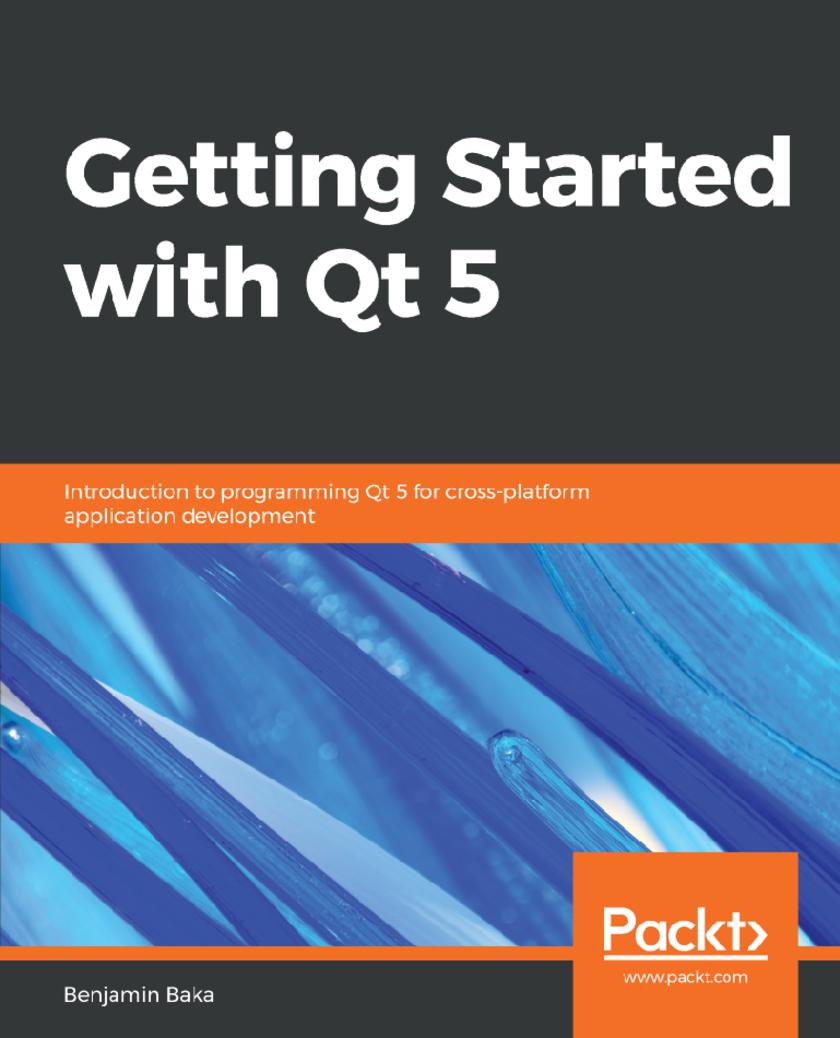
Getting Started with Qt 5
¥54.49
Begin writing graphical user interface(GUI) applications for building human machine interfaces with a clear understanding of key concepts of the Qt framework Key Features * Learn how to write, assemble, and build Qt application from the command line * Understand key concepts like Signals and Slots in Qt * Best practices and effective techniques for designing graphical user interfaces using Qt 5 Book Description Qt is a cross-platform application framework and widget toolkit that is used to create GUI applications that can run on different hardware and operating systems. The main aim of this book is to introduce Qt to the reader. Through the use of simple examples, we will walk you through building blocks without focusing too much on theory. Qt is a popular tool that can be used for building a variety of applications, such as web browsers, media players such as VLC, and Adobe Photoshop. Following Qt installation and setup, the book dives straight into helping you create your first application. You will be introduced to Widgets, Qt's interface building block, and the many varieties that are available for creating GUIs. Next, Qt's core concept of signals and slots are well illustrated with sufficient examples. The book further teaches you how to create custom widgets, signals and slots, and how to communicate useful information via dialog boxes. To cap everything off, you will be taken through writing applications that can connect to databases in order to persist data. By the end of the book, you should be well equipped to start creating your own Qt applications and confident enough to pick up more advanced Qt techniques and materials to hone your skills. What you will learn * Set up and configure your machine to begin developing Qt applications * Discover different widgets and layouts for constructing UIs * Understand the key concept of signals and slots * Understand how signals and slots help animate a GUI * Explore how to create customized widgets along with signals and slots * Understand how to subclass and create a custom windows application * Understand how to write applications that can talk to databases. Who this book is for Anyone trying to start development of graphical user interface application will find this book useful. One does not need prior exposure to other toolkits to understand this book. In order to learn from this book you should have basic knowledge of C++ and a good grasp of Object Oriented Programming. Familiarity with GNU/Linux will be very useful though it's not a mandatory skill.
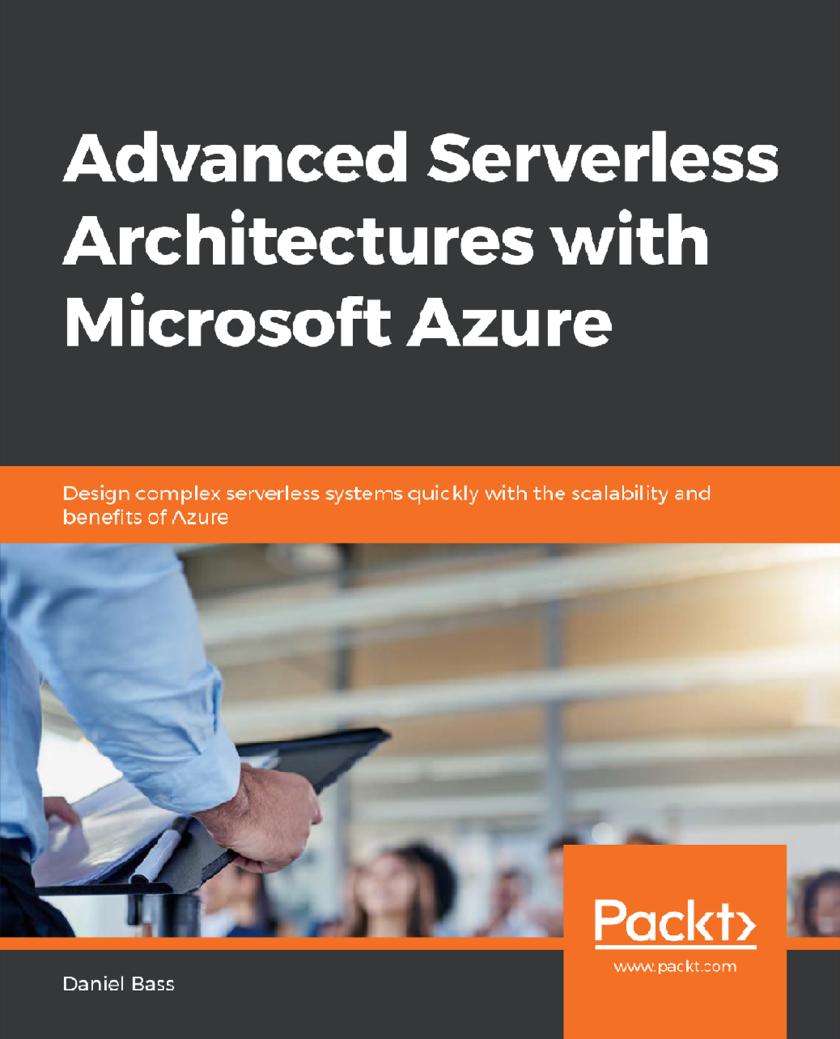
Advanced Serverless Architectures with Microsoft Azure
¥63.21
Build complex, observable, and fault-tolerant serverless systems easily on Microsoft Azure. Key Features * Use serverless systems to help you fulfill complex requirements * Develop your knowledge of Azure Microsoft Serverless * Understand concepts with a hands-on approach and helpful examples Book Description Advanced Serverless Architectures with Microsoft Azure redefines your experience of designing serverless systems. It shows you how to tackle challenges of varying levels, not just the straightforward ones. You'll be learning how to deliver features quickly by building systems, which retain the scalability and benefits of serverless. You'll begin your journey by learning how to build a simple, completely serverless application. Then, you'll build a highly scalable solution using a queue, load messages onto the queue, and read them asynchronously. To boost your knowledge further, the book also features durable functions and ways to use them to solve errors in a complex system. You'll then learn about security by building a security solution from serverless components. Next, you’ll gain an understanding of observability and ways to leverage application insights to bring you performance benefits. As you approach the concluding chapters, you’ll explore chaos engineering and the benefits of resilience, by actively switching off a few of the functions within a complex system, submitting a request, and observing the resulting behavior. By the end of this book, you will have developed the skills you need to build and maintain increasingly complex systems that match evolving platform requirements. What you will learn * Understand what true serverless architecture is * Study how to extend and scale architectures until they become ‘complex' * Implement durable functions in your design * Improve the observability of your serverless architecture * Implement security solutions using serverless services * Learn how to ‘practise' chaos engineering in production Who this book is for Advanced Serverless Architectures with Microsoft Azure is is ideal if you want to build serverless systems with fewer outages and high performance using Azure. Familiarity with the C# syntax and Azure Functions and ARM templates will help you to benefit more from this book. Prior knowledge of basic front-end development, HTML JS, and CSS is beneficial but not essential. Some DevOps knowledge is also beneficial but not essential.
Hands-On Data Structures and Algorithms with Kotlin
¥63.21
Understand and solve complex computational problems and write efficient code with Kotlin Key Features * Learn about important data structures such as lists, arrays, queues, and stacks * Design custom algorithms for real-life implementations * Identify suitable tools for different scenarios and deliver immediate results Book Description Data structures and algorithms are more than just theoretical concepts. They help you become familiar with computational methods for solving problems and writing logical code. Equipped with this knowledge, you can write efficient programs that run faster and use less memory. Hands-On Data Structures and Algorithms with Kotlin book starts with the basics of algorithms and data structures, helping you get to grips with the fundamentals and measure complexity. You'll then move on to exploring the basics of functional programming while getting used to thinking recursively. Packed with plenty of examples along the way, this book will help you grasp each concept easily. In addition to this, you'll get a clear understanding of how the data structures in Kotlin's collection framework work internally. By the end of this book, you will be able to apply the theory of data structures and algorithms to work out real-world problems. What you will learn * Understand the basic principles of algorithms and data structures * Explore general-purpose data structures with arrays and linked lists * Get to grips with the basics of stacks, queues, and double-ended queues * Understand functional programming and related data structures * Use performant searching and efficient sorting * Uncover how Kotlin's collection framework functions * Become adept at implementing different types of maps Who this book is for If you're a Kotlin developer who wants to learn the intricacies of implementing data structures and algorithms for scalable application development, this book is for you.
Installation, Storage, and Compute with Windows Server 2016: Microsoft 70-740 MC
¥73.02
A comprehensive guide for MCSA Exam 70-740, that will help you prepare from day one to earn the valuable Microsoft Certificate Key Features * Leverage practice questions and mock tests to pass this certification with confidence * Learn to Install Windows Servers,implement high availability, and monitor server environments * Gain necessary skills to implement and configure storage and compute features Book Description MCSA: Windows Server 2016 certification is one of the most sought-after certifications for IT professionals, which includes working with Windows Server and performing administrative tasks around it. This book is aimed at the 70-740 certification and is part of Packt's three-book series on MCSA Windows Server 2016 certification, which covers Exam 70-740, Exam 70-741, and Exam 70-742. This book will cover exam objectives for the 70-740 exam, and starting from installing and configuring Windows Server 2016, Windows Server imaging and deployment to configuring and managing disks and volumes, implementing and configuring server storage and implementing Hyper-V. At the end of each chapter you will be provided test questions to revise your learnings which will boost your confidence in preparing for the actual certifications. By the end of this book, you will learn everything needed to pass the, MCSA Exam 70-740: Installation, Storage, and Compute with Windows Server 2016, certification. What you will learn * Install Windows Server 2016 * Upgrade and Migrate servers and workloads * Implement and configure server storage * Install and configure Hyper-V * Configure the virtual machine (VM) settings * Configure Hyper-V storage * Configure Hyper-V networking Who this book is for This book is ideal for system administrators interested in installing and configuring storage and compute features with Windows Sever 2016 and aiming to pass the 70-740 certification. Some experience with Windows Server in an enterprise environment is assumed.
Hands-On Business Intelligence with Qlik Sense
¥73.02
Create dynamic dashboards to bring interactive data visualization to your enterprise using Qlik Sense Key Features * Implement various Qlik Sense features to create interactive dashboards * Analyze data easily and make business decisions faster using Qlik Sense * Perform self-service data analytics and geospatial analytics using an example-based approach Book Description Qlik Sense allows you to explore simple-to-complex data to reveal hidden insights and data relationships to make business-driven decisions. Hands-On Business Intelligence with Qlik Sense begins by helping you get to grips with underlying Qlik concepts and gives you an overview of all Qlik Sense’s features. You will learn advanced modeling techniques and learn how to analyze the data loaded using a variety of visualization objects. You’ll also be trained on how to share apps through Qlik Sense Enterprise and Qlik Sense Cloud and how to perform aggregation with AGGR. As you progress through the chapters, you’ll explore the stories feature to create data-driven presentations and update an existing story. This book will guide you through the GeoAnalytics feature with the geo-mapping object and GeoAnalytics connector. Furthermore, you’ll learn about the self-service analytics features and perform data forecasting using advanced analytics. Lastly, you’ll deploy Qlik Sense apps for mobile and tablet. By the end of this book, you will be well-equipped to run successful business intelligence applications using Qlik Sense's functionality, data modeling techniques, and visualization best practices. What you will learn * Discover how to load, reshape, and model data for analysis * Apply data visualization practices to create stunning dashboards * Make use of Python and R for advanced analytics * Perform geo-analysis to create visualizations using native objects * Learn how to work with AGGR and data stories Who this book is for If you’re a data analyst, BI developer, or interested in business intelligence and want to gain practical experience of working on Qlik Sense, this book is for you. You’ll also find it useful if you want to explore Qlik Sense’s next-generation applications for self-service business intelligence. No prior experience of working with Qlik Sense is required.
MongoDB, Express, Angular, and Node.js Fundamentals
¥63.21
Build fast, robust, and maintainable modern full-stack web applications using MongoDB, Express, Angular, and Node.js. Key Features * Build highly scalable, asynchronous, and event-driven APIs * Develop a user authentication system with MEAN * Build a full-fledged application using the MEAN stack Book Description MongoDB, Express, Angular and Node.js Fundamentals is a practical guide to the tried-and-true production-ready MEAN stack, with tips and best practices. The book begins by demystifying the MEAN architecture. You’ll take a look at the features of the JavaScript libraries, technologies, and frameworks that make up a MEAN stack. With this book, you'll not only learn how to develop highly scalable, asynchronous, and event-driven APIs quickly with Express and Node.js, but you'll also be able put your full-stack skills to use by building two full-fledged MEAN applications from scratch. You’ll understand how to build a blogging application using the MEAN stack and get to grips with user authentication using MEAN. As you progress through the chapters, you’ll explore some old and new features of Angular, such as pipes, reactive forms, modules and optimizing apps, animations and unit testing, and much more. By the end of the book, you’ll get ready to take control of the MEAN stack and transform into a full-stack JavaScript developer, developing efficient web applications using Javascript technologies. What you will learn * Understand the MEAN architecture * Create RESTful APIs to complete CRUD tasks * Build a blogging application with basic features * Describe best practices to secure node applications * Implement authentication and authorization * Creating simple animations using Angular * Perform unit testing on Angular applications Who this book is for If you are a beginner or intermediate frontend developer who wants to become full-stack JavaScript developer, this book is ideal for you. You'll need some prior exposure to MongoDB as we skim over its basics before getting straight to work.
C++ Fundamentals
¥54.49
Write high-level abstractions while retaining full control of the hardware, performances, and maintainability. Key Features * Transform your ideas into modern C++ code, with both C++11 and C++17 * Explore best practices for creating high-performance solutions * Understand C++ basics and work with concrete real-world examples Book Description C++ Fundamentals begins by introducing you to the C++ syntax. You will study the semantics of variables along with their advantages and trade-offs, and see how they can be best used to write safe and efficient code. With the help of this book, you’ll be able to compile fully working C++ programs and understand how variables, references, and pointers can be used to manipulate the state of the program. Then you'll explore functions and classes — the features that C++ offers to organize a program — and use them to solve more complex problems such as functions and classes. You’ll also understand common pitfalls and modern best practices, especially the ones that diverge from the C++98 guideline. As you advance through the chapters, you’ll study the advantages of generic programming and write your own templates to make generic algorithms that work with any type. This C++ book will guide you in fully exploiting standard containers and understanding how to pick the appropriate container for each problem. You will even work with a variety of memory management tools in C++. By the end of this book, you will not only be able to write efficient code, but also be equipped to improve the readability, performance, and maintainability of your programs using standard algorithms. What you will learn * Work with the C++ compilation model and syntaxes * Apply best practices for writing functions and classes * Write safe, generic, and efficient code with templates * Explore the containers that C++ standard offers * Discover the new paradigms introduced with C++11, C++14, and C++17 * Get to grips with the core language features of C++ * Abstract complex problems using object-oriented programming in C++ Who this book is for If you’re a developer looking to learn a new powerful language or are familiar with C++ but want to update your knowledge with modern paradigms of C++11, C++14, and C++17, this book is for you. To easily understand the concepts in the book, you must be familiar with the basics of programming.


