


 购物车
购物车 个人中心
个人中心
Oracle Enterprise Manager Grid Control 11g R1: Business Service Management
¥107.90
A practical, focused tutorial, this book will show you how to use Oracle Enterprise Manager Grid Control 11g R1 to deliver Business Service Management (BSM). Best practices cutting across multiple product verticals like Database, Middleware, Packaged Applications, and Custom Business Services are also covered. If you are a System Administrator or Application Administrator who is responsible for Business Service Management (BSM) using Oracle Enterprise Manager Grid Control 11g R1, then this book is for you. You need basic knowledge of Middleware/Application Servers, Business Service Management, and Oracle Enterprise Manager Grid Control.

Advanced Penetration Testing for Highly-Secured Environments
¥107.90
An intensive hands-on guide to perform professional penetration testing for highly-secured environments from start to finish. You will learn to provide penetration testing services to clients with mature security infrastructure. Understand how to perform each stage of the penetration test by gaining hands-on experience in performing attacks that mimic those seen in the wild. In the end, take the challenge and perform a virtual penetration test against a fictional corporation. If you are looking for guidance and detailed instructions on how to perform a penetration test from start to finish, are looking to build out your own penetration testing lab, or are looking to improve on your existing penetration testing skills, this book is for you. Although the books attempts to accommodate those that are still new to the penetration testing field, experienced testers should be able to gain knowledge and hands-on experience as well. The book does assume that you have some experience in web application testing and as such the chapter regarding this subject may require you to understand the basic concepts of web security. The reader should also be familiar with basic IT concepts, and commonly used protocols such as TCP/IP.

Oracle Advanced PL/SQL Developer Professional Guide
¥107.90
This book is packed with real world examples that cover all the advanced features of PL/SQL. In turn, each major certification topic is covered in a separate chapter that makes understanding concepts easier. At the end of each chapter, you will find plenty of practice questions to strengthen and test your learning.If you are a PL/SQL developer looking for deeper insight and a move from mid-level programmer to professional database developer, then this is the best guide for you. This book is also an ideal guide for all the Associate level PL/SQL programmers who are preparing for the Professional 1Z0-146 certification. This book assumes you have prior knowledge of PL/SQL programming.
IBM WebSphere Application Server 8.0 Administration Guide
¥107.90
IBM WebSphere Application Server 8.0 Administration Guide is a highly practical, example-driven tutorial. You will be introduced to WebSphere Application Server 8.0, and guided through configuration, deployment, and tuning for optimum performance. If you are an administrator who wants to get up and running with IBM WebSphere Application Server 8.0, then this book is not to be missed. Experience with WebSphere and Java would be an advantage, but is not essential.
Getting Started with Microsoft System Center Operations Manager
¥107.90
A beginner's guide to help you design, deploy and administer your System Center Operations Manager 2016 and 2012 R2 environments About This Book Discover how to monitor complex IT environments with System Center Operations Manager using tips, tricks and best practice recommendations from industry experts. Learn how to create eye-catching dashboards and reports to help deliver a tangible return on investment back to your organization. Optimize, troubleshoot and perform disaster recovery in Operations Manager using step by step examples based on real-world scenarios. Who This Book Is For The target audience for this book is the IT Pro or System Administrator who wants to deploy and use System Center Operations Manager but has no previous knowledge of the product. As a ‘Getting Started’ book, our primary objective is to equip you with the knowledge you need to feel comfortable when working with common monitoring scenarios in OpsMgr. With this in mind, deep-diving into less-common OpsMgr features such as Audit Collection Services (ACS), Agentless Exception Monitoring (AEM) and Application Performance Monitoring (APM) has been intentionally omitted. What You Will Learn Install a new System Center 2016 Operations Manager Management Group Design and provision custom views to relevant support teams. Understand how to deploy agents Work with management packs Monitor network devices Model your IT services with distributed applications Create dashboards and custom visualizations Tune, optimize, maintain and troubleshoot System Center Operations Manager In Detail Most modern IT environments comprise a heterogeneous mixture of servers, network devices, virtual hypervisors, storage solutions, cross-platform operating systems and applications. All this complexity brings a requirement to deliver a centralized monitoring and reporting solution that can help IT administrators quickly identify where the problems are and how best to resolve them. Using System Center Operations Manager (OpsMgr), administrators get a full monitoring overview of the IT services they have responsibility for across the organization - along with some useful management capabilities to help them remediate any issues they've been alerted to. This book begins with an introduction to OpsMgr and its core concepts and then walks you through designing and deploying the various roles. After a chapter on exploring the consoles, you will learn how to deploy agents, work with management packs, configure network monitoring and model your IT services using distributed applications. There’s a chapter dedicated to alert tuning and another that demonstrates how to visualize your IT using dashboards. The final chapters in the book discuss how to create alert sub*ions, manage reports, backup and recover OpsMgr, perform maintenance and troubleshoot common problems. Style and approach A beginner’s guide that focuses on providing the practical skills required to effectively deploy and administer OpsMgr with walkthrough examples and tips on all the key concepts.
Python Machine Learning Cookbook
¥107.90
100 recipes that teach you how to perform various machine learning tasks in the real world About This Book Understand which algorithms to use in a given context with the help of this exciting recipe-based guide Learn about perceptrons and see how they are used to build neural networks Stuck while making sense of images, text, speech, and real estateThis guide will come to your rescue, showing you how to perform machine learning for each one of these using various techniques Who This Book Is For This book is for Python programmers who are looking to use machine-learning algorithms to create real-world applications. This book is friendly to Python beginners, but familiarity with Python programming would certainly be useful to play around with the code. What You Will Learn Explore classification algorithms and apply them to the income bracket estimation problem Use predictive modeling and apply it to real-world problems Understand how to perform market segmentation using unsupervised learning Explore data visualization techniques to interact with your data in diverse ways Find out how to build a recommendation engine Understand how to interact with text data and build models to analyze it Work with speech data and recognize spoken words using Hidden Markov Models Analyze stock market data using Conditional Random Fields Work with image data and build systems for image recognition and biometric face recognition Grasp how to use deep neural networks to build an optical character recognition system In Detail Machine learning is becoming increasingly pervasive in the modern data-driven world. It is used extensively across many fields such as search engines, robotics, self-driving cars, and more. With this book, you will learn how to perform various machine learning tasks in different environments. We’ll start by exploring a range of real-life scenarios where machine learning can be used, and look at various building blocks. Throughout the book, you’ll use a wide variety of machine learning algorithms to solve real-world problems and use Python to implement these algorithms. You’ll discover how to deal with various types of data and explore the differences between machine learning paradigms such as supervised and unsupervised learning. We also cover a range of regression techniques, classification algorithms, predictive modeling, data visualization techniques, recommendation engines, and more with the help of real-world examples. Style and approach You will explore various real-life scenarios in this book where machine learning can be used, and learn about different building blocks of machine learning using independent recipes in the book.
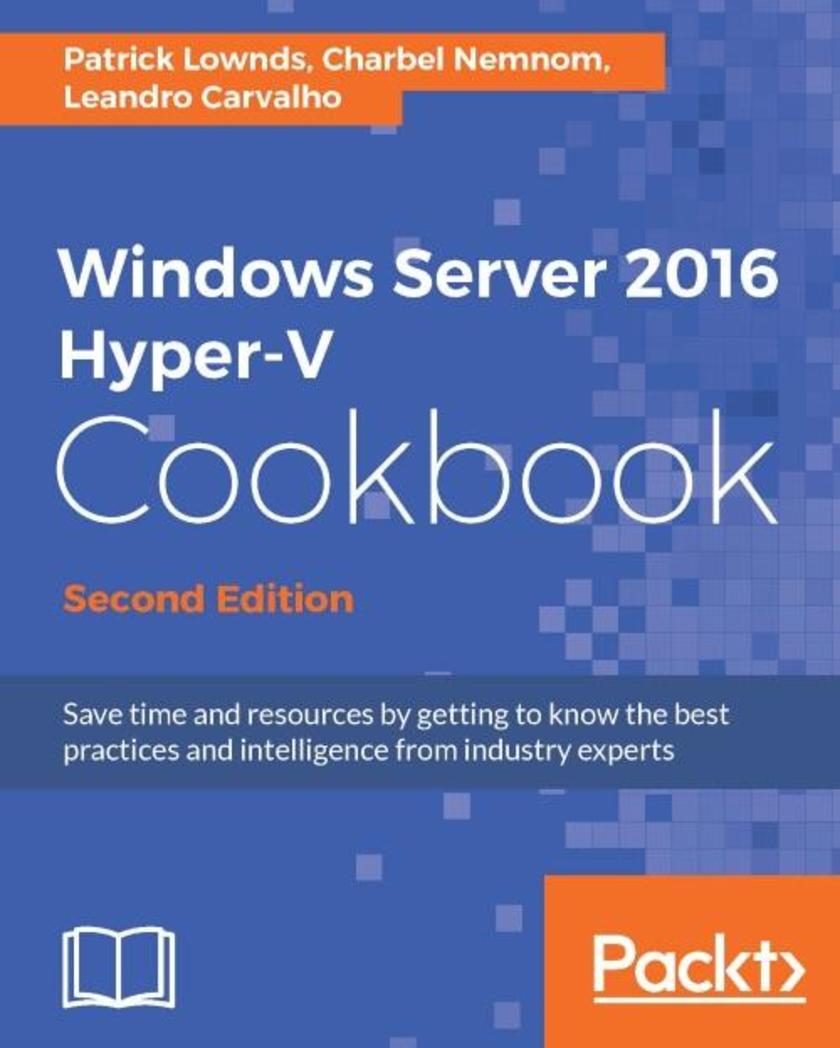
Windows Server 2016 Hyper-V Cookbook - Second Edition
¥107.90
Save time and resources by getting to know the best practices and intelligence from industry experts About This Book This book helps you gain a fresh perspective through a recipe-based approach on the new Microsoft Server 2016 Hyper-V Over 80 recipes to help you master the administrative tasks of Hyper-V and get to grips with advanced solutions and techniques for virtualization These hands-on advanced recipes will help you deploy, maintain, and upgrade Hyper-V virtual machines Who This Book Is For This book is for Hyper-V administrators who are looking to take advantage of all exciting new features that Microsoft Server 2016 Hyper-V has to offer. What You Will Learn Install and manage Hyper-V in Full, Server Core, and Nano Server Get to know how to migrate and upgrade physical and virtual machines Configure disks, network, memory, security, and auditing settings for virtual machines Take a deep dive into high availability and disaster recovery Save time and money by getting to grips with PowerShell automation Understand the new features around network and nested virtualization, distributed storage QoS, Hyper-V Replica, and much more Gain a full view of your virtual machines and host servers through monitoring, reporting, and troubleshooting tips In Detail Hyper-V is a Windows-based, very cost-effective virtualization solution with easy-to-use and well-known administrative consoles. With this book on your side you will master the worlds of Hyper-V deployment, migration, and management by learning tips, tricks, and best practices, especially when it comes to advanced-level tasks. You will learn how to quickly deploy and automate multiple VMs, and support Hyper-V clusters through different installation methods. You will learn the concepts efficiently with the help of up-to-date real-world examples and improve the scalability and efficiency of large-scale VM deployments with Nano Server. By the end of this book, you will be an ace Windows Server 2016 Hyper-V with the skills needed to administer and manage it effectively and survive in the brave new world of mobile-first, cloud-first. Further, take advantage of bonus appendix explaining Hyper-V and backup architecture and the difference between versions. Style and approach This advanced-level book provides step-by-step recipes on real-world examples so you can get practical, hands-on experience of the subjects.
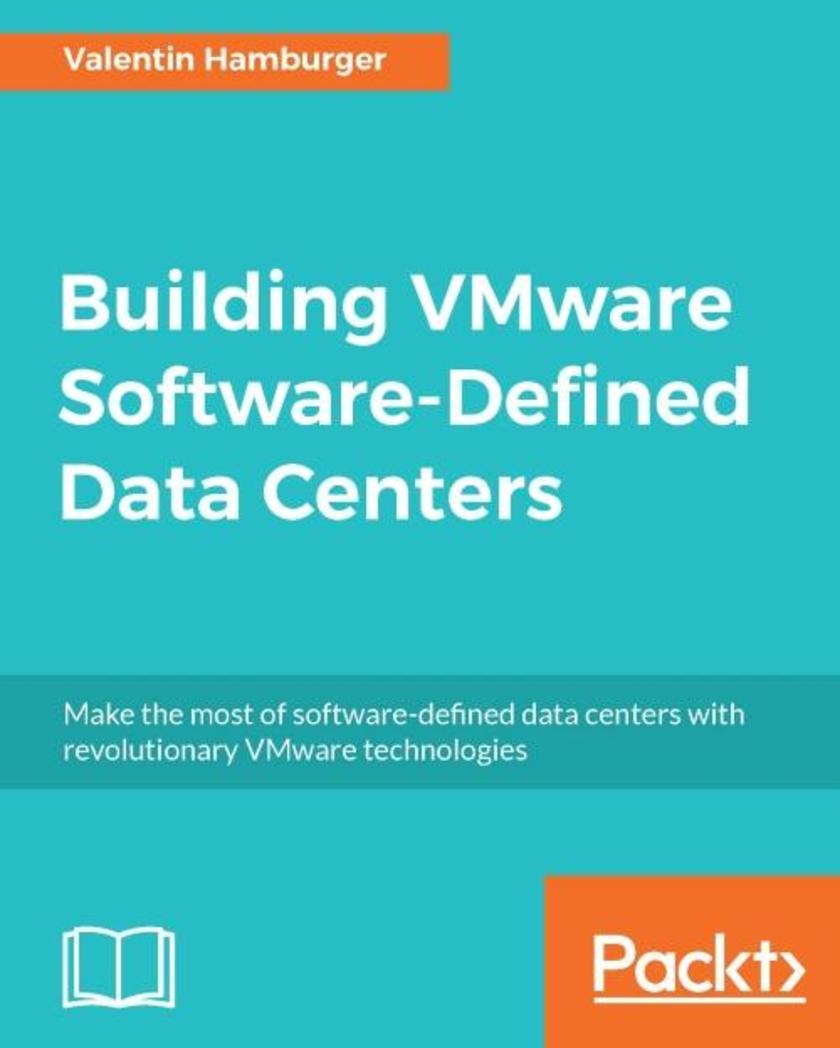
Building VMware Software-Defined Data Centers
¥107.90
Make the most of software-defined data centers with revolutionary VMware technologies About This Book Learn how you can automate your data center operations and deploy and manage applications and services across your public, private, and hybrid infrastructure in minutes Drive great business results with cost-effective solutions without compromising on ease, security, and controls Transform your business processes and operations in a way that delivers any application, anywhere, with complete peace of mind Who This Book Is For If you are an IT professional or VMware administrator who virtualizes data centers and IT infrastructures, this book is for you. Developers and DevOps engineers who deploy applications and services would also find this book useful. Data center architects and those at the CXO level who make decisions will appreciate the value in the content. What You Will Learn Understand and optimize end-to-end processes in your data center Translate IT processes and business needs into a technical design Apply and create vRO workflow automation functionalities to services Deploy NSX in a virtual environment Technically accomplish DevOps offerings Set up and use vROPs to master the SDDC resource demands Troubleshoot all the components of SDDC In Detail VMware offers the industry-leading software-defined data center (SDDC) architecture that combines compute, storage, networking, and management offerings into a single unified platform. This book uses the most up-to-date, cutting-edge VMware products to help you deliver a complete unified hybrid cloud experience within your infrastructure. It will help you build a unified hybrid cloud based on SDDC architecture and practices to deliver a fully virtualized infrastructure with cost-effective IT outcomes. In the process, you will use some of the most advanced VMware products such as VSphere, VCloud, and NSX. You will learn how to use vSphere virtualization in a software-defined approach, which will help you to achieve a fully-virtualized infrastructure and to extend this infrastructure for compute, network, and storage-related data center services. You will also learn how to use EVO:RAIL. Next, you will see how to provision applications and IT services on private clouds or IaaS with seamless accessibility and mobility across the hybrid environment. This book will ensure you develop an SDDC approach for your datacenter that fulfills your organization's needs and tremendously boosts your agility and flexibility. It will also teach you how to draft, design, and deploy toolsets and software to automate your datacenter and speed up IT delivery to meet your lines of businesses demands. At the end, you will build unified hybrid clouds that dramatically boost your IT outcomes. Style and approach With the ever-changing nature of businesses and enterprises, having the capability to navigate through the complexities is of utmost importance. This book takes an approach that combines industry expertise with revolutionary VMware products to deliver a complete SDDC experience through practical examples and techniques, with proven cost-effective benefits.
Microsoft Dynamics GP 2016 Cookbook
¥107.90
Over 100 powerful and effective recipes to help you solve real-world Dynamics GP problems About This Book Switch to Dynamics GP 2016 to take advantage of improved cloud support, workflow enhancements, and a more intuitive user experience Understand the various tips and tricks to master Dynamics GP, and improve your system’s stability in order to enable you to get work done faster Discover how to solve real-world problems in Microsoft Dynamics GP 2016 with easy-to-understand and practical recipes Who This Book Is For The book is for Dynamics GP users or Dynamics GP partners. It assumes that you have a basic understanding of business management systems and Microsoft Dynamics GP. What You Will Learn Explore the new enhancements in Dynamics GP 2016 Personalize Microsoft Dynamics GP to improve accessibility and efficiencies Maintain Dynamics GP and ensure proper operation of the system using optimum processes Efficiently organize Microsoft Dynamics GP to improve processes Leverage the power of SmartLists using proven tips and techniques and undocumented search functionalities Connect Microsoft Dynamics GP 2016 to Microsoft Office 2013 Enhance the usability of Microsoft Dynamics GP with hacks Expose the hidden features in Microsoft Dynamics GP to improve efficiency and get more from the system Deploy and use the Support Debugging tool to trace, locate, and resolve problems encountered by users Explore PowerBI and how it can be used with Dynamics GP 2016 In Detail The latest release of Dynamics GP 2016 offers a powerful, adaptable, and cloud enabled enterprise accounting software solution. The new version has experienced changes in serviced-based architecture, workflow, existing functionalities, and the introduction of plenty of new features. This book will help you get the most out of Dynamics GP quickly and effectively. This book picks up where implementation training leaves off. Whether you are new or experienced, you will find useful recipes to improve the way you use and work with Dynamics GP. The book starts with recipes designed to enhance the usefulness of Microsoft Dynamics GP by personalizing the look and feel of the application. Most of the recipes are designed to give you tips for a typical installation of Dynamics GP, including core financials and distribution modules. The book then moves through recipes that include automating Dynamics GP to allow users or administrators to focus on value adding tasks, connecting Dynamics GP to Microsoft Office, exposing hidden features in Dynamics GP, PowerBI, and much more! Style and approach This book follows a recipe-based approach with a problem-solution mind-set. Each recipe is independent of the others; real-world tested, and designed to be used immediately.
Using CiviCRM - Second Edition
¥107.90
Develop and implement a fully-functional, systematic CRM plan with CiviCRM About This Book Develop an integrated online system that manages contacts, donations, event registrations, memberships, bulk e-mail, campaigns, case management, and other functions such as activity tracking, grant distribution, and reporting. Plan a constituency relationship management strategy with ladders of engagement that will improve how your organization realizes its mission. Use case studies and step-by-step examples to put the raw concepts into real-life terminology and build your solutions. Who This Book Is For The book is primarily for administrators tasked with implementing, configuring, maintaining, and updating CiviCRM, and staff users who are looking to better understand the tools available in order to become power users. CiviCRM is software that may be used by advocacy groups, non-profit, and non-governmental organizations, elected officials, professional and trade associations, government entities, political campaigns and parties, and other similar organizations, and this book will prove useful to all such users. What You Will Learn Install and configure your CiviCRM Analyze your current workflows and processes to translate them effectively into the CiviCRM model Build an integrated system to solicit, retain, and manage your donors and members through robust management and reporting tools for administrators Raise more money with CiviCRM with effective solicitation campaigns Market events effectively and track registrations and payments Improve communications with constituents using targeted broadcast e-mail campaigns Track ongoing communications with constituents including from Outlook and Gmail using activities and case management tools Take advantage of the many CiviCRM tools to generate both simple and complex event structures and manage registrants through every phase of the project In Detail CiviCRM provides a powerful toolbox of resources to help organizations manage relationships with constituents. It is free, open source, web-based, and geared specifically to meet the constituent relationship management needs of the not-for-profit sector. Beginning with broader questions about how your organization is structured, which existing workflows are critical to your operations, and the overarching purpose of a centralized CRM, the book proceeds step by step through configuring CiviCRM, understanding the choices when setting up the system, importing data, and exploring the breadth of tools available throughout the system. You will see how to best use this software to handle event registrations, accept and track contributions, manage paid and free memberships and sub*ions, segment contacts, send bulk e-mails with open and click-through tracking, manage outreach campaigns, and set up case management workflows that match your organization’s roles and rules. With specific emphasis on helping implementers ask the right questions, consider key principals when setting up the system, and understand usage through case studies and examples, the book comprehensively reviews the functionality of CiviCRM and the opportunities it provides. With this book, you can help your organization better achieve its mission as a charity, industry association, professional society, political advocacy group, community group, government agency, or other similar organization and position yourself to become a power user who efficiently and effectively navigates the system. Style and approach This guide is packed with step-by-step tutorials and real-life examples interspersed with practical advice and best practices on how to use CiviCRM strategically. You will be able to quickly grasp and implement the basic elements of CiviCRM before moving on to more advanced tools.
Mastering Identity and Access Management with Microsoft Azure
¥107.90
Start empowering users and protecting corporate data, while managing Identities and Access with Microsoft Azure in different environments About This Book Deep dive into the Microsoft Identity and Access Management as a Service (IDaaS) solution Design, implement and manage simple and complex hybrid identity and access management environments Learn to apply solution architectures directly to your business needs and understand how to identify and manage business drivers during transitions Who This Book Is For This book is for business decision makers, IT consultants, and system and security engineers who wish to plan, design, and implement Identity and Access Management solutions with Microsoft Azure. What You Will Learn Apply technical de*ions and solution architectures directly to your business needs and deployments Identify and manage business drivers and architecture changes to transition between different scenarios Understand and configure all relevant Identity and Access Management key features and concepts Implement simple and complex directory integration, authentication, and authorization scenarios Get to know about modern identity management, authentication, and authorization protocols and standards Implement and configure a modern information protection solution Integrate and configure future improvements in authentication and authorization functionality of Windows 10 and Windows Server 2016 In Detail Microsoft Azure and its Identity and Access Management is at the heart of Microsoft’s Software as a Service, including Office 365, Dynamics CRM, and Enterprise Mobility Management. It is an essential tool to master in order to effectively work with the Microsoft Cloud. Through practical, project based learning this book will impart that mastery. Beginning with the basics of features and licenses, this book quickly moves on to the user and group lifecycle required to design roles and administrative units for role-based access control (RBAC). Learn to design Azure AD to be an identity provider and provide flexible and secure access to SaaS applications. Get to grips with how to configure and manage users, groups, roles, and administrative units to provide a user- and group-based application and self-service access including the audit functionality. Next find out how to take advantage of managing common identities with the Microsoft Identity Manager 2016 and build cloud identities with the Azure AD Connect utility. Construct blueprints with different authentication scenarios including multi-factor authentication. Discover how to configure and manage the identity synchronization and federation environment along with multi -factor authentication, conditional access, and information protection scenarios to apply the required security functionality. Finally, get recommendations for planning and implementing a future-oriented and sustainable identity and access management strategy. Style and approach A practical, project-based learning experience explained through hands-on examples.
JIRA Development Cookbook - Third Edition
¥107.90
Your one-stop resource for mastering extensions and customizations in JIRA 7+ About This Book Explore the new features of JIRA 7 and best practices for agile development and integration with development tools Customize the look and feel of your JIRA UI to match your specific user needs Create seamless reports that make sense of your data through easy-to-use techniques Who This Book Is For If you are a JIRA developer or administrator, or a project manager who wants to fully exploit the exciting capabilities of JIRA, then this is the perfect book for you. What You Will Learn Create and deploy your own JIRA plugins Manipulate workflows to transform JIRA into a user-friendly system Create custom reports that show statistics for particular people, projects, versions, or other fields within issues Simplify reporting by writing your own JIRA gadgets, which can be added into a user's dashboard Master database handling by extending and retrieving custom field details from the database Deal with custom fields on an issue and program custom field option In Detail JIRA provides issue and project tracking for software development teams to improve code quality and the speed of development. With the new version of JIRA, you can create your own JIRA plugins and customize the look and feel of your JIRA UI easier than ever. JIRA Development Cookbook , Third Edition, is a one-stop resource to master extensions and customizations in JIRA. This book starts with recipes about simplifying the plugin development process followed by recipes dedicated to the plugin framework. Then, you will move on to writing custom field plugins to create new field types or custom searchers. You will also learn how to program and customize workflows to transform JIRA into a user-friendly system. With so much data spanning different projects, issues, and so on, we will cover how to work on reports and gadgets to get customized data according to our needs. At the end of the book, you will learn how to customize JIRA by adding new tabs, menus, and web items; communicate with JIRA via the REST APIs; and work with the JIRA database. Style and approach The most unique aspect of this book is its approach. This book is recipe-based, with real-world examples, that will empower you to implement agile processes and explore the exciting capabilities of Jira.
Data Analysis with IBM SPSS Statistics
¥107.90
Master data management & analysis techniques with IBM SPSS Statistics 24 About This Book ? Leverage the power of IBM SPSS Statistics to perform efficient statistical analysis of your data ? Choose the right statistical technique to analyze different types of data and build efficient models from your data with ease ? Overcome any hurdle that you might come across while learning the different SPSS Statistics concepts with clear instructions, tips and tricks Who This Book Is For This book is designed for analysts and researchers who need to work with data to discover meaningful patterns but do not have the time (or inclination) to become programmers. We assume a foundational understanding of statistics such as one would learn in a basic course or two on statistical techniques and methods. What You Will Learn ? Install and set up SPSS to create a working environment for analytics ? Techniques for exploring data visually and statistically, assessing data quality and addressing issues related to missing data ? How to import different kinds of data and work with it ? Organize data for analytical purposes (create new data elements, sampling, weighting, subsetting, and restructure your data) ? Discover basic relationships among data elements (bivariate data patterns, differences in means, correlations) ? Explore multivariate relationships ? Leverage the offerings to draw accurate insights from your research, and benefit your decision-making In Detail SPSS Statistics is a software package used for logical batched and non-batched statistical analysis. Analytical tools such as SPSS can readily provide even a novice user with an overwhelming amount of information and a broad range of options for analyzing patterns in the data. The journey starts with installing and configuring SPSS Statistics for first use and exploring the data to understand its potential (as well as its limitations). Use the right statistical analysis technique such as regression, classification and more, and analyze your data in the best possible manner. Work with graphs and charts to visualize your findings. With this information in hand, the discovery of patterns within the data can be undertaken. Finally, the high level objective of developing predictive models that can be applied to other situations will be addressed. By the end of this book, you will have a firm understanding of the various statistical analysis techniques offered by SPSS Statistics, and be able to master its use for data analysis with ease. Style and approach Provides a practical orientation to understanding a set of data and examining the key relationships among the data elements. Shows useful visualizations to enhance understanding and interpretation. Outlines a roadmap that focuses the process so decision regarding how to proceed can be made easily.
Microsoft Power BI Cookbook
¥107.90
Get more out of Microsoft Power BI turning your data into actionable insights About This Book ? From connecting to your data sources to developing and deploying immersive, mobile-ready dashboards and visualizations, this book covers it all ? Over 90 hands-on, technical recipes, tips, and use cases from across the Power BI platform including the Power BI Service and Mobile Applications ? Proven development techniques and guidance for implementing custom solutions with DAX and M languages Who This Book Is For This book is for BI professionals who wish to enhance their knowledge of Power BI beyond and to enhance the value of the Power BI solutions they deliver to business users. Those who are looking at quick solutions to common problems while using Power BI will also find this book to be a very useful resource .Some experience with Power BI will be useful. What You Will Learn ? Cleanse, stage, and integrate your data sources with Power BI ? Abstract data complexities and provide users with intuitive, self-service BI capabilities ? Build business logic and analysis into your solutions via the DAX programming language and dynamic, dashboard-ready calculations ? Take advantage of the analytics and predictive capabilities of Power BI ? Make your solutions more dynamic and user specific and/or defined including use cases of parameters, functions, and row level security ? Understand the differences and implications of DirectQuery, Live Connections, and Import-Mode Power BI datasets and how to deploy content to the Power BI Service and schedule refreshes ? Integrate other Microsoft data tools such as Excel and SQL Server Reporting Services into your Power BI solution In Detail Microsoft Power BI is a business intelligence and analytics platform consisting of applications and services designed to provide coherent, visual and interactive insights of data. This book will provide thorough, technical examples of using all primary Power BI tools and features as well as demonstrate high impact end-to-end solutions that leverage and integrate these technologies and services. Get familiar with Power BI development tools and services, go deep into the data connectivity and transformation, modeling, visualization and analytical capabilities of Power BI, and see Power BI’s functional programming languages of DAX and M come alive to deliver powerful solutions to address common, challenging scenarios in business intelligence. This book will excite and empower you to get more out of Power BI via detailed recipes, advanced design and development tips, and guidance on enhancing existing Power BI projects. Style and approach This book consists of practical recipes on Power BI that target novices as well as intermediate Power BI users. It goes deep into the technical issues, covers additional protocols, and many more real-live examples.
Dynamics 365 for Finance and Operations Development Cookbook - Fourth Edition
¥107.90
Over 80 effective recipes to help you solve real-world Microsoft Dynamics 365 for Finance and Operations development problems About This Book ? Learn all about the enhanced functionalities of Dynamics 365 for Finance and Operations and master development best practices ? Develop powerful projects using new tools and features ? Work through easy-to-understand recipes with step-by-step instructions and useful screenshots Who This Book Is For If you are a Dynamics AX developer primarily focused on delivering time-proven applications, then this book is for you. This book is also ideal for people who want to raise their programming skills above the beginner level, and at the same time learn the functional aspects of Dynamics 365 for Finance and Operations. Some X++ coding experience is expected. What You Will Learn ? Explore data manipulation concepts in Dynamics 365 for Operations ? Build *s to assist data migration processes ? Organize data in Dynamics 365 for Operations forms ? Make custom lookups using AOT forms and dynamically generate them from X++ code ? Create a custom electronic payment format and process a vendor payment using it ? Integrate your application with Microsoft Office Suite and other external systems using various approaches ? Export and import business data for further distribution or analysis ? Improve your development efficiency and performance In Detail Microsoft Dynamics 365 for Finance and Operations has a lot to offer developers. It allows them to customize and tailor their implementations to meet their organization’s needs. This Development Cookbook will help you manage your company or customer ERP information and operations efficiently. We start off by exploring the concept of data manipulation in Dynamics 365 for Operations. This will also help you build *s to assist data migration, and show you how to organize data in forms. You will learn how to create custom lookups using Application Object Tree forms and generate them dynamically. We will also show you how you can enhance your application by using advanced form controls, and integrate your system with other external systems. We will help you * and enhance your user interface using UI elements. This book will help you look at application development from a business process perspective, and develop enhanced ERP solutions by learning and implementing the best practices and techniques. Style and approach The book follows a practical recipe-based approach, focusing on real-world scenarios and giving you all the information you need to build a strong Dynamics 365 for Finance and Operations implementation.
SQL Server 2017 Integration Services Cookbook
¥107.90
Harness the power of SQL Server 2017 Integration Services to build your data integration solutions with ease About This Book ? Acquaint yourself with all the newly introduced features in SQL Server 2017 Integration Services ? Program and extend your packages to enhance their functionality ? This detailed, step-by-step guide covers everything you need to develop efficient data integration and data transformation solutions for your organization Who This Book Is For This book is ideal for software engineers, DW/ETL architects, and ETL developers who need to create a new, or enhance an existing, ETL implementation with SQL Server 2017 Integration Services. This book would also be good for individuals who develop ETL solutions that use SSIS and are keen to learn the new features and capabilities in SSIS 2017. What You Will Learn ? Understand the key components of an ETL solution using SQL Server 2016-2017 Integration Services ? Design the architecture of a modern ETL solution ? Have a good knowledge of the new capabilities and features added to Integration Services ? Implement ETL solutions using Integration Services for both on-premises and Azure data ? Improve the performance and scalability of an ETL solution ? Enhance the ETL solution using a custom framework ? Be able to work on the ETL solution with many other developers and have common design paradigms or techniques ? Effectively use *ing to solve complex data issues In Detail SQL Server Integration Services is a tool that facilitates data extraction, consolidation, and loading options (ETL), SQL Server coding enhancements, data warehousing, and customizations. With the help of the recipes in this book, you’ll gain complete hands-on experience of SSIS 2017 as well as the 2016 new features, design and development improvements including SCD, Tuning, and Customizations. At the start, you’ll learn to install and set up SSIS as well other SQL Server resources to make optimal use of this Business Intelligence tools. We’ll begin by taking you through the new features in SSIS 2016/2017 and implementing the necessary features to get a modern scalable ETL solution that fits the modern data warehouse. Through the course of chapters, you will learn how to design and build SSIS data warehouses packages using SQL Server Data Tools. Additionally, you’ll learn to develop SSIS packages designed to maintain a data warehouse using the Data Flow and other control flow tasks. You’ll also be demonstrated many recipes on cleansing data and how to get the end result after applying different transformations. Some real-world scenarios that you might face are also covered and how to handle various issues that you might face when designing your packages. At the end of this book, you’ll get to know all the key concepts to perform data integration and transformation. You’ll have explored on-premises Big Data integration processes to create a classic data warehouse, and will know how to extend the toolbox with custom tasks and transforms. Style and approach This cookbook follows a problem-solution approach and tackles all kinds of data integration scenarios by using the capabilities of SQL Server 2016 Integration Services. This book is well supplemented with screenshots, tips, and tricks. Each recipe focuses on a particular task and is written in a very easy-to-follow manner.
JIRA 7 Essentials - Fourth Edition
¥107.90
Explore the great features of the all-new JIRA 7 to manage projects and effectively handle bugs and software issues About This Book Updated for JIRA 7, this book covers all the new features introduced in JIRA 7 with a dedicated chapter on JIRA Service Desk—one of the biggest new add-ons to JIRA This book lays a strong foundation to work with agile projects in JIRA from both the administrator and end user's perspective Work through step-by-step exercises at the end of each chapter for you to try out and reinforce your skills Who This Book Is For This book will be especially useful for project managers but it's also intended for other JIRA users, including developers, and any other industry besides software development, who would like to leverage JIRA’s powerful task management and workflow features to better manage their business processes. What You Will Learn Understand JIRA's data hierarchy and how to design and work with projects in JIRA Plan and set up a new JIRA 7 instance from scratch for production use Using JIRA for agile software projects, business process management, customer service support, and more Understand issues and work with them Design both system and custom fields to behave differently under different contexts Create and design your own screens and apply them to different project and issue types Gain an understanding of the workflow and its various components Set up both incoming and outgoing mail servers to work with e-mails In Detail Atlassian JIRA is an enterprise-issue tracker system. One of its key strengths is its ability to adapt to the needs of the organization, ranging from building Atlassian application interfaces to providing a platform for add-ons to extend JIRA's capabilities. JIRA 7 Essentials, now in its fourth edition, provides a comprehensive explanation covering all major components of JIRA 7, which includes JIRA Software, JIRA Core, and JIRA Service Works. The book starts by explaining how to plan and set up a new JIRA 7 instance from scratch for production use before moving on to the more key features such as e-mails, workflows, business processes, and so on. Then you will understand JIRA's data hierarchy and how to design and work with projects in JIRA. Issues being the corner stone of using JIRA, you will gain a deep understanding of issues and their purpose. Then you will be introduced to fields and how to use custom fields for more effective data collections. You will then learn to create new screens from scratch and customize it to suit your needs. The book then covers workflows and business processes, and you will also be able to set up both incoming and outgoing mail servers to work with e-mails. Towards the end, we explain JIRA's security model and introduce you to one of JIRA’s new add-ons: JIRA Service Desk, which allows you to run JIRA as a computer support portal. Style and approach This is a comprehensive, practical guide on using JIRA to efficiently manage all your projects. It provides clear, step-by-step explanations, and shows how you can use the various features of JIRA to manage your projects more efficiently.
Microsoft System Center Configuration Manager Cookbook - Second Edition
¥107.90
Over 60 applicable recipes to administer and manage System Center Configuration Manager Current Branch About This Book Overcome the challenges of administering System Center Configuration Manager when deploying single and multiple-hierarchy sites Help your organization to build a custom-line of business apps and also protect the server against malware threats with Endpoint protection Get easy guidance and best practices to help you work with SCCM Who This Book Is For If you are an intermediate to advanced administrator who wants to administer SCCM and understand how to solve particular problems/scenarios, then this book is for you. You should have a working knowledge of SCCM, however, knowledge of the latest version is not required. What You Will Learn Administer System Center Configuration Manager Upgrade computers from Windows 7/ 8.x to Windows 10, using Serivce Plans to keep Windows 10 machines up to date Manage Compliance Settings effectively and monitor it with SSRS Manage Sites in System Center Configuration Manager and also learn to create collections, leverage role-based administration (RBA), and support clients over the internet without a VPN connection Implement multiple methods to deploy the client, as well as how to be proactive in monitoring client agent health Achieve Mobile device management with Microsoft Intune In Detail This practical cookbook is based on the 1602 current branch of System Center Configuration Manager (SCCM). It shows you how to administer SCCM, giving you an essential toolbox of techniques to solve real-world scenarios. Packed with over 60 task-based and instantly usable recipes, you’ll discover how design a SCCM Infrastructure, and dive into topics such as the recommended SQL configuration for SCCM and how to deploy Windows 10 with Operating System Deployment (OSD). You will learn to easily manage Windows 10 devices by deploying applications, software updates, and feature upgrades, andl be able to leverage Mobile Device Management (MDM) using SCCM and Microsoft Intune. Finally, you see how to gather the inventory of all your PC park and create reports based on it. By the end of the book, you will have learned the best practices when working with SCCM and have a handy reference guide for troubleshooting. Style and approach This cookbook is full of quick recipes that show you how to administer SCCM and will help you understand how to solve particular problems/situations encountered in day-to-day tasks.
Windows Presentation Foundation Development Cookbook
¥108.99
Gain comprehensive insight into WPF mechanics and capabilities. About This Book ? Gain a strong foundation in WPF features and patterns ? Leverage the MVVM pattern to build decoupled, maintainable apps ? Increase efficiency through Performance tuning and UI automation Who This Book Is For The book is intended for developers who are relatively new to WPF (Windows Presentation Foundation), or those who have been working with WPF for some time, but want to get a deeper understanding of its foundation and concepts to gain practical knowledge. Basic knowledge of C# and Visual Studio is assumed. What You Will Learn ? Understand the fundamentals of WPF ? Explore the major controls and manage element layout ? Implement data binding ? Create custom elements that lead to a particular implementation path ? Customize controls, styles, and templates in XAML ? Leverage the MVVM pattern to maintain a clean and reusable structure in your code ? Master practical animations ? Integrate WCF services in a WPF application ? Implement WPFs support for debugging and asynchronous operations In Detail Windows Presentation Foundation (WPF) is Microsoft's development tool for building rich Windows client user experiences that incorporate UIs, media, and documents. With the updates in .NET 4.7, Visual Studio 2017, C# 7, and .NET Standard 2.0, WPF has taken giant strides and is now easier than ever for developers to use. If you want to get an in-depth view of WPF mechanics and capabilities, then this book is for you. The book begins by teaching you about the fundamentals of WPF and then quickly shows you the standard controls and the layout options. It teaches you about data bindings and how to utilize resources and the MVVM pattern to maintain a clean and reusable structure in your code. After this, you will explore the animation capabilities of WPF and see how they integrate with other mechanisms. Towards the end of the book, you will learn about WCF services and explore WPF's support for debugging and asynchronous operations. By the end of the book, you will have a deep understanding of WPF and will know how to build resilient applications. Style and approach This book takes a recipe-based approach to teaching you how to create fault-tolerant WPF applications.
Mastering Windows Server 2019
¥108.99
Enhance and secure your datacenter with the newest Microsoft server platform Key Features * Develop necessary skills to design and implement Microsoft Server 2019 in enterprise environment * Provide support to your medium to large enterprise and leverage your experience in administering Microsoft Server 2019 * Effectively administering Windows server 2019 with the help of practical examples Book Description Mastering Windows Server 2019 – Second Edition covers all of the essential information needed to implement and utilize this latest-and-greatest platform as the core of your data center computing needs. You will begin by installing and managing Windows Server 2019, and by clearing up common points of confusion surrounding the versions and licensing of this new product. Centralized management, monitoring, and configuration of servers is key to an efficient IT department, and you will discover multiple methods for quickly managing all of your servers from a single pane of glass. To this end, you will spend time inside Server Manager, PowerShell, and even the new Windows Admin Center, formerly known as Project Honolulu. Even though this book is focused on Windows Server 2019 LTSC, we will still discuss containers and Nano Server, which are more commonly related to the SAC channel of the server platform, for a well-rounded exposition of all aspects of using Windows Server in your environment. We also discuss the various remote access technologies available in this operating system, as well as guidelines for virtualizing your data center with Hyper-V. By the end of this book, you will have all the ammunition required to start planning for, implementing, and managing Windows. What you will learn * Work with the updated Windows Server 2019 interface, including Server Core and Windows Admin Center * Secure your network and data with new technologies in Windows Server 2019 * Learn about containers and understand the appropriate situations to use Nano Server * Discover new ways to integrate your data center with Microsoft Azure * Harden your Windows Servers to help keep the bad guys out * Virtualize your data center with Hyper-V Who this book is for If you are a System Administrator or an IT professional interested in designing and deploying Windows Server 2019 then this book is for you. Previous experience of Windows Server operating systems and familiarity with networking concepts is required.
Mastering Identity and Access Management with Microsoft Azure
¥108.99
Start empowering users and protecting corporate data, while managing identities and access with Microsoft Azure in different environments Key Features * Understand how to identify and manage business drivers during transitions * Explore Microsoft Identity and Access Management as a Service (IDaaS) solution * Over 40 playbooks to support your learning process with practical guidelines Book Description Microsoft Azure and its Identity and access management are at the heart of Microsoft's software as service products, including Office 365, Dynamics CRM, and Enterprise Mobility Management. It is crucial to master Microsoft Azure in order to be able to work with the Microsoft Cloud effectively. You’ll begin by identifying the benefits of Microsoft Azure in the field of identity and access management. Working through the functionality of identity and access management as a service, you will get a full overview of the Microsoft strategy. Understanding identity synchronization will help you to provide a well-managed identity. Project scenarios and examples will enable you to understand, troubleshoot, and develop on essential authentication protocols and publishing scenarios. Finally, you will acquire a thorough understanding of Microsoft Information protection technologies. What you will learn * Apply technical descriptions to your business needs and deployments * Manage cloud-only, simple, and complex hybrid environments * Apply correct and efficient monitoring and identity protection strategies * Design and deploy custom Identity and access management solutions * Build a complete identity and access management life cycle * Understand authentication and application publishing mechanisms * Use and understand the most crucial identity synchronization scenarios * Implement a suitable information protection strategy Who this book is for This book is a perfect companion for developers, cyber security specialists, system and security engineers, IT consultants/architects, and system administrators who are looking for perfectly up–to-date hybrid and cloud-only scenarios. You should have some understanding of security solutions, Active Directory, access privileges/rights, and authentication methods. Programming knowledge is not required but can be helpful for using PowerShell or working with APIs to customize your solutions.


