


 购物车
购物车 个人中心
个人中心
The Pit, A Story of Chicago
¥8.09
Classic novel. According to Wikipedia: "Benjamin Franklin Norris, Jr. (March 5, 1870 – October 25, 1902) was an American novelist, during the Progressive Era, writing predominantly in the naturalist genre. His notable works include McTeague (1899), The Octopus: A California Story (1901), and The Pit (1903). Although he did not openly support socialism as a political system, his work nevertheless evinces a socialist mentality and influenced socialist/progressive writers such as Upton Sinclair. Like many of his contemporaries, he was profoundly influenced by the advent of Darwinism, and Thomas Henry Huxley's philosophical defense of it. Norris was particularly influenced by an optimistic strand of Darwinist philosophy taught by Joseph LeConte, whom Norris studied under while at the University of California, Berkeley. Through many of his novels, notably McTeague, runs a preoccupation with the notion of the civilized man overcoming the inner "brute," his animalistic tendencies. His peculiar, and often confused, brand of Social Darwinism also bears the influence of the early criminologist Cesare Lombroso and the French naturalist Emile Zola."
The Argonauts of North Liberty
¥8.09
Classic novel. According to Wikipedia: "Bret Harte (August 25, 1836[2] – May 6, 1902) was an American author and poet, best remembered for his accounts of pioneering life in California. He was born in Albany, New York. ... He moved to California in 1853, later working there in a number of capacities, including miner, teacher, messenger, and journalist. He spent part of his life in the northern California coast town now known as Arcata, then just a mining camp on Humboldt Bay. His first literary efforts, including poetry and prose, appeared in The Californian, an early literary journal edited by Charles Henry Webb. In 1868 he became editor of The Overland Monthly, another new literary magazine, but this one more in tune with the pioneering spirit of excitement in California. His story, "The Luck of Roaring Camp," appeared in the magazine's second edition, propelling Harte to nationwide fame... Determined to pursue his literary career, in 1871 he and his family traveled back East, to New York and eventually to Boston, where he contracted with the publisher of The Atlantic Monthly for an annual salary of $10,000, "an unprecedented sum at the time." His popularity waned, however, and by the end of 1872 he was without a publishing contract and increasingly desperate. He spent the next few years struggling to publish new work (or republish old), delivering lectures about the gold rush, and even selling an advertising jingle to a soap company. In 1878 Harte was appointed to the position of United States Consul in the town of Krefeld, Germany and then to Glasgow in 1880. In 1885 he settled in London. During the thirty years he spent in Europe, he never abandoned writing, and maintained a prodigious output of stories that retained the freshness of his earlier work. He died in England in 1902 of throat cancer and is buried at Frimley."
Cressy
¥8.09
Classic novel. According to Wikipedia: "Bret Harte (August 25, 1836[2] – May 6, 1902) was an American author and poet, best remembered for his accounts of pioneering life in California. He was born in Albany, New York. ... He moved to California in 1853, later working there in a number of capacities, including miner, teacher, messenger, and journalist. He spent part of his life in the northern California coast town now known as Arcata, then just a mining camp on Humboldt Bay. His first literary efforts, including poetry and prose, appeared in The Californian, an early literary journal edited by Charles Henry Webb. In 1868 he became editor of The Overland Monthly, another new literary magazine, but this one more in tune with the pioneering spirit of excitement in California. His story, "The Luck of Roaring Camp," appeared in the magazine's second edition, propelling Harte to nationwide fame... Determined to pursue his literary career, in 1871 he and his family traveled back East, to New York and eventually to Boston, where he contracted with the publisher of The Atlantic Monthly for an annual salary of $10,000, "an unprecedented sum at the time." His popularity waned, however, and by the end of 1872 he was without a publishing contract and increasingly desperate. He spent the next few years struggling to publish new work (or republish old), delivering lectures about the gold rush, and even selling an advertising jingle to a soap company. In 1878 Harte was appointed to the position of United States Consul in the town of Krefeld, Germany and then to Glasgow in 1880. In 1885 he settled in London. During the thirty years he spent in Europe, he never abandoned writing, and maintained a prodigious output of stories that retained the freshness of his earlier work. He died in England in 1902 of throat cancer and is buried at Frimley."
The Ball and the Cross
¥8.09
Classic novel. According to Wikipedia: "Gilbert Keith Chesterton (1874 - 1936) was an influential English writer of the early 20th century. His prolific and diverse output included journalism, philosophy, poetry, biography, Christian apologetics, fantasy and detective fiction. Chesterton has been called the "prince of paradox."[1] He wrote in an off-hand, whimsical prose studded with startling formulations. For example: "Thieves respect property. They merely wish the property to become their property that they may more perfectly respect it."[2] He is one of the few Christian thinkers who are equally admired and quoted by both liberal and conservative Christians, and indeed by many non-Christians. Chesterton's own theological and political views were far too nuanced to fit comfortably under the "liberal" or "conservative" banner."
Burning Daylight
¥8.09
Classic novel. According to Wikipedia: "Jack London (January 12, 1876 – November 22, 1916) was an American author who wrote The Call of the Wild, White Fang, and The Sea Wolf along with many other popular books. A pioneer in the then-burgeoning world of commercial magazine fiction, he was one of the first Americans to make a lucrative career exclusively from writing."
Mary
¥8.09
According to Wikipedia: "Mary: A Fiction is the only complete novel by the 18th-century British feminist Mary Wollstonecraft. It tells the tragic story of a heroine's successive "romantic friendships" with a woman and a man. Composed while Wollstonecraft was a governess in Ireland, the novel was published in 1788 shortly after her summary dismissal and her momentous decision to embark on a writing career, a precarious and disreputable profession for women in 18th-century Britain.Inspired by Jean-Jacques Rousseau's idea that geniuses are self-taughtgenius (a word which at the end of the 18th century was only beginning to take on its modern meaning of exceptional or brilliant), Wollstonecraft describes Mary as independent and capable of defining femininity and marriage for herself. It is Mary's "strong, original opinions" and her resistance to "conventional wisdom" that mark her as a genius. Making her heroine a genius allowed Wollstonecraft to criticize marriage as well: geniuses were "enchained" rather than enriched by marriage. Through this heroine Wollstonecraft also critiques 18th-century sensibilityMary rewrites the traditional romance plot through its reimagination of gender relations and female sexuality. Yet, because Wollstonecraft employs the genre of sentimentalism to critique sentimentalism itself, her "fiction", as she labels it, sometimes reflects the same flaws of sentimentalism that she is attempting to expose.Wollstonecraft later repudiated Mary, writing that it was laughable. However, scholars have argued that, despite its faults, the novel's representation of an energetic, unconventional, opinionated, rational, female genius (the first of its kind in English literature) within a new kind of romance is an important development in the history of the novel because it helped shape an emerging feminist discourse."
The History of Henry Esmond
¥8.09
Classic novel. According to Wikipedia: "Thackeray is most often compared to one other great novelist of Victorian literature, Charles Dickens. During the Victorian era, he was ranked second only to Dickens, but he is now much less read and is known almost exclusively for Vanity Fair. In that novel he was able to satirize whole swaths of humanity while retaining a light touch. It also features his most memorable character, the engagingly roguish Becky Sharp. As a result, unlike Thackeray's other novels, it remains popular with the general reading public; it is a standard fixture in university courses and has been repeatedly adapted for movies and television. In Thackeray's own day, some commentators, such as Anthony Trollope, ranked his History of Henry Esmond as his greatest work, perhaps because it expressed Victorian values of duty and earnestness, as did some of his other later novels. It is perhaps for this reason that they have not survived as well as Vanity Fair, which satirizes those values."
The Virginians
¥8.09
Classic novel. According to Wikipedia: "Thackeray is most often compared to one other great novelist of Victorian literature, Charles Dickens. During the Victorian era, he was ranked second only to Dickens, but he is now much less read and is known almost exclusively for Vanity Fair. In that novel he was able to satirize whole swaths of humanity while retaining a light touch. It also features his most memorable character, the engagingly roguish Becky Sharp. As a result, unlike Thackeray's other novels, it remains popular with the general reading public; it is a standard fixture in university courses and has been repeatedly adapted for movies and television. In Thackeray's own day, some commentators, such as Anthony Trollope, ranked his History of Henry Esmond as his greatest work, perhaps because it expressed Victorian values of duty and earnestness, as did some of his other later novels. It is perhaps for this reason that they have not survived as well as Vanity Fair, which satirizes those values."
King Midas: A romance
¥8.09
Classic novel. According to Wikipedia: "Upton Beall Sinclair, Jr. (1878 - 1968), was a prolific American author who wrote over 90 books in many genres and was widely considered to be one of the best investigators advocating socialist views. He achieved considerable popularity in the first half of the 20th century. He gained particular fame for his 1906 novel The Jungle, which dealt with conditions in the U.S. meat packing industry and caused a public uproar that partly contributed to the passage of the Pure Food and Drug Act and the Meat Inspection Act in 1906."
The Metropolis
¥8.09
Classic novel. According to Wikipedia: "Upton Beall Sinclair, Jr. (1878 - 1968), was a prolific American author who wrote over 90 books in many genres and was widely considered to be one of the best investigators advocating socialist views. He achieved considerable popularity in the first half of the 20th century. He gained particular fame for his 1906 novel The Jungle, which dealt with conditions in the U.S. meat packing industry and caused a public uproar that partly contributed to the passage of the Pure Food and Drug Act and the Meat Inspection Act in 1906."
Samuel the Seeker
¥8.09
Classic novel. According to Wikipedia: "Upton Beall Sinclair, Jr. (1878 - 1968), was a prolific American author who wrote over 90 books in many genres and was widely considered to be one of the best investigators advocating socialist views. He achieved considerable popularity in the first half of the 20th century. He gained particular fame for his 1906 novel The Jungle, which dealt with conditions in the U.S. meat packing industry and caused a public uproar that partly contributed to the passage of the Pure Food and Drug Act and the Meat Inspection Act in 1906."
The Jew and Other Stories
¥8.09
Classic Russian short stories, including, The Jew, The Unhappy Girl, The Duelist, Three Portraits, and Enough. According to Wikipedia: "Ivan Sergeyevich Turgenev 1818 - 1883) was a Russian novelist and playwright. His novel Fathers and Sons is regarded as one of the major works of 19th-century fiction."
? l'ombre des jeunes filles en fleurs
¥8.09
Selon Wikipédia: "Valentin Louis Georges Eugène Marcel Proust (10 Juillet 1871 - 18 Novembre 1922) était un romancier, essayiste et critique fran?ais, mieux connu comme l'auteur de la recherche du temps perdu Remembrance of Things Past), une ?uvre monumentale de fiction du XXe siècle publiée en sept parties de 1913 à 1927. "
Du c?té de chez Swann
¥8.09
Selon Wikipedia: "Valentin Louis Georges Eugène Marcel Proust (10 Juillet 1871 - 18 Novembre 1922) était un romancier, essayiste et critique fran?ais, mieux connu comme l'auteur de ? la recherche du temps perdu (en anglais, ? la recherche du temps perdu , plus t?t traduit comme Souvenir des choses passées), une ?uvre monumentale de la fiction du XXe siècle publié en sept parties de 1913 à 1927. "
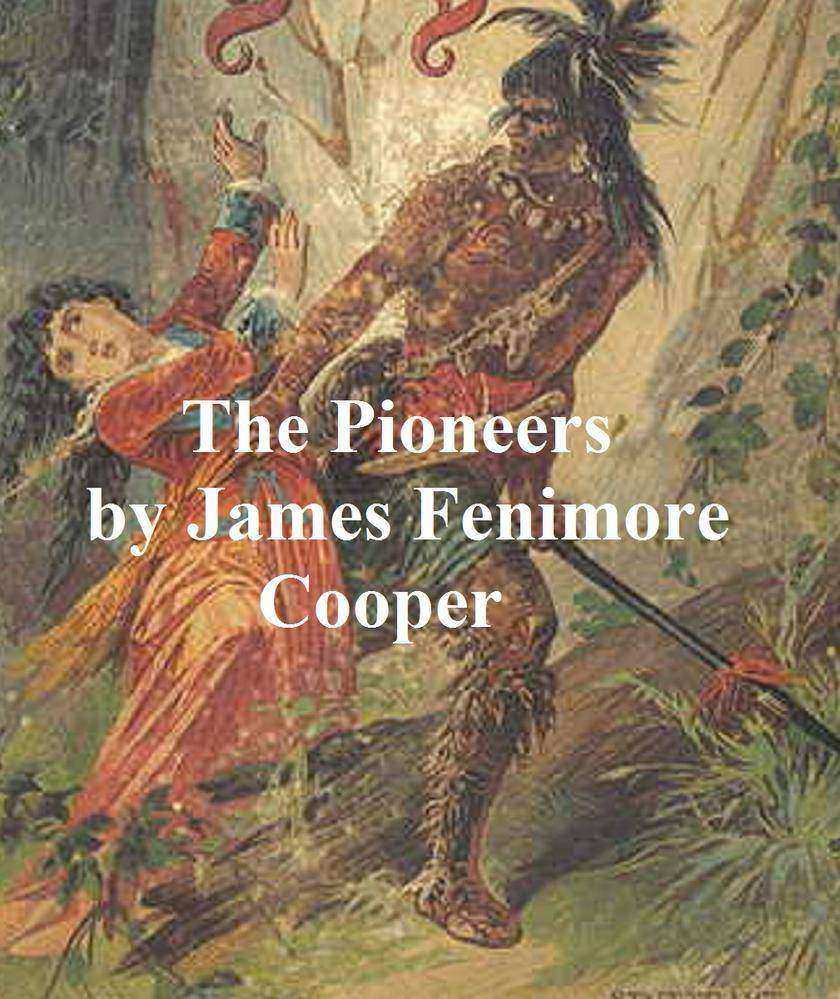
The Pioneers
¥8.09
Fourth of the Leatherstocking Tales. Historical novel set in 1793 and first published in 1823. The other Leatherstocking Tales are Deerslayer, Last of the Mohicans, Pathfinder, and Prairie. according to Wikipedia: "James Fenimore Cooper (September 15, 1789 – September 14, 1851) was a prolific and popular American writer of the early 19th century. He is best remembered as a novelist who wrote numerous sea-stories and the historical novels known as the Leatherstocking Tales, featuring frontiersman Natty Bumppo. Among his most famous works is the Romantic novel The Last of the Mohicans, which many consider to be his masterpiece."

Wilhelm Meisters Lehrjahre
¥8.09
Goethes Meisterwerk im deutschen Original. Laut Wikipedia: "Johann Wolfgang von Goethe (28. August 1749 - 22. M?rz 1832) war ein deutscher Schriftsteller. George Eliot nannte ihn" Deutschlands gr??ten Literaten ... und der letzte wahre Universalgelehrte auf der Erde. "Goethes Werke die Gebiete der Poesie, des Dramas, der Literatur, der Theologie, des Humanismus und der Wissenschaft, Goethes Hauptwerk, das als einer der H?hepunkte der Weltliteratur gepriesen wird, ist das zweiteilige Drama Faust. Goethes andere bekannte literarische Werke sind seine zahlreichen Gedichte, der Bildungsroman Wilhelm Meister und der Briefroman Die Leiden des jungen Werther. "

Wilhelm Meisters Wanderjahre Oder Die Entsagenden
¥8.09
Goethes Meisterwerk im deutschen Original. Laut Wikipedia: "Johann Wolfgang von Goethe (28. August 1749 - 22. M?rz 1832) war ein deutscher Schriftsteller. George Eliot nannte ihn" Deutschlands gr??ten Literaten ... und der letzte wahre Universalgelehrte auf der Erde. "Goethes Werke die Gebiete der Poesie, des Dramas, der Literatur, der Theologie, des Humanismus und der Wissenschaft, Goethes Hauptwerk, das als einer der H?hepunkte der Weltliteratur gepriesen wird, ist das zweiteilige Drama Faust. Goethes andere bekannte literarische Werke sind seine zahlreichen Gedichte, der Bildungsroman Wilhelm Meister und der Briefroman Die Leiden des jungen Werther. "
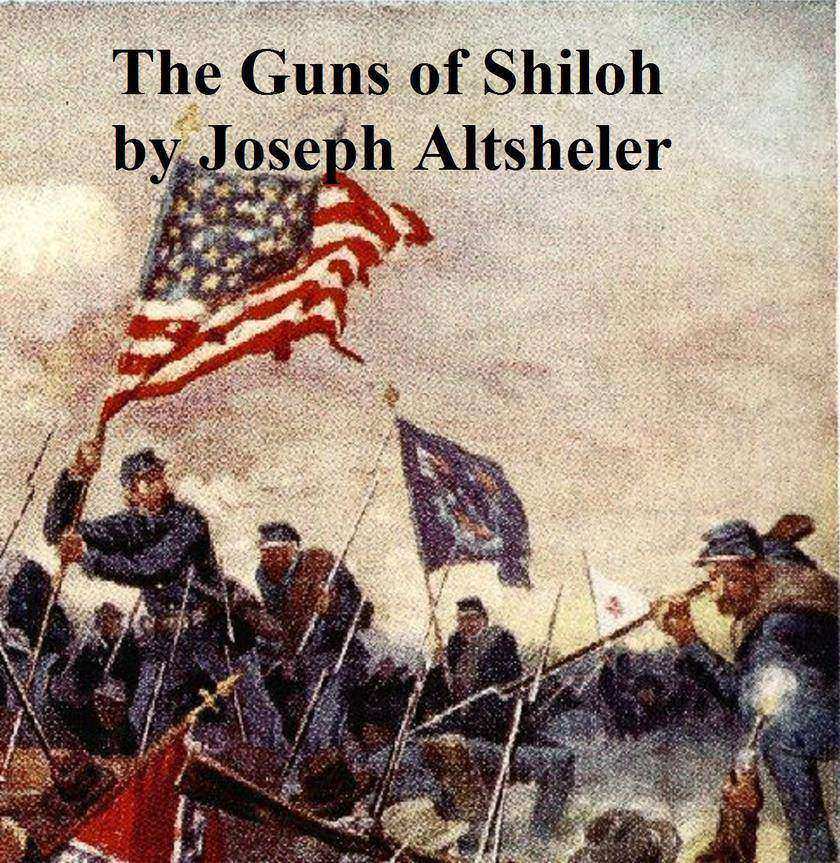
The Guns of Shiloh
¥8.09
Historical novel from the Civil War series, sequel to The Guns of Bull Run. According to Wikipedia: "Joseph Alexander Altsheler (1862 - 1919), was an American author of popular juvenile historical fiction. Altsheler was born in Three Springs, Kentucky to Joseph and Louise Altsheler. In 1885, he took a job at the Louisville Courier-Journal as a reporter and later, an editor. He started working for the New York World in 1892, first as the paper's Hawaiian correspondent and then as the editor of the World's tri-weekly magazine. Due to a lack of suitable stories, he began writing children's stories for the magazine.
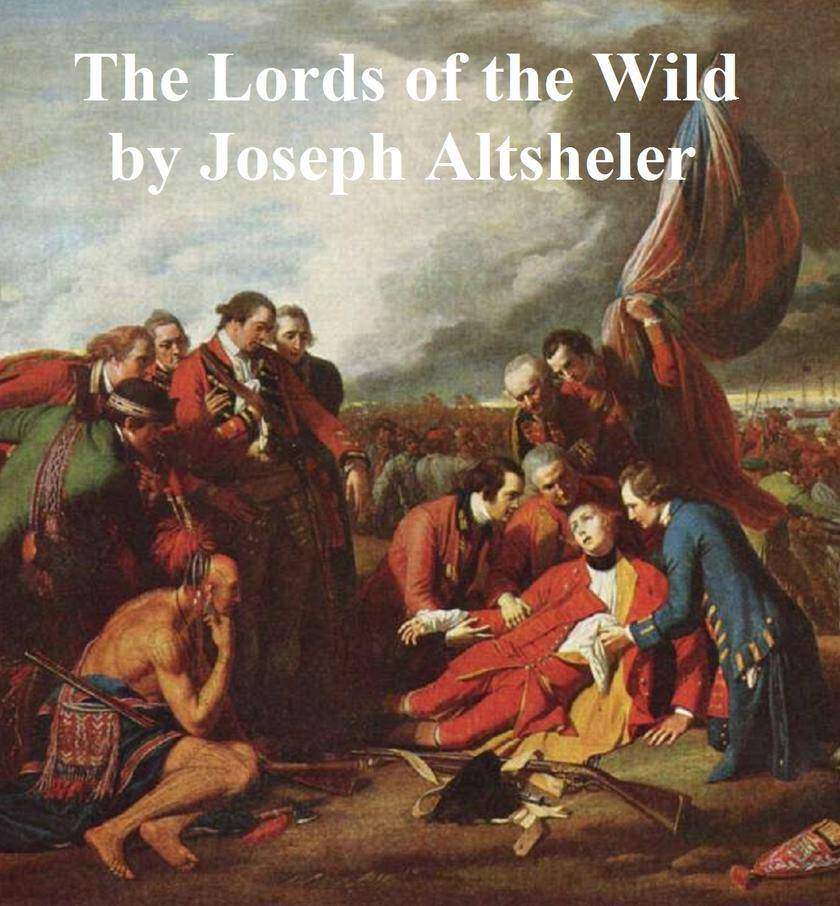
Lords of the Wild
¥8.09
Historical novel from the French and Indian War series. "The Lords of the Wild" tells a complete story, but it is also a part of the French and Indian War Series, of which the predecessors were "The Hunters of the Hills," "The Shadow of the North," "The Rulers of the Lakes" and "The Masters of the Peaks." Robert Lennox, Tayoga, Willet, St. Luc, Tandakora and all the principal characters of the earlier volumes reappear. According to Wikipedia: "Joseph Alexander Altsheler (1862 - 1919), was an American author of popular juvenile historical fiction. Altsheler was born in Three Springs, Kentucky to Joseph and Louise Altsheler. In 1885, he took a job at the Louisville Courier-Journal as a reporter and later, an editor. He started working for the New York World in 1892, first as the paper's Hawaiian correspondent and then as the editor of the World's tri-weekly magazine. Due to a lack of suitable stories, he began writing children's stories for the magazine.
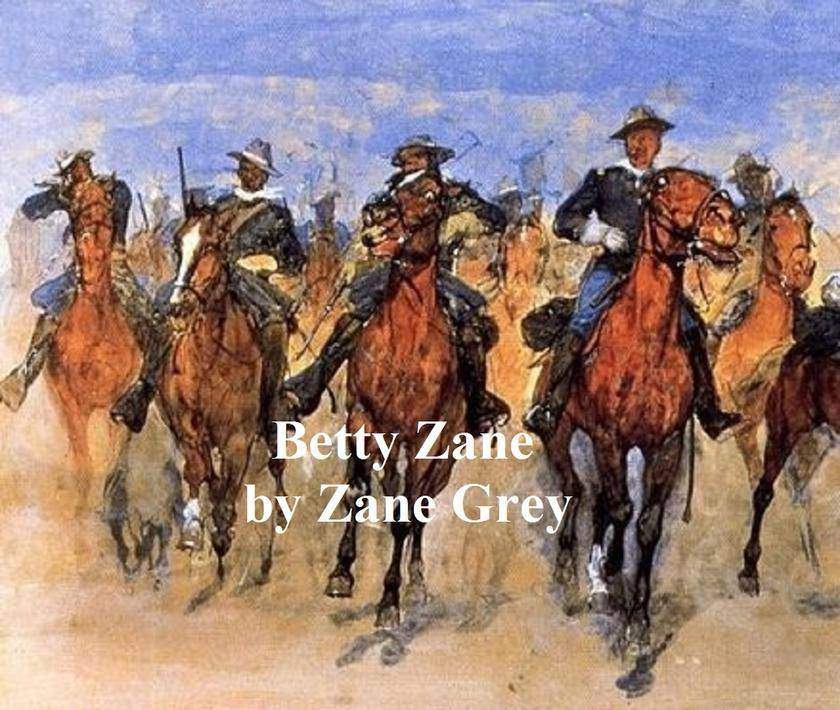
Betty Zane
¥8.09
Historical novel set during the American Revolution. According to the author's note at the beginning: "In a quiet corner of the stately little city of Wheeling, West Va., stands a monument on which is inscribed: "By authority of the State of West Virginia to commemorate the siege of Fort Henry, Sept 11, 1782, the last battle of the American Revolution, this tablet is here placed." Had it not been for the heroism of a girl the foregoing inscription would never have been written, and the city of Wheeling would never have existed." According to Wikipedia: "Zane Grey (1872 – 1939) was an American author best known for his popular adventure novels and stories that presented an idealized image of the rugged Old West. As of June 2007, the Internet Movie Database credits Grey with 110 films, one TV episode, and a series, Dick Powell's Zane Grey Theater based loosely on his novels and short stories."
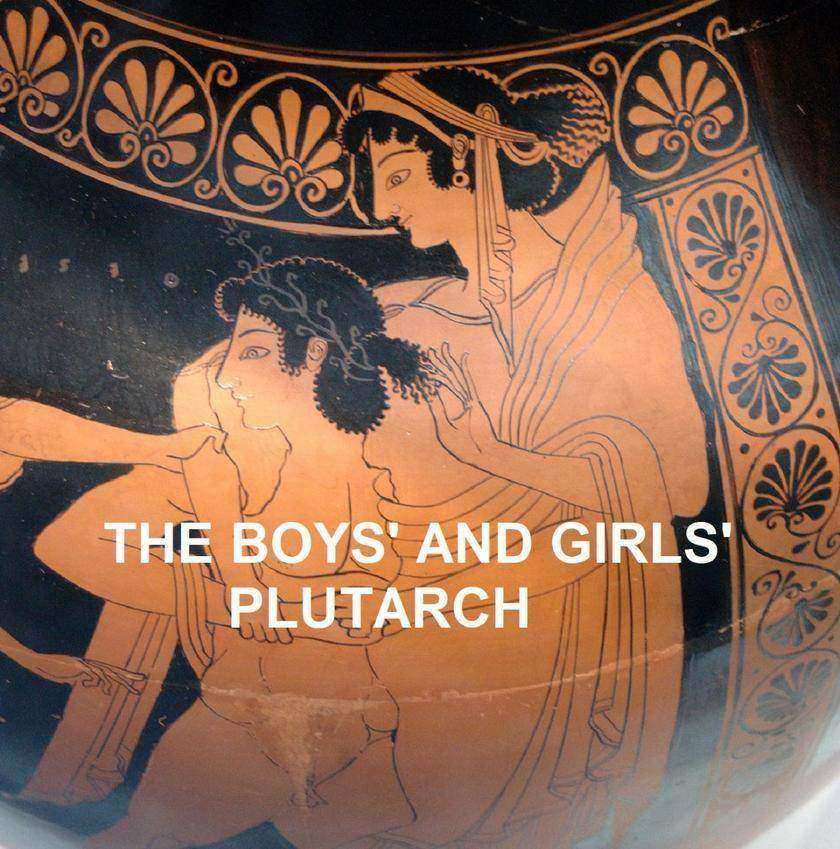
The Boys' and Girls'
¥8.09
According to Wikipedia: "According to Wikipedia: "Lucius Mestrius Plutarchus (c. AD 46 - 120 — commonly known in English as Plutarch — was a Roman historian (of Greek ethnicity), biographer, essayist, and Middle Platonist. Plutarch was born to a prominent family in Chaeronea, Boeotia, a town about twenty miles east of Delphi. His known works consist of the Parallel Lives and the Moralia."


