


 购物车
购物车 个人中心
个人中心
Allan Quatermain
¥8.09
Adventure novel, first published in 1887. Sequel to King Solomon's Mines. According to Wikipedia: "Sir Henry Rider Haggard (1856 – 1925), was a prolific writer of adventure novels set in exotic locations, predominantly Africa. He was also involved in agricultural reform around the British Empire. His stories, situated at the lighter end of Victorian literature, continue to be popular and influential to this day."
With Kitchener in the Soudan
¥8.09
Historical novel set in the Sudan in the late 19th century. The Preface begins: "The reconquest of the Soudan will ever be mentioned as one of the most difficult, and at the same time the most successful, enterprises ever undertaken. The task of carrying an army hundreds of miles across a waterless desert; conveying it up a great river, bristling with obstacles; defeating an enormously superior force, unsurpassed in the world for courage; and, finally, killing the leader of the enemy and crushing out the last spark of opposition; was a stupendous one. After the death of Gordon, and the retirement of the British troops, there was no force in existence that could have barred the advance of the fanatical hordes of the Mahdi, had they poured down into Egypt. The native Egyptian army was, as yet, in the earliest stage of organization; and could not be relied upon to stand firm against the wild rush of the Dervishes." According to Wikipedia: "George Alfred Henty (8 December 1832 - 16 November 1902), referred to as G. A. Henty, was a prolific English novelist, special correspondent, and Imperialist born in Trumpington, Cambridgeshire, England. He is best known for his historical adventure stories that were popular in the late 19th century. His works include Out on the Pampas (1871), The Young Buglers (1880), With Clive in India (1884) and Wulf the Saxon (1895)."
Barry Lyndon
¥8.09
The classic novel. According to Wikipedia: "Thackeray is most often compared to one other great novelist of Victorian literature, Charles Dickens. During the Victorian era, he was ranked second only to Dickens, but he is now much less read and is known almost exclusively for Vanity Fair. In that novel he was able to satirize whole swaths of humanity while retaining a light touch. It also features his most memorable character, the engagingly roguish Becky Sharp. As a result, unlike Thackeray's other novels, it remains popular with the general reading public; it is a standard fixture in university courses and has been repeatedly adapted for movies and television. In Thackeray's own day, some commentators, such as Anthony Trollope, ranked his History of Henry Esmond as his greatest work, perhaps because it expressed Victorian values of duty and earnestness, as did some of his other later novels. It is perhaps for this reason that they have not survived as well as Vanity Fair, which satirizes those values."
Le Corricolo
¥8.09
Roman classique dans le fran?ais original. Selon Wikipédia: "Alexandre Dumas, père (fran?ais pour" père ", apparenté à" Senior "en anglais), né Dumas Davy de la Pailleterie (24 juillet 1802 - 5 décembre 1870) était un écrivain fran?ais, mieux connu pour ses nombreux romans historiques de grande aventure qui ont fait de lui l'un des auteurs fran?ais les plus lus au monde, dont plusieurs de ses romans, dont Le Comte de Monte-Cristo, Les Trois Mousquetaires et Le Vicomte de Bragelonne, écrit des pièces de thé?tre et des articles de magazines et était un correspondant prolifique. "
La Dame de Monsoreau
¥8.09
Roman classique dans le fran?ais original. Selon Wikipédia: "Alexandre Dumas, père (fran?ais pour" père ", apparenté à" Senior "en anglais), né Dumas Davy de la Pailleterie (24 juillet 1802 - 5 décembre 1870) était un écrivain fran?ais, mieux connu pour ses nombreux romans historiques de grande aventure qui ont fait de lui l'un des auteurs fran?ais les plus lus au monde, dont plusieurs de ses romans, dont Le Comte de Monte-Cristo, Les Trois Mousquetaires et Le Vicomte de Bragelonne, écrit des pièces de thé?tre et des articles de magazines et était un correspondant prolifique. "
Jane Eyre
¥8.09
The classic romantic novel. According to Wikipedia: "Jane Eyre is a novel by English writer Charlotte Bront?. It was published in London, England, in 1847 by Smith, Elder & Co. with the title Jane Eyre. An Autobiography under the pen name "Currer Bell." The first American edition was released the following year by Harper & Brothers of New York. Writing for the Penguin edition, Stevie Davies describes it as an "influential feminist text" because of its in-depth exploration of a strong female character's feelings. Primarily of the bildungsroman genre, Jane Eyre follows the emotions and experiences of eponymous Jane Eyre, her growth to adulthood, and her love for Mr. Rochester, the byronic master of Thornfield Hall. The novel contains elements of social criticism, with a strong sense of morality at its core, but is nonetheless a novel many consider ahead of its time given the individualistic character of Jane and the novel's exploration of sexuality, religion, and proto-feminism."
Dead Souls
¥8.09
The classic satiric novel. According to Wikipedia: "Nikolai Vasilievich Gogol ( 1809 - 1852) was a Russian writer of Ukrainian ethnicity. Although his early works were heavily influenced by his Ukrainian upbringing and identity, he wrote in Russian and his works belong to the tradition of Russian literature; often called the "father of modern Russian realism," he was one of the first Russian authors to criticize his country's way of life. The novels Taras Bul'ba (1835; 1842 [revised edition]), Dead Souls (1842), the play The Inspector-General (1836, 1842), and the short story The Overcoat (1842) are among his masterpieces."
The Count of Monte Cristo
¥8.09
The classic tale of Edmond Dantes -- his imprisonment, escape, enrichment, and revenge. According to Wikipedia: "Alexandre Dumas, père (French for "father", akin to 'Senior' in English), born Dumas Davy de la Pailleterie (1802 — 1870) was a French writer, best known for his numerous historical novels of high adventure which have made him one of the most widely read French authors in the world. Many of his novels, including The Count of Monte Cristo, The Three Musketeers, Twenty Years After, and The Vicomte de Bragelonne were serialized. He also wrote plays and magazine articles and was a prolific correspondent."
Le Capitaine Paul
¥8.09
Roman classique, en fran?ais original. Selon Wikipédia: "Alexandre Dumas, père (fran?ais pour" père ", apparenté à" Senior "en anglais), né Dumas Davy de la Pailleterie (24 juillet 1802 - 5 décembre 1870) était un écrivain fran?ais, mieux connu pour ses nombreux romans historiques de grande aventure qui ont fait de lui l'un des auteurs fran?ais les plus lus au monde, dont plusieurs de ses romans, dont Le Comte de Monte-Cristo, Les Trois Mousquetaires et Le Vicomte de Bragelonne, écrit des pièces de thé?tre et des articles de magazines et était un correspondant prolifique. "
Anna Karenina
¥8.09
The classic Tolstoy novel. According to Wikipedia: "Anna Karenin is a novel by the Russian writer Leo Tolstoy, published in serial installments from 1873 to 1877 in the periodical The Russian Messenger. Tolstoy clashed with editor Mikhail Katkov over political issues that arose in the final installment (Tolstoy's unpopular views of volunteers going to Serbia); therefore, the novel's first complete appearance was in book form. Widely regarded as a pinnacle in realist fiction, Tolstoy considered Anna Karenina his first true novel, when he came to consider War and Peace to be more than a novel. Fyodor Dostoevsky declared it to be "flawless as a work of art". His opinion was shared by Vladimir Nabokov, who especially admired "the flawless magic of Tolstoy's style", and by William Faulkner, who described the novel as "the best ever written". The novel is currently enjoying popularity, as demonstrated by a recent poll of 125 contemporary authors by J. Peder Zane, published in 2007 in "The Top Ten" in Time, which declared that Anna Karenina is the "greatest novel ever written."
Mistress Branican
¥8.09
Roman classique, en fran?ais original. Selon Wikipédia: ?Jules Gabriel Verne (8 février 1828 - 24 mars 1905) est un auteur fran?ais qui a été le pionnier du genre de la science-fiction, notamment des romans comme Voyage au centre de la terre (1864), Vingt mille lieues sous la mer (1870) et autour du monde en quatre-vingts jours (1873) Verne a écrit sur l'espace, l'air et les voyages sous-marins avant que les voyages aériens et les sous-marins pratiques soient inventés. Selon Index Translationum, il est le troisième auteur le plus traduit au monde, certains de ses livres ont été transformés en films ... Verne, avec HG Wells, est souvent surnommé le ?père de la science-fiction?.
L'Archipel en Fe
¥8.09
Roman d'aventure classique dans le fran?ais original. Selon Wikipédia: ?Jules Gabriel Verne (8 février 1828 - 24 mars 1905) est un auteur fran?ais qui a été le pionnier du genre de la science-fiction, notamment des romans comme Voyage au centre de la terre (1864), Vingt mille lieues sous la mer (1870) et autour du monde en quatre-vingts jours (1873) Verne a écrit sur l'espace, l'air et les voyages sous-marins avant que les voyages aériens et les sous-marins pratiques soient inventés. Selon Index Translationum, il est le troisième auteur le plus traduit au monde, certains de ses livres ont été transformés en films ... Verne, avec HG Wells, est souvent surnommé le ?père de la science-fiction?
Un Billet de Loterie
¥8.09
Roman d'aventure classique, en fran?ais original. Selon Wikipédia: ?Jules Gabriel Verne (8 février 1828 - 24 mars 1905) est un auteur fran?ais qui a été le pionnier du genre de la science-fiction, notamment des romans comme Voyage au centre de la terre (1864), Vingt mille lieues sous la mer (1870) et autour du monde en quatre-vingts jours (1873) Verne a écrit sur l'espace, l'air et les voyages sous-marins avant que les voyages aériens et les sous-marins pratiques soient inventés. Selon Index Translationum, il est le troisième auteur le plus traduit au monde, certains de ses livres ont été transformés en films ... Verne, avec HG Wells, est souvent surnommé le ?père de la science-fiction?.
True to the Old Flag
¥8.09
Historical novel, set during the American Revolution, and told from the British perspective. The Preface begins: "You have probably been accustomed to regard the war between England and her colonies in America as one in which we were not only beaten but, to some extent, humiliated. Owing to the war having been an unsuccessful one for our arms, British writers have avoided the subject, and it has been left for American historians to describe. These, writing for their own countrymen, and drawing for their facts upon gazettes, letters, and other documents emanating from one side only, have, naturally, and no doubt insensibly, given a very strong color to their own views of the events, and English writers have been too much inclined to accept their account implicitly. There is, however, another and very different side to the story, and this I have endeavored to show you. The whole of the facts and details connected with the war can be relied upon as accurate. According to Wikipedia: "George Alfred Henty (8 December 1832 - 16 November 1902), referred to as G. A. Henty, was a prolific English novelist, special correspondent, and Imperialist born in Trumpington, Cambridgeshire, England. He is best known for his historical adventure stories that were popular in the late 19th century. His works include Out on the Pampas (1871), The Young Buglers (1880), With Clive in India (1884) and Wulf the Saxon (1895)."
A Final Reckoning
¥8.09
Historical novel, set in Australia's equivalent of the Wild West, in the mid-19th century. According to Wikipedia: "George Alfred Henty (8 December 1832 - 16 November 1902), referred to as G. A. Henty, was a prolific English novelist, special correspondent, and Imperialist born in Trumpington, Cambridgeshire, England. He is best known for his historical adventure stories that were popular in the late 19th century. His works include Out on the Pampas (1871), The Young Buglers (1880), With Clive in India (1884) and Wulf the Saxon (1895)"
The Fur Country
¥8.09
Classic adventure novel by Jules Verne. According to Wikipedia: "Jules Gabriel Verne (February 8, 1828 – March 24, 1905) was a French author who pioneered the science-fiction genre. He is best known for his novels Journey to the Center of the Earth (written in 1864), From the Earth to the Moon (1865), Twenty Thousand Leagues Under the Sea (1869–1870), and Around the World in Eighty Days (1873). Verne wrote about space, air, and underwater travel before navigable aircraft and practical submarines were invented, and before any means of space travel had been devised. Consequently he is often referred to as the "Father of science fiction", along with H. G. Wells. Verne is the second most translated author of all time, only behind Agatha Christie with 4162 translations..."
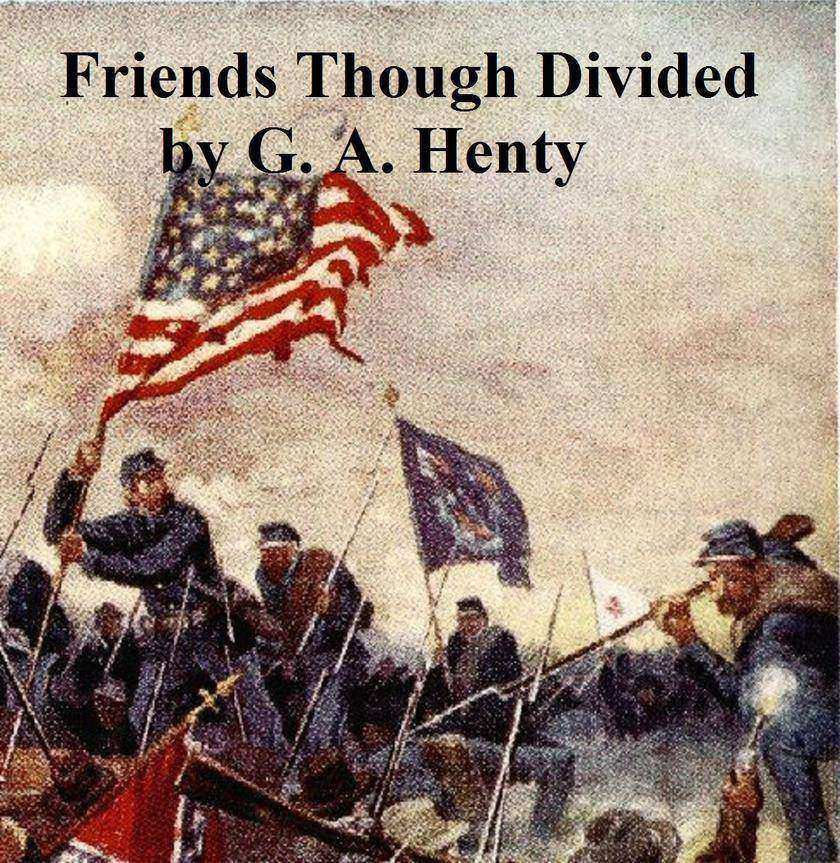
Friends Though Divided
¥8.09
Historical novel, set in England in the 1640s, during the English Civil War (Cromwell). According to Wikipedia: "George Alfred Henty (8 December 1832 - 16 November 1902), referred to as G. A. Henty, was a prolific English novelist, special correspondent, and Imperialist born in Trumpington, Cambridgeshire, England. He is best known for his historical adventure stories that were popular in the late 19th century. His works include Out on the Pampas (1871), The Young Buglers (1880), With Clive in India (1884) and Wulf the Saxon (1895)"
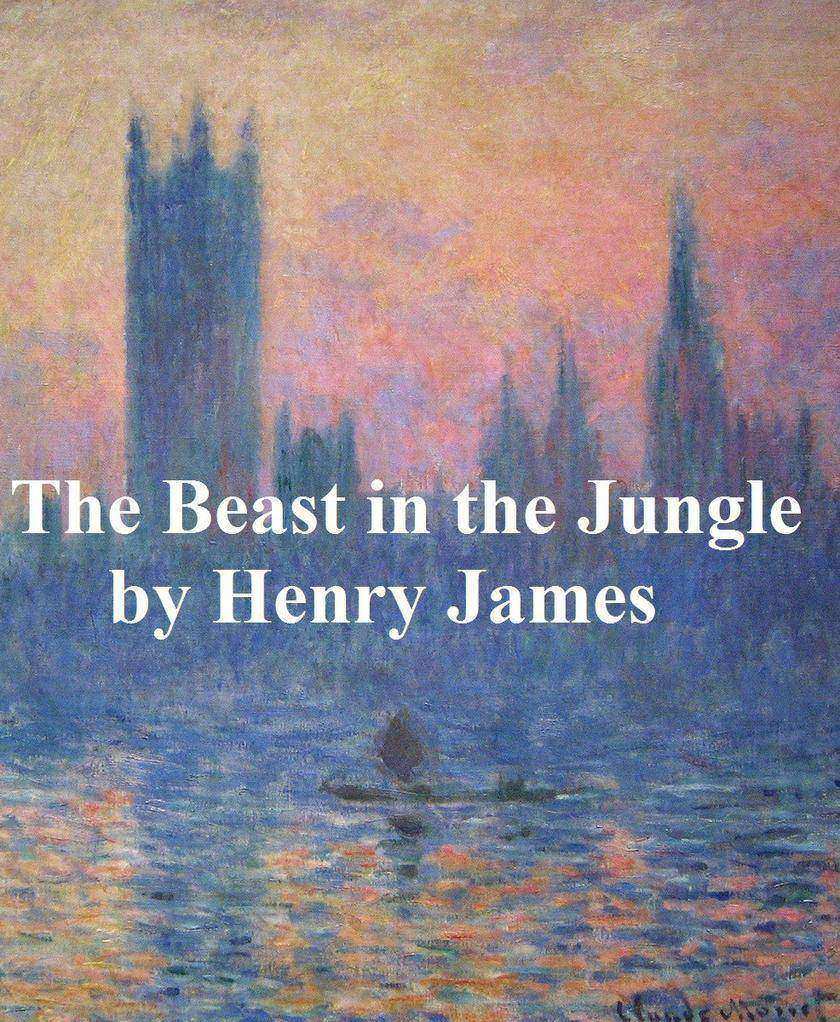
The Beast in the Jungle
¥8.09
Classic Henry James long story. According to Wikipedia: "Henry James, (1843 – 1916), son of theologian Henry James Sr., brother of the philosopher and psychologist William James and diarist Alice James, was an American-born British author. He is one of the key figures of 19th century literary realism; the fine art of his writing has led many academics to consider him the greatest master of the novel and novella form. He spent much of his life in England and became a British subject shortly before his death. He is primarily known for a series of major novels in which he portrayed the encounter of America with Europe. His plots centered on personal relationships, the proper exercise of power in such relationships, and other moral questions. His method of writing from the point of view of a character within a tale allowed him to explore the phenomena of consciousness and perception, and his style in later works has been compared to impressionist painting."
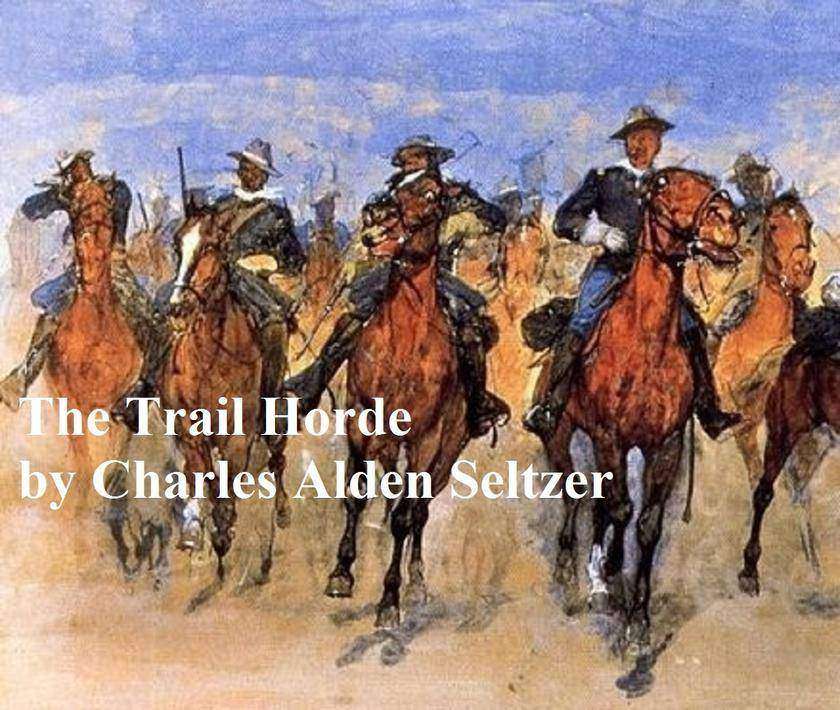
The Trail Horde
¥8.09
Classic western. According to Pulprack (quoting Adventure Fiction.com) "Charles Alden Seltzer (Aug. 15, 1875 - Feb. 9, 1942) The vital statistics are: Born in August 1875, at the village of Janesville, Wisconsin. One year in Wisconsin. Then to Columbus, Ohio, where after a time I worked at various enterprises, such as newsboy, telegraph messenger, painter, carpenter and manager of the circulation of a newspaper. Spent the better part of five summer and some of the winters in Union County, New Mexico. At twenty I was in Cleveland, Ohio, where I was again a carpenter. Foreman, contractor. Began to write about this time -- nights. Thirteen years of writing without finding a publisher. In the interim I was engaged in various enterprises: Building inspector for the City of Cleveland, editor of a small newspaper, expert for the Cuyahoga County Board of Appraisers. Wrote and sold about one hundred short stories. Published a book of short stories called the Range Riders in 1911. A success. Followed it with a full length novel called The Two Gun Man in 1911. Another bell-ringer..."
The Lonesome Trail and Other Stories
¥8.09
Classic western. According to Wikipedia: "Bertha Muzzy Sinclair or Sinclair-Cowan, née Muzzy (November 15, 1871 – July 23, 1940), best known by her pseudonym B. M. Bower, was an American novelist who wrote fictional stories about the American Old West. .. She wrote 57 Western novels, several of which were turned into films."
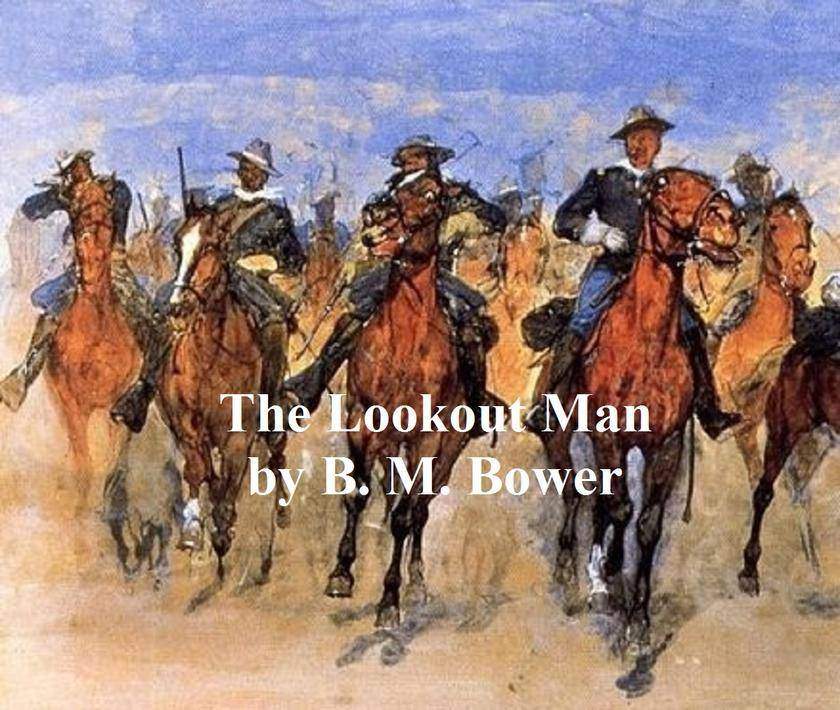
The Lookout Man
¥8.09
Classic western. According to Wikipedia: "Bertha Muzzy Sinclair or Sinclair-Cowan, née Muzzy (November 15, 1871 – July 23, 1940), best known by her pseudonym B. M. Bower, was an American novelist who wrote fictional stories about the American Old West... She wrote 57 Western novels, several of which were turned into films."


