


 购物车
购物车 个人中心
个人中心
Swann's Way
¥8.09
The classic novel in English translation. According to Wikipedia: "In Search of Lost Time or Remembrance of Things Past (French: ? la recherche du temps perdu) is a novel in seven volumes by Marcel Proust. His most prominent work, it is popularly known for its considerable length and the notion of involuntary memory, the most famous example being the "episode of the madeleine." The novel is widely referred to in English as Remembrance of Things Past but the title In Search of Lost Time, a literal rendering of the French, has gained in usage since D. J. Enright adopted it in his 1992 revision of the earlier translation by C. K. Scott Moncrieff and Terence Kilmartin. The complete story contains nearly 1.5 million words and is one of the longest novels in world literature."
Adventures of Tom Sawyer
¥8.09
The 1886 edition, with 151 black-and-white illustrations. According to Wikipedia: "Thomas "Tom" Sawyer is the title character of the Mark Twain novel The Adventures of Tom Sawyer (1876). He appears in three other novels by Twain: Adventures of Huckleberry Finn (1884), Tom Sawyer Abroad (1894), and Tom Sawyer, Detective (1896)... Tom Sawyer's best friends include Joe Harper and Huckleberry Finn. In The Adventures of Tom Sawyer, Tom's infatuation with classmate Rebecca "Becky" Thatcher is apparent. He lives with his half brother Sid, his cousin Mary, and his stern Aunt Polly in the (fictional) town of St. Petersburg, Missouri. In addition, he has another aunt, Sally Phelps, who lives considerably farther down the Mississippi River, in the town of Pikesville. Tom is the son of Aunt Polly's dead sister."
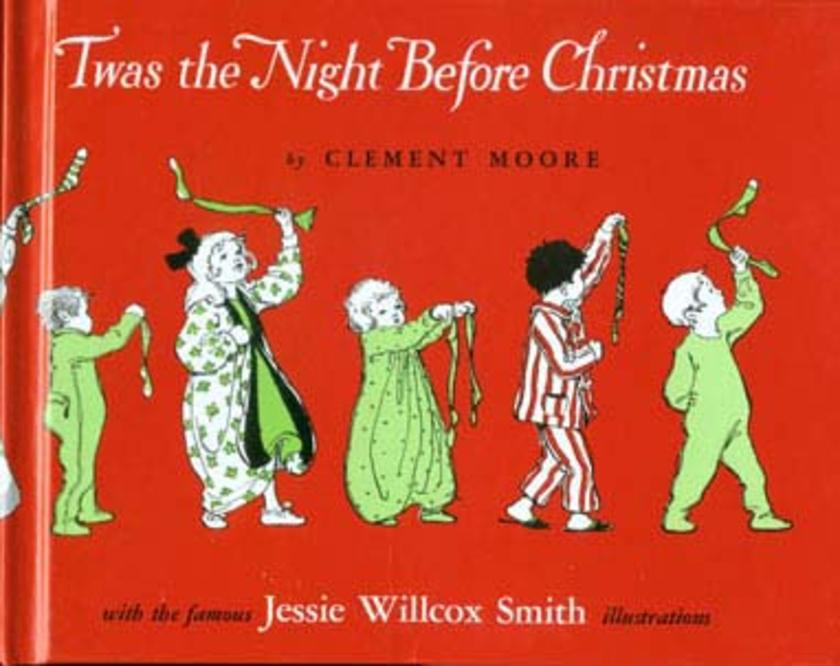
Twas the Night Before Christmas, illustrated
¥8.09
Classic picture book for children. 15 illustrations, some color, some black-and-white. This edition as first published in 1912. According to Wikipedia: "Clement Clarke Moore (July 15, 1779 – July 10, 1863) was an American professor of Oriental and Greek literature at Columbia College, now Columbia University. He donated land from his family estate for the foundation of the General Theological Seminary, where he was a professor of Biblical learning and compiled a two-volume Hebrew dictionary. He is generally considered to be the author of the yuletide poem "A Visit from St. Nicholas", which later became famous as "'Twas the Night Before Christmas"... The poem, "arguably the best-known verses ever written by an American", was first published anonymously in the Troy, New York, Sentinel on December 23, 1823, and was reprinted frequently thereafter with no name attached. Moore later acknowledged authorship and the poem was included in an 1844 anthology of his works at the insistence of his children, for whom he wrote it." ... "Jessie Willcox Smith (September 6, 1863 – May 3, 1935) was one of the most prominent female illustrators in the United States during the Golden Age of American illustration. She was a prolific contributor to respected books and magazines during the late 19th and early 20th centuries. She illustrated stories and articles for clients such as Century, Collier's Weekly, Leslie's Weekly, Harper's, McClure's, Scribners, and the Ladies' Home Journal."
Helen with the High Hand by Arnold Bennett - Delphi Classics (Illustrated)
¥8.09
This eBook features the unabridged text of ‘Helen with the High Hand by Arnold Bennett - Delphi Classics (Illustrated)’ from the bestselling edition of ‘The Complete Works of Arnold Bennett’. Having established their name as the leading publisher of classic literature and art, Delphi Classics produce publications that are individually crafted with superior formatting, while introducing many rare texts for the first time in digital print. The Delphi Classics edition of Bennett includes original annotations and illustrations relating to the life and works of the author, as well as individual tables of contents, allowing you to navigate eBooks quickly and easily. eBook features: * The complete unabridged text of ‘Helen with the High Hand by Arnold Bennett - Delphi Classics (Illustrated)’ * Beautifully illustrated with images related to Bennett’s works * Individual contents table, allowing easy navigation around the eBook * Excellent formatting of the text Please visit www.delphiclassics.com to learn more about our wide range of titles
Hilda Lessways by Arnold Bennett - Delphi Classics (Illustrated)
¥8.09
This eBook features the unabridged text of ‘Hilda Lessways by Arnold Bennett - Delphi Classics (Illustrated)’ from the bestselling edition of ‘The Complete Works of Arnold Bennett’. Having established their name as the leading publisher of classic literature and art, Delphi Classics produce publications that are individually crafted with superior formatting, while introducing many rare texts for the first time in digital print. The Delphi Classics edition of Bennett includes original annotations and illustrations relating to the life and works of the author, as well as individual tables of contents, allowing you to navigate eBooks quickly and easily. eBook features: * The complete unabridged text of ‘Hilda Lessways by Arnold Bennett - Delphi Classics (Illustrated)’ * Beautifully illustrated with images related to Bennett’s works * Individual contents table, allowing easy navigation around the eBook * Excellent formatting of the text Please visit www.delphiclassics.com to learn more about our wide range of titles

The Monster and Other Stories
¥8.09
This story collection includes: The Monster, The Blue Hotel, and His New Mittens. According to Wikipedia: "Stephen Crane (November 1, 1871 – June 5, 1900) was an American novelist, short story writer, poet and journalist. Prolific throughout his short life, he wrote notable works in the Realist tradition as well as early examples of American Naturalism and Impressionism. He is recognized by modern critics as one of the most innovative writers of his generation."

The Man in the Iron Mask
¥8.09
The Man in the Iron Mask is a self-contained novel, the sixth and last of a series of novels -- The Three Musketeers (covering 1625-1628), Twenty Years After (covering 1648-49), The Vicomte de Bragelonne (covering 1660), Ten Years Later (covering 1660-1661), Louise de la Valliere (covering 1661), The Man in the Iron Mask (covering 1661-1673). D'Artagnan, the fourth and most important musketeer is based on an historical figure, who was eventually promoted to commander of the musketeers. You can read about him at Wikipedia. According to Wikipedia: "Alexandre Dumas, père (French for "father", akin to 'Senior' in English), born Dumas Davy de la Pailleterie (1802 — 1870) was a French writer, best known for his numerous historical novels of high adventure which have made him one of the most widely read French authors in the world. Many of his novels, including The Count of Monte Cristo, The Three Musketeers, Twenty Years After, and The Vicomte de Bragelonne were serialized. He also wrote plays and magazine articles and was a prolific correspondent."
Gulliver's Travels
¥8.09
The satiric voyages to Lilliput, Brobdingnag, Laputa, Balnibarbi, Glubbdubdrib, Luggnagg, Japan, and the Country of the Houyhnhnms. According to Wikipedia: "Jonathan Swift (1667 - 1745) was an Anglo-Irish cleric, Dean of St. Patrick's, Dublin, satirist, essayist, political pamphleteer (first for Whigs then for Tories), and poet, famous for works like Gulliver's Travels, A Modest Proposal, A Journal to Stella, The Drapier's Letters, The Battle of the Books, and A Tale of a Tub. Swift is probably the foremost prose satirist in the English language..."
Deep Waters: The Entire Collection
¥8.09
Dodo Collections brings you another classic from Jacobs W.W, ‘Deep Waters, the Entire Collection.’ ? Included in this collection are "Paying Off," "Made to Measure," "Sam's Ghost," "Bedridden," "The Convert," "Husbandry," "Family Cares," "The Winter Offensive," "The Substitute," "Striking Hard," and "Dirty Work." ? William Wymark Jacobs was an English author of short stories and novels. Quite popular in his lifetime primarily for his amusing maritime tales of life along the London docks (many of them humorous as well as sardonic in tone). Today he is best known for a few short works of horror fiction. One being "The Monkey's Paw"(published 1902). It has in its own right become a well-known and widely anthologized classic.? ? In 1879, Jacobs began work as a clerk in the civil service, in the Post Office Savings Bank, and by 1885 he had his first short story published. His road to success was relatively slow:?Arnold Bennett?writing in 1898 was astonished that Jacobs turned down the sum of ?500 for six short stories. Jacobs was financially secure enough to be able to leave the Post Office in 1899.
Ship's Company
¥8.09
Dodo Collections brings you another classic from W.W. Jacobs, ‘Ship's Company, The Entire Collection’. ? William Wymark "W. W." Jacobs (8 September 1863 – 1 September 1943) was an English author of short stories and novels. Although much of his work was humorous, he is most famous for his horror story "The Monkey's Paw". ? John Drinkwater described Jacobs' fiction as being "in the Dickens tradition"
Middlemarch by George Eliot - Delphi Classics (Illustrated)
¥8.09
This eBook features the unabridged text of ‘Middlemarch by George Eliot - Delphi Classics (Illustrated)’ from the bestselling edition of ‘The Complete Works of George Eliot’. Having established their name as the leading publisher of classic literature and art, Delphi Classics produce publications that are individually crafted with superior formatting, while introducing many rare texts for the first time in digital print. The Delphi Classics edition of Eliot includes original annotations and illustrations relating to the life and works of the author, as well as individual tables of contents, allowing you to navigate eBooks quickly and easily. eBook features: * The complete unabridged text of ‘Middlemarch by George Eliot - Delphi Classics (Illustrated)’ * Beautifully illustrated with images related to Eliot’s works * Individual contents table, allowing easy navigation around the eBook * Excellent formatting of the text Please visit www.delphiclassics.com to learn more about our wide range of titles
The Essence of Christianity by Ludwig Andreas Feuerbach by George Eliot
¥8.09
This eBook features the unabridged text of ‘The Essence of Christianity by Ludwig Andreas Feuerbach by George Eliot - Delphi Classics (Illustrated)’ from the bestselling edition of ‘The Complete Works of George Eliot’. Having established their name as the leading publisher of classic literature and art, Delphi Classics produce publications that are individually crafted with superior formatting, while introducing many rare texts for the first time in digital print. The Delphi Classics edition of Eliot includes original annotations and illustrations relating to the life and works of the author, as well as individual tables of contents, allowing you to navigate eBooks quickly and easily. eBook features: * The complete unabridged text of ‘The Essence of Christianity by Ludwig Andreas Feuerbach by George Eliot - Delphi Classics (Illustrated)’ * Beautifully illustrated with images related to Eliot’s works * Individual contents table, allowing easy navigation around the eBook * Excellent formatting of the text Please visit www.delphiclassics.com to learn more about our wide range of titles
Cranford by Elizabeth Gaskell - Delphi Classics (Illustrated)
¥8.09
This eBook features the unabridged text of ‘Cranford by Elizabeth Gaskell - Delphi Classics (Illustrated)’ from the bestselling edition of ‘The Complete Works of Elizabeth Gaskell’. Having established their name as the leading publisher of classic literature and art, Delphi Classics produce publications that are individually crafted with superior formatting, while introducing many rare texts for the first time in digital print. The Delphi Classics edition of Gaskell includes original annotations and illustrations relating to the life and works of the author, as well as individual tables of contents, allowing you to navigate eBooks quickly and easily. eBook features: * The complete unabridged text of ‘Cranford by Elizabeth Gaskell - Delphi Classics (Illustrated)’ * Beautifully illustrated with images related to Gaskell’s works * Individual contents table, allowing easy navigation around the eBook * Excellent formatting of the text Please visit www.delphiclassics.com to learn more about our wide range of titles
Ruth by Elizabeth Gaskell - Delphi Classics (Illustrated)
¥8.09
This eBook features the unabridged text of ‘Ruth by Elizabeth Gaskell - Delphi Classics (Illustrated)’ from the bestselling edition of ‘The Complete Works of Elizabeth Gaskell’. Having established their name as the leading publisher of classic literature and art, Delphi Classics produce publications that are individually crafted with superior formatting, while introducing many rare texts for the first time in digital print. The Delphi Classics edition of Gaskell includes original annotations and illustrations relating to the life and works of the author, as well as individual tables of contents, allowing you to navigate eBooks quickly and easily. eBook features: * The complete unabridged text of ‘Ruth by Elizabeth Gaskell - Delphi Classics (Illustrated)’ * Beautifully illustrated with images related to Gaskell’s works * Individual contents table, allowing easy navigation around the eBook * Excellent formatting of the text Please visit www.delphiclassics.com to learn more about our wide range of titles
The Awkward Age
¥8.09
Dodo Collections brings you another classic from Henry James, ‘The Awkward Age’. ? Originally conceived as a brief, light story about the complications created in her family's social set by a young girl coming of age, the novel expanded into a general treatment of decadence and corruption in English fin de siècle life. James presents the novel almost entirely in dialogue, an experiment that adds to the immediacy of the scenes but also creates serious ambiguities about characters and their motives. ? Henry James, OM (15 April 1843 – 28 February 1916) was an American writer who spent most of his writing career in Britain. He is regarded as one of the key figures of 19th-century literary realism. He was the son of Henry James, Sr. and the brother of philosopher and psychologist William James and diarist Alice James. ? He is best known for a number of novels showing Americans encountering Europe and Europeans. His method of writing from a character's point of view allowed him to explore issues related to consciousness and perception, and his style in later works has been compared to impressionist painting. His imaginative use of point of view, interior monologue and unreliable narrators brought a new depth to narrative fiction. ? James contributed significantly to literary criticism, particularly in his insistence that writers be allowed the greatest possible freedom in presenting their view of the world. James claimed that a text must first and foremost be realistic and contain a representation of life that is recognizable to its readers. Good novels, to James, show life in action and are, most importantly, interesting. In addition to his voluminous works of fiction he published articles and books of travel, biography, autobiography, and criticism, and wrote plays. James alternated between America and Europe for the first twenty years of his life; eventually he settled in England, becoming a British subject in 1915, one year before his death. James was nominated for the Nobel Prize in Literature in 1911, 1912, and 1916.
Twelve Men
¥8.09
According to Wikipedia: "Theodore Herman Albert Dreiser (August 27, 1871 – December 28, 1945) was an American novelist and journalist. He pioneered the naturalist school and is known for portraying characters whose value lies not in their moral code, but in their persistence against all obstacles, and literary situations that more closely resemble studies of nature than tales of choice and agency... His second novel, Jennie Gerhardt, was published in 1911. Many of Dreiser's subsequent novels dealt with social inequality. His first commercial success was An American Tragedy (1925), which was made into a film in 1931 and again in 1951."
A Christmas Greeting: a series of stories (1847)
¥8.09
This collection of children's stories includes: The Old House, The Drop of Water, The Happy Family, The story of a Mother, The False Collar, The Shadow, The Old Street-Lam, The Dream of Little Tuk, The Naughty Boy, The Two Neighboring Families, The Darning Needle, The Little Match-Girl, and The Red Shoes.
Outcast of the Islands
¥8.09
Conrad's second novel. ""An Outcast of the Islands" is my second novel in the absolute sense of the word; second in conception, second in execution, second as it were in its essence. There was no hesitation, half-formed plan, vague idea, or the vaguest reverie of anything else between it and "Almayer's Folly." The only doubt I suffered from, after the publication of "Almayer's Folly," was whether I should write another line for print. Those days, now grown so dim, had their poignant moments. Neither in my mind nor in my heart had I then given up the sea. In truth I was clinging to it desperately, all the more desperately because, against my will, I could not help feeling that there was something changed in my relation to it. "Almayer's Folly," had been finished and done with. The mood itself was gone. But it had left the memory of an experience that, both in thought and emotion was unconnected with the sea, and I suppose that part of my moral being which is rooted in consistency was badly shaken..."
The Secret Agent
¥8.09
Espionage novel. (Conrad's other novel in this same vein is "Under Western Eyes). According to Wikipedia: "Joseph Conrad (1857 – 1924) was a Polish-born English novelist. Many critics regard him as one of the greatest novelists in the English language—a fact that is remarkable, as he did not learn to speak English fluently until he was in his twenties (and always with a strong Polish accent). He became a naturalized British subject in 1886. Conrad is recognized as a master prose stylist. Some of his works have a strain of romanticism, but more importantly he is recognized as an important forerunner of modernist literature. His narrative style and anti-heroic characters have influenced many writers, including Ernest Hemingway, D. H. Lawrence, F. Scott Fitzgerald, Graham Greene, William S. Burroughs, Joseph Heller, V.S. Naipaul, Italo Calvino and J. M. Coetzee."
Under Western Eyes
¥8.09
Espionage novel. Conrad's other novel of this same kind is "The Secret Agent." According to Wikipedia: "Joseph Conrad (1857 – 1924) was a Polish-born English novelist. Many critics regard him as one of the greatest novelists in the English language—a fact that is remarkable, as he did not learn to speak English fluently until he was in his twenties (and always with a strong Polish accent). He became a naturalized British subject in 1886. Conrad is recognized as a master prose stylist. Some of his works have a strain of romanticism, but more importantly he is recognized as an important forerunner of modernist literature. His narrative style and anti-heroic characters have influenced many writers, including Ernest Hemingway, D. H. Lawrence, F. Scott Fitzgerald, Graham Greene, William S. Burroughs, Joseph Heller, V.S. Naipaul, Italo Calvino and J. M. Coetzee."
The Half-Hearted
¥8.09
The Half Hearted (1900) tells the story of the shallow Lewis Haystoun, a guest at a Scottish country house party, who falls in love, then goes off to India and gives his life for a nobler cause. According to Wikipedia, "John Buchan, 1st Baron Tweedsmuir (26 August 1875 – 11 February 1940) was a Scottish novelist and Unionist politician who served as Governor General of Canada. Buchan's 100 works include nearly thirty novels, seven collections of short stories and biographies of Sir Walter Scott, Caesar Augustus, and Oliver Cromwell. Buchan's most famous of his books were the spy thrillers (including) The 39 Steps (which was converted to a play as well as an Alfred Hitchcock movie starring Robert Donat as Richard Hannay, though with Buchan's story much altered.) The "last Buchan" (as Graham Greene entitled his appreciative review) was the 1941 novel Sick Heart River (American title: Mountain Meadow), in which a dying protagonist confronts in the Canadian wilderness the questions of the meaning of life. The insightful quotation "It's a great life, if you don't weaken" is famously attributed to Buchan, as is "No great cause is ever lost or won, The battle must always be renewed, And the creed must always be restated."


